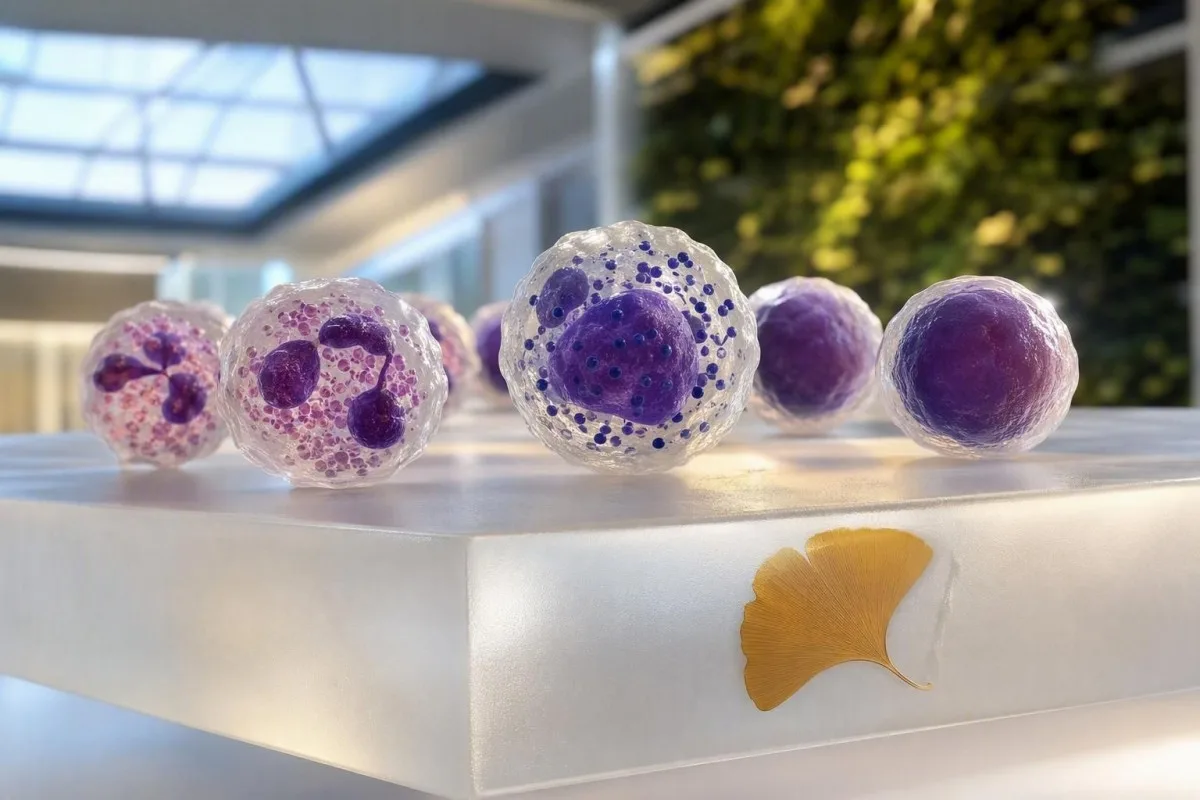
Većina odraslih osoba ima apsolutni broj bazofila od 0,00–0,10 × 10⁹/L (0–100/µL), dok je postotak obično 0–11%. Blago neuobičajen postotak često odražava promjene u drugim bijelim krvnim stanicama; apsolutni broj bazofila je rezultat koji obično vodi daljnje praćenje.


- Apsolutni bazofili obično iznose 0,00–0,10 × 10⁹/L (0–100/µL) u odraslih i klinički su korisniji od samog postotka.
- Postotak bazofila je uobičajeno 0–11% bijelih krvnih stanica, ali može porasti kada neutrofili ili limfociti padnu, čak i ako je apsolutni broj normalan.
- Djeca obično koriste istu praktičnu gornju granicu od 0,10 × 10⁹/L nakon dojenačke dobi, ali laboratorijski interval specifičan za dob ima prednost.
- Ponovljeni CBC za 2–8 tjedana razuman je za izoliranu, blagu bazofiliju nakon alergije, infekcije ili promjene lijekova.
- Uporna bazofilija iznad 0,20 × 10⁹/L zaslužuje pregled kliničara, posebno uz visoke bijele krvne stanice, anemiju, splenomegaliju ili konstitucijske simptome.
- hitna provjera je opravdan za izraženu leukocitozu, neobjašnjiv gubitak težine, obilno noćno znojenje, vrućicu ili osjećaj rane punoće ispod lijevih rebara.
- Nula bazofila na automatskom diferencijalu je čest i obično nema klinički značaj.
- Kantesti AI čita bazofile uz ukupne leukocite, eozinofile, broj trombocita, hemoglobin i prethodne rezultate umjesto da jednu oznaku tretira kao dijagnozu.
Apsolutni bazofili u usporedbi s postotkom bazofila
Apsolutni bazofili od 0,00–0,10 × 10⁹/L općenito su normalni u odraslih, dok je postotak bazofila od 0–1% samo udio ukupnog broja leukocita. Kada se te dvije vrijednosti ne podudaraju, kliničari obično pridaju veću važnost apsolutnom rezultatu.
Postotak se može činiti visokim samo zato što je druga vrsta bijelih krvnih stanica niska. Na primjer, 1,5% bazofila s brojem bijelih krvnih stanica od 3,0 × 10⁹/L daje apsolutni broj od samo 0,045 × 10⁹/L—unutar mnogih intervala za odrasle. Zato oznaka postotka sama po sebi rijetko govori cijelu priču.
Izračun je jednostavan: ukupni broj leukocita × postotak bazofila ÷ 100. Broj leukocita od 12,0 × 10⁹/L i bazofili od 2% daju 0,24 × 10⁹/L, što je stvarno povišenje. Za širi kontekst, pogledajte naš vodič za što uključuje CBC.
Kantesti je Analizator krvnih testova s umjetnom inteligencijom koji pretvara postotke u klinički usporedive apsolutne brojeve kada izvještaj iz izvora pruža diferencijal. Prema mojem iskustvu, ta jedna konverzija sprječava značajnu količinu nepotrebnog straha nakon rutinskog zdravstvenog pregleda.
Zašto je apsolutni broj stabilniji
Automatski analizatori broje tisuće staničnih događaja, ali bazofili su obično rijetki—često manje od 1 u 100 bijelih krvnih stanica. Male analitičke i biološke promjene stoga mogu pomaknuti postotak primjetnije od apsolutnog broja.
Praktični referentni intervali za bazofile prema dobi
Većina laboratorija koristi apsolutni referentni interval bazofila od 0,00–0,10 × 10⁹/L od djetinjstva do odrasle dobi, ali rasponi za novorođenčad mogu biti širi. Koristite interval ispisan pored vlastitog rezultata, jer referentne granice ovise o metodi analizatora i lokalnoj zdravoj populaciji laboratorija.
Za dojenčad u prvim tjednima života, neki pedijatrijski laboratoriji prihvaćaju apsolutne bazofile do otprilike 0,20–0,40 × 10⁹/L. Neonatalni imunološki sustav se brzo prilagođava, stoga se odrasle granične vrijednosti ne bi trebale primjenjivati na novorođenački rezultat bez pedijatrijskog mišljenja.
Od otprilike 1 godine nadalje, mnoge službe primjenjuju praktičnu gornju granicu od oko 0,10 × 10⁹/L, ili 100/µL. Rezultat od 0,11 × 10⁹/L kod djeteta u dobrom stanju s normalnim ukupnim brojem leukocita obično je pitanje za ponovno testiranje i kontekst, a ne hitna situacija.
CLSI EP28-A3c objašnjava zašto laboratoriji uspostavljaju ili provjeravaju vlastite referentne intervale umjesto da posuđuju univerzalni raspon (CLSI, 2010). Naš vodič za dobne raspone neutrofila prikazuje isti princip za drugi diferencijalni nalaz.
Razumijevanje jedinica za bazofile u britanskim, američkim i međunarodnim izvješćima
Broj bazofila od 0,10 × 10⁹/L jednak je 100/µL, tako da izvješća koja koriste različite jedinice mogu opisati isti rezultat. UK potpune krvne slike često prikazuju ×10⁹/L, dok američki laboratoriji uobičajeno koriste stanice/µL ili K/µL.
Za pretvaranje ×10⁹/L u stanice/µL, pomnožite s 1.000. Tako 0,05 × 10⁹/L odgovara 50/µL; 0,25 × 10⁹/L odgovara 250/µL. Izvješće koje pokazuje 0,0 može biti zaokruženo na jednu decimalnu znamenku, umjesto da dokazuje da bazofila doslovno nema.
Vrijednost prikazana kao 0,2 K/µL jednaka je 0,20 × 10⁹/L. Ta razlika je bitna jer 0,2% i 0,2 K/µL predstavljaju potpuno različita mjerenja. Pacijenti ih redovito miješaju kada uspoređuju izvješća iz dvije zemlje.
Ako vaše izvješće kaže FBC umjesto CBC, komponente su uglavnom iste; naš Vodič za potpunu krvnu sliku u Velikoj Britaniji prevodi uobičajenu terminologiju.
Zašto broj bazofila raste ili pada
Blaga bazofilija najčešće prati alergiju, kroničnu upalu, oporavak od infekcije ili imuni pomak povezan s lijekovima. Nizak broj ili nula bazofila obično nije značajan jer te stanice cirkuliraju u vrlo malim količinama.
Bazofili nose receptore za IgE i mogu osloboditi histamin i druge medijatore nakon izlaganja alergenima. Sezonski alergijski rinitis, kronična urtikarija, astma i neki kožni poremećaji mogu se podudarati s malim porastom, iako normalan broj ne potvrđuje niti isključuje bilo koji od njih.
Hipotireoza, upalna bolest crijeva, reumatoidni poremećaji i neke kronične infekcije također mogu biti povezani s bazofilijom. Korisno pitanje nije “koja bolest to uzrokuje?”, nego “koji su drugi signali prisutni?” — CRP, eozinofili, simptomi, povijest lijekova i putanja sve je važno.
Povišeni IgE i broj eozinofila mogu potkrijepiti alergijski obrazac, dok izolovani svrab može zahtijevati širu analizu; naš članak o pretragama krvi za svrbež kože objašnjava praktična ograničenja CBC testiranja.
Kada ponoviti CBC zbog bazofila?
Ponovite CBC za 2-8 tjedana kod blagog, izoliranog povećanja bazofila nakon privremenog okidača, pod uvjetom da se osjećate dobro i da je ostatak broja ohrabrujući. Ponovite ranije, obično unutar nekoliko dana do 2 tjedna, kada ukupni broj leukocita raste ili postoji više abnormalnih staničnih linija.
Za apsolutni broj bazofila od 0,11–0,20 × 10⁹/L nakon prehlade, pogoršanja peludne groznice, cijepljenja ili kratkog tijeka steroida, često preferiram jedno mirno ponavljanje umjesto niza testova. Pokušajte koristiti isti laboratorij i zabilježite nedavnu bolest, nove lijekove, promjene u pušenju i izloženost steroidima.
Nemojte pokušavati “poboljšati” broj prije ponovnog testiranja. Hidratacija je razumna, ali dodaci prehrani, antihistaminici, kortikosteroidi i intenzivno vježbanje izdržljivosti mogu promijeniti širu diferencijaciju. Naš vodič za vremenski slijed krvnih pretraga detaljno opisuje uobičajene vremenske utjecaje.
Kantesti je Platforma za tumačenje krvnih nalaza pomoću AI-a koji uspoređuje trenutnu diferencijaciju s prethodnim CBC-ovima i ističe dosljedan porast drugačije od jednokratnog isticanja. Trend tijekom 3–6 mjeseci često je informativniji od jedne decimalne točke.
Kako se pripremiti za pouzdano ponovno testiranje bazofila
Testiranje bazofila obično ne zahtijeva post, ali ponovni CBC je najinterpretativniji kada niste akutno bolesni i uvjeti prikupljanja su slični. Ciljajte na normalan unos tekućine, uobičajene obroke i rutinski dan umjesto ekstremnih promjena.
Izbjegavajte zakazivanje nehitnog ponovnog testiranja tijekom vrućice, značajnog alergijskog pogoršanja ili dan nakon neuobičajeno teškog događaja izdržljivosti ako je cilj utvrditi baznu liniju. Hormoni akutnog stresa i pomaci tekućine mogu pomaknuti nekoliko podskupina bijelih krvnih stanica na sate do dane.
Obavijestite kliničara ili osobu koja uzima krv o sistemskim kortikosteroidima, litiju, tretmanima koji sadrže adrenalin, nedavnoj biološkoj terapiji i bilo kojim novim dodatkom. Steroidi češće snižavaju cirkulirajuće bazofile i eozinofile, tako da “normalan” rezultat tijekom uzimanja možda ne predstavlja vašu neliječenu baznu liniju.
Kvaliteta uzorka je i dalje važna. Zgrušani EDTA uzorci i odgođena analiza mogu učiniti automatske diferencijacije manje pouzdanima; ako nekoliko CBC vrijednosti izgleda čudno zajedno, pregledajte kada je potrebno ponovno uzimanje uzorka.
Uzorci CBC-a koji čine povišene bazofile značajnijima
Bazofilija je zabrinjavajuća kada apsolutni bazofili premašuju 0,20 × 10⁹/L i javljaju se uz uporne bijele krvne stanice iznad 11,0 × 10⁹/L, anemiju, promjene trombocita ili nezrele stanice. Kombinacija—ne samo bazofili—određuje koliko brzo kliničari istražuju.
44-godišnjakinja koju sam pregledao imala je bazofile od 0,28 × 10⁹/L, bijele krvne stanice od 16,4 × 10⁹/L, trombocite od 610 × 10⁹/L i ranu sitost. Taj obrazac je opravdao hematološki put isteg tjedna; pojedinačni rezultat bazofila nije postavio dijagnozu, ali je bio važan trag.
Bazofilija uz visoke neutrofile i simptome slezene može se pojaviti kod mijeloproliferativnih neoplazmi, uključujući kroničnu mijeloičnu leukemiju. European LeukemiaNet savjetuje molekularno testiranje i specijalističku procjenu kada klinički obrazac i obrazac krvne slike ukazuju na tu mogućnost (Hochhaus et al., 2020).
Periferni razmaz može razlikovati stvarne promjene u diferencijaciji od nesigurnosti analizatora i može pokazati lijevi pomak ili atipične stanice. Pročitajte više o putanjama CBC-a za rak krvi bez pretpostavke da nenormalan broj znači rak.
Simptomi i rezultati koji zahtijevaju hitnu medicinsku pomoć
Potražite hitnu medicinsku procjenu za bazofiliju s vrućicom, obilnim noćnim znojenjem, neobjašnjivim gubitkom težine, novim modricama, nedostatkom daha, teškim umorom ili punoćom u gornjem lijevom dijelu trbuha. Ovi simptomi nisu uzrokovani samim blago povišenim rezultatom bazofila; oni signaliziraju da je potreban pregled šire kliničke slike.
Ukupni broj bijelih krvnih stanica iznad 30 × 10⁹/L, brzo rastuće vrijednosti ili vidljivi nezreli granulociti na izvješću trebaju se hitno raspraviti s liječnikom koji je naručio pretragu. Jaka glavobolja, promjene vida, bol u prsima ili neurološki simptomi trebaju hitnu evaluaciju bez obzira na broj bazofila.
Većina ljudi s 0,11–0,20 × 10⁹/L bazofila i bez simptoma ne treba hitnu skrb. Ipak, ovo je jedno od onih područja gdje kontekst znači više od broja, posebno ako su prethodni rezultati bili 0,02 × 10⁹/L, a novi broj raste.
Ako također imate kratkoću daha ili bljedilo, prateće vrijednosti hemoglobina i trombocita mogu biti važnije odmah; pogledajte naš vodič za testiranje krvi kod nedostatka daha.
Što znači nizak broj bazofila ili rezultat nula
Rezultat bazofila od 0,00 × 10⁹/L obično je normalan i rijetko ga je potrebno samostalno ponavljati. Bazofili mogu biti ispod izvještajnog praga analizatora jer su prirodno rijetki u cirkulaciji.
Akutni stres, infekcija, trudnoća, hipertireoza i liječenje kortikosteroidima mogu privremeno smanjiti cirkulirajuće bazofile. Ipak, ne postoji prepoznati sindrom simptoma uzrokovan izoliranim niskim bazofilima, za razliku od klinički značajne neutropenije.
Analitički problem se lako previdi: ako se prebroji samo nekoliko bazofila, uobičajena varijabilnost uzorkovanja može pretvoriti 0.01 × 10⁹/L u 0.00 × 10⁹/L pri naknadnom uzorkovanju. To nije nužno biološka promjena.
Praktični savjet dr. Thomasa Kleina je zanemariti zastavicu za nizak broj bazofila kada je ostatak CBC-a uredan i nema relevantnih simptoma. Naš posvećeni vodič objašnjava bazofili na nuli.
Bazofili u trudnoći i kasnijem životu
Trudnoća i starenje nemaju jedinstveni poseban granični vrijednost za bazofile; referentni interval laboratorija za izvještavanje i cjelokupni obrazac bijelih krvnih stanica ostaju najbolja referenca. Trudnoća često povećava ukupni broj bijelih krvnih stanica putem neutrofila, što može učiniti da postotak bazofila izgleda niži bez stvarnog smanjenja broja bazofila.
Tijekom trudnoće, ukupni broj bijelih krvnih stanica od 12–15 × 10⁹/L može biti fiziološki, posebno kasnije u trudnoći, tako da tumačenje temeljeno na postotku postaje još manje pouzdano. Apsolutni broj bazofila ostaje poželjniji, ali zabrinjavajući simptomi i dalje nadjačavaju referentni interval.
Kod starijih osoba, novootkriveni trajni broj bazofila iznad 0.20 × 10⁹/L zaslužuje pažnju jer se s godinama povećava opterećenje lijekovima i poremećaji koštane srži. To ga ne čini dijagnostičkim; jednostavno snižava prag za promatranje trenda CBC-a i razmaza.
Za druge zamke tumačenja specifične za trudnoću, pogledajte crvene zastavice iz krvnih pretraga u trudnoći.
Lijekovi, alergije i fluktuacije bazofila
Simptomi alergije mogu se podudarati s blago povišenim bazofilima, dok ih sistemski kortikosteroidi često snižavaju u roku od nekoliko dana. Nijedan obrazac ne potvrđuje dijagnozu alergije niti dokazuje da je lijek odgovoran.
Antihistaminici prvenstveno blokiraju receptore histamina; ne normaliziraju pouzdano broj bazofila. Oralni prednizolon i drugi sistemski glukokortikoidi mogu redistribuirati bijele krvne stanice, često smanjujući eozinofile i bazofile, a povećavajući cirkulirajuće neutrofile.
Litij je manje čest, ali koristan trag u vezi s lijekovima jer može povećati proizvodnju bijelih krvnih stanica. Biološki lijekovi, kemoterapija i imuno-modulirajući tretmani nikada se ne smiju zaustaviti zbog jednog rezultata CBC-a – pitajte tim koji propisuje lijek kako se rezultat uklapa u njihov plan praćenja.
Povišen broj bazofila uz piskanje, urtikariju, oticanje lica ili nesvjesticu treba tretirati kao problem simptoma, a ne kao laboratorijski problem. Naš vodič o visokom IgE objašnjava gdje biljezi alergije pomažu, a gdje zavaravaju.
Što kliničari provjeravaju nakon uporne bazofilije
Trajna apsolutna bazofilija obično potiče ponovni CBC, pregled razmaza pod mikroskopom, pregled lijekova i simptoma, a zatim ciljano testiranje ako su ukupni broj bijelih krvnih stanica ili druge krvne loze abnormalni. Široki tumorski paneli nisu uobičajeni prvi korak za blago izolirano povećanje.
Prva točka grananja je je li rezultat izoliran. Stabilan hemoglobin, trombociti, broj bijelih krvnih stanica i normalan razmaz snažno podupiru konzervativni plan; anemija, trombocitoza, leukocitoza ili splenomegalija usmjeravaju procjenu u drugom smjeru.
Kada je mijeloproliferativni poremećaj vjerojatan, kliničari mogu zatražiti BCR::ABL1 testiranje, JAK2 testiranje, laktatnu dehidrogenazu, urate i specijalistički pregled. Valent i sur. opisuju trajnu bazofiliju kao značajan nalaz u klasifikaciji bazofilnih i mijeloidnih neoplazmi (Valent et al., 2022).
Kantesti-ova neuralna mreža identificira kombinacije koje zahtijevaju pregled, ali ne dijagnosticira leukemiju iz CBC-a. Naša pristup medicinskoj validaciji objašnjava zašto laboratorijska interpretacija mora zadržati klinički nadzor.
Kako pratiti bazofile bez pretjerivanja
Značajan trend bazofila je trajna usmjerena promjena usporedivih CBC-ova, a ne pojedinačno pomicanje s 0,04 na 0,08 × 10⁹/L. Uz referentnu granicu za odrasle od 0,10 × 10⁹/L, obje vrijednosti ostaju unutar raspona unatoč brojčanoj razlici.
Osim apsolutnog broja, postotka, ukupnog broja bijelih krvnih stanica, neutrofila, eozinofila, hemoglobina, trombocita, datuma, nedavne bolesti i lijekova nakon svake punkcije. Ovaj mali zapis daje vašem kliničaru više upotrebljivih informacija nego snimke zaslona izoliranih crvenih zastavica.
Kantesti je Alat za analizu krvnih nalaza uz pomoć AI-a koristi se u 30 zemalja za usporedbu CBC rezultata uzdužno, čuvajući interval naveden u izvornom laboratoriju. Dr. Thomas Klein preporučuje pregled najmanje dva usporediva rezultata prije pripisivanja značenja graničnoj promjeni diferencijala.
Korisno pravilo: ako apsolutni broj ostaje ispod 0,10 × 10⁹/L, ukupni broj bijelih krvnih stanica je stabilan, a vi se osjećate dobro, uobičajeno praćenje pri sljedećem planiranom testiranju krvi obično je dovoljno. Koristite naš vodič za razliku u nalazu krvi da biste procijenili je li promjena vjerojatno stvarna.
Pitanja za postavljanje na kontrolnom pregledu
Najbolje pitanje za praćenje je “Koji je moj apsolutni broj bazofila i što se još promijenilo na CBC-u?” Ta formulacija usmjerava razgovor prema varijablama koje zapravo mijenjaju klinički rizik.
Pitajte je li broj nov, uporan, rastući ili vjerojatno reaktivan; je li potreban pregled razmaza; i kada treba uzeti sljedeći CBC. Ponesite popis nedavnih infekcija, simptoma alergije, lijekova, dodataka, putovanja i obiteljske povijesti krvnih poremećaja.
Ako imate apsolutni broj iznad 0,20 × 10⁹/L plus povišen ukupan broj bijelih krvnih stanica, pitajte je li hematološki unos prikladan. Ako je broj samo neznatno iznad raspona i izoliran, pitajte koja bi promjena pokrenula ranije testiranje umjesto pretpostavke najgoreg.
Obrazovni standardi Kantesti-a koje pregledavaju liječnici nadziru se putem našeg Medicinski savjetodavni odbor. Od 30. kolovoza 2026. najsigurniji pristup ostaje jednostavan: protumačiti apsolutni broj, potvrditi postojanost i djelovati brže samo kada širi obrazac to nalaže.
Često postavljana pitanja
Koliki je normalan broj bazofila u odraslih osoba?
Uobičajeni referentni interval za apsolutne bazofile u odraslih je 0,00–0,10 × 10⁹/L, što odgovara 0–100 stanica/µL. Većina laboratorija izvještava postotak bazofila od 0–1%, iako postotak može biti pogrešan kada se ukupan broj bijelih krvnih stanica promijeni. Referentni interval koji je objavio vaš laboratorij ima prednost jer se metode i lokalne referentne populacije razlikuju. Izolirani rezultat od 0,11 × 10⁹/L obično zahtijeva kontekst ili planirano ponavljanje umjesto hitne skrbi.
Jesu li 2% bazofili povišeni?
Postotak bazofila od 2% iznad je mnogih laboratorijskih intervala postotaka, ali nije dovoljan za procjenu rizika bez ukupnog broja bijelih krvnih stanica. S bijelim krvnim stanicama od 4,0 × 10⁹/L, 2% jednak je apsolutnom broju bazofila od 0,08 × 10⁹/L, što je često normalno. S bijelim krvnim stanicama od 15,0 × 10⁹/L, istih 2% iznosi 0,30 × 10⁹/L i zaslužuje kliničku procjenu. Uvijek odredite apsolutni broj bazofila prije tumačenja postotka.
Kada ponoviti CBC za povišene bazofile?
Ponovljena CBC za 2–8 tjedana je uobičajeno razumna za blagu izoliranu bazofiliju od oko 0,11–0,20 × 10⁹/L nakon bolesti, pojačanja alergije ili promjene lijeka. Ponovite ranije kada ukupan broj bijelih krvnih stanica raste, broj bazofila je iznad 0,20 × 10⁹/L, ili su hemoglobin i trombociti također abnormalni. Koristite isti laboratorij kad je moguće jer se metode analizatora i referentni intervali razlikuju. Vrućica, gubitak težine, noćno znojenje, modrice ili punoća gornjeg lijevog dijela trbuha opravdavaju hitan medicinski pregled umjesto čekanja na rutinsko ponovno testiranje.
Jesu li bazofili nula opasni?
Broj bazofila od 0,00 × 10⁹/L obično nije opasan i uglavnom ne zahtijeva daljnje praćenje ako je ostatak CBC uredan. Bazofili su rijetke stanice, pa rutinska automatska diferencijacija može pokazati nulu jer broj detektiranih stanica pada ispod granica zaokruživanja ili preciznosti izvješćivanja. Kortikosteroidi, akutni stres, trudnoća i infekcije mogu privremeno sniziti broj cirkulirajućih bazofila. Kliničari ne dijagnosticiraju imunodeficijenciju na temelju izoliranih niskih vrijednosti bazofila.
Alergije mogu li uzrokovati povišene bazofile?
Alergijske bolesti mogu se podudarati s blago povišenim bazofilima jer bazofili sudjeluju u imunološkim odgovorima povezanim s IgE i oslobađaju medijatore poput histamina. Visok broj bazofila ne dokazuje da je alergija uzrok, a mnogi ljudi sa značajnim simptomima alergije imaju normalan broj bazofila. Brojevi iznad 0,20 × 10⁹/L koji traju nakon povlačenja simptoma alergije trebaju se pregledati uz cijeli CBC. Eozinofili, ukupni IgE, kožni simptomi i izloženost lijekovima mogu pružiti korisniji kontekst.
Koji broj bazofila ukazuje na leukemiju?
Nijedan pojedinačni broj bazofila ne dijagnosticira leukemiju, ali uporna apsolutna bazofilija iznad 0,20 × 10⁹/L uz leukocitozu, anemiju, abnormalnosti trombocita, nezrele granulocite ili simptome slezene treba potaknuti medicinsku procjenu. Bazofilija se može javiti kod kronične mijeloične leukemije i drugih mijeloproliferativnih neoplazmi, ali reaktivni uzroci ostaju češći kod blagih izoliranih povišenja. Kliničari mogu naručiti razmaz i ciljano molekularno testiranje poput BCR::ABL1 samo kada širi obrazac to podržava. Normalan ukupan broj bijelih krvnih stanica i stabilan CBC značajno mijenjaju razinu zabrinutosti.
Isprobajte analizu krvne slike uz AI već danas
Pridružite se više od 2 milijuna korisnika diljem svijeta koji vjeruju Kantesti-u za trenutačnu i točnu analizu laboratorijskih nalaza. Prenesite svoje rezultate krvne slike i dobijte sveobuhvatno tumačenje 15,000+ biomarkera u sekundama.
📚 Referirane znanstvene publikacije
Klein, T., Mitchell, S., & Weber, H. (2026). Vodič za krvnu grupu B negativnu, LDH test krvi i broj retikulocita. Kantesti AI Medical Research.
Klein, T., Mitchell, S., & Weber, H. (2026). Proljev nakon posta, crne mrlje u stolici i gastrointestinalni vodič za 2026. godinu. Kantesti AI Medical Research.
📖 Vanjske medicinske reference
Clinical and Laboratory Standards Institute (2010). Definiranje, uspostavljanje i provjera referentnih intervala u kliničkom laboratoriju. CLSI EP28-A3c.
⚕️ Medicinska izjava o odricanju odgovornosti
Ovaj je članak samo u obrazovne svrhe i ne predstavlja medicinski savjet. Za odluke o dijagnozi i liječenju uvijek se posavjetujte s kvalificiranim pružateljem zdravstvenih usluga.
E-E-A-T signal(i) povjerenja
Iskustvo
Liječnički vođena klinička revizija radnih tokova tumačenja laboratorijskih nalaza.
Stručnost
Fokus laboratorijske medicine na to kako se biomarkeri ponašaju u kliničkom kontekstu.
Autoritativnost
Napisao dr. Thomas Klein, uz recenziju dr. Sarah Mitchell i prof. dr. Hans Weber.
Pouzdanost
Tumačenje utemeljeno na dokazima, s jasnim putovima praćenja kako bi se smanjila uzbuna.