EPOren emaitza baliagarri bihurtzen da zure CBC, giltzurrunetako markatzaile, oxigenoaren esposizioaren eta historia klinikoaren ondoan irakurtzen denean bakarrik. Gida honek klinikoek erabiltzen dituzten ereduak eta berehalako jarraipena merezi duten egoerak azaltzen ditu.



- EPOren erreferentzia tartea normalean 2,6–18,5 mIU/mL ingurukoa da helduetan, baina laborategiaren tarteak beti du lehentasuna.
- Eritropoietina maila baxua hemoglobinaren maila 16,5 g/dL baino altuagoa duten gizonezkoetan edo 16,0 g/dL baino altuagoa duten emakumezkoetan, polizitemia vera ebaluatzea babes dezake.
- Eritropoietina maila altua erredaktzioarekin normalean esan nahi du giltzurrunak oxigeno-hornidura murriztuari, odol-galerari, hemolisia edo burdin-eskuragarritasun baxuari erantzuten ari direla.
- Giltzurruneko gaixotasun kronikoa erredaktzioa eragin dezake, giltzurrun kaltetuek ez baitute nahikoa EPO sortzen egungo erredakzio-mailarako.
- Altuera esposizioa ordu gutxitan igotako EPOa, hemoglobinak normalean egun edo aste batzuen buruan aldatzen diren bitartean, ez gau batetik bestera.
- JAK2 proba hemoglobin edo hematokritoa etengabe altua denean eta EPO laborategiko barrutiaren azpitik dagoenean hartzen da kontuan.
- EPO balio bat ez du minbizia, giltzurrunetako gaixotasunik edo hezur-muineko nahasmendurik diagnostikatzen; CBC joerak eta egoera klinikoak erabakitzen dute zer gertatuko den.
- Urgent assessment egokia da sintoma neurologiko berriak, bularreko mina, arnasa falta, alde bateko ahultasuna edo hematokrito nabarmen altua eta deshidratazio sintomak izanez gero.
Zer esan nahi dute eritropoietinaren emaitzek testuinguruan irakurtzen direnean
Eritropoieta-proba emaitzak informazio gehien ematen dute hemoglobinarekin eta hematokritoarekin parekatzen direnean: gorputz-zelulen maila altua izan arren EPO baxua izateak hezur-muineko produkzio autonomoa adieraz dezake, eta EPO altuak, oro har, gorputzak oxigeno horniketa nahikoa ez duela hautematen esan nahi du. Barrutik edo kanpotik kanpoko emaitza ez da berez diagnostikoa. 2026ko irailaren 12tik aurrera, parekatze sinple hori abiapuntu praktikoa izaten jarraitzen du.
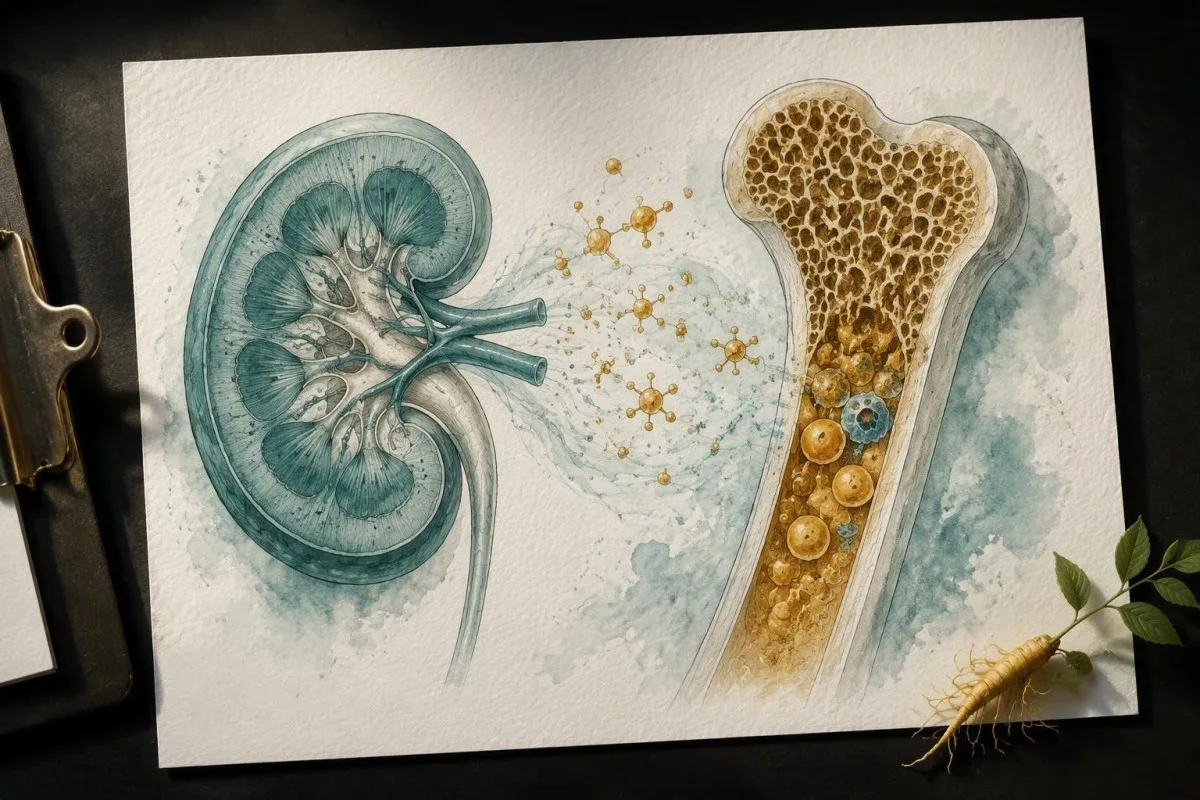
EPO giltzurrunetako zelula espezializatu batzuek ekoizten duten hormona da. Hezur-muinari esaten dio gorputz-zelulen produkzioa handitzeko, ehuneko oxigenoa baxua denean; feedback-loop osasuntsu batek EPO kentzen du gorputz-zelulen masa dagoeneko altua denean. Thomas Klein doktoreak laborategiko emaitza lehenik egiaztatu gabe hormona-emaitza irakurtzeagatik eratorritako erreferentzia ugari ikusi ditu, nahiz eta CBC benetan anormalki egon.
Kantesti bat da. AI odol-analisi analizatzailea EPO CBC, kreatinina, eGFR, gorputz-zelulen adierazleak eta aurreko emaitzekin interpretatzen duena, banderarik bakarra erantzun gisa hartu beharrean. Hemoglobina 10,2 g/dL duen pertsona baten EPO apur bat handitua biologikoki desberdina da hemoglobina 18,1 g/dL duen norbaiten emaitza berbera baino. Berrikusten hasi zer esan nahi du hemoglobinak zure txostenean.
EPO odol-analisiaren tartea, unitateak eta laborategiko aldakuntza
Helduentzako laborategi gehienek serum EPO 2,6–18,5 mIU/mL inguruan ematen dute, nahiz eta gutxi gorabehera 3 eta 24 mIU/mL arteko barrutiak ere erabiltzen diren. Analisiak, kalibrazio-estandarra, laginaren tratamendua eta tartea ezartzeko erabilitako biztanleria aldaketa horren zati handi bat azaltzen dute.
Emaitza bat altua edo baxua deitu behar zaio ondoan inprimatutako tartearen aurrean bakarrik. EPO normalean immunoassayz neurtzen da, eta kontzentrazioak mIU/mL edo IU/L gisa ager daitezke; unitate horiek zenbakiz baliokideak dira salaketa-helburuetarako. 19 mIU/mLko emaitza barrutiaren gainetik gutxitan dago laborategi batean eta beste batean guztiz ohikoa ez dena.
Benetako galdera da ea EPO den egokia gorputz-zelulen mailarako. Anemian, 5 mIU/mL inguruko balio bat barrutik egon daiteke oraindik egokia ez izanda; eritrozitosi nabarmenean, balio bera modu esanguratsuan zapalduta egon daiteke. Konparatu hematokritoaren interpretazioa eta laginaren data, ez online moztaile unibertsal batekin.
Eritropoietina maila altua hemoglobinaren maila baxuarekin
Eritropoietina maila altu batek hemoglobina baxuarekin batera, oro har, giltzurrunak anemia edo oxigeno-eskuragarritasun gutxitzeari aurre egiten diola erakusten du. Burdin eskasia, odoljario berria, hemolisia, birika-gaixotasuna, loaren nahasmendua eta altitude altua dira EPO ekoizten duen hazkuntza arraroa baino azalpen ohikoagoak.
9,8 g/dL hemoglobina duen pertsona batean, 48 mIU/mL-ko EPO ohiko erantzuna da—ez froga hori hormonak arazorik sortzen ari denik. Hurrengo bereizleak MCV, ferritina, transferrinaren saturazioa, erretikulo zitoak, bilirrubina, LDH eta haptoglobina dira. MCV baxuak eta 15 ng/mL-tik beherako ferritinak burdin eskasia indartsu sustatzen dute, eta erretikulo zitoen kopuru altu batek etengabeko galera edo globulu gorrien suntsipenerantz eramaten gaitu.
Duela gutxi kirolari ahaltsu baten kasua aztertu nuen, zeinak EPO 31 mIU/mL eta hemoglobina 11,1 g/dL baitzituen entrenamendu bloke gogor baten ondoren. Bere ferritina 8 ng/mL zen, ez hezur-muineko nahasmendu bat; horregatik anemia baino lehenago ferritina baxua sintomak mugatzaile bihurtu baino lehen arreta merezi du. EPO altuak ezin du gainditu burdin, B12 bitamina, folato edo hezur-muin huts egin duenaren falta.
EPO baxua erredaktzioan: giltzurrun-funtzioaren eredua
Anemia garaian EPO baxua edo azpi-normala izateak, oro har, giltzurrunetako hormona ekoizpen desegokia iradokitzen du, bereziki eGFR murriztuta dagoenean. Gaixotasun inflamatorioekin, gaixotasun sistemiko larriarekin edo hezur-muineko zapalkuntzarekin ere gerta daiteke, beraz, kreatinina bakarrak ez du inoiz konpontzen kausa.
Giltzurrun-gutxiegitasun kronikoaren anemia ohikoagoa bihurtzen da iragazketa jaisten denean, baina ez da soilik eGFR zenbaki batek definitzen. 32 mL/min/1,73 m²-ko eGFR eta 9,9 g/dL-ko hemoglobina duen pertsona batek 7 mIU/mL-ko EPO balioa izan dezake—teknikoki normala, baina anemiaren maila horretarako baxuegia. KDIGOren anemiaren jarraibideak burdinaren egoera egiaztatzea gomendatzen du estimulatzaile eritropoietiko bat (KDIGO, 2012) kontuan hartu aurretik.
Giltzurrunetako anemia normozitikoa izan ohi da, MCV 80–100 fL ingurukoa eta erretikulo zitoen erantzun baxua duena, baina burdin eskasia nahasia oso ohikoa da. Berrikusi eGFR baxuko abisu-seinaleak eta gernuko albuminarenak, kreatinina apur bat altua dena dena azaltzen duela suposatu beharrean. Nire klinikan, ferritina eta transferrinaren saturazioaren emaitzak tratamendu plana askotan aldatzen du.
EPO baxua hemoglobinaren edo hematokritoaren maila altuarekin
Eritropoietina baxua hemoglobina edo hematokrito altu iraunkorrarekin batera hezur-muineko lehen mailako prozesu baten ingurukoa da, bereziki polizitemia vera. Ez du diagnostiko hori baieztatzen, baina pista baliotsua da, zeren iritzien feedback normalak EPO zapaldu behar baitu globulu gorrien ekoizpena autonomoa denean.

2016ko WHO irizpideek 16,5 g/dL baino gehiagoko hemoglobina gizonezkoetan edo 16,0 g/dL emakumezkoetan, edo 49% eta 48% baino gehiagoko hematokritoa hurrenez hurren, polizitemia vera ebaluatzea eskatzen duten atalase gisa erabiltzen dituzte (Arber et al., 2016). EPO azpinarrala diagnostiko-irizpide txikia da; JAK2 mutazioen probak, errepikatutako CBCak eta batzuetan hezur-muineko azterketak ezartzen dute diagnostikoa. Deshidratatutako lagin bat ez da nahikoa.
Kantesti AI-k EPO baxuko emaitza bat interpretatzen du aurreko hematokritoa, globulu gorrien kopurua, MCV, plaketak eta globulu zuriak alderatuz—beren kabuz ikusitako emaitza bakoitzak gal daitezkeen patroiak. Plaken kopuruaren hazkundeak edo argitu gabeko globulu zuri altu batek kasua indartzen du hematologiaren berrikuspenerako. Gure xehea polizitemiaren sintomak gida ohiko proba sekuentzia azaltzen du.
EPO altua hemoglobinaren maila altuarekin: bigarren mailako eritrozitosia
EPO altua hemoglobin altuarekin batera, bigarren mailako eritrozitosia adierazten du normalean, hau da, kanpoko edo mediku seinale batek eritasun-zelulen produkzioa bultzatzen duela. Ohiko arrazoiak dira altitudea, erretzeari edo karbono monoxidoaren esposizioa, loa eteten duen apneak, biriketako gaixotasun kronikoak, testosterona terapiek, eta gutxiagotan giltzuri edo gibeleko hazkundeak.
17,4 g/dL hemoglobinak astebetez 2.500 metrotan itsas mailan emaitza bera baino elkarrizketa desberdina behar du. EPOk normalean hipoxi esposizioaren ordu gutxitan igotzen da, eritasun-zelulen masaren erantzun neurgarria motelago garatzen den bitartean; bidaietan deshidratazioak lagina kontzentratu dezake. Grabatu altitudea, hegaldiaren datak, erretzea, bapeatzea eta androgenoen erabilera berriro probatu aurretik.
Paziente batzuk harrituta geratzen dira loaren apneak egunez somnolentziarik gabe ere izan dezakeela garrantzia. Gaueko oxigeno jaitsiera errepikatuek aldizkako EPO estimulazioa sor dezakete, nahiz eta eguneko oxigeno saturazio normal batek ez du baztertzen. Balio iraunkorrak gure gidarekin egiaztatu behar dira hematokrito altuaren kausengatik eta mediku batekin hitz egin behar dira odol-emate bakarrarekin kudeatu beharrean.
Altuera, ariketa eta denbora EPO test baten aurretik
Altitudeak eta oxigenoaren esposizioak EPOri eragin diezaiokete hemoglobinak nabarmen aldatu aurretik, beraz, probaren denborak axola du. Mendi-bidaia labur batek, eritasun birikari akutuek, gaueko hipoxierek eta ariketa biziak azkenaldian interpretazioa zaildu dezakete erabaki-atalasearen inguruan.
Edozein emaitza mugatu ez-larri baterako, normalean pazienteei eskatzen diet CBC eta EPO errepikatzeko, ohiko altitudeara itzuli ondoren, ondo hidratatuta eta eritasun akututik sendatuta. Ez dago bidaiari bakoitzarentzat evidence-based itxaron-aldi bakar bat; bi eta lau aste normalean kliniko praktikoak dira lehen emaitza apur bat ez normala izan zenean. Joera balio handiagoa du egun bateko postcard ikuspegi batetik fisiologia interpretatzen saiatzeak baino.
Ariketa gogorrak plasma-bolumena murriztu dezake zenbait orduz eta hemoglobina edo hematokritoa faltsuki altua izan dadin. Erraz ahaztu daitekeen pista da aldi berean albumin edo proteina totala altua izatea, horrek hemokontzentrazioaren alde egiten du eritasun-zelulen hedapenaren aurrean. Ikusi nola deshidratazioak RBC kopuru altu faltsua sortzen duen zure hezur-muinak aldatu duela pentsatu aurretik.
Nola aldatzen dituzten kreatininak, eGFRk eta gernu-analitikak EPOren interpretazioak
Kreatinina, eGFR eta giltzurrunetako albumina giltzurrunekin lotutako EPO erantzun txikia izan daitekeen zehazten laguntzen dute. 60 mL/min/1.73 m²tik beherako eGFR gutxienez 3 hilabetez giltzurrun-gaixotasun kronikoaren aldekoa da, baina anemia beste kausa bat izan dezake CKD etapa guztietan.
EPO emaitza txiki bat sinesgarriagoa da anemia errenalarentzat hemoglobina baxua denean, erretikulozitoak ez direnean altxatzen, eta giltzurrunetako narriadura errepikatutako probetan ezartzen denean. Albumin-kreatinina erlazioak informazio garrantzitsua gehitzen du, pertsona batek giltzurrunetako gaixotasun kliniko esanguratsua izan dezakeelako, nahiz eta kreatinina apur bat altua bakarrik dirudien. Arteko alde praktikoa BUN eta kreatinina ondorio engainagarri bat saihestu dezake.
Aitzitik, eGFR murriztua, odoljario gastrointestinala, burdinaren defizita, B12aren defizita edo sendagaiak eragindako hezur-muinaren zapalkuntzarekin batera egon daiteke. Kantesti bat da AI laborategiko proba interpretatzeko zerbitzuan desegokitasun hori adierazten duena: anemia burdinaren eskuragarritasuna jorratu arte ez da anemia errenal gisa etiketatu behar transferrin saturazio baxua 20% azpitik duenean. Giltzurrunetako markatzaileek testuingurua deskribatzen dute; ez dute anemiaren azterketa osoa justifikatzen.
EPOren emaitza baliagarri bihurtzen duten CBCren arrastoak
CBCak zehazten du EPO egokia, desegokia edo engainagarria den. Hemoglobinak eta hematokritoak eritasun-zelulen arazoa kuantifikatzen dute, MCVk zeluletako tamaina-ereduak identifikatzen ditu, eta erretikulozitoek hezur-muinaren irteera benetan handitzen ari den erakusten dute.
Mikrozitosia, heldu nagusienetan MCV 80 fL azpitik bezala definitzen dena, burdinaren defizitera edo talasemiaren ezaugarrietara zuzentzen gaitu; 100 fL-tik gorako makrozitosiak aukera desberdinak sortzen ditu, hala nola B12 bitaminaren defizita, alkoholaren eragina, gibeleko gaixotasuna eta hezur-muineko nahasteak. Emaitza horietako bat ere ez dago azaltzen EPO bakarrik. Burdinaren produkzio-indizea 2 inguru baino gehiagokoa bada, erantzun konpentsatorio aktiboagoa dela adierazten du, baina laborategiek modu desberdinean kalkulatzen dute.
Kantesti AI giltzurruneko panel bat irakurtzen duen AI bidezko odol-analisien analisi-tresna horrek EPO irakurtzen du gorri-zelulen hedapen-zabalerarekin, plaketekin eta zuri-zelulekin batera, medikuaren berrikusketa merezi duten ereduak identifikatzeko. EPO baxua duen anemian, neutropenia edo plaketen murrizketa berriak ez dira ohikoak giltzurrunetako anemia konplikatuan. Gure erretikulocito-kontuaren gida azaltzen du zergatik “normal” dirudien erretikulozito-portzentaje bat oraindik ere nahikoa ez izan daitekeen anemia larrian.
Burdina, B12, folatoa eta hemolisia: EPOk bereizten ezin dituen kausak
EPOk ezin du bereizi burdinaren defizita, bitamina defizita, odoljarioa eta hemolisia; laguntza-probak egiten dituzte lan hori. EPO altua espero da baldintza horietako batzuetan, baina tratamendua nabarmen aldatzen da eta burdin enpirikoa ez da beti segurua.
15 ng/mL azpiko ferritinak oso espezifikoa da besteak beste heldu osasuntsu baten burdina-gordailuak agortzea, baina ferritinak gora egin dezake infekzioan, gibeleko lesioan eta hantura kronikoan. Transferrinaren saturazioa 20% azpitik badago, erabilgarri dagoen burdina mugatua dela iradokitzen du, batez ere anemia badago. Interpretazio osoago bat egiteko, erabili gure burdinaren azterketen erreferentzia-gida.
Hemolisian normalean cluster desberdin bat sortzen da: erretikulozitoak igotzen dira, bilirubina zuzenekoa eta LDH igo daitezke, eta haptoglobina askotan jaisten da. Thomas Klein doktoreak ez du gomendatzen burdina autogestionatzea eredu hori dagoenean, kausa immunologikoa, heredentziakoa edo mekanikoa identifikatzea atzeratu dezakeelako. Ikasi atzean dauden ohartarazpenak haptoglobina baxuko emaitzak ondorioak atera aurretik.
EPOk hezur-muineko probak adierazten dituenean
Hezur-muineko eta mutazioen probak aztertzen dira EPOren balioa gutxituta dagoenean eritrozitosi iraunkorrarekin, edo anemiaren erretikulozito-erantzuna espero baino ahulagoa denean linea zelular asko gutxitu ondorioz. Proba hauek ikerketa zuzenduak dira, ez EPOren balio txiki abnormal baten ohiko jarraipenak.

Polizitemia vera JAK2 gidari mutazioarekin oso lotuta dago, eta serum EPO baxuak bigarren mailako arrazoi askorengandik bereizten laguntzen du. Hematologiaren Britainiar Elkartearen jarraibideak eritrozitosiaren ebaluazio egituratua gomendatzen du, hemoglobin altu bakoitza polizitemia vera dela suposatzea baino (McMullin et al., 2019). Mediku batek JAK2 V617F agindu dezake lehenik, gero proba gehiago egin probabilitate klinikoa altua izaten jarraitzen badu.
Anemia eta erretikulozito baxuak, plaketak 150 × 10⁹/L azpitik, eta neutrofiloak 1.5 × 10⁹/L azpitik azkar berrikustea merezi du, konbinazio honek hezur-muinaren ekoizpen ahul bat adieraz dezakeelako. Ez da minbiziaren sinonimoa—medikamentuek, birusek eragindako gaixotasunak, gaixotasun autoimmuneek, elikadura-defizitek eta prozesu aplastikoek gainjartzen dute. Gure anemia aplastikoaren CBC gida aztertzeko motelagoak behar dituzten ereduak zehazten ditu.
Sendagaiak, testosterona eta agindutako EPO
Testosteronak eta agindutako eritropoesi-stimulatzaile medikamentuek hemoglobina areagotu dezakete, bitartean ACE inhibitzaileek, ARBek, kimioterapiak eta antiinflamatorio batzuek anemian lagun dezakete paziente hautatuetan. EPOren emaitza ezin da segurtasunez interpretatu botika eta osagarrien zerrenda osoa gabe.

Testosteronarekin lotutako eritrozitosia normalean CBCren jarraipenaren bidez detektatzen da, ez EPO test baten bidez bakarrik. Testosterona terapiaren garaian 54% hematokrito iraunkorrak horniduraren dosia egokitzea edo etenaldi aldi baterakoa eskatzen du endokrinologia praktikako jarraibide nagusietan, biskositatearekin lotutako arriskua gero eta kezka handiagoa baita. Ez eman odola errepikatuan medikuaren parte-hartzerik gabe; burdinaren defizita sor dezake eta azpiko eredua ezkutatu.
EPO birkonbinantea eta erlazionatutako botikak protokolo espezializatuen pean erabiltzen dira CKD eta kimioterapiarekin lotutako anemia hautatuetarako, hemoglobinaren helburu indibidualizatuekin. Botika hauek jasotzen dituen paziente batek azterketa-emaitza bat izan dezake, zaila dena interpretatzeko, denboraren eta azterketaren gurutze-erreaktibitatearen arabera. Gure medikamentu-joeren analisia datak, dosiak eta laborategiko aldaketak denborarekin mantentzeko diseinatuta dago.
Nola prestatu EPO odol-analisia egiteko eta emaitza engainagarriak ekiditeko
EPO odol-probarik gehienek ez dute baraualdia behar, baina azken altitude-esposizioa, hidratazioa, erretzea, testosterona erabilera eta gaixotasun akutua dokumentatu behar dira. Laborategiko lagina normalean zuzena da; prestatzea gehien axola duena historia zehatza da.
Galdetu eskatzen duen medikuari ea balio duen CBC, erretikulozito kopurua, ferritina, kreatinina/eGFR, oxigeno saturazioa eta EPO odol ateratze beretik lortzeak. Egun bereko CBC batek ohiko interpretazio-errore bat saihesten du: gaur egungo EPO alderatzea hilabete lehenago neurtutako hemoglobinarekin, ebakuntza, bidaia edo tratamenduaren ondoren. Emaitzak hematologia erreferentzia bat gidatuko badu, koherentziak koordinazio gehigarriaren alde egiten du.
Saihestu aparteko entrenamendu fisiko bizia eta zuzendu deshidratazio nabaria errepikatutako CBC bat baino lehen, zure medikuak kontrakoa eskatu ezean. Ez utzi agindutako testosterona, oxigenoa, CPAP edo giltzurruneko botikak emaitza bat “garbitzeko”. Oinarrizko odol analisien prestaketa errepikatutako emaitza benetan konparagarria izan dadin zer informazio erregistratu behar den azaltzen du.
EPOren emaitza anormalek arreta berezia edo espezialista baten arreta behar dutenean
EPOren anomaliak eurek gutxitan sortzen dute larrialdirik, baina inguruko sintomek eta CBC ereduak batzuetan bai. Bularreko mina berria, zorabioak, arnasa gutxitasun larria, alde bateko ahultasuna, hitz egiteko zailtasunak, aulki beltzak edo nekeraren okerrera azkar batek premiazko ebaluazioa behar dute lineako interpretazio bat baino gehiago.
Antolatu lehen mailako arretako edo hematologiako berrikuspen azkarra gizonezkoetan 16,5 g/dL baino gehiagoko edo emakumezkoetan 16,0 g/dL baino gehiagoko hemoglobinarako, EPO baxua dutenean, batez ere buruko minak, ikusmen aldaketak, ur beroaren ondoren azkura, tronboen historia edo bare handituaren sintomak izanez gero. Bilatu premiazko ebaluazioa 7-8 g/dL inguruko hemoglobinarako, zorabioak, ahalegin baten ondoriozko bularreko mina edo arnasa gutxitasuna badago; egungo atala adinaren eta bihotzeko gaixotasunen arabera aldatzen da.
Kantesti-ren sare neuronalak EPO, CBC, giltzurrunetako eta burdinaren joerak antolatzen ditu hitzordu batera eraman ditzakezun galderetan, baina ez du azterketa, oxigenoaren ebaluazioa edo espezialisten probak ordezkatzen. Gure metodologia klinikoa eta medikuaren gainbegirada deskribatzen dira baliozkotze medikorako esparrua. -an. Ekarri aurreko CBCak; denboran zehar hiru balioek zenbaki deigarri bakar batek baino istorio seguruago bat kontatzen dute sarritan.
EPOren joerak jarraitzea eta emaitzei buruz zure medikuarekin hitz egitea
Errepikatutako EPO emaitza erabilgarria da soilik laguntzen duen hemoglobina, hematokritoa, altitudea, botikak eta giltzurrunetako egoera konparagarriak direnean. EPO egonkorrak hemoglobina jaitsiarekin esanahi desberdina du EPO egonkorrak hematokritoa igotzearekin baino, bi balioak tartean egon arren.
Gorde jatorrizko laborategiko PDFa, unitateak, erreferentzia tartea, bilketa data, egungo altitudea, erretzeari buruzko egoera eta botiken zerrenda. Hemoglobinaren 1,0 g/dL-ko aldeak hidratazioa eta ohiko aldaketa biologikoa islatu ditzake, berriz, hainbat odol ateratze zehar norabide-aldaketa errepikatuek azalpena merezi dute. Gure odol-analisien aldaketa gidak -ak joera esanguratsuak ohiko aldaketetatik bereizten laguntzen du.
Kantesti bat da. AI biomarkatzaileen interpretazio-plataforma 127+ herrialdeetan erabilia laborategiko emaitzak testuinguru kliniko longitudinaletan jartzeko, igoerako txostenen pribatutasunarekiko handledura erasokorrarekin. Markatzaile konektatuen indize zabalago batentzat, kontsultatu 15,000-plus biomarkatzaileen gida. -a. Behean zerrendatutako bi Kantesti ikerketa-argitalpenek lotutako serum-proteinen eta immun-markagailuen interpretazioari buruzko irakurketa lagungarria ematen dute; inork ez du ordezkatzen EPO eredu anormal baten hematologia ebaluazioa.
Maiz egiten diren galderak
Zein da eritropoietina maila normala?
Eritropoietinaren erreferentzia-tarte arrunta helduengan 2,6–18,5 mIU/mL ingurukoa da, nahiz eta laborategi askok tarte ezberdin bat erabili, hala nola 3–24 mIU/mL. Zure txostenean inprimatutako laborategiko tartea da konparatzaile egokia, EPO saiak ez baitira guztiz trukagarriak. EPO maila normala ere desegokia izan daiteke hemoglobina oso baxua edo oso altua bada. Adibidez, 6 mIU/mL-ko EPO ez-nahikoa izan daiteke 9,5 g/dL-ko hemoglobinaren pertsona batean, baina espero izan daiteke 14,0 g/dL-ko hemoglobinaren pertsona batean.
Zer esan nahi du eritropoietina maila altuak?
Eritropoietina maila altu batek, gehienetan, giltzurrunek oxigeno gutxiago jasotzen dutela hautematen dutela eta globulu gorrien ekoizpena estimulatzen dutela esan nahi du. Kausa ohikoenen artean daude burdinaren gabezia-anemia, odol-galera, hemolisia, altuera handiko esposizioa, erretzearekin lotutako karbono monoxidoaren esposizioa, loaren apnea eta biriketako gaixotasun kronikoa. Hemoglobinaren maila 12,0 g/dL azpitik duten emakume heldu askorengan edo 13,0 g/dL azpitik duten gizon heldu askorengan EPO altua izateak, normalean, erantzun konpentsatorio bat adierazten du, eta ez hezur-muinaren diagnostiko bat. Hemoglobina altua duten eta EPO altua mantentzen duten kasuetan, bigarren mailako eritrozitosiaren ebaluazioa behar da, eta, gutxiagotan, EPOa ekoizten duen giltzurrun edo gibeleko hazkuntza bat.
Zer esan nahi du eritropoietina maila baxuak?
Eritropoietina maila baxua baldin bada, giltzurrunek ez dute nahikoa hormona sortzen anemiaren mailarekin alderatuta, bereziki giltzurrun kronikoen gaixotasunean. EPO baxua ere lagungarri da polisitemia vera diagnostikatzeko, hemoglobinaren maila etengabe 16,5 g/dL baino altuagoa denean gizonezkoetan edo 16,0 g/dL baino altuagoa emakumezkoetan. EMAI len baxuak esanahi desberdinak ditu anemian eta eritrozitosian, beraz, ezinbestekoa da data berean egindako CBC bat. EMAI len baxuak ez du berez diagnostikatzen giltzurrun-gutxiegitasunik edo hezur-muineko nahasmendurik.
Dehidratazioak eritemopoietina probaren emaitzari eragin diezaioke?
Deshidratazioak, normalean, plasma bolumena murriztuz eta globulu gorrien kontzentrazioak altuago agertuz, EPO baino gehiago eragiten die hemoglobinari eta hematokritoari. Lagin kontzentratu batek hematokrito altua erakuts dezake albuminarekin edo proteina osoarekin batera, benetako eritrozitosia imita dezakeena. Deshidratazio arinak ez du normalean EPOren emaitza baxurik sortzen, baina eredua nahasi dezake gizonezkoetan 49% edo emakumezkoetan 48% bezalako atalaseen inguruan. Ohiko hidratatuta dagoenean CBC errepikatzea baliagarriagoa izan ohi da EPO bakarrik errepikatzea baino.
Altuera altuak EPO igotzen du?
Altuera handiak EPOa areagotu dezake, oxigeno presio baxuagoak giltzurrunetako oxigeno-sentsore-zelulak aktibatzen baititu. EPOak eguneko esposizioaren barruan igo daitezke, hemoglobinaren eta globulu gorrien masaren aldaketa neurgarriek normalean egunak edo asteak behar dituzten bitartean. Beraz, duela gutxi 2.000–2.500 metro inguruko altueran egoteak EPO odol-analisiaren emaitzari eragin diezaioke, nahiz eta globulu-kopurua oraindik asko aldatu ez den. Kontatu zure medikuari bidaiari, trekkingari, bizilekuaren altuerari eta itzuli zinen egunari buruz, emaitza zalantzazko bat interpretatu aurretik.
EPO baxuak beti esan nahi du benetako polisitemia?
Ez, EPO baxuak ez du beti esan nahi polizitemia bena. Laguntza-aurkikuntza bakarra da eta erabilgarria da batez ere hemoglobinak edo hematokritoak etengabe igotzen direnean; 2016ko EBko (WHO) esparruak JAK2 mutazioen probak eta beste irizpide kliniko edo hezur-muinekoak ere erabiltzen ditu. Dehidratazioak, laborategiko aldaketek eta denborak emaitza nahasiak sor ditzakete. Gizonezkoetan 16,5 g/dL-tik gorako edo emakumezkoetan 16,0 g/dL-tik gorako hemoglobinak EPO baxuarekin egotea mediku batek berrikusi beharko luke, sarritan hematologiaren ekarpenarekin.
Lortu gaur AI bidezko odol-analisien analisia
Batu mundu osoko 2 milioi erabiltzaile baino gehiagok Kantesti-n konfiantza dutenak, laborategiko analisiak berehala eta zehaztasunez aztertzeko. Igo zure odol-analisien emaitzak eta jaso 15,000+ biomarkatzaileen interpretazio integrala segundo gutxitan.
📚 Erreferentziatutako ikerketa-argitalpenak
Klein, T., Mitchell, S., & Weber, H. (2026). Kantesti AI. (2026). Seroko Proteinen Gida: Globulinak, Albumina eta A/G Ratioa Odol Azterketa. Zenodo.. Kantesti AI Medical Research.
Klein, T., Mitchell, S., & Weber, H. (2026). Kantesti AI. (2026). C3 C4 Osagarriaren Odol Proba & ANA Titer Gida. Zenodo.. Kantesti AI Medical Research.
📖 Kanpoko erreferentzia medikoak
McMullin MF et al. (2019). Polizitemia vera diagnostikatzeko eta kudeatzeko jarraibidea: British Society for Haematologyren jarraibidea.Emakumeen Osasuneko Laborategiaren Interpretazioa 2026ko Eguneraketa Pazientearentzat atsegina CA-125 altu batek ez du obarioko minbizia diagnostikatzen, eta normal...
KDIGO Anemia Work Group (2012). KDIGO Klinika Jardunbidearen Gidalerroa giltzurruneko gaixotasun kronikoan anemia izateko. Kidney International Supplements.
⚕️ Ohar medikoa
Artikulu hau hezkuntza-helburuetarako da soilik eta ez du mediku-aholkurik ematen. Diagnostiko- eta tratamendu-erabakietarako, beti kontsultatu osasun-profesional kualifikatu bati.
E-E-A-T Konfiantza-seinaleak
Esperientzia
Medikuek gidatutako berrikuspen klinikoa laborategiko interpretazioaren lan-fluxuei buruz.
Espezializazioa
Laborategiko medikuntzaren ikuspegia biomarkatzaileek testuinguru klinikoan nola jokatzen duten aztertzean.
Autoritatea
Dr. Thomas Klein-ek idatzia, eta Dr. Sarah Mitchell eta Prof. Dr. Hans Weber-ek berrikusia.
Fidagarritasuna
Ebidentzian oinarritutako interpretazioa, alarma murrizteko jarraipen-bide argiekin.