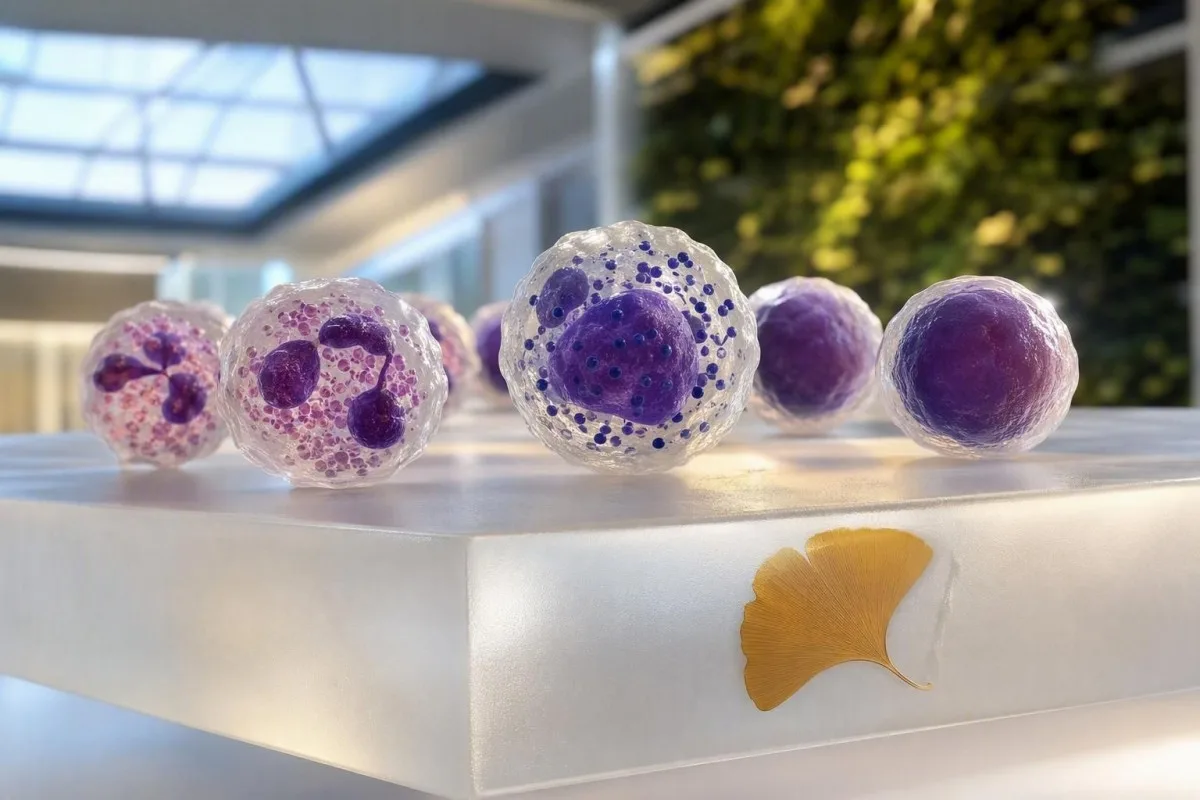
La majoria dels adults tenen un recompte absolut de basòfils de 0,00–0,10 × 10⁹/L (0–100/µL), mentre que el percentatge sol ser del 0–11%. Un percentatge lleugerament inusual sovint reflecteix canvis en altres glòbuls blancs; el recompte absolut de basòfils és el resultat que sol guiar el seguiment.


- Basòfils absoluts solen ser de 0,00–0,10 × 10⁹/L (0–100/µL) en adults i són més útils clínicament que un percentatge sol.
- Percentatge de basòfils és habitualment del 0–11% de glòbuls blancs, però pot augmentar quan els neutròfils o els limfòcits disminueixen, fins i tot si el recompte absolut és normal.
- Nens sovint utilitzen el mateix límit superior pràctic de 0,10 × 10⁹/L després de la infància, però l'interval específic per edat del laboratori té prioritat.
- Una CBC repetida en 2–8 setmanes és raonable per a una basofília aïllada i lleu després d'una al·lèrgia, infecció o canvi de medicació.
- Basofília persistent per sobre de 0,20 × 10⁹/L mereix revisió clínica, especialment amb un nombre elevat de glòbuls blancs, anèmia, esplenomegàlia o símptomes constitucionals.
- revisió urgent està indicat per a leucocitosi marcada, pèrdua de pes inexplicable, suors nocturnes profuses, febre o sensació de plenitud primerenca sota les costelles esquerres.
- Zero basòfils en un diferencial automatitzat és comú i normalment no té significació clínica.
- IA de Kantesti llegeix els basòfils juntament amb els glòbuls blancs totals, els eosinòfils, el recompte de plaquetes, l'hemoglobina i els resultats previs en lloc de tractar una alerta com a diagnòstic.
Recompte absolut de basòfils versus percentatge de basòfils
Els basòfils absoluts de 0,00–0,10 × 10⁹/L són generalment normals en adults, mentre que un percentatge de basòfils del 0-1% és només una proporció del recompte total de glòbuls blancs. Quan els dos discrepen, els clínics solen donar més pes al resultat absolut.
Un percentatge pot semblar alt simplement perquè un altre tipus de glòbuls blancs és baix. Per exemple, 1,5% basòfils amb un recompte de glòbuls blancs de 3,0 × 10⁹/L produeix un recompte absolut de només 0,045 × 10⁹/L, ben dins de molts intervals d'adults. És per això que una alerta de percentatge per si sola rarament explica tota la història.
El càlcul és senzill: glòbuls blancs totals × percentatge de basòfils ÷ 100. Un recompte de glòbuls blancs de 12,0 × 10⁹/L i basòfils del 2% dóna 0,24 × 10⁹/L, que és una elevació genuïna. Per a un context més ampli, consulteu la nostra guia de què inclou una CBC.
Kantesti és una Analitzador de sang amb IA que converteix els percentatges en recompte absoluts clínicament comparables quan l'informe d'origen proporciona un diferencial. En la meva experiència, aquesta conversió evita molta alarma innecessària després d'un control de salut rutinari.
Per què el nombre absolut és més estable
Els analitzadors automatitzats compten milers d'esdeveniments cel·lulars, però els basòfils són normalment rars, sovint menys d'1 de cada 100 glòbuls blancs. Els petits canvis analítics i biològics poden, per tant, moure el percentatge de manera més notable que el recompte absolut.
Intervals de referència pràctics de basòfils per edat
La majoria dels laboratoris utilitzen un interval de referència de basòfils absoluts de 0,00–0,10 × 10⁹/L des de la infància fins a l'edat adulta, però els intervals de nadó poden ser més amplis. Utilitzeu l'interval imprès al costat del vostre propi resultat, ja que els límits de referència depenen del mètode de l'analitzador i de la població sana local del laboratori.
Per als nadons durant les primeres setmanes de vida, alguns laboratoris pediàtrics accepten basòfils absoluts fins a aproximadament 0,20–0,40 × 10⁹/L. El sistema immunitari neonatal s'està adaptant ràpidament, de manera que els límits d'adults no s'han d'imposar a un resultat de nadó sense aportació pediàtrica.
A partir d'aproximadament 1 any en endavant, molts serveis apliquen un límit superior pràctic proper a 0,10 × 10⁹/L, o 100/µL. Un resultat de 0,11 × 10⁹/L en un nen pròsper amb un recompte total de glòbuls blancs normal sol ser una pregunta de repetició i context, no una emergència.
CLSI EP28-A3c explica per què els laboratoris estableixen o verifiquen els seus propis intervals de referència en lloc de prendre prestat un interval universal (CLSI, 2010). La nostra guia de intervals d'edat de neutròfils mostra el mateix principi per a un altre recompte diferencial.
Comprendre les unitats de basòfils en informes del Regne Unit, els EUA i internacionals
Un recompte de basòfils de 0,10 × 10⁹/L equival a 100/µL, per la qual cosa els informes que utilitzen unitats diferents poden descriure el mateix resultat. Els recompte sanguinis complets del Regne Unit sovint informen en ×10⁹/L, mentre que els laboratoris dels Estats Units utilitzen habitualment cèl·lules/µL o K/µL.
Per convertir ×10⁹/L a cèl·lules/µL, multipliqueu per 1.000. Així, 0,05 × 10⁹/L equival a 50/µL; 0,25 × 10⁹/L equival a 250/µL. Un informe que mostra 0,0 pot haver estat arrodonit a un decimal en lloc de provar que literalment no hi hagi basòfils.
Un valor que apareix com a 0,2 K/µL equival a 0,20 × 10⁹/L. Aquesta distinció és important perquè 0,2 i 0,2 K/µL són mesures completament diferents. Els pacients les confonen regularment quan comparen informes de dos països.
Si el seu informe indica FBC en lloc de CE, els components són en gran part els mateixos; la nostra explicació del recompte sanguini complet del Regne Unit tradueix la terminologia comuna.
Per què el recompte de basòfils augmenta o disminueix
La basofília lleu acompanya més sovint les al·lèrgies, la inflamació crònica, la recuperació d'una infecció o un canvi immunitari relacionat amb medicaments. Un recompte baix o zero basòfils normalment no és significatiu perquè aquestes cèl·lules circulen en quantitats molt petites.
Els basòfils transporten receptors per a IgE i poden alliberar histamina i altres mediadors després de l'exposició a al·lèrgens. La rinitis al·lèrgica estacional, la urticària crònica, l'asma i alguns trastorns de la pell poden coincidir amb un petit augment, tot i que un recompte normal no els descarta ni els confirma.
L'hipotiroïdisme, la malaltia inflamatòria intestinal, els trastorns reumàtics i algunes infeccions cròniques també es poden associar amb basofília. La pregunta útil no és “quina malaltia ho causa?” sinó “quens altres senyals hi ha presents?”—CRP, eosinòfils, símptomes, historial de medicació i la trajectòria importen.
Un augment d'IgE i un recompte d'eosinòfils poden recolzar un patró al·lèrgic, mentre que la picor aïllada pot necessitar una revisió més àmplia; el nostre article sobre proves de sang per a pell amb picor explica els límits pràctics de les proves de CE.
Quan s'ha de repetir una CBC per als basòfils?
Repetiu un CE en 2-8 setmanes per a un lleuger augment aïllat de basòfils després d'un desencadenant temporal, sempre que us trobeu bé i la resta del recompte sigui tranquil·litzador. Repetiu abans, normalment en pocs dies a 2 setmanes, quan els leucòcits totals estan augmentant o hi ha múltiples línies cel·lulars anormals.
Per a un recompte absolut de basòfils de 0,11-0,20 × 10⁹/L després d'un refredat, un episodi d'al·lèrgia estacional, una vacunació o un curs curt d'esteroides, sovint prefereixo una repetició tranquil·la en lloc d'una cascada de proves. Intenteu utilitzar el mateix laboratori i registreu malalties recents, medicaments nous, canvis en el tabaquisme i exposició a esteroides.
No intenteu “millorar” el recompte abans d'una repetició. La hidratació és sensata, però els suplements, els antihistamínics, els corticoides i l'exercici d'enduriment intens poden canviar el diferencial més ampli. El nostre guia de l'cronologia de les proves de sang detallar els efectes comuns del moment.
Kantesti és una plataforma d’interpretació d’anàlisi de sang AI que compara el diferencial actual amb CBCs anteriors i assenyala un augment constant de manera diferent d'una marca única. Una tendència de 3-6 mesos és sovint més informativa que un sol punt decimal.
Com preparar-se per a una repetició fiable del recompte de basòfils
Les proves de basòfils normalment no requereixen dejú, però una repetició de CBC és més interpretable quan no esteu greument malalt i les condicions de recollida són similars. Aneu a tenir líquids normals, menjars ordinaris i un dia rutinari en lloc de canvis extrems.
Eviteu programar una repetició no urgent durant una febre, una flare al·lèrgica significativa o el dia després d'un esdeveniment d'enduriment inusualment dur si l'objectiu és establir una línia de base. L'estrès agut per hormones i els canvis de líquids poden moure diverses subpoblacions de leucòcits durant hores o dies.
Expliqueu al metge o al flebotomista els corticoides sistèmics, el liti, els tractaments que contenen epinefrina, la teràpia biològica recent i qualsevol suplement nou. Els esteroides normalment redueixen els basòfils i els eosinòfils circulants, de manera que un resultat “normal” mentre els preneu pot no representar la vostra línia de base no tractada.
La qualitat de la mostra encara importa. Les mostres d'EDTA coagulades i l'anàlisi retardada poden fer que els diferencials automatitzats siguin menys fiables; si diversos valors de CBC semblen estranys junts, reviseu quan cal una nova extracció.
Patrons de CBC que fan que els basòfils elevats siguin més significatius
La basofília és més preocupant quan els basòfils absoluts superen 0,20 × 10⁹/L i es produeixen amb leucòcits persistents per sobre d'11,0 × 10⁹/L, anèmia, canvis en les plaquetes o cèl·lules immadures. La combinació, no només els basòfils, determina la rapidesa amb què els metges investiguen.
Una dona de 44 anys que vaig revisar tenia 0,28 × 10⁹/L de basòfils, 16,4 × 10⁹/L de leucòcits, 610 × 10⁹/L de plaquetes i sacietat precoç. Aquest patró va justificar un circuit d'hematologia la mateixa setmana; el resultat individual de basòfils no va fer el diagnòstic, però va ser una pista important.
La basofília juntament amb un elevat nombre de neutròfils i símptomes esplènics pot ocórrer en neoplàsies mieloproliferatives, inclosa la leucèmia mieloide crònica. European LeukemiaNet aconsella proves moleculars i avaluació especialitzada quan el patró clínic i de recompte sanguini planteja aquesta possibilitat (Hochhaus et al., 2020).
Un frotis perifèric pot distingir els canvis diferencials reals de la incertesa de l'analitzador i pot mostrar un esquerre o cèl·lules atípiques. Més informació sobre vies de CBC del càncer de sang sense assumir que un recompte anòmal significa càncer.
Símptomes i resultats que requereixen atenció mèdica urgent
Busqueu avaluació mèdica urgent per a basofília amb febre, suors nocturnes abundants, pèrdua de pes inexplicable, hematomes nous, dificultat per respirar, fatiga severa o plenitud a la part superior esquerra de l'abdomen. Aquests símptomes no són causats per un resultat de basòfil lleugerament elevat en si mateixos; assenyalen que el quadre clínic més ampli necessita avaluació.
Un recompte total de leucòcits superior a 30 × 10⁹/L, valors en ràpid augment o granulòcits immadurs visibles en un informe s'han de discutir urgentment amb el metge que ho ha demanat. Mal de cap sever, canvis visuals, dolor toràcic o símptomes neurològics necessiten avaluació d'emergència independentment del recompte de basòfils.
La majoria de persones amb 0,11–0,20 × 10⁹/L de basòfils i sense símptomes no necessiten atenció d'emergència. Tot i així, aquesta és una d'aquelles àrees on el context importa més que el número, especialment si els resultats anteriors eren 0,02 × 10⁹/L i el nou recompte està augmentant.
Si també teniu falta d'alè o pal·lidesa, els valors de hemoglobina i plaquetes acompanyants poden importar més immediatament; vegeu el nostre guia de proves sanguínies per a la dispnea.
Què significa tenir pocs basòfils o un resultat de zero
Un resultat de basòfils de 0,00 × 10⁹/L sol ser normal i poques vegades necessita repetir-se per si sol. Els basòfils poden estar per sota del llindar de notificació de l'analitzador perquè són naturalment escassos a la circulació.
L'estrès agut, la infecció, l'embaràs, l'hipertiroïdisme i el tractament amb corticoides poden reduir temporalment els basòfils circulants. Tanmateix, no hi ha cap síndrome de símptomes reconeguda causada per basòfils baixos aïllats, a diferència de la neutropènia clínicament significativa.
El problema analític és fàcil de passar per alt: si només es compten uns pocs basòfils, la variabilitat de la mostra rutinària pot convertir 0,01 × 10⁹/L en 0,00 × 10⁹/L en una extracció posterior. Això no és necessàriament un canvi biològic.
El consell pràctic del Dr. Thomas Klein és ignorar una bandera de basòfils baixos quan la resta de la CBC és sòlida i no hi ha símptomes rellevants. La nostra guia dedicada explica basòfils a zero.
Basòfils en l'embaràs i més endavant a la vida
L'embaràs i l'envelliment no tenen un únic punt de tall especial per als basòfils; l'interval del laboratori de notificació i el patró complet de leucòcits segueixen sent la millor referència. L'embaràs sovint augmenta el total de leucòcits a través dels neutròfils, cosa que pot fer que el percentatge de basòfils sembli més baix sense una reducció real de basòfils.
Durant l'embaràs, un recompte total de leucòcits de 12–15 × 10⁹/L pot ser fisiològic, especialment més endavant en la gestació, de manera que la interpretació basada en percentatges esdevé encara menys fiable. Un recompte absolut de basòfils segueix sent preferible, però els símptomes preocupants encara tenen prioritat sobre un interval de referència.
En adults grans, un recompte de basòfils persistentment nou per sobre de 0,20 × 10⁹/L mereix atenció perquè la càrrega de medicaments i els trastorns de la medul·la òssia són més comuns amb l'edat. Això no el fa diagnòstic; simplement redueix el llindar per observar la tendència de la CBC i la frotis.
Per a altres errors d'interpretació específics de l'embaràs, reviseu senyals d’alarma de la analítica de l’embaràs.
Medicaments, al·lèrgies i fluctuacions de basòfils
Els símptomes d'al·lèrgia poden coincidir amb basòfils lleugerament elevats, mentre que els corticoides sistèmics sovint els redueixen en pocs dies. Cap dels dos patrons confirma un diagnòstic d'al·lèrgia ni demostra que un medicament sigui el responsable.
Els antihistamínics bloquegen principalment els receptors d'histamina; no normalitzen de manera fiable el recompte de basòfils. La prednisolona oral i altres glucocorticoides sistèmics poden redistribuir els leucòcits, sovint disminuint els eosinòfils i els basòfils mentre augmenten els neutròfils circulants.
El liti és una pista medicamentosa menys comuna però útil perquè pot augmentar la producció de leucòcits. Els medicaments biològics, la quimioteràpia i els tractaments immunomoduladors mai no s'han d'aturar a causa d'un resultat de CBC; pregunteu a l'equip que els prescriu com s'ajusta el resultat al seu pla de seguiment.
Un recompte elevat de basòfils juntament amb sibilàncies, urticària, inflor facial o debilitat s'ha de gestionar com un problema de símptomes, no com un enigma de laboratori. La nostra guia d'IgE alta explica on els marcadors d'al·lèrgia ajuden i on enganyen.
Què revisen els clínics després de basofília persistent
La basofília absoluta persistent normalment demana una repetició de la CBC, una revisió manual del frotis, una revisió de la medicació i dels símptomes, i després proves dirigides si el recompte total de leucòcits o altres línies cel·lulars són anormals. Els panells de càncer amplis no són el primer pas habitual per a un lleuger augment aïllat.
El primer punt de decisió és si el resultat és aïllat. Un hemoglobina, plaquetes i recompte de leucòcits estables i un frotis normal donen un fort suport a un pla conservador; l'anèmia, la trombocitosi, la leucocitosi o l'esplenomegàlia canvien l'avaluació en una direcció diferent.
Quan un trastorn mieloproliferatiu és plausible, els clínics poden sol·licitar proves BCR::ABL1, proves JAK2, lactat deshidrogenasa, urat i revisió especialitzada. Valent et al. descriuen la basofília persistent com una troballa significativa en la classificació de neoplàsies basofíliques i mieloide (Valent et al., 2022).
La xarxa neuronal de Kantesti identifica combinacions que mereixen revisió però no diagnostica leucèmia a partir d'un CBC. La nostra enfocament de validació mèdica explica per què la interpretació de laboratori ha de mantenir la supervisió clínica.
Com fer el seguiment dels basòfils sense reaccionar de manera exagerada
Una tendència significativa de basòfils és un canvi direccional persistent entre CBC comparables, no un sol moviment de 0,04 a 0,08 × 10⁹/L. Amb un límit de referència per a adults de 0,10 × 10⁹/L, ambdós valors romanen dins del rang malgrat ser numèricament diferents.
Deseu el recompte absolut, el percentatge, els leucòcits totals, els neutròfils, els eosinòfils, l'hemoglobina, les plaquetes, la data, la malaltia recent i els medicaments després de cada extracció. Aquest petit registre dóna al seu metge més informació útil que captures de pantalla de senyals d'alerta aïllades.
Kantesti és una Eina d’anàlisi d’analítica de sang impulsada per IA utilitzat en 127+ països per comparar els resultats del CBC longitudinalment preservant l'interval declarat del laboratori d'origen. El Dr. Thomas Klein recomana revisar almenys dos resultats comparables abans d'assignar significat a un canvi diferencial límit.
Una regla útil: si el recompte absolut roman per sota de 0,10 × 10⁹/L, el recompte total de leucòcits és estable i us sentiu bé, el seguiment rutinari en el vostre proper anàlisi de sang previst sol ser suficient. Utilitzeu la nostra guia de diferències en analítiques per jutjar si un canvi és probablement real.
Preguntes per fer en una cita de seguiment
La millor pregunta de seguiment és “Quin és el meu recompte absolut de basòfils i què més va canviar al CBC?” Aquesta redacció dirigeix la conversa cap a les variables que realment modifiquen el risc clínic.
Pregunteu si el recompte és nou, persistent, ascendent o probablement reactiu; si cal una revisió de frotis; i quan s'ha de fer el proper CBC. Porteu una llista d'infeccions recents, símptomes d'al·lèrgia, medicaments, suplements, viatges i antecedents familiars de trastorns sanguinis.
Si teniu un recompte absolut superior a 0,20 × 10⁹/L més leucòcits totals elevats, pregunteu si l'aportació hematològica és adequada. Si el recompte només està lleugerament per sobre del rang i és aïllat, pregunteu quin canvi desencadenaria una prova més aviat en lloc d'assumir el pitjor.
Els estàndards educatius revisats per metges de Kantesti són supervisats a través del nostre Consell Assessor Mèdic. A partir del 30 d'agost de 2026, l'aproximació més segura continua sent senzilla: interpreteu el recompte absolut, confirmeu la persistència i actueu més ràpid només quan el patró més ampli ho justifiqui.
Preguntes freqüents
Quin és el recompte normal de basòfils en adults?
L'interval de referència habitual en adults per als basòfils absoluts és de 0,00–0,10 × 10⁹/L, que equival a 0–100 cèl·lules/µL. La majoria dels laboratoris informen d'un percentatge de basòfils de 0–11%, tot i que el percentatge pot ser enganyós quan el recompte total de leucòcits canvia. L'interval de referència imprès pel seu propi laboratori té precedència perquè els mètodes i les poblacions de referència locals difereixen. Un resultat aïllat de 0,11 × 10⁹/L normalment requereix context o una repetició planificada en lloc d'atenció d'urgència.
Són alts els basòfils 2%?
Un percentatge de basòfils del 2% està per sobre de molts intervals de percentatges de laboratori, però no és suficient per jutjar el risc sense el recompte total de leucòcits. Amb 4,0 × 10⁹/L de leucòcits, el 2% equival a un recompte absolut de basòfils de 0,08 × 10⁹/L, que sovint és normal. Amb 15,0 × 10⁹/L de leucòcits, el mateix 2% equival a 0,30 × 10⁹/L i mereix una revisió clínica. Localitzeu sempre el recompte absolut de basòfils abans d'interpretar el percentatge.
Quan hauria de repetir una CBC per basòfils alts?
Una repetició de la CBC en 2-8 setmanes és raonable per a una basofília aïllada lleu d'aproximadament 0,11–0,20 × 10⁹/L després d'una malaltia, una exacerbació al·lèrgica o un canvi de medicació. Repetiu abans quan el recompte total de leucòcits estigui augmentant, el recompte de basòfils sigui superior a 0,20 × 10⁹/L, o l'hemoglobina i les plaquetes també siguin anormals. Utilitzeu el mateix laboratori sempre que sigui possible, ja que els mètodes d'analitzador i els intervals de referència varien. Febre, pèrdua de pes, suors nocturnes, hematomes o sensació de plenitud a la part superior esquerra de l'abdomen justifiquen una revisió mèdica urgent en lloc d'esperar una nova anàlisi de rutina.
Els basòfils són perillosos en zero?
Un recompte de basòfils de 0,00 × 10⁹/L normalment no és perillós i generalment no requereix seguiment si la resta de la CBC és normal. Els basòfils són cèl·lules rares, de manera que un diferencial automatitzat rutinari pot informar zero perquè el nombre detectat cau per sota de l'arrodoniment o la precisió de la informació. Els corticoides, l'estrès agut, l'embaràs i les infeccions poden reduir temporalment els basòfils circulants. Els metges no diagnostiquen immunodeficiència a partir de basòfils baixos aïllats.
Les al·lèrgies poden causar basòfils alts?
Les condicions al·lèrgiques poden coincidir amb basòfils lleugerament elevats perquè els basòfils participen en respostes immunològiques relacionades amb la IgE i alliberen mediadors com la histamina. Un recompte elevat de basòfils no demostra que l'al·lèrgia sigui la causa, i moltes persones amb símptomes al·lèrgics significatius tenen recompte de basòfils normals. Els recompte superiors a 0,20 × 10⁹/L que persisteixen un cop els símptomes al·lèrgics s'han resolt s'han de revisar amb el CBC complet. Els eosinòfils, la IgE total, els símptomes cutanis i l'exposició a medicaments poden proporcionar un context més útil.
Quin recompte de basòfils suggereix leucèmia?
Cap recompte aïllat de basòfils diagnostica leucèmia, però una basofília absoluta persistent per sobre de 0,20 × 10⁹/L amb leucocitosi, anèmia, anomalies plaquetàries, granulòcits immadurs o símptomes esplènics hauria d'impulsar una avaluació mèdica. La basofília pot ocórrer en la leucèmia mieloide crònica i altres neoplàsies mieloproliferatives, però les causes reactives continuen sent més comunes per a elevacions aïllades lleus. Els clínics poden demanar un frotis i proves moleculars dirigides com BCR::ABL1 només quan el patró més ampli ho recolza. Un recompte total de glòbuls blancs normal i un CBC estable canvien substancialment el nivell de preocupació.
Obteniu avui una anàlisi de sang amb IA
Uneix-te a més de 2 milions d’usuaris a tot el món que confien en Kantesti per a una anàlisi instantània i precisa de proves de laboratori. Pengeu els vostres resultats d’anàlisi de sang i rebeu una interpretació completa de biomarcadors 15,000+ en segons.
📚 Publicacions de recerca citades
Klein, T., Mitchell, S., & Weber, H. (2026). Guia de tipus de sang B negatiu, prova de sang de LDH i recompte de reticulòcits. Kantesti Recerca mèdica amb IA.
Klein, T., Mitchell, S., & Weber, H. (2026). Diarrea després del dejuni, taques negres a la femta i guia gastrointestinal 2026. Kantesti Recerca mèdica amb IA.
📖 Referències mèdiques externes
Institut d’Estàndards Clínics i de Laboratori (2010). Definició, establiment i verificació d'intervals de referència al laboratori clínic. CLSI EP28-A3c.
⚕️ Avís mèdic
Aquest article és només per a finalitats educatives i no constitueix assessorament mèdic. Consulteu sempre un professional sanitari qualificat per a decisions de diagnòstic i tractament.
Senyals de confiança E-E-A-T
Experiència
Revisió clínica liderada per metges dels fluxos de treball d’interpretació de laboratori.
Experiència
Enfocament en medicina de laboratori sobre com es comporten els biomarcadors en context clínic.
Autoritat
Escrit pel Dr. Thomas Klein amb revisió de la Dra. Sarah Mitchell i el Prof. Dr. Hans Weber.
Fiabilitat
Interpretació basada en l’evidència amb vies de seguiment clares per reduir l’alarma.