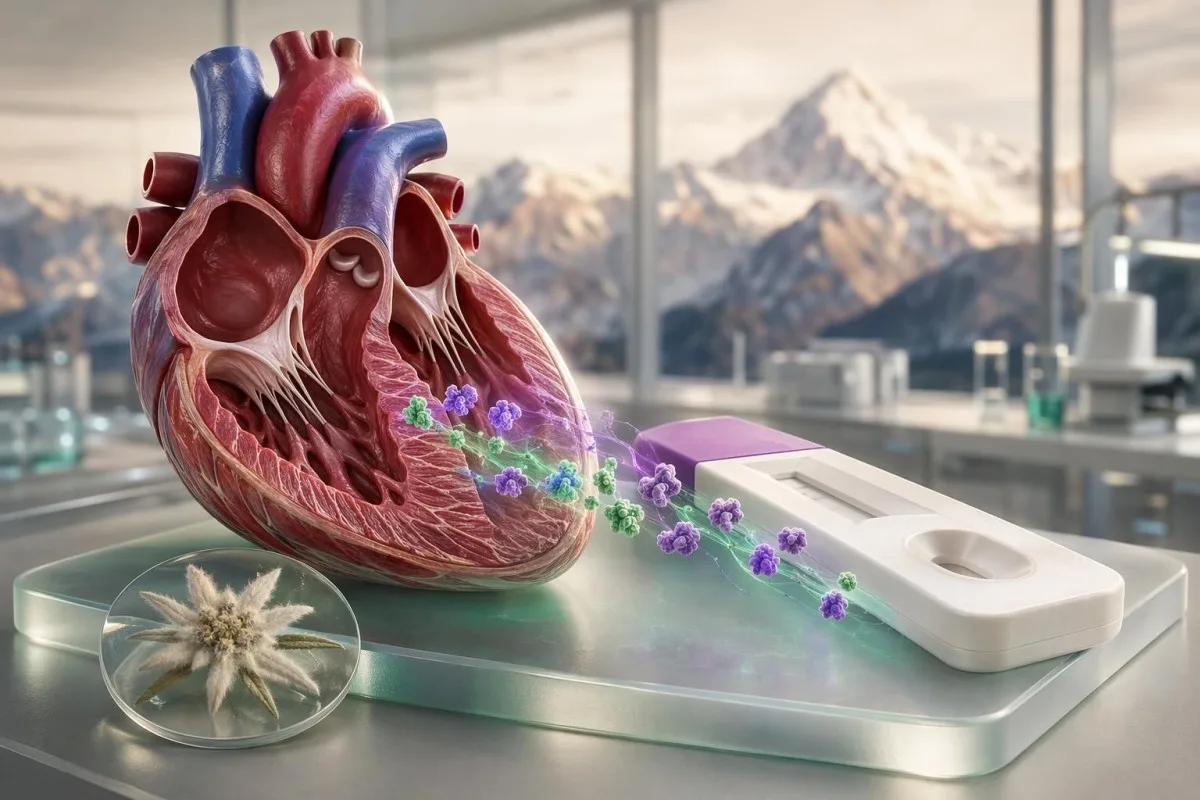
High troponin means heart muscle injury, but not every elevation is a heart attack. The pattern, timing, symptoms, ECG, kidney function and repeat result decide how urgent it is.


- High troponin is dangerous when it rises or falls above the assay's 99th percentile and comes with chest pressure, breathlessness, sweating, fainting, or ECG changes.
- Troponin units differ by lab: high-sensitivity results are usually reported in ng/L, while older conventional results may use ng/mL; 0.04 ng/mL equals 40 ng/L.
- Heart attack diagnosis requires troponin elevation plus evidence of ischemia, not troponin alone.
- Serial testing matters because a 1-3 hour repeat can show a meaningful rise or fall that a single result cannot prove.
- Kidney disease can cause stable chronic troponin elevation, often in the 20-100 ng/L range depending on assay and illness severity.
- Non-heart-attack causes include heart failure, sepsis, pulmonary embolism, myocarditis, rapid arrhythmia, stroke, hypertensive crisis, and strenuous endurance exercise.
- ER symptoms include chest pressure lasting more than 5-10 minutes, shortness of breath at rest, fainting, new weakness on one side, or severe sweating with nausea.
- Lab error or interference is uncommon but real; a result that conflicts with symptoms and ECG may need repeat testing on a different assay.
Is an Elevated Troponin Dangerous Right Now?
Yes—high troponin can be dangerous because it means cardiac muscle cells have leaked troponin into the bloodstream, but the number alone does not diagnose a heart attack. The dangerous pattern is chest pressure, breathlessness, sweating, fainting, new ECG changes, or a troponin that rises or falls over 1-3 hours. A stable mild elevation can come from kidney disease, heart failure, sepsis, pulmonary embolism, myocarditis, or strenuous exercise.
In practice, I treat troponin like smoke from an electrical panel: sometimes it is a house fire, sometimes it is a scorched wire, and sometimes the alarm is too sensitive. Cardiac troponin I and T are proteins inside heart muscle; a value above the lab's 99th percentile means myocardial injury, not automatically myocardial infarction.
A high-sensitivity troponin T cutoff is often around 14 ng/L, but some high-sensitivity troponin I assays use sex-specific cutoffs such as roughly 16 ng/L for women and 34 ng/L for men. Those numbers vary by analyzer, which is why I often start with our troponin timing guide before interpreting a single flag.
I am Thomas Klein, MD, and when I review a result like troponin 38 ng/L, the first question is not, “How high is it?” but “Is it changing, and is the patient ischemic?” Kantesti is an AI blood test analyzer that reads troponin alongside kidney function, electrolytes, CBC, CRP and the lab's own reference interval rather than treating one red flag as the whole story.
Troponin is one of more than 15,000 biomarkers catalogued in Kantesti's biomarker guide, but it is also one of the few results where symptoms can outrank the number. If you have active chest pain, do not upload first and decide later—seek emergency care.
What Number Counts as High Troponin?
A troponin result counts as high when it exceeds the 99th percentile upper reference limit for that specific assay. For many high-sensitivity tests this is measured in ng/L, while older conventional troponin reports may use ng/mL, so the same biological result can look very different on paper.
The Fourth Universal Definition of Myocardial Infarction states that myocardial injury is present when cardiac troponin is above the 99th percentile, and acute injury requires a rise or fall in serial values (Thygesen et al., 2018). That wording matters: injury is the lab finding; heart attack is a clinical diagnosis.
A conventional troponin I result of 0.04 ng/mL equals 40 ng/L, because 1 ng/mL equals 1000 ng/L. Patients often panic when comparing portal screenshots from different hospitals, so our article on lab units changing results is worth reading before assuming a sudden jump.
Some European labs use lower sex-specific high-sensitivity cutoffs than older mixed-population cutoffs, and this can identify smaller heart injuries in women. The trade-off is more false alarms: a 72-year-old with CKD and troponin 28 ng/L may need observation, not an automatic cath lab.
The pattern is more useful than the isolated value. A troponin of 18 ng/L that rises to 76 ng/L in 2 hours is usually more concerning than a chronic 42 ng/L that has been stable for 6 months.
When High Troponin Points to a Heart Attack
High troponin points to a heart attack when it rises or falls above the 99th percentile and there is evidence of reduced blood flow to heart muscle. Evidence can include chest pressure, new ECG changes, imaging changes, or a blocked coronary artery found during urgent evaluation.
According to the 2021 AHA/ACC Chest Pain Guideline, high-sensitivity troponin is preferred for evaluating acute chest pain because it detects myocardial injury earlier than older assays (Gulati et al., 2021). In the ER, clinicians usually combine ECG within 10 minutes, symptom history, and repeat troponin at 1-3 hours.
The classic myocardial infarction pattern is not just “high”; it is dynamic. A rise from 9 to 55 ng/L in 2 hours with crushing chest pressure is a different clinical animal from 55 to 56 ng/L in a dialysis patient with no chest symptoms.
High troponin symptoms can be surprisingly subtle. I have seen older adults present with fatigue, indigestion, or breathlessness rather than pain, which is why our overview of heart problem blood tests explains why biomarkers never replace clinical judgment.
A normal early troponin does not fully rule out heart attack if pain began less than 2 hours earlier. That is one reason emergency departments repeat testing rather than sending every low first result home.
ER Warning Signs That Should Not Wait
Go to the ER immediately if high troponin appears with chest pressure, shortness of breath at rest, fainting, severe sweating, new confusion, one-sided weakness, or oxygen levels below about 92%. These symptoms can signal heart attack, pulmonary embolism, dangerous arrhythmia, stroke, sepsis, or shock.
Chest pressure that lasts more than 5-10 minutes, radiates to the jaw or left arm, or arrives with nausea and clammy sweating is a same-day emergency even if the troponin result is only mildly high. Do not drive yourself if symptoms are active; emergency teams can treat rhythm problems en route.
Women, people with diabetes, and adults over 75 may have fewer classic symptoms during myocardial infarction. Our discussion of missed heart markers in women goes deeper into why “no crushing pain” can be falsely reassuring.
Breathlessness plus high troponin can be heart failure, pulmonary embolism, severe pneumonia, or right-heart strain. In my experience, this is the group patients underestimate most because they are not always in pain.
If the result came from an outpatient portal while you are currently unwell, call local emergency services or your clinician's urgent line. A portal flag cannot assess skin color, oxygen saturation, ECG, blood pressure, or whether you look frighteningly unwell in the doorway.
High Troponin Causes Beyond Heart Attack
The main high troponin causes beyond heart attack are heart failure, kidney disease, sepsis, pulmonary embolism, myocarditis, rapid arrhythmia, stroke, hypertensive crisis, and extreme endurance exercise. These conditions injure or strain heart muscle without a classic blocked coronary artery.
Troponin elevated causes can be grouped into supply-demand mismatch, direct cardiac inflammation, pressure strain, reduced clearance, and assay interference. A fever of 39.5°C, heart rate of 145 bpm, and low blood pressure can raise troponin even when the coronary arteries are not blocked.
A 64-year-old with pneumonia, creatinine 2.1 mg/dL, CRP 180 mg/L, and troponin 52 ng/L may be seriously ill, but the treatment path is not the same as an ST-elevation heart attack. Pattern reading across the full blood panel usually gives the first clue.
Kantesti AI flags this distinction because isolated troponin is a poor storyteller. A high troponin with high lactate, low blood pressure, and neutrophilia points toward systemic stress; high troponin with new ST depression and chest pressure points toward coronary ischemia.
The danger is real even when it is not a heart attack. Patients with sepsis or pulmonary embolism and elevated troponin generally have higher short-term risk than similar patients with normal troponin, because the heart is showing strain.
Why Kidney Disease Can Keep Troponin High
Kidney disease can keep troponin chronically elevated because long-term cardiac strain, small vessel disease, left ventricular thickening, and reduced clearance all contribute. In chronic kidney disease, a stable troponin above the 99th percentile is common and still predicts higher cardiovascular risk.
I often see high-sensitivity troponin values between 20 and 100 ng/L in people with advanced CKD who are not having an acute heart attack. The deciding clue is whether today's value is meaningfully above their baseline.
A rise of more than about 20% from a chronically elevated baseline is commonly used as a practical warning sign, though clinicians disagree on the exact cutoff. If you do not know your kidney stage, start with the plain-English guide to eGFR results.
Dialysis can complicate interpretation because volume shifts, blood pressure changes, and left ventricular strain vary around treatment days. A troponin drawn immediately after a difficult dialysis session may not mean the same thing as one drawn during a calm clinic visit.
Chronic elevation should not be dismissed as “just kidneys.” It often marks a heart under repeated stress, and it should trigger risk review: blood pressure, LDL or ApoB, diabetes markers, smoking status, sleep apnea clues, and medication adherence.
Lab Timing: Why One Troponin Result Can Mislead
One troponin result can mislead because troponin may be normal early after symptom onset, rise over several hours, and remain elevated for days after an injury. Serial testing is the safest way to separate acute change from chronic baseline.
High-sensitivity troponin can become abnormal within 1-3 hours after myocardial injury, while older assays may take longer. The 2020 ESC non-ST-elevation ACS guideline supports rapid rule-in and rule-out pathways using serial high-sensitivity troponin measurements (Collet et al., 2021).
A falling troponin can still be clinically significant. If a patient had chest pain at 3 a.m. and tests at noon, the peak may already have passed, so a result of 220 ng/L falling to 160 ng/L still suggests recent injury.
The opposite problem is early reassurance. A troponin of 5 ng/L drawn 30 minutes after sudden chest pressure may be too early to trust; our guide on repeating abnormal labs explains why timing is part of interpretation, not an afterthought.
Most patients want a yes-or-no answer. I wish biology worked that way. In the first few hours of chest pain, the repeat value often carries more diagnostic weight than the first value.
Pulmonary Embolism and Right-Heart Strain
Pulmonary embolism can raise troponin when pressure suddenly rises in the right side of the heart. A troponin above the 99th percentile in suspected pulmonary embolism is not a heart attack diagnosis, but it can mark higher risk and the need for closer monitoring.
The classic PE symptom cluster is sudden breathlessness, chest pain with breathing, fast heart rate above 100 bpm, low oxygen saturation, or leg swelling. Troponin rises because the right ventricle is working against an abrupt pressure load.
D-dimer helps in selected low-to-intermediate risk patients, but it is nonspecific and rises with age, pregnancy, infection, surgery, and inflammation. If you are trying to understand that pathway, our patient guide to high D-dimer meaning explains why symptoms change the risk calculation.
Troponin plus D-dimer plus oxygen saturation tells a more useful story than any one marker. The Kantesti research article on D-Dimer and clotting covers the broader coagulation context, including aPTT, protein C, and fibrinogen patterns.
Do not use a normal troponin to rule out PE. Many smaller emboli do not raise troponin at all, while a large PE can raise troponin and still have a normal coronary artery angiogram.
Sepsis, Infection, and High Lactate Patterns
Sepsis can raise troponin through low blood pressure, inflammation, oxygen mismatch, microvascular dysfunction, and direct cardiac stress. In severe infection, troponin elevation often means the illness is more serious, even when there is no blocked coronary artery.
In ICU populations, roughly 30-60% of patients with sepsis may show elevated troponin depending on assay sensitivity and illness severity. I do not call that benign; I call it non-coronary myocardial injury until the clinical picture proves otherwise.
High lactate above 2 mmol/L, low blood pressure, high respiratory rate, confusion, and rising creatinine change the urgency. Our sepsis marker guide explains how lactate, procalcitonin, CBC, and CRP add context to troponin.
Kantesti is an AI lab test interpretation service that checks troponin against inflammatory markers, renal markers, electrolytes, and CBC patterns because sepsis rarely travels alone on a lab report. A troponin of 70 ng/L with lactate 4.5 mmol/L is not a “minor heart enzyme issue.”
Treatment priorities differ from a coronary blockage. The urgent work is source control, fluids when appropriate, antibiotics, oxygen, vasopressors if needed, and ECG review to make sure a simultaneous heart attack is not being missed.
Myocarditis, Pericarditis, and Post-Viral Troponin
Myocarditis can raise troponin because the heart muscle itself becomes inflamed or injured after a viral illness, autoimmune flare, toxin exposure, or medication reaction. Troponin values in myocarditis can range from mild elevations to thousands of ng/L, so symptoms and imaging matter.
A typical myocarditis story is chest discomfort, palpitations, breathlessness, feverish illness in the prior 1-3 weeks, and troponin elevation with or without ECG changes. Cardiac MRI and echocardiography often help when the diagnosis is unclear.
Pericarditis pain often improves when sitting forward and worsens when lying flat or taking a deep breath. Troponin rises when the tissue response involves the heart muscle as well as the surrounding sac, sometimes called myopericarditis.
After viral infections, including COVID-19, troponin interpretation becomes tricky because fatigue and chest sensations are common while true myocarditis is much less common. The Long COVID lab guide explains which markers can help and which ones mostly create noise.
Exercise restriction is one of the practical pieces patients miss. If myocarditis is suspected, strenuous activity is usually paused until cardiology review because arrhythmia risk can rise during recovery.
Exercise, Rhabdomyolysis, and Athletic Troponin
Strenuous endurance exercise can temporarily raise high-sensitivity troponin above the 99th percentile, usually peaking within hours and falling within 24-48 hours. This pattern is often transient, but chest pain, fainting, dark urine, or severe weakness changes the risk.
I have reviewed marathon panels where troponin is mildly high, CK is 800-3000 IU/L, AST is up, sodium is low-normal, and the ECG is reassuring. That is not the same scenario as a sedentary patient with chest pressure and a rising troponin.
Creatine kinase is a muscle injury marker, not a heart-specific marker, and it can climb dramatically after heavy lifting or heat stress. Our plain guide to CK on lab results helps separate skeletal muscle signals from cardiac troponin signals.
Rhabdomyolysis becomes urgent when CK is often above 5000 IU/L, creatinine rises, potassium rises, or urine becomes cola-colored. Troponin may be part of the panel, but kidney protection and electrolyte safety may become the immediate priorities.
For athletes, the recheck window matters. A troponin that normalizes after 48 hours and stays normal with rest is less concerning than a value that keeps rising after symptoms have stopped.
Arrhythmia, Heart Failure, and Blood Pressure Spikes
Rapid arrhythmia, heart failure, and hypertensive crisis can raise troponin by increasing oxygen demand or wall stress in heart muscle. These are still serious diagnoses, even when the mechanism is not a classic plaque rupture heart attack.
A heart rate of 160 bpm from atrial fibrillation can produce troponin leak, especially in older patients or those with coronary disease. The key question is whether the rhythm caused the troponin rise or whether a heart attack triggered the rhythm.
Heart failure often raises troponin because stretched heart muscle cells are vulnerable. A high BNP or NT-proBNP, ankle swelling, lung crackles, and oxygen requirement can point toward pressure and volume overload rather than a primary coronary event.
Blood pressure above 180/120 mmHg with chest pain, breathlessness, neurological symptoms, kidney injury, or troponin elevation is an emergency. Our article on irregular heartbeat labs covers potassium, magnesium, TSH, and renal markers that often sit beside rhythm-related troponin elevations.
Kantesti's neural network treats troponin plus potassium 2.9 mmol/L very differently from troponin plus LDL 190 mg/dL and chest pressure. Same cardiac marker, different clinical pathway.
False Positives, Macrotroponin, and Lab Interference
False-positive troponin is uncommon, but it happens when antibodies, assay interference, fibrin, hemolysis, or macrotroponin create a result that does not fit the clinical picture. Suspect interference when troponin is persistently high but symptoms, ECG, imaging, and repeat trends do not match.
Macrotroponin is a troponin-antibody complex that can remain in circulation and cause long-lasting elevations, sometimes for months. The clue is a stable high value with no rise or fall, normal imaging, and repeated clinical mismatch.
Hemolysis, fibrin strands, and heterophile antibodies can also interfere with immunoassays. This is rare enough that we do not start there in a sick patient, but common enough that a calm outpatient with troponin 120 ng/L for six months deserves a lab medicine conversation.
Kantesti is an AI-powered blood test analysis tool that can flag internal contradictions, such as high troponin with normal ECG notes, stable repeat values, and no supportive markers. Our article on AI lab error checks explains what software can notice and what only a clinician can confirm.
A practical next step is repeating troponin on a fresh sample, and sometimes on a different assay platform if the cardiologist or laboratory physician agrees. Never assume “false positive” while symptoms are active.
What to Do With an Elevated Troponin Result
If your troponin is elevated, match the result to symptoms first: active chest pressure, breathlessness, fainting, low oxygen, new neurological symptoms, or shock signs mean emergency care now. If you are stable and the result is from a routine or follow-up test, ask about repeat troponin, ECG, kidney function, and your previous baseline.
Bring the exact assay name, units, reference interval, symptom start time, medications, and any prior troponin values. A troponin of 0.06 ng/mL cannot be interpreted safely without knowing whether the lab uses an older or high-sensitivity method.
When I, Thomas Klein, MD, review troponin in Kantesti's clinical workflow, I look for four anchors: ECG status, serial change, kidney function, and the story of the illness. Our clinical validation page describes how we benchmark interpretation logic against structured clinical scenarios rather than isolated flags.
Kantesti's medical content is reviewed with physician oversight, and our medical advisory board helps keep patient-facing explanations grounded in clinical practice. If you want to understand how our AI parses lab context, the technology guide explains the pattern-based approach in non-technical language.
Kantesti Ltd is a UK company serving patients in more than 127 countries and 75 languages; our About Us page gives the organizational background. But for troponin, the safest rule is simple: symptoms first, trend second, interpretation third.
Frequently Asked Questions
Is high troponin always a heart attack?
High troponin is not always a heart attack; it means heart muscle injury above the assay's 99th percentile. A heart attack diagnosis usually requires a rise or fall in troponin plus evidence of ischemia such as chest pressure, ECG changes, or imaging findings. Kidney disease, sepsis, pulmonary embolism, myocarditis, heart failure, rapid arrhythmia, and strenuous exercise can also raise troponin. A repeat troponin at 1-3 hours often separates acute injury from chronic elevation.
What troponin level is dangerous?
There is no single dangerous troponin level that applies to every lab because assays use different units and cutoffs. Many high-sensitivity troponin T assays use about 14 ng/L as the 99th percentile, while high-sensitivity troponin I cutoffs vary and may be sex-specific. A value more than 3-10 times the upper reference limit, or any rising value with chest pain, breathlessness, fainting, low blood pressure, or ECG changes, should be treated as urgent. The trend and symptoms are often more dangerous than the isolated number.
Can anxiety cause high troponin?
Anxiety alone usually does not raise troponin above the 99th percentile. Severe panic can cause fast heart rate, high blood pressure, chest tightness, and shortness of breath, which can mimic heart symptoms, but true troponin elevation suggests cardiac strain or injury that needs another explanation. If troponin is high during an anxiety-like episode, clinicians usually check ECG, repeat troponin in 1-3 hours, electrolytes, kidney function, and sometimes thyroid markers. Do not assume a high troponin is “just stress” without medical review.
How long does troponin stay elevated?
Troponin can start rising within 1-3 hours after heart muscle injury when high-sensitivity assays are used. After a heart attack, troponin may remain elevated for 5-14 days depending on the size of injury and the assay. After endurance exercise, mild high-sensitivity troponin elevations often fall back toward baseline within 24-48 hours. Chronic kidney disease or heart failure can keep troponin persistently elevated for months or years.
Can kidney disease make troponin high without chest pain?
Yes, chronic kidney disease can produce stable troponin elevations without chest pain, often through long-term heart strain, left ventricular thickening, small vessel disease, and reduced clearance. Values such as 20-100 ng/L may be seen in advanced CKD depending on the assay and the patient's baseline. A rise of about 20% or more from a known chronic baseline is often treated as more concerning for acute injury. Even chronic elevation predicts higher cardiovascular risk and should not be ignored.
Should I go to the ER for elevated troponin?
You should go to the ER for elevated troponin if you have chest pressure, shortness of breath at rest, fainting, severe sweating, new confusion, one-sided weakness, oxygen saturation around 92% or lower, or very low blood pressure. You should also seek urgent care if the troponin is rising on repeat testing or is several times above the lab's upper reference limit. If you feel well and the result was found incidentally, contact the ordering clinician promptly to discuss ECG, repeat troponin, kidney function, and prior baseline. Active symptoms should never wait for a routine appointment.
Can dehydration cause a high troponin result?
Dehydration alone does not usually injure heart muscle, but severe dehydration can strain the heart, worsen kidney function, or trigger a rapid heartbeat that contributes to troponin elevation. A raised result still needs medical interpretation, especially if you have chest symptoms or shortness of breath.
When can I return to exercise after an elevated troponin result?
Do not resume strenuous exercise until the cause has been assessed and a clinician clears you, particularly after chest symptoms, an abnormal ECG, or suspected myocarditis. Gentle daily activity may be reasonable if you feel well; confirmed myocarditis usually requires at least 3 months away from intense exercise and follow-up testing.
Get AI-Powered Blood Test Analysis Today
Join over 2 million users worldwide who trust Kantesti for instant, accurate lab test analysis. Upload your blood test results and receive comprehensive interpretation of 15,000+ biomarkers in seconds.
📚 Referenced Research Publications
Klein, T., Mitchell, S., & Weber, H. (2026). aPTT Normal Range: D-Dimer, Protein C Blood Clotting Guide. Kantesti AI Medical Research.
Klein, T., Mitchell, S., & Weber, H. (2026). Serum Proteins Guide: Globulins, Albumin & A/G Ratio Blood Test. Kantesti AI Medical Research.
📖 External Medical References
⚕️ Medical Disclaimer
This article is for educational purposes only and does not constitute medical advice. Always consult a qualified healthcare provider for diagnosis and treatment decisions.
E-E-A-T Trust Signals
Experience
Physician-led clinical review of lab interpretation workflows.
Expertise
Laboratory medicine focus on how biomarkers behave in clinical context.
Authoritativeness
Written by Dr. Thomas Klein with review by Dr. Sarah Mitchell and Prof. Dr. Hans Weber.
Trustworthiness
Evidence-based interpretation with clear follow-up pathways to reduce alarm.