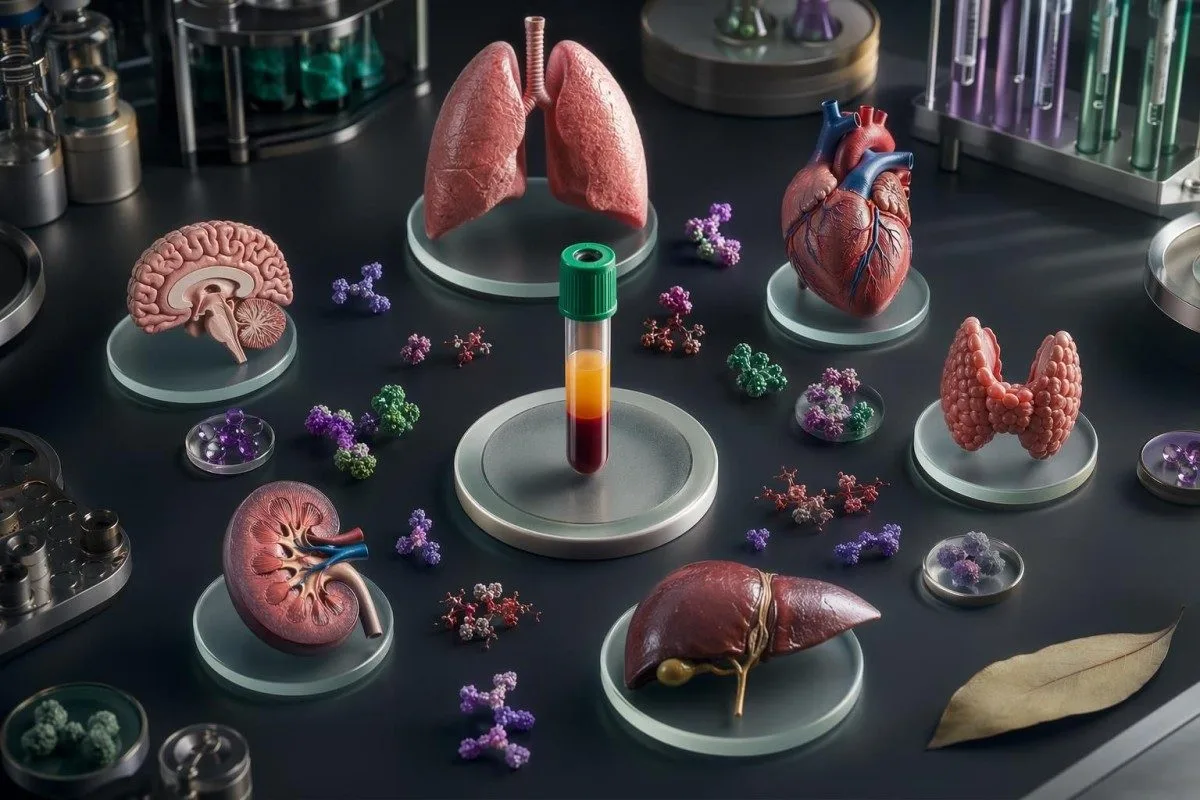
Long COVID is usually diagnosed by timing, symptoms, and exclusion of other causes. Blood tests help doctors find treatable patterns hiding underneath fatigue, breathlessness, palpitations, pain, or brain fog.


- No single diagnostic test confirms long COVID; clinicians use blood tests to rule out mimics and complications after symptoms persist beyond 12 weeks.
- CRP is usually considered normal below 5 mg/L; persistent values above 10 mg/L push doctors to look for infection, autoimmune disease, or inflammatory illness.
- D-dimer is often normal below 0.50 mg/L FEU, but units vary and high results are not specific for clots without symptoms and risk context.
- TSH is commonly interpreted around 0.4–4.0 mIU/L; both low and high results can mimic long COVID fatigue, palpitations, heat intolerance, or brain fog.
- Ferritin below 30 ng/mL often suggests depleted iron stores even when hemoglobin is still normal, especially in menstruating adults and endurance athletes.
- IL-6 blood test is not a first-line long COVID test; many labs use reference limits near 7 pg/mL, but cytokine testing is noisy and context-heavy.
- COVID antibody test may show prior infection or vaccination response, but it does not diagnose long COVID or measure symptom severity.
- Organ stress markers such as ALT, creatinine, eGFR, troponin, and NT-proBNP are checked when symptoms suggest liver, kidney, muscle, or heart involvement.
- Kantesti AI can interpret uploaded blood test PDFs or photos in about 60 seconds, but our platform does not replace urgent medical assessment for red-flag symptoms.
Why one long COVID blood test does not exist
There is no single long covid blood test that proves or excludes the condition. In clinic, we use blood tests to look for treatable mimics and complications: inflammation, clotting, thyroid dysfunction, anemia, kidney or liver stress, heart strain, glucose shifts, and nutrient deficiencies. If symptoms began after SARS-CoV-2 and persist beyond 12 weeks, a normal panel does not make symptoms imaginary; it just narrows the differential. I’m Thomas Klein, MD, and at Kantesti AI we see this pattern daily in uploaded results, especially fatigue and brain fog labs.
The reason is biological heterogeneity. One patient has post-exertional symptom crashes with a CRP of 1.2 mg/L and normal D-dimer; another has new iron deficiency with ferritin 14 ng/mL after months of poor appetite; a third has thyroiditis with TSH 0.08 mIU/L and palpitations. All three may say “long COVID,” but the laboratory story is different.
A diagnostic blood test works best when one disease has one dominant measurable mechanism, like high troponin in acute heart muscle injury. Long COVID appears to involve overlapping mechanisms — immune activation, autonomic disturbance, endothelial changes, mast-cell-like symptoms, viral persistence in some tissues, deconditioning in some people, and plain old coincidental illness. The evidence is honestly mixed.
My practical rule is simple: order labs according to the symptom pattern, not according to fear. A 28-year-old with dizziness on standing needs a different first pass than a 68-year-old with new breathlessness and ankle swelling, even if both had COVID 4 months ago.
How doctors define long COVID before ordering labs
Long COVID is usually defined by symptoms starting within 3 months of SARS-CoV-2 infection, lasting at least 2 months, and not being explained by another diagnosis. The WHO Delphi definition published by Soriano et al. in The Lancet Infectious Diseases set this structure, and it still shapes clinical thinking in 2026.
The NICE, SIGN and RCGP long-COVID guideline recommends symptom-led assessment rather than a fixed universal panel (NICE, SIGN and RCGP, 2024). That matters because a “normal long COVID panel” is not a recognised diagnostic endpoint; it is just one slice of evidence.
In our analysis of uploaded reports from 2M+ users across 127+ countries, I often see the same mistake: patients compare a post-COVID panel to a generic reference range and stop there. But if your pre-COVID ferritin was 85 ng/mL and now it is 22 ng/mL, the result can be “normal” on paper and still clinically meaningful.
Kantesti’s medical review process is overseen by physicians, and our Medical Advisory Board pushes the same principle I use in clinic: match tests to symptoms, medications, age, pregnancy status, baseline health, and the timing of the infection.
Symptom patterns that guide the first lab panel
The first lab panel for suspected long COVID should follow the dominant symptom cluster: fatigue, breathlessness, palpitations, brain fog, pain, dizziness, gut symptoms, or post-exertional malaise. A broad but sensible starter set often includes CBC, CMP, CRP, ESR, ferritin, TSH, HbA1c or fasting glucose, B12, vitamin D, and targeted clotting or cardiac markers when symptoms justify them.
Fatigue with heavy legs after minimal activity often starts with CBC, ferritin, TSH, CRP, ESR, B12, vitamin D, creatinine, ALT, and glucose. If fatigue worsens 12–48 hours after exertion, the blood tests may still be normal; that pattern is more about physiology than a single abnormal marker.
Breathlessness deserves more caution. A normal CBC and CRP do not rule out pulmonary embolism, myocarditis, asthma, dysautonomia, or post-viral airway changes, so clinicians add D-dimer, troponin, NT-proBNP, chest imaging, ECG, or oxygen testing when symptoms point that way. Our symptom decoder walks through these forks without pretending every answer is in a tube.
Brain fog plus tingling is where I often find missed B12 problems, thyroid disease, sleep disruption, ferritin depletion, or glucose variability. A B12 level of 260 pg/mL can be called “normal” by some labs, yet patients with neuropathic symptoms sometimes need methylmalonic acid or homocysteine to clarify functional deficiency.
Inflammation markers: CRP, ESR, CBC and ferritin
Common chronic inflammation markers in long-COVID workups include CRP, ESR, CBC differential, platelets, ferritin, and sometimes fibrinogen. CRP below 5 mg/L is often considered normal, while persistent CRP above 10 mg/L should make clinicians look for another inflammatory driver rather than simply blaming long COVID.
CRP rises quickly with infection or tissue injury, while ESR moves more slowly and is distorted by age, anemia, pregnancy, kidney disease, and immunoglobulin levels. For a deeper comparison, our guide to inflammation blood tests explains why CRP and ESR often disagree.
I see a useful pattern when CRP is normal but ferritin is high, say 460 ng/mL in a man with ALT 68 IU/L and triglycerides 240 mg/dL. That is often metabolic liver stress or inflammatory iron sequestration, not iron overload; ordering serum iron alone can mislead badly.
CBC differential adds texture. Neutrophils above about 7.5 × 10^9/L suggest stress, steroid effect, or bacterial inflammation in the right setting; lymphocytes below 1.0 × 10^9/L can follow viral illness, medication effects, autoimmune disease, or immune suppression. Context beats the flag.
Clotting markers: D-dimer, platelets and fibrinogen
D-dimer, platelet count, PT/INR, aPTT, and fibrinogen may be checked when long-COVID symptoms suggest clotting, bleeding risk, or vascular inflammation. A D-dimer below 0.50 mg/L FEU is commonly treated as negative in many adult algorithms, but age, pregnancy, recent surgery, inflammation, and lab units can change interpretation.
D-dimer is a breakdown product of cross-linked fibrin, so it rises when the body is forming and clearing clots. The problem is specificity: a 72-year-old after pneumonia can have a D-dimer of 0.92 mg/L FEU without a pulmonary embolism, while a younger patient with chest pain and oxygen desaturation needs faster evaluation even before the number returns.
Platelets add a different clue. A platelet count above 450 × 10^9/L after COVID can reflect inflammation, iron deficiency, recovery from infection, or less commonly a bone marrow disorder; platelets below 150 × 10^9/L push the differential toward viral suppression, medications, liver disease, immune thrombocytopenia, or clotting consumption.
If you are on anticoagulants, do not interpret D-dimer in isolation. Our coagulation test guide explains why INR, aPTT, fibrinogen, anti-Xa, and medication timing can matter more than one isolated flag.
Thyroid tests when fatigue or palpitations linger
TSH and free T4 are often checked early because thyroid disease can look exactly like long COVID. A typical adult TSH reference range is about 0.4–4.0 mIU/L, but some European labs use narrower upper limits near 2.5–3.0 mIU/L, especially when evaluating symptoms or fertility.
Post-viral thyroiditis can cause a low TSH phase with tremor, sweating, palpitations, anxiety, weight loss, or loose stools, followed weeks later by a high TSH phase with fatigue and cold intolerance. I have seen patients labelled with anxiety when their TSH was 0.03 mIU/L and free T4 was clearly high.
Hashimoto’s disease is another frequent mimic. A TSH of 6.8 mIU/L with positive TPO antibodies and free T4 at the low end is not “just long COVID”; it may be autoimmune hypothyroidism emerging after a stressful viral illness. Our thyroid panel guide covers when free T3, TPOAb, and TgAb add value.
Biotin can make thyroid results look wrong. Doses of 5–10 mg daily, common in hair supplements, can falsely lower TSH and falsely raise free T4 in some immunoassays, so I usually ask patients to stop biotin for 48–72 hours before retesting if the result does not fit the clinical picture.
Anemia, iron and B12 patterns behind fatigue
CBC, ferritin, iron saturation, TIBC, B12, folate, and reticulocyte count are high-yield tests when fatigue, weakness, breathlessness, hair shedding, restless legs, or exercise intolerance persist after COVID. Ferritin below 30 ng/mL often suggests depleted iron stores even before hemoglobin falls.
Hemoglobin below about 12.0 g/dL in non-pregnant adult women and below 13.0 g/dL in adult men usually meets anemia criteria, though labs vary. But early iron deficiency often shows up first as ferritin 10–30 ng/mL, rising RDW, low MCH, or iron saturation below 20%.
A 52-year-old marathon runner I reviewed had normal hemoglobin at 13.4 g/dL, ferritin 18 ng/mL, and post-COVID breathlessness on hills. Her issue was not lung damage; it was iron depletion plus training load. For the fine print, our iron deficiency anemia guide shows which markers shift first.
B12 is trickier than many people think. Serum B12 below 200 pg/mL is usually low, 200–350 pg/mL is a grey zone, and neurological symptoms can occur without anemia or a high MCV. If numbness, burning feet, or balance problems are present, methylmalonic acid can be more revealing than B12 alone.
Organ stress markers: liver, kidney, heart and muscle
ALT, AST, ALP, GGT, bilirubin, albumin, creatinine, eGFR, CK, troponin, and NT-proBNP help clinicians check whether symptoms reflect organ stress rather than uncomplicated long COVID. ALT above 40–50 IU/L, creatinine above personal baseline, or eGFR below 60 mL/min/1.73 m² deserves context and follow-up.
Liver enzymes often rise after illness, acetaminophen, alcohol, fatty liver, herbal supplements, intense exercise, or medication changes. AST of 89 IU/L in a 52-year-old runner after a hard workout means something different from AST 89 IU/L with ALT 140 IU/L, bilirubin 2.4 mg/dL, and dark urine.
Kidney numbers need baseline comparison. eGFR can dip with dehydration, NSAID use, high creatine intake, high muscle mass, or true kidney injury; cystatin C is sometimes helpful when creatinine does not fit the patient. Our kidney blood test guide explains why creatinine alone is a blunt instrument.
Troponin and NT-proBNP are not screening toys. Troponin above the 99th percentile of the assay can indicate heart muscle injury, and NT-proBNP above 125 pg/mL in stable adults under 75 may raise concern for heart strain, though age and kidney function change the cutoff.
Metabolic, electrolyte and glucose clues doctors check
Glucose, HbA1c, sodium, potassium, chloride, CO2, calcium, magnesium, phosphate, and morning cortisol can explain symptoms that patients understandably attribute to long COVID. HbA1c below 5.7% is generally normal, 5.7–6.4% suggests prediabetes, and 6.5% or higher supports diabetes when confirmed.
Palpitations after COVID are common, but potassium of 3.1 mmol/L, magnesium of 0.62 mmol/L, or glucose of 58 mg/dL can each provoke racing heart, shakiness, weakness, and anxiety-like symptoms. That is why a basic metabolic panel is not boring; it is often the fastest way to spot a fixable contributor.
Sodium below 135 mmol/L can cause headache, fatigue, nausea, confusion, or unsteadiness, especially in older adults or people taking diuretics, SSRIs, or carbamazepine. Our electrolyte panel guide breaks down which shifts are urgent and which need repeat testing.
Cortisol testing is not for everyone. A morning cortisol below roughly 3 µg/dL is concerning for adrenal insufficiency, while values above 15–18 µg/dL often make it less likely; the grey zone is wide. I order it when weight loss, low blood pressure, salt craving, low sodium, or steroid exposure fits the story.
Where a COVID antibody test helps — and where it does not
A COVID antibody test can show evidence of prior infection or immune response, but it cannot diagnose long COVID or measure symptom severity. Anti-nucleocapsid antibodies suggest prior infection in many unvaccinated or spike-only vaccinated people, while anti-spike antibodies can reflect vaccination, infection, or both.
Timing matters. Antibodies often appear 1–3 weeks after infection, can decline over months, and vary by age, immune status, variant, assay type, and vaccination history. A negative antibody test in 2026 does not prove you never had SARS-CoV-2.
Patients sometimes ask whether a high spike antibody level explains their symptoms. I would be careful there. Quantitative antibody values are assay-specific, and a result of 2,500 BAU/mL on one platform is not a validated “long COVID severity score” on another.
If the clinical question is “Was this recent illness COVID or another infection?” PCR or antigen timing is usually more relevant than later antibody testing. Our infection blood test guide compares immune markers with acute infection markers like CBC, CRP, and procalcitonin.
IL-6 blood test and specialty immune markers
An IL-6 blood test is usually a second-line or research-adjacent test in long COVID, not a routine first screen. Many laboratories use upper reference limits around 7 pg/mL, but IL-6 varies by assay, time of day, body weight, recent infection, exercise, and sample handling.
Davis et al. reviewed proposed long-COVID mechanisms in Nature Reviews Microbiology and described immune dysregulation as one plausible pathway, not a single universal explanation (Davis et al., 2023). That nuance matters: one elevated cytokine does not prove causality, and one normal cytokine does not exclude symptoms.
Specialty panels may include IL-1β, IL-6, IL-8, TNF-α, interferon markers, complement C3/C4, immunoglobulins, ANA, rheumatoid factor, anti-CCP, tryptase, or mast-cell mediators. I usually reserve them for fever, rash, inflammatory joint swelling, urticaria-like episodes, recurrent infections, unexplained weight loss, or abnormal first-line labs.
Kantesti AI interprets IL-6 results by comparing the value, units, reference interval, nearby inflammatory markers, and the patient’s symptom context; the same 12 pg/mL result has different meaning next to CRP 1 mg/L than next to CRP 48 mg/L. Our autoimmune panel guide explains why broad immune testing can create more noise than clarity.
What normal blood tests mean when symptoms persist
Normal blood tests do not rule out long COVID, especially when symptoms are post-exertional, autonomic, neurological, sleep-related, or fluctuating. A normal CBC, CRP, TSH, CMP, ferritin, and HbA1c can still coexist with disabling post-exertional malaise or orthostatic intolerance.
This is one of those areas where context matters more than the number. If standing heart rate rises by 35 beats per minute within 10 minutes, and potassium, hemoglobin, TSH, and ferritin are all reasonable, the next step may be orthostatic vitals, ECG, hydration/salt review, medication review, or specialist assessment rather than more random blood tests.
Trends are often more useful than flags. A WBC count moving from 4.2 to 7.8 × 10^9/L may be normal twice, but if paired with CRP rising from 0.8 to 18 mg/L and new fever, that trend changes the conversation. Our blood test variability guide helps separate noise from meaningful movement.
Thomas Klein, MD, is my name on the byline, but this is not one physician’s pet theory. Our clinical team sees that patients do best when normal labs are treated as information, not dismissal: they tell us what is less likely, what is safer to try, and what needs non-blood-test evaluation.
How Kantesti AI helps organise long COVID lab results
Kantesti AI helps interpret long-COVID-related blood tests by reading the original report, units, reference intervals, abnormal flags, age and sex context, and prior trends when available. Our platform does not diagnose long COVID, but it can turn a confusing PDF into a structured discussion list for your clinician in about 60 seconds.
Kantesti’s neural network covers 15,000+ biomarkers and supports 75+ languages, which matters for long COVID because patients often bring results from several countries or private labs. A CRP reported in mg/L, ferritin in µg/L, D-dimer in FEU, and vitamin D in nmol/L can easily confuse patients if units are not harmonised.
You can upload a PDF or photo through our free blood test analysis, and our AI will highlight patterns such as iron depletion without anemia, thyroid-lab mismatch, liver-enzyme patterns, or kidney markers that changed from baseline. For biomarker detail, our 15,000+ marker guide is the deeper reference.
Our clinical validation standards describe how Kantesti evaluates safety, accuracy, and medical reasoning across specialties; our pre-registered benchmark is also available as a population-scale validation study. The practical aim is modest and useful: better questions at your next appointment, not a self-diagnosis.
When symptoms or lab results need urgent care
Urgent care is needed when post-COVID symptoms include chest pain, fainting, severe breathlessness, blue lips, new one-sided weakness, coughing up blood, oxygen saturation below about 92%, or rapidly worsening confusion. Blood tests should not delay emergency assessment in those situations.
Certain lab results also deserve quick action. Potassium below 2.8 mmol/L or above 6.0 mmol/L, sodium below 125 mmol/L, hemoglobin below 7–8 g/dL, platelets below 20 × 10^9/L, creatinine doubling from baseline, or troponin above the assay’s 99th percentile should be treated as potentially serious until a clinician says otherwise.
A D-dimer of 2.4 mg/L FEU in a well person after a recent infection may lead to structured assessment; the same result with pleuritic chest pain, heart rate 125, and oxygen saturation 90% is a different animal. That combination is why I ask about symptoms before reading the lab number.
If a result is flagged critical, use the lab’s emergency instructions first. Our guide to critical blood test results explains common thresholds, but no website or AI tool should be your only safety net when symptoms are acute.
Kantesti research publications and related lab context
Kantesti research publications support related laboratory interpretation, especially when long-COVID workups uncover kidney, liver, urine, or iron-pattern questions. These publications do not claim that urine urobilinogen or iron binding capacity diagnoses long COVID; they help interpret adjacent findings that often appear during broad post-COVID testing.
Kantesti Ltd. (2026). Urobilinogen in Urine Test: Complete Urinalysis Guide 2026. Zenodo. https://doi.org/10.5281/zenodo.18226379. ResearchGate: publication search. Academia.edu: publication search. This is most relevant when a post-COVID panel includes bilirubin, liver enzymes, dark urine, or urinalysis abnormalities.
Kantesti Ltd. (2026). Iron Studies Guide: TIBC, Iron Saturation & Binding Capacity. Zenodo. https://doi.org/10.5281/zenodo.18248745. ResearchGate: publication search. Academia.edu: publication search. This paper is clinically adjacent because ferritin, TIBC, and transferrin saturation are common in fatigue investigations.
For a patient, the next step is practical: collect prior results, note the date of infection, write down symptom triggers, and bring the trend to your clinician. If you want a structured starting point, Kantesti Ltd built our AI blood test platform for exactly this messy, multilingual, multi-lab reality.
Frequently Asked Questions
Can a blood test diagnose long COVID?
No single blood test can diagnose long COVID as of May 4, 2026. Long COVID is usually diagnosed by symptom timing, persistence beyond about 12 weeks, functional impact, and exclusion of other causes. Blood tests help doctors identify treatable mimics such as anemia, thyroid disease, diabetes, kidney disease, liver injury, inflammation, clotting problems, or B12 deficiency.
What blood tests should doctors check first for long COVID fatigue?
A sensible first fatigue panel often includes CBC, ferritin, iron saturation, TIBC, TSH, free T4, CRP, ESR, CMP, HbA1c or fasting glucose, B12, folate, and vitamin D. Ferritin below 30 ng/mL can suggest iron depletion even when hemoglobin is normal. TSH outside roughly 0.4–4.0 mIU/L can point toward thyroid disease that mimics post-COVID fatigue.
Is CRP usually high in long COVID?
CRP may be normal or mildly raised in long COVID, so a normal CRP does not rule it out. CRP below 5 mg/L is often considered normal, while persistent values above 10 mg/L should prompt clinicians to look for infection, autoimmune disease, inflammatory bowel disease, tissue injury, or metabolic inflammation. Very high CRP above 100 mg/L is not typical of uncomplicated long COVID.
What does a high D-dimer mean after COVID?
A high D-dimer after COVID means fibrin breakdown is increased, but it does not automatically mean a clot is present. Many labs use a normal cutoff near 0.50 mg/L FEU, though age-adjusted thresholds and unit differences are common. Chest pain, oxygen saturation below about 92%, fainting, coughing up blood, or one-sided leg swelling should be assessed urgently rather than interpreted from D-dimer alone.
Does a COVID antibody test prove long COVID?
A COVID antibody test does not prove long COVID and does not measure symptom severity. Anti-nucleocapsid antibodies can suggest prior infection, while anti-spike antibodies can reflect vaccination, infection, or both. Antibody levels vary by assay and may decline over months, so a negative result in 2026 does not reliably exclude a past SARS-CoV-2 infection.
When is an IL-6 blood test useful in long COVID?
An IL-6 blood test is usually useful only when a clinician is evaluating inflammatory, autoimmune, or research-level immune patterns, not as a routine first-line test. Many labs use upper reference limits around 7 pg/mL, but IL-6 changes with infection, obesity, exercise, medications, and sample handling. IL-6 should be interpreted with CRP, ESR, ferritin, CBC, symptoms, and timing rather than as a standalone long-COVID marker.
What if all my long COVID blood tests are normal?
Normal blood tests do not rule out long COVID, especially when symptoms involve post-exertional malaise, dysautonomia, sleep disturbance, headache, or brain fog. A normal CBC, CMP, CRP, TSH, ferritin, and HbA1c mainly means common mimics are less likely at that moment. Doctors may then consider orthostatic vitals, ECG, pulmonary testing, sleep evaluation, medication review, rehabilitation planning, or specialist referral depending on the symptom pattern.
Can dehydration affect long COVID blood test results?
Yes. Dehydration can temporarily concentrate blood cells and raise results such as creatinine, while also worsening dizziness and palpitations. Drink your usual amount of fluids before routine testing unless your clinician has given you a fluid restriction.
Should I repeat blood tests if my long COVID symptoms change?
Yes, repeat testing can help if symptoms clearly change, worsen, or new red flags appear, such as chest pain, fainting, unexplained weight loss, fever, or new swelling. If symptoms are stable and recent labs were normal, your doctor may focus more on function, pacing, rehabilitation, and targeted follow-up.
Get AI-Powered Blood Test Analysis Today
Join over 2 million users worldwide who trust Kantesti for instant, accurate lab test analysis. Upload your blood test results and receive comprehensive interpretation of 15,000+ biomarkers in seconds.
📚 Referenced Research Publications
Klein, T., Mitchell, S., & Weber, H. (2026). Urobilinogen in Urine Test: Complete Urinalysis Guide 2026. Kantesti AI Medical Research.
Klein, T., Mitchell, S., & Weber, H. (2026). Iron Studies Guide: TIBC, Iron Saturation & Binding Capacity. Kantesti AI Medical Research.
📖 External Medical References
NICE, SIGN and RCGP (2024). COVID-19 rapid guideline: managing the long-term effects of COVID-19. NICE guideline NG188.
⚕️ Medical Disclaimer
This article is for educational purposes only and does not constitute medical advice. Always consult a qualified healthcare provider for diagnosis and treatment decisions.
E-E-A-T Trust Signals
Experience
Physician-led clinical review of lab interpretation workflows.
Expertise
Laboratory medicine focus on how biomarkers behave in clinical context.
Authoritativeness
Written by Dr. Thomas Klein with review by Dr. Sarah Mitchell and Prof. Dr. Hans Weber.
Trustworthiness
Evidence-based interpretation with clear follow-up pathways to reduce alarm.