
Anti-Hu antigorputz positibo baten emaitzak minbiziarekin lotutako erantzun immune neurologiko baten susmoa pizten du, batez ere zelula txikietako biriketako minbiziari dagokionez, baina ez du minbizia diagnostikatzen. Medikuek sintomak aztertzen dituzte, laborategiko aurkikuntza berresten dute eta minbizia ikertzeko azterketak antolatzen dituzte; baheketa errepikatu behar izatea gerta daiteke, baita lehen irudi-probak negatiboak izan arren ere.



- Anti-Hu / ANNA-1 arrisku handiko antigorputz paraneoplasikoa da; kategoria hori minbiziarekin lotzen da ezarritako kohorte klinikoen 70% baino gehiagotan, baina ez baieztatu gabeko baheketa-emaitza guztietan.
- Minbiziaren diagnostikoa azpian dagoen gaiztotasun baten frogak behar ditu, normalean ehunaren azterketa barne; antigorputz-emaitza positibo bakarra ez da froga hori.
- Saiakuntzaren baieztapena askotan bi ikuspegi osagarri uztartzen ditu: ehunen tindaketa-eredu bereizgarria eta antigenoari berariazko proba.
- Sintoma neurologikoek, hala nola zentzumen-galera progresiboak, oreka-galerak, konbultsioek edo disfuntzio autonomikoak, emaitzaren garrantzia eta premia aldatzen dituzte.
- Irudi-proba negatiboak esan nahi du azterketa horrek ez zuela minbizirik identifikatu une hartan; horrek ez du baztertzen hasieran detektaezina den minbizi txiki bat egotea.
- Berriroko baheketa 4–6 hilabetean behin egitea gomendatzen da 2 urtez, arrisku handiko fenotipo neurologiko batekin arrisku handiko antigorputz bat batera agertzen denean, 2021eko PNS irizpideen arabera.
- Zainketa luzeagoa egokia izan daiteke paziente jakin batzuentzat; 2023ko anti-Hu kohorte batek babestu zuen baheketa 2 urtetik harago egitea kontuan hartzea, batzuetan 5 urtera arte.
- Larrialdi-sintomak besteak beste, arnasteko zailtasun berria, segurtasunez irensteko ezintasuna, ahultasuna azkar okertzea, lehen krisia edo bat-bateko defizit neurologikoak.
Zer esan nahi du anti-Hu antigorputz positibo baten emaitzak?
Bat anti-Hu antigorputz positiboa emaitzak esan nahi du laborategiak Hu proteina neuronalen aurkako erreaktibitatea detektatu duela; horrek ez du berez minbizia edo sindrome neurologikorik baieztatzen. Interpretazioak 3 alderdi ditu: emaitza benetakoa den, aurkezpen neurologikoa bat datorren eta harekin lotutako minbizia aurki daitekeen.
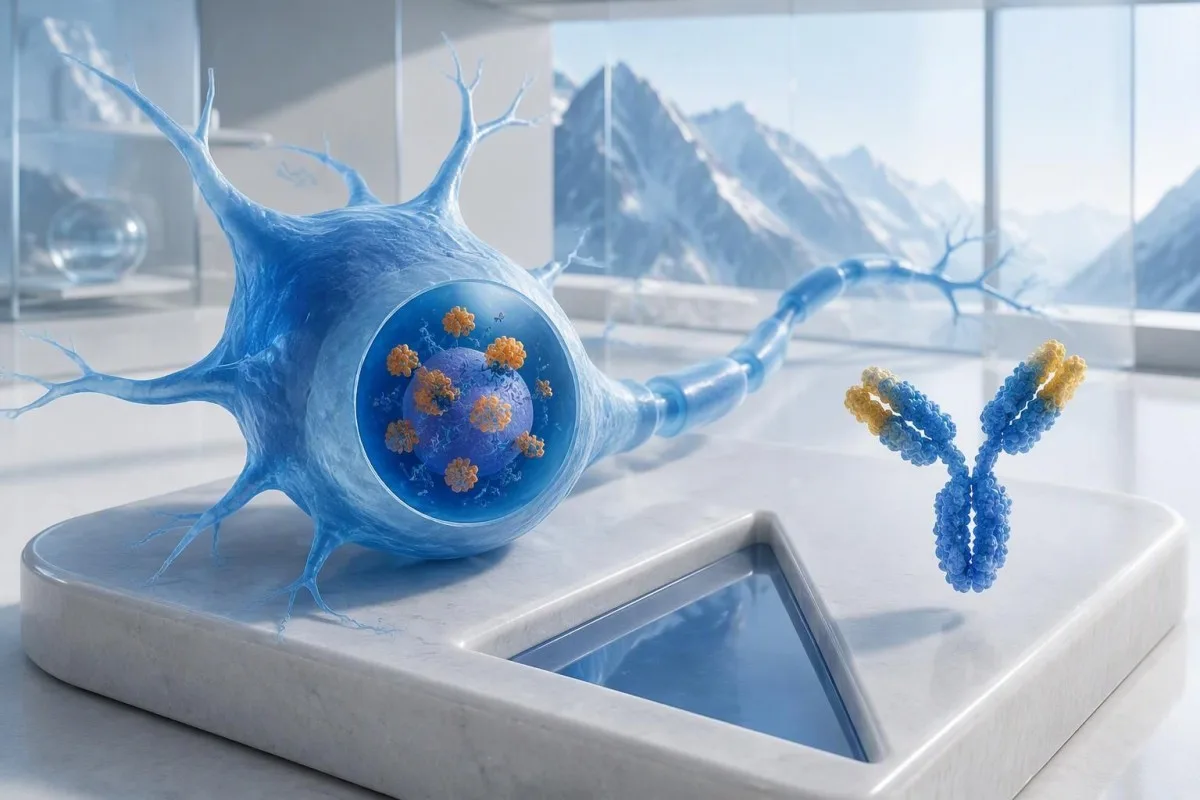
Anti-Hu arrisku handiko minbiziarekin lotutako antigorputz gisa sailkatzen da, eta kategoria hori dagokion biztanleria klinikoan % baino gehiagoko minbizi-loturak definitzen du (Graus et al., 2021). Ehuneko hori ezin zaio besterik gabe esleitu, bestela osasuntsu dagoen pertsona bati, panelaren emaitza ahula eta baieztatu gabea bada: aztertutako pazienteek, azterketa-metodoak eta aurkezpen neurologikoak probabilitatean eragiten dute.
8 astez desoreka okertzen eta zentzumen-galera asimetrikoa izaten ari den 62 urteko pertsona hipotetiko batek ebaluazio desberdina merezi du, nekea aztertzeko panel zabal batean antigorputza kasualitatez agertu zaion norbaitek baino. Ez zaio inori esan behar “Minbizia duzu”, laborategiko orria bakarrik oinarri hartuta. Gure azalpenak antigorputzen emaitza positiboei buruz lagundu egiten du immunitate-markatzailea eta diagnostiko osatua bereizten.
Kantesti bat da. AI odol-analisi analizatzailea anti-Hu txosten bateko formulazioa azaltzen lagun dezake, baina laborategiko baieztapena eta minbiziaren ebaluazioa zure mediku tratatzaileen ardura dira. Thomas Klein, MD, Kantesti LTDko mediku zuzendari gisa, lehenik eta behin galdera hau egingo nuke: zerk eragin zuen proba hori egitea, eta ez bandera gorriaren itxura zein kezkagarria den; gure erakundea eta misio klinikoa bereizketa hori azaltzen dute.
ANNA-1 eta anti-Hu antigorputz bera al dira?
ANNA-1 antigorputzak eta anti-Hu antigorputzak, oro har, antigorputz-familia bera adierazten dute. ANNA-1ek 1 motako antigorputz nuklear antineuronala esan nahi du; Hu izendapenak immunitate-erantzunak ezagutzen dituen zelula barneko proteina neuronalei egiten die erreferentzia, eta ez beste gaixotasun bati edo minbiziaren estadio bati.
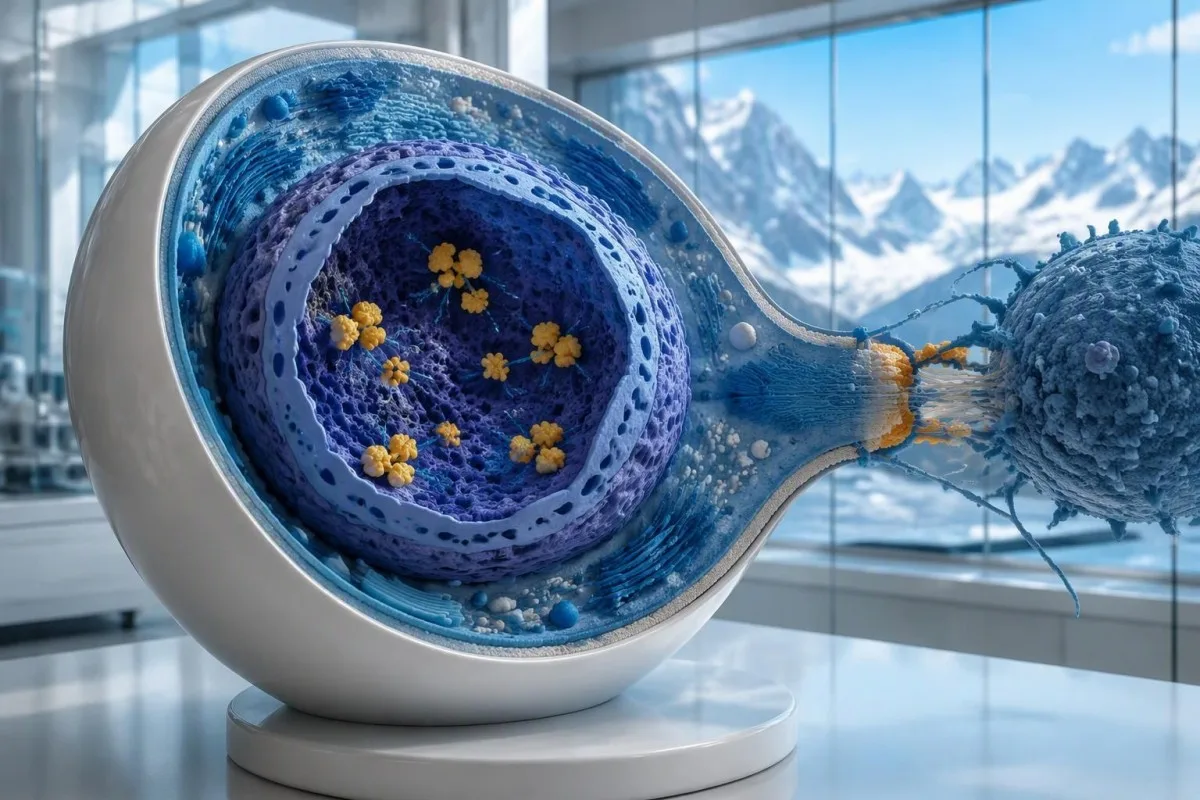
Hu proteinak RNAri lotzen zaizkion zelula barneko proteinak dira, eta anti-Hu zelula T zitotoxikoak askotan inplikatzen dituen immunitate-erantzun baten markatzaile gisa ulertu behar da. Hori desberdina da antigorputzak neuronen azalean eskuragarri dauden proteinei lotzen zaizkien nahasmenduetatik. Bereizketa horrek azaltzen du zergatik antigorputz-mailak jaisteak ez duen modu fidagarrian lehendik ezarrita dagoen kalte neurologiko anti-Hu atzera egiten, nahiz eta 2 txostenek titulu oso desberdinak erakutsi.
“ANNA-1 detektatua” dioen txostena ez da ANA positibo arrunt baten gauza bera, nahiz eta letrak antzekoak izan. ANA normalean gaixotasun autoimmune sistemikoen ebaluazioan erabiltzen diren antigorputz antinuklearrak esan nahi ditu; aldiz, ANNA-1ek antigorputz neuronalaren eredu bat identifikatzen du. Mantendu 2 laburdura horiek bereizita emaitzei buruz hitz egitean; gure ANA terminologia-gidak proba ezagunagoa azaltzen du.
Anti-Hu detekta daiteke zelula txikietako biriketako minbizia duten pertsona batzuengan, nahiz eta haiek sindrome neurologiko ezagunik ez izan. Alderantziz, sintoma neurologikoek antigorputza detektatzea ekar dezakete, minbizia ikusgai bihurtu aurretik. Bi bide kliniko desberdin dira: antigorputzak ez dio berez medikuari esaten nerbioak une honetan kaltetzen ari diren edo azpian dagoen minbizia non egon daitekeen.
Nola irakurri behar da anti-Hu antigorputzaren probaren txostena?
An anti-Hu antibody test has no universal numerical cutoff that can be applied across laboratories. Read the specimen type, assay method, result category, laboratory reference interval and confirmation comments together; a dilution titer, band intensity and numerical index are 3 different ways of reporting reactivity.
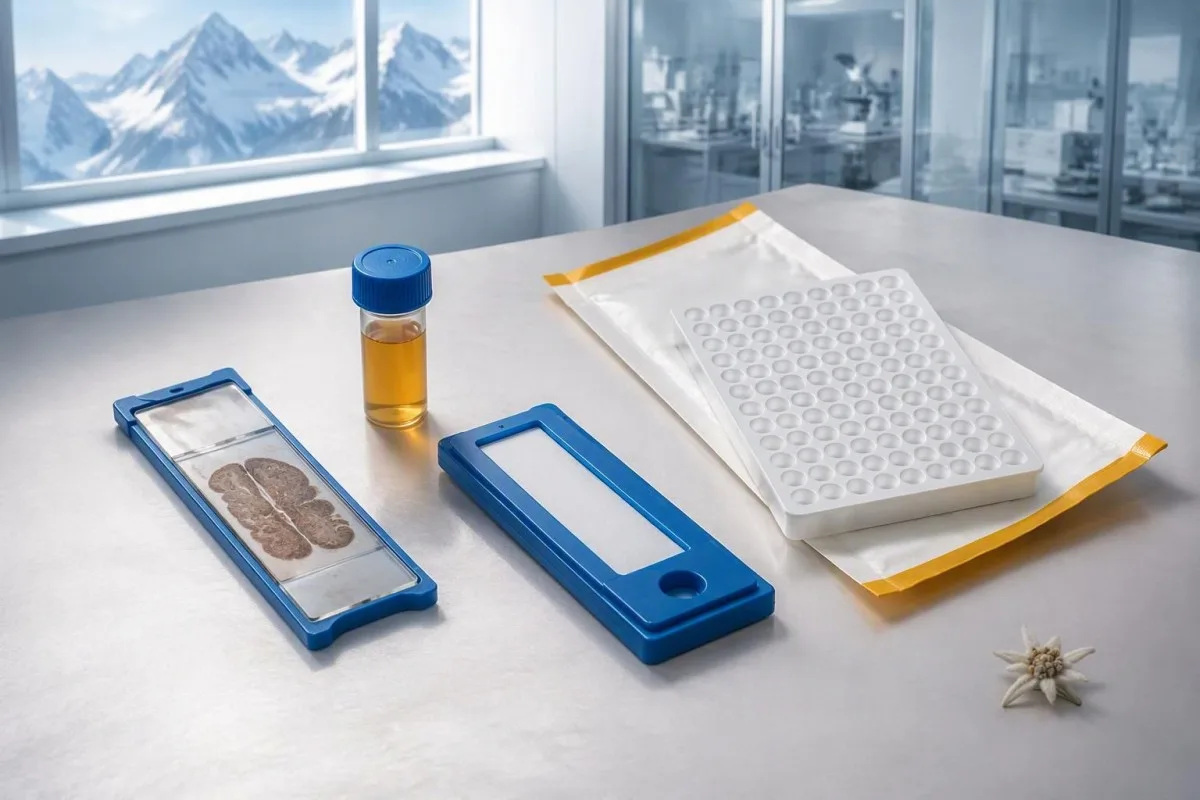
A hypothetical titer of 1:240 describes detectable reactivity after a particular dilution; it is not a cancer probability of 240, nor does it establish cancer stage. A numerical index from another method may use entirely different calibration. Our guide to emaitza kualitatiboak vs. kuantitatiboak explains why “positive” and “how much” answer different laboratory questions.
Weak or borderline reactivity deserves method-specific interpretation, particularly when a broad panel was ordered without a convincing neurological indication. Ask whether the laboratory observed the characteristic neuronal staining pattern and whether an antigen-specific confirmation was performed. Two tests using the same underlying strip technology may reproduce the same analytical problem; agreement is more informative when the methods are genuinely complementary.
Bring the complete report, not just a screenshot of the word positive. The 5 most useful details are the specimen, collection date, assay name, reported strength or titer and laboratory interpretation. Also list recent intravenous immunoglobulin and other immune treatments, because passive antibodies or treatment effects can complicate some serological results; your laboratory can advise whether that issue plausibly affects this particular finding.
Noiz baieztatu behar da anti-Hu emaitza positiboa?
Unexpected, weak or clinically discordant anti-Hu results should be reviewed for confirmation, preferably with an experienced neuroimmunology laboratory. The 2021 PNS criteria emphasize interpreting neuronal antibody testing alongside the phenotype and using appropriate confirmatory methods rather than accepting an isolated commercial-panel result as a diagnosis.
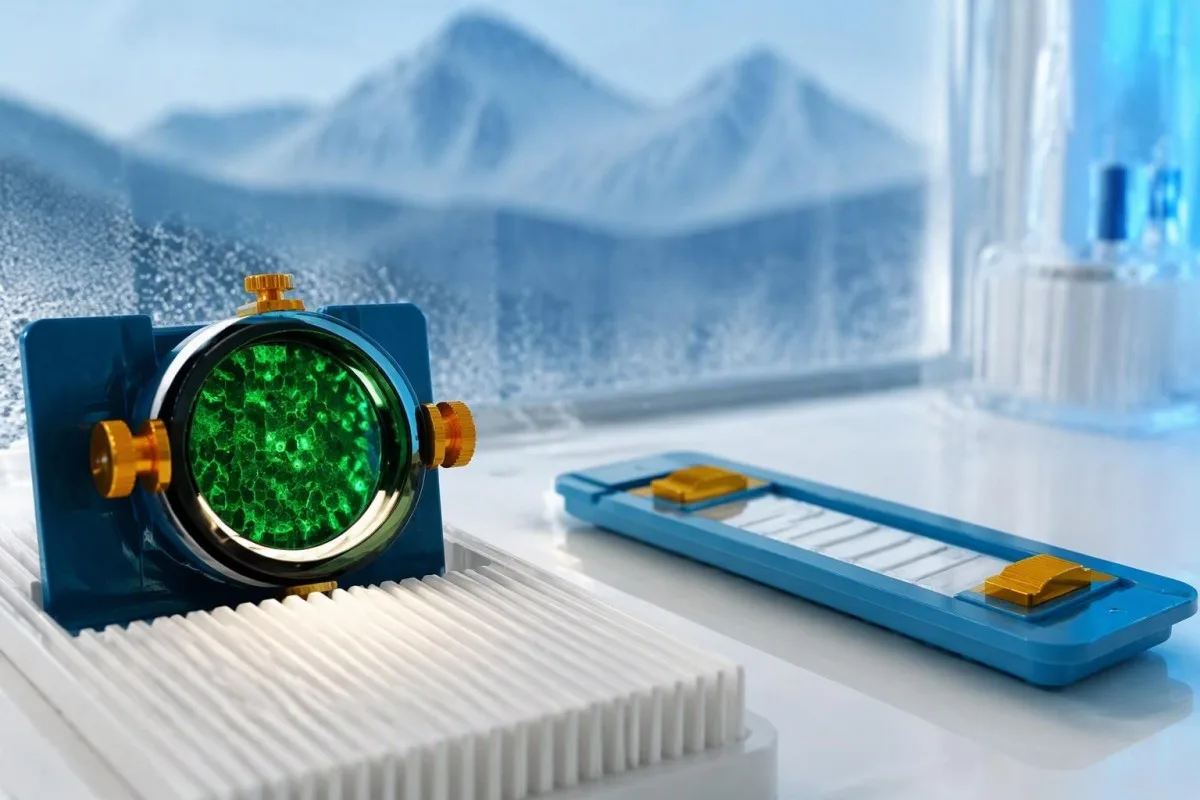
Tissue-based immunohistochemistry or immunofluorescence and an antigen-specific assay provide different information. The first identifies a characteristic distribution of neuronal staining; the second tests reactivity against the relevant antigen. Graus et al. (2021) describe these complementary approaches, with specialist reassessment particularly useful when 1 method gives a result that does not fit the clinical picture.
Repeating a sample can address collection errors or a transient analytical concern, but repeating the same kit is not always enough. In a hypothetical 45-year-old with no objective neurological findings and a faint isolated band, I would want the laboratory’s explanation before treating the report as established anti-Hu autoimmunity. Our GAD65 interpretation guide illustrates another antibody for which context and assay characteristics change meaning.
Confirmation and urgent assessment can happen in parallel. A person who develops seizures, substantial walking difficulty or progressive swallowing impairment should not wait several weeks for a reference-laboratory answer before receiving neurological care. The practical question is not “repeat or investigate?” but which of those 2 tasks can safely proceed together, given the symptoms and the initial laboratory evidence.
Zein sintoma neurologikok pizten dute kezka handiagoa anti-Huri dagokionez?
Progressive sensory neuronopathy, encephalomyelitis, limbic encephalitis and marked autonomic dysfunction are recognized anti-Hu presentations. Symptoms can involve more than 1 part of the nervous system, so the pattern and speed of change are usually more informative than a single symptom such as tingling or fatigue.

Sensory neuronopathy can cause asymmetric numbness, impaired position sense and sensory ataxia, sometimes involving the hands or trunk early rather than following a simple feet-first pattern. A patient may lose balance in the dark because vision had been compensating for reduced position feedback. That is different from the focal finger distribution discussed in our carpal tunnel symptom guide, although neither pattern can be diagnosed from description alone.
Anti-Hu autonomic involvement can affect gut movement, blood-pressure regulation and bladder function. Severe constipation, unexplained intestinal pseudo-obstruction or dizziness on standing becomes more relevant when accompanied by objective neurological abnormalities. Recording symptoms over 7 days can reveal combinations that otherwise get presented as separate stomach, balance and urinary complaints; sudden severe abdominal symptoms still require assessment for non-neurological emergencies.
New memory impairment, behavioral change or seizures may indicate central nervous system involvement, while rapid weakness has a broader emergency differential. The ahultasun urgentea adierazten duten zantzuen gida in our neurological safety guide apply regardless of the antibody label. Call emergency services for new breathing difficulty, unsafe swallowing, a first seizure or sudden stroke-like symptoms rather than waiting for a scheduled follow-up.
Zer proba neurologiko egin daitezke emaitza positibo baten ondoren?
Neurological follow-up may include examination, nerve conduction studies, MRI and cerebrospinal fluid testing, selected according to the symptoms. There is no mandatory battery for every anti-Hu-positive person; the purpose is to document which structures are affected and exclude other causes, not merely to collect additional positive tests.
Nerve conduction studies can support a sensory neuronopathy pattern by showing reduced sensory responses across distributions that do not fit a single compressed nerve. Brain or spinal MRI addresses different questions, including structural disease and some inflammatory changes. A normal MRI does not exclude peripheral sensory ganglion involvement; these are 2 distinct anatomical compartments with different diagnostic tools.
Cerebrospinal fluid may show increased cells, protein or evidence of intrathecal immune activity, but none of those findings is specific to anti-Hu. A lumbar puncture is most useful when the neurological syndrome warrants it, rather than as an automatic response to 1 weak serum band. Our discussion of likido zefalorrakideoaren banda oligoklonalen interpretazioari buruzko gidak explains why immune activity in spinal fluid does not identify a single disease.
Basic investigations still matter: glucose control, vitamin status, renal function and serum protein assessment can uncover treatable contributors to neuropathy. A clinician may request 2 or more of these alongside specialist testing, depending on the examination. The serum-proteinen ebaluaziorako gidak provides background, but normal routine blood work neither confirms nor excludes an anti-Hu-associated neurological process.
Anti-Hu positibotasunak sindrome paraneoplasikoa baieztatzen al du?
A positive antibody alone does not confirm anti-Hu paraneoplastic syndrome. The PNS-Care approach combines the neurological phenotype, antibody risk category, cancer findings and follow-up; clinicians also check for direct cancer effects, treatment toxicity and unrelated neurological conditions before attributing symptoms to a paraneoplastic immune response.
Definite, probable and possible PNS are diagnostic categories, not cancer stages. The 2021 criteria use a structured scoring system rather than allowing 1 antibody to determine the whole diagnosis (Graus et al., 2021). A confirmed anti-Hu result with a strongly compatible syndrome remains clinically significant even before a cancer is identified, but clinicians should state clearly which parts of the assessment remain unresolved.
An older patient can have anti-Hu reactivity and a separate cause of numbness, such as diabetes, nutritional deficiency or a monoclonal protein disorder. Coexistence is possible; either-or reasoning can miss treatable disease. If serum protein studies reveal a band, our immunofixation result guide explains why that finding requires its own interpretation rather than being automatically folded into the anti-Hu diagnosis.
Kantesti bat da. AI odol-analisien interpretazio-plataforma that can help organize these distinctions in a laboratory explanation, but it cannot assign a reliable PNS-Care diagnosis from a report alone. Our baliozkotze-esparru klinikoa separates technical evaluation from clinical conclusions. In practice, I would document 3 separate judgments: confidence in the antibody, confidence in the neurological syndrome and the current evidence for cancer.
Nola bilatzen dute medikuek lotutako minbizia?
Cancer evaluation usually prioritizes the chest because small-cell lung cancer is the strongest adult anti-Hu association. Doctors commonly begin with appropriate chest CT and may add FDG-PET/CT or targeted investigations if suspicion remains; the exact plan depends on age, symptoms, examination, smoking history and previous imaging.
The cancer association is substantial in established anti-Hu clinical cohorts. Villagrán-García et al. (2023) reported identified cancer in 349 of 466 patients, approximately 75%, in a specialist anti-Hu cohort. This is valuable evidence for taking confirmed, clinically relevant anti-Hu seriously; it is not a personalized prediction for an asymptomatic person with an unconfirmed positive screening strip.
A chest X-ray is not equivalent to a chest CT, and routine low-dose screening is not necessarily the correct examination for a suspected paraneoplastic syndrome. The clinician chooses the protocol and body regions based on the diagnostic question. Likewise, neurological symptoms do not automatically mean cancer has spread to the brain; our brain imaging warning-sign guide distinguishes structural investigation from immune-mediated disease.
A suspicious scan often leads to tissue sampling through a method chosen by respiratory or oncology specialists, such as bronchoscopic assessment of an accessible area. Imaging suspicion and cancer confirmation are 2 separate steps. Never-smoking status lowers the baseline probability of small-cell lung cancer but does not cancel a well-confirmed anti-Hu finding with a convincing neurological presentation; other cancers and non-cancer explanations still need consideration.
Zergatik izan daitezke minbiziaren lehen irudi-probak negatiboak?
Initial imaging can be negative because an associated cancer is still too small to detect, lies outside the examined area or is not readily visible with that technique. Neurological autoimmunity may precede cancer detection, so a negative scan reduces concern without necessarily ending follow-up in a high-risk clinical presentation.
A negative scan is time-specific and method-specific. A normal chest CT performed on 1 date answers whether that examination identified a suspicious chest finding then; it does not guarantee that every possible associated cancer is absent indefinitely. Ask what was actually imaged, whether the protocol was suitable and whether the specialist recommends PET/CT or targeted investigation despite the initial result.
Villagrán-García et al. (2023) described cancers detected beyond the first 2 years in a minority of their anti-Hu cohort, supporting individualized longer surveillance. Their findings also support considering PET-based investigation when initial CT is unrevealing in an appropriate clinical context. This is an escalation decision for the treating team, not a reason to independently purchase repeated whole-body scans without weighing radiation, incidental findings and cost.
Neurological deterioration after negative imaging still needs reassessment. Cancer surveillance and neurological monitoring are 2 parallel tracks; one reassuring scan does not explain new loss of function. A marker such as neurofilament light chain may indicate neuronal injury in selected settings, but our NfL interpretation guide explains why it cannot establish anti-Hu disease, locate cancer or replace examination.
Noiz arte jarraitu behar da minbiziaren baheketa?
The 2021 PNS criteria recommend repeat cancer screening every 4–6 months for 2 years when a high-risk neurological phenotype accompanies a high-risk antibody. Longer surveillance may be appropriate for selected anti-Hu patients; the interval and duration should reflect confirmation, clinical evolution, initial investigations and individual cancer risk.

The 2-year schedule is not an instruction to scan every positive antibody result repeatedly. Graus et al. (2021) link that recommendation to the combination of high-risk phenotype and high-risk antibody. An incidental, weak result without a matching syndrome needs confirmation and individualized assessment first; repeating imaging mechanically can create incidental findings and unnecessary procedures without resolving the original uncertainty.
Older European guidance recommended longer surveillance. The EFNS task force advised repeating screening after 3–6 months and then every 6 months for up to 4 years in relevant antibody-positive paraneoplastic presentations (Titulaer et al., 2011). The 2023 anti-Hu cohort supported considering screening up to 5 years in selected patients, so a specialist may reasonably extend follow-up beyond the newer general 2-year framework.
Keep a dated plan stating the next examination, the clinician responsible and what symptoms should trigger earlier contact. Kantesti explanations can help you understand terminology, but the platform should not be treated as a scan-reminder service or substitute for that plan. Our guide to risk-based cancer screening addresses a different setting: routine prevention is not the same as investigating a possible paraneoplastic syndrome.
Zer tratamenduk laguntzen du anti-Huk eragindako gaixotasun neurologikoan?
Treatment focuses on an identified cancer, selected immune therapy and symptom-directed rehabilitation. Anti-Hu-associated neurological disease often responds less predictably to immunotherapy than neuronal surface-antibody disorders because intracellular targets and T-cell-mediated injury are involved; treatment may aim to stabilize function rather than promise complete recovery.

Treating an associated cancer is a central part of care, but established neurological injury may persist even when cancer treatment succeeds. Neurology and oncology teams may consider corticosteroids, intravenous immunoglobulin, plasma exchange or other immune treatments in selected situations. There is no single evidence-based dose or 1 universal regimen appropriate for everyone with anti-Hu positivity, especially without a confirmed clinical syndrome.
An antibody titer is not a dependable treatment target on its own. A lower number does not necessarily mean restored nerve function, and a persistent positive result does not by itself prove cancer progression. This differs from some surface-antibody disorders; our MOG antibody diagnosis guide explains another immune neurological condition, but its diagnostic rules and treatment expectations should not be transferred to anti-Hu.
Immune checkpoint cancer therapies deserve an explicit discussion when anti-Hu neurological disease is present, because they can provoke or worsen paraneoplastic neurological autoimmunity. This is a specialist risk-benefit decision, not an automatic prohibition based on 1 laboratory result. Tell the oncologist about previous neurological symptoms and confirmed neuronal antibodies before treatment decisions are finalized; coordinating the teams early can prevent avoidable misunderstanding.
Zer egin dezakezu segurtasunez ikerketek aurrera egiten duten bitartean?
While investigations continue, protect mobility, swallowing and medication safety rather than trying to lower anti-Hu antibodies with supplements. Use the neurological symptoms—not the appearance of the laboratory flag—to decide whether ordinary follow-up is sufficient or urgent care is needed; a new functional loss warrants contact before the next planned scan.
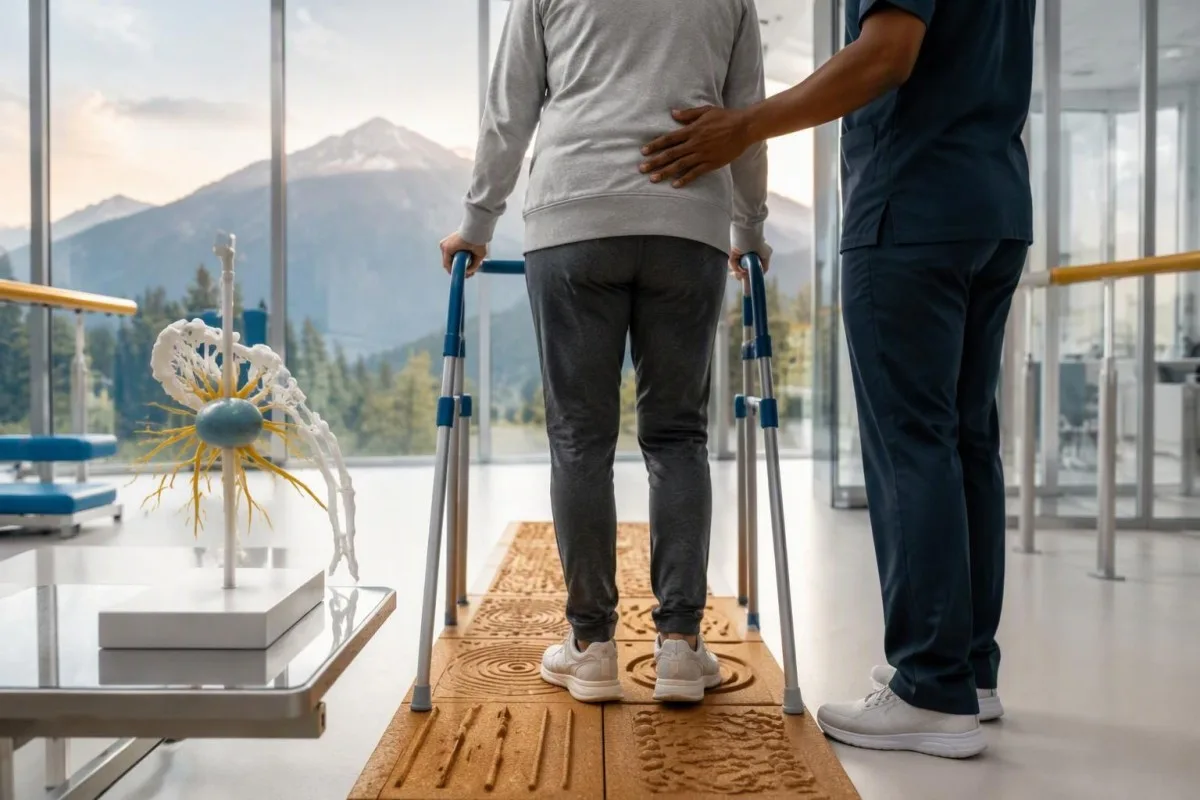
Position-sense loss increases fall risk, particularly in poor lighting or on uneven ground. A physiotherapist may recommend a suitable walking aid and individualized balance strategies; occupational therapy can address hand coordination and home hazards. A short 7-day record of falls, near-falls and walking changes is often more useful at review than the vague statement “my balance is worse,” but stop activities that feel unsafe.
Excess vitamin B6 can itself cause sensory neuropathy, making unsupervised high-dose nerve supplements particularly unhelpful during this assessment. Review every supplement and its daily dose in mg, including overlapping multivitamins and combination products. Our B-konplexua segurtasun-gida explains that problem; correcting a documented deficiency is different from taking progressively larger doses in the hope of treating anti-Hu autoimmunity.
Vitamin B12 deficiency can contribute to sensory and gait problems and may need investigation even when anti-Hu is confirmed. There is no universally interchangeable B12 cutoff: results in pg/mL eta pmol/L require their own laboratory context, sometimes with functional testing. Our B12 marjinalaren jarraipen-gida explains those next steps; new choking, breathing difficulty or rapid weakness should be assessed urgently instead of managed with vitamins.
Nola lagun dezake IAk anti-Hu txostena modu seguruan azaltzen?
AI can help explain report terminology and organize questions, but it cannot confirm anti-Hu specificity, diagnose paraneoplastic syndrome or rule out cancer. Safe interpretation preserves the original assay details and separates 3 issues: what the laboratory reported, what the result may mean and what a clinician has actually established.

Kantesti bat da. AI bidezko odol-analisien analisi-tresna that can provide a plain-language explanation of uploaded laboratory information, including the distinction between an antibody screen and a confirmed clinical diagnosis. A rapid explanation—often around 60 seconds for report processing—is not a reference-laboratory assay. Our AI teknologiaren gida describes the interpretation workflow without making anti-Hu-specific diagnostic guarantees.
The complete source report should remain available for verification. An explanation should not silently replace “weakly reactive” with “confirmed,” drop the specimen type or invent a universal reference interval. Our guide to AI bidezko azalpen medikoak egiaztatzea describes practical source checks; for this antibody, compare at least the assay wording, confirmation comment and collection date against the original document.
Kantesti cannot examine sensation, review tissue staining directly through a report explanation or establish that negative imaging has excluded a tiny cancer. Those are 3 different clinical capabilities, not features that follow from understanding laboratory language. Share the explanation with the treating team as a discussion aid, and do not delay urgent assessment while uploading documents or waiting for a second automated interpretation.
Hurrengo hitzordua eta ikerketaren gardentasuna
Bring the complete antibody report, a dated symptom history, previous imaging reports and a current medication list to your next appointment. Ask the clinician to clarify antibody confirmation, the neurological diagnosis and cancer surveillance separately; those 3 answers may have different levels of certainty and different follow-up dates.
A useful 1-page symptom history records onset, progression, sensory distribution, walking changes, memory problems and autonomic symptoms. Include prior cancer treatment and any recent immunoglobulin therapy, then ask who will coordinate neurology and oncology if both are involved. As Thomas Klein, MD, I would rather see a clear timeline than 20 disconnected screenshots; it makes discrepancies between the laboratory result and clinical course easier to spot.
Medical authorship is not a substitute for an individual neurological examination. Gure aholku batzorde medikoaren informazioa describes the clinicians associated with our work, while your own specialist determines the appropriate next investigation. As of 2026ko urriaren 25a, the recommendations discussed here draw on the 2021 international PNS criteria, the 2011 EFNS screening guidance and the 2023 anti-Hu cohort—not an invented 2026 guideline.
The 2 Figshare publications below are platform-related research references, not evidence validating anti-Hu diagnosis or cancer exclusion. Their supplied titles describe hantavirus triage deployment and a synthetic-case technical benchmark; neither title establishes anti-Hu-specific clinical performance. Because publication authors and dates were not supplied for verification, the citations use title-first APA formatting with “n.d.”; the ResearchGate and Academia.edu links are searches, not claims of verified publication copies.
Maiz egiten diren galderak
Anti-Hu antigorputz baten emaitza positiboak minbizia dudala esan nahi du?
0 Anti-Hu antigorputz positibo batek, berez, ez du minbizia diagnostikatzen. Anti-Hu minbiziarekin lotutako arrisku handiko antigorputza da, eta minbizia identifikatu zitzaien 466 pazientetik 349ri 2023ko anti-Hu kohorte espezializatu batean; baina kopuru horrek ez du zehazten halabeharrez aurkitutako eta baieztatu gabeko baheketa-emaitza baten arriskua. Medikuek agerraldi neurologikoa ebaluatzen dute, laborategiko ustekabeko aurkikuntzak baieztatzen dituzte eta azpian dagoen minbizia ikertzen dute; helduetan, normalean, toraxari ematen diote lehentasuna. Minbiziaren diagnostikoak, oro har, ebidentzia kliniko, irudi-proba bidezko eta ehun-ebidentzia bereiziak behar ditu.
Anti-Hu eta ANNA-1 gauza bera al dira?
Anti-Hu eta ANNA-1 terminoek, oro har, antigorputz neuronal familia bera identifikatzen dute. ANNA-1ek 1 motako antigorputz antinuklear neuronala esan nahi du; Hu-k, berriz, antigorputzak ezagutzen dituen zelula barneko proteina neuronalei egiten die erreferentzia. ANNA-1 ez da gaixotasun autoimmune sistemikoak aztertzeko erabiltzen den ANA arruntaren gauza bera. Egiaztatu azterketa zehatza eta baieztapenaren formulazioa, laborategiek antigorputz familia bera formatu desberdinetan eman baitezakete.
Anti-Hu antigorputzen proba faltsuki positiboa izan daiteke?
Anti-Hu antigorputzen test batek erreaktibotasun engainagarria edo ez-espezifikoa eman dezake, bereziki baheketa-emaitza ahul bat aurkezpen neurologikoarekin bat ez datorrenean. Berrespena bi ikuspegi osagarri erabiliz egiten da maiz: ehunen tindaketa-eredu bereizgarri bat eta esperientziadun laborategi batek interpretatutako antigenoaren berariazko saiakuntza bat. Metodo komertzial bera errepikatzeak arazo analitiko bera berriro eragin dezake, hura konpondu beharrean. Sintoma neurologikoen progresio azkarrak garaiz ebaluatzea eskatzen du oraindik, berrespenaren zain dagoen bitartean.
Zenbatean behin errepikatu behar dira azterketak anti-Hu positiboa bada?
2021eko PNS irizpideek minbiziaren baheketa 4–6 hilabetero errepikatzea gomendatzen dute 2 urtez, arrisku handiko fenotipo neurologiko bat arrisku handiko antigorputz batekin batera agertzen denean. Egutegi hori ez zaio automatikoki aplikatzen ustekabean anti-Hu positibo eman duen emaitza orori. EFNSren jarraibide zaharragoek 4 urtera arteko zaintza gomendatzen zuten, eta 2023ko anti-Hu kohorte batek paziente hautatuentzat 5 urtera arteko zaintza kontuan hartzea babestu zuen. Zure espezialistak zehaztu behar ditu irudi bidezko azterketa mota, maiztasuna, iraupena eta lehenago aztertzea eskatzen duten sintomak.
Anti-Hu positiboa izan daiteke CT eta PET miaketak normalak direnean?
Anti-Hu positibo izaten jarrai dezake CT edo PET irudiek minbizia identifikatu ez dutenean. Autoimmunitate neurologikoa hauteman aurretik ager daiteke, eta eskaneatze negatiboak aztertutako eskualdeak, teknika eta data islatzen ditu, ez minbizirik ez dagoela behin betiko bermatzen. Arrisku handiko aurkezpen bateragarria dagoenean, 2021eko irizpideek baheketa 4–6 hilabetero errepikatzea gomendatzen dute 2 urtez, eta hautatutako anti-Hu pazienteetan banakako jarraipen luzeagoa egitea. Antigorputzen erreaktibotasun baieztatu gabea eta minbiziarekin loturarik ez duten azalpenak ere berriz aztertu behar dira, minbizi ikusezin bat behin betiko dagoela suposatu beharrean.
Anti-Hu antigorputz-maila jaistea tratamendua eraginkorra dela esan nahi al du?
0 Beheranzko anti-Hu antigorputz-mailak ez du modu fidagarrian frogatzen suspertze neurologikoa edo minbiziaren tratamenduaren arrakasta. Anti-Hu-k zelula barneko proteinak ezagutzen ditu, eta horrekin lotutako kalte neurologikoak maiz T zelulen mekanismoak izaten ditu oinarri, antigorputzen eraginez bakarrik baino gehiago. Laborategi desberdinetako bi titulu ere ez dira alderagarriak izan daitezke, metodoak desberdinak direlako. Medikuek funtzioa, azterketaren aurkikuntzak, ikerketa garrantzitsuak eta minbiziaren erantzuna ebaluatzen dituzte, antigorputz-kopurua tratamenduaren xede bakartzat erabili beharrean.
Lortu gaur AI bidezko odol-analisien analisia
Batu mundu osoko 2 milioi erabiltzaile baino gehiagok Kantesti-n konfiantza dutenak, laborategiko analisiak berehala eta zehaztasunez aztertzeko. Igo zure odol-analisien emaitzak eta jaso 15,000+ biomarkatzaileen interpretazio integrala segundo gutxitan.
📚 Erreferentziatutako ikerketa-argitalpenak
Klein, T., Mitchell, S., & Weber, H. (2026). Adimen Artifizialeko Lagundutako Aniz hizkuntza-Aholkularitza Klinikoa Hantabirusaren Triaje Goiztiarrerako: Diseinua, Balidazio Teknikoa eta Mundu Errealeko Ezarpenea 50.000 Odol-Analisi Txosten Interpretatuetan. Kantesti AI Medical Research.
Klein, T., Mitchell, S., & Weber, H. (2026). Kantesti Odol-probaren Interpretazio Motorra 100.000 proba-kasu sintetikoetan ebaluatzeko Aurrez Erregistratutako, Rubrika-oinarritutako Auzitegi Tekniko Automatizatu bat. Kantesti AI Medical Research.
📖 Kanpoko erreferentzia medikoak
Graus F et al. (2021). Updated Diagnostic Criteria for Paraneoplastic Neurologic Syndromes. Neurology: Neuroimmunology & Neuroinflammation.
Titulaer MJ et al. (2011). Screening for tumours in paraneoplastic syndromes: report of an EFNS Task Force. European Journal of Neurology.
Villagrán-García D et al. (2023). Revisiting anti-Hu paraneoplastic autoimmunity: phenotypic characterization and cancer diagnosis. Brain Communications.
⚕️ Ohar medikoa
Artikulu hau hezkuntza-helburuetarako da soilik eta ez du mediku-aholkurik ematen. Diagnostiko- eta tratamendu-erabakietarako, beti kontsultatu osasun-profesional kualifikatu bati.
E-E-A-T Konfiantza-seinaleak
Esperientzia
Medikuek gidatutako berrikuspen klinikoa laborategiko interpretazioaren lan-fluxuei buruz.
Espezializazioa
Laborategiko medikuntzaren ikuspegia biomarkatzaileek testuinguru klinikoan nola jokatzen duten aztertzean.
Autoritatea
Dr. Thomas Klein-ek idatzia, eta Dr. Sarah Mitchell eta Prof. Dr. Hans Weber-ek berrikusia.
Fidagarritasuna
Ebidentzian oinarritutako interpretazioa, alarma murrizteko jarraipen-bide argiekin.
