
Un D-dímero ligeramente alto de 72 no se interpreta igual que el mismo número a los 32. Lo difícil es saber cuándo el ajuste por edad es seguro — y cuándo los síntomas anulan las matemáticas.



- prueba de sangre de dímero D mide la degradación de la fibrina; un resultado alto sugiere formación y degradación de un coágulo en algún lugar, pero no prueba que exista un coágulo.
- Punto de corte estándar a menudo es 500 ng/mL FEU, también escrito como 0.50 mg/L FEU, pero los laboratorios usan unidades diferentes.
- Punto de corte de D-dímero ajustado por edad después de los 50 años suele ser edad × 10 ng/mL FEU; una persona de 78 años puede tener un punto de corte de 780 ng/mL FEU.
- Punto de corte de D-dímero según la edad solo debe usarse cuando la probabilidad clínica es baja o intermedia, no cuando los síntomas sugieren con fuerza embolia pulmonar o TVP.
- Imagen urgente aún es necesaria para dolor en el pecho, falta de aire repentina, desmayo, oxígeno bajo, tos con sangre o una pierna hinchada y dolorosa, incluso con un D-dímero limítrofe.
- Unidades FEU frente a DDU porque los valores de FEU son aproximadamente el doble de los valores de DDU; 500 ng/mL FEU equivale a unos 250 ng/mL DDU.
- Adultos mayores a menudo son más altos porque el recambio basal de fibrina, la respuesta del tejido vascular, los cambios en la depuración renal, el riesgo de cáncer y las tasas de infección aumentan con la edad.
- Resultados limítrofes son más seguros cuando se interpretan con la puntuación de Wells o de Ginebra, la saturación de oxígeno, la frecuencia del pulso, los factores de riesgo y el momento de aparición de los síntomas.
Qué significa un análisis de sangre de D-dímero después de los 50 años
Después de los 50 años, una prueba de sangre de dímero D puede interpretarse con un punto de corte ajustado por edad: edad × 10 ng/mL FEU. Así, una persona de 70 años puede considerarse negativa por debajo de 700 ng/mL FEU si la probabilidad de un coágulo es baja o intermedia. Pero los síntomas mandan. Una nueva falta de aire, dolor en el pecho, desmayo, oxigenación baja, tos con sangre o una sola pierna hinchada y dolorosa aún requieren una imagen urgente, incluso cuando el número solo está en el límite.
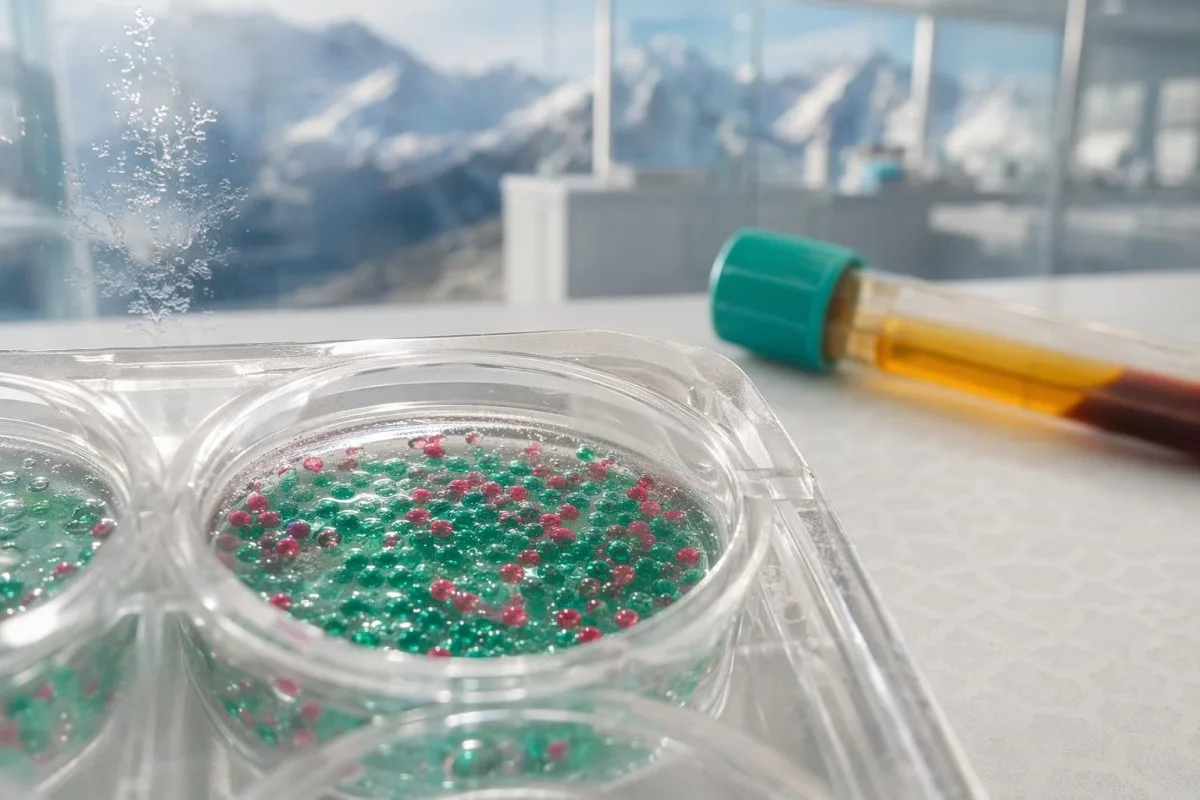
Soy Thomas Klein, MD, y en el trabajo de revisión clínica veo la misma trampa cada semana: un paciente de 76 años con un D-dímero de 620 ng/mL FEU al que le dicen que está “alto” y luego entra en pánico. A los 76 años, el punto de corte ajustado por edad es 760 ng/mL FEU, así que 620 puede ser negativo solo cuando el cuadro clínico es tranquilizador.
Un resultado de D-dímero por encima de 500 ng/mL FEU es común después de los 65, y por eso un punto de corte fijo para adultos genera muchas falsas alarmas. Nuestro equipo de médicos, incluidos los revisores que figuran en el consejo médico asesor, trata el D-dímero como una prueba para descartar, no como un diagnóstico.
Kantesti es un analizador de pruebas sanguíneas con IA que lee el D-dímero junto con la edad, las unidades, los síntomas, el estado de embarazo o cirugía, los marcadores renales y los marcadores inflamatorios. Ese contexto importa porque un resultado de 520 ng/mL FEU en un paciente tranquilo de 52 años es diferente del mismo valor en un paciente de 82 años con una saturación de oxígeno de 90%.
Por qué los resultados de D-dímero a menudo son más altos a medida que las personas envejecen
El D-dímero aumenta con la edad porque los vasos sanguíneos y los tejidos más envejecidos tienen más formación y descomposición de fibrina de fondo. El aumento normalmente no se debe a un solo problema; es el efecto combinado del envejecimiento vascular, la inflamación crónica, la depuración más lenta, más procedimientos médicos y más enfermedades silenciosas.

A finales de los 60, muchas personas sanas tienen pequeños aumentos en los marcadores de activación de la coagulación incluso sin trombosis venosa profunda ni embolia pulmonar. Eso no significa que el cuerpo esté “lleno de coágulos”; significa que el sistema hemostático hace más ruido que a los 30 años.
El problema práctico es la especificidad. En adultos mayores, un punto de corte fijo de 500 ng/mL FEU puede etiquetar como positivos a una gran proporción de enfermedades que no son de coágulos, especialmente neumonía, insuficiencia cardíaca, deterioro renal, cáncer, traumatismo y un ingreso hospitalario reciente. Para una visión más amplia del paciente, nuestro rango normal de D-dímero guía explica por qué “normal” no siempre es un solo número.
A menudo describo el D-dímero como humo, no como fuego. El humo puede provenir de una embolia pulmonar peligrosa, pero también puede provenir de una infección reciente con CRP de 80 mg/L o de una caída con hematomas 5 días antes. El número pide razonamiento clínico; no lo reemplaza.
Cómo se calcula el punto de corte de D-dímero ajustado por edad
El rango habitual punto de corte del D-dímero ajustado por edad después de los 50 es edad × 10 ng/mL FEU. Un paciente de 60 años usa 600 ng/mL FEU, uno de 75 años usa 750 ng/mL FEU y uno de 88 años usa 880 ng/mL FEU cuando el ensayo informa unidades FEU.

El estudio ADJUST-PE en JAMA encontró que los puntos de corte ajustados por edad aumentaron de forma segura el número de pacientes mayores en los que se podía descartar una embolia pulmonar sin imagen por TC (Righini et al., 2014). En pacientes de 75 años o más, la proporción descartada por D-dímero aumentó de aproximadamente 6.4% con el punto de corte de 500 ng/mL FEU a 29.7% usando el ajuste por edad.
La red neuronal de Kantesti lo trata como Punto de corte de D-dímero según la edad, no como una luz verde universal. Un resultado de 690 ng/mL FEU a los 70 años puede estar por debajo del punto de corte de 700, pero solo si la probabilidad previa a la prueba no es alta y la muestra se tomó antes de la anticoagulación.
Si estás comparando varios biomarcadores, el ajuste por edad debe colocarse junto al resto del panel, no en un compartimento mental aparte. Nuestro guía de biomarcadores se basa en el mismo principio: un solo resultado cambia de significado cuando se combina con la edad, la función renal, la inflamación y los síntomas.
Un truco útil en la cabecera es ignorar el último dígito de la edad y añadir un cero. Los 63 años se convierten en aproximadamente 630 ng/mL FEU; los 81 años en aproximadamente 810 ng/mL FEU. Aún así, compruebo la unidad antes de decir algo tranquilizador.
Las unidades FEU frente a DDU pueden duplicar el número aparente
Los informes de D-dímero suelen mostrarse como FEU o DDU, y 500 ng/mL FEU es aproximadamente equivalente a 250 ng/mL DDU. Leer mal la unidad puede hacer que un resultado parezca el doble de alto o dar una falsa sensación de tranquilidad.

FEU significa unidades equivalentes a fibrinógeno; DDU significa unidades de D-dímero. La mayoría de las fórmulas ajustadas por edad se publican como ng/mL FEU, así que el corte estándar de 500 ng/mL FEU se convierte en edad × 10 después de los 50.
Si tu laboratorio usa DDU, el corte aproximado equivalente ajustado por edad es edad × 5 ng/mL DDU. Un corte para una persona de 72 años sería de aproximadamente 720 ng/mL FEU o 360 ng/mL DDU, aunque la calibración específica del ensayo sigue siendo importante.
Aquí es donde muchos resúmenes de “resultados de la prueba de D-dímero explicados” fallan a los pacientes: citan un único corte sin conversión de unidades. Nuestro guía de pruebas de coagulación compara D-dímero con PT, INR, aPTT y fibrinógeno porque los informes de coagulación a menudo llegan como un conjunto.
Algunos laboratorios europeos reportan mg/L FEU, donde 0.50 mg/L FEU equivale a 500 ng/mL FEU. Un informe de 0.68 mg/L FEU a los 70 años es 680 ng/mL FEU, que queda por debajo del corte ajustado por edad de 700 ng/mL FEU si la probabilidad clínica es baja.
El ajuste por edad solo es seguro después de comprobar la probabilidad pretest
El dímero D ajustado por edad está validado para pacientes con baja o probabilidad clínica intermedia, no para personas que ya parecen tener un coágulo. Los médicos suelen combinar síntomas, frecuencia del pulso, nivel de oxígeno, antecedentes previos de coágulo, cáncer, cirugía, inmovilización y hallazgos del examen antes de confiar en el punto de corte.

La guía de la European Society of Cardiology de 2019 sobre embolia pulmonar respalda las pruebas de dímero D solo en pacientes con probabilidad baja o intermedia; los pacientes con alta probabilidad generalmente deben pasar directamente a la imagenología (Konstantinides et al., 2020). Esa distinción evita que un resultado normal o limítrofe retrase el diagnóstico.
El ensayo PEGeD en el New England Journal of Medicine también mostró que el dímero D puede ajustarse a la probabilidad clínica, con umbrales más altos usados en pacientes de bajo riesgo bajo reglas estructuradas (Kearon et al., 2019). Esto no es “adivinanza”; es una clasificación formal del riesgo.
Para los clínicos, la puntuación de Wells sigue siendo un atajo práctico: signos de TVP, frecuencia cardiaca por encima de 100/min, inmovilización, VTE previa, hemoptisis, cáncer y si la EP es el diagnóstico más probable. Nuestro enfoque guía de marcadores de coagulación profundiza en cómo el dímero D se sitúa junto a la proteína C y el aPTT.
En mi experiencia, los casos inseguros rara vez son sutiles retrospectivamente. Un paciente con dolor torácico pleurítico, taquicardia de 118/min y saturación de oxígeno de 91% no debe ser tranquilizado por un dímero D de 610 ng/mL FEU a los 68 años.
Síntomas que aún requieren una imagen urgente para descartar un coágulo
Se necesita imagenología urgente cuando los síntomas sugieren embolia pulmonar o trombosis venosa profunda, incluso si el dímero D es limítrofe o está por debajo de un punto de corte ajustado por edad. La falta súbita de aire, el dolor torácico con la respiración, el desmayo, el oxígeno bajo, la tos con sangre, el pulso rápido o una sola pierna hinchada y dolorosa deben tratarse como situaciones sensibles al tiempo.
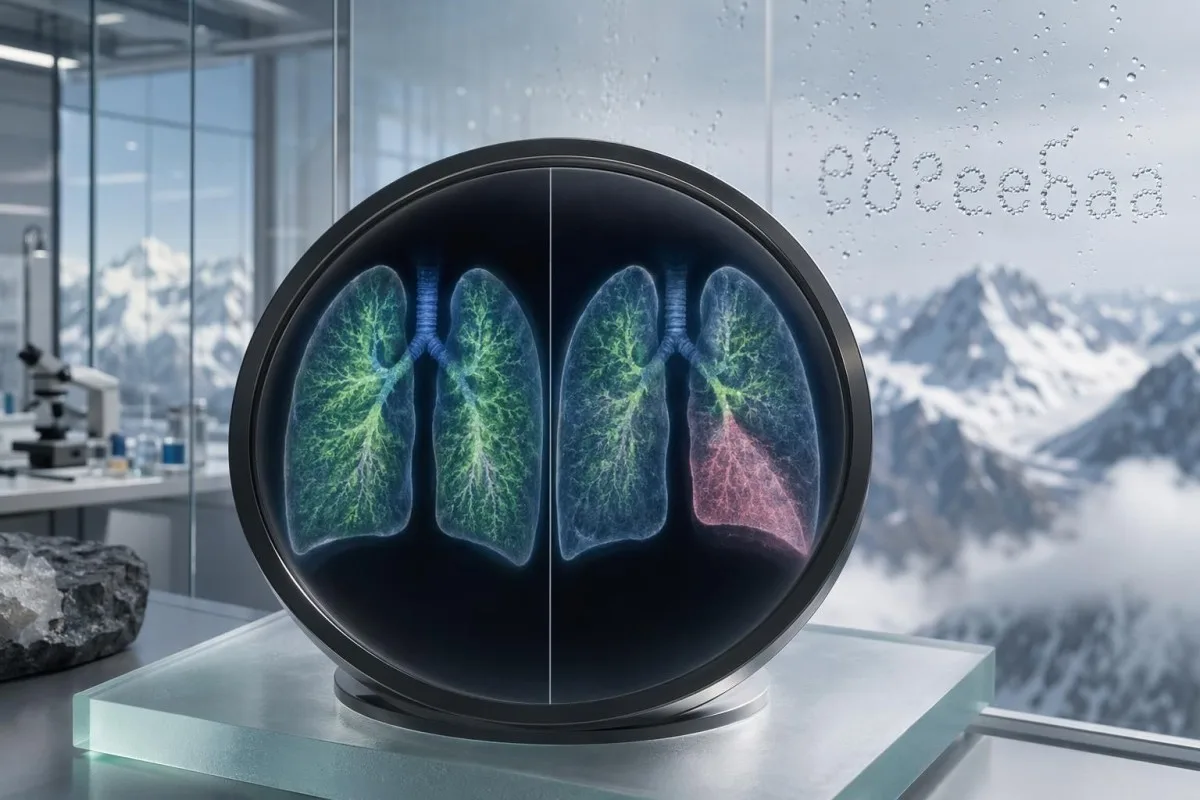
Una embolia pulmonar puede presentarse con saturación de oxígeno por debajo de 92%, pulso por encima de 100/min, dolor torácico punzante, falta de aire nueva o colapso. Una radiografía de tórax normal no la descarta, y un dímero D limítrofe no hace que una historia de alto riesgo desaparezca.
En una revisión clínica de Kantesti, señalamos combinaciones de síntomas en lugar de perseguir solo el número del dímero D. Un paciente de 58 años con un dímero D de 540 ng/mL FEU y hemoptisis necesita una vía diferente a la de un paciente de 58 años con 540 después de una leve enfermedad viral y sin síntomas cardiopulmonares.
Nuestro artículo más profundo sobre síntomas de dímero D alto es útil porque separa el riesgo del laboratorio del riesgo de los síntomas. Ambos se superponen, pero no son idénticos.
Si tienes falta de aire severa, desmayo, labios azulados, presión en el pecho, confusión o una pierna que se hincha rápidamente, esto es territorio de emergencia. No esperes 24 horas para repetir el dímero D; la imagenología y la valoración clínica son el siguiente paso más seguro.
Una sola pierna hinchada puede requerir una ecografía aunque el resultado sea limítrofe
Una sola pantorrilla o muslo hinchado y doloroso aún puede requerir ecografía venosa incluso cuando el dímero D solo está ligeramente elevado. El riesgo de TVP es mayor cuando la hinchazón es unilateral, es nueva, es sensible, se asocia con calor, o ocurre después de inmovilización, cirugía, viajes largos, cáncer, embarazo o un coágulo previo.

La TVP no se diagnostica con D-dímero; se diagnostica mediante ecografía de compresión en el contexto clínico adecuado. Una TVP proximal en el muslo suele ser más peligrosa que un coágulo aislado en la pantorrilla, porque tiene más probabilidades de embolizar a los pulmones.
La pista clínica en la que más confío es la asimetría. Una diferencia en la circunferencia de la pantorrilla de más de 3 cm, medida aproximadamente 10 cm por debajo de la tuberosidad tibial, forma parte de la puntuación de Wells para la TVP y cambia el significado de un D-dímero limítrofe.
Por supuesto, no toda hinchazón está relacionada con un coágulo. La hipoalbuminemia, la enfermedad renal, la insuficiencia cardiaca, la enfermedad linfática y el edema relacionado con la medicación pueden imitar o confundir el cuadro; nuestro pistas de laboratorio de la hinchazón cubren esas causas no relacionadas con coágulos.
El escenario difícil es el paciente mayor con un diurético y una hinchazón crónica del tobillo que nota que una pierna empeoró en 48 horas. No dejaría que un D-dímero ajustado por edad, por sí solo, resolviera ese caso; la ecografía es barata, rápida y a menudo concluyente.
Causas comunes no relacionadas con coágulos por las que el D-dímero está alto en adultos mayores
El D-dímero puede estar alto sin un coágulo peligroso porque muchas enfermedades activan la recambio de fibrina. La infección, el cáncer, la cirugía reciente, el traumatismo, la insuficiencia cardiaca, la afectación renal, la enfermedad hepática, los trastornos inflamatorios, el ictus y la hospitalización pueden elevar el D-dímero por encima de 500 ng/mL FEU.

El número tiende a aumentar con la gravedad. Una infección torácica leve puede producir 700 ng/mL FEU, mientras que la sepsis, el cáncer avanzado o un traumatismo importante pueden producir varios miles de ng/mL FEU sin que el resultado te diga exactamente dónde está el problema.
La inflamación y la coagulación se comunican entre sí. Cuando la CRP es 100 mg/L y los leucocitos son 16 × 10⁹/L, el D-dímero puede reflejar una respuesta tisular sistémica más que un coágulo primario; nuestro guía de marcadores de infección explica ese patrón.
La función renal también importa. Un eGFR reducido puede correlacionarse con un D-dímero más alto en parte porque los pacientes mayores y más frágiles tienen más enfermedad vascular y carga inflamatoria, y en parte porque el aclaramiento de varias proteínas se vuelve menos predecible.
El error clínico es asumir que “no es un coágulo” significa “no hay nada”. Un D-dímero de 2,400 ng/mL FEU con fiebre, pérdida de peso, anemia o enzimas hepáticas anormales aún merece estudio, solo que no necesariamente una angiografía pulmonar por TC como primer paso.
El embarazo, la cirugía y la infección cambian las reglas
Los puntos de corte del D-dímero ajustados por edad no encajan de forma simple en el embarazo, en las primeras semanas después de la cirugía, ni en infecciones recientes significativas. En estos contextos, el D-dímero a menudo aumenta porque se espera que la coagulación y la reparación tisular estén activas.

Tras una cirugía mayor, el D-dímero puede permanecer elevado durante días o semanas, a veces por encima de 1,000 ng/mL FEU incluso sin un coágulo nuevo. El cronograma exacto depende de la lesión tisular, la inmovilidad, la infección y de si se utilizó anticoagulación preventiva.
El embarazo es una vía diagnóstica separada. El D-dímero aumenta a lo largo de los trimestres, y los clínicos pueden usar algoritmos adaptados al embarazo en lugar de la regla estándar de edad × 10; nuestro artículo sobre embarazo y cirugía explica esas excepciones.
La COVID y otras infecciones pueden dejar un “rastro” de D-dímero elevado. Un resultado de 900 ng/mL FEU 10 días después de una enfermedad febril puede reflejar recuperación, pero un dolor torácico nuevo o una disminución de la saturación de oxígeno cambian el riesgo de inmediato.
Intento precisar el momento: día 1 de los síntomas, día 14 de la cirugía, día 3 del vuelo, día 7 de la fiebre. El D-dímero pierde significado cuando el cronograma es ambiguo, porque el mismo valor puede ser un ruido inocuo de recuperación o la primera pista de un coágulo.
Cuándo un D-dímero puede parecer falsamente tranquilizador
Un D-dímero puede ser falsamente bajo o menos útil si los síntomas han estado presentes durante muchos días, si se iniciaron anticoagulantes antes de la prueba, si el coágulo es pequeño o está aislado, o si el ensayo tiene sensibilidad limitada. Un resultado negativo reduce el riesgo; no borra una historia de alto riesgo.
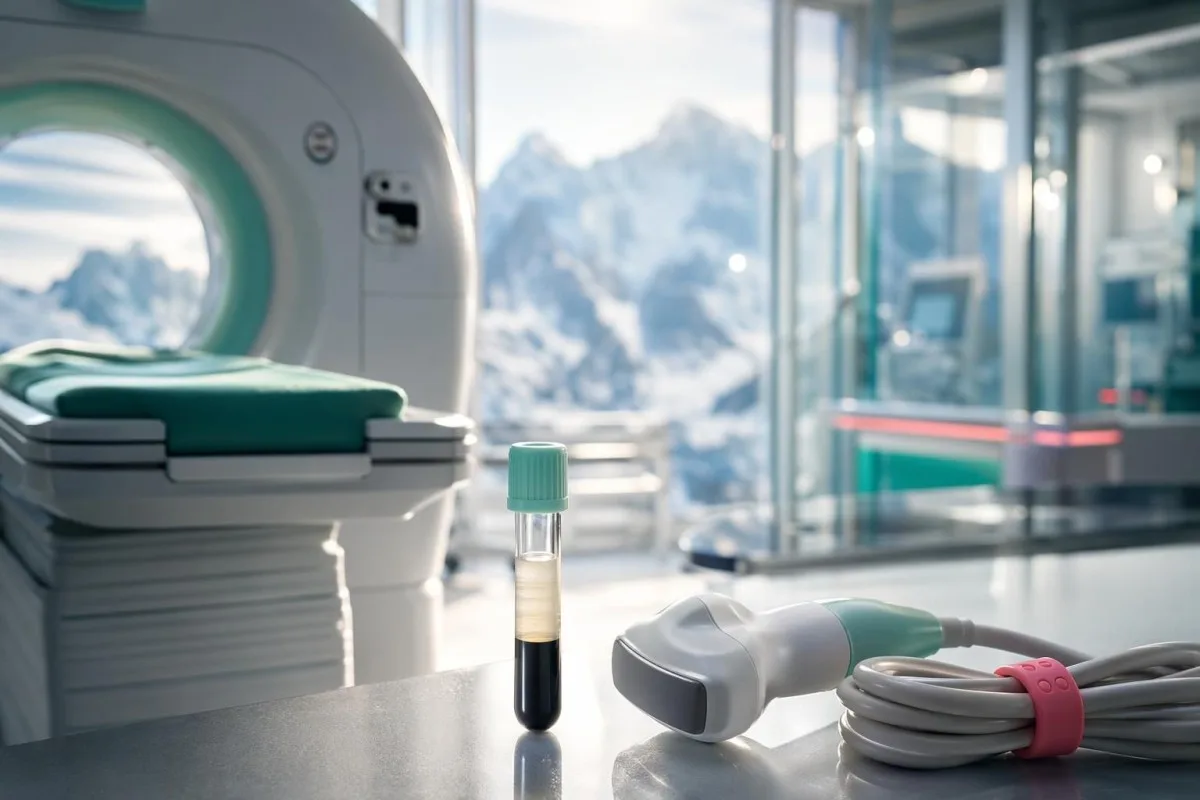
El D-dímero es más útil al inicio de la evaluación, antes del tratamiento. Si alguien recibió anticoagulación terapéutica durante 24 a 48 horas antes de la prueba, la señal de degradación de la fibrina puede disminuir lo suficiente como para que la interpretación sea menos clara.
Los síntomas que comenzaron 10 a 14 días antes también pueden enturbiar el panorama. Un coágulo pudo haberse estabilizado, haberse resuelto parcialmente o haber producido menos D-dímero medible para cuando la persona finalmente acude a la clínica.
Kantesti es una herramienta de análisis de análisis de sangre impulsada por IA que utilizan pacientes en más de 127 países, pero nuestros resultados están diseñados para señalar la incertidumbre en lugar de dar un diagnóstico de coágulo. El guía tecnológica explica cómo nuestro sistema separa la interpretación del laboratorio de la toma de decisiones de emergencia.
Un clínico que escucha “me desmayé ayer y ahora no puedo caminar por la habitación” no debe ser tranquilizado por un D-dímero limítrofe. Ese caso requiere exploración, medición de oxígeno, ECG y, a menudo, pruebas de imagen.
En qué suele consistir la imagen urgente para descartar un coágulo
La imagen urgente para sospecha de embolia pulmonar suele ser angiografía pulmonar por TC, gammagrafía V/Q o ecografía de compresión, según los síntomas, el estado de embarazo, la función renal, la alergia al contraste y la disponibilidad local. El resultado de D-dímero ayuda a decidir si se necesita imagen; no elige el tipo de estudio por sí solo.

La angiografía pulmonar por TC es rápida y se usa ampliamente, pero requiere contraste yodado y expone el tórax a radiación. En un paciente con eGFR por debajo de 30 mL/min/1.73 m², el riesgo con el contraste pasa a formar parte de la decisión.
La gammagrafía V/Q puede ser útil cuando el contraste de la TC no es ideal, en particular si la radiografía de tórax es normal. Una ecografía de la pierna puede confirmar una TVP y justificar el tratamiento sin una TC de tórax en casos seleccionados.
Antes de la imagen, los médicos a menudo revisan creatinina, eGFR, estado de embarazo cuando es relevante, saturación de oxígeno, ECG y, a veces, troponina o BNP si se sospecha tensión por EP. Nuestro guía de resultado renal ayuda a los pacientes a entender por qué los valores renales de repente importan antes del contraste.
Si la imagen confirma una EP, la siguiente decisión es la gravedad. Una EP pequeña y estable con saturación de oxígeno 97% es diferente de una EP grande con presión arterial baja, troponina elevada y sobrecarga del corazón derecho.
Cómo la interpretación con IA debería manejar el contexto del D-dímero
La interpretación con IA debe tratar el D-dímero como un marcador dependiente del contexto, no como una etiqueta binaria de alto o normal. El resultado más seguro considera edad, unidades, tipo de ensayo, momento, síntomas, factores de riesgo y laboratorios relacionados como CRP, CBC, creatinina, plaquetas, PT/INR y fibrinógeno.

Kantesti es un servicio de interpretación de pruebas de laboratorio con IA que puede identificar cuándo un D-dímero está por encima del punto de corte fijo del laboratorio pero por debajo de un umbral ajustado por edad. Esa distinción es útil porque muchos portales de laboratorio marcan 510 ng/mL FEU como anormal sin explicar la edad.
La segunda capa es la redacción de seguridad. Si los síntomas introducidos por el usuario incluyen dolor en el pecho, falta de aire, desmayo, tos con sangre o hinchazón unilateral de la pierna, el sistema debe orientar hacia una evaluación clínica urgente en lugar de “vigilar y esperar”.”
Nuestro límites de la interpretación con IA El artículo es contundente con esto: la IA puede explicar patrones en unos 60 segundos, pero no puede escuchar tus pulmones, medir el oxígeno ni decidir si se necesita un escáner de TC esta noche.
En mi propia cola de revisión, la bandera de IA más útil no es “D-dímero alto”. Es “D-dímero alto para esta edad y acompañado de síntomas que aumentan la probabilidad de coágulo”, una frase mucho más honesta desde el punto de vista clínico.
Cuándo repetir el D-dímero ayuda — y cuándo hace perder tiempo
Repetir el D-dímero puede ayudar cuando el resultado original se obtuvo demasiado pronto, se informó en unidades confusas o se obtuvo durante un desencadenante temporal claro. Repetirlo no es apropiado cuando los síntomas actuales sugieren EP o TVP; no debe retrasarse la imagen para obtener un segundo número.
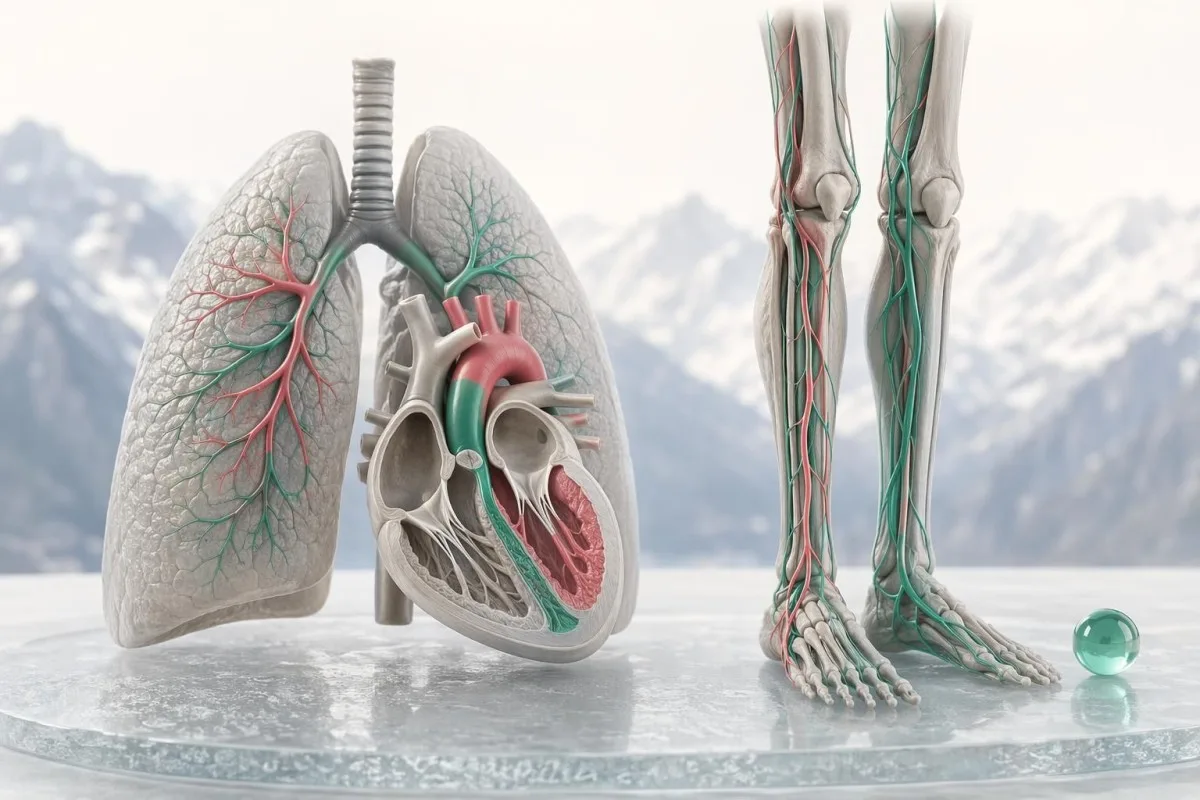
Una prueba repetida después de 1 a 2 semanas puede ser razonable cuando el D-dímero se elevó levemente durante una enfermedad viral y los síntomas se han resuelto por completo. Una caída de 1,100 a 520 ng/mL FEU puede respaldar la recuperación, aunque aun así no diagnostica lo que ocurrió.
Repetir es menos útil después de una cirugía porque los valores pueden permanecer altos durante varias semanas. Un paciente estable 10 días después de la operación necesita evaluación del riesgo y a veces ecografía, no controles diarios de D-dímero.
Los pacientes a menudo piden un segundo par de ojos cuando el portal dice “anormal”, pero el médico dice “no es para preocuparse”. Nuestro segundo criterio guía explica cuándo ese tipo de revisión es útil y cuándo la atención el mismo día es más segura.
Si repites el D-dímero, repítelo en el mismo sistema de unidades si es posible. Comparar 0.74 mg/L FEU con 390 ng/mL DDU sin conversión es una receta para la confusión.
Preguntas que hacer cuando tu D-dímero está en el límite
Un D-dímero limítrofe debería llevar a hacer mejores preguntas, no a una tranquilidad automática ni a una TC automática. Pregunta por la unidad, tu punto de corte ajustado por edad, tu riesgo de Wells o de Ginebra, el momento de los síntomas, desencadenantes recientes y qué cambio en los síntomas debería llevarte a urgencias.

La primera pregunta es sencilla: “¿Esto es FEU o DDU?” La segunda es: “¿Qué punto de corte se aplica para mi edad?” Una persona de 69 años con 640 ng/mL FEU puede estar por debajo del punto de corte ajustado por edad, mientras que 640 ng/mL DDU es un nivel de preocupación diferente.
Luego pregunte: “¿Cuál era mi probabilidad clínica antes de la prueba?” Si nadie consideró el pulso, la saturación de oxígeno, la hinchazón de una sola pierna, una cirugía reciente, la terapia con estrógenos, el cáncer o un antecedente de TVE previa, el resultado puede haberse interpretado de forma demasiado estrecha.
Pida el plan por escrito si puede: síntomas a vigilar, si se necesita una ecografía, si se necesita una TC y si tiene sentido repetir la prueba. Nuestro variabilidad de los análisis de sangre guía ayuda a los pacientes a entender por qué pequeños cambios en el laboratorio no deben leerse como si fueran precios de acciones.
Por lo general, les digo a los pacientes que tengan a mano tres números: el valor de dímero D con su unidad, la saturación de oxígeno si se midió y el pulso en reposo. Esos tres números, junto con los síntomas, a menudo le dicen al clínico mucho más que la sola bandera del dímero D.
Conclusión: usa el ajuste por edad, pero no ignores los síntomas
El dímero D ajustado por edad después de los 50 es una forma inteligente de reducir la imagen innecesaria, pero solo es seguro dentro de una evaluación clínica estructurada. Use edad × 10 ng/mL FEU para muchas pruebas, verifique la unidad y busque atención urgente cuando los síntomas sugieran TEP o TVP.
A partir del 13 de junio de 2026, mi regla práctica es esta: una persona de 74 años de bajo riesgo con dímero D 680 ng/mL FEU puede evitar una TC, pero una persona de 74 años con falta de aire, con pulso 120/min y oxígeno 91%, necesita una evaluación urgente. El mismo número puede significar cosas diferentes.
El contenido médico de Kantesti se revisa frente a estándares clínicos, no solo frente a intervalos de referencia de laboratorio. Nuestro validación clínica sitio explica cómo la supervisión médica y el benchmarking técnico moldean la forma en que presentamos el lenguaje de riesgo.
Si su dímero D está en el límite, no discuta el número de forma aislada. Pregunte si se usó el punto de corte ajustado por edad, si sus síntomas cambian la probabilidad preprueba y si hoy se necesita una ecografía o una TC.
La interpretación segura es humilde. El dímero D es excelente para descartar coágulos en el grupo correcto de pacientes, deficiente para demostrar coágulos y peligroso cuando se usa para anular una historia clínica de alto riesgo.
Preguntas frecuentes
¿Cuál es el punto de corte del dímero D ajustado por edad después de los 50 años?
El punto de corte habitual de dímero D ajustado por edad después de los 50 años es la edad × 10 ng/mL de FEU. Por ejemplo, el punto de corte es 600 ng/mL de FEU a los 60 años, 750 ng/mL de FEU a los 75 años y 880 ng/mL de FEU a los 88 años. Esta regla solo debe usarse cuando la probabilidad clínica de trombo es baja o intermedia, no cuando los síntomas sugieren con fuerza embolia pulmonar o TVP.
¿Un dímero D de 700 es alto en una persona de 70 años?
Un dímero D de 700 ng/mL FEU está justo en el punto de corte típico ajustado por edad para una persona de 70 años. Puede tratarse como negativo solo si la persona tiene baja o probabilidad clínica intermedia y no presenta síntomas preocupantes como disnea súbita, dolor torácico, desmayo, oxigenación baja, tos con sangre o una pierna única hinchada y dolorosa. Si la unidad es DDU en lugar de FEU, 700 ng/mL DDU no es equivalente y requiere una interpretación diferente.
¿Por qué aumenta el dímero D con la edad?
El dímero D aumenta con la edad porque la formación y la degradación basales de fibrina se vuelven más activas a medida que envejecen los vasos sanguíneos, los tejidos y los sistemas inflamatorios. Las personas mayores también tienen tasas más altas de infección, cáncer, deterioro renal, insuficiencia cardiaca, cirugía e ingreso hospitalario, todo lo cual puede elevar el dímero D por encima de 500 ng/mL FEU sin demostrar la presencia de un coágulo. Por eso, los puntos de corte ajustados por edad reducen los resultados falsos positivos después de los 50 años.
¿Puede un D-dímero normal ajustado por edad pasar por alto un coágulo?
Sí, un dímero D ajustado a la edad normal puede pasar por alto un coágulo en situaciones seleccionadas, especialmente si la probabilidad clínica es alta, los síntomas han estado presentes durante 10 a 14 días, los anticoagulantes se iniciaron antes de la prueba o el coágulo es pequeño. El dímero D es el más seguro como prueba de descarte en pacientes de bajo o riesgo intermedio. Los síntomas de alto riesgo deben llevar a realizar estudios de imagen en lugar de tranquilizarse con un número limítrofe.
¿Qué síntomas requieren estudios de imagen incluso con un dímero D limítrofe?
Falta súbita de aire, dolor en el pecho que empeora con la respiración, desmayo, saturación de oxígeno por debajo de aproximadamente 92%, tos con sangre, pulso por encima de 100/min, o una pierna única hinchada y dolorosa pueden justificar una imagen urgente incluso cuando el dímero D sea limítrofe. La imagen puede significar angiografía pulmonar por tomografía computarizada, gammagrafía V/Q o ecografía de compresión según la situación clínica. El resultado del dímero D no debe anular un patrón de síntomas de alto riesgo.
¿Cuál es la diferencia entre FEU y DDU en los resultados del dímero D?
FEU y DDU son diferentes sistemas de notificación para el dímero D, y los valores de FEU son aproximadamente el doble de los valores de DDU. Un punto de corte estándar de 500 ng/mL FEU es aproximadamente equivalente a 250 ng/mL DDU. Las fórmulas ajustadas por edad suelen escribirse para FEU como edad × 10 ng/mL después de los 50 años, mientras que un equivalente aproximado de DDU es edad × 5 ng/mL.
¿Debo repetir una prueba de dímero D limítrofe?
Repetir un dímero D limítrofe puede ser razonable cuando los síntomas son de bajo riesgo, la unidad original no estaba clara o el resultado ocurrió durante un desencadenante temporal, como una infección leve. Una repetición después de 1 a 2 semanas puede mostrar si el valor está disminuyendo, por ejemplo de 1.100 a 520 ng/mL de FEU. No espere para realizar pruebas repetidas si tiene dolor torácico, falta de aire, desmayo, oxigenación baja o una pierna única hinchada y dolorosa.
Obtén hoy un análisis de sangre con IA
Únete a más de 2 millones de usuarios en todo el mundo que confían en Kantesti para el análisis instantáneo y preciso de pruebas de laboratorio. Sube tus resultados de análisis de sangre y recibe una interpretación completa de los biomarcadores de 15,000+ en segundos.
📚 Publicaciones de investigación citadas
Klein, T., Mitchell, S., & Weber, H. (2026). Guía de salud femenina: ovulación, menopausia y síntomas hormonales. Investigación médica con IA de Kantesti.
Klein, T., Mitchell, S., & Weber, H. (2026). Soporte de decisión clínica multilingüe asistido por IA para la detección temprana de hantavirus: diseño, validación de ingeniería y despliegue en el mundo real en más de 50.000 informes de análisis de sangre interpretados. Investigación médica con IA de Kantesti.
📖 Referencias médicas externas



⚕️ Descargo de responsabilidad médica
Este artículo es solo con fines educativos y no constituye asesoramiento médico. Consulta siempre a un profesional sanitario cualificado para decisiones de diagnóstico y tratamiento.
Señales de confianza E-E-A-T
Experiencia
Revisión clínica dirigida por un médico de los flujos de interpretación de análisis.
Pericia
Enfoque en medicina de laboratorio sobre cómo se comportan los biomarcadores en el contexto clínico.
Autoridad
Escrito por el Dr. Thomas Klein, con revisión de la Dra. Sarah Mitchell y el Prof. Dr. Hans Weber.
Integridad
Interpretación basada en la evidencia con vías de seguimiento claras para reducir la alarma.