Milda alteco de D-dimero je 72 ne estas interpretata same kiel tiu sama nombro je 32. La malfacila parto estas scii kiam aĝa alĝustigo estas sekura — kaj kiam simptomoj superregas la matematikon.



- D-dimera sangoanalizo mezuras fibrin-rompiĝon; alta rezulto sugestas formadon kaj rompiĝon de koagulaĵo ie, sed ĝi ne pruvas trombon.
- Norma limo ofte estas 500 ng/mL FEU, ankaŭ skribita kiel 0.50 mg/L FEU, sed laboratorioj uzas malsamajn unuojn.
- Limo de D-dimero kun aĝa alĝustigo post la aĝo de 50 kutime estas aĝo × 10 ng/mL FEU; 78-jaraĝa persono povas havi limon de 780 ng/mL FEU.
- Limo de D-dimero laŭ aĝo estu uzata nur kiam klinika probablo estas malalta aŭ meza, ne kiam simptomoj forte sugestas pulman embolion aŭ DVT.
- Urĝa bildigo ankoraŭ necesas por brustdoloro, subita manko de spiro, svenado, malalta oksigeno, tusado de sango, aŭ ŝvelinta dolora kruro, eĉ se D-dimero estas ĉe la limo.
- FEU kontraŭ DDU-unuoj gravas, ĉar FEU-valoroj estas proksimume duoble de DDU-valoroj; 500 ng/mL FEU estas ĉirkaŭ 250 ng/mL DDU.
- Pli aĝaj plenkreskuloj ofte estas pli altaj pro baza fibrina turniĝo, vaskula hista respondo, ŝanĝoj en rena senigo, kancera risko, kaj infektoftecoj pliiĝas kun aĝo.
- Limrezultoj estas plej sekuraj kiam interpretataj kune kun Wells-aŭ Geneva-poentaro, oksigensaturiĝo, pulso, riskfaktoroj, kaj la tempigo de simptomoj.
Kion signifas sangotesto de D-dimero post la aĝo de 50
Post la aĝo 50, a D-dimera sangoanalizo povas esti interpretata per aĝ-adaptita sojlo: aĝo × 10 ng/mL FEU. Do 70-jaraĝa povas esti konsiderata negativa sub 700 ng/mL FEU se la probablo de koagulaĵo estas malalta aŭ meza. Sed simptomoj venkas. Nova manko de spiro, brusta doloro, svenado, malalta oksigeno, tusado de sango, aŭ unu ŝvelinta dolora kruro ankoraŭ postulas urĝan bildigon, eĉ kiam la nombro estas nur ĉe la limo.
Mi estas Thomas Klein, MD, kaj en klinika revizia laboro mi vidas la saman kaptilon ĉiun semajnon: 76-jaraĝa kun D-dimero de 620 ng/mL FEU estas dirita ke ĝi estas “alta”, kaj poste panikiĝas. Je 76 jaroj, la aĝ-adaptita sojlo estas 760 ng/mL FEU, do 620 povas esti negativa nur kiam la klinika bildo estas trankviliga.
Rezulto de D-dimero super 500 ng/mL FEU estas ofta post 65, kaj tial fiksa sojlo por plenkreskuloj kreas multajn falsajn alarmojn. Nia kuracista teamo, inkluzive de reviziantoj listigitaj en la medicina konsila komitato, traktas D-dimeron kiel teston por ekskludi, ne kiel diagnozon.
Kantesti estas AI-sanga testilo, kiu legas D-dimeron kune kun aĝo, unuoj, simptomoj, gravedeco aŭ kirurgio-statuso, renaj signoj, kaj inflamaj signoj. Tiu kunteksto gravas, ĉar 520 ng/mL FEU rezulto ĉe trankvila 52-jaraĝa estas malsama ol la sama valoro ĉe 82-jaraĝa kun oksigensaturiĝo de 90%.
Kial rezultoj de D-dimero ofte altiĝas dum homoj maljuniĝas
D-dimero pliiĝas kun aĝo ĉar pli maljunaj sangaj vaskuloj kaj histoj havas pli da fona formado kaj rompo de fibrino. La pliiĝo kutime ne estas unu sola problemo; ĝi estas la kombinita efiko de vaskula maljuniĝo, kronika inflamo, pli malrapida senigo, pli da medicinaj proceduroj, kaj pli da silenta malsano.
En la malfruaj 60-aj jaroj, multaj sanaj homoj havas malgrandajn pliiĝojn de signoj de koaguliĝa aktivigo eĉ sen profunda vejna trombozo aŭ pulma embolio. Tio ne signifas, ke la korpo estas “plena de koagulaĵoj”; ĝi signifas, ke la hemostata sistemo estas pli brua ol ĝi estis je 30 jaroj.
La praktika problemo estas specifeco. En pli maljunaj plenkreskuloj, fiksa sojlo de 500 ng/mL FEU povas etikedi grandan parton de ne-koagulaĵaj malsanoj kiel pozitivajn, precipe pneŭmonion, korinsuficiencon, renan difekton, kanceron, traŭmaton, kaj lastatempan enhospitaligon. Por pli larĝa vidpunkto pri pacientoj, nia normala intervalo de D-dimero gvidilo klarigas kial “normala” ne ĉiam estas unu sola nombro.
Mi ofte priskribas D-dimeron kiel fumon, ne kiel fajron. Fumo povas veni de danĝera pulma embolio, sed ĝi ankaŭ povas veni de lastatempa infekto kun CRP de 80 mg/L aŭ de falo kun kontuzoj 5 tagojn pli frue. La nombro postulas klinikan rezonadon; ĝi ne anstataŭas ĝin.
Kiel oni kalkulas la limon de D-dimero kun aĝa alĝustigo
La kutima aĝ-adaptita sojlo de D-dimero post 50 estas aĝo × 10 ng/mL FEU. 60-jaraĝa uzas 600 ng/mL FEU, 75-jaraĝa uzas 750 ng/mL FEU, kaj 88-jaraĝa uzas 880 ng/mL FEU kiam la analizo raportas FEU-unuojn.

La studo ADJUST-PE en JAMA trovis, ke aĝ-adaptitaj sojloj sekure pliigis la nombron de pli maljunaj pacientoj, ĉe kiuj pulma embolio povis esti ekskludita sen CT-bildigo (Righini et al., 2014). En pacientoj de 75 jaroj aŭ pli, la proporcio ekskludita per D-dimero pliiĝis de ĉirkaŭ 6.4% kun la sojlo de 500 ng/mL FEU al 29.7% uzante aĝ-adapton.
La neŭrala reto de Kantesti traktas tion kiel Limo de D-dimero laŭ aĝo, ne kiel universalan verdan lumon. Rezulto de 690 ng/mL FEU je 70 jaroj povas esti sub la sojlo de 700, sed nur se la antaŭtesta probablo ne estas alta kaj la specimeno estis prenita antaŭ antikoagulado.
Se vi komparas plurajn biomarkilojn, la alĝustigo laŭ aĝo devas sidi apud la resto de la panelo, ne en mensa izolejo. Nia biomarkila gvidilo estas konstruita sur tiu sama principo: unu rezulto ŝanĝas signifon kiam ĝi estas kunmetita kun aĝo, rena funkcio, inflamo kaj simptomoj.
Utila lertaĵo ĉe la lito estas ignori la lastan ciferon de aĝo kaj aldoni nulo. Aĝo 63 fariĝas ĉirkaŭ 630 ng/mL FEU; aĝo 81 fariĝas ĉirkaŭ 810 ng/mL FEU. Mi ankoraŭ kontrolas la unuon antaŭ ol diri ion trankviligan.
Unuoj FEU kontraŭ DDU povas duobligi la ŝajnan nombron
Raportoj pri D-dimero kutime montriĝas kiel FEU aŭ DDU, kaj 500 ng/mL FEU estas proksimume ekvivalenta al 250 ng/mL DDU. Mislegado de la unuo povas igi rezulton aspekti duoble pli alta aŭ malvere trankviliga.
FEU signifas fibrinogenajn ekvivalentajn unuojn; DDU signifas D-dimerajn unuojn. Plej multaj aĝ-alĝustigitaj formuloj estas publikigitaj kiel ng/mL FEU, do la norma sojlo de 500 ng/mL FEU fariĝas aĝo × 10 post 50.
Se via laboratorio uzas DDU, la proksimuma ekvivalenta aĝ-alĝustigita sojlo estas aĝo × 5 ng/mL DDU. Sojlo por 72-jaraĝa persono estus ĉirkaŭ 720 ng/mL FEU aŭ 360 ng/mL DDU, kvankam kalibrado specifa al la analizo ankoraŭ gravas.
Jen kie multaj “D-dimer-testrezultoj klarigitaj” resumoj malsukcesas pacientojn: ili citas unuopan sojlon sen konvertado de unuo. Nia gvidilo pri koaguliĝa testado komparas D-dimeron kun PT, INR, aPTT, kaj fibrinogeno ĉar koaguliĝaj raportoj ofte alvenas kiel aro.
Iuj eŭropaj laboratorioj raportas mg/L FEU, kie 0.50 mg/L FEU egalas al 500 ng/mL FEU. Raporto de 0.68 mg/L FEU je aĝo 70 estas 680 ng/mL FEU, kio sidas sub la aĝ-alĝustigita sojlo de 700 ng/mL FEU se la klinika probablo estas malalta.
Aĝa alĝustigo estas sekura nur post kontrolo de la antaŭtesta probablo
Aĝ-adaptita D-dimero estas validigita por pacientoj kun malalta aŭ meza klinika probablo, ne por homoj kiuj jam ŝajnas havi embolon. Kuracistoj kutime kombinas simptomojn, pulson, oksigenan nivelon, antaŭan historion de embolo, kanceron, kirurgion, senmovigon kaj trovojn ĉe ekzameno antaŭ ol fidi la limvaloron.

La gvidlinio pri pulma embolio de la Eŭropa Societo de Kardiologio (2019) subtenas D-dimero-testadon nur ĉe pacientoj kun malalta aŭ meza probablo; pacientoj kun alta probablo ĝenerale devus iri rekte al bildigo (Konstantinides et al., 2020). Tiu distingo malhelpas ke normala aŭ limregiona rezulto prokrastu diagnozon.
La studo PEGeD en la New England Journal of Medicine ankaŭ montris ke D-dimero povas esti adaptita al klinika probablo, kun pli altaj sojloj uzataj ĉe malalt-riskaj pacientoj laŭ strukturitaj reguloj (Kearon et al., 2019). Tio ne estas “divenado”; ĝi estas formala riskordigo.
Por klinikistoj, la Wells-poentaro restas praktika mallongigo: signoj de DVT, korfrekvenco super 100/min, senmovigo, antaŭa VTE, hemoptizo, kancero, kaj ĉu PE estas la plej verŝajna diagnozo. Nia esplor-stila koaguliĝa signa gvidilo iras pli profunden en kiel D-dimero sidas apud proteino C kaj aPTT.
Laŭ mia sperto, la nesekuraj kazoj malofte estas subtilaj post la fakto. Paciento kun pleŭrita brustdoloro, takikardio de 118/min, kaj oksigensaturiĝo de 91% ne estu trankviligita per D-dimero de 610 ng/mL FEU je aĝo 68.
Simptomoj kiuj ankoraŭ postulas urĝan bildigon por trombo
Urĝa bildigo necesas kiam simptomoj sugestas pulman embolion aŭ profundan vejnan trombozon, eĉ se D-dimero estas limregiona aŭ sub aĝ-adaptita limvaloro. Subita manko de spiro, brustdoloro kun spirado, svenado, malalta oksigeno, tusado de sango, rapida pulso, aŭ unu ŝvelinta dolora kruro devas esti traktataj kiel temp-sentemaj.
Pulma embolio povas prezentiĝi kun oksigensaturiĝo sub 92%, pulso super 100/min, akra brustdoloro, nova manko de spiro, aŭ kolapso. Normala toraka Rentgenfoto ne ekskludas ĝin, kaj limregiona D-dimero ne forigas rakonton de alta risko.
En Kantesti klinika revizio, ni markas kombinojn de simptomoj anstataŭ postkuri la D-dimero-nombron sole. 58-jaraĝa persono kun D-dimero de 540 ng/mL FEU kaj hemoptizo bezonas alian vojon ol 58-jaraĝa persono kun 540 post milda virusa malsano kaj sen kardiopulmonaj simptomoj.
Nia pli profunda artikolo pri simptomoj de alta D-dimero estas utila ĉar ĝi apartigas laboratorian riskon de simptoma risko. La du interkovras, sed ili ne estas identaj.
Se vi havas severan mankon de spiro, svenadon, bluajn lipojn, brustan premon, konfuzon, aŭ kruron kiu rapide ŝveliĝas, tio estas teritorio de urĝaĵo. Ne atendu 24 horojn por ripeta D-dimero; bildigo kaj klinika takso estas la pli sekura sekva paŝo.
Unu ŝvelinta kruro povas postuli ultrasonon eĉ se la rezulto estas ĉe la limo
Ununura ŝvelinta, dolora bovido aŭ femuro ankoraŭ povas postuli vejnan ultrasonon eĉ kiam D-dimero estas nur iomete levita. La risko de DVT estas pli alta kiam la ŝveliĝo estas unuflanka, nova, sentema, asociita kun varmo, aŭ okazas post senmovigo, kirurgio, longa vojaĝo, kancero, gravedeco, aŭ antaŭa embolo.

DVT ne estas diagnozata per D-dimero; ĝi estas diagnozata per kunprema ultrasono en la ĝusta klinika situacio. Proksima DVT en la femuro estas kutime pli danĝera ol izolita ŝtopiĝo en la bovido, ĉar ĝi havas pli altan ŝancon embolii al la pulmoj.
La klinika indico, kiun mi plej fidas, estas nesimetrio. Diferenco de gambocirkonferenco de pli ol 3 cm, mezurita ĉirkaŭ 10 cm sub la tibia tubero, estas parto de la Wells-poentado por DVT kaj ŝanĝas la signifon de limregiona D-dimero.
Ne ĉiu ŝvelaĵo rilatas al koagulaĵo, kompreneble. Malalta albumino, rena malsano, korinsuficienco, limfa malsano kaj medikament-rilata edemo povas imiti aŭ konfuzigi la bildon; nia ŝvelaĵaj laboratoriaj indicoj gvidas pri tiuj ne-koagulaj kaŭzoj.
La malfacila scenaro estas la pli maljuna paciento sur diurezilo kun kronika maleola ŝvelaĵo, kiu rimarkas ke unu kruro plimalboniĝis dum 48 horoj. Mi ne lasus sole age-adaptitan D-dimeron solvi tiun kazon; ultrasono estas malmultekosta, rapida, kaj ofte decidiga.
Oftaj ne-trombaj kialoj kial D-dimero estas alta ĉe pli maljunaj plenkreskuloj
D-dimero povas esti alta sen danĝera koagulaĵo, ĉar multaj malsanoj aktivigas fibrinan turniĝon. Infekto, kancero, lastatempa kirurgio, traŭmato, korinsuficienco, rena difekto, hepata malsano, inflamaj malsanoj, apopleksio kaj hospitaliĝo ĉiuj povas puŝi D-dimeron super 500 ng/mL FEU.

La nombro emas plialtiĝi kun la severeco. Mildaj brustaj infektoj povas produkti 700 ng/mL FEU, dum sepsiso, progresinta kancero aŭ grava traŭmato povas produkti plurajn milojn da ng/mL FEU sen ke la rezulto diru al vi precize kie estas la problemo.
Inflamo kaj koaguliĝo parolas unu kun la alia. Kiam CRP estas 100 mg/L kaj blankaj sangoĉeloj estas 16 × 10⁹/L, D-dimero povas reflekti sisteman histan respondon prefere ol primaran koagulaĵon; nia infekta signa gvidilo klarigas tiun ŝablonon.
Ankaŭ rena funkcio gravas. Reduktita eGFR povas korelacii kun pli alta D-dimero parte ĉar pli maljunaj, pli fragilaj pacientoj havas pli da vaskula malsano kaj inflama ŝarĝo, kaj parte ĉar la forigo de pluraj proteinoj fariĝas malpli antaŭvidebla.
La klinika eraro estas supozi ke “ne koagulaĵo” signifas “nenio”. D-dimero de 2,400 ng/mL FEU kun febro, malplipeziĝo, anemio aŭ nenormalaj hepataj enzimoj ankoraŭ meritas esploron, nur ne nepre CT-pulman angiografion kiel unua paŝo.
Gravedeco, kirurgio kaj infekto ŝanĝas la regulojn
Age-adaptitaj D-dimeraj limvaloroj ne estas simpla taŭgo por gravedeco, la unuaj semajnoj post kirurgio, aŭ lastatempa signifa infekto. En tiuj situacioj, D-dimero ofte altiĝas ĉar koaguliĝo kaj hista riparo estas atendataj esti aktivaj.

Post grava kirurgio, D-dimero povas resti levita dum tagoj ĝis semajnoj, foje super 1,000 ng/mL FEU eĉ sen nova koagulaĵo. La preciza tempolinio dependas de hista vundo, senmoveco, infekto, kaj ĉu preventa antikoagulado estis uzata.
Gravedeco estas aparta diagnoza vojo. D-dimero altiĝas tra la trimestroj, kaj klinikistoj povas uzi algoritmojn adaptitajn al gravedeco prefere ol la norma regulo “aĝo × 10”; nia artikolo pri gravedeco kaj kirurgio klarigas tiujn esceptojn.
COVID kaj aliaj infektoj povas lasi postrestan periodon de levita D-dimero. Rezulto de 900 ng/mL FEU 10 tagojn post febra malsano povas reflekti resaniĝon, sed nova brusta doloro aŭ falo de oksigensaturiĝo tuj ŝanĝas la riskon.
Mi provas fiksi la tempon: tago 1 de simptomoj, tago 14 de kirurgio, tago 3 de flugo, tago 7 de febro. D-dimero perdas signifon kiam la tempolinio estas neklara, ĉar la sama valoro povas esti sendanĝera resaniĝa bruo aŭ frua indico al koagulaĵo.
Kiam D-dimero povas ŝajni false trankviliga
D-dimero povas esti malfals-e malalta aŭ malpli helpa se simptomoj ĉeestis dum multaj tagoj, antikoagulantoj estis komencitaj antaŭ la testo, la koagulaĵo estas malgranda aŭ izolita, aŭ la analizo havas limigitan sentemon. Negativa rezulto malaltigas riskon; ĝi ne forviŝas rakonton de alta risko.
D-dimero estas plej utila frue en la taksado, antaŭ kuracado. Se iu prenis terapian antikoaguladon dum 24 ĝis 48 horoj antaŭ la testado, la signalo de fibrina malkonstruo povas fali sufiĉe por fari la interpretadon malpli klara.
Simptomoj kiuj komenciĝis 10 ĝis 14 tagojn pli frue ankaŭ povas nubi la bildon. Trombo eble stabiliziĝis, parte solviĝis, aŭ produktis malpli mezureblan D-dimeron antaŭ ol la persono finfine venas al la ambulatorio.
Kantesti estas AI-movita ilo por analizo de sangotestoj uzata de pacientoj en pli ol 127 landoj, sed niaj rezultoj estas desegnitaj por atentigi pri necerteco prefere ol doni diagnozon de trombo. La teknologia gvidilo klarigas kiel nia sistemo apartigas laboratorian interpretadon de kriz-decidiĝo.
Kuracisto kiu aŭdas “mi svenis hieraŭ kaj nun ne povas transiri la ĉambron” ne estu trankviligita per limregiona D-dimer. Tiu kazo postulas ekzamenon, mezuron de oksigeno, EKG, kaj ofte bildigon.
Kion kutime implicas urĝa bildigo por trombo
Urĝa bildigo por suspektata pulma embolio estas kutime CT-pulma angiografio, V/Q-skanado, aŭ kunprema ultrasonografio depende de simptomoj, gravedeca stato, rena funkcio, kontrasta alergio, kaj loka havebleco. La rezulto de D-dimero helpas decidi ĉu bildigo necesas; ĝi mem ne elektas la skanadon.
CT-pulma angiografio estas rapida kaj vaste uzata, sed ĝi postulas jodigitan kontraston kaj eksponas la bruston al radiado. En paciento kun eGFR sub 30 mL/min/1.73 m², kontrasta risko iĝas parto de la decido.
V/Q-skanado povas esti utila kiam CT-kontrasto ne estas ideala, precipe se la toraka Rentgena foto estas normala. Ultrasono de la kruro povas konfirmi DVT kaj pravigi traktadon sen toraka CT en elektitaj kazoj.
Antaŭ bildigo, kuracistoj ofte kontrolas kreatininon, eGFR, gravedecan staton kiam relevante, saturiĝon de oksigeno, EKG, kaj foje troponinon aŭ BNP se oni suspektas streĉon pro PE. Nia rena rezultgvidilo helpas pacientojn kompreni kial renaj valoroj subite gravas antaŭ kontrasto.
Se bildigo konfirmas PE, la sekva decido estas severeco. Malgranda stabila PE kun oksigensaturiĝo 97% estas malsama ol granda PE kun malalta sangopremo, levita troponino, kaj streĉo de la dekstra koro.
Kiel AI-interpreto devus trakti la kuntekston de D-dimero
AI-interpretado devas trakti D-dimeron kiel signon dependan de kunteksto, ne kiel binaran etikedon “alta aŭ normala”. La plej sekura rezulto konsideras aĝon, unuojn, analizan tipon, tempon, simptomojn, riskfaktorojn, kaj rilatajn laboratoriojn kiel CRP, CBC, kreatinino, trombocitoj, PT/INR, kaj fibrinogeno.
Kantesti estas AI-servo por interpretado de laboratoriaj testoj kiu povas identigi kiam D-dimero estas super la fiksita tranĉpunkto de la laboratorio sed sub aĝo-adaptita sojlo. Tiu distingo estas utila ĉar multaj laboratoriaj portaloj markas 510 ng/mL FEU kiel nenormala sen klarigi aĝon.
La dua tavolo estas sekureca formulado. Se simptomoj enigitaj de la uzanto inkluzivas brustdoloron, mankon de spiro, svenon, tusadon de sango, aŭ unuflankan ŝveliĝon de la kruro, la sistemo devas direkti al urĝa klinika taksado prefere ol “rigardi kaj atendi”.”
Nia AI interpretado-limoj artikolo estas senkompata pri tio: AI povas klarigi ŝablonojn en ĉirkaŭ 60 sekundoj, sed ĝi ne povas aŭskulti viajn pulmojn, mezuri oksigenon, aŭ decidi ĉu CT-skanilo estas bezonata ĉi-nokte.
En mia propra revizia atendovico, la plej utila AI-averto ne estas “D-dimero alta”. Ĝi estas “D-dimero alta por ĉi tiu aĝo kaj kun simptomoj kiuj altigas la probablon de trombo”, kio estas multe pli klinike honesta frazo.
Kiam ripeti D-dimeron helpas — kaj kiam ĝi malŝparas tempon
Ripeti D-dimeron povas helpi kiam la originala rezulto estis prenita tro frue, raportita en konfuzaj unuoj, aŭ akirita dum klara, provizora ellasilo. Ripeti ĝin ne taŭgas kiam aktualaj simptomoj sugestas PE aŭ DVT; bildigo ne devas esti prokrastita por dua nombro.
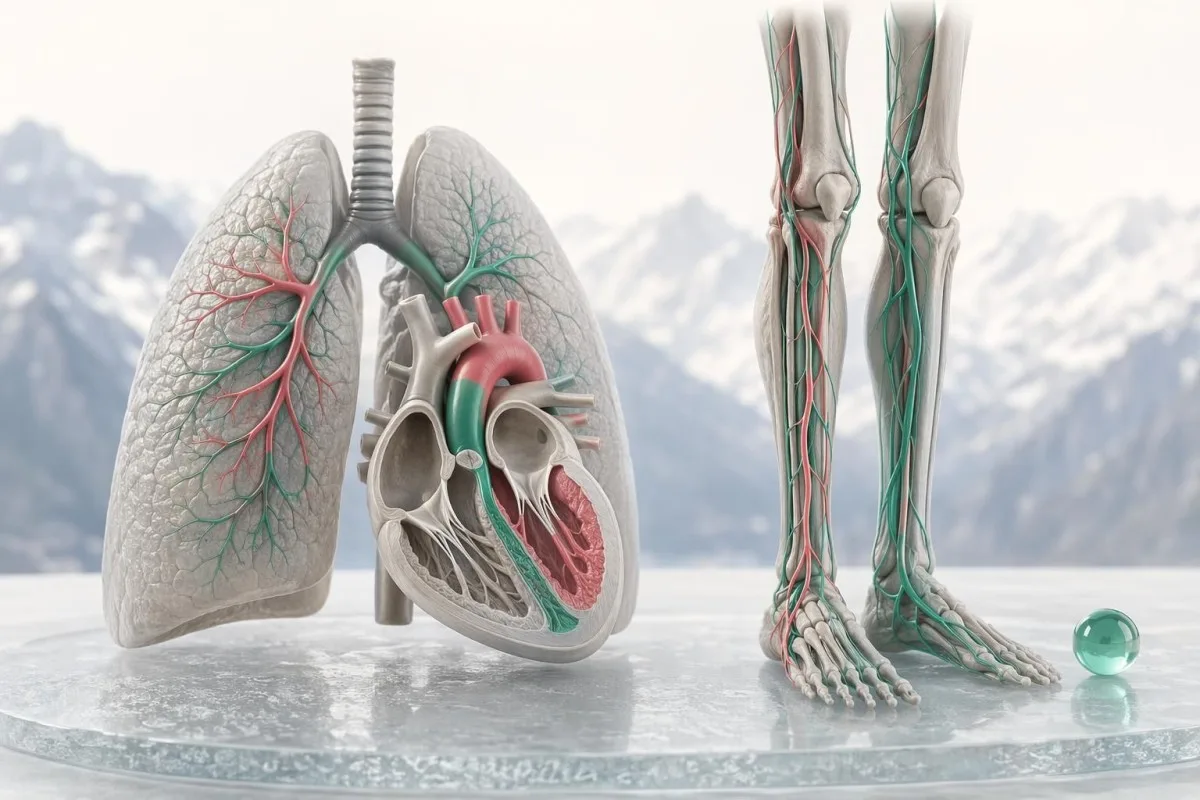
Ripeta testo post 1 ĝis 2 semajnoj povas esti akceptebla kiam D-dimero estis iomete levita dum virusa malsano kaj simptomoj plene trankviliĝis. Falo de 1,100 al 520 ng/mL FEU povas subteni resaniĝon, kvankam ĝi ankoraŭ ne diagnozas kio okazis.
Ripeti estas malpli helpa post kirurgio ĉar valoroj povas resti altaj dum pluraj semajnoj. Stabilan paciento 10 tagojn post operacio bezonas risk-taksadon kaj foje ultrasonon, ne ĉiutagajn kontrolojn de D-dimero.
Pacientoj ofte petas duan opinion kiam la portalo diras “nenormala” sed la kuracisto diras “ne zorgiga”. Nia dua opinio gvidilo klarigas kiam tiu speco de revizio estas utila kaj kiam prizorgo en la sama tago estas pli sekura.
Se vi ripetas D-dimeron, ripetu ĝin en la sama sistemo de unuoj se eble. Kompari 0.74 mg/L FEU kun 390 ng/mL DDU sen konvertiĝo estas recepto por konfuzo.
Demandoj por demandi kiam via D-dimero estas ĉe la limo
Limregiona D-dimero devus instigi pli bonajn demandojn, ne aŭtomatan trankviligon aŭ aŭtomatan CT-skanadon. Demandu pri la unuo, via aĝo-adaptita tranĉpunkto, via Wells aŭ Geneva-risko, la tempokadro de simptomoj, lastatempaj ellasoj, kaj kia ŝanĝo de simptomoj devus sendi vin al urĝa kuracado.

La unua demando estas simpla: “Ĉu ĉi tio estas FEU aŭ DDU?” La dua estas: “Kiun sojlon oni aplikas por mia aĝo?” 69-jaraĝa persono kun 640 ng/mL FEU povas esti sub la aĝ-adaptita sojlo, dum 640 ng/mL DDU estas alia nivelo de zorgo.
Poste demandu: “Kia estis mia klinika probablo antaŭ la testo?” Se neniu konsideris pulson, oksigensaturiĝon, unuflankan ŝveliĝon de kruro, lastatempan kirurgion, estrogenan terapion, kanceron aŭ antaŭan VTE, la rezulto eble estis interpretita tro mallarĝe.
Petu la planon skribe, se vi povas: simptomoj por atenti, ĉu necesas ultrasono, ĉu necesas CT, kaj ĉu ripeta testado havas sencon. Nia variado de sangoanalizo gvidilo helpas pacientojn kompreni kial malgrandaj ŝanĝoj en laboratorio ne estu legataj kiel akciaj prezoj.
Mi kutime diras al pacientoj teni tri nombrojn ĉe mano: D-dimera valoro kun unuo, oksigensaturiĝo se mezurita, kaj ripoza pulso. Tiuj tri nombroj, kune kun simptomoj, ofte diras al la klinikisto multe pli ol la sola D-dimera averto.
Resumo: uzu aĝan alĝustigon, sed ne ignoru simptomojn
Aĝ-adaptita D-dimero post 50 estas saĝa maniero redukti nenecesan bildigon, sed ĝi estas nur sekura ene de strukturita klinika takso. Uzu aĝon × 10 ng/mL FEU por multaj analizoj, kontrolu la unuon, kaj serĉu urĝan prizorgon kiam simptomoj sugestas PE aŭ DVT.
Ekde la 13-a de junio 2026, mia praktika regulo estas ĉi tiu: malalt-riska 74-jaraĝa persono kun D-dimero 680 ng/mL FEU povas eviti CT, sed spireganta 74-jaraĝa persono kun pulso 120/min kaj oksigeno 91% bezonas urĝan taksadon. La sama nombro povas signifi malsamajn aferojn.
La medicina enhavo de Kantesti estas reviziita laŭ klinikaj normoj, ne nur laŭ laboratoriaj referencintervaloj. Nia klinika validigo paĝo klarigas kiel kuracista superrigardo kaj teknika komparado formas la manieron kiel ni prezentas risklingvon.
Se via D-dimero estas limita, ne kverelu kun la nombro sole. Demandu ĉu oni uzis vian aĝ-adaptitan sojlon, ĉu viaj simptomoj ŝanĝas la antaŭtestan probablon, kaj ĉu hodiaŭ necesas ultrasono aŭ CT.
La sekura interpretado estas humila. D-dimero estas bonega por ekskludi sangokoagulaĵojn ĉe la ĝusta pacienta grupo, malbona por pruvi sangokoagulaĵojn, kaj danĝera kiam oni uzas ĝin por superregi alt-riskan klinikan rakonton.
Oftaj Demandoj
Kio estas la aĝ-adaptita sojlo de D-dimero post la aĝo de 50?
La kutima aĝ-adaptita D-dimera sojlo post la aĝo 50 estas aĝo × 10 ng/mL FEU. Ekzemple, la sojlo estas 600 ng/mL FEU je la aĝo 60, 750 ng/mL FEU je la aĝo 75, kaj 880 ng/mL FEU je la aĝo 88. Tiu regulo uziĝu nur kiam la klinika probablo de koagulaĵo estas malalta aŭ meza, ne kiam simptomoj forte sugestas pulman embolion aŭ profundan vejnan trombozon (DVT).
Ĉu D-dimero de 700 estas alta ĉe 70-jaraĝulo?
D-dimero de 700 ng/mL FEU estas ĝuste ĉe la kutima aĝ-adaptita sojlo por 70-jaraĝa. Ĝi povas esti traktata kiel negativa nur se la persono havas malaltan aŭ mezan klinikan probablon kaj neniujn koncernajn simptomojn kiel subita manko de spiro, brustdoloro, svenado, malalta oksigeno, tusado de sango, aŭ unu ŝvelinta dolora kruro. Se la unuo estas DDU anstataŭ FEU, 700 ng/mL DDU ne estas ekvivalenta kaj postulas malsaman interpretadon.
Kial D-dimero pliiĝas kun aĝo?
D-dimero pliiĝas kun aĝo ĉar baza fibrina formado kaj malkomponiĝo iĝas pli aktivaj dum sangaj vaskuloj, histoj kaj inflamaj sistemoj maljuniĝas. Pli maljunaj plenkreskuloj ankaŭ havas pli altajn indicojn de infekto, kancero, rena difekto, korinsuficienco, kirurgio kaj hospitaligo, ĉio el kio povas altigi D-dimeron super 500 ng/mL FEU sen pruvi sangokoagulaĵon. Tial aĝ-adaptitaj sojloj reduktas falsajn pozitivajn rezultojn post la aĝo de 50.
Ĉu normala, al aĝo adaptita D-dimero povas maltrafi sangokoagulaĵon?
Jes, normala aĝ-adaptita D-dimero povas preteratenti sangokoagulaĵon en elektitaj situacioj, precipe se klinika probablo estas alta, simptomoj ĉeestis dum 10 ĝis 14 tagoj, antikoagulantoj estis komencitaj antaŭ testado, aŭ se la koagulaĵo estas malgranda. D-dimero estas plej sekura kiel ekskluda testo ĉe pacientoj kun malalta aŭ meza risko. Alt-riskaj simptomoj devus konduki al bildigo prefere ol trankviligo pro limregiona nombro.
Kiaj simptomoj postulas bildigon eĉ kun iomete levita D-dimero?
Subita mallongigo de spiro, brustdoloro kiu plimalboniĝas kun spirado, svenado, oksigensaturiĝo sub ĉirkaŭ 92%, tusado de sango, pulso super 100/min, aŭ unu ŝvelinta dolora kruro povas pravigi urĝan bildigon eĉ kiam D-dimero estas ĉe la limo. Bildigo povas signifi CT-pulman angiografion, V/Q-skanadon, aŭ kunpremajn ultrasonojn depende de la klinika situacio. La rezulto de D-dimero ne devus superregi alt-riskan simptoman ŝablonon.
Qual estas la diferenco inter FEU kaj DDU en rezultoj de D-dimero?
FEU kaj DDU estas malsamaj raportaj sistemoj por D-dimero, kaj FEU-valoroj estas proksimume duoble pli grandaj ol DDU-valoroj. Norma limvaloro de 500 ng/mL FEU estas proksimume ekvivalenta al 250 ng/mL DDU. Formuloj adaptitaj laŭ aĝo kutime estas skribitaj por FEU kiel aĝo × 10 ng/mL post aĝo 50, dum proksimuma DDU-ekvivalento estas aĝo × 5 ng/mL.
Ĉu mi ripetu liman D-dimero-teston?
Ripeti liman D-dimeron povas esti akceptebla kiam simptomoj estas malalt-riska, la origina unuo estis neklara, aŭ la rezulto okazis dum provizora ellasilo kiel milda infekto. Ripeto post 1 ĝis 2 semajnoj povas montri ĉu la valoro malpliiĝas, ekzemple de 1 100 al 520 ng/mL FEU. Ne atendu ripetan testadon se vi havas brustdoloron, mankon de spiro, svenon, malaltan oksigenon aŭ unu ŝvelintan doloran kruron.
Akiru hodiaŭ AI-movitan analizon de sangoanalizo
Aliĝu al pli ol 2 milionoj da uzantoj tutmonde, kiuj fidas je Kantesti por tuja, preciza analizo de laboratoriaj testoj. Alŝutu viajn rezultojn de sangoanalizo kaj ricevu ampleksan interpretadon de 15,000+-biomarkiloj en sekundoj.
📚 Referencitaj esplorpublikaĵoj
Klein, T., Mitchell, S., & Weber, H. (2026). Gvidilo pri Virina Sano: Ovulado, Menopaŭzo kaj Hormonaj Simptomoj. Kantesti AI Medicina Esploro.
Klein, T., Mitchell, S., & Weber, H. (2026). Plurlingva AI-Helpa Klinika Decida Subteno por Frua Hantavirusa Sortado: Dezajno, Inĝeniera Valido kaj Real-Monda Disvolviĝo Trans 50,000 Interpretitaj Sangaj Testaj Raportoj. Kantesti AI Medicina Esploro.
📖 Eksteraj medicinaj referencoj
⚕️ Medicina Deklaro
Ĉi tiu artikolo estas nur por edukaj celoj kaj ne konsistigas medicinan konsilon. Ĉiam konsultu kvalifikitan sanprovizanton por diagnozaj kaj traktadaj decidoj.
Signaloj de fido E-E-A-T
Sperto
Kuracista gvidata klinika revizio de laboratoriaj interpretaj laborfluoj.
Kompetenteco
Laboratoria medicino fokusiĝas pri kiel biomarkiloj kondutas en klinika kunteksto.
Aŭtoritateco
Skribita de d-ro Thomas Klein kun revizio de d-ro Sarah Mitchell kaj prof. d-ro Hans Weber.
Fidindeco
Evident-bazita interpretado kun klaraj sekvaj vojoj por redukti alarmon.