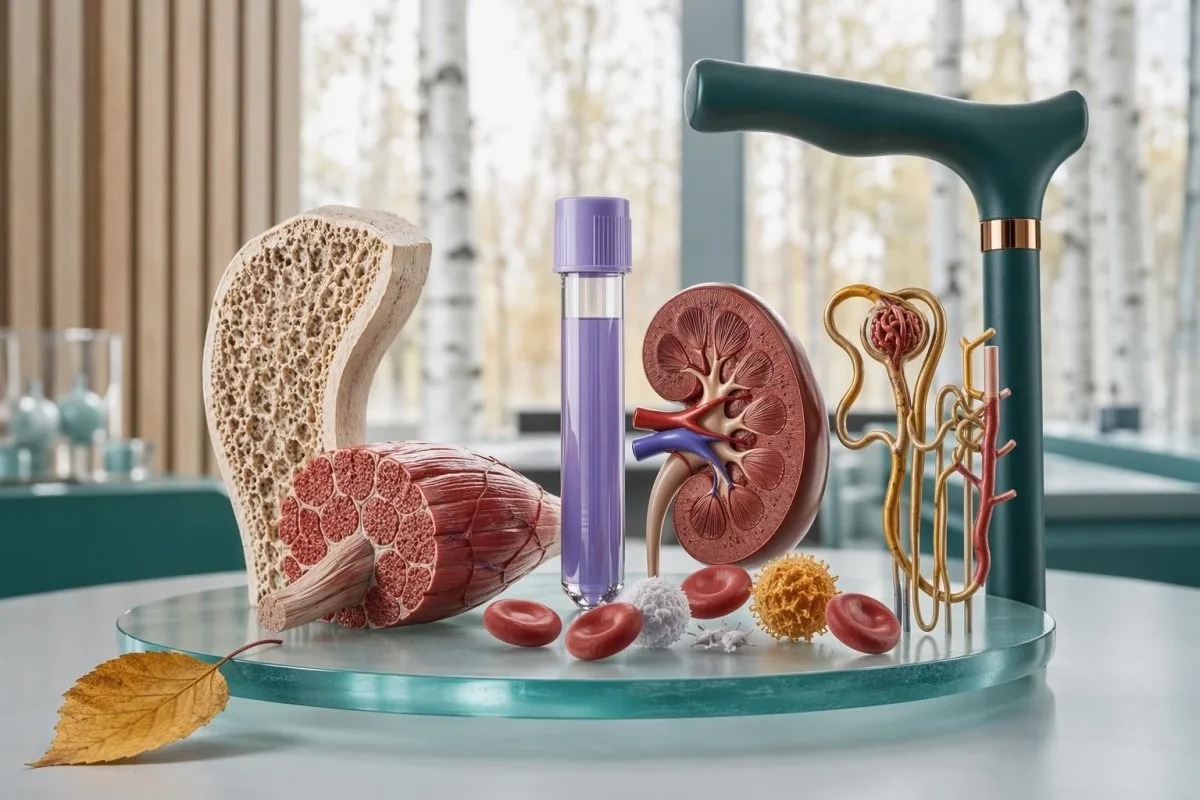
Routine labs often whisper before an older adult falls. The useful skill is reading CBC, kidney, electrolyte, protein, vitamin and medication patterns together.


- Blood test for elderly fall risk cannot predict a fall alone, but anemia, sodium below 130 mmol/L, albumin below 3.5 g/dL and glucose below 70 mg/dL deserve attention.
- Hemoglobin below 12.0 g/dL in women or 13.0 g/dL in men meets common anemia criteria and can reduce exercise tolerance before obvious fatigue.
- BUN/creatinine ratio above 20:1 often suggests dehydration or low kidney blood flow, especially when sodium, albumin or hematocrit are also high.
- Albumin below 3.5 g/dL is a frailty clue, but it may reflect inflammation, liver disease or kidney protein loss rather than simple low protein intake.
- Vitamin D below 20 ng/mL is usually deficiency; in older adults it should be interpreted with calcium, phosphate, alkaline phosphatase and PTH.
- B12 below 200 pg/mL is strongly suspicious for deficiency, while 200-300 pg/mL can still matter if methylmalonic acid or homocysteine is high.
- Potassium below 3.5 mmol/L or above 5.0 mmol/L can worsen weakness, palpitations and fall risk, particularly after diuretic, ACE inhibitor or spironolactone changes.
- Trend tracking matters: a sodium drift from 140 to 133 mmol/L or hemoglobin drop of 1 g/dL over 6 months may be more useful than a one-time flag.
What an elderly blood test can reveal before a fall
A blood test for elderly fall risk cannot predict a fall by itself, but it can reveal anemia, dehydration, low protein intake, vitamin deficiencies, kidney strain, electrolyte shifts and medication effects before dizziness or weakness is obvious. In clinic, the pattern matters: hemoglobin 10.8 g/dL plus sodium 131 mmol/L plus albumin 3.2 g/dL tells a different story than any one result alone.
As of May 27, 2026, I treat a senior blood test as an early-warning map rather than a pass-fail exam. Clegg et al. described frailty in The Lancet as vulnerability created by deficits across multiple systems, and that is exactly how lab patterns behave in real older adults.
Kantesti is an AI blood test analyzer that reads an older adult's CBC, CMP, iron studies, vitamin D, B12 and medication-linked patterns together rather than as separate red flags. At our organisation, we see many users upload annual panels that looked normal at first glance but showed a 2-year drift in sodium, hemoglobin or eGFR.
A practical starting panel usually includes CBC with differential, CMP, fasting or random glucose, HbA1c, TSH, ferritin, B12, folate, vitamin D, magnesium and sometimes CRP. For a broader checklist, our guide to senior routine labs explains which results are worth tracking yearly and which belong to specific symptoms.
CBC anemia patterns that quietly increase fall risk
CBC results can raise fall concern when hemoglobin is low, red cell size is abnormal or RDW is rising. Hemoglobin below 12.0 g/dL in older women or 13.0 g/dL in older men meets common anemia criteria, and even mild anemia can make stairs, bathing and night-time bathroom trips less safe.
MCV normally sits around 80-100 fL in adults; low MCV points toward iron deficiency or thalassemia trait, while high MCV suggests B12, folate, alcohol, liver disease or medication effects. RDW above about 14.5% means red cell sizes vary more than expected, often rising before hemoglobin becomes frankly low.
I get more concerned when a patient tells me they are simply slowing down and the CBC shows hemoglobin 10.5 g/dL, MCV 76 fL and ferritin 9 ng/mL. That pattern is not aging; it is iron-restricted oxygen delivery until proven otherwise, and our anemia pattern guide walks through the usual next tests.
Platelets add another clue. Platelets above 450 x 10^9/L can accompany iron deficiency or inflammation, while platelets below 100 x 10^9/L raise bleeding and medication-safety questions, especially if the person is taking aspirin, anticoagulants or has had a recent fall.
One caveat: older adults can have anemia from several causes at once. I have seen ferritin 28 ng/mL, B12 240 pg/mL and eGFR 42 mL/min/1.73 m² in the same 79-year-old, where treating only iron would have missed kidney-related anemia and neuropathy risk.
Dehydration clues in BUN, creatinine, sodium and albumin
Dehydration often appears as a pattern: BUN rises more than creatinine, sodium may move high or low, and albumin or hematocrit may look falsely concentrated. A BUN/creatinine ratio above 20:1 is a classic prerenal clue, but it is not proof without the story.
BUN is usually about 7-20 mg/dL, while creatinine varies with muscle mass; an 86-year-old with low muscle may have creatinine 0.8 mg/dL despite reduced kidney reserve. This is why dehydration can be missed if the clinician stares only at creatinine instead of the ratio and trend.
Sodium normally runs 135-145 mmol/L. Sodium above 145 mmol/L can mean water deficit, but sodium below 135 mmol/L is also common in frail older adults taking thiazides, SSRIs or carbamazepine, and sodium below 130 mmol/L is linked with gait instability in many clinical settings.
Albumin above 5.0 g/dL and hematocrit above the person's baseline can be concentration effects after poor intake, vomiting, diarrhea or a hot week. Our article on dehydration false highs explains why a repeat panel after rehydration can look dramatically different within 24-72 hours.
The useful question is not whether one marker is high. It is whether BUN, sodium, urine concentration, blood pressure and medication timing all point in the same direction.
Malnutrition and low protein signals hidden in routine panels
Low albumin, low total protein, low cholesterol, low lymphocytes and micronutrient deficits can suggest frailty risk, but no single lab diagnoses malnutrition. Albumin below 3.5 g/dL is a risk marker; it may reflect inflammation, kidney protein loss or liver disease as much as diet.
Total protein is usually 6.0-8.3 g/dL and albumin is usually 3.5-5.0 g/dL. When both are low, I ask about appetite, dental pain, swallowing, diarrhea, alcohol intake, social isolation and whether the person is losing more than 5% of body weight in 1 month.
Prealbumin, often 15-36 mg/dL, changes faster than albumin because its half-life is roughly 2 days. The trap is that CRP 45 mg/L can drive prealbumin down even when calorie intake is improving, so I rarely interpret it without an inflammation marker.
Low cholesterol is not always good in an 84-year-old. Total cholesterol below 160 mg/dL with albumin 3.1 g/dL and lymphocytes below 1.0 x 10^9/L may be a nutrition or chronic disease clue, and our protein marker guide covers the albumin-globulin split in more detail.
Kantesti's biomarker guide covers more than 15,000 markers, but in frailty I still come back to the simple cluster: albumin, weight trend, CRP, hemoglobin, vitamin D, B12 and kidney function. Simple does not mean shallow.
Vitamin D, calcium, PTH and bone-muscle risk
Vitamin D and calcium labs matter for falls because they connect muscle function, bone strength and fracture risk. A 25-OH vitamin D below 20 ng/mL usually indicates deficiency, while calcium must be corrected for albumin before anyone panics.
25-OH vitamin D is the storage marker most clinicians use; below 20 ng/mL is commonly deficient, 20-29 ng/mL is often called insufficient, and 30-50 ng/mL is a typical target zone in many practices. Some European labs use nmol/L, where 20 ng/mL equals about 50 nmol/L.
Total calcium usually runs 8.6-10.2 mg/dL, but low albumin can make calcium look low when ionized calcium is normal. The rough correction is measured calcium plus 0.8 times the difference between 4.0 and albumin in g/dL, though I prefer ionized calcium when the result will change treatment.
PTH is often 15-65 pg/mL, and a high PTH with low vitamin D suggests secondary hyperparathyroidism. Our vitamin D testing guide explains why the active 1,25-OH vitamin D test is usually not the right first test for routine deficiency.
The evidence on vitamin D supplements preventing falls is honestly mixed, especially when people are not deficient. In practice, I focus on correcting clear deficiency, avoiding excessive doses above 4,000 IU/day unless supervised, and pairing labs with strength and balance work.
B12, folate, homocysteine and gait-cognition clues
B12 and folate problems can raise fall risk through numb feet, poor proprioception, weakness, anemia and cognitive slowing. Serum B12 below 200 pg/mL is strongly suspicious for deficiency, but borderline B12 of 200-300 pg/mL can still be clinically real.
The confirmatory tests I like are methylmalonic acid and homocysteine. MMA above about 0.40 µmol/L supports functional B12 deficiency, while homocysteine above 15 µmol/L can rise with low B12, low folate, kidney impairment or hypothyroidism.
A common clinic story: an older adult says the carpet feels strange underfoot, the CBC looks normal, and B12 comes back 260 pg/mL. If MMA is high, that person may still improve with B12 replacement even without anemia, which is why our guide to B12 without anemia is one I share often.
Folate deficiency tends to push MCV high, often above 100 fL, but folate can look normal after recent supplementation. I am careful not to treat folate alone until B12 is checked, because folate can improve anemia while nerve injury from B12 deficiency continues.
Metformin and long-term acid-suppressing medicines deserve special attention. After 4 or more years on metformin, I usually want B12 checked at least every 1-2 years if there is numbness, anemia, memory change or unsteady walking.
Kidney function, electrolytes and blood pressure medicines
Kidney and electrolyte results often explain falls after medication changes. Potassium below 3.5 mmol/L can cause weakness or rhythm symptoms, while potassium above 5.0 mmol/L becomes more likely with ACE inhibitors, ARBs, spironolactone and reduced eGFR.
eGFR above 60 mL/min/1.73 m² is generally reassuring, but eGFR 45 in an 88-year-old may be stable while eGFR 45 in a newly ill patient may be acute kidney injury. Creatinine can look deceptively normal when muscle mass is low, so cystatin C is useful when the story and creatinine disagree.
Kantesti is an AI blood test interpretation platform that links kidney function, potassium, sodium, bicarbonate and medication timing in one view. Our guide to potassium after BP medicines covers why labs are often repeated 1-2 weeks after starting or increasing ACE inhibitors, ARBs or diuretics.
Bicarbonate or CO2 is usually 22-29 mmol/L. CO2 below 22 mmol/L can signal metabolic acidosis, which may worsen muscle breakdown and bone buffering over time, particularly in chronic kidney disease.
For kidney trends, the slope matters. A fall in eGFR of more than 5 mL/min/1.73 m² per year or a sudden 30% creatinine rise after a drug change deserves a call to the prescriber, even if the lab portal uses a mild-looking flag.
Glucose and A1c: hypoglycemia versus frailty trade-offs
Glucose and A1c results affect fall risk in two directions: high levels increase long-term nerve and vision risk, while low levels can cause immediate falls. A glucose below 70 mg/dL is hypoglycemia, and below 54 mg/dL is clinically significant hypoglycemia.
HbA1c of 6.5% or higher supports diabetes when confirmed, but the safest A1c target in an 82-year-old with frailty may be looser than in a fit 55-year-old. Many clinicians accept targets around 7.5-8.0% in complex older adults to reduce hypoglycemia and medication burden.
I worry when A1c is 6.2% but the patient is on insulin or sulfonylureas and reports morning shakiness. That neat-looking A1c may be hiding overnight lows, and our A1c age guide explains why averages can mislead.
Random glucose above 200 mg/dL with symptoms is different from fasting glucose 106 mg/dL. The first may need prompt diabetes assessment; the second is often a trend marker, especially when paired with weight loss, dehydration or infection.
There is one practical family question I always ask: has the person fallen before breakfast or after a missed meal? If yes, glucose logs or continuous glucose data may explain what the blood test average cannot.
Thyroid and muscle enzymes when weakness looks like aging
TSH, free T4 and CK can separate ordinary deconditioning from thyroid-related weakness, statin-associated muscle injury or inflammatory muscle disease. TSH is often about 0.4-4.0 mIU/L in adults, but the upper acceptable range may be slightly higher with age.
High TSH with low free T4 suggests overt hypothyroidism, which can cause slowed reflexes, muscle aches, constipation and imbalance. Low TSH with high free T4 suggests hyperthyroidism, which can cause tremor, weight loss, muscle wasting and atrial fibrillation risk.
CK is often roughly 30-200 IU/L, depending on sex, lab and muscle mass. CK above 1,000 IU/L is not a normal aging result; it can reflect muscle injury, severe hypothyroidism, medication reaction or prolonged time on the floor after a fall.
When I see weakness plus CK 480 IU/L in someone who started a statin 6 weeks ago, I do not automatically blame the statin. I check TSH, vitamin D, renal function, symptoms and timing, and our muscle weakness labs article gives a sensible sequence.
Biotin can distort some thyroid immunoassays, making TSH and free T4 look wrong. If an older adult takes 5,000-10,000 mcg/day for hair or nails, I usually ask about pausing it for 48-72 hours before repeat thyroid testing, if their clinician agrees.
Inflammation and infection signals when fever is absent
Older adults can have infection, inflammation or serious illness without fever, so CBC, CRP, ESR and metabolic shifts may be the first clue. WBC is commonly 4.0-11.0 x 10^9/L, but a normal WBC does not rule out infection in a frail patient.
Neutrophils above 7.5 x 10^9/L, bands or immature granulocytes can support bacterial stress, but steroids can push neutrophils up without infection. Lymphocytes below 1.0 x 10^9/L can occur after acute illness, chronic stress, steroids or malnutrition.
CRP is often below 10 mg/L in many laboratories. CRP 40-100 mg/L suggests a meaningful inflammatory process, while CRP above 100 mg/L often pushes clinicians to look harder for bacterial infection, pneumonia, inflammatory disease or tissue injury.
The NICE falls guideline recommends multifactorial assessment after falls, because a fall may be the presenting sign of acute illness rather than a balance problem alone. Our infection blood test guide compares CBC, CRP and procalcitonin when the diagnosis is not obvious.
ESR behaves differently from CRP because age, anemia and immunoglobulins can raise it. In a 78-year-old woman, ESR 42 mm/hr may be less alarming than the same value in a 30-year-old, but ESR 90 with new headache, jaw pain or visual symptoms is a same-day problem.
Medication effect patterns labs can flag early
Medication-related lab changes are among the most preventable fall-risk clues in older adults. Sodium below 135 mmol/L after a thiazide or SSRI, potassium above 5.0 mmol/L after spironolactone, or magnesium below 1.7 mg/dL after long-term PPI use should trigger review.
The 2023 AGS Beers Criteria warns clinicians to be cautious with many medicines that increase falls, sedation, low sodium or bleeding risk in older adults. The lab pattern can be the objective clue that a drug is no longer safe at the current dose.
Warfarin is the clearest example: many patients target INR 2.0-3.0, but INR above 4.5 increases bleeding concern, especially after a fall or head injury. Digoxin, lithium and some seizure medicines also need level checks when kidney function changes.
Our medication monitoring timeline gives practical retest windows, and Kantesti's clinical standards are described in our medical validation materials. In my experience, the safest reviews connect the lab date to the exact day the medicine changed.
One low-tech trick works beautifully: write the start date of every new medicine next to the lab date. A sodium fall from 139 to 130 mmol/L 12 days after hydrochlorothiazide is not a random number; it is a medication story.
Trend tracking for families and caregivers
Trend tracking helps families spot slow frailty patterns that one lab report may miss. A health history tracker should show dates, medicines, falls, infections, weight change and lab values together, not just store PDFs in a folder.
Kantesti is an AI biomarker interpretation platform used by families who want to track family health across parents, partners and adult children without mixing up baselines. A creatinine of 1.1 mg/dL can mean different things in a muscular 62-year-old man and a 47-kg 89-year-old woman.
The changes I most want families to notice are small: hemoglobin down 1.0 g/dL in 6 months, albumin down 0.4 g/dL, eGFR down 8 points after a new diuretic, or sodium drifting from 140 to 133 mmol/L. Our aging parent tracker explains how to record those changes without turning family care into surveillance.
A good health history tracker also includes non-lab events. Add falls, near-falls, antibiotics, hospital stays, new glasses, appetite changes and whether the blood test was fasting, because these details explain many confusing results.
Privacy matters. If an older adult has decision-making capacity, they should know who can view results, what is being tracked and when information will be shared with a clinician.
When abnormal results need urgent same-day care
Some elderly blood test abnormalities should not wait for a routine appointment. Sodium below 125 mmol/L, potassium above 6.0 mmol/L, glucose below 54 mg/dL, hemoglobin below 8 g/dL with symptoms, or INR above 4.5 after a fall needs urgent clinical advice.
The number is only half the decision. Potassium 5.8 mmol/L in a stable patient may be rechecked quickly, while potassium 5.8 with weakness, chest symptoms or ECG changes is handled very differently.
After a fall with head impact, anticoagulant use changes the risk calculation even if the person looks well. INR above target, platelets below 100 x 10^9/L or new anemia makes me more cautious about delayed bleeding.
Our critical value guide explains why labs sometimes call clinicians directly for potassium, sodium, glucose, calcium or hemoglobin results. If there is confusion, fainting, chest pain, one-sided weakness, black stools or repeated vomiting, the symptom should drive same-day care even before the lab is repeated.
NICE guidance on falls stresses looking for reversible medical causes, not just advising better shoes or a walking aid. That point is easy to forget at 2 a.m. after a bathroom fall, but it is often where the diagnosis starts.
How Kantesti supports safer lab interpretation for older adults
Safer lab interpretation for older adults means combining pattern recognition with medical judgement, not replacing the clinician. Kantesti helps users organize uploaded PDFs or photos, detect abnormal clusters in about 60 seconds, and prepare better questions for their doctor.
I am Thomas Klein, MD, Chief Medical Officer at Kantesti, and I still tell families the same thing in plain language: an app cannot examine gait, blood pressure standing up or the bruise after a fall. What it can do is stop a sodium of 131 mmol/L, albumin of 3.2 g/dL and hemoglobin of 10.6 g/dL from being treated as three unrelated nuisances.
Kantesti's neural network is built for contextual interpretation across languages, units and reference ranges, and our medical governance is supported by the medical advisory board. Our engine has also been evaluated in a population-scale validation benchmark, which matters because older adult lab panels are full of borderline results and hyperdiagnosis traps.
The platform is CE Marked and designed around HIPAA, GDPR and ISO 27001 controls, which is not glamorous but matters when families are storing sensitive results. Kantesti Ltd is a UK company, and our tools are used by more than 2 million people across 127 countries and 75 languages.
Dr. Thomas Klein's practical advice is simple: repeat unexpected abnormalities, link them to medication dates, and bring the trend rather than a single screenshot to the appointment. Most clinicians can act faster when the family brings a clean 12-month timeline instead of six disconnected portal printouts.
Frequently Asked Questions
What blood tests show fall risk in older adults?
No blood test can predict a fall by itself, but CBC, CMP, HbA1c, TSH, ferritin, B12, vitamin D, magnesium and CRP can reveal reversible fall-risk patterns. Hemoglobin below 12.0 g/dL in women or 13.0 g/dL in men suggests anemia, sodium below 130 mmol/L can affect gait, and albumin below 3.5 g/dL can mark frailty or inflammation. The safest interpretation combines labs with medications, blood pressure standing up, weight change and recent falls.
Can dehydration show on a blood test before symptoms?
Yes, dehydration can show before obvious thirst or dizziness, especially in older adults. A BUN/creatinine ratio above 20:1, sodium above 145 mmol/L, concentrated hematocrit or albumin above 5.0 g/dL can suggest fluid loss or low kidney blood flow. Sodium can also be low rather than high when medicines such as thiazides or SSRIs are involved, so the full pattern matters.
What anemia result is concerning in an elderly person?
Hemoglobin below 12.0 g/dL in older women or 13.0 g/dL in older men meets common anemia criteria and deserves follow-up. Hemoglobin below 10.0 g/dL, a rapid fall of 1 g/dL or more, black stools, chest pain or shortness of breath makes the result more urgent. MCV below 80 fL points toward iron restriction, while MCV above 100 fL suggests B12, folate, liver, thyroid or medication causes.
Which medication-related lab changes increase fall risk?
Medication-linked fall-risk labs include sodium below 135 mmol/L after thiazides or SSRIs, potassium below 3.5 mmol/L after diuretics, potassium above 5.0 mmol/L after ACE inhibitors or spironolactone, and magnesium below 1.7 mg/dL after long-term PPI use. INR above 4.5 is concerning in a patient on warfarin, especially after a fall. Kidney function changes can turn a previously safe drug dose into an unsafe one within days to weeks.
How often should an older adult repeat routine blood tests?
Many stable older adults repeat routine labs every 6-12 months, but timing should be shorter after new symptoms, medication changes, weight loss, falls or abnormal results. Potassium and creatinine are often rechecked 1-2 weeks after starting or increasing ACE inhibitors, ARBs, spironolactone or diuretics. An unexpected sodium, hemoglobin, calcium or kidney result may need repeat testing within days rather than months.
Can family members track an aging parent's blood tests?
Family members can track an aging parent's blood tests if the older adult agrees or if appropriate legal authority exists. The useful record includes lab dates, values, reference ranges, medication start dates, falls, infections, weight changes and symptoms. A sodium drift from 140 to 133 mmol/L or hemoglobin drop of 1 g/dL over 6 months is often easier to see in a shared timeline than in separate lab reports.
What else should be checked if my older relative has repeated falls but blood tests are normal?
Normal results do not rule out balance, vision, nerve, heart-rhythm, or blood-pressure problems. Arrange a fall assessment that includes standing blood pressure, gait and strength testing, medication review, vision check, and a home-safety review.
Does an older adult need to fast before blood tests related to falls or frailty?
Most frailty-related tests, including a CBC, electrolytes, kidney function, B12, and vitamin D, do not require fasting. Drink water unless you have fluid limits, and ask ahead about fasting glucose or lipids; people using diabetes medicines need individualized instructions to prevent low blood sugar.
Should an older adult get blood tests after a near-fall even if they feel fine?
Yes, especially if the near-fall followed a medication change, poor intake, diarrhea, infection symptoms, or dizziness. A CBC and basic metabolic panel can catch anemia, dehydration, kidney strain, sodium or potassium changes that are treatable before another episode.
Get AI-Powered Blood Test Analysis Today
Join over 2 million users worldwide who trust Kantesti for instant, accurate lab test analysis. Upload your blood test results and receive comprehensive interpretation of 15,000+ biomarkers in seconds.
📚 Referenced Research Publications
Klein, T., Mitchell, S., & Weber, H. (2026). Nipah Virus Blood Test: Early Detection & Diagnosis Guide 2026. Kantesti AI Medical Research.
Klein, T., Mitchell, S., & Weber, H. (2026). B Negative Blood Type, LDH Blood Test & Reticulocyte Count Guide. Kantesti AI Medical Research.
📖 External Medical References
National Institute for Health and Care Excellence (2013). Falls in older people: assessing risk and prevention. NICE Clinical Guideline CG161.
⚕️ Medical Disclaimer
This article is for educational purposes only and does not constitute medical advice. Always consult a qualified healthcare provider for diagnosis and treatment decisions.
E-E-A-T Trust Signals
Experience
Physician-led clinical review of lab interpretation workflows.
Expertise
Laboratory medicine focus on how biomarkers behave in clinical context.
Authoritativeness
Written by Dr. Thomas Klein with review by Dr. Sarah Mitchell and Prof. Dr. Hans Weber.
Trustworthiness
Evidence-based interpretation with clear follow-up pathways to reduce alarm.