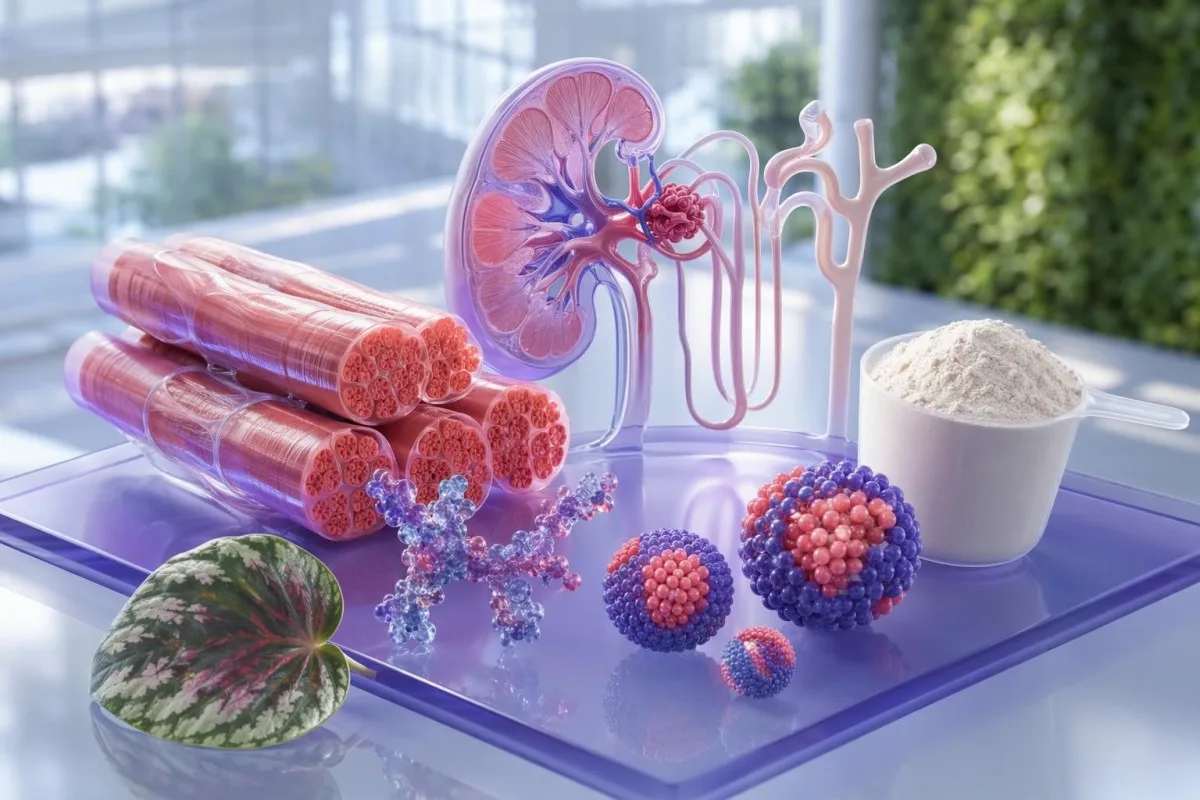
Whey can help protein intake and training recovery, but blood tests decide whether the dose fits your kidneys, glucose pattern and cardiovascular risk.


- Whey protein benefits are strongest for muscle protein synthesis when total daily protein reaches about 1.6 g/kg/day during resistance training.
- Leucine threshold is usually met by 20-30 g whey protein, which supplies roughly 2-3 g leucine per serving.
- HbA1c below 5.7% is generally normal; 5.7-6.4% suggests prediabetes and 6.5% or higher meets a diabetes-range threshold when confirmed.
- BUN is commonly 7-20 mg/dL in adults; a rise above 25 mg/dL after adding whey often reflects protein load, dehydration, or both.
- Creatinine can rise slightly with higher muscle mass, creatine use, heavy training or dehydration, so eGFR and urine ACR matter more than creatinine alone.
- eGFR below 60 mL/min/1.73 m² for 3 months, or urine ACR 30 mg/g or higher, should prompt a kidney-focused dose review before high-protein dieting.
- Lipids may improve if whey replaces refined snacks, but LDL-C can worsen if the shake is built with saturated fat, coconut oil or excess calories.
- Supplement timing matters less than total protein, but whey around training or at breakfast can be useful when meals are protein-poor.
- Supplement interactions are mostly indirect: whey can change medication timing, mineral absorption, glucose response and gastrointestinal tolerance.
- Multivitamin recommendations should be lab-guided; whey does not replace vitamin D, iron, B12, folate, magnesium or omega-3 decisions.
What whey protein can and cannot improve on blood tests
Whey protein benefits are real, but they are specific: whey can improve protein adequacy, training recovery and sometimes post-meal glucose; it cannot detox kidneys, erase diabetes risk, or automatically lower cholesterol. As of May 16, 2026, I treat whey as food with lab consequences, not as a magic supplement. Uploading a CMP, lipid panel and A1c to Kantesti AI can help connect the shake to the pattern, especially if you also changed calories, training or creatine.
The strongest evidence for whey is muscle support when it fills a real protein gap. Morton et al. found in a 2018 British Journal of Sports Medicine meta-analysis that protein supplementation increased resistance-training gains, with benefits flattening around 1.6 g/kg/day total protein intake.
In our review of millions of lab uploads, the common mistake is blaming whey for every new flag. A person who starts whey often starts lifting, fasting, dieting, taking creatine and drinking less water; the pattern looks very different from isolated whey use. Our deeper guide to a high protein diet blood test walks through that exact confusion.
I am Thomas Klein, MD, and clinically I worry less about one scoop and more about the stack: 2 scoops whey, 200 g meat, creatine, low carbohydrate intake, NSAIDs and poor hydration. That combination can nudge BUN, creatinine, uric acid and triglycerides in ways a generic supplement label will never predict.
How much whey helps muscle gain, and where benefits flatten
Whey helps muscle most when a serving delivers enough essential amino acids, usually 20-40 g protein with about 2-3 g leucine. More is not always better; once daily protein needs are met, extra whey mostly becomes extra calories and nitrogen waste.
For most healthy adults doing resistance training, a practical target is 1.2-1.6 g/kg/day protein; highly trained or dieting athletes may use 1.6-2.2 g/kg/day for short periods. If you weigh 80 kg, that means roughly 96-128 g/day before jumping to aggressive bodybuilding numbers.
A 52-year-old marathon runner once showed me an AST of 89 IU/L and panicked about liver damage after adding whey. His CK was also high after hill repeats, and the pattern matched exercise muscle stress rather than whey toxicity. If that sounds familiar, our article on normal labs after exercise is a better first read than another supplement forum.
Whey does not build muscle without load. Patients who take 40 g whey daily but lift no weights may improve satiety, yet they rarely gain meaningful lean mass; people who lift 3-4 times weekly and miss breakfast protein often notice the clearest change. For runners, cyclists and hybrid athletes, the smarter comparison is with the labs in our athlete blood test guide.
Can whey protein lower A1c or glucose?
Whey may modestly improve post-meal glucose when taken before or with carbohydrate, but it rarely lowers A1c by itself unless it replaces higher-calorie or high-glycemic foods. HbA1c below 5.7% is generally normal, 5.7-6.4% suggests prediabetes, and 6.5% or higher is diabetes-range when confirmed, according to ADA Standards of Care diagnostic criteria.
The mechanism is plausible: whey stimulates insulin and incretin hormones, so some patients see a smaller glucose spike after a mixed meal. In practice, the effect is meal-specific; whey before oats may help more than whey added to a 700 kcal smoothie.
When I review a fall in A1c from 6.1% to 5.8%, I ask what changed besides whey. Weight loss of 3-5%, fewer refined carbohydrates, better sleep and GLP-1 therapy can all move A1c, and whey may simply be the tool that made breakfast less chaotic. Use our A1c conversion chart if your report shows mmol/mol instead of percent.
Kantesti AI interprets glucose patterns by comparing A1c, fasting glucose, triglycerides, HDL-C and sometimes insulin. A normal A1c with high fasting insulin can still suggest early resistance, which is why our insulin resistance test guide matters before assuming whey fixed the problem.
Which kidney markers may shift after starting whey?
After starting whey, the kidney-related markers most likely to shift are BUN, urea, creatinine and sometimes calculated eGFR. A higher BUN with stable creatinine and normal urine ACR often reflects protein intake or dehydration, while falling eGFR or rising albumin in urine deserves medical review.
BUN is commonly 7-20 mg/dL in many US labs, while UK and European reports often show urea around 2.5-7.8 mmol/L. A whey increase from 14 to 23 mg/dL is not the same as kidney failure, especially if the blood test followed a high-protein dinner and limited fluids.
Creatinine is noisier than patients expect. It rises with muscle mass, heavy lifting, creatine, dehydration and some medications; the same creatinine of 1.2 mg/dL can mean different things in a 95 kg lifter and a 48 kg older adult. KDIGO 2024 emphasizes chronicity, eGFR category and albuminuria, which is why a urine ACR kidney test is so useful.
Kantesti's neural network flags kidney risk by pattern, not panic. An eGFR of 58 mL/min/1.73 m² once may be repeat-test territory, but eGFR below 60 for at least 3 months or urine ACR 30 mg/g or higher changes the conversation; see our plain-English guide to what eGFR means.
What happens to cholesterol, triglycerides and liver enzymes?
Whey may improve lipids when it replaces sugary snacks, but it can worsen LDL-C or triglycerides when added on top of excess calories. Liver enzymes usually do not rise from whey alone; abnormal ALT, AST or GGT should trigger a broader diet, alcohol, medication and exercise review.
LDL-C is usually considered optimal below 100 mg/dL for average-risk adults, but lower targets apply after cardiovascular disease or diabetes. Triglycerides below 150 mg/dL are generally normal; values above 200 mg/dL often tell me the shake contains hidden carbohydrate, alcohol intake is high, or insulin resistance is present.
A common clinical trap is the healthy-looking smoothie: whey, banana, oats, nut butter, honey and whole milk. That can reach 700-900 kcal, which is fine for a lean athlete but not for a sedentary person trying to reverse prediabetes. Our lipid panel guide helps separate LDL-C, HDL-C and triglyceride signals.
AST and ALT can rise after heavy lifting, and AST may exceed ALT when muscle is the source. If ALT stays above 40-50 IU/L or GGT is elevated, I look beyond whey toward fatty liver, alcohol, medications and rapid weight change; dietary patterns in our cholesterol-lowering foods guide often move the needle more than changing powder brands.
Which whey type fits your labs and gut tolerance?
Whey concentrate is cheaper and usually contains more lactose; whey isolate has more protein per scoop and less lactose; hydrolyzed whey is partly pre-digested and often used for tolerance. The best choice depends on lactose symptoms, calories, protein target and whether your blood markers suggest overfeeding.
A typical scoop of whey concentrate gives 20-25 g protein with variable carbohydrate and fat, while isolate often gives 25 g protein with less than 2 g carbohydrate. If A1c or triglycerides are high, the difference between 3 g and 15 g added sugar per serving becomes clinically relevant.
Patients with bloating often blame protein itself, but lactose, sugar alcohols, gums and large serving size are frequent culprits. If diarrhea or cramping starts within 1-3 hours of a shake, I reduce the dose first, then test isolate, then consider whether digestive support is appropriate; our digestive enzyme guide explains where enzymes help and where they do not.
Do not ignore low total protein or low albumin on a CMP. Whey can help intake, but albumin below 3.5 g/dL may reflect inflammation, liver disease, kidney protein loss or malabsorption rather than simple protein shortage. Our page on low total protein is the safer starting point before self-treating with bigger scoops.
Supplement timing: pre-workout, post-workout or breakfast?
Supplement timing matters less than total daily protein, but timing can matter for adherence, glucose control and stomach tolerance. Most adults do well with 20-40 g whey at the meal or training window where protein is otherwise missing.
The old 30-minute anabolic window is too rigid. Muscle protein synthesis stays responsive for many hours after training, so a post-workout shake is convenient rather than mandatory; what matters is hitting enough protein across 3-5 feedings.
Breakfast is underrated. I see office workers with 10 g protein before lunch and 90 g at dinner; moving 25 g whey to breakfast often improves hunger, late-night snacking and glucose variability. If you are testing glucose or lipids, our fasting versus nonfasting guide explains which results shift after meals.
Before a CMP, do not run an accidental experiment. A large protein shake the night before can raise BUN slightly, and dehydration can concentrate albumin, sodium and creatinine; for practical testing rules, read our CMP fasting guide.
Supplement interactions: what whey can interfere with
Supplement interactions with whey are usually timing-related rather than toxic. Whey can affect glucose response, fullness, medication routines and mineral spacing, so people taking diabetes drugs, thyroid medication or certain antibiotics should build a schedule rather than swallow everything together.
People using insulin or sulfonylureas should be cautious when whey replaces carbohydrate at breakfast. A meal that drops from 60 g carbohydrate to 15 g carbohydrate can lower post-meal glucose substantially, and medication doses may need clinician-guided adjustment to avoid hypoglycemia.
Levothyroxine is different. Whey itself is not the classic problem, but shakes often contain calcium, iron or magnesium from fortified powders or multivitamins; those minerals can reduce thyroid medication absorption if taken too close. Our timing article on supplements not to combine gives a practical spacing framework.
Biotin is a separate lab issue, not a whey issue, yet many hair-skin-nail stacks sit beside protein tubs. High-dose biotin can distort some immunoassays, especially thyroid tests, and our biotin thyroid test guide explains why a normal-looking TSH can be false in the wrong context.
Multivitamin recommendations when you use whey
Multivitamin recommendations should start with your diet pattern and labs, not with the fact that you take whey. Whey adds protein, calcium and small micronutrient amounts, but it does not reliably correct low vitamin D, B12, ferritin, folate, magnesium or omega-3 status.
A standard multivitamin may be reasonable for restricted diets, older adults with low intake, bariatric patients or people on appetite-suppressing medications. It is less useful when the real abnormality is ferritin 12 ng/mL, B12 210 pg/mL or 25-OH vitamin D 14 ng/mL, because those usually require targeted dosing.
Kantesti AI can generate nutrition patterns from labs, but our clinicians still check whether the supplement list makes physiological sense. If a multivitamin has iron and your ferritin is already 250 ng/mL, that is a different risk discussion than a menstruating patient with ferritin 18 ng/mL; see our AI supplement recommendations page for the lab-based approach.
Vitamin D is a good example. Many whey powders contain little or none, and adults with 25-OH vitamin D below 20 ng/mL often need a defined repletion plan rather than a general multivitamin. Our vitamin D dosing guide explains why the starting blood level changes the dose.
How to check labs before and after starting whey
A sensible whey trial uses baseline labs, a consistent dose and a repeat panel after 8-12 weeks. The minimum useful set is CMP, lipid panel, HbA1c if glucose risk exists, and urine ACR if kidney risk is present.
I prefer a boring experiment: keep training similar, use the same whey dose, avoid major diet changes and test at the same time of day. If the first panel was fasting and the repeat was after a shake, glucose, triglycerides and BUN may not be comparable.
Kantesti AI interprets more than 15,000 biomarkers by comparing current values, prior results, units, reference ranges and pattern conflicts. Our biomarker guide is useful when a lab uses mmol/L, µmol/L or mg/dL and the result looks different only because the unit changed.
Our clinical standards are reviewed by physicians and documented through medical validation, but no AI should overrule urgent symptoms. For wellness tracking, the most informative view is trend-based; our blood test progress guide shows why a 5% shift may be noise while a 30% shift deserves attention.
When BUN should prompt a whey dose review
BUN should prompt a whey dose or diet review when it rises above about 25 mg/dL, climbs more than 30-40% from your baseline, or appears with high creatinine, low eGFR, vomiting, dehydration or dark urine. BUN alone is a clue, not a diagnosis.
The BUN-to-creatinine ratio helps frame the story. A ratio above 20:1 often points toward dehydration, reduced kidney blood flow or high protein breakdown, while a high BUN with a normal creatinine after a steak dinner plus whey may be dietary rather than structural kidney damage.
The thing is, BUN reacts quickly. I have seen BUN move from 16 to 28 mg/dL after a week of low-carb dieting, 2 scoops whey and poor fluid intake, then return to 18 mg/dL after hydration and a lower protein load. Our guide to what BUN means covers these everyday patterns.
If BUN is high and creatinine is also high, do not assume it is just protein. Review NSAIDs, blood pressure medicines, vomiting, diarrhea, intense exercise and kidney history; the BUN creatinine ratio can help decide whether the next step is hydration, repeat testing or a clinician visit.
When creatinine or eGFR changes are not just whey
Creatinine or eGFR changes need review when creatinine rises more than 0.3 mg/dL, eGFR falls below 60 mL/min/1.73 m², or the change persists on repeat testing. Whey can raise protein waste, but it should not cause progressive kidney decline in a healthy person.
Adult creatinine is often around 0.6-1.1 mg/dL in women and 0.7-1.3 mg/dL in men, but reference ranges are crude. A muscular person may sit near the upper range for years; a frail older adult can have kidney impairment with a deceptively normal creatinine.
A practical warning sign is direction. If creatinine moves from 0.9 to 1.4 mg/dL after adding whey, creatine and high-intensity training, I repeat the test after 48-72 hours without heavy exercise and review hydration; our high creatinine guide explains this stepwise approach.
Cystatin C can help when muscle mass confuses creatinine-based eGFR. KDIGO 2024 supports cystatin C or combined equations in selected cases where creatinine may misclassify kidney function, and our cystatin C guide covers when that recheck is worth ordering.
When A1c or lipids should change your whey plan
A1c or lipids should change your whey plan when A1c stays 5.7% or higher, triglycerides exceed 150 mg/dL, LDL-C rises meaningfully, or weight is increasing. The problem is usually the whole shake pattern, not the whey protein molecule.
A1c changes slowly because red cell lifespan averages about 120 days. If you started whey 3 weeks ago, the A1c result is mostly telling the story of the prior 2-3 months; fasting glucose and home readings may change sooner.
Triglycerides are more immediate. A nonfasting value can be higher after a meal, but fasting triglycerides above 150 mg/dL or non-HDL cholesterol above 130 mg/dL in an average-risk adult should trigger a review of calories, alcohol, sugar and insulin resistance; our A1c accuracy guide explains why glucose markers sometimes disagree.
In my clinic notes, I often write: keep whey, simplify the carrier. Replace juice, honey and dessert-like powders with water, plain yoghurt or unsweetened milk, then retest after 8-12 weeks. Food swaps in our low glycemic foods guide usually outperform chasing a more expensive tub.
Who should be cautious with whey protein?
People with chronic kidney disease, significant albuminuria, uncontrolled diabetes, severe lactose intolerance, active eating disorders or complex medication regimens should be cautious with whey. Caution does not always mean avoidance; it means dosing with labs and a clinician's context.
CKD is the clearest case. If eGFR is below 60 mL/min/1.73 m² or urine ACR is 30 mg/g or higher, high-protein dieting should be discussed with a clinician; many CKD nutrition plans use lower protein targets than fitness plans.
Pregnancy, adolescence and older age are not automatic no-whey categories, but the reason matters. A teen athlete using one scoop to meet food needs is different from a teen replacing meals; an older adult with low appetite may benefit, while someone with swallowing problems or frailty needs a broader nutrition assessment.
Our physicians and advisors, including the team listed on the Medical Advisory Board, review these patterns because supplements rarely appear in isolation. If kidney disease is already diagnosed, our kidney diet guide is a safer companion than generic gym advice.
A practical whey plan based on labs, not hype
A practical whey plan starts with one defined dose, usually 20-30 g protein daily, then adjusts after symptoms, weight trend and labs. If BUN, creatinine, eGFR, A1c or lipids move in the wrong direction, review total diet before blaming or doubling the supplement.
My default trial is simple: one scoop after training or at breakfast, no added sugar, no new creatine for the first 2 weeks, and no change in medication timing without medical advice. Retest key markers after 8-12 weeks if the goal is metabolic change, or sooner if creatinine, potassium or symptoms are concerning.
Kantesti can help you compare the before-and-after pattern rather than stare at isolated flags. You can upload your PDF or photo through our free blood test analysis tool and see how BUN, creatinine, eGFR, A1c, lipids and liver enzymes fit together in about 60 seconds.
Bottom line: whey is useful when it solves a protein problem and boring when it does not. If you want the wider story of who we are and how our clinicians shape the system, start with Kantesti LTD and then bring your actual lab trend to the conversation.
Frequently Asked Questions
Does whey protein raise BUN?
Whey protein can raise BUN because BUN reflects nitrogen waste from protein metabolism. A typical adult BUN range is about 7-20 mg/dL, and a mild rise to 21-25 mg/dL after higher protein intake is often dietary or hydration-related. BUN above 25-30 mg/dL, especially with high creatinine or low eGFR, should prompt a dose, hydration, medication and kidney review.
Can whey protein lower A1c?
Whey protein may lower post-meal glucose when it replaces refined carbohydrate or is taken before a carbohydrate-containing meal, but it rarely lowers A1c by itself. HbA1c below 5.7% is generally normal, 5.7-6.4% suggests prediabetes, and 6.5% or higher is diabetes-range when confirmed. If A1c improves after starting whey, weight loss, fewer calories, better sleep and medication changes should be considered too.
Is whey protein bad for kidneys?
Whey protein is not proven to damage healthy kidneys when used within reasonable protein targets, but it can make kidney-related labs look different. People with eGFR below 60 mL/min/1.73 m², urine ACR 30 mg/g or higher, or known chronic kidney disease should discuss protein targets with a clinician. In healthy adults, the bigger issue is often excessive total protein, dehydration, creatine use or NSAID use rather than whey alone.
How much whey protein should I take per day?
Most adults using whey for fitness start with 20-30 g protein per serving, usually once daily if their diet is otherwise reasonable. Resistance-trained adults commonly aim for total protein around 1.2-1.6 g/kg/day, with higher short-term targets used in some dieting or athletic contexts. If you already meet your protein target from food, adding whey may only add calories and raise BUN without improving muscle gain.
Can whey protein raise creatinine?
Whey protein itself is less likely to raise creatinine than creatine supplements, dehydration, heavy exercise or greater muscle mass. Creatinine commonly ranges around 0.6-1.1 mg/dL in adult women and 0.7-1.3 mg/dL in adult men, but body size changes interpretation. A rise of more than 0.3 mg/dL, a new eGFR below 60 mL/min/1.73 m², or persistent abnormal results should be reviewed with repeat testing and kidney context.
Should I stop whey before a blood test?
You usually do not need to stop whey before routine blood tests unless your clinician wants a strict baseline. For a fair CMP or lipid comparison, avoid unusually large protein shakes, heavy exercise and dehydration for 24-48 hours before testing. If the purpose is to see how your normal diet affects labs, keep your usual routine but record the dose, timing and meal pattern.
What labs should I check if I take whey protein?
Useful labs for whey users include CMP with BUN, creatinine, eGFR, electrolytes, ALT and AST; a lipid panel; HbA1c if glucose risk exists; and urine ACR if kidney risk is present. People using high-protein diets, creatine or intense training may also benefit from CK, uric acid and repeat kidney markers. The best retest interval is usually 8-12 weeks unless symptoms or kidney markers require earlier review.
Get AI-Powered Blood Test Analysis Today
Join over 2 million users worldwide who trust Kantesti for instant, accurate lab test analysis. Upload your blood test results and receive comprehensive interpretation of 15,000+ biomarkers in seconds.
📚 Referenced Research Publications
Klein, T., Mitchell, S., & Weber, H. (2026). Multilingual AI Assisted Clinical Decision Support for Early Hantavirus Triage: Design, Engineering Validation, and Real-World Deployment Across 50,000 Interpreted Blood Test Reports. Kantesti AI Medical Research.
Klein, T., Mitchell, S., & Weber, H. (2026). aPTT Normal Range: D-Dimer, Protein C Blood Clotting Guide. Kantesti AI Medical Research.
📖 External Medical References
Kidney Disease: Improving Global Outcomes CKD Work Group (2024). KDIGO 2024 Clinical Practice Guideline for the Evaluation and Management of Chronic Kidney Disease. Kidney International.
American Diabetes Association Professional Practice Committee (2025). 2. Diagnosis and Classification of Diabetes: Standards of Care in Diabetes—2025. Diabetes Care.
⚕️ Medical Disclaimer
This article is for educational purposes only and does not constitute medical advice. Always consult a qualified healthcare provider for diagnosis and treatment decisions.
E-E-A-T Trust Signals
Experience
Physician-led clinical review of lab interpretation workflows.
Expertise
Laboratory medicine focus on how biomarkers behave in clinical context.
Authoritativeness
Written by Dr. Thomas Klein with review by Dr. Sarah Mitchell and Prof. Dr. Hans Weber.
Trustworthiness
Evidence-based interpretation with clear follow-up pathways to reduce alarm.