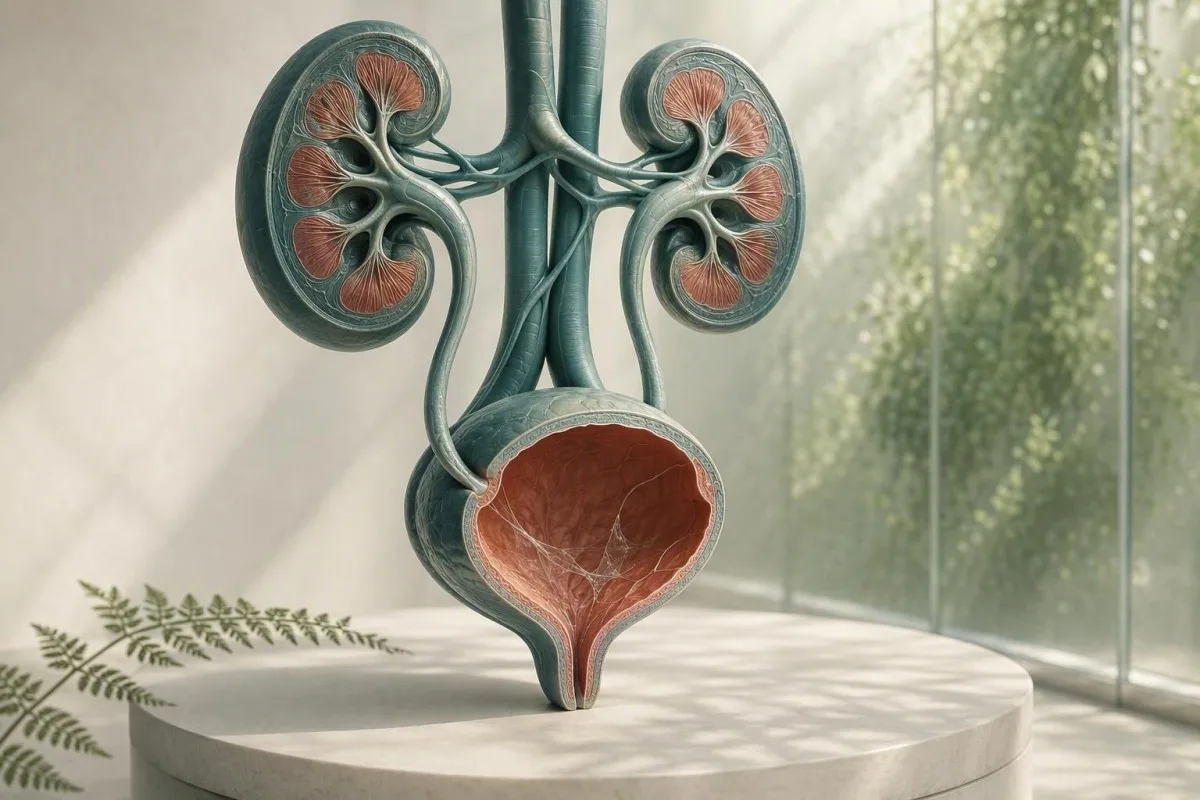
尿液显微镜检查报告中的粘液通常是收集问题,而非诊断。周围的尿液分析结果、症状和样本质量决定了是否需要进一步检查。.


- 粘液丝 单独存在通常是无害的,尤其是在没有泌尿系统症状的单次清洁捕获样本中。.
- 脓尿阈值 每高倍视野超过5个白细胞支持尿路炎症,但不能证明细菌性尿路感染。.
- 培养触发 是粘液伴有烧灼感、尿急、发热、胁腹痛、亚硝酸盐阳性或大量白细胞——而非单独的粘液。.
- 鳞状细胞 每高倍视野超过约10个通常表示生殖器皮肤污染,并降低尿液结果的可靠性。.
- 可见血尿 有绞痛性侧腹疼痛者需要立即评估是否有结石,即使同时有粘液报告。.
- 妊娠 改变了随访的阈值,因为无症状菌尿通常通过尿培养而不是单独的显微镜检查进行筛查。.
- 尿液浑浊 可以反映出结晶、尿液浓缩、阴道分泌物、精液或细胞;但其外观不能诊断感染。.
- 重复取样 当粘液是唯一异常发现且收集过程不是仔细的中段清洁收集时,是合理的。.
尿液分析中的粘液丝通常意味着什么
尿液中的粘液丝通常是正常保护性分泌物或生殖器污染的丝状物,孤立的发现很少预示肾脏疾病。. 当粘液与尿路症状、白细胞、细菌、血液或蛋白质一起出现时,该发现才具有意义。.
实验室将粘液识别为显微镜下可见的细长、半透明丝状物;许多报告只是将其评级为稀少、少、中度或多,而不是分配数值参考范围。尿液天然含有少量富含糖蛋白的物质,来自泌尿道,阴道或尿道分泌物在收集过程中可能会增加。.
报告的措辞听起来比实际情况更令人担忧。截至 2026 年 8 月 26 日,, 没有经过验证的粘液丝计数可以诊断尿路感染、结石、癌症或肾衰竭; ;它是一种依赖于背景的显微镜观察。有关试纸和显微镜报告上其他项目的更广泛图表,请参阅我们的 完整的尿液分析指南.
在我的临床经验中,一个无症状的成年人,如果粘液被标记为“中度”,每高倍视野有 0-2 个白细胞,亚硝酸盐阴性,无血,通常最好是给予安慰或重新收集一次正确采集的样本。Thomas Klein 医生经常看到不必要的抗生素焦虑的产生,因为实验室的标记被误认为是疾病标签。.
Kantesti 是一个人工智能血液检查解读平台,可以将肌酐和 eGFR 等肾脏相关血液标志物与尿液分析结果一起展示——但它不能仅凭粘液诊断尿路感染。. 尿液显微镜检查结果需要与其相关的临床病史。.
实验室标记它的原因
实验室信息系统标记粘液是因为它在视觉上存在,而不是因为实验室设定了危险的临界值。因此,标记意味着“已观察到”,而不是“异常疾病标志物”,这就像孤立的微量发现可能不需要治疗一样。.
尿液样本中的粘液来自哪里
尿液中的粘液可能来自尿道、膀胱内壁、宫颈或阴道、精液,或在收集过程中来自外部生殖器皮肤。. 其来源通常根据显微镜模式的其余部分推断,而不是根据粘液丝本身。.
膀胱和尿道具有含有粘蛋白的保护性表面层,包括尿路上皮蛋白相关物质,可减少摩擦和微生物附着。脱水、近期性活动、轻微刺激后,或仅仅因为浓缩的晨尿标本使丝状物更容易看到,少量物质可能会脱落到尿液中。.
对于有月经或阴道分泌物的人来说,白细胞和粘液可能会进入杯子,而不是来自膀胱。每高倍视野超过 10 个 鳞状上皮细胞 增加了污染的可能性,尽管实验室使用不同的报告阈值。我们关于 尿液中上皮细胞 的指南解释了为什么这会改变对结果的信心。.
精液也可能在射精后数小时内产生丝状物质或浑浊。这不会使尿液不安全,但会干扰显微镜检查;如果考虑培养,我通常建议在可行的情况下,至少在 24 小时后收集新的标本。.
性行为和解剖学为何会影响报告
尿杯无法将膀胱与附近组织隔离开。这就是为什么在有外分泌物样本中“粘液存在”报告的频率更高,而当临床医生需要更清洁的答案时,有时会使用导尿标本。.
何时粘液丝指向尿路感染
粘液丝只有在伴有症状和客观炎症发现时,特别是脓尿、亚硝酸盐阳性或有说服力的培养结果时,才支持可能的尿路感染。. 粘液本身不是尿路感染的检测指标。.
有症状的下尿路感染通常会导致灼痛、尿急、尿频、耻骨上方不适,有时还会出现新的尿液气味。在正确收集的样本中,, 每高倍视野超过 5 个白细胞 通常称为脓尿;它支持尿路炎症,但也可由结石、性传播感染和污染引起。.
亚硝酸盐阳性时特异性很高,但会漏掉由不还原硝酸盐的生物引起的感染,而亚硝酸盐阴性结果并不能排除尿路感染。白细胞酯酶检测白细胞的酶活性,当阴道分泌物污染标本时可能出现假阳性;我们对 白细胞酯酶结果 涵盖了这些陷阱。.
IDSA 指南建议不筛查或治疗健康非妊娠成年人的无症状菌尿症,因为抗生素的危害大于益处(Nicolle 等人,2019)。这一原则对于粘液尤其重要:没有灼痛、没有发烧,并且没有计划进行泌尿系统手术,通常意味着仅仅因为显微镜视野看起来杂乱而无需使用抗生素。.
何时培养是更好的检测方法
当症状持续、症状在 4 周内复发、怀孕、怀疑肾盂肾炎或先前使用抗生素可能改变结果时,尿培养比重复试纸条更有用。常见的混合细菌生长表明收集过程中存在污染,而不是单一的尿路病原体;请参阅 尿培养结果解读.
粘液、结晶、结石和机械性刺激
伴有严重波浪状腰痛或血尿的粘液可能与尿路结石有关,但粘液既不能证实也不能排除结石。. 血液、结晶、疼痛模式、影像学和肾功能更重要。.
结石会刮伤或阻塞尿路内膜,产生红细胞、白细胞和额外的粘液。典型症状是突然的绞痛,放射至腹股沟,常伴有恶心;可见的红色或茶色尿液会增加紧迫感。阅读更多关于 血尿危险信号 而不是假设每种粉红色样本都是简单的感染。.
尤其是在浓缩的酸性尿液中,健康人也可能出现草酸钙结晶,因此一种类型的结晶并不能证明有活动性结石。对于有疼痛、复发性结石或持续性血尿的患者,临床医生可能会使用超声或低剂量非对比 CT,而不是仅依赖沉渣。我们的资源关于 草酸钙结晶 详细介绍了结晶报告的局限性。.
一个重要的例外是伴有感染的梗阻:发烧 38.0°C 或更高,腰痛,呕吐,无法排尿需要紧急评估。关注点不在于粘液;而在于感染的阻塞性泌尿系统,这种情况可能迅速恶化。.
无结石的刺激
近期导尿管使用、膀胱手术、剧烈骑行和盆腔放疗可能会刺激下尿路并增加粘液或白细胞。临床医生应结合时间因素解读这些结果,因为在器械检查后 48 小时内收集的样本不等于常规筛查样本。.
尿液浑浊的意义:外观可以告诉你什么,不可以告诉你什么
尿液浑浊可能由浓缩盐、结晶、粘液、细胞、生殖道分泌物或细菌引起,因此外观本身无法诊断感染。. 浑浊但无痛且短暂的尿液通常不紧急。.
磷酸盐结晶可能使碱性尿液冷却后看起来浑浊,而尿酸盐结晶可能使酸性浓缩尿液浑浊。室温下放置超过2小时的样本可能会变得越来越浑浊,因为细胞会降解,细菌会繁殖,这就是为什么新鲜处理或冷藏很重要。.
浑浊伴有排尿困难、尿急和脓尿值得进行检测;运动后或饮水不足后的浑浊通常通过普通饮水即可改善。目标是获得淡黄色尿液,而不是强迫过量饮水——非常清澈的尿液并不意味着肾脏正在“冲洗”感染。我们对 浑浊尿液的病因 的详细回顾将视觉线索与可靠的测试分离开来。.
Kantesti 是一个 人工智能血液检测分析仪 旨在结合临床背景解读血液标志物;肌酐升高或 eGFR 降低伴有尿液异常可能需要医学评估,而单独的尿液浑浊不能确立肾小球滤过功能受损。当症状提示脱水或梗阻时,基础代谢检查可以提供有用的背景信息。.
气味不是培养
气味强烈的尿液通常反映的是浓度、代谢物、B族维生素,或者容器放置时间过长。伴有发热或泌尿系统症状的新出现的不良气味是就诊的原因,但气味不能替代显微镜检查和培养。.
生殖器分泌物和性传播感染
尿道或阴道分泌物可能看起来像尿液中的粘液,新出现的分泌物伴有排尿灼痛需要性健康检测以及尿液评估。. 常规尿液培养可能会漏诊衣原体和淋病。.
衣原体和淋病可引起排尿困难和无菌性脓尿——即有白细胞但常规培养无细菌生长——尤其是在有新的性接触史后。核酸扩增检测(NAAT),通常使用首次排尿标本而非中段尿标本,是适当的检测方法,因为标准培养针对的是不同的微生物。.
在有阴道的个体中,细菌性阴道病、念珠菌病和宫颈炎症可能会导致中段尿杯中出现分泌物;阴道拭子或检查可能比重复尿液显微镜检查更有信息量。在有阴茎的个体中,可见的尿道分泌物不应被忽略为“粘液丝”。实际的区别在于排尿时注意到的分泌物与仅由实验室报告的丝状物。.
2021 年 CDC 性传播感染治疗指南建议根据接触史,而非仅凭症状,在相关解剖部位进行基于 NAAT 的检测(Workowski et al., 2021)。如果涉及骨盆疼痛、睾丸疼痛、发热、怀孕或可能的袭击,请寻求当日的临床建议,而不是自行用剩余的抗生素治疗。.
抗生素为何会混淆情况
即使在培养前服用 1 或 2 剂抗生素也可能抑制普通细菌生长,同时尿路症状和白细胞持续存在。告知临床医生确切使用的药物、剂量和最后一次服药时间;这些细节会改变对阴性培养结果的解读方式。.
如何收集能够解答问题的尿液样本
中段清洁留取样本比收集流出初期或末期部分更能减少粘液、鳞状上皮细胞和混合细菌生长。. 该技术很简单,但前 2 秒钟起着不成比例的作用。.
洗手,如有不适可分离生殖器皮肤或翻开包皮,根据试剂盒说明清洁,开始排尿至马桶,然后收集中间部分,注意杯子不要接触皮肤。通常 20-30 毫升的样本就足够了;将大容器装满至溢出并不能提高测试效果。.
尽快递送杯子,最好在 1 小时内;如果延迟不可避免,请根据实验室说明冷藏,并在 24 小时内送回。冷藏可以减缓细菌生长,但不能恢复已经受污染的样本。当要求包括培养而非仅仅试纸条时,这一点尤为重要。.
Kantesti 是一个 基于 AI 的血液检测分析工具 在 127+ 个国家/地区使用,我们的临床医生审查的工作流程将样本质量视为解释的一部分,而不是附注。任何实验室数值也遵循同样的原则:技术上不佳的样本会产生具有医学说服力但误导性的结果。请参阅我们的 实验室准确性清单 以便在对孤立的异常标志采取行动之前提出问题。.
如果可以等待,请不要在这些情况下收集
除非临床医生特别要求,否则避免在月经量大、同房后立即或使用阴道乳膏后进行常规检测。当检测不能等待时,请告知实验室或临床医生,因为该背景情况可以解释粘液、红细胞或外源性细胞。.
临床医生如何结合尿液分析的其他结果解读粘液
最有用的尿液分析模式是将症状与白细胞、红细胞、亚硝酸盐、白细胞酯酶、蛋白质、葡萄糖、比重和上皮细胞相结合。. 黏液在该模式中是一个次要的辅助特征。.
洁净样本伴有黏液、每高倍视野0-2个白细胞、阴性亚硝酸盐且无血通常不需要治疗。黏液伴有每高倍视野>5个白细胞和阳性白细胞酯酶会增加炎症可能性的概率;增加亚硝酸盐或单菌培养可增加细菌导致感染的信心。.
蛋白质需要有自己的处理路径。发热、运动或尿浓缩后的痕量蛋白质可能是暂时的,但持续性蛋白质应通过白蛋白与肌酐比值进行定量,而不是归因于黏液。我们的指南 尿中蛋白 解释了为什么试纸法蛋白质和肾脏风险不可互换。.
若尿比重为 1.003 至 1.030 在成人中很常见,尽管参考区间因实验室而异。高比重会浓缩黏液并产生更戏剧性的沉渣,而低比重会溶解细胞并使显微镜检查结果显得平淡;我们的 尿比重指南 显示了水合作用如何影响解释。.
阴性结果的价值
阴性血、蛋白、亚硝酸盐和白细胞酯酶在无症状个体中显著降低了担忧,即使黏液报告为中等。没有单一的阴性检查是完美的,但这一组比黏液分级更能令人放心。.
何时复查,何时要求培养
当仅出现黏液、鳞状上皮细胞提示污染或收集过程匆忙时,应重复尿液样本;当症状持续、复发、严重或高风险时,要求进行培养。. 重复检查并非“无所事事”——它通常是最具诊断性的下一步。.
对于无症状、仅有黏液标记的非孕期成人,如果需要安心,可在1-2周内重复进行清洁中段尿液分析;许多临床医生根本不会重复检查。在等待期间,除非处方者确定了临床适应症,否则不要用抗生素治疗实验室标记。.
在发热、腰痛、怀孕、免疫抑制、肾移植、尿路导管使用、男性泌尿系统症状或4周内复发的症状的情况下,抗生素治疗前进行培养尤其有用。Gupta 等人(2011 年)的指南支持在怀疑肾盂肾炎以及耐药性或替代诊断可能性的情况下进行培养。.
培养计数必须结合收集质量来解读。 每毫升 10^5 个菌落形成单位 传统上支持清洁中部尿液中的菌尿,但有症状的患者可能计数较低但具有临床意义;“混合菌群”通常需要重新取样,而不是广泛使用抗生素。在申请其中任何一项之前,请比较 尿液分析与培养 的用途。.
怀孕需要不同的阈值
怀孕是一个例外,因为无症状菌尿会增加肾盂肾炎和不良妊娠结局的风险。产前护理通常在怀孕早期进行筛查培养;显微镜下观察到的黏液不能替代该培养。.
何时血液检查能提供有用的肾脏和感染信息
当尿液中出现黏液伴有发烧、腰痛、反复感染、肿胀、尿量减少或持续性蛋白尿或血尿时,血液检查会很有用。. 肌酐和 eGFR 评估滤过功能,而 CBC 和 C-反应蛋白有助于判断全身性疾病。.
当 eGFR 低于 至少3个月的 60 mL/min/1.73 m² 符合慢性肾脏病的标准之一,但脱水或急性疾病期间的单次低读数不足以确诊。肌酐受肌肉量、饮食和某些药物的影响,因此趋势和尿液白蛋白通常比单一数值更能说明问题。.
白细胞计数或 CRP 升高可支持炎症过程,但无法确定尿路是病灶来源。在发烧伴腰痛的患者中,临床医生在选择影像学检查或药物治疗之前可能会检查肌酐,特别是如果呕吐或梗阻可能损害肾功能。请查阅 慢性肾病分期 以了解临床医生使用的 eGFR 和白蛋白类别。.
Kantesti 是一个 AI 实验室检测解读服务 突出肌酐、eGFR、电解质、CBC 和炎症标志物之间的模式,而不是将单一的黏液记录视为肾脏诊断。我们的方法受 临床验证监督, 的约束,但紧急症状仍需要直接就医,而不是应用程序解读。.
实用的脱水鉴别
脱水会提高尿液比重并暂时增加肌酐,尤其是在腹泻、暴露于高温或剧烈运动后。补水后持续尿量少、头晕或 eGFR 下降需要医生评估,而不是重复居家检测。.
不应等待复查的紧急警示信号
出现发烧(38.0°C 或更高)、腰痛、呕吐、可见血尿、无法排尿、意识模糊或与怀孕相关的尿路症状时,请在当天寻求紧急评估。. 这些组合很重要,因为它们可能预示着上尿路感染、梗阻或其他急性病症。.
发烧伴单侧背痛或腰痛比单纯的膀胱炎更可能预示肾盂肾炎,尤其是伴有寒战或呕吐时。延迟治疗可能导致脱水、败血症或肾脏压力;居家尿液样本外观正常并不能安全地排除这种情况。.
即使在 UTI 似乎可能的情况下,也应评估可见血尿,尤其是在 35 岁以上、吸烟者或感染症状消退后仍有出血时。《AUA 微量血尿指南》建议在排除良性解释后进行基于风险的评估(Barocas 等人,2020 年);持续性血尿不能用黏液来解释。.
儿童、65 岁以上成人、糖尿病患者、服用免疫抑制药物者以及独肾者应降低评估门槛。托马斯·克莱因博士的实践规则很简单:如果症状在 6-12 小时内加重,不要等到第二次杯子来提供安慰。.
出现严重疾病时请立即拨打急救电话
出现新的意识模糊、昏厥、严重虚弱、嘴唇发蓝或发灰、严重呼吸困难或因尿路症状而无法进食时,请拨打急救电话。这些是全身性危险信号,而不是常规的 UTI 症状。.
怀孕、儿童及以后的生活中尿液中出现粘液
孕妇、儿童和老年人需要更谨慎的解读,因为污染很常见,但漏诊感染的后果可能更严重。. 症状和培养物质量在每个年龄组中仍然比粘液等级更有价值。.
怀孕期间,尿频可能正常,这使得症状的特异性降低;发烧、排尿疼痛或背痛应立即进行产科或临床评估。筛查培养通常在产前检查早期进行,治疗后可能根据临床医生的计划重复培养。.
在儿童中,用尿袋收集的尿液容易受到污染,通常不应单独用于通过培养诊断 UTI。当年幼儿童出现不明原因发烧时,可能需要导尿或仔细获得的清洁留样标本;尿袋标本中的粘液尤其不具有特异性。.
晚年,菌尿和脓尿变得更常见,但不会引起症状。新的谂妄应触发对脱水、药物、疼痛、便秘和感染源的广泛医学评估,而不是自动治疗 UTI;Nicolle 等人(2019 年)推荐的约束同样适用。.
月经和激素相关的变化
月经血和宫颈粘液会影响数天的尿液分析结果,绝经后阴道干燥会引起类似尿道灼痛的局部刺激。如果结果和症状不匹配,临床医生可能会评估生殖器原因,而不是处方重复 UTI 治疗。.
看到实验室报告中的粘液后常见的错误
一次异常的尿液分析结果后,不要服用剩余的抗生素,不要清洗内部,也不要试图通过大量饮水来“冲走”粘液。. 这些行为会掩盖培养物,破坏正常菌群,或延迟正确诊断。.
未经培养而服用的抗生素可能导致后续检测结果假阴性,并可能引起腹泻、皮疹、酵母菌症状或耐药性。如果症状轻微但持续存在,在可行的情况下先采集样本,然后根据整体情况遵循临床医生的治疗计划。.
蔓越莓产品可能适度降低某些人复发性非复杂性 UTI 的风险,但它们不能治疗发烧、腰痛或已确诊的上尿路感染。避免高剂量的维生素 C 作为自我治疗:它会改变某些试纸条的反应,并可能增加易患草酸钙结石者的草酸负荷。.
不要反复检查马桶圈是否有细丝。卫生纸纤维、清洁剂残留、生殖器分泌物和水流湍急都可能模仿粘液;在无菌容器中收集的实验室样本是评估它的合适场所。对于相关的颜色变化,我们的 尿液颜色指南 提供了更可靠的视觉背景。.
药物清单很重要
非那吡啶会使尿液呈橙色并干扰视觉解读,而利尿剂则根据用药时间不同而使尿液浓缩或稀释。就诊时请携带处方药、非处方药和补充剂清单,包括毫克剂量。.
尿液中粘液丝的实际随访计划
大多数尿液中有粘液丝但无症状的人不需要治疗;如果样本有疑问,进行仔细的重复尿液分析是合理的。. 症状或伴随异常决定了培养、STI 检测、影像学检查或血液检查是否合适。.
第一步:检查是否有灼痛、尿急、发烧、腰痛、肉眼血尿、分泌物、怀孕、近期泌尿道手术和新的性接触史。第二步:阅读报告中的白细胞、亚硝酸盐、白细胞酯酶、红细胞、蛋白质、细菌和鳞状上皮细胞——而不仅仅是粘液。.
第三步:如果您感觉良好且仅有粘液,请在 1-2 周内收集一次清洁留中段尿标本,仅当您的临床医生建议确认时。第四步:如果出现症状,请询问是否应在治疗前收集尿培养物以及 STI 检测是否相关;复发性发作比第三次经验性抗生素治疗更值得仔细评估。.
Kantesti 可以整理相关的血液检查结果趋势和就诊问题,而我们的 医疗顾问委员会 支持临床医生主导的安全标准。最终目标不是一个完美的“干净”的显微镜报告——而是对您的症状、标本质量和风险因素的合理解释。.
需带到就诊时的疑问
询问标本是否含有鳞状细胞,培养是否生长出一种生物体还是混合菌群,以及症状消退后是否仍有血液或蛋白质。这 3 个问题通常比询问黏液量能产生更有用的答案。.
研究背景和粘液报告的局限性
黏液分级在各个实验室之间没有标准化,这就是为什么临床医生应该避免使用“少量”、“中量”或“大量”作为疾病严重程度的类别。. 显微镜检查技术、标本日期和报告软件都会改变措辞。.
一些实验室在离心约 10-15 mL 尿液后手动检查沉淀物,而另一些实验室则使用自动颗粒分析并手动审查选定的标记。这种差异意味着一个实验室的“中量黏液”结果在同一个人健康状况不变的情况下,在另一个实验室可能无法精确重现。.
有用的实验室思维是询问结果是否在分析上真实、临床上有意义且可重现。这种方法在血液检测中也很熟悉:我们的 血液生物标志物指南 解释了为什么参考区间和分析前条件决定了标记是否值得采取行动。.
Kantesti AI 使用结构化的实验室背景信息来解释主要检验项目的检验结果模式,但尿液显微镜检查仍然需要特定来源的临床判断。对于有兴趣了解我们如何评估技术性能和临床界限的读者,我们的 AI技术指南 描述了我们解释方法背后的安全保障。.
一份好的报告应当明确哪些内容
有用的报告应确定标本类型、收集日期、显微镜下成分以及任何培养生物体和药敏结果(如果进行了培养)。如果报告仅说明“存在黏液丝”,则该报告对于诊断不完整,但对于低风险的偶然发现通常是完全足够的。.
常见问题
尿液中有粘液丝是正常的吗?
尿液中的黏液丝通常是正常的,或者由于生殖器分泌物的污染所致,尤其是在没有尿路症状的人群中。孤立性发现,每高倍视野白细胞0-2个,亚硝酸盐阴性,无血尿或蛋白尿,通常风险较低。实验室不使用经过验证的黏液丝数量来诊断尿路感染或肾脏疾病。如果最初的样本采集仓促或明显受到污染,重复进行中段清洁收集样本是合理的。.
尿液中的粘液丝是否意味着我患有尿路感染?
尿液中的粘液丝本身并不意味着尿路感染 (UTI)。当出现烧灼感、紧迫感、尿频、发热或耻骨上疼痛,并且每高倍视野白细胞计数超过 5 个、亚硝酸盐酯酶(leukocyte esterase)阳性、亚硝酸盐(nitrite)阳性或培养阳性时,UTI 的可能性会增加。亚硝酸盐阴性并不能完全排除 UTI,因为并非所有细菌都会产生亚硝酸盐。当症状持续或复发时,培养比粘液分级通常更能提供信息。.
脱水会导致尿液中有粘液吗?
脱水会使粘液更容易被看到,因为浓缩的尿液围绕着正常分泌物和沉淀物的含水量较低。尿比重升高,通常在 1.025-1.030 左右,可能伴随这种现象,但它本身并不能证明脱水。正常补水并重复采集正确的样本可以澄清这一发现。过度饮水是不必要的,并可能带来自身的电解质风险。.
尿液中有粘液和白细胞是什么意思?
尿液中的黏液和白细胞提示泌尿道或生殖道炎症,但这不能证明是细菌感染。每高倍视野下超过 5 个白细胞可见于尿路感染、结石、性传播感染、阴道污染或近期泌尿道器械操作。症状、亚硝酸盐、上皮细胞和培养结果决定下一步。发热 38.0°C 或更高伴有胁腹疼痛需要紧急评估。.
阴道分泌物会引起尿液检测中的粘液吗?
阴道分泌物可能进入清洁中段尿样本,通常会导致显微镜下出现黏液、鳞状上皮细胞,有时还有白细胞。每高倍视野下出现超过10个鳞状细胞通常提示可能受到污染,但各实验室报告标准不一。在非月经大量出血期仔细采集清洁中段尿标本可以减少此问题。如果存在分泌物、瘙痒、异味或盆腔疼痛,阴道评估或拭子检查可能比反复尿培养更有用。.
什么时候应该担心尿液中的粘液丝和血液?
尿液中带血丝并可见出血应及时评估,特别是当出血持续存在、出现腰痛、血块、发热或排尿困难时。结石、尿路感染、损伤、肾脏疾病或不太常见的尿路生长物都可能导致出血;粘液并不能确定具体病因。美国泌尿外科学会(AUA)建议在排除暂时性病因后,对持续性镜下血尿进行基于风险的评估。发热、呕吐、剧烈疼痛或尿潴留需要急诊评估。.
立即获取AI驱动的血液检测分析
加入全球超过2,000,000名用户,他们信任Kantesti进行即时、准确的检验分析。上传你的血液检查结果,并在几秒内获得对15,000+生物标志物的全面解读。.
📚 参考研究论文
Klein, T., Mitchell, S., & Weber, H. (2026). aPTT 正常范围:D-二聚体、蛋白 C 血液凝固指南. Kantesti AI医学研究。.
Klein, T., Mitchell, S., & Weber, H. (2026). 血清蛋白指南:球蛋白、白蛋白和白蛋白/球蛋白比值血液检测. Kantesti AI医学研究。.
📖 外部医学参考资料
⚕️ 医疗免责声明
本文仅用于教育目的,不构成医疗建议。诊断和治疗决策请始终咨询合格的医疗专业人员。.
E-E-A-T信任信号
经验
由医生主导的临床审阅:实验室解读工作流程。.
专业知识
实验室医学重点:生物标志物在临床情境中的表现。.
权威
由 Thomas Klein 博士撰写,并由 Sarah Mitchell 博士与 Hans Weber 教授审阅。.
可信度
基于循证的解读,并提供清晰的后续路径以减少警报。.