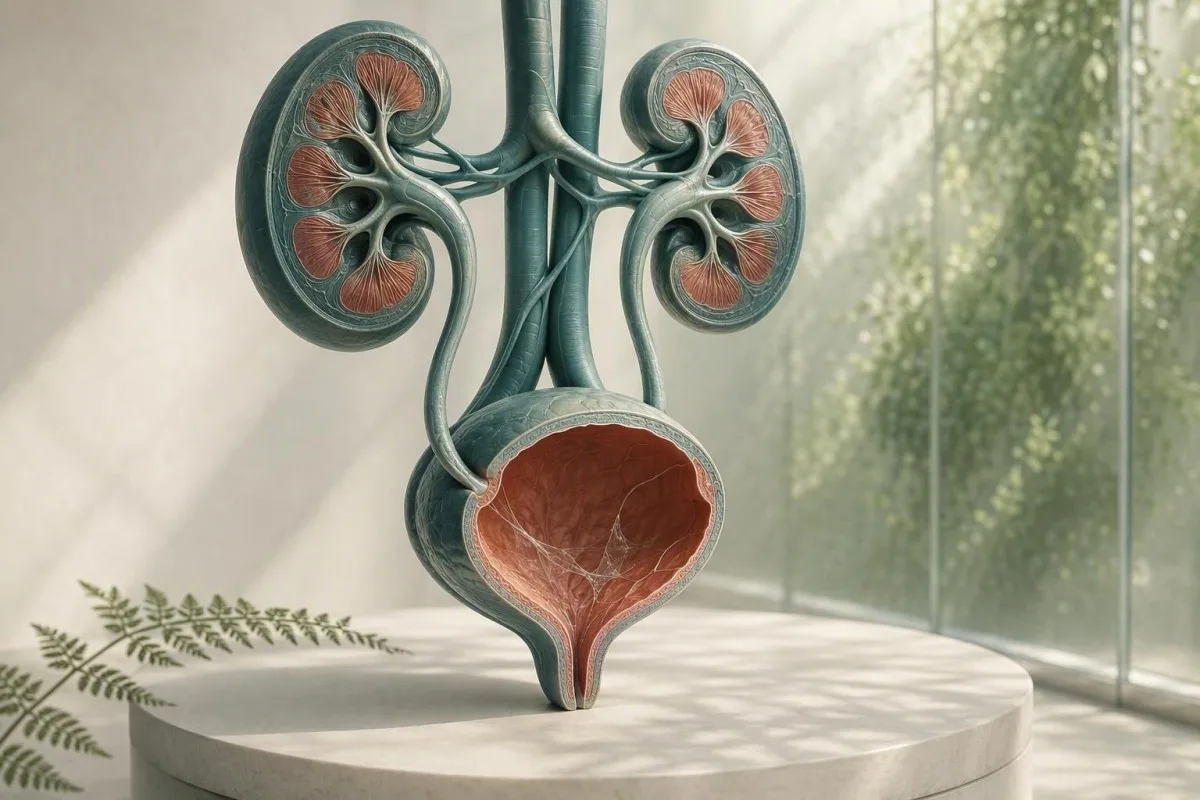
Sluz u izveštaju mikroskopskog pregleda urina je obično problem pri uzimanju uzorka, a ne dijagnoza. Okolne analize urina, simptomi i kvalitet uzorka određuju da li je potrebno dalje praćenje.


- Sluzne niti same po sebi su obično bezopasne, posebno u jednom uzorku dobijenom čistim hvatanjem, bez simptoma urinarnih infekcija.
- Prag za piuriju od više od 5 belih krvnih zrnaca po vidnom polju pod velikim uveličanjem podržava upalu urinarnog trakta, ali ne dokazuje bakterijsku urinarnu infekciju.
- Okidač za kulturu je sluz plus peckanje, hitnost, groznica, bol u boku, nitriti ili značajan broj belih krvnih zrnaca — ne samo sluz.
- Pljosnati epitel Неколико преко 10 по пољу великог увећања указује на контаминацију гениталне коже и чини резултат урина мање поузданим.
- Vidljiva krv Са болним боком потребна је хитна процена камена, чак и ако се такође пријављује слуз.
- Трудноћа мења праг за праћење јер се асимптоматска бактериурија обично скринира усевом урина, а не само микроскопијом.
- Zamućen urin може одражавати кристале, концентрован урин, вагинални исцедак, сперму или ћелије; не може се дијагностиковати инфекција по изгледу.
- Ponoviti uzorak је разумно када је слуз једини неуобичајени налаз, а прикупљање није било пажљиво чишћење средњег млаза.
Šta sluz u analizi urina obično znači
Нити слузи у урину су обично нити нормалне заштитне секреције или гениталне контаминације, а изоловани резултат ретко указује на болест бубрега. Налаз постаје смислен када се појави са симптомима урина, белим крвним зрнцима, бактеријама, крвљу или протеинима.
Лабораторије идентификују слуз као витке, провидне нити виђене под микроскопом; многи извештаји је једноставно оцењују као ретку, мало, умерену или много, уместо да додељују нумерички референтни опсег. Урин природно садржи малу количину материјала богатог гликопротеинима из уринарног тракта, а вагинални или уретрални секрети могу додати више током сакупљања.
Формулисање извештаја је мање алармантно него што звучи. Од 26. августа 2026. године, не постоји валидиран број нити слузи који дијагностикује инфекцију уринарног тракта, камен, рак или отказивање бубрега; то је контекстуално микроскопско посматрање. За ширу мапу осталих ставки у извештају са траке и микроскопа, погледајте наш комплетан водич за анализу урина.
У мом клиничком искуству, одраслој особи без симптома са слузи означеном као “умерена”, 0–2 бела крвна зрнца по пољу великог увећања, негативним нитритом и без крви, обично је најбоље препоручити охрабрење или један правилно прикупљен понављани узорак. Др Томас Клајн често види непотребну анксиозност од антибиотика јер се лабораторијска ознака погрешно сматра ознаком болести.
Kantesti је платформа за тумачење крвне слике заснована на вештачкој интелигенцији која може да постави маркере крви повезане са бубрезима, попут креатинина и eGFR, уз налаз анализе урина – али не може сама дијагностиковати инфекцију уринарног тракта само на основу слузи. Резултат микроскопије урина захтева клиничку причу која је уз њега дошла.
Зашто лабораторија означава
Лабораторијски информациони системи означавају слуз јер је визуелно присутна, а не зато што је лабораторија успоставила опасан прекид. Ознака стога значи “примећено” пре него “абнормални маркер болести”, слично као што изолован траг налаза може захтевати лечење.
Odakle potiče sluz u uzorku urina
Слуз у урину може потицати из уретре, слузокоже бешике, грлића материце или вагине, сперме или спољне гениталне коже током сакупљања. Његов извор се често закључује из остатка микроскопског обрасца, а не из самих нити.
Бешика и уретра имају заштитни површински слој који садржи муцине, укључујући материјал повезан са уроплакином, који смањује трење и прикључивање микроба. Мале количине се могу одвајати у урин након дехидратације, недавне сексуалне активности, мање иритације, или једноставно зато што концентрован први јутарњи узорак чини нити лакшим за уочавање.
Код особа које менструирају или имају вагинални исцедак, леукоцити и слуз могу ући у шољу, а да не потичу из бешике. Више од 10 ћелија сквамозног епитела по пољу високог увећања чини контаминацију вероватнијом, иако лабораторије користе различите прагове извештавања. Наш водич за епителних ћелија у урину објашњава зашто ово мења самопоуздање у резултат.
Сперма такође може створити влакнаст материјал или мутноћу неколико сати након ејакулације. То не чини урин несигурним, али може замутити микроскопију; ако се разматра култура, генерално саветујем узимање новог узорка најмање 24 сата касније, када је то могуће.
Зашто пол и анатомија утичу на извештај
Чаша за урин не одваја бешику од оближњег ткива. Због тога се “слуз присутна” чешће пријављује у узорцима са спољашњим секретима, док се катетеризовани узорак понекад користи када су лекарима потребни чистији одговор.
Kada sluz ukazuje na infekciju urinarnog trakta
Нити слузи подржавају могућу инфекцију уринарног тракта само када прате симптоме и објективне инфламаторне налазе, посебно пиурију, позитивност на нитрите или убедљиву културу. Слуз сама по себи није тест за инфекцију уринарног тракта.
Симптоматска инфекција уринарног тракта често узрокује пецкање, хитност, учесталост, супрапубични бол и понекад нови мирис урина. У правилно сакупљеном узорку, више од 5 белих крвних зрнаца по пољу јаког увећања често се назива пиурија; подржава упалу уринарног тракта, али се може јавити и код каменаца, полно преносивих инфекција и контаминације.
Нитрит је високо специфичан када је позитиван, али пропушта инфекције узроковане организмима који не редукују нитрате, а негативан резултат нитрита не искључује инфекцију уринарног тракта. Леукоцитни естераз детектује активност ензима белих крвних зрнаца и може бити лажно позитиван када вагинални секрети контаминирају узорак; наше објашњење rezultate leukocitne esteraze покрива те замке.
Смернице IDSA саветују против скрининга или лечења асимптоматске бактериурије код здравих одраслих особа које нису трудне, јер антибиотици доносе штету без користи (Nicolle et al., 2019). Тај принцип је посебно релевантан за слуз: без пецкања, без грознице и без планиране уролошке процедуре обично значи без антибиотика само зато што је поље микроскопије изгледало неуредно.
Када је култура бољи тест
Уринска култура је кориснија од поновљеног тест траком када симптоми потрају, симптоми се понове у року од 4 недеље, присутно је трудноћа, сумња се на пијелонефритис, или су претходни антибиотици можда утицали на резултат. Мешовити бактеријски раст обично указује на контаминацију приликом сакупљања, а не на једног уринарног патогена; видети тумачење уринокултуре.
Sluz, kristali, kamenci i mehanička iritacija
Слуз са јаким таласастим болом у слабини или крвљу у урину може се јавити код каменаца уринарног тракта, али слуз нити потврђује нити искључује камен. Крв, кристали, образац бола, снимање и функција бубрега су важнији.
Каменац може да огребе или опструише уринарни зид, производећи црвена крвна зрнца, бела крвна зрнца и додатну слуз. Класичан симптом је изненадан коликасти бол који зрачи према препонама, често праћен мучнином; видљив црвени или чајно обојени урин повећава хитност. Прочитајте више о crvenih zastavica za krv u urinu уместо да се претпоставља да је сваки ружичасти узорак једноставна инфекција.
Кристали калцијум оксалата могу се појавити код здравих људи, посебно у концентрованом киселом урину, тако да један тип кристала не доказује активни камен. Код особе са болом, понављајућим камењем или упорном хематуријом, лекари могу користити ултразвук или нискодозни КТ без контраста уместо да се ослањају само на седимент. Наш ресурс о kristale kalcijum-oksalata детаљно описује ограничења извештаја о кристалима.
Важан изузетак је опструкција са инфекцијом: грозница од 38,0°C или виша, бол у слабини, повраћање и немогућност мокрења захтевају хитну процену. Брига није слуз; то је инфицирани блокирани уринарни систем, који се може брзо погоршати.
Иритација без камена
Недавно коришћење катетера, процедуре на бешици, снажно бициклизам и зрачење карлице могу иритирати доњи тракт и повећати слуз или бела крвна зрнца. Лекар треба да тумачи ове резултате у односу на време, јер узорак сакупљен у року од 48 сати од инструментације није еквивалентан рутинском скрининг узорку.
Značenje mutne mokraće: šta izgled može, a šta ne može da vam kaže
Мутан урин може бити узрокован концентрованим солима, кристалима, слузи, ћелијама, гениталним пражњењем или бактеријама, тако да само изглед не може дијагностиковати инфекцију. Urin koji je zamućen, ali bezbolan i kratkotrajan, obično nije hitan.
Kristali fosfata mogu učiniti alkalni urin mutnim nakon što se ohladi, dok kristali urata mogu zamutiti kiseli koncentrirani urin. Uzorak ostavljen na sobnoj temperaturi duže od 2 sata može postati sve zamućeniji kako se ćelije razgrađuju i bakterije razmnožavaju, zbog čega je važno svježe obrađivanje ili hlađenje.
Zamućenost uz dizuriju, hitnost i piuriju zaslužuje testiranje; zamućenost nakon vježbanja ili nedovoljnog unosa tečnosti često se poboljšava običnom hidratacijom. Ciljajte na urin koji je blijedožut, a ne na prisilno prekomjerno unošenje vode—vrlo bistar urin ne znači da bubrezi “ispiraju” infekciju. Naš detaljni pregled zamućen urin uzroci odvaja vizuelne tragove od pouzdanih testova.
Кантести је АИ анализатор крви osmišljen za tumačenje krvnih markera u kliničkom kontekstu; visoki kreatinin ili snižen eGFR uz urinarne abnormalnosti može opravdati medicinski pregled, dok mutni urin sam po sebi ne utvrđuje oštećenu bubrežnu filtraciju. Osnovna metabolička panelna analiza može dodati koristan kontekst kada simptomi ukazuju na dehidraciju ili opstrukciju.
Miris nije kultura
Urin jakog mirisa često odražava koncentraciju, metabolite špargle, B vitamine ili posudu koja je stajala predugo. Novi neprijatan miris sa groznicom ili urinarnim simptomima je razlog za traženje procene, ali miris nije zamena za mikroskopiju i kulturu.
Genitalni sekret i polno prenosive infekcije
Pražnjenje uretre ili vagine može izgledati kao sluz u urinu, a novo pražnjenje sa peckanjem pri mokrenju zahteva testiranje na polno zdravlje kao i analizu urina. Rutinska kultura urina može promašiti hlamidiju i gonoreju.
Hlamidija i gonoreja mogu uzrokovati dizuriju i sterilnu piuriju—bele krvne ćelije bez uobičajenog bakterijskog rasta—posebno nakon novog seksualnog kontakta. Testiranje amplifikacijom nukleinskih kiselina, često korišćenjem urina prvog mlaza umesto uzorka srednjeg toka, je odgovarajući test jer standardna kultura cilja na različite organizme.
Kod osoba sa vaginom, bakterijska vaginoza, kandidijaza i zapaljenje grlića materice mogu dodati iscjedak u čašu za srednji tok; vaginalni bris ili pregled mogu biti informativniji od ponovljene mikroskopije urina. Kod osoba sa penisom, vidljivi iscjedak iz uretre ne treba odbaciti kao “nitice sluzi”. Praktična razlika je iscjedak primećen izvan mokrenja u poređenju sa nitima koje prijavljuje samo laboratorija.
Smjernice CDC-a za liječenje spolno prenosivih bolesti iz 2021. preporučuju testiranje zasnovano na NAAT-u na relevantnim anatomskim lokacijama prema istoriji izloženosti, a ne samo simptomima (Workowski et al., 2021). Ako su prisutni bol u karlici, bol u testisima, groznica, trudnoća ili mogući napad, potražite klinički savjet istog dana, a ne samo-liječenje zaostalim antibioticima.
Zašto antibiotici mogu da zbune sliku
Uzimanje čak i 1 ili 2 doze antibiotika prije kulture može suzbiti normalan bakterijski rast, dok urinarni simptomi i bele krvne ćelije ostaju. Recite ljekaru tačno koji lijek, dozu i vrijeme posljednje doze ste koristili; taj detalj mijenja način na koji se negativna kultura tumači.
Kako uzeti uzorak urina koji daje odgovor na pitanje
Uzorak srednjeg mlaza iz čistog hvata smanjuje sluz, skvamozne ćelije i mješoviti bakterijski rast bolje nego prikupljanje prvog ili posljednjeg dijela mlaza. Tehnika je jednostavna, ali prvih 2 sekunde čine nesrazmjernu razliku.
Operite ruke, razdvojite genitalnu kožu ili povucite prepucijum ako vam je udobno, očistite prema uputama iz kompleta, počnite da mokrite u toalet, a zatim sakupite srednji dio bez dodirivanja kože čašom. Uzorak od 20–30 mL je obično dovoljan; punjenje velike posude do vrha ne poboljšava test.
Donesite čašu brzo, idealno u roku od 1 sata; ako je kašnjenje neizbježno, ohladite je prema uputama laboratorije i vratite u roku od 24 sata. Hlađenje usporava rast bakterija, ali ne popravlja uzorak koji je već bio kontaminiran. Ovo je posebno važno kada zahtjev uključuje kulturu, a ne samo test trakom.
Кантести је Алат за анализу крвних тестова уз помоћ AI korišćen u 127+ zemalja, a naši klinički provereni radni procesi tretiraju kvalitet uzorka kao deo tumačenja, a ne kao fusnotu. Isti princip važi za bilo koju laboratorijsku vrednost: tehnički loš uzorak može stvoriti medicinski ubedljiv, ali pogrešan rezultat. Pogledajte naše ček listu za tačnost laboratorije za pitanja koja treba postaviti prije nego što postupite na osnovu izolirane zastavice.
Nemojte sakupljati tokom ovih situacija ako možete da čekate
Izbegavajte rutinsko testiranje tokom obilnog menstrualnog krvarenja, odmah nakon seksualnog odnosa ili nakon upotrebe vaginalnih krema, osim ako to kliničar izričito ne zatraži. Kada testiranje ne može da čeka, obavestite laboratoriju ili kliničara, jer taj kontekst može objasniti sluz, crvene krvne ćelije ili spoljašnje ćelije.
Kako kliničari tumače sluz u kontekstu ostalih parametara analize urina
Najkorisniji obrazac analize urina kombinuje simptome sa belim krvnim zrncima, crvenim krvnim zrncima, nitritima, leukocitnom esterazom, proteinima, glukozom, specifičnom težinom i epitelijalnim ćelijama. Sluz je manja pomoćna karakteristika u tom obrascu.
Čist uzorak sa sluzi, 0–2 bela krvna zrnca po vidnom polju pod velikim uveličanjem, negativni nitriti i bez krvi obično ne zahteva lečenje. Sluz sa više od 5 belih krvnih zrnaca po vidnom polju pod velikim uveličanjem i pozitivna leukocitna esteraza povećava verovatnoću zapaljenja; dodavanje nitrita ili kulture jednog organizma povećava poverenje da su bakterije odgovorne.
Proteini zahtevaju sopstveni put. Trag proteina nakon febre, vežbanja ili koncentrisanog urina može biti privremen, ali uporni proteini treba da se kvantifikuju odnosom albumin/kreatinin, a ne da se pripisuju sluzi. Naš vodič za proteine u urinu objašnjava zašto test trake za proteine i rizik od oštećenja bubrega nisu zamenljivi.
Specifična težina od 1.003 do 1.030 je čest kod odraslih, mada se referentni intervali razlikuju u zavisnosti od laboratorije. Visoka specifična težina može koncentrisati sluz i stvoriti dramatičniji sediment, dok niska specifična težina može lizirati ćelije i učiniti mikroskopiju varljivo blagom; naš vodiču za specifičnu gustinu pokazuje kako hidratacija utiče na interpretaciju.
Vrednost negativnih nalaza
Negativna krv, proteini, nitriti i leukocitna esteraza značajno smanjuju zabrinutost kod osobe bez simptoma, čak i ako je sluz prijavljena kao umerena. Nijedan pojedinačni negativan test nije savršen, ali ovaj skup je umirujućiji nego što je stepen sluzi zabrinjavajući.
Kada ponoviti test i kada naručiti kulturu
Ponovite uzorak urina kada je sluz izolovani nalaz, skvamozne ćelije ukazuju na kontaminaciju, ili je uzorak prikupljen na brzinu; zatražite kulturu kada su simptomi uporni, rekurentni, teški ili visokog rizika. Ponovljeni test nije “nedelovanje” – to je često najdijagnostičniji sledeći korak.
Za odraslu osobu koja nije trudna, bez simptoma i sa sluzi kao jedinim problemom, ponovljena analiza urina prikupljenog na čist način unutar 1–2 nedelje je razumna ako je potrebno umirenje; mnogi kliničari ga uopšte ne bi ponovili. Nemojte lečiti laboratorijski nalaz antibioticima dok čekate, osim ako propisivač ne identifikuje kliničku indikaciju.
Kultura pre primene antibiotika je posebno korisna kod povišene telesne temperature, bola u boku, trudnoće, imunosupresije, transplantacije bubrega, upotrebe urinarne kateterizacije, muških urinarnih simptoma ili simptoma koji se ponavljaju u roku od 4 nedelje. Smernica Gupta et al. (2011) podržava kulturu kod sumnje na pijelonefritis i situacije gde je otpornost ili alternativna dijagnoza verovatnija.
Rezultati kultura moraju se tumačiti u kontekstu kvaliteta uzorka. Jedan organizam na 10^5 jedinica formiranja kolonija po mL tradicionalno ukazuje na bakterijuriju u čistom uzorku srednjeg mlaza urina, ali simptomatski pacijenti mogu imati klinički značajne niže brojeve; “mešani floru” obično zahteva novi uzorak, a ne širok spektar antibiotika. Uporedite svrhe analizu urina i kulturu pre nego što zatražite bilo šta od navedenog.
Trudnoća zahteva drugačiji prag
Trudnoća je izuzetak jer asimptomatska bakterijurija može povećati rizik od pijelonefritisa i neželjenih trudnoćnih ishoda. Antenatalna nega obično koristi skrining kulturu rano u trudnoći; sluz na mikroskopiji ne može zameniti tu kulturu.
Kada testovi krvi pružaju korisne informacije o bubrezima i infekcijama
Krvni testovi su korisni kada se sluz u urinu javlja sa povišenom telesnom temperaturom, bolom u boku, rekurentnim infekcijama, otokom, smanjenim izlučivanjem urina ili upornim proteinima ili krvlju. Kreatinin i eGFR procenjuju filtraciju, dok CBC i C-reaktivni protein mogu pomoći u proceni sistemske bolesti.
eGFR испод 60 mL/min/1.73 m² током најмање 3 месеца ispunjava jedan kriterijum za hroničnu bolest bubrega, ali jedan niži rezultat tokom dehidracije ili akutne bolesti nije dovoljan za postavljanje te dijagnoze. Na kreatinin utiču mišićna masa, ishrana i neki lekovi, tako da su trendovi i albuminska ekskrecija u urinu često informativniji od jedne vrednosti.
Povišen broj belih krvnih zrnaca ili CRP može podržati upalni proces, ali ne može identifikovati urinarni trakt kao izvor. Kod febrilne osobe sa bolom u boku, kliničari mogu proveriti kreatinin pre nego što odaberu snimanje ili lekove, posebno ako povraćanje ili opstrukcija mogu narušiti funkciju bubrega. Pregledajte стадијуме хроничне болести бубрега za kategorije eGFR i albumina koje kliničari koriste.
Кантести је услузи за тумачење лабораторијских тестова заснованој на AI-у koji naglašava obrasce kreatinina, eGFR, elektrolita, CBC i inflamatornih markera, umesto da se jedna zabeleška o sluzi tretira kao dijagnoza bubrega. Naša metodologija je podložna nadzoru kliničke validacije, ali hitni simptomi i dalje zahtevaju direktnu medicinsku negu, a ne tumačenje putem aplikacije.
Praktično razlikovanje dehidracije
Dehidracija može povećati specifičnu težinu urina i privremeno povećati kreatinin, posebno nakon dijareje, izlaganja toploti ili intenzivnog vežbanja. Uporno smanjeno izlučivanje urina, vrtoglavica ili pad eGFR-a nakon rehidracije zahteva pregled lekara, a ne ponovljeno kućno testiranje.
Hitni znaci upozorenja koji ne smeju čekati na ponovljeni test
Potražite hitnu procenu istog dana za sluz u urinu sa temperaturom od 38,0°C ili višom, bolom u boku, povraćanjem, vidljivom krvlju, nemogućnošću mokrenja, konfuzijom ili urinarnim simptomima povezanih sa trudnoćom. Ove kombinacije su važne jer mogu ukazivati na infekciju gornjih urinarnih puteva, opstrukciju ili drugo akutno stanje.
Temperatura uz jedan bol u leđima ili boku više zabrinjava za pijelonefritis nego jednostavna cistitis, posebno uz drhtavicu ili povraćanje. Odloženo lečenje može dovesti do dehidracije, sepse ili stresa bubrega; normalno izgledajući uzorak urina kod kuće ne isključuje ga bezbedno.
Vidljivu krv treba proceniti čak i kada se čini da je UTI verovatna, posebno nakon 35. godine života, kod pušača, ili ako krvarenje traje nakon što simptomi infekcije prođu. Smernica AUA za mikrohematuriju preporučuje procenu zasnovanu na riziku nakon što se objasne benigni uzroci (Barocas et al., 2020); uporno krvarenje se ne može objasniti sluzi.
Deca, odrasli stariji od 65 godina, osobe sa dijabetesom, osobe koje uzimaju imunosupresivne lekove i osobe sa jednim bubregom zaslužuju niži prag za procenu. Pravilo dr. Thomasa Kleina u praksi je jednostavno: ako simptomi eskaliraju tokom 6-12 sati, nemojte čekati drugu čašu da biste pružili sigurnost.
Pozovite hitnu pomoć odmah u slučaju teške bolesti
Pozovite hitnu pomoć u slučaju nove konfuzije, nesvestice, jake slabosti, plavih ili sivih usana, teške kratkoće daha ili nemogućnosti zadržavanja tečnosti uz urinarne simptome. Ovo su sistemski znaci opasnosti, a ne rutinski simptomi infekcije urinarnog trakta.
Sluz u mokraći tokom trudnoće, detinjstva i kasnijeg života
Trudnoća, deca i starije osobe zahtevaju pažljiviju interpretaciju jer je kontaminacija česta, ali posledice propuštene infekcije mogu biti veće. Simptomi i kvalitet kulture ostaju vredniji od stepena sluzi u svakoj starosnoj grupi.
Tokom trudnoće, učestalo mokrenje može biti normalno, što čini simptome manje specifičnim; groznica, dizurija ili bol u leđima treba da podstaknu hitnu akušersku ili kliničku procenu. Rutinska kultura se obično uzima rano u prenatalnoj nezi, a ponovljena kultura se može koristiti nakon lečenja u zavisnosti od plana lekara.
Kod dece, urin prikupljen kesom je sklon kontaminaciji i obično se ne bi trebalo koristiti samostalno za dijagnozu infekcije urinarnog trakta kulturom. Kateterizovani ili pažljivo prikupljeni uzorak čistog hvatanja može biti potreban kada mlado dete ima groznicu bez jasnog izvora; sluz u uzorku iz kese je posebno nespecifična.
U kasnijim godinama života, bakteriurija i pijurija postaju češći bez izazivanja simptoma. Nova konfuzija sama po sebi treba da pokrene široku medicinsku procenu zbog dehidratacije, lekova, bola, zatvora i izvora infekcije, a ne automatsko lečenje infekcije urinarnog trakta; primenjuje se isto ograničenje koje su preporučili Nicolle et al. (2019).
Menstruacija i promene povezane sa hormonima
Menstrualna krv i cervikalna sluz mogu promeniti analizu urina nekoliko dana, a postmenopauzna vaginalna suvoća može izazvati lokalnu iritaciju koja podseća na peckanje pri mokrenju. Ako se rezultati i simptomi ne poklapaju, lekar može proceniti genitalne uzroke umesto da propisuje ponovljeno lečenje infekcije urinarnog trakta.
Uobičajene greške nakon uočavanja sluzi u laboratorijskom izveštaju
Nemojte započinjati preostale antibiotike, čistiti se iznutra ili pokušavati da “isperete” sluz ekstremnim unosom vode nakon jedne urinsko-analitičke analize koja izgleda abnormalno. Ove radnje mogu zamutiti kulturu, narušiti normalnu floru ili odložiti ispravnu dijagnozu.
Antibiotici uzeti bez kulture mogu učiniti naknadni test lažno negativnim i mogu izazvati dijareju, osip, simptome gljivica ili rezistenciju. Ako su simptomi blagi, ali uporni, uzmite uzorak prvi kad god je to praktično, a zatim sledite plan lečenja lekara zasnovan na ukupnoj slici.
Brusnica proizvodi mogu skromno smanjiti rizik od rekurentnih nekomplikovanih infekcija urinarnog trakta kod nekih ljudi, ali ne leče groznicu, bol u boku ili potvrđenu infekciju gornjeg dela urinarnog trakta. Izbegavajte vitamin C u visokim dozama kao samolečenje: on može promeniti neke reakcije na test trake i može povećati opterećenje oksalatom kod osoba sklonih kamencima kalcijum-oksalata.
Nemojte stalno proveravati vodokotlić na niti. Vlakna toalet papira, ostaci sredstava za čišćenje, genitalni sekreti i turbulencija vode mogu imitirati sluz; laboratorijski uzorak prikupljen u sterilnoj posudi je odgovarajuće mesto za njenu procenu. Za povezane promene boje, naša vodič za boju urina nudi pouzdaniji vizuelni kontekst.
Lista lekova je važna
Fenazopiridin može obojiti urin narandžasto i ometati vizuelnu interpretaciju, dok diuretici mogu koncentrisati ili razblažiti urin u zavisnosti od vremena uzimanja. Ponesite listu propisanih lekova, proizvoda bez recepta i suplemenata na pregled, uključujući doze u mg.
Praktičan plan za dalje postupanje kod sluzi u mokraći
Većina ljudi sa nitima sluzi u urinu i bez simptoma ne treba lečenje; pažljiva ponovljena analiza urina je razumna ako je uzorak bio upitan. Simptomi ili prateće abnormalnosti utvrđuju da li su kultura, test na polno prenosive infekcije (STI), snimanje ili krvni testovi prikladni.
Korak 1: proverite peckanje, hitnost, groznicu, bol u boku, vidljivu krv, iscedak, trudnoću, nedavne urinarne procedure i nedavno seksualno izlaganje. Korak 2: pročitajte izveštaj za bele krvne ćelije, nitrite, leukocitnu esterazu, crvena krvna zrnca, proteine, bakterije i skvamozne ćelije—ne samo sluz.
Korak 3: ako se osećate dobro i sluz je izolovana, prikupite jedan uzorak srednjeg toka čistog hvatanja u roku od 1-2 nedelje samo ako vaš lekar preporuči potvrdu. Korak 4: ako su prisutni simptomi, pitajte da li treba da se uradi kultura urina pre lečenja i da li je testiranje na polno prenosive infekcije relevantno; rekurentne epizode zaslužuju pažljiviji pregled od trećeg empirijskog antibiotika.
Kantesti može organizovati relevantne trendove krvnih rezultata i pitanja za medicinski pregled, dok naš Медицински саветодавни одбор podržava standarde bezbednosti vođene lekarom. Pravi cilj nije savršeno “čist” izveštaj mikroskopije—to je objašnjenje koje odgovara vašim simptomima, kvalitetu uzorka i faktorima rizika.
Pitanja koja treba postaviti na vašem terminu
Pitajte da li je uzorak sadržao skvamozne ćelije, da li je kultura pokazala jedan organizam ili mešanu floru, i da li su krv ili protein perzistirali nakon što su simptomi nestali. Ova 3 pitanja često daju korisnije odgovore nego pitati koliko je sluzi viđeno.
Kontekst istraživanja i ograničenja izveštavanja o sluzi
Ocena sluzi nije standardizovana među laboratorijama, zbog čega bi kliničari trebalo da izbegavaju korišćenje “malo”, “umereno” ili “mnogo” kao kategorija težine bolesti. Mikroskopska tehnika, starost uzorka i softver za izveštavanje mogu promeniti formulaciju.
Neke laboratorije manuelno pregledaju sediment nakon centrifugiranja približno 10–15 mL urina, dok druge koriste automatsku analizu čestica sa manuelnim pregledom odabranih zastavica. Ta varijacija znači da se “umerena sluz” iz jedne laboratorije možda neće tačno reprodukovati u drugoj laboratoriji čak i kada je zdravlje osobe nepromenjeno.
Koristan laboratorijski pristup je pitati da li je rezultat analitički stvaran, klinički značajan i ponovljiv. Taj pristup je poznat i iz testiranja krvi: naša водич за биомаркере у крви objašnjava zašto referentni intervali i preanalitički uslovi određuju da li označeni marker zaslužuje intervenciju.
Kantesti AI koristi strukturirani laboratorijski kontekst za objašnjavanje obrazaca rezultata preko glavnih panela, ali mikroskopija urina i dalje zahteva kliničku procenu specifičnu za izvor. Za čitaoce zainteresovane za to kako procenjujemo tehničke performanse i kliničke granice, naša Vodič kroz AI tehnologiju opisuje zaštitne mere iza našeg interpretativnog pristupa.
Šta dobar izveštaj treba jasno da pokaže
Koristan izveštaj identifikuje tip uzorka, datum prikupljanja, mikroskopske elemente i bilo koji organizam iz kulture i rezultate osetljivosti kada je kultura obavljena. Ako izveštaj samo kaže “prisutne sluzne niti”, nepotpun je za dijagnozu, ali često potpuno adekvatan za nenamerni nalaz niskog rizika.
Често постављана питања
Da li su sluzavi konci u urinu normalni?
Sluzavi konci u urinu su često normalni ili posledica kontaminacije genitalnim sekretom, posebno kada osoba nema urinarne simptome. Izolovano otkriće sa 0–2 leukocita po vidnom polju, negativnim nitritom i bez krvi ili proteina obično nosi nizak rizik. Laboratorije ne koriste validiran broj sluzavih konaca za dijagnozu infekcije urinarnog trakta (UTI) ili bolesti bubrega. Ponovljeno uzorkovanje srednjeg mlaza čistim hvatom je razumno ako je originalna kolekcija bila na brzinu ili vidno kontaminirana.
Da li sluzavi konci u urinu znače da imam UTI?
Sluzave niti u urinu same po sebi ne znače infekciju urinarnog trakta. Infekcija urinarnog trakta postaje verovatnija kada se uz peckanje, hitnost, učestalost, groznicu ili suprapubični bol pojavi više od 5 belih krvnih zrnaca po vidnom polju visoke rezolucije, pozitivna esteraza leukocita, nitrit ili pozitivna kultura. Negativan nitrit ne isključuje u potpunosti infekciju urinarnog trakta jer svi bakterije ne proizvode nitrite. Kultura je obično informativnija od stepena sluzi kada simptomi traju ili se ponavljaju.
Da li dehidratacija može uzrokovati sluz u urinu?
Dehidracija može učiniti sluz lakšom za uočavanje jer koncentrisani urin ima manje vode oko normalnih sekreta i sedimenta. Visoka specifična težina urina, obično oko 1.025–1.030, može pratiti ovaj efekat, iako sam po sebi ne dokazuje dehidraciju. Normalna rehidracija i ponovno uzimanje pravilno sakupljenog uzorka mogu razjasniti nalaz. Ekstremni unos vode je nepotreban i može stvoriti sopstvene rizike od elektrolita.
Šta znače sluz i bela krvna zrnca u urinu?
Sluz zajedno sa belim krvnim zrncima u urinu ukazuje na zapaljenje urinarnog ili genitalnog trakta, ali ne dokazuje bakterijsku infekciju. Više od 5 belih krvnih zrnaca po vidnom polju visoke rezolucije može se javiti kod infekcije urinarnog trakta, kamena, polno prenosivih infekcija, vaginalne kontaminacije ili nedavne instrumentalizacije urinarnog trakta. Simptomi, nitrit, epitelne ćelije i rezultati kulture određuju sledeći korak. Temperatura od 38,0°C ili viša uz bol u boku zahteva hitnu procenu.
Da li vaginalni sekret može uzrokovati sluz u testu urina?
Vaginalni iscjedak može ući u uzorak urina srednjeg mlaza i uobičajeno uzrokuje pojavu sluzi, skvamoznih epitelnih stanica, a ponekad i bijelih krvnih stanica na mikroskopiji. Više od 10 skvamoznih stanica po vidnom polju visoke rezolucije često povećava vjerojatnost kontaminacije, iako se laboratoriji razlikuju u izvještavanju. Pažljivo prikupljen uzorak čistim hvatanjem izvan jakog menstrualnog toka može smanjiti ovaj problem. Ako su prisutni iscjedak, svrbež, neugodan miris ili bol u zdjelici, vaginalni pregled ili bris mogu biti korisniji od ponavljanih urinokultura.
Kada treba da brinem o nitima sluzi i krvi u urinu?
Мукусне нити са видљивом крвљу у урину треба одмах проценити, посебно када крварење потраје, постоји бол у боку, крвни угрушци, грозница или отежано мокрење. Камен, инфекција уринарног тракта, повреда, болест бубрега или, ређе, раст уринарног тракта могу изазвати крв; слуз не идентификује узрок. AUA препоручује процену засновану на ризику за перзистентну микроскопску хематурију након решавања привремених узрока. Хитна процена је прикладна за грозницу, повраћање, јак бол или задржавање урина.
Укључите AI анализу крвне слике данас
Придружите се више од 2 милиона корисника широм света који верују Kantesti-у за тренутну и прецизну анализу лабораторијских тестова. Отпремите своје резултате крвне слике и добијте свеобухватно тумачење 15,000+ биомаркера за неколико секунди.
📚 Референциране научне публикације
Klajn, T., Mičel, S., i Veber, H. (2026). aPTT нормални опсег: Д-димер, протеин Ц, водич за згрушавање крви. Kantesti AI Medical Research.
Klajn, T., Mičel, S., i Veber, H. (2026). Водич за серумске протеине: Тест крви за глобулине, албумин и однос А/Г. Kantesti AI Medical Research.
📖 Спољне медицинске референце
⚕️ Медицинска одрицање одговорности
Овај чланак је само у образовне сврхе и не представља медицински савет. За одлуке о дијагнози и лечењу увек се консултујте са квалификованим здравственим радником.
Е-Е-А-Т сигнали поверења
Искуство
Клиничка ревизија процеса тумачења лабораторијских налаза коју води лекар.
Експертиза
Фокус на лабораторијску медицину: како се биомаркери понашају у клиничком контексту.
Ауторитативност
Написао др Томас Клајн, уз рецензију др Саре Мичел и проф. др Ханса Вебера.
Поузданост
Тумачење засновано на доказима, са јасним путевима праћења како би се смањила узнемиреност.