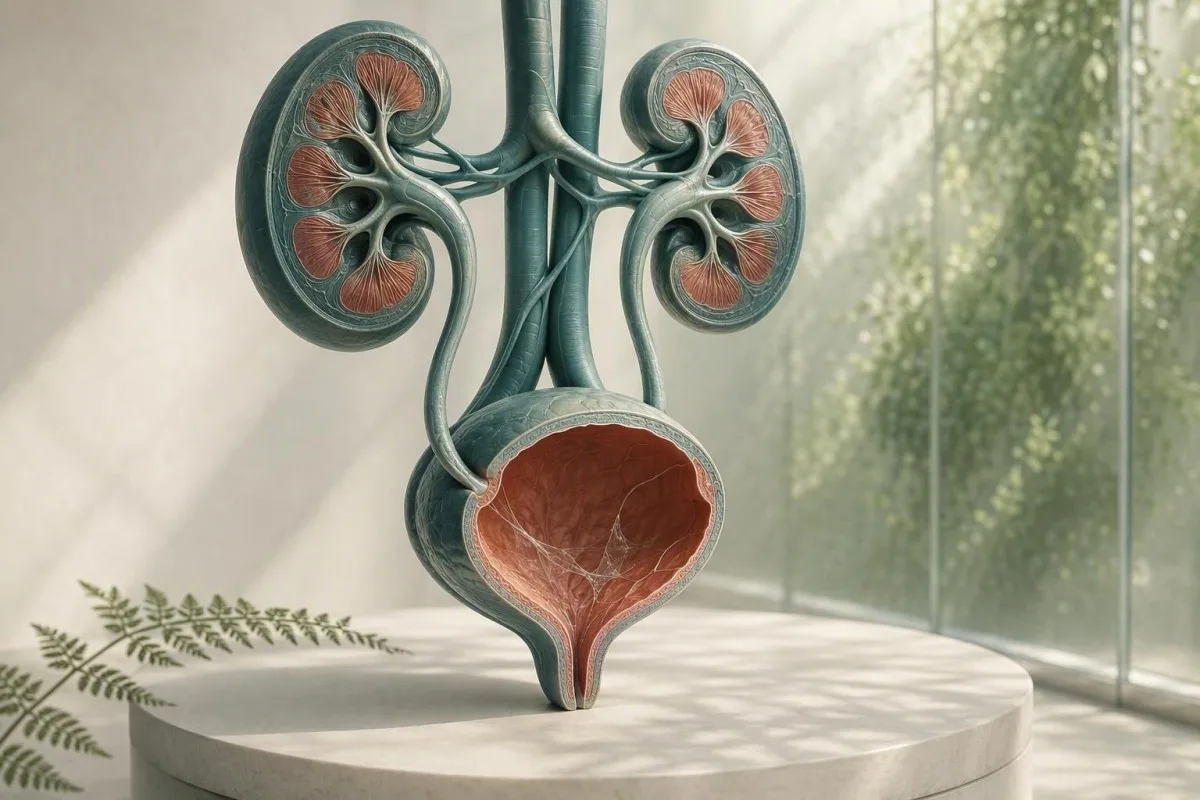
Hlien v správe z mikroskopie moču je zvyčajne problémom pri odber vzorky, nie diagnózou. Okolité nálezy pri chemickom vyšetrení moču, príznaky a kvalita vzorky určujú, či si vyžaduje ďalšie sledovanie.


- Vlákna hlienu samy osebe sú bežne neškodné, najmä v jednej vzorke získanej čistým odberom bez príznakov močových ciest.
- Prah pyúrie viac ako 5 bielych krviniek na pole pri vysokom zväčšení podporuje zápal močových ciest, ale nedokazuje bakteriálnu UTI.
- Spúšťač kultivácie je hlien plus pálenie, nutkanie, horúčka, bolesť v boku, dusičnany alebo významné biele krvinky – nie samotný hlien.
- Skvamózne bunky nad približne 10 na pole s vysokým zväčšením často naznačuje kontamináciu genitálnej kože a znižuje spoľahlivosť výsledku moču.
- Viditeľná krv s kolikovitou bolesťou boku potrebuje urýchlené vyšetrenie na prítomnosť kameňa, aj keď je hlásený aj hlien.
- Tehotenstvo mení prah pre sledovanie, pretože asymptomatická bakteriúria sa zvyčajne skríninguje pomocou kultivácie moču, nie samotnej mikroskopie.
- Zakalený moč môže odrážať kryštály, koncentrovaný moč, vaginálny výtok, ejakulát alebo bunky; zjavom nemôže diagnostikovať infekciu.
- Opakovaná vzorka je rozumné, ak je hlien jediným neobvyklým nálezom a odber nebol starostlivý stredný prúd čistého odberu.
Čo vlákna hlienu pri chemickom vyšetrení moču zvyčajne znamenajú
Vlákna hlienu v moči sú zvyčajne pramienky normálnej ochrannej sekrécie alebo genitálnej kontaminácie a izolovaný výsledok zriedka signalizuje ochorenie obličiek. Nález sa stáva významným, keď sa objaví s močovými príznakmi, bielymi krvinkami, baktériami, krvou alebo bielkovinami.
Laboratóriá identifikujú hlien ako tenké, priehľadné pramienky viditeľné pod mikroskopom; mnohé správy ho jednoducho hodnotia ako zriedkavý, málo, stredný alebo veľa namiesto pridelenia numerického referenčného rozsahu. Moč prirodzene obsahuje malé množstvo materiálu bohatého na glykoproteíny z močových ciest a vaginálne alebo uretrálne sekréty ho môžu počas odberu pridať viac.
Formulácia správy je menej znepokojujúca, ako sa zdá. Od 26. augusta 2026, neexistuje validovaný počet vlákien hlienu, ktorý by diagnostikoval UTI, kameň, rakovinu alebo zlyhanie obličiek; ide o kontextové mikroskopické pozorovanie. Pre širšiu mapu ostatných položiek v správe z testu prúžkom a mikroskopie si pozrite náš kompletný sprievodca analýzou moču.
Z mojej klinickej praxe, dospelý bez príznakov s hlienom označeným ako “stredný”, 0–2 biele krvinky na pole s vysokým zväčšením, negatívny nitrit a bez krvi je zvyčajne najlepšie riešený upokojením alebo jedným správne odobraným opakovaným vzorkom. Dr. Thomas Klein často vidí zbytočnú úzkosť z antibiotík, ktorá vzniká preto, lebo laboratórny signál je mylne považovaný za označenie choroby.
Kantesti je platforma na interpretáciu výsledkov krvných testov s umelou inteligenciou, ktorá môže umiestniť obličkové krvné markery, ako je kreatinín a eGFR, vedľa nálezu z analýzy moču – ale nemôže diagnostikovať UTI len z hlienu. Výsledok mikroskopie moču potrebuje klinický príbeh, ktorý s ním prišiel.
Prečo to laboratórium označí
Informačné systémy laboratórií označujú hlien, pretože je vizuálne prítomný, nie preto, že by laboratórium stanovilo nebezpečný limit. Označenie teda znamená “pozorované” namiesto “abnormálny marker choroby”, podobne ako izolovaný stopový nález, ktorý si nevyžaduje žiadnu liečbu.
Odkiaľ pochádza hlien vo vzorke moču
Hlien v moči môže pochádzať z močovej trubice, sliznice močového mechúra, krčka maternice alebo pošvy, ejakulátu alebo z vonkajšej genitálnej kože počas odberu. Jeho zdroj sa často odhaduje na základe zvyšku mikroskopického obrazu, nie na základe samotných vlákien.
Močový mechúr a močová trubica majú ochrannú povrchovú vrstvu obsahujúcu mucíny, vrátane materiálu spojeného s uroplakínmi, ktorý znižuje trenie a priľnavosť mikróbov. Malé množstvá sa môžu uvoľniť do moču po dehydratácii, nedávnej sexuálnej aktivite, miernom podráždení, alebo jednoducho preto, že koncentrovaný prvý ranný vzorka uľahčuje viditeľnosť vlákien.
U ľudí, ktorí menštruujú alebo majú vaginálny výtok, môžu leukocyty a hlien vstúpiť do pohára bez toho, aby pochádzali z močového mechúra. Viac ako 10 dlaždicových epiteliálnych buniek na pole s vysokým zväčšením robí kontamináciu pravdepodobnejšou, hoci laboratóriá používajú rôzne prahy hlásenia. Náš sprievodca k epiteliálnym bunkám v moči vysvetľuje, prečo toto mení dôveru vo výsledok.
Sagma môže tiež vytvárať vláknitý materiál alebo zakalenie niekoľko hodín po ejakulácii. To nesposobuje, že moč nie je bezpečný, ale môže to sťažiť mikroskopiu; ak sa zvažuje kultivácia, zvyčajne odporúčam odobrať novú vzorku najmenej 24 hodín neskôr, ak je to možné.
Prečo sex a anatómia ovplyvňujú správu
Nádoba na moč neizoluje močový mechúr od blízkych tkanív. Preto sa “prítomnosť hlienu” hlási častejšie vo vzorkách s vonkajším výtokom, zatiaľ čo katetrizovaná vzorka sa niekedy používa, keď lekári potrebujú presnejšiu odpoveď.
Kedy vlákna hlienu poukazujú na infekciu močových ciest
Vlákna hlienu podporujú možnú UTI iba vtedy, ak sprevádzajú príznaky a objektívne zápalové nálezy, najmä pyúriu, pozitivitu nitritov alebo presvedčivú kultiváciu. Hlien sám o sebe nie je testom na UTI.
Symptomatická dolná UTI bežne spôsobuje pálenie, naliehavosť, časté močenie, suprapubickú nepohodu a niekedy aj nový zápach moču. V správne odobratej vzorke, viac ako 5 bielych krviniek na pole s vysokým zväčšením sa často nazýva pyúria; podporuje zápal močových ciest, ale môže sa vyskytnúť aj pri kameňoch, sexuálne prenosných infekciách a kontaminácii.
Dusitan je vysoko špecifický pri pozitívnom výsledku, ale nezachytí infekcie spôsobené organizmami, ktoré nedonášajú dusičnany, a negatívny výsledok dusitanov nevylučuje UTI. Leukocyt esteráza detekuje aktivitu enzýmov bielych krviniek a môže byť falošne pozitívna, keď sekrét z vagíny kontaminuje vzorku; naše vysvetlenie výsledkom leukocytovej esterázy pokrýva tieto pasce.
Usmernenie IDSA neodporúča skríning ani liečbu asymptomatickej bakteriúrie u zdravých netehotných dospelých, pretože antibiotiká prinášajú škodu bez úžitku (Nicolle et al., 2019). Tento princíp je obzvlášť relevantný pre hlien: bez pálenia, bez horúčky a bez plánovaného urologického zákroku zvyčajne znamená žiadne antibiotiká len preto, že pole mikroskopie vyzeralo neusporiadane.
Kedy je kultivácia lepším testom
Kultivácia moču je užitočnejšia ako opakovaný dipstick test, keď príznaky pretrvávajú, príznaky sa opakujú do 4 týždňov, je prítomné tehotenstvo, podozrenie na pyelonefritídu, alebo predchádzajúce antibiotiká mohli ovplyvniť výsledok. Zmiešaný bakteriálny rast bežne naznačuje kontamináciu odberu, nie jediný močový patogén; pozri interpretácia kultivácie moču.
Hlien, kryštály, kamene a mechanické podráždenie
Hlien so silnou vlnovitou bolesťou v boku alebo krvou v moči sa môže vyskytnúť pri močovom kameni, ale hlien ani nepotvrdzuje ani nevylučuje kameň. Krv, kryštály, vzorec bolesti, zobrazovacie vyšetrenia a funkcia obličiek sú dôležitejšie.
Kameň môže poškriabať alebo upchať močovú výstelku, produkovať červené krvinky, biele krvinky a dodatočný hlien. Klasickým príznakom je náhla koliková bolesť šíriaca sa smerom k slabinám, často s nevoľnosťou; viditeľná červená alebo čajovo sfarbená moč zvyšuje naliehavosť. Prečítajte si viac o varovných príznakov krvi v moči namiesto toho, aby sme predpokladali, že každá ružová vzorka je jednoduchá infekcia.
Kryštály oxalátu vápenatého sa môžu vyskytnúť u zdravých ľudí, najmä v koncentrovanom kyslom moči, takže jeden typ kryštálu nedokazuje aktívny kameň. U osoby s bolesťou, opakovanými kameňmi alebo pretrvávajúcou hematúriou môžu lekári použiť ultrazvuk alebo nízkodávkovú CT bez kontrastu namiesto toho, aby sa spoliehali len na sediment. Náš zdroj o kryštály oxalátu vápenatého podrobne opisuje obmedzenia správ o kryštáloch.
Dôležitou výnimkou je obštrukcia s infekciou: horúčka 38,0 °C alebo vyššia, bolesť v boku, vracanie a neschopnosť močiť si vyžadujú urgentné vyšetrenie. Obávať sa netreba hlienu; je to infikovaný zablokovaný močový systém, ktorý sa môže rýchlo zhoršovať.
Podráždenie bez kameňa
Nedávne použitie katétra, postupy na močovom mechúri, intenzívne cyklistické jazdy a panvová radiácia môžu podráždiť dolné močové cesty a zvýšiť množstvo hlienu alebo bielych krviniek. Lekár by mal tieto výsledky interpretovať v kontexte času, pretože vzorka odobratá do 48 hodín po inštrumentácii nie je ekvivalentná bežnej skríningovej vzorke.
Zákal moču: čo vzhľad môže a nemôže povedať
Zakalenie moču môže byť spôsobené koncentrovanými soľami, kryštálmi, hlienom, bunkami, genitálnym výtokom alebo baktériami, takže samotný vzhľad nemôže diagnostikovať infekciu. Moč, ktorá je zakalená, ale bezbolestná a krátko trvajúca, je zvyčajne neurgentná.
Kryštály fosfátov môžu spôsobiť, že alkalická moč po ochladnutí vyzerá zakalená, zatiaľ čo kryštály urátov môžu zakaliť kyslú koncentrovanú moč. Vzorka ponechaná pri izbovej teplote dlhšie ako 2 hodiny sa môže stať čoraz zakalenejšou, pretože bunky degradujú a baktérie sa množia, preto je dôležité čerstvé spracovanie alebo chladenie.
Zákal sprevádzaný dyzúriou, urgenciou a pyúriou si vyžaduje testovanie; zákal po cvičení alebo nedostatočnom príjme tekutín sa často zlepší bežnou hydratáciou. Cieľom je moč, ktorý je svetložltý, nie nadmerné násilné prijímanie vody — veľmi číra moč neznamená, že obličky “preplachujú” infekciu. Naša podrobná recenzia príčinách zakaleného moču oddeľuje vizuálne stopy od spoľahlivých testov.
Kantesti je Analyzátor krvných testov s umelou inteligenciou navrhnuté na interpretáciu krvných markerov v klinickom kontexte; vysoký kreatinín alebo znížený eGFR spolu s abnormálnymi výsledkami moču môžu oprávňovať lekárske vyšetrenie, zatiaľ čo zakalená moč sama o sebe nepreukazuje narušenú filtráciu obličiek. Základný metabolický panel môže poskytnúť užitočný kontext, ak príznaky naznačujú dehydratáciu alebo obštrukciu.
Zápach nie je kultúra
Silno zapáchajúca moč často odráža koncentráciu, metabolity špargle, vitamíny skupiny B alebo nádobu, ktorá stála príliš dlho. Nový zápach s horúčkou alebo močovými príznakmi je dôvodom na vyhľadanie lekárskeho vyšetrenia, ale zápach nenahrádza mikroskopiu a kultiváciu.
Genitálny výtok a sexuálne prenosné infekcie
Vaginálny alebo uretrálny výtok môže vyzerať ako hlien v moči a nový výtok s pálením pri močení si vyžaduje testovanie sexuálneho zdravia, ako aj vyšetrenie moču. Rutinná kultivácia moču môže prehliadnuť chlamýdie a kvapavku.
Chlamýdie a kvapavka môžu spôsobiť dyzúriu a sterilnú pyúriu — biele krvinky bez bežného bakteriálneho rastu — najmä po novom sexuálnom kontakte. Testovanie amplifikácie nukleových kyselín, často s použitím moču z prvého prúdu namiesto stredného prúdu, je vhodný test, pretože štandardná kultivácia sa zameriava na iné organizmy.
U osôb s vagínou môže bakteriálna vaginóza, kandidóza a cervikálna zápal pridať výtok do nádobky na stredný prúd; vaginálny výter alebo vyšetrenie môže byť informatívnejšie ako opakovaná mikroskopia moču. U osôb s penisom by sa viditeľný uretrálny výtok nemal zamieňať za “hlienové vlákna”. Praktický rozdiel je výtok pozorovaný mimo močenia oproti vláknam hláseným iba laboratóriom.
Usmernenie CDC z roku 2021 o liečbe STI odporúča testovanie založené na NAAT na relevantných anatomických miestach podľa anamnézy expozície, nie len podľa príznakov (Workowski et al., 2021). Ak je prítomná bolesť v panve, bolesť semenníkov, horúčka, tehotenstvo alebo možný útok, vyhľadajte lekársku pomoc v ten istý deň namiesto samoliečby zvyšnými antibiotikami.
Prečo antibiotiká môžu skomplikovať obraz
Užitie aj 1 alebo 2 dávok antibiotík pred kultiváciou môže potlačiť bežný bakteriálny rast, zatiaľ čo močové príznaky a biele krvinky pretrvávajú. Povedzte lekárovi presne, aký liek, dávku a čas poslednej dávky ste užili; tento detail mení interpretáciu negatívnej kultivácie.
Ako odobrať vzorku moču, ktorá odpovie na otázku
Vzorka stredného prúdu čistej odberovej metódy lepšie redukuje hlien, skvamózne bunky a zmiešaný bakteriálny rast ako zber prvej alebo poslednej časti prúdu. Technika je jednoduchá, ale prvé 2 sekundy majú neprimeraný vplyv.
Umyte si ruky, rozpre;´te genitálnu kožu alebo natiahnite predkožku, ak je to pohodlné, vyčistite podľa pokynov súpravy, začnite močiť do toalety a potom odoberte strednú časť bez toho, aby sa nádobka dotýkala pokožky. Vzorka s objemom 20 – 30 ml je zvyčajne dostatočná; naplnenie veľkej nádoby po okraj nezlepšuje test.
Odovzdajte nádobku ihneď, ideálne do 1 hodiny; ak je omeškanie nevyhnutné, uchovávajte ju v chladničke podľa pokynov laboratória a vráťte ju do 24 hodín. Chladenie spomaľuje rast baktérií, ale neobnoví vzorku, ktorá už bola kontaminovaná. Toto je obzvlášť dôležité, ak je požiadavka zahŕňa kultiváciu namiesto len testovacieho prúžku.
Kantesti je Nástroj na analýzu krvných testov poháňaný AI používané vo viac ako [127+] krajinách a naše pracovné postupy posudzované lekármi považujú kvalitu vzorky za súčasť interpretácie, nie za poznámku pod čiarou. Rovnaký princíp platí pre akúkoľvek laboratórnu hodnotu: technicky zlá vzorka môže viesť k lekársky presvedčivému, ale zavádzajúcemu výsledku. Pozrite si náš kontrolný zoznam presnosti laboratória pre otázky, ktoré si treba položiť pred konaním na základe izolovaného upozornenia.
V týchto situáciách nepreberajte vzorku, ak môžete počkať
Vyhnite sa rutinnému testovaniu počas silného menštruačného krvácania, ihneď po pohlavnom styku alebo po použití vaginálnych krémov, pokiaľ to lekár výslovne nevyžiada. Keď testovanie nemôže čakať, informujte laboratórium alebo lekára, pretože tento kontext môže vysvetliť prítomnosť hlienu, červených krviniek alebo vonkajších buniek.
Ako lekári čítajú hlien v kontexte celého chemického vyšetrenia moču
Najužitočnejší vzor analýzy moču kombinuje symptómy s bielymi krvinkami, červenými krvinkami, nitritom, lyzozýmovým esterázom, proteínom, glukózou, špecifickou gravitáciou a epitelovými bunkami. Hlien je v tomto vzore vedľajšou podpornou charakteristikou.
Čistá vzorka s hlienom, 0–2 bielymi krvinkami na vysokozväčšovacie pole, negatívnym nitritom a bez krvi zvyčajne nevyžaduje liečbu. Hlien s viac ako 5 bielymi krvinkami na vysokozväčšovacie pole a pozitívnym lyzozýmovým esterázom zvyšuje pravdepodobnosť zápalu; pridanie nitritu alebo kultivácia jedného organizmu zvyšuje istotu, že zodpovedné sú baktérie.
Proteín potrebuje vlastnú cestu. Stopy proteínu po horúčke, cvičení alebo koncentrovanom moči môžu byť dočasné, ale pretrvávajúci proteín by mal byť kvantifikovaný pomerom albumín-kreatinín, namiesto pripisovania hlienu. Náš návod k bielkoviny v moči vysvetľuje, prečo sa proteín na testovacom prúžku a riziko ochorenia obličiek nedajú zamieňať.
Špecifická hmotnosť 1,003 až 1,030 je bežné u dospelých, hoci referenčné intervaly sa líšia podľa laboratória. Vysoká špecifická gravitácia môže koncentrovať hlien a vytvoriť dramatickejšie vyzerajúci sediment, zatiaľ čo nízka špecifická gravitácia môže lyzovať bunky a spôsobiť, že mikroskopia bude klamlivo nevýrazná; naše sprievodcovi špecifickou hmotnosťou ukazuje, ako hydratácia ovplyvňuje interpretáciu.
Hodnota negatívnych nálezov
Negatívna krv, proteín, nitrit a lyzozýmový esteráza zmysluplne znižujú obavy u osoby bez príznakov, aj keď je hlien hlásený ako stredný. Žiadny jednotlivý negatívny test nie je dokonalý, ale toto zoskupenie je upokojujúcejšie ako znepokojujúce hodnotenie hlienu.
Kedy zopakovať test a kedy požiadať o kultiváciu
Opakujte vzorku moču, keď je hlien izolovaný, skvamózne bunky naznačujú kontamináciu alebo odber bol uponáhľaný; požiadajte o kultiváciu, keď sú príznaky pretrvávajúce, opakujúce sa, závažné alebo vysoko rizikové. Opakovaný test nie je “nerobenie ničoho” – často je to najdiagnostickejší ďalší krok.
Pre netehotnú dospelú osobu bez príznakov a hlien ako jediný alarmujúci nálezok je opakované vyšetrenie moču čistým odberom v priebehu 1–2 týždňov primerané, ak je potrebná istota; mnohí lekári by ho vôbec neopakovali. Neliečte laboratórny alarmujúci nálezok antibiotikami počas čakania, pokiaľ lekár neurčí klinickú indikáciu.
Kultivácia pred podaním antibiotík je obzvlášť užitočná pri horúčke, bolesti v boku, tehotenstve, imunosupresii, po transplantácii obličky, pri použití močového katétra, u mužov s močovými príznakmi alebo pri príznakoch, ktoré sa vrátia do 4 týždňov. Usmernenie Gupta et al. (2011) podporuje kultiváciu pri podozrení na pyelonefritídu a v situáciách, kde je pravdepodobnejšia rezistencia alebo alternatívna diagnóza.
Početné kultivácie sa musia hodnotiť spolu s kvalitou odberu. Jediný organizmus pri 10^5 kolónií tvoriacich jednotiek na ml tradične podporoval bakteriúriu pri čistom strednom prúde moču, ale symptomatickí pacienti môžu mať klinicky relevantné nižšie počty; “zmiešaná flóra” zvyčajne vyžaduje nový odber vzorky namiesto širokospektrálneho antibiotika. Porovnajte účely vyšetrením moču a kultiváciou pred žiadosťou o ktorékoľvek z nich.
Tehotenstvo vyžaduje iný prah
Tehotenstvo je výnimkou, pretože asymptomatická bakteriúria môže zvýšiť riziko pyelonefritídy a nepriaznivých tehotenských výsledkov. Prenatálna starostlivosť bežne používa skríningovú kultiváciu v ranom štádiu tehotenstva; hlien pri mikroskopii nemôže nahradiť túto kultiváciu.
Kedy krvné testy pridávajú užitočný kontext o obličkách a infekciách
Krvné testy sú užitočné, keď sa hlien v moči vyskytuje spolu s horúčkou, bolesťou v boku, rekurentnými infekciami, opuchom, zníženým výstupom moču alebo pretrvávajúcim proteínom alebo krvou. Kreatinín a eGFR hodnotia filtráciu, zatiaľ čo CBC a C-reaktívny proteín (CRP) môžu pomôcť posúdiť systémovú chorobu.
eGFR nižšie než 60 ml/min/1,73 m² aspoň 3 mesiace spĺňa jedno kritérium chronického ochorenia obličiek, ale jeden nižší výsledok počas dehydratácie alebo akútneho ochorenia nestačí na stanovenie tejto diagnózy. Kreatinín je ovplyvnený svalovou hmotou, stravou a niektorými liekmi, takže trendy a albumín v moči sú často informatívnejšie ako jedno číslo.
Zvýšený počet bielych krviniek alebo CRP môže podporiť zápalový proces, ale nemôže identifikovať močové cesty ako zdroj. U horúčkovitého človeka s bolesťou v boku si lekári môžu skontrolovať kreatinín pred výberom zobrazovacích metód alebo liekov, najmä ak zvracanie alebo obštrukcia môžu zhoršiť funkciu obličiek. Skontrolujte štádiá chronického ochorenia obličiek pre kategórie eGFR a albumínu, ktoré lekári používajú.
Kantesti je službe na interpretáciu výsledkov AI laboratórnych testov ktorá zdôrazňuje vzorce naprieč kreatinínom, eGFR, elektrolytmi, CBC a zápalovými markermi namiesto liečby jednej poznámky o hliene ako diagnózy obličiek. Naša metodika podlieha klinickému validačnému dohľadu, ale naliehavé príznaky si stále vyžadujú priamu lekársku starostlivosť, nie interpretáciu pomocou aplikácie.
Praktické rozlíšenie dehydratácie
Dehydratácia môže zvýšiť špecifickú hmotnosť moču a dočasne zvýšiť kreatinín, najmä po hnačke, vystavení teplu alebo intenzívnom cvičení. Pretrvávajúci nízky výstup moču, závraty alebo pokles eGFR po rehydratácii si vyžadujú lekársku kontrolu namiesto opakovaného domáceho testovania.
Urgentné varovné príznaky, ktoré by nemali čakať na opakovaný test
Vyhľadajte urgentné vyšetrenie v ten istý deň pri hliene v moči s horúčkou 38,0 °C alebo vyššou, bolesťou v boku, zvracaním, viditeľnou krvou, neschopnosťou močiť, zmätenosťou alebo močovými príznakmi súvisiacimi s tehotenstvom. Tieto kombinácie sú dôležité, pretože môžu signalizovať infekciu horných močových ciest, obštrukciu alebo inú akútnu príhodu.
Horúčka plus jednostranná bolesť chrbta alebo boku je pre pyelonefritídu znepokojujúcejšia ako jednoduchá cystitída, najmä pri triaške alebo zvracaní. Omeškané liečenie môže viesť k dehydratácii, sepse alebo stresu obličiek; normálne vyzerajúca vzorka moču doma ju bezpečne nevylučuje.
Viditeľnú krv by mali vyhodnotiť, aj keď sa zdá UTI pravdepodobná, najmä po 35. roku života, u fajčiarov, alebo ak krvácanie pretrváva po ustúpení príznakov infekcie. Usmernenie AUA pre mikrohematúriu odporúča hodnotenie založené na riziku po odstránení benígnych vysvetlení (Barocas et al., 2020); pretrvávajúca krv nie je vysvetlená hlienom.
Deti, dospelí nad 65 rokov, ľudia s cukrovkou, ľudia užívajúci imunosupresívne lieky a tí s jedinou obličkou si zaslúžia nižší prah na vyšetrenie. Pravidlo Dr. Thomasa Kleina v praxi je jednoduché: ak sa príznaky zhoršujú počas 6–12 hodín, nečakajte na druhý pohár na upokojenie.
Zavolajte pohotovosť ihneď pri vážnom ochorení
V prípade novej zmätenosti, mdloby, silnej slabosti, modrých alebo sivých pier, závažnej dýchavičnosti alebo neschopnosti udržať tekutiny pri močových príznakoch zavolajte pohotovostné služby. Toto sú systémové varovné signály, nie bežné príznaky UTI.
Hlien v moči počas tehotenstva, detstva a neskoršieho života
Tehotenstvo, deti a starší dospelí si vyžadujú starostlivejšiu interpretáciu, pretože kontaminácia je častá, ale následky zmeškanej infekcie môžu byť závažnejšie. Príznaky a kvalita kultivácie zostávajú pre každú vekovú skupinu cennejšie ako stupeň hlienu.
Počas tehotenstva môže byť časté močenie normálne, čo robí príznaky menej špecifickými; horúčka, dyzúria alebo bolesť chrbta by mali viesť k promptnému pôrodníckemu alebo klinickému vyšetreniu. Kultivácia na skríning sa zvyčajne odoberá na začiatku prenatálnej starostlivosti a opakovaná kultivácia sa môže použiť po liečbe v závislosti od plánu lekára.
U detí je moč odobratý do vrecúška náchylný na kontamináciu a zvyčajne by sa nemal používať samostatne na diagnostiku UTI pomocou kultivácie. Pri mladom dieťati s horúčkou bez jasného zdroja môže byť potrebný katetrizovaný alebo starostlivo odobratý čistý stredný prúd moču; hlien vo vzorke z vrecúška je obzvlášť nešpecifický.
V neskoršom veku sa bakteriúria a pyúria stávajú bežnejšími bez toho, aby spôsobovali príznaky. Samotná nová delírium by mala viesť k širokému lekárskemu vyšetreniu dehydratácie, liekov, bolesti, zápchy a zdrojov infekcie, namiesto automatickej liečby UTI; platí rovnaká zdržanlivosť odporúčaná Nicolle et al. (2019).
Menštruácia a hormonálne zmeny
Menštruačná krv a cervikálny hlien môžu niekoľko dní ovplyvňovať analýzu moču a postmenopauzálna vaginálna suchosť môže spôsobiť lokálne podráždenie, ktoré pripomína pálenie močových ciest. Ak výsledky a príznaky nie sú v súlade, lekár môže posúdiť genitálne príčiny namiesto predpísania opakovanej liečby UTI.
Bežné chyby po zistení hlienu v laboratórnej správe
Nezačínajte so zvyšnými antibiotikami, neočisťujte sa vnútorne ani sa nepokúšajte “vyplaviť” hlien extrémne zvýšeným príjmom vody po jednej abnormálne vyzerajúcej analýze moču. Tieto činnosti môžu skresliť kultiváciu, narušiť normálnu flóru alebo oddialiť správnu diagnózu.
Antibiotiká užité bez kultivácie môžu spôsobiť, že neskorší test bude falošne negatívny a môžu spôsobiť hnačku, vyrážku, kvasinkové príznaky alebo rezistenciu. Ak sú príznaky mierne, ale pretrvávajúce, kedykoľvek je to praktické, najprv odoberte vzorku, potom postupujte podľa liečebného plánu lekára na základe celkového obrazu.
Brusnicové produkty môžu mierne znížiť riziko rekurentných nekomplikovaných UTI u niektorých ľudí, ale neliečia horúčku, bolesť v boku alebo potvrdenú infekciu horných močových ciest. Vyhnite sa vysokým dávkam vitamínu C ako samoliečbe: môže zmeniť niektoré reakcie na prúžkovom teste a môže zvýšiť záťaž oxalátov u ľudí náchylných na kamene z vápnika a oxalátov.
Opakovane neskúmajte záchodovú misu, či neobsahuje vlákna. Vlákna toaletného papiera, zvyšky čističov, genitálne sekréty a turbulencie vody môžu napodobňovať hlien; vhodným miestom na jeho posúdenie je laboratórna vzorka odobratá v sterilnej nádobe. Pre súvisiace zmeny farby, naša sprievodca farbou moču ponúka spoľahlivejší vizuálny kontext.
Zoznam liekov je dôležitý
Fenazopyridín môže sfarbiť moč do oranžova a interferovať s vizuálnou interpretáciou, zatiaľ čo diuretiká môžu moč koncentrovať alebo riediť v závislosti od načasovania. Prineste na stretnutie zoznam predpísaných liekov, voľnopredajných produktov a doplnkov, vrátane dávok v mg.
Praktický plán sledovania vlákien hlienu v moči
Väčšina ľudí s vláknami hlienu v moči a bez príznakov nepotrebuje liečbu; primeraná je opatrná opakovaná analýza moču, ak bola vzorka otázna. Príznaky alebo sprievodné abnormality určujú, či sú vhodné kultivácia, testovanie na STI, zobrazovacie metódy alebo krvné testy.
Krok 1: skontrolujte pálenie, naliehavosť, horúčku, bolesť v boku, viditeľnú krv, výtok, tehotenstvo, nedávne močové zákroky a nedávne sexuálne vystavenie. Krok 2: prečítajte si správu pre biele krvinky, nitrity, lyzozýmový esterázu, červené krvinky, bielkoviny, baktérie a skvamózne bunky – nielen hlien.
Krok 3: ak sa cítite dobre a hlien je izolovaný, odoberte jednu vzorku zo stredného prúdu čistým odberom do 1-2 týždňov, iba ak váš lekár odporučí potvrdenie. Krok 4: ak sú prítomné príznaky, opýtajte sa, či by mala byť kultivácia moču odobratá pred liečbou a či je testovanie na STI relevantné; rekurentné epizódy si zaslúžia dôkladnejšie posúdenie ako tretí empirický antibiotik.
Kantesti môže organizovať relevantné trendy krvných výsledkov a otázky na lekárske stretnutie, zatiaľ čo naše Lekárska poradná rada podporuje bezpečnostné štandardy vedené lekárom. Správnym cieľom nie je dokonale “čistý” mikroskopický nález – je to vysvetlenie, ktoré zodpovedá vašim príznakom, kvalite vzorky a rizikovým faktorom.
Otázky na návštevu lekára
Opýtajte sa, či vzorka obsahovala dlaždicové bunky, či kultivácia vyprodukovala jeden organizmus alebo zmiešanú flóru a či pretrvávala krv alebo bielkoviny po odstránení príznakov. Tieto 3 otázky často prinášajú užitočnejšie odpovede ako pýtanie sa na množstvo viditeľného hlienu.
Kontex výskumu a limity hlásenia hlienu
Hodnotenie hlienu nie je štandardizované naprieč laboratóriami, preto by sa lekári mali vyhýbať používaniu kategórií “málo”, “stredné” alebo “veľa” ako kategórií závažnosti ochorenia. Metóda mikroskopie, vek vzorky a softvér na hlásenie výsledkov môžu všetky zmeniť formuláciu.
Niektoré laboratóriá manuálne kontrolujú sediment po centrifugácii približne 10–15 ml moču, zatiaľ čo iné používajú automatizovanú analýzu častíc s manuálnou kontrolou vybraných príznakov. Táto variácia znamená, že výsledok “stredný hlien” z jedného laboratória sa nemusí presne zopakovať v inom laboratóriu, aj keď sa zdravotný stav osoby nezmenil.
Užitočný laboratórny prístup spočíva v tom, či je výsledok analyticky reálny, klinicky významný a reprodukovateľný. Tento prístup je známy aj z testovania krvi: naša sprievodca biomarkerov v krvi vysvetľuje, prečo referenčné intervaly a preanalytické podmienky určujú, či označený marker si zaslúži akciu.
Kantesti AI využíva štruktúrovaný laboratórny kontext na vysvetlenie vzorcov výsledkov naprieč hlavnými panelmi, ale mikroskopia moču si stále vyžaduje klinický úsudok špecifický pre zdroj. Pre čitateľov, ktorí sa zaujímajú o to, ako posudzujeme technický výkon a klinické hranice, naša Sprievodca AI technológiou opisuje ochranné opatrenia za naším interpretačným prístupom.
Čo by mal dobrý report jasne objasniť
Užitočná správa identifikuje typ vzorky, dátum odberu, mikroskopické prvky a prípadné kultivačné organizmy a výsledky citlivosti, ak sa vykonáva kultivácia. Ak správa uvádza iba “prítomné hlienové vlákna”, je neúplná na diagnostiku, ale často úplne dostatočná pre nízkorizikový náhodný nález.
Často kladené otázky
Sú slizničné vlákna v moči normálne?
Hlieny v moči sú často normálne alebo spôsobené kontamináciou genitálnymi sekrétmi, najmä ak osoba nemá žiadne močové príznaky. Izolovaný nález s 0–2 bielymi krvinkami na zorné pole s vysokou zväčšovacou schopnosťou, negatívnym nitritom a bez krvi alebo proteínov je zvyčajne nízkorizikový. Laboratóriá nepoužívajú validované číslo hlienových vlákien na diagnostiku UTI alebo ochorenia obličiek. Opakovaný odber stredného prúdu moču s čistým odberom je primeraný, ak bol pôvodný odberUponor urýchlený alebo viditeľne kontaminovaný.
Znamenajú slizové vlákna v moči, že mám infekciu močových ciest?
Slizové vlákna v moči samy o sebe neznamenajú infekciu močových ciest. Infekcia močových ciest je pravdepodobnejšia, keď sa pri pálení, nutkaní na močenie, častom močení, horúčke alebo suprapubickej bolesti vyskytne viac ako 5 bielych krviniek na vysoko-výkonné pole, pozitívna leukocytová esteráza, dusitan alebo pozitívna kultivácia. Negatívny dusitan nevylučuje úplne infekciu močových ciest, pretože nie všetky baktérie produkujú dusitan. Kultivácia je zvyčajne informatívnejšia ako hodnotenie slizníc, keď príznaky pretrvávajú alebo sa opakujú.
Môže dehydratácia spôsobiť hlien v moči?
Dehydratácia môže spôsobiť, že hlien bude viditeľnejší, pretože koncentrovaný moč obsahuje menej vody okolo normálnych sekrétov a sedimentov. Vysoká špecifická hmotnosť moču, zvyčajne okolo 1,025–1,030, môže tento efekt sprevádzať, hoci sám o sebe nedokazuje dehydratáciu. Normálna rehydratácia a opakovanie správne odobratej vzorky môže tento nález objasniť. Extrémny príjem vody nie je potrebný a môže predstavovať vlastné riziká elektrolytovej rovnováhy.
Čo znamená hlien a biele krvinky v moči?
Hlien s bielymi krvinkami v moči naznačuje zápal močových alebo pohlavných ciest, ale nedokazuje bakteriálnu infekciu. Viac ako 5 bielych krviniek na pole s vysokým zväčšením sa môže vyskytnúť pri UTI, kameňoch, pohlavne prenosných infekciách, vaginálnej kontaminácii alebo nedávnej manipulácii s močovými cestami. Symptómy, dusitan, epitelové bunky a výsledky kultivácie určujú ďalší postup. Horúčka 38,0°C alebo vyššia s bolesťou v boku si vyžaduje urgentné vyšetrenie.
Môže vaginálny výtok spôsobiť hlien v močovom teste?
Vaginálny výtok môže kontaminovať vzorku moču zo stredného prúdu a bežne spôsobuje výskyt hlienu, skvamóznych epitelových buniek a niekedy aj bielych krviniek pri mikroskopickom vyšetrení. Viac ako 10 skvamóznych buniek na zorné pole pri veľkom zväčšení často naznačuje pravdepodobnejšiu kontamináciu, hoci laboratóriá sa v hlásení líšia. Starostlivo odobratá vzorka "clean-catch" (čisté zachytenie) mimo obdobia silnej menštruácie môže tento problém znížiť. Ak je prítomný výtok, svrbenie, zápach alebo bolesť v panvovej oblasti, vaginálne vyšetrenie alebo výter môže byť užitočnejšie ako opakované kultivácie moču.
Kedy sa mám obávať slizničných nitiek a krvi v moči?
Nitkovité hlieny s viditeľnou krvou v moči by sa mali urýchlene posúdiť, najmä ak krv pretrváva, je prítomná bolesť v boku, krvné zrazeniny, horúčka alebo problémy s močením. Kameň, infekcia močových ciest, zranenie, ochorenie obličiek alebo menej často rast močových ciest môžu spôsobiť krv; hlien neidentifikuje príčinu. AUA odporúča posúdenie založené na riziku pri pretrvávajúcej mikroskopickej hematúrii po odstránení dočasných príčin. Núdzové vyšetrenie je vhodné pri horúčke, zvracaní, silnej bolesti alebo retencii moču.
Získajte analýzu krvných testov s podporou AI už dnes
Pridajte sa k viac než 2 miliónom používateľov na celom svete, ktorí dôverujú Kantesti pri okamžitej a presnej analýze laboratórnych testov. Nahrajte svoje výsledky krvných testov a získajte komplexnú interpretáciu biomarkerov 15,000+ v priebehu sekúnd.
📚 Citované publikácie výskumu
Klein, T., Mitchell, S., & Weber, H. (2026). Normálny rozsah aPTT: D-dimér, proteín C, sprievodca zrážaním krvi. Kantesti AI Medical Research.
Klein, T., Mitchell, S., & Weber, H. (2026). Sprievodca sérovými proteínmi: Krvný test globulínov, albumínu a pomeru A/G. Kantesti AI Medical Research.
📖 Externé lekárske referencie
⚕️ Vyhlásenie o lekárskej starostlivosti
Tento článok je určený len na vzdelávacie účely a nepredstavuje lekárske poradenstvo. Pri rozhodnutiach o diagnostike a liečbe sa vždy poraďte s kvalifikovaným poskytovateľom zdravotnej starostlivosti.
Signály dôvery E-E-A-T Trust Signals
Skúsenosti
Klinické hodnotenie vedené lekárom pracovných postupov interpretácie laboratórnych výsledkov.
Odbornosť
Laboratórna medicína so zameraním na to, ako sa biomarkery správajú v klinickom kontexte.
Autoritatívnosť
Napísané Dr. Thomasom Kleinom, recenzia Dr. Sarah Mitchell a prof. Dr. Hans Weber.
Dôveryhodnosť
Interpretácia založená na dôkazoch s jasnými následnými krokmi na zníženie poplachu.