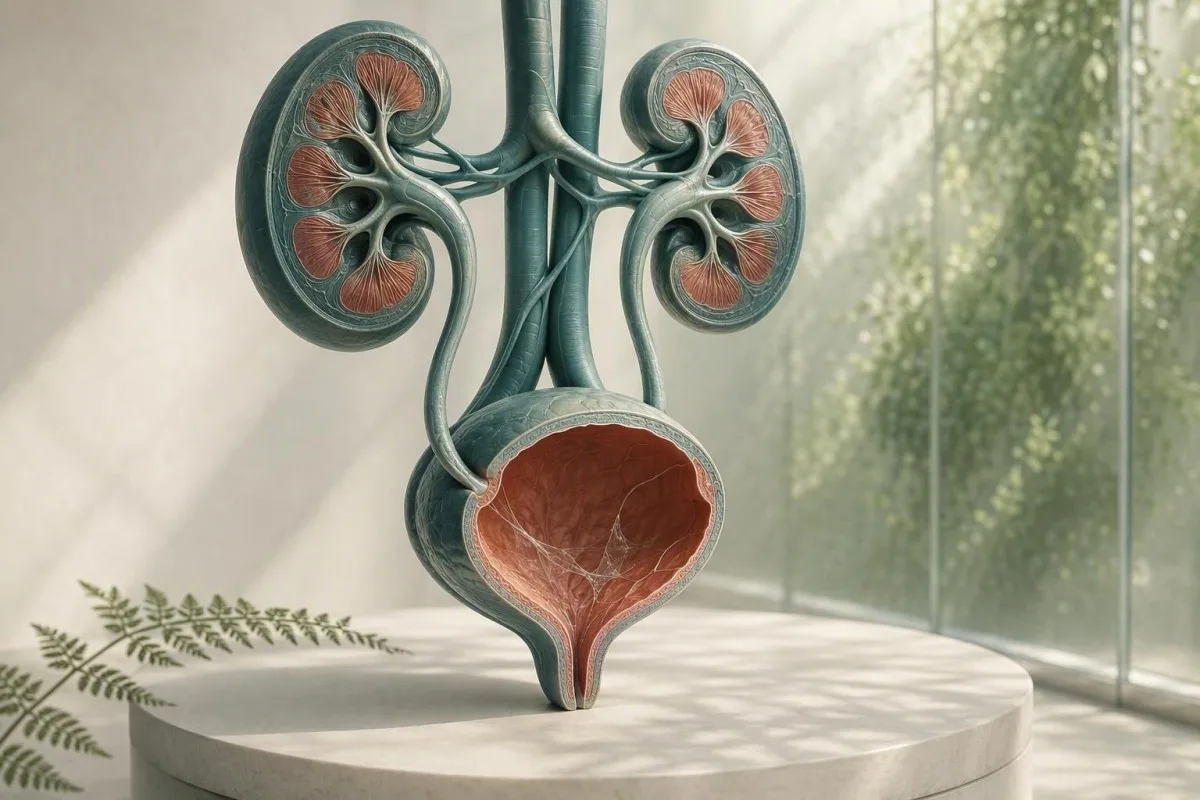
O muco em um relatório de microscopia de urina geralmente é um problema de coleta, não um diagnóstico. Os achados de urinálise circundantes, sintomas e a qualidade da amostra determinam se ele precisa de acompanhamento.


- Filamentos de muco sozinhos são comumente inofensivos, especialmente em uma única amostra de jato limpo sem sintomas urinários.
- Limiar de piúria de mais de 5 células brancas por campo de alta potência apoia a inflamação do trato urinário, mas não prova uma ITU bacteriana.
- Gatilho de cultura é muco mais ardor, urgência, febre, dor no flanco, nitritos ou células brancas significativas — não muco sozinho.
- Cellule squamose acima de aproximadamente 10 por campo de alta potência geralmente indicam contaminação genital-cutânea e tornam o resultado da urina menos confiável.
- Відавочная кроў com dor colílica lateral precisa de avaliação imediata para um cálculo, mesmo que o muco também seja relatado.
- Цяжарнасць змяняе парог для наступных дзеянняў, бо асімптаматычная бактэрыурыя звычайна правяраецца з дапамогай культуры мачы, а не толькі мікраскапіі.
- Мутная мача можа адлюстроўваць крышталі, канцэнтраваную мачу, вылучэнні з похвы, сперму або клеткі; па сваім знешнім выглядзе ён не можа дыягнаставаць інфекцыю.
- Паўтор узору мае сэнс, калі слізь з'яўляецца адзінай незвычайнай знаходкай, а збор не быў старанным сярэднім з узяццем чыстага ўзору.
O que os filamentos de muco na urinálise geralmente significam
Слізныя ніткі ў мачы звычайна ўяўляюць сабой ніткі нармальнага ахоўнага сакрэту або генітальнага забруджвання, і ізаляваны вынік рэдка сігналізуе пра хваробу нырак. Знаходка становіцца значнай, калі яна з'яўляецца разам з сімптомамі мочавылучэння, лейкацытамі, бактэрыямі, крывёй або бялком.
Лабараторыі ідэнтыфікуюць слізь як няўлоўныя, празрыстыя ніткі, бачныя пад мікраскопам; многія справаздачы проста ацэньваюць яе як рэдкую, нешматлікую, умераную або шматлікую, а не прызначаюць лікавы дыяпазон спасылак. Мача натуральным чынам змяшчае невялікую колькасць матэрыялу, багатага глікапратэінамі, з мочавыдзяльных шляхоў, а вылучэнні з похвы або ўрэтры могуць дадаць больш падчас збору.
Формулёўка справаздачы менш трывожная, чым здаецца. Па стане на 26 жніўня 2026 г., не існуе пацверджанага падліку слізных нітак, які б дыягнаставаў ІМП, камень, рак або нырачную недастатковасць; гэта кантэкстуальнае мікраскапічнае назіранне. Для больш шырокай карты іншых элементаў справаздачы аб тэст-палосках і мікраскопе глядзіце наш поўнае кіраўніцтва па аналізе мачы.
На мой клінічны вопыт, пацыенту без сімптомаў з сліззю, пазначанай як “умераная”, 0-2 лейкацыты на поле высокай магутнасці, адмоўны нітрыт і адсутнасць крыві, звычайна лепш за ўсё дапамагае супакойванне або адзін правільна сабраны паўторны ўзор. Доктар Томас Кляйн часта назірае, як узнікае непатрэбная трывога з-за антыбіётыкаў, таму што лабараторны сігнал памылкова прымаецца за маркер хваробы.
Kantesti - гэта платформа для расшыфроўкі аналізу крыві AI, якая можа размясціць маркеры крыві, звязаныя з ныркамі, такія як крэатынін і eGFR, побач са знаходкамі аналізу мачы — але яна не можа дыягнаставаць ІМП толькі па слізі. Вынік мікраскапіі мачы патрабуе клінічнай гісторыі, якая прыйшла разам з ім.
Чаму лабараторыя пазначае гэта
Сістэмы лабараторнай інфармацыі пазначаюць слізь, таму што яна візуальна прысутнічае, а не таму, што лабараторыя ўстанавіла небяспечны парог. Такім чынам, сігнал азначае “назіраецца”, а не “небяспечны маркер хваробы”, амаль як ізаляваная слядовая знаходка, якая не патрабуе лячэння.
De onde vem o muco em uma amostra de urina
Слізь у мачы можа паступаць з урэтры, высцілкі мачавой бурбалкі, шыйкі маткі або похвы, спермы або з вонкавай скуры геніталій падчас збору. Яго крыніца часта вызначаецца з астатняй часткі мікраскапічнага малюнка, а не з саміх нітак.
Мачавы пузыр і ўрэтра маюць ахоўны павярхоўны пласт, які змяшчае муцыны, у тым ліку матэрыял, звязаны з ураплакінамі, які зніжае трэнне і прыліпанне мікробаў. Невялікія колькасці могуць адлучацца ў мачу пасля абязводжвання, нядаўняй сэксуальнай актыўнасці, лёгкага раздражнення або проста таму, што канцэнтраваны ўзор першага ранішняга мачавыпускання робіць ніткі лягчэй бачнымі.
У людзей, якія менструююць або маюць вылучэнні з похвы, лейкацыты і слізь могуць трапіць у ёмістасць, не паступаючы з мачавой бурбалкі. Больш за 10 плоскіх эпітэліяльных клетак на поле высокай магутнасці робіць забруджванне больш верагодным, хоць лабараторыі выкарыстоўваюць розныя парогі справаздачнасці. Наша кіраўніцтва па эпітэліяльных клетках у мачы тлумачыць, чаму гэта змяняе ўпэўненасць у выніку.
Сперма таксама можа ствараць ніткападобны матэрыял або памутненне на працягу некалькіх гадзін пасля эякуляцыі. Гэта не робіць мачу небяспечнай, але можа абмежаваць мікраскапію; калі разглядаецца культура, я звычайна раю збіраць новы ўзор не менш чым праз 24 гадзіны, калі гэта магчыма.
Чаму пол і анатомія ўплываюць на справаздачу
Кубак для мачы не ізалюе мачавы пузыр ад бліжэйшых тканін. Вось чаму “слізь прысутня” часцей сустракаецца ў пробах з вонкавымі сакрэтамі, у той час як узоры, атрыманыя з дапамогай катетара, часам выкарыстоўваюцца, калі клініцыстам патрэбны больш чысты адказ.
Quando os filamentos de muco apontam para uma infecção do trato urinário
Слізістыя ніткі пацвярджаюць магчымую ІМП толькі тады, калі яны суправаджаюцца сімптомамі і аб'ектыўнымі запаленчымі знаходкамі, асабліва пиурией, наяўнасцю нітрытаў або пераканаўчым культываваннем. Слізь сама па сабе не з'яўляецца тэстам на ІМП.
Сімптаматычная ніжняя ІМП часта выклікае паленне, тэрміновасць, частату, дыскамфорт над лабком і часам непрыемны пах мачы. У належным чынам сабраным узоры, больш за 5 лейкацытаў на поле высокага павелічэння часта называюць пиурией; яна пацвярджае запаленне мочавыдзяльных шляхоў, але можа сустракацца і пры камянях, інфекцыях, якія перадаюцца палавым шляхам, і забруджванні.
Нітрыт вельмі спецыфічны пры станоўчым выніку, але не выяўляе інфекцыі, выкліканыя арганізмамі, якія не аднаўляюць нітраты, а адмоўны вынік нітрыту не выключае ІМП. Лекацытэстэраза выяўляе актыўнасць ферментаў лейкацытаў і можа даваць памылкова станоўчы вынік пры забруджванні ўзору вагінальным сакрэтам; наша тлумачэнне вынікаў лейкацытэстэраза ахоплівае гэтыя пасткі.
Кіраўніцтва IDSA выступае супраць скрынінгу або лячэння бессімптомнай бактэрыяўрыі ў здаровых не цяжарных дарослых, таму што антыбіётыкі прыносяць шкоду без карысці (Nicolle et al., 2019). Гэты прынцып асабліва актуальны для слізі: адсутнасць палення, ліхаманкі і планаванай уролагічнай працэдуры звычайна азначае адсутнасць антыбіётыкаў проста таму, што поле мікраскапіі выглядала неахайна.
Калі культываванне з'яўляецца лепшым тэстам
Культываванне мачы больш карысна, чым паўторнае тэставанне пры дапамозе палачак, калі сімптомы захоўваюцца, сімптомы паўтараюцца на працягу 4 тыдняў, прысутнічае цяжарнасць, падазраецца пиелонефрит або папярэднія антыбіётыкі маглі змяніць вынік. Змешаны бактэрыяльны рост звычайна паказвае на забруджванне пры зборы, а не на адзіны патаген мочавыдзяльнай сістэмы; гл. інтэрпрэтацыя пасеву мачы.
Muco, cristais, cálculos e irritação mecânica
Слізь з моцным хваравітым болем у паясніцы або крывёю ў мачы можа сустракацца пры мачакаменнай хваробе, але слізь не пацвярджае і не выключае камень. Кроў, крышталі, характар болю, візуалізацыя і функцыя нырак маюць большае значэнне.
Камень можа падрапаць або заблакаваць высцілку мочавыдзяльных шляхоў, выклікаючы эрытрацыты, лейкацыты і дадатковую слізь. Класічным сімптомам з'яўляецца раптоўны калатычны боль, які распаўсюджваецца да пахвіны, часта з млоснасцю; бачная чырвоная або гарбата-каляровая мача выклікае тэрміновасць. Чытайце больш пра sinais de alerta de sangue na urina замест таго, каб меркаваць, што кожная ружовая проба з'яўляецца простай інфекцыяй.
Крышталі аксалата кальцыя могуць з'яўляцца ў здаровых людзей, асабліва ў канцэнтраванай кіслай мачы, таму адзін тып крышталяў не даказвае наяўнасць актыўнага каменя. У чалавека з болем, паўторнымі камянямі або ўстойлівай гематурыей клініцысты могуць выкарыстоўваць УГД або нізкадозавую КТ без кантрасту замест таго, каб спадзявацца толькі на асадак. Наш рэсурс па кристалів оксалату кальцію дэталізуе абмежаванні справаздач аб крышталях.
Важнае выключэнне - закаркаванне інфекцыяй: ліхаманка 38,0°C або вышэй, боль у паясніцы, ваніты і немагчымасць мачавыпускання патрабуюць неадкладнай ацэнкі. Не клапоціцца слізь; клапоціцца інфікаваная заблакаваная мочавыдзяльная сістэма, якая можа хутка пагоршыцца.
Раздражненне без каменя
Нядаўняе выкарыстанне катетара, працэдуры на мачавым пузыры, інтэнсіўнае яздзенне на ровары і прамянёвая тэрапія на вобласць таза могуць раздражняць ніжні тракт і павялічваць колькасць слізі ці лейкацытаў. Клініцыст павінен інтэрпрэтаваць гэтыя вынікі ў кантэксце часу, бо проба, сабраная на працягу 48 гадзін пасля інструментальнага ўмяшання, не эквівалентная руціннай працэдуры скрынінгу.
Significado da urina turva: o que a aparência pode e não pode dizer a você
Воўная мача можа быць выклікана канцэнтраванымі сольмі, крышталямі, сліззю, клеткамі, вылучэннямі з палавых органаў або бактэрыямі, таму адзін толькі выгляд не можа дыягнаставаць інфекцыю. Мача, якая з'яўляецца воўная, але без болю і кароткачасовая, звычайна не патрабуе тэрміновага лячэння.
Крышталі фасфатаў могуць прымусіць шчолачную мочу выглядаць мутнай пасля астывання, а крышталі мачавой кіслаты могуць зрабіць кіслую канцэнтраваную мочу мутнай. Узор, пакінуты пры пакаёвай тэмпературы больш за 2 гадзіны, можа стаць усё больш мутным з-за разбурэння клетак і размнажэння бактэрый, таму свежая апрацоўка або астуджэнне маюць значэнне.
Мутнасць разам з дызурыяй, тэрміновасцю і пиурияй патрабуе тэсціравання; мутнасць пасля фізічных нагрузак або недастатковага спажывання вадкасці часта паляпшаецца пры звычайным увільгатненні. Імкніцеся да бледна-жоўтай мочы, а не да празмернага ўжывання вады — вельмі празрыстая моча не азначае, што ныркі “прамываюць” інфекцыю. Наш падрабязны агляд causas de urina turva аддзяляе візуальныя падказкі ад надзейных тэстаў.
Кантэсці — гэта Аналізатар крыві са штучным інтэлектам прызначаны для інтэрпрэтацыі паказчыкаў крыві ў клінічным кантэксце; высокі ўзровень крэатыніна або зніжэнне eGFR разам з анамаліямі мочы можа апраўдаць медыцынскі агляд, у той час як мутная моча сама па сабе не сведчыць аб парушэнні фільтрацыі нырак. Базавая метаболіческая панэль можа дадаць карысны кантэкст, калі сімптомы ўказваюць на абязводжванне або абструкцыю.
Пах не з'яўляецца культурай
Моцны пах мочы часта адлюстроўвае канцэнтрацыю, метабаліты спаржы, вітаміны групы В або кантэйнер, які стаяў занадта доўга. Новы непрыемны пах з ліхаманкай або сімптомамі з боку мочавыдзяляльнай сістэмы з'яўляецца прычынай для звароту па ацэнку, але пах не з'яўляецца заменай мікраскапіі і культуры.
Corrimento genital e infecções sexualmente transmissíveis
Вылучэнні з урэтры або похвы могуць выглядаць як слізь у мочы, а новыя вылучэнні з паленнем пры мачавыпусканні патрабуюць тэсціравання на інфекцыі, якія перадаюцца палавым шляхам, а таксама ацэнкі мочы. Руцінная культура мочы можа прапусціць хламідзіі і ганарэю.
Хламідзіі і ганарэя могуць выклікаць дызурыю і стэрыльную пиурию — наяўнасць лейкацытаў без звычайнага бактэрыяльнага росту — асабліва пасля новай палавой сувязі. Тэсціраванне на нуклеінавыя кіслоты, часта з выкарыстаннем першага вылучэння мочы замест сярэдняй порцыі, з'яўляецца адпаведным тэстам, паколькі стандартная культура накіравана на іншыя арганізмы.
У людзей з похвай бактэрыяльны вагіноз, кандыдоз і запаленне шыйкі маткі могуць дадаваць вылучэнні ў сярэдні ўзор; мазок з похвы або агляд могуць быць больш інфарматыўнымі, чым паўторная мікраскапія мочы. У людзей з пенісам бачныя вылучэнні з урэтры не варта адкідаць як “слізевыя ніткі”. Практычнае адрозненне заключаецца ў вылучэннях, заўважаных па-за мачавыпусканнем, у параўнанні з ніткамі, пра якія паведамляе толькі лабараторыя.
Рэкамендацыі CDC па лячэнні ІППШ 2021 года рэкамендуюць тэсціраванне на аснове NAAT у адпаведных анатамічных месцах у адпаведнасці з гісторыяй уздзеяння, а не толькі па сімптомах (Workowski et al., 2021). Калі прысутнічае боль у тазе, боль у яечках, ліхаманка, цяжарнасць або магчымы напад, звярніцеся за медыцынскай дапамогай у той жа дзень, а не займайцеся самалячэннем рэшткамі антыбіётыкаў.
Чаму антыбіётыкі могуць зблытаць карціну
Прыём нават 1 ці 2 доз антыбіётыкаў перад культурай можа прыгнятаць звычайны бактэрыяльны рост, у той час як сімптомы з боку мочавыдзяляльнай сістэмы і лейкацыты захоўваюцца. Паведаміце лекара дакладна, які прэпарат, дозу і час апошняга прыёму выкарыстоўвалі; гэтая дэталь змяняе інтэрпрэтацыю адмоўнай культуры.
Como coletar uma amostra de urina que responda à pergunta
Узор сярэдняй порцыі, сабраны пасля гігіены, лепш памяншае колькасць слізі, пластавых клетак і змешанага бактэрыяльнага росту, чым збор першай або апошняй часткі патоку. Тэхніка простая, але першыя 2 секунды маюць непрапарцыйна вялікае значэнне.
Памыйце рукі, развядзіце скуру геніталій або адцягніце крайнюю плоць, калі вам зручна, ачысціце ў адпаведнасці з інструкцыямі набору, пачніце мачавыпусканне ў туалет, затым сабярыце сярэднюю частку, не дакранаючыся кантэйнера да скуры. Звычайна дастаткова 20–30 мл узору; напаўненне вялікага кантэйнера да краі не паляпшае тэст.
Даставіце кантэйнер неадкладна, у ідэале на працягу 1 гадзіны; калі затрымка непазбежная, астудзіце яго ў адпаведнасці з інструкцыямі лабараторыі і вярніце на працягу 24 гадзін. Астуджэнне запавольвае рост бактэрый, але не аднаўляе ўжо забруджаны ўзор. Гэта асабліва важна, калі запыт уключае культуру, а не толькі тэст-палоскі.
Кантэсці — гэта Інструмент аналізу вынікаў аналізу крыві з падтрымкай AI выкарыстоўваюцца ў 127+ краінах, і нашы працоўныя працэсы, разгледжаныя клініцыстамі, разглядаюць якасць узору як частку інтэрпрэтацыі, а не як дробную заўвагу. Той жа прынцып прымяняецца да любой лабараторнай велічыні: тэхнічна дрэнны ўзор можа даць медыцынска пераканаўчы, але памылковы вынік. Глядзіце наша кантрольны спіс дакладнасці лабараторыі для пытанняў, якія трэба задаць перад дзеяннямі на падставе асобнага сігналу.
Не збірайце ў такіх сітуацыях, калі вы можаце пачакаць
Пазбягайце руціннага тэсціравання падчас моцных менструальных вылучэнняў, адразу пасля палавога акту або пасля выкарыстання вагінальных крэмаў, калі лекары спецыяльна не прызначаюць гэтага. Калі тэсціраванне не можа чакаць, паведаміце лабараторыі ці лекара, бо гэты кантэкст можа растлумачыць наяўнасць слізі, чырвоных клетак або знешніх клетак.
Como os médicos interpretam o muco com o restante da urinálise
Найбольш карысная схема аналізу мочы спалучае сімптомы з наяўнасцю лейкацытаў, эрытрацытаў, нітрытаў, лейкацытарнай эстэразы, бялку, глюкозы, адноснай шчыльнасці і эпітэліяльных клетак. Слізь з'яўляецца другасным падтрымліваючым прыкметай у гэтай карціне.
Чысты ўзор са сліззю, 0–2 лейкацыты на поле зроку пры вялікім павелічэнні, адмоўны нітрыт і адсутнасць крыві звычайна не патрабуюць лячэння. Слізь з больш чым 5 лейкацытамі на поле зроку пры вялікім павелічэнні і станоўчым тэстам на лейкацытарную эстеразу павышае верагоднасць запалення; даданне нітрыту або адзінарнай культуры мікраарганізмаў павялічвае ўпэўненасць у тым, што бактэрыі з'яўляюцца прычынай.
Вавёркі патрабуюць свайго ўласнага шляху. Сляды бялку пасля ліхаманкі, фізічных нагрузак або канцэнтраванай мачы могуць быць часовымі, але ўстойлівы бялок варта колькасна ацаніць з дапамогай суадносін альбумін/крэатынін, а не прыпісваць слізі. Наша кіраўніцтва па бялку ў мачы тлумачыць, чаму дыпстык-тэст на бялок і рызыка захворвання нырак не ўзаемазамяняльныя.
Удзельная шчыльнасць 1,003–1,030 з'яўляецца звычайным для дарослых, хоць эталонныя інтэрвалы адрозніваюцца ў залежнасці ад лабараторыі. Высокая адносная шчыльнасць можа канцэнтраваць слізь і ствараць больш драматычны седымент, у той час як нізкая адносная шчыльнасць можа лізіраваць клеткі і рабіць мікраскапію падманліва бляклай; наша даведніку па адноснай шчыльнасці паказвае, як гідратацыя ўплывае на інтэрпрэтацыю.
Значэнне адмоўных вынікаў
Адмоўная кроў, бялок, нітрыт і лейкацытарная эстераза значна зніжаюць занепакоенасць у чалавека без сімптомаў, нават калі слізь паведамляецца як умераная. Ні адзін адмоўны тэст не з'яўляецца ідэальным, але гэтая група больш супакойвае, чым адзнака слізі выклікае занепакоенасць.
Quando repetir o teste e quando solicitar cultura
Паўтарыце ўзор мачы, калі слізь ізаляваная, пласкаклетачныя клеткі сведчаць аб забруджванні або збор быў спяшаны; запытайце культуру, калі сімптомы ўстойлівыя, паўтараюцца, цяжкія або высокай рызыкі. Паўторны тэст - гэта не “нічога не рабіць” - гэта часта наступны найбольш дыягнастычны крок.
Для не цяжарнай дарослага чалавека без сімптомаў і са сліззю ў якасці адзінага паказчыка, паўторны аналіз мачы чыстым заборам на працягу 1-2 тыдняў з'яўляецца разумным, калі патрабуецца супакаенне; многія клініцысты наогул не будуць паўтараць яго. Не лячыце лабараторны сігнал антыбіётыкамі падчас чакання, калі толькі лекар не вызначыць клінічныя паказанні.
Культура перад антыбіётыкамі асабліва карысная пры ліхаманцы, болі ў паясніцы, цяжарнасці, імунадэфіцыце, трансплантацыі ныркі, выкарыстанні мачавога катетера, мужчынскіх мачавых сімптомах або сімптомах, якія вяртаюцца на працягу 4 тыдняў. Кіраўніцтва Gupta et al. (2011) падтрымлівае культуру пры падазрэнні на піяланефрыт і сітуацыях, калі больш верагодная рэзістэнтнасць або альтэрнатыўны дыягназ.
Колькасць культур трэба чытаць з улікам якасці збору. Адзін мікраарганізм пры 10^5 калоніяўтваральных адзінак на мл традыцыйна падтрымлівала бактэрыурыю пры чыстай сярэдзіне мачы, але ў сімптоматычных пацыентаў могуць быць клінічна значныя ніжэйшыя значэнні; “змяшаная флора” звычайна патрабуе новага ўзору, а не шырокага антыбіётыка. Параўнайце прызначэнне аналізу мачы і пасеву перад запытам любога з іх.
Цяжарнасць патрабуе іншага парога
Цяжарнасць з'яўляецца выключэннем, таму што бессімптомная бактэрыурыя можа павялічыць рызыку пиелонефрита і неспрыяльных вынікаў цяжарнасці. Антенатальны догляд звычайна выкарыстоўвае скрынінгавую культуру на ранніх тэрмінах цяжарнасці; слізь пры мікраскапіі не можа замяніць гэтую культуру.
Quando os exames de sangue fornecem contexto útil sobre rins e infecção
Аналізы крыві карысныя, калі слізь у мачы суправаджаецца ліхаманкай, болем у пахвіне, паўторнымі інфекцыямі, ацёкам, зніжэннем вылучэння мачы або ўстойлівым утрыманнем бялку або крыві. Крэатынін і eGFR ацэньваюць фільтрацыю, у той час як CBC і C-рэактыўны бялок могуць дапамагчы ацаніць сістэмнае захворванне.
eGFR ніжэй за 60 мл/мін/1.73 м² на працягу як мінімум 3 месяцаў адпавядае аднаму крытэрыю хранічнага захворвання нырак, але аднаго нізкага выніку падчас абязводжвання або вострага захворвання недастаткова для такога дыягназу. На ўзровень крэатыніну ўплывае маса цягліц, дыета і некаторыя лекі, таму тэндэнцыі і альбумінурыя часта больш інфарматыўныя, чым адна лічба.
Павышаны ўзровень лейкацытаў або CRP можа сведчыць аб запаленчым працэсе, але не можа вызначыць мочавы параток як крыніцу. У хворага з ліхаманкай і болем у пахвіне лекары могуць праверыць крэатынін перад выбарам візуалізацыі або лекаў, асабліва калі ваніты або абструкцыя могуць парушыць функцыю нырак. Агляд стадыі хранічнай хваробы нырак для катэгорый eGFR і альбуміну, якія выкарыстоўваюць клініцысты.
Кантэсці — гэта сервісі інтерпретації тестів ШІ які падкрэслівае заканамернасці паміж крэатынінам, eGFR, электралітамі, CBC і запаленчымі маркерамі, а не разглядае адноснае пазначэнне слізі як дыягназ нырак. Наша методыка падлягае клінічнаму пацвярджэнню, але неадкладныя сімптомы ўсё яшчэ патрабуюць непасрэднага медыцынскага догляду, а не інтэрпрэтацыі праз прыкладанне.
Практычнае адрозненне абязводжвання
Абязводжванне можа павысіць адносную шчыльнасць мачы і часова павялічыць крэатынін, асабліва пасля дыярэі, уздзеяння цяпла або інтэнсіўных фізічных нагрузак. Устойлівы нізкі вывад мачы, галавакружэнне або зніжэнне eGFR пасля рэгідратацыі патрабуюць кансультацыі лекара, а не паўторнага хатняга тэсціравання.
Sinais de alerta urgentes que não devem esperar por um teste repetido
Звярніцеся за тэрміновай ацэнкай у той жа дзень пры наяўнасці слізі ў мачы з ліхаманкай 38,0°C або вышэй, болем у пахвіне, ванітамі, бачнай крывёй, немагчымасцю мачавыпускання, разгубленасцю або сімптомамі з боку мочавыдзяляльнай сістэмы, звязанымі з цяжарнасцю. Гэтыя камбінацыі маюць значэнне, таму што яны могуць сігналізаваць аб інфекцыі верхніх аддзелаў, абструкцыі або іншым вострым станам.
Ліхаманка плюс аднабаковы боль у спіне або пахвіне больш занепакоеная піеланефрытам, чым просты цыстыт, асабліва пры дрыжыках або ванітах. Адтэрміноўка лячэння можа прывесці да абязводжвання, сэпсісу або стрэсу нырак; нармальны на выгляд узор мачы дома не выключае яго бяспечна.
Бачную кроў трэба ацэньваць, нават калі ІМП здаецца праўдападобнай, асабліва пасля 35 гадоў, у курцоў або калі крывацёк працягваецца пасля знікнення сімптомаў інфекцыі. Кіраўніцтва AUA па микрогематурыі рэкамендуе ацэнку на аснове рызыкі пасля разгляду дабраякасных тлумачэнняў (Barocas et al., 2020); устойлівае крывацёк не тлумачыцца сліззю.
Дзеці, дарослыя старэйшыя за 65 гадоў, людзі з дыябетам, людзі, якія прымаюць імунасупрэсіўныя лекі, і тыя, хто мае адзіную нырку, заслугоўваюць ніжэйшага парога для ацэнкі. Правіла доктара Томаса Кляйна на практыцы простае: калі сімптомы ўзмацняюцца на працягу 6-12 гадзін, не чакайце другой кубкі, каб супакоіць.
Выклічце хуткую дапамогу зараз пры цяжкім захворванні
Выклічце хуткую дапамогу пры новай разгубленасці, страце прытомнасці, моцнай слабасці, сініх або шэрых вуснах, моцнай дыхавіцы або немагчымасці ўтрымліваць вадкасць пры сімптомах з боку мочавыдзяляльнай сістэмы. Гэта сістэмныя прыкметы небяспекі, а не звычайныя сімптомы ІМП.
Muco na urina durante a gravidez, infância e vida posterior
Цяжарнасць, дзеці і пажылыя людзі патрабуюць больш уважлівай інтэрпрэтацыі, таму што забруджванне распаўсюджана, але наступствы прапушчанай інфекцыі могуць быць большымі. Сімптомы і якасць культуры застаюцца больш каштоўнымі, чым ступень слізі, у кожнай узроставай групе.
Падчас цяжарнасці частае мачавыпусканне можа быць нармальным, што робіць сімптомы менш спецыфічнымі; ліхаманка, дызурыя ці боль у спіне павінны быць падставай для тэрміновай акушэрскай або клінічнай ацэнкі. Скрынінгавая культура звычайна бярэцца на ранніх тэрмінах цяжарнасці, а паўторная культура можа выкарыстоўвацца пасля лячэння ў залежнасці ад плана лекара.
У дзяцей мача, сабраная ў мяшок, схільная да забруджвання і звычайна не павінна выкарыстоўвацца сама па сабе для дыягностыкі ИМП з дапамогай культуры. Пры наяўнасці ліхаманкі ў малалетняга дзіцяці без яўнай прычыны можа спатрэбіцца катетеризационный або старанна атрыманы ўзор для чыстага захопу; слізь у ўзоры з мяшка асабліва неспецыфічная.
У сталым узросце бактэрыяўрыя і піурыя становяцца больш распаўсюджанымі, не выклікаючы сімптомаў. Новая спутанность свядомасці сама па сабе павінна выклікаць шырокую медыцынскую ацэнку на прадмет абязводжвання, лекаў, болю, завал і крыніц інфекцыі, а не аўтаматычнае лячэнне ИМП; прымяняецца тое ж стрыманасць, рэкамендаванае Nicolle et al. (2019).
Менструацыя і гармональныя змены
Менструальная кроў і цервікальная слізь могуць змяніць аналіз мачы на некалькі дзён, а постменопаузальная сухасць похвы можа выклікаць мясцовае раздражненне, падобнае на паленне пры мачавыпусканні. Калі вынікі і сімптомы не супадаюць, лекар можа ацаніць генітальныя прычыны, а не прызначаць паўторнае лячэнне ИМП.
Erros comuns após ver muco em um relatório de laboratório
Не пачынайце заставацца антыбіётыкі, не ачышчайце ўнутрана і не спрабуйце “прамыць” слізь экстрэмальным прыёмам вады пасля аднаго аналізу мачы з ненармальным выглядам. Гэтыя дзеянні могуць замаскіраваць культуру, парушыць нармальную мікрафлору або затрымаць правільны дыягназ.
Антыбіётыкі, прынятыя без культуры, могуць зрабіць наступны тэст фальшыва адмоўным і могуць выклікаць дыярэю, сып, сімптомы дрожджавай інфекцыі або ўстойлівасць. Калі сімптомы лёгкія, але настойлівыя, па возможности вазьміце ўзор першым, а затым прытрымлівайцеся плана лячэння лекара, заснаванага на агульнай карціне.
Прадукты з журавін могуць умерана знізіць рызыку рэцыдывавальных неўскладненых ИМП у некаторых людзей, але яны не лечаць ліхаманку, боль у паясніцы або пацверджаную інфекцыю верхніх аддзелаў. Пазбягайце высокіх доз вітаміна С у якасці самалячэння: ён можа змяніць некаторыя рэакцыі палачак і можа павялічыць нагрузку аксалатаў у людзей, схільных да кальцыевых аксалатных камянёў.
Не правярайце туалетную чашу на наяўнасць нітак. Валакна туалетнай паперы, рэшткі чысцячых сродкаў, генітальныя сакрэты і бурбалкі вады могуць імітаваць слізь; лабараторны ўзор, сабраны ў стэрыльны кантэйнер, з'яўляецца прыдатным месцам для яго ацэнкі. Для адпаведных змяненняў колеру, наш даведнік па колеры мачы прапануе больш надзейны візуальны кантэкст.
Спіс лекаў мае значэнне
Феназопірыдын можа зрабіць мачу аранжавай і паўплываць на візуальную інтэрпрэтацыю, у той час як дыўрэтыкі могуць канцэнтраваць або разбаўляць мачу ў залежнасці ад часу. Вазьміце спіс рэцэптурных лекаў, безрэцэптурных прадуктаў і дабавак на прыём, уключаючы дозы ў мг.
Um plano prático de acompanhamento para filamentos de muco na urina
Большасць людзей са слізістымі ніткамі ў мачы і без сімптомаў не патрабуюць лячэння; старанны паўторны аналіз мачы разумны, калі ўзор быў сумнеўны. Сімптомы або суправаджальныя адхіленні вызначаюць, ці з'яўляюцца культура, тэставанне на ІППП, візуалізацыя або аналізы крыві прыдатнымі.
Крок 1: праверце на паленне, тэрміновасць, ліхаманку, боль у паясніцы, бачны кроў, вылучэнні, цяжарнасць, нядаўнія мачавыя працэдуры і нядаўняе сэксуальнае ўздзеянне. Крок 2: прачытайце справаздачу на наяўнасць лейкацытаў, нітрытаў, лейкацытнай эстэразы, эрытрацытаў, бялку, бактэрый і плоскіх клетак — не толькі слізі.
Крок 3: калі вы адчуваеце сябе добра і слізь ізаляваная, збярыце адзін узор сярэдняга струменя чыстага захопу на працягу 1-2 тыдняў толькі калі ваш лекар рэкамендуе пацверджанне. Крок 4: калі сімптомы прысутнічаюць, спытайце, ці трэба браць культуру мачы перад лячэннем і ці актуальна тэставанне на ІППП; рэцыдывавальныя эпізоды заслугоўваюць больш стараннага агляду, чым трэці эмпірычны антыбіётык.
Kantesti можа арганізаваць адпаведныя тэндэнцыі вынікаў аналізаў крыві і пытанні для медыцынскага прыёму, у той час як наш Медыцынская кансультатыўная рада падтрымлівае бяспечныя стандарты, кіраваныя лекарамі. Правільны вынік - гэта не ідэальна “чысты” справаздачу мікраскапіі, а тлумачэнне, якое адпавядае вашым сімптомам, якасці ўзору і фактарам рызыкі.
Пытанні, якія трэба задаць на прыёме
Спытайце, ці былі ў узоры плоскія клеткі, ці вырасціла культура адзін арганізм або змешаную флору, і ці захоўваліся кроў ці бялок пасля знікнення сімптомаў. Гэтыя 3 пытанні часта даюць больш карысныя адказы, чым пытанне аб колькасці ўбачанай слізі.
Contexto de pesquisa e os limites do relato de muco
Ацэнка слізі не стандартызавана ў розных лабараторыях, таму клініцысты павінны пазбягаць выкарыстання катэгорый “мала”, “умерана” або “шмат” для ацэнкі цяжкасці захворвання. Тэхніка мікраскапіі, узрост узору і праграмнае забеспячэнне для справаздачнасці могуць змяніць фармулёўку.
Некаторыя лабараторыі ўручную правяраюць асадак пасля цэнтрыфугавання прыкладна 10–15 мл мачы, у той час як іншыя выкарыстоўваюць аўтаматызаваны аналіз часціц з ручной праверкай выбраных сігналаў. Гэтая розніца азначае, што вынік “умераная слізь” з адной лабараторыі можа не быць дакладна паўтораны ў іншай лабараторыі, нават калі стан здароўя чалавека не змяніўся.
Карысны лабараторны падыход - задацца пытаннем, ці з'яўляецца вынік аналітычна рэальным, клінічна значным і паўтаральным. Гэты падыход знаёмы і па аналізах крыві: наша даведнік па біялагічных маркерах крыві тлумачыць, чаму рэферэнтныя інтэрвалы і перад аналітычныя ўмовы вызначаюць, ці заслугоўвае сігналізаваны маркер дзеяння.
Kantesti AI выкарыстоўвае структуру кантрасту лабараторыі для тлумачэння шаблонаў вынікаў па асноўных панэлях, але мікраскапія мачы па-ранейшаму патрабуе клінічнай ацэнкі, спецыфічнай для крыніцы. Для чытачоў, зацікаўленых у тым, як мы ацэньваем тэхнічную прадукцыйнасць і клінічныя межы, наша кіраўніцтва па тэхналогіі AI апісвае гарантыі, якія стаяць за нашым падыходам да інтэрпрэтацыі.
Што добры справаздачны даклад павінен зрабіць зразумелым
Карысная справаздача ўказвае тып узору, дату збору, мікраскапічныя элементы і любыя культуры арганізмаў і вынікі адчувальнасці, калі культура выконваецца. Калі ў справаздачы гаворыцца толькі “прысутнічаюць слізістыя ніткі”, яна не поўная для дыягностыкі, але часта цалкам дастатковая для другаснага знаходкі з нізкім рызыкай.
Часта задаваныя пытанні
Sti sunt fili mucosi in urina normali?
Mucoide sind in Urin oft normal oder auf Verunreinigung durch genitale Sekrete zurückzuführen, insbesondere wenn eine Person keine Harnwegssymptome hat. Ein isolierter Befund mit 0–2 Leukozyten pro Gesichtsfeld, negativem Nitrit und ohne Blut oder Protein birgt in der Regel ein geringes Risiko. Labore verwenden keine validierte Schleimfadenanzahl zur Diagnose von Harnwegsinfektionen (UTI) oder Nierenerkrankungen. Eine wiederholte Mittelstrahlurinprobe nach Clean-Catch-Methode ist sinnvoll, wenn die ursprüngliche Sammlung überstürzt oder sichtbar verunreinigt erfolgte.
Mukoza iplikleri (mukus iplikçikleri) idrarda görülmesi idrar yolu enfeksiyonu (İYE) anlamına mı gelir?
Filamentos de moco en la orina no significan por sí solos una ITU. Una ITU se vuelve más probable cuando el ardor, la urgencia, la frecuencia, la fiebre o el dolor suprapúbico ocurren con más de 5 leucocitos por campo de alto poder, esterasa leucocitaria positiva, nitrito o un cultivo positivo. Un nitrito negativo no descarta completamente la ITU porque no todas las bacterias producen nitrito. El cultivo suele ser más informativo que la calificación de moco cuando los síntomas persisten o recurren.
A desidratação pode causar muco na urina?
A desidratação pode facilitar a visualização do muco porque a urina concentrada tem menos água em torno de secreções e sedimentos normais. Uma gravidade específica da urina elevada, geralmente em torno de 1,025–1,030, pode acompanhar este efeito, embora não prove desidratação por si só. A reidratação normal e a repetição de uma amostra coletada corretamente podem esclarecer a descoberta. A ingestão extrema de água é desnecessária e pode criar seus próprios riscos eletrolíticos.
Co se znamená hlen a bílé krvinky v moči?
Muco mais glóbulos brancos na urina sugere inflamação do trato urinário ou genital, mas não prova infecção bacteriana. Mais de 5 glóbulos brancos por campo de alta potência podem ocorrer com infecção do trato urinário (ITU), cálculos, infecções sexualmente transmissíveis, contaminação vaginal ou instrumentação urinária recente. Sintomas, nitrito, células epiteliais e resultados de cultura determinam o próximo passo. Febre de 38,0°C ou superior com dor no flanco requer avaliação urgente.
O corrimento vaginal pode causar muco num exame de urina?
O corrimento vaginal pode entrar numa amostra de urina de jorro médio e comummente causa o aparecimento de muco, células epiteliais escamosas e, por vezes, leucócitos na microscopia. Mais de 10 células escamosas por campo de grande aumento torna frequentemente a contaminação mais provável, embora os laboratórios variem nos seus relatos. Uma amostra cuidadosa de jorro limpo, recolhida fora do fluxo menstrual intenso, pode reduzir este problema. Se houver corrimento, prurido, odor ou dor pélvica, uma avaliação vaginal ou swab pode ser mais útil do que culturas de urina repetidas.
Quando devo me preocupar com fios de muco e sangue na urina?
Fios de muco com sangue visível na urina devem ser avaliados prontamente, especialmente quando o sangue persiste, há dor no flanco, coágulos, febre ou dificuldade em urinar. Uma pedra, ITU, lesão, doença renal ou, menos comumente, um tumor do trato urinário pode causar sangue; o muco não identifica qual causa está presente. A AUA recomenda avaliação baseada em risco para hematúria microscópica persistente após o tratamento de causas temporárias. A avaliação de emergência é apropriada para febre, vômito, dor intensa ou retenção urinária.
Атрымаць аналіз крыві з AI сёння
Далучайцеся больш чым да 2 мільёнаў карыстальнікаў па ўсім свеце, якія давяраюць Kantesti для імгненнага, дакладнага аналізу лабараторных тэстаў. Загрузіце вынікі аналізу крыві і атрымайце поўную інтэрпрэтацыю біямаркераў 15,000+ за лічаныя секунды.
📚 Публікацыі даследаванняў са спасылкамі
Кляйн, Т., Мітчэл, С., і Вебер, Г. (2026). Нармальны дыяпазон аЧТЧ: D-дымер, бялок С, кіраўніцтва па згусальнасці крыві. Kantesti AI Medical Research.
Кляйн, Т., Мітчэл, С., і Вебер, Г. (2026). Кіраўніцтва па сыроватачных бялках: аналіз крыві на глабуліны, альбумін і суадносіны A/G. Kantesti AI Medical Research.
📖 Знешнія медыцынскія спасылкі
⚕️ Медыцынская адмова ад адказнасці
Гэты артыкул прызначаны толькі для адукацыйных мэт і не з’яўляецца медычнай парадай. Заўсёды кансультуйцеся з кваліфікаваным спецыялістам аховы здароўя для прыняцця рашэнняў па дыягностыцы і лячэнні.
Сігналы даверу E-E-A-T
Вопыт
Клінічны агляд, які вядзе лекар, працэсаў інтэрпрэтацыі лабараторных паказчыкаў.
Экспертыза
Фокус лабараторнай медыцыны на тым, як біямаркеры паводзяць сябе ў клінічным кантэксце.
Аўтарытэтнасць
Напісана доктарам Томасам Кляйнам, з аглядам доктара Сара Мітчэл і праф. доктара Ганса Вебера.
Надзейнасць
Інтэрпрэтацыя на аснове доказаў з выразнымі шляхамі далейшых дзеянняў, каб паменшыць трывогу.