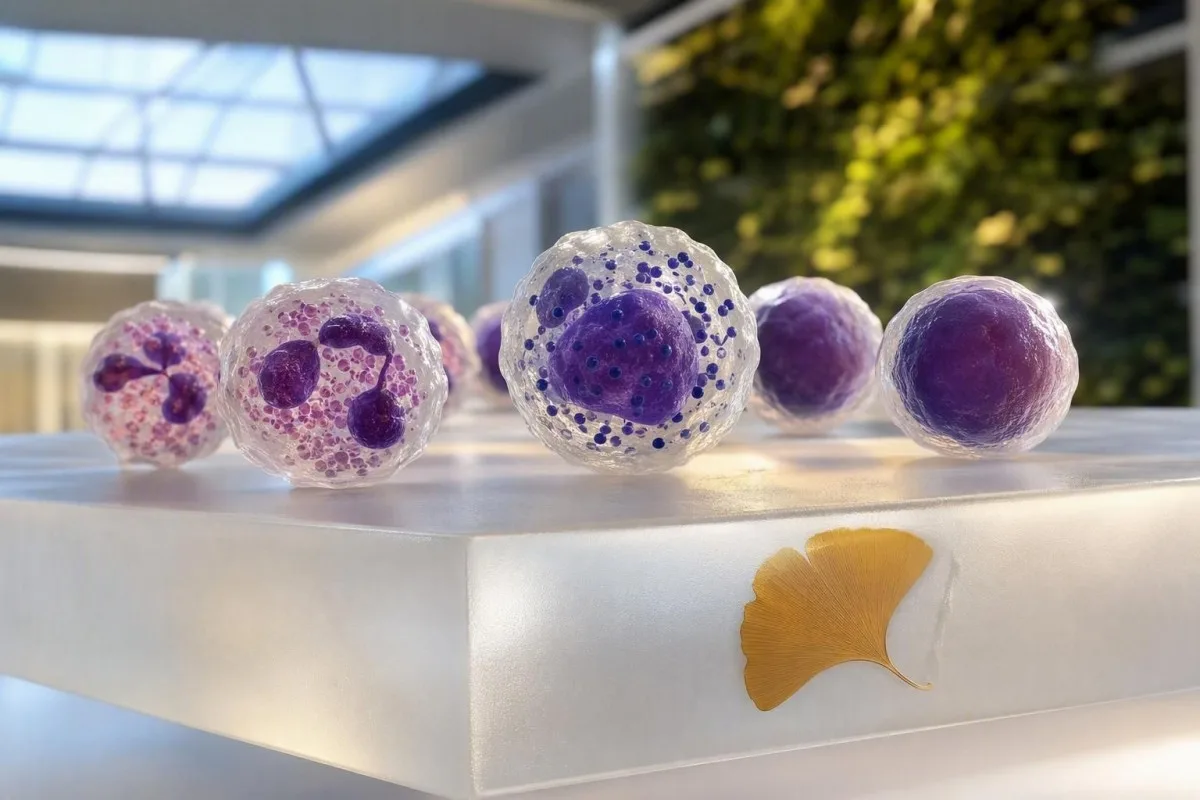
Ko'pgina kattalarda mutlaq bazofillar 0,00–0,10 × 10⁹/L (0–100/µL) ni tashkil qiladi, foiz esa odatda 0–11T da. Yengil g'ayritabiiy foiz ko'pincha boshqa oq qon hujayralarining o'zgarishlarini aks ettiradi; mutlaq bazofil miqdori odatda qo'shimcha tekshiruvlarni aniqlashga yordam beradi.


- Mutlaq bazofillar kattalarda odatda 0,00–0,10 × 10⁹/L (0–100/µL) ni tashkil qiladi va faqat foizga qaraganda klinik jihatdan ko'proq foydalidir.
- Bazofillar foizi odatda oq qon hujayralarining 0–11T ni tashkil qiladi, lekin agar mutlaq miqdori normal bo'lsa ham, neytrofillar yoki limfotsitlar kamayganda ko'payishi mumkin.
- Bolalar chaqaloqlik davridan keyin amaliy yuqori chegarasi 0,10 × 10⁹/L dan foydalanadi, lekin laboratoriyaning yoshga mos intervali ustunlikka ega.
- Takroriy CBC 2–8 hafta ichida allergiyadan, infektsiyadan yoki dori-darmonlarni o'zgartirgandan so'ng, izolyatsiya qilingan, engil bazofiliya holatida maqbuldir.
- Davomiy bazofiliya 0,20 × 10⁹/L dan yuqori bo'lsa, shifokor ko'rigiga loyiqdir, ayniqsa yuqori oq qon hujayralari, kamqonlik, taloq kattalashishi yoki konstitutsion belgilar mavjud bo'lsa.
- Shoshilinch ko‘rib chiqish kuchli leykotsitoz, tushunarsiz vazn yo'qotish, tungi terlash, isitma yoki chap qovurg'a ostidagi erta to'liqlik uchun zarur.
- Nol bazofillar avtomatlashtirilgan differensial hisobda ko'p uchraydi va odatda klinik ahamiyatga ega emas.
- Kantesti AI diagnostika sifatida bitta bayroqni ko'rib chiqish o'rniga, umumiy oq qon hujayralari, eozinofillar, trombotsitlar soni, gemoglobin va oldingi natijalar bilan bir qatorda bazofillarni o'qiydi.
Mutlaq bazofillar va bazofil foizi
Kattalar uchun mutlaq bazofillarning 0,00–0,10 × 10⁹/L odatda normal hisoblanadi, shu bilan birga bazofil foizining 0–1% faqat umumiy oq qon hujayralari sonining bir qismidir. Ikkitasi bir-biriga mos kelmasa, shifokorlar odatda mutlaq natijaga ko'proq ahamiyat berishadi.
Foiz shunchaki yuqori ko'rinishi mumkin, chunki boshqa oq qon hujayrasi turi past. Masalan, 1,5% bazofillar oq qon hujayralari soni 3,0 × 10⁹/L bo'lganida mutlaq soni atigi 0,045 × 10⁹/L hosil bo'ladi - bu ko'plab kattalar intervallariga to'g'ri keladi. Shuning uchun foiz bayrog'i yolg'iz holatda kamdan-kam hollarda to'liq hikoyani aytib beradi.
Hisoblash oddiy: umumiy oq qon hujayralari × bazofil foizi ÷ 100. Oq qon hujayralari soni 12,0 × 10⁹/L va bazofillar 2% bo'lsa, 0,24 × 10⁹/L hosil bo'ladi, bu haqiqiy ko'tarilishdir. Kengroq kontekst uchun bizning yo'riqnomamizga qarang CBC tarkibiga nimalar kirishini.
Kantesti - bu AI qon testi analizatori , bu differensialni taqdim etsa, foizlarni klinik jihatdan solishtirish mumkin bo'lgan mutlaq hisobga aylantiradi. Mening tajribamga ko'ra, bu bitta konvertatsiya muntazam sog'liqni tekshirishdan so'ng sezilarli darajada keraksiz tashvishni oldini oladi.
Nima uchun mutlaq son yanada barqaror
Avtomatik analizatorlar minglab hujayra hodisalarini sanaydi, ammo bazofillar odatda kam uchraydi - ko'pincha 100 ta oq qon hujayrasidan 1 tadan kam. Shu sababli, kichik analitik va biologik o'zgarishlar foizni mutlaq hisobga qaraganda sezilarli darajada ko'proq siljitishi mumkin.
Yoshga qarab amaliy bazofil me'yoriy qiymatlari
Ko'pgina laboratoriyalar bolalikdan kattalikgacha 0,00–0,10 × 10⁹/L bo'lgan mutlaq bazofillar uchun ma'lumotnomalardan foydalanadilar, ammo yangi tug'ilgan chaqaloqlar uchun diapazonlar kengroq bo'lishi mumkin. O'z natijangiz yonida chop etilgan intervallardan foydalaning, chunki ma'lumotnomalar chegaralari analizator usuli va laboratoriyaning mahalliy sog'lom populyatsiyasiga bog'liq.
Hayotning birinchi haftalaridagi chaqaloqlar uchun ba'zi pediatrik laboratoriyalar mutlaq bazofillarni taxminan 0,20–0,40 × 10⁹/L gacha qabul qiladilar. Neonatal immunitet tizimi tezda moslashadi, shuning uchun pediatrik maslahatisiz yangi tug'ilgan chaqaloq natijasiga kattalar chegara qiymatlarini qo'llash kerak emas.
Taxminan 1 yoshdan boshlab, ko'plab xizmatlar 0,10 × 10⁹/L yoki 100/µL ga yaqin amaliy yuqori chegarani qo'llaydilar. Sog'lom bola uchun 0,11 × 10⁹/L natija odatda favqulodda vaziyat emas, balki takroriy va kontekstual savol.
CLSI EP28-A3c laboratoriyalarning universal diapazonni meros qilib olish o'rniga o'zlarining ma'lumotnomalarini qanday aniqlashini yoki tasdiqlashini tushuntiradi (CLSI, 2010). Bizning neytrofillarning yosh diapazoni bo'yicha qo'llanmamiz boshqa differensial hisob uchun ham xuddi shu printsipni ko'rsatadi.
UK, AQSh va xalqaro hisobotlarda bazofil birliklarini tushunish
Basofilning 0.10 × 10⁹/L miqdori 100/µL ga teng, shuning uchun turli birliklarda berilgan hisobotlar bir xil natijani tasvirlashi mumkin. Buyuk Britaniyadagi to'liq qon hisoblagichlari ko'pincha ×10⁹/L ni, AQSh laboratoriyalari esa odatda hujayralar/µL yoki K/µL ni ko'rsatadi.
×10⁹/L ni hujayralar/µL ga aylantirish uchun 1000 ga ko'paytiring. Shunday qilib, 0.05 × 10⁹/L 50/µL ga teng; 0.25 × 10⁹/L 250/µL ga teng. 0.0 deb ko'rsatilgan hisobot haqiqatda hech qanday bazofil yo'qligini isbotlashdan ko'ra, bir o'nlik vergulga qadar yaxlitlangan bo'lishi mumkin.
0.2 K/µL deb ko'rsatilgan qiymat 0.20 × 10⁹/L ga teng. Bu farq muhim, chunki 0.2% va 0.2 K/µL butunlay boshqa o'lchovlardir. Bemoralardagi ikki mamlakatdan olingan hisobotlarni solishtirishda ularni chalkashtirib yuboradi.
Agar hisobotingizda CBC o'rniga FBC deb yozilgan bo'lsa, tarkibiy qismlari ko'p jihatdan bir xil; bizning Buyuk Britaniyadagi to'liq qon hisobi bo'yicha tushuntirish umumiy terminologiyani tarjima qiladi.
Nima uchun bazofil miqdori ko'payadi yoki kamayadi
Yengil bazofiliya ko'pincha allergiyaga, surunkali yallig'lanishga, infeksiyadan tiklanishga yoki dorilarga bog'liq immunitet o'zgarishiga hamroh bo'ladi. Kam son yoki bazofillarning nol bo'lishi odatda ahamiyatli emas, chunki bu hujayralar juda kam miqdorda aylanib yuradi.
Bazofillar IgE uchun retseptorlarni tashuvchi bo'lib, allergen ta'siridan so'ng gistamin va boshqa vositachilarni chiqarishi mumkin. Mavsumiy allergik rinit, surunkali ürtiker, astma va ba'zi teri kasalliklari kichik ko'tarilishga olib kelishi mumkin, ammo normal son ulardan hech birini tasdiqlamaydi yoki inkor etmaydi.
Gipotireoz, yallig'lanishli ichak kasalligi, revmatoid buzilishlar va ba'zi surunkali infeksiyalar ham bazofiliya bilan bog'liq bo'lishi mumkin. Muhim savol “bu qaysi kasallikdan kelib chiqadi?” emas, balki “qanday boshqa signallar mavjud?” - CRP, eozinofillar, belgilar, dori-darmonlar tarixi va traektoriyasi hammasi muhim.
Yuqori IgE va eozinofil soni allergik holatni tasdiqlashi mumkin, izolyatsiya qilingan qichima esa kengroq tekshiruvni talab qilishi mumkin; bizning maqolamiz qichima terisi uchun qon testlari Agar siz yaxshi his qilsangiz va qolgan qon soni yaxshi bo'lsa, vaqtinchalik sababdan keyin yengil, izolyatsiya qilingan bazofil ko'tarilishi uchun 2-8 hafta ichida CBCni takrorlang.
Bazofillar uchun CBC ni qachon takrorlash kerak?
Umumiy oq qon hujayralari soni ko'payganda yoki bir nechta anormal hujayra chiziqlari mavjud bo'lsa, tezroq, odatda kunlar ichida 2 haftagacha takrorlang. Ikki marta to'g'ri vaqtda o'tkazilgan CBClarni solishtirish natijaning saqlanib qolganligini aniqlaydi.
Sovuqdan, allergik rinitten, emlashdan yoki qisqa muddatli steroid kursidan keyin 0,11–0,20 × 10⁹/l mutlaq bazofillar soni uchun men ko'pincha ko'p tekshiruvlar o'rniga bitta sokin takrorlashni afzal ko'raman. Bir xil laboratoriyadan foydalanishga harakat qiling va yaqinda bo'lgan kasallik, yangi dori-darmonlar, chekishdagi o'zgarishlar va steroidlarga duchor bo'lish holatlarini yozib oling.
Qayta tekshiruvdan oldin hisobni “yaxshilashga” urinmang. Rejalashtirish foydali, ammo qo'shimcha vositalar, antihistaminlar, kortikosteroidlar va kuchli chidamlilik mashqlari keng differentsialni o'zgartirishi mumkin. Bizning qon tekshiruvi vaqti umumiy vaqt ta'sirini umumlashtiradi.
Kantesti - bu AI qon tahlili natijalari platformasi joriy differentsialni avvalgi CBClar bilan solishtiradi va bir martalik bayroqdan farqli ravishda doimiy ko'tarilishni bayroq bilan belgilaydi. 3-6 oylik tendentsiya ko'pincha bitta o'nli nuqtadan ko'ra ko'proq ma'lumot beradi.
Ishonchli bazofilni qayta tekshirishga qanday tayyorgarlik ko'rish kerak
Bazofillarni tekshirish odatda och qolishni talab qilmaydi, lekin takroriy CBC eng ko'p talqin qilinadi, qachonki siz o'tkir kasal bo'lmasangiz va namuna olish sharoitlari bir xil bo'lsa. Haddan tashqari o'zgarishlar o'rniga normal suyuqliklar, oddiy ovqatlar va muntazam kunni maqsad qiling.
Agar asosiy darajani aniqlash maqsad qilingan bo'lsa, isitma, sezilarli allergik yallig'lanish yoki odatdagidan qattiq chidamlilik tadbiridan keyingi kun ichida shoshilinch bo'lmagan qayta tekshiruvni rejalashtirmang. O'tkir stress gormonlari va suyuqlik o'zgarishlari bir nechta oq qon hujayralari subsetlarini soatlab kunlab harakatga keltirishi mumkin.
Klinik yoki flebotomistga tizimli kortikosteroidlar, litiy, epinefrin o'z ichiga olgan davolash, yaqinda biologik terapiya va har qanday yangi qo'shimcha haqida ayting. Steroidlar ko'proq qonda aylanib yuruvchi bazofillar va eozinofillarni kamaytiradi, shuning uchun ularni qabul qilganda “normal” natija sizning davolanmagan asosiy darajangizni aks ettirmasligi mumkin.
Namuna sifati hali ham muhim. Klotlangan EDTA namunalari va kechiktirilgan tahlil avtomatlashtirilgan differentsiallarni kamroq ishonchli qilishi mumkin; agar bir nechta CBC qiymatlari birgalikda g'alati ko'rinsa, ko'rib chiqing qayta qon olish qachon kerak bo'lsa.
Yuqori bazofillarni yanada muhimroq ko'rsatadigan CBC namunalari
Bazofiliya ko'proq tashvish tug'diradi, qachonki mutlaq bazofillar 0,20 × 10⁹/l dan oshsa va 11,0 × 10⁹/l dan yuqori bo'lgan doimiy oq qon hujayralari, kamqonlik, trombotsitlar o'zgarishlari yoki yosh hujayralar bilan birga paydo bo'lsa. Kombinatsiya — nafaqat bazofillar — shifokorlar qanchalik tez tekshirishni aniqlaydi.
Men ko'rib chiqqan 44 yoshli bemorda bazofillari 0,28 × 10⁹/l, oq hujayralari 16,4 × 10⁹/l, trombotsitlari 610 × 10⁹/l va erta to'yinganlik bor edi. Bu naqsh haftaning o'zida gematologiya yo'nalishini talab qildi; individual bazofil natijasi tashxisni qo'ymadi, lekin bu muhim ishora edi.
Yuqori neytrofillar va taloq belgilari bilan birga bazofiliya miyeloproliferativ neoplazmalarda, shu jumladan surunkali miyeloid leykemiyada yuzaga kelishi mumkin. Yevropa Leykemiya Tarmoqlari ushbu imkoniyatni ko'rsatadigan klinik va qon-hisob naqshida molekulyar tekshiruv va mutaxassis baholashni tavsiya etadi (Hochhaus va boshqalar, 2020).
Periferik surtma haqiqiy differentsial o'zgarishlarni analizatorning noaniqligidan ajratishi mumkin va chap siljish yoki atipik hujayralarni ko'rsatishi mumkin. Haqida ko'proq o'qing qon saratoni CBC yo'nalishlari abnormal sonni saraton deb hisoblamasdan.
Tez tibbiy yordamga muhtoj bo'lgan belgilar va natijalar
Isitma, tungi terlash, sababsiz vazn yo'qotish, yangi ko'karishlar, hansirash, kuchli charchoq yoki chap-yuqori qorinning to'liqligi bilan bazofiliya uchun shoshilinch tibbiy yordamga murojaat qiling. Bu belgilarning o'zi biroz ko'tarilgan bazofil natijasidan kelib chiqqan emas; ular kengroq klinik rasm baholashni talab qilishini ko'rsatadi.
30 × 10⁹/l dan yuqori umumiy oq son, tez ko'tarilayotgan qiymatlar yoki hisobotda ko'rinadigan yosh granulotsitlar buyurtma qilgan shifokor bilan zudlik bilan muhokama qilinishi kerak. Kuchli bosh og'rig'i, ko'rish o'zgarishi, ko'krak qafasi og'rig'i yoki nevrologik belgilar bazofil sonidan qat'i nazar, favqulodda baholashni talab qiladi.
0,11–0,20 × 10⁹/l bazofillar va hech qanday alomatlari bo'lmagan aksariyat odamlar favqulodda parvarishga muhtoj emas. Shunga qaramay, bu kontekst raqamdan ko'ra ko'proq ahamiyatga ega bo'lgan joylardan biridir, ayniqsa oldingi natijalar 0,02 × 10⁹/l bo'lsa va yangi son ko'tarilayotgan bo'lsa.
Agar sizda hansirash yoki rangsizlik bo'lsa, hamrohlik qiluvchi gemoglobin va trombotsitlar qiymatlari ko'proq ahamiyatga ega bo'lishi mumkin; bizning hansirash qon tekshiruvi bo'yicha qo'llanmamiz.
Past bazofillar yoki nol natijasi nimani anglatadi
0,00 × 10⁹/l bazofil natijasi odatda normaldir va kamdan-kam hollarda yolg'iz o'zi takrorlashni talab qiladi. Bazofillar tabiiyki qonda kam bo'lganligi sababli analizatorning hisobot chegarasidan past bo'lishi mumkin.
O'tkir stress, infeksiya, homiladorlik, gipertireoz va kortikosteroidlar bilan davolash qonda aylanib yuruvchi bazofillarni vaqtincha kamaytirishi mumkin. Biroq, klinik jihatdan ahamiyatli neytropeniya farqli o'laroq, izolyatsiya qilingan past bazofillar bilan bog'liq aniqlangan simptom sindromi mavjud emas.
Analitik muammoni o'tkazib yuborish oson: agar bir nechta bazofil sanalsa, muntazam namuna olishning o'zgarishi keyingi tekshiruvda 0.01 × 10⁹/L ni 0.00 × 10⁹/L ga aylantirishi mumkin. Bu albatta biologik o'zgarish emas.
Doktor Tomas Kleyning amaliy maslahati shuki, CBC ning qolgan qismi yaxshi bo'lsa va tegishli belgilari bo'lmasa, past bazofil bayrog'ini e'tiborsiz qoldiring. Bizning maxsus qo'llanmamiz tushuntiradi nolga teng bo'lgan bazofillar.
Homiladorlik va keyingi hayotda bazofillar
Homiladorlik va qarishning bitta maxsus bazofil chegarasi yo'q; hisobot laboratoriyasining intervali va to'liq oq qon hujayralari namunasi eng yaxshi ma'lumot bo'lib qoladi. Homiladorlik ko'pincha neytrofillar orqali umumiy oq qon hujayralarini ko'paytiradi, bu esa haqiqiy bazofilning kamayishisiz bazofil foizining pastroq ko'rinishiga olib kelishi mumkin.
Homiladorlik paytida, umumiy oq qon hujayralarining 12–15 × 10⁹/L miqdori fiziologik bo'lishi mumkin, ayniqsa homiladorlikning keyingi bosqichlarida, shuning uchun foizga asoslangan talqin yanada ishonchsiz bo'ladi. Mutlaq bazofil soni afzalroq bo'lib qoladi, ammo tashvishlanishga sabab bo'luvchi belgilar hali ham ma'lumotnom intervalidan ustun turadi.
Qarigan kattalarda yangi barqaror bo'lgan 0.20 × 10⁹/L dan yuqori bazofil soni e'tiborga loyiqdir, chunki yosh bilan dorilarning miqdori va ilik kasalliklari ko'proq uchraydi. Bu diagnostika emas; bu shunchaki CBC tendentsiyasi va surtmani ko'rib chiqish chegarasini pasaytiradi.
Homiladorlikka xos boshqa talqin qilish xatolarini ko'rib chiqing homiladorlik bo‘yicha qon tahlili “qizil bayroqlari”.
Dorilar, allergiyalar va bazofil o'zgarishlari
Allergiya belgilari biroz ko'tarilgan bazofillar bilan bir vaqtda paydo bo'lishi mumkin, shu bilan birga tizimli kortikosteroidlar ko'pincha bir necha kun ichida ularni kamaytiradi. Bu na pola allergiyani tasdiqlaydi, na dori vositasining javobgar ekanligini isbotlaydi.
Antihistaminlar asosan gistamin retseptorlarini bloklaydi; ular bazofil sonini ishonchli tarzda normallashtirmaydi. Og'iz orqali qabul qilinadigan prednizolon va boshqa tizimli glyukokortikoidlar oq qon hujayralarini qayta taqsimlashi mumkin, ko'pincha eozinofillar va bazofillarni kamaytiradi va shu bilan neytrofillarni ko'paytiradi.
Litiy kamroq uchraydigan, ammo foydali dori vositasi bo'lishi mumkin, chunki u oq qon hujayralari ishlab chiqarishni ko'paytirishi mumkin. Biologik dorilar, kimyoterapiya va immunomodulyatsion muolajalar hech qachon bitta CBC natijasi tufayli to'xtatilmasligi kerak - buyurgan jamoaga natijaning ularning monitoring rejasiga qanday mos kelishini so'rang.
Xirillash, eshakem, yuzning shishishi yoki hushidan ketish bilan birga ko'tarilgan bazofil soni laboratoriya muammosi sifatida emas, balki simptom muammosi sifatida hal qilinishi kerak. Bizning yuqori IgE qo'llanmamiz allergiya markerlari qayerda yordam berishini va qayerda noto'g'ri yo'naltirishini tushuntiradi.
Davomiy bazofiliya holatida shifokorlar nimani tekshirishadi
Doimiy mutlaq bazofiliya odatda takroriy CBC, qo'lda surtma ko'rigi, dori-darmon va simptomlarni ko'rib chiqishni, keyin esa umumiy oq qon hujayralari yoki boshqa hujayra qatorlari g'ayritabiiy bo'lsa, maqsadli tekshirishni talab qiladi. Keng ko'lamli saraton panellari engil izolyatsiyalangan ko'tarilish uchun odatiy birinchi qadam emas.
Birinchi filial nuqtasi natijaning izolyatsiya qilinganmi yoki yo'qligini aniqlashdir. Barqaror gemoglobin, trombotsitlar, oq qon hujayralari soni va normal surtma konservativ rejalashtirishni kuchli qo'llab-quvvatlaydi; kamqonlik, trombotsitoz, leykotsitoz yoki splenomegaliya baholashni boshqa yo'nalishga yo'naltiradi.
Miyeoloproliferativ kasallik mumkin bo'lganda, shifokorlar BCR::ABL1 testi, JAK2 testi, laktat dehidrogenaza, urat va mutaxassis ko'rigini so'rashlari mumkin. Valent va boshqalar, bazofil va miyeloid neoplazmalarni tasniflashda doimiy bazofiliyani muhim topilma sifatida tasvirlashadi (Valent va boshqalar, 2022).
Kantesti ning neyron tarmogʻi koʻrib chiqishga loyiq kombinatsiyalarni aniqlaydi, ammo CBC dan leykozni tashxislashga imkon bermaydi. Bizning tibbiy validatsiya yondashuvimiz laboratoriya talqini nima uchun klinik nazoratni saqlab qolishi kerakligini tushuntiradi.
Vaziyatni yaxshi tushunib, bazofillarni qanday kuzatish kerak
Maʼnoli bazofillar tendentsiyasi – bu bitta harakatdan 0,04 dan 0,08 × 10⁹/L gacha boʻlgan oʻzgarish emas, balki taqqoslanadigan CBC lar boʻylab barqaror yoʻnalishli oʻzgarishdir. Kattalar uchun 0,10 × 10⁹/L boʻlgan ruxsat etilgan chegarasi bilan, ikkala qiymat ham raqamli jihatdan farqli boʻlishiga qaramay, diapazon ichida qoladi.
Har bir sugʻorishdan keyin mutlaq son, foiz, umumiy oq qon hujayralari, neytrofillar, eozinofillar, gemoglobin, trombotsitlar, sana, yaqinda boʻlgan kasallik va dori-darmonlarni saqlang. Ushbu kichik yozuv sizning shifokoringizga izolyatsiya qilingan qizil bayroqlarning skrinshotlaridan koʻra koʻproq foydali maʼlumot beradi.
Kantesti - bu AI asosidagi qon tahlili analiz vositasi 127+ mamlakatlarida CBC natijalarini longitudinal ravishda taqqoslash uchun ishlatiladi, shu bilan birga manba laboratoriyasining belgilangan oraligʻini saqlaydi. Doktor Tomas Klayn chegaradagi differensial oʻzgarishga maʼno berishdan oldin kamida ikkita taqqoslanadigan natijani koʻrib chiqishni tavsiya etadi.
Foydali qoida: agar mutlaq son 0,10 × 10⁹/L dan past boʻlsa, umumiy oq qon hujayralari soni barqaror boʻlsa va siz oʻzingizni yaxshi his qilsangiz, odatda keyingi rejalashtirilgan qon tekshiruvida muntazam kuzatuv etarli. Bizning qon tahlili farqlari bo‘yicha qo‘llanma yordamida siljish haqiqiy ehtimolini baholang.
Keyingi uchrashuvda qanday savollar berish kerak
Eng yaxshi savol: “Mening mutlaq bazofillarim soni qancha va CBC da yana nima oʻzgargan?” Ushbu ibora suhbatni klinik xavfni oʻzgartiradigan oʻzgaruvchilarga yoʻnaltiradi.
Son yangimi, doimiymi, koʻtarilayotganmi yoki reaktivmi ekanligini; surtma koʻrigi kerakmi; va keyingi CBC qachon olinishi kerakligini soʻrang. Yaqinda boʻlgan infektsiyalar, allergiya simptomlari, dori-darmonlar, qoʻshimchalar, sayohatlar va qon kasalliklari oilaviy tarixi roʻyxatini keltiring.
Agar sizda 0,20 × 10⁹/L dan yuqori mutlaq son va umumiy oq qon hujayralari koʻtarilgan boʻlsa, gematologiya yordami tegishli ekanligini soʻrang. Agar son diapazondan biroz yuqori va izolyatsiya qilingan boʻlsa, eng yomoni deb taxmin qilish oʻrniga, qaysi oʻzgarish erta tekshiruvni keltirib chiqarishini soʻrang.
Kantesti ning shifokor tomonidan koʻrib chiqilgan taʼlim standartlari bizning Tibbiy maslahat kengashi. orqali nazorat qilinadi. 30-avgust, 2026-yil holatiga koʻra, eng xavfsiz yondashuv oddiygina qolmoqda: mutlaq sonni talqin qiling, barqarorligini tasdiqlang va faqat kengroq naqsh bunga loyiq boʻlgandagina tezroq harakat qiling.
Tez-tez so'raladigan savollar
Kattalardagi normal bazofillar soni qancha?
Kattalar uchun mutlaq bazofillarning umumiy ma'lumotnomasi 0,00–0,10 × 10⁹/L ni tashkil qiladi, bu esa 0–100 hujayra/µL ga teng. Ko'pgina laboratoriyalar 0–1% bazofil foizini xabar qiladi, ammo umumiy oq qon hujayralari soni o'zgarganda foiz chalg'itishi mumkin. O'zingizning laboratoriyangiz tomonidan chop etilgan ma'lumotnomasi ustunlikka ega, chunki usullar va mahalliy ma'lumotnomasi populyatsiyalari farq qiladi. 0,11 × 10⁹/L izolyatsiya qilingan natijasi odatda shoshilinch yordamga qaraganda kontekstni yoki rejalashtirilgan takrorlashni talab qiladi.
2% bazofillari yuqorimi?
Leykotsitlar sonining umumiy miqdori bilan birgalikda baholash uchun 2% ga teng bo'lgan bazofil foizi ko'pgina laboratoriya foiz intervallaridan yuqori, ammo bu xavfni baholash uchun etarli emas. Har bir litrda 4,0 × 10⁹ ta oq qon hujayrasi bo'lganda, 2% mutlaq bazofil miqdori 0,08 × 10⁹/L ga teng bo'ladi, bu ko'pincha normal holatdir. Har bir litrda 15,0 × 10⁹ ta oq qon hujayrasi bo'lganda, xuddi shu 2% 0,30 × 10⁹/L ga teng bo'ladi va klinik ko'rib chiqishni talab qiladi. Foizni talqin qilishdan oldin har doim mutlaq bazofil miqdorini aniqlang.
Qonda bazofillarning ko'payishi sababli CBC ni qachon takrorlash kerak?
Kasallikdan, allergik zo'rayishdan yoki dorilarni o'zgartirishdan keyin taxminan 0,11–0,20 × 10⁹/L mild isolated basophilia uchun 2–8 hafta ichida takroriy CBC qabul qilinadi. Agar umumiy leykotsitlar soni ortib borayotgan bo'lsa, bazofil miqdori 0,20 × 10⁹/L dan oshsa yoki gemoglobin va trombotsitlar ham g'ayritabiiy bo'lsa, tezroq takrorlang. Analizator usullari va mos yozuvlar intervallari farq qilishi mumkinligi sababli, iloji bo'lsa, bir xil laboratoriyadan foydalaning. Isitma, vazn yo'qotish, tunlari terlash, ko'karishlar yoki qorinning yuqori chap qismida to'liqlik hissi odatiy qayta tekshiruvni kutishdan ko'ra, tez tibbiy ko'rikni talab qiladi.
Basofillar nolga teng bo'lsa xavflimi?
0,00 × 10⁹/L bazofil miqdori odatda xavfli emas va agar CBC ning qolgan qismi normal bo'lsa, odatda qo'shimcha tekshiruvni talab qilmaydi. Bazofillar kam uchraydigan hujayralardir, shuning uchun muntazam avtomatlashtirilgan differensial hisobotda nol qayd etilishi mumkin, chunki aniqlangan son yumalash yoki hisobot aniqligining pastki chegarasidan pastga tushadi. Kortikosteroidlar, o'tkir stress, homiladorlik va infeksiyalar qon aylanishidagi bazofillarni vaqtincha kamaytirishi mumkin. Shifokorlar izolyatsiya qilingan past bazofil miqdoridan immunitet tanqisligini tashxis qilmaydilar.
Allergiyalar bazofilni ko'paytirishi mumkinmi?
Allergik holatlar bazofillarning biroz ko'tarilishi bilan birga kechishi mumkin, chunki bazofillar IgE bilan bog'liq immunitet javoblarida ishtirok etadi va gistamin kabi mediatorlarni chiqaradi. Bazofillarning ko'p miqdorda bo'lishi allergiyaning sabab bo'lganligini isbotlamaydi va muhim allergik belgilari bo'lgan ko'pchilik odamlarda bazofillarning normal soni kuzatiladi. Allergik belgilar bartaraf etilgandan keyin ham 0.20 × 10⁹/L dan yuqori bo'lgan hisoblar to'liq CBC bilan birgalikda ko'rib chiqilishi kerak. Eozinofillar, umumiy IgE, teri belgilari va dori-darmonlarga duchor bo'lish yanada foydali kontekstni ta'minlashi mumkin.
Leykemiyani ko'rsatadigan bazofillar soni qancha?
Leukaemia tashxisini qo‘yish uchun bitta ham basofil soni yetarli emas, ammo leykoz, kamqonlik, trombotsit anomalilari, yetilmagan granulotsitlar yoki taloq belgilari bilan birga doimiy ravishda 0,20 × 10⁹/L dan yuqori bo‘lgan mutlaq bazofiliya tibbiy tekshiruvni talab qiladi. Bazofiliya surunkali miyeloid leykoz va boshqa mieloproliferativ neoplazmalarda uchray olishi mumkin, ammo reaktiv sabablar engil izolyatsiyalangan ko‘tarilishlarda ko‘proq uchraydi. Shifokorlar kengroq rasm uni qo‘llab-quvvatlagandagina qon surtmasi va BCR::ABL1 kabi maqsadli molekulyar testlarni buyurishlari mumkin. Normal umumiy oq qon hujayralari soni va barqaror CBC xavotir darajasini sezilarli darajada o‘zgartiradi.
Bugun AI asosidagi qon tahlilini tahlil qilishni oling
Kantesti’ga tezkor va aniq laboratoriya tahlili uchun ishonadigan butun dunyo bo‘ylab 2 milliondan ortiq foydalanuvchiga qo‘shiling. Qon tahlili natijalaringizni yuklang va soniyalar ichida 15,000+ biomarkerlarining to‘liq talqinini oling.
📚 Havola qilingan ilmiy tadqiqot nashrlari
Klein, T., Mitchell, S., & Weber, H. (2026). B manfiy qon guruhi, LDH qon tahlili va retikulotsitlar soni bo‘yicha qo‘llanma. Kantesti AI tibbiy tadqiqoti.
Klein, T., Mitchell, S., & Weber, H. (2026). Ro'za tutgandan keyin diareya, najasda qora dog'lar va oshqozon-ichak trakti bo'yicha qo'llanma 2026. Kantesti AI tibbiy tadqiqoti.
📖 Tashqi tibbiy manbalar
Klinik va laboratoriya standartlari instituti (2010). Klinik laboratoriyada ruxsat etilgan intervallarni aniqlash, oʻrnatish va tasdiqlash. CLSI EP28-A3c.
⚕️ Tibbiy ogohlantirish
Ushbu maqola faqat ta’lim maqsadlari uchun mo‘ljallangan va tibbiy maslahatni anglatmaydi. Tashxis va davolash bo‘yicha qarorlar uchun har doim malakali sog‘liqni saqlash mutaxassisiga murojaat qiling.
E-E-A-T ishonch signallari
Tajriba
Shifokor boshchiligidagi laboratoriya talqin qilish ish jarayonlarini klinik ko‘rib chiqish.
Tajriba
Laboratoriya tibbiyoti biomarkerlarning klinik kontekstda qanday o‘zini tutishini yoritadi.
Vakolatlilik
Dr. Tomas Klein tomonidan yozilgan, Dr. Sarah Mitchell va Prof. Dr. Hans Weber tomonidan ko‘rib chiqilgan.
Ishonchlilik
Xavotirni kamaytirish uchun aniq keyingi qadamlar yo‘nalishlari bilan dalillarga asoslangan talqin.