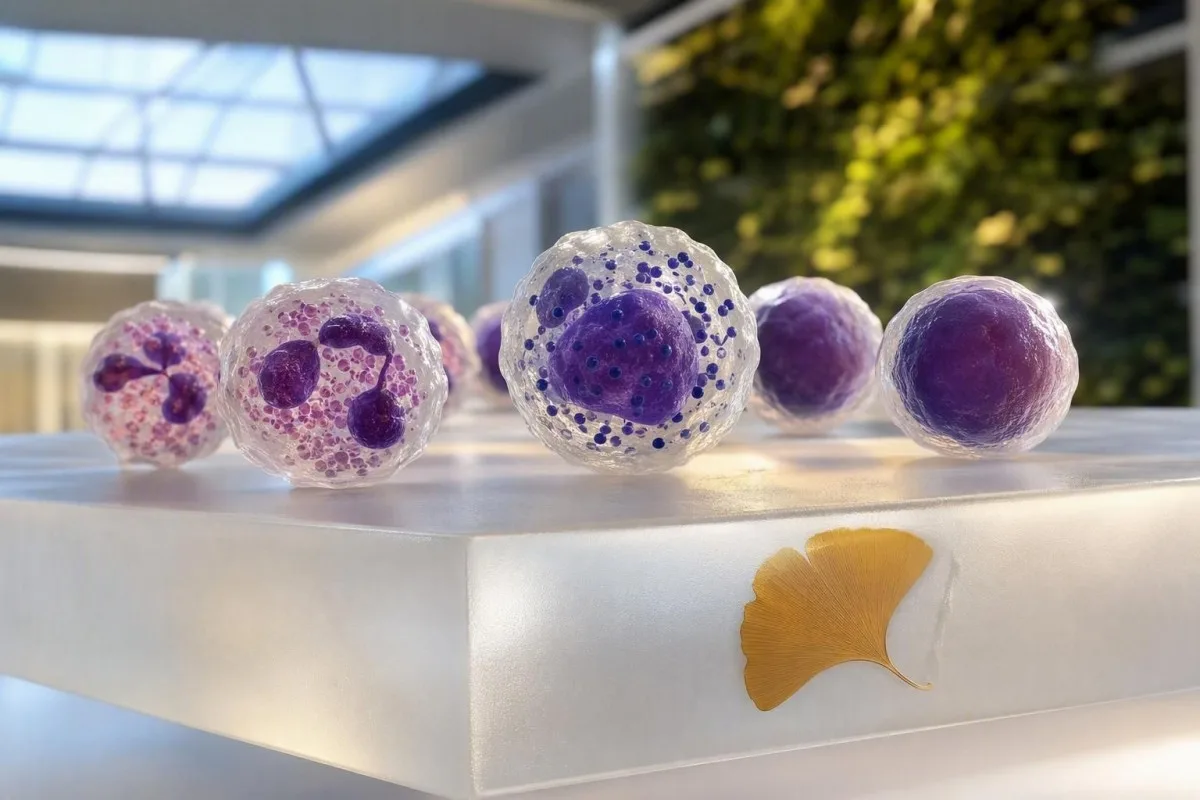
Çoğu yetişkinde mutlak bazofil sayısı 0.00–0.10 × 10⁹/L (0–100/µL) iken, yüzdesi genellikle 0–1%'dir. Hafif anormal bir yüzdesi genellikle diğer beyaz kürelerdeki değişimleri yansıtır; mutlak bazofil sayısı genellikle takip için yol gösteren sonuçtur.


- Mutlak bazofiller yetişkinlerde genellikle 0.00–0.10 × 10⁹/L (0–100/µL) arasındadır ve tek başına yüzdeden daha klinik olarak kullanışlıdır.
- Bazofil yüzdesi genellikle beyaz kürelerin 0–1%'idir, ancak mutlak sayı normal olsa bile nötrofil veya lenfositler düştüğünde yükselebilir.
- Çocuklar bebeklikten sonra genellikle 0.10 × 10⁹/L olan pratik üst sınırı kullanır, ancak laboratuvarın yaşa özgü aralığı önceliklidir.
- Tekrarlanan bir CBC 2–8 hafta içinde, alerji, enfeksiyon veya ilaç değişikliği sonrası izole, hafif bazofili için makuldür.
- Kalıcı bazofili 0.20 × 10⁹/L'nin üzerinde, özellikle yüksek beyaz küreler, anemi, splenomegali veya konstitüsyonel belirtilerle birlikte görülmesi klinisyen tarafından değerlendirilmelidir.
- Acil değerlendirme belirgin lökositoz, açıklanamayan kilo kaybı, şiddetli gece terlemeleri, ateş veya sol kaburgaların altındaki erken dolgunluk için gereklidir.
- Sıfır bazofiller otomatik bir yaymada görülmesi yaygındır ve genellikle klinik önemi yoktur.
- Kantesti AI tanıyı tek bir bayrak olarak ele almak yerine bazofilleri, toplam beyaz küreler, eozinofiller, trombosit sayısı, hemoglobin ve önceki sonuçlarla birlikte okur.
Mutlak bazofiller ve bazofil yüzdesi
0.00–0.10 × 10⁹/L mutlak bazofiller yetişkinlerde genellikle normaldir, oysa bazofil yüzdesi 0–1% toplam beyaz küre sayısının yalnızca bir kısmıdır. İkisi uyuşmadığında, klinisyenler genellikle mutlak sonuca daha fazla ağırlık verir.
Bir yüzdesi, başka bir beyaz küre türü düşük olduğu için yüksek görünebilir. Örneğin, 3.0 × 10⁹/L'lik bir beyaz küre sayımı ile %1.5% bazofil, yalnızca 0.045 × 10⁹/L'lik bir mutlak sayı üretir—bu, birçok yetişkin aralığına iyi uyar. Bu nedenle, yalnızca bir yüzde bayrağı nadiren tüm resmi anlatır.
Hesaplama basittir: toplam beyaz küreler × bazofil yüzdesi ÷ 100. 12.0 × 10⁹/L beyaz küre sayısı ve %2% bazofil, 0.24 × 10⁹/L verir, bu da gerçek bir yükselmedir. Daha geniş bağlam için, kaynak rapor bir diferansiyel sağladığında yüzdeleri klinik olarak karşılaştırılabilir mutlak sayılara dönüştüren kılavuzumuza bakın. Tecrübelerime göre, bu dönüşüm rutin bir sağlık kontrolünden sonra gereksiz alarmın önemli bir kısmını önler. CBC’nin neleri içerdiği.
Kantesti bir AI kan testi analizörü Rapor farklı bir değer sunduğunda yüzdeleri klinik olarak karşılaştırılabilir mutlak sayılara dönüştüren. Tecrübelerime göre, bu dönüşüm rutin bir sağlık kontrolünden sonra gereksiz yere endişelenmeyi önemli ölçüde engelliyor.
Mutlak sayının neden daha istikrarlı olduğu
Otomatik analizörler binlerce hücresel olayı sayar, ancak bazofiller normalde nadirdir—genellikle her 100 beyaz küreden 1'den azdır. Bu nedenle, küçük analitik ve biyolojik kaymalar, yüzdeyi mutlak sayıdan daha belirgin bir şekilde hareket ettirebilir.
Yaşa göre pratik bazofil referans aralıkları
Çoğu laboratuvar, çocukluktan yetişkinliğe kadar 0.00–0.10 × 10⁹/L'lik bir mutlak bazofil referans aralığı kullanır, ancak yenidoğan aralıkları daha geniş olabilir. Kendi sonucunuzun yanında yazılı olan aralığı kullanın, çünkü referans sınırları analizör yöntemine ve laboratuvarın yerel sağlıklı popülasyonuna bağlıdır.
Hayatın ilk haftalarındaki bebekler için, bazı pediatrik laboratuvarlar yaklaşık 0.20–0.40 × 10⁹/L'ye kadar mutlak bazofilleri kabul eder. Neonatal bağışıklık sistemi hızla uyum sağlamaktadır, bu nedenle yetişkin kesme noktaları, pediatrik girdi olmadan yenidoğan sonucuna uygulanmamalıdır.
Yaklaşık 1 yaşından itibaren, birçok hizmet pratik bir üst sınır olarak 0.10 × 10⁹/L veya 100/µL uygular. Normal toplam beyaz küre sayısına sahip gelişmekte olan bir çocukta 0.11 × 10⁹/L sonucu genellikle bir acil durum değil, tekrarlama ve bağlam sorgusu gerektirir.
CLSI EP28-A3c, laboratuvarların neden evrensel bir aralık ödünç almak yerine kendi referans aralıklarını kurduklarını veya doğruladıklarını açıklar (CLSI, 2010). Bizim nötrofil yaş aralığı kılavuzumuz başka bir diferansiyel sayım için aynı prensibi gösterir.
İngiltere, ABD ve uluslararası raporlarda bazofil birimlerini anlama
0.10 × 10⁹/L bazofil sayısı 100/µL'ye eşittir, bu nedenle farklı birimler kullanan raporlar aynı sonucu tanımlayabilir. Birleşik Krallık tam kan sayımları genellikle ×10⁹/L, ABD laboratuvarları ise yaygın olarak hücre/µL veya K/µL kullanır.
×10⁹/L'yi hücre/µL'ye dönüştürmek için 1.000 ile çarpın. Böylece 0.05 × 10⁹/L 50/µL'ye eşittir; 0.25 × 10⁹/L 250/µL'ye eşittir. 0.0 olarak listelenen bir rapor, kelimenin tam anlamıyla hiç bazofil olmadığı kanıtlanmaktan ziyade bir ondalık basamağa yuvarlanmış olabilir.
0.2 K/µL olarak listelenen bir değer 0.20 × 10⁹/L'ye eşittir. Bu ayrım önemlidir çünkü 0.21 K/µL ve 0.2 K/µL tamamen farklı ölçümlerdir. Hastalar düzenli olarak iki ülke raporlarını karşılaştırırken bunları karıştırırlar.
Raporunuz CBC yerine FBC diyorsa, bileşenler büyük ölçüde aynıdır; bizim Birleşik Krallık tam kan sayımı açıklayıcımız yaygın terminolojiyi çevirir.
Bazofil sayılarının neden yükseldiği veya düştüğü
Hafif bazofili en sık alerji, kronik iltihaplanma, enfeksiyondan iyileşme veya ilaçla ilişkili bir immün kaymaya eşlik eder. Düşük bir sayı veya sıfır bazofil genellikle anlamlı değildir çünkü bu hücreler çok az sayıda dolaşır.
Bazofiller IgE için reseptörler taşır ve alerjen maruziyetinden sonra histamin ve diğer aracılar salgılayabilir. Mevsimsel alerjik rinit, kronik ürtiker, astım ve bazı cilt hastalıkları küçük bir yükselişle birlikte görülebilir, ancak normal bir sayı bunların hiçbirini dışlamaz veya dahil etmez.
Hipotiroidizm, inflamatuar bağırsak hastalığı, romatizmal bozukluklar ve bazı kronik enfeksiyonlar da bazofili ile ilişkili olabilir. Faydalı soru “bu hangi hastalığa neden olur?” değil, “başka hangi sinyaller mevcuttur?”—CRP, eozinofiller, semptomlar, ilaç öyküsü ve gidişatın hepsi önemlidir.
Yüksek bir IgE ve eozinofil sayısı alerjik bir paterni destekleyebilirken, izole kaşıntı daha geniş bir inceleme gerektirebilir; kaşıntılı cilt için kan testleri hakkındaki makalemiz CBC testinin pratik sınırlarını açıklar. Geçici bir tetikleyiciden sonra hafif, izole bir bazofil yükselmesi için 2-8 hafta içinde bir CBC tekrarlayın, yeterince iyi hissediyorsanız ve sayımın geri kalanı rahatlatıcıysa.
Bazofiller için ne zaman bir CBC tekrarı yapılmalı?
Toplam beyaz küre sayısı artıyorsa veya birden fazla anormal hücre hattı varsa daha erken, genellikle günler ila 2 hafta içinde tekrarlayın. İyi zamanlanmış iki CBC'yi karşılaştırmak, bir bulgunun devam edip etmediğini netleştirir.
Soğuk algınlığı, saman nezlesi alevlenmesi, aşılama veya kısa steroid tedavisinden sonra 0.11–0.20 × 10⁹/L mutlak bazofil sayısı için, genellikle bir dizi test yerine sakin bir tekrarlamayı tercih ederim. Aynı laboratuvarı kullanmaya çalışın ve son hastalıkları, yeni ilaçları, sigara değişikliklerini ve steroid maruziyetini kaydedin.
Yeniden testten önce sayımı “iyileştirmeye” çalışmayın. Hidrasyon mantıklıdır, ancak takviyeler, antihistaminikler, kortikosteroidler ve yoğun dayanıklılık egzersizi daha geniş bir ayrımı değiştirebilir. Bizim kan testi zaman çizelgesi rehberi yaygın zamanlama etkilerini detaylandırır.
Kantesti bir AI kan tahlili yorumlama platformu mevcut ayrımı önceki CBC'lerle karşılaştırır ve tutarlı bir yükselişi tek seferlik bir işaretten farklı olarak işaretler. 3-6 aylık bir eğilim genellikle tek bir ondalık noktadan daha bilgilendiricidir.
Güvenilir bir bazofil yeniden testine nasıl hazırlanılır
Bazofil testi genellikle oruç gerektirmez, ancak tekrarlanan bir CBC, akut olarak hasta olmadığınızda ve toplama koşulları benzer olduğunda en iyi şekilde yorumlanabilir. Aşırı değişiklikler yerine normal sıvılar, sıradan öğünler ve rutin bir gün hedefleyin.
Temel durumu belirlemek amaçsa, acil olmayan bir yeniden testi ateş, önemli alerjik atak sırasında veya olağandışı zorlu bir dayanıklılık etkinliğinin ertesi günü planlamaktan kaçının. Akut stres hormonları ve sıvı kaymaları, saatlerce veya günlerce birkaç beyaz kan hücresi alt kümesini hareket ettirebilir.
Kliniğe veya kan alma görevlisine sistemik kortikosteroidler, lityum, epinefrin içeren tedaviler, son biyolojik tedavi ve herhangi bir yeni takviye hakkında bilgi verin. Steroidler daha yaygın olarak dolaşan bazofil ve eozinofilleri düşürür, bu nedenle bunları alırken “normal” bir sonuç tedavi edilmemiş temel durumunuzu temsil etmeyebilir.
Numune kalitesi hala önemlidir. Pıhtılaşmış EDTA numuneleri ve gecikmiş analiz, otomatik ayırımları daha az güvenilir hale getirebilir; birkaç CBC değeri birlikte tuhaf görünüyorsa, gözden geçirin yeniden kan alma işlemi gerektiğinde.
Yüksek bazofilleri daha anlamlı kılan CBC örüntüleri
Mutlak bazofiller 0.20 × 10⁹/L'yi aştığında ve sürekli 11.0 × 10⁹/L'nin üzerinde beyaz kan hücreleri, anemi, trombosit değişiklikleri veya olgunlaşmamış hücrelerle birlikte ortaya çıktığında bazofili daha endişe vericidir. Sadece bazofiller değil, bu kombinasyon hekimlerin ne kadar hızlı araştırma yapacağını belirler.
Gözden geçirdiğim 44 yaşındaki bir hastada 0.28 × 10⁹/L bazofil, 16.4 × 10⁹/L beyaz hücre, 610 × 10⁹/L trombosit ve erken tokluk vardı. Bu tablo aynı hafta hematoloji yolu gerektiriyordu; bireysel bazofil sonucu tanıyı koydurmadı, ancak önemli bir ipucuydu.
Yüksek nötrofiller ve dalak belirtileri ile birlikte bazofili, kronik miyeloid lösemi dahil olmak üzere miyeloproliferatif neoplazmlarda ortaya çıkabilir. European LeukemiaNet, klinik ve kan sayımı paterni bu olasılığı artırdığında moleküler test ve uzman değerlendirmesi önerir (Hochhaus ve ark., 2020).
Periferik yayma, gerçek ayrım değişikliklerini analizör belirsizliğinden ayırt edebilir ve sola kayma veya atipik hücreleri gösterebilir. Hakkında daha fazla bilgi edinin kan kanseri CBC yolları anormal bir sayımın kanser anlamına geldiğini varsaymadan.
Acil tıbbi müdahale gerektiren belirti ve sonuçlar
Ateş, gece terlemeleri, açıklanamayan kilo kaybı, yeni morarma, nefes darlığı, şiddetli yorgunluk veya karın üst sol bölgede dolgunluk ile birlikte bazofili için acil tıbbi değerlendirme isteyin. Bu belirtiler hafif yükselmiş bir bazofil sonucundan kaynaklanmaz; daha geniş klinik tablonun değerlendirilmesi gerektiğini gösterirler.
30 × 10⁹/L'nin üzerindeki toplam beyaz hücre sayısı, hızla artan değerler veya raporda görünen olgunlaşmamış granülositler acilen isteyen hekimle görüşülmelidir. Şiddetli baş ağrısı, görme değişikliği, göğüs ağrısı veya nörolojik belirtiler, bazofil sayısından bağımsız olarak acil değerlendirme gerektirir.
0.11–0.20 × 10⁹/L bazofil ve herhangi bir belirtisi olmayan çoğu insan acil bakıma ihtiyaç duymaz. Yine de, bu, bağlamın sayıdan daha önemli olduğu alanlardan biridir, özellikle önceki sonuçlar 0.02 × 10⁹/L ise ve yeni sayı artıyorsa.
Eğer ayrıca nefes darlığı veya solukluk varsa, eşlik eden hemoglobin ve trombosit değerleri daha acil önem taşıyabilir; bkz. nefes darlığı kan tahlili kılavuzumuz.
Düşük bazofillerin veya sıfır sonucunun anlamı
0.00 × 10⁹/L bazofil sonucu genellikle normaldir ve nadiren tek başına tekrarlanması gerekir. Bazofiller, dolaşımda doğal olarak seyrek oldukları için analizörün raporlama eşiğinin altında olabilir.
Akut stres, enfeksiyon, gebelik, hipertiroidi ve kortikosteroid tedavisi, dolaşımdaki bazofilleri geçici olarak azaltabilir. Ancak klinik olarak anlamlı nötropeninin aksine, izole düşük bazofillerin neden olduğu tanınmış bir semptom sendromu yoktur.
Analitik sorun gözden kaçırmak kolaydır: yalnızca az sayıda bazofil sayılırsa, rutin örnekleme değişkenliği sonraki bir çekimde 0.01 × 10⁹/L'yi 0.00 × 10⁹/L'ye dönüştürebilir. Bu zorunlu olarak biyolojik bir değişiklik değildir.
Dr. Thomas Klein'in pratik tavsiyesi, CBC'nin geri kalanı sağlam olduğunda ve ilgili belirtiler olmadığında düşük bazofil bayrağını görmezden gelmektir. Özel rehberimiz açıklar bazofiller sıfırda.
Gebelikte ve ileri yaşlarda bazofiller
Gebelik ve yaşlanmanın tek bir özel bazofil kesme noktası yoktur; raporlama laboratuvarının aralığı ve tüm beyaz küre deseni en iyi referans olarak kalır. Gebelik, nötrofillerin artmasıyla toplam beyaz küreleri yaygın olarak yükseltebilir, bu da gerçek bir bazofil azalması olmadan bazofil yüzdesinin daha düşük görünmesine neden olabilir.
Gebelik sırasında, özellikle gebeliğin ilerleyen dönemlerinde, 12–15 × 10⁹/L'lik toplam beyaz küre sayımı fizyolojik olabilir, bu da yüzdeye dayalı yorumlamayı daha da güvenilmez hale getirir. Mutlak bazofil sayısı tercih edilmeye devam eder, ancak endişe verici belirtiler hala referans aralığının önüne geçer.
Yaşlı yetişkinlerde, 0.20 × 10⁹/L'nin üzerindeki yeni kalıcı bir bazofil sayısı dikkat çekmeyi hak eder çünkü yaşla birlikte ilaç yükü ve kemik iliği bozuklukları daha yaygın hale gelir. Bu onu teşhis koydurmaz; sadece CBC eğilimini ve yaymasını incelemek için eşiği düşürür.
Diğer gebeliğe özgü yorumlama tuzakları için gözden geçirin kan testi kırmızı bayrakları.
İlaçlar, alerjiler ve bazofil dalgalanmaları
Alerji belirtileri hafif yüksek bazofillerle aynı zamana denk gelebilirken, sistemik kortikosteroidler genellikle onları günler içinde düşürür. Ne desen alerji tanısını doğrular ne de bir ilacın sorumlu olduğunu kanıtlar.
Antihistaminikler öncelikle histamin reseptörlerini bloke eder; bazofil sayısını güvenilir bir şekilde normalleştirmezler. Oral prednizolon ve diğer sistemik glukokortikoidler, beyaz küreleri yeniden dağıtabilir, sıklıkla eozinofilleri ve bazofilleri azaltırken dolaşımdaki nötrofilleri artırabilir.
Lityum, beyaz küre üretimini artırabilen daha az yaygın ancak yararlı bir ilaç ipucudur. Biyolojik ilaçlar, kemoterapi ve immün modüle edici tedaviler asla tek bir CBC sonucu nedeniyle durdurulmamalıdır—reçete eden ekibe sonucun izleme planlarına nasıl uyduğunu sorun.
Hırıltı, kurdeşen, yüz şişmesi veya baygınlık ile birlikte yükselmiş bir bazofil sayısı, bir laboratuvar bulmacası olarak değil, bir semptom sorunu olarak yönetilmelidir. Bizim yüksek IgE rehberimiz alerji belirteçlerinin nerede yardımcı olduğunu ve nerede yanıltıcı olduğunu açıklar.
Kalıcı bazofili olan hastalarda klinisyenlerin neler kontrol ettiği
Kalıcı mutlak bazofili, genellikle tekrarlanan bir CBC, manuel yayma incelemesi, ilaç ve semptom incelemesi, ardından toplam beyaz küre sayısı veya diğer hücre hatları anormal ise hedeflenen testleri ister. Geniş kanser panelleri, hafif izole bir artış için olağan ilk adım değildir.
İlk dallanma noktası, sonucun izole olup olmadığıdır. Stabil bir hemoglobin, trombositler, beyaz küre sayısı ve normal yayma, muhafazakar bir planı güçlü bir şekilde destekler; anemi, trombositoz, lökositoz veya splenomegali, değerlendirmeyi farklı bir yöne iter.
Miyeloproliferatif bir bozukluk makul olduğunda, klinisyenler BCR::ABL1 testi, JAK2 testi, laktat dehidrogenaz, ürik asit ve uzman incelemesi isteyebilirler. Valent ve ark. bazofilik ve miyeloid neoplazmların sınıflandırılmasında kalıcı bazofili anlamlı bir bulgu olarak tanımlamaktadır (Valent ve ark., 2022).
Kantesti’in sinir ağı, incelemeyi gerektiren kombinasyonları belirler ancak bir CBC'den lösemi teşhisi koymaz. Bizim tıbbi doğrulama yaklaşımımız laboratuvar yorumlamasının neden klinik gözetimi sürdürmesi gerektiğini açıklar.
Aşırı tepki vermeden bazofilleri nasıl takip etmeli
Anlamlı bir bazofil eğilimi, tek bir hareketten ziyade, karşılaştırılabilir CBC'ler boyunca sürekli bir yönlü değişimdir, 0.04'ten 0.08 × 10⁹/L'ye. Yetişkin referans sınırı 0.10 × 10⁹/L ile, sayısal olarak farklı olmalarına rağmen her iki değer de aralık içinde kalmaktadır.
Mutlak sayım, yüzde, toplam beyaz hücre, nötrofil, eozinofil, hemoglobin, trombosit, tarih, yakın zamanda geçirilen hastalık ve ilaçları her örneklemeden sonra kaydedin. Bu küçük kayıt, izole kırmızı bayraklardan oluşan ekran görüntülerinden daha kullanışlı bilgi sağlar.
Kantesti bir Yapay zekâ destekli kan testi analiz aracı 127+ ülkede, kaynak laboratuvarın belirttiği aralığı koruyarak CBC sonuçlarını boylamsal olarak karşılaştırmak için kullanılmıştır. Dr. Thomas Klein, sınırdaki bir diferansiyel değişiklik anlamı atamadan önce en az iki karşılaştırılabilir sonucu gözden geçirmeyi önermektedir.
Kullanışlı bir kural: mutlak sayım 0.10 × 10⁹/L'nin altında kalırsa, toplam beyaz hücre sayısı stabildir ve kendinizi iyi hissediyorsanız, genellikle bir sonraki planlanmış kan testinizde rutin takip yeterlidir. Bizim kan tahlili farkı kılavuzumuz kullanarak bir değişimin gerçek olup olmadığını değerlendirin.
Bir takip randevusunda sorulacak sorular
En iyi takip sorusu şudur: “Mutlak bazofil sayımım nedir ve CBC'de başka neler değişti?” Bu ifade, konuşmayı klinik riski gerçekten değiştiren değişkenlere yönlendirir.
Sayımın yeni mi, kalıcı mı, artıyor mu yoksa reaktif mi olduğunu; bir yayma incelemesinin gerekip gerekmediğini ve bir sonraki CBC'nin ne zaman alınması gerektiğini sorun. Yakın zamanda geçirilmiş enfeksiyonlar, alerji belirtileri, ilaçlar, takviyeler, seyahatler ve ailede kan hastalıkları öyküsü listesi getirin.
Mutlak sayımınız 0.20 × 10⁹/L'nin üzerindeyse ve toplam beyaz hücreleriniz yüksekse, hematoloji görüşünün uygun olup olmadığını sorun. Sayım sadece biraz aralığın üzerindeyse ve izole ise, en kötüsünü varsaymak yerine daha erken test yapmayı tetikleyecek değişikliğin ne olduğunu sorun.
Kantesti'nin hekim tarafından incelenen eğitim standartları, bizim Tıbbi Danışma Kurulu. aracılığıyla denetlenmektedir. 30 Ağustos 2026 itibarıyla en güvenli yaklaşım basittir: mutlak sayımı yorumlayın, kalıcılığı doğrulayın ve yalnızca daha geniş örüntü gerektirdiğinde daha hızlı hareket edin.
Sıkça Sorulan Sorular
Yetişkinlerde normal bazofil sayısı kaçtır?
Mutlak bazofiller için yaygın yetişkin referans aralığı 0,00–0,10 × 10⁹/L'dir, bu da 0–100 hücre/µL'ye eşittir. Çoğu laboratuvar %0–11 oranında bazofil yüzdesi bildirir, ancak total beyaz küre sayısı değiştiğinde yüzde yanıltıcı olabilir. Kendi laboratuvarınızın bastığı referans aralığı, yöntemler ve yerel referans popülasyonları farklılık gösterdiği için önceliklidir. 0,11 × 10⁹/L'lik izole bir sonuç genellikle acil bakım yerine bağlam veya planlanmış tekrarlama gerektirir.
2% bazofilleri yüksek mi?
2%'lik bazofil yüzdesi birçok laboratuvarın yüzde aralıklarının üzerindedir, ancak riski değerlendirmek için toplam beyaz küre sayımı olmadan yeterli değildir. 4.0 × 10⁹/L'lik beyaz kürelerle 2%, 0.08 × 10⁹/L'lik mutlak bazofil sayımına eşittir, bu da genellikle normaldir. 15.0 × 10⁹/L'lik beyaz kürelerle aynı 2%, 0.30 × 10⁹/L'ye eşittir ve klinik incelemeyi gerektirir. Yüzdeyi yorumlamadan önce her zaman mutlak bazofil sayımını bulun.
Yüksek bazofiller için ne zaman CBC tekrar edilmelidir?
Bir hastalık, alerji alevlenmesi veya ilaç değişikliği sonrasında yaklaşık 0,11–0,20 × 10⁹/L düzeyinde görülen hafif izole bazofili için 2–8 hafta içinde tekrarlanan bir CBC yaygın olarak makuldür. Toplam beyaz küre sayısı artıyorsa, bazofil sayısı 0,20 × 10⁹/L'nin üzerindeyse veya hemoglobin ve trombositler de anormal ise daha erken tekrarlayın. Mümkünse aynı laboratuvarı kullanın çünkü analizör yöntemleri ve referans aralıkları değişiklik gösterir. Ateş, kilo kaybı, gece terlemeleri, morarma veya sol üst karın dolgunluğu, rutin bir yeniden test beklenmesinden ziyade acil tıbbi inceleme gerektirir.
Bazofiller sıfır tehlikeli midir?
Basofil sayısı 0,00 × 10⁹/L genellikle tehlikeli değildir ve eğer CBC'nin geri kalanı normalse genellikle takip gerektirmez. Basofiller nadir hücrelerdir, bu nedenle rutin otomatik diferansiyel, tespit edilen sayının yuvarlama veya raporlama hassasiyetinin altında kaldığı için sıfır bildirebilir. Kortikosteroidler, akut stres, gebelik ve enfeksiyonlar dolaşımdaki basofil sayısını geçici olarak düşürebilir. Klinisyenler, izole düşük basofil sayımından immün yetmezlik teşhisi koymazlar.
Alerjiler yüksek bazofil sayısına neden olabilir mi?
Basofillerin IgE ile ilgili immün yanıtlarda rol alması ve histamin gibi mediyatörleri salgılaması nedeniyle alerjik durumlar hafifçe yükselmiş basofillerle birlikte görülebilir. Yüksek basofil sayısı alerjinin neden olduğunu kanıtlamaz ve belirgin alerji belirtileri olan birçok kişide normal basofil sayısı bulunur. Alerji belirtileri dindiğinde devam eden 0.20 × 10⁹/L üzerindeki sayımlar, tam CBC ile birlikte değerlendirilmelidir. Eozinofiller, toplam IgE, cilt belirtileri ve ilaç maruziyeti daha faydalı bir bağlam sağlayabilir.
Lökemi düşündüren bazofil sayısı nedir?
Tek başına bazofil sayısı lösemiyi teşhis etmez, ancak lökositoz, anemi, trombosit anormallikleri, immatür granülositler veya dalak belirtileri ile birlikte sürekli olarak 0,20 × 10⁹/L'nin üzerindeki mutlak bazofili tıbbi değerlendirmeyi gerektirmelidir. Bazofili, kronik miyeloid lösemide ve diğer miyeloproliferatif neoplazmlarda görülebilir, ancak hafif izole yükselmeler için reaktif nedenler daha yaygındır. Klinik hekimler, ancak daha geniş örüntü destekliyorsa yayma ve BCR::ABL1 gibi hedeflenmiş moleküler testler isteyebilirler. Normal toplam beyaz hücre sayısı ve stabil CBC, endişe düzeyini önemli ölçüde değiştirir.
Bugün Yapay Zekâ Destekli Kan Tahlili Analizini Alın
Anlık ve doğru laboratuvar testi analizi için Kantesti’ye güvenen dünya genelindeki 2 milyondan fazla kullanıcıya katılın. Kan testi sonuçlarınızı yükleyin ve saniyeler içinde 15,000+ biyobelirteçlerinin kapsamlı yorumunu alın.
📚 Kaynak Gösterilen Araştırma Yayınları
Klein, T., Mitchell, S., & Weber, H. (2026). B Negatif Kan Grubu, LDH Kan Testi ve Retikülosit Sayımı Rehberi. Kantesti Yapay Zeka Tıbbi Araştırma.
Klein, T., Mitchell, S., & Weber, H. (2026). Oruç Sonrası İshal, Dışkıda Siyah Noktalar ve Sindirim Sistemi Rehberi 2026. Kantesti Yapay Zeka Tıbbi Araştırma.
📖 Harici Tıbbi Kaynaklar
Clinical and Laboratory Standards Institute (2010). Klinik Laboratuvarda Referans Aralıklarının Tanımlanması, Oluşturulması ve Doğrulanması. CLSI EP28-A3c.
⚕️ Tıbbi Uyarı
Bu makale yalnızca eğitim amaçlıdır ve tıbbi tavsiye niteliği taşımaz. Tanı ve tedavi kararları için her zaman yetkin bir sağlık hizmeti sağlayıcısına danışın.
E-E-A-T Güven Sinyalleri
Deneyim
Hekim liderliğinde laboratuvar yorumlama iş akışlarının klinik incelemesi.
Uzmanlık
Klinik bağlamda biyobelirteçlerin nasıl davrandığına odaklanan laboratuvar tıbbı.
Otorite
Dr. Thomas Klein tarafından yazılmış; Dr. Sarah Mitchell ve Prof. Dr. Hans Weber tarafından gözden geçirilmiştir.
Güvenilirlik
Alarmı azaltmaya yönelik net takip yollarıyla kanıta dayalı yorumlama.