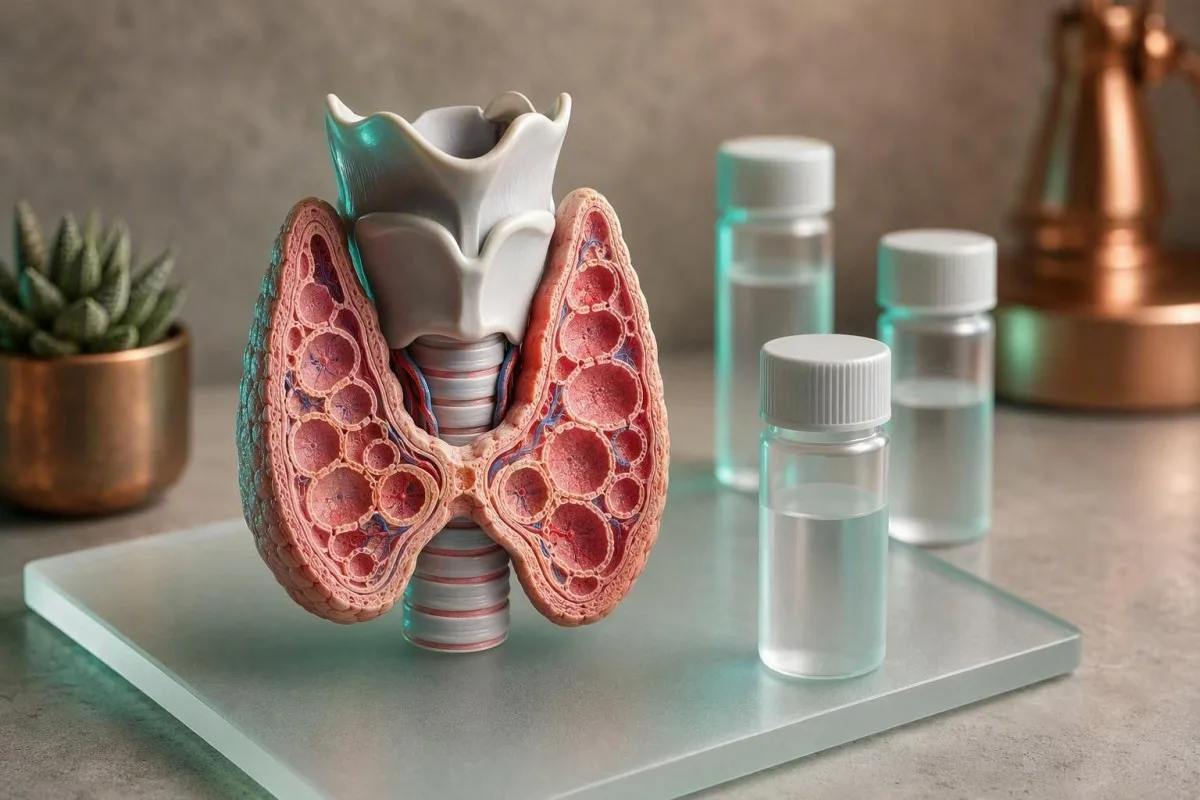
Watu wengi hawahitaji uchunguzi wa tezi mara kwa mara. Muda unaofaa hutegemea ikiwa TSH yako ni ya kawaida, umebeba mimba, una dalili, au kipimo chako cha levothyroxine kimebadilika hivi karibuni.


- TSH ya kawaida kwa kawaida hauhitaji kurudiwa mara nyingi zaidi ya kila miaka 1-5 isipokuwa dalili, ujauzito, dawa, au mambo mapya ya hatari yajitokeze.
- Baada ya mabadiliko ya levothyroxine, rudia TSH baada ya wiki 6-8 kwa sababu maoni ya tezi ya pituitari yanahitaji muda ili utulivu.
- Ujauzito huhitaji uchunguzi wa TSH wakati wa uthibitisho na kwa kawaida kila wiki 4 hadi katikati ya ujauzito kwa watu wenye hypothyroidism inayojulikana.
- Hypothyroidism iliyotibiwa kwa utulivu kwa kawaida hufuatiliwa kila baada ya miezi 6-12, si kila mwezi.
- TSH iko juu ya 10 mIU/L kwa kawaida huhalalisha tathmini ya kimatibabu na majadiliano ya matibabu, hata wakati T4 huru inakaa ndani ya kiwango.
- virutubisho vya Biotin inaweza kupotosha baadhi ya vipimo vya kinga vya tezi; kusimamisha kipimo kikubwa cha biotin kwa angalau siku 2 ni tahadhari yenye busara.
- Kingamwili za TPO kutabiri hypothyroidism ya baadaye lakini hauhitaji kipimo mfululizo ili kurekebisha levothyroxine.
- Tathmini ya haraka inahitajika kwa mapigo ya moyo makali, maumivu ya kifua, kuchanganyikiwa, ugumu mkubwa wa kupumua, au uvimbe wa shingo unaokua kwa kasi.
Ratiba ya uamuzi ya kurudia uchunguzi wa tezi
Mara ngapi ya kuangalia viwango vya tezi hutegemea hali ya kimatibabu: kila baada ya miaka 1-5 baada ya uchunguzi wa kawaida, wiki 6-8 baada ya mabadiliko ya kipimo, kila baada ya wiki 4katika mimba ya mapema wakati ugonjwa wa tezi unajulikana, na kila baada ya miezi 6-12wakati hypothyroidismsi msimu juu ya matibabu. Upimaji mapema ni muhimu tu wakati matokeo yanaweza kubadilisha utunzaji kwa kweli.
Kwa mtu mzima bila utambuzi wa tezi na wa kawaida TSH, kurudia kipimo kila baada ya miaka 1-5kwa ujumla ni wa kutosha wakati hakuna dalili mpya au sababu za hatari. Kipindi kipana kinaonyesha sera tofauti za uchunguzi wa kitaifa; uchunguzi wa kawaida kwa idadi ya watu haujaonyesha faida ya kutosha kwa Kundi la kazi la huduma za kuzuia la Amerika kuikubali kwa watu wazima wasio na dalili (USPSTF, 2015).
Ratiba ya vitendo ni muhimu zaidi kuliko upimaji wa kila mwaka: chunguza tena ndani ya wiki baada ya mabadiliko ya dawa au uzazi, ndani ya miezi baada ya uharibifu, na kila mwaka tu wakati hali sugu inatibiwa kikamilifu. Katika kliniki yangu, kosa linaloweza kuepukwa zaidi ni kuangalia TSH tena siku 10baada ya kubadilisha kipimo - wasiwasi huongezeka, lakini matokeo mara chache hujibu swali.
Kantesti ni Mchambuzi wa mtihani wa damu wa AI ambayo inalinganisha matokeo ya tezi na paneli za zamani zilizopitwa na wakati, ambayo husaidia kutenganisha mwelekeo wa maana kutoka kwa uchunguzi wa mapema, wenye kelele. Weka maabara ya asili, wakati wa kukusanya, kipimo, hali ya ujauzito, na virutubisho kando ya kila matokeo; maelezo hayo hufanya ratiba kuwa ya kweli. Tazama yetu mwongozo wa muda wa vipimo vya damu kwa muktadha unaostahili kurekodi.
Lini TSH ya kawaida inapaswa kurudiwa
TSH ya kawaida kawaida haihitaji kurudia kwa mwaka kwa mtu mzima bila sababu za hatari za tezi; kipindi cha miaka 1-5 ni cha busara. Rudia mapema wakati dalili zinaendelea, ujauzito umepangwa, mionzi ya shingo imetokea, au dawa ambazo huathiri kazi ya tezi zimeanza.
Maabara nyingi huweka kwa watu wazima TSH takriban 0.4-4.0 mIU/L, ingawa mipaka ya juu hutofautiana kutoka 4.0 hadi 4.5 mIU/L. Thamani ya 2.1 mIU/L sio bora kuliko 3.7 mIU/L; zote zinaweza kuwa za kawaida ikiwa T4 ya bure, dalili, na muktadha wa kimatibabu zinakubali.
Ninapima tena mapema kwa watu wenye kisukari cha aina ya 1, ugonjwa wa coeliac, upasuaji wa awali wa tezi, kukabiliwa na lithiamu, kukabiliwa na amiodarone, ugonjwa wa tezi ya pituitari, au historia yenye nguvu ya familia ya magonjwa ya mfumo wa kinga mwilini. Vikundi hivyo vina uwezekano mkubwa zaidi wa kabla ya kupima kuliko mtu mwenye afya njema ambaye anajisikia tu kuchoka wakati wa mwezi mgumu.
TSH ya kawaida haiondoi kila sababu ya uchovu, kuanguka kwa nywele, hali mbaya ya akili, au mabadiliko ya uzito. Ikiwa muundo wa dalili ni mpana, waganga mara nyingi hupima CBC, ferritin, glukosi, viashiria vya figo, na wakati mwingine B12 badala ya kuagiza vipimo vya tezi kila wiki chache; mwongozo wetu wa damu za motisha ya chini unaelezea utofauti huo mpana zaidi.
Dalili zenye matokeo ya kawaida: lini uchunguzi bado unafaa
Rudia paneli ya tezi baada ya wiki 6-12 wakati dalili zinaendelea au zinabadilika licha ya TSH ya kawaida, badala ya kuirudia siku chache baadaye. Matetemeko mapya, kutovumilia joto, kasi ya moyo wakati wa kupumzika, dalili za shingo, usumbufu wa hedhi, au mabadiliko ya uzito yasiyo na maelezo yanahalalisha ukaguzi unaolengwa zaidi.
TSH inaweza kubadilika kidogo wakati wa mchana, kati ya maabara, na wakati wa kupona kutoka kwa ugonjwa. Mabadiliko kutoka 2.0 hadi 3.1 mIU/L yanaweza kuwa tofauti ya kawaida ya kibaolojia, wakati ongezeko kutoka 1.2 hadi 8.6 mIU/L linastahili mwitikio tofauti; hii ndio sababu muktadha wa mwelekeo una umuhimu zaidi kuliko bendera moja.
Ugonjwa mbaya unaweza kusababisha T3 ya chini na wakati mwingine TSH ya chini au ya kawaida bila kushindwa kwa tezi ya msingi, muundo ambao mara nyingi huitwa ugonjwa usio wa tezi. Upimaji wakati wa kulazwa hospitalini unaweza kuwa muhimu, lakini kwa dalili za nje zisizo za dharura mimi huacha mara nyingi wiki 4-8 baada ya kupona kabla ya kutafsiri matokeo ya mpaka kama ugonjwa sugu; angalia maelezo yetu ya T3 ya chini wakati wa ugonjwa.
Kanuni ya vitendo ya Dk. Thomas Klein ni rahisi: rudia kipimo wakati jibu litabadilisha uamuzi unaofuata wa kimatibabu. TSH ya kawaida yenye kuvimbiwa kwa kuendelea na kutovumilia baridi kunaweza kusababisha upimaji wa CBC, ferritin, ukaguzi wa dawa, na T4 huru; haipaswi kusababisha paneli za kingamwili kila mwezi.
Lini TSH itarudiwa baada ya mabadiliko ya levothyroxine
Rudia TSH wiki 6-8 baada ya kuanza levothyroxine, kubadilisha kipimo, au kubadilisha fomula. Levothyroxine ina nusu ya maisha marefu ya takriban siku 7, na tezi ya pituitari huchukua wiki kadhaa kurekebisha utoaji wake wa TSH.
Marekebisho ya kawaida ya kipimo ni mikrogramu 12.5-25 kila siku, hasa kwa watu wazee au watu wenye ugonjwa wa moyo, ingawa daktari anayehudhurisha huibinafsisha hii. Kupima TSH baada ya wiki 2 kunaweza kusaidia mara kwa mara katika hali zisizo za kawaida, lakini ni mapema mno kwa maamuzi ya kawaida ya kipimo.
Kunywa levothyroxine mara kwa mara na maji ikiwa tumbo tupu, kawaida dakika 30-60 kabla ya chakula, au wakati wa kulala angalau masaa 3-4 baada ya mlo wa mwisho. Kalsiamu, chuma, magnesiamu, antasidi, viungio vya asidi ya nyongo, na bidhaa fulani za nyuzi zinaweza kupunguza unyonyaji zinapochukuliwa kwa pamoja; kushindwa kwa kipimo kinachodhaniwa wakati mwingine ni tatizo la muda.
Mabadiliko ya chapa au mtengenezaji yanaweza kubadilisha kiwango cha athari kwa wagonjwa wengine, hasa wale wenye utendaji mdogo wa tezi wa asili. Tumia muda sawa wa upimaji tena baada ya kubadilisha, kama ilivyoelezwa katika mwongozo wa kubadilisha chapa ya levothyroxine.
Je, unyonyaji wa hypothyroidism thabiti hufuatiliwa mara ngapi?
Watu wenye hypothyroidism ya msingi iliyo thabiti kwa kipimo kisichobadilika kawaida huhitaji kupima TSH kila baada ya miezi 6-12. Vipimo vya mara kwa mara zaidi vinafaa baada ya mabadiliko makubwa ya uzito, ujauzito, upasuaji wa utumbo, dawa zinazoingiliana, au kurudi kwa dalili zinazoshawishi.
Kwa watu wengi wazima wasio wajawazito wanaotibiwa hypothyroidism ya msingi, lengo la matibabu ni TSH ndani ya kiwango cha kumbukumbu cha maabara badala ya nambari maalum ya kawaida ya chini. TSH iliyosababishwa mara kwa mara chini ya 0.1 mIU/L kwenye tiba ya uingizwaji inahusishwa na hatari ya fibrilation ya atiria na kupoteza mfupa, hasa baada ya umri wa miaka 65.
Upimaji T4 ya bure pamoja na TSH ni muhimu wakati ugonjwa wa tezi ya pituitari, hypothyroidism kuu, ujauzito, kutokuwa na uhakika wa kufuata, au dalili zisizolingana zinapokuwepo. Katika hypothyroidism kuu, TSH inaweza kuwa ya kawaida au ya chini licha ya uingizwaji duni wa homoni, kwa hivyo T4 huru—sio TSH—huongoza kipimo.
Kantesti ni jukwaa la tafsiri ya vipimo vya damu la AI ambayo huweka TSH, T4 huru, mabadiliko ya dawa, na matokeo yanayohusiana na chuma au lipid katika mtazamo mmoja wa muda mrefu. Hiyo ni muhimu sana kwa sababu T4 huru ya chini yenye TSH ya kawaida inahitaji njia tofauti ya kimatibabu kutoka kwa upungufu wa tezi dume wa kawaida wa Hashimoto.
TSH iliyopungua kidogo: ratiba ya kurudia yenye busara
TSH inayozunguka 4.5-10 mIU/L ikiwa na T4 huru ya kawaida huonyeshwa mara kwa mara katika wiki 6-12 kabla ya kuainisha upungufu wa tezi dume wa muda mfupi usio na dalili. Rudia mapema wakati TSH inapoongezeka kwa kasi, mimba iko, au dalili ni kubwa.
Kuongezeka kwa TSH kwa muda kunaweza kufuatia ugonjwa wa virusi, usumbufu wa kulala, mabadiliko ya maabara, au kupona kutokana na ugonjwa mzito wa kimfumo. Kipimo cha kurudia baada ya wiki 6-12 huwazuia wagonjwa wengi kupewa utambuzi kutokana na matokeo moja ya wastani; tumia maabara ileile inapowezekana kupunguza tofauti za kipimo.
TSH juu ya 10 mIU/L ndio kizingiti ambapo miongozo mingi inapendelea mjadala wa matibabu kwa sababu maendeleo na uhusiano wa moyo na mishipa unakuwa wa wasiwasi zaidi. Miongozo ya pamoja ya 2012 ya Chama cha Kiasili cha Marekani na Chama cha Wataalamu wa Endocrine ya Kliniki inapendekeza kuweka matibabu binafsi chini ya 10 mIU/L kulingana na dalili, kingamwili, umri, na muktadha wa moyo na mishipa (Garber et al., 2012).
Kingamwili za TPO zinaweza kuboresha mtazamo: kingamwili chanya huongeza uwezekano kwamba upungufu wa tezi dume usio na dalili utaendelea, lakini kurudia kiwango cha kingamwili hakutuambii ikiwa kipimo cha levothyroxine ni sahihi. Yetu mwongozo wa TSH kwenye mpaka inashughulikia mambo yanayobadilisha uamuzi.
Ugonjwa wa Hashimoto: nini cha kufuatilia na nini cha kuruka
Ugonjwa wa Hashimoto hufuatiliwa hasa kwa TSH na, inapohitajika, T4 huru; kingamwili za TPO hazihitaji kipimo cha mara kwa mara. Mtu mwenye tezi dume ya kawaida aliye na kingamwili chanya za TPO kwa kawaida huhitaji TSH mara moja kwa mwaka, au mapema zaidi wakati wa ujauzito.
Kingamwili za TPO huonekana kwa watu wengi wenye kuvimba kwa tezi dume autoimmune na zinaweza kubaki chanya kwa miongo kadhaa. Kupungua kwa viwango vya kingamwili hakumaanishi kwa uhakika kuwa tezi imepona, na kuongezeka kwa viwango hakujathibitishi pekee kubadili matibabu.
Mimi huona mara kwa mara wagonjwa ambao wametumia pesa kwa vipimo vya kingamwili vya TPO kila mwezi wakati TSH yao haijabadilika kwa miezi 18. Swali muhimu la kimatibabu ni kama uzalishaji wa homoni ya tezi unashuka, na si kama utambuzi wa kinga umepungua.
Ikiwa TSH ni ya kawaida lakini kingamwili ni chanya, TSH ya mwaka ni kiwango cha kawaida kinachokubalika; ongeza uchunguzi wa kabla ya mimba na kipimo cha mapema cha mimba ikiwa inafaa. Soma zaidi kuhusu kingamwili chanya za TPO zenye TSH ya kawaida na tumia yetu biomarker guide kuelewa majina ya vipimo katika ripoti yako.
Uchunguzi wa tezi wakati wa ujauzito na kabla ya mimba
Watu wenye upungufu wa tezi dume wanaojulikana wanapaswa kupimwa TSH mara tu mimba itakapothibitishwa na takriban kila wiki 4 hadi katikati ya ujauzito, kisha angalau mara moja karibu na wiki 30. Mahitaji ya Levothyroxine huongezeka mara kwa mara mapema katika ujauzito, wakati mwingine kwa 20-30%.
Miongozo ya ujauzito ya Chama cha Kiasili cha Marekani cha 2017 hutumia kiwango cha juu cha TSH cha takriban 4.0 mIU/L wakati maabara haina kiwango maalum cha ujauzito, badala ya kutumia vipimo vya zamani vya jumla. Viwango maalum vya muhula na kipimo hupendelewa kwa sababu thyroxine-binding globulin na hCG huathiri fiziolojia ya tezi (Alexander et al., 2017).
Wagonjwa wanaotumia levothyroxine wanapaswa kuwasiliana na timu yao ya uzazi au taaluma ya ndani mara tu baada ya kupata matokeo chanya badala ya kusubiri miadi ya kawaida. Baadhi ya wataalamu wanashauri ongezeko la haraka la vidonge vya wiki kwa upungufu wa tezi dume uliowekwa, lakini mpango kamili lazima uwe wa kibinafsi—hasa kwa magonjwa ya moyo au utambuzi usio na uhakika.
Baada ya kuzaa, mahitaji ya tezi mara nyingi hurudi kwenye kipimo cha kabla ya ujauzito kwa muda wa wiki kadhaa, kwa hivyo rudia TSH karibu wiki 6 baada ya kuzaa isipokuwa daktari wako anashauri vinginevyo. Tafsiri ya ujauzito pia hunufaika na yetu mwongozo wa T4 huru kwa ujauzito.
Je, uchunguzi hufanywa mara ngapi wakati hyperthyroidism inashukiwa au kutibiwa?
Kutiliwa shaka kwa hyperthyroidism huhitaji kipimo cha haraka cha TSH na T4 huru, mara nyingi na T3 huru; hyperthyroidism iliyotibiwa inaweza kuhitaji T4 huru na T3 kila wiki 4-6 mwanzoni. TSH inaweza kubaki imebanishwa kwa miezi mingi baada ya viwango vya homoni kurudi kawaida, kwa hivyo haipaswi kuwa alama pekee inayotumiwa mapema katika matibabu.
TSH ya chini chini ya 0.1 mIU/L yenye T4 huru au T3 huru iliyoinuliwa inasaidia hyperthyroidism dhahiri na inahitaji mapitio ya daktari kwa wakati unaofaa. Katika ugonjwa wa Graves unaotibiwa na dawa za kupambana na tezi, T4 huru na T3 kamili au huru kawaida huongoza marekebisho ya mapema kila wiki 4-6.
Usitumie vipimo vya tezi peke yake kuelezea moyo unaopiga kwa kasi. Mapigo ya moyo wakati wa kupumzika yanayoendelea zaidi ya beats 120 kwa dakika, maumivu ya kifua, kukata tamaa, upungufu mkubwa wa pumzi, homa na uchokozi, au kuchanganyikiwa kunahitaji huduma ya haraka, kwa sababu thyrotoxicosis kali inaweza kutuliza mfumo wa moyo na mishipa.
Biotin inaweza kutoa ruwaza ya udanganyifu ya TSH ya chini na T4 huru au T3 ya juu kwenye vipimo vinavyoweza kuathiriwa. Acha biotin ya kipimo cha juu, mara nyingi 5-10 mg kila siku katika virutubisho vya nywele, kwa angalau masaa 48 kabla ya kupima isipokuwa daktari atakitoa maagizo tofauti; makala yetu kuhusu makosa ya juu ya T3 huru ya vipimo inaeleza kwa nini.
Uchunguzi baada ya saratani ya tezi au upasuaji wa tezi
Baada ya upasuaji wa tezi au matibabu ya saratani ya tezi, uchunguzi wa mara kwa mara huendana na mtu binafsi na unaweza kuanzia kila wiki 6-12 wakati wa titration ya kipimo hadi kila miezi 6-12 wakati hali imetulia. Malengo ya TSH yanaweza kuwa ya chini kwa makusudi katika vikundi vilivyochaguliwa vya hatari ya saratani, kwa hivyo malengo ya jumla ya hypothyroidism hayatumiki kila wakati.
Baada ya kuondolewa kabisa kwa tezi, levothyroxine ya maisha yote kwa kawaida inahitajika, na tathmini ya kwanza ya TSH kawaida ni wiki 6-8 baada ya mabadiliko ya kipimo. Thyroglobulin na kingamwili za thyroglobulin zinaweza kuongezwa katika ufuatiliaji wa saratani ya tezi iliyotofautishwa, lakini ratiba yao inategemea patholojia na hatari ya kurudi tena.
TSH iliyobanwa sio kosa moja kwa moja baada ya saratani ya tezi. Kwa wagonjwa walio na hatari ndogo, kukandamizwa kwa nguvu kunaweza kuongeza hatari ya upungufu wa moyo na fractures, kwa hivyo wataalamu wa endocrinologist husawazisha kuzuia kurudi tena dhidi ya madhara ya matibabu badala ya kutafuta TSH ya chini kabisa.
Leta patholojia, ripoti za upasuaji, matokeo ya ultrasound, na kila matokeo ya awali ya thyroglobulin kwa mapitio ya mtaalamu. Zana za muda mrefu za TSH zinaweza kupanga historia ya maabara yenye tarehe, lakini lengo la kimatibabu linapaswa kutoka kwa timu yako ya saratani na viwango vilivyopitiwa kimatibabu vilivyoelezwa katika mbinu ya uthibitisho wa kimatibabu.
Dawa na virutubisho vinavyohalalisha kurudiwa kwa uchunguzi wa tezi mapema
Lithiamu, amiodarone, interferon, inhibitors za kinga, mfiduo wa iodini, na biotin ya kipimo cha juu inaweza kubadilisha vipimo vya tezi au utendaji wa tezi. Muda wa kupimwa tena unatofautiana kutoka siku kwa tuhuma za thyrotoxicosis kali inayohusiana na dawa hadi miezi 3-6 kwa mipango thabiti ya ufuatiliaji.
Lithiamu inaweza kupunguza kutolewa kwa homoni ya tezi na kwa kawaida hufuatiliwa na TSH kabla ya matibabu na kwa vipindi vilivyoamuliwa pamoja na akili na utunzaji wa msingi, mara nyingi kila miezi 6-12 mara moja imetulia. Amiodarone ina iodini nyingi na inaweza kusababisha hypothyroid au hyperthyroid; vipimo vya tezi vya msingi na vya mara kwa mara ni mazoezi ya kawaida ya kimatibabu.
Chuma na kalsiamu hazibadilishi utendaji wa tezi moja kwa moja, lakini zinaweza kupunguza ngozi ya levothyroxine zinapochukuliwa karibu na kipimo. Kuzitenganisha kwa angalau masaa 4 ni hatua ya kuanzia ya vitendo, hasa kwa watu wanaotibu upungufu wa chuma pia; ona mwongozo wetu wa vyakula vyenye chuma vingi.
Epuka kujitibu TSH ya mpaka na mwani au bidhaa za iodini zilizojaa. Iodini nyingi zinaweza kusababisha shida ya tezi kwa watu wanaoweza kuathiriwa, wakati mahitaji ya kawaida ya lishe ya iodini ni madogo; mwongozo wetu wa vyakula vyenye iodini unatoa muktadha salama zaidi unaotokana na chakula.
Kwa nini kupima viwango vya tezi mara nyingi sana kunaweza kudanganya
Kupima TSH kila siku chache au wiki kunaweza kusababisha kengele za uwongo kwa sababu TSH ina mabadiliko ya kibiolojia na hujibu polepole kwa mabadiliko ya kipimo. Kwa hypothyroidism ya msingi thabiti, kupima mara nyingi zaidi kuliko kila miezi 6 mara chache huboresha matokeo.
Jaribu linaeleweka: mtu anajisikia vibaya, anaona nambari, na anataka uhakika. Hata hivyo vipimo vya mara kwa mara huleta fursa zaidi za mabadiliko madogo karibu na kikomo, hasa wakati muda wa ukusanyaji, ugonjwa wa hivi karibuni, hali ya kufunga, virutubisho, na njia ya maabara zinatofautiana.
Utoaji wa TSH hufuata mzunguko wa kila siku na huwa juu zaidi usiku na mapema asubuhi. Unapotazama mwelekeo, tumia muda sawa wa ukusanyaji ikiwa inawezekana na usichukue levothyroxine mara moja kabla ya kipimo cha free T4 isipokuwa daktari anataka kiwango cha baada ya dozi.
Kantesti ni Zana ya uchambuzi wa vipimo vya damu inayotumia AI ambayo huashiria mabadiliko dhidi ya maadili ya awali badala ya kutibu kila alama ndogo ya nje ya mipaka kama utambuzi mpya. Kwa njia tulivu zaidi, linganisha matokeo kando kando kwa kutumia kanuni katika mwongozo wetu wa mabadiliko ya maabara.
Ni vipimo gani vya tezi vinavyopaswa kuamriwa katika kila uchunguzi wa baadae
TSH ni kipimo bora cha kwanza cha ufuatiliaji kwa shida nyingi za msingi za tezi, wakati free T4 huongezwa kwa TSH isiyo ya kawaida, ujauzito, hypothyroidism ya kati, na dalili zinazokinzana. Free T3, antibodies, thyroglobulin, na ultrasound ni vipimo vya kuchagua badala ya nyongeza za kila mwezi za kawaida.
TSH hupima mwitikio wa tezi ya pituitari, si homoni ya tezi yenyewe. Free T4 hutathmini thyroxine inayozunguka inayopatikana, wakati free T3 ni muhimu zaidi wakati hyperthyroidism inashukiwa kwa sababu wagonjwa wengine wana ugonjwa unaotawaliwa na T3 na free T4 ya kawaida.
Ultrasound ya tezi si kipimo cha uchunguzi kwa TSH isiyo ya kawaida pekee. Ni muhimu zaidi kwa nodule inayoweza kuhisiwa, tezi isiyo sawa, dalili za kusinyaa, nodi za limfu zinazoshukiwa, au nodi zinazojulikana zinazohitaji ufuatiliaji wa picha; vipimo vya kawaida vya damu haviondoi matokeo ya muundo wa tezi.
Muhtasari wa matokeo wa ukurasa mmoja unaweza kuzuia upimaji unaojirudia na kuboresha miadi ijayo. mwongozo wa vifupisho vya uchunguzi wa tezi unaelezea alama za kawaida, na bodi ya ushauri ya matibabu ya Kantesti husimamia viwango vya tathmini ya kimatibabu kwa tafsiri ya elimu.
Lini usisubiri uchunguzi unaofuata wa tezi uliopangwa
Tafuta tathmini ya haraka ya kimatibabu badala ya kusubiri uchunguzi wa kawaida wa tezi ikiwa una maumivu ya kifua, kuzirai, ugumu mkubwa wa kupumua, kuchanganyikiwa, mapigo ya moyo yasiyo ya kawaida zaidi ya 120, homa kubwa na uchangamfu, au uvimbe unaoongezeka kwa kasi wa shingo. Dalili hizi zinahitaji uchunguzi wa kimatibabu, viashiria muhimu vya mwili, na wakati mwingine ECG au upigaji picha—si ratiba ya nyumbani pekee.
Ukuaji wa haraka wa shingo, sauti mpya ya kukwaruza, shida kumeza, au kupumua kwa sauti kubwa huhitaji tathmini ya haraka hata ikiwa TSH ya awali ilikuwa ya kawaida. Vipimo vya damu vinaelezea fiziolojia ya homoni; haviwezi kutathmini kwa uhakika mgandamizo wa njia ya hewa, nodule ya tezi, au uvimbe unaoongezeka wa shingo.
Kwa wasiwasi mdogo lakini unaoendelea, weka miadi ya tathmini iliyolenga na daktari wako na ulete dozi za dawa, lebo za virutubisho, hali ya ujauzito, na matokeo yaliyowekwa tarehe. Dk. Thomas Klein amegundua kuwa maandalizi haya ya msingi mara nyingi huzuia mambo mawili yasiyo na manufaa: kupuuza dalili kwa sababu TSH ni ya kawaida, au kuongeza kila kupotoka kwa kipekee kwa maabara.
Kufikia Agosti 27, 2026, ratiba salama zaidi ya upimaji wa tezi bado ni ya kuamua kulingana na hali: pima wakati matokeo yanayobadilika yanaweza kubadilisha utunzaji. Kantesti AI inasaidia shirika la matokeo na elimu, si utambuzi au upimaji wa dharura; mwongozo wa teknolojia ya AI inaelezea jukumu linalokusudiwa la usaidizi wa kimatibabu.
Maswali Yanayoulizwa Mara Kwa Mara
Kwa mara ngapi ninafaa kupima kiwango cha tezi yangu ikiwa ni kawaida?
Watu wazima wenye TSH ya kawaida na wasio na sababu za hatari ya tezi kwa kawaida huhitaji uchunguzi wa tezi tena kila baada ya miaka 1-5, si kila mwaka. Rudia mapema ikiwa dalili mpya zinaendelea, mimba imepangwa au kuthibitishwa, mionzi ya shingo ilitokea, au unaanza kutumia lithiamu, amiodarone, au dawa nyingine inayohusiana na tezi. Kawaida kwa watu wazima TSH ya kawaida ni kama 0.4-4.0 mIU/L, ingawa maabara huweka mipaka yao wenyewe. Matokeo ya kawaida hayazuii sababu zisizo za tezi za uchovu, mabadiliko ya uzito, au upotezaji wa nywele.
Kapan TSH harus diuji ulang setelah mengubah levothyroxine?
TSH bör vanligtvis testas igen 6-8 veckor efter att man börjat med levotyroxin, ändrat den dagliga dosen eller bytt produktformulering. Levotyroxin har en halveringstid på cirka 7 dagar, och hypofysens TSH-återkoppling tar flera veckor att nå en ny jämvikt. De flesta dosjusteringar är 12,5-25 mikrogram dagligen, även om ålder, kroppsstorlek, hjärtanamnes och graviditet påverkar planen. Testning efter 1-2 veckor är vanligtvis för tidigt för att vägleda en rutinjustering.
Hur ofta bör hypotyreos övervakas?
Kilotothyroidism ya msingi isiyo na uhai inayotibiwa na kipimo kisichobadilika cha levothyroxine kwa ujumla hufuatiliwa na TSH kila miezi 6-12. Upimaji unapaswa kufanywa mapema baada ya mabadiliko ya kipimo cha mikrogamu 12.5-25, mimba, mabadiliko makubwa ya uzito, upasuaji wa utumbo, au kuanzishwa kwa dawa inayoingiliana. TSH chini ya 0.1 mIU/L kwenye tiba mbadala inastahili tathmini ya daktari kwa sababu matibabu zaidi ya muda mrefu yanaweza kuongeza hatari ya mdundo wa moyo na upotevu wa mfupa. T4 huru ni muhimu sana wakati magonjwa ya tezi ya pituitari au kilotothyroidism ya kati inawezekana.
Hur ofta bör sköldkörtelvärden kontrolleras under graviditeten?
Watu wenye hypothyroidism iliyoanzishwa wanapaswa kuangalia TSH wakati wa kuthibitisha ujauzito na takriban kila wiki 4 hadi wiki 16-20 za ujauzito, kisha angalau mara moja karibu na wiki 30. Mahitaji ya levothyroxine kwa kawaida huongezeka kwa 20-30% wakati wa ujauzito wa mapema, ingawa marekebisho sahihi yanapaswa kutoka kwa timu ya uzazi au endocrine. Wakati safu mahususi ya ujauzito haipatikani, mwongozo wa 2017 wa American Thyroid Association hutumia kikomo cha juu cha marejeleo cha TSH cha takriban 4.0 mIU/L. TSH kwa kawaida inapaswa kuchunguzwa tena karibu wiki 6 baada ya kuzaa ikiwa kipimo kilibadilishwa wakati wa ujauzito.
Je, ni vibaya kuchunguza TSH mara nyingi mno?
Kupima TSH mara nyingi sana kunaweza kupotosha kwa sababu homoni hutofautiana kimaumbile na hubadilika polepole baada ya marekebisho ya matibabu. Kipimo cha kurudia siku 10-14 baada ya mabadiliko ya levothyroxine kinaweza kuonyesha mwendo bila kuonyesha athari ya mwisho ya matibabu, ambayo huonekana wazi zaidi baada ya wiki 6-8. Hypothyroidism iliyotibiwa kwa utulivu mara chache hunufaika na upimaji wa TSH wa kila mwezi. Tumia maabara sawa na wakati sawa wa kukusanya wakati wa kufuatilia mwelekeo ili kupunguza mabadiliko yasiyoepukika.
Je, TPO antibodies zirudiwe katika ugonjwa wa Hashimoto?
Vipimo vya kingamwili vya TPO kwa ujumla havihitaji kupimwa tena katika ugonjwa wa Hashimoto kwa sababu haviongozi marekebisho ya dozi ya levothyroxine. Matokeo chanya ya kingamwili ya TPO huunga mkono kuvimba kwa tezi ya tezi na kutabiri hatari kubwa ya kupungua kwa tezi wakati ujao, lakini vipimo muhimu vya ufuatiliaji ni TSH na wakati mwingine T4 huru. Mtu mwenye tezi yenye afya na kingamwili chanya za TPO mara nyingi hupimwa TSH takriban kila mwaka. Upimaji unapaswa kuwa mapema wakati ujauzito unapopangwa au kuthibitishwa.
Pata Uchambuzi wa Vipimo vya Damu kwa AI Leo
Jiunge na zaidi ya watumiaji 2 milioni duniani kote wanaoamini Kantesti kwa uchambuzi wa papo hapo na sahihi wa vipimo vya maabara. Pakia matokeo yako ya vipimo vya damu na upate tafsiri ya kina ya viashiria vya 15,000+ ndani ya sekunde.
📚 Machapisho ya Utafiti Yanayorejelewa
Klein, T., Mitchell, S., & Weber, H. (2026). Kichambuzi cha Uchambuzi wa Damu kwa AI: Vipimo 2.5M Vilivyofanyiwa Uchambuzi | Ripoti ya Afya ya Kimataifa 2026. Kantesti uchambuzi wa damu kwa AI ya utafiti wa matibabu.
Klein, T., Mitchell, S., & Weber, H. (2026). Kipimo cha Damu cha RDW: Mwongozo Kamili wa RDW-CV, MCV & MCHC. Kantesti uchambuzi wa damu kwa AI ya utafiti wa matibabu.
📖 Marejeo ya Nje ya Tiba
⚕️ Kanusho la Kimatibabu
Makala haya ni kwa madhumuni ya elimu tu na si ushauri wa kimatibabu. Wasiliana na mtoa huduma aliyehitimu kila wakati kwa maamuzi ya utambuzi na matibabu.
E-E-A-T Trust Signals
Uzoefu
Mapitio ya kimatibabu inayoongozwa na daktari ya mifumo ya tafsiri ya maabara.
Utaalamu
Kuzingatia dawa za maabara kuhusu jinsi viashiria (biomarkers) vinavyobadilika katika muktadha wa kliniki.
Mamlaka
Imeandikwa na Dk. Thomas Klein kwa mapitio ya Dk. Sarah Mitchell na Prof. Dk. Hans Weber.
Uaminifu
Tafsiri inayotegemea ushahidi yenye njia zilizo wazi za ufuatiliaji ili kupunguza tahadhari za hofu.