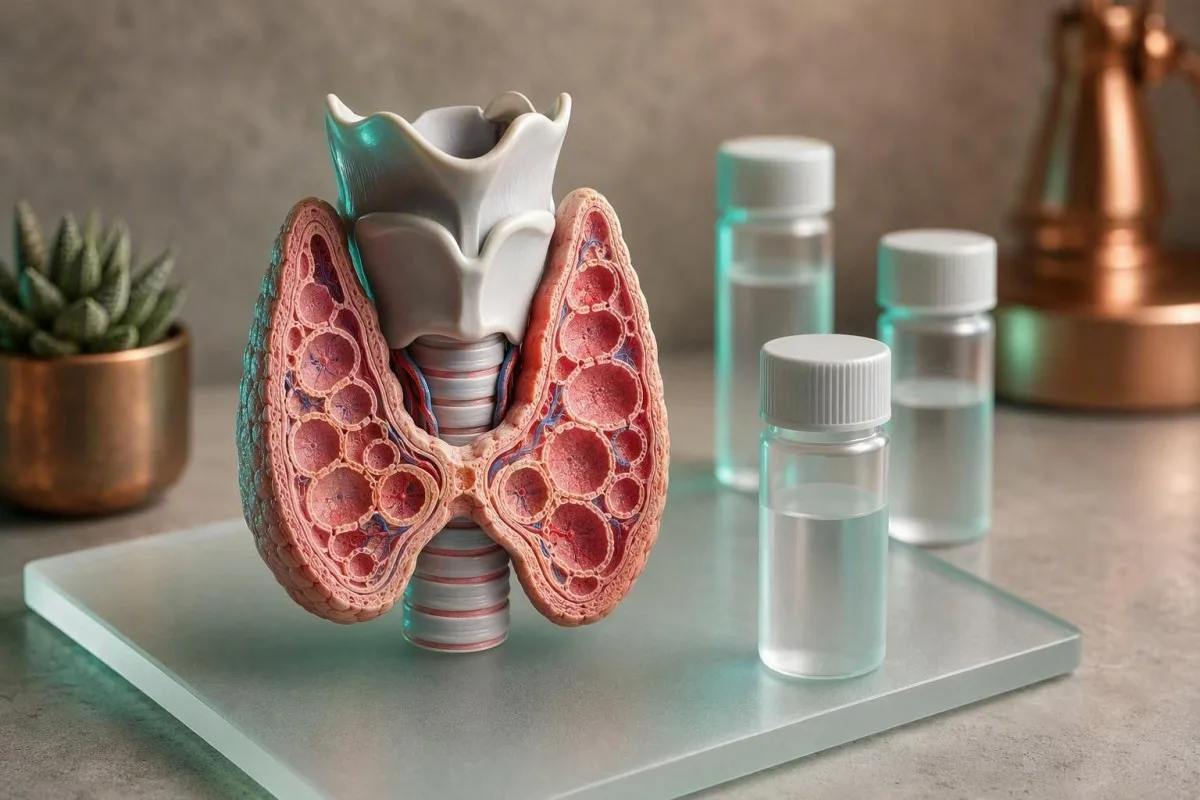
Kebanyakan orang tidak memerlukan tes tiroid yang sering. Jeda yang tepat tergantung pada apakah TSH Anda normal, Anda hamil, Anda memiliki gejala, atau dosis levothyroxine Anda baru saja berubah.


- TSH normal umumnya tidak perlu diulang lebih sering daripada setiap 1-5 tahun kecuali jika timbul gejala, kehamilan, obat-obatan, atau faktor risiko baru.
- Setelah perubahan levothyroxine, ulangi TSH setelah 6-8 minggu karena umpan balik hipofisis memerlukan waktu untuk stabil.
- Kehamilan memerlukan pengujian TSH saat konfirmasi dan biasanya setiap 4 minggu hingga pertengahan kehamilan pada orang dengan hipotiroidisme yang diketahui.
- Hipotiroidisme yang diobati secara stabil biasanya dipantau setiap 6-12 bulan, bukan bulanan.
- TSH di atas 10 mIU/L biasanya memerlukan penilaian klinis dan diskusi pengobatan, bahkan ketika free T4 tetap dalam kisaran.
- Suplemen biotin dapat mengganggu beberapa immunoassay tiroid; menghentikan biotin dosis tinggi setidaknya selama 2 hari adalah tindakan pencegahan yang masuk akal.
- Antibodi TPO memprediksi hipotiroidisme di masa depan tetapi tidak memerlukan pengukuran serial untuk menyesuaikan levothyroxine.
- Penilaian segera diperlukan untuk palpitasi parah, nyeri dada, kebingungan, sesak napas yang jelas, atau pembengkakan leher yang membesar dengan cepat.
Jadwal keputusan untuk mengulang tes tiroid
Seberapa sering kadar tiroid diperiksa bergantung pada situasi klinis: setiap 1-5 tahun setelah skrining normal, 6-8 minggu setelah perubahan dosis, setiap 4 minggu pada awal kehamilan jika penyakit tiroid diketahui, dan setiap 4-6 bulan jika hipotiroidisme stabil dalam pengobatan. Pengujian lebih awal hanya berguna jika hasilnya secara realistis dapat mengubah perawatan.
Untuk orang dewasa tanpa diagnosis tiroid dan hasil normal TSH, pengulangan tes setiap 1-5 tahun umumnya sudah cukup jika tidak ada gejala atau faktor risiko baru. Interval yang lebar mencerminkan perbedaan kebijakan skrining nasional; skrining rutin di seluruh populasi belum menunjukkan manfaat yang cukup jelas bagi U.S. Preventive Services Task Force untuk merekomendasikannya bagi orang dewasa tanpa gejala (USPSTF, 2015).
Jadwal praktis lebih berguna daripada pengujian tahunan secara umum: uji ulang dalam beberapa minggu setelah perubahan pengobatan atau reproduksi, dalam beberapa bulan setelah kelainan, dan tahunan hanya jika kondisi kronis sedang aktif dikelola. Di klinik saya, kesalahan yang paling sering dapat dihindari adalah memeriksa TSH lagi 10 hari setelah mengubah dosis—kecemasan meningkat, tetapi hasilnya jarang menjawab pertanyaan.
Kantesti adalah seorang Analisa tes darah AI yang membandingkan hasil tiroid dengan panel sebelumnya yang sudah usang, yang membantu memisahkan tren yang bermakna dari pengujian ulang awal yang berisik. Simpan laboratorium asli, waktu pengambilan sampel, dosis, status kehamilan, dan suplemen di samping setiap hasil; detail tersebut membuat garis waktu dapat diinterpretasikan secara klinis. Lihat panduan waktu pemeriksaan darah kami kami untuk konteks yang perlu dicatat.
Kapan TSH normal harus diulang
TSH normal biasanya tidak memerlukan pengulangan tahunan pada orang dewasa yang sehat tanpa faktor risiko tiroid; interval 1-5 tahun masuk akal. Ulangi lebih awal jika gejala menetap, kehamilan direncanakan, radiasi leher terjadi, atau obat-obatan yang memengaruhi fungsi tiroid telah dimulai.
Sebagian besar laboratorium menempatkan rentang dewasa TSH kira-kira sekitar 0.4-4.0 mIU/L, meskipun batas atas bervariasi dari sekitar 4.0 hingga 4.5 mIU/L. Nilai 2.1 mIU/L tidak secara inheren lebih baik daripada 3.7 mIU/L; keduanya bisa normal jika free T4, gejala, dan konteks klinis sesuai.
Saya melakukan tes ulang lebih cepat pada orang dengan diabetes tipe 1, penyakit coeliac, riwayat operasi tiroid, paparan litium, paparan amiodarone, penyakit hipofisis, atau riwayat keluarga autoimun yang kuat. Kelompok tersebut memiliki probabilitas pra-tes yang lebih tinggi daripada orang sehat pada umumnya yang hanya merasa lelah selama sebulan yang sulit.
TSH normal tidak menyingkirkan setiap penyebab kelelahan, kerontokan rambut, suasana hati yang buruk, atau perubahan berat badan. Jika pola gejalanya luas, dokter sering kali menilai CBC, ferritin, glukosa, penanda ginjal, dan terkadang B12 daripada memesan tes tiroid setiap beberapa minggu; panduan kami untuk tes darah motivasi rendah menjelaskan perbedaan yang lebih luas itu.
Gejala dengan hasil normal: kapan pengujian masih masuk akal
Ulangi panel tiroid dalam 6-12 minggu ketika gejala menetap atau berkembang meskipun TSH normal, daripada mengulanginya beberapa hari kemudian. Tremor baru, intoleransi panas, takikardia istirahat, gejala leher, gangguan menstruasi, atau perubahan berat badan yang tidak dapat dijelaskan membenarkan tinjauan yang lebih terfokus.
TSH dapat bergeser sedikit sepanjang hari, antar laboratorium, dan selama pemulihan dari penyakit. Perubahan dari 2,0 menjadi 3,1 mIU/L bisa jadi variasi biologis biasa, sedangkan kenaikan dari 1,2 menjadi 8,6 mIU/L memerlukan respons yang berbeda; inilah sebabnya mengapa konteks tren lebih penting daripada satu tanda.
Penyakit akut dapat menghasilkan T3 rendah dan kadang-kadang TSH rendah atau normal tanpa kegagalan tiroid primer, suatu pola yang sering disebut penyakit non-tiroidal. Pengujian selama rawat inap mungkin diperlukan, tetapi untuk gejala rawat jalan yang tidak mendesak, saya sering menunggu 4-8 minggu setelah pemulihan sebelum menafsirkan hasil yang meragukan sebagai penyakit kronis; lihat penjelasan kami tentang T3 rendah saat sakit.
Aturan praktis Dr. Thomas Klein sederhana: ulangi tes ketika jawabannya akan mengubah keputusan klinis berikutnya. TSH normal dengan konstipasi persisten dan intoleransi dingin mungkin mendorong pemeriksaan CBC, ferritin, peninjauan obat, dan T4 bebas; itu seharusnya tidak secara otomatis mendorong panel antibodi bulanan.
Kapan mengulang TSH setelah perubahan levothyroxine
Ulangi TSH 6-8 minggu setelah memulai levothyroxine, mengubah dosis, atau mengganti formulasi. Levothyroxine memiliki waktu paruh yang panjang sekitar 7 hari, dan hipofisis membutuhkan waktu beberapa minggu untuk mengatur ulang output TSH-nya.
Penyesuaian dosis yang umum adalah 12,5-25 mikrogram setiap hari, terutama pada orang tua atau orang dengan penyakit koroner, meskipun dokter yang meresepkan menyesuaikannya secara individual. Pemeriksaan TSH pada 2 minggu sesekali dapat membantu dalam keadaan yang tidak biasa, tetapi terlalu dini untuk keputusan dosis rutin.
Minum levothyroxine secara konsisten dengan air saat perut kosong, biasanya 30-60 menit sebelum makan, atau sebelum tidur setidaknya 3-4 jam setelah makan terakhir. Kalsium, zat besi, magnesium, antasida, pengikat asam empedu, dan beberapa produk serat dapat mengurangi penyerapan jika diminum berdekatan; dugaan kegagalan dosis terkadang adalah masalah waktu.
Perubahan merek atau produsen dapat mengubah paparan efektif untuk beberapa pasien, terutama mereka yang memiliki fungsi tiroid endogen sedikit. Gunakan interval tes ulang yang sama setelah beralih, seperti yang dirinci dalam panduan penggantian merek levothyroxine.
Seberapa sering memantau hipotiroidisme yang stabil
Orang dengan hipotiroidisme primer yang stabil pada dosis yang tidak berubah biasanya memerlukan tes TSH setiap 6-12 bulan. Pemeriksaan yang lebih sering sesuai setelah perubahan berat badan yang signifikan, kehamilan, operasi gastrointestinal, obat-obatan yang berinteraksi, atau kembalinya gejala yang meyakinkan.
Bagi sebagian besar orang dewasa non-hamil yang diobati untuk hipotiroidisme primer, target pengobatan adalah TSH dalam interval referensi laboratorium daripada angka normal-rendah tertentu. TSH yang ditekan terus-menerus di bawah 0,1 mIU/L pada terapi penggantian dikaitkan dengan risiko fibrilasi atrium dan pengeroposan tulang, terutama setelah usia 65 tahun.
Pemeriksaan T4 bebas bersamaan dengan TSH berguna ketika ada penyakit hipofisis, hipotiroidisme sentral, kehamilan, ketidakpastian kepatuhan, atau gejala yang tidak selaras. Pada hipotiroidisme sentral, TSH dapat normal atau rendah meskipun penggantian hormon tidak mencukupi, sehingga T4 bebas—bukan TSH—memandu dosis.
Kantesti adalah seorang platform interpretasi tes darah AI yang menempatkan TSH, T4 bebas, perubahan obat, dan hasil terkait zat besi atau lipid pada satu pandangan longitudinal. Itu sangat membantu karena T4 bebas rendah dengan TSH normal memerlukan jalur klinis yang berbeda dari hipotiroidisme Hashimoto biasa.
TSH batas tinggi: jadwal pengulangan yang masuk akal
TSH sekitar 4,5-10 mIU/L dengan T4 bebas normal umumnya diulang dalam 6-12 minggu sebelum mendiagnosis hipotiroidisme subklinis kronis. Ulangi lebih cepat ketika TSH meningkat pesat, sedang hamil, atau gejalanya signifikan.
Peningkatan TSH sementara dapat terjadi setelah penyakit virus, gangguan tidur, variabilitas laboratorium, atau pemulihan dari penyakit sistemik berat. Tes ulang setelah 6-12 minggu mencegah banyak pasien didiagnosis hanya dari satu hasil marginal; gunakan laboratorium yang sama jika memungkinkan untuk meminimalkan perbedaan pengujian.
TSH di atas 10 mIU/L adalah ambang batas di mana sebagian besar panduan lebih memilih diskusi pengobatan karena perkembangan dan asosiasi kardiovaskular menjadi lebih mengkhawatirkan. Panduan gabungan American Thyroid Association dan American Association of Clinical Endocrinologists tahun 2012 merekomendasikan individualisasi pengobatan di bawah 10 mIU/L sesuai dengan gejala, antibodi, usia, dan konteks kardiovaskular (Garber et al., 2012).
Antibodi TPO dapat menyempurnakan pandangan: antibodi positif meningkatkan kemungkinan hipotiroidisme subklinis akan berkembang, tetapi mengulang titer antibodi tidak memberi tahu kita apakah dosis levothyroxine sudah benar. Kami tentang TSH batas mencakup faktor-faktor yang mengubah keputusan.
Penyakit Hashimoto: apa yang harus dipantau dan apa yang harus dilewati
Penyakit Hashimoto dipantau terutama dengan TSH dan, jika diperlukan, T4 bebas; antibodi TPO tidak memerlukan pengujian serial. Orang eutiroid dengan antibodi TPO positif biasanya memerlukan TSH sekitar setahun sekali, atau lebih cepat saat hamil.
Antibodi TPO terdapat pada banyak orang dengan tiroiditis autoimun dan dapat tetap positif selama puluhan tahun. Nilai antibodi yang menurun tidak secara andal berarti kelenjar telah pulih, dan nilai yang meningkat tidak dengan sendirinya membenarkan perubahan pengobatan.
Saya sering melihat pasien yang telah menghabiskan uang untuk tes antibodi TPO bulanan sementara TSH mereka tidak berubah selama 18 bulan. Pertanyaan yang berguna secara klinis adalah apakah produksi hormon tiroid menurun, bukan apakah pengenalan kekebalan tubuh berfluktuasi.
Jika TSH normal tetapi antibodi positif, TSH tahunan adalah pilihan default yang masuk akal; tambahkan pemeriksaan pra-konsepsi dan tes awal kehamilan jika relevan. Baca lebih lanjut tentang antibodi TPO positif dengan TSH normal dan gunakan biomarker kami untuk memahami nama laboratorium pada laporan Anda.
Pengujian tiroid selama kehamilan dan pra-konsepsi
Orang dengan hipotiroidisme yang diketahui harus memeriksa TSH segera setelah kehamilan dikonfirmasi dan sekitar setiap 4 minggu hingga pertengahan kehamilan, kemudian setidaknya sekali mendekati usia kehamilan 30 minggu. Kebutuhan levothyroxine sering meningkat di awal kehamilan, terkadang sebesar 20-30%.
Panduan kehamilan American Thyroid Association tahun 2017 menggunakan batas referensi atas TSH sekitar 4,0 mIU/L ketika laboratorium tidak memiliki rentang khusus kehamilan, daripada menerapkan ambang batas universal yang lebih lama. Rentang yang spesifik untuk trimester dan pengujian lebih disukai karena tiroxine-binding globulin dan hCG mengubah fisiologi tiroid (Alexander et al., 2017).
Pasien yang sudah mengonsumsi levothyroxine harus segera menghubungi tim kebidanan atau endokrin mereka setelah tes positif daripada menunggu janji temu rutin. Beberapa dokter menyarankan peningkatan empiris segera dalam tablet mingguan untuk hipotiroidisme yang sudah ada, tetapi rencana yang tepat harus diindividualisasi—terutama dengan penyakit jantung atau diagnosis yang tidak pasti.
Setelah melahirkan, kebutuhan tiroid sering kembali ke dosis sebelum kehamilan selama beberapa minggu, jadi ulangi TSH sekitar 6 minggu pascapersalinan kecuali dokter Anda menyarankan sebaliknya. Interpretasi kehamilan juga mendapat manfaat dari panduan kehamilan T4 bebas kami.
Seberapa sering menguji ketika hipertiroidisme dicurigai atau diobati
Hipertiroidisme yang dicurigai memerlukan pengujian TSH dan T4 bebas segera, seringkali dengan T3 bebas; hipertiroidisme yang diobati mungkin memerlukan T4 dan T3 bebas setiap 4-6 minggu pada awalnya. TSH dapat tetap ditekan selama berbulan-bulan setelah kadar hormon normal, sehingga tidak boleh menjadi satu-satunya penanda yang digunakan di awal pengobatan.
TSH rendah di bawah 0,1 mIU/L dengan peningkatan T4 bebas atau T3 bebas mendukung hipertiroidisme yang nyata dan memerlukan tinjauan segera oleh dokter. Pada penyakit Graves yang diobati dengan obat antitiroid, T4 bebas dan T3 total atau bebas biasanya memandu penyesuaian dini setiap 4-6 minggu.
Jangan hanya menggunakan tes tiroid untuk menjelaskan detak jantung yang cepat. Denyut nadi istirahat yang konsisten di atas 120 denyut per menit, nyeri dada, pingsan, sesak napas parah, demam dengan agitasi, atau kebingungan memerlukan perawatan segera, karena tirotoksikosis parah dapat mendestabilisasi sistem kardiovaskular.
Biotin dapat menghasilkan pola TSH rendah dan T4 bebas atau T3 tinggi yang menyesatkan pada pengujian yang rentan. Hentikan biotin dosis tinggi, seringkali 5-10 mg setiap hari dalam suplemen rambut, setidaknya selama 48 jam sebelum pengujian kecuali dokter memberikan instruksi yang berbeda; artikel kami tentang kesalahan pengujian T3 bebas yang tinggi menjelaskan alasannya.
Pengujian setelah kanker tiroid atau operasi tiroid
Setelah tiroidektomi atau pengobatan kanker tiroid, frekuensi pengujian bersifat individual dan dapat berkisar dari setiap 6-12 minggu selama penyesuaian dosis hingga setiap 6-12 bulan saat stabil. Target TSH mungkin sengaja lebih rendah pada kelompok risiko kanker tertentu, sehingga target hipotiroidisme umum tidak selalu berlaku.
Setelah pengangkatan tiroid total, levotiroksin seumur hidup biasanya diperlukan, dan penilaian TSH pertama umumnya 6-8 minggu setelah perubahan dosis. Tiroglobulin dan antibodi tiroglobulin dapat ditambahkan dalam pengawasan kanker tiroid berdiferensiasi, tetapi jadwalnya tergantung pada patologi dan risiko kekambuhan.
TSH yang ditekan bukan secara otomatis merupakan kesalahan setelah kanker tiroid. Pada pasien berisiko lebih rendah, penekanan agresif dapat meningkatkan risiko fibrilasi atrium dan patah tulang, sehingga ahli endokrin menyeimbangkan pencegahan kekambuhan terhadap bahaya pengobatan daripada mengejar TSH serendah mungkin.
Bawa laporan patologi, laporan operasi, temuan ultrasonografi, dan setiap hasil tiroglobulin sebelumnya ke tinjauan spesialis. Alat longitudinal Kantesti dapat mengatur riwayat laboratorium bertertanggal, tetapi target klinis harus berasal dari tim kanker Anda dan standar yang ditinjau secara medis yang dijelaskan dalam pendekatan validasi klinis.
Obat-obatan dan suplemen yang membenarkan pengujian tiroid ulang lebih awal
Lithium, amiodarone, interferon, inhibitor checkpoint kekebalan, paparan yodium, dan biotin dosis tinggi dapat mengubah tes tiroid atau fungsi tiroid. Interval pengujian ulang berkisar dari beberapa hari untuk dugaan tirotoksikosis terkait obat yang parah hingga 3-6 bulan untuk rencana pemantauan yang stabil.
Lithium dapat mengurangi pelepasan hormon tiroid dan umumnya dipantau dengan TSH sebelum pengobatan dan pada interval yang ditentukan bersama oleh psikiatri dan perawatan primer, seringkali setiap 6-12 bulan setelah stabil. Amiodarone mengandung yodium dalam jumlah besar dan dapat menyebabkan hipo- atau hipertiroidisme; pengujian tiroid awal dan berkala adalah praktik klinis standar.
Zat besi dan kalsium tidak mengubah fungsi tiroid secara langsung, tetapi dapat menurunkan penyerapan levotiroksin jika dikonsumsi mendekati dosis. Memisahkannya setidaknya 4 jam adalah titik awal yang praktis, terutama bagi orang yang juga mengobati defisiensi zat besi; lihat panduan kami tentang makanan tinggi zat besi.
Hindari pengobatan sendiri TSH yang borderline dengan kelp atau produk yodium terkonsentrasi. Kelebihan yodium dapat memicu disfungsi tiroid pada orang yang rentan, sementara kebutuhan yodium diet biasa tidak banyak; panduan makanan yodium kami memberikan konteks berbasis makanan yang lebih aman.
Mengapa menguji kadar tiroid terlalu sering dapat menyesatkan
Menguji TSH setiap beberapa hari atau minggu dapat menimbulkan alarm palsu karena TSH memiliki variasi biologis dan merespons perubahan dosis secara lambat. Untuk hipotiroidisme primer yang stabil, pengujian lebih sering daripada setiap 6 bulan jarang meningkatkan hasil.
Godaan itu dapat dimengerti: seseorang merasa tidak enak badan, melihat angka, dan menginginkan kepastian. Namun pengukuran berulang menciptakan lebih banyak peluang untuk pergeseran kecil di sekitar ambang batas, terutama ketika waktu pengambilan sampel, penyakit baru-baru ini, status puasa, suplemen, dan metode laboratorium berbeda.
Sekresi TSH mengikuti ritme sirkadian dan cenderung lebih tinggi di malam hari dan dini hari. Saat memantau tren, gunakan waktu pengambilan sampel yang serupa jika memungkinkan dan jangan minum levotiroksin segera sebelum pengukuran T4 bebas kecuali dokter secara khusus menginginkan kadar pasca-dosis.
Kantesti adalah seorang Alat analisis pemeriksaan darah berbasis AI yang menandai perubahan dibandingkan nilai sebelumnya daripada memperlakukan setiap tanda kecil di luar batas sebagai diagnosis baru. Untuk metode yang lebih tenang, bandingkan hasil secara berdampingan menggunakan prinsip-prinsip dalam panduan perubahan laboratorium kami panduan perubahan laboratorium.
Tes tiroid mana yang harus dipesan pada setiap tindak lanjut
TSH adalah tes tindak lanjut pertama terbaik untuk sebagian besar gangguan tiroid primer, sementara T4 bebas ditambahkan untuk TSH abnormal, kehamilan, hipotiroidisme sentral, dan gejala yang tidak selaras. T3 bebas, antibodi, tiroglobulin, dan ultrasonografi adalah tes selektif daripada tambahan bulanan rutin.
TSH mengukur respons hipofisis, bukan hormon tiroid itu sendiri. T4 bebas memperkirakan tiroksin yang tersedia dalam sirkulasi, sementara T3 bebas paling berguna ketika hipertiroidisme dicurigai karena beberapa pasien memiliki penyakit yang didominasi T3 dengan T4 bebas normal.
Ultrasonografi tiroid bukanlah tes skrining untuk TSH abnormal saja. Ini paling berguna untuk nodul yang teraba, kelenjar yang tidak simetris, gejala menekan, kelenjar getah bening yang mencurigakan, atau nodul yang diketahui memerlukan tindak lanjut pencitraan; tes darah normal tidak menyingkirkan temuan struktural tiroid.
Ringkasan hasil satu halaman dapat mencegah pengujian ganda dan meningkatkan janji temu berikutnya. panduan singkatan tes tiroid menjelaskan penanda umum, dan dewan penasihat medis Kantesti mengawasi standar tinjauan klinis untuk interpretasi pendidikan.
Kapan tidak menunggu tes tiroid terencana berikutnya
Cari penilaian medis segera daripada menunggu tes tiroid rutin jika Anda mengalami nyeri dada, pingsan, sesak napas parah, kebingungan, denyut nadi istirahat di atas 120, demam tinggi dengan agitasi, atau pembengkakan leher yang memburuk dengan cepat. Gejala-gejala ini memerlukan pemeriksaan klinis, tanda-tanda vital, dan terkadang EKG atau pencitraan—bukan hanya jadwal di rumah.
Pembesaran leher yang cepat, suara serak baru, kesulitan menelan, atau suara napas yang berisik memerlukan penilaian segera bahkan jika TSH sebelumnya normal. Tes darah menggambarkan fisiologi hormon; tes tersebut tidak dapat secara andal mengevaluasi kompresi jalan napas, nodul tiroid, atau massa leher yang membesar.
Untuk kekhawatiran yang lebih ringan tetapi persisten, jadwalkan tinjauan terfokus dengan dokter Anda dan bawa dosis obat, label suplemen, status kehamilan, dan hasil bertanggal. Dr. Thomas Klein menemukan bahwa persiapan dasar ini sering kali mencegah dua ekstrem yang tidak membantu: mengabaikan gejala karena TSH normal, atau meningkatkan setiap penyimpangan laboratorium yang terisolasi.
Sejak 27 Agustus 2026, jadwal tes tiroid teraman tetap berdasarkan keputusan: uji ketika hasil yang berubah dapat mengubah perawatan. AI mendukung organisasi hasil dan pendidikan, bukan diagnosis atau triase darurat; panduan teknologi AI menjelaskan peran dukungan klinis yang dimaksud.
Pertanyaan yang Sering Diajukan
Seberapa sering saya harus memeriksa kadar tiroid saya jika normal?
Orang dewasa dengan TSH normal dan tanpa faktor risiko tiroid biasanya hanya memerlukan tes tiroid ulang setiap 1-5 tahun, bukan setiap tahun. Ulangi lebih cepat jika gejala baru menetap, kehamilan direncanakan atau dikonfirmasi, terjadi radiasi leher, atau Anda mulai mengonsumsi litium, amiodaron, atau obat lain yang relevan dengan tiroid. Interval referensi TSH dewasa yang khas adalah sekitar 0,4-4,0 mIU/L, meskipun laboratorium menetapkan batasnya sendiri. Hasil normal tidak menyingkirkan penyebab kelelahan, perubahan berat badan, atau kerontokan rambut yang bukan disebabkan oleh tiroid.
Kapan TSH sebaiknya dites ulang setelah mengubah levothyroxine?
TSH biasanya harus diulang 6-8 minggu setelah memulai levothyroxine, mengubah dosis harian, atau mengganti formulasi produk. Levothyroxine memiliki waktu paruh sekitar 7 hari, dan umpan balik TSH hipofisis memerlukan beberapa minggu untuk mencapai keseimbangan baru. Sebagian besar perubahan dosis adalah 12,5-25 mikrogram setiap hari, meskipun usia, ukuran tubuh, riwayat jantung, dan kehamilan mengubah rencana. Pengujian pada 1-2 minggu biasanya terlalu dini untuk memandu penyesuaian rutin.
Seberapa sering hipotiroidisme harus dipantau?
Hipotiroidisme primer yang stabil yang diobati dengan dosis levotiroksin yang tidak berubah umumnya dipantau dengan TSH setiap 6-12 bulan. Pengujian harus dilakukan lebih cepat setelah perubahan dosis 12,5-25 mikrogram, kehamilan, perubahan berat badan yang signifikan, operasi gastrointestinal, atau pengenalan obat yang berinteraksi. TSH di bawah 0,1 mIU/L pada terapi pengganti memerlukan tinjauan dokter karena kelebihan pengobatan yang berkepanjangan dapat meningkatkan risiko fibrilasi atrium dan kehilangan tulang. Free T4 sangat berguna ketika penyakit hipofisis atau hipotiroidisme sentral dimungkinkan.
Seberapa sering kadar tiroid harus diperiksa selama kehamilan?
Orang dengan hipotiroidisme yang sudah terdiagnosis harus memeriksa TSH saat konfirmasi kehamilan dan sekitar setiap 4 minggu hingga usia kehamilan 16-20 minggu, kemudian setidaknya sekali mendekati usia 30 minggu. Kebutuhan levothyroxine umumnya meningkat sebesar 20-30% selama awal kehamilan, meskipun penyesuaian yang tepat harus berasal dari tim kebidanan atau endokrin. Ketika rentang spesifik kehamilan lokal tidak tersedia, pedoman American Thyroid Association tahun 2017 menggunakan batas referensi TSH atas sekitar 4,0 mIU/L. TSH biasanya harus diperiksa ulang sekitar 6 minggu setelah melahirkan jika dosisnya berubah selama kehamilan.
Apakah buruk untuk sering memeriksa TSH?
Pemeriksaan TSH terlalu sering bisa menyesatkan karena hormon bervariasi secara biologis dan berubah perlahan setelah penyesuaian pengobatan. Pengulangan tes 10-14 hari setelah perubahan levotiroksin dapat menunjukkan pergerakan tanpa mencerminkan efek pengobatan akhir, yang lebih jelas pada 6-8 minggu. Hipotiroidisme yang diobati secara stabil jarang mendapat manfaat dari tes TSH bulanan. Gunakan laboratorium yang sama dan waktu pengambilan sampel yang serupa saat memantau tren untuk mengurangi variasi yang dapat dihindari.
Haruskah antibodi TPO diulang pada penyakit Hashimoto?
Tingkat antibodi TPO umumnya tidak memerlukan pengujian ulang pada penyakit Hashimoto karena tidak memandu penyesuaian dosis levothyroxine. Hasil positif antibodi TPO mendukung tiroiditis autoimun dan memprediksi risiko hipotiroidisme di masa depan yang lebih tinggi, tetapi penanda tindak lanjut yang berguna adalah TSH dan terkadang fT4. Seseorang yang eutiroid dengan antibodi TPO positif biasanya memeriksakan TSH sekitar setiap tahun. Pengujian harus dilakukan lebih awal ketika kehamilan direncanakan atau dikonfirmasi.
Dapatkan Analisis Tes Darah Berbasis AI Hari Ini
Bergabunglah dengan lebih dari 2 juta pengguna di seluruh dunia yang mempercayai Kantesti untuk analisis instan dan akurat terhadap tes lab. Unggah hasil tes darah Anda dan terima interpretasi komprehensif biomarker 15,000+ dalam hitungan detik.
📚 Publikasi Riset yang Dirujuk
Klein, T., Mitchell, S., & Weber, H. (2026). Penganalisis Tes Darah AI: 2,5M Tes Dianalisis | Laporan Kesehatan Global 2026. Kantesti Penelitian Medis AI.
Klein, T., Mitchell, S., & Weber, H. (2026). Tes Darah RDW: Panduan Lengkap untuk RDW-CV, MCV & MCHC. Kantesti Penelitian Medis AI.
📖 Referensi Medis Eksternal
⚕️ Penafian Medis
Artikel ini hanya untuk tujuan edukasi dan tidak merupakan nasihat medis. Selalu konsultasikan dengan penyedia layanan kesehatan yang berkualifikasi untuk keputusan diagnosis dan perawatan.
Sinyal Kepercayaan E-E-A-T
Pengalaman
Tinjauan klinis yang dipimpin dokter terhadap alur kerja interpretasi hasil lab.
Keahlian
Fokus pada kedokteran laboratorium tentang bagaimana biomarker berperilaku dalam konteks klinis.
Kewenangan
Ditulis oleh Dr. Thomas Klein dengan peninjauan oleh Dr. Sarah Mitchell dan Prof. Dr. Hans Weber.
Kepercayaan
Interpretasi berbasis bukti dengan jalur tindak lanjut yang jelas untuk mengurangi kepanikan.