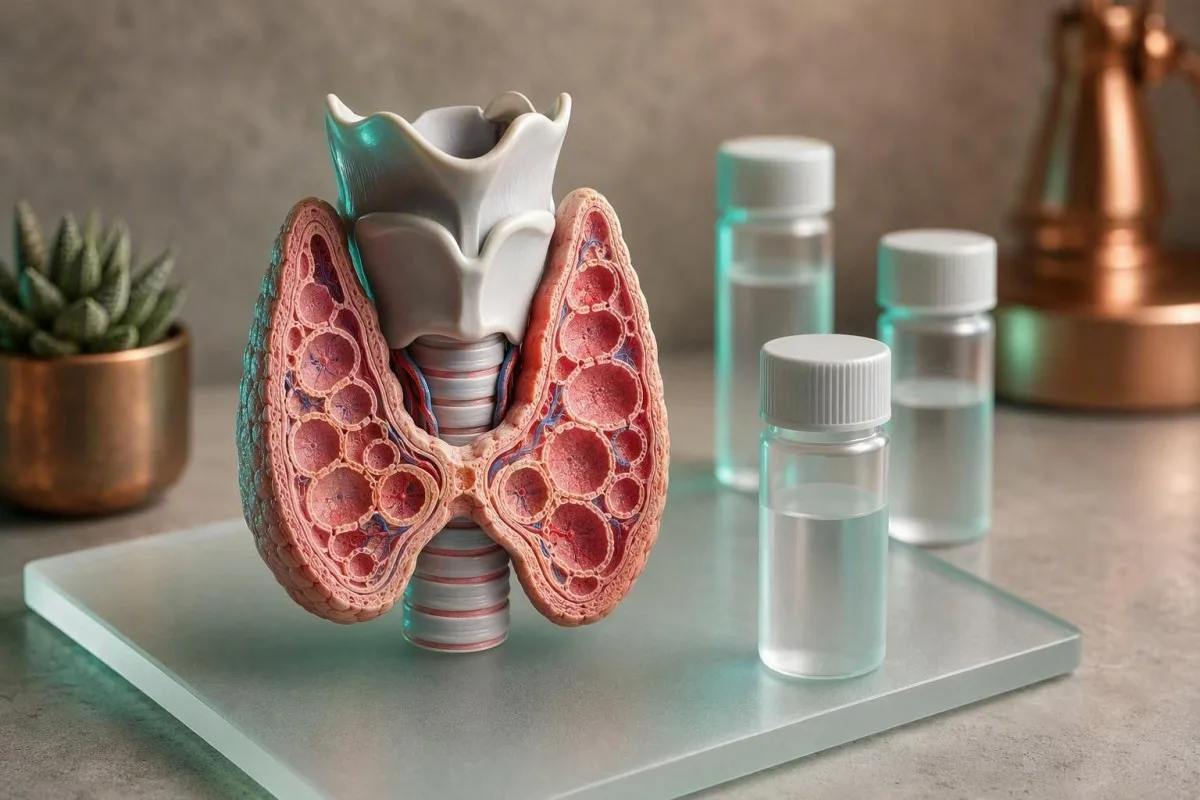
大多数人不需要频繁进行甲状腺检查。合适的间隔取决于您的 TSH 是否正常、您是否怀孕、您是否有症状或您的左甲状腺素剂量最近是否已更改。.

本指南在以下人员的领导下撰写: 托马斯·克莱因医学博士 与……合作 Kantesti AI 医疗顾问委员会, 其中包括 Hans Weber 教授博士的贡献以及 Sarah Mitchell 医学博士、哲学博士的医学审查。.
托马斯·克莱因,医学博士
Kantesti AI首席医疗官
Thomas Klein 博士是经董事会认证的临床血液科医师兼内科医师,拥有超过 15 年的实验室医学与 AI 辅助临床分析经验。作为 Kantesti AI 的首席医疗官,他负责对专有神经网络的医疗准确性进行临床监督。Klein 博士已发表关于生物标志物解读与实验室诊断的研究。.
Sarah Mitchell,医学博士,哲学博士
首席医学顾问 - 临床病理学和内科
Sarah Mitchell博士是获得董事会认证的临床病理科医生,拥有超过18年的实验室医学与诊断分析经验。她在临床化学方面拥有专业认证,并在临床实践中就生物标志物面板与实验室分析发表了大量研究成果。.
汉斯·韦伯教授,博士
实验室医学与临床生物化学教授
Hans Weber教授博士在临床生物化学、实验室医学和生物标志物研究方面拥有30年以上的专业经验。曾任德国临床化学学会主席,他专注于诊断面板分析、生物标志物标准化以及AI辅助的实验室医学。.
- 正常TSH 通常不需要比 1-5 年更频繁地重复检查,除非出现症状、怀孕、用药或新的风险因素。.
- 左甲状腺素剂量更改后, ,在 6-8 周后复查 TSH,因为垂体反馈需要时间来稳定。.
- 妊娠 在已知甲状腺功能减退症的患者中,需要在确诊时以及通常在孕中期前的每周进行 TSH 检查。.
- 稳定治疗的甲状腺功能减退症 通常每 6-12 个月监测一次,而不是每月。.
- TSH 高于 10 mIU/L 通常需要临床评估和治疗讨论,即使游离 T4 仍处于正常范围内。.
- 生物素补充剂 可能导致某些甲状腺免疫测定结果失真;停止高剂量生物素至少 2 天是明智的预防措施。.
- 甲状腺过氧化物酶(TPO)抗体 预测未来会发生甲状腺功能减退症,但不需要进行系列测量来调整左甲状腺素。.
- 需要紧急评估 对于严重的palpitations(心悸)、chest pain(胸痛)、confusion(意识模糊)、marked breathlessness(明显呼吸困难)或rapidly enlarging neck swelling(颈部进行性肿大)是需要的。.
复查甲状腺检查的决定时间表
甲状腺水平的检查频率取决于具体临床情况:初次筛查正常后每1-5年检查一次,剂量调整后每6-8周检查一次,已知患有甲状腺疾病的孕早期每4周检查一次,甲状腺功能减退症治疗稳定后每6-12个月检查一次。. 仅当检查结果可能切实改变治疗方案时,提前进行检查才有意义。.
对于没有甲状腺诊断且正常 促甲状腺激素, 的成人,在没有新症状或风险因素的情况下,每1-5年复查一次通常就足够了。这个较大的间隔反映了各国不同的筛查政策;美国预防服务工作组(USPSTF,2015)认为,针对无症状成人的大规模常规筛查尚未显示出足够的益处,因此不予推荐。.
实际的检查计划比笼统的年度检查更有用:药物或生殖改变后数周内复查,异常情况后数月内复查,仅在积极管理慢性病时每年复查。在我个人的诊所里,最常见的可避免的错误是在改变剂量后10天再次检查TSH——患者会更加焦虑,但结果很少能解答问题。.
Kantesti 是一个 人工智能血液检测分析仪 对比甲状腺结果与过往日期面板,有助于区分有意义的趋势与早期、不确定的复查结果。在每个结果旁边记录原始实验室、采集时间、剂量、妊娠状态和补充剂;这些细节使时间线在临床上更具可解释性。请参阅我们的 血液检测时间指南 以了解值得记录的背景信息。.
何时应复查正常的 TSH
甲状腺无风险因素的成年人,TSH正常通常不需要每年复查;1-5年的间隔是合理的。. 在症状持续、计划妊娠、颈部放疗史或开始服用影响甲状腺功能的药物时,应提前复查。.
大多数实验室将成人 促甲状腺激素 大约设定在0.4-4.0 mIU/L,尽管上限范围约从4.0到4.5 mIU/L不等。2.1 mIU/L的数值并不比3.7 mIU/L本身更好;如果游离T4、症状和临床背景一致,两者都可能是正常的。.
I do retest sooner in people with type 1 diabetes, coeliac disease, prior thyroid surgery, lithium exposure, amiodarone exposure, pituitary disease, or a strong autoimmune family history. Those groups have a higher pre-test probability than an otherwise healthy person who simply feels tired during a difficult month.
A normal TSH does not rule out every cause of fatigue, hair shedding, low mood, or weight change. If the symptom pattern is broad, clinicians often assess a CBC, ferritin, glucose, renal markers, and sometimes B12 rather than ordering thyroid tests every few weeks; our guide to low motivation blood tests explains that wider differential.
正常结果伴随症状:何时仍有必要进行检查
Repeat a thyroid panel in 6-12 weeks when symptoms persist or evolve despite a normal TSH, rather than repeating it days later. New tremor, heat intolerance, resting tachycardia, neck symptoms, menstrual disruption, or unexplained weight change justify a more targeted review.
TSH can shift modestly through the day, between laboratories, and during recovery from illness. A change from 2.0 to 3.1 mIU/L may be ordinary biological variation, whereas a rise from 1.2 to 8.6 mIU/L deserves a different response; this is why trend context matters more than a single flag.
Acute illness can produce low T3 and occasionally low or normal TSH without primary thyroid failure, a pattern often called non-thyroidal illness. Testing during hospitalization may be necessary, but for non-urgent outpatient symptoms I often wait 4-8 weeks after recovery before interpreting a borderline result as chronic disease; see our explanation of 疾病状态下的低T3.
Dr. Thomas Klein's practical rule is simple: repeat a test when the answer would change the next clinical decision. A normal TSH with persistent constipation and cold intolerance may prompt a CBC, ferritin, medication review, and free T4; it should not automatically prompt monthly antibody panels.
左甲状腺素剂量更改后何时复查 TSH
Repeat TSH 6-8 weeks after starting levothyroxine, changing the dose, or switching a formulation. Levothyroxine has a long half-life of roughly 7 days, and the pituitary takes several weeks to reset its TSH output.
A typical dose adjustment is 12.5-25 micrograms daily, especially in older adults or people with coronary disease, although the prescribing clinician individualizes this. Checking TSH at 2 weeks can occasionally help in unusual circumstances, but it is too early for routine dose decisions.
Take levothyroxine consistently with water on an empty stomach, usually 30-60 minutes before food, or at bedtime at least 3-4 hours after the last meal. Calcium, iron, magnesium, antacids, bile-acid binders, and some fiber products can reduce absorption when taken close together; a supposed dose failure is sometimes a timing problem.
A brand or manufacturer change can alter the effective exposure for some patients, particularly those with little endogenous thyroid function. Use the same retesting interval after a switch, as detailed in our levothyroxine brand-switch guide.
稳定甲状腺功能减退症的监测频率
People with stable primary hypothyroidism on an unchanged dose usually need TSH testing every 6-12 months. More frequent checks are appropriate after major weight change, pregnancy, gastrointestinal surgery, interacting medicines, or a return of convincing symptoms.
For most non-pregnant adults treated for primary hypothyroidism, the treatment target is a TSH within the laboratory reference interval rather than a specific low-normal number. Persistently suppressed TSH below 0.1 mIU/L on replacement therapy is associated with atrial fibrillation and bone loss risk, especially after age 65.
Checking 游离 T4 alongside TSH is useful when pituitary disease, central hypothyroidism, pregnancy, adherence uncertainty, or discordant symptoms are present. In central hypothyroidism, TSH can be normal or low despite insufficient hormone replacement, so free T4—not TSH—guides dosing.
Kantesti 是一个 AI 血液检查解读平台 that places TSH, free T4, medication changes, and related iron or lipid results on one longitudinal view. That is particularly helpful because a 游离 T4 低伴 TSH 正常 needs a different clinical pathway from ordinary Hashimoto's hypothyroidism.
TSH 临界升高:合理的复查时间表
A TSH around 4.5-10 mIU/L with normal free T4 is commonly repeated in 6-12 weeks before labeling chronic subclinical hypothyroidism. Repeat sooner when TSH is rising rapidly, pregnancy is present, or symptoms are substantial.
Transient TSH elevation can follow a viral illness, sleep disruption, laboratory variability, or recovery from severe systemic disease. A repeat test after 6-12 weeks prevents many patients from being diagnosed from one marginal result; use the same lab where possible to minimize assay differences.
TSH above 10 mIU/L is the threshold at which most guidelines favor treatment discussion because progression and cardiovascular associations become more concerning. The 2012 joint American Thyroid Association and American Association of Clinical Endocrinologists guideline recommends individualizing treatment below 10 mIU/L according to symptoms, antibodies, age, and cardiovascular context (Garber et al., 2012).
TPO antibodies can refine the outlook: positive antibodies increase the chance that subclinical hypothyroidism will progress, but repeating the antibody titre does not tell us whether the levothyroxine dose is correct. Our 临界值TSH指南 covers the factors that change the decision.
桥本氏甲状腺炎:监测什么以及跳过什么
Hashimoto's disease is monitored mainly with TSH and, when needed, free T4; TPO antibodies do not need serial testing. A euthyroid person with positive TPO antibodies typically needs TSH about once a year, or earlier in pregnancy.
TPO antibodies are present in many people with autoimmune thyroiditis and may remain positive for decades. Falling antibody values do not reliably mean the gland has recovered, and rising values do not by themselves justify changing treatment.
I commonly see patients who have spent money on monthly TPO antibody tests while their TSH has not moved for 18 months. The clinically useful question is whether thyroid hormone production is declining, not whether immune recognition has fluctuated.
If TSH is normal but antibodies are positive, annual TSH is a reasonable default; add a pre-conception check and early pregnancy test if relevant. Read more about TPO抗体阳性且TSH正常 and use our 生物标志物指南 to understand the lab names on your report.
怀孕和备孕甲状腺检查
People with known hypothyroidism should have TSH checked as soon as pregnancy is confirmed and about every 4 weeks until mid-pregnancy, then at least once near 30 weeks. Levothyroxine requirements commonly rise early in pregnancy, sometimes by 20-30%.
The 2017 American Thyroid Association pregnancy guideline uses a TSH upper reference limit of about 4.0 mIU/L when a laboratory has no pregnancy-specific range, rather than applying older universal cutoffs. Trimester- and assay-specific ranges are preferable because thyroxine-binding globulin and hCG alter thyroid physiology (Alexander et al., 2017).
Patients already taking levothyroxine should contact their maternity or endocrine team promptly after a positive test rather than waiting for a routine appointment. Some clinicians advise an immediate empiric increase in weekly tablets for established hypothyroidism, but the exact plan must be individualized—particularly with heart disease or uncertain diagnosis.
After delivery, thyroid requirements often return toward the pre-pregnancy dose over several weeks, so repeat TSH about 6 weeks postpartum unless your clinician advises otherwise. Pregnancy interpretation also benefits from our free T4 pregnancy guide.
怀疑或治疗甲状腺功能亢进症时,检查频率如何?
Suspected hyperthyroidism needs prompt TSH and free T4 testing, often with free T3; treated hyperthyroidism may require free T4 and T3 every 4-6 weeks initially. TSH can remain suppressed for months after hormone levels normalize, so it should not be the only marker used early in treatment.
A low TSH below 0.1 mIU/L with elevated free T4 or free T3 supports overt hyperthyroidism and needs timely clinician review. In Graves' disease treated with antithyroid medication, free T4 and total or free T3 typically guide early adjustments every 4-6 weeks.
Do not use thyroid tests alone to explain a racing heart. Resting pulse consistently above 120 beats per minute, chest pain, fainting, severe breathlessness, fever with agitation, or confusion warrants urgent care, because severe thyrotoxicosis can destabilize the cardiovascular system.
Biotin can produce the misleading pattern of low TSH and high free T4 or T3 on susceptible assays. Stop high-dose biotin, often 5-10 mg daily in hair supplements, for at least 48 hours before testing unless a clinician gives different instructions; our article on high free T3 assay errors 解释了原因。.
甲状腺癌或甲状腺手术后检查
After thyroidectomy or thyroid cancer treatment, testing frequency is individualized and can range from every 6-12 weeks during dose titration to every 6-12 months when stable. TSH targets may be deliberately lower in selected cancer-risk groups, so general hypothyroidism targets do not always apply.
After complete thyroid removal, lifelong levothyroxine is usually required, and the first TSH assessment is generally 6-8 weeks after a dose change. Thyroglobulin and thyroglobulin antibodies may be added in differentiated thyroid cancer surveillance, but their schedule depends on pathology and recurrence risk.
A suppressed TSH is not automatically an error after thyroid cancer. In lower-risk patients, aggressive suppression can increase atrial fibrillation and fracture risk, so endocrinologists balance recurrence prevention against treatment harm rather than pursuing the lowest possible TSH.
Bring pathology, operative reports, ultrasound findings, and every prior thyroglobulin result to specialist review. Kantesti's longitudinal tools can organize the dated laboratory history, but the clinical target should come from your cancer team and medically reviewed standards described in our 临床验证方法.
导致需要提前复查甲状腺检查的药物和补充剂
Lithium, amiodarone, interferon, immune checkpoint inhibitors, iodine exposure, and high-dose biotin can alter thyroid tests or thyroid function. The retesting interval ranges from days for suspected severe medication-related thyrotoxicosis to 3-6 months for stable monitoring plans.
Lithium can reduce thyroid hormone release and is commonly monitored with TSH before treatment and at intervals decided jointly by psychiatry and primary care, often every 6-12 months once stable. Amiodarone contains substantial iodine and can cause either hypo- or hyperthyroidism; baseline and periodic thyroid testing are standard clinical practice.
Iron and calcium do not change thyroid function directly, but they can lower levothyroxine absorption when taken near the dose. Separating them by at least 4 hours is a practical starting point, particularly for people also treating iron deficiency; see our guide to foods high in iron.
Avoid self-treating a borderline TSH with kelp or concentrated iodine products. Excess iodine can trigger thyroid dysfunction in susceptible people, while ordinary dietary iodine needs are modest; our iodine foods guide gives safer food-based context.
何时检查甲状腺水平过于频繁可能产生误导
Testing TSH every few days or weeks can create false alarms because TSH has biological variation and responds slowly to dose changes. For stable primary hypothyroidism, testing more often than every 6 months rarely improves outcomes.
The temptation is understandable: a person feels unwell, sees a number, and wants certainty. Yet repeated measurements create more opportunities for small shifts around a cutoff, especially when collection time, recent illness, fasting status, supplements, and laboratory method differ.
TSH secretion follows a circadian rhythm and tends to be higher overnight and early morning. When monitoring a trend, use similar collection timing where feasible and do not take levothyroxine immediately before a free T4 measurement unless the clinician specifically wants a post-dose level.
Kantesti 是一个 基于 AI 的血液检测分析工具 that flags changes against prior values rather than treating each minor out-of-range mark as a new diagnosis. For a calmer method, compare results side by side using the principles in our lab change guide.
每次随访时应进行哪些甲状腺检查
TSH is the best first follow-up test for most primary thyroid disorders, while free T4 is added for abnormal TSH, pregnancy, central hypothyroidism, and discordant symptoms. Free T3, antibodies, thyroglobulin, and ultrasound are selective tests rather than routine monthly additions.
TSH measures pituitary response, not thyroid hormone itself. Free T4 estimates circulating available thyroxine, while free T3 is most useful when hyperthyroidism is suspected because some patients have T3-predominant disease with normal free T4.
Thyroid ultrasound is not a screening test for abnormal TSH alone. It is most useful for a palpable nodule, asymmetric gland, compressive symptoms, suspicious lymph nodes, or known nodules needing imaging follow-up; normal blood tests do not exclude structural thyroid findings.
A one-page result summary can prevent duplicated testing and improve the next appointment. Our thyroid test abbreviation guide explains the common markers, and the Kantesti 医疗咨询委员会 oversees clinical review standards for educational interpretation.
何时不要等待下次计划的甲状腺检查
Seek urgent medical assessment rather than waiting for routine thyroid testing if you have chest pain, fainting, severe breathlessness, confusion, a resting pulse above 120, high fever with agitation, or rapidly worsening neck swelling. These symptoms need clinical examination, vital signs, and sometimes ECG or imaging—not a home schedule alone.
Rapid neck enlargement, new hoarseness, trouble swallowing, or noisy breathing requires prompt assessment even if a previous TSH was normal. Blood tests describe hormone physiology; they cannot reliably evaluate airway compression, a thyroid nodule, or an expanding neck mass.
For milder but persistent concerns, book a focused review with your clinician and bring medication doses, supplement labels, pregnancy status, and dated results. Dr. Thomas Klein has found that this basic preparation often prevents the two unhelpful extremes: dismissing symptoms because TSH is normal, or escalating every isolated laboratory deviation.
As of August 27, 2026, the safest thyroid testing schedule remains decision-based: test when a changing result could change care. Kantesti AI supports result organization and education, not diagnosis or emergency triage; our AI技术指南 explains the intended clinical-support role.
常见问题
如果我的甲状腺水平正常,应该多久检查一次?
甲状腺检查 TSH 正常且无甲状腺风险因素的成人通常每 1-5 年才需要复查一次甲状腺检查,而不是每年。如果出现新的持续性症状、计划或确认怀孕、颈部放疗史或开始服用锂、胺碘酮或其他与甲状腺相关的药物,则应尽早复查。典型的成人 TSH 参考范围约为 0.4-4.0 mIU/L,尽管实验室会设定自己的限值。正常结果不能排除非甲状腺原因导致的疲劳、体重变化或脱发。.
更改左甲状腺素后多久应重新检测 TSH?
开始服用左甲状腺素、更改每日剂量或更换产品剂型后 6-8 周通常应重新检测 TSH。左甲状腺素的半衰期约为 7 天,垂体 TSH 反馈需要几周时间才能达到新的平衡。大多数剂量调整为每天 12.5-25 微克,尽管年龄、体型、心脏病史和怀孕会改变方案。通常在 1-2 周时检测为时过早,不足以指导常规调整。.
甲状腺功能减退症应多久监测一次?
经稳定原发性甲状腺功能减退症,使用不变的左甲状腺素剂量治疗,通常每 6-12 个月监测一次 TSH。在剂量改变 12.5-25 微克、怀孕、体重显著改变、胃肠道手术或引入相互作用药物后,应尽早进行检测。替代治疗中 TSH 低于 0.1 mIU/L 值得医生进行评估,因为长期过量替代会增加房颤和骨质疏松的风险。当可能存在垂体疾病或中枢性甲状腺功能减退时,游离 T4 尤其有用。.
孕期应多久检查一次甲状腺水平?
已确诊甲状腺功能减退的女性在确认怀孕时,以及在妊娠 16-20 周前约每 4 周应检查一次 TSH,然后在妊娠约 30 周时至少检查一次。左甲状腺素的用量在妊娠早期通常需要增加 20-30%,但具体调整应由产科或内分泌团队决定。当没有当地的孕期特异性参考范围时,2017 年美国甲状腺协会指南使用约 4.0 mIU/L 的 TSH 上限作为参考。如果妊娠期间调整了左甲状腺素的剂量,通常应在产后约 6 周重新检查 TSH。.
TSH 查得太频繁是否不好?
TSH 检查过于频繁可能具有误导性,因为激素在生物学上会变异,并且在治疗调整后变化缓慢。甲状腺素改变后 10-14 天重复检测可能显示出变化,但未能反映最终的治疗效果,而最终效果在 6-8 周后才更明显。稳定的已治疗的甲状腺功能减退症很少从每月 TSH 检测中获益。监测趋势时,使用相同的实验室和相似的采集时间,以减少可避免的变异。.
Should TPO antibodies be repeated in Hashimoto's disease?
在桥本氏甲状腺炎中,TPO抗体水平通常不需要重复检测,因为它们不指导左甲状腺素的剂量调整。TPO抗体阳性结果支持自身免疫性甲状腺炎,并预测未来发生甲状腺功能减退的风险较高,但有用的随访指标是TSH,有时也包括游离T4。TPO抗体阳性的甲状腺功能正常者通常每年检查一次TSH。计划或确认怀孕时应尽早进行检测。.
立即获取AI驱动的血液检测分析
加入全球超过2,000,000名用户,他们信任Kantesti进行即时、准确的检验分析。上传你的血液检查结果,并在几秒内获得对15,000+生物标志物的全面解读。.
📚 参考研究论文
Klein, T., Mitchell, S., & Weber, H. (2026). AI血液检测分析:已分析2.5M项检测 | 全球健康报告2026. Kantesti AI医学研究。.
Klein, T., Mitchell, S., & Weber, H. (2026). RDW血液检查:RDW-CV、MCV和MCHC完整指南. Kantesti AI医学研究。.
📖 外部医学参考资料
📖 继续阅读
从 坎特什蒂 医疗团队探索更多经过专家审核的医学指南:

B12 注射剂与片剂:哪种能更快提高水平?
维生素 B12 检验解读 2026 年更新 患者友好型注射可立即引起血清峰值,但高剂量口服 B12 通常…….
阅读文章 →
SIADH 血液检查:钠、渗透压和尿液线索
低钠血症实验室检查解读 2026 年更新 患者友好版 SIADH 是一种模式诊断,而非单一异常结果。有用的…….
阅读文章 →
再生障碍性贫血血液检查:CBC 警示模式
血液学实验室解读 2026 年更新 患者友好版 再生障碍性贫血通常会产生显著的 CBC 三系异常模式:贫血、白细胞减少…….
阅读文章 →
儿童大便pH值低意味着什么:碳水化合物的线索
儿科消化内科实验室解读 2026 更新 患者友好型 粪便呈酸性可能提示未吸收糖类发酵,但它….
阅读文章 →
尿液中的黏液丝:原因、检查和警示信号
尿液健康实验室解读 2026 年更新 患者友好型 尿液显微镜报告中的粘液通常是收集问题…….
阅读文章 →
尿液中的上皮细胞:类型、意义及后续步骤
尿液分析实验室解读 2026 更新 患者友好型 尿液中大多数上皮细胞来自正常脱落或收集污染,...
阅读文章 →发现我们所有的健康指南以及 基于AI的血液检查分析工具 在 kantesti.net
⚕️ 医疗免责声明
本文仅用于教育目的,不构成医疗建议。诊断和治疗决策请始终咨询合格的医疗专业人员。.
E-E-A-T信任信号
经验
由医生主导的临床审阅:实验室解读工作流程。.
专业知识
实验室医学重点:生物标志物在临床情境中的表现。.
权威
由 Thomas Klein 博士撰写,并由 Sarah Mitchell 博士与 Hans Weber 教授审阅。.
可信度
基于循证的解读,并提供清晰的后续路径以减少警报。.