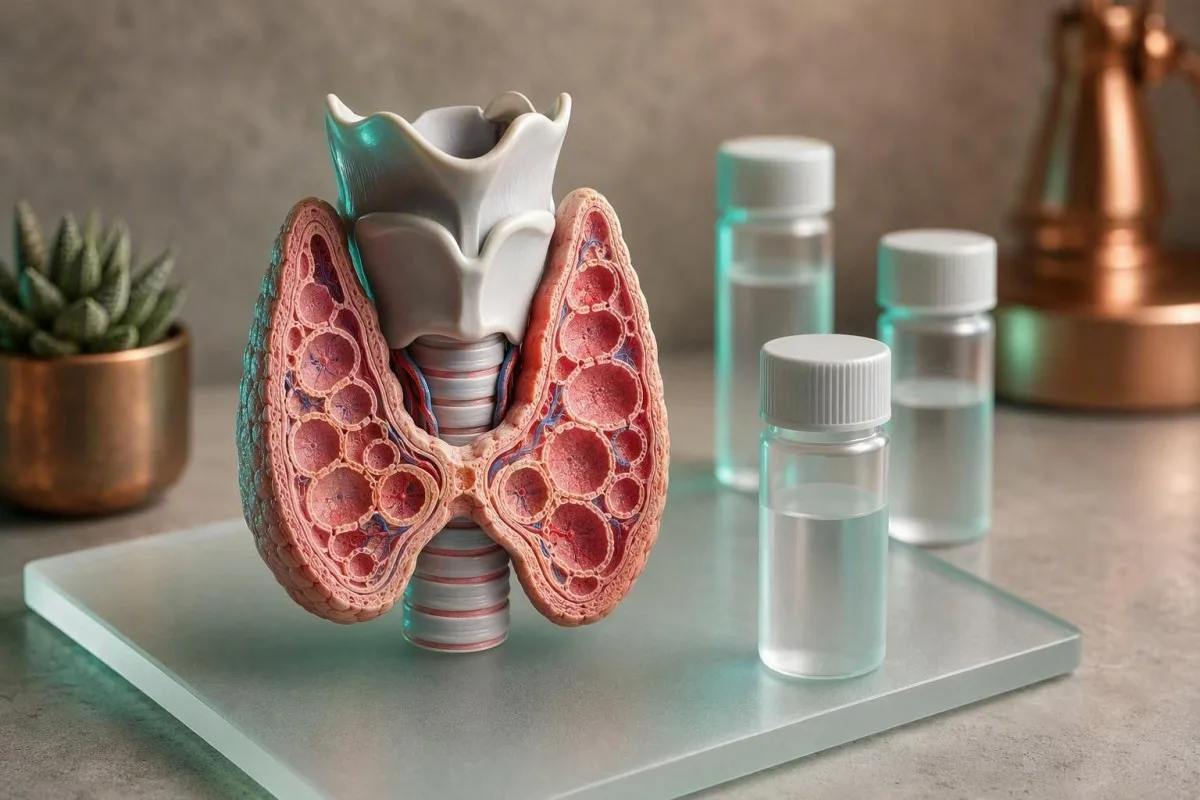
La plej multaj homoj ne bezonas oftajn tiroide-analisiajn. La ĝusta intervalo dependas de ĉu via TSH estas normala, vi gravedas, vi havas simptomojn, aŭ via levotiroksina dozo lastatempe ŝanĝiĝis.


- TSH normala ĝenerale ne bezonas ripetiĝi pli ofte ol ĉiu 1-5 jaroj, krom se simptomoj, gravedeco, medikamentoj aŭ novaj riskfaktoroj ekestas.
- Post levotiroksinaj ŝanĝoj, ripteri TSH post 6-8 semajnoj, ĉar hipofiza retrosciigo bezonas tempon por stabiligi.
- Haurdunaldia postulas TSH-testadon ĉe konfirmo kaj kutime ĉiujn 4 semajnojn ĝis mez-gravedeco ĉe homoj kun konata hipotiroidismo.
- Stabila traktita hipotiroidismo estas kutime monitorata ĉiujn 6-12 monatojn, ne monate.
- TSH 10 mIU/L-tik gora kutime pravigas klinikan taksadon kaj traktan diskuton, eĉ kiam libera T4 restas ene de la limoj.
- Biotina osagarriak povas distordi kelkajn tiroidajn imunoanalizojn; ĉesi alt-dozan biotinon dum almenaŭ 2 tagoj estas sentebla antaŭzorgo.
- TPO aurkako antigorputzak antaŭdiras estontan hipotiroidismon sed ne bezonas serian mezuradon por ĝustigi levotiroksinon.
- Urgent assessment necesas por severaj palpebrumoj, brustodoloro, konfuzo, markita senspira manko, aŭ rapide pligrandiĝanta koloŝvelo.
Deklara horaro por ripeti tiroide-analisiajn
Tiroidearen mailak zenbat maiz egiaztatu behar diren egoera klinikoaren araberakoa da: 1-5 urtean behin, azterketa normal bat egin ondoren, 6-8 astean behin dosia aldatu ondoren, haurdunaldiaren hasieran 4 astean behin tiroideo gaixotasuna ezaguna denean, eta 6-12 hilean behin hipotiroidismoa tratamenduarekin egonkorra denean. Lehenago probatzea baliagarria da emaitza batek zentzuz zainketa aldatu dezakeenean bakarrik.
Tiroide-diagnostikorik ez eta normal bat duen heldu batentzat TSH, 1-5 urtean behin proba errepikatzea nahikoa da, sintoma berriak edo arrisku-faktorerik ez badago. Tarte zabalak nazio-mailako baheketa-politika desberdinak islatzen ditu; biztanleria osoko baheketa errutinoak ez du onura argirik erakutsi AEBetako Prebentzio Zerbitzuen Task Forcearentzat, baita asintomatikoentzako ere (USPSTF, 2015).
Ordutegi praktikoagoa da urteroko proba orokor bat baino erabilgarriagoa: aste barruan sendagaia edo aldaketa erreproduktiboa egin ondoren, hilabete barruan anomalia bat egon ondoren, eta urtero bakarrik kudeatzen den baldintza kroniko bat dagoenean. Nire klinikan, ohikoena den akatsa saihesteko modukoa da TSH berriro egiaztatzea dosia aldatu eta 10 egunera; antsietatea sortzen da, baina emaitzak gutxitan ematen du erantzuna.
Kantesti bat da. AI odol-analisi analizatzailea Tiroide-emaitzak data zehatza duten aurreko panelekin alderatzen dituena, hau da, joera esanguratsua bereizten laguntzen du berriz aztertze goiztiar eta zaratatsu batetik. Mantendu jatorrizko laborategia, bilketa-ordua, dosia, haurdunaldiaren egoera eta osagarriak emaitza bakoitzaren ondoan; xehetasun horiek denboraren lerroa klinikoan ulergarria egiten dute. Ikusi gure odol-probaren denbora-gidak grabatzea merezi duen testuingurua.
Kiam normala TSH devus esti ripetita
TSH normal batek ez du urteroko errepikapenik behar tiroide-arriskurik ez duen heldu osasuntsu batean; 1-5 urteko tartea arrazoizkoa da. Lehenago errepikatu sintomak iraunkorrak badira, haurdunaldia aurreikusita badago, lepoan erradiazioa gertatu bada, edo tiroide-funtzioari eragiten dioten botikak hasi badira.
Laborategi gehienek helduentzako TSH inguru 0.4-4.0 mIU/L inguruan kokatzen dute, nahiz eta goiko mugak 4.0 eta 4.5 mIU/L inguru izan. 2.1 mIU/L balioa ez da berez hobeto 3.7 mIU/L baino; biak izan daitezke normalak, T4 librea, sintomak eta testuinguru klinikoa bat badatoz.
Diabetea duten pertsonetan, coeliac-ak, tiroide-kirurgian aurretik, litio-esposizioa, amiodarona-esposizioa, hipofisi-gaixotasuna edo familia-historia autoimmune sendoa dutenengan lehenago berriro probatzen dut. Talde horiek proba aurreko probabilitate handiagoa dute hilabete zail batean nekatuta sentitzen den pertsona osasuntsu batena baino.
TSH normal batek ez du nekezaren, ilea galtzearen, umore baxuaren edo pisua aldatzearen kausa guztiak baztertzen. Sintoma-eredua zabala bada, klinikoek askotan aztertzen dute CBC, ferritina, glukosa, giltzurrunetako markatzaileak eta batzuetan B12 tiroide-analisia aste gutxitan eskatzearen ordez; gure gidaliburua motibazio baxuko odol-analisien ingurukoa diferentzia zabalagoa azaltzen du.
Simptomoj kun normalaj rezultoj: kiam testado ankoraŭ estas regebla
Errepikatu tiroide-analisia 6-12 aste barru, sintomak irauten badute edo TSH normala izan arren eboluzionatzen badute, egun batzuk geroago errepikatu beharrean. Dardara berria, beroarekiko intolerantzia, takikardia atsedenaldian, lepoan sintomak, hileroko etenak edo azaldu gabeko pisua aldatzeak berrikuspen zehatzagoa justifikatzen dute.
TSH egunean zehar, laborategien artean eta gaixotasunetatik berreskuratzen ari den bitartean modu apalean alda daiteke. 2,0tik 3,1 mIU/L-rako aldaketa ohiko aldaketa biologikoa izan daiteke, baina 1,2tik 8,6 mIU/L-rako igoerak beste erantzun bat merezi du; horregatik, joeraren testuinguruak flag- bakar bat baino gehiago balio du.
Gaixotasun akutuek T3 baxua eta batzuetan TSH baxua edo normala sor dezakete, tiroide-hutsegite primariorik gabe; hau askotan ez-tiroide gaixotasuna deritzon eredu bat da. Ospitaleratzean probak egitea beharrezkoa izan daiteke, baina ez-larrialdiko anbulatorioko sintomak direnean, 4-8 aste itxaroten dut berreskuratu ondoren emaitza mugatua gaixotasun kroniko gisa interpretatu aurretik; ikusi gure azalpena gaixotasunaldian T3 baxua.
Thomas Klein doktorearen arau praktikoa sinplea da: errepikatu proba bat, erantzunak hurrengo erabaki klinikoa aldatuko balu. Idorreria eta hotzerako intolerantzia iraunkorrekin TSH normal batek CBC, ferritina, botiken berrikuspena eta T4 librea eska ditzake; ez ditu automatikoki hileroko antigorputz-panelei deitu behar.
Kiam ripteri TSH post levotiroksinaj ŝanĝoj
Errepikatu TSH 6-8 aste barru levotiroxina hasi ondoren, dosia aldatu edo formulazio bat aldatu ondoren. Levotiroxinak 7 egun inguruko erdi-bizitza luzea du, eta hipofisiak hainbat aste behar ditu bere TSH-irteera berrezartzeko.
Dosiaren ohiko doikuntza eguneko 12,5-25 mikrogramakoa da, batez ere adinekoengan edo bihotzeko gaixotasuna dutenengan, nahiz eta preskribatzen duen klinikoak pertsonalizatu egiten duen. TSH 2 astean egiaztatzeak noizbait lagun dezake egoera berezietan, baina goizegi da ohiko dosien erabakietarako.
Hartu levotiroxina koherentziaz urarekin urdailean hutsik, normalean 30-60 minutu jan aurretik, edo oheratzean azken otordutik gutxienez 3-4 ordu igaro ondoren. Kaltzioak, burdinak, magnesioak, antiazidoek, behazun-azidoen lotzaileek eta zuntz produktuek xurgapena murrizten dute elkarrekin hartzen direnean; dosi-porrot suposatu bat batzuetan denbora-arazo bat da.
Marka edo fabrikatzaile baten aldaketak eragin dezake esposizio eraginkorra zenbait pazientetan, batez ere endogenoen funtzio tiroide txikia dutenengan. Erabili berriro probatzeko tarte bera aldatu ondoren, gurean zehazten den bezala levotiroxina marka-aldaketa gidaliburua.
Kiel ofte monitori stabilan hipotiroidismon
Hipotiroidismo primario egonkorra duten pertsonak, dosi aldatu gabe, normalean TSH probak behar dituzte 6-12 hilean behin. Maizago egiaztatzeak egokiak dira pisu-aldaketa handia, haurdunaldia, gastrointestinaleko kirurgia, elkarreragile diren botikak edo sintoma sinesgarriak itzultzea gertatu ondoren.
Haurdun ez dauden heldu gehienentzat, hipotiroidismo primarioa tratatzen dutenentzat, tratamenduaren helburua laborategiko erreferentzia-tartearen barruan TSH bat da, zenbaki zehatz baxu eta normal bat baino. Ordezko terapian 0,1 mIU/L azpiko TSH etengabe zapalduta egotea fibrilazio aurikularrarekin eta hezur-galeraren arriskuarekin lotuta dago, batez ere 65 urtetik aurrera.
Egiaztatzea T4 askea TSH-arekin batera, baliagarria da hipofisi-gaixotasuna, hipotiroidismo zentrala, haurdunaldia, atxikimendu-ezbaia edo sintoma desadostasunak egonez gero. Hipotiroidismo zentralean, TSH normala edo baxua izan daiteke hormona-ordezkapen nahikoa izan arren; beraz, T4 librea—ez TSH—dosien gidaria da.
Kantesti bat da. AI odol-analisien interpretazio-plataforma TSH, T4 librea, botiken aldaketak eta lotutako burdin edo lipidoen emaitzak ikuspegi longitudinal batean jartzen dituena. Hori bereziki lagungarria da, TSH normalarekin T4 librea baxua
Hashimotoaren hipotiroidismo arrunta baino ibilbide kliniko desberdinagoa behar du.
.Lima alta TSH: la sentebla repeta horaro
4,5-10 mIU/L inguruko TSH bat, T4 normalarekin, 6-12 astean errepikatzen da normalean, hipotiroidismo subkliniko kroniko izendatu aurretik.
Errepikatu lehenago TSH azkar igotzen denean, haurdunaldia dagoenean edo sintomak nabarmenak direnean.
.
TSH mugakideak berretsi behar dira epe luzerako etiketa bat eman aurretik.
.TSH iragankorrak baliteke: birus-gaixotasun bat, loaren etenaldia, laborategiko aldakortasuna edo gaixotasun sistemiko larri batetik berreskuratzea. 6-12 aste igaro ondoren errepikatzen den probak paziente asko emaitza marjinal bakar batetik diagnostikatzea eragozten du; erabili laborategi bera ahal denean saiakuntza-desberdintasunak minimizatzeko.
.TSH gorago
10 mIU/Lgehienezko tarte horretan jarraibide gehienek tratamendu-eztabaida egitea hobesten dute, progresioa eta kardiobaskularren elkarteak kezkagarriagoak bihurtzen direlako.
American Thyroid Association eta American Association of Clinical Endocrinologists-en 2012ko jarraibide bateratuak tratamendua 10 mIU/L azpitik banakatzea gomendatzen du sintomak, antigorputzak, adina eta kardiobaskularren testuingurua kontuan hartuta (Garber et al., 2012).
TPO antigorputzek iragarpena hobetu dezakete: antigorputz positiboek hipotiroidismo subklinikoa progresatzeko aukera handitzen dute, baina antigorputz-titulua errepikatzeak ez digu esaten levotiroxina-dosi zuzena den. Gure
muga-lerroko TSH gidakaldatzen dituzten faktoreak hartzen ditu kontuan.
.Hashimoto-malsano: kion monitori kaj kion preterlasi
Hashimotoaren gaixotasuna batez ere TSH bidez monitorizatzen da eta, behar denean, T4 askea; TPO antigorputzek ez dute proba segidarik behar.
TPO antigorputz positiboak dituen pertsona eutiroidiko batek normalean TSH proba bat egiten du urtean behin, edo lehenago haurdunaldian.
.
Antigorputzek testuinguru autoimmune bat ezartzen dute, TSH jarraipen jarraia gidatzen duen bitartean.
.TPO antigorputzak tiroide autoimmunea duten pertsona askotan agertzen dira eta hamarkadetan positibo iraun dezakete. Antigorputz-balioak jaisteak ez du fidagarritasunez esan nahi guruina berreskuratu denik, eta balioak igotzeak ez du berez tratamendua aldatzea justifikatzen.
.Hilero TPO antigorputz probak egiteagatik dirua gastatu duten pazienteak ikusten ditut maiz, TSH 18 hilabetez mugitu gabe egon den bitartean. Galdera kliniko erabilgarria da ea tiroideo hormonen ekoizpena jaisten ari den, ez ea ezagutza immunologikoa fluktuatu den.
.TSH normala bada baina antigorputzak positiboak badira, urteko TSH proba bat arrazoizko aukera da; gehitu kontsulta aurreko proba eta haurdunaldi goiztiarreko proba, egokia bada. Irakurri gehiago kloroaren eta gatzaren inguruan eta erabili gure
TPO antigorputz positiboak TSH normala duteneanlaborategiko probak ezagutu zure txostenean laburpen izenak ulertzeko.
biomarkatzaile-gidaklaborategiko probak ezagutu zure txostenean laburpen izenak ulertzeko.
.Gravedeco kaj antaŭ-koncipa tiroidea testado
Hipotoidismoa duten pazienteek TSH proba egin beharko lukete haurdunaldia baieztatu bezain laster eta gutxi gorabehera lau astez erditu arte, gero gutxienez behin 30. aste inguruan.
Levotiroxinaren beharrarrak normalean handitzen dira haurdunaldian goiz, batzuetan -30 arte.
.
Haurdunaldiaren aldaketak tiroideo hormonen beharrarrak aldatzen ditu eta proba-tarteak laburtzen ditu.
.2017ko American Thyroid Association-en haurdunaldiari buruzko jarraibideak 4,0 mIU/L inguruko goiko mugarekin erabiltzen du TSH proban, laborategiak ez badu haurdunaldirako tarte zehatzik, zahar unibertsalak aplikatu beharrean. Trimester- eta saiakuntza-tarte espezifikoak hobesten dira, tiroide-lotura globulinak eta hCGk tiroideoaren fisiologia aldatzen dutelako (Alexander et al., 2017).
.Dagoeneko levotiroxina hartzen ari diren pazienteek berehala jarri beharko dute harremanetan beren amatasun- edo endokrino-taldearekin, proba positiboaren ondoren, hitzordu arrunta itxaron beharrean. Kliniko batzuek asteko pilulen berehalako igoera enpirikoa gomendatzen dute hipotiroidismo finkatua dutenentzat, baina plan zehatza banakakoa izan behar da, bereziki bihotzeko gaixotasunak edo diagnostiko ez ziurra dutenentzat.
.Erditzearen ondoren, tiroideoaren beharrarrak haurdunaldi aurreko dosira itzultzen dira normalean, aste batzuetan, beraz, errepikatu TSH proba erditu ondorengo 6 astetan, zure klinikoak kontrakoa aholkatzen ez badu. Haurdunaldiaren interpretazioak ere gure
libre T4 haurdunaldi gida
.Kiel ofte testi kiam hipertiroidismo estas suspektata aŭ traktata
Hipertiroidismo susmagarriak berehalako TSH eta T4 proba azkarrak behar ditu, askotan T3 librearekin; tratatutako hipertiroidismoak T4 eta T3 libreak behar izan ditzake hasieran 4-6 astero.
0.1 mIU/L azpiko TSH baxuak, T4 askea edo T3 askea altxatua duena, hiper Tiroideismo agerian dagoela onartzen du eta medikuaren berrikuspen puntuala behar du. Tiroidearen aurkako botikekin tratatutako Gravesen gaixotasunean, T4 librea eta T3 totala edo librea normalean 4-6 astean behin doikuntza goiztiarrak gidatzen dituzte.
Ez erabili tiroide-analisiak bakarrik bihotz-taupada azkarra azaltzeko. Minutuko 120 taupadatik gorako atseden-pultsua, bularreko mina, zorabioak, arnasestu larria, sukarra agitazioarekin edo nahasmena izanez gero, larrialdi-arreta behar da, Tiroideismo larriak sistema kardiobaskularra desegonkortu dezakeelako.
Biotina TSH baxua eta T4 librea edo T3 librea altua duen eredu engainagarria sor dezake saiakuntza suszeptiboetan. Gelditu biotina dosi altua, sarritan eguneko 5-10 mg ile-osagarrietan, gutxienez 48 orduz probatu aurretik, medikuak beste argibide batzuk ematen ez baditu; gure artikulua T3 librearen saiakuntza akatsak azaltzen du zergatik.
Testado post tiroida kancero aŭ tiroida kirurgio
Tiroidektomiaren edo tiroide-minbiziaren tratamenduaren ondoren, proben maiztasuna indibidualizatzen da eta 6-12 astetik behin dosiaren titrazioen bitartean 6-12 hilean behin izan daiteke egonkor dagoenean. TSH helburuak nahitaez baxuagoak izan daitezke minbiziaren arrisku-talde hautatuetan, beraz, hipotiroidismo orokorreko helburuak ez dira beti aplikatzen.
Tiroide guztia kendu ondoren, bizitza osorako levotiroxina behar da normalean, eta lehenengo TSH ebaluazioa 6-8 aste inguru izaten da dosia aldatu ondoren. Tioglobulina eta tiroglobulina antigorputzak minbizi tiroidearen zaintzan gehi daitezke, baina haien egutegiak patologiaren eta errekurrentziaren arriskuaren araberakoak dira.
TSH moteldua ez da automatikoki akats bat tiroide-minbiziaren ondoren. Arrisku txikiagoko pazienteetan, errepresio oldarkorrak fibrilazio aurikularraren eta haustura arriskua areagotu dezake, beraz, endokrinologoek errekurrentzia prebentzioa tratamenduaren kaltearen aurka orekatzen dute TSH ahalik eta txikiena lortu beharrean.
Ekarri patologia, txosten operatiboak, ultrasoinu-aurkikuntzak eta aurreko tiroglobulina emaitza guztiak espezialista baten berrikuspenera. Kantestiren tresna longitudinalek laborategiko historia datatua antola dezakete, baina helburu klinikoa zure minbizi-taldeak eta gurean deskribatutako medikoki berrikusitako estandarrek eman beharko lukete baliozkotze klinikoaren ikuspegia.
Medikamentoj kaj suplementoj, kiuj pravigas pli fruan tiroidan reteston
Litioak, amiodaronak, interferoiak, kontrol-puntu inhibitzaile immunologikoek, iodo-esposizioak eta biotina dosi altuak tiroide-analisiak edo tiroide-funtzioa alda ditzakete. Berriz probatzeko tartea egunekoa da susmatutako botiken eraginezko tiroideismo larriarengatik, 3-6 hilabetekoa monitorizazio-plan egonkorretarako.
Litioak tiroide-hormonaren askapena murriz dezake eta normalean TSH-rekin kontrolatzen da tratamenduaren aurretik eta psikiatria eta lehen mailako arretak batera erabakitako tarteetan, askotan 6-12 hilean behin egonkor dagoenean. Amiodaronak iodo kantitate handia dauka eta hipotiroidismoa edo hiper Tiroideismoa sor dezake; hasierako eta aldizkako tiroide-probak ohiko praktika klinikoa dira.
Burdinak eta kaltzioak ez dute tiroide-funtzioa zuzenean aldatzen, baina levotiroxina xurgapena murriz dezakete dosiaren ondoan hartzen direnean. Gutxienez 4 orduz bereiztea hasiera praktikoa da, batez ere burdinaren gabezia tratatzen duten pertsonentzat; ikusi gure gida burdina duten elikagaiei buruzkoa.
Saihestu TSH mugakorra kelparekin edo iodo produktu kontzentratuekin autotratatzea. Iodo gehiegik tiroide-disfuntzioa sor dezake jende suszeptiboan, eta dietako iodo beharrak apalak dira; gure iodo elikagaien gida elikagaien testuinguru seguruagoa eskaintzen du.
Kial tro ofte testado de tiroidaj niveloj povas misinformi
TSH egun edo aste gutxitan probatzeak faltsuak sortu ditzake, TSHak aldakortasun biologikoa duelako eta dosi aldaketei poliki erantzuten dielako. Hipotiroidismo primario egonkorrerako, 6 hilabetetik behin baino gehiagotan probatzeak gutxitan hobetzen ditu emaitzak.
Tenptazioa ulergarria da: pertsona bat gaizki sentitzen da, zenbaki bat ikusten du eta ziurtasuna nahi du. Hala ere, neurketek aukera gehiago sortzen dituzte mozketa baten inguruko aldaketa txikietarako, batez ere bilketa denbora, azken gaixotasuna, baraualdia, osagarriak eta laborategiko metodoa desberdinak direnean.
TSHren jariaketak erritmo zirkadianoa jarraitzen du eta gauean eta goizean goiz altuagoa izaten da. Joera bat kontrolatzean, erabili antzeko bilketa-denborak, ahal den neurrian, eta ez hartu levotiroxina T4 librearen neurketa egin aurretik, medikuak post-dosi maila bat nahi ez badu behintzat.
Kantesti bat da. AI bidezko odol-analisien analisi-tresna balioekiko aldaketak adierazten ditu, balio potentzialki ezohiko bakoitza diagnostiko berri gisa tratatu beharrean. Metodo lasaiago bat lortzeko, alderatu emaitzak ondo-ondoan gure printzipioak erabiliz laborategiko aldaketen gida.
Kiujn tiroide-analisiajn mendi ĉe ĉiu postobservado
TSH da lehenengo jarraipen-analisia tiroide-nahaste primario gehienentzat, eta T4 librea gehitzen da TSH anormala, haurdunaldia, hipotiroidismo zentrala eta sintoma diskordanteak izanez gero. T3 librea, antigorputzak, tiroglobulina eta ultrasoinua hautazko analisiak dira, ez ohiko hileko gehigarriak.
TSHk hipofisiaren erantzuna neurtzen du, ez tiroide-hormona bera. T4 librea zirkulatzen dagoen tiroxina erabilgarria estimatzen du, eta T3 librea bereziki erabilgarria da hipertiroidismoa susmatzen denean, paziente batzuek T3 nagusia duten gaixotasuna baitute T4 librea normala dutela.
Tiroide-ultrasoinua ez da TSH anormala bakarrik aztertzeko analisi bat. Nodulu palpagarri bat, guruin asimetrikoa, sintoma konpresiboak, nodulu linfatiko susmagarriak edo irudien jarraipena behar duten nodulu ezagunak aztertzeko da baliagarriena; odol-analisi normalek ez dute baztertzen tiroide-aurkikuntza estrukturalak.
Orri bakarreko emaitzen laburpen batek probak bikoiztea saihestu dezake eta hurrengo hitzordua hobetu. Gure tiroide-analisiaren laburpen-gida ohiko markatzaileak azaltzen ditu, eta Kantesti mediese adviesraad sintoma hauek azterketa klinikoa, bizi-seinaleak eta batzuetan EKG edo irudiak behar dituzte, ez soilik etxeko ordutegi bat.
Kiam ne atendi la sekvan planitan tiroidan teston
Bilatu premiazko ebaluazio medikoa ohiko tiroide-analisiaren zain egon beharrean, bularreko mina, zorabioak, arnasestu larria, nahasmendua, atsedenaldiko pultsua 120tik gora, sukar altua agitazioarekin edo lepoaren hantura azkar okertzen bada. Sintoma hauek azterketa klinikoa, bizi-seinaleak eta, batzuetan, ECG edo irudiak behar dituzte, ez etxeko egutegia bakarrik.
Lepoaren handitze azkarra, hozkada berria, irensteko zailtasuna edo arnasestua egotea ebaluazio azkarra eskatzen dute, aurreko TSH normala izan arren. Odol-analisieek hormona-fisiologia deskribatzen dute; ezin dute fidagarritasunez ebaluatu airebide-konpresioa, tiroide-nodulua edo lepo-masaren hedapena.
Kezka leunagoak baina iraunkorrak izanez gero, erreserbatu berrikuspen zehatz bat zure medikuarekin eta ekarri botiken dosiak, osagarrien etiketak, haurdunaldiaren egoera eta datatutako emaitzak. Thomas Klein doktoreak aurkitu du prestaketa oinarrizko honek askotan bi mutur ez-lagungarri saihesten dituela: sintomak baztertzea TSH normala delako, edo isolatutako laborategiko desbideraketa guztiak areagotzea.
2026ko abuztuaren 27tik aurrera, tiroide-analisiaren ordutegi seguruena erabakizkoa izaten jarraitzen du: probatu emaitza aldakor batek arreta alda dezakeenean. Kantesti AIk emaitzen antolaketa eta hezkuntza onartzen ditu, ez diagnostikoa edo larrialdi triajea; gure AI teknologiaren gida rol klinikoa-laguntzailea ulertzeko balio du.
Maiz egiten diren galderak
Zenbat aldiz kontrolatu behar ditut nire tiroide mailak normalak badira?
Helduak, TSH normala eta tiroide arriskurik ez dutenak, normalean 1-5 urtean behin baino ez dute behar tiroide-analisia errepikatzea, ez urtero. Errepikatu lehenago sintoma berriak agertzen badira, haurdunaldia planifikatzen bada edo baieztatzen bada, lepoan erradiazioa gertatu bada, edo litioa, amiodarona edo tiroidearekin zerikusia duen beste botikaren bat hartzen hasten bazara. Helduen TSH erreferentzia-tarte tipikoa 0,4-4,0 mIU/L ingurukoa da, nahiz eta laborategiek beren mugak ezartzen dituzten. Emaitza normal batek ez du baztertzen nekea, pisua aldatzea edo ilea galtzearen kausa ez-tiroidekoak.
Noiz arte berriz probatu behar da TSH levotiroxina aldatu ondoren?
TSH berreskualdatu ohi da 6-8 aste geroago levotiroxina hartzen hasi ondoren, eguneroko dosia aldatu ondoren, edo produktuaren formulazioak aldatu ondoren. Levotiroxinak 7 egun inguruko erdia-bizitza du, eta hipofisiaren TSH iritziaren feedbackak hainbat aste behar ditu oreka berri batera iristeko. Dosiaren aldaketa gehienak egunero 12,5-25 mikrogramokoak dira, nahiz eta adinak, gorputzaren tamainak, kardiologiaren historiakoak eta haurdunaldiak plana aldatzen duten. 1-2 astetan probatzea, oro har, ohiko doikuntza bat gidatzeko goizegi da.
Zenbat aldiz kontrolatu behar da hipotiroidismoa?
Hipotiroidismo primario estable tratado con una dosis de levotiroxina sin cambios generalmente se monitoriza con TSH cada 6-12 meses. Las pruebas deben realizarse antes después de un cambio de dosis de 12,5-25 microgramos, embarazo, cambio sustancial de peso, cirugía gastrointestinal o introducción de un medicamento que interactúa. Un TSH por debajo de 0,1 mIU/L en terapia de reemplazo merece revisión por parte del médico porque el sobretratamiento prolongado puede aumentar el riesgo de fibrilación auricular y pérdida ósea. La T4 libre es particularmente útil cuando es posible una enfermedad hipofisaria o hipotiroidismo central.
Zenbat aldiz aztertu behar dira tiroide mailak haurdunaldian?
Hipotiroidismo egotzita duten pertsonek TSH kontrolatu beharko lukete haurdunaldia baieztatzean eta gestazio-asteetako 16-20 bitartean, gutxi gorabehera 4 astean behin, gero 30. astearen inguruan behintzat. Levotiroxinaren beharrak -30 handitu ohi dira haurdunaldi goiztiarrean, nahiz eta doikuntza zehatza amatasun- edo talde endokrinoak egin behar duen. Tokiko haurdunaldi-eremu espezifikorik ez badago erabilgarri, 2017ko American Thyroid Association-en gidalerroak 4,0 mIU/L inguruko TSH erreferentzia-muga gorena erabiltzen du. Haurdunaldian dosia aldatu bada, TSH berriro egiaztatu ohi da erditze osteko 6 aste inguru.
TSH gehiegi aztertzea txarra al da?
TSH az gehiegi aztertzeak nahasi egin dezake, hormona biologikoki aldatzen delako eta motel igarotzen delako tratamendua egokitu ondoren. Levotiroxina aldaketa batetik 10-14 egunetara errepikatzeak mugimendua erakutsi dezake, baina ez du adieraziko azken tratamenduaren eragina, argiago ikusten dena 6-8 astetan. Hipotiroidismoaren tratamendu egonkorrak gutxitan baliatzen du hileko TSH probak egiteak. Erabili laborategi bera eta antzeko bilketa-denbora joera bat kontrolatzeko, saihestu daitekeen aldaketa murrizteko.
Errepikatu behar dira TPO antigorputzak Hashimoto-ren gaixotasunean?
TPO antigorputinen maila ez da beharrezkoa Hashimoto gaitzean berriro probatzea, ez baitute levotiroxinaren dosiaren doikuntzak gidatzen. TPO antigorputz positiboak tiroiditis autoimmunea onartzen du eta etorkizuneko hipotiroidismoaren arrisku handiagoa iragartzen du, baina erabilgarriak diren jarraipen-markatzaileak TSH eta batzuetan T4 librea dira. TPO antigorputz positiboak dituen pertsona eutiroidio batek normalean TSH urtean behin aztertzen du. Haurdunaldia planifikatzen edo baieztatzen denean probak lehenago egin behar dira.
Lortu gaur AI bidezko odol-analisien analisia
Batu mundu osoko 2 milioi erabiltzaile baino gehiagok Kantesti-n konfiantza dutenak, laborategiko analisiak berehala eta zehaztasunez aztertzeko. Igo zure odol-analisien emaitzak eta jaso 15,000+ biomarkatzaileen interpretazio integrala segundo gutxitan.
📚 Erreferentziatutako ikerketa-argitalpenak
Klein, T., Mitchell, S., & Weber, H. (2026). AI odol-analisia: 2,5M analisi eginda | Osasun Globalaren Txostena 2026. Kantesti AI Medical Research.
Klein, T., Mitchell, S., & Weber, H. (2026). RDW odol-analisia: RDW-CV, MCV eta MCHC-rako gida osoa. Kantesti AI Medical Research.
📖 Kanpoko erreferentzia medikoak
⚕️ Ohar medikoa
Artikulu hau hezkuntza-helburuetarako da soilik eta ez du mediku-aholkurik ematen. Diagnostiko- eta tratamendu-erabakietarako, beti kontsultatu osasun-profesional kualifikatu bati.
E-E-A-T Konfiantza-seinaleak
Esperientzia
Medikuek gidatutako berrikuspen klinikoa laborategiko interpretazioaren lan-fluxuei buruz.
Espezializazioa
Laborategiko medikuntzaren ikuspegia biomarkatzaileek testuinguru klinikoan nola jokatzen duten aztertzean.
Autoritatea
Dr. Thomas Klein-ek idatzia, eta Dr. Sarah Mitchell eta Prof. Dr. Hans Weber-ek berrikusia.
Fidagarritasuna
Ebidentzian oinarritutako interpretazioa, alarma murrizteko jarraipen-bide argiekin.