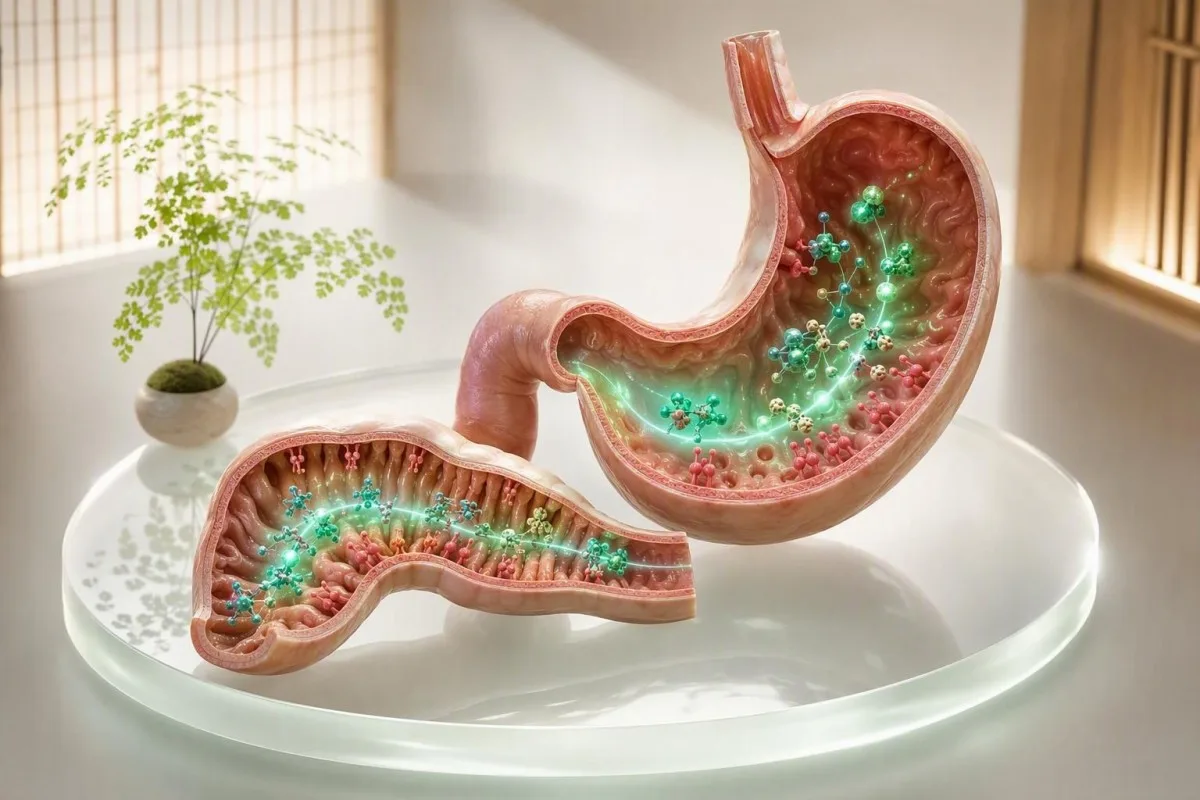
A vitamina B12 confiável vem de alimentos de origem animal ou produtos especificamente fortificados; uma dieta nutritiva não pode superar todos os problemas de absorção. Veja como ajudo os pacientes a combinar escolhas alimentares, sintomas, medicamentos e resultados laboratoriais.


- Necessidade diária de B12 é de 2,4 mcg para a maioria dos adultos, 2,6 mcg na gravidez e 2,8 mcg durante a amamentação.
- Melhores fontes alimentares incluem mariscos, fígado, peixe, carne, laticínios, ovos e alimentos fortificados com B12; alimentos vegetais não fortificados não são fontes confiáveis.
- Fígado bovino fornece cerca de 70 mcg de B12 por porção cozida de 85 g, enquanto 250 mL de leite fornecem cerca de 1,3 mcg.
- Teto de absorção significa que o fator intrínseco geralmente absorve apenas cerca de 1,5-2 mcg de uma refeição; aproximadamente 1% de uma grande dose oral ainda podem entrar passivamente.
- B12 sérica abaixo de 200 pg/mL (148 pmol/L) comumente sugere deficiência, enquanto 200-300 pg/mL frequentemente necessita de contexto de ácido metilmalônico ou B12 ativa.
- Metformina e medicamentos supressores de ácido pode diminuir a B12 ao longo do tempo, especialmente quando o uso continua por vários anos.
- Sintomas neurológicos como dormência, alteração na marcha, problemas de memória ou perda da sensação vibratória requerem revisão médica mesmo na ausência de anemia.
- Alimentos sozinhos podem não corrigir a deficiência causada por anemia perniciosa, cirurgia gástrica, má absorção grave ou sintomas neurológicos significativos.
Quais alimentos fornecem a vitamina B12 mais confiável?
Alimentos ricos em B12 são quase exclusivamente alimentos de origem animal e alimentos deliberadamente fortificados com cobalamina. Amêijoas, fígado, peixe, carne, leite, iogurte, queijo, ovos, cereais de pequeno-almoço fortificados e bebidas vegetais fortificadas são opções confiáveis quando o rótulo confirma o teor de B12.
Amêijoas cozidas podem fornecer aproximadamente 84 mcg por 85 g, e fígado de vaca cozido cerca de 70 mcg por 85 g; ambos excedem o requisito adulto várias vezes. Ainda assim, incentivo a variedade em vez de depender frequentemente de fígado, pois o fígado também é excepcionalmente rico em vitamina A pré-formada e não é um alimento casual diário na gravidez.
Peixe é um meio termo prático: truta cozida fornece cerca de 5,4 mcg por 85 g, salmão cerca de 2,6 mcg, e atum em lata aproximadamente 2,5 mcg. Um paciente que não gosta de marisco geralmente pode satisfazer as necessidades alimentares com duas porções de peixe por semana, mais laticínios, ovos ou alimentos fortificados; nosso guia de B12 versus folato explica por que o folato não pode substituir a cobalamina.
Kantesti é um Analisador de teste de sangue de IA que coloca um resultado de B12 ao lado de volume corpuscular médio, hemoglobina, folato, função renal e contexto da medicação. Isso é importante porque uma pessoa que come peixe duas vezes por semana ainda pode ficar deficiente se o problema for o fator intrínseco e não a ingestão.
Quanta B12 existe nos alimentos do dia a dia?
Uma única porção de peixe, carne ou laticínios pode fornecer parte ou a totalidade da meta de 2,4 mcg para adultos, mas as quantidades diferem acentuadamente por alimento e porção. Rótulos e tabelas de composição de alimentos são estimativas, não uma garantia do que chega à circulação.
Um copo de 250 mL de leite de vaca fornece cerca de 1,3 mcg, 170 g de iogurte natural cerca de 1,0 mcg, um ovo grande cerca de 0,5 mcg, e 85 g de carne bovina magra cozida cerca de 2,4 mcg. Os laticínios podem, portanto, apoiar significativamente a ingestão, embora dois ovos ao pequeno-almoço normalmente não satisfaçam a necessidade diária total.
Vejo frequentemente um padrão enganador em pessoas que se descrevem como 'majoritariamente vegetarianas': ovos e queijo ocasionais podem prevenir depleção severa, mas a sua ingestão ainda flutua abaixo do alvo durante meses. Esta é uma razão pela qual a fadiga merece uma análise mais ampla que inclua escolhas alimentares ricas em ferro e não apenas um multivitamínico.
Thomas Klein, MD, aconselha os pacientes a registarem as porções reais durante 7 dias antes de decidirem que a dieta é adequada. Um diário alimentar que revele apenas 0,5-1,0 mcg diários é mais útil clinicamente do que a declaração vaga, 'Eu como de forma saudável'.'
Os alimentos fortificados com B12 são suficientes para veganos?
Alimentos fortificados com B12 podem satisfazer as necessidades dos veganos quando consumidos consistentemente em quantidades medidas, mas alimentos vegetais não fortificados não podem fazê-lo de forma fiável. Algas marinhas, cogumelos, alimentos fermentados e levedura nutricional sem rótulo de B12 adicionado não são substitutos fiáveis.
Muitas bebidas vegetais fortificadas fornecem 0,4-1,0 mcg por 250 mL, enquanto uma porção de cereal fortificado pode fornecer 1,0-6,0 mcg. Leia o rótulo local sempre: os produtos variam por país, receita e tamanho da porção, e 'contém vitaminas' não significa automaticamente que contém B12.
A cianocobalamina é o fortificante mais comum porque permanece estável durante o armazenamento e o cozimento. A revisão de 2010 por O'Leary e Samman na Nutrients descreve por que os análogos encontrados em algumas algas podem se assemelhar quimicamente à B12, mas não suportam de forma confiável o status de B12 humano (O'Leary & Samman, 2010).
Kantesti é um plataforma de interpretação de exame de sangue da AI usado para ajudar os leitores a unificar o padrão alimentar, a B12 e marcadores relacionados. Pessoas que seguem uma dieta baseada em plantas também devem considerar um exame de sangue para deficiência de nutrientes planejado, em vez de esperar por formigamento ou exaustão.
Quais são as necessidades diárias de B12 por idade e fase da vida?
A maioria dos adultos precisa de 2,4 mcg de vitamina B12 diariamente, enquanto a gravidez requer 2,6 mcg e a amamentação requer 2,8 mcg. Essas metas previnem a deficiência em pessoas com absorção normal; elas não são doses de tratamento para deficiência estabelecida.
A Ingestão Dietética Recomendada dos Estados Unidos é de 0,4 mcg do nascimento aos 6 meses, 0,9 mcg aos 1-3 anos, 1,2 mcg aos 4-8 anos, 1,8 mcg aos 9-13 anos, e 2,4 mcg a partir dos 14 anos. A ingestão de nutrientes de referência para adultos do Reino Unido é menor, em 1,5 mcg diários, portanto, aplicativos de nutrição internacionais podem exibir metas diferentes sem que nenhuma delas seja um erro.
Adultos mais velhos frequentemente precisam da mesma quantidade dietética, mas têm uma chance maior de má absorção de B12 ligada a alimentos devido à redução do ácido estomacal, gastrite ou medicação. Um apetite normal não exclui isso; nosso guia sobre níveis de B12 em crianças também mostra por que o contexto específico da idade é importante.
A B12 é armazenada no fígado, geralmente em 2-5 mg, que é por que a ingestão deficiente pode levar 2-5 anos para se tornar óbvia. Esse atraso é clinicamente inconveniente: os sintomas podem surgir muito tempo depois que uma dieta restritiva começou.
Como funciona a absorção de B12 depois que você a ingere?
A absorção de B12 requer ácido estomacal, enzimas pancreáticas e fator intrínseco das células estomacais antes da absorção no íleo final. Um problema em qualquer uma das etapas pode tornar uma dieta rica em B12 insuficiente.
A B12 ligada aos alimentos é liberada das proteínas no estômago, primeiro se liga à hapcorrina, depois é transferida para o fator intrínseco no intestino delgado. O complexo fator intrínseco-B12 é absorvido no íleo terminal através de um processo mediado por receptores; é por isso que doenças ou remoção desse segmento intestinal têm consequências.
A absorção do fator intrínseco satura em aproximadamente 1,5-2 mcg por refeição, enquanto cerca de 1% de uma grande dose oral pode atravessar por difusão passiva. Essa pequena via passiva explica por que os clínicos às vezes usam doses de tratamento oral de 1.000 a 2.000 mcg, não porque alguém precise de 1.000 vezes a exigência dietética.
Para pessoas com diarreia crônica, perda de peso inexplicada ou suspeita de doença celíaca, o cálculo da ingestão não é suficiente. Discutir o momento correto de um desafio de glúten antes do teste pode prevenir uma avaliação falsamente tranquilizadora.
O que bloqueia a absorção de B12 mesmo com uma boa dieta?
Anemia perniciosa, cirurgia gástrica ou intestinal, doença celíaca, doença de Crohn, metformina a longo prazo e supressão ácida podem reduzir a absorção de B12. Nesses cenários, o aumento de peixes ou cereais fortificados pode retardar o declínio, mas pode não corrigir a deficiência.
Gastrite autoimune pode destruir as células produtoras de fator intrínseco do estômago e causar anemia perniciosa, um distúrbio de absorção em vez de uma falha dietética. As diretrizes do NICE NG239, publicadas em 2024, recomendam considerar o teste de anticorpos anti-fator intrínseco quando a gastrite autoimune é suspeita, embora um resultado negativo não a exclua totalmente.
A baixa B12 associada à metformina é real, mas variável. No estudo DPP Outcomes Study, a B12 baixa ou borderline-low foi mais comum com metformina do que com placebo após 5 anos, e o risco aumentou com a exposição mais longa (Aroda et al., 2016); é por isso que análises ao sangue após metformina não devem focar apenas na glicose.
Uma paciente de 63 anos que revisei comia salmão semanalmente e bebia leite diariamente, mas tinha B12 de 156 pg/mL com dedos dos pés dormentes após anos de metformina e omeprazol. A comida não foi a etapa que faltou - a absorção foi.
Quais exames de sangue esclarecem uma possível deficiência de B12?
B12 sérica abaixo de 200 pg/mL, ou 148 pmol/L, geralmente suporta deficiência, enquanto 200-300 pg/mL é uma zona indeterminada que se beneficia de contexto confirmatório. Ácido metilmalônico, homocisteína, B12 ativa, hemograma completo e folato podem resolver a incerteza.
O ácido metilmalônico geralmente aumenta quando a B12 celular é inadequada; um MMA acima de 0,40 micromol/L é frequentemente considerado elevado, embora os valores de corte laboratoriais variem. A insuficiência renal pode aumentar o MMA independentemente, portanto, um eGFR de 35 mL/min/1.73 m² altera o significado do mesmo resultado.
Macrociose é uma pista, não um requisito. Um MCV acima de 100 fL pode ocorrer com deficiência de B12, mas a deficiência precoce pode ter MCV normal, e a deficiência de ferro pode mascarar parcialmente o aumento celular; compare o resultado com nosso guia de acompanhamento de MCV alto.
Kantesti é um Ferramenta de análise de exames de sangue com IA que interpreta B12 com MMA, MCV, RDW, creatinina e alterações longitudinais em vez de aplicar um único valor de corte. A estrutura diagnóstica em Devalia et al. (2014) apoia de forma semelhante o uso de características clínicas e testes de segunda linha quando a B12 sérica não resolve a questão.
A deficiência de B12 pode causar sintomas sem anemia?
Sim, a deficiência de B12 pode causar sintomas neurológicos e cognitivos antes que a hemoglobina caia ou o MCV aumente. Formigamento, queimação nos pés, redução do equilíbrio, perda do sentido de vibração, humor deprimido e névoa cerebral merecem avaliação quando persistem.
Uma hemoglobina de 13,2 g/dL e MCV de 92 fL não excluem deficiência funcional de B12 em uma pessoa com parestesia progressiva. A recuperação neurológica é menos previsível quando os sintomas estão presentes há muitos meses, razão pela qual não recomendo esperar pela anemia evidente.
O folato pode normalizar a aparência do hemograma enquanto a lesão nervosa relacionada à B12 continua. Esta é a questão clínica por trás do aviso sobre altas doses de ácido fólico; veja nossa explicação sobre mascaramento de B12 por alto folato para os detalhes práticos.
A avaliação urgente no mesmo dia é sensata para dificuldade de locomoção em rápida piora, confusão nova, fraqueza acentuada ou alterações intestinais e vesicais. Esses sintomas têm várias causas, mas a B12 deve fazer parte de um diagnóstico diferencial rápido, em vez de um experimento com suplemento.
Quando a comida pode corrigir a B12 baixa e quando o tratamento é necessário?
A alimentação pode corrigir uma ingestão baixa marginal em alguém com absorção intacta, mas a deficiência confirmada por má absorção geralmente necessita de tratamento oral em altas doses ou injeções. A escolha depende da causa, gravidade, adesão e achados neurológicos — não apenas do número sérico.
Para insuficiência dietética sem sintomas graves, os médicos podem usar cianocobalamina ou metilcobalamina oral em doses como 50-150 mcg diários para manutenção, com doses maiores ao corrigir a deficiência. Os regimes exatos variam entre os países e devem seguir o protocolo do médico assistente.
Anemia perniciosa, gastrectomia total, doença ileal importante ou sintomas neurológicos substanciais geralmente mudam a conversa. Nossa comparação detalhada de injeções e comprimidos de B12 explica por que comprimidos em altas doses ainda podem funcionar através da absorção passiva, enquanto injeções podem ser preferidas quando a certeza ou a rapidez são importantes.
Em minha experiência, um plano focado na alimentação é uma excelente prevenção, mas uma terapia de resgate inadequada para má absorção sintomática. O momento da reavaliação deve incluir sintomas e marcadores funcionais, não apenas um resultado de B12 que sobe rapidamente após uma injeção.
A B12 metilada é melhor do que a cianocobalamina?
Metilcobalamina e cianocobalamina podem corrigir a deficiência de B12 quando a dose e a absorção são adequadas; a evidência não mostra que a B12 metilada seja universalmente superior. A cianocobalamina é estável, amplamente estudada e comumente usada em alimentos fortificados.
O corpo converte a cobalamina nas formas ativas de coenzima usadas pela metionina sintase e metilmalonil-CoA mutase. A linguagem de marketing em torno de produtos 'metilados' geralmente ultrapassa as evidências clínicas comparativas; absorção, dose, custo e consistência são geralmente mais decisivos.
A hidroxocobalamina é comumente usada por injeção em vários sistemas de saúde porque permanece no corpo por mais tempo do que a cianocobalamina. Pessoas com doença renal crônica ou distúrbios metabólicos incomuns precisam de aconselhamento individualizado, pois a MMA e a seleção do tratamento podem se tornar mais complicadas.
Para uma comparação prática de química de produto, lógica de dose e acompanhamento laboratorial, leia B12 metilada versus cianocobalamina. Não interrompa as injeções prescritas porque um rótulo de suplemento promete uma forma mais 'natural'.
Como é um dia prático de alimentação rica em B12?
Uma dieta mista pode atingir 2,4 mcg de B12 com refeições comuns, enquanto um padrão vegano necessita de agendamento deliberado de alimentos fortificados ou de um suplemento. O plano mais confiável é aquele que você pode repetir durante viagens, semanas agitadas e mudanças de apetite.
Um exemplo onívoro é iogurte no café da manhã (1,0 mcg), um ovo no almoço (0,5 mcg) e 85 g de salmão no jantar (2,6 mcg). Isso fornece aproximadamente 4,1 mcg antes de considerar a variação alimentar, enquanto distribuir a ingestão ao longo das refeições é confortável para a maioria das pessoas.
Um exemplo vegano fortificado pode usar uma bebida vegetal que fornece 1,0 mcg, cereal que fornece 1,5 mcg, e levedura nutricional fortificada que fornece 1,0 mcg. O problema é a consistência: mudar de marca pode remover abruptamente o nutriente, portanto, guarde uma foto do rótulo em suas anotações de saúde.
A B12 pertence ao padrão mais amplo de nutrientes solúveis em água, proteína, ferro e ingestão de energia. Nosso guia de vitaminas hidrossolúveis ajuda a prevenir o erro comum de tratar uma vitamina como a explicação completa para a fadiga.
Quem deve estar especialmente atento à B12 baixa?
Veganos, idosos, pessoas que tomam metformina ou supressores de ácido a longo prazo, pacientes após cirurgia gástrica ou ileal e pessoas com doença inflamatória intestinal têm maior risco de deficiência de B12. O risco aumenta quando mais de um fator está presente.
O uso a longo prazo de inibidores da bomba de prótons pode reduzir a liberação de B12 da proteína alimentar ao diminuir a acidez gástrica. A associação não é um motivo para interromper abruptamente um medicamento prescrito, mas é um motivo para perguntar se o monitoramento é apropriado após 2 anos ou mais de uso contínuo.
Pessoas com mais de 60 anos anos podem desenvolver má absorção de cobalamina alimentar mesmo com uma dieta variada, às vezes acompanhada por gastrite atrófica. Um nível mais baixo de B12 nesse grupo não é automaticamente 'apenas idade'; pode ser um sinal para investigar sintomas, medicamentos e histórico autoimune.
Nosso guia de monitoramento de longo prazo de IPP descreve discussões laboratoriais associadas, incluindo magnésio e ferro. Combinar B12 baixa com deficiência de ferro inexplicada pode direcionar os clínicos para uma causa gástrica em vez de duas lacunas alimentares não relacionadas.
Quando os níveis de B12 devem ser retestados após mudar a dieta ou o tratamento?
A repetição do teste geralmente ocorre 8-12 semanas após uma mudança na dieta ou tratamento oral, enquanto a gravidade dos sintomas e o método de tratamento podem justificar uma revisão clínica mais cedo. Um resultado de B12 sérica pode aumentar rapidamente após suplementação e pode não provar a recuperação tecidual por si só.
Um hemograma completo pode mostrar uma resposta de reticulócitos em cerca de 1 semana após tratamento eficaz para anemia megaloblástica, enquanto a hemoglobina geralmente melhora ao longo de várias semanas. Sintomas neurológicos comumente se recuperam mais lentamente e, às vezes, de forma incompleta, especialmente após deficiência prolongada.
Suplementação "stop-and-start" (intermitente) pode fazer com que a B12 sérica pareça normal no dia do teste, enquanto MMA, sintomas ou macrocitose permanecem preocupantes. Esta é uma razão para dizer ao médico exatamente o que você tomou, a dose e a data da última dose antes de interpretar os resultados.
Kantesti AI pode comparar B12, MCV, hemoglobina, RDW, folato e creatinina em vários relatórios para identificar se uma alteração é clinicamente significativa. Para os leitores que estão aprendendo essa habilidade, nosso guia de análise de tendências de exames de sangue explica por que um resultado isolado raramente é a história completa.
Quais equívocos sobre a B12 podem atrasar o cuidado adequado?
A maior ideia equivocada sobre B12 é que comer mais alimentos de origem animal resolverá todos os resultados baixos. A dieta ajuda na ingestão, mas não pode restaurar o fator intrínseco, reverter doenças intestinais ou substituir com segurança a avaliação de sintomas neurológicos.
Outro mito é que um resultado alto de B12 sérica sempre significa um status excelente. Um resultado acima de 900 pg/mL comumente reflete suplementos ou injeções, mas elevação inexplicada persistente também pode ocorrer com doença hepática, doença renal ou algumas condições hematológicas; o contexto importa mais do que o pânico.
A partir de 1º de setembro de 2026, eu também alertaria contra o uso da melhora da energia após um comprimido como prova diagnóstica. Efeitos placebo, sono, status de ferro, doença da tireoide, depressão e alterações na glicose podem alterar a energia ao longo de 1-4 semanas sem confirmar deficiência de B12.
O conteúdo clínico da Kantesti é revisado com o apoio de nossos Conselho Consultivo Médico, mas a interpretação por IA nunca substitui o exame para sintomas neurológicos em progressão. Os leitores podem revisar nossos abordagem de validação clínica para entender como formulamos prompts de acompanhamento em vez de fazer um diagnóstico.
Quais são os próximos passos mais seguros se você suspeitar de B12 baixa?
Se você tem dormência persistente, problemas de equilíbrio, alteração cognitiva, macrocitose inexplicada ou um resultado de B12 abaixo de 200 pg/mL, agende uma avaliação médica em vez de confiar apenas na alimentação. O tratamento precoce é particularmente relevante quando os nervos podem estar envolvidos.
Traga uma lista de medicamentos, suplementos, padrão alimentar, diagnósticos digestivos, cirurgias, ingestão de álcool e relatórios laboratoriais anteriores. Um médico pode então decidir se repete a B12, solicita MMA ou homocisteína, verifica o folato e a contagem completa de células sanguíneas, ou investiga anemia perniciosa e má absorção.
Thomas Klein, MD, recomenda evitar altas doses de ácido fólico como autotratamento para macrocitose inexplicada até que a B12 tenha sido razoavelmente avaliada. Se você não tem sinais de alerta e a ingestão dietética é claramente baixa, um plano medido de alimentos ou suplementos com um resultado repetido em 8-12 semanas é frequentemente sensato.
A Kantesti conecta tendências de relatórios laboratoriais a perguntas compreensíveis para sua consulta, mantendo a decisão diagnóstica final com seu médico. Explore nosso guia de referência de biomarcadores para os termos laboratoriais que provavelmente aparecerão junto com um resultado de B12.
Perguntas frequentes
Qual alimento é mais rico em vitamina B12?
Amêijoas e fígado de boi estão entre os alimentos com maior teor de vitamina B12. Uma porção cozida de 85 g de amêijoas pode fornecer cerca de 84 mcg de B12, enquanto a mesma porção de fígado de boi fornece cerca de 70 mcg; ambos excedem em muito a meta diária para adultos de 2,4 mcg. O fígado não deve ser consumido como um alimento diário na gravidez devido ao seu teor muito elevado de vitamina A pré-formada. Para refeições regulares, peixe, carne, laticínios, ovos e alimentos fortificados rotulados são fontes mais práticas.
Veganos conseguem a quantidade suficiente de B12 apenas com alimentos?
Os veganos só podem suprir as necessidades de vitamina B12 a partir da alimentação quando utilizam regularmente produtos fortificados com B12 em quantidades medidas. Vegetais não fortificados, cogumelos, algas marinhas, tempeh e levedura nutricional não são fontes confiáveis de B12 porque seu teor de cobalamina é ausente, inconsistente ou pode incluir análogos inativos. Muitas bebidas vegetais fortificadas fornecem 0,4-1,0 mcg por 250 mL, mas as formulações variam por país e marca. Um suplemento de B12 é frequentemente uma salvaguarda mais simples e confiável para dietas veganas.
quanta B12 um adulto deve consumir por dia?
A maioria dos adultos necessita de 2,4 mcg de vitamina B12 diariamente, de acordo com a Recommended Dietary Allowance dos Estados Unidos. A gravidez aumenta a meta para 2,6 mcg diários, e a amamentação aumenta para 2,8 mcg diários. A ingestão de nutrientes de referência para adultos do Reino Unido é de 1,5 mcg diários, portanto, os rótulos nutricionais específicos de cada país podem diferir. Esses valores são metas de prevenção para absorção normal e são muito inferiores às doses de tratamento usadas para deficiência diagnosticada.
Posso corrigir a deficiência de B12 comendo mais carne e ovos?
Aumentar o consumo de carne, peixe, laticínios, ovos ou alimentos fortificados pode corrigir a deficiência de B12 causada apenas pela baixa ingestão alimentar, mas pode não funcionar quando a absorção está prejudicada. Anemia perniciosa, doença celíaca, doença de Crohn, cirurgia gástrica, cirurgia ileal, metformina e tratamento prolongado com supressores de ácido podem reduzir a absorção, apesar de uma dieta rica em B12. Um nível de B12 sérico abaixo de 200 pg/mL ou 148 pmol/L geralmente justifica uma avaliação clínica da causa. Sintomas neurológicos como dormência, desequilíbrio ou alterações cognitivas não devem ser tratados apenas com alimentação.
O que ajuda na absorção da B12?
A absorção de vitamina B12 depende de processamento gástrico adequado, enzimas pancreáticas, fator intrínseco e um íleo terminal funcional. O fator intrínseco absorve ativamente apenas cerca de 1,5-2 mcg de B12 de uma refeição, enquanto aproximadamente 1% de uma dose oral elevada podem entrar por difusão passiva. Comer B12 com alimentos é razoável, mas nenhuma combinação específica de alimentos pode superar a ausência de fator intrínseco ou doença ileal importante. Altas doses de B12 oral ou injeções podem ser necessárias quando a absorção está prejudicada.
Qual nível de B12 é considerado baixo?
Um resultado de vitamina B12 sérica abaixo de 200 pg/mL, equivalente a cerca de 148 pmol/L, geralmente suporta deficiência de B12, embora os laboratórios utilizem diferentes faixas de ensaio. Resultados de 200-300 pg/mL são frequentemente considerados limítrofes ou indeterminados e podem necessitar de ácido metilmalônico, homocisteína, B12 ativa, hemograma completo, folato, função renal e contexto sintomático. Ácido metilmalônico acima de cerca de 0,40 micromol/L suporta deficiência celular de B12, mas também pode aumentar com função renal reduzida. Uma hemoglobina ou MCV normal não exclui de forma confiável sintomas neurológicos precoces relacionados à B12.
Faça hoje a análise de exame de sangue com IA
Junte-se a mais de 2 milhões de usuários no mundo todo que confiam na Kantesti para análise instantânea e precisa de exames laboratoriais. Envie seus resultados de exame de sangue e receba uma interpretação abrangente de biomarcadores 15,000+ em segundos.
📚 Publicações de pesquisa referenciadas
Klein, T., Mitchell, S., & Weber, H. (2026). Urobilinogênio no Teste de Urina: Guia de Urinálise Completa 2026. Pesquisa Médica por IA da Kantesti.
Klein, T., Mitchell, S., & Weber, H. (2026). Guia de Estudos sobre Ferro: TIBC, Saturação de Ferro e Capacidade de Ligação. Pesquisa Médica por IA da Kantesti.
📖 Referências Médicas Externas
⚕️ Aviso Médico
Este artigo é apenas para fins educacionais e não constitui aconselhamento médico. Consulte sempre um profissional de saúde qualificado para decisões de diagnóstico e tratamento.
Sinais de confiança E-E-A-T
Experiência
Revisão clínica orientada por médicos dos fluxos de interpretação de exames laboratoriais.
Especialização
Foco em medicina laboratorial sobre como os biomarcadores se comportam no contexto clínico.
Autoridade
Escrito pelo Dr. Thomas Klein, com revisão da Dra. Sarah Mitchell e do Prof. Dr. Hans Weber.
Confiabilidade
Interpretação baseada em evidências, com caminhos de acompanhamento claros para reduzir alarmes.