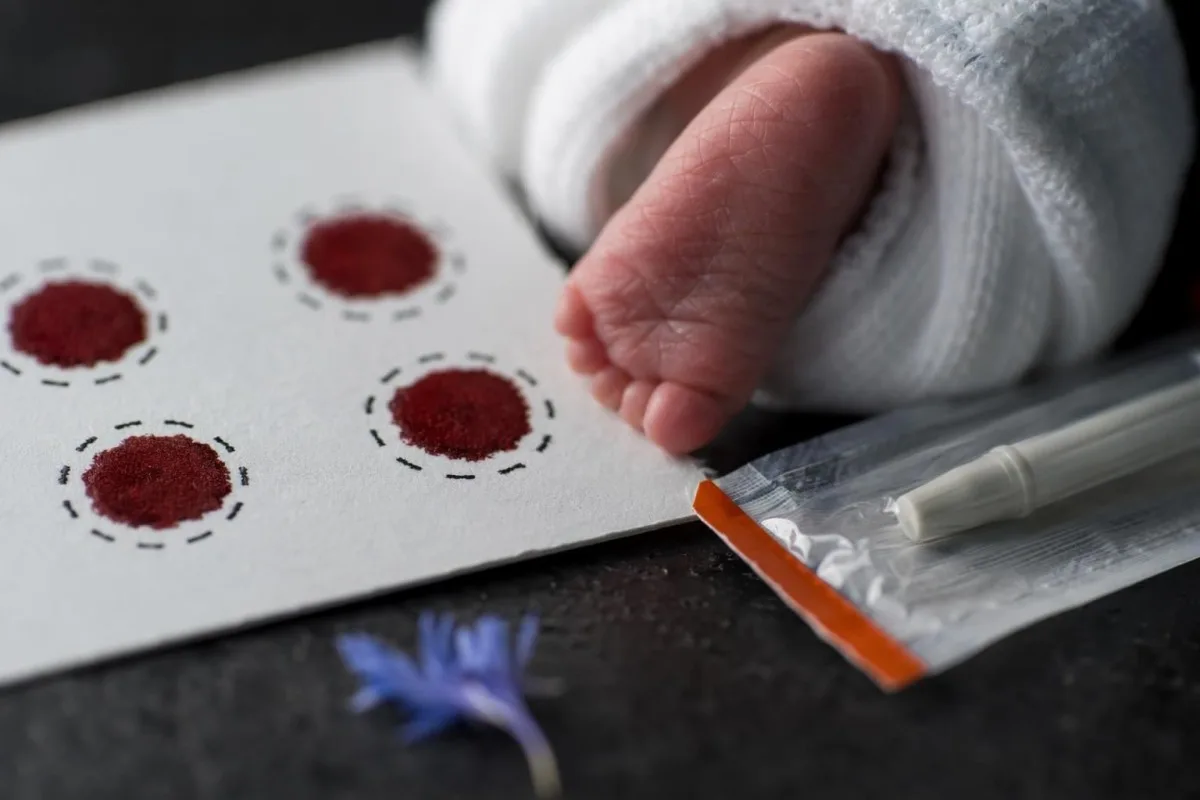
A heel-prick flag is a risk signal, not a diagnosis. The real skill is knowing which results cannot wait and which simply need careful repeat testing.


- Abnormal neonatal screening means a dried heel-prick sample crossed a program cutoff; it does not prove your baby has the condition.
- Same-day confirmatory testing is usually needed for MCADD, MSUD, galactosemia, congenital adrenal hyperplasia, SCID, severe organic acidemia patterns, or a clinically unwell baby.
- False positives happen more often after early sampling under 24 hours, prematurity, transfusion, total parenteral nutrition, antibiotics, or a poorly filled dried sample card.
- Congenital hypothyroidism should be confirmed with serum TSH and free T4 quickly; treatment is usually started by day 14 when true hypothyroidism is confirmed.
- CAH screening flags require serum sodium, potassium, glucose, 17-hydroxyprogesterone, cortisol, and renin because salt-wasting crises often appear between days 5 and 14.
- Cystic fibrosis flags usually need a sweat chloride test; chloride under 30 mmol/L is unlikely CF, 30-59 mmol/L is intermediate, and 60 mmol/L or higher supports diagnosis.
- Sickle cell disease flags need confirmatory hemoglobin testing, but most well babies are not rushed to hospital unless fever, poor feeding, or anemia symptoms are present.
- Borderline or repeat sample often means the sample timing, birth weight, transfusion status, or card quality limited interpretation rather than a dangerous result.
What an abnormal neonatal screening flag actually means
An abnormal neonatal screening flag means the heel-prick test found a pattern that needs checking; it does not diagnose the condition. Same-day confirmatory testing is usually needed for flags suggesting MCADD, MSUD, galactosemia, congenital adrenal hyperplasia, SCID, severe organic acidemia patterns, or a sick baby, while cystic fibrosis, sickle carrier patterns, borderline thyroid results, and repeat-sample requests often follow planned outpatient pathways.
As of June 6, 2026, most newborn screening programs still use a dried heel-prick sample, but the condition list varies widely by country. The UK routine newborn blood spot program screens for 9 main conditions, while many US state programs screen for more than 30 core conditions, reflecting the uniform panel work described by Watson et al. in Genetics in Medicine in 2006.
I am Thomas Klein, MD, and when I review baby blood test results with parents, the first thing I check is whether the report says screen positive, borderline, unsuitable sample, or carrier pattern. Those four phrases can mean very different levels of risk, and our deeper overview of newborn blood tests explains why timing is part of the result.
Kantesti AI is an AI blood test interpretation platform that helps families organize lab reports, but newborn screening flags must always be handled through the official screening team or pediatric specialist. Our organization and clinical governance are described on our clinical team, because a newborn result is not the place for guesswork.
How heel-prick timing changes baby blood test results
Heel-prick timing changes neonatal screening results because several newborn biomarkers surge, fall, or normalize during the first 24-120 hours of life. A sample taken too early can miss phenylalanine elevation, exaggerate thyroid-stimulating hormone, or distort acylcarnitine patterns after birth stress.
In the UK, the heel-prick sample is usually collected on day 5, counting the day of birth as day 0. In many countries, collection happens at 24-48 hours, which is workable but creates more borderline results when feeding has barely started.
A baby who has not taken enough milk may not yet show the amino acid pattern used to flag PKU or MSUD. That is why a normal screen taken at 12 hours may be less reassuring than one taken after 48 hours, especially if the infant was premature or in neonatal intensive care.
The practical detail parents rarely hear: the dried sample card has to dry for at least 3 hours before packing, and heat or humidity can damage enzymes. For age-specific follow-up after the first weeks, our guide to infant blood result ranges helps explain why newborn values should not be judged against adult limits.
Why newborn screening false positives happen so often
A newborn screening false positive happens when the screening marker crosses a cutoff but confirmatory testing shows the baby does not have the disorder. False positives are expected in population screening because programs deliberately choose sensitive cutoffs to avoid missing rare but treatable conditions.
The math is uncomfortable but honest: if a condition affects 1 in 50,000 babies, even a test with excellent sensitivity can generate more false alarms than true cases. Waisbren et al. reported in JAMA in 2003 that false-positive expanded newborn screening increased parental stress, which matches what I see in clinic even after the baby is proven well.
Prematurity is a major driver because low-birth-weight infants often have higher 17-hydroxyprogesterone, altered amino acids, and immature liver handling. Total parenteral nutrition can raise amino acids enough to mimic metabolic disease, and transfusion can mask hemoglobin or enzyme disorders for 90-120 days depending on the program.
Kantesti AI is an AI-powered blood test analysis tool used by 2M+ people across 127 countries, and our internal lab-quality rules treat newborn screening as a special category because cutoffs are program-specific. For adults and older children, our AI lab error checks explain similar sample-quality problems, but heel-prick cards have their own quirks.
Which abnormal heel prick test results need fast testing
Fast confirmatory testing is needed when the screening pattern points to a disorder that can injure the brain, heart, immune system, or salt balance within days. The highest-risk calls involve MSUD, MCADD, galactosemia, congenital adrenal hyperplasia, severe organic acidemia patterns, SCID, and any abnormal flag in a baby who is vomiting, lethargic, hypothermic, or feeding poorly.
The symptoms matter as much as the flag. A sleepy 6-day-old with poor feeding and a possible organic acidemia screen should be assessed the same day, while a thriving baby with a cystic fibrosis IRT/DNA flag usually needs an arranged sweat test rather than an emergency department visit.
For CAH, sodium below 130 mmol/L, potassium above 6.0 mmol/L, low glucose, weight loss, or vomiting should trigger emergency assessment. For MSUD, plasma leucine above roughly 1000 µmol/L is often treated as a metabolic emergency because cerebral swelling risk rises as leucine climbs.
Parents should not wait for an online portal message if the baby looks unwell. Our plain-language guide to critical lab values is written for general labs, but the newborn rule is simpler: abnormal screen plus poor feeding, vomiting, fever, or unusual sleepiness deserves urgent clinical contact.
The thing is, some screening teams phone families before the report appears in the app. If you miss a call from the newborn screening laboratory, call back the same day; most true emergency flags are handled by direct telephone contact rather than routine letters.
Metabolic disorder flags: PKU, MCADD, MSUD, and organic acids
Metabolic disorder flags need quick confirmation because some babies can become dangerously unwell after normal early feeding. PKU usually allows a short specialist pathway, but MSUD, MCADD, galactosemia, and several organic acidemia patterns can become urgent within hours if the baby is fasting, vomiting, or sleepy.
PKU is usually confirmed with plasma phenylalanine and a phenylalanine-to-tyrosine ratio. Many centers treat persistent phenylalanine above 360 µmol/L, while classic PKU may exceed 1200 µmol/L; the reason early diet matters is brain exposure, not immediate collapse.
MCADD is usually flagged by elevated C8 acylcarnitine and C8/C10 ratios, not by glucose on the screening card. While waiting for confirmation, most metabolic teams advise feeds every 3 hours and strict avoidance of fasting, because hypoketotic hypoglycemia can appear quickly during illness.
MSUD confirmation uses plasma amino acids, especially leucine, isoleucine, valine, and alloisoleucine. I have seen families reassured by a normal-looking newborn at home, then frightened by an urgent call; that call is appropriate because leucine neurotoxicity can progress before obvious symptoms.
Organic acidemia screens often involve C3, C5, or related acylcarnitine elevations, and false positives can follow B12 issues or maternal metabolic patterns. For general pediatric reference context after confirmatory labs, our pediatric blood test ranges show how quickly child values diverge from adult expectations.
Endocrine flags: congenital hypothyroidism and CAH
Endocrine screening flags mainly look for congenital hypothyroidism and congenital adrenal hyperplasia, two treatable conditions where timing affects outcomes. Thyroid confirmation should happen within days, while CAH can become an emergency if salt-wasting begins in the first 1-2 weeks.
A high newborn TSH can reflect true congenital hypothyroidism or a normal post-birth TSH surge if the sample was too early. Confirmatory serum TSH and free T4 are the deciding tests, and many pediatric endocrinologists aim to start levothyroxine by day 14 when hypothyroidism is confirmed.
CAH screening measures 17-hydroxyprogesterone, which is notoriously high in premature or stressed infants. A term baby with a strong CAH flag needs serum electrolytes, glucose, 17-hydroxyprogesterone, cortisol, and renin because salt-wasting crisis often appears around days 5-14.
Kantesti AI interprets thyroid-related reports differently in babies than in adults because age, timing, and birth context change the meaning of TSH. Our pediatric thyroid testing guide is useful once the baby moves beyond screening into routine endocrine follow-up.
One clinical trap: a mildly abnormal thyroid screen in a premature baby may need repeat testing even after a normal first serum result. Delayed TSH rise can appear at 2-6 weeks in preterm infants, especially after iodine exposure or neonatal intensive care.
Cystic fibrosis flags and sweat chloride follow-up
A cystic fibrosis newborn screening flag usually means immunoreactive trypsinogen was high, sometimes with a CFTR variant found on DNA testing. It is not a diagnosis; the confirmatory test is sweat chloride, interpreted with strict age and quality rules.
The Cystic Fibrosis Foundation consensus guideline by Farrell et al. in 2017 defines sweat chloride under 30 mmol/L as CF unlikely, 30-59 mmol/L as intermediate, and 60 mmol/L or higher as consistent with CF in the right context. A good sweat test also needs enough sweat; quantity failures are more common in tiny or premature babies.
IRT can be high after birth stress, meconium ileus, prematurity, or neonatal illness, which explains some false positives. DNA panels also vary: one country may test a small variant panel, while another uses sequencing, so the same baby could receive different-looking heel prick test results across borders.
Parents often ask whether a single CFTR variant means the baby has cystic fibrosis. Usually it means carrier status or uncertain risk until sweat chloride and variant interpretation are complete, and results should be verified through an online result portal or the screening team rather than screenshots alone.
Sickle cell and hemoglobin flags on newborn screening
Sickle cell screening flags identify abnormal hemoglobin patterns before anemia or pain episodes begin. A disease pattern needs confirmatory hemoglobin testing and pediatric hematology follow-up, while carrier patterns usually need counseling rather than urgent treatment.
Newborn hemoglobin reports may show patterns such as FS, FSA, FAC, or FAS, depending on fetal hemoglobin plus abnormal adult hemoglobin. FS is concerning for sickle cell disease, while FAS is usually sickle trait and should not cause newborn symptoms.
Confirmatory testing commonly uses high-performance liquid chromatography, isoelectric focusing, capillary electrophoresis, or DNA testing. Many programs aim for penicillin prophylaxis by 2 months in confirmed sickle cell disease because pneumococcal infection risk rises early in infancy.
A transfusion before the heel-prick sample can hide the baby’s own hemoglobin pattern for weeks. If transfusion occurred, the screening team may request repeat testing around 90-120 days, and our hematology-focused cell marker guide gives useful background on related red-cell measurements.
In my experience, the most painful misunderstanding is thinking sickle trait equals sickle disease. Trait can matter later for family planning and rare exertional risks, but it does not require the same infant infection-prevention pathway as confirmed disease.
SCID and immune screening flags that cannot wait
A SCID screening flag means the test found low T-cell receptor excision circles, suggesting low newborn T-cell production. Because severe combined immunodeficiency can make ordinary infections dangerous, confirmatory immune testing should be arranged urgently even if the baby looks well.
Confirmatory testing usually includes a complete blood count with differential, lymphocyte subsets, and T-cell function tests. A CD3 T-cell count below 300 cells/µL is a severe T-cell lymphopenia pattern, but each immunology team interprets the result with gestational age and clinical context.
Until SCID is excluded, families may be told to avoid live vaccines, unwashed sick contacts, and non-irradiated cellular blood products. The rotavirus vaccine is usually given at 6-12 weeks in many schedules, so a SCID flag needs rapid resolution before that window closes.
Not every low TREC result is SCID. Prematurity, congenital syndromes, cardiac surgery, lymphatic loss, or sample quality can cause low T-cell signals, and our overview of immune system testing explains why lymphocyte numbers and function are separate questions.
Borderline, carrier, and repeat-sample results are not the same
Borderline, carrier, and repeat-sample results have different meanings in neonatal screening. Borderline usually means a marker is near the cutoff, carrier means a genetic or hemoglobin pattern may affect future family planning, and repeat sample often means the first card was mistimed, insufficient, damaged, or affected by treatment.
A borderline metabolic result may be repeated within 24-72 hours or sent straight to plasma testing, depending on the disorder. A borderline thyroid result may be repeated over days to weeks because TSH trends matter more than one dried spot number.
Carrier results are emotionally tricky because the baby is usually healthy, yet the information may affect parents, siblings, or future pregnancies. Sickle trait, CF carrier status, and some metabolic carrier patterns should be explained with genetics support rather than left as a vague abnormal flag.
Repeat-sample requests are common after insufficient blood volume, layered drops, contamination, early sampling, transfusion, or delayed mailing. For broader repeat-testing logic outside newborn screening, our guide to repeat abnormal tests covers when a second result truly changes the probability of disease.
NICU babies, prematurity, transfusion, and TPN need special rules
NICU babies need special neonatal screening rules because prematurity, transfusion, oxygen support, antibiotics, and parenteral nutrition can all distort heel-prick markers. A normal or abnormal screen in a neonatal unit is therefore interpreted against birth weight, gestational age, feeding status, and treatment timing.
Preterm infants often have higher false-positive rates for CAH because adrenal steroid precursors are naturally higher at low gestational ages. Some programs use birth-weight-adjusted cutoffs for 17-hydroxyprogesterone, but even then, very-low-birth-weight babies often need repeat screening.
Transfusion can invalidate hemoglobinopathy screening and some enzyme-based tests because donor red cells dilute the baby’s own pattern. If possible, many units collect a first screen before transfusion, then repeat later; when that is impossible, the screening laboratory usually documents a timed recall.
TPN is another quiet troublemaker. Amino acid infusions can elevate phenylalanine, leucine, methionine, or other analytes, and jaundice workups may run alongside screening, which is why our newborn bilirubin ranges guide warns against mixing routine newborn chemistry with screening cutoffs.
How to read the report without overreacting to flags
Read a neonatal screening report by finding the flagged condition, the action requested, the collection age, and whether the baby had transfusion, TPN, prematurity, or symptoms. The action line matters more than the marker name because screening cutoffs are not diagnostic thresholds.
Look for words such as urgent referral, repeat sample, screen positive, carrier, borderline, and unsuitable specimen. A report that says repeat required due to insufficient sample is not the same as a report that says screen positive for a metabolic disorder.
Ask four questions before leaving a voicemail: what condition was flagged, what confirmatory test is planned, how soon it must happen, and what symptoms should trigger emergency care. If the baby is under 14 days old, vomiting and poor feeding deserve a lower threshold for urgent assessment than the same symptoms in an older child.
Kantesti’s neural network can organize uploaded lab PDFs and photos in about 60 seconds, but newborn screening reports need official program confirmation because the sample card algorithms are jurisdiction-specific. If your report lacks doctor notes, our guide to lab result notes can help you phrase safer questions for the screening nurse or pediatrician.
What parents should do while confirmatory tests are pending
While confirmatory tests are pending, follow the screening team’s safety instructions and watch feeding, alertness, temperature, wet nappies, and vomiting. Most flagged babies are ultimately well, but a few disorders worsen quickly with fasting, infection, or dehydration.
For possible MCADD or fatty-acid oxidation disorders, do not let the baby fast unless the metabolic team gives different instructions. Many teams advise feeding every 3 hours, including overnight, until confirmatory acylcarnitines and genetics clarify risk.
For possible galactosemia, clinicians may recommend switching away from lactose-containing feeds immediately while GALT enzyme and galactose-1-phosphate tests are pending. RBC galactose-1-phosphate above 10 mg/dL is often treated as high in classic galactosemia, though local methods differ.
Keep a written timeline: birth time, heel-prick time, feeding changes, weight loss percentage, transfusions, antibiotics, and every phone call. Our family record tracking guide was built from the same practical problem I see in clinic: parents are exhausted, and accurate dates prevent mistakes.
Where AI interpretation helps, and where newborn specialists must lead
AI can help organize neonatal screening information, explain marker patterns, and reduce report confusion, but it cannot replace the newborn screening laboratory, metabolic physician, immunologist, endocrinologist, or hematologist. In abnormal neonatal screening, the safest workflow is AI-supported understanding plus clinician-led confirmatory testing.
Our AI biomarker interpretation platform can read adult and pediatric lab PDFs, but newborn screening is deliberately treated as a high-caution domain. Kantesti AI flags terms such as MSUD, MCADD, CAH, SCID, and galactosemia as clinician-contact triggers rather than wellness insights.
Kantesti’s medical content is reviewed against clinical validation standards and overseen with input from our medical advisory board. The details matter because a heel-prick flag is a public-health screen, not a consumer biomarker trend.
For transparency, our technical approach is described in the AI interpretation methods, and population-scale evaluation is documented in a clinical validation publication. Thomas Klein, MD, reviews neonatal screening content with one conservative principle: if a baby might become unwell before the next working day, the article should say so plainly.
The research publication section below lists two Kantesti DOI records in formal format; they are part of our broader lab-education archive rather than newborn screening guidelines. For neonatal flags, the external clinical references in this article should carry more weight than any general educational publication.
Frequently Asked Questions
Does an abnormal neonatal screening result mean my baby has the disease?
An abnormal neonatal screening result does not mean your baby definitely has the disease; it means the heel-prick sample crossed a screening cutoff and needs follow-up. Screening cutoffs are designed to be sensitive, so false positives are expected, especially with prematurity, early sampling under 24-48 hours, transfusion, or TPN. The next step is confirmatory testing such as plasma amino acids, serum TSH/free T4, sweat chloride, lymphocyte subsets, or hemoglobin analysis, depending on the flagged condition.
Which newborn screening results need same-day confirmatory testing?
Same-day confirmatory testing is usually needed for neonatal screening flags suggesting MSUD, MCADD, galactosemia, congenital adrenal hyperplasia, SCID, severe organic acidemia patterns, or any abnormal flag with vomiting, poor feeding, fever, unusual sleepiness, or hypothermia. CAH is especially urgent if sodium is below 130 mmol/L, potassium is above 6.0 mmol/L, glucose is low, or the baby is losing weight. A well baby with a cystic fibrosis or carrier-pattern flag often follows a scheduled specialist pathway rather than emergency care.
Why do heel prick test results come back false positive?
Heel prick test results can be false positive because newborn biology changes quickly during the first 5 days of life, and screening programs use low cutoffs to avoid missing rare treatable disease. False positives are more common after early collection, prematurity, low birth weight, total parenteral nutrition, transfusion, antibiotics, sample layering, delayed drying, or heat exposure during transport. A false-positive newborn screening result can still be stressful, which is why programs should give clear timelines for repeat or confirmatory testing.
How long does confirmatory testing take after an abnormal baby blood test result?
Confirmatory testing after an abnormal baby blood test result may take hours to several days, depending on the condition and laboratory. Electrolytes, glucose, TSH, free T4, CBC, and many plasma amino acids can often be reviewed quickly, while genetics, enzyme assays, and some specialist metabolic tests may take days to weeks. Urgent conditions are managed before every final result returns, so a baby with suspected MCADD may be given feeding precautions immediately and a baby with suspected CAH may be assessed for salt-wasting the same day.
What does a repeat sample request mean on newborn screening?
A repeat sample request on newborn screening usually means the first dried sample card could not be interpreted reliably or the result was borderline. Common reasons include collection before 24 hours, insufficient sample volume, layered drops, delayed drying, transfusion, prematurity, or TPN. A repeat request is not the same as a screen-positive result, but parents should still complete it promptly because some disorders are time-sensitive.
What cystic fibrosis newborn screening result is diagnostic?
A cystic fibrosis newborn screening result is not diagnostic by itself; diagnosis usually depends on sweat chloride and CFTR interpretation. Sweat chloride under 30 mmol/L makes CF unlikely, 30-59 mmol/L is intermediate, and 60 mmol/L or higher supports cystic fibrosis when the test quality and clinical context fit. A high IRT or one CFTR variant may mean carrier status, stress-related elevation, or uncertain risk rather than confirmed disease.
Can AI interpret neonatal screening results safely?
AI can help explain neonatal screening terminology, organize PDF reports, and highlight which flags need clinician contact, but it cannot replace the official newborn screening program or pediatric specialist. Neonatal screening cutoffs vary by country, birth age, weight, and laboratory method, so confirmatory testing must be directed by the screening team. A safe AI interpretation should treat MCADD, MSUD, CAH, SCID, galactosemia, and severe organic acidemia terms as urgent follow-up triggers, not as final diagnoses.
Can a normal newborn screen rule out a condition if my baby develops symptoms later?
No—screening does not detect every condition and can occasionally miss one that it does test for. Seek urgent medical care for poor feeding, unusual sleepiness, repeated vomiting, or breathing trouble, even if the screen was normal.
Should I stop breastfeeding if my baby has an abnormal SCID screening result?
Do not stop breastfeeding on your own. Contact the immunology team promptly, because advice may depend on the baby’s confirmatory tests and the birth parent’s CMV status; the team can give individualized feeding guidance while testing is underway.
Can my baby have routine vaccines while a newborn screening result is being checked?
Most babies should keep routine appointments, including vaccines, unless the specialist advises otherwise. For possible SCID or another serious immune problem, ask before any live vaccine, because timing may need to change until confirmatory immune testing is back.
Get AI-Powered Blood Test Analysis Today
Join over 2 million users worldwide who trust Kantesti for instant, accurate lab test analysis. Upload your blood test results and receive comprehensive interpretation of 15,000+ biomarkers in seconds.
📚 Referenced Research Publications
Klein, T., Mitchell, S., & Weber, H. (2026). Klein, T. (2026). B Negative Blood Type, LDH Blood Test & Reticulocyte Count Guide. Figshare. https://doi.org/10.6084/m9.figshare.31333819. Kantesti AI Medical Research.
Klein, T., Mitchell, S., & Weber, H. (2026). Klein, T. (2026). Diarrhea After Fasting, Black Specks in Stool & GI Guide 2026. Figshare. https://doi.org/10.6084/m9.figshare.31438111. Kantesti AI Medical Research.
📖 External Medical References
⚕️ Medical Disclaimer
This article is for educational purposes only and does not constitute medical advice. Always consult a qualified healthcare provider for diagnosis and treatment decisions.
E-E-A-T Trust Signals
Experience
Physician-led clinical review of lab interpretation workflows.
Expertise
Laboratory medicine focus on how biomarkers behave in clinical context.
Authoritativeness
Written by Dr. Thomas Klein with review by Dr. Sarah Mitchell and Prof. Dr. Hans Weber.
Trustworthiness
Evidence-based interpretation with clear follow-up pathways to reduce alarm.