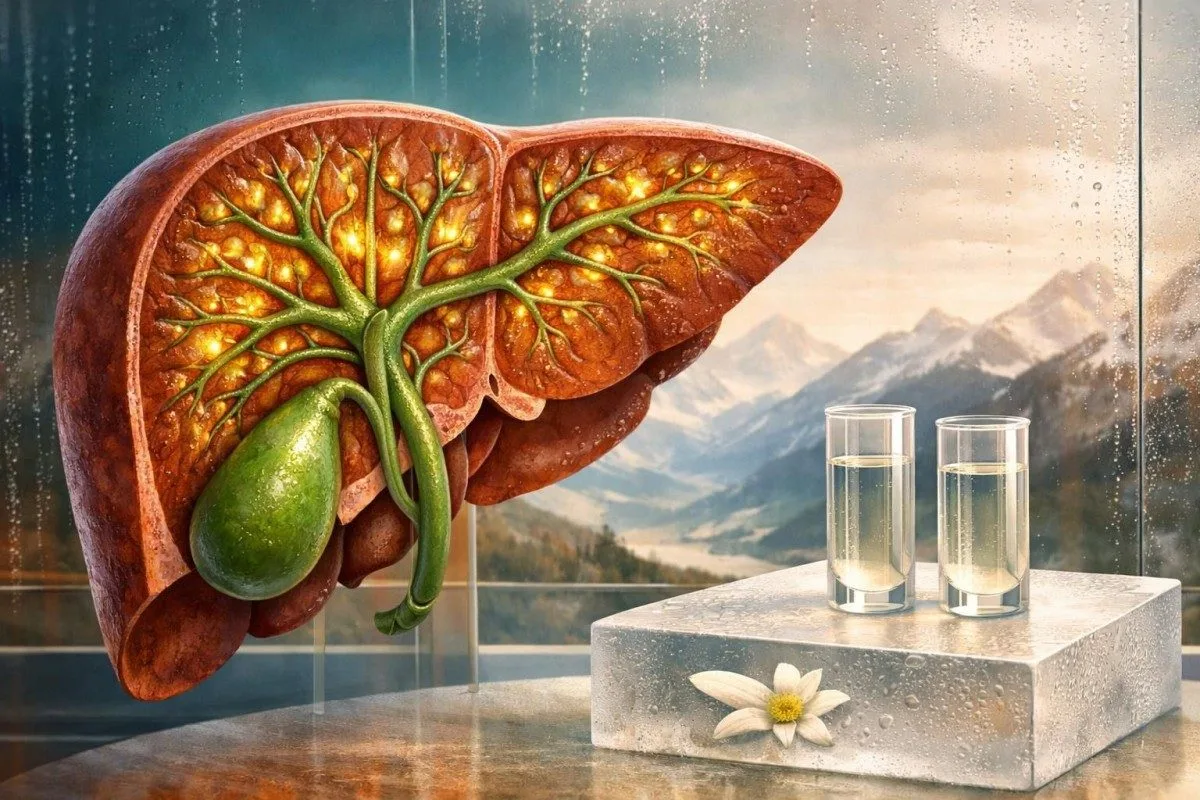
Most adult labs use 0.2-1.2 mg/dL for total bilirubin and 0-0.3 mg/dL for direct bilirubin. Newborns are different: their bilirubin normally rises in the first few days, so interpretation depends on hours after birth, not a single adult-style cutoff.


- Adult total bilirubin is usually 0.2-1.2 mg/dL or about 3-20 µmol/L.
- Adult direct bilirubin is usually 0-0.3 mg/dL; a higher direct fraction raises cholestasis questions.
- Visible adult jaundice often appears around 2.5-3.0 mg/dL, though scleral yellowing can show sooner.
- Newborn bilirubin often peaks around day 3 to 5, and 10-12 mg/dL may be physiologic in a healthy term infant.
- Rapid neonatal rise above about 0.3 mg/dL per hour in the first 24 hours suggests hemolysis or another early problem.
- Gilbert syndrome often causes isolated unconjugated bilirubin of 1.2-3.0 mg/dL with normal ALT, AST, and ALP.
- Dark urine suggests conjugated bilirubin, because unconjugated bilirubin does not enter urine.
- Sample handling matters: bilirubin is light-sensitive, and bright light can make a result read falsely low.
What counts as a normal bilirubin level by age?
Bilirubin normal range in most adults is 0.2-1.2 mg/dL for total bilirubin, with direct bilirubin usually 0-0.3 mg/dL. Newborns are different: bilirubin normally rises over the first 72-120 hours, so a number that is routine in a 3-day-old baby can be clearly abnormal in an adult. If you want a quick read of your report, Kantesti AI helps. And our note on blood test range pitfalls explains why one red flag can mislead.
Most adult chemistry panels report only total bilirubin. In US reports the usual adult reference interval is 0.2-1.2 mg/dL, while many non-US reports use 3-20 or 3-21 µmol/L; that small unit change causes a surprising amount of confusion in clinic.
Visible jaundice in adults often appears around 2.5-3.0 mg/dL, although yellowing of the eyes can show sooner. A 45-year-old with total bilirubin 11 mg/dL needs urgent evaluation; a 4-day-old term newborn with the same number may still be below treatment thresholds, which is why age is not a footnote here.
As of April 19, 2026, the commonest interpretation mistake I still see is comparing a neonatal value to an adult lab flag or comparing total bilirubin to direct bilirubin as if they were interchangeable. The practical rule is simple: check the patient’s age, the unit, and whether the lab measured total, direct, or both before you react.
Total vs direct vs indirect bilirubin: why lab type changes the meaning
Total bilirubin is the sum of direct bilirubin and indirect bilirubin. The practical takeaway is straightforward: indirect bilirubin points more often toward increased red-cell breakdown or Gilbert syndrome, while direct bilirubin raises more concern for cholestasis, bile-flow problems, or liver-cell dysfunction.
Bilirubin starts as a heme breakdown product, mostly from aging red cells. The spleen and reticuloendothelial system generate unconjugated bilirubin, which travels bound to albumin until the liver enzyme UGT1A1 conjugates it; our biomarker guide is useful if your report bundles bilirubin with several other markers.
Direct bilirubin is water-soluble, so it can appear in urine. That is why dark urine pushes me toward conjugated hyperbilirubinemia, while isolated indirect elevation with clear urine is more often Gilbert syndrome, fasting, or hemolysis; for the broader pattern, see our liver function guide.
Kantesti AI treats direct and indirect bilirubin as different clinical stories. One lab nuance most websites skip is delta bilirubin: in prolonged cholestasis, conjugated bilirubin can bind albumin and linger for days, so total bilirubin may normalize more slowly than the patient’s symptoms.
Why indirect and direct levels feel different clinically
Unconjugated bilirubin does not enter urine because it is albumin-bound and not water-soluble. Conjugated bilirubin does enter urine, which is why urine color sometimes tells me more in 10 seconds than a long symptom checklist.
Adult bilirubin normal range and when a high result matters
Adult total bilirubin is usually normal at 0.2-1.2 mg/dL. Values from 1.3-2.0 mg/dL are often mild and frequently benign when ALT, AST, ALP, and CBC are normal; values above 3 mg/dL deserve closer evaluation because jaundice often becomes visible.
In adults, a total bilirubin of 1.3-2.0 mg/dL is usually a mild elevation. If direct bilirubin stays at 0.3 mg/dL or less and ALT, AST, ALP, CBC, and hemoglobin are normal, the odds tilt toward a benign explanation.
I remember a 27-year-old marathon runner whose total bilirubin was 1.8 mg/dL after a 16-hour fast, with direct 0.2 mg/dL, ALT 19 U/L, and normal hemoglobin. After breakfast and repeat testing a week later, he was 0.9 mg/dL; that pattern is far more common than patients think.
Once total bilirubin climbs past about 3.0 mg/dL, I stop assuming it is a quirk, even if the rest of the panel looks reasonable. Patients with isolated elevations often do well with our page on isolated high bilirubin. Enzyme context adds another layer, and I often compare it with the AST/ALT ratio before deciding how aggressive the workup should be.
Borderline adult results are where clinicians disagree
Clinicians do disagree on how much of a workup a stable bilirubin of 1.3-1.5 mg/dL deserves. In my experience, stable values with a low direct fraction and normal enzymes are usually watched, but a rising pattern or a higher direct fraction changes the conversation quickly.
Why newborn bilirubin ranges are higher than adult ranges
Newborn bilirubin levels do not use one universal normal range. A bilirubin of 10-12 mg/dL can be expected around day 3 to 5 in a healthy term infant, but a value above about 6 mg/dL in the first 24 hours is less reassuring and pushes pediatricians to think about hemolysis or another early problem.
Newborns run higher bilirubin for three physiologic reasons: they have more red-cell turnover, their red cells live about 70-90 days rather than the adult 120 days, and their conjugating enzyme system is immature. On top of that, more bilirubin gets reabsorbed from the intestine in the first week of life.
That is why the AAP guideline uses age in hours and risk factors rather than a single cutoff for everyone (Kemper et al., 2022). NICE makes the same bedside point: jaundice in the first 24 hours is abnormal until proven otherwise, and transcutaneous screening should be confirmed with serum testing when the number is high or close to treatment thresholds (NICE, 2023).
I still see new parents open a lab portal that simply says high with no context at all. Our prenatal testing guide helps connect the pre-birth lab story to newborn follow-up. And Kantesti asks for age context because a thriving term infant at 96 hours and a late-preterm infant at 36 hours do not belong on the same chart.
A cutoff in infants that changes my tone
A direct or conjugated bilirubin above 1.0 mg/dL in an infant, or above 20% of the total when total bilirubin is elevated, makes me think beyond physiologic jaundice and toward cholestasis. That is one of those moments where the fraction matters more than the total number.
High bilirubin with normal liver enzymes: the pattern I see most often
High bilirubin with normal ALT, AST, and ALP is most often due to Gilbert syndrome, fasting, recent illness, or hemolysis. In adults, an isolated unconjugated bilirubin between 1.2 and 3.0 mg/dL with otherwise normal liver tests is classic for Gilbert syndrome.
The classic Gilbert pattern is total bilirubin between 1.2 and 3.0 mg/dL, direct bilirubin low, and the rest of the liver panel normal. Depending on ancestry, Gilbert syndrome affects roughly 3% to 10% of people, and fasting for 24-48 hours can raise bilirubin enough to cross the lab’s upper limit.
Hemolysis deserves a different kind of attention. If bilirubin is high and the reticulocyte count is above roughly 2.5%, LDH is elevated, haptoglobin is low, or hemoglobin is falling, I worry more about red-cell breakdown than liver disease.
There are rarer patterns too. Atazanavir, some chemotherapies, ineffective erythropoiesis, and even foot-strike hemolysis in endurance runners can raise bilirubin with fairly normal liver enzymes, so the history still matters.
Gilbert syndrome vs hemolysis
Gilbert syndrome usually fluctuates around illness, missed meals, travel, or stress and rarely causes anemia. Hemolysis, by contrast, often travels with fatigue, darker urine, higher reticulocytes, and sometimes a rising LDH before the bilirubin story is obvious.
When high bilirubin plus other abnormal labs points to liver or bile-duct disease
Bilirubin plus abnormal liver enzymes is a pattern, not a single diagnosis. High direct bilirubin with ALP and GGT elevation suggests cholestasis or bile-duct obstruction, while bilirubin with high ALT or AST leans more toward hepatitis, medication injury, ischemia, or another hepatocellular process.
When bilirubin rises with other liver tests, the pattern usually tells you where to look next. The adult framework most of us still use is the ACG approach to abnormal liver chemistries, which separates cholestatic from hepatocellular patterns (Kwo et al., 2017), and our elevated liver enzymes guide walks through that logic step by step.
A bilirubin of 4.8 mg/dL with direct 3.1 mg/dL, ALP 412 U/L, GGT 690 U/L, pale stools, and itching makes me think cholestasis or obstruction first. If you need the companion ranges, review the ALP range before deciding the liver picture is mild. I pair that with the high GGT pattern because those two markers together change the urgency.
A different picture is bilirubin 3.2 mg/dL with ALT 780 U/L and AST 640 U/L, where hepatitis, drug injury, or ischemic injury jumps higher on the list than gallstones. Dark urine usually means conjugated bilirubin, and once direct bilirubin dominates I am quicker to order ultrasound because the problem may be flow, not just inflammation.
Bilirubin blood test basics: fasting, water, light sensitivity, and lab quirks
The bilirubin blood test is simple, but pre-analytic errors are common. Bilirubin is light-sensitive, fasting can push levels upward in susceptible people, and a delayed or poorly handled sample can read differently enough to change whether a result looks concerning.
Most patients do not need to fast for a routine bilirubin measurement, and long fasting can actually confuse the result. If your lab also ordered lipids or glucose, follow that protocol, but for bilirubin alone I prefer the practical rules in our fasting before labs guide.
Water is fine before most bilirubin tests, and being normally hydrated makes repeat testing cleaner. If you are unsure about the morning routine, our note on whether to drink water before a test is the short version. And our explainer on dehydration false highs shows why a dry, underfed patient can look sicker on paper than they are.
Bilirubin is light-sensitive. A sample left in bright light can read falsely low, and hemolysis can interfere with photometric assays, so when an unexpected result does not fit the clinical picture I often repeat it rather than over-interpret it.
When I repeat the test
If a borderline value was drawn after heavy exercise, a missed meal, or a poorly handled sample, a repeat within 1 to 2 weeks is reasonable. I prefer the repeat to be done under ordinary conditions, not after another 16-hour fast.
Symptoms, jaundice, and the bilirubin results that should not wait
High bilirubin becomes urgent when it comes with certain symptoms. In adults, fever, right-upper-quadrant pain, confusion, very dark urine, pale stools, or rapidly deepening jaundice need same-day evaluation; in newborns, poor feeding, lethargy, arching, or jaundice in the first 24 hours deserve prompt pediatric review.
In adults, same-day assessment matters when jaundice comes with fever, shaking chills, right-upper-quadrant pain, vomiting, confusion, or blood-pressure changes. A bilirubin above 3 mg/dL without symptoms can sometimes wait for outpatient follow-up; a bilirubin of 2.2 mg/dL with fever and abdominal pain cannot.
In newborns, jaundice in the first 24 hours, poor feeding, decreased wet diapers, lethargy, arching, or a rapid rise deserves prompt pediatric review. A level near 20 mg/dL is never something I would watch casually at home, though the exact treatment threshold still depends on gestational age, hours of life, and neurotoxicity risk factors.
The clues around the number matter. Pale stools and dark urine push me toward conjugated disease, while bright yellow eyes with otherwise well appearance can fit a milder unconjugated pattern; our warning signs decoder helps patients organize which symptoms belong in the urgent bucket.
How Kantesti AI interprets bilirubin results more safely than a single lab flag
Kantesti AI interprets bilirubin levels by reading the fraction measured, the unit, the patient age, and the surrounding panel rather than reacting to one flag. That matters because a bilirubin of 1.4 mg/dL means something very different when ALT is 18 U/L than when ALP is 380 U/L.
Our Kantesti AI workflow reads bilirubin in context: age, unit, lab fraction, and nearby markers all change the meaning. On the methodology side, the medical validation page shows how we review ranges, convert mg/dL to µmol/L, and flag pattern mismatches rather than treating every high number as the same event.
I’m Dr. Thomas Klein, and one error I still see weekly is people treating 29 µmol/L as a brand-new abnormality when it is simply about 1.7 mg/dL written in another unit. That is why I built bilirubin logic with our Medical Advisory Board around patterns such as isolated unconjugated elevation, cholestatic enzyme clusters, and age-specific newborn prompts.
Kantesti AI also handles the messy real-world part: photo quality, PDF parsing, and incomplete panels. If your result lives in a scanned report, our PDF upload tool is the fastest route. If you want the technical background, the technology guide explains how our model handles units, context, and incomplete panels. And our comparison of lab machines vs AI apps shows what software can and cannot infer from a single chemistry panel.
Because Kantesti serves users across 127+ countries and 75+ languages, unit conversion is not a side issue for us; it is a daily safety issue. Our AI will not replace urgent pediatric or hepatology care, but it is very good at catching the interpretation errors that lead to unnecessary panic.
What to do after a high bilirubin result
After a high bilirubin result, the next step is usually to repeat and fractionate the test, then match it to the rest of the panel. Adults often need total and direct bilirubin, ALT, AST, ALP, GGT, CBC, and sometimes reticulocytes, LDH, haptoglobin, hepatitis tests, or ultrasound; newborns need age-in-hours review and pediatric follow-up.
For a mild isolated adult elevation, I usually repeat total and direct bilirubin within 1 to 4 weeks under ordinary conditions—fed, hydrated, and not the morning after a marathon. If you want a quick second pass first, Kantesti's free demo can interpret the pattern before you decide whether the result looks trivial or worth an appointment.
If direct bilirubin is high, or if ALP, GGT, ALT, or AST are also off, I widen the workup to CBC, reticulocytes, LDH, haptoglobin, hepatitis testing, medication review, and often ultrasound. Tracking the direction matters, which is why patients do better when they keep a trend history instead of staring at one red flag in isolation.
Newborns are different: age in hours and feeding status decide the pace, and early jaundice should never wait for a casual recheck next month. In my experience, a stable adult bilirubin of 1.5 mg/dL for years often turns out to be benign, while a newborn value that rises quickly over a few hours can change management the same day.
Research publications and clinical references
As of April 19, 2026, our bilirubin education work at Kantesti is built on physician review, current guidelines, and DOI-indexed publications from our team. If you want to see how we approach medical content and product development, our About Us page lays out the medical and technical side without fluff.
I’m Dr. Thomas Klein, and I review this topic with the same bias I bring to clinic: bilirubin is useful only when the fraction, age, and clinical setting are clear. The two DOI-indexed items below are part of our broader educational publishing record rather than bilirubin-specific guidelines, but I include them because transparent publication habits matter in lab education.
For bilirubin itself, the external anchors in this article remain the AAP neonatal hyperbilirubinemia revision, the NICE newborn jaundice guideline, and the ACG framework for abnormal liver chemistries. That combination gives patients the age-specific context they need and gives clinicians a rational pattern-based workup.
Most patients do not need more internet reading; they need a cleaner interpretation of the result they already have. When bilirubin is mildly high, the key question is rarely what the number is in isolation. It is whether the pattern fits benign unconjugated elevation, hemolysis, cholestasis, hepatitis, or a newborn physiology that should never be judged by adult rules.
Frequently Asked Questions
What is a normal bilirubin level in adults?
A normal adult total bilirubin level is usually 0.2-1.2 mg/dL or about 3-20 µmol/L, and direct bilirubin is usually 0-0.3 mg/dL. Some laboratories use a slightly lower upper limit such as 1.0 mg/dL or 17 µmol/L, so the reference interval can vary a bit by assay and region. In adults, values from 1.3-2.0 mg/dL are often mild and sometimes benign if the direct fraction is low and ALT, AST, ALP, and CBC are normal. Values above 3 mg/dL usually deserve closer review because jaundice often becomes visible.
What is a normal bilirubin level in a newborn?
There is no single newborn bilirubin normal range that works at every age. In a healthy term infant, bilirubin often rises over the first 3 to 5 days, and a total bilirubin around 10-12 mg/dL can still be physiologic. Jaundice in the first 24 hours, a rapid rise above about 0.3 mg/dL per hour, or a level approaching the local phototherapy threshold needs prompt pediatric review. Newborn bilirubin is interpreted by hours of life, gestational age, and risk factors, not by adult cutoffs.
Is bilirubin 1.3 mg/dL high?
A bilirubin of 1.3 mg/dL is just above the upper limit in many adult labs, but it is usually only a mild elevation. If the direct bilirubin is low, ALT and AST are normal, ALP is normal, and the value is stable over time, the result is often benign and may fit fasting effects or Gilbert syndrome. I usually look at whether the patient skipped meals, exercised hard, or was ill before deciding how much it matters. If the level is new, repeating it under normal eating and hydration conditions is a sensible next step.
What causes high bilirubin with normal liver enzymes?
High bilirubin with normal liver enzymes most often comes from Gilbert syndrome, fasting, a recent viral illness, strenuous exercise, or hemolysis. A classic Gilbert pattern is unconjugated bilirubin 1.2-3.0 mg/dL with normal ALT, AST, ALP, and CBC. Hemolysis becomes more likely if the reticulocyte count is above about 2.5%, hemoglobin is falling, LDH is high, or haptoglobin is low. Medication effects can do it too, so the drug list still matters.
Do I need to fast for a bilirubin blood test?
Most people do not need to fast for a routine bilirubin blood test. In fact, fasting can make bilirubin look higher in people with Gilbert syndrome, sometimes by 20% to 100% depending on the person and the duration of missed meals. Drinking water is usually fine and often helps keep repeat testing cleaner. If a mild bilirubin elevation appears after a long fast, I usually prefer a repeat test when the patient is fed and normally hydrated.
When is newborn bilirubin dangerous?
Newborn bilirubin becomes more concerning when it appears in the first 24 hours, rises quickly, approaches the phototherapy threshold, or comes with poor feeding, lethargy, arching, or fewer wet diapers. A value near 20 mg/dL is never something I would dismiss, although the exact treatment decision still depends on gestational age, hours of life, and neurotoxicity risk factors. A direct bilirubin above 1.0 mg/dL in an infant, or above 20% of the total when total bilirubin is elevated, also deserves prompt evaluation for cholestasis. In newborns, context matters more than the isolated number.
Can dehydration or lab handling affect a bilirubin result?
Yes, pre-analytic factors can change bilirubin results enough to confuse interpretation. Bilirubin is light-sensitive, so a sample left in bright light can read falsely low, and hemolysis can interfere with the assay. Dehydration does not directly create bilirubin, but it can concentrate the sample and often overlaps with fasting or underfeeding, which may nudge bilirubin upward in susceptible people. When the number and the clinical picture do not match, a repeat test is often smarter than a long differential diagnosis.
Can medications or supplements raise bilirubin levels?
Yes. Some prescription medicines, over-the-counter products, and supplements can affect bilirubin or related liver tests, especially after a recent change. Do not stop a prescribed medicine on your own; ask the clinician reviewing your result to check your full medication list.
Can exercise make bilirubin higher before a blood test?
Hard exercise, long fasting, and illness can temporarily raise bilirubin in some people, especially those with Gilbert syndrome. For a repeat test, avoid strenuous workouts for 24 hours and follow your clinician’s fasting instructions.
Can Gilbert syndrome make bilirubin go up and down over time?
Yes. With Gilbert syndrome, bilirubin commonly fluctuates, often rising during illness, stress, hard exercise, poor sleep, or skipped meals, then settling again. The reassuring pattern is mildly high indirect bilirubin with normal ALT, AST, ALP, blood count, and no concerning symptoms.
Get AI-Powered Blood Test Analysis Today
Join over 2 million users worldwide who trust Kantesti for instant, accurate lab test analysis. Upload your blood test results and receive comprehensive interpretation of 15,000+ biomarkers in seconds.
📚 Referenced Research Publications
Klein, T., Mitchell, S., & Weber, H. (2026). Nipah Virus Blood Test: Early Detection & Diagnosis Guide 2026. Kantesti AI Medical Research.
Klein, T., Mitchell, S., & Weber, H. (2026). B Negative Blood Type, LDH Blood Test & Reticulocyte Count Guide. Kantesti AI Medical Research.
📖 External Medical References
National Institute for Health and Care Excellence (2023). Jaundice in newborn babies under 28 days. NICE Guideline CG98.
⚕️ Medical Disclaimer
This article is for educational purposes only and does not constitute medical advice. Always consult a qualified healthcare provider for diagnosis and treatment decisions.
E-E-A-T Trust Signals
Experience
Physician-led clinical review of lab interpretation workflows.
Expertise
Laboratory medicine focus on how biomarkers behave in clinical context.
Authoritativeness
Written by Dr. Thomas Klein with review by Dr. Sarah Mitchell and Prof. Dr. Hans Weber.
Trustworthiness
Evidence-based interpretation with clear follow-up pathways to reduce alarm.