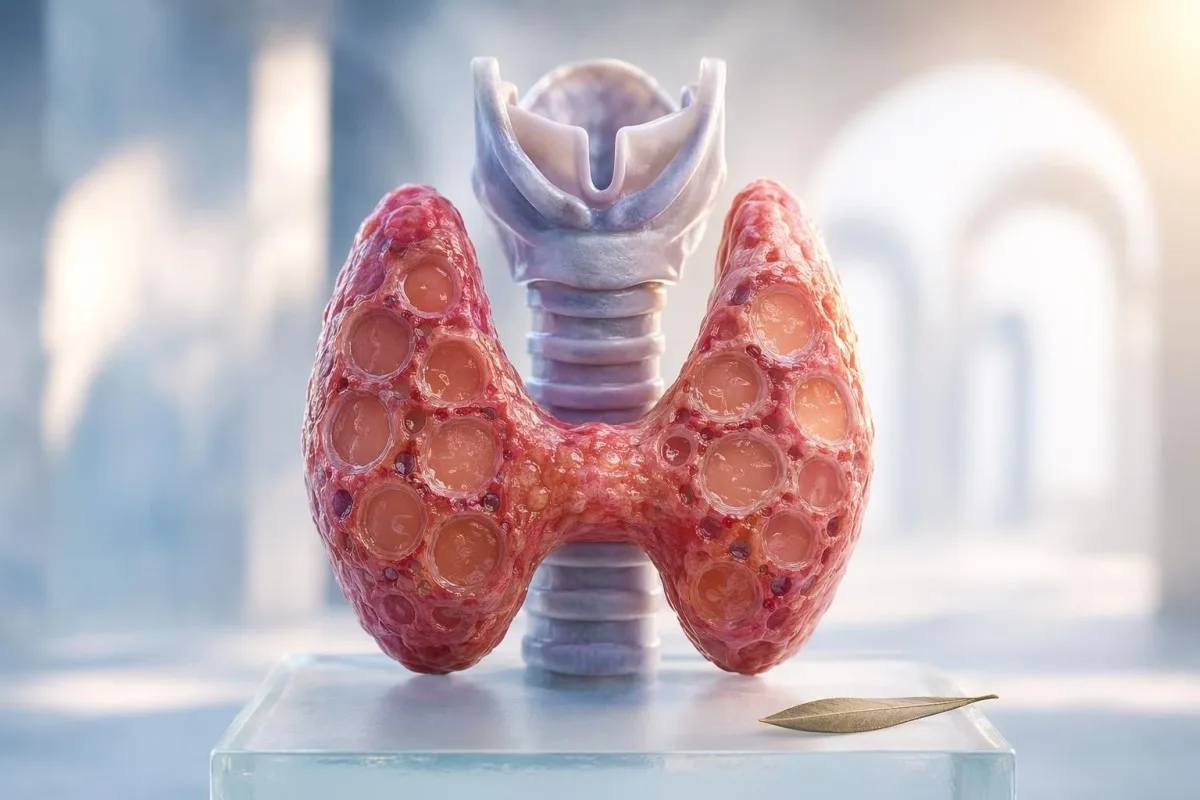
A pediatric thyroid test matters most when growth slows, fatigue or constipation persists, or puberty seems off. The key is not TSH alone—it is age-adjusted TSH plus Free T4, read against the child’s growth pattern.


- TSH above 10 mIU/L in a child usually warrants prompt pediatric review, especially if Free T4 is low for age.
- Subclinical hypothyroidism usually means TSH about 4.5-10 mIU/L with normal Free T4; many children need repeat testing in 6-8 weeks, not instant treatment.
- Free T4 below the lab’s age range with a low or normal TSH can point to central hypothyroidism.
- Growth velocity under about 4-5 cm/year before puberty is a stronger thyroid clue than isolated weight gain.
- Newborn TSH can be transiently high in the first days of life, so adult cutoffs should never be used for infant interpretation.
- Biotin at 5-10 mg/day can falsely lower TSH and raise Free T4 on some immunoassays; many clinicians ask families to stop it for 48-72 hours before testing.
- Ferritin below about 15-20 ng/mL often explains fatigue even when thyroid numbers are normal.
- Repeat timing after starting or changing levothyroxine is usually 6-8 weeks for TSH reassessment because the pituitary responds slowly.
When should parents ask for a pediatric thyroid test?
A pediatric thyroid test matters when a child has slowed height gain, constipation, unusual fatigue, cold intolerance, a goiter, or puberty that seems off—especially if the growth chart drops across percentiles. The two core markers are TSH and Free T4, read against age-specific ranges, not adult cutoffs. Parents can store and review those results with Kantesti AI, but the growth pattern still tells us whether the number fits the child.
The thing is, tiredness alone is a weak thyroid clue. When I review a child who is sleeping well, growing 5-6 cm/year, and has normal stools, thyroid disease falls behind iron deficiency, sleep problems, and stress. For a broader children blood test normal range context, compare the whole panel, not just one hormone.
In clinic, an 11-year-old boy who fell from the 60th to the 25th height percentile over 18 months had TSH 8.6 mIU/L, Free T4 0.8 ng/dL, and positive TPO antibodies. As Thomas Klein, MD, I pay much more attention to that pattern than to a lone TSH 5.1 in a child whose height velocity is still normal.
Screen earlier if your child has Down syndrome, Turner syndrome, type 1 diabetes, celiac disease, neck radiation, or a first-degree relative with Hashimoto’s. In those groups, we order a pediatric blood test sooner because autoimmune thyroid disease tends to cluster with other immune conditions.
Why age changes the children blood test normal range
Age changes the range more than most parents expect: newborn serum TSH can be temporarily above 10 mIU/L in the first days of life, while many school-age labs use roughly 0.6-4.8 mIU/L and many teen labs about 0.5-4.3 mIU/L. That is why a TSH normal range in children chart beats any adult cutoff pasted into a portal.
Kapelari et al. (2008) showed that pediatric thyroid intervals shift substantially from birth through adolescence, and Free T4 also runs higher in infants than in older children. A school-age Free T4 often sits around 0.8-1.8 ng/dL, but some European labs report 10-23 pmol/L instead.
The phrase children blood test normal range sounds simple, but thyroid testing is assay-dependent. One lab’s upper TSH limit may be 4.2 mIU/L, another may use 5.0, and afternoon samples tend to read a bit lower than early-morning samples because TSH follows a circadian rhythm.
Total T4 can mislead in teenagers using estrogen-containing contraception because thyroxine-binding globulin rises and total hormone rises with it; Free T4 usually stays the better anchor. In practice, I tell parents to compare the result with the lab’s exact age bracket first and only then ask whether the number fits symptoms.
Why TSH alone can miss a real thyroid problem
TSH alone can miss real thyroid disease, which is why a useful pediatric thyroid test almost always includes Free T4. TSH tells you what the pituitary is asking the thyroid to do; Free T4 tells you what hormone is actually available to tissues. Our free T4 guide explains why those two numbers belong together.
A high TSH with low Free T4 usually means primary hypothyroidism. A low or normal TSH with low Free T4 can point to central hypothyroidism, where the pituitary or hypothalamus is the weak link; that is easy to miss if a portal only flags TSH.
Free T3 is not usually the first test I lean on in children with growth delay or constipation. It can fall during calorie restriction or acute illness before TSH moves, so ordering a bigger panel is not always better; the practical starting point is a thyroid panel beyond TSH only when the history supports it.
One nuance parents rarely hear: mild obesity can nudge TSH upward by roughly 0.5-1.5 mIU/L without true thyroid failure. In my experience, that borderline rise matters far less than a downward drift in Free T4, a firm goiter, or a child who has slowed from 6 cm/year to 3 cm/year.
Which markers beyond TSH help in children?
The markers beyond TSH that help most in children are Free T4, TPO antibodies, and thyroglobulin antibodies; after that, extra testing becomes selective fast. If a child has a firm enlarged thyroid, rising TSH, or a family history of autoimmune disease, I usually add antibodies before anything more exotic.
Positive TPO or TgAb results make Hashimoto’s thyroiditis more likely, especially when TSH is drifting up or the gland feels enlarged. A helpful next read for families is our Hashimoto’s blood test explainer, because antibodies alone do not always mean a child needs treatment today.
I occasionally add total T4 or TBG when binding-protein issues may distort the picture, especially in teens using estrogen or with rare protein disorders. I almost never order reverse T3 for routine pediatric fatigue—honestly, it creates more confusion than clarity in most children.
Here is a less obvious clue: TRH can stimulate both TSH and prolactin, so mild prolactin elevation sometimes accompanies hypothyroidism. The reason we care is that low Free T4 plus a non-elevated TSH plus abnormal prolactin pushes me to think higher up the axis, not just in the thyroid gland.
Growth delay is the biggest thyroid clue parents miss
Growth delay is one of the strongest thyroid clues: a prepubertal child growing under about 4-5 cm/year or crossing downward through height percentiles deserves thyroid testing. Hypothyroidism slows bone maturation and linear growth before it causes dramatic weight change.
I remember an 8-year-old with stubborn constipation who had grown only 2.8 cm in the prior year. His TSH was 12.4 mIU/L, Free T4 0.7 ng/dL, and bone age lagged by almost 2 years; once treated, his next-year growth bounced to just over 6 cm.
Parents often expect massive weight gain, but most hypothyroid children gain only 2-5 kg more than expected and often look puffy rather than frankly obese. If a child is short but still growing 5-6 cm/year, familial short stature or constitutional delay often beats thyroid disease on probability.
When short stature is real, I compare thyroid tests with other growth data rather than jumping straight to hormone replacement. Our growth hormone test results article helps families see the overlap, and our child iron deficiency guide is worth reading because low ferritin can sap energy long before hemoglobin falls.
Fatigue, constipation, and weight gain: thyroid or something else?
Thyroid disease can cause fatigue, constipation, and weight gain, but in children those symptoms are more often explained by iron deficiency, low fiber intake, poor sleep, medications, anxiety, or low activity. I worry about thyroid more when those complaints travel with slow growth, dry skin, cold intolerance, or a rising TSH.
Ferritin below about 15-20 ng/mL can cause fatigue even when the CBC is still technically normal. Constipation by itself is a weak thyroid clue; if a child stools every few days but keeps a normal height velocity, I think of diet, hydration, stool withholding, and gut disorders before I blame the thyroid.
A borderline TSH 4.8-6.5 mIU/L with normal Free T4 after a viral illness often settles on repeat testing. In our clinical work, these are the families who benefit most from a calm recheck rather than months of internet worry, and our fatigue lab guide is often more useful than another random thyroid add-on.
Rapid weight gain is another place context matters. Hypothyroidism usually lowers expenditure modestly and causes some fluid retention; it does not usually explain a sudden 10 kg jump over a few months, purple striae, or marked muscle weakness—those patterns push me toward other endocrine or lifestyle causes.
How puberty changes a teenager blood test
Puberty changes interpretation because a teenager blood test still needs pediatric ranges, yet binding proteins, menstrual iron loss, growth spurts, and athletic under-fueling can all muddy the picture. Teens are not small adults when it comes to thyroid labs.
Severe hypothyroidism can delay pubertal progression, blunt growth spurt timing, and sometimes disturb menstrual regularity. I become more suspicious when a teen has fatigue plus falling school performance, colder hands, slower height gain, and new constipation—not when the only complaint is being tired after exams.
A teenager using estrogen-containing contraception may show a higher total T4 while Free T4 stays normal, because TBG rises. For that reason, I often tell parents to start with our teenager blood test range guide before assuming an adult portal flag is meaningful.
And here is a sneaky one: hair, skin, and acne supplements often contain biotin 5-10 mg/day, enough to distort some immunoassays and falsely lower TSH while nudging Free T4 up. If that possibility fits, read our biotin-thyroid testing note before repeating labs.
How to prepare for a pediatric blood test so results are trustworthy
Most children do not need fasting for TSH and Free T4, but timing still matters: use the same lab when possible, pause high-dose biotin for 48-72 hours if the clinician agrees, and be consistent about whether thyroid medicine was taken before the draw. Pre-analytic details save more repeat tests than people realize.
For children already on levothyroxine, many endocrinologists prefer drawing labs before the morning dose or at least at the same interval after the dose each time. TSH changes slowly over weeks, but Free T4 can look temporarily higher within hours of the tablet.
Acute illness can transiently lower T3 and sometimes Free T4 without true thyroid disease—a classic non-thyroidal illness pattern. In our analysis of 2M+ blood tests, Kantesti repeatedly sees false alarms when thyroid labs are checked during fever, after emergency visits, or while steroids are on board.
One more practical point: even good labs are not interchangeable at the edges. If one assay reads a TSH of 4.7 mIU/L and another reads 5.3, that may reflect method drift as much as biology, which is why our fasting rules overview and lab variability explainer matter more than most parents expect.
How doctors read the four common pediatric thyroid patterns
The four common patterns are straightforward once you line them up: high TSH + low Free T4 suggests overt hypothyroidism; high TSH + normal Free T4 suggests subclinical hypothyroidism; low TSH + high Free T4 suggests hyperthyroidism; low or normal TSH + low Free T4 raises concern for central hypothyroidism or severe illness. Pattern beats any single number.
The reason we worry more about high TSH plus low Free T4 than about high TSH alone is that the pituitary is asking hard and the thyroid still cannot keep up. A child with TSH above 10 mIU/L and a low age-adjusted Free T4 usually deserves prompt pediatric endocrine review; our high TSH and Free T4 pattern guide explains this well.
Subclinical hypothyroidism usually means TSH about 4.5-10 mIU/L with normal Free T4. Evidence here is honestly mixed—many children, especially those with TSH under 7-8, negative antibodies, and excess weight, normalize over time rather than progress, a point reviewed by Crisafulli et al. (2021).
Low TSH with high Free T4 points toward Graves disease, thyroiditis, or assay interference, especially if a teen has tremor, palpitations, and heat intolerance. Low or normal TSH with low Free T4 is the pattern parents should never dismiss as normal just because TSH is not flagged red.
When do pediatric endocrinologists repeat, refer, or treat?
Repeat a borderline pediatric thyroid test in 6-8 weeks; refer sooner for TSH above 10 mIU/L, a low age-adjusted Free T4, a goiter, clear growth failure, or a suppressed TSH with high Free T4. Newborn abnormalities move on a different timetable and should not wait for a routine school-age pathway.
According to van Trotsenburg et al. (2021), confirmatory serum testing and early treatment for congenital hypothyroidism are time-sensitive because brain development is affected long before a child looks obviously unwell. For treated hypothyroidism, our TSH timeline after levothyroxine guide helps parents understand why we usually wait weeks, not days, before judging a dose.
Context changes everything. As Thomas Klein, MD, I usually watch a child with TSH 6.2, normal Free T4, negative antibodies, and normal growth—but I move much faster if the same TSH 6.2 comes with a firm goiter, TPO positivity, constipation, and a height percentile that is sliding.
Treatment is weight- and age-dependent, not one-size-fits-all. School-age children often need roughly 2-4 mcg/kg/day of levothyroxine, while infants with congenital hypothyroidism may need 10-15 mcg/kg/day, which is one reason we want pediatric dosing reviewed by our Medical Advisory Board.
What other labs are worth adding for growth delay or fatigue?
When growth delay or fatigue brings a child in, the best add-on tests are usually CBC, ferritin, celiac screening, CMP, and sometimes IGF-1 or inflammatory markers. TSH is rarely the whole story in a tired child.
A CBC can uncover anemia, and ferritin often drops before hemoglobin does. If constipation, bloating, poor growth, or family autoimmunity is part of the picture, I often add tTG-IgA plus total IgA; our celiac blood test explainer shows why that pairing matters.
A CMP adds useful context on liver enzymes, albumin, calcium, and kidney markers, while older children with hypothyroidism can show higher CK or higher LDL cholesterol. Families wanting the wider frame can review our core blood marker guide so one thyroid result does not overshadow the rest of the panel.
If puberty itself is the concern, the next labs may include LH, FSH, estradiol, testosterone, prolactin, or IGF-1—but only after the history narrows the question. The reason I hesitate to shotgun-test everything is simple: more numbers create more false alarms when the pretest probability is low.
Why trends beat single numbers in thyroid testing
Trend data usually beats a single result: a TSH 5.1 mIU/L once is less informative than 3.2 to 5.1 to 8.4 over 9 months, especially if Free T4 drifts from 1.1 to 0.9 ng/dL. When parents bring me serial results, I can often tell within a minute whether the story is resolving or hardening into disease.
After a new diagnosis or dose change, I usually reassess TSH in 6-8 weeks because the pituitary does not reset overnight. For borderline untreated cases, every 3-6 months can be sensible depending on symptoms, antibodies, and growth velocity; our lab trend graph guide shows what meaningful drift looks like.
Kantesti AI was built for that exact problem. Our AI blood test platform compares serial PDFs and phone photos across units and lab formats, and our population-scale clinical validation dataset describes how the engine handled 100,000 anonymised cases across 127 countries without losing the clinical context.
Parents also get tripped up when one report uses ng/dL and the next uses pmol/L. Kantesti flags those unit shifts automatically, but if you are comparing by hand, our lab units explainer can save you from thinking a stable child suddenly changed overnight.
How Kantesti AI helps parents read a pediatric thyroid test safely
If you already have the report, the fastest safe next step is to upload the PDF or a clear photo to Try Free AI Blood Test Analysis. Our AI identifies TSH, Free T4, units, age context, and red-flag combinations in about 60 seconds, while still telling you when a pediatric clinician needs to take over.
Kantesti works because pediatric thyroid interpretation is usually a pattern problem, not a single-number problem. Our system checks age-specific intervals, mixed unit formats, related markers like ferritin or vitamin D, and common pre-analytic pitfalls; and our Medical Validation standards explain how we handle those clinical edge cases under CE Mark, HIPAA, GDPR, and ISO 27001 controls.
We now support families in 127+ countries and 75+ languages, and Kantesti’s neural network is tuned to spot discordant patterns like low Free T4 with a non-elevated TSH or a suspicious hyperthyroid profile in a teenager. The underlying engineering is described in our multilingual decision-support deployment paper, and the human side of the company lives on our About Us page.
As Thomas Klein, MD, I helped build our review rules to avoid overcalling the child whose TSH is 5.0 once after illness and growing fine. Our job is not to scare families; it is to separate the child who needs a quiet repeat test from the one who needs pediatric endocrinology sooner.
Red flags that should not wait for a routine follow-up
Seek same-day medical review if your child has extreme lethargy, confusion, fainting, trouble breathing, a rapidly enlarging neck, resting palpitations, tremor, eye bulging, or an abnormal newborn screen. A mildly borderline TSH rarely causes an emergency, but a sick-looking child with thyroid symptoms should never wait on a blog post.
Severe hypothyroidism can rarely show up with bradycardia, hypothermia, puffiness, slowed thinking, or very poor feeding in younger children. Hyperthyroidism can look almost opposite—resting heart rate above 120/min in a teen, heat intolerance, shakiness, weight loss despite eating, or panic-like episodes—and that pattern deserves quick assessment.
As of May 16, 2026, the best parent checklist is simple: bring the growth chart, prior lab reports, medication and supplement list, family history, and the exact dates of prior tests. If you want more plain-language lab education after the visit, our blog keeps related thyroid and growth topics in one place.
Bottom line: the right pediatric thyroid test is usually TSH plus Free T4, interpreted with age, growth velocity, puberty stage, symptoms, and repeat trends in mind. That is slower medicine than social media wants, but in children it is usually the safer kind.
Frequently Asked Questions
Can a child have a normal TSH and still have a thyroid problem?
Yes. A child can have low or normal TSH with low Free T4 in central hypothyroidism, where the problem sits in the pituitary or hypothalamus rather than the thyroid itself. That pattern is one reason a pediatric thyroid test should usually include Free T4, not TSH alone. If growth is slowing, puberty is off, or symptoms are strong, a normal TSH does not automatically clear the thyroid.
What is a normal TSH for a child?
A normal pediatric TSH depends on age and assay, not just one universal cutoff. In the first days of life, serum TSH can be temporarily above 10 mIU/L; many school-age labs use roughly 0.6-4.8 mIU/L, and many teen labs use around 0.5-4.3 mIU/L. The practical rule is simple: use the exact lab’s pediatric reference interval. Adult ranges can overcall disease in infants and sometimes miss context in teenagers.
Does my child need to fast for a thyroid blood test?
Usually no. TSH and Free T4 do not usually require fasting, but consistency matters more than most parents think. If a child takes levothyroxine, many clinicians prefer the sample before the morning dose or at the same time after the dose each visit, and high-dose biotin is often stopped for 48-72 hours if the clinician agrees. Morning testing with the same lab is often the cleanest approach.
When does a borderline high TSH need repeat testing?
A borderline high TSH, often in the 4.5-10 mIU/L range with a normal Free T4, is usually repeated rather than treated on the spot. In many children, especially those with TSH under 7-8 mIU/L, no antibodies, and normal growth, the number normalizes on a repeat check. Many clinicians recheck in 6-8 weeks, though some stable children are followed over 3-6 months depending on symptoms and the growth chart. A TSH above 10 mIU/L or a low age-adjusted Free T4 changes the urgency.
Which blood tests should go with a pediatric thyroid test for poor growth or fatigue?
The most useful add-on labs are often CBC, ferritin, celiac screening with tTG-IgA and total IgA, and a CMP. Ferritin below about 15-20 ng/mL can explain fatigue before hemoglobin drops, and celiac disease can slow growth while also increasing thyroid autoimmunity risk. If puberty or severe short stature is part of the picture, clinicians may also add IGF-1, prolactin, LH, or FSH. The best panel depends on the story, not just the symptom label.
When is a pediatric thyroid test result urgent?
Urgent thyroid review is appropriate when a child has a suppressed TSH with high Free T4 and symptoms, a low Free T4 with a low or normal TSH plus illness, or an abnormal newborn screen. The clinical red flags are extreme lethargy, poor feeding, fainting, trouble breathing, rapid neck swelling, tremor, or a teen with a resting heart rate above about 120/min. A mildly borderline TSH is rarely an emergency by itself. The sick-looking child is what changes the timeline.
Could a recent infection make my child’s thyroid test abnormal?
Yes. Fever, hospitalization, poor intake, and some medicines can temporarily alter TSH or Free T4 without indicating a lasting thyroid disorder. If the result is only mildly abnormal, clinicians often repeat testing once the child has recovered; concerning symptoms still need prompt assessment.
Can obesity cause a mildly high TSH in children?
Yes. Children with excess weight can sometimes have a modestly raised TSH while Free T4 remains normal, without primary thyroid disease. The clinician will assess growth, symptoms, examination, antibodies when indicated, and repeat results before deciding whether treatment is needed.
Can thyroid problems affect my child’s school performance or attention?
Yes, untreated hypothyroidism can sometimes cause slower thinking, poor concentration, low energy, or mood changes. These symptoms are common for many reasons, so thyroid testing is most helpful when they occur with slowed growth, constipation, cold intolerance, or abnormal puberty timing.
Get AI-Powered Blood Test Analysis Today
Join over 2 million users worldwide who trust Kantesti for instant, accurate lab test analysis. Upload your blood test results and receive comprehensive interpretation of 15,000+ biomarkers in seconds.
📚 Referenced Research Publications
Klein, T., Mitchell, S., & Weber, H. (2026). Clinical Validation of the Kantesti AI Engine (2.78T) on 100,000 Anonymised Blood Test Cases Across 127 Countries: A Pre-Registered, Rubric-Based, Population-Scale Benchmark Including Hyperdiagnosis Trap Cases — V11 Second Update. Kantesti AI Medical Research.
Klein, T., Mitchell, S., & Weber, H. (2026). Multilingual AI Assisted Clinical Decision Support for Early Hantavirus Triage: Design, Engineering Validation, and Real-World Deployment Across 50,000 Interpreted Blood Test Reports. Kantesti AI Medical Research.
📖 External Medical References
van Trotsenburg P et al. (2021). Congenital Hypothyroidism: A 2020-2021 Consensus Guidelines Update—An ENDO-European Reference Network Initiative Endorsed by the European Society for Pediatric Endocrinology and the European Society for Endocrinology. Thyroid.
Crisafulli G et al. (2021). Subclinical hypothyroidism in children: updates for pediatricians. Italian Journal of Pediatrics.
⚕️ Medical Disclaimer
This article is for educational purposes only and does not constitute medical advice. Always consult a qualified healthcare provider for diagnosis and treatment decisions.
E-E-A-T Trust Signals
Experience
Physician-led clinical review of lab interpretation workflows.
Expertise
Laboratory medicine focus on how biomarkers behave in clinical context.
Authoritativeness
Written by Dr. Thomas Klein with review by Dr. Sarah Mitchell and Prof. Dr. Hans Weber.
Trustworthiness
Evidence-based interpretation with clear follow-up pathways to reduce alarm.