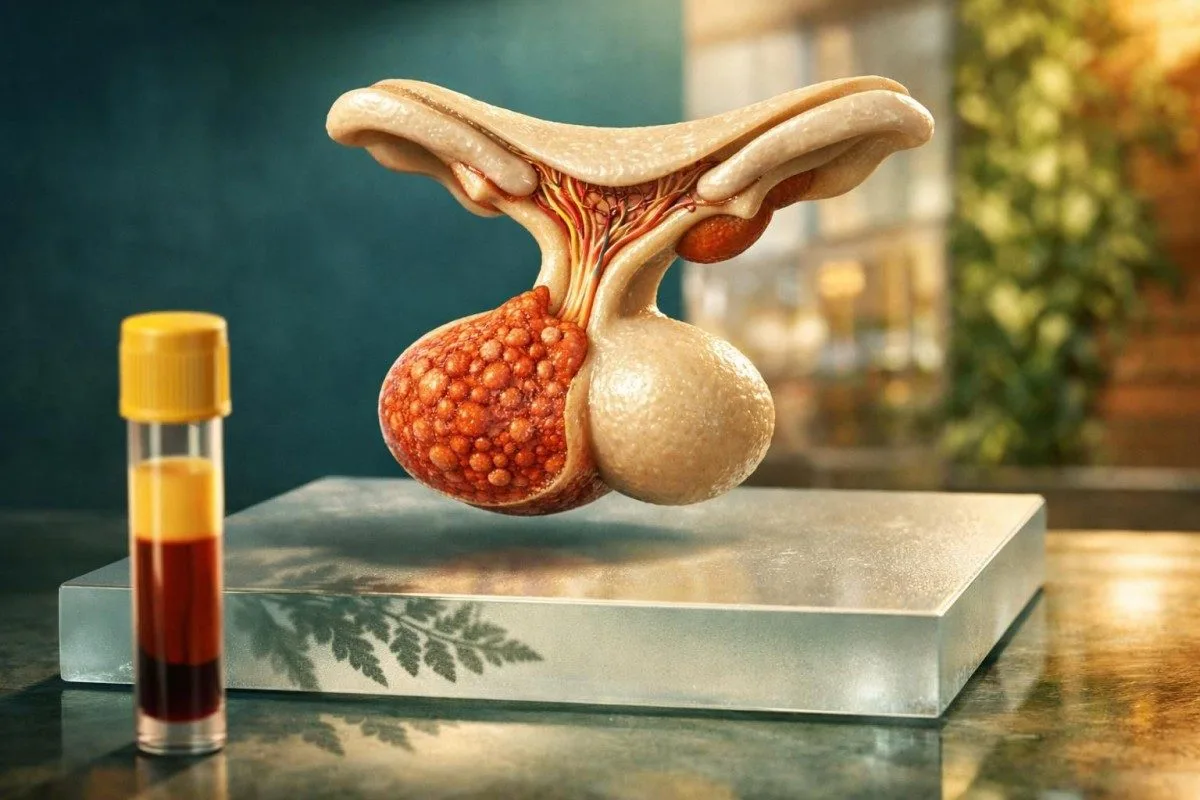
A single GH number often says less than patients think. The useful answer usually comes from IGF-1, dynamic testing, symptoms, and the rest of the pituitary panel.


- Random GH can swing from less than 0.1 ng/mL to well above 10 ng/mL within hours, so one sample rarely diagnoses deficiency or excess.
- IGF-1 is usually the better first test because it reflects average GH exposure and is read against age-adjusted lab ranges.
- Low growth hormone levels on a random test are often normal physiology; low IGF-1 plus symptoms or pituitary disease is more meaningful.
- High growth hormone levels after sleep, exercise, fasting, or stress are common; persistent high IGF-1 raises concern for acromegaly.
- Stimulation testing is used for suspected deficiency, and many adult protocols view a stimulated peak below about 3 ng/mL as abnormal, with assay and BMI caveats.
- Glucose suppression testing is used for suspected excess; failure to suppress GH below 1.0 ng/mL after 75 g oral glucose is concerning in many assays.
- False lows happen with obesity, oral estrogen, liver disease, hypothyroidism, malnutrition, and poorly controlled diabetes because IGF-1 can fall without true pituitary failure.
- Next steps after abnormal growth hormone test results usually include repeat review, age-adjusted IGF-1, other pituitary hormones, and sometimes pituitary MRI.
Why a random growth hormone test often gives the wrong impression
A growth hormone test done at random often misleads because GH is released in pulses; a healthy adult can read less than 0.1 ng/mL at 10 a.m. and several ng/mL later the same day. After an abnormal result, most patients need an age-adjusted IGF-1 and then either a stimulation test for suspected deficiency or a 75-g glucose suppression test for suspected excess, not an instant diagnosis. At Kantesti AI, our AI flags this issue early, much like our guide on why high or low ranges can mislead.
GH secretion is pulsatile, with the biggest bursts during slow-wave sleep and smaller bursts after exercise, stress, fasting, or acute illness. Assay standardization is still imperfect, so a value of 2 ng/mL can look different across labs unless the method is known (Clemmons et al., 2011).
I am Thomas Klein, MD, and I see this weekly: a 34-year-old gets a 'low' GH of 0.2 ng/mL on a routine panel, panics, and turns out to have normal IGF-1 and no pituitary disease. Most patients do better when we step back, review symptoms, and use the same common-sense approach we use for borderline lab results.
The practical takeaway is simple. Low random GH usually means very little, and high random GH can be completely physiologic after a workout or a poor night of sleep; only a consistent pattern plus symptoms moves the needle.
When IGF-1 is the better first test than GH
Age-adjusted IGF-1 is usually the better first test because it reflects average GH exposure over time rather than a 15-minute pulse. Most endocrine clinics order IGF-1 before dynamic testing, and Kantesti's neural network cross-checks it against age, sex, liver markers, and the broader biomarker reference guide on our AI blood test analyzer.
The liver makes most circulating IGF-1 in response to GH. That is why a persistently low IGF-1 can support GH deficiency and a high age-adjusted IGF-1 can point toward acromegaly, although Molitch et al. (2011) note that IGF-1 alone does not prove adult GH deficiency unless other pituitary deficits are already present.
Age matters a lot. An IGF-1 of 145 ng/mL may be comfortably normal for a 58-year-old but unexpectedly low for a 19-year-old, which is why I tell patients never to compare their result with a friend's; the same trap shows up in other endocrine tests like our thyroid hormone panel guide.
IGF-1 can still mislead. Liver disease, undernutrition, untreated hypothyroidism, poorly controlled diabetes, and oral estrogen can all lower IGF-1 without true pituitary failure, while puberty and pregnancy can shift reference intervals upward.
What low growth hormone levels may actually mean
A low growth hormone level on a random lab slip rarely diagnoses anything; the meaningful pattern is low IGF-1 plus symptoms, pituitary risk factors, or a failed stimulation test. In adults, I usually think about this when someone has central weight gain, reduced exercise capacity, low bone density, or a history of pituitary surgery, and many have already had other workups like our fatigue-focused lab list.
Adult GH deficiency is more plausible after pituitary tumor surgery, cranial radiation, traumatic brain injury, subarachnoid hemorrhage, or multiple pituitary hormone deficits. When a patient also has low libido or low morning energy, I often review the broader endocrine picture, including morning testosterone timing rather than blaming GH first.
Children are different. A prepubertal child growing less than 4 to 5 cm per year, falling off prior height percentiles, or showing delayed bone age deserves pediatric endocrine review even if one GH value looks normal because random GH is almost useless in that setting.
Here is the nuance most websites skip: malnutrition and oral estrogen can lower IGF-1 more than patients expect, and obesity can blunt stimulated GH. If body composition or hormone-binding issues are muddying the picture, I sometimes compare related markers the same way we do in our SHBG context.
When a low IGF-1 is more convincing
An isolated low IGF-1 becomes far more convincing when two or more other pituitary axes are also impaired. In practice, low free T4 plus low testosterone or estradiol with inappropriately low LH or FSH raises pretest probability enough that some endocrinologists move faster toward dynamic testing.
What high growth hormone levels can mean and when acromegaly is the concern
High growth hormone levels are concerning mainly when age-adjusted IGF-1 is elevated and the person has features of acromegaly; a single high GH after sleep, exercise, or fasting is common and often benign. The first extra clue on labs is sometimes another pituitary signal, which is why I also review prolactin patterns.
Acromegaly usually comes from a GH-secreting pituitary adenoma. Classic clues are rings or shoes getting tighter, new gap between the teeth, oily skin, sweating, carpal tunnel symptoms, sleep apnea, hypertension, or rising glucose, and the Endocrine Society guideline by Katznelson et al. (2014) still anchors this workup as of April 20, 2026.
Not every person with GH excess looks obviously enlarged. I have seen patients with mild IGF-1 elevation only 1.1 to 1.3 times the upper limit of normal whose biggest complaints were headaches, fatigue, and worsening blood pressure—subtle enough that family photos were more revealing than the exam.
Transient GH elevations happen in puberty, pregnancy, vigorous exercise, fasting, poorly controlled type 1 diabetes, acute illness, and stress. That is why I do not call a person high GH from one random value unless the rest of the picture lines up.
Which stimulation tests are used for suspected deficiency
Suspected adult GH deficiency is diagnosed with a stimulation test, not a random GH draw. The classic test is the insulin tolerance test, while glucagon and macimorelin are common alternatives; our clinicians on the Medical Advisory Board use these only when symptoms, IGF-1, and pituitary history justify the hassle.
During an insulin tolerance test, insulin is given to trigger controlled hypoglycemia, often to a glucose nadir below 40 mg/dL or clear adrenergic symptoms under supervision. GH is usually reported in ng/mL, which is numerically the same as micrograms per liter, and in many adult protocols a peak GH below 3 to 5 ng/mL is suspicious for deficiency, though the exact cutoff depends on assay, BMI, and local standards (Molitch et al., 2011).
The glucagon stimulation test is slower—often 3 to 4 hours—but it avoids deliberate hypoglycemia and is widely used when seizures or coronary disease make ITT a bad idea. Many centers interpret a peak GH below 3 ng/mL as abnormal, while some obesity-adjusted protocols use lower thresholds closer to 1 ng/mL.
The macimorelin test is the least unpleasant in my experience because it is an oral ghrelin-receptor agonist and usually wraps up in about 90 minutes. A peak GH around below 2.8 ng/mL is commonly treated as abnormal in adults, although availability and reimbursement still vary by country.
Preparation matters more than most patients expect. Fasting for 8 to 10 hours, avoiding hard exercise for 24 hours, and reviewing estrogen, glucocorticoid, and diabetes medications can change interpretation; that is one reason Kantesti documents assay context and clinical safeguards in our Medical Validation.
Why BMI changes the cutoff
Obesity physiologically reduces stimulated GH peaks, so a heavier patient can fail an older cutoff without true structural pituitary disease. This is one of those areas where context matters more than the number, and some centers now use BMI-adjusted thresholds to avoid overdiagnosis.
How doctors confirm growth hormone excess with a glucose suppression test
Suspected GH excess is usually confirmed with a 75-g oral glucose suppression test after a high age-adjusted IGF-1. Our endocrine team described on About Us follows this sequence because normal physiology should suppress GH after glucose, whereas acromegaly does not.
In most modern assays, GH should suppress to below 1.0 ng/mL after glucose; some highly sensitive platforms use a stricter normal target of below 0.4 ng/mL. When GH stays above these levels and IGF-1 is also high, the probability of acromegaly rises sharply (Katznelson et al., 2014).
This test is not perfect. Poorly controlled diabetes, liver disease, kidney disease, adolescence, pregnancy, and assay drift can blur the result, and some European units use slightly different suppression cutoffs than U.S. labs.
If suppression fails, the next step is usually a pituitary MRI with contrast plus a broader pituitary panel. I also ask about snoring, ring size, headaches, and whether old wedding bands still fit—patients often remember that before they remember when symptoms started.
When we repeat the test
I repeat or reframe testing when IGF-1 is only mildly elevated, symptoms are thin, or the sample came from a different assay platform than prior results. That small methodological detail saves a surprising number of unnecessary MRIs.
The common reasons growth hormone test results look falsely low or falsely high
False growth hormone test results are common because GH and IGF-1 respond to physiology, body composition, and assay design. Kantesti AI treats results as low-confidence when the sample follows intense exercise, sleep disruption, fasting, oral estrogen use, or major illness, which is exactly the kind of context Clemmons et al. (2011) argued laboratories should not ignore.
A hard workout can transiently raise GH several-fold, and deep sleep can produce the day's largest pulse. I usually tell patients to skip heavy training for 24 hours before dynamic testing and to avoid drawing conclusions from a sample taken right after a night shift.
Obesity tends to blunt stimulated GH responses, while oral estrogen can lower IGF-1 more than transdermal estrogen does because of first-pass liver effects. That is one reason I often review hormone context, especially in women using oral therapy, alongside age-based references such as our estradiol ranges.
Assay variability is real. A GH of 0.7 ng/mL from one platform does not always equal 0.7 ng/mL from another, and high-dose biotin can affect some immunoassays, so serial follow-up should ideally use the same lab and the same method; it is the same philosophy behind a personalized baseline.
How age, puberty, sex steroids, and body composition change the numbers
Age, puberty, sex steroids, and body fat change GH biology enough that one universal cutoff does not work. The same IGF-1 number can be reassuring in a 65-year-old and concerning in a 15-year-old, which is why pediatric endocrinologists often read GH testing alongside puberty markers like LH.
Puberty drives GH and IGF-1 upward. In adolescents with delayed puberty, some centers use sex-steroid priming before GH stimulation testing so a late-maturing 13-year-old is not mislabeled deficient simply because the axis is immature.
Sex steroids matter in adults too. Oral estrogen can lower IGF-1, and low estrogen or androgen states can change body composition, so I sometimes check the wider reproductive-hormone frame with estradiol reference ranges before overcalling pituitary disease.
Body fat changes interpretation in both directions. People with obesity may show a lower stimulated GH peak even without structural pituitary disease, whereas lean endurance athletes can have brisk pulses; in day-to-day practice, context beats dogma.
Children are not small adults
For children, the best screening tool is often a growth chart, not a lab form. Height velocity over 6 to 12 months, bone age, pubertal timing, family height pattern, and chronic illness screening usually tell me more than a single GH measurement.
What to do after abnormal growth hormone test results
After abnormal growth hormone test results, the safest next step is usually repeat interpretation, not self-treatment. As of April 20, 2026, no major guideline recommends diagnosing GH deficiency or acromegaly from one random number, so I start with symptoms, medications, IGF-1, and the original lab method; if you are sorting reports at home, our guide to reading results online safely helps.
Bring every prior report you have, not just the flagged page. A photo or PDF of the original lab, medication list, supplement list, height and weight history, ring or shoe-size change, and any pituitary history makes the endocrine visit far more productive; our lab PDF upload guide shows what details are most useful.
Ask whether you also need prolactin, TSH and free T4, morning cortisol, LH or FSH, estradiol or testosterone, fasting glucose or HbA1c, liver enzymes, and kidney function. When I review serial endocrine labs, trend data over 6 to 24 months often says more than a single point, which is exactly why I like tracking results over time.
Some things should move faster. New visual loss, severe headaches, rapidly progressive growth change in a child, recurrent hypoglycemia in an infant, or obvious acral enlargement deserve prompt endocrine review and sometimes same-week imaging.
One more blunt point: do not start GH injections, peptide secretagogues, or anti-aging stacks after a low result without specialist input. I have had to clean up several cases where gym-bought peptides distorted testing for weeks and delayed the real diagnosis.
How Kantesti AI helps you interpret a growth hormone test safely
Kantesti AI helps by adding context to a growth hormone test rather than pretending one number is destiny. Upload your report to Try the free demo, and our AI checks GH, IGF-1, thyroid markers, liver function, glucose, sex hormones, and prior trends in about 60 seconds.
Kantesti serves 2M+ users across 127+ countries and 75+ languages, and our 2.78T-parameter Health AI works within CE-marked, HIPAA-, GDPR-, and ISO 27001-aligned processes. In practical terms, that means our AI can flag when a low IGF-1 may be better explained by liver dysfunction, oral estrogen, or malnutrition than by the pituitary itself.
We also do something very unglamorous but genuinely useful: our platform tags random GH as a low-reliability datapoint unless there is a paired IGF-1, a dynamic test, or a consistent clinical story. Most patients find that reassurance helpful, especially when the abnormality turns out to be noise rather than disease.
I am Thomas Klein, MD, and this is the advice I give in clinic: pause, verify the assay, look at IGF-1, then test dynamically only if the symptoms and risk factors truly fit. If you want a structured first pass before your appointment, Kantesti can organize the data; your endocrinologist should make the diagnosis.
Frequently Asked Questions
Can a random growth hormone test diagnose deficiency?
No. A random growth hormone test rarely diagnoses deficiency or excess because GH is secreted in pulses and can swing from less than 0.1 ng/mL to above 10 ng/mL within hours. Most endocrinologists use age-adjusted IGF-1 as the first screening test and then confirm with a stimulation test for suspected deficiency or a 75-g glucose suppression test for suspected excess. A single abnormal GH value should be treated as a clue, not a diagnosis.
What is a normal growth hormone test result?
There is no single universally useful normal random GH value. Many adult labs list reference intervals around 0 to 5 ng/mL, but healthy people can fall below or above that depending on sleep, exercise, fasting, stress, and assay method. For suspected acromegaly, GH suppression below 1.0 ng/mL after 75 g oral glucose is normal in many assays, while for adult GH deficiency the meaningful number is the stimulated peak on a formal test.
What do high growth hormone levels mean?
High growth hormone levels can be completely normal if the sample was taken after exercise, during sleep, after fasting, or during acute illness. They become more concerning when age-adjusted IGF-1 is elevated and symptoms of acromegaly are present, such as larger ring or shoe size, sweating, headaches, sleep apnea, or rising glucose. Confirmation usually requires a 75-g oral glucose suppression test and often pituitary MRI if GH fails to suppress.
What do low growth hormone levels mean?
Low growth hormone levels on a random test often mean nothing by themselves because GH secretion naturally drops between pulses. They matter more when IGF-1 is low, symptoms fit adult GH deficiency, or the person has pituitary disease, radiation history, traumatic brain injury, or several other pituitary hormone deficits. In adults, a low stimulated peak on ITT, glucagon, or macimorelin testing carries much more diagnostic weight than a low random GH.
Should I fast before a growth hormone test?
For a casual random GH test, fasting is not always required, but for dynamic testing most labs ask for 8 to 10 hours without food. Avoid vigorous exercise for 24 hours and tell the clinician about oral estrogen, steroids, diabetes medicines, peptide supplements, and high-dose biotin. Those details can change interpretation as much as the number itself.
What should I do after abnormal growth hormone test results?
Repeat the interpretation with the original report, age-adjusted IGF-1, symptoms, and related pituitary hormones. Ask whether you need prolactin, TSH, free T4, morning cortisol, LH or FSH, estradiol or testosterone, glucose, and liver tests, and whether MRI is indicated. Urgent review is sensible if there are visual changes, severe headaches, infant hypoglycemia, or clear progressive enlargement of hands, feet, or facial features.
Does obesity affect a growth hormone test?
Yes. Obesity can reduce the GH rise during stimulation tests and can slightly lower IGF-1, which means heavier patients may look borderline abnormal even without structural pituitary disease. That is why some endocrine centers use lower BMI-adjusted cutoffs, especially when stimulated GH peaks fall between about 1 and 5 ng/mL. A result in that range should be interpreted with symptoms, pituitary history, and the exact assay in mind.
How long does a growth hormone stimulation test take?
Most GH stimulation tests involve repeated blood draws over about 2 to 3 hours, though protocols differ. Plan to stay at the testing center, and ask about driving home if insulin is used because it can cause temporary low blood sugar.
Can kidney disease affect IGF-1 or growth hormone results?
Yes. Chronic kidney disease can alter GH signaling, IGF-1 binding proteins, nutrition, and growth patterns, so results should be read alongside kidney function, albumin or nutrition status, medications, and symptoms rather than treated as a straightforward pituitary diagnosis.
Can supplements or medications affect IGF-1 or growth hormone test results?
Yes. Oral estrogen, testosterone or anabolic steroids, glucocorticoids, diabetes medicines through glucose control changes, and high-dose biotin supplements can all complicate interpretation. Do not stop prescribed medication on your own; ask the ordering clinician or lab what to hold before testing.
Get AI-Powered Blood Test Analysis Today
Join over 2 million users worldwide who trust Kantesti for instant, accurate lab test analysis. Upload your blood test results and receive comprehensive interpretation of 15,000+ biomarkers in seconds.
📚 Referenced Research Publications
Klein, T., Mitchell, S., & Weber, H. (2026). aPTT Normal Range: D-Dimer, Protein C Blood Clotting Guide. Kantesti AI Medical Research.
Klein, T., Mitchell, S., & Weber, H. (2026). Serum Proteins Guide: Globulins, Albumin & A/G Ratio Blood Test. Kantesti AI Medical Research.
📖 External Medical References
⚕️ Medical Disclaimer
This article is for educational purposes only and does not constitute medical advice. Always consult a qualified healthcare provider for diagnosis and treatment decisions.
E-E-A-T Trust Signals
Experience
Physician-led clinical review of lab interpretation workflows.
Expertise
Laboratory medicine focus on how biomarkers behave in clinical context.
Authoritativeness
Written by Dr. Thomas Klein with review by Dr. Sarah Mitchell and Prof. Dr. Hans Weber.
Trustworthiness
Evidence-based interpretation with clear follow-up pathways to reduce alarm.