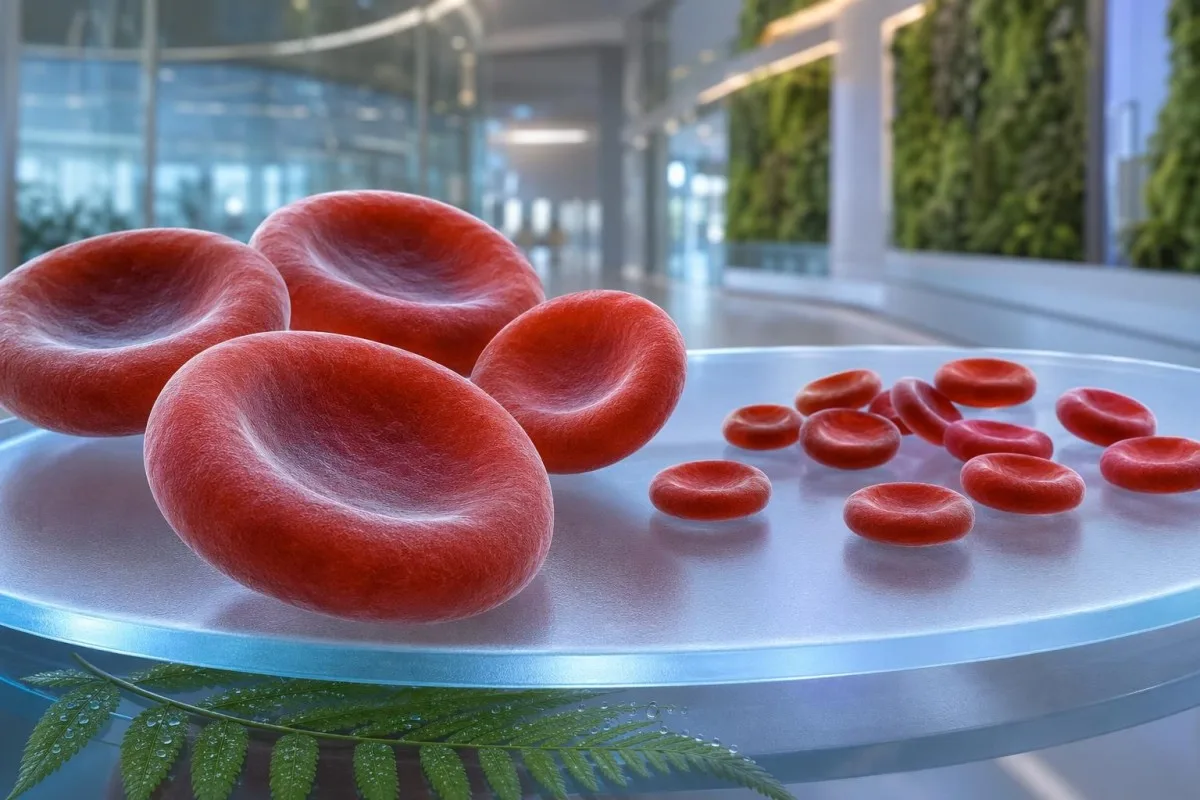
A high MCH usually means your red cells carry more haemoglobin per cell because the cells themselves are larger. The useful question is not whether MCH is high in isolation, but why the cells have enlarged and what the rest of your CBC shows.


- High MCH usually reflects larger-than-average red cells, not excess haemoglobin production.
- Typical adult MCH is about 27-33 pg per cell; a result above 33-34 pg is often flagged, depending on the laboratory.
- Macrocytosis means an MCV above 100 fL in most adult laboratories and commonly travels with high MCH.
- Vitamin B12 deficiency can cause macrocytosis before anaemia develops, particularly with numbness, balance change, glossitis, or memory symptoms.
- Alcohol exposure can raise MCV and MCH even when liver enzymes are normal; red-cell indices often need 8-16 weeks to settle after stopping.
- Medicines matter: hydroxyurea, methotrexate, trimethoprim, anticonvulsants, antiretrovirals, and some chemotherapy agents can enlarge red cells.
- High MCH alone is not an emergency; low haemoglobin, low platelets, low white cells, jaundice, breathlessness, or neurologic symptoms change the urgency.
- Follow-up testing commonly includes B12, folate, reticulocyte count, TSH, liver panel, peripheral film, and sometimes methylmalonic acid.
What a High MCH Result Actually Means
High MCH means each red blood cell contains more haemoglobin than average, most often because the cell is physically larger. In adults, MCH is commonly 27-33 picograms (pg) per cell, while values above roughly 33-34 pg are flagged by many laboratories. A high MCH result is therefore usually a clue to macrocytosis, not a diagnosis by itself.
MCH stands for mean corpuscular haemoglobin. The analyser calculates it from haemoglobin divided by the red-cell count, rather than measuring the haemoglobin in each individual cell directly: MCH = haemoglobin in g/dL × 10 ÷ red cells in millions/µL. A person with haemoglobin of 14.0 g/dL and a red-cell count of 4.0 million/µL has an MCH of 35 pg. Our blood biomarker guide explains where MCH sits among the other CBC indices.
When I review a high MCH result, I look at MCV first. MCV measures cell volume, and an MCV above 100 fL is the conventional adult definition of macrocytosis; higher MCV naturally tends to raise MCH because a larger cell holds more haemoglobin. A normal haemoglobin does not rule this out—macrocytosis can precede anaemia by months.
Kantesti is an AI blood test analyzer that reads MCH beside MCV, MCHC, RDW, haemoglobin, reticulocytes, liver markers, and prior results rather than treating one high flag as a disease label. In my clinical experience, an MCH of 34 pg with MCV 101 fL and normal haemoglobin needs a different conversation from MCH 37 pg with MCV 112 fL, falling haemoglobin, and new numbness.
High MCH, MCV and MCHC: The CBC Difference That Matters
High MCH and high MCV usually point to enlarged red cells, whereas high MCHC points to unusually concentrated haemoglobin within cells. These indices can move together, but they answer different biological questions and should not be used interchangeably.
MCV measures size, reported in femtolitres (fL); MCH measures haemoglobin amount, reported in pg; and MCHC measures haemoglobin concentration, usually reported in g/dL. Most adult laboratories use an MCV range of 80-100 fL and an MCHC range around 32-36 g/dL. A high MCH with normal MCHC is the classic macrocytosis pattern because the larger cell contains more total haemoglobin without becoming more densely packed.
The less obvious pattern is high MCH with a normal MCV. It can occur near a laboratory boundary, with a relatively low red-cell count, or after pre-analytical interference. Our detailed MCV and MCH comparison and RDW, MCV and MCH guide are useful when the indices seem to disagree.
RDW adds a fourth dimension: it measures variation in red-cell size. An RDW above about 14.5% alongside rising MCV may signal mixed populations of cells, such as early B12 deficiency, recovery after blood loss, or combined iron and B12 deficiency. A stable MCV of 103 fL with normal RDW over several years is often less concerning than an MCV climbing from 91 to 103 fL in six months.
Vitamin B12 and Folate Deficiency: Reversible High MCH Causes
Vitamin B12 or folate deficiency can cause high MCH by disrupting DNA synthesis, which delays cell division and produces enlarged red-cell precursors. B12 deficiency deserves particular care because neurological injury can occur even before haemoglobin falls.
A serum B12 result below 200 pg/mL, or below about 148 pmol/L, is commonly treated as biochemical deficiency; results of 200-300 pg/mL are a grey zone, not automatic reassurance. The British Committee for Standards in Haematology guideline advises interpreting B12 results with symptoms and additional markers where uncertainty remains (Devalia et al., 2014). Our B12 range guide explains why lab units and cutoffs differ internationally.
Methylmalonic acid, or MMA, rises when cellular B12 is insufficient and can clarify a borderline result; many laboratories regard plasma MMA above roughly 0.40 µmol/L as elevated. Kidney impairment also raises MMA, however, so an elevated result is not proof of B12 deficiency in someone with reduced eGFR. MMA testing is best read beside creatinine and clinical symptoms.
Folate deficiency can produce the same CBC appearance, and serum folate below 3 ng/mL is often strongly suggestive of deficiency. The practical safety rule is simple: do not use folic acid alone to treat unexplained macrocytosis until B12 deficiency has been considered, because folate may improve anaemia while nerve damage progresses. Restrictive diets, coeliac disease, bariatric procedures, metformin, and long-term acid suppression all change the probability in different ways.
Alcohol, Liver Patterns and Medicines That Raise MCH
Alcohol use, liver disease, and several medicines are common non-megaloblastic causes of high MCH and macrocytosis. They enlarge circulating red cells through mechanisms that differ from B12 deficiency, so the history and liver pattern matter.
Alcohol can raise MCV into the 100-110 fL range even with normal folate, normal B12, and no overt liver disease. This is one reason an honest estimate of drinks matters more than a vague answer of “socially”; in the UK, 14 units equals 112 g of ethanol, but no MCV value can reliably quantify a person's intake. Alcohol-related blood marker trends often improve slowly because circulating red cells live about 120 days.
Liver-associated macrocytosis often appears with raised GGT, ALT, AST, bilirubin, or altered albumin, although none is required. On a peripheral film, liver-related macrocytosis may show round macrocytes and target-shaped cells, whereas B12 deficiency more often produces oval macrocytes and hypersegmented neutrophils. GGT ranges in context can help distinguish a liver signal from an isolated CBC change.
Hydroxyurea, methotrexate, trimethoprim, phenytoin, valproate, zidovudine and other antiretrovirals, chemotherapy, and some immunosuppressants can increase MCV and MCH. Kantesti AI asks users to add medicines and supplements because a stable MCV of 108 fL after hydroxyurea may be an expected treatment effect, while the same result without medication exposure needs a broader work-up. Never stop a prescribed medicine solely because MCH is high.
Thyroid Disease, Reticulocytes and Other Less-Obvious Causes
Hypothyroidism, a high reticulocyte response, and marrow recovery can raise MCH by increasing average red-cell size. These causes are commonly missed when a CBC is reviewed without thyroid tests, recent illness, or a reticulocyte count.
Hypothyroidism can cause modest macrocytosis, often with fatigue, constipation, cold intolerance, raised LDL cholesterol, or a high TSH—but it can also be clinically quiet. A TSH above the laboratory range with low free T4 supports overt hypothyroidism, while a mildly high TSH alone needs more nuance. Our thyroid test decoder covers the usual TSH and free-T4 combinations.
Reticulocytes are newly released red cellular elements and are larger than mature cells. An absolute reticulocyte count above roughly 100 × 10⁹/L during recovery from blood loss, haemolysis, or treatment of deficiency can raise MCV and MCH temporarily; the pattern often changes within 1-3 weeks. Low reticulocyte patterns are different: they suggest the marrow is not mounting an expected response.
If macrocytosis comes with high bilirubin, raised LDH, low haptoglobin, and reticulocytosis, clinicians consider increased red-cell turnover or haemolysis. That combination needs prompt clinical review, especially if jaundice or dark urine develops. It is not the typical explanation for a quiet, stable MCH of 34 pg found on a routine wellness panel.
CBC Patterns That Make High MCH More Concerning
High MCH needs closer follow-up when it occurs with anaemia, low platelets, low white cells, a rising MCV, or abnormal cells on a film. A single isolated high MCH is often benign or reversible; a cluster of CBC abnormalities is more informative.
The pattern high MCH plus low haemoglobin means macrocytic anaemia until proven otherwise. Adult haemoglobin reference intervals vary, but many labs use about 12.0-15.5 g/dL for non-pregnant women and 13.5-17.5 g/dL for men; sex, altitude, pregnancy, and laboratory method all matter. Read the value alongside haemoglobin results rather than relying on the H or L flag alone.
Macrocytosis plus thrombocytopenia or neutropenia deserves more attention because nutritional deficiencies, medication toxicity, severe liver disease, infection, and bone-marrow disorders can affect more than one cell line. A platelet count below 150 × 10⁹/L or an absolute neutrophil count below 1.5 × 10⁹/L is not explained by MCH itself. Low haematocrit patterns help clarify whether the result represents true anaemia.
Nagao and Hirokawa's 2017 clinical review recommends B12, folate, reticulocyte count, peripheral smear, liver assessment, and thyroid testing as early steps in macrocytic anaemia evaluation (Nagao & Hirokawa, 2017). Kantesti compares these clusters across prior CBCs; a slow drift in MCV and falling platelets is more actionable than a single mildly high MCH on one draw.
Can High MCH Be a Laboratory Artifact?
Yes—high MCH or MCV can occasionally be caused by sample and analyser effects rather than a biological change. Cold agglutinins, delayed processing, marked hyperglycaemia, and extreme white-cell elevation are recognised reasons to confirm an unexpected pattern.
Cold agglutinins can make red cellular elements clump in a cool sample, producing a falsely low red-cell count and falsely high MCV and MCH. Warming and rerunning the sample often corrects the pattern; a mismatch of very high MCHC, low red-cell count, and analyser flags is a useful clue. The issue is uncommon, but it is one I do not want clinicians to overlook.
A sample left too long before processing can allow cells to swell, raising MCV modestly. Very high glucose can also draw water into cells in the collection tube, and marked leucocytosis can interfere with some automated measurements. A delta-check review is particularly useful when today's MCV is 108 fL after years around 89 fL without any clinical explanation.
Kantesti AI is an AI lab test interpretation service that flags implausible CBC combinations for confirmation, but it cannot verify specimen handling from a PDF alone. For methodology and clinician oversight, see our medical validation standards. A repeat CBC with a manual film is often more useful than ordering every possible test at once.
What Clinicians Usually Check After a Macrocytosis Blood Test
A practical macrocytosis work-up starts with confirmation of the CBC pattern, medication and alcohol history, B12 and folate testing, reticulocytes, thyroid tests, liver markers, and a peripheral film when needed. The order changes with symptoms, age, and whether anaemia is present.
The first decision is whether the macrocytosis is isolated or accompanied by anaemia. A repeat CBC, reticulocyte count, and smear can separate large mature cells from a temporary influx of young cells; B12, folate, TSH, ALT, AST, ALP, GGT, bilirubin, and creatinine then answer common reversible questions. Macrocytic anaemia patterns show why these tests work better as a group.
A peripheral film adds information that a numerical CBC cannot. Macro-ovalocytes with hypersegmented neutrophils increase suspicion for B12 or folate deficiency, while round macrocytes and target cells lean toward liver disease or alcohol exposure. Aslinia, Mazza, and Yale describe this morphology-led approach in their review of macrocytosis causes (Aslinia et al., 2006).
Persistent unexplained macrocytosis with two or more low cell lines may lead to haematology referral and, in selected cases, marrow assessment. This is not where most people with MCH of 34 pg end up. The aim is proportionate testing: identify common explanations first, then escalate when the CBC trajectory or film makes that reasonable.
Care Steps for Reversible High MCH Causes
High MCH improves by treating its cause, not by trying to lower the number directly. Correcting B12 or folate deficiency, reducing alcohol exposure, treating hypothyroidism, or adjusting a causative medicine with the prescriber can normalise red-cell indices over weeks to months.
For confirmed dietary B12 deficiency, clinicians often use oral cyanocobalamin or methylcobalamin at 1,000-2,000 micrograms daily, although injections may be preferred for severe symptoms, malabsorption, or pernicious anaemia. Folate deficiency is commonly treated with folic acid 1-5 mg daily after B12 status has been addressed. The exact dose and duration should be personalised, particularly in pregnancy, kidney disease, and people taking anticonvulsants.
Dietary improvement helps when intake is the issue: B12 is naturally concentrated in animal-derived foods and fortified products, while folate is abundant in legumes, leafy greens, citrus, and fortified grains. A plant-based diet lab checklist can help vegetarians and vegans plan sensible retesting rather than guessing from symptoms.
Alcohol-related macrocytosis generally does not correct in a few days. Because mature red cells circulate for about 120 days, I usually expect measurable movement after 6-8 weeks and a clearer answer by 3-4 months if alcohol was the principal driver. Persistently high MCV after that interval should prompt reconsideration of B12, thyroid, liver, medication, and marrow causes.
When High MCH Needs Same-Day or Urgent Medical Review
High MCH by itself rarely requires urgent care, but high MCH with severe anaemia symptoms, jaundice, neurological change, or rapidly falling cell counts needs prompt assessment. The risk comes from the underlying condition, not from the MCH number.
Seek same-day clinical advice for new shortness of breath at rest, chest pain, fainting, confusion, marked weakness, yellowing of the eyes, dark urine, or rapidly worsening palpitations—especially when haemoglobin is below the lab range. In stable hospitalised adults, transfusion thresholds are often around 7-8 g/dL, but symptoms, heart disease, pregnancy, and active blood loss change that decision. MCH is not used as a transfusion threshold.
New pins-and-needles, unsteady walking, loss of vibration sense, or cognitive change alongside macrocytosis should accelerate B12 evaluation. Neurological B12 injury is not perfectly predicted by the serum level or the degree of anaemia, which is why a “not very low” B12 result should not dismiss convincing symptoms. Tests used in blood-cancer pathways also explain why persistent pancytopenia needs specialist review.
Older age does not make macrocytosis cancer until proven otherwise, but persistent MCV above 100 fL with unexplained cytopenias should not be watched indefinitely. A clinician may repeat the CBC within 2-6 weeks, inspect a film, and refer to haematology if abnormalities persist. That is cautious medicine, not alarmism.
High MCH in Pregnancy, Children and Older Adults
High MCH needs age- and situation-specific interpretation in pregnancy, children, and older adults because normal red-cell indices and likely causes differ. The same MCV of 101 fL can mean something different in a pregnant adult, a toddler, and an older person taking several medicines.
During pregnancy, MCV can rise by approximately 4 fL in late gestation because of increased red-cell production, while dilution lowers haemoglobin concentration. Macrocytosis beyond the expected shift, particularly with fatigue, glossitis, poor intake, vomiting, or prior bariatric surgery, still deserves B12 and folate assessment. Pregnancy blood-test red flags outlines which results should not wait.
Children require paediatric reference intervals: infants naturally have larger red cells than adults, and the MCV declines substantially through early childhood. An adult cutoff of 100 fL should never be pasted onto a child's CBC without checking the lab's age band. Paediatric CBC ranges are especially helpful when a portal marks a result without context.
In older adults, medication exposure, alcohol, undernutrition, thyroid disease, liver disease, and marrow disorders are all more common. Kantesti can organise longitudinal family lab records, but an AI result cannot replace an examination for weight loss, recurrent infections, bruising, enlarged spleen, or neurological symptoms. The pre-test probability changes with the person in front of you.
When to Repeat MCH and MCV After Treatment or Lifestyle Change
Most people should repeat a CBC 6-12 weeks after addressing a suspected reversible cause of macrocytosis, unless symptoms or severe cytopenias require earlier review. MCH and MCV change slowly because they represent the mix of circulating cells produced over the prior several months.
After B12 treatment, reticulocytes often rise within 3-5 days and haemoglobin may improve over 2-4 weeks, while MCV can take 6-12 weeks to return toward baseline. The timeline is slower if iron deficiency coexists, absorption is poor, or treatment began after severe deficiency. A single repeat at day 7 is usually too early to judge MCV recovery.
After an alcohol reduction, MCV often remains elevated for 8-16 weeks because older macrocytic cells remain in circulation. Dr. Thomas Klein's practical advice is to record changes in alcohol, new medicines, supplements, illness, and diet beside each draw; otherwise a later clinician is left guessing why an index moved. Blood-test trend analysis makes that context visible.
A rising MCV despite an apparently corrected B12 level is a reason to revisit the diagnosis rather than simply increase supplements. Check adherence, absorption, folate, TSH, liver tests, alcohol exposure, reticulocytes, and medication timing. The evidence is honestly mixed on exactly how quickly every patient normalises, so the direction of change often matters more than chasing a perfect date.
How Kantesti Reads High MCH in the Context of Your Full Panel
A meaningful high-MCH interpretation compares the full CBC, relevant chemistry tests, symptoms, medicines, and previous values rather than relying on a lab flag. This is where pattern recognition can reduce both false reassurance and unnecessary panic.
Kantesti is an AI biomarker interpretation platform that processes uploaded laboratory PDFs or photos in about 60 seconds and places MCH beside MCV, MCHC, RDW, haemoglobin, B12, liver markers, thyroid results, and longitudinal change. For example, MCH 35 pg, MCV 103 fL, normal RDW, stable haemoglobin, and hydroxyurea use creates a very different follow-up prompt from MCH 35 pg, MCV 103 fL, RDW 17%, B12 185 pg/mL, and numbness.
Our system also identifies when a claimed nutritional explanation does not fit the laboratory pattern. High folate from supplements can coexist with B12 deficiency, and a normal serum B12 can occasionally be misleading in liver disease or after recent supplementation. High folate results are therefore not a reason to stop asking why macrocytosis appeared.
As of July 19, 2026, Kantesti supports more than 2 million users across 127+ countries and 75+ languages, but our output is intentionally framed as interpretation and follow-up support, not a diagnosis. Our AI technology guide explains how result extraction, range recognition, and clinical rule layers work before a clinician confirms the care plan.
Questions to Take to Your Clinician After a High MCH Result
The best next appointment question is “What explains my high MCH and MCV pattern, and which repeat or confirmatory tests would change management?” Bringing prior CBCs, a medication list, supplement doses, and an accurate alcohol history makes that discussion much more productive.
Ask whether your MCV is also high, whether anaemia or another low cell count is present, and whether the change is new. Ask whether B12, folate, MMA, reticulocytes, TSH, liver markers, and a film are appropriate for your specific pattern. Dr. Thomas Klein recommends writing down any tongue soreness, numbness, gait change, fatigue, bruising, recent gastrointestinal surgery, dietary restriction, or medication change before the visit.
Bring exact product labels for supplements rather than saying “a multivitamin.” Some products contain 500-5,000 micrograms of B12, 400-1,000 micrograms of folic acid, or mixtures that can alter results and obscure diagnosis. A second-opinion checklist can be useful if macrocytosis persists despite an explanation that does not seem to fit.
Most isolated high MCH findings are manageable and many are reversible. Still, persistent macrocytosis deserves an explanation, especially with falling haemoglobin, platelets, or white cells. Our Medical Advisory Board oversees the clinical review principles behind Kantesti content, while your own clinician remains the person who can examine you, order confirmation tests, and make treatment decisions.
Frequently Asked Questions
Is high MCH dangerous?
High MCH alone is usually not dangerous because it is an index describing the average haemoglobin amount in each red cell, not a toxin or disease. Many laboratories flag MCH above about 33-34 pg, often because MCV is above 100 fL and the cells are enlarged. Risk depends on the cause and accompanying findings: low haemoglobin, low platelets, low white cells, jaundice, breathlessness, or neurological symptoms need timely medical review. An isolated MCH of 34 pg with a stable normal CBC is generally far less urgent than high MCH with macrocytic anaemia.
What does high MCH with normal MCV mean?
High MCH with normal MCV can occur near the upper edge of a laboratory reference range, with a relatively low red-cell count, or because of sample and analyser effects. MCH is calculated as haemoglobin in g/dL × 10 divided by the red-cell count in millions/µL, so small shifts in either number can affect it. If MCH is 34-35 pg but MCV, MCHC, RDW, haemoglobin, and prior CBCs are normal, clinicians often repeat the CBC rather than assume disease. A new change or a high MCHC should prompt review for laboratory interference or a red-cell disorder.
Can alcohol cause high MCH?
Alcohol can cause high MCH indirectly by increasing MCV and producing larger red cells, even when B12, folate, and liver enzymes are normal. Alcohol-related macrocytosis often produces an MCV around 100-110 fL, although there is no MCV number that proves alcohol is the cause. Because red cells circulate for about 120 days, MCV and MCH may take 8-16 weeks to improve after reducing or stopping alcohol. Persistent macrocytosis after that period should trigger review of B12, thyroid, liver, medicines, and other causes.
Does high MCH mean I have vitamin B12 deficiency?
High MCH does not automatically mean vitamin B12 deficiency, but B12 deficiency is a common and treatable cause when MCV is also above 100 fL. A serum B12 below 200 pg/mL, or about 148 pmol/L, supports deficiency in many laboratories; a result from 200-300 pg/mL may require methylmalonic acid, homocysteine, symptoms, and kidney function for interpretation. Numbness, balance difficulty, memory change, or a sore tongue make B12 deficiency more clinically urgent. Folate should not be used alone for unexplained macrocytosis until B12 status has been considered.
What medications can make MCH high?
Medicines that can raise MCH through macrocytosis include hydroxyurea, methotrexate, trimethoprim, phenytoin, valproate, zidovudine and related antiretrovirals, chemotherapy, and some immunosuppressants. Metformin and long-term proton-pump inhibitors may contribute indirectly by reducing vitamin B12 absorption over time. A stable MCV of 105-110 fL can be an expected effect of some treatments, particularly hydroxyurea, but the prescribing clinician should confirm that interpretation. Do not stop a prescribed medicine because MCH is high without discussing it with the clinician who prescribed it.
How do I lower a high MCH level?
You do not lower high MCH directly; the level falls when the cause of enlarged red cells is corrected. Treatment may involve B12 at 1,000-2,000 micrograms daily for selected dietary deficiencies, folate after B12 assessment, alcohol reduction, thyroid treatment, or a clinician-guided medication adjustment. MCH and MCV usually change gradually over 6-12 weeks because red cells survive for roughly 120 days. A repeat CBC should be timed with the clinical plan rather than taken every few days.
Can metformin or acid-reducing medicines contribute to high MCH over time?
Yes. Long-term metformin and acid-suppressing medicines such as proton pump inhibitors can reduce vitamin B12 absorption in some people, potentially contributing to macrocytosis; do not stop prescribed treatment yourself, but ask whether B12 monitoring is appropriate.
Get AI-Powered Blood Test Analysis Today
Join over 2 million users worldwide who trust Kantesti for instant, accurate lab test analysis. Upload your blood test results and receive comprehensive interpretation of 15,000+ biomarkers in seconds.
📚 Referenced Research Publications
Klein, T., Mitchell, S., & Weber, H. (2026). Kantesti. (2026). aPTT Normal Range: D-Dimer, Protein C Blood Clotting Guide. Zenodo.. Kantesti AI Medical Research.
Klein, T., Mitchell, S., & Weber, H. (2026). Kantesti. (2026). Serum Proteins Guide: Globulins, Albumin & A/G Ratio Blood Test. Zenodo.. Kantesti AI Medical Research.
📖 External Medical References
Nagao T and Hirokawa M (2017). Diagnosis and treatment of macrocytic anemias in adults. Journal of General and Family Medicine.
Aslinia F, Mazza JJ and Yale SH (2006). Megaloblastic anemia and other causes of macrocytosis. Clinical Medicine & Research.
⚕️ Medical Disclaimer
This article is for educational purposes only and does not constitute medical advice. Always consult a qualified healthcare provider for diagnosis and treatment decisions.
E-E-A-T Trust Signals
Experience
Physician-led clinical review of lab interpretation workflows.
Expertise
Laboratory medicine focus on how biomarkers behave in clinical context.
Authoritativeness
Written by Dr. Thomas Klein with review by Dr. Sarah Mitchell and Prof. Dr. Hans Weber.
Trustworthiness
Evidence-based interpretation with clear follow-up pathways to reduce alarm.