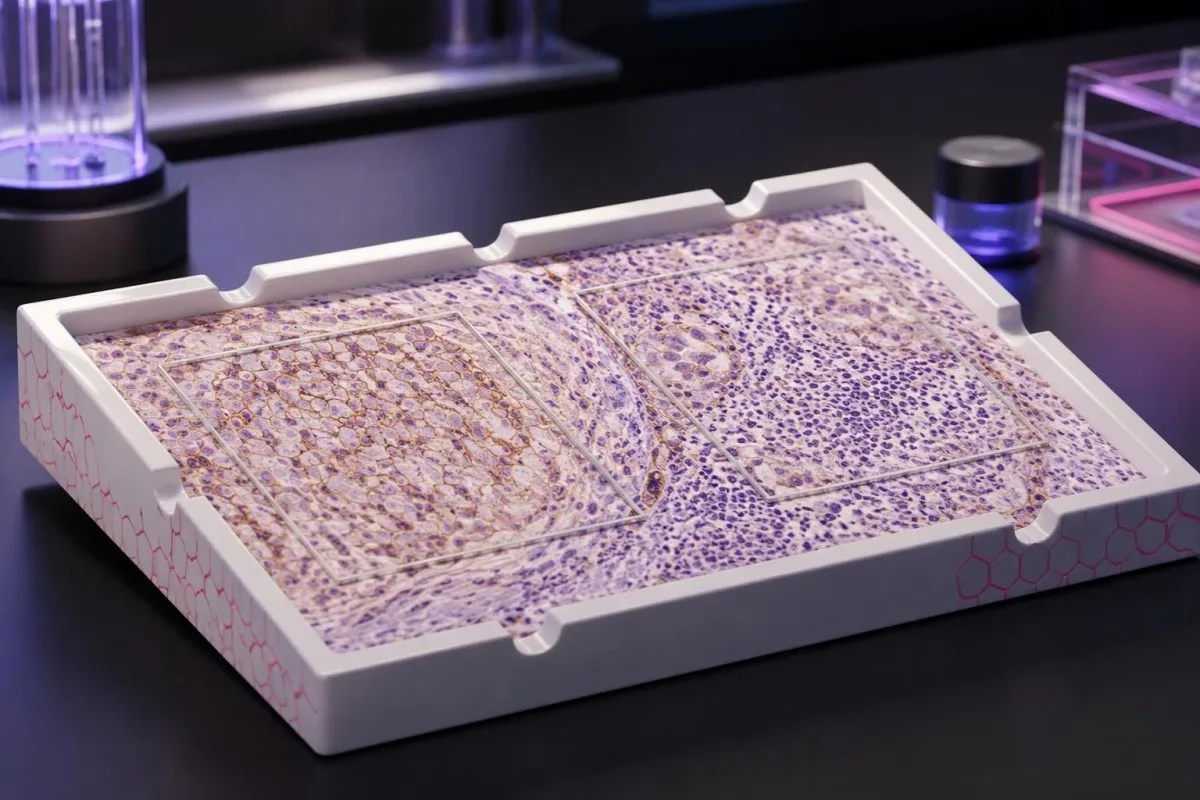
Tha sgòran PD-L1 a’ toirt cunntas air an dathadh ann an sampall fìne—chan ann air an dearbh chothrom agad fhèin gum bi an làimhseachadh soirbheachail. Bidh an dòigh sgòraidh, breithneachadh na h-aillse agus am measgachadh dhrogaichean a thathar a’ moladh a’ dearbhadh dè as urrainn don toradh a dhearbhadh.

Prìomh phuingean
- toraidhean deuchainn PD-L1 a’ tomhas dathadh pròtain ann an fìne aillse; chan e toraidhean deuchainn fala àbhaisteach no deuchainn sgrìonaidh aillse a th’ annta.
- TPS an ceudad de cheallan tumhair obrachail aig a bheil dathadh iomchaidh air an membran, air aithris bho 0% gu 100%.
- CPS a’ cunntadh nan ceallan tumhair, lymphocytes agus macrophages deimhinneach airson PD-L1 a tha a’ coinneachadh ris na slatan-tomhais, ga roinn leis an àireamh de cheallan tumhair obrachail agus ga iomadachadh le 100; tha an sgòr a thèid aithris air a chuingealachadh ri 100.
- Sgòran eadar-dhealaichte chan urrainnear atharrachadh gu: TPS 10% dh’fhaodadh a bhith an cois CPS 10, CPS 25, no luach eile, a rèir dathadh nan ceallan dìonach.
- Tairseachan leithid TPS 1%, TPS 50%, CPS 1, agus CPS 10 buntainneach do shuidheachaidhean sònraichte aillse agus làimhseachaidh—chan ann do gach leigheas-dìona.
- Toraidhean dearbhach dh’fhaodadh iad taic a thoirt do roghainn làimhseachaidh ach chan eil iad a’ gealltainn buannachd; chan eil sgòr de 50 a’ ciallachadh coltachd freagairt de 50%.
- Toraidhean àicheil chan eil iad an-còmhnaidh a’ cur às do leigheas-dìona, oir chan eil feum aig cuid de cho-mheasgachaidhean agus leigheasan a tha air am mìneachadh le bith-chomharran air PD-L1 a bhith deimhinneach.
- Freagarrachd an t-sampaill tha e cudromach: feumaidh co-dhiù 100 cealla tumhair obrachail a bhith ann a rèir grunn phròtacalan sgòraidh a tha gan cleachdadh gu cumanta, ach feumaidh an obair-lann na riaghailtean a tha sònraichte don chomharradh a chur an gnìomh.
Dè tha toraidhean deuchainn PD-L1 ag innse dhut dha-rìribh?
toraidhean deuchainn PD-L1 a’ mìneachadh dathadh pròtain ann am fighe aillseach. TPS a’ cunntadh ceudad nan ceallan tumhair dathte; CPS tha e cuideachd a’ gabhail a-steach ceallan dìonach taghte a tha dathte. Chan eil aon sgòr seach aonar a’ co-dhùnadh làimhseachadh: tha an seòrsa aillse, an ìre, an assay, agus an rèim làimhseachaidh a’ dearbhadh dè an stairsneach iomchaidh, agus chan eil toraidhean deimhinneach no àicheil a’ gealltainn buannachd no a’ cur às do làimhseachadh.
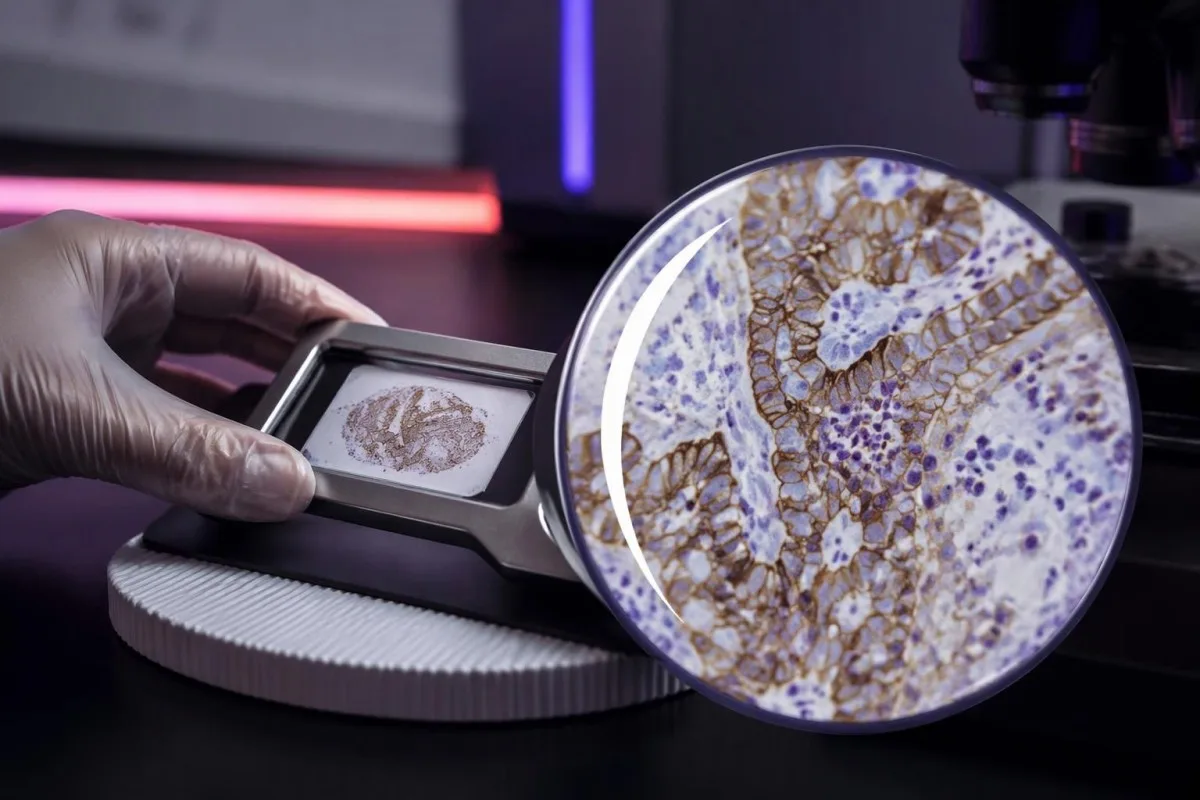
PD-L1, no ligand-1 bàis phrògramaichte, comasach air ceangal ris an ghabhadair PD-1 air ceallan dìonach agus an gnìomhachd a lùghdachadh. Faodaidh drogaichean a tha ag amas air a’ cheangal seo gnìomhachd dìonach an aghaidh aillse ath-stèidheachadh, ach chan eil tomhas 1 phròtain a’ gabhail a-steach gach feart a tha a’ dearbhadh an aithnich agus an smachdaich ceallan dìonach aillse.
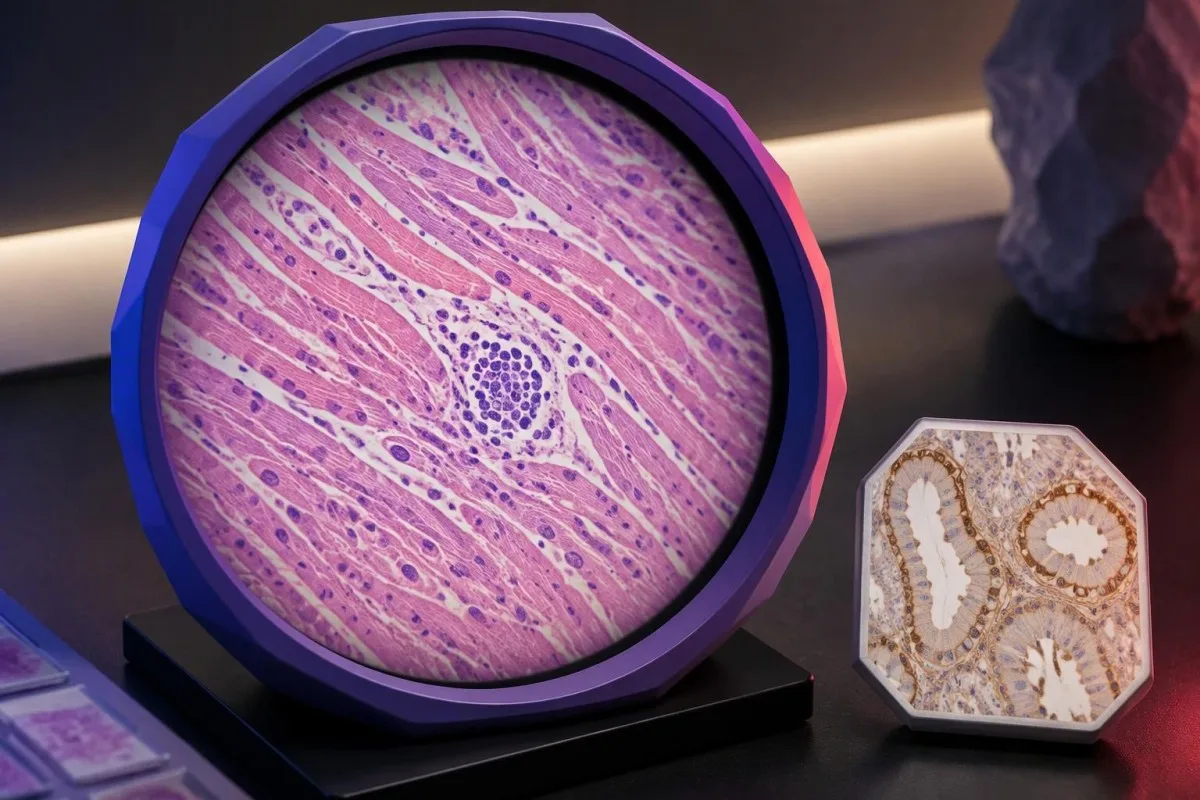
Mar as trice thèid toradh PD-L1 ann am fighe a dhèanamh le imdhìon-histochemistry, a bhios a’ cleachdadh antibody gus far a bheil pròtain suidhichte a nochdadh ann an sampall glèidhte. Tha an àireamh a chaidh aithris a’ mìneachadh cheallan ann an earrannan taghte den fhighe—chan e gach cealla aillseach air feadh a’ chuirp—agus faodaidh 2 shampall à diofar àiteachan toraidhean eadar-dhealaichte a thoirt seachad.
Tha Kantesti na Anailisiche deuchainn fala AI, chan e àite na pathology fighe no co-dhùnadh làimhseachaidh oncology. Tha ar buidheann agus raon clionaigeach a’ dèanamh eadar-dhealachadh eadar taic foghlaim do thoraidhean obair-lann agus co-dhùnaidhean a dh’fheumas an aithisg pathology thùsail, ìomhaigheachd agus an rèim làimhseachaidh a thathar a’ moladh a bhith air an beachdachadh còmhla.
Tòisich le 4 mion-fhiosrachadh mus mìnich thu an àireamh: breithneachadh an aillse, an e CPS no TPS a th’ anns an sgòr, an assay a chaidh a chleachdadh, agus an làimhseachadh a thathar a’ beachdachadh. Ma tha an aithisg ag ràdh dìreach gu bheil PD-L1 deimhinneach, tha beàrn cudromach gu clinigeach ann; iarr am modh sgòraidh agus an toradh àireamhach.
Brìgh sgòr PD-L1 TPS: an ceudad de cheallan tumhair
Sgòr cuibhreann an tumhair, no TPS, ’s e sin an ceudad de cheallan tumhair obrachail a tha a’ sealltainn dathadh membran PD-L1 pàirteach no iomlan a tha freagarrach. Tha TPS eadar 0% agus 100%; tha ceallan dìonach air an dùnadh a-mach às an àireamhair aige, fiù ’s nuair a tha iad air an dathadh gu làidir ri taobh nan ceallan aillseach.
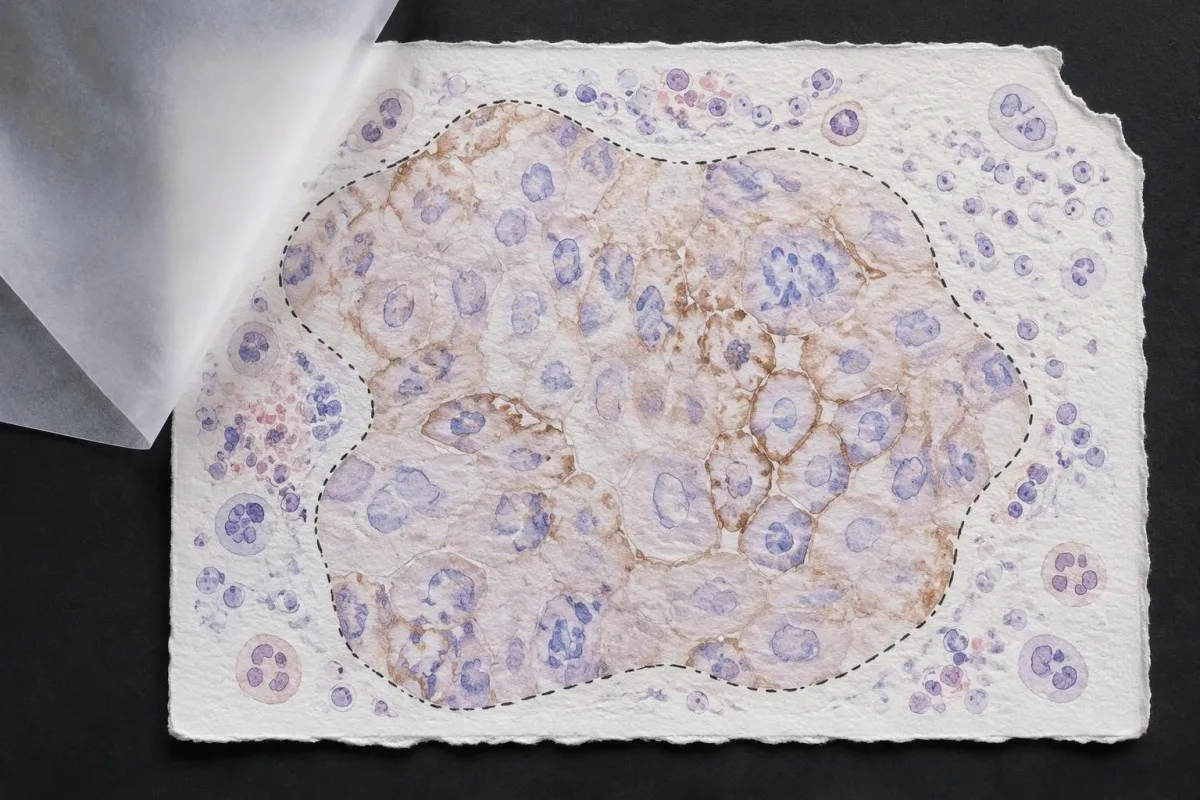
TPS = ceallan tumhair obrachail PD-L1-deimhinneach ÷ gach cealla tumhair obrachail × 100%. Ann an raon fighe beachd-bharail anns a bheil 200 cealla tumhair obrachail, bheir 80 cealla deimhinneach iomchaidh TPS 40%; chan atharraich lymphocytes dathte faisg air làimh an àireamhachadh sin, ged a dh’fhaodadh iad buaidh a thoirt air siostam sgòraidh eile.
Membrane location matters more than visual darkness alone. For commonly used TPS methods, weak qualifying membrane staining can count, whereas staining limited to tumor-cell cytoplasm does not establish a positive tumor cell; TPS 1% therefore describes the fraction of qualifying cells, not a required intensity grade.
Cutoffs such as TPS 1% agus TPS 50% were used to define populations in particular lung-cancer trials and treatment pathways. They are not boundaries between harmless and dangerous cancer, and crossing 50% does not create an abrupt biological switch from treatment resistance to guaranteed sensitivity.
Read the exact reporting format: TPS <1%, TPS 1–49%, and TPS ≥50% provide different detail from a single positive flag. Our explanation of toraidhean càileachdail an aghaidh toraidhean tomhasach covers why a category cannot replace a number, although PD-L1 uses tissue-specific—not blood-reference-range—rules.
Brìgh sgòr PD-L1 CPS: carson a tha ceallan dìon cudromach
Combined positive score, no CPS, includes qualifying PD-L1-positive tumor cells, lymphocytes, and macrophages. CPS divides their combined count by the number of viable tumor cells and multiplies by 100; the denominator does not become all cells simply because immune cells enter the numerator.
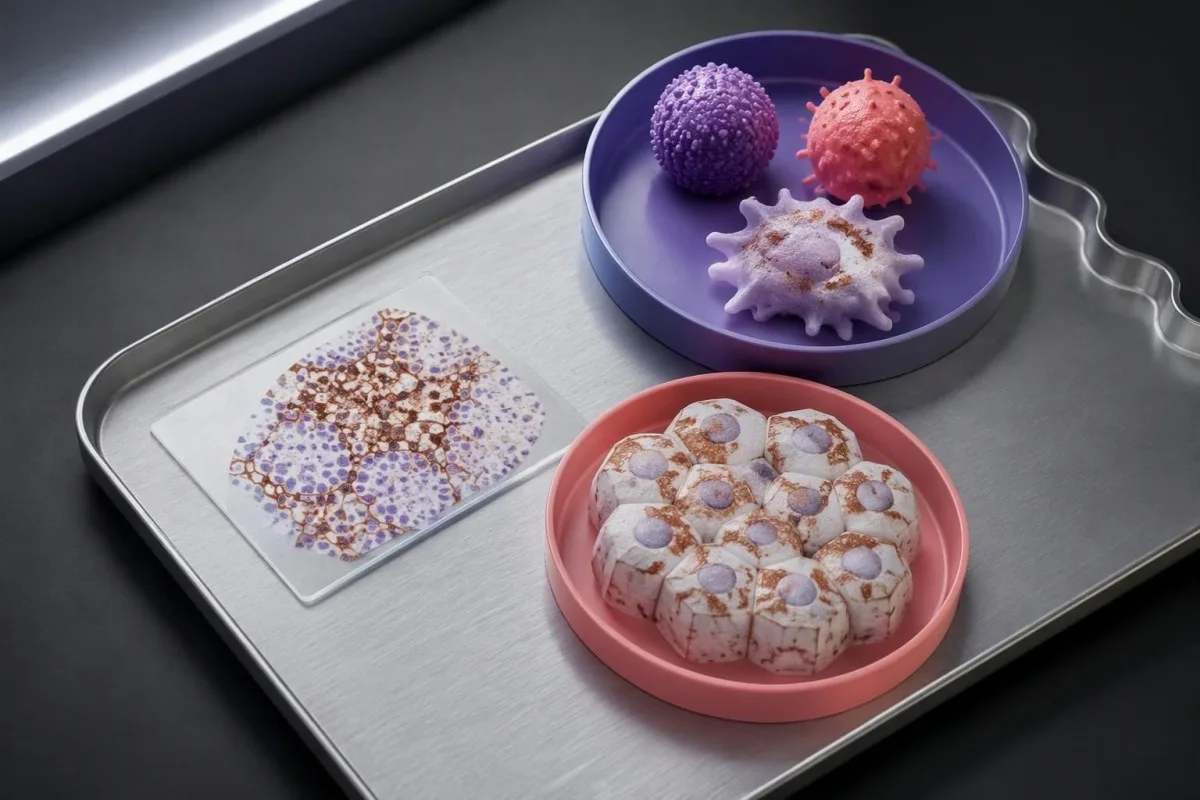
CPS = positive tumor cells plus qualifying positive lymphocytes and macrophages ÷ viable tumor cells × 100. In a hypothetical sample with 500 viable tumor cells, 50 positive tumor cells, and 75 qualifying positive immune cells, CPS is 25; the tumor-cell-only TPS would be 10%.
The reported CPS is capped at 100, even if the uncapped arithmetic would exceed 100 because many qualifying immune cells surround relatively few tumor cells. CPS is a unitless score, not a percentage of all cells, a blood concentration, or a probability that immunotherapy will work.
Not every stained immune cell belongs in the CPS count. The pathologist applies the assay manual's rules for eligible lymphocytes and macrophages associated with the tumor; neutrophils, unrelated inflammatory areas, and nonviable tissue are not simply added because a slide contains visible staining.
A CPS of 20 can arise from more than 1 cellular pattern: abundant tumor-cell staining, substantial immune-cell staining, or both. This denominator issue resembles the distinction between cell counts and percentages, but a circulating monocyte count cannot supply the tissue information needed to calculate CPS.
Carson nach gabh CPS agus TPS a chur an àite a chèile no an tionndadh
CPS and TPS are not interchangeable because they count different cells and were validated in different treatment settings. A TPS of 10% cannot be converted reliably into CPS 10, and a CPS of 20 does not establish that 20% of tumor cells stain.
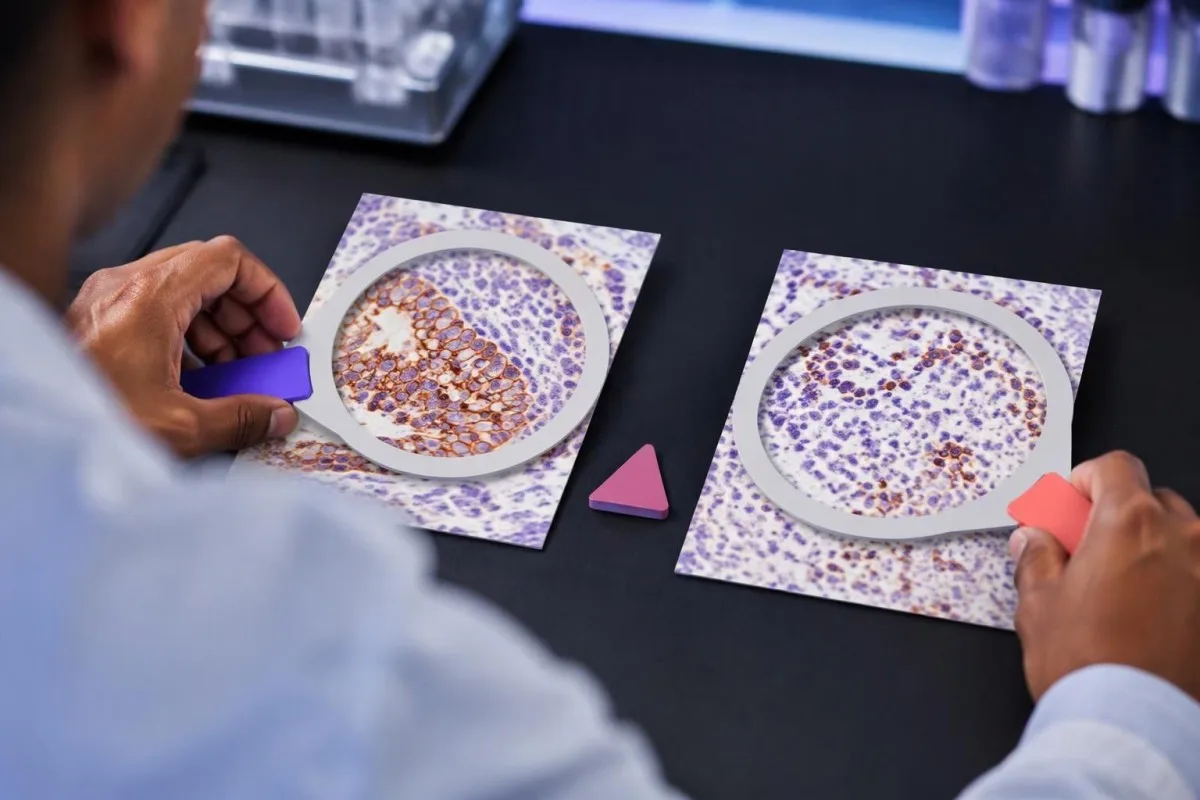
Consider 2 hypothetical specimens with 500 viable tumor cells and 50 positive tumor cells each. The first has no qualifying positive immune cells and gives TPS 10% with CPS 10; the second contains 75 qualifying positive immune cells and gives the same TPS 10% with CPS 25.
The reverse inference fails too. A hypothetical CPS 20 could result from 20 positive tumor cells among 100 tumor cells, or from 5 positive tumor cells plus 15 qualifying positive immune cells; those examples have TPS 20% and TPS 5%, respectively, despite identical CPS values.
An immune-cell score, sometimes abbreviated IC, is another system rather than a third spelling of CPS. Some IC methods measure the proportion of tumor area occupied by stained immune cells, so an IC result of 1% must be interpreted using its own assay and indication—not a TPS threshold.
Kantesti's educational explanation should preserve all 3 scoring labels rather than flatten them into positive or negative. When using AI report explanations safely, check that the original score, assay, and specimen remain visible; an AI-generated conversion without the underlying tissue counts is not clinically dependable.
Dè am fiosrachadh ann an aithisg pathology a tha cudromach a bharrachd air an sgòr?
A usable PD-L1 report should identify the specimen, assay, scoring method, numerical result, and adequacy assessment. Several commonly used protocols require at least 100 viable tumor cells, but minimum counts and acceptable specimen types depend on the particular test and cancer indication.
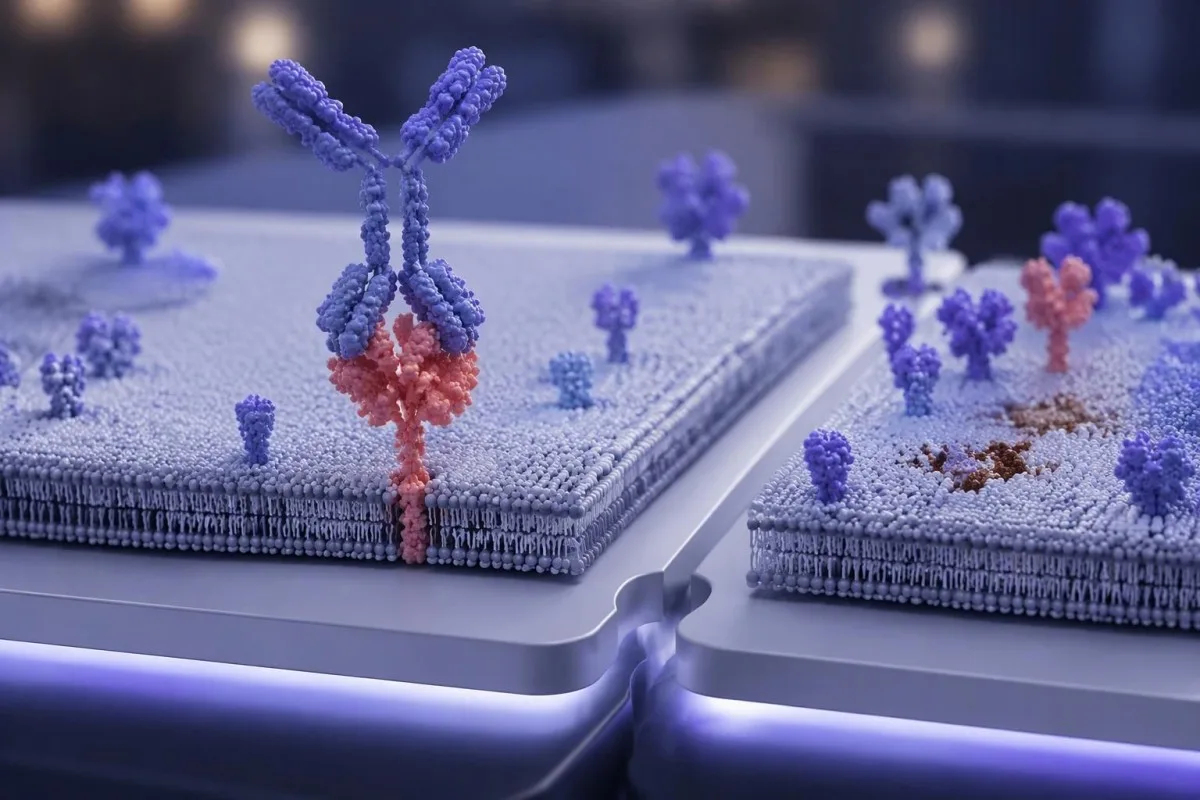
Antibody identifiers such as 22C3, 28-8, SP263, and SP142 describe different testing assays or antibody clones, not different PD-L1 proteins. Some assays show substantial agreement in selected settings, but laboratories should not assume universal equivalence across tumor types, scoring methods, immune-cell assessments, and treatment requirements.
The specimen date and site can change the interpretation of 1 reported number. A small primary-site sample taken before treatment may not represent a later metastatic deposit; ask whether the report describes the current treatment-setting specimen or archived tissue that the oncology team considers suitable.
Insufficient tissue is not PD-L1 negative. A sample with too few viable tumor cells, failed controls, extensive tissue change, or unsuitable processing may be unreportable; the practical next step is laboratory clarification, additional sections, or another suitable specimen—not assigning TPS 0% or CPS 0.
Comparisons between 2 reports need more than matching dates. Our test timing and comparability guide explains the general problem of comparing unlike measurements; for PD-L1, the extra checks are anatomical site, prior treatment, fixation, tissue adequacy, assay, and scoring system.
Ciamar a dh’atharraicheas seòrsa na h-aillse brìgh toradh deimhinneach?
PD-L1 positivity is indication-specific, not a universal diagnosis. TPS thresholds such as 1% or 50% are familiar in non-small-cell lung cancer, while CPS thresholds such as 1, 5, or 10 appear in selected other cancer settings; the drug, stage, and regimen must accompany the cutoff.
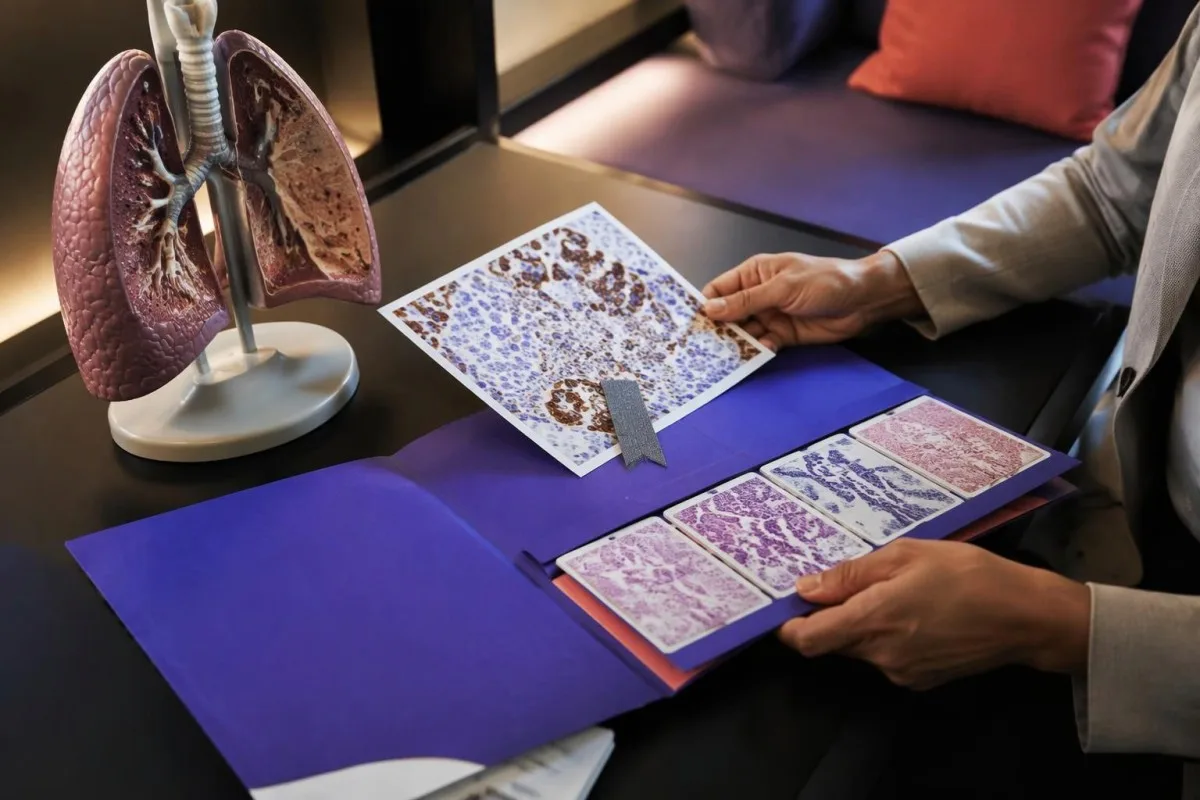
For recurrent or metastatic head-and-neck squamous-cell carcinoma, KEYNOTE-048 evaluated CPS-defined populations. Pembrolizumab alone improved median overall survival in the CPS ≥20 group to 14.9 months versus 10.7 months with the comparator regimen, showing why a CPS threshold cannot be borrowed from a lung-cancer TPS report (Burtness et al., 2019).
Selected established pembrolizumab pathways use CPS ≥10 for unresectable locally advanced or metastatic triple-negative breast cancer with chemotherapy, and CPS ≥1 for certain persistent, recurrent, or metastatic cervical-cancer regimens. Those examples do not establish eligibility for every earlier-stage setting, drug combination, country, or funding pathway.
Gastric and gastroesophageal-junction cancers require particular care because treatment selection may also involve HER2 agus MSI/MMR, with PD-L1 requirements differing across regimens and jurisdictions. A serum marker described in our CA 72-4 interpretation guide cannot replace the tissue biomarker panel or define CPS.
Cancer diagnosis and treatment selection are 2 separate steps. Our persistent cough assessment guide addresses when lung symptoms need investigation; once cancer is confirmed, ask the oncology team to match the PD-L1 result to the current local product information and clinical pathway.
Carson a tha an sgeama làimhseachaidh cho cudromach ris an stairsneach
Immunotherapy alone and immunotherapy combinations can have different PD-L1 requirements. A TPS below 1% may rule out one PD-L1-selected monotherapy pathway without ruling out an appropriate chemotherapy–immunotherapy combination; these are different clinical decisions, not contradictory interpretations of the same result.
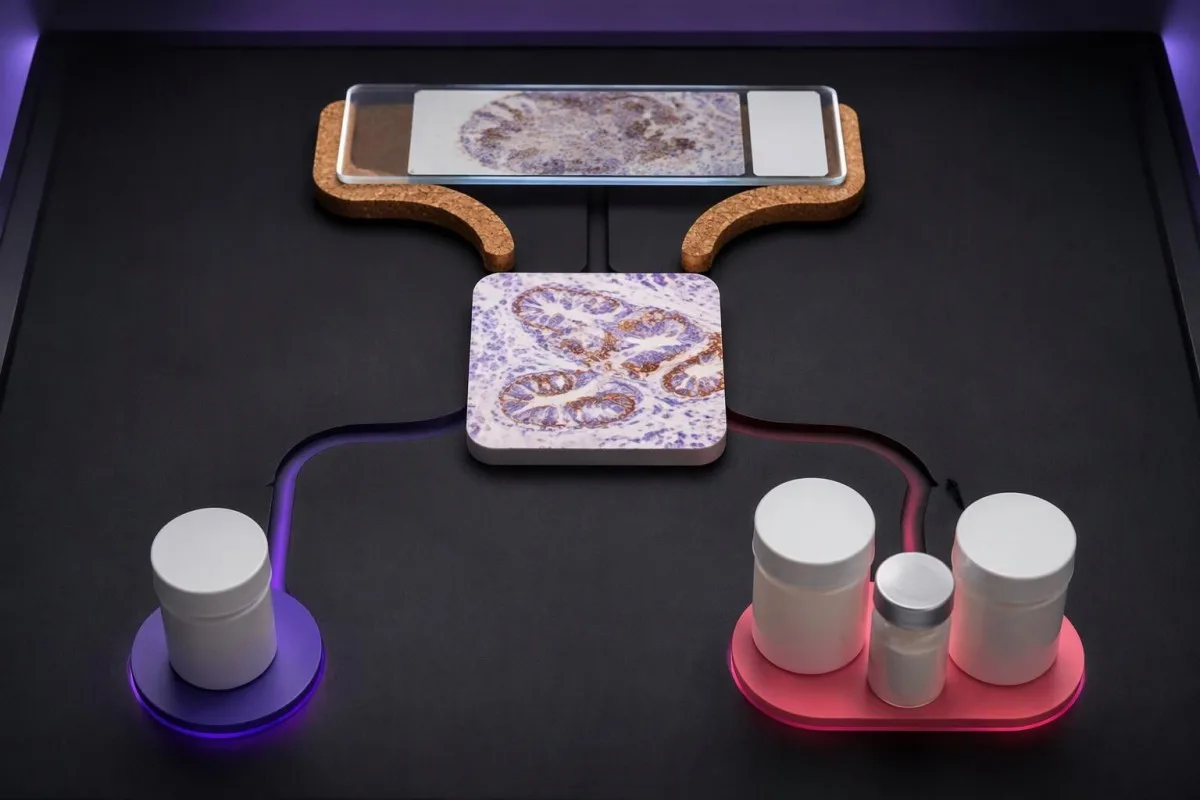
KEYNOTE-024 enrolled previously untreated advanced non-small-cell lung cancer with TPS ≥50% and no sensitizing EGFR mutation or ALK rearrangement. Median progression-free survival was 10.3 months with pembrolizumab versus 6.0 months with chemotherapy, supporting that specific high-TPS monotherapy setting—not every cancer with a score above 50 (Reck et al., 2016).
Ann an KEYNOTE-189, pembrolizumab plus pemetrexed and platinum chemotherapy improved outcomes in previously untreated metastatic nonsquamous non-small-cell lung cancer without EGFR or ALK alterations. Twelve-month overall survival was 69.2% versus 49.4%, and benefit was observed across PD-L1 categories, including TPS <1% (Gandhi et al., 2018).
Combination treatment may address rapid disease progression differently from a single agent, but adding drugs also adds toxicity and monitoring needs. If a proposed regimen includes fluorouracil or capecitabine, tha deuchainn DPYD ron chemotherapy concerns treatment safety; it does not measure the PD-L1 pathway or predict the same benefit.
Tha Kantesti na àrd-ùrlar mìneachaidh deuchainn fala AI that helps explain supporting laboratory measurements; it does not select between 1-drug and multidrug cancer regimens. Similarly, UGT1A1 and irinotecan safety address metabolism-related toxicity, illustrating why each biomarker should be matched to the specific medicine under discussion.
A bheil toradh PD-L1 deimhinneach a’ gealltainn buannachd bho immunotherapy?
A positive PD-L1 result does not guarantee a response. In KEYNOTE-024's selected high-expression lung-cancer population, the objective response rate with pembrolizumab was 44.8%—substantial benefit for many participants, but clearly not a response in every person with TPS ≥50%.
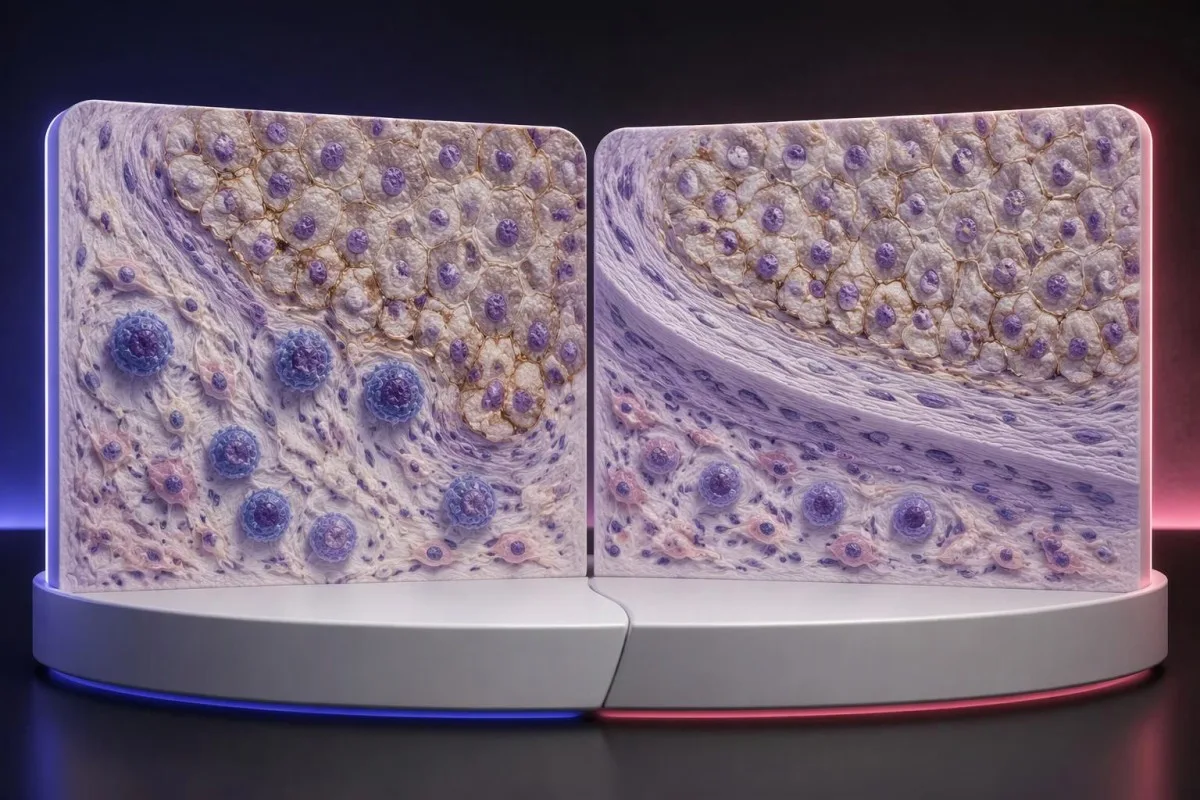
The 44.8% response rate in KEYNOTE-024 describes a trial population under defined conditions, not an individual's calculated chance of success (Reck et al., 2016). Objective response also means measurable tumor shrinkage by trial criteria; stable disease and survival benefit are different outcomes that should not be collapsed into that single percentage.
PD-L1 is only 1 part of a broader immune environment. A cancer can show substantial staining while lacking effective immune-cell access, recognizable targets, or intact antigen presentation; these mechanisms help explain why expression enriches for benefit in some settings without functioning as a deterministic on–off switch.
Higher does not always mean better across different cancers and combinations. A CPS 30 in one disease cannot be ranked against TPS 60% in another, and the same CPS threshold may have different predictive value when used for monotherapy versus a combination that already provides benefit through other mechanisms.
Some melanoma immunotherapy regimens do not require a positive PD-L1 test, so a low score should not be interpreted using lung-cancer monotherapy rules. Our melanoma warning-sign guide addresses recognition and assessment, while treatment benefit must be discussed using disease-specific trial evidence and the person's overall condition.
An gabh immunotherapy a thabhann fhathast nuair a tha PD-L1 àicheil?
PD-L1-negative cancers can still have appropriate immunotherapy options. TPS <1% or CPS <1 may exclude a particular PD-L1-selected regimen, but some combinations, earlier-stage pathways, and treatments selected by other biomarkers do not require PD-L1 positivity.
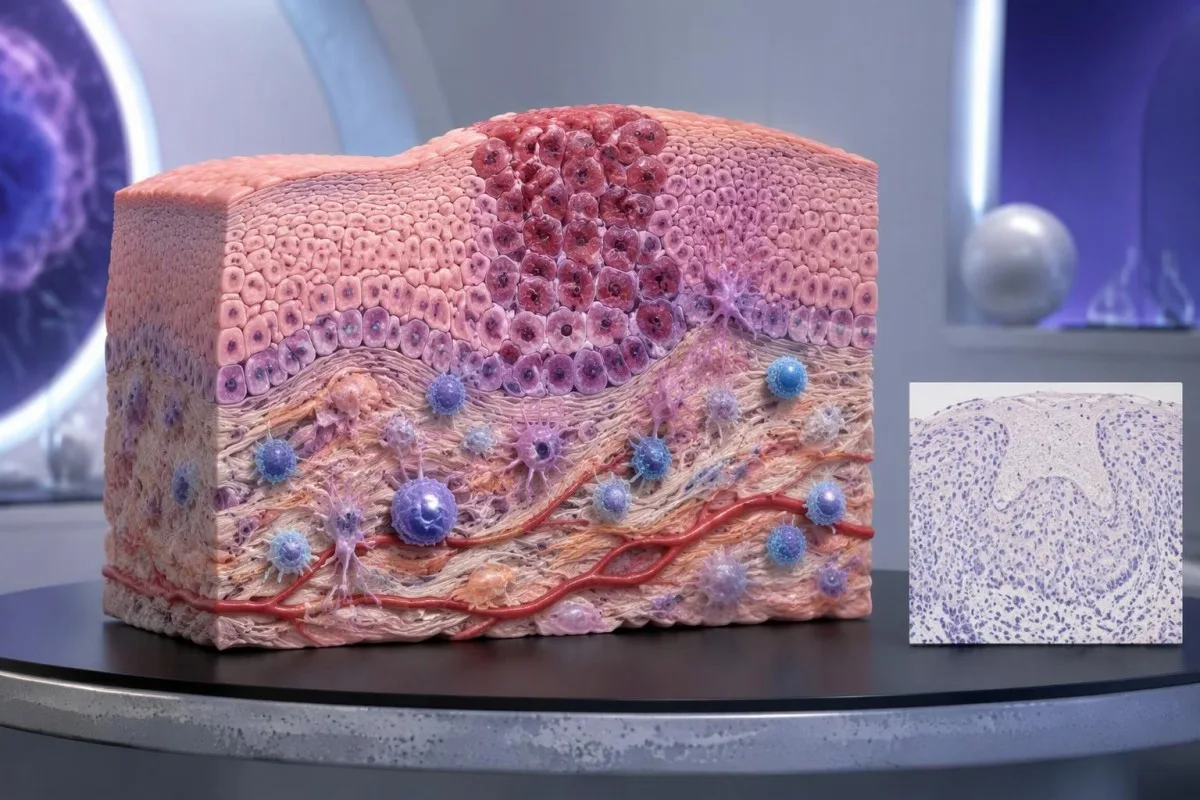
PD-L1-negative should first be translated into the laboratory's actual definition. TPS <1%, CPS <1, and an assay-specific IC-negative category are not identical measurements; an unreportable or inadequate sample is a fourth situation and should not be grouped with a technically valid negative result.
An MSI-high or mismatch-repair-deficient cancer may support particular immunotherapy pathways without PD-L1 selection, depending on the disease, stage, prior treatment, and local authorization. Tumor MMR testing and Deuchainn ginteil airson sionndrom Lynch answer related but different questions: an abnormal tumor result does not automatically prove an inherited syndrome.
Other genetic findings may point toward targeted treatment or different planning rather than immunotherapy. A result discussed in our BRCA variant interpretation guide does not turn CPS 0 into CPS 10; clinicians combine distinct biomarkers without pretending they measure the same biological feature.
No PD-L1 requirement is not the same as no selection criteria. A regimen can still require a particular histology, stage, treatment history, organ function, or absence of an actionable driver alteration; ask whether 1 negative score changes only the proposed option or the broader treatment plan.
Cuin a dh’fhaodadh samplachadh no sgòr faisg air a’ chrìoch a bhith na adhbhar ath-sgrùdaidh?
Sampling variation can change PD-L1 classification, especially near a treatment threshold. A CPS of 9 versus 10, or TPS 0.8% versus 1%, may prompt pathology review when the distinction would change an otherwise suitable treatment—but repeating every result is not automatically useful.
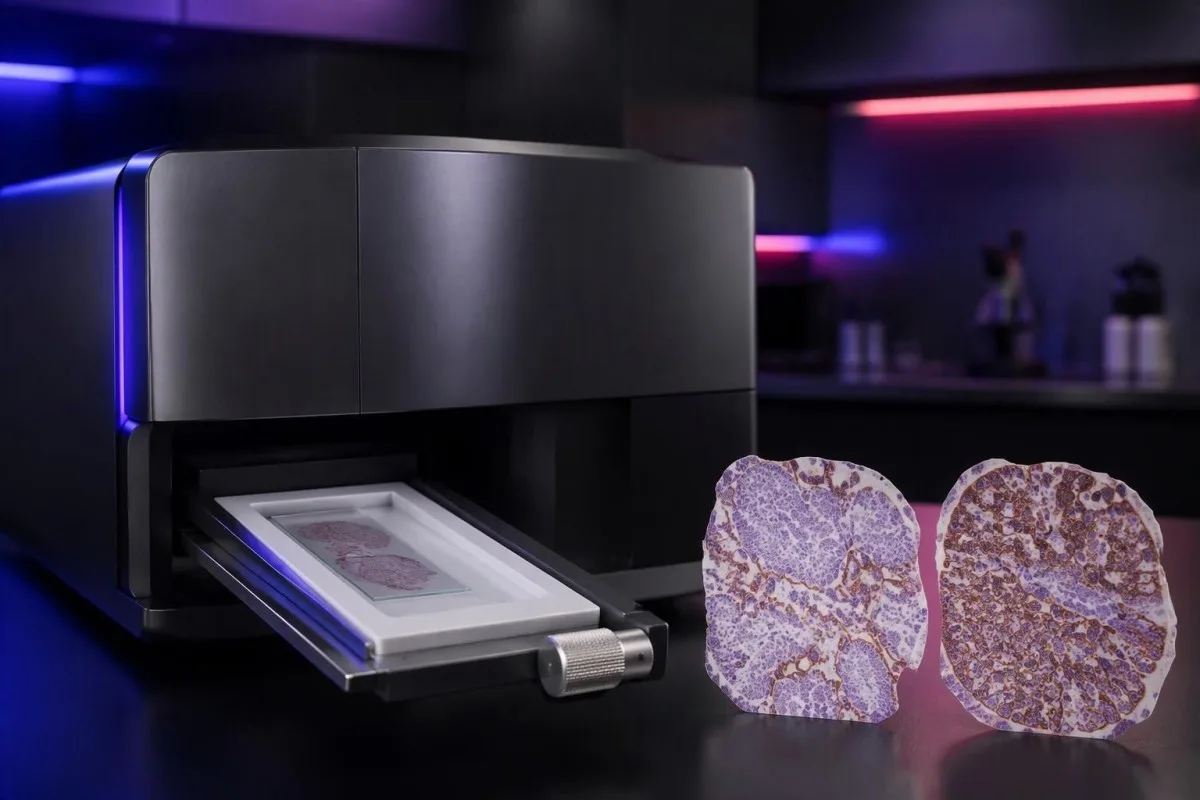
PD-L1 staining can be heterogeneous within 1 tissue block and between primary and metastatic sites. A small tissue examination may miss a highly expressing area or overrepresent it; the pathologist assesses the available viable tissue rather than assuming a single selected field describes the whole cancer.
Pretreatment and post-treatment specimens are not always equivalent. Chemotherapy, radiotherapy, and changes in the immune environment can alter expression, while decalcification of some bone specimens can impair antigen detection; ask whether a lower result reflects biology, processing limitations, or simply a different sampled site.
Borderline results require the actual assay rules, not homemade averaging. If 2 reports show CPS 8 and CPS 12, calculating CPS 10 does not create a newly validated result; the laboratory and oncology team should decide which specimen and assessment are appropriate for the treatment indication.
Kantesti cannot verify viable-cell counts, staining controls, or tissue suitability from a score alone. Our dearbhadh clionaigeach agus stiùireadh should be read in that limited context; when another tissue procedure is considered, its risks and likely impact on treatment need to be weighed against the uncertainty in the existing result.
Dè na bith-chomharran eile a bu chòir beachdachadh orra còmhla ri PD-L1?
Other biomarkers can take priority over PD-L1, depending on the cancer. In advanced non-small-cell lung cancer, molecular alterations such as EGFR mutations and ALK rearrangements affect treatment planning; in selected other cancers, HER2, MSI/MMR, or additional molecular findings may change the preferred pathway.
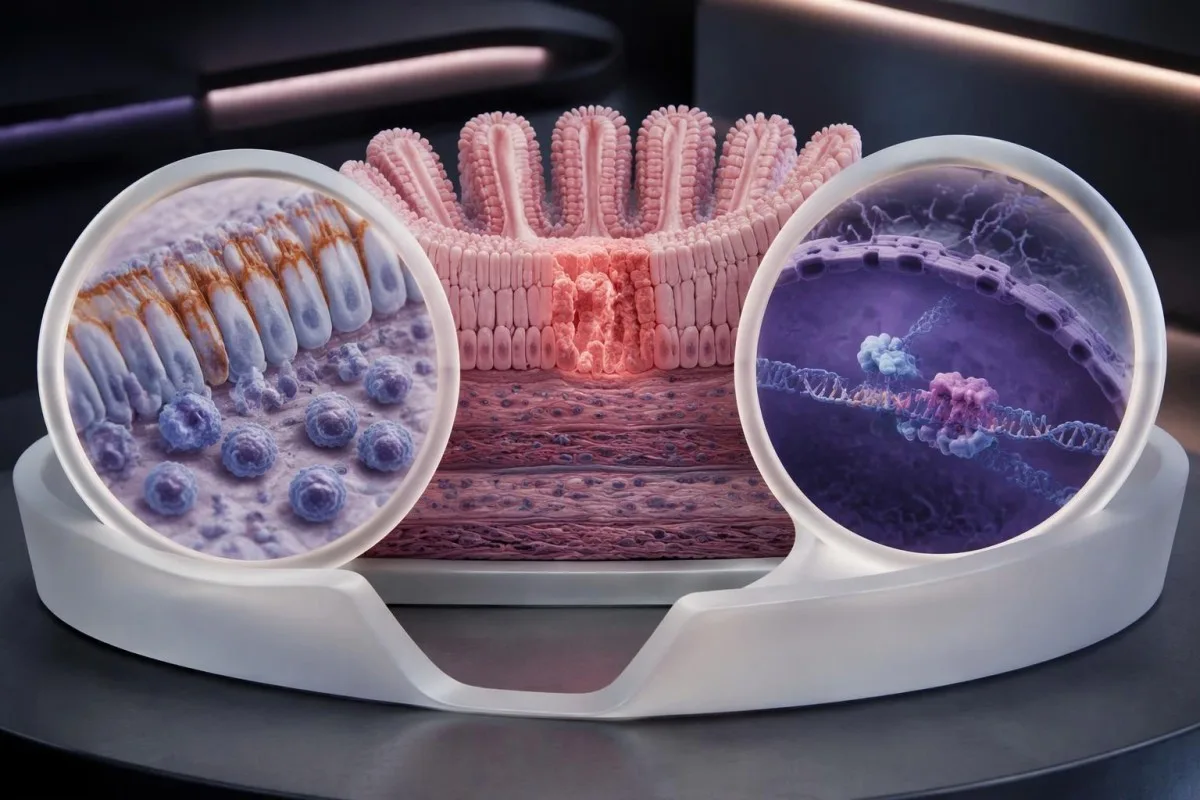
A high TPS does not cancel an actionable molecular finding. The pivotal KEYNOTE-024 agus KEYNOTE-189 populations excluded relevant EGFR or ALK alterations, so their results should not be applied unchanged to those groups; treatment sequence also matters because some targeted therapies and checkpoint inhibitors can interact through toxicity.
Tumor mutational burden, often measured in mutations per megabase, is a different biomarker from PD-L1. A threshold such as 10 mutations/Mb has been used in a specific tissue-agnostic treatment context, but assay differences, cancer type, authorization, and clinical setting prevent it from becoming a universal immunotherapy rule.
A liquid molecular test may find circulating tumor DNA, but it does not automatically replace tissue PD-L1 immunohistochemistry. The 2 tests measure different things—genetic material versus protein location within cells—and a negative liquid result may also reflect limited DNA shedding rather than absence of a tumor alteration.
Kantesti AI distinguishes the role of supporting laboratory markers from tissue-based treatment biomarkers in our iùl iomraidh airson bith-chomharraidhean fala. A blood-cell ratio, LDH level, or serum tumor-marker concentration should not be used to manufacture TPS 50%, estimate CPS 10, or bypass an indicated molecular workup.
Dè na sgrùdaidhean sàbhailteachd a tha cudromach ma thathar a’ beachdachadh air immunotherapy?
PD-L1 scores predict neither treatment safety nor immune-related toxicity. A TPS of 90% does not make checkpoint treatment safer than TPS 1%; the team assesses medical history, organ function, medications, and the particular regimen separately from the tissue biomarker.
Checkpoint inhibitors can cause immune-related effects involving the thyroid, liver, lungs, bowel, kidneys, heart, and other organs. Baseline testing commonly includes liver chemistry, creatinine, thyroid measurements, and a complete blood count, with monitoring schedules varying by regimen; 1 normal baseline panel does not prevent later toxicity.
New chest pain, palpitations, fainting, or breathlessness during treatment requires prompt assessment because myocarditis, although uncommon, can be serious. Our myocarditis test interpretation guide explains why troponin supports evaluation but cannot determine the cause by itself; severe symptoms warrant emergency care rather than waiting for the next scheduled panel.
Kidney changes need interpretation against the person's own baseline and treatment exposures. A hypothetical creatinine rise from 0.8 to 1.6 mg/dL is a doubling even if the absolute value looks only modestly elevated; our kidney function testing guide explains supporting measurements, not an immunotherapy-specific treatment decision.
Pre-existing autoimmune disease, organ transplantation, ongoing immunosuppression, or previous severe immune-related toxicity can complicate treatment planning even when CPS is 100. Report new persistent diarrhea, worsening cough, jaundice, unusual weakness, or marked thirst promptly; neither a high PD-L1 score nor previously reassuring blood results justify delaying symptom assessment.
Dè bu chòir dhut faighneachd aig do choinneimh oncology?
Thoir an complete PD-L1 pathology report and ask which exact treatment decision it informs. Four useful starting questions are: Which score was used? Which cutoff applies? Is the specimen adequate? What options remain if the result is below the cutoff?

A hypothetical report reading 22C3, CPS 12, adequate tissue is still incomplete as a treatment answer until the cancer, stage, and regimen are specified. Ask whether CPS ≥10 is relevant to the proposed option, whether other biomarkers are pending, and whether a combination would be considered under different selection rules.
Request explanations of 3 outcomes separately: tumor shrinkage, duration of disease control, and survival. A trial's response rate is not the same as its survival benefit, while median survival is a group midpoint—not an individual deadline—and the balance between rapid control and treatment toxicity may change the preferred regimen.
Tha Kantesti na seirbheis eadar-mhìneachaidh deuchainn-lann AI for supporting laboratory understanding, not independent immunotherapy eligibility assessment. If blood monitoring is planned, our cuideachd a’ cuideachadh sgiobaidhean gus co-theacsa an t-sampaill a ghlacadh nach urrainn mìneachadh nas fhaide air adhart ath-thogail. can help organize previous values, units, medication lists, and collection dates so that the oncology team can compare results meaningfully.
Keep tissue scores separate from serial blood monitoring in 2 clearly labeled records. Our stiùireadh gluasad sàbhailteachd cungaidh-leigheis explains why changes over time need context; our prionnsapalan AI cunntachail also make clear that automated explanations should not trigger treatment changes without clinical review.
Foillseachaidhean rannsachaidh agus crìochan na fianais mu PD-L1
PD-L1 interpretation should be grounded in cancer-specific trials and validated pathology methods. The 3 clinical references below address high-TPS lung-cancer monotherapy, lung-cancer combination treatment, and CPS-selected head-and-neck treatment; the 2 separate Zenodo publications concern other laboratory topics and do not establish PD-L1 thresholds.

KEYNOTE-024 supports a defined TPS ≥50% advanced lung-cancer population, whereas KEYNOTE-189 supports a particular combination across PD-L1 categories (Reck et al., 2016; Gandhi et al., 2018). Those different study designs explain why evidence for one regimen cannot be substituted for evidence supporting another simply because both drugs affect the same immune pathway.
KEYNOTE-048 assessed CPS-defined recurrent or metastatic head-and-neck cancer populations, including CPS ≥1 and CPS ≥20 groups (Burtness et al., 2019). When reading a trial, check the histology, stage, previous treatment, comparator, and endpoint; a subgroup survival finding does not automatically quantify an individual's chance of measurable shrinkage.
Kantesti's 2 Zenodo publications listed below are educational resources on complement/ANA testing and Nipah-virus diagnostics, not PD-L1 clinical trials or assay-validation studies. The stiùireadh complement agus ANA concerns different laboratory questions, and a DOI identifies a deposited publication without independently establishing clinical validity.
Use the original pathology result and current local treatment information to resolve eligibility—not a generalized positive/negative table or an AI-generated score conversion. Our inbhean susbaint mheidigeach emphasize source relevance and uncertainty; ask your oncology team to document the 1 specific regimen, applicable threshold, and remaining alternatives.
Ceistean cumanta
Dè tha PD-L1 dearbhach a’ ciallachadh?
Tha PD-L1 deimhinneach a’ ciallachadh gu bheil toradh maothraidh a’ coileanadh stairsneach sònraichte airson measadh agus sgòradh, leithid TPS ≥1% no CPS ≥1 ann an suidheachadh iomchaidh. Tha an stairsneach an urra ri seòrsa an aillse, riaghailt an làimhseachaidh agus riatanasan làimhseachaidh ionadail. Chan eil deimhinneachd a’ dearbhadh gun obraich immunotherapy, agus bu chòir don aithisg an sgòr àireamhach ainmeachadh, seach dìreach bratach dheimhinneach.
Dè an diofar eadar CPS agus TPS?
Bidh TPS a’ tomhas na h-àireimh sa cheud de cheallan tumhair so-dhèanta aig a bheil dathadh PD-L1 membranach iomchaidh, agus tha CPS a’ gabhail a-steach cheallan tumhair deimhinneach iomchaidh, lymphocytes agus macrophages, air an roinn leis an àireamh de cheallan tumhair so-dhèanta agus air an iomadachadh le 100. Tha TPS air aithris bho 0% gu 100%, agus tha an CPS a thèid aithris air a chuingealachadh ri 100. Chan urrainnear na sgòran atharrachadh oir tha CPS an urra ri dathadh cheallan dìonach, nach eil TPS a’ cunntadh.
A bheil CPS 10 a’ ciallachadh gu bheil cothrom 10% ann gun obraich immunotherapy?
Chan eil CPS 10 a’ ciallachadh cothrom 10% freagairt ri immunotherapy. ’S e àireamhachadh stèidhichte air staining an fhìonaidh a th’ ann an CPS, le ceallan aillseach beò mar an t-ainmiche aige, chan e coltas gum freagair neach fa leth do leigheas. Tha CPS ≥10 a’ toirt taic do thaghadh cuid de rèimean leigheis a tha sònraichte do sheòrsaichean aillse, ach gus an sochair a dh’fhaodadh a bhith ann a mheas, feumar cuideachd breithneachadh an aillse, an ìre aige, bith-chomharran eile agus fianais mun leigheas a thathar a’ moladh.
Am faod mi leigheas dìonachd fhaighinn ma tha PD-L1 àicheil?
Chan eil toradh PD-L1 àicheil a’ dùnadh a-mach gach roghainn immunotherapy. Chan eil feum aig cuid de choimeasgaidhean chemotherapy–immunotherapy agus slighean eile a tha air an taghadh a rèir biomarker air PD-L1 a bhith dearbhach, fiù ’s nuair a tha TPS nas ìsle na 1%. Tha freagarrachd fhathast an urra ri seòrsa an aillse, ìre an aillse, toraidhean moileciuil, eachdraidh an làimhseachaidh, freagarrachd mheidigeach agus ceadachadh ionadail; cha bu chòir dèiligeadh ri sampall clò neo-iomchaidh mar thoradh àicheil dligheach.
A bheil TPS de 50% air a mheas mar ìre àrd de PD-L1?
Mar as trice thathar a’ toirt iomradh air TPS ≥50% mar ìre àrd de dh’eadar-bhriathrachadh PD-L1 ann an suidheachaidhean sònraichte a thaobh aillse sgamhain neo-bheag-chealla. Chaidh an stairsneach seo a chleachdadh ann an KEYNOTE-024, a rinn sgrùdadh air buidheann shònraichte de dh’euslaintich le aillse sgamhain adhartach aig nach robh mùthaidhean EGFR mothachail no ath-rèiteachaidhean ALK. Chan eil TPS 50% co-ionann ri CPS 50, agus chan e stairsneach uile-choitcheann a th’ ann airson gach seòrsa aillse, ìre no rèim immunotherapy.
An e deuchainn fala a th’ ann am PD-L1, agus am bu chòir a dhèanamh a-rithist?
Mar as trice bithear a’ cleachdadh clò aillse glèidhte airson sgòradh clionaigeach PD-L1 airson CPS agus TPS, ga sgrùdadh le imdhìon-dathadh cheimigeach, seach sampall fala àbhaisteach. Dh’fhaodadh ath-mheasadh a bhith feumail mura h-eil an clò iomchaidh, ma tha an toradh faisg air stairsneach a dh’atharraicheadh co-dhùnadh, leithid CPS 10, no ma tha sampall eile nas freagarraiche. Bu chòir do na sgiobaidhean oncology agus pathology co-dhùnadh an atharraich ath-sgrùdadh, earrannan a bharrachd no sampall eile an cùram gu ìre a dh’fhìreanaicheas an oidhirp agus na cunnartan co-cheangailte ris na modhan sin.
Faigh mìneachadh air na toraidhean deuchainn fala agad
Luchdaich suas aithisg an obair-lann agad agus mìnichidh AI Kantesti gach bith-chomharradh ann an cànan soilleir taobh a-staigh diogan. Air a chleachdadh le còrr is 2 mhillean neach air feadh an t-saoghail.
Tùsan
- Klein, T., Mitchell, S., & Weber, H. (2026). Stiùireadh air Deuchainn Fala Co-phàirteach C3 C4 & Titre ANA. Rannsachadh Meidigeach AI Kantesti. DOI
- Klein, T., Mitchell, S., & Weber, H. (2026). Deuchainn Fala airson Bhìoras Nipah: Stiùireadh mu Lorg Tràth & Breithneachadh 2026. Rannsachadh Meidigeach AI Kantesti. DOI
- Reck M et al. (2016). Pembrolizumab versus Chemotherapy for PD-L1–Positive Non–Small-Cell Lung Cancer. New England Journal of Medicine. DOI
- Gandhi L et al. (2018). Pembrolizumab plus Chemotherapy in Metastatic Non–Small-Cell Lung Cancer. New England Journal of Medicine. DOI
- Burtness B et al. (2019). Pembrolizumab alone or with chemotherapy versus cetuximab with chemotherapy for recurrent or metastatic squamous cell carcinoma of the head and neck (KEYNOTE-048): a randomised, open-label, phase 3 study. The Lancet. DOI
- 2M+Deuchainnean air an sgrùdadh
- 127+Dùthchannan
- 100+Cànanan
Mu dheidhinn an sgioba mheidigeach


Comharran earbsa E-E-A-T
Eòlas
Lèirmheas clionaigeach air a stiùireadh le lighiche air sruthan-obrach mìneachaidh obair-lann.
Eòlas
Fòcas air leigheas obair-lann air mar a bhios bith-chomharraidhean (biomarkers) a’ giùlan ann an co-theacsa clionaigeach.
Ùghdarrasachd
Ath-sgrùdadh meidigeach leis an Dr Thomas Klein, le tabhartasan bhon Dr Sarah Mitchell agus an t-Oll. Dr Hans Weber.
Earbsachd
Mìneachadh stèidhichte air fianais le slighean leanmhainn soilleir gus dragh a lughdachadh.

Àicheadh meidigeach
Tha an artaigil seo dìreach airson adhbharan foghlaim agus chan eil e a’ dèanamh comhairle mheidigeach. Cuir fios an-còmhnaidh gu solaraiche cùram slàinte teisteanasach airson co-dhùnaidhean breithneachaidh is leigheis.
Foillsichte · Cuir fios chun sgioba dheasachaidh
Foillsichte le Kantesti Ltd, clàraichte ann an Sasainn agus sa Chuimrigh, àireamh companaidh. 17090423, Lunnainn, an Rìoghachd Aonaichte.
