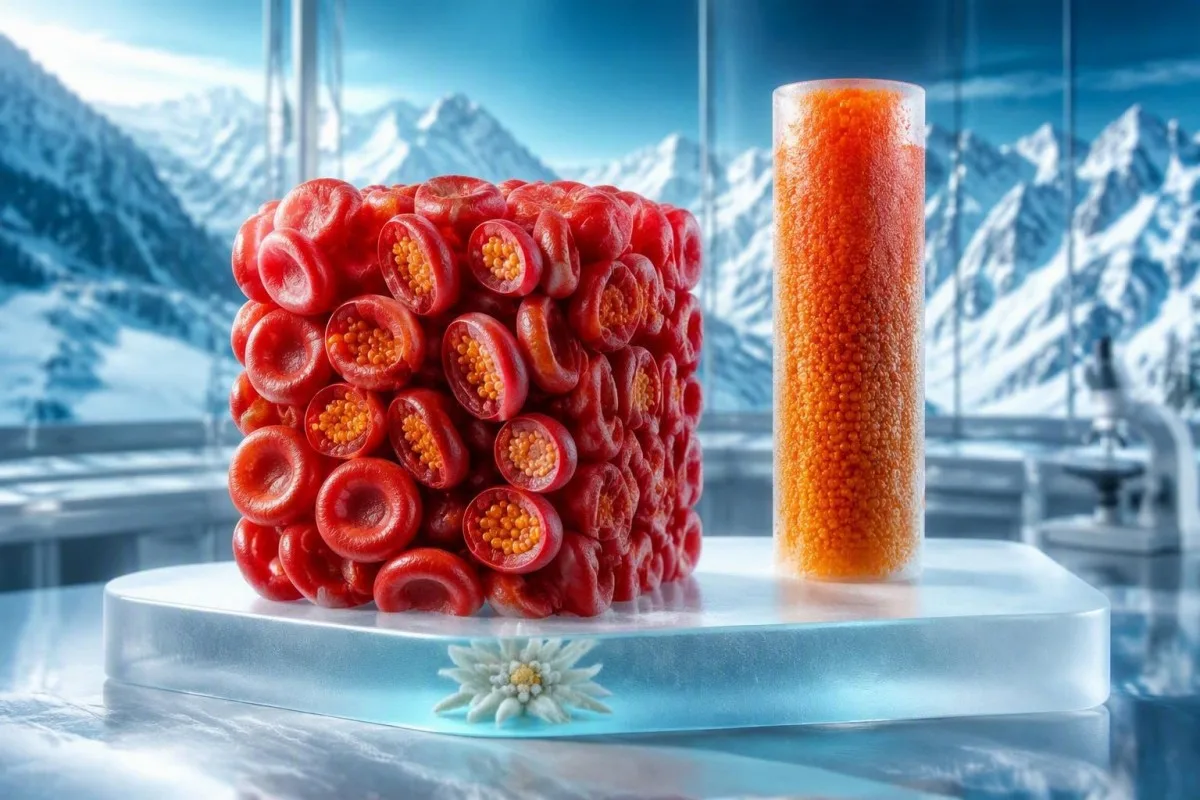
Hematokritak globulu gorriek hartzen duten odol-bolumenaren ehunekoari egiten dio erreferentzia; hemoglobinak, berriz, oxigenoa garraiatzen duen proteina neurtzen du. Normalean batera igotzen eta jaisten dira, baina salbuespenak baliagarri klinikoak izan daitezke.


- Hematokritoa is the percentage of whole-blood volume made up by red cells; typical adult ranges are about 36-46% for women and 41-53% for men.
- Hemoglobina Oxigenoa garraiatzeko proteina-kontzentrazioa da, normalean 12,0-15,5 g/dL emakume ez-haurdunentzat eta 13,5-17,5 g/dL gizonezkoentzat.
- Hiruko erregela Hematokritoa hemoglobinaren (g/dL) hiru aldiz kalkulatzen du gutxi gorabehera; tarte handiago batek zelulen tamaina aldatua, lipemia, hotzaren aurkako antigorputzak edo analisi-arazo bat adieraz dezake.
- Hematokrito baxua hemoglobin normalarekin sarritan makrozitosia, hidratazioa edo kalkulu-desberdintasun marjinal bat islatzen ditu anemia kliniko esanguratsu bat baino gehiago.
- Hematokrito altuaren arrazoiak Dehidratazioa, altitudearekiko esposizioa, erretzeak eragindako hipoxia, lo egiteko apnea, testosterona terapia eta gutxiagotan, polisitemia vera dira.
- Jarraipenaren atalasea indartsuagoa da gizonezkoetan hemoglobina etengabe 16,5 g/dL baino gehiago edo emakumezkoetan 16,0 g/dL baino gehiago denean, batez ere hematokrito altuarekin eta EPO baxuarekin.
- Sintoma larrigarriak hala, bularreko mina, zorabioak, nahasmendu berria, atsedenean arnasteko zailtasuna, aulki beltzak edo etengabeko odoljario handia premiazko aurrez aurreko arreta behar dute, edozein dela ere CBC zenbakia.
Zer neurtzen dute hematokritoak eta hemoglobinak benetan
Hematokritoa hemoglobinarekiko bolumenaren eta proteinaren arteko alderaketa bat da: hematokritoa odol osoaren tutu batek gorri-zelulek hartzen duten zatia da, eta hemoglobina, berriz, hemokoko odol-deziilitro bakoitzeko oxigenoa lotzen duen proteinaren gramoak dira. Oro har, paraleloan mugitzen dira biek gorri-zelulen masaren araberakoak direlako, baina ez dira trukagarriak.
Laborategi gehienek hematokritoa ehunekotan eta hemoglobina g/dL-tan ematen dute. Hemoglobina 14,0 g/dL eta hematokritoa 42% inguru helduaroan ohiko bikote bat da, nahiz eta laborategiak bere tarteak interpretazioa arautzen duen. Hematokritoa zentrifugazioaren ondoren neur daiteke edo gorri-zelulen kopurutik eta zelula-bolumen batezbestekoaren arabera kalkula daiteke, eta analizagailu modernoek hemoglobina fotometrikoak neurtzen dute zelula-elementuak lisatu ondoren.
Alderik praktikoena oxigenoaren horniketa da. Hemoglobinak oxigenoa garraiatzen du, eta hematokritoak biskositatean eragiten du eta gorri-zelulek zenbat leku hartzen duten esaten digu; beraz, pertsona batek hemoglobina normala izan dezake, baina hematokritoa apur bat ezohikoa gorri-zelulen tamaina aldatzen denean. CBCko hiztegi zabalagoarentzat, gure CBC osagaien gida MCV, MCH eta RDW non sartzen diren erakusten du.
2026ko irailaren 14tik aurrera, oraindik ere pazienteak “anemiko” direla esaten entzuten dut, balore horietako bat barrutik kanpoko zati bat delako. Thomas Klein doktorearen ikuspegia ez da hain dramatikoa: hemoglobina adinaren, sexuen, haurdunaldiaren egoeraren eta altitudearen arabera baxua den egiaztatzea, eta gero hematokritoa, MCV, RDW, erretikulozitoak, sintomak eta aurreko CBCarekin batera irakurtzea.
Zergatik CBC berdinak biak ditu
CBC batek bi proba horiek jasotzen ditu, bakoitzak desberdintasun mota bat harrapatzen duelako. Oro har, hemoglobina da anemia zehazteko indizerik zuzenena, eta hematokritoak fluidoen orekari eta gorri-zelulen bolumenari buruzko pistak gehi diezaioke.
Erreferentzia-tarteak eta hiruko erregel erabilgarria
Helduen hemoglobina askotan 12,0-15,5 g/dL inguru izaten da emakumeengan eta 13,5-17,5 g/dL gizonezkoengan, eta hematokritoa, berriz, 36-46% eta 41-53% inguru izaten da, hurrenez hurren. Hemoglobinaren hiru aldiz inguruko hematokritoa egiaztapen-arau erabilgarria da, ez diagnostiko bat.
“Hiruko arauak” esan nahi du 12 g/dL-ko hemoglobina batek 36% inguruko hematokritoa izaten duela, eta 15 g/dL-ko hemoglobina batek 45% inguruko hematokritoa izaten duela. Gutxiago fidagarria da MCV oso baxua edo altua denean, triglizeridoak nabarmen altuak direnean edo gorri-zelulak lagin hotzean agglutinatzen direnean. Laborategiaren galdera egiteko flag azkar gisa erabiltzen dut, ez emandako emaitzaren ordezko gisa.
OMSren 2024ko jarraibideak anemia zehazten du haurdun ez dauden emakumeetan 12,0 g/dL azpiko hemoglobinaren arabera eta gizonezkoetan 13,0 g/dL azpikoaren arabera, haurdunaldia, erretzea eta altitudearen arabera egokitzapenekin. Hematokritoaren atalaseak laborategiaren arabera aldatzen dira gehiago, eta hori da arrazoietako bat klinizistek anemiarako erabakiak hemoglobinari lotzea, hematokrito unibertsal baten ordez (OMS, 2024).
Kantesti bat da. AI odol-analisi analizatzailea horrek hemoglobina, hematokritoa, MCV, MCHC eta aurreko emaitzak CBC eredu bakar gisa egiaztatzen ditu, gorri- bandera bat epai gisa tratatu beharrean. Eredua lehenik berrikuste hori bereziki lagungarria da laborategi desberdinek tarte desberdinak erabiltzen dituztenean; ikusi nola sexuka diren laborategi-tarteak desberdinak diren.
Zergatik balio biak batera igotzen eta jaisten diren
Hemoglobin and hematocrit usually fall together in iron deficiency, blood loss, kidney-related anemia, and bone-marrow suppression because each reflects reduced circulating red-cell mass. They usually rise together when plasma volume contracts or red-cell production increases.
A 1-litre saline infusion can lower both hemoglobin and hematocrit within hours through dilution without destroying a single red cell. Conversely, vomiting, diarrhoea, fever, diuretics, or a hard endurance event with inadequate fluid replacement can concentrate both values temporarily. That is why I ask about fluid intake, recent illness, and timing before labeling a mildly high result as disease.
True anemia develops when red-cell production cannot keep pace with loss or destruction. Iron deficiency often first lowers ferritin and transferrin saturation, then reduces MCV and hemoglobin; hematocrit follows. Camaschella’s New England Journal of Medicine review explains why iron deficiency must be traced to intake, menstrual loss, gastrointestinal loss, absorption, or inflammation rather than simply treated with tablets (Camaschella, 2015).
A high hemoglobin plus high hematocrit deserves a different branch of reasoning. The high RBC count and dehydration guide explains why repeating a CBC after normal hydration can separate hemoconcentration from sustained erythrocytosis in many otherwise well adults.
Zergatik hematokritoak eta hemoglobinak desadostu daitezkeen
A meaningful hematocrit-hemoglobin mismatch usually points to altered red-cell size, altered plasma composition, or a measurement artifact rather than two unrelated illnesses. The fastest clue is whether MCV, MCHC, RDW, and the sample quality flags support the result.
Because calculated hematocrit equals red-cell count multiplied by MCV, unusually large cells can raise hematocrit relative to hemoglobin. Macrocytosis from vitamin B12 deficiency, folate deficiency, alcohol exposure, liver disease, hypothyroidism, or certain medicines may therefore make the ratio look “off” before hemoglobin becomes frankly low. An MCV above 100 fL warrants context, especially when RDW is also rising.
Very small cells can produce the opposite impression: a relatively low hematocrit with hemoglobin that is less reduced than expected. Iron deficiency and thalassemia trait commonly produce microcytosis, but ferritin, transferrin saturation, family history, and red-cell count distinguish the patterns better than MCV alone. Our low MCV follow-up guide lays out that decision point.
Laboratory artifacts are real. Severe lipemia may falsely increase measured hemoglobin, while cold agglutinins can distort red-cell count, MCV, and calculated hematocrit until the specimen is warmed and rerun. A mismatch that appears suddenly, with no clinical explanation, merits a repeat sample or laboratory review before extensive testing.
Hematokrito baxua hemoglobin normalarekin: azalpen ohikoak
Hematokrito baxua hemoglobin normalarekin is most often a mild calculation or volume issue, but persistent discordance should prompt review of MCV, MCHC, red-cell count, and hydration. It does not automatically mean hidden bleeding or anemia.
A simple example is hemoglobin 13.2 g/dL with hematocrit 38% in an adult whose laboratory lower limit is 39%. If MCV is 102 fL and RDW is elevated, macrocytosis is more informative than the isolated hematocrit flag. In my clinic, I would review alcohol intake, thyroid function, liver enzymes, B12, folate, and medicines such as hydroxyurea, methotrexate, or antiseizure treatment rather than rush to iron.
Overhydration can lower hematocrit by expanding plasma volume, especially after intravenous fluids, pregnancy, endurance exercise, or compulsive water intake. A fall of 2-3 percentage points after a large fluid load can be physiological dilution; it should recover as fluid balance normalizes. Pregnancy requires pregnancy-specific intervals, because plasma volume expands more than red-cell mass.
Kantesti’s AI odol-analisien interpretazio-plataforma flags low hematocrit with normal hemoglobin as a pattern to contextualize, not a diagnosis to self-treat. If iron markers are needed, compare ferritin with transferrin saturation using our burdinaren azterketen erreferentzia-gida and discuss the result with a clinician.
Balio baxu biak anemiarako adierazle direnean
Low hemoglobin and low hematocrit together usually indicate anemia or dilution, and the next decisive tests are MCV, reticulocyte count, ferritin, kidney function, and a focused bleeding history. Symptoms and speed of change matter more than a single borderline value.
Hemoglobin below 8 g/dL often causes exertional breathlessness, tachycardia, dizziness, or chest discomfort, although chronic anemia can be tolerated better than an abrupt fall. A value below 7 g/dL is a common restrictive transfusion threshold for stable hospitalized adults, but active bleeding, heart disease, symptoms, and local protocols change that decision. This is hospital medicine, not a threshold for home management.
Reticulocytes show whether marrow response is appropriate. High reticulocytes with falling hemoglobin suggest blood loss or hemolysis; low or inappropriately normal reticulocytes suggest underproduction from iron deficiency, kidney disease, inflammation, B12/folate deficiency, medications, or marrow disorders. The erretikulocito-kontuaren gida explains how an immature reticulocyte fraction adds timing information.
Dr. Thomas Klein advises same-day assessment for low CBC values accompanied by fainting, breathlessness at rest, chest pain, black tarry stools, vomiting material that resembles coffee grounds, or heavy ongoing menstrual or gastrointestinal bleeding. Anemia itself is a finding; the underlying cause determines the safe next step.
Hematokrito altuaren kausak: kontzentrazioa, hipoxia edo gainprodukzioa
High hematocrit causes fall into three useful groups: reduced plasma volume, chronic low-oxygen signaling, and autonomous marrow overproduction. A repeat CBC when well hydrated separates many transient results from sustained erythrocytosis.
Dehydration is the commonest reversible explanation for a modest rise, particularly when urea, albumin, and urine specific gravity are also concentrated. Smoking, obstructive sleep apnea, chronic lung disease, cyanotic heart disease, high-altitude residence, and testosterone therapy can raise erythropoietin-driven red-cell production. Even a few nights of severe sleep-apnea hypoxia may complicate interpretation, though it rarely explains a dramatic isolated value alone.
Persistent hemoglobin above 16.5 g/dL in men or 16.0 g/dL in women meets one World Health Organization major criterion used in evaluating polycythemia vera. The diagnosis still requires clinical assessment and usually JAK2 mutation testing, erythropoietin level, and sometimes marrow evaluation; it cannot be made from hematocrit alone. Barbui et al. (2018) emphasize thrombosis prevention and risk-based treatment once a myeloproliferative neoplasm is confirmed.
For a deeper differential, read our high hematocrit causes article eta polycythemia testing pathway. A persistent result is worth a routine appointment even when you feel completely well.
Emaitza altxatu batek arreta mediko azkarra behar duenean
A high hematocrit needs urgent evaluation when it occurs with new neurologic symptoms, chest pain, shortness of breath, one-sided leg swelling, visual change, or a previous clot. The number alone does not predict danger perfectly, but hematocrit near or above 55% is not a result I would leave unreviewed.
Blood becomes more viscous as hematocrit rises, although the relationship is nonlinear and individual risk differs. In confirmed polycythemia vera, the CYTO-PV trial found fewer cardiovascular deaths and major thromboses when hematocrit was maintained below 45% than when it was allowed in the 45-50% range (Marchioli et al., 2013). That trial does not mean every person with dehydration needs venesection.
Headache, facial flushing, fatigue, and itch after a warm shower are sometimes reported in polycythemia vera, but they are nonspecific. More concerning is a new focal neurologic deficit, sudden severe headache, altered speech, collapse, or acute breathlessness; these require emergency services rather than a repeat test next week. Do not donate blood or start aspirin solely because an app or one CBC is high.
Kantesti AI uses trend analysis to distinguish a one-off concentration effect from a recurrent pattern, but our output is educational and cannot replace urgent assessment. Our baliozkotze medikorako esparrua describes why clinically significant flags are designed for follow-up, not self-diagnosis.
Hutsunea azaltzen duten CBCren indizeak
MCV, MCHC, RDW, and the red-cell count often explain a hematocrit-hemoglobin disagreement better than either headline number. MCV measures average red-cell volume, MCHC estimates hemoglobin concentration inside cells, and RDW measures size variation.
An MCV below 80 fL is microcytosis in most adult laboratories, while an MCV above 100 fL is macrocytosis. Low MCV plus low ferritin strongly supports iron deficiency; low MCV with a relatively high red-cell count and normal iron stores makes thalassemia trait more plausible. Neither pattern should be inferred from hematocrit alone.
MCHC is normally roughly 32-36 g/dL in many laboratories. A genuinely high MCHC is uncommon and can occur with spherocytes, but cold agglutinins, sample issues, and lipemia are more frequent explanations for a surprising value. Our high MCHC interpretation guide explains why a smear or redraw may be more useful than anxiety.
RDW often rises early during iron deficiency and can temporarily increase after iron treatment as new cells differ in size from older cells. That mixed-cell population may make ratios untidy for several weeks, which is why a CBC trend and RDW ereduaren gida can be more informative than a snapshot.
Haurdunaldia, altitudea eta entrenamenduak interpretazioa aldatzen dute
Pregnancy, high-altitude exposure, and endurance training can shift hematocrit and hemoglobin without representing the same disease process. The correct reference interval depends on physiology, timing, and whether the change is stable or progressive.
During pregnancy, plasma volume expands by roughly 40-50%, while red-cell mass rises less; hemoglobin and hematocrit commonly fall through dilution. WHO uses hemoglobin below 11.0 g/dL in the first and third trimesters and below 10.5 g/dL in the second trimester to define anemia, though local maternity pathways may vary. Ferritin is especially useful when anemia is suspected.
At altitude, lower oxygen pressure stimulates erythropoietin and raises hemoglobin over days to weeks. WHO specifically recommends altitude adjustment when interpreting anemia prevalence, and individual clinical care should also consider how long someone has lived or trained at elevation. A blood draw 24 hours after a mountain race can be more affected by dehydration than true acclimatization.
Endurance athletes may have “sports anemia,” meaning plasma-volume expansion lowers concentration measures despite normal or increased total red-cell mass. I usually pair CBC results with ferritin, transferrin saturation, diet, menstrual history, and training load; our iraupen-kirolariaren odol-analisien gida covers RED-S warning patterns.
Erreferentzia tarteak: globulu gorriek hartzen duten odol osoaren ehunekoa; helduen tarte tipikoak % 36-46 dira emakumeentzat eta % 41-53 gizonezkoentzat.
Testosterone therapy, tobacco exposure, and untreated obstructive sleep apnea can raise hemoglobin and hematocrit through different pathways, so a generic “high red cells” explanation is not enough. Medication timing and oxygen status are often more revealing than another iron panel.
Exogenous testosterone stimulates erythropoiesis, and many prescribing protocols intervene when hematocrit reaches 54% or rises rapidly from baseline. The exact response may include dose adjustment, route change, temporary cessation, or assessment for sleep apnea and other contributors; it should be managed by the prescribing clinician. Injectable formulations can produce larger peak-and-trough effects than some transdermal regimens.
Smoking can elevate carboxyhemoglobin and reduce oxygen delivery, which may stimulate erythropoietin over time. Pulse oximetry can look deceptively normal in carbon monoxide exposure because standard devices cannot reliably distinguish oxyhemoglobin from carboxyhemoglobin. That little detail is easy to miss in a remote review.
Kantesti bat da. AI bidezko odol-analisien analisi-tresna that incorporates declared medicines and prior CBCs when it identifies a high-result pattern. If a new high result follows a medication change, record the dose, route, start date, smoking status, and sleep symptoms before your appointment; our slightly high hemoglobin guide can help organize the questions.
Analisiaren aurreko arazoek eta analizatzaileek desadostasuna imitatzen dutenean
Poor mixing, delayed processing, cold agglutinins, lipemia, and recent intravenous fluids can create a hematocrit-hemoglobin mismatch that is not biologically real. A laboratory comment, delta check, and repeat properly handled sample are often the safest first response.
CBC samples are collected in EDTA tubes, which must be adequately mixed and processed within the laboratory’s validated stability window. Cellular swelling with prolonged storage can raise MCV and calculated hematocrit, while hemolysis or turbidity can interfere with photometric hemoglobin methods. These are uncommon but matter when the result conflicts with the person in front of you.
A delta check compares a current value with prior results and alerts laboratories to abrupt, implausible movement. A hematocrit falling from 45% to 32% overnight without symptoms, fluid administration, bleeding, or an accompanying hemoglobin shift deserves verification before anyone pursues invasive testing. Our delta-check azalpena describes how this safety process works.
Dr. Thomas Klein has seen cold agglutinin cases where warming the sample corrected a bizarre MCV and hematocrit within the same day. The lesson is reassuring but not dismissive: unusual patterns should be confirmed, and genuine anemia or hemolysis still needs a clinician-led evaluation.
A practical follow-up plan for an unusual CBC pattern
A sensible follow-up plan starts by confirming the result, then uses the pattern to choose targeted tests rather than ordering everything. For mild, symptom-free abnormalities, repeat CBC timing is often 2-8 weeks depending on the suspected cause and clinical history.
For low hemoglobin or hematocrit, ask whether MCV is low, normal, or high. Low MCV often leads to ferritin and transferrin saturation; normal MCV may lead to reticulocytes, kidney function, CRP, and bleeding review; high MCV may lead to B12, folate, TSH, liver tests, medication review, and sometimes a blood film. A clinician should tailor this list to age and symptoms.
For high values, repeat the CBC when normally hydrated and not immediately after intense exercise, vomiting, diarrhoea, or a long flight. If elevation persists, clinicians commonly assess oxygen saturation, smoking/carbon monoxide exposure, sleep-apnea risk, testosterone or diuretic use, erythropoietin, and JAK2 testing where indicated. The erythropoietin result guide explains why a low level shifts concern toward autonomous marrow production.
Kantesti AI interprets hematocrit and hemoglobin through trends, indices, and linked results in about 60 seconds after a report upload. Our AI teknologiaren gida explains the workflow, while your own clinician remains the right person to examine you and decide on testing.
What to bring to a clinician reviewing these results
The most useful appointment preparation is a timeline: prior CBCs, recent illnesses, hydration, altitude, exercise, menstrual or gastrointestinal loss, medicines, supplements, and family history. Those details often explain more than one extra decimal point on hematocrit.
Bring at least two prior CBCs when possible, including the laboratory reference ranges. A stable hematocrit of 48% over five years in a high-altitude resident is a different problem from a new rise from 42% to 52% in six months. The odol-analisien aldaketa gidak explains why normal biological variation can still move a result modestly.
Write down supplements, especially iron, B12, folate, testosterone-related products, diuretics, and high-dose zinc. Excess zinc can cause copper deficiency and anemia over time, while iron taken shortly before testing may alter serum iron without correcting underlying stores. Our zinc and copper anemia guide covers that less obvious connection.
Kantesti-ren eduki medikoa gurekin partekatutako ekarpenekin berrikusten da Medikuntza Aholku Batzordea, but no online interpretation can assess pallor, heart rate, oxygenation, spleen size, or active bleeding. If symptoms are substantial or the CBC changes quickly, seek in-person care rather than waiting for a perfect data set.
The CBC patterns most likely to warrant follow-up
Follow-up is most warranted for persistent low hemoglobin, a fast CBC change, high hemoglobin with high hematocrit, abnormal MCV or RDW, additional low cell lines, or symptoms that fit anemia, clotting, or bleeding. A single slight hematocrit deviation with normal hemoglobin and indices is often rechecked rather than treated.
A hemoglobin below 12.0 g/dL in a non-pregnant adult woman or below 13.0 g/dL in an adult man meets WHO anemia criteria and merits cause-focused evaluation when confirmed. The concern increases when MCV is below 80 fL or above 100 fL, RDW rises, platelets or white cells are also abnormal, or the result has changed materially from baseline. This is where a CBC becomes a pattern, not a list of flags.
Persistent hemoglobin above 16.0 g/dL in women or 16.5 g/dL in men, particularly with hematocrit above 48% or 49% respectively, warrants assessment for secondary erythrocytosis and occasionally polycythemia vera. Clinicians disagree on exactly when to initiate molecular testing in low-risk people, so context matters more than one cutoff. Symptoms, duration, smoking, oxygenation, and medication exposure refine the decision.
The bottom line from Dr. Thomas Klein: hematocrit versus hemoglobin is rarely a contest over which value is “right.” Hemoglobin usually defines anemia more directly; hematocrit and the indices explain why it happened. For safe trend review and source-aware interpretation, see Kantesti’s clinical standards.
Maiz egiten diren galderak
Hematokritoa txikia izan al daiteke hemoglobinaren balioa normala denean?
Bai. Hematokrito baxua hemoglobin normalarekin ager daiteke MCV aldatuta dagoenean, plasma bolumena handitzen denean, edo aldea laborategiko mugetatik hurbil dagoenean. Adibidez, hemoglobinaren 13,2 g/dL eta hematokritoaren 38% klinikoak gutxi izan daitezke, baina 100 fL-tik gorako edo 80 fL-tik beherako MCV batek jarraipena aldatzen du. Desadostasun iraunkorrak berrikusi egin behar dira gorputz-zelulen kopurua, MCV, MCHC, RDW, hidratazioaren historia eta aurreko CBCekin. Ez du berez frogatzen odoljarioa edo burdinaren gabeziarik.
Zein da zehatzagoa anemiarako, hematokritoa ala hemoglobina?
Hemoglobina da anemia definitzeko neurri hobetsia, zuzenean oxigenoa garraiatzen duen proteina-kontzentrazioa neurtzen duelako. EOsren 2024ko mugak ezartzen du anemia 12,0 g/dL azpitik emakume ez-haurdunetan eta 13,0 g/dL azpitik gizonezkoetan, haurdunaldiko egokitzapen bereziekin. Hematokritoa baliozkoa da oraindik, globulu gorrien bolumena islatzen duelako eta diluzioa edo zelulen tamainaren efektuak ager ditzakeelako. Mediku-profesionalek biak batera interpretatzen dituzte MCV eta erretikulozitoekin.
Zer eragiten du hematokrito altu eta hemoglobin altu batera?
Hematokrito eta hemoglobin altuek, batez ere, deshidratazioa, erretzea, apnea edo lotan, oxigenoaren esposizio kroniko baxua, altuera handia edo testosterona terapiaren ondorioz agertzen dira. Gizonetan 16,5 g/dL-tik gorako edo emakumeetan 16,0 g/dL-tik gorako hemoglobin iraunkorrak eritrozitosiaren ebaluazioa eska dezake, oxigeno egoera, eritropoietina eta batzuetan JAK2 probak barne. Polizitemia vera ez da hain ohikoa baina klinikoa da garrantzitsua, hematokritoa altua denean tronbosiaren arriskua handitzen baita. Maskuriaren errepikapena hidratazio normala denean lehen urratsa izaten da, sintomak agertzen ez badira.
Hematokritoa hemoglobinaren hiru aldiz da?
Hematokritoa hemoglobinaren hurbil-hurbil hirukoitza izan ohi da hemoglobinaren g/dL-tan adierazitako balioa, beraz, 14 g/dL hemoglobinak 42% inguruko hematokritoa izan ohi du. Hau estimazio arau bat da, ez normaltasun proba bat. Mikrozitosiak, makrozitosiak, hotz-aglutinatzaileek, lipemiak eta analizagailuen metodoek harremana zehatzagoa ez izatea eragin dezakete. Aldea nabarmena bada, MCV, MCHC, RDW eta laginaren kalitatea berrikusi beharko lirateke.
Zer hematokrito mailatan bilatu behar dut premiazko arreta medikoa?
55%-eko edo hortik gorako hematokrito bat premiaz berrikusi beharko litzateke, batez ere iraunkorra bada edo gizonezkoetan 16,5 g/dL-tik gorako edo emakumezkoetan 16,0 g/dL-tik gorako hemoglobinarekin batera badator. Bilatu premiazko arreta berehala bularreko minarekin, bat-bateko arnasestuarekin, zorabioarekin, alde bakarreko ahultasunarekin, hizketa zailtasun berriarekin, buruko min larriarekin edo ikusmen galerarekin, hematokrito zehatza edozein dela ere. Balio txikiago bat ere premiazkoa izan daiteke azkar igo bada edo odol-koagulazio gertaera baten ondoren badator. Ez tratatu emaitza altua auto-tratatuz aspirina edo odol-ematea erabili gabe mediku aholkurik gabe.
Deshidratazioak hematokritoa igo dezake baina ez hemoglobina?
Deshidratazioak hematokritoa eta hemoglobina areagotzen ditu normalean, plasma gutxiagok zirkulatzen ari diren globulu gorrien osagaiak kontzentratzen baititu. Desadostasun txikiak gerta daitezke, hematokritoa globulu gorrien kopuruaren eta MCVren araberakoa baita neurri batean, eta hemoglobina beste metodo batez neurtzen baita. Botaka egiteak, beherakoek, diuretikoek, sukarrak eta ariketa fisiko biziek kontzentrazio-efektu laburrak sor ditzakete. CSPa likidoa behar bezala hartu eta errekuperatu ondoren errepikatzea informazio hobea izaten da behin bakar batean jardutea baino.
Lortu gaur AI bidezko odol-analisien analisia
Batu mundu osoko 2 milioi erabiltzaile baino gehiagok Kantesti-n konfiantza dutenak, laborategiko analisiak berehala eta zehaztasunez aztertzeko. Igo zure odol-analisien emaitzak eta jaso 15,000+ biomarkatzaileen interpretazio integrala segundo gutxitan.
📚 Erreferentziatutako ikerketa-argitalpenak
Klein, T., Mitchell, S., & Weber, H. (2026). Urobilinogen in Urine Test: Complete Urinalysis Guide 2026. Zenodo. https://doi.org/10.5281/zenodo.18226379. ResearchGate: https://www.researchgate.net/ Academia.edu: https://www.academia.edu/. Kantesti AI Medical Research.
Klein, T., Mitchell, S., & Weber, H. (2026). Iron Studies Guide: TIBC, Iron Saturation & Binding Capacity. Zenodo. https://doi.org/10.5281/zenodo.18248745. ResearchGate: https://www.researchgate.net/ Academia.edu: https://www.academia.edu/. Kantesti AI Medical Research.
📖 Kanpoko erreferentzia medikoak
Osasunaren Munduko Erakundea (2024). Gidalerroa hemoglobina-mozketak zehazteko, pertsonetan eta populazioetan anemia definitzeko.Bolton-Maggs PHB et al. (2012).
⚕️ Ohar medikoa
Artikulu hau hezkuntza-helburuetarako da soilik eta ez du mediku-aholkurik ematen. Diagnostiko- eta tratamendu-erabakietarako, beti kontsultatu osasun-profesional kualifikatu bati.
E-E-A-T Konfiantza-seinaleak
Esperientzia
Medikuek gidatutako berrikuspen klinikoa laborategiko interpretazioaren lan-fluxuei buruz.
Espezializazioa
Laborategiko medikuntzaren ikuspegia biomarkatzaileek testuinguru klinikoan nola jokatzen duten aztertzean.
Autoritatea
Dr. Thomas Klein-ek idatzia, eta Dr. Sarah Mitchell eta Prof. Dr. Hans Weber-ek berrikusia.
Fidagarritasuna
Ebidentzian oinarritutako interpretazioa, alarma murrizteko jarraipen-bide argiekin.