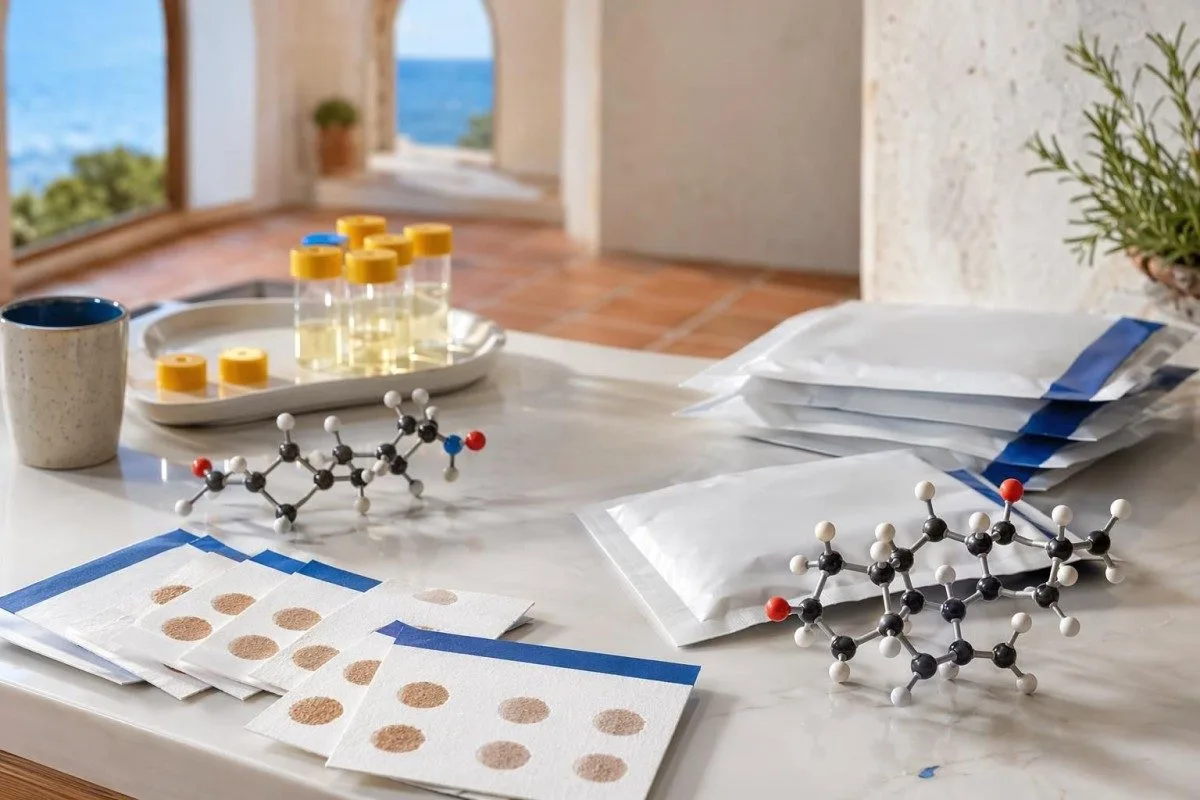
Dried urine hormone testing can map steroid metabolites in a way blood tests usually cannot, but it is not the right tool for every hormone question.


- DUTCH hormone test uses dried urine collected over several time points to estimate sex hormones, adrenal hormones, and their metabolites rather than only a single blood concentration.
- Blood hormone testing remains the standard for diagnosing low testosterone, thyroid disease, prolactin excess, pregnancy-related questions, and many pituitary or adrenal disorders.
- Estrogen metabolites commonly include 2-hydroxyestrone, 4-hydroxyestrone, 16-hydroxyestrone, and methylated estrogen products; these are pathway clues, not cancer screening tests.
- Cortisol patterns on dried urine may show free cortisol, cortisone, and total cortisol metabolites across the day, but suspected Cushing syndrome still needs guideline-based testing.
- Progesterone metabolites such as pregnanediol can support evidence of recent ovulation, but a serum progesterone about 7 days before the next period is still the usual clinical test.
- Androgen metabolites may show 5-alpha versus 5-beta pathway preference, which can matter in acne, hair growth, PCOS-like symptoms, or unexplained low libido.
- Complete hormone panel should be chosen around the clinical question; a female hormone panel for fertility is not the same as a male hormone panel for low testosterone.
- When results change care is usually when they clarify hormone therapy monitoring, cyclic symptoms, androgen metabolism, or cortisol rhythm—not when they replace diagnosis.
- Kantesti AI helps interpret accompanying blood tests in context, because urine metabolites often need CBC, CMP, thyroid, insulin, lipid, and inflammation markers to make clinical sense.
What the DUTCH hormone test actually shows
The DUTCH hormone test shows hormone excretion and metabolism in dried urine, not a real-time blood hormone level. It can report estrogen, progesterone, androgen, cortisol, cortisone, melatonin, and selected organic-acid metabolites, but it usually changes care only when the clinical question is about hormone metabolism, timing, or therapy monitoring.
As of May 2, 2026, I still see patients arrive with a 12-page urine hormone report and one simple question: is this better than blood testing? The honest answer is no, not better—different. A dried urine result can tell us how steroid hormones are being processed over several hours, while a serum test tells us what is circulating at the moment of collection.
The practical distinction matters. A blood estradiol of 42 pg/mL on cycle day 3 can help with fertility assessment, while urine estrogen metabolites may show whether more estrogen is being routed toward 2-hydroxy, 4-hydroxy, or 16-hydroxy pathways. Those are not interchangeable measurements.
At Kantesti AI, we interpret blood results in context because hormone symptoms rarely travel alone. When someone has fatigue, heavy periods, acne, or low libido, their CBC, ferritin, TSH, prolactin, HbA1c, and liver enzymes often explain as much as the hormone panel itself; our guide to at-home blood testing covers where home collection helps and where it can mislead.
Thomas Klein, MD here: in clinic, I find dried urine most useful when the patient is already on hormone therapy, has cyclic symptoms that do not match a single serum draw, or needs a closer look at cortisol rhythm. I find it least useful when someone needs a diagnosis of PCOS, ovarian insufficiency, hypogonadism, thyroid disease, adrenal tumour, or pregnancy-related hormone change.
How dried urine differs from standard blood hormone tests
Dried urine testing measures what the body excretes after hormones are made, converted, and cleared; blood testing measures the concentration of hormones in circulation. Blood tests remain the diagnostic anchor for most endocrine disease because clinical thresholds were validated in serum or plasma.
A serum testosterone, estradiol, progesterone, or cortisol result is a snapshot. That snapshot may be exactly what we need: the Endocrine Society guideline by Bhasin et al. states that male hypogonadism should be diagnosed only when symptoms are present and morning testosterone is consistently low on repeat testing, usually before 10 a.m. (Bhasin et al., 2018).
Urine is downstream. If serum testosterone is like checking the water level in a reservoir, dried urine metabolites are more like inspecting which canals the water travelled through. That can be clinically interesting, especially for androgen or estrogen metabolism, but it does not replace the reservoir measurement.
A standard blood draw also gives us proteins that change hormone interpretation. SHBG can make total testosterone look normal while free testosterone is low; albumin affects calculated free hormone estimates; liver disease can change binding proteins and hormone clearance. For a broader view of what routine panels include, our comprehensive blood panel guide is often the better starting point.
A single abnormal urine metabolite should not be treated like a diagnosis. In our analysis of 2M+ blood tests, we repeatedly see that borderline hormones become meaningful only when they fit a pattern—symptoms, timing, medication exposure, nutritional status, and repeatability. That is why the concept of a blood test normal range is less useful than knowing whether a value fits the patient.
How DUTCH differs from saliva hormone testing
Saliva testing mainly estimates free, unbound hormone at the time of collection, while DUTCH testing estimates urinary hormone metabolites across collection windows. Saliva is strongest for timing-sensitive cortisol questions; dried urine is stronger for metabolite mapping.
Late-night salivary cortisol has a genuine place in endocrine medicine. The Endocrine Society Cushing syndrome guideline by Nieman et al. lists late-night salivary cortisol, 24-hour urinary free cortisol, and low-dose dexamethasone suppression testing as accepted first-line screening options when Cushing syndrome is suspected (Nieman et al., 2008).
That does not mean every saliva hormone panel is diagnostic. Salivary estradiol and progesterone can be affected by topical hormone contamination, collection technique, oral bleeding, recent food, and timing. A cream applied to the skin can create strikingly high saliva values even when serum levels look modest.
Dried urine has a different weakness: kidney handling and creatinine correction matter. Most dried urine reports express hormones per milligram of creatinine, so very low muscle mass, dehydration, or unusual collection volume can distort the apparent pattern. Our article on blood test variability explains why pre-analytical details often matter more than patients expect.
For cortisol rhythm, saliva may show the curve more directly; urine may show both free cortisol and total cortisol metabolites. When I am worried about a true adrenal disorder, I use guideline-based testing. When I am trying to understand why a night-shift nurse feels wired at 2 a.m. and flat at 10 a.m., I may look at rhythm tools alongside the basics in our cortisol timing guide.
What a complete hormone panel should include
A complete hormone panel is not one fixed list; it should be built around the symptom, age, sex, cycle timing, medication use, and clinical risk. A good panel often includes non-hormone markers because thyroid, iron, glucose, liver, kidney, and inflammation results can mimic hormone symptoms.
For irregular periods, a useful female hormone panel often includes pregnancy testing when relevant, TSH, prolactin, FSH, LH, estradiol, total testosterone, free testosterone or calculated free androgen index, SHBG, DHEA-S, and sometimes 17-hydroxyprogesterone. AMH can help with ovarian reserve or PCOS pattern recognition, but it does not diagnose fertility by itself.
For low libido or erectile symptoms in men, a male hormone panel should usually start with total testosterone at 7–10 a.m., repeated on a separate morning if low, plus SHBG, albumin, LH, FSH, prolactin, TSH, CBC, CMP, HbA1c, lipids, and sometimes PSA depending on age and therapy plans. A total testosterone below about 300 ng/dL is commonly used as a biochemical cutoff, but symptoms and repeat testing matter.
Dried urine can sit beside that panel, not above it. I am comfortable using urine metabolites to refine questions such as estrogen clearance, androgen pathway preference, or cortisol metabolite load, but I am not comfortable using it alone to tell a 34-year-old she has ovarian failure or a 58-year-old man he needs testosterone.
Kantesti AI interprets blood hormone results by comparing them with thousands of other biomarkers, medication clues, age-specific patterns, and trend history. The blood biomarkers guide is a practical map of what a full lab picture can include, while our wellness panel article separates useful testing from expensive noise.
What estrogen metabolites on DUTCH can and cannot tell you
DUTCH estrogen metabolites can show whether estrone and estradiol are being processed through 2-hydroxy, 4-hydroxy, or 16-hydroxy pathways. These results may guide risk discussion and nutrition choices, but they do not diagnose breast cancer, endometriosis, fibroids, or estrogen dominance.
The common estrogen metabolites are 2-hydroxyestrone, 4-hydroxyestrone, 16-hydroxyestrone, 2-methoxyestrone, and related methylated products. In plain English, the report is asking where estrogen went after the liver began processing it.
The evidence here is honestly mixed. Higher 4-hydroxy estrogen formation is biologically plausible as a more reactive pathway, and methylation capacity matters in the lab model; however, a dried urine 4-OH result is not a validated cancer screening test. I tell patients not to make fear-based decisions from a single metabolite ratio.
A useful estrogen interpretation needs cycle day and context. Estradiol around cycle day 2–5 is interpreted differently from a mid-cycle surge, and a perimenopausal patient may have wild swings from one month to the next. For serum values by age and cycle phase, our estradiol blood test guide is the more clinically anchored reference.
Methylation markers can be relevant when there is low B12, low folate intake, high homocysteine, heavy alcohol exposure, or certain medications. A serum B12 of 280 pg/mL may be called normal in one lab and borderline in another, which is why I often cross-check symptoms against our B12 range guide before recommending supplements.
Progesterone metabolites and ovulation clues
DUTCH progesterone metabolites, especially pregnanediol, can support evidence of recent progesterone production after ovulation. For confirming ovulation in routine care, serum progesterone about 7 days before the next expected period remains the usual test.
A mid-luteal serum progesterone above roughly 3 ng/mL suggests ovulation occurred, while many fertility clinics prefer levels above 10 ng/mL in natural cycles as a stronger luteal signal. The exact cutoff varies because progesterone pulses every 60–90 minutes and can change sharply in the same afternoon.
Dried urine pregnanediol can be helpful when a patient cannot time a blood draw or has irregular cycles. I saw this recently in a 39-year-old teacher whose cycle varied from 25 to 42 days; a fixed day-21 blood test kept missing her luteal phase, while serial urine timing finally matched her symptom diary.
The trap is over-interpreting a low metabolite from a poorly timed collection. If the sample is collected before ovulation or during an anovulatory cycle, low progesterone is expected. Our guide on progesterone timing explains why day 21 is only correct for a 28-day cycle.
For fertility questions, both partners usually need evaluation. Semen analysis, ovulation confirmation, thyroid markers, prolactin, AMH, FSH, and sometimes tubal assessment can matter more than a urine metabolite pattern; our fertility blood tests guide lays out the paired approach.
Androgen metabolites: 5-alpha versus 5-beta patterns
DUTCH androgen metabolites can show whether testosterone and related hormones are being routed more toward 5-alpha or 5-beta metabolites. A strong 5-alpha pattern may fit acne, scalp hair thinning, oily skin, or hirsutism even when serum testosterone is only mildly abnormal.
Serum total testosterone can miss tissue-level androgen effects. A woman with acne and chin hair may have total testosterone within the lab range, but low SHBG, high insulin, or increased 5-alpha conversion can still produce androgen symptoms. The 2018 Endocrine Society hirsutism guideline recommends testing androgen excess in women with an abnormal hirsutism score, particularly when symptoms are moderate or progressive (Martin et al., 2018).
Common urine androgen metabolites include androsterone, etiocholanolone, 5-alpha-androstanediol, 5-beta-androstanediol, DHEA, and DHEA-S-related outputs. These are not the same as serum free testosterone, but they can describe androgen processing more richly than a single total value.
Insulin resistance changes the whole discussion. A fasting insulin above about 10–15 µIU/mL can be an early clue in the right clinical setting, and high insulin often lowers SHBG, increasing free androgen exposure. That is why I link androgen symptoms to metabolic testing, not just sex hormones.
For blood-based interpretation, our articles on free versus total testosterone and the SHBG blood test are essential companions. If those two results disagree, the urine metabolite pattern may be interesting—but the binding-protein story usually comes first.
Cortisol, cortisone, and the adrenal rhythm question
DUTCH cortisol testing can report free cortisol, cortisone, and total cortisol metabolites across the day. This may help describe rhythm and clearance, but it should not be used alone to diagnose adrenal insufficiency or Cushing syndrome.
Morning serum cortisol is often interpreted in broad bands: values below about 3 µg/dL raise concern for adrenal insufficiency, values above about 15–18 µg/dL often make it less likely, and the middle zone needs dynamic testing. Those thresholds are serum-based and cannot be converted from dried urine.
Dried urine adds two useful ideas: production and clearance. A patient may have low free cortisol but high total cortisol metabolites, which can suggest faster cortisol clearance rather than low production. That distinction is easy to miss if you only look at the first cortisol number on the page.
I use caution with the phrase adrenal fatigue. It is not a formal endocrine diagnosis, and it can distract from sleep apnea, depression, iron deficiency, hypothyroidism, steroid exposure, inflammatory disease, or shift-work circadian disruption. Our article on night-shift blood testing is often more useful for real-world fatigue than another hormone label.
Cortisol interpretation also overlaps with anxiety symptoms. A flat daytime pattern may reflect poor sleep, sedating medication, alcohol, chronic pain, or under-eating, not necessarily adrenal gland failure. For patients with palpitations, tremor, insomnia, or panic-like episodes, I also check the labs in our anxiety blood tests guide.
Organic acids, melatonin, and nutrient clues
Many DUTCH panels add selected organic acids, oxidative-stress markers, and melatonin metabolites. These add context, but they are screening clues rather than definitive tests for nutrient deficiency, mitochondrial disease, or sleep disorders.
Common add-ons may include 8-hydroxy-2-deoxyguanosine, often shortened to 8-OHdG, as an oxidative-stress marker; 6-hydroxymelatonin sulfate as a urinary melatonin metabolite; and organic acids related to B-vitamin or neurotransmitter pathways. The exact analyte list varies by panel version.
The clinical problem is specificity. A high 8-OHdG can reflect oxidative stress, but it does not tell us whether the driver is smoking, sleep deprivation, high-intensity training, uncontrolled diabetes, inflammation, or lab variation. A low melatonin metabolite may fit insomnia, but it does not prove a pineal disorder.
Nutrient clues should be checked against conventional markers. Magnesium symptoms, for example, may occur even when serum magnesium is normal because serum represents less than 1% of total body magnesium; still, serum magnesium below about 1.7 mg/dL is clinically low in many labs. Our magnesium range article explains why symptoms and medication history matter.
Kantesti AI is useful here because it can put add-on urine clues beside HbA1c, fasting glucose, ALT, AST, ferritin, B12, vitamin D, CRP, and kidney function. An oxidative-stress marker without glucose or liver context is a loose thread; with context, it may point to a real modifiable pattern.
When DUTCH results may actually change care
DUTCH results are most likely to change care when the question involves hormone therapy monitoring, estrogen metabolism, androgen pathway preference, or cortisol rhythm. They are less likely to change care when the diagnosis already depends on standard blood testing or imaging.
The most useful case is not vague wellness; it is a precise question. For example: a 52-year-old using transdermal estradiol has breast tenderness, insomnia, and headaches despite a modest serum estradiol. Urine metabolites may show high total estrogen excretion or a methylation bottleneck that changes how we discuss dose, route, alcohol intake, and follow-up.
Another good use is androgen symptom mismatch. A patient with PCOS-like acne, normal total testosterone, low SHBG, and high 5-alpha androgen metabolites may benefit more from insulin resistance treatment, anti-androgen discussion, or contraceptive choice review than from being told her testosterone is normal.
Perimenopause is messy. FSH can be 12 IU/L one month and 62 IU/L the next, and estradiol can swing from low to surprisingly high before periods stop. Our perimenopause blood test guide explains why symptom tracking often beats a single hormone snapshot.
In PCOS, dried urine can add metabolism detail, but diagnosis still rests on clinical criteria and standard evaluation. A proper workup may include androgens, ovulatory pattern, ultrasound when appropriate, prolactin, TSH, 17-hydroxyprogesterone, and metabolic testing; our PCOS blood results guide walks through the practical sequence.
When DUTCH results usually do not change care
DUTCH results usually do not change care when symptoms suggest pregnancy complications, pituitary disease, adrenal tumour, severe thyroid disease, primary ovarian insufficiency, testicular failure, or medication toxicity. These situations need validated blood tests, imaging, or urgent clinical assessment.
Red flags override metabolite curiosity. New severe headaches with visual changes, milky nipple discharge, rapid virilisation, fainting with low blood pressure, unexplained weight loss, or purple stretch-mark changes should not be worked up with a wellness urine panel first.
A prolactin above about 100 ng/mL can suggest a prolactinoma or medication effect, depending on context, and levels above 200 ng/mL are more strongly suspicious for a prolactin-secreting pituitary adenoma. A urine hormone report cannot replace a measured serum prolactin and appropriate imaging decisions; our prolactin blood test article covers the next steps.
Thyroid disease is another common detour. Patients sometimes chase cortisol or estrogen metabolites while the real driver is a TSH of 8.7 mIU/L with low-normal free T4, or a suppressed TSH from overtreatment. A thyroid panel remains the right tool for that question.
Medication decisions need caution. I would not start testosterone, stop thyroid hormone, escalate hydrocortisone, or change fertility medication based only on dried urine. In my experience, the best use is to generate better questions for a clinician—not to bypass one.
Collection timing and prep errors that distort results
DUTCH results are only as good as the collection timing, medication list, supplement history, hydration status, and cycle-day information. Small errors can move a borderline hormone pattern enough to change the story.
Most dried urine protocols use several collections across one day, often including waking, later morning, afternoon or evening, and bedtime samples. Some protocols add overnight or cycle-mapped collections. Missing one card is not trivial; it can flatten or exaggerate the daily curve.
Hormone products are the biggest source of confusion. Oral progesterone, topical estradiol, testosterone gels, DHEA supplements, pregnenolone, hydrocortisone, inhaled steroids, and certain contraceptives can all affect interpretation. Even biotin, often taken at 5,000–10,000 mcg daily for hair, can interfere with some blood immunoassays, which is why we explain it in our biotin thyroid test guide.
Hydration and creatinine correction deserve more respect. A very dilute urine specimen can make hormones look low, while dehydration can make some ratios look high. Heavy exercise within 24 hours may also affect cortisol, creatinine, and oxidative-stress markers.
Fasting is not usually the central issue for urine steroid metabolites, but it matters for paired blood work such as fasting insulin, glucose, triglycerides, and some metabolic panels. If you are combining tests, check the rules in our fasting guide before collection day.
How clinicians combine DUTCH with blood results
Clinicians should combine DUTCH results with blood tests when symptoms could come from thyroid disease, anemia, insulin resistance, liver dysfunction, kidney disease, inflammation, or medication effects. Urine metabolites become more useful when the basic physiology is already mapped.
A hormone complaint is rarely just a hormone complaint. Hair loss may be ferritin below 30 ng/mL, thyroid dysfunction, androgen excess, recent weight loss, or postpartum change. Fatigue may be sleep apnea, HbA1c 6.1%, low B12, elevated CRP, low sodium, or depression.
Kantesti AI interprets uploaded blood test PDFs or photos in about 60 seconds and compares results across 15,000+ biomarkers, trend history, and clinical pattern logic. Our clinical standards are described in Kantesti medical validation, and the broader workflow is explained in our AI lab interpretation guide.
A common example: a woman brings a urine report showing low progesterone metabolites. Her blood work shows TSH 5.9 mIU/L, ferritin 14 ng/mL, and prolactin 38 ng/mL. In that case, the treatment priority is not a progesterone supplement; it is figuring out why ovulation may be disrupted.
Our AI blood test platform does not turn urine metabolites into diagnoses. It helps patients and clinicians read the blood side of the story cleanly, so the DUTCH hormone test—if used—sits in the right clinical lane.
Female hormone panel versus male hormone panel
A female hormone panel and male hormone panel should not be mirror images because the clinical questions, timing rules, and validated thresholds differ. Cycle timing is central for many female results, while morning repeat testosterone is central for many male results.
For fertility or irregular cycles, I usually want cycle day 2–5 FSH, LH, estradiol, AMH when appropriate, TSH, prolactin, and androgen testing if symptoms suggest excess. A mid-luteal progesterone is best timed about 7 days before the next period, not blindly on day 21.
For men, total testosterone should be measured in the morning and repeated if low. The Endocrine Society guideline uses symptoms plus consistently low testosterone, not a single borderline number, to diagnose hypogonadism (Bhasin et al., 2018). Our low testosterone guide covers the common follow-up pattern.
Age changes the screening conversation. A 31-year-old man with low libido needs sleep, depression, medication, prolactin, LH, FSH, and metabolic assessment; a 62-year-old considering testosterone also needs prostate, hematocrit, cardiovascular, and sleep apnea risk considered. Our article on men over 50 gives a safer framework.
Women in their 30s often need a different baseline: thyroid, ferritin, vitamin D, HbA1c, lipids, prolactin, and cycle-specific reproductive hormones when symptoms fit. For a practical annual structure, see our women in their 30s checklist.
How to discuss DUTCH results with your clinician
The best way to discuss DUTCH results is to bring the full report, collection times, medication list, supplement doses, menstrual-cycle day, and the specific decision you are considering. Clinicians are more likely to use the data when the question is narrow and medically relevant.
Ask, what decision would this result change? If the answer is no decision, repeat later, or buy supplements indefinitely, pause. A useful test should alter monitoring, diagnosis, medication choice, lifestyle priority, or referral timing.
Bring doses, not just names. There is a big difference between 25 mg DHEA daily, 200 mg oral micronized progesterone at night, a pea-sized estradiol cream, and compounded multi-hormone therapy. Timing matters too: taking progesterone 8 hours before collection can change metabolite output.
If your clinician is skeptical, that is not automatically dismissive. Many physicians trust serum thresholds because the outcome data and guidelines are built around them. I usually suggest pairing the urine report with clean blood testing and trend review before arguing over isolated metabolites.
You can upload your conventional blood results to Try Free AI Blood Test Analysis before your appointment and bring a clearer summary of flagged patterns. For complex cases, our physicians and advisors are listed through the Medical Advisory Board, because hormone interpretation should stay clinically accountable.
Research publications and safer next steps
The safest next step after a DUTCH hormone test is to decide whether the result confirms a pattern, creates a new medical question, or simply adds noise. If it creates a treatment decision, confirm the clinically important part with validated blood testing or specialist review.
Kantesti is a UK medical AI company, and our work sits around interpretation rather than replacing clinicians. You can read more about Kantesti as an organization and, when you are ready, compare your blood markers with the patterns that often explain hormone-like symptoms.
Klein, T., Kantesti Medical Team. (2026). B Negative Blood Type, LDH Blood Test & Reticulocyte Count Guide. Figshare. https://doi.org/10.6084/m9.figshare.31333819. ResearchGate: publication search. Academia.edu: publication search.
Klein, T., Kantesti Medical Team. (2026). Diarrhea After Fasting, Black Specks in Stool & GI Guide 2026. Figshare. https://doi.org/10.6084/m9.figshare.31438111. ResearchGate: publication search. Academia.edu: publication search.
Bottom line from Thomas Klein, MD: use the DUTCH hormone test when it answers a metabolism or rhythm question, not because it looks more complete. If you have a standard blood hormone panel, CBC, CMP, thyroid markers, ferritin, lipids, or HbA1c already, upload them to Kantesti AI blood test analyzer and let our platform help you see what needs medical follow-up first.
Frequently Asked Questions
Is the DUTCH hormone test better than blood testing?
The DUTCH hormone test is not better than blood testing; it answers a different question. Blood testing measures circulating hormone levels and remains the standard for diagnosing low testosterone, thyroid disease, prolactin excess, pregnancy-related concerns, and many adrenal disorders. DUTCH testing measures dried urine hormone metabolites across collection windows, which may help with estrogen metabolism, androgen pathways, or cortisol rhythm. If a treatment decision depends on a validated cutoff, such as morning testosterone below about 300 ng/dL, blood testing usually comes first.
What hormones does a DUTCH hormone test measure?
A DUTCH hormone test commonly reports estrogen metabolites, progesterone metabolites, androgen metabolites, free cortisol, cortisone, total cortisol metabolites, and sometimes melatonin or organic-acid markers. Estrogen pathways often include 2-hydroxyestrone, 4-hydroxyestrone, 16-hydroxyestrone, and methylated estrogen products. Androgen markers may include androsterone, etiocholanolone, DHEA-related metabolites, and 5-alpha or 5-beta pathway clues. Exact analytes vary by panel, so the report should be interpreted with its own laboratory reference intervals.
Can DUTCH testing diagnose estrogen dominance?
DUTCH testing cannot diagnose estrogen dominance as a formal medical condition because estrogen dominance is not a standard endocrine diagnosis with one validated cutoff. The test may show high total estrogen metabolites or pathway patterns that fit symptoms such as breast tenderness, heavy bleeding, headaches, or perimenopausal swings. Those findings still need clinical context, cycle timing, medication review, and often serum estradiol, progesterone, CBC, ferritin, TSH, and pregnancy testing when relevant. A urine estrogen metabolite pattern should not be used as cancer screening.
Can the DUTCH hormone test diagnose adrenal fatigue?
The DUTCH hormone test cannot diagnose adrenal fatigue because adrenal fatigue is not a recognized endocrine diagnosis with validated laboratory criteria. Dried urine cortisol patterns may show low free cortisol, altered cortisone, or abnormal daily rhythm, but these patterns can also reflect poor sleep, shift work, depression, steroid medication, inflammation, under-eating, or chronic stress. True adrenal insufficiency is assessed with serum cortisol, ACTH, and often ACTH stimulation testing. A morning serum cortisol below about 3 µg/dL can be concerning when symptoms fit, while intermediate values need clinician-directed follow-up.
When should women consider a DUTCH hormone test?
Women may consider a DUTCH hormone test when the question involves hormone therapy monitoring, estrogen metabolism, perimenopausal symptom patterns, suspected androgen pathway mismatch, or cortisol rhythm. For fertility, irregular periods, amenorrhea, or suspected PCOS, standard blood tests usually come first: TSH, prolactin, FSH, LH, estradiol, progesterone timed about 7 days before the next period, and androgen markers when indicated. A female hormone panel should be timed to the cycle whenever possible. Urine metabolites can add context but should not replace diagnostic blood work.
When should men consider a DUTCH hormone test?
Men may consider a DUTCH hormone test when symptoms persist despite conventional blood testing or when androgen metabolism and cortisol rhythm are specific questions. A male hormone panel should first include morning total testosterone, repeated if low, plus SHBG, albumin, LH, FSH, prolactin, TSH, CBC, CMP, HbA1c, and lipids. The Endocrine Society recommends diagnosing hypogonadism only when symptoms are present and testosterone is consistently low on repeat morning testing. Urine androgen metabolites can be interesting, but they do not replace serum testosterone confirmation.
Do I need a complete hormone panel before DUTCH testing?
Most patients benefit from a targeted blood-based hormone panel before or alongside DUTCH testing. A complete hormone panel should be customized, not bought as a generic bundle, and may include thyroid markers, prolactin, estradiol, progesterone, testosterone, SHBG, DHEA-S, LH, FSH, AMH, CBC, CMP, ferritin, HbA1c, and lipids depending on symptoms. Blood tests identify common non-hormone causes of fatigue, hair loss, weight change, low libido, and irregular cycles. DUTCH testing is most useful after those basics are not ignored.
Can a DUTCH test help explain acne or unwanted facial hair?
It can describe androgen metabolites, but it cannot diagnose PCOS or determine the cause of androgen excess. New or rapidly worsening facial hair, acne, scalp hair loss, or voice changes should prompt a clinician visit and targeted blood testing.
Can I take hormone therapy or supplements while collecting a DUTCH test?
Do not stop prescribed hormones unless your clinician tells you to. Bring a complete list of creams, pills, patches, DHEA, pregnenolone, melatonin, and supplements, because the dose and timing can strongly affect urine metabolite results.
Can kidney disease or very high fluid intake affect a DUTCH result?
Yes. Because the test depends on urine excretion and creatinine correction, significant kidney disease, unusual fluid intake, or incomplete collections can make results harder to trust. Tell your clinician about kidney problems before relying on metabolite patterns.
Get AI-Powered Blood Test Analysis Today
Join over 2 million users worldwide who trust Kantesti for instant, accurate lab test analysis. Upload your blood test results and receive comprehensive interpretation of 15,000+ biomarkers in seconds.
📚 Referenced Research Publications
Klein, T., Mitchell, S., & Weber, H. (2026). B Negative Blood Type, LDH Blood Test & Reticulocyte Count Guide. Kantesti AI Medical Research.
Klein, T., Mitchell, S., & Weber, H. (2026). Diarrhea After Fasting, Black Specks in Stool & GI Guide 2026. Kantesti AI Medical Research.
📖 External Medical References
⚕️ Medical Disclaimer
This article is for educational purposes only and does not constitute medical advice. Always consult a qualified healthcare provider for diagnosis and treatment decisions.
E-E-A-T Trust Signals
Experience
Physician-led clinical review of lab interpretation workflows.
Expertise
Laboratory medicine focus on how biomarkers behave in clinical context.
Authoritativeness
Written by Dr. Thomas Klein with review by Dr. Sarah Mitchell and Prof. Dr. Hans Weber.
Trustworthiness
Evidence-based interpretation with clear follow-up pathways to reduce alarm.