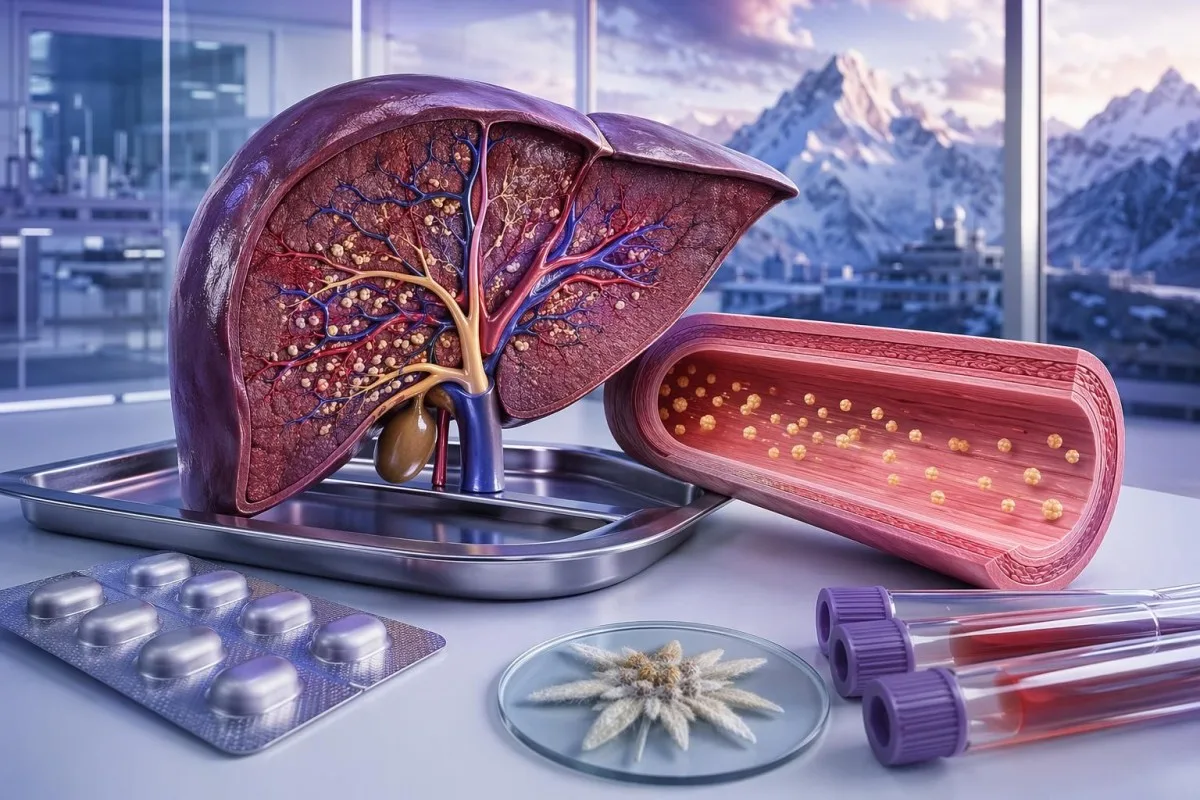
A practical baseline lab checklist for people prescribed cholesterol-lowering medication, written for patients who want to start safely and track results intelligently.


- Baseline lipid panel should include total cholesterol, LDL-C, HDL-C, triglycerides, and non-HDL-C before the first statin dose.
- ALT and AST give a liver enzyme baseline; persistent ALT or AST above 3 times the lab upper limit usually needs review before starting.
- HbA1c is useful because 5.7–6.4% suggests prediabetes and 6.5% or higher meets the usual diabetes cutoff.
- Creatinine and eGFR help dose certain statins safely; eGFR below 60 mL/min/1.73 m² changes risk and follow-up planning.
- Creatine kinase is not routine for everyone, but ask for it if you have muscle symptoms, prior statin intolerance, thyroid disease, or heavy training.
- TSH is worth checking when LDL is unexpectedly high or muscle symptoms exist; untreated hypothyroidism can raise LDL and CK.
- ApoB and Lp(a) refine inherited risk; Lp(a) of 50 mg/dL or 125 nmol/L and higher is commonly treated as risk-enhancing.
- Recheck lipids 4–12 weeks after starting or changing dose, then every 3–12 months depending on risk and stability.
The baseline lab checklist before your first statin dose
Ask for a lipid panel, ALT/AST liver enzymes, creatinine with eGFR, HbA1c or fasting glucose, and targeted add-ons such as TSH, CK, ApoB, and Lp(a) before the first dose. That is the short answer to what blood tests to ask for when a statin is prescribed. I’m Thomas Klein, MD, and when I review statin starts, I want a clean baseline so future symptoms are not blamed on the wrong thing. You can upload the same labs to what blood tests to ask for for a plain-English read.
A baseline lipid panel tells you why the statin is being used; liver, kidney, and glucose tests tell you whether the start is straightforward. If this is your first visit with a clinician, our new doctor lab checklist pairs well with this statin-specific list.
Most adults do not need a giant wellness panel before atorvastatin 10–20 mg or rosuvastatin 5–10 mg. The missed opportunity is usually not ordering ApoB, Lp(a), or HbA1c in a person whose LDL looks only moderately high but whose family history is ugly.
In our analysis of 2M+ uploaded lab reports, the commonest confusion is timing: patients compare a non-fasting lipid result from March with a fasting one from September and think the statin failed. Kantesti AI flags those context shifts because a triglyceride change of 80–120 mg/dL can be meal-related, not medication-related.
Which cholesterol results matter most before statins?
The lipid results that matter most before statins are LDL-C, non-HDL-C, triglycerides, HDL-C, and the percentage drop expected after treatment. A moderate-intensity statin usually lowers LDL-C by 30–49%, while a high-intensity statin usually lowers LDL-C by 50% or more.
LDL-C is the headline number, but non-HDL-C often behaves better when triglycerides are raised because it captures all atherogenic cholesterol particles. The 2018 AHA/ACC cholesterol guideline uses LDL-C response and risk enhancers to guide follow-up rather than a single universal target for everyone (Grundy et al., 2019).
A standard lipid panel reports total cholesterol, LDL-C, HDL-C, and triglycerides; non-HDL-C is total cholesterol minus HDL-C. If you want help with the abbreviations and units, our lipid panel guide walks through each line item without assuming medical training.
A calculated LDL-C becomes less reliable when triglycerides exceed about 400 mg/dL, or 4.5 mmol/L. In that situation, ask whether the lab can report direct LDL-C, non-HDL-C, or ApoB; the biomarker guide explains why particle-based markers can outperform cholesterol mass in selected patients.
Should you ask for ApoB and Lp(a)?
Ask for ApoB and Lp(a) if LDL-C is high, triglycerides are above 200 mg/dL, heart disease runs in your family, or your risk feels higher than your standard lipid panel suggests. ApoB estimates the number of atherogenic particles, while Lp(a) is mostly inherited and usually needs testing only once.
ApoB of 130 mg/dL or higher is listed as a risk-enhancing factor in the AHA/ACC guideline, especially when triglycerides are 200 mg/dL or higher (Grundy et al., 2019). In clinic, I often see LDL-C around 115 mg/dL but ApoB near 120 mg/dL in insulin resistance; that person is carrying more particles than LDL-C alone suggests.
Lp(a) of 50 mg/dL or 125 nmol/L and higher is widely treated as elevated, but the units are not interchangeable. Some labs report mass in mg/dL and others report particle number in nmol/L, so do not convert casually; our Lp(a) risk guide explains the trap.
ApoB is not a statin safety test. It is a precision risk test, and I use it when a patient asks, quite reasonably, what blood tests should I get if my family history looks worse than my cholesterol numbers.
When ApoB changes the conversation
ApoB can remain high when LDL-C looks acceptable because small cholesterol-poor particles still count one ApoB each. For a deeper look at that pattern, see our ApoB explanation.
Which liver tests should be checked before statins?
Check ALT at minimum before starting a statin; AST, bilirubin, alkaline phosphatase, and GGT add useful context when liver disease, alcohol use, fatty liver, or abnormal prior labs are present. Statins are usually avoided or delayed when ALT or AST is persistently above 3 times the lab upper limit without an explanation.
ALT is more liver-specific than AST, but AST can rise from muscle after exercise. A 52-year-old marathon runner with AST 89 IU/L and ALT 31 IU/L may need a CK and exercise history before anyone labels this a liver problem.
Most labs place ALT upper limits somewhere around 35–45 IU/L for adults, though some European laboratories use lower sex-specific cutoffs. Our liver function test guide explains why ALT, AST, ALP, GGT, and bilirubin must be read as a pattern, not as isolated flags.
Statins are not automatically banned in stable fatty liver. In my experience, the bigger danger is leaving high LDL untreated because of a mildly raised ALT of 48 IU/L; our elevated liver enzymes guide covers the red-flag patterns that deserve faster workup.
Why kidney function belongs on the statin checklist
Creatinine and eGFR belong on the pre-statin checklist because kidney function affects dose selection, muscle-risk interpretation, and overall cardiovascular risk. An eGFR below 60 mL/min/1.73 m² for at least 3 months meets the usual laboratory definition of chronic kidney disease.
Kidney disease is a heart-risk amplifier, not just a kidney issue. When eGFR is 45 mL/min/1.73 m² and urine albumin-creatinine ratio is 80 mg/g, I read the lipid panel more aggressively than I would in a low-risk 30-year-old with the same LDL.
Ask for creatinine with eGFR, and consider urine ACR if you have diabetes, hypertension, known kidney disease, or a family history of kidney failure. The urine ACR guide explains why albumin can rise before creatinine looks abnormal.
Rosuvastatin dosing needs extra care in severe renal impairment, particularly when eGFR is below 30 mL/min/1.73 m². If your report shows a borderline filtration number, our eGFR plain-English guide can help you understand whether it is age-related, hydration-related, or clinically meaningful.
Should HbA1c or glucose be checked first?
HbA1c or fasting glucose should be checked before starting statins when diabetes risk is unknown, weight has changed, triglycerides are high, or there is a family history of diabetes. HbA1c of 5.7–6.4% suggests prediabetes, and 6.5% or higher is the usual diabetes threshold when confirmed.
Statins can slightly increase diabetes diagnoses, especially at higher intensity and in people already near the cutoff. The cardiovascular benefit still usually wins, but patients deserve to know their baseline rather than discover an HbA1c of 6.4% six months later and blame the tablet alone.
Fasting glucose of 100–125 mg/dL suggests impaired fasting glucose, while 126 mg/dL or higher suggests diabetes if repeated or confirmed by another test. Our HbA1c range guide gives the common percent and mmol/mol cutoffs side by side.
Triglycerides above 150 mg/dL often travel with insulin resistance, even when fasting sugar is still normal. If you are already near the line, the prediabetes lab guide explains how A1c, fasting glucose, and sometimes fasting insulin can disagree.
Do you need a baseline CK test?
A baseline CK test is not needed for every statin user, but it is sensible if you have unexplained muscle pain, prior statin intolerance, muscle disease, untreated hypothyroidism, heavy endurance training, or interacting medications. CK is a muscle enzyme, and exercise can raise it dramatically without statin injury.
Many labs list CK upper limits around 170–250 IU/L, but a hard gym session can push CK above 1,000 IU/L in a healthy person. I have seen anxious patients stop a statin after a raised CK that was actually from deadlifts two days earlier.
If you lift heavy, run long distances, or recently had a seizure, fall, or intramuscular injection, tell your clinician before CK is interpreted. Our guide to exercise-related lab shifts explains why AST, CK, and white cells can all move after hard training.
CK above 5 times the upper limit before treatment usually deserves a pause and repeat, especially if there is weakness or dark urine. CK above 10 times the upper limit with symptoms is a different situation; that can signal serious muscle breakdown and needs same-day medical advice.
When TSH belongs in your statin workup
TSH belongs in your statin workup when LDL-C is unexpectedly high, triglycerides are elevated, muscle pain exists before treatment, or symptoms suggest hypothyroidism. Untreated hypothyroidism can raise LDL-C and can also increase the chance that muscle symptoms are misattributed to statins.
A typical adult TSH reference interval is roughly 0.4–4.0 mIU/L, though pregnancy, age, and lab method change interpretation. A TSH of 8.5 mIU/L with low free T4 is not a cholesterol footnote; it may be one reason LDL is high.
I see this pattern often: LDL-C 178 mg/dL, fatigue, constipation, and a TSH that nobody checked until after statin muscle aches appeared. Our TSH normal range guide shows why timing, biotin supplements, and thyroid medication timing can change the number.
Treating hypothyroidism does not always remove the need for a statin, especially if ApoB or Lp(a) remains high. But it makes the decision cleaner, and our thyroid disease lab guide can help you read TSH, free T4, antibodies, and symptoms together.
Which optional labs prevent confusion later?
CBC, ferritin, vitamin D, and B12 are not mandatory statin-start tests, but they can prevent confusion when fatigue, cramps, weakness, hair loss, numbness, or low mood already exists. The point is not to hunt for exotic problems; it is to document common deficiencies before new medication begins.
A CBC can reveal anemia, infection patterns, or platelet abnormalities that have nothing to do with cholesterol therapy. Hemoglobin below about 12 g/dL in many adult women or below 13 g/dL in many adult men deserves context before fatigue is blamed on a statin.
Ferritin below 30 ng/mL often suggests low iron stores, even when hemoglobin is still normal. If restless legs, hair shedding, heavy periods, or endurance training are part of the story, our low ferritin guide is more useful than a single serum iron result.
Vitamin D below 20 ng/mL is commonly treated as deficiency, and B12 below about 200 pg/mL is often low, though symptoms can occur above that. Our vitamin D test guide explains why 25-OH vitamin D is the usual test, not active 1,25-OH vitamin D.
Do you need to fast before baseline labs?
You often do not need to fast for a baseline cholesterol panel, but fasting is useful when triglycerides are high, prior results were inconsistent, or insulin and fasting glucose are being measured. Water is fine; calories, alcohol, and very fatty meals can distort triglycerides.
Non-fasting lipid panels work well for routine risk screening because LDL-C and HDL-C usually shift modestly after normal meals. Triglycerides are the exception: a late heavy meal can make a borderline result look alarming.
If triglycerides are above 400 mg/dL, repeat fasting or ask for a method that does not depend on calculated LDL-C. Our fasting versus non-fasting guide gives practical rules for coffee, supplements, and morning appointments.
Unit changes create another kind of false alarm. LDL-C of 3.0 mmol/L is about 116 mg/dL, and triglycerides of 1.7 mmol/L are about 150 mg/dL; our lab unit guide helps when results from different countries do not line up neatly.
What if your baseline labs are abnormal?
Abnormal baseline labs do not automatically mean you cannot start a statin; the decision depends on severity, pattern, symptoms, and repeatability. Mild ALT elevation, stable kidney disease, prediabetes, or treated thyroid disease often changes monitoring rather than blocking treatment.
The 2019 ESC/EAS dyslipidaemia guideline supports intensive LDL-C reduction in high-risk patients and emphasizes risk-based treatment rather than avoiding statins for every mild lab abnormality (Mach et al., 2020). In practice, I delay more often for unexplained ALT above 3 times the upper limit, severe hypothyroidism, or symptomatic high CK.
A single flagged result is often less meaningful than the cluster around it. ALT 52 IU/L with GGT 95 IU/L, triglycerides 310 mg/dL, and waist gain tells a different story from ALT 52 IU/L after a viral illness.
If you are trying to learn how to understand lab results, compare the result with prior values, symptoms, medications, and the lab’s own range. Our borderline results guide shows why a 5% change may be noise while a repeated 40% rise is harder to ignore.
When should labs be rechecked after starting?
Recheck a lipid panel 4–12 weeks after starting or changing a statin dose, then every 3–12 months once stable. Routine CK checks are not recommended without symptoms, and liver enzyme rechecks vary by country, baseline risk, and local prescribing rules.
The first follow-up lipid panel answers a simple question: did LDL-C fall by the expected percentage? Baigent and the Cholesterol Treatment Trialists’ Collaboration found that each 1 mmol/L, or about 39 mg/dL, LDL-C reduction lowers major vascular events by roughly 22% over time (Baigent et al., 2010).
If atorvastatin 20 mg lowers LDL-C from 160 to 112 mg/dL, that is a 30% drop and fits moderate-intensity response. If it falls only 8%, I look for missed doses, absorption issues, interacting medications, lab timing, or a non-fasting comparison problem before calling the statin ineffective.
Our medication monitoring timeline maps common recheck windows for statins and other long-term medicines. For trend reading, the lab comparison guide is especially helpful when multiple labs and units are involved.
Which labs help if side effects appear?
If muscle pain, weakness, dark urine, jaundice, severe fatigue, or abdominal pain appears after starting a statin, useful labs include CK, creatinine/eGFR, urinalysis, ALT/AST, bilirubin, TSH, and sometimes vitamin D. Symptoms matter more than routine screening in people who feel well.
Muscle aches with normal CK can still be real, but they are not the same as muscle injury with CK above 10 times the upper limit. I usually ask about new exercise, viral illness, grapefruit intake, antibiotics, antifungals, and dose changes before blaming the statin alone.
ALT or AST above 3 times the upper limit after starting should usually be repeated and interpreted with bilirubin and symptoms. A high AST with normal ALT can come from muscle; our AST muscle versus liver guide is useful when the pattern looks odd.
Do not wait for a routine appointment if weakness is severe or urine turns cola-colored. Our critical results guide explains why kidney function and potassium can become urgent when muscle breakdown is suspected.
For annual blood work, what should statin users test?
For annual blood work, statin users usually need a lipid panel, HbA1c or glucose if diabetes risk exists, kidney function if older or medically complex, and liver enzymes only when clinically indicated or locally required. ApoB can be repeated when treatment goals are particle-based.
The phrase annual blood work what to test sounds simple, but the answer changes after a heart attack, in diabetes, with kidney disease, or when LDL remains above goal. A low-risk person stable on simvastatin 20 mg does not need the same monitoring as someone after stent placement on high-intensity therapy.
I like one yearly comparison view: LDL-C, non-HDL-C, triglycerides, HbA1c, creatinine/eGFR, ALT if relevant, and blood pressure alongside weight. Our annual labs in your 40s gives age-based context for people who are not sure what belongs in a routine panel.
Keep old results. A lipid result is far more useful when compared with the value before therapy, the value 8 weeks after therapy, and the value after life changes; our blood test history guide shows how trends catch drift earlier than one-off flags.
How Kantesti AI reads a statin baseline safely
Kantesti AI reads statin baseline labs by combining lipid response goals, liver enzyme context, kidney function, glucose risk, thyroid patterns, CK confounders, and medication timing. Our AI does not replace your clinician; it helps you ask sharper questions before and after the prescription starts.
When you upload a PDF or photo, Kantesti extracts the biomarker, unit, reference range, date, and prior trend where available. Kantesti AI then checks whether LDL-C dropped by the expected 30–49% or 50% threshold, whether ALT is a persistent pattern, and whether CK could be exercise-related.
Our clinical standards are reviewed through medical validation processes and physician oversight from our medical advisory board. If you want to try it with your own report, use the free blood test demo and bring the interpretation to your appointment.
Kantesti LTD is the organization behind Kantesti AI blood test analyzer, serving users in 127+ countries and 75+ languages. For our company background, certifications, and team structure, see about Kantesti.
Research publications behind our lab interpretation work
Our research section documents how Kantesti evaluates AI blood test interpretation, including validation against anonymised cases and medical-review rubrics. This matters for statin lab interpretation because overdiagnosis traps are common: high CK after exercise, mild ALT in fatty liver, and LDL unit conversions can all mislead patients.
Kantesti LTD. (2026). Clinical Validation of the Kantesti AI Engine (2.78T) on 100,000 Anonymised Blood Test Cases Across 127 Countries: A Pre-Registered, Rubric-Based, Population-Scale Benchmark Including Hyperdiagnosis Trap Cases — V11 Second Update. Figshare. https://doi.org/10.6084/m9.figshare.32095435. ResearchGate | Academia.edu.
Kantesti LTD. (2026). Women’s Health Guide: Ovulation, Menopause & Hormonal Symptoms. Figshare. https://doi.org/10.6084/m9.figshare.31830721. ResearchGate | Academia.edu.
As of May 9, 2026, my practical advice is still simple: start with the labs that answer a real clinical question, then trend them. If a result looks strange, repeat it under comparable conditions before making a medication decision, and involve your prescribing clinician when symptoms or values are severe.
Frequently Asked Questions
What blood tests should I get before starting a statin?
Before starting a statin, ask for a lipid panel, ALT or a liver panel, creatinine with eGFR, and HbA1c or fasting glucose. Add TSH if LDL-C is unexpectedly high or hypothyroid symptoms exist, and add CK only if you have muscle symptoms, prior statin intolerance, heavy training, or muscle disease. ApoB and Lp(a) are useful risk-refinement tests, especially with family history or triglycerides above 200 mg/dL.
Do I need liver function tests before taking atorvastatin or rosuvastatin?
Yes, most clinicians check baseline ALT before atorvastatin or rosuvastatin, and many order AST, bilirubin, ALP, and GGT if there is liver history or prior abnormal testing. Mild ALT elevation, such as 1–2 times the upper limit, does not automatically prevent statin use. Persistent ALT or AST above 3 times the upper limit usually needs repeat testing and clinical review before starting or increasing the dose.
Should CK be checked before starting statins?
CK does not need to be checked before statins in every patient. A baseline CK is useful if you already have muscle pain, a history of statin muscle symptoms, untreated hypothyroidism, muscle disease, kidney impairment, or intense exercise that could confuse later results. CK above 5 times the lab upper limit before treatment usually deserves repeat testing and a search for non-statin causes.
When should cholesterol be rechecked after starting a statin?
Cholesterol should usually be rechecked 4–12 weeks after starting a statin or changing the dose. After the response is stable, lipid panels are commonly repeated every 3–12 months depending on cardiovascular risk, adherence concerns, and whether LDL-C goals are met. A moderate-intensity statin should usually lower LDL-C by 30–49%, while a high-intensity statin should lower it by 50% or more.
Can I start a statin if my liver enzymes are mildly high?
Many people can start a statin with mildly elevated liver enzymes, especially if ALT or AST is less than 3 times the upper limit and the pattern fits stable fatty liver or another known cause. The decision depends on symptoms, bilirubin, alcohol use, viral hepatitis risk, medication history, and prior trends. Jaundice, high bilirubin, or persistent unexplained ALT or AST above 3 times the upper limit needs clinician review before starting.
What annual blood work should I test while taking a statin?
Annual blood work for statin users usually includes a lipid panel, HbA1c or glucose if diabetes risk exists, and kidney function if age, diabetes, hypertension, or kidney disease is present. Liver enzymes are repeated if symptoms, prior abnormal results, local protocols, or medication interactions make them relevant. Routine CK testing is not useful in people who feel well, but CK should be checked if muscle weakness, severe pain, or dark urine appears.
How do I understand lab results if fasting status or units changed?
To understand lab results accurately, compare fasting with fasting and non-fasting with non-fasting whenever possible, especially for triglycerides. Cholesterol units differ by country: 1 mmol/L of LDL-C is about 38.7 mg/dL, while 1 mmol/L of triglycerides is about 88.5 mg/dL. A result may look changed simply because the lab, unit, calculation method, or meal timing changed.
Get AI-Powered Blood Test Analysis Today
Join over 2 million users worldwide who trust Kantesti for instant, accurate lab test analysis. Upload your blood test results and receive comprehensive interpretation of 15,000+ biomarkers in seconds.
📚 Referenced Research Publications
Klein, T., Mitchell, S., & Weber, H. (2026). Women’s Health Guide: Ovulation, Menopause & Hormonal Symptoms. Kantesti AI Medical Research.
Klein, T., Mitchell, S., & Weber, H. (2026). Clinical Validation of the Kantesti AI Engine (2.78T) on 100,000 Anonymised Blood Test Cases Across 127 Countries: A Pre-Registered, Rubric-Based, Population-Scale Benchmark Including Hyperdiagnosis Trap Cases — V11 Second Update. Kantesti AI Medical Research.
📖 External Medical References
⚕️ Medical Disclaimer
This article is for educational purposes only and does not constitute medical advice. Always consult a qualified healthcare provider for diagnosis and treatment decisions.
E-E-A-T Trust Signals
Experience
Physician-led clinical review of lab interpretation workflows.
Expertise
Laboratory medicine focus on how biomarkers behave in clinical context.
Authoritativeness
Written by Dr. Thomas Klein with review by Dr. Sarah Mitchell and Prof. Dr. Hans Weber.
Trustworthiness
Evidence-based interpretation with clear follow-up pathways to reduce alarm.