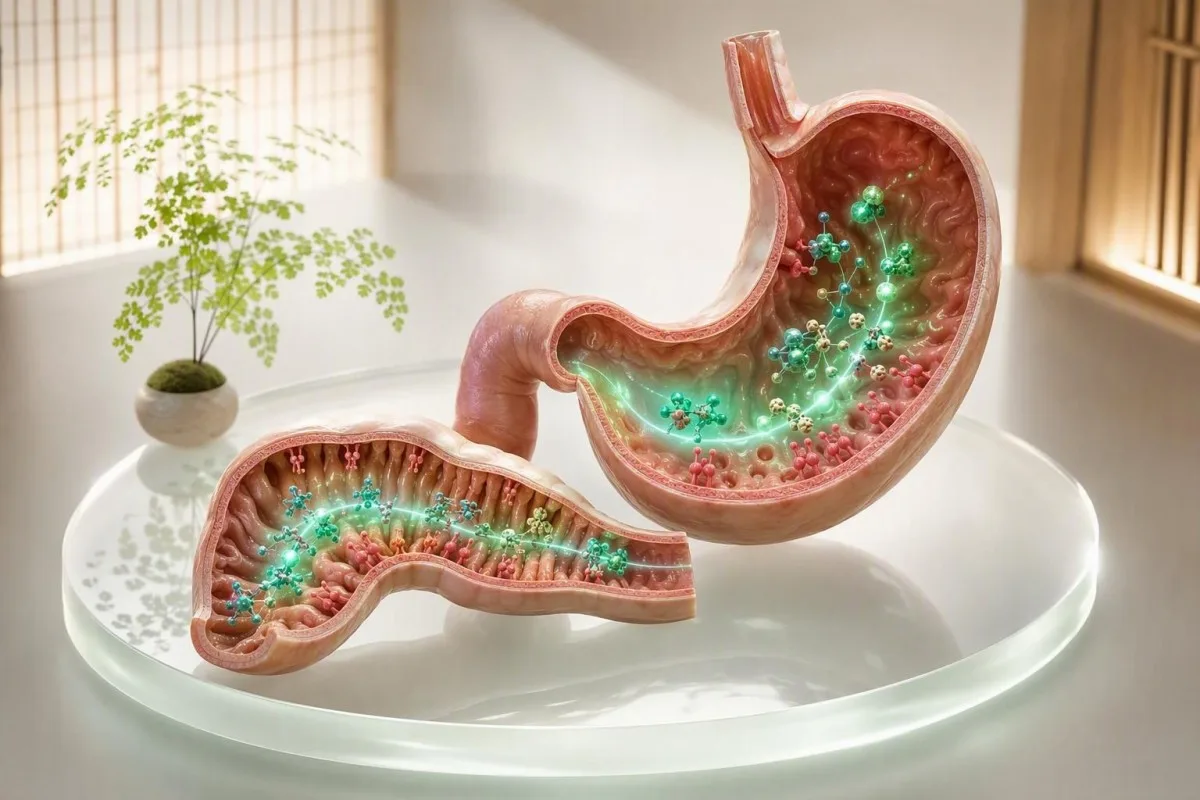
维生素B12含量高的食物:来源、吸收和每日需求

类别
文章
Nutrition Medicine 实验室解读 2026年更新 面向患者的说明

Reliable vitamin B12 comes from animal foods or specifically fortified products; a nutritious diet cannot overcome every absorption problem. Here is how I help patients match food choices, symptoms, medicines, and laboratory results.

📖 ~11分钟 📅
📝 发表: 🩺 医学审阅: ✅ 基于证据
⚡ 快速概要 v1.0 —
  1. Daily B12 need is 2.4 mcg for most adults, 2.6 mcg in pregnancy, and 2.8 mcg while breastfeeding.
  2. Best food sources include clams, liver, fish, meat, dairy, eggs, and B12-fortified foods; unfortified plant foods are not reliable sources.
  3. 牛肝 provides about 70 mcg of B12 per 85 g cooked serving, while 250 mL of milk provides about 1.3 mcg.
  4. Absorption ceiling means intrinsic factor usually absorbs only about 1.5-2 mcg from a meal; roughly 1% of a large oral dose can still enter passively.
  5. 血清B12低于200 pg/mL (148 pmol/L) commonly supports deficiency, while 200-300 pg/mL often needs methylmalonic acid or active B12 context.
  6. Metformin and acid-suppressing medicines can lower B12 over time, especially when use continues for several years.
  7. 神经系统症状 such as numbness, gait change, memory problems, or loss of vibration sense require medical review even if anemia is absent.
  8. Food alone may not correct deficiency caused by pernicious anemia, gastric surgery, severe malabsorption, or significant neurologic symptoms.

Which foods provide the most reliable vitamin B12?

Foods high in B12 are almost exclusively animal foods and foods deliberately fortified with cobalamin. Clams, liver, fish, meat, milk, yoghurt, cheese, eggs, fortified breakfast cereal, and fortified plant drinks are dependable choices when the label confirms B12 content.

Foods high in B12 arranged around an anatomical illustration of vitamin B12 absorption
图1: Animal foods and fortified products provide the most dependable dietary B12.

Cooked clams can provide roughly 84 mcg per 85 g, and cooked beef liver about 70 mcg per 85 g; both exceed the adult requirement many times over. I still encourage variety rather than relying on liver frequently, because liver is also exceptionally high in preformed vitamin A and is not a casual daily food in pregnancy.

Fish is a practical middle ground: cooked trout provides about 5.4 mcg per 85 g, salmon about 2.6 mcg, and canned tuna roughly 2.5 mcg. A patient who dislikes shellfish can usually meet food needs with two servings of fish weekly plus dairy, eggs, or fortified foods; our B12 与叶酸指南中有覆盖。 explains why folate cannot substitute for cobalamin.

Kantesti 是一个 人工智能血液检测分析仪 that places a B12 result alongside mean corpuscular volume, haemoglobin, folate, kidney function, and medication context. That matters because a person eating fish twice weekly can still become deficient if the problem is intrinsic factor rather than intake.

How much B12 is in everyday foods?

A single serving of fish, meat, or dairy may provide part or all of the 2.4 mcg adult target, but amounts differ sharply by food and portion. Labels and food-composition tables are estimates, not a guarantee of what reaches circulation.

Measured portions of fish dairy eggs and fortified cereal for foods high in B12
图2: Common portions show why B12 intake varies widely across everyday meals.

A 250 mL cup of cow's milk supplies about 1.3 mcg, 170 g of plain yoghurt about 1.0 mcg, one large egg about 0.5 mcg, and 85 g of cooked lean beef about 2.4 微克. Dairy can therefore meaningfully support intake, although two eggs at breakfast do not usually meet the whole day's need.

I often see a misleading pattern in people who describe themselves as 'mostly vegetarian': occasional eggs and cheese may prevent severe depletion, yet their intake still fluctuates below target for months. This is one reason fatigue deserves a wider look that includes iron-rich food choices and not just a multivitamin.

Thomas Klein, MD, advises patients to record actual portions for 7 days before deciding that diet is adequate. A food diary revealing only 0.5-1.0 mcg daily is more clinically useful than the vague statement, 'I eat healthy.'

Very high source >10 mcg per serving Clams and liver can exceed daily needs several times over.
Strong source 2-10 mcg per serving Fish, meat, and some fortified foods can cover a daily target.
Supporting source 0.5-2 mcg per serving Milk, yoghurt, cheese, and eggs add up across the day.
Label-dependent source 0-100% daily value Plant products require confirmation that B12 was added.

Are B12-fortified foods enough for vegans?

B12-fortified foods can meet needs for vegans when eaten consistently in measured amounts, but unfortified plant foods cannot reliably do so. Seaweed, mushrooms, fermented foods, and nutritional yeast without an added B12 label are not dependable replacements.

Fortified plant drink cereal and nutritional yeast beside a laboratory B12 assay
图 3: Fortified foods work only when cobalamin has been intentionally added.

Many fortified plant drinks provide 0.4-1.0 mcg per 250 mL, while a fortified cereal portion may supply 1.0-6.0 mcg. Read the local label every time: products vary by country, recipe, and serving size, and 'contains vitamins' does not automatically mean it contains B12.

Cyanocobalamin is the most common fortificant because it remains stable through storage and cooking. The 2010 review by O'Leary and Samman in Nutrients describes why analogues found in some algae may resemble B12 chemically but do not reliably support human B12 status (O'Leary & Samman, 2010).

Kantesti 是一个 AI 血液检查解读平台 used to help readers put dietary pattern, B12, and related markers into one view. People following a plant-based diet should also consider a planned nutrient-gap blood test rather than waiting for tingling or exhaustion.

What are the daily B12 requirements by age and life stage?

Most adults need 2.4 mcg of vitamin B12 daily, while pregnancy requires 2.6 mcg and breastfeeding requires 2.8 mcg. These targets prevent deficiency in people with ordinary absorption; they are not treatment doses for established deficiency.

Life-stage nutrition display showing B12 food portions and maternal dietary planning
图 4: B12 requirements rise modestly during pregnancy and breastfeeding.

The United States Recommended Dietary Allowance is 0.4 mcg from birth to 6 months, 0.9 mcg at ages 1-3 years, 1.2 mcg at 4-8 years, 1.8 mcg at 9-13 years, 和 2.4 mcg from age 14 years. The UK adult reference nutrient intake is lower at 1.5 mcg daily, so international nutrition apps may display different targets without either being an error.

Older adults often need the same dietary amount but have a higher chance of food-bound B12 malabsorption from reduced stomach acid, gastritis, or medication. A normal appetite does not exclude this; our guide to B12 levels in children also shows why age-specific context matters.

B12 is stored in the liver, commonly at 2-5 mg, which is why depleted intake can take 2-5 years to become obvious. That delay is clinically inconvenient: symptoms may emerge long after a restrictive diet began.

How does B12 absorption work after you eat it?

B12 absorption requires stomach acid, pancreatic enzymes, and intrinsic factor from stomach cells before uptake in the final ileum. A problem at any one step can make a high-B12 diet insufficient.

Anatomical vitamin B12 absorption pathway through stomach pancreas and terminal ileum
图 5: Dietary B12 needs several digestive steps before intestinal uptake.

Food-bound B12 is released from protein in the stomach, first binds haptocorrin, then transfers to intrinsic factor in the small intestine. The intrinsic factor-B12 complex is absorbed in the terminal ileum through a receptor-mediated process; this is why disease or removal of that bowel segment has consequences.

Intrinsic factor absorption saturates at roughly 1.5-2 mcg per meal, while about 1% of a large oral dose can cross by passive diffusion. That small passive pathway explains why clinicians sometimes use 1,000-2,000 mcg oral treatment doses, not because anyone needs 1,000 times the dietary requirement.

For people with chronic diarrhoea, unexplained weight loss, or suspected coeliac disease, an intake calculation is not enough. Discussing the correct timing of a gluten challenge before testing can prevent a falsely reassuring work-up.

What blocks B12 absorption even with a good diet?

Pernicious anemia, stomach or bowel surgery, coeliac disease, Crohn's disease, long-term metformin, and acid suppression can reduce B12 absorption. In these settings, increasing fish or fortified cereal may slow decline but may not correct deficiency.

Clinical medication and digestive pathway scene illustrating barriers to B12 absorption
图 6: Medicines and gastrointestinal conditions can interrupt normal B12 absorption.

Autoimmune gastritis can destroy intrinsic-factor-producing stomach cells and cause 恶性贫血, an absorption disorder rather than a dietary failure. NICE guidance NG239, published in 2024, recommends considering anti-intrinsic factor antibody testing when autoimmune gastritis is suspected, although a negative result does not fully exclude it.

Metformin-associated low B12 is real but variable. In the Diabetes Prevention Program Outcomes Study, low or borderline-low B12 was more common with metformin than placebo after 5 years, and risk rose with longer exposure (Aroda et al., 2016); this is why 介绍了二甲双胍治疗后 should not focus on glucose alone.

A 63-year-old patient I reviewed ate salmon weekly and drank milk daily, yet had B12 of 156 pg/mL with numb toes after years of metformin and omeprazole. Food was not the missing step—absorption was.

Which blood tests clarify a possible B12 deficiency?

Serum B12 below 200 pg/mL, or 148 pmol/L, commonly supports deficiency, while 200-300 pg/mL is an indeterminate zone that benefits from confirmatory context. Methylmalonic acid, homocysteine, active B12, full blood count, and folate can resolve uncertainty.

Laboratory analysis setup for serum B12 methylmalonic acid and full blood count
图 7: B12 interpretation is stronger when serum results are paired with functional markers.

Methylmalonic acid usually rises when cellular B12 is inadequate; an MMA above 0.40 micromol/L is often considered elevated, although laboratory cutoffs differ. Kidney impairment can raise MMA independently, so an eGFR of 35 mL/min/1.73 m² changes the meaning of the same result.

Macrocytosis is a clue, not a requirement. An MCV above 100 fL may occur with B12 deficiency, but early deficiency can have normal MCV, and iron deficiency can partially mask cell enlargement; compare the result with our high MCV follow-up guide.

Kantesti 是一个 基于 AI 的血液检测分析工具 that reads B12 with MMA, MCV, RDW, creatinine, and longitudinal changes rather than applying a single cutoff. The diagnostic framework in Devalia et al. (2014) similarly supports using clinical features and second-line tests when serum B12 does not settle the question.

可能B12偏低 <200 pg/mL或<148 pmol/L Deficiency is likely, particularly with symptoms or raised MMA.
不确定的 B12 200-300 pg/mL Consider MMA, homocysteine, active B12, medication, and symptoms.
Typical laboratory range About 300-900 pg/mL Interpret with local assay range and the clinical picture.
Raised B12 >900 pg/mL Often supplements, but persistent unexplained elevation needs context.

Can B12 deficiency cause symptoms without anemia?

Yes, B12 deficiency can cause nerve and cognitive symptoms before haemoglobin falls or MCV rises. Tingling, burning feet, reduced balance, loss of vibration sense, low mood, and brain fog deserve assessment when they persist.

Educational nerve pathway illustration beside a full blood count result review
图 8: Neurologic B12 symptoms can occur before classic anemia appears.

A haemoglobin of 13.2 g/dL and MCV of 92 fL do not rule out functional B12 deficiency in a person with progressive paraesthesia. Neurologic recovery is less predictable when symptoms have been present for many months, which is why I do not advise waiting for overt anemia.

Folate can normalise the blood-count appearance while B12-related nerve injury continues. This is the clinical issue behind the warning about high-dose folic acid; see our explanation of high folate masking B12 for the practical detail.

Urgent same-day assessment is sensible for rapidly worsening walking difficulty, new confusion, marked weakness, or bowel and bladder changes. Those symptoms have several causes, but B12 should be part of a prompt differential diagnosis rather than a supplement experiment.

When can food correct low B12, and when is treatment needed?

Food can correct a marginal low intake in someone with intact absorption, but confirmed deficiency from malabsorption often needs high-dose oral treatment or injections. The choice depends on cause, severity, adherence, and neurologic findings—not simply the serum number.

Oral B12 tablets and fortified foods beside a clinician reviewing laboratory results
图 9: Treatment choice depends on absorption, severity, and neurologic symptoms.

For dietary insufficiency without severe symptoms, clinicians may use oral cyanocobalamin or methylcobalamin in doses such as 50-150 mcg daily for maintenance, with larger doses when correcting deficiency. Exact regimens vary across countries and should follow the treating clinician's protocol.

Pernicious anemia, total gastrectomy, major ileal disease, or substantial neurologic symptoms usually change the conversation. Our detailed comparison of B12 注射剂和片剂 explains why high-dose tablets may still work through passive absorption, while injections can be preferred when certainty or speed matters.

In my experience, a food-first plan is excellent prevention but poor rescue therapy for symptomatic malabsorption. Recheck timing should include symptoms and functional markers, not only a B12 result that rises quickly after an injection.

甲基化维生素B12是否比氰钴胺更好?

Methylcobalamin and cyanocobalamin can both correct B12 deficiency when dose and absorption are adequate; evidence does not show that methylated B12 is universally superior. Cyanocobalamin is stable, widely studied, and commonly used in fortified foods.

Molecular visualization of cyanocobalamin and methylcobalamin in a clinical laboratory setting
图 10: Different B12 forms ultimately support the same cobalamin-dependent pathways.

The body converts cobalamin into active coenzyme forms used by methionine synthase and methylmalonyl-CoA mutase. Marketing language around 'methylated' products often outruns comparative clinical evidence; absorption, dose, cost, and consistency are usually more decisive.

Hydroxocobalamin is commonly used by injection in several health systems because it remains in the body longer than cyanocobalamin. People with chronic kidney disease or unusual metabolic disorders need individual advice, because MMA and treatment selection can become more complicated.

For a practical comparison of product chemistry, dose logic, and lab follow-up, read methylated B12 versus cyanocobalamin. Do not stop prescribed injections because a supplement label promises a more 'natural' form.

What does a practical day of B12-rich eating look like?

A mixed diet can reach 2.4 mcg of B12 with ordinary meals, while a vegan pattern needs deliberate fortified-food scheduling or a supplement. The most reliable plan is one you can repeat through travel, busy weeks, and appetite changes.

Daily meal preparation with fish yoghurt eggs and B12-fortified plant foods
图 11: Simple meal combinations can meet B12 needs without relying on one food.

One omnivorous example is yoghurt at breakfast (1.0 mcg), an egg at lunch (0.5 mcg), and 85 g salmon at dinner (2.6 mcg). This provides roughly 4.1 mcg before allowing for food-table variation, while spreading intake across meals is comfortable for most people.

A fortified vegan example might use a plant drink providing 1.0 mcg, cereal providing 1.5 mcg, and fortified nutritional yeast providing 1.0 mcg. The catch is consistency: changing brands can abruptly remove the nutrient, so retain a photo of the label in your health notes.

B12 belongs in the wider pattern of water-soluble nutrients, protein, iron, and energy intake. Our 水溶性维生素指南 helps prevent the common mistake of treating one vitamin as the whole explanation for fatigue.

Who should be especially alert to low B12?

Vegans, older adults, people taking metformin or long-term acid suppressants, patients after gastric or ileal surgery, and people with inflammatory bowel disease have higher B12-deficiency risk. Risk increases when more than one factor is present.

Clinical risk assessment with medication bottles dietary notes and B12 laboratory sample
图 12: Combined dietary, medication, and digestive risks deserve proactive B12 review.

Long-term proton-pump inhibitor use may reduce release of B12 from food protein by lowering gastric acidity. The association is not a reason to stop a prescribed medicine abruptly, but it is a reason to ask whether monitoring is appropriate after 2 years or more 持续使用之后,风险就变得更相关。.

People aged over 60岁之前 can develop food-cobalamin malabsorption even with a varied diet, sometimes alongside atrophic gastritis. A lower B12 level in this group is not automatically 'just age'; it can be a signal to investigate symptoms, medicines, and autoimmune history.

我们的 长期 PPI 监测指南 outlines associated laboratory discussions, including magnesium and iron. Combining low B12 with unexplained iron deficiency can point clinicians toward a gastric cause rather than two unrelated dietary gaps.

When should B12 levels be retested after changing diet or treatment?

Retesting often occurs 8-12 weeks after a dietary or oral-treatment change, while symptom severity and treatment method may justify earlier clinical review. A serum B12 result can rise rapidly after supplementation and may not prove tissue recovery by itself.

Timeline-style laboratory workflow showing repeated B12 sample analysis and trend review
图 13: B12 follow-up should examine trends, symptoms, and functional markers together.

A full blood count may show a reticulocyte response within about 1周 after effective treatment for megaloblastic anemia, while haemoglobin usually improves over several weeks. Nerve symptoms commonly recover more slowly and sometimes incompletely, especially after prolonged deficiency.

Stop-and-start supplementation can make serum B12 look normal on the day of testing while MMA, symptoms, or macrocytosis remain concerning. This is one reason to tell the clinician exactly what you took, the dose, and the last dose date before interpreting results.

Kantesti AI can compare B12, MCV, haemoglobin, RDW, folate, and creatinine across several reports to identify whether a change is clinically meaningful. For readers learning this skill, our 血液检测趋势分析指南 explains why one isolated result is rarely the whole story.

What B12 misconceptions can delay proper care?

The biggest B12 misconception is that eating more animal food will fix every low result. Diet helps intake, but it cannot restore intrinsic factor, reverse bowel disease, or safely replace evaluation of neurologic symptoms.

Clinical comparison of B12-rich foods supplements and diagnostic laboratory interpretation
图 14: Food, supplements, symptoms, and laboratory evidence must be interpreted together.

Another myth is that a high serum B12 result always means excellent status. A result above 900 pg/mL commonly reflects supplements or injections, but persistent unexplained elevation can also occur with liver disease, kidney disease, or some hematologic conditions; context matters more than panic.

As of September 1, 2026, I would also caution against using energy improvement after one tablet as diagnostic proof. Placebo effects, sleep, iron status, thyroid disease, depression, and glucose changes can all alter energy over 1-4 周 without confirming B12 deficiency.

Kantesti's clinical content is reviewed with support from our 医疗顾问委员会, but an AI interpretation never replaces examination for progressing neurologic symptoms. Readers can review our 临床验证方法 to understand how we frame follow-up prompts rather than make a diagnosis.

What are the safest next steps if you suspect low B12?

If you have persistent numbness, balance problems, cognitive change, unexplained macrocytosis, or a B12 result below 200 pg/mL, arrange medical review rather than relying on food alone. Early treatment is particularly relevant when nerves may be involved.

Patient reviewing B12 laboratory report with clinician in a calm modern clinical setting
图 15: A low B12 result should guide a cause-focused clinical follow-up plan.

Bring a list of medicines, supplements, diet pattern, digestive diagnoses, surgeries, alcohol intake, and previous laboratory reports. A clinician can then decide whether to repeat B12, order MMA or homocysteine, check folate and full blood count, or investigate pernicious anemia and malabsorption.

Thomas Klein, MD, recommends avoiding high-dose folic acid as a self-treatment for unexplained macrocytosis until B12 has been reasonably assessed. If you have no red flags and dietary intake is clearly low, a measured food or supplement plan with a repeat result in 复查。 is often sensible.

Kantesti connects lab-report trends to understandable questions for your appointment, while keeping the final diagnostic decision with your clinician. Explore our 生物标志物参考指南 for the laboratory terms likely to appear alongside a B12 result.

常见问题

维生素 B12 含量最高的食物是什么?

蛤蜊和牛肝是维生素B12含量最高的食物之一。一份85克煮熟的蛤蜊可提供约84微克B12,而同样份量的牛肝可提供约70微克;两者都大大超过了成年人每日2.4微克的摄入目标。由于孕妇饮食中的维生素A含量很高,肝脏不应作为日常食物。对于日常膳食,鱼、肉、奶制品、鸡蛋和标有强化食品的食品是更实用的来源。.

仅靠食物摄入,纯素食者能获得足够的B12吗?

纯素食者只有在定期食用添加了 B12 并控制了摄入量的情况下,才能仅通过食物满足维生素 B12 的需求。未添加的蔬菜、蘑菇、海藻、丹贝和营养酵母不是可靠的 B12 来源,因为它们的可溶性钴含量不存在、不稳定或可能包含无效的类似物。许多强化植物饮料每 250 毫升提供 0.4-1.0 微克,但不同国家和品牌的配方各不相同。对于纯素食者来说,B12 补充剂通常是更简单、更可靠的保障措施。.

成人每天应摄入多少维生素B12?

根据美国推荐膳食摄入量,大多数成年人每天需要 2.4 微克维生素 B12。怀孕会使目标提高到每天 2.6 微克,哺乳期则提高到每天 2.8 微克。英国成年人参考营养摄入量为每天 1.5 微克,因此特定国家的营养标签可能有所不同。这些数值是正常吸收的预防目标,远低于用于治疗已诊断缺乏症的剂量。.

仅仅多吃肉和鸡蛋能治愈B12缺乏症吗?

Increasing meat, fish, dairy, eggs, or fortified foods may correct B12 deficiency caused only by low dietary intake, but it may not work when absorption is impaired. Pernicious anemia, coeliac disease, Crohn's disease, gastric surgery, ileal surgery, metformin, and long-term acid-suppressing treatment can reduce absorption despite a B12-rich diet. Serum B12 below 200 pg/mL or 148 pmol/L generally warrants clinical assessment of the cause. Neurologic symptoms such as numbness, poor balance, or cognitive change should not be managed with food alone.

What helps B12 absorption?

Vitamin B12 absorption depends on adequate stomach processing, pancreatic enzymes, intrinsic factor, and a functioning terminal ileum. Intrinsic factor actively absorbs only about 1.5-2 mcg of B12 from a meal, while roughly 1% of a large oral dose can enter through passive diffusion. Eating B12 with food is reasonable, but no specific food combination can overcome absent intrinsic factor or major ileal disease. High-dose oral B12 or injections may be needed when absorption is impaired.

What B12 level is considered low?

A serum vitamin B12 result below 200 pg/mL, equivalent to about 148 pmol/L, commonly supports B12 deficiency, although laboratories use different assay ranges. Results from 200-300 pg/mL are often considered borderline or indeterminate and may need methylmalonic acid, homocysteine, active B12, full blood count, folate, kidney function, and symptom context. Methylmalonic acid above about 0.40 micromol/L supports cellular B12 deficiency but can also rise with reduced kidney function. A normal haemoglobin or MCV does not reliably exclude early B12-related nerve symptoms.

立即获取AI驱动的血液检测分析

加入全球超过2,000,000名用户,他们信任Kantesti进行即时、准确的检验分析。上传你的血液检查结果,并在几秒内获得对15,000+生物标志物的全面解读。.

📚 参考研究论文

1

Klein, T., Mitchell, S., & Weber, H. (2026). 尿液检查中的尿胆原:2026年完整尿液分析指南. Kantesti AI医学研究。.

2

Klein, T., Mitchell, S., & Weber, H. (2026). 铁研究指南:总铁结合力、铁饱和度和结合能力. Kantesti AI医学研究。.

📖 外部医学参考资料

3

O'Leary F, Samman S (2010). 健康与疾病中的维生素B12.。 营养素。.

4

Devalia V et al. (2014). 钴胺素(维生素B12)和叶酸疾病的诊断与治疗指南.。 英国血液学杂志(British Journal of Haematology)。.

5

Aroda VR et al. (2016). Long-term metformin use and vitamin B12 deficiency in the Diabetes Prevention Program Outcomes Study.。 《临床内分泌学与代谢杂志》。.

200万+测试分析
127+国家
75+语言

⚕️ 医疗免责声明

E-E-A-T信任信号

经验

由医生主导的临床审阅:实验室解读工作流程。.

📋

专业知识

实验室医学重点:生物标志物在临床情境中的表现。.

👤

权威

由 Thomas Klein 博士撰写,并由 Sarah Mitchell 博士与 Hans Weber 教授审阅。.

🛡️

可信度

基于循证的解读,并提供清晰的后续路径以减少警报。.

🏢 Kantesti LTD 在英格兰和威尔士注册 · 公司编号:. 17090423 英国伦敦 · kantesti.net
blank
作者:Prof. Dr. Thomas Klein

Thomas Klein 博士是获得美国内科医学委员会认证的临床血液科医生,担任 Kantesti AI 的首席医疗官。凭借超过 15 年的实验室医学经验,并对借助 AI 进行血液检查结果解读抱有浓厚兴趣,他致力于将新技术与日常临床实践相连接。他的研究兴趣包括生物标志物分析、临床决策支持研究以及针对特定人群的参考范围优化。作为 CMO,他为平台的内部基准评估提供临床输入,并对 Kantesti 教育报告的医疗质量提供临床监督。.

发表回复

您的邮箱地址不会被公开。 必填项已用 * 标注
