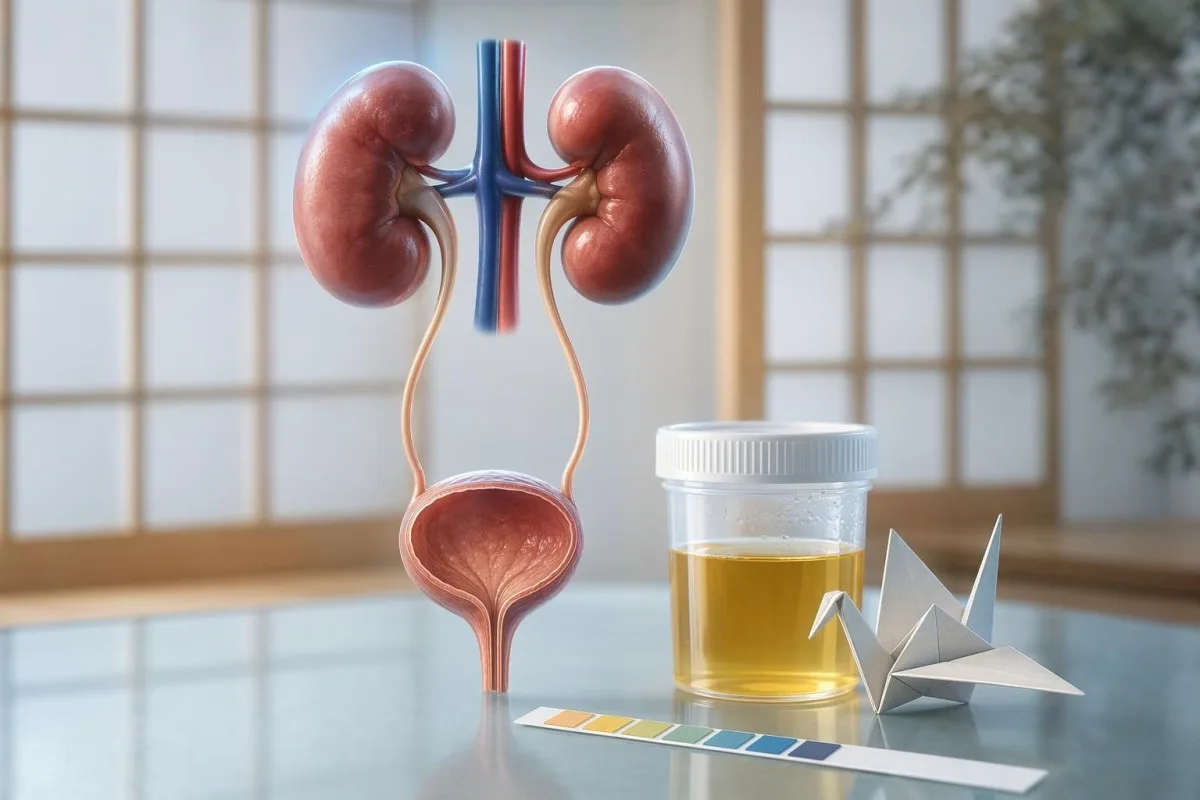
Urine pH is a context marker, not a diagnosis. The same pH of 8.0 can mean a plant-heavy diet, an old specimen, a urease-producing UTI, or a stone risk pattern depending on the rest of the urinalysis.


- Urine pH usually ranges from 4.5 to 8.0 in adults; many healthy morning samples sit around 5.5 to 6.5.
- Acidic urine below about 5.5 can reflect fasting, high animal-protein intake, dehydration, diarrhea, diabetes-related acid load, or uric acid stone risk.
- Alkaline urine above about 7.5 can follow a vegetarian diet, citrate therapy, vomiting, delayed testing, or urease-producing bacteria.
- UTI clues are stronger when alkaline urine appears with nitrite, leukocyte esterase, white cells, symptoms, or a positive culture.
- Kidney stone patterns differ by pH: uric acid stones prefer urine pH below 5.5, while struvite stones often occur in persistently alkaline urine.
- Dehydration can make urine pH look more acidic, but specific gravity above 1.020 gives the stronger hydration clue.
- Specimen timing matters because urine left standing for more than 2 hours may become more alkaline as urea breaks down.
- Urinalysis normal values must be read as clusters; pH alone rarely explains pain, fever, protein, blood, or glucose in urine.
What urine pH means in urinalysis results
Urine pH tells you how acidic or alkaline the urine was at the moment of testing, usually on a 4.5 to 8.0 scale. A single urine pH result does not diagnose a UTI, kidney stone, or kidney disease, but it can sharpen interpretation when you read it beside nitrites, leukocyte esterase, blood, protein, glucose, ketones, specific gravity, and symptoms.
The normal adult urine pH range is roughly 4.5 to 8.0, with many labs reporting 5.0 to 8.0 as their local reference interval. In my experience reviewing urinalysis results, a pH of 6.0 with otherwise normal findings is usually boring — and boring is good.
Kantesti is an AI blood test analyzer that also helps patients understand adjacent urine findings when kidney, glucose, hydration, or infection markers appear in the same report. We explain our clinical governance openly on About Us, because patients deserve to know who is interpreting their data.
A practical rule: urine pH is a clue about chemistry, not a verdict about disease. For a broader walkthrough of dipstick, microscopy, and urobilinogen patterns, our complete urinalysis guide gives the surrounding context that pH alone cannot provide.
Urinalysis normal values for pH and nearby markers
Urinalysis normal values for pH usually run from 4.5 to 8.0, but laboratories vary because reagent strips, reporting systems, and specimen handling differ. A pH of 5.0 can be normal in one person after overnight fasting, while a pH of 8.0 may be normal after a plant-heavy meal or abnormal if the sample also has nitrites and white cells.
Most dipstick pH pads estimate urine pH in half-unit or one-unit steps, so a reported pH of 6.5 is not as precise as a blood pH or arterial gas measurement. When I teach patients how to read urinalysis, I treat urine pH as a directional marker: acidic, neutral-ish, or alkaline.
Healthy kidneys acidify urine overnight because the body clears dietary acid and metabolic by-products while you are not drinking. That is why first-morning urine often lands around pH 5.5 to 6.5, even in people with perfectly normal kidney function.
A flag outside the reference range should be read like any other lab flag: ask what else moved with it. Our guide to what within normal limits means is useful here, because a normal pH does not cancel out abnormal blood, protein, or glucose.
How to read urinalysis when pH is abnormal
How to read urinalysis starts with pattern recognition: pH is interpreted after checking specimen freshness, specific gravity, protein, blood, glucose, ketones, leukocyte esterase, nitrites, and microscopy. A urine pH of 8.0 with nitrites and symptoms is different from pH 8.0 in an asymptomatic person whose sample sat on the counter for half a day.
For UTI screening, leukocyte esterase and nitrites usually carry more diagnostic weight than pH. Devillé et al. found in a 2004 BMC Urology meta-analysis that dipstick performance varies widely by setting, with negative nitrite and leukocyte esterase reducing but not eliminating UTI probability.
The pattern I worry about is alkaline urine plus leukocyte esterase, nitrite, white cells, and urinary symptoms such as burning or urgency. Our detailed article on leukocyte esterase explains why vaginal contamination, exercise, and some inflammatory conditions can confuse the picture.
Kantesti is an AI lab test interpretation service with physician-reviewed logic for separating isolated flags from clinically meaningful clusters. Our medical validation page describes the oversight process we use before a rule becomes part of patient-facing interpretation.
Acidic urine: diet, fasting, ketones and acid load
Acidic urine usually means the urine pH is below about 5.5, and the common benign causes are overnight fasting, dehydration, high animal-protein intake, and low-carbohydrate dieting. It becomes more clinically interesting when acidic pH appears with ketones, high specific gravity, uric acid crystals, diabetes markers, or recurrent stones.
A 42-year-old patient once messaged me in a panic about urine pH 5.0, but the same report showed ketones after a 20-hour fast and a specific gravity of 1.028. That was not a mysterious kidney problem; it was a predictable fasting-and-dehydration pattern.
Low-carbohydrate and ketogenic diets commonly push urine pH downward because ketone production and higher protein intake increase acid excretion. If you are changing diet and tracking labs, our low-carb lab guide covers the blood markers that should be watched alongside urine ketones and pH.
Persistently acidic urine below pH 5.5 matters in people with gout, insulin resistance, type 2 diabetes, or uric acid stones. Cameron et al. reported in the Journal of the American Society of Nephrology in 2006 that type 2 diabetes is associated with lower urine pH, which helps explain higher uric acid stone risk in that group.
Alkaline urine: diet, delayed testing and medication effects
Alkaline urine usually means a urine pH of 7.5 to 8.0, and it can be harmless when caused by a plant-heavy diet, potassium citrate, bicarbonate, or a sample tested late. It needs closer review when alkaline pH is persistent, very high, or paired with UTI markers, crystals, vomiting, or abnormal blood chemistry.
Plants generally add alkali after metabolism, while meats and cheeses add more acid load; the effect is measurable within days, not months. People moving toward legumes, vegetables, and fruit may see urine pH drift from 5.5 toward 6.5 or 7.0 without illness.
Specimen age is the under-discussed trap. Urine left unrefrigerated for more than 2 hours can become more alkaline as urea is converted to ammonia, so a pH of 8.0 from a late sample may say more about logistics than your kidneys.
Dietary interpretation should stay grounded in the whole person. If a plant-forward diet is new for you, our plant-based lab guide explains which blood markers — B12, ferritin, vitamin D, and lipids — often shift before symptoms appear.
How dehydration changes urine pH interpretation
Dehydration does not have one fixed urine pH pattern, but concentrated urine often looks darker, has a higher specific gravity, and may appear more acidic after fasting or sweating. Specific gravity above about 1.020 is usually a better hydration clue than pH, and values around 1.030 suggest very concentrated urine in many labs.
When a runner brings me urine pH 5.0 after a hot 18 km training session, I immediately look for specific gravity, ketones, and urine color before worrying about disease. A concentrated sample with specific gravity 1.027 and no protein or blood often improves after rehydration and rest.
Specific gravity is the quick dipstick estimate of urine concentration, while urine osmolality is the more quantitative laboratory measure in mOsm/kg. Our guides to urine specific gravity and urine osmolality explain why they can disagree after IV fluids, diuretics, or very high fluid intake.
Do not over-correct by forcing several litres of water before every urinalysis. Overhydration can dilute white cells, protein, and blood enough to soften a result that should have been visible, especially when symptoms are intermittent.
Kidney stone patterns: why urine pH changes the risk
Kidney stone risk depends partly on urine pH because different crystals form in different chemical conditions. Uric acid stones are favoured by persistently acidic urine below about 5.5, while struvite stones are linked to alkaline urine and urease-producing bacteria; calcium oxalate stones can occur across a broader pH range.
The European Association of Urology urolithiasis guideline recommends metabolic evaluation, including urine pH assessment, for recurrent or high-risk stone formers (Türk et al., 2024). In clinic, I become more suspicious when the same pH pattern repeats across multiple samples rather than appearing once after a diet change.
A pH below 5.5 can keep uric acid in a less soluble form, which is why alkalinisation therapy is sometimes used under medical supervision. A pH above 7.5, especially with recurrent UTIs, raises a different question: whether struvite or carbonate apatite stones are being promoted by bacterial urease activity.
Microscopy matters here. If your report mentions envelope-shaped crystals, dumbbell crystals, or calcium oxalate, our calcium oxalate guide explains when diet, hydration, citrate, oxalate intake, and kidney evaluation enter the conversation.
UTI clues: when alkaline urine is more suspicious
UTI clues are stronger when alkaline urine appears with nitrites, leukocyte esterase, white cells, bacteria on microscopy, and urinary symptoms. A pH of 8.0 alone is weak evidence, but pH 8.0 plus nitrite positivity and burning with urination deserves a culture in many real-world situations.
Some bacteria split urea into ammonia, which can raise urine pH and create the alkaline environment associated with struvite stones. Proteus species are the classic example clinicians remember, although culture — not pH — tells you the organism.
Nitrites are specific but not perfectly sensitive because some common urinary pathogens do not convert nitrate to nitrite, and the urine must sit in the bladder long enough for conversion. Our article on nitrites in urine covers why a negative nitrite result cannot rule out UTI in someone with clear symptoms.
Thomas Klein, MD, often tells patients this: symptoms change the meaning of the strip. The same alkaline urine result is less concerning in an asymptomatic person after a delayed sample and more concerning in someone with fever, flank pain, pregnancy, kidney disease, or visible blood.
Urinalysis versus urine culture for pH and UTI decisions
Urinalysis is a fast screening test, while urine culture identifies and quantifies bacteria over 24 to 72 hours. Urine pH can support suspicion, but culture is the test that names the organism and guides antibiotics when symptoms, pregnancy, recurrent infection, or complicated risk factors are present.
A clean-catch midstream sample reduces contamination, but it does not make the test perfect. Squamous epithelial cells on microscopy suggest the sample may include skin or genital tract contamination, which can muddy pH, leukocyte esterase, and bacterial findings.
Culture thresholds vary by context: 100,000 CFU/mL is the classic cutoff, but symptomatic women may have clinically meaningful infection at lower counts. Our guide comparing urinalysis and culture explains why the right test depends on symptoms, risk group, and prior antibiotics.
Mixed growth, no growth, and low colony counts all require nuance. If you already have a culture report, our urine culture results article explains organism names, colony counts, and why repeat collection sometimes beats guessing.
Diet, supplements and medicines that shift urine pH
Diet, supplements, and medicines can shift urine pH within days, sometimes within hours, so interpretation should include what changed recently. Potassium citrate and bicarbonate tend to alkalinise urine; vitamin C, high animal-protein intake, fasting, and ketogenic patterns may make urine more acidic in some people.
Potassium citrate is commonly used to raise urine citrate and pH in selected stone formers, but it is not a casual supplement for everyone. People with kidney impairment or medicines that raise potassium need medical supervision because high potassium can be dangerous even when urine chemistry looks better.
Vitamin C is trickier than many wellness articles admit. Doses above 1,000 mg/day can acidify urine in some people and may interfere with certain dipstick reactions, including glucose or blood pads depending on the strip chemistry.
If you are experimenting with supplements, record the dose and start date before interpreting pH. Our supplement tracking guide shows which blood tests are worth pairing with urine changes, especially creatinine, electrolytes, glucose, and liver enzymes.
Pregnancy, children and diabetes: special pH context
Pregnancy, childhood, and diabetes change the risk attached to a urine pH result because the consequences of missing glucose, ketones, protein, or infection are higher. In these groups, pH should be treated as a supporting clue while glucose, ketones, protein, culture decisions, and clinical symptoms drive action.
In pregnancy, UTI may be screened more actively because asymptomatic bacteriuria can lead to complications if untreated. A pH of 8.0 is not diagnostic, but alkaline urine plus nitrites or leukocytes should not be brushed off as diet without considering culture.
In children, urine pH varies with feeding, hydration, fever, vomiting, and specimen collection method. Bagged urine samples in infants are particularly prone to contamination, so a positive dipstick often needs confirmation from a better specimen before treatment decisions.
In diabetes, acidic urine with ketones changes the urgency, especially if blood glucose is high or the person feels unwell. Our guide to glucose in urine explains why urine glucose appears when blood glucose exceeds the kidney threshold, often around 180 mg/dL but variable by person.
Red flags when urine pH is not the main problem
Red flags in urinalysis are usually protein, blood, glucose, ketones, casts, very high specific gravity, positive nitrite with symptoms, or abnormal kidney blood tests — not pH by itself. Seek prompt medical advice if urine pH is abnormal alongside fever, flank pain, pregnancy, confusion, severe dehydration, or visible blood.
Protein of 1+ or higher deserves context, particularly if it repeats or appears with high blood pressure, swelling, or reduced eGFR. Our protein in urine guide explains why transient exercise protein differs from persistent albumin leak.
Blood on dipstick may reflect stones, infection, exercise, menstruation contamination, kidney inflammation, or less common urologic causes. If blood and protein appear together, I think more about kidney-source bleeding than when blood appears alone after a long run.
The urine albumin-to-creatinine ratio is more sensitive than routine dipstick for early diabetic or hypertensive kidney damage. For kidney-risk screening, our article on urine ACR explains why values above 30 mg/g, or 3 mg/mmol in many UK-style reports, matter.
How Kantesti connects urine pH with blood test patterns
Kantesti connects urine pH with blood chemistry by looking for matching patterns: creatinine and eGFR for kidney filtration, bicarbonate and electrolytes for acid-base clues, glucose and HbA1c for diabetes risk, and CRP or white cells for inflammation. This is where pH becomes more useful than a lonely dipstick number.
Kantesti is an AI biomarker interpretation platform used by people in more than 127 countries, and our neural network is trained to prioritise clinically coherent clusters over isolated flags. A urine pH of 5.0 with normal creatinine, normal bicarbonate, no ketones, and no symptoms is very different from pH 5.0 with ketones and high glucose.
Our technology guide explains how we parse lab units, reference intervals, and trend direction before generating a patient-facing explanation. That matters because bicarbonate may be reported as CO2 in mmol/L, creatinine may be in µmol/L or mg/dL, and eGFR equations differ by lab.
Kantesti also maps urine findings to the broader biomarkers guide so a kidney, metabolic, or infection clue is not left floating without context. As CMO, I would rather see a patient ask one focused follow-up question than leave with ten disconnected flags and a lot of anxiety.
A practical recheck plan before you worry
A practical recheck for an unexpected urine pH result is simple: repeat a fresh midstream sample, test it within 2 hours, avoid unusual supplements for 24 to 48 hours if medically safe, and compare pH with symptoms and the full urinalysis. Repeated extremes matter more than one odd strip result.
If you feel well and only pH is abnormal, I usually suggest a repeat rather than panic. Use a clean container, avoid heavy exercise immediately beforehand, note fasting duration, and write down recent vitamin C, citrate, bicarbonate, antibiotics, or major diet changes.
Call your clinician sooner if abnormal pH appears with burning, fever, flank pain, visible blood, pregnancy, vomiting, confusion, or diabetes with ketones. Thomas Klein, MD, tells patients that the safest interpretation is the one that respects symptoms first and numbers second.
Kantesti’s clinical content is reviewed with medical oversight, including input from our Medical Advisory Board. My bottom line: urine pH is a useful clue, but the full urinalysis and the person in front of us decide what it means.
Frequently Asked Questions
What is a normal urine pH result?
A normal urine pH result is usually about 4.5 to 8.0 in adults, with many healthy first-morning samples around 5.5 to 6.5. Some laboratories report 5.0 to 8.0 as their local reference range because dipstick methods vary. A single pH outside your usual pattern is less concerning than repeated values below 5.0 or above 8.0 with symptoms or other abnormal urinalysis findings.
Does alkaline urine mean I have a UTI?
Alkaline urine does not automatically mean you have a UTI. A urine pH of 7.5 to 8.0 can follow a plant-heavy diet, citrate therapy, vomiting, or delayed testing, but it becomes more suspicious when nitrites, leukocyte esterase, white cells, bacteria, burning, urgency, fever, or flank pain are present. Urine culture, usually taking 24 to 72 hours, is the test that identifies the organism and helps guide antibiotics.
What causes acidic urine pH?
Acidic urine pH, often below 5.5, can be caused by overnight fasting, dehydration, high animal-protein intake, ketogenic dieting, diarrhea, ketones, and some metabolic patterns seen in diabetes. It can also raise concern for uric acid stone risk when it repeats across several samples. The result should be read with specific gravity, ketones, glucose, uric acid history, and symptoms rather than judged alone.
Can dehydration change urine pH?
Dehydration can influence urine pH indirectly, but specific gravity is usually the better hydration marker. A specific gravity above about 1.020 suggests concentrated urine in many labs, and values near 1.030 are often very concentrated. Dehydrated urine may look more acidic after fasting or heavy sweating, but pH alone cannot measure hydration accurately.
Which urine pH is linked to kidney stones?
Different kidney stones prefer different urine pH conditions. Uric acid stones are favoured by persistently acidic urine, especially pH below about 5.5, while struvite stones are linked to alkaline urine, often above 7.5, in the setting of urease-producing bacteria. Calcium oxalate stones can occur across a wider pH range, so microscopy, imaging, 24-hour urine chemistry, and stone analysis matter.
How should I repeat a urine pH test?
Repeat a urine pH test with a fresh clean-catch midstream sample, ideally tested within 2 hours of collection. Avoid unusual diet changes, heavy exercise, and non-essential supplements for 24 to 48 hours before the repeat if your clinician says that is safe. Record fasting time, medications, hydration, symptoms, and whether the sample was refrigerated or delayed.
Is urine pH useful for reading urinalysis results?
Urine pH is useful when it is read as part of the whole urinalysis, not as a standalone diagnosis. It helps interpret UTI clues, stone risk, diet effects, dehydration context, and specimen handling problems. The highest-value interpretation comes from combining pH with nitrites, leukocyte esterase, protein, blood, glucose, ketones, specific gravity, microscopy, and symptoms.
Do I need to fast before a urine pH test?
No. Routine urinalysis usually does not require fasting, and fasting can lower urine pH or produce ketones, making results less representative. Unless your clinician gives different instructions, eat and drink normally and provide a fresh midstream sample.
Get AI-Powered Blood Test Analysis Today
Join over 2 million users worldwide who trust Kantesti for instant, accurate lab test analysis. Upload your blood test results and receive comprehensive interpretation of 15,000+ biomarkers in seconds.
📚 Referenced Research Publications
Klein, T., Mitchell, S., & Weber, H. (2026). A Pre-Registered, Rubric-Based Automated Technical Benchmark of the Kantesti Blood-Test Interpretation Engine on 100,000 Synthetic Test Cases. Kantesti AI Medical Research.
Klein, T., Mitchell, S., & Weber, H. (2026). Clinical Validation Framework v2.0 (Medical Validation Page). Kantesti AI Medical Research.
📖 External Medical References
Türk C et al. (2024). EAU Guidelines on Urolithiasis. European Association of Urology Guidelines.
⚕️ Medical Disclaimer
This article is for educational purposes only and does not constitute medical advice. Always consult a qualified healthcare provider for diagnosis and treatment decisions.
E-E-A-T Trust Signals
Experience
Physician-led clinical review of lab interpretation workflows.
Expertise
Laboratory medicine focus on how biomarkers behave in clinical context.
Authoritativeness
Written by Dr. Thomas Klein with review by Dr. Sarah Mitchell and Prof. Dr. Hans Weber.
Trustworthiness
Evidence-based interpretation with clear follow-up pathways to reduce alarm.