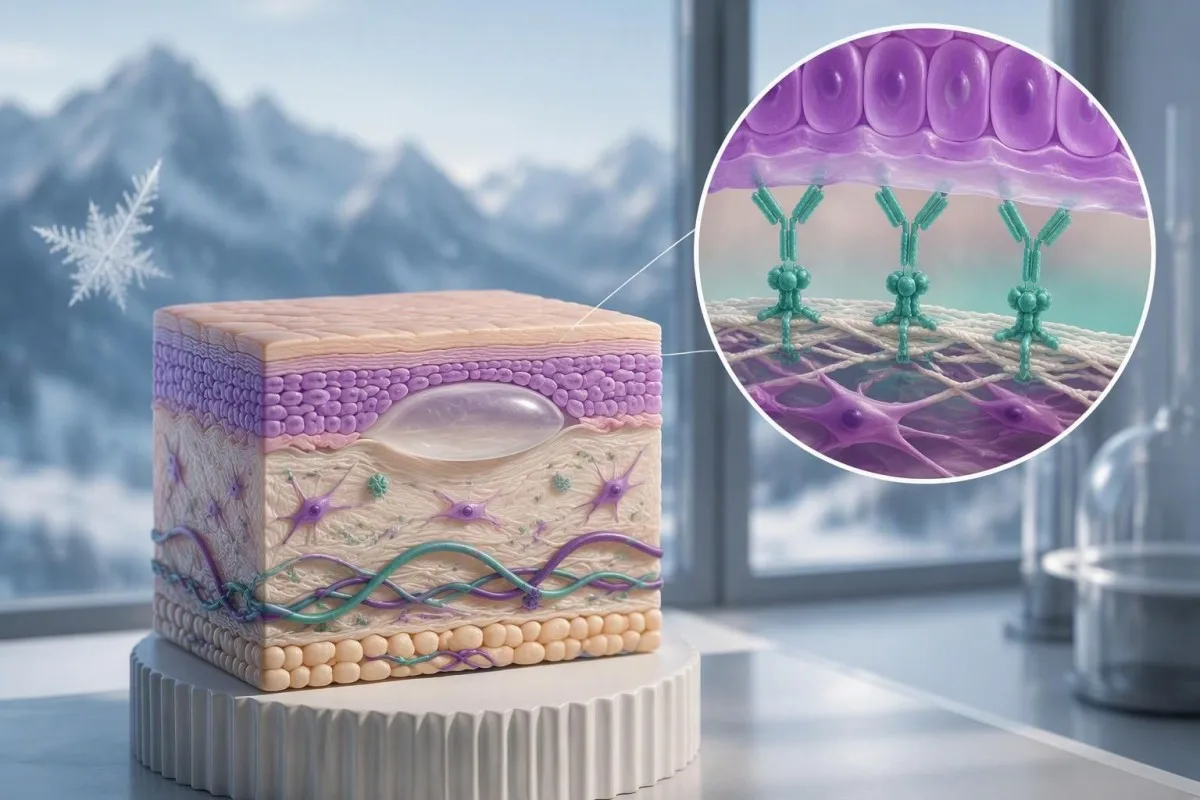
BP180 нәтиҗәсенең уңай булуы тиренең аутоиммун бозылуын күрсәтә, ләкин бу сан гына диагноз куярга мөмкинлек бирми. Алга таба нәрсә эшләнүе симптомнарга, кулланылган анализга һәм дөрес алынган тире үрнәкләренә бәйле.

Төп нәтиҗәләр
- BP180 антитәнчекләренә уңай нәтиҗә анализның BP180 максатына каршы антитәнчекләрне ачыклавын аңлата; бу үзе генә буллёз пемфигоид диагнозын расламый.
- Лаборатория чикләре төрле була: кайбер BP180 анализларында якынча 9 U/mL, ә башкаларында якынча 20 U/mL чик кулланыла. Үз лабораториягезнең белешмә интервалын карагыз.
- Аз гына уңай нәтиҗәләр кычыту, тимгелләр яки куыклар булмаганда, антитәнчекләрнең очраклы рәвештә ачыклануын яки анализның ялган-уңай нәтиҗәсен аңлатырга мөмкин — расланган тире авыруын түгел.
- Буллёз булмаган пемфигоид куыкларсыз да озакка сузылган кычыту китереп чыгарырга мөмкин; белгечләр үткәргән диагностик тикшеренүдә пемфигоид белән авырган 343 кешенең 74ендә буллёз булмаган төре булган.
- BP230 антитәнчекләре өстәмә дәлил бирә, ләкин BP230 антитәнчекләренең тискәре булуы буллёз пемфигоидны кире какмый.
- Туры иммунофлюоресценция тиредәге антитәнчекләр утырмаларын тикшерә; базаль мембрана буйлап сызыкча IgG һәм/яки C3 булуы пемфигоид авыруын күрсәтә.
- Тиредән ике үрнәк еш кына алына: гадәти микроскопия өчен зарарланган урыннан үрнәк һәм туры иммунофлюоресценция өчен якындагы, тиешенчә сайланган урыннан үрнәк.
- Ашыгыч симптомнар күз авыртуын, күрү үзгәрешләрен, йоту кыенлашуын, тире киң мәйданда үзгәргәндә бизгәкне яки тиз таралучы куыклануны үз эченә ала; антитәнчеккә тагын бер анализ нәтиҗәсен көтмәгез.
BP180 нәтиҗәсенең уңай булуы буллёз пемфигоид диагнозын раслыймы?
Юк — BP180 антитәнчегенең уңай нәтиҗәсе үзе генә буллез пемфигоид диагнозын расламый. Симптомнар һәм тире билгеләре туры килгәндә, ул диагнозны хуплый, ләкин куыклар булмаганда түбән дәрәҗәдәге уңай нәтиҗә очраклы булырга мөмкин; сәбәпне ачыклау өчен дерматологларга еш кына туры иммунофлюоресценция белән тире биопсиясе һәм кайвакыт өстәмә антитәнчек анализлары кирәк була.
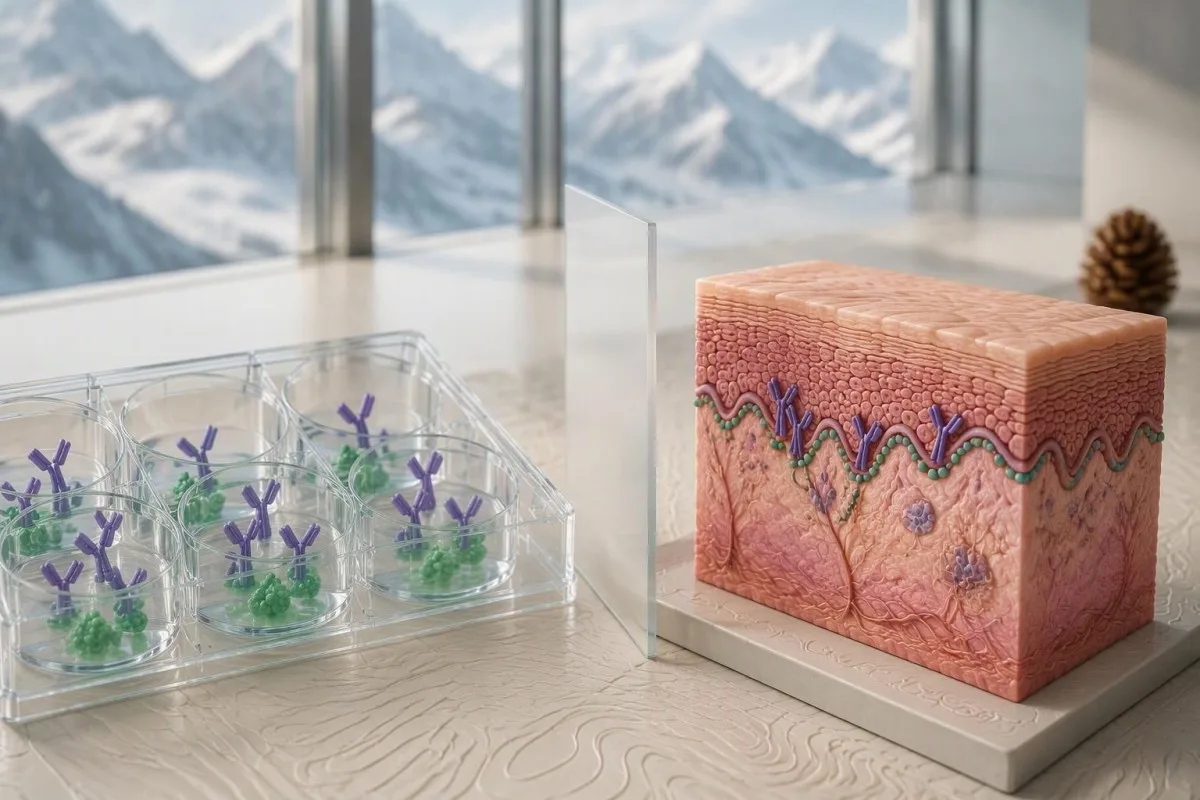
Буллез пемфигоид диагнозы клиник һәм иммунопатологик нәтиҗәләрнең туры килүен таләп итә, лабораториядә билгеләнгән бер генә күрсәткечне түгел. EADVның 2022 елгы күрсәтмәсе диагнозны клиник күренеш һәм тукымаларны, шулай ук әйләнештәге антитәнчекләрне тиешенчә тикшерү аша куюны тасвирлый (Borradori et al., 2022); гамәли яктан, ачыкланган антитәнчекләрнең кешенең тире халәтен аңлата алу-алмавы мөһим.
Антитәнчек анализының уңай булуы һәм актив аутоиммун авыру — төрле табылдыклар. Мәсәлән, фаразый нәтиҗә CA-125 бер лабораториядә уңай булырга мөмкин, ләкин бу нәтиҗә булган, симптомнары булмаган кешенең диагностик ихтималы киң таралган кычыта торган, киеренке куыклары булган һәм шул ук концентрацияле кешенекеннән аерылып тора.
Kantesti — лабораториянең чик бәясен һәм сез биргән мәгълүматны исәпкә алып, BP180 нәтиҗәләрен аңлатырга ярдәм итүче ЯИ кан анализаторы. Безнең аңлатма тирегезне тикшерә яки туры иммунофлюоресценция үткәрә алмый; безнең компания фоны бу белем бирү ярдәмен күрсәтүче оешманы билгели.
Нәтиҗәне даими авыру билгесе итеп түгел, ә төгәлрәк сорау бирү өчен сәбәп итеп карагыз. Безнең уңай антитела нәтиҗәләре турындагы белешмәлек антитәнчекләрне ачыклау, авыру активлыгы һәм диагнозны раслауның ни өчен өч аерым төшенчә булуын аңлата.
BP180 антитәнчекләренә анализ чынлыкта нәрсәне үлчи?
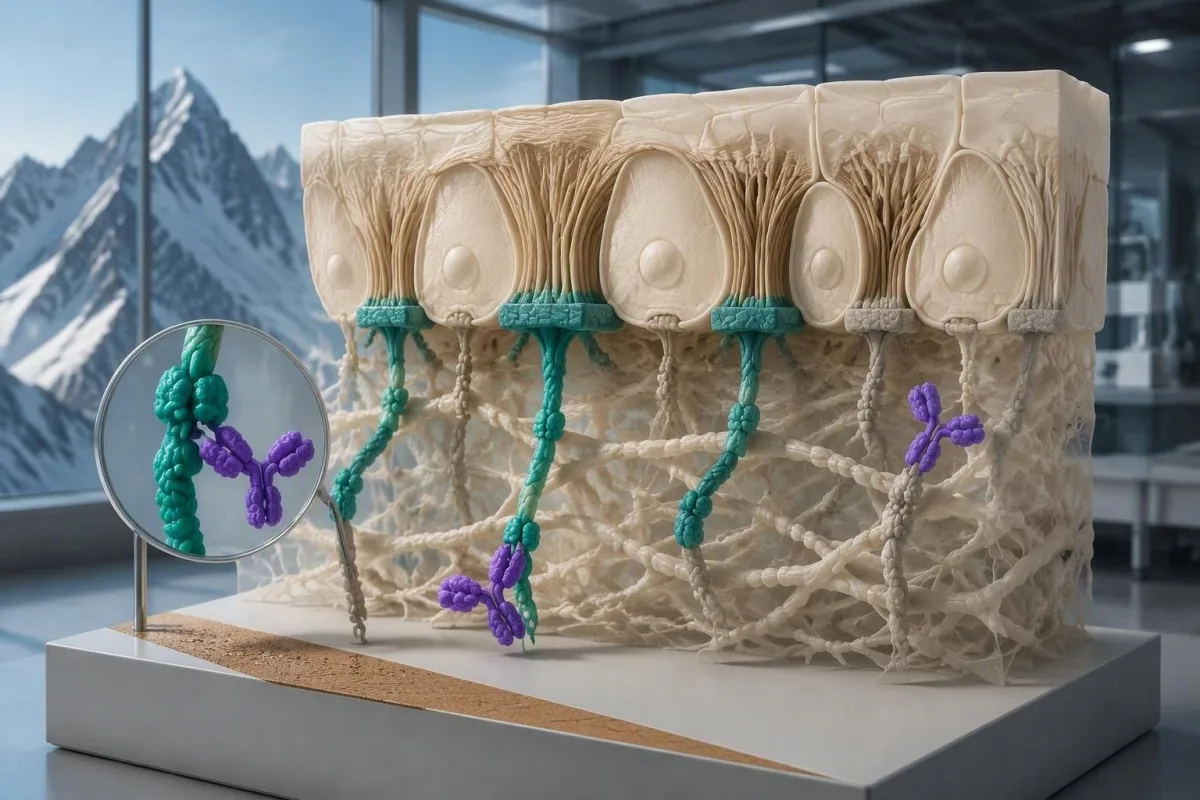
BP180 антитәнчегенә анализ гадәттә BP180нең, шулай ук XVII типтагы коллаген дип аталган аксымның бер өлешенә каршы юнәлгән кан сывороткасы IgGсын үлчи. BP180 — якынча 180-kDa эпидермисны астындагы тукымага беркетүдә катнашучы аксым; күпчелек стандарт анализлар бөтен аксымны түгел, аның NC16A өлкәсен тикшерә.
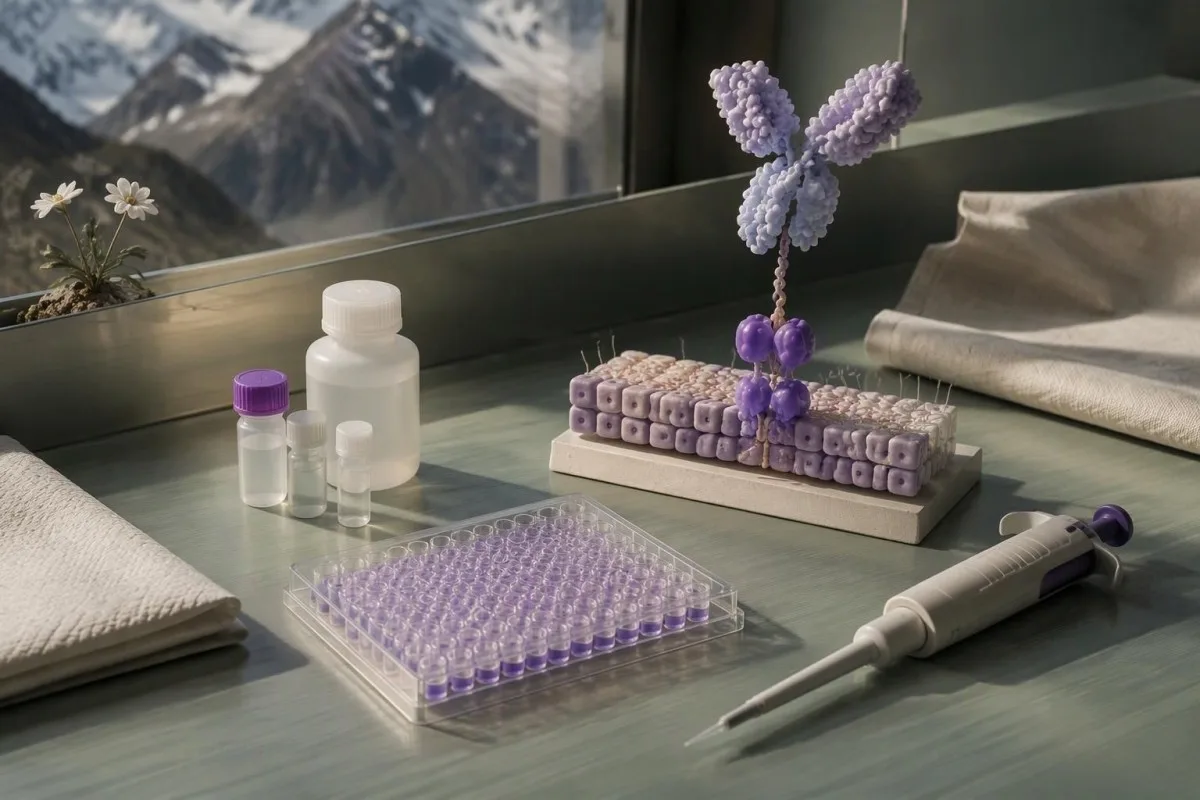
BP180 — тиренең структур аксымы, аның кандагы концентрациясе үлчәнми. Хисапта шул аксымга каршы антитәнчекләр күрсәтелә; моның өчен гадәттә фермент белән бәйләнгән иммуносорбент анализы, ягъни ELISA кулланыла; 30 U/mL дигән күрсәткеч 30 берәмлек тире аксымы кан әйләнешендә йөри дигәнне аңлатмый.
.Әр сүзнең NC16A домены BP180-нең күзәнәк мембранасының тышкы ягындагы өлешендә урнашкан һәм классик буллез пемфигоидта антитәнчекләр еш һөҗүм итә торган мишень булып тора. Бу өлешне тикшерү гамәли анализ үткәрергә мөмкинлек бирә, ләкин бер кимчелеге бар: нигездә башка өлешләргә каршы юнәлгән антитәнчекләр ачыкланмый калырга мөмкин.
Антитәнчекләрнең сан белән күрсәтелгән концентрациясен иммунофлюоресценция титры белән бер нәрсә дип карарга ярамый. Нәтиҗә түбәндәгечә күрсәтелсә 1:40 эретү дәрәҗәсендәге реактивлыкны тасвирлый, ә 40 U/mL анализга калибрланган концентрацияне тасвирлый; безнең санлы һәм сыйфат анализлары турындагы аңлатмабыз бу хисап форматларын аерырга ярдәм итә.
Хисапта түбәндәге тест күрсәтелгәнме-юкмы икәнен тикшерегез BP180 NC16A IgG, башка BP180 анализы яки киңрәк пемфигоид панеле. Болар үзеннән-үзе бертигез тестлар түгел, һәм тискәре IgG ELISA башка антитәнчек сыйныфлары яки базаль мембрананың башка мишеньнары турында барлык сорауларга да җавап бирми.
BP180 антитәнчекләре нәтиҗәсенең түбән дәрәҗәдә уңай булуы нәрсә санала?
BP180 нәтиҗәсенең түбән-позитив булуы — кулланылган конкрет анализның чигеннән чак кына югарырак булган кыйммәт. Түбән-позитив нәтиҗәнең универсаль диапазоны юк: кайбер лабораторияләр якынча 9 U/mL, чиген куллана, ә башкалары якынча 20 U/mL, чиген куллана; калибрлау һәм нәтиҗәләрне төркемләү дә төрле.
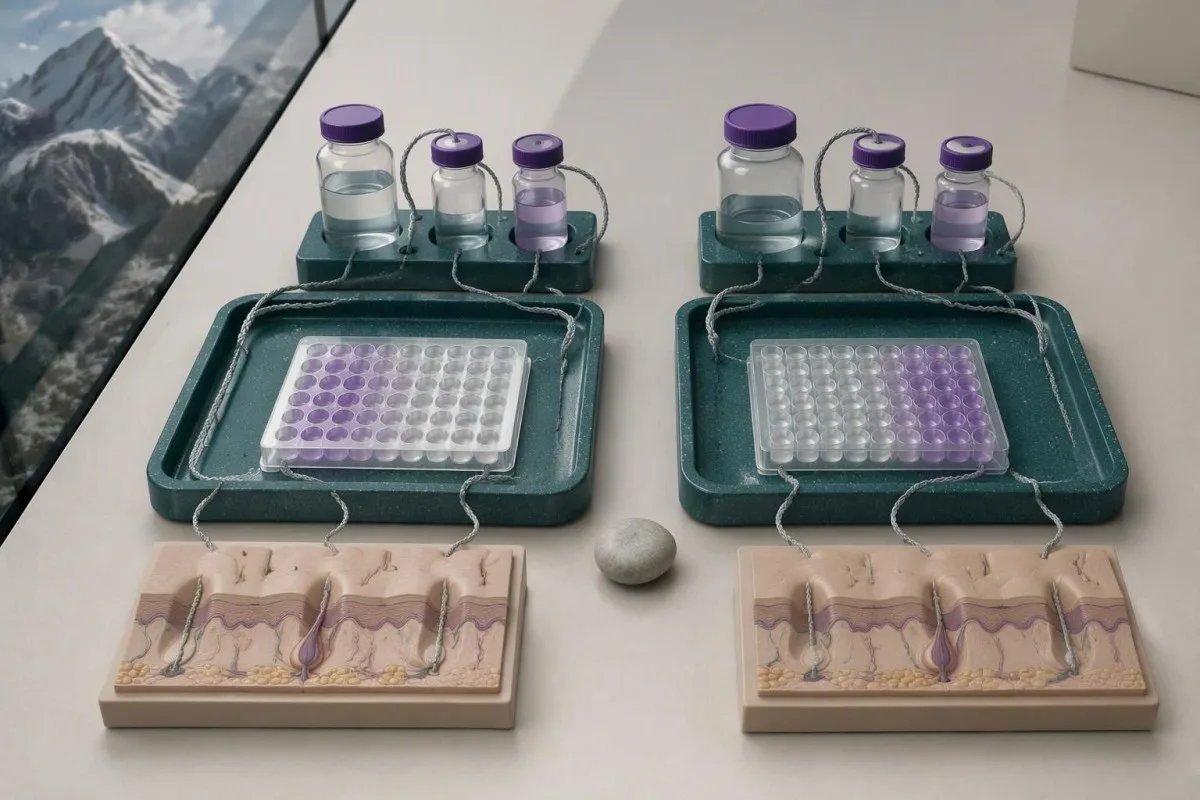
BP180 анализы берәмлекләре лабораторияләр арасында универсаль рәвештә стандартлаштырылмаган. Нәтиҗә 15 U/mL 9 U/mL чиген кулланган тәртип буенча уңай, ә 20 U/mL чиген кулланган тәртип буенча тискәре булырга мөмкин, ләкин бу икенче анализның авыруны ачыкламавын расламый; ысуллар һәм калибраторлар төрле булырга мөмкин.
Чикләр анализны бәяләү өчен кулланылган төркемнәрдә сизгерлек белән спецификлык арасындагы нисбәтне исәпкә алып билгеләнә. Чикне түбәнәйтү авыруы булган күбрәк кешене ачыкларга мөмкин, шул ук вакытта авыруы булмаган күбрәк кешедә дә уңай нәтиҗә күрсәтергә мөмкин; чик — лабораториянең карар кабул итү бусагасы, тиренең кинәттән куыклана башлаган биологик ноктасы түгел.
Kantesti AI хәбәр ителгән BP180 кыйммәтен аның белән бирелгән белешмә диапазоны белән чагыштырырга ярдәм итә ала, ләкин бары тик 18 U/mL күрсәтелгән киселгән сурәттә мөһим мәгълүмат җитми. Тест исемен, берәмлекләрне, нәтиҗәләрне аңлату категорияләрен һәм лаборатория аңлатмаларын кертегез; гомуми диапазоннан читкә чыккан билгесен бу мәгълүматларны алыштыра алмый.
Түбәндәге мисаллар универсаль авырлык шкаласын түгел, ә хисап бирүнең ике мөмкин булган сәясәтен күрсәтә. BP180 антителосының концентрациясе генә медицина ашыгыч очрагын билгеләми; тиренең киң мәйданда зарарлануы, сусызлану, системалы авыру һәм күз яки сулыш юллары симптомнары ашыгычлыкны билгели.
| Дәрәҗә | Диапазон | Мәгънәсе |
|---|---|---|
| A анализы мисалы: чик күрсәткеченнән түбән | <9 U/mL | Бу мисал итеп алынган лаборатория сәясәте буенча тискәре; клиник шик югары булып калса, авыру булуы инкарь ителми. |
| A анализы мисалы: чик күрсәткеченә тигез яки аннан югары | ≥9 U/mL | Бу сәясәт буенча уңай; чик күрсәткеченә якын булу һәм клиник билгеләр нәтиҗәне аңлатуга йогынты ясый. |
| B анализы мисалы: чик күрсәткеченнән түбән | <20 U/mL | Башка бер мисал итеп алынган сәясәт буенча тискәре; анализ системалары арасындагы күрсәткечләрне турыдан-туры күчермәгез. |
| B анализы мисалы: чик күрсәткеченә тигез яки аннан югары | ≥20 U/mL | Бу сәясәт буенча уңай; санның үзе генә диагнозны яки авырлык дәрәҗәсен билгеләми. |
Ни өчен BP180 нәтиҗәсенең уңай булуы ялгыш фикергә китерергә мөмкин?
Тест үткәрелгәнче кешедә пемфигоид булу ихтималы клиник яктан түбән булса, уңай BP180 нәтиҗәсе азрак ышандыра. Чагыштырмача төгәл анализ да ялган-уңай нәтиҗәләр бирә, шуңа күрә нәтиҗәнең мәгънәсе симптомнары булмаган скрининг төркемендә һәм характерлы куыкларны бәяләүче белгечләр клиникасында төрлечә була.
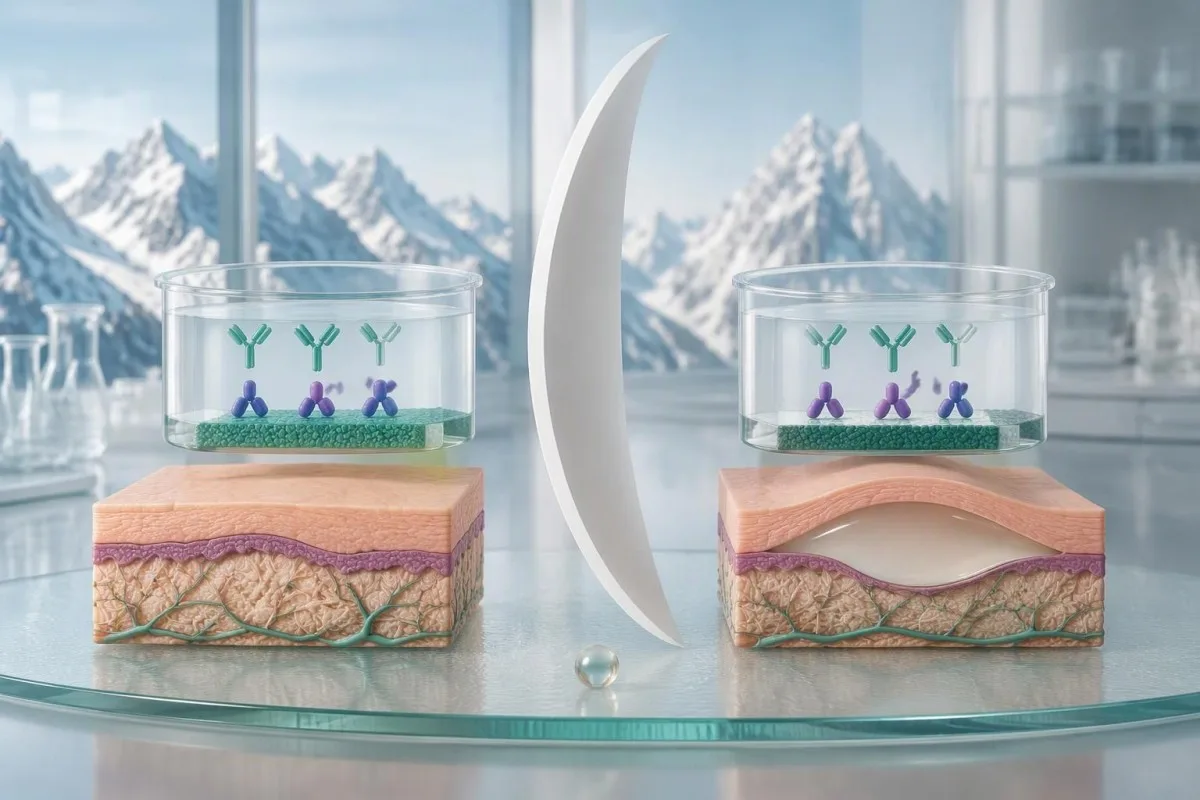
Сизгерлек һәм спецификлык уңай нәтиҗәдән соң сездә авыру булу ихтималына тиң түгел. Бу ихтимал шулай ук тикшерелгән төркемдә бу хәлнең ни дәрәҗәдә еш очравына бәйле; антителолар панеле билгеле бер тире күренешен тикшерү өчен түгел, ә киң колач белән билгеләнгән очракта, бу аерма аеруча мөһим.
Ачыктан-ачык фаразый анализны карап чыгыйк: 90% сизгерлек һәм 95% спецификлык, авыру ихтималы 1% булган 1,000 кешедә кулланылган очракта. Ул якынча 9 чын уңай һәм 50 ялган уңай нәтиҗәне ачыклар иде, уңай фаразлаучы кыйммәт якынча 15% булыр иде; болар — өйрәтү максатындагы фаразлар, сезнең BP180 анализы күрсәткечләре турында белдерүләр түгел.
Шул ук фаразый анализны авыру ихтималы булган очракта кулланыгыз: 20%, and approximately 180 true positives and 40 false positives would occur per 1,000 tests. The positive predictive value becomes about 82%—a large change caused by clinical context, not by a different laboratory method.
These examples explain why a dermatologist may request tissue testing despite a positive result, or take characteristic symptoms seriously despite a negative one. Our discussion of MOG антитәнчекләрен аңлату illustrates the same probability principle in another autoimmune condition, although its diagnostic criteria cannot be transferred to pemphigoid.
BP180 уңай, ләкин сездә куыклар булмаса, нишләргә?
A low-positive BP180 result without blisters does not establish bullous pemphigoid or reliably predict future blistering. The next distinction is whether you have no skin symptoms at all, or persistent itching and an unexplained rash that could represent a nonbullous pemphigoid presentation.
Incidental BP180 antibody detection can occur without clinically established pemphigoid. Possible explanations include low-level autoreactivity and assay-related false positivity; there is no validated conversion rule that turns an isolated result of 11 U/mL into a percentage risk of developing blisters later.
A hypothetical person with 11 U/mL, no itching, no rash, and no mucosal symptoms usually needs a contextual review rather than automatic immunosuppressive treatment. The clinician should check why the assay was ordered, whether the result was unexpected, and whether a skin examination reveals findings the person had not recognized.
Persistent dryness and itching still deserve assessment because common explanations remain common. Eczema, medication effects, thyroid disease, and other causes may be more likely than pemphigoid; our dry skin testing guide explains why additional blood tests should follow symptoms rather than a blanket panel.
Бер no universal repeat-testing interval for an asymptomatic low-positive BP180 result. A clinician may choose observation, a repeat using the same method, or specialist review depending on the history; new persistent itching, urticarial plaques, or blisters should change that plan rather than waiting for a scheduled repeat.
Буллёз пемфигоид кычыту белән генә башланырга мөмкинме?
Pemphigoid can present with persistent itching, eczema-like patches, urticarial plaques, or scratch-related changes without visible blisters. In a specialist diagnostic study, 74 of 343 pemphigoid cases—21.6%—were nonbullous, showing that the absence of blisters cannot independently exclude the disorder (Meijer et al., 2019).
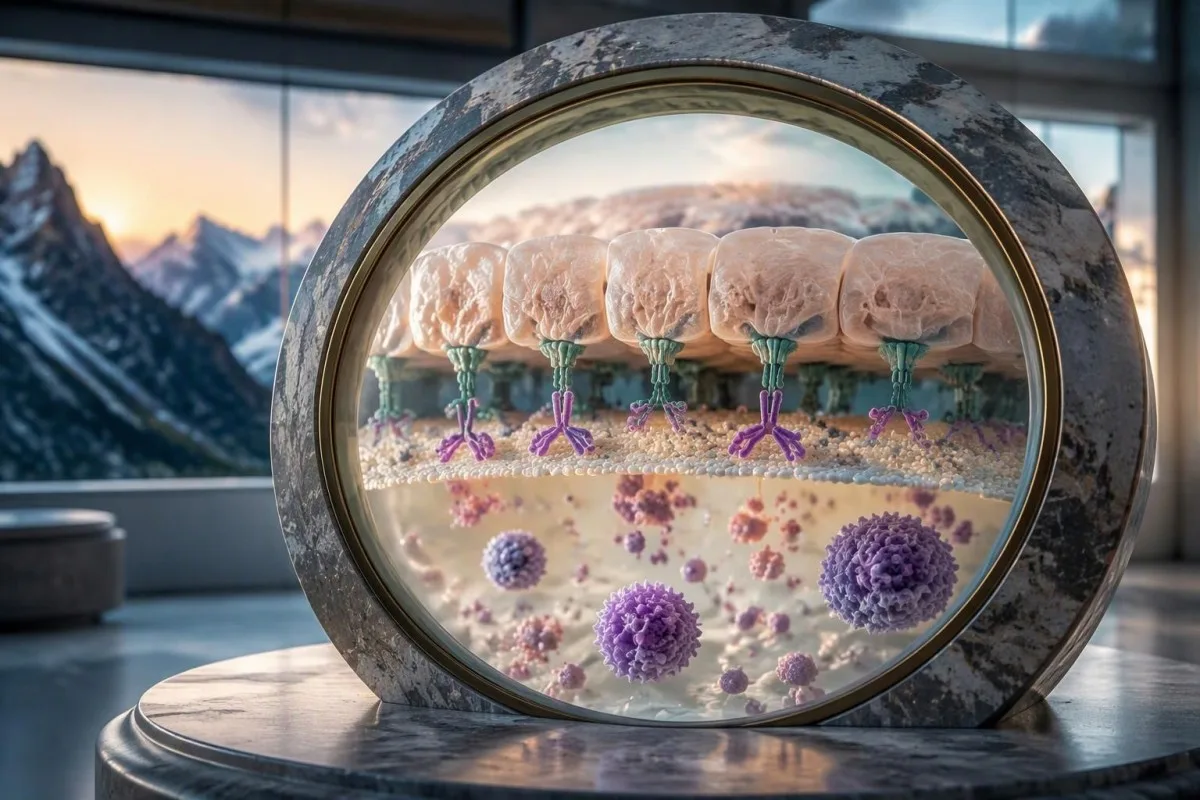
Nonbullous pemphigoid is not simply every itchy rash with a positive BP180 result. Diagnosis still needs compatible symptoms and appropriate immunopathological evidence; the 21.6% study figure came from a referred population and should not be interpreted as the probability that any person with itching has pemphigoid.
The symptom pattern often matters more than whether one small blister has appeared. Persistent, widespread itching in an older adult, especially with recurrent raised plaques or poor response to ordinary eczema care, warrants a dermatological assessment; our itchy skin laboratory guide separates skin-directed testing from tests for systemic causes.
Eosinophilia can accompany bullous pemphigoid, but it is neither required nor diagnostic. An absolute eosinophil count above approximately 0.5 × 10^9/л is often flagged in adults, yet allergy, medications, and parasites can produce the same finding; our guide to югары эозинофиллар саны explains those alternatives.
A dermatologist does not always need to wait for a blister before collecting a useful sample for direct immunofluorescence. In nonbullous disease, sample selection is tailored to the available rash and laboratory protocol; document the distribution and duration of itching, because a disappearing rash can make later assessment harder.
BP230 антитәнчекләре BP180 анализын ничек тулыландыра?
BP230 antibodies provide complementary evidence for pemphigoid but cannot confirm or exclude bullous pemphigoid alone. BP230 is an approximately 230-kDa intracellular anchoring protein, whereas BP180 crosses the cell membrane; their different locations and antibody targets help explain why the two results can disagree.
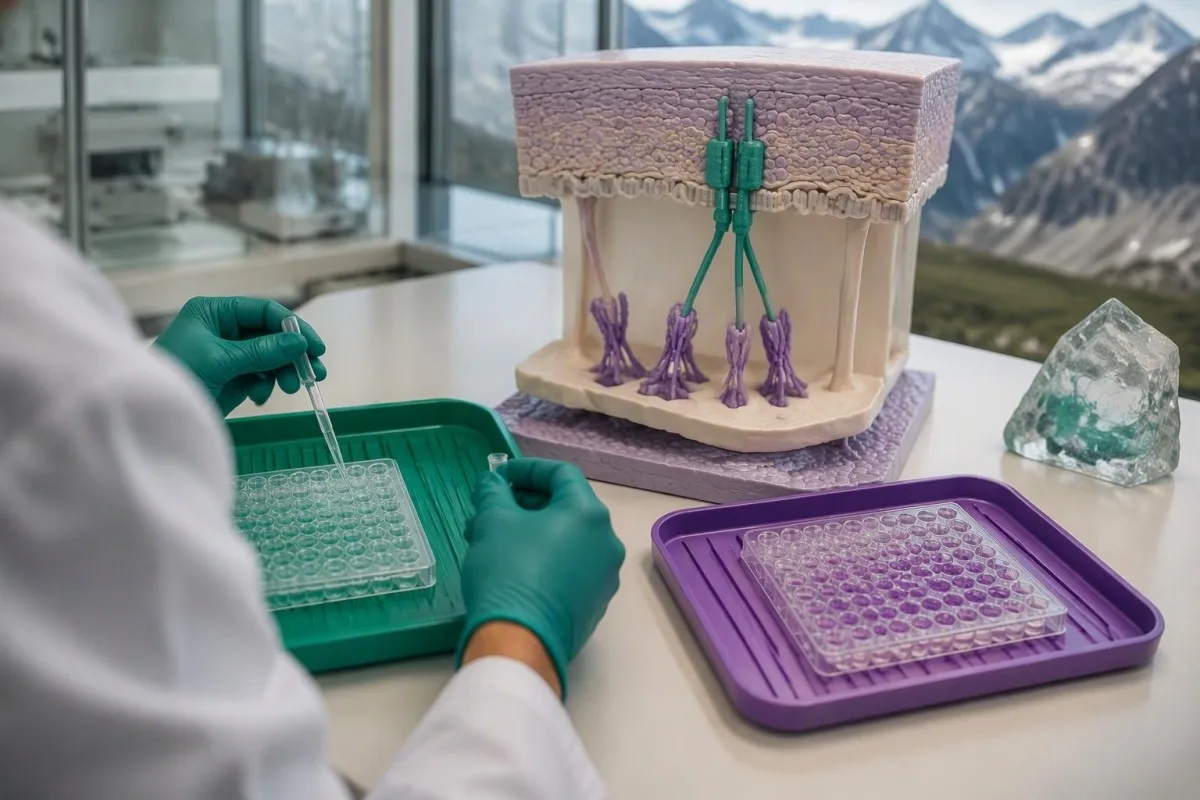
A negative BP230 antibody result does not cancel a positive BP180 result. Some people with confirmed pemphigoid have antibodies detectable against only one tested antigen, and each assay has its own sensitivity; interpreting the pair as a two-test pass-or-fail rule creates avoidable diagnostic errors.
Шартлы бер кеше BP180 result of 45 U/mL with negative BP230 antibodies still warrants assessment if tense blisters and severe itching are present. Conversely, isolated low-positive BP230 antibodies without compatible findings are not enough to diagnose pemphigoid; a second positive marker strengthens a pattern only when the overall evidence fits.
Kantesti is an AI biomarker interpretation platform that can explain BP180 and BP230 antibodies as complementary findings rather than interchangeable scores. This is similar to the reasoning used for antibody panels in connective disease, but skin-specific tissue findings remain central to pemphigoid assessment.
Do not add BP180 and BP230 concentrations together, even if both are expressed in U/mL. They represent different antigen-specific measurements with different calibration systems; BP180 levels generally have a better-established relationship with disease activity than BP230 levels, but neither replaces examination.
Ни өчен туры иммунофлюоресценция белән тире биопсиясе кирәк булырга мөмкин?
Skin biopsy with direct immunofluorescence can show whether antibodies or complement are deposited at the skin's basement membrane. Dermatologists often collect two separate specimens because routine microscopy and direct immunofluorescence answer different questions and require different sample handling.
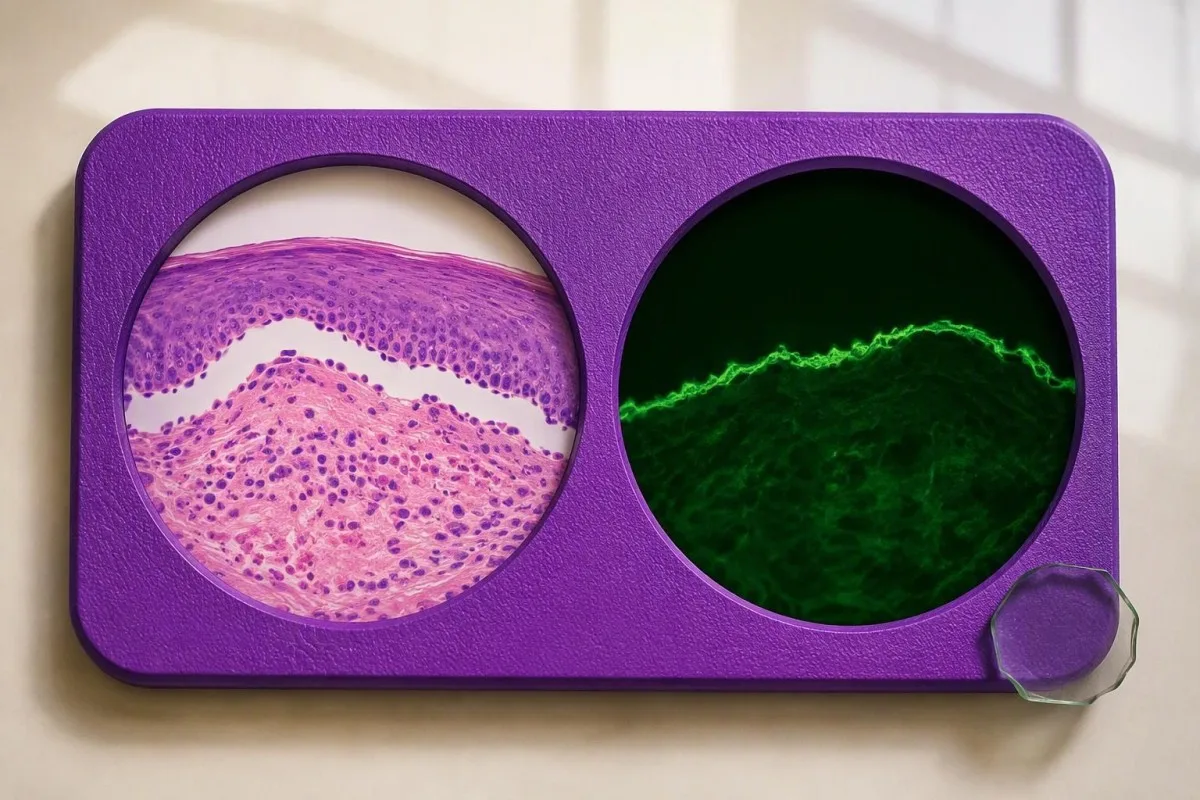
Routine histology examines tissue structure and inflammatory cells. A sample from a fresh blister or suitable affected area may show separation beneath the epidermis and eosinophils, but these features are not unique to bullous pemphigoid; the second sample looks for the immune-deposit pattern that helps classify the disorder.
For classic blistering presentations, the direct-immunofluorescence sample is commonly taken from appropriately selected skin near a fresh blister rather than its eroded center. A small 3–4-mm punch is often used, although technique and location depend on the case; sampling heavily damaged tissue can remove the structures the laboratory needs to examine.
The specimen for direct immunofluorescence must not be routinely placed in formalin. Laboratories generally require a dedicated transport medium or another explicitly agreed handling method, while the routine histology specimen commonly goes into formalin; ask whether the two containers have been prepared for their separate purposes.
In Meijer et al.'s 2019 diagnostic cohort, direct immunofluorescence had a sensitivity of 88.3%, so even this valuable test was not infallible. Kantesti's клиник валидация турында мәгълүматлары concerns our interpretation methodology—not a claim that AI can reproduce skin immunofluorescence or establish its findings.
Уңай иммунофлюоресценция һәм тозлы эремәдә бүленү тестлары нәрсәне аңлата?
Linear IgG and/or C3 along the basement membrane on direct immunofluorescence supports a pemphigoid-spectrum disorder, but the pattern is not unique to bullous pemphigoid. Indirect immunofluorescence on salt-split skin can add evidence by showing where circulating antibodies bind relative to an experimentally created tissue separation.
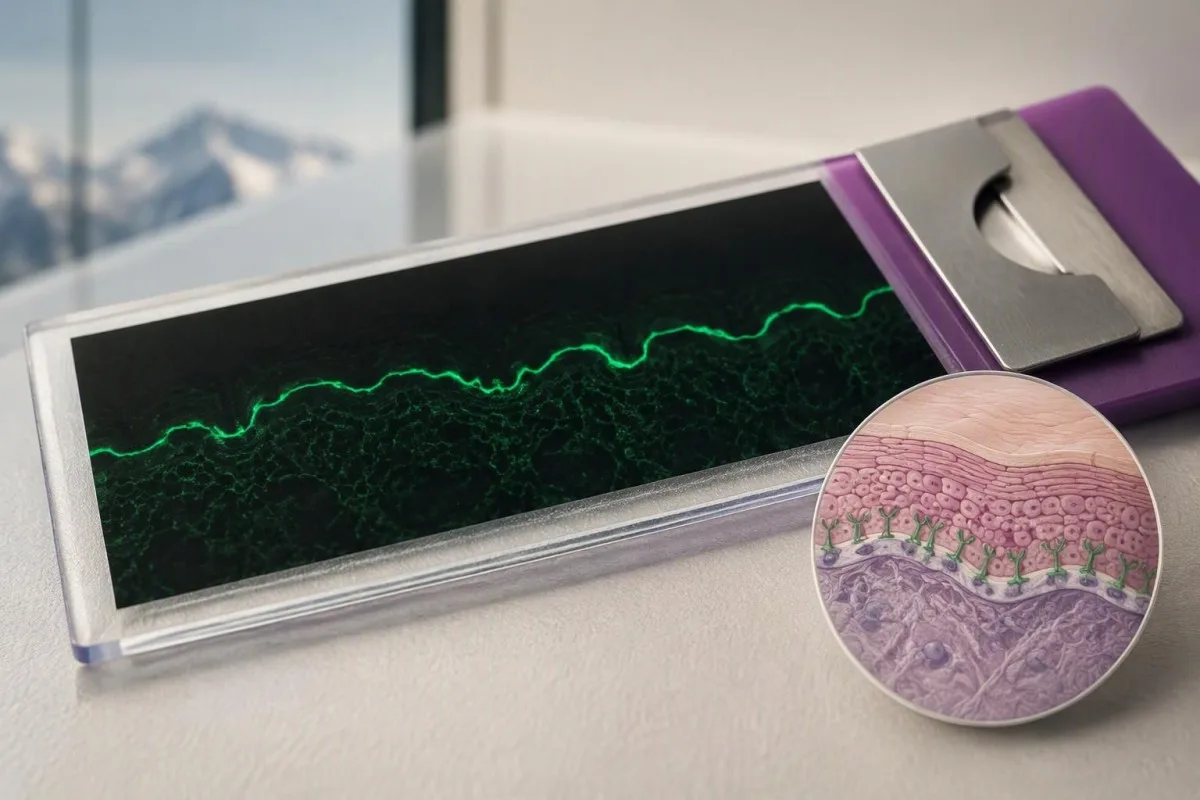
Direct and indirect immunofluorescence use different materials. Direct testing examines deposits already present in the person's skin, while indirect testing applies the person's serum to a laboratory substrate; a positive result in one test and a negative result in the other is therefore possible without a reporting error.
On salt-split skin, bullous pemphigoid antibodies commonly bind the epidermal side, often called the roof. Antibodies binding the dermal side, or floor, raise consideration of other disorders such as epidermolysis bullosa acquisita or anti-p200 pemphigoid, but binding location alone does not fully classify every case.
Meijer et al. reported 99.9% specificity for indirect immunofluorescence on salt-split skin in their 2019 diagnostic cohort. That high figure applies to that study and testing pathway; a negative result still cannot exclude pemphigoid because specificity describes false positives, not how many cases the test misses.
C3 detected in skin is not the same measurement as a serum C3 concentration. A normal circulating complement result does not negate local deposits at the basement membrane; our complement testing explanation helps prevent this common cross-test misunderstanding.
BP180 нәтиҗәсе, тире биопсиясе һәм симптомнар бер-берсенә туры килмәсә, нишләргә?
Discordant BP180 and skin-test results require a review of the clinical picture, assay target, sampling site, and specimen handling. A positive ELISA with negative direct immunofluorescence can reflect incidental antibodies or an uninformative skin sample; a negative NC16A ELISA can miss disease directed against other targets.
A negative direct-immunofluorescence result is less reassuring if the sample was poorly selected or incorrectly transported. Treatment before sampling may also influence findings, so clinicians need to know which creams or systemic medicines were used and where; never stop prescribed treatment solely to make a test more likely to turn positive.
A hypothetical person with characteristic new blisters, BP180 of 80 U/mL, and a negative direct-immunofluorescence specimen from an old eroded site may need repeat sampling. The same antibody result with no compatible skin findings demands a different investigation; the discrepancy does not have one automatic explanation.
A negative BP180 NC16A result does not exclude every form of pemphigoid. Further testing may include BP230 antibodies, indirect immunofluorescence, or specialized assays for other antigens; our guide to negative myasthenia antibody tests illustrates why a limited antigen panel cannot exclude an entire autoimmune disease category.
Repeat testing should address a specific uncertainty rather than create an endless sequence of panels. Ask whether the next investigation is checking the same antigen by another method, examining an additional antigen, or correcting a tissue-sampling problem; each strategy answers a different diagnostic question.
Тагын нинди авырулар BP180-уңай пемфигоидка охшаш булырга мөмкин?
BP180 antibodies can occur in other pemphigoid-spectrum conditions, including mucous membrane pemphigoid and pemphigoid gestationis. Eczema, scabies, and drug-related eruptions can resemble early bullous pemphigoid clinically, while pemphigus involves different adhesion proteins and usually a different level of skin separation.
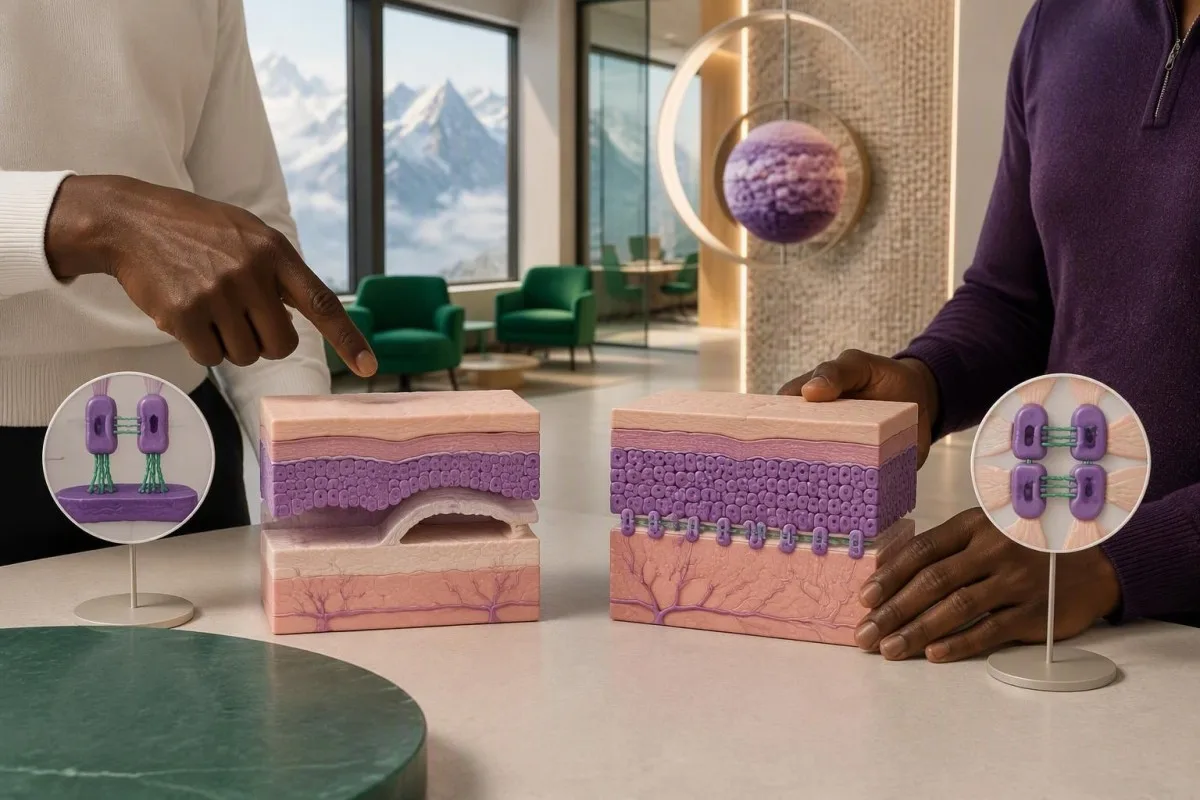
Bullous pemphigoid typically causes tense blisters because separation occurs beneath the epidermis. Pemphigus often produces more fragile blisters or erosions through loss of adhesion within the epidermis; our desmoglein antibody guide explains why BP180 testing cannot substitute for a pemphigus evaluation.
Predominantly mouth, eye, genital, or other mucosal involvement raises concern for mucous membrane pemphigoid, especially when scarring occurs. Eye pain, light sensitivity, or vision changes require urgent assessment because waiting for a repeat antibody concentration can delay treatment of a sight-threatening process.
Pemphigoid gestationis is associated with pregnancy and can produce BP180 antibodies. Pregnancy or recent childbirth therefore changes the interpretation of the same laboratory result; the distinction requires obstetric and dermatological coordination rather than assuming that every BP180-positive blistering disorder is classic older-adult bullous pemphigoid.
Scabies can cause intense itching and may coexist with an unrelated positive antibody result. Household itching, characteristic distribution, and burrows alter the differential; our scabies symptom guide is useful for that comparison, but neither household exposure nor BP180 positivity independently settles the diagnosis.
Дарулар BP180 нәтиҗәсен аңлатуга яки дәвалау карарларына йогынты ясыймы?
Medication history can change the likelihood and presentation of bullous pemphigoid, but a positive BP180 result alone is not a reason to stop a medicine. DPP-4 inhibitors used for diabetes and immune checkpoint inhibitors are recognized associations; treatment decisions depend on confirmed disease, severity, and the person's other health risks.

DPP-4 inhibitor-associated pemphigoid can have a less typical inflammatory presentation and may show limited NC16A reactivity. This is not universal, and exposure does not prove causation; bring a complete medicine list, including start dates, to a review using our senior medication effects guide as a preparation aid.
.Әр сүзнең 2022 EADV guideline recommends potent topical corticosteroids as a mainstay when feasible and discusses oral prednisone at approximately 0.5 mg/kg/day as an alternative in suitable circumstances (Borradori et al., 2022). These are clinician-directed treatment options for disease, not instructions to treat an isolated antibody result or begin steroids without assessment.
Systemic corticosteroids can create additional risks that are unrelated to the BP180 concentration. People with relevant residence or travel exposure may need assessment for Strongyloides before significant immunosuppression; our Strongyloides antibody explanation describes why an apparently unrelated parasite history can become a treatment-safety issue.
Kidney function, glucose, infection risk, and the ability to apply topical treatment may influence the choice of therapy more than whether BP180 is 40 or 80 U/mL. Безнең бөер функциясен интерпретацияләү буенча кулланма covers supportive laboratory assessment, but renal markers do not confirm pemphigoid.
BP180 дәрәҗәсе авыруның активлыгын һәм савыгуны күзәтү өчен кулланыла аламы?
BP180 antibody levels can support monitoring in confirmed bullous pemphigoid, but they do not replace examination or determine treatment alone. Concentrations often track disease activity at a group level; individual patients can remain antibody-positive while their skin is controlled or experience symptoms without a proportionate rise.
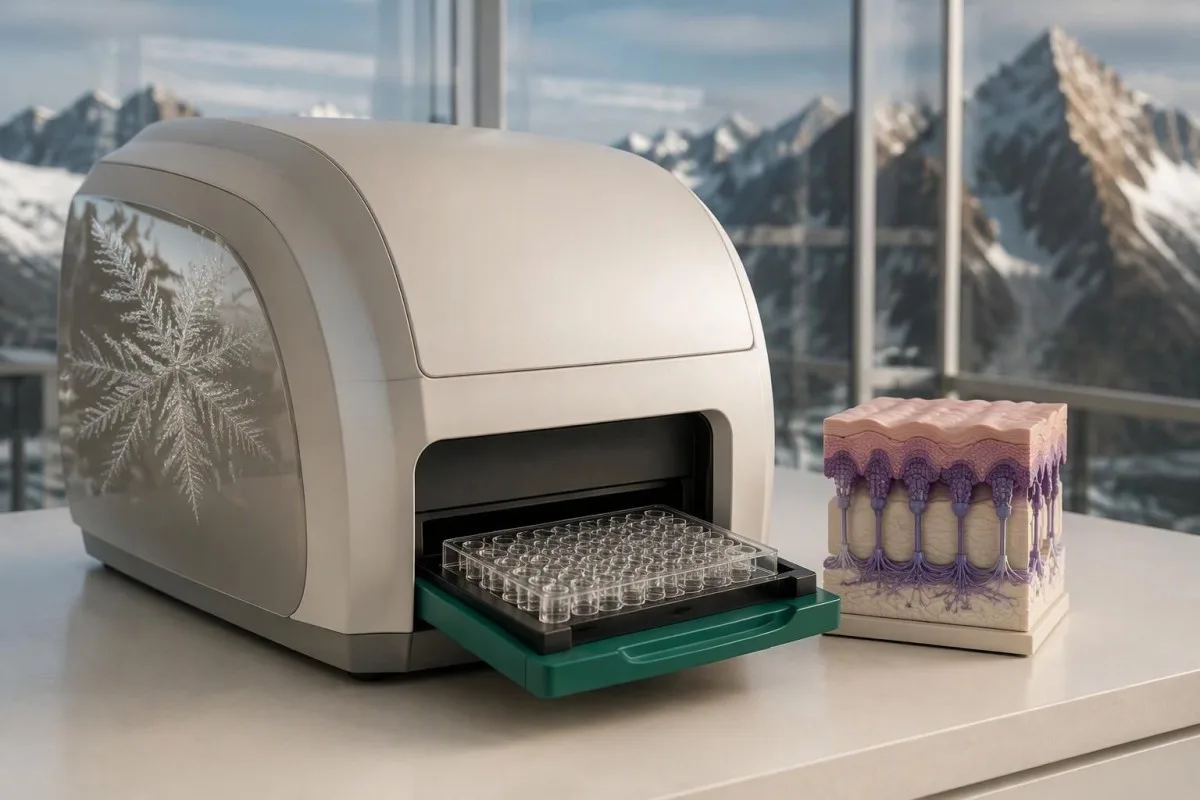
A falling BP180 concentration is most useful when it agrees with fewer new blisters and less itching. A hypothetical decline from 120 to 35 U/mL on the same assay supports an improving pattern, but it does not independently establish remission or justify stopping treatment.
An increase from 12 to 14 U/mL near a cutoff may reflect analytical or biological variation rather than a meaningful change in disease. There is no universal percentage increase that proves relapse across all BP180 assays; the method, timing, symptoms, and previous response need to be considered together.
Kantesti is an AI blood test interpretation platform that can organize serial BP180 results without treating a laboratory trend as a diagnosis. Безнең AI технологиясе аңлатмасы describes the interpretation workflow; preserving each report's assay name and reference interval matters when comparing two or more measurements.
Changing laboratories can create an apparent rise or fall that is partly methodological. Our дарулар-иминлек тенденциясе буенча кулланма explains why dates, doses, and laboratory context belong beside the numbers; photograph new skin findings and record new-blister counts when your dermatologist requests them.
Кабат тикшерүгә нәрсә алып килергә кирәк, һәм нинди дәлилләр кулланыла?
Bring the full BP180 report, any BP230 result, symptom photographs, and your complete medication list to follow-up. These four information groups help a clinician decide whether you need observation, additional serum testing, properly handled skin samples, or urgent assessment rather than another isolated antibody measurement.
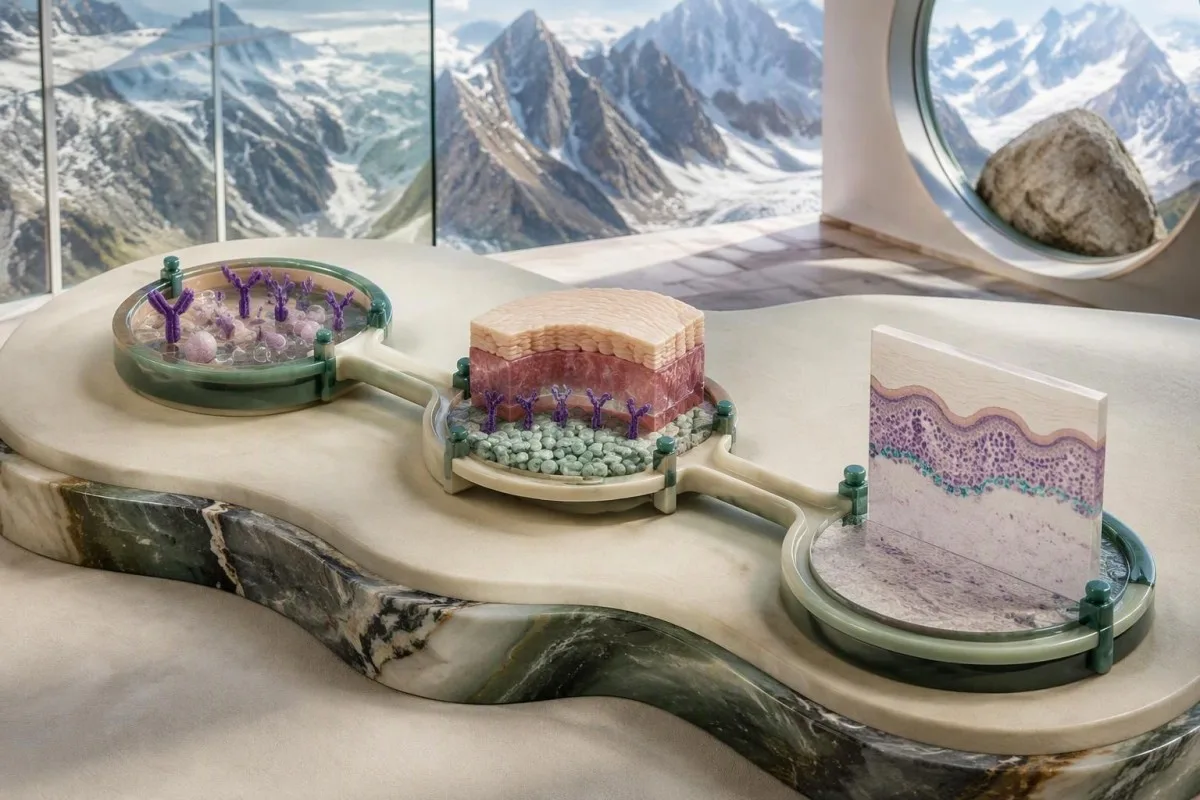
A useful report includes the exact assay name, numerical value, units, cutoff, and collection date. If a hypothetical BP180 result reads 16 U/mL, the missing cutoff may reverse whether it is considered positive; also request the actual histology and direct-immunofluorescence reports rather than relying on the phrase 'skin biopsy normal.'
New eye symptoms, swallowing difficulty, extensive rapidly spreading blisters, fever, or inability to maintain fluids need prompt clinical attention. Do not wait for a scheduled second test when those symptoms appear; supportive urinalysis can answer separate medical questions, as explained in our сидек анализын аңлату буенча кулланма, but it cannot establish a pemphigoid diagnosis.
Kantesti helps explain the distinctions between a flagged antibody result, a probable diagnosis, and confirmed disease. Безнең җаваплы ЯИ принциплары describe the boundaries of educational interpretation; only a clinician with access to your examination and appropriate investigations can decide whether a BP180 антитәнчекләренә уңай нәтиҗә result represents active pemphigoid.
The directly relevant evidence here comes from the 2022 EADV guideline and the 2019 JAMA Dermatology diagnostic study. The two Zenodo publications listed below concern kidney-function and urinalysis interpretation and are included as background educational publications, not evidence that BP180 confirms bullous pemphigoid or that our AI has validated diagnostic accuracy for this condition.
Еш бирелгән сораулар
BP180 антителаларына тест уңай булу миндә һичшиксез буллезлы пемфигоид бар дигәнне аңлатамы?
0 Бер BP180 антителасына тестның уңай нәтиҗәсе сездә һичшиксез буллез пемфигоид бар дигәнне аңлатмый. Кайбер лабораторияләр якынча 9 U/mL, ә башкалары 20 U/mL тирәсендәге чик күрсәткечен куллана, шуңа күрә тестның төгәл ысулы һәм белешмә интервалы мөһим. Нәтиҗәгә туры килә торган кычыту яки куыклар аны әһәмиятлерәк итә, ә аерым очракта аз гына уңай нәтиҗә очраклы яки ялгыш уңай булырга мөмкин. Диагнозны раслау өчен тире биопсиясе, туры иммунофлюоресценция һәм өстәмә антитела тестлары кирәк булырга мөмкин.
Миндә куыклар булмаса, BP180 буенча түбән-позитив нәтиҗә нәрсәне аңлата?
Куыклар булмаганда BP180 буенча түбән уңай нәтиҗә антитәнчекләрнең очраклы ачыклануын, анализ ысулына бәйле ялган уңай нәтиҗәне яки куыкларсыз барлыкка килгән пемфигоидны чагылдырырга мөмкин. Мәсәлән, 12 U/mL — 9-U/mL чик күрсәткеченнән югары, ләкин симптомнары булмаган кешедә авыру үсешен фаразлый алмый. Куыклар булмаса да, туктаусыз кычыту яки сәбәбе билгесез тимгел дерматолог тикшерүен таләп итә. Аерым алынган түбән уңай нәтиҗәгә генә нигезләнеп, кабат анализ тапшыруның яки дәвалауның универсаль тәкъдиме юк.
0 Әйтсез BP180 антитәнчекләре булганда да буллезлы пемфигоид булырга мөмкинме?
0 Буллезлы пемфигоид гадәти NC16A анализында BP180 антитәнчекләре тискәре булса да барлыкка килергә мөмкин. Анализ якынча 180-кДа аксымның билгеле бер өлешен тикшерә һәм, нигездә, башка өлешләргә каршы юнәлгән антитәнчекләрне ачыкламаска мөмкин. BP230 өчен анализ, туры иммунофлюоресценция һәм туры булмаган иммунофлюоресценция өстәмә дәлилләр бирергә мөмкин. Тире үзгәрешләре пемфигоидны көчле рәвештә күрсәтсә, кан анализының тискәре нәтиҗәсе тикшерүне туктатырга тиеш түгел.
Тискәре BP230 антитәнчекләре буллёзлы пемфигоидны кире кагамы?
BP230 антитәнчекләренең тискәре булуы буллезлы пемфигоидны кире какмый. BP230 — якынча 230 кДа молекуляр массалы күзәнәк эчендәге беркетүче аксым, һәм расланган авыруы булган кайбер кешеләрдә аңа каршы ачыклана торган антитәнчекләр булмый. Клиник һәм тукыма тикшерүләре диагноз белән туры килгән очракта, BP230 антитәнчекләре тискәре булса да, BP180 нәтиҗәсенең уңай булуы диагнозга туры килергә мөмкин. Ике антитәнчек концентрациясен кушарга яки аларны ике тест белән раслану кагыйдәсе итеп карарга ярамый.
Пемфигоидны диагностикалау өчен кайвакыт ни өчен тиредән ике биопсия алырга кирәк?
Гадәти гистология һәм турыдан-туры иммунофлюоресценция төрле диагностик сорауларга җавап биргәнгә, еш кына тиредән ике биопсия кирәк була. Гадәттә кечкенә, 3–4 мм лы трепан-биопсия алына, әмма дерматолог конкрет клиник күренешкә карап ысулны һәм урынны сайлый. Бер үрнәктә тукыманың төзелеше тикшерелә, ә икенчесендә базаль мембрана буйлап иммун чыганаклары эзләнә. Турыдан-туры иммунофлюоресценция өчен алынган үрнәкне ташуның аерым килешенгән ысулы кирәк; аны гадәттә формалинга салырга ярамый.
BP180 дәрәҗәсенең югары булуы миндәге пемфигоидның авыр булуын аңлатамы?
A high BP180 level does not independently determine how severe pemphigoid is or whether it is an emergency. A result of 100 U/mL must be interpreted using that assay's cutoff and alongside the extent of skin involvement, itching, new blisters, and general health. Antibody levels often relate to disease activity, but individual results and symptoms can disagree. Eye pain, vision changes, difficulty swallowing, or rapidly spreading extensive blistering require prompt assessment regardless of the antibody concentration.
Дәвалауны туктатканчы BP180 антитәнчекләре тискәре булырга тиешме?
Пемфигоидны дәвалауны киметү яки туктатуны караганчы, табиб һәрвакыт BP180 антитәнчекләренең тискәре нәтиҗә күрсәтүен көтәргә тиеш түгел. Мәсәлән, күрсәткечнең 120дән 35 U/mLгә төшүе хәлнең яхшыруын күрсәтергә мөмкин, әмма карарны симптомнар, яңа куыклар барлыкка килү, тикшерү нәтиҗәләре һәм авыруның кабатлану тарихы билгели. Тире авыруы контрольдә булганда да антитәнчекләр ачыкланырга мөмкин, һәм төрле анализлар өчен дә уртак туктату чиге юк. Билгеләнгән дәвалауны антитәнчекләр күрсәткеченең үзгәрүенә генә нигезләнеп үзгәртмәгез.
Кан анализы нәтиҗәләрен аңлатып алыгыз
Лаборатория хисабыгызны йөкләгез, һәм Kantesti AI һәр биомаркерны секундлар эчендә гади тел белән аңлатыр. Дөнья буйлап 2 миллионнан артык кеше куллана.
Сылтамалар
- Klein, T., Mitchell, S., & Weber, H. (2026). BUN/Креатинин Коефициенты Төшендерү: Бешәк Функция Тесты Кайдалы. Kantesti AI медицина тикшеренүләре. DOI
- Klein, T., Mitchell, S., & Weber, H. (2026). Уробилиноген урин тесты: Тулы урин анализы гайд 2026. Kantesti AI медицина тикшеренүләре. DOI
- Borradori L et al. (2022). Updated S2 K guidelines for the management of bullous pemphigoid initiated by the European Academy of Dermatology and Venereology (EADV). Journal of the European Academy of Dermatology and Venereology. DOI
- Meijer JM et al. (2019). Assessment of Diagnostic Strategy for Early Recognition of Bullous and Nonbullous Variants of Pemphigoid. JAMA Dermatology. DOI
- 2М +Анализланган тестлар
- 127+Илләр
- 100+Телләр
Медицина командасы турында


E-E-A-T ышаныч сигналлары
Тәҗрибә
Табиб җитәкчелегендә лаборатория нәтиҗәләрен аңлату эш процессларын клиник тикшерү.
Белгечлек
Лаборатория медицинасы: биомаркерларның клиник контекстта үз-үзләрен тотышын аңлау.
Авторититет
Доктор Томас Кляйн медицина ягыннан тикшерде; доктор Сара Митчелл һәм профессор доктор Һанс Вебер үз өлешләрен кертте.
Ышанычлылык
Ачык күзәтү юллары белән куркуны киметү өчен дәлилләргә нигезләнгән аңлату.
Медицина турында кисәтү
Бу мәкалә бары тик белем бирү максатларында гына һәм медицина киңәше булып тормый. Диагноз һәм дәвалау карарлары өчен һәрвакыт квалификацияле сәламәтлек саклау белгеченә мөрәҗәгать итегез.
Басылып чыкты · Редакция командасына мөрәҗәгать итегез
Kantesti Ltd нәшер итә, Англия һәм Уэльста теркәлгән, компания №. 17090423, Лондон, Бөекбритания.
