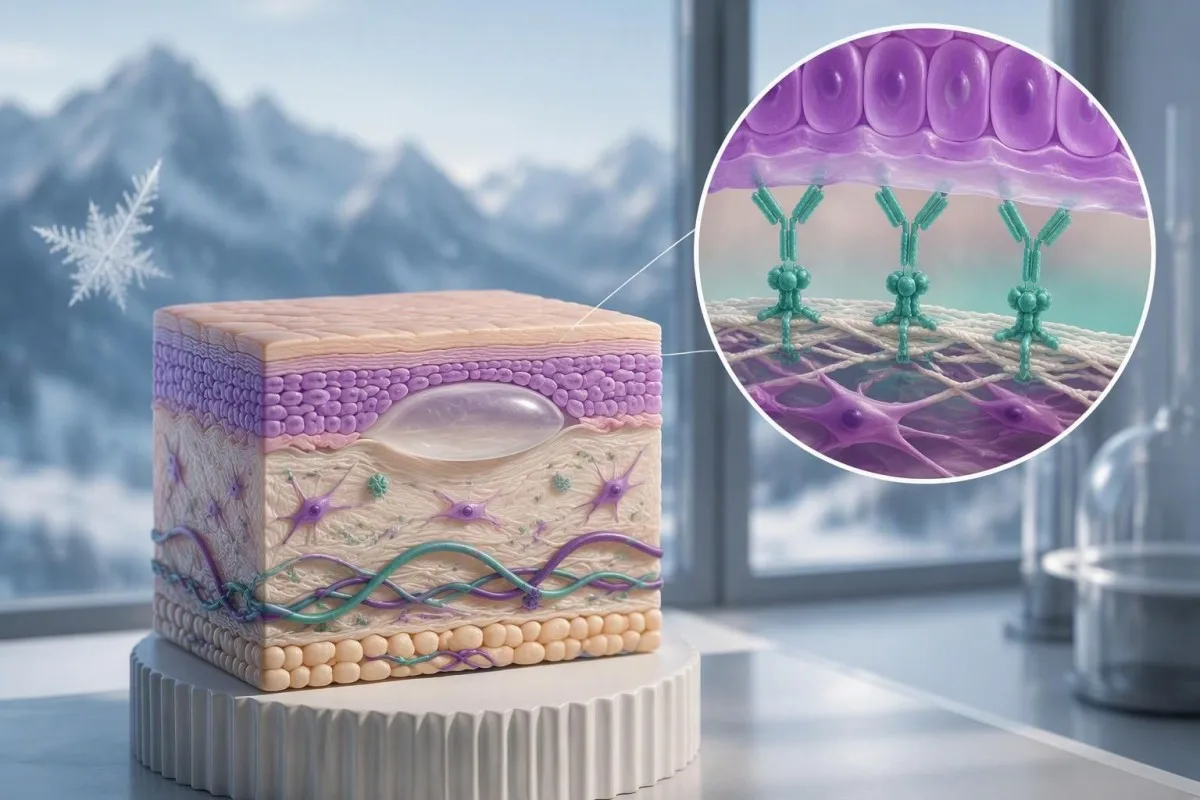
Müsbət BP180 nəticəsi autoimmun dəri pozğunluğunu dəstəkləyir, lakin bu göstərici təkbaşına diaqnoz qoymağa imkan vermir. Sonrakı addımlar simptomlardan, istifadə olunan analizdən və düzgün götürülmüş dəri nümunələrindən asılıdır.

Əsas nəticələr
- BP180 anticisimi müsbətdir o deməkdir ki, analiz BP180 hədəfinə qarşı anticisimlər aşkar edib; bu, müstəqil şəkildə bülloz pemfiqoid diaqnozunu təsdiqləmir.
- Laboratoriya hədləri fərqlənir: bəzi BP180 analizlərində təxminən 9 U/mL, digərlərində isə təxminən 20 U/mL həddi istifadə olunur. Öz laboratoriyanızın istinad intervalına baxın.
- Aşağı müsbət nəticələr qaşınma, səpgi və ya qabarcıqlar olmadıqda, bu, anticisimlərin təsadüfən aşkarlanmasını və ya analizdə yanlış müsbət nəticəni göstərə bilər — dəri xəstəliyinin təsdiqini yox.
- Qabarcıqsız pemfiqoid qabarcıqlar olmadan davamlı qaşınmaya səbəb ola bilər; ixtisaslaşmış diaqnostik tədqiqatda 343 pemfiqoid halından 74-ü qabarcıqsız olub.
- BP230 anticisimləri tamamlayıcı sübutlar təqdim edir, lakin BP230 anticisimlərinin mənfi olması bülloz pemfiqoid ehtimalını istisna etmir.
- Birbaşa immunoflüoressensiya dəriyə çökmüş anticisimləri araşdırır; bazal membran boyunca xətti IgG və/və ya C3 pemfiqoid pozğunluğunu dəstəkləyir.
- İki dəri nümunəsi adətən götürülür: rutin mikroskopiya üçün zədələnmiş sahədən nümunə və birbaşa immunoflüoressensiya üçün yaxınlıqdakı, müvafiq qaydada seçilmiş nümunə.
- Təcili simptomlar göz ağrısı, görmə dəyişiklikləri, udma çətinliyi, geniş dəri dəyişiklikləri ilə müşayiət olunan qızdırma və ya sürətlə yayılan qabarcıqlanma daxildir; başqa anticisim nəticəsini gözləməyin.
Müsbət BP180 nəticəsi bülloz pemfiqoid diaqnozunu təsdiqləyirmi?
Xeyr — BP180 anticisiminin müsbət nəticəsi təkbaşına bülloz pemfiqoidi təsdiqləmir. Simptomlar və dəri müayinəsinin nəticələri uyğun olduqda bu, diaqnozu dəstəkləyir, lakin qabarcıqlar olmadan alınan aşağı müsbət nəticə təsadüfi ola bilər; dermatoloqlara səbəbi müəyyən etmək üçün çox vaxt birbaşa immunoflüoressensiya ilə dəri biopsiyası və bəzən əlavə anticisim testləri lazım olur.
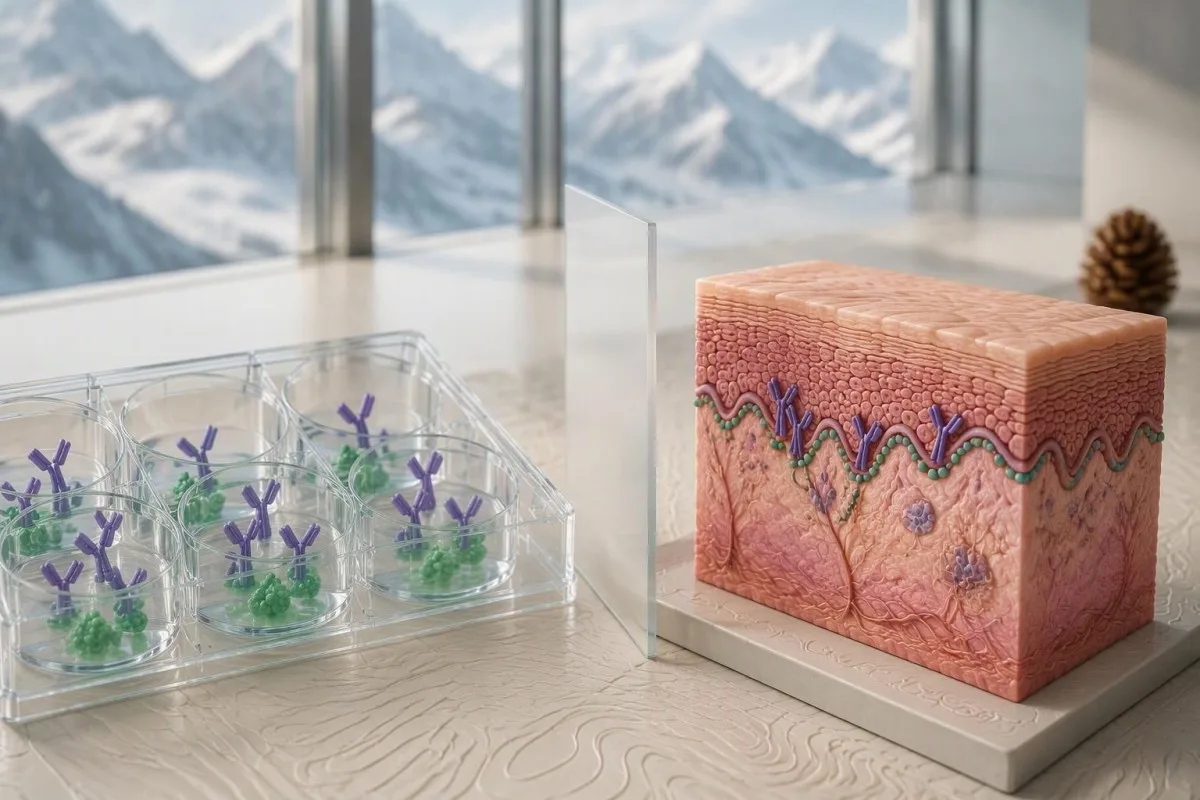
Bülloz pemfiqoid diaqnozu klinik və immunopatoloji uyğunluq tələb edir, sadəcə laboratoriyada işarələnmiş bir göstərici deyil. 2022-ci il EADV təlimatında diaqnozun klinik mənzərə, eləcə də müvafiq toxuma və dövr edən anticisim müayinələri əsasında qoyulduğu bildirilir (Borradori et al., 2022); praktiki məsələ aşkarlanmış anticisimlərin həmin şəxsin dəri vəziyyətini izah edib-etməməsidir.
Müsbət anticisim testi ilə aktiv autoimmun xəstəlik fərqli tapıntılardır. Məsələn, hipotetik CA-125 nəticəsi bir laboratoriyada müsbət ola bilər, lakin bu nəticəni almış simptomsuz şəxsdə diaqnostik ehtimal geniş yayılmış, qaşınan, gərgin qabarcıqları olan və eyni konsentrasiyaya malik başqa bir şəxsdən fərqlənir.
Kantesti BP180 nəticələrini laboratoriyanın kəsim həddi və təqdim etdiyiniz məlumatlarla yanaşı izah etməyə kömək edən süni intellekt əsaslı qan testi analizatorudur. İzahımız dərini müayinə edə və ya birbaşa immunoflüoressensiya apara bilməz; bizim şirkət haqqında məlumat bu maarifləndirici dəstəyin arxasında duran təşkilatı müəyyən edir.
Nəticəni daimi xəstəlik etiketi kimi deyil, daha konkret sual vermək üçün əsas kimi qəbul edin. Bələdçimiz müsbət antikor nəticələri anticisimlərin aşkarlanmasının, xəstəliyin aktivliyinin və diaqnozun təsdiqlənməsinin üç ayrı anlayış olmasının səbəbini izah edir.
BP180 anticisim testi əslində nəyi ölçür?
BP180 anticisim testi adətən BP180-in, başqa adı ilə XVII tip kollagenin, bir hissəsinə qarşı yönəlmiş serum IgG-ni ölçür. BP180 təxminən 180-kDa epidermisi altındakı toxumaya bərkitməkdə iştirak edən zülaldır; bir çox rutin analiz bütün zülalı deyil, onun NC16A bölgəsini yoxlayır.
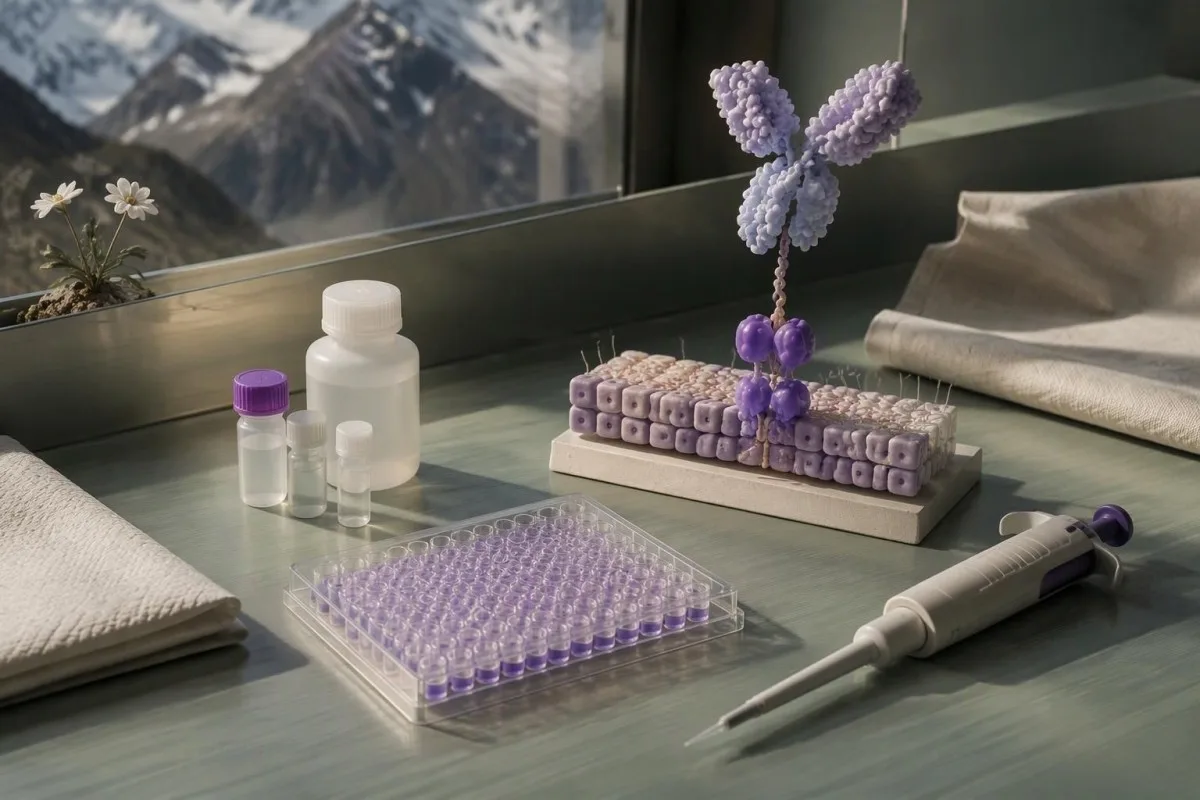
BP180 dərinin struktur zülalıdır; qandakı konsentrasiyası ölçülən maddə deyil. Hesabatda həmin zülala qarşı anticisimlər təsvir olunur; bunun üçün adətən fermentlə əlaqəli immunosorbent analizindən, yəni ELISA-dan istifadə edilir; 30 U/ml buna görə də 30 vahid dəri zülalının qan dövranında olması demək deyil.
The NC16A domeni sits close to the cell membrane on the external portion of BP180 and is a frequent antibody target in classic bullous pemphigoid. Testing this region makes a practical assay possible, but it creates a blind spot: antibodies directed mainly against other regions may escape detection.
A numerical antibody concentration is not interchangeable with an immunofluorescence titer. A result expressed as 1:40 describes reactivity at a dilution, whereas 40 U/mL describes an assay-calibrated concentration; our explanation of quantitative versus qualitative tests helps distinguish these reporting formats.
Check whether the report says BP180 NC16A IgG, another BP180 assay, or a broader pemphigoid panel. These are not automatically equivalent tests, and a negative IgG ELISA does not answer every question about other antibody classes or other basement-membrane targets.
BP180 anticisim nəticəsinin aşağı müsbət sayılması üçün göstərici nə olmalıdır?
A low-positive BP180 result is a value just above the cutoff for the specific assay used. There is no universal low-positive range: some laboratories use a threshold near 9 U/mL, while others use one near 20 U/mL, with different calibrations and reporting categories.
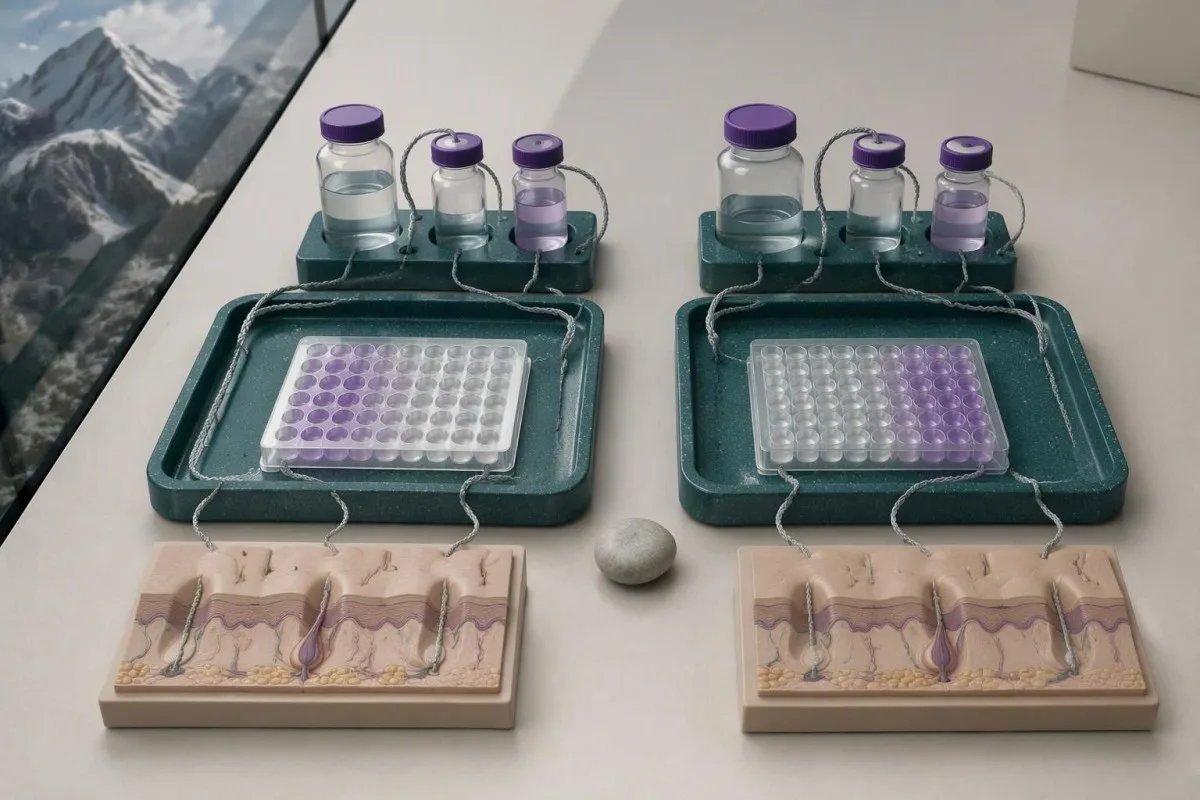
BP180 assay units are not universally standardized across laboratories. Nəticə 15 U/mL could be positive under a 9-U/mL policy and negative under a 20-U/mL policy, but this does not establish that the second assay missed disease; the methods and calibrators may differ.
Cutoffs balance sensitivity against specificity in the populations used to evaluate the assay. Moving a threshold downward can detect more people with disease while also identifying more people without disease; the cutoff is a laboratory decision boundary, not a biological point where skin suddenly starts blistering.
Kantesti AI can help place a reported BP180 value beside its supplied reference interval, but a cropped image showing only 18 U/mL leaves crucial information missing. Include the test name, units, interpretation categories, and laboratory comments; a generic diapazondan kənar işarəni cannot substitute for those details.
The examples below illustrate two possible reporting policies rather than a universal severity scale. No BP180 antibody concentration alone defines a medical emergency; extensive skin involvement, dehydration, systemic illness, and eye or airway symptoms determine urgency.
| Səviyyə | Diapazon | Nə deməkdir |
|---|---|---|
| Example assay A: below cutoff | <9 U/mL | Negative under this illustrative laboratory policy; disease is not excluded if clinical suspicion remains high. |
| Example assay A: at or above cutoff | ≥9 U/mL | Positive under this policy; proximity to the cutoff and clinical findings affect interpretation. |
| Example assay B: below cutoff | <20 U/mL | Negative under a different illustrative policy; do not directly convert between assay systems. |
| Example assay B: at or above cutoff | ≥20 U/mL | Positive under this policy; the number does not independently establish diagnosis or severity. |
Müsbət BP180 nəticəsi niyə yanıltıcı ola bilər?
A positive BP180 result is less convincing when the person had little clinical likelihood of pemphigoid before testing. Even a reasonably accurate assay produces false positives, so the meaning of the result changes between an asymptomatic screening population and a specialist clinic evaluating characteristic blisters.
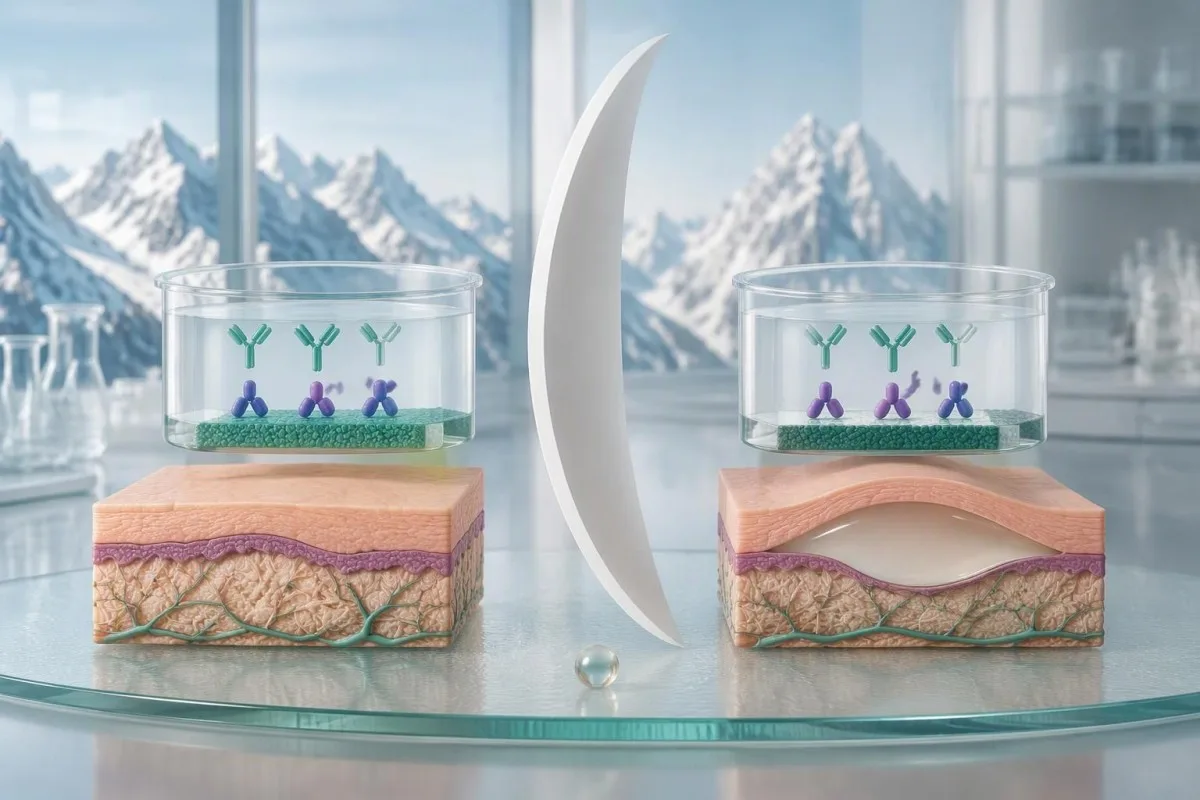
Sensitivity and specificity do not equal the probability that you personally have disease after a positive result. That probability also depends on how common the condition is in the tested group; this distinction matters most when an antibody panel was ordered broadly rather than to investigate a specific skin pattern.
Consider a clearly hypothetical assay with 90% sensitivity and 95% specificity, used in 1,000 people whose disease probability is 1%. It would identify about 9 true positives and 50 false positives, making the positive predictive value roughly 15%; these are teaching assumptions, not performance claims for your BP180 assay.
Use the same hypothetical assay where disease probability is 20%, and approximately 180 true positives and 40 false positives would occur per 1,000 tests. The positive predictive value becomes about 82%—a large change caused by clinical context, not by a different laboratory method.
These examples explain why a dermatologist may request tissue testing despite a positive result, or take characteristic symptoms seriously despite a negative one. Our discussion of MOG anticisimlərinin şərhi illustrates the same probability principle in another autoimmune condition, although its diagnostic criteria cannot be transferred to pemphigoid.
BP180 müsbətdirsə, amma sizdə qabarcıqlar yoxdursa, necə?
A low-positive BP180 result without blisters does not establish bullous pemphigoid or reliably predict future blistering. The next distinction is whether you have no skin symptoms at all, or persistent itching and an unexplained rash that could represent a nonbullous pemphigoid presentation.

Incidental BP180 antibody detection can occur without clinically established pemphigoid. Possible explanations include low-level autoreactivity and assay-related false positivity; there is no validated conversion rule that turns an isolated result of 11 U/mL into a percentage risk of developing blisters later.
A hypothetical person with 11 U/mL, no itching, no rash, and no mucosal symptoms usually needs a contextual review rather than automatic immunosuppressive treatment. The clinician should check why the assay was ordered, whether the result was unexpected, and whether a skin examination reveals findings the person had not recognized.
Persistent dryness and itching still deserve assessment because common explanations remain common. Eczema, medication effects, thyroid disease, and other causes may be more likely than pemphigoid; our dry skin testing guide explains why additional blood tests should follow symptoms rather than a blanket panel.
Leykemiya üçün no universal repeat-testing interval for an asymptomatic low-positive BP180 result. A clinician may choose observation, a repeat using the same method, or specialist review depending on the history; new persistent itching, urticarial plaques, or blisters should change that plan rather than waiting for a scheduled repeat.
Bülloz pemfiqoid yalnız qaşınma ilə başlaya bilərmi?
Pemphigoid can present with persistent itching, eczema-like patches, urticarial plaques, or scratch-related changes without visible blisters. In a specialist diagnostic study, 74 of 343 pemphigoid cases—21.6%—were nonbullous, showing that the absence of blisters cannot independently exclude the disorder (Meijer et al., 2019).

Nonbullous pemphigoid is not simply every itchy rash with a positive BP180 result. Diagnosis still needs compatible symptoms and appropriate immunopathological evidence; the 21.6% study figure came from a referred population and should not be interpreted as the probability that any person with itching has pemphigoid.
The symptom pattern often matters more than whether one small blister has appeared. Persistent, widespread itching in an older adult, especially with recurrent raised plaques or poor response to ordinary eczema care, warrants a dermatological assessment; our itchy skin laboratory guide separates skin-directed testing from tests for systemic causes.
Eosinophilia can accompany bullous pemphigoid, but it is neither required nor diagnostic. An absolute eosinophil count above approximately 0,5 × 10^9/L is often flagged in adults, yet allergy, medications, and parasites can produce the same finding; our guide to yüksək eozinofil sayı explains those alternatives.
A dermatologist does not always need to wait for a blister before collecting a useful sample for direct immunofluorescence. In nonbullous disease, sample selection is tailored to the available rash and laboratory protocol; document the distribution and duration of itching, because a disappearing rash can make later assessment harder.
BP230 anticisimləri BP180 testini necə tamamlayır?
BP230 antibodies provide complementary evidence for pemphigoid but cannot confirm or exclude bullous pemphigoid alone. BP230 is an approximately 230-kDa intracellular anchoring protein, whereas BP180 crosses the cell membrane; their different locations and antibody targets help explain why the two results can disagree.
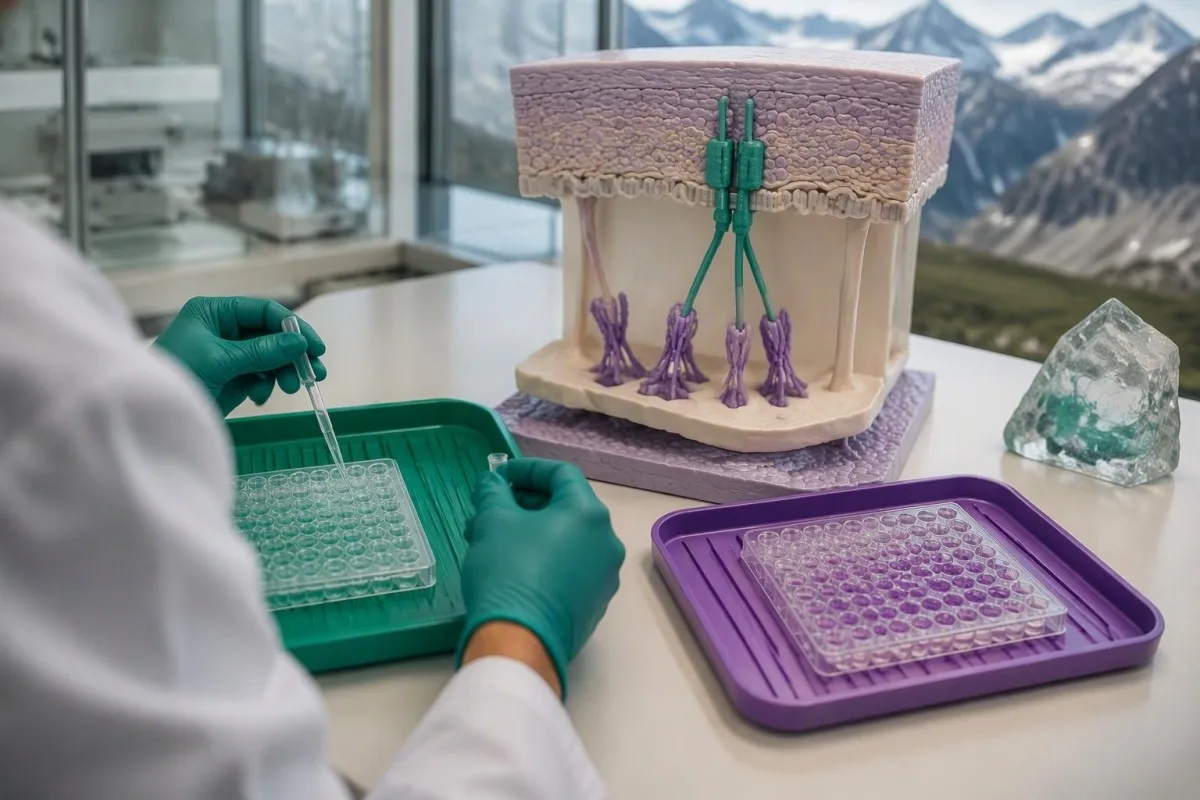
A negative BP230 antibody result does not cancel a positive BP180 result. Some people with confirmed pemphigoid have antibodies detectable against only one tested antigen, and each assay has its own sensitivity; interpreting the pair as a two-test pass-or-fail rule creates avoidable diagnostic errors.
Hipotetik bir şəxs BP180 result of 45 U/mL with negative BP230 antibodies still warrants assessment if tense blisters and severe itching are present. Conversely, isolated low-positive BP230 antibodies without compatible findings are not enough to diagnose pemphigoid; a second positive marker strengthens a pattern only when the overall evidence fits.
Kantesti is an AI biomarker interpretation platform that can explain BP180 and BP230 antibodies as complementary findings rather than interchangeable scores. This is similar to the reasoning used for antibody panels in connective disease, but skin-specific tissue findings remain central to pemphigoid assessment.
Do not add BP180 and BP230 concentrations together, even if both are expressed in U/mL. They represent different antigen-specific measurements with different calibration systems; BP180 levels generally have a better-established relationship with disease activity than BP230 levels, but neither replaces examination.
Niyə birbaşa immunoflüoressensiya ilə dəri biopsiyasına ehtiyacınız ola bilər?
Skin biopsy with direct immunofluorescence can show whether antibodies or complement are deposited at the skin's basement membrane. Dermatologists often collect two separate specimens because routine microscopy and direct immunofluorescence answer different questions and require different sample handling.
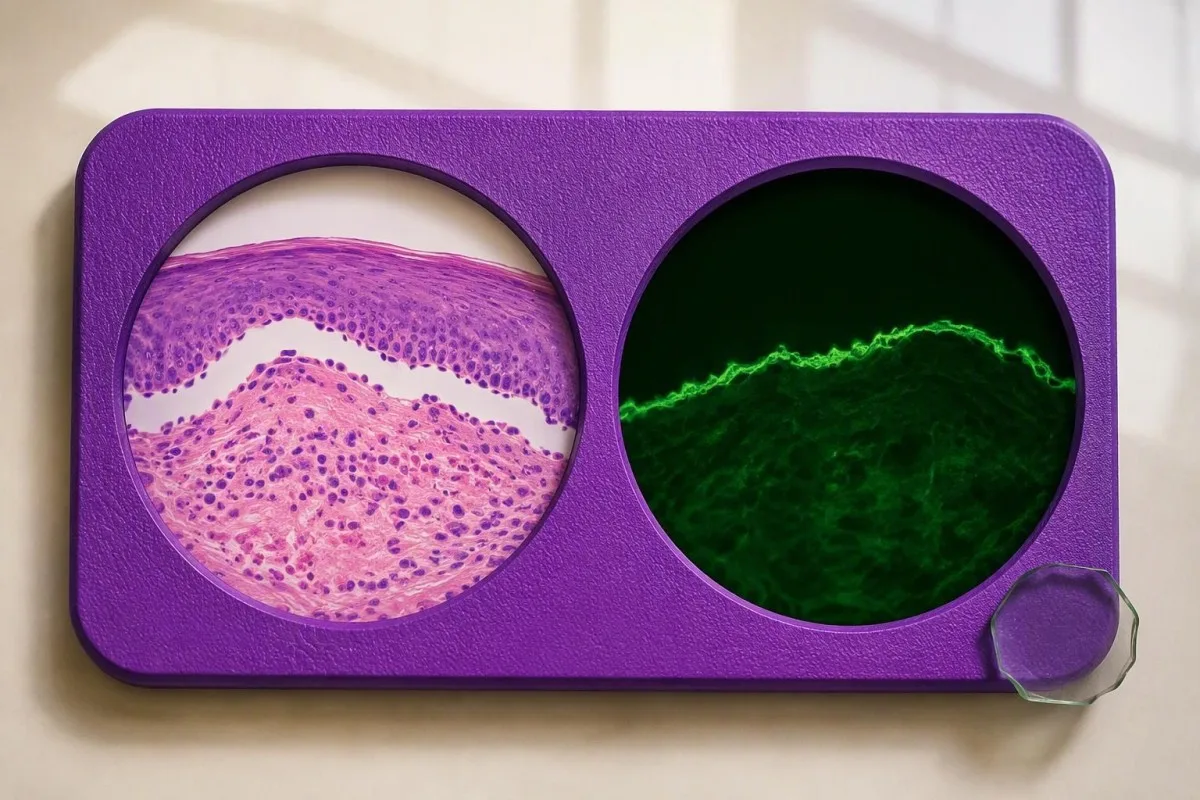
Routine histology examines tissue structure and inflammatory cells. A sample from a fresh blister or suitable affected area may show separation beneath the epidermis and eosinophils, but these features are not unique to bullous pemphigoid; the second sample looks for the immune-deposit pattern that helps classify the disorder.
For classic blistering presentations, the direct-immunofluorescence sample is commonly taken from appropriately selected skin near a fresh blister rather than its eroded center. A small 3–4-mm punch is often used, although technique and location depend on the case; sampling heavily damaged tissue can remove the structures the laboratory needs to examine.
The specimen for direct immunofluorescence must not be routinely placed in formalin. Laboratories generally require a dedicated transport medium or another explicitly agreed handling method, while the routine histology specimen commonly goes into formalin; ask whether the two containers have been prepared for their separate purposes.
In Meijer et al.'s 2019 diagnostic cohort, direct immunofluorescence had a sensitivity of 88.3%, so even this valuable test was not infallible. Kantesti's klinik validasiya məlumatı concerns our interpretation methodology—not a claim that AI can reproduce skin immunofluorescence or establish its findings.
Müsbət immunoflüoressensiya və duzla ayrılma testlərinin nəticələri nə deməkdir?
Linear IgG and/or C3 along the basement membrane on direct immunofluorescence supports a pemphigoid-spectrum disorder, but the pattern is not unique to bullous pemphigoid. Indirect immunofluorescence on salt-split skin can add evidence by showing where circulating antibodies bind relative to an experimentally created tissue separation.
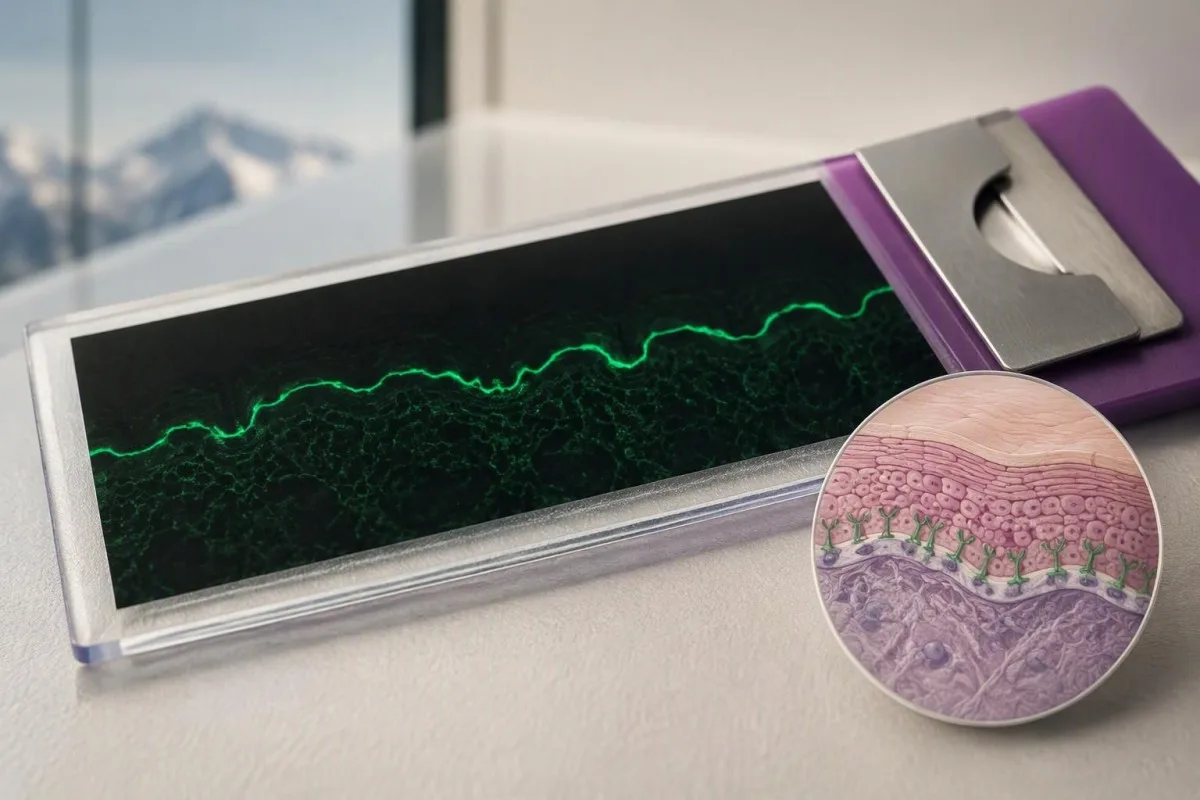
Direct and indirect immunofluorescence use different materials. Direct testing examines deposits already present in the person's skin, while indirect testing applies the person's serum to a laboratory substrate; a positive result in one test and a negative result in the other is therefore possible without a reporting error.
On salt-split skin, bullous pemphigoid antibodies commonly bind the epidermal side, often called the roof. Antibodies binding the dermal side, or floor, raise consideration of other disorders such as epidermolysis bullosa acquisita or anti-p200 pemphigoid, but binding location alone does not fully classify every case.
Meijer et al. reported 99.9% specificity for indirect immunofluorescence on salt-split skin in their 2019 diagnostic cohort. That high figure applies to that study and testing pathway; a negative result still cannot exclude pemphigoid because specificity describes false positives, not how many cases the test misses.
C3 detected in skin is not the same measurement as a serum C3 concentration. A normal circulating complement result does not negate local deposits at the basement membrane; our complement testing explanation helps prevent this common cross-test misunderstanding.
BP180, dəri biopsiyası və simptomlar uyğun gəlmirsə, necə?
Discordant BP180 and skin-test results require a review of the clinical picture, assay target, sampling site, and specimen handling. A positive ELISA with negative direct immunofluorescence can reflect incidental antibodies or an uninformative skin sample; a negative NC16A ELISA can miss disease directed against other targets.
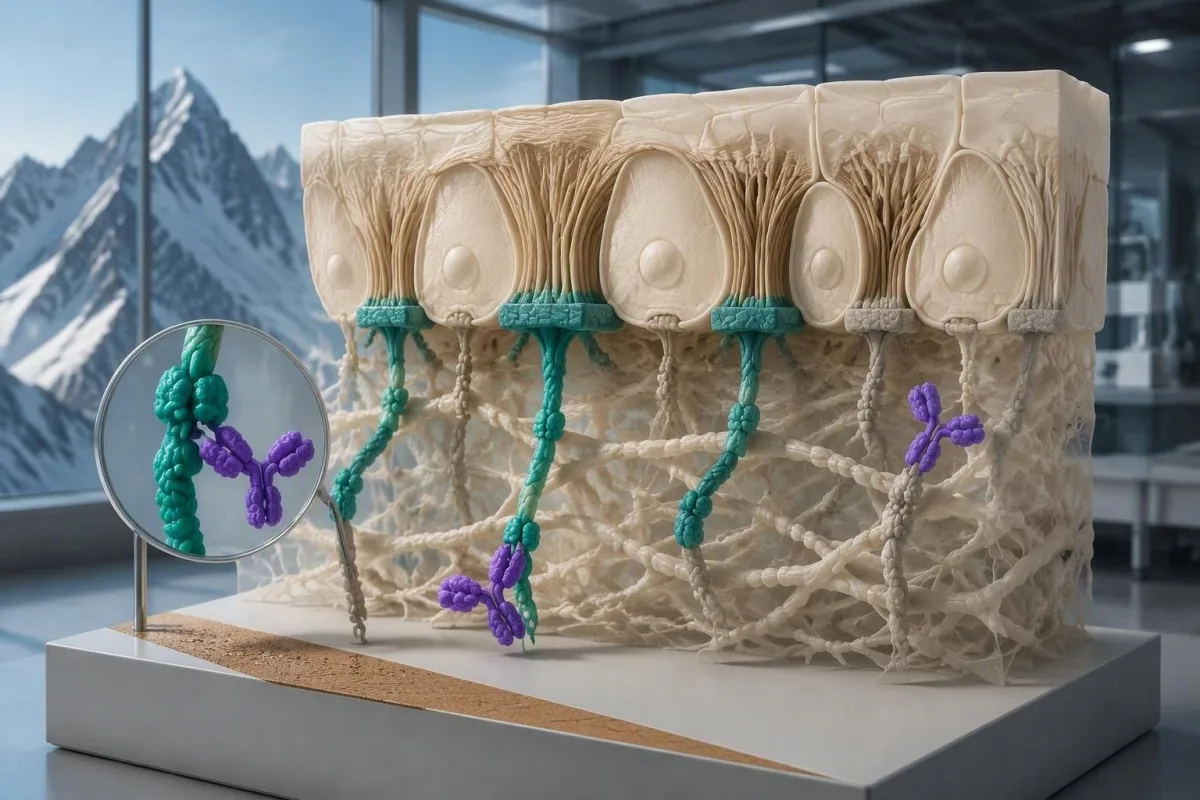
A negative direct-immunofluorescence result is less reassuring if the sample was poorly selected or incorrectly transported. Treatment before sampling may also influence findings, so clinicians need to know which creams or systemic medicines were used and where; never stop prescribed treatment solely to make a test more likely to turn positive.
A hypothetical person with characteristic new blisters, BP180 of 80 U/mL, and a negative direct-immunofluorescence specimen from an old eroded site may need repeat sampling. The same antibody result with no compatible skin findings demands a different investigation; the discrepancy does not have one automatic explanation.
A negative BP180 NC16A result does not exclude every form of pemphigoid. Further testing may include BP230 antibodies, indirect immunofluorescence, or specialized assays for other antigens; our guide to negative myasthenia antibody tests illustrates why a limited antigen panel cannot exclude an entire autoimmune disease category.
Repeat testing should address a specific uncertainty rather than create an endless sequence of panels. Ask whether the next investigation is checking the same antigen by another method, examining an additional antigen, or correcting a tissue-sampling problem; each strategy answers a different diagnostic question.
Hansı digər xəstəliklər BP180-müsbət pemfiqoidə bənzəyə bilər?
BP180 antibodies can occur in other pemphigoid-spectrum conditions, including mucous membrane pemphigoid and pemphigoid gestationis. Eczema, scabies, and drug-related eruptions can resemble early bullous pemphigoid clinically, while pemphigus involves different adhesion proteins and usually a different level of skin separation.
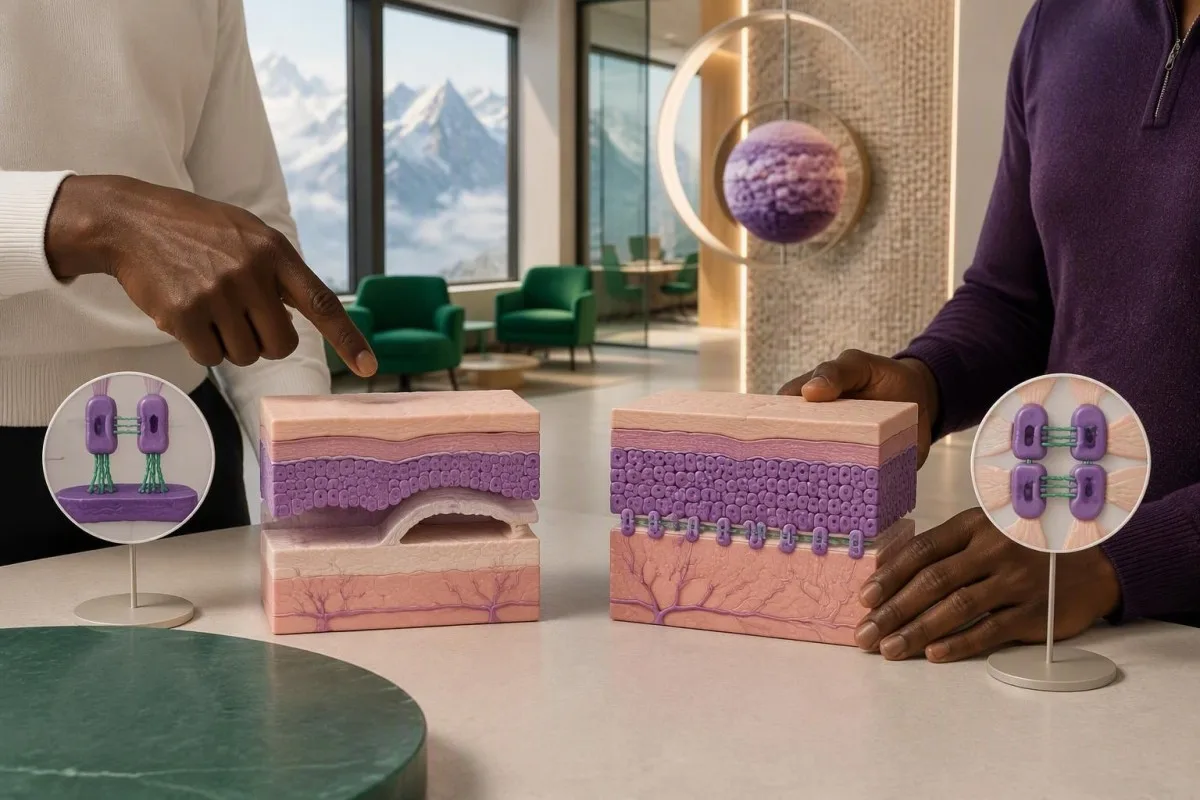
Bullous pemphigoid typically causes tense blisters because separation occurs beneath the epidermis. Pemphigus often produces more fragile blisters or erosions through loss of adhesion within the epidermis; our desmoglein antibody guide explains why BP180 testing cannot substitute for a pemphigus evaluation.
Predominantly mouth, eye, genital, or other mucosal involvement raises concern for mucous membrane pemphigoid, especially when scarring occurs. Eye pain, light sensitivity, or vision changes require urgent assessment because waiting for a repeat antibody concentration can delay treatment of a sight-threatening process.
Pemphigoid gestationis is associated with pregnancy and can produce BP180 antibodies. Pregnancy or recent childbirth therefore changes the interpretation of the same laboratory result; the distinction requires obstetric and dermatological coordination rather than assuming that every BP180-positive blistering disorder is classic older-adult bullous pemphigoid.
Scabies can cause intense itching and may coexist with an unrelated positive antibody result. Household itching, characteristic distribution, and burrows alter the differential; our scabies symptom guide is useful for that comparison, but neither household exposure nor BP180 positivity independently settles the diagnosis.
Dərmanlar BP180 nəticələrinin şərhini və ya müalicə qərarlarını dəyişirmi?
Medication history can change the likelihood and presentation of bullous pemphigoid, but a positive BP180 result alone is not a reason to stop a medicine. DPP-4 inhibitors used for diabetes and immune checkpoint inhibitors are recognized associations; treatment decisions depend on confirmed disease, severity, and the person's other health risks.

DPP-4 inhibitor-associated pemphigoid can have a less typical inflammatory presentation and may show limited NC16A reactivity. This is not universal, and exposure does not prove causation; bring a complete medicine list, including start dates, to a review using our senior medication effects guide as a preparation aid.
The 2022 EADV guideline recommends potent topical corticosteroids as a mainstay when feasible and discusses oral prednisone at approximately 0.5 mg/kg/day as an alternative in suitable circumstances (Borradori et al., 2022). These are clinician-directed treatment options for disease, not instructions to treat an isolated antibody result or begin steroids without assessment.
Systemic corticosteroids can create additional risks that are unrelated to the BP180 concentration. People with relevant residence or travel exposure may need assessment for Strongyloides before significant immunosuppression; our Strongyloides antibody explanation describes why an apparently unrelated parasite history can become a treatment-safety issue.
Kidney function, glucose, infection risk, and the ability to apply topical treatment may influence the choice of therapy more than whether BP180 is 40 or 80 U/mL. Bizim böyrək funksiyasının təfsiri üzrə bələdçi covers supportive laboratory assessment, but renal markers do not confirm pemphigoid.
BP180 səviyyələri xəstəliyin aktivliyini və sağalmanı izləmək üçün istifadə oluna bilərmi?
BP180 antibody levels can support monitoring in confirmed bullous pemphigoid, but they do not replace examination or determine treatment alone. Concentrations often track disease activity at a group level; individual patients can remain antibody-positive while their skin is controlled or experience symptoms without a proportionate rise.
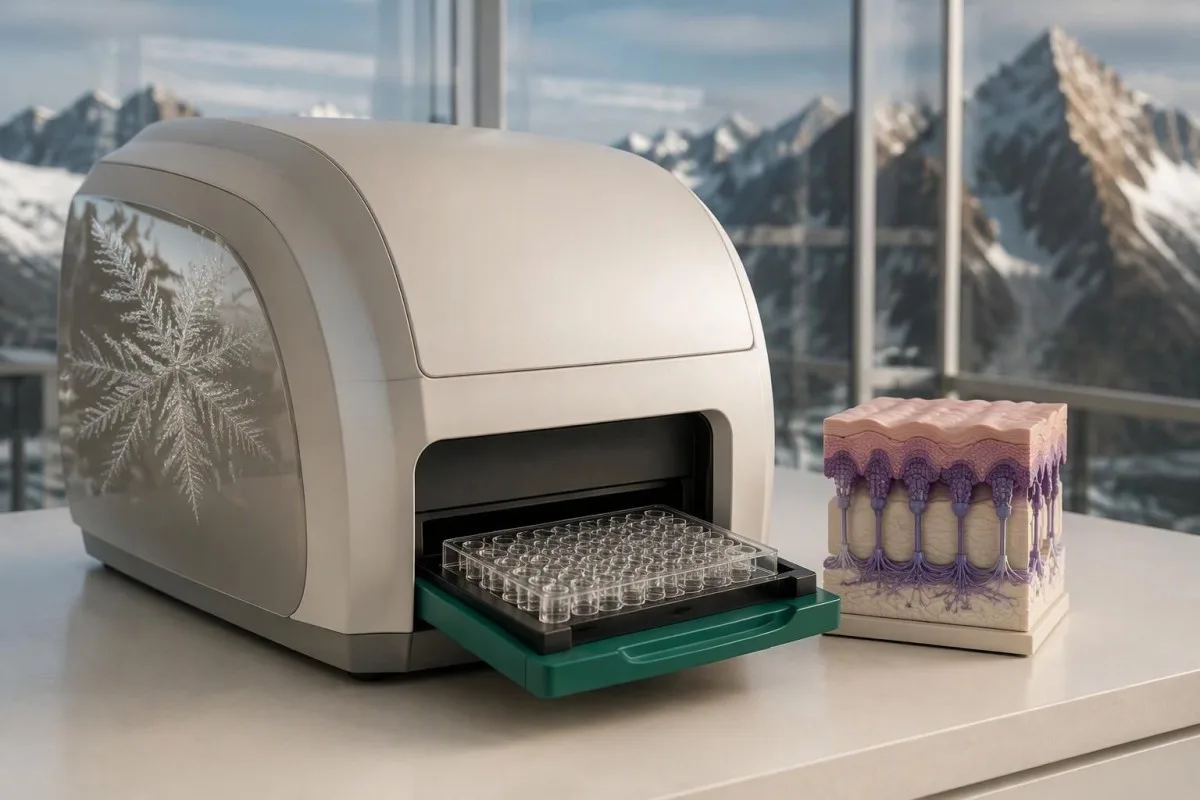
A falling BP180 concentration is most useful when it agrees with fewer new blisters and less itching. A hypothetical decline from 120 to 35 U/mL on the same assay supports an improving pattern, but it does not independently establish remission or justify stopping treatment.
An increase from 12 to 14 U/mL near a cutoff may reflect analytical or biological variation rather than a meaningful change in disease. There is no universal percentage increase that proves relapse across all BP180 assays; the method, timing, symptoms, and previous response need to be considered together.
Kantesti is an AI blood test interpretation platform that can organize serial BP180 results without treating a laboratory trend as a diagnosis. Bizim AI texnologiyası izahı describes the interpretation workflow; preserving each report's assay name and reference interval matters when comparing two or more measurements.
Changing laboratories can create an apparent rise or fall that is partly methodological. Our dərman təhlükəsizliyi trend bələdçisi explains why dates, doses, and laboratory context belong beside the numbers; photograph new skin findings and record new-blister counts when your dermatologist requests them.
Təkrar müayinə üçün özünüzlə nə gətirməli və hansı sübutlar tətbiq olunur?
Bring the full BP180 report, any BP230 result, symptom photographs, and your complete medication list to follow-up. These four information groups help a clinician decide whether you need observation, additional serum testing, properly handled skin samples, or urgent assessment rather than another isolated antibody measurement.
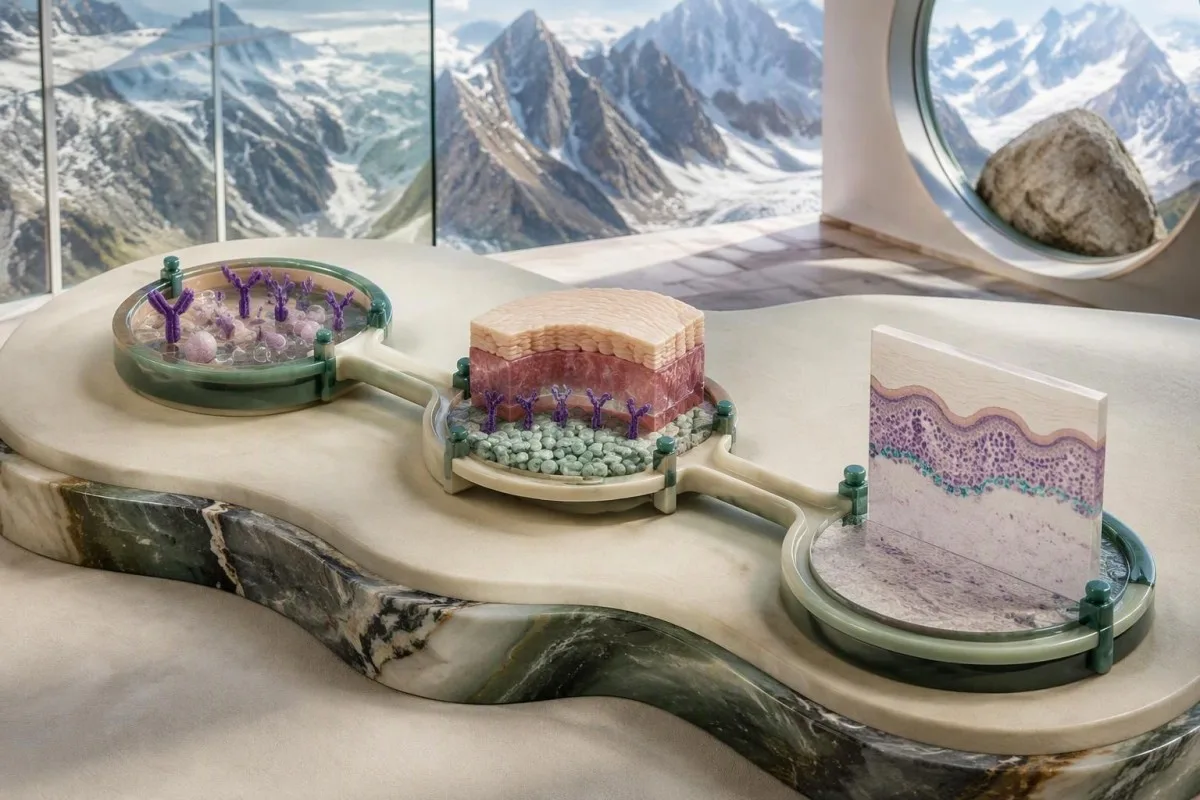
A useful report includes the exact assay name, numerical value, units, cutoff, and collection date. If a hypothetical BP180 result reads 16 U/mL, the missing cutoff may reverse whether it is considered positive; also request the actual histology and direct-immunofluorescence reports rather than relying on the phrase 'skin biopsy normal.'
New eye symptoms, swallowing difficulty, extensive rapidly spreading blisters, fever, or inability to maintain fluids need prompt clinical attention. Do not wait for a scheduled second test when those symptoms appear; supportive urinalysis can answer separate medical questions, as explained in our sidik analizi interpretasiya bələdçisi, but it cannot establish a pemphigoid diagnosis.
Kantesti helps explain the distinctions between a flagged antibody result, a probable diagnosis, and confirmed disease. Bizim məsuliyyətli AI prinsiplərimiz describe the boundaries of educational interpretation; only a clinician with access to your examination and appropriate investigations can decide whether a BP180 anticisimi müsbətdir result represents active pemphigoid.
The directly relevant evidence here comes from the 2022 EADV guideline and the 2019 JAMA Dermatology diagnostic study. The two Zenodo publications listed below concern kidney-function and urinalysis interpretation and are included as background educational publications, not evidence that BP180 confirms bullous pemphigoid or that our AI has validated diagnostic accuracy for this condition.
Tez-tez verilən suallar
BP180 anticisim testinin müsbət olması mütləq büllöz pemfiqoid xəstəliyim olduğu deməkdir?
0 Müsbət BP180 anticisim testi sizdə mütləq büllöz pemfiqoid olduğu demək deyil. Bəzi laboratoriyalar təxminən 9 U/mL, digərləri isə təxminən 20 U/mL həddindən istifadə edir, buna görə dəqiq analiz və istinad intervalı önəmlidir. Uyğun qaşınma və ya qabarcıqlar nəticəni daha mənalı edir, təcrid olunmuş zəif müsbət nəticə isə təsadüfi və ya yanlış müsbət ola bilər. Diaqnozu təsdiqləmək üçün birbaşa immunoflüoressensiya ilə dəri biopsiyası və əlavə anticisim testləri tələb oluna bilər.
Blisterlərim yoxdursa, BP180 testinin zəif müsbət nəticəsi nə deməkdir?
Suluqlar olmadan BP180 üzrə aşağı-müsbət nəticə təsadüfi anticisim aşkarlanmasını, analizlə əlaqəli yanlış müsbət nəticəni və ya suluqlar olmadan təzahür edən pemfiqoid xəstəliyini göstərə bilər. Məsələn, 12 U/mL, 9-U/mL həddinə əsasən müsbət sayılır, lakin simptomsuz şəxsdə xəstəliyin inkişaf edib-etməyəcəyini proqnozlaşdırmır. Suluqlar olmasa belə, davamlı qaşınma və ya səbəbi izah olunmayan səpgi dermatoloji müayinə tələb edir. Təcrid olunmuş aşağı-müsbət nəticəyə əsasən təkrar testin aparılması üçün universal interval və ya müalicə tövsiyəsi yoxdur.
BP180 anticisimləri mənfi olduğu halda məndə büllöz pemfiqoid ola bilərmi?
Bullous pemphigoid rutin NC16A analizində BP180 anticisimləri mənfi olsa belə baş verə bilər. Bu analiz təxminən 180 kDa-lıq zülalın müəyyən bir bölgəsini yoxlayır və əsasən digər bölgələrə yönəlmiş anticisimləri aşkar etməyə bilər. BP230 testi, birbaşa immunoflüoressensiya və dolayı immunoflüoressensiya əlavə sübutlar verə bilər. Dəri əlamətləri pemfiqoid ehtimalını güclü şəkildə düşündürürsə, mənfi qan testi müayinənin dayandırılmasına səbəb olmamalıdır.
BP230-a qarşı anticisimlərin mənfi olması büllöz pemfiqoid diaqnozunu istisna edirmi?
0 Mənfi BP230 anticisimləri büllöz pemfiqoid diaqnozunu istisna etmir. BP230 təxminən 230 kDa molekulyar kütləyə malik hüceyrədaxili lövbərləyici zülaldır və xəstəliyi təsdiqlənmiş bəzi insanlarda ona qarşı aşkarlana bilən anticisimlər olmur. Klinik və toxuma müayinələrinin nəticələri uyğun gəldikdə, BP230 anticisimləri mənfi olsa da, BP180 nəticəsinin müsbət olması bu diaqnoza uyğun gələ bilər. Bu iki anticismin konsentrasiyasını toplamaq və ya onları iki testlə təsdiqləmə qaydası kimi qəbul etmək olmaz.
Pemfiqoid üçün bəzən niyə iki dəri biopsiyası tələb olunur?
İki dəri biopsiyası çox vaxt lazım olur, çünki rutin histoloji müayinə və birbaşa immunoflüoressensiya fərqli diaqnostik suallara cavab verir. Adətən 3–4-mm-lik kiçik punch-biopsiya tətbiq olunur, lakin dermatoloq fərdi klinik təqdimata uyğun olaraq texnikanı və nümunə götürüləcək sahəni seçir. Nümunələrdən biri toxumanın quruluşunu, digəri isə bazal membran boyunca immun çöküntülərini araşdırır. Birbaşa immunoflüoressensiya üçün götürülmüş nümunənin daşınması üçün ayrıca razılaşdırılmış üsul tələb olunur və o, rutin qaydada formalinə qoyulmamalıdır.
0 Yüksək BP180 səviyyəsi pemfiqoidimin ağır olduğunu göstərirmi?
A high BP180 level does not independently determine how severe pemphigoid is or whether it is an emergency. A result of 100 U/mL must be interpreted using that assay's cutoff and alongside the extent of skin involvement, itching, new blisters, and general health. Antibody levels often relate to disease activity, but individual results and symptoms can disagree. Eye pain, vision changes, difficulty swallowing, or rapidly spreading extensive blistering require prompt assessment regardless of the antibody concentration.
Müalicə dayandırılmadan əvvəl BP180 antikorları mənfi olmalıdırmı?
0 BP180 anticisimlərinin pemfiqoid müalicəsinin azaldılmasını və ya dayandırılmasını nəzərdən keçirməzdən əvvəl həmişə neqativləşməsi tələb olunmur. Göstəricinin şərti olaraq 120-dən 35 U/mL-ə düşməsi yaxşılaşmanı dəstəkləyə bilər, lakin qərar simptomlar, yeni qabarcıqların əmələ gəlməsi, müayinə və residiv anamnezi əsasında verilir. Dəriyə nəzarət edildiyi halda anticisimlər aşkar olunmağa davam edə bilər və müxtəlif analiz üsulları üçün universal dayandırma həddi yoxdur. Yalnız anticisim göstəricisinin dəyişməsinə əsaslanaraq təyin olunmuş müalicəni dəyişməyin.
Qan analizinin nəticələrini necə oxumaq
Laboratoriya hesabatınızı yükləyin, Kantesti-nin AI-si isə saniyələr ərzində hər biomarkeri sadə dildə izah etsin. Dünyada 2 milyondan çox insan istifadə edir.
İstinadlar
- Klein, T., Mitchell, S., & Weber, H. (2026). BUN/Kreatinin Nisbəti İzahı: Böyrək Funksiyası Testi Bələdçisi. Kantesti AI tibbi araşdırmaları. DOI
- Klein, T., Mitchell, S., & Weber, H. (2026). Sidikdə Urobilinogen Testi: Tam Sidik Analizi Bələdçisi 2026. Kantesti AI tibbi araşdırmaları. DOI
- Borradori L et al. (2022). Updated S2 K guidelines for the management of bullous pemphigoid initiated by the European Academy of Dermatology and Venereology (EADV). Journal of the European Academy of Dermatology and Venereology. DOI
- Meijer JM et al. (2019). Assessment of Diagnostic Strategy for Early Recognition of Bullous and Nonbullous Variants of Pemphigoid. JAMA Dermatology. DOI
- 2M+Təhlil edilmiş testlər
- 127+ölkələr
- 100+Dillər
Tibbi komanda haqqında


E-E-A-T Etibar Siqnalları
Təcrübə
Həkim rəhbərliyi ilə laborator şərh iş axınlarının klinik icmalı.
Ekspertiza
Biomarkerlərin klinik kontekstdə necə davrandığına dair laboratoriya təbabəti diqqəti.
Səlahiyyətlilik
Dr. Thomas Klein tərəfindən tibbi baxımdan nəzərdən keçirilib; Dr. Sarah Mitchell və Prof. Dr. Hans Weber töhfə veriblər.
Etibarlılıq
Aydın izləmə yolları ilə həyəcanı azaltmağa yönəlmiş sübuta əsaslanan şərh.

Tibbi məsuliyyətdən imtina bildirişi
Bu məqalə yalnız təhsil məqsədlidir və tibbi məsləhət təşkil etmir. Diaqnoz və müalicə qərarları üçün həmişə ixtisaslı səhiyyə işçisi ilə məsləhətləşin.
Dərc edilmişdir · Redaksiya komandası ilə əlaqə saxlayın
İngiltərə və Uelsdə qeydiyyatdan keçmiş Kantesti Ltd tərəfindən nəşr olunub, şirkət №. 17090423, London, Birləşmiş Krallıq.
