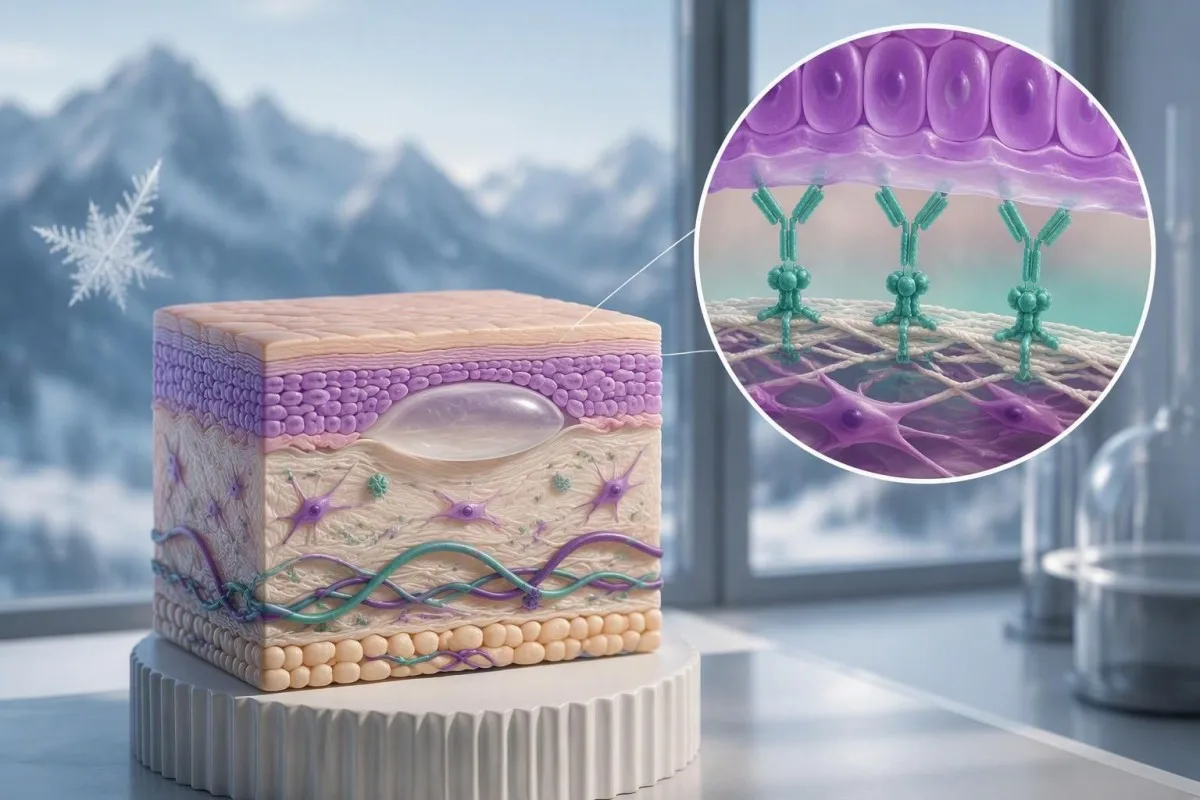
BP180 нәтижесінің оң болуы терінің аутоиммундық ауруын қолдайды, бірақ бұл көрсеткіштің өзі диагноз қоюға жеткіліксіз. Әрі қарай не істеу керегін симптомдар, қолданылған талдау әдісі және теріден дұрыс алынған үлгілер анықтайды.

Негізгі тұжырымдар
- BP180 антиденелерінің оң болуы талдау әдісі BP180 нысанасына қарсы антиденелерді анықтағанын білдіреді; бұл өздігінен буллезді пемфигоидты растамайды.
- Зертханадағы шекті мәндер әртүрлі: BP180 талдауларының кейбірінде шамамен 9 U/mL, ал басқаларында шамамен 20 U/mL қолданылады. Өз зертханаңыздың референстік аралығын қараңыз.
- Төмен оң нәтижелер қышыну, бөртпе немесе күлбіреуіктер болмаса, антидененің кездейсоқ анықталғанын немесе талдау нәтижесінің жалған оң болғанын білдіруі мүмкін, бірақ бұл тері ауруы барын растамайды.
- Буллезсіз пемфигоид күлбіреуіктерсіз тұрақты қышынуды тудыруы мүмкін; мамандандырылған диагностикалық зерттеуде пемфигоидтың 343 жағдайының 74-і буллезсіз болған.
- BP230 антиденелері қосымша дәлел береді, бірақ BP230 антиденелерінің теріс болуы буллезді пемфигоидты жоққа шығармайды.
- Тікелей иммунофлуоресценция терідегі антиденелердің шөгуін зерттейді; базальді мембрана бойындағы сызықтық IgG және/немесе C3 пемфигоидты ауруды қолдайды.
- Терінің екі үлгісі жиі алынады: әдеттегі микроскопия үшін зақымданған аймақтан және тікелей иммунофлуоресценция үшін жақын орналасқан, тиісті түрде таңдалған аймақтан үлгі.
- Шұғыл белгілер көздің ауыруын, көру қабілетінің өзгеруін, жұтынудың қиындауын, теріде ауқымды өзгерістермен қатар жүретін қызбаны немесе күлдіреуіктердің жылдам таралуын қамтиды; антидене нәтижесін күтіп отырмаңыз.
BP180 нәтижесінің оң болуы буллезді пемфигоидты растай ма?
Жоқ — BP180 антиденесінің оң нәтижесі буллезді пемфигоид диагнозын өздігінен растамайды. Симптомдар мен терідегі белгілер сәйкес келгенде ол диагнозды қолдайды, бірақ күлдіреуіктерсіз әлсіз оң нәтиже кездейсоқ болуы мүмкін; себебін анықтау үшін дерматологтарға көбіне тікелей иммунофлуоресценциямен тері биопсиясы, ал кейде қосымша антидене тесті қажет.
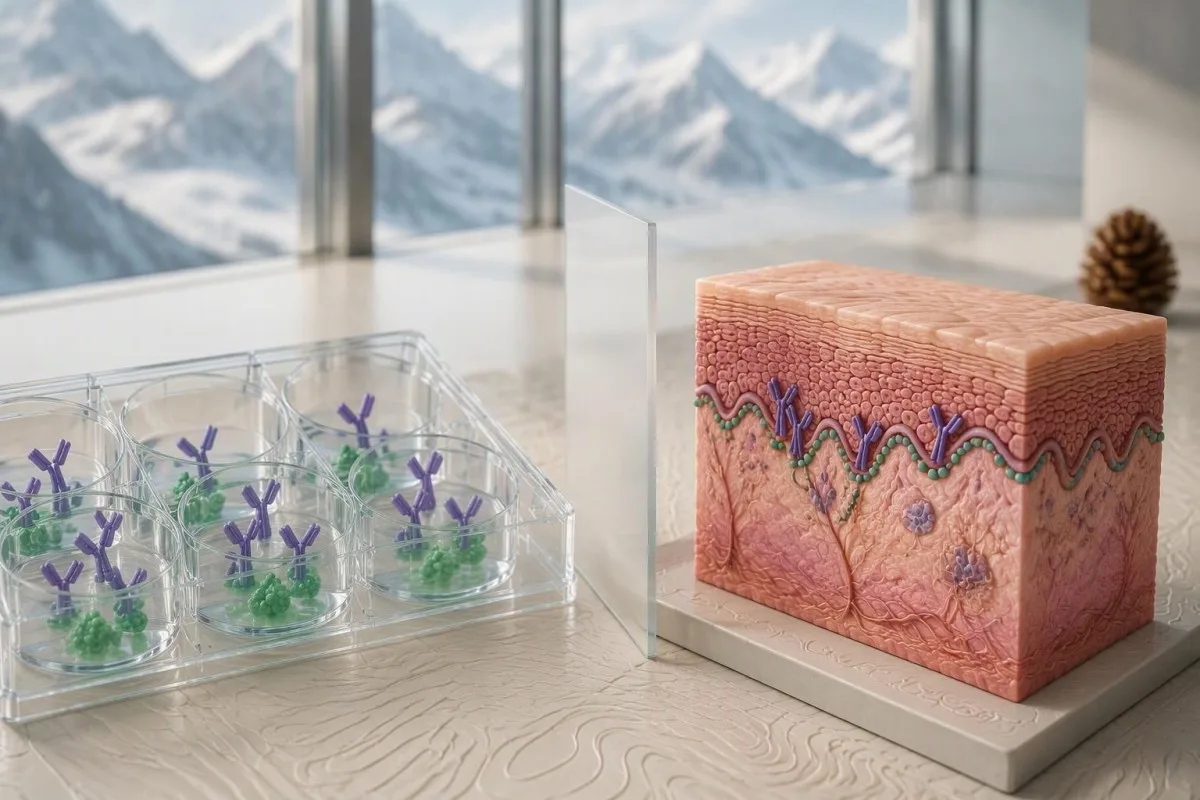
Буллезді пемфигоид диагнозын қою үшін клиникалық және иммунопатологиялық сәйкестік қажет, бір ғана зертханалық көрсеткіштің ауытқуы жеткіліксіз. 2022 жылғы EADV нұсқаулығында диагноз клиникалық көрініс пен тіндерді және айналымдағы антиденелерді тиісті зерттеу арқылы қойылатыны сипатталған (Borradori et al., 2022); іс жүзінде анықталған антиденелер адамның тері жағдайын түсіндіре ала ма деген сұрақ маңызды.
Антидене тестінің оң нәтижесі мен белсенді аутоиммундық ауру — екі бөлек нәрсе. Мысалы, гипотетикалық 12 ХБ/мл нәтижесі бір зертханада оң болуы мүмкін, алайда мұндай нәтижесі бар симптомсыз адамның диагностикалық ықтималдығы кең жайылған қышитын, керілген күлдіреуіктері бар және антидене деңгейі дәл сондай адамдікінен өзгеше.
Kantesti — BP180 нәтижелерін зертхананың шекті мәні және сіз берген ақпарат аясында түсіндіруге көмектесетін AI қан талдауын талдау құралы. Біздің түсіндірмеміз теріңізді тексере алмайды немесе тікелей иммунофлуоресценция жасай алмайды; біздің компания туралы мәлімет осы ағартушылық қолдаудың артында тұрған ұйымды анықтайды.
Нәтижені аурудың тұрақты белгісі ретінде емес, нақтырақ сұрақ қоюға себеп ретінде қарастырыңыз. Біздің нұсқаулығымыз оң антидене нәтижелерін антиденелерді анықтау, аурудың белсенділігі және диагнозды растау — үш бөлек ұғым екенін түсіндіреді.
BP180 антиденелеріне арналған тест нақты нені өлшейді?
BP180 антиденесіне арналған тест әдетте BP180-дің бір бөлігіне, сондай-ақ XVII типті коллаген деп аталатын ақуызға бағытталған сарысулық IgG-ні өлшейді. BP180 — шамамен 180 кДа болатын, эпидермисті астындағы тінге бекітуге қатысатын ақуыз; көптеген стандартты талдаулар бүкіл ақуызды емес, оның NC16A аймағын тексереді.
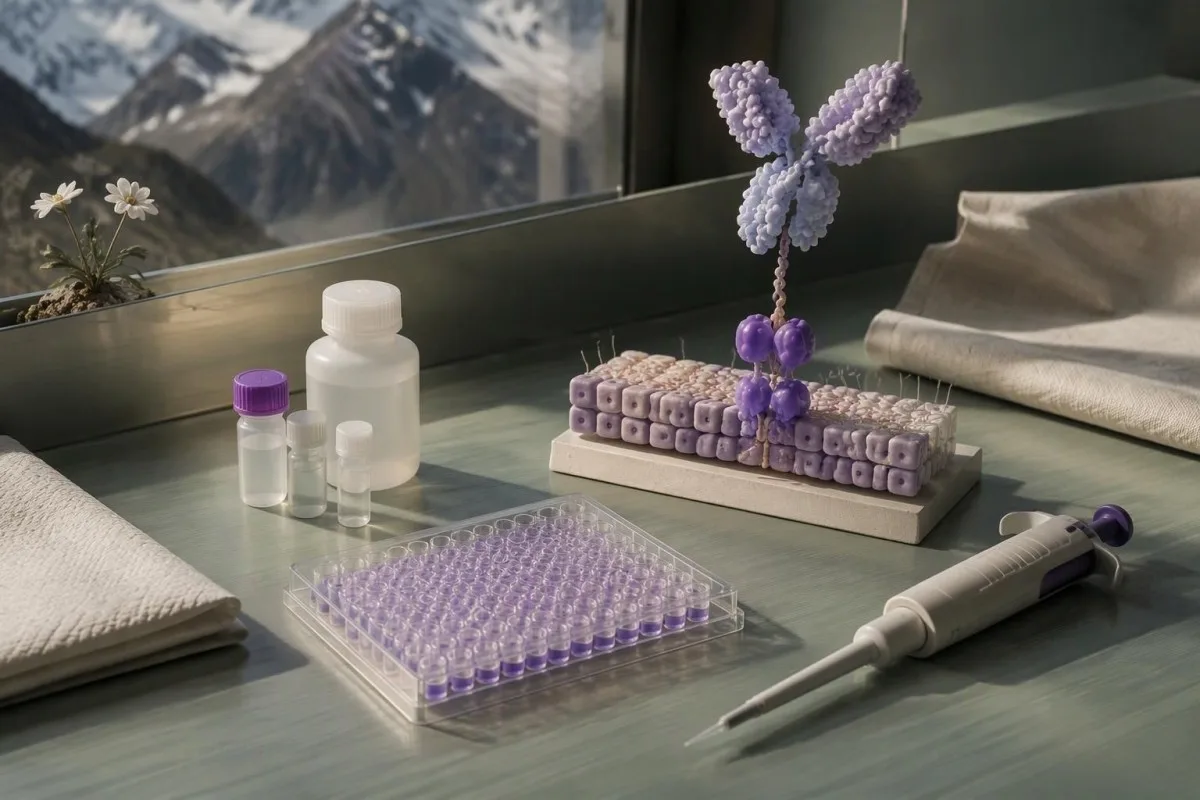
BP180 — терінің құрылымдық ақуызы, оның қандағы концентрациясы өлшенбейді. Есепте осы ақуызға қарсы антиденелер көрсетіледі; көбіне ферментпен байланысқан иммуносорбенттік талдау немесе ELISA қолданылады; сондықтан 30 U/мл мәні тері ақуызының 30 бірлігі қан айналымында жүр дегенді білдірмейді.
The NC16A домені жасуша мембранасына жақын, BP180 ақуызының сыртқы бөлігінде орналасады және кәдімгі буллезді пемфигоид кезінде антиденелер жиі нысанаға алатын аймақ болып табылады. Осы аймақты тексеру практикалық талдау жүргізуге мүмкіндік береді, бірақ сонымен бірге анықталмай қалатын жағдай туғызады: негізінен басқа аймақтарға бағытталған антиденелер анықталмай қалуы мүмкін.
Антиденелердің сандық концентрациясын иммунофлуоресценция титрімен өзара алмастыруға болмайды. Нәтиже мына түрде берілсе, 1:40 ол сұйылту кезіндегі реактивтілікті сипаттайды, ал 40 U/mL талдауға сәйкестендірілген концентрацияны сипаттайды; біздің сандық және сапалық тестілер туралы түсіндірмеміз осы есеп беру форматтарын ажыратуға көмектеседі.
Есепте BP180 NC16A IgG, басқа BP180 талдауы немесе кеңірек пемфигоид панелі көрсетілгенін тексеріңіз. Бұлар автоматты түрде баламалы тестілер болып саналмайды, ал теріс IgG ELISA нәтижесі антиденелердің басқа кластары немесе базальді мембрананың басқа нысаналары туралы барлық сұраққа жауап бермейді.
BP180 антиденелері нәтижесінің төмен оң көрсеткіші деп нені айтады?
BP180-дің төмен оң нәтижесі — қолданылған нақты талдаудың шекті мәнінен сәл жоғары көрсеткіш. Төмен оң нәтиженің әмбебап ауқымы жоқ: кейбір зертханалар шамамен 9 U/mL, шегін қолданса, басқалары шамамен 20 U/mL, шегін қолданады; калибрлеу мен есеп беру санаттары да әртүрлі болады.
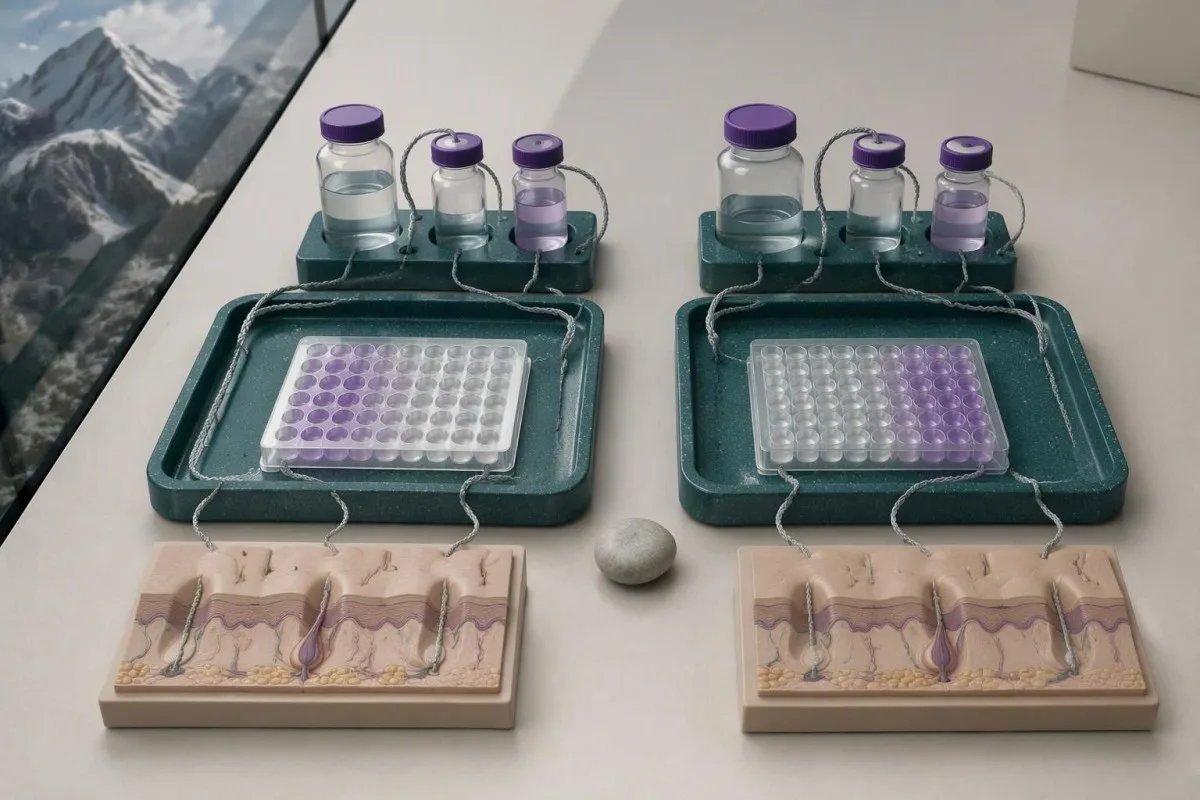
BP180 талдауының өлшем бірліктері зертханалар арасында жалпыға бірдей стандартталмаған. Нәтиже 15 U/mL 9 U/mL шегін қолданатын зертхана саясаты бойынша оң, ал 20 U/mL шегін қолданатын саясат бойынша теріс болуы мүмкін, бірақ бұл екінші талдауда ауру анықталмай қалды дегенді білдірмейді; әдістер мен калибраторлар әртүрлі болуы ықтимал.
Шекті мәндер талдауды бағалау кезінде қамтылған популяциялардағы сезімталдық пен ерекшелік арасындағы теңгерімді сақтайды. Шекті төмендету ауруы бар адамдардың көбірек бөлігін анықтауға мүмкіндік бергенімен, ауруы жоқ адамдардың да көбірек бөлігін анықтауы мүмкін; шекті мән — зертхананың шешім қабылдау шекарасы, тері кенеттен күлдірей бастайтын биологиялық нүкте емес.
Kantesti AI хабарланған BP180 көрсеткішін оған берілген референстік аралықпен қатар қарастыруға көмектесе алады, бірақ тек 18 U/mL көрсетілген қиылып алынған суретте маңызды ақпарат жетіспейді. Тест атауын, өлшем бірліктерін, түсіндіру санаттарын және зертхана түсініктемелерін қосыңыз; жалпы референттік диапазоннан тыс белгі мұндай мәліметтерді алмастыра алмайды.
Төмендегі мысалдар әмбебап ауырлық шкаласын емес, есеп берудің екі ықтимал саясатын көрсетеді. BP180 антиденесінің концентрациясы өздігінен шұғыл медициналық жағдайды анықтамайды; жағдайдың шұғылдығын терінің кең ауқымды зақымдануы, сусыздану, жүйелік ауру және көз немесе тыныс жолдары симптомдары айқындайды.
| Деңгей | Аралық | Мағынасы |
|---|---|---|
| A талдауының мысалы: шекті мәннен төмен | <9 U/mL | Осы түсіндірмелік зертханалық саясат бойынша теріс нәтиже; клиникалық күдік жоғары болып қала берсе, ауру жоққа шығарылмайды. |
| A талдауының мысалы: шекті мәнге тең немесе одан жоғары | ≥9 U/mL | Осы саясат бойынша оң нәтиже; шекті мәнге жақындығы мен клиникалық белгілер нәтижені түсіндіруге әсер етеді. |
| B талдауының мысалы: шекті мәннен төмен | <20 U/mL | Басқа түсіндірмелік саясат бойынша теріс нәтиже; талдау жүйелері арасындағы нәтижелерді тікелей түрлендірмеңіз. |
| B талдауының мысалы: шекті мәнге тең немесе одан жоғары | ≥20 U/mL | Осы саясат бойынша оң нәтиже; бұл сан диагнозды немесе аурудың ауырлығын өздігінен анықтамайды. |
BP180 нәтижесінің оң болуы неліктен жаңылыстыруы мүмкін?
Талдауға дейін адамда пемфигоидтың клиникалық ықтималдығы төмен болса, BP180 нәтижесінің оң болуы онша нанымды емес. Тіпті дәлдігі біршама жоғары талдаудың өзі жалған оң нәтижелер береді, сондықтан нәтиженің мәні симптомсыз скринингтен өткен адамдар тобында және тән күлдіреуіктерді бағалайтын мамандандырылған клиникада әртүрлі болады.
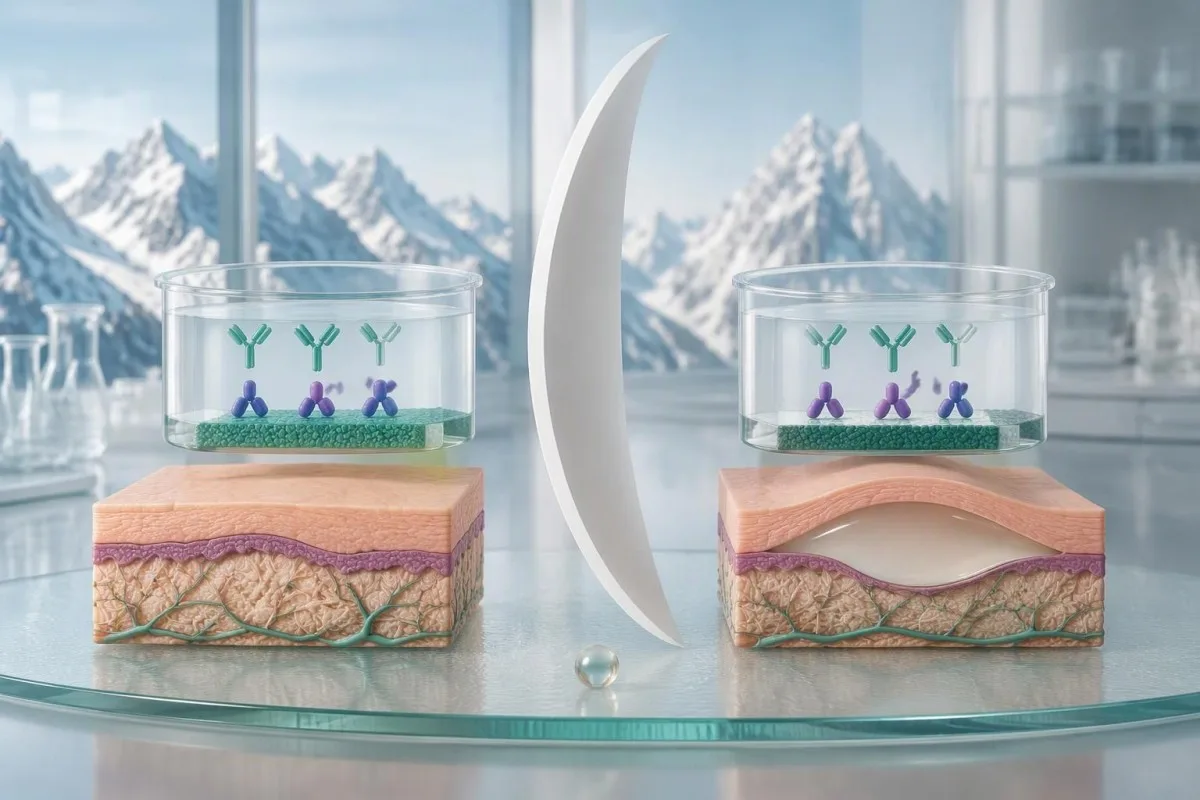
Сезімталдық пен ерекшелік оң нәтиже алғаннан кейін сізде аурудың болу ықтималдығына тең емес. Бұл ықтималдық тексерілген топта аурудың қаншалықты жиі кездесетініне де байланысты; антиденелер панелі терінің белгілі бір көрінісін тексеру үшін емес, кең ауқымда тағайындалған кезде бұл айырмашылықтың маңызы зор.
Анық түрде гипотетикалық талдауды қарастырайық, оның сезімталдығы 90%, ал ерекшелігі 95%, ; ол ауру ықтималдығы 1% болатын 1 000 адамға қолданылған. Ол шамамен 9 шынайы оң және 50 жалған оң нәтиже анықтар еді, осылайша оң болжамдық мәні шамамен 15% болады; бұлар BP180 талдауының тиімділігі туралы мәлімдемелер емес, оқытуға арналған жорамалдар.
Ауру ықтималдығы мынаған тең болғанда, сол гипотетикалық талдауды қолданыңыз: 20%, and approximately 180 true positives and 40 false positives would occur per 1,000 tests. The positive predictive value becomes about 82%—a large change caused by clinical context, not by a different laboratory method.
These examples explain why a dermatologist may request tissue testing despite a positive result, or take characteristic symptoms seriously despite a negative one. Our discussion of MOG антиденелерінің нәтижелерін түсіндіру illustrates the same probability principle in another autoimmune condition, although its diagnostic criteria cannot be transferred to pemphigoid.
BP180 нәтижесі оң болса, бірақ сізде күлбіреуіктер болмаса, не істеу керек?
A low-positive BP180 result without blisters does not establish bullous pemphigoid or reliably predict future blistering. The next distinction is whether you have no skin symptoms at all, or persistent itching and an unexplained rash that could represent a nonbullous pemphigoid presentation.

Incidental BP180 antibody detection can occur without clinically established pemphigoid. Possible explanations include low-level autoreactivity and assay-related false positivity; there is no validated conversion rule that turns an isolated result of 11 U/mL into a percentage risk of developing blisters later.
A hypothetical person with 11 U/mL, no itching, no rash, and no mucosal symptoms usually needs a contextual review rather than automatic immunosuppressive treatment. The clinician should check why the assay was ordered, whether the result was unexpected, and whether a skin examination reveals findings the person had not recognized.
Persistent dryness and itching still deserve assessment because common explanations remain common. Eczema, medication effects, thyroid disease, and other causes may be more likely than pemphigoid; our dry skin testing guide explains why additional blood tests should follow symptoms rather than a blanket panel.
Лейкозды дәлелдейтін no universal repeat-testing interval for an asymptomatic low-positive BP180 result. A clinician may choose observation, a repeat using the same method, or specialist review depending on the history; new persistent itching, urticarial plaques, or blisters should change that plan rather than waiting for a scheduled repeat.
Буллезді пемфигоид тек қышынудан басталуы мүмкін бе?
Pemphigoid can present with persistent itching, eczema-like patches, urticarial plaques, or scratch-related changes without visible blisters. In a specialist diagnostic study, 74 of 343 pemphigoid cases—21.6%—were nonbullous, showing that the absence of blisters cannot independently exclude the disorder (Meijer et al., 2019).

Nonbullous pemphigoid is not simply every itchy rash with a positive BP180 result. Diagnosis still needs compatible symptoms and appropriate immunopathological evidence; the 21.6% study figure came from a referred population and should not be interpreted as the probability that any person with itching has pemphigoid.
The symptom pattern often matters more than whether one small blister has appeared. Persistent, widespread itching in an older adult, especially with recurrent raised plaques or poor response to ordinary eczema care, warrants a dermatological assessment; our itchy skin laboratory guide separates skin-directed testing from tests for systemic causes.
Eosinophilia can accompany bullous pemphigoid, but it is neither required nor diagnostic. An absolute eosinophil count above approximately 0,5 × 10^9/л is often flagged in adults, yet allergy, medications, and parasites can produce the same finding; our guide to жоғары эозинофил санақтары explains those alternatives.
A dermatologist does not always need to wait for a blister before collecting a useful sample for direct immunofluorescence. In nonbullous disease, sample selection is tailored to the available rash and laboratory protocol; document the distribution and duration of itching, because a disappearing rash can make later assessment harder.
BP230 антиденелері BP180 тестін қалай толықтырады?
BP230 antibodies provide complementary evidence for pemphigoid but cannot confirm or exclude bullous pemphigoid alone. BP230 is an approximately 230-kDa intracellular anchoring protein, whereas BP180 crosses the cell membrane; their different locations and antibody targets help explain why the two results can disagree.
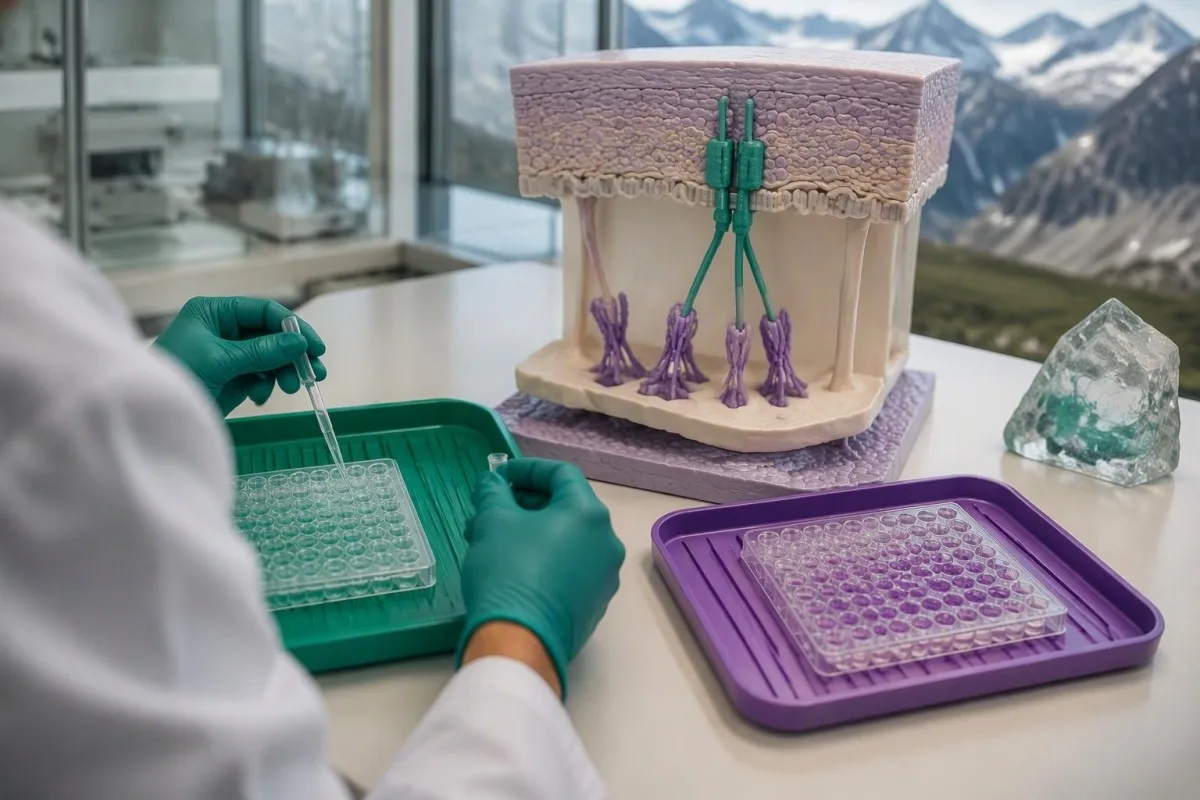
A negative BP230 antibody result does not cancel a positive BP180 result. Some people with confirmed pemphigoid have antibodies detectable against only one tested antigen, and each assay has its own sensitivity; interpreting the pair as a two-test pass-or-fail rule creates avoidable diagnostic errors.
Шартты түрде алынған BP180 result of 45 U/mL with negative BP230 antibodies still warrants assessment if tense blisters and severe itching are present. Conversely, isolated low-positive BP230 antibodies without compatible findings are not enough to diagnose pemphigoid; a second positive marker strengthens a pattern only when the overall evidence fits.
Kantesti is an AI biomarker interpretation platform that can explain BP180 and BP230 antibodies as complementary findings rather than interchangeable scores. This is similar to the reasoning used for antibody panels in connective disease, but skin-specific tissue findings remain central to pemphigoid assessment.
Do not add BP180 and BP230 concentrations together, even if both are expressed in U/мл. They represent different antigen-specific measurements with different calibration systems; BP180 levels generally have a better-established relationship with disease activity than BP230 levels, but neither replaces examination.
Неліктен тікелей иммунофлуоресценция әдісімен тері биопсиясын алу қажет болуы мүмкін?
Skin biopsy with direct immunofluorescence can show whether antibodies or complement are deposited at the skin's basement membrane. Dermatologists often collect two separate specimens because routine microscopy and direct immunofluorescence answer different questions and require different sample handling.
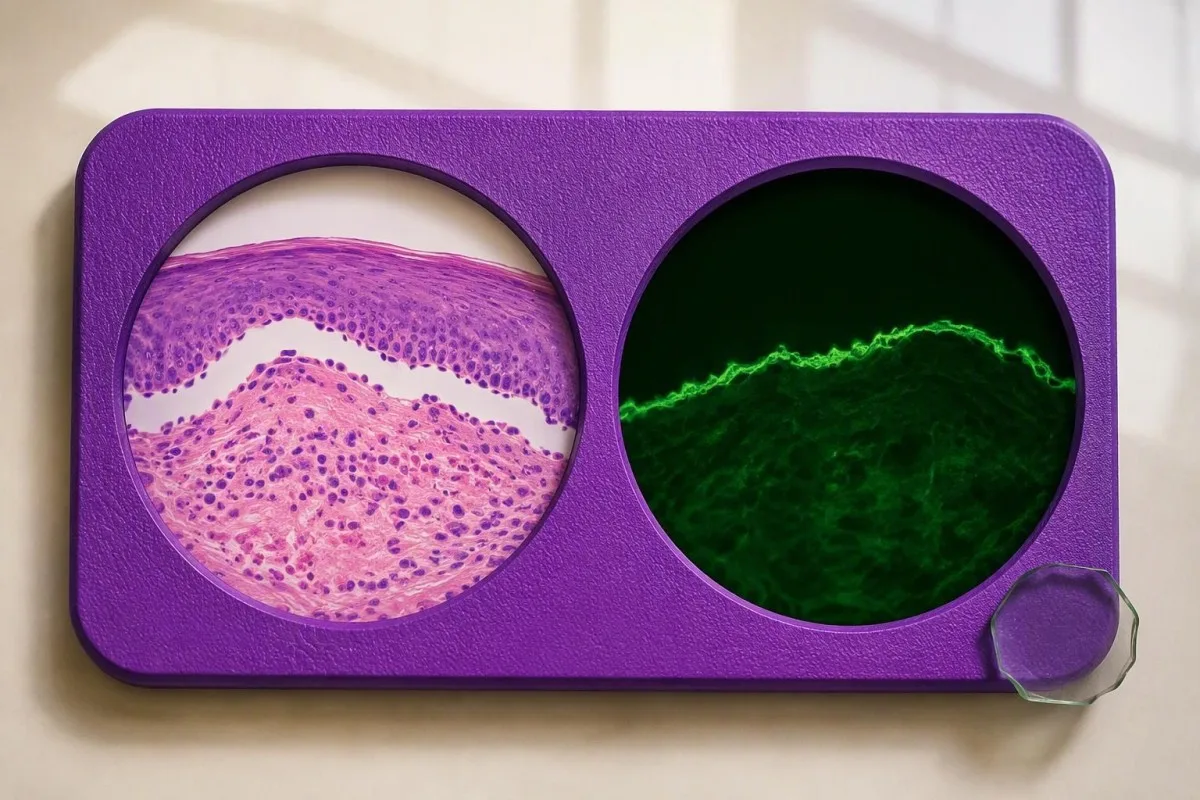
Routine histology examines tissue structure and inflammatory cells. A sample from a fresh blister or suitable affected area may show separation beneath the epidermis and eosinophils, but these features are not unique to bullous pemphigoid; the second sample looks for the immune-deposit pattern that helps classify the disorder.
For classic blistering presentations, the direct-immunofluorescence sample is commonly taken from appropriately selected skin near a fresh blister rather than its eroded center. A small 3–4-mm punch is often used, although technique and location depend on the case; sampling heavily damaged tissue can remove the structures the laboratory needs to examine.
The specimen for direct immunofluorescence must not be routinely placed in formalin. Laboratories generally require a dedicated transport medium or another explicitly agreed handling method, while the routine histology specimen commonly goes into formalin; ask whether the two containers have been prepared for their separate purposes.
In Meijer et al.'s 2019 diagnostic cohort, direct immunofluorescence had a sensitivity of 88.3%, so even this valuable test was not infallible. Kantesti's клиникалық валидация туралы ақпараты concerns our interpretation methodology—not a claim that AI can reproduce skin immunofluorescence or establish its findings.
Оң иммунофлуоресценция және тұзбен ажырату тестілерінің нәтижелері нені білдіреді?
Linear IgG and/or C3 along the basement membrane on direct immunofluorescence supports a pemphigoid-spectrum disorder, but the pattern is not unique to bullous pemphigoid. Indirect immunofluorescence on salt-split skin can add evidence by showing where circulating antibodies bind relative to an experimentally created tissue separation.
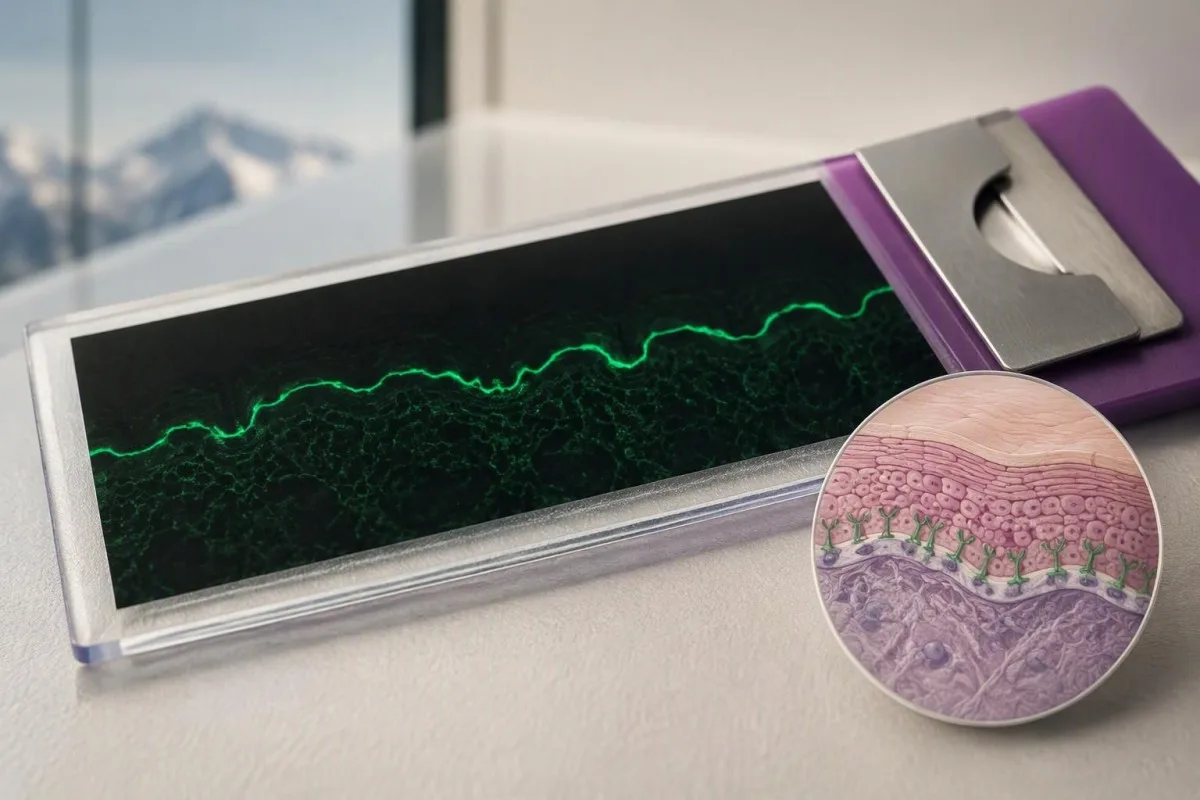
Direct and indirect immunofluorescence use different materials. Direct testing examines deposits already present in the person's skin, while indirect testing applies the person's serum to a laboratory substrate; a positive result in one test and a negative result in the other is therefore possible without a reporting error.
On salt-split skin, bullous pemphigoid antibodies commonly bind the epidermal side, often called the roof. Antibodies binding the dermal side, or floor, raise consideration of other disorders such as epidermolysis bullosa acquisita or anti-p200 pemphigoid, but binding location alone does not fully classify every case.
Meijer et al. reported 99.9% specificity for indirect immunofluorescence on salt-split skin in their 2019 diagnostic cohort. That high figure applies to that study and testing pathway; a negative result still cannot exclude pemphigoid because specificity describes false positives, not how many cases the test misses.
C3 detected in skin is not the same measurement as a serum C3 concentration. A normal circulating complement result does not negate local deposits at the basement membrane; our complement testing explanation helps prevent this common cross-test misunderstanding.
BP180 нәтижесі, тері биопсиясы мен симптомдар бір-біріне сәйкес келмесе, не істеу керек?
Discordant BP180 and skin-test results require a review of the clinical picture, assay target, sampling site, and specimen handling. A positive ELISA with negative direct immunofluorescence can reflect incidental antibodies or an uninformative skin sample; a negative NC16A ELISA can miss disease directed against other targets.
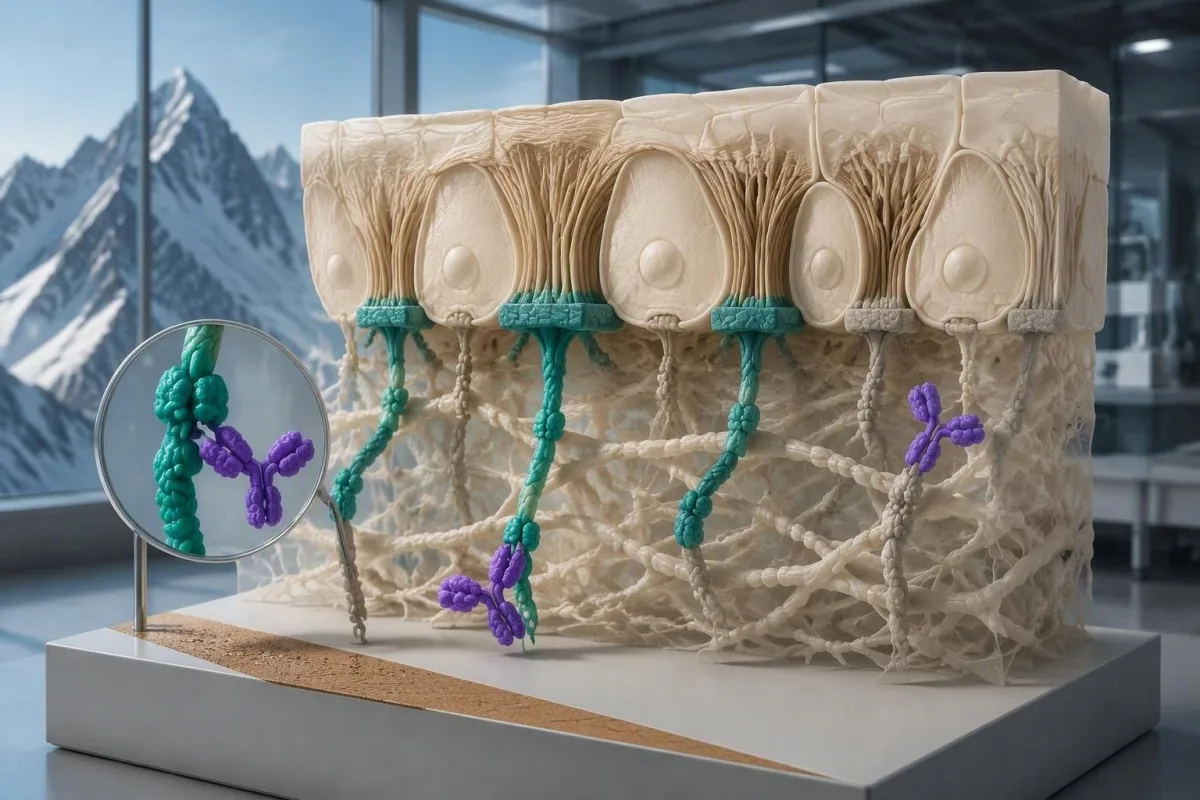
A negative direct-immunofluorescence result is less reassuring if the sample was poorly selected or incorrectly transported. Treatment before sampling may also influence findings, so clinicians need to know which creams or systemic medicines were used and where; never stop prescribed treatment solely to make a test more likely to turn positive.
A hypothetical person with characteristic new blisters, BP180 of 80 U/mL, and a negative direct-immunofluorescence specimen from an old eroded site may need repeat sampling. The same antibody result with no compatible skin findings demands a different investigation; the discrepancy does not have one automatic explanation.
A negative BP180 NC16A result does not exclude every form of pemphigoid. Further testing may include BP230 antibodies, indirect immunofluorescence, or specialized assays for other antigens; our guide to negative myasthenia antibody tests illustrates why a limited antigen panel cannot exclude an entire autoimmune disease category.
Repeat testing should address a specific uncertainty rather than create an endless sequence of panels. Ask whether the next investigation is checking the same antigen by another method, examining an additional antigen, or correcting a tissue-sampling problem; each strategy answers a different diagnostic question.
Тағы қандай аурулар BP180-оң пемфигоидқа ұқсауы мүмкін?
BP180 antibodies can occur in other pemphigoid-spectrum conditions, including mucous membrane pemphigoid and pemphigoid gestationis. Eczema, scabies, and drug-related eruptions can resemble early bullous pemphigoid clinically, while pemphigus involves different adhesion proteins and usually a different level of skin separation.
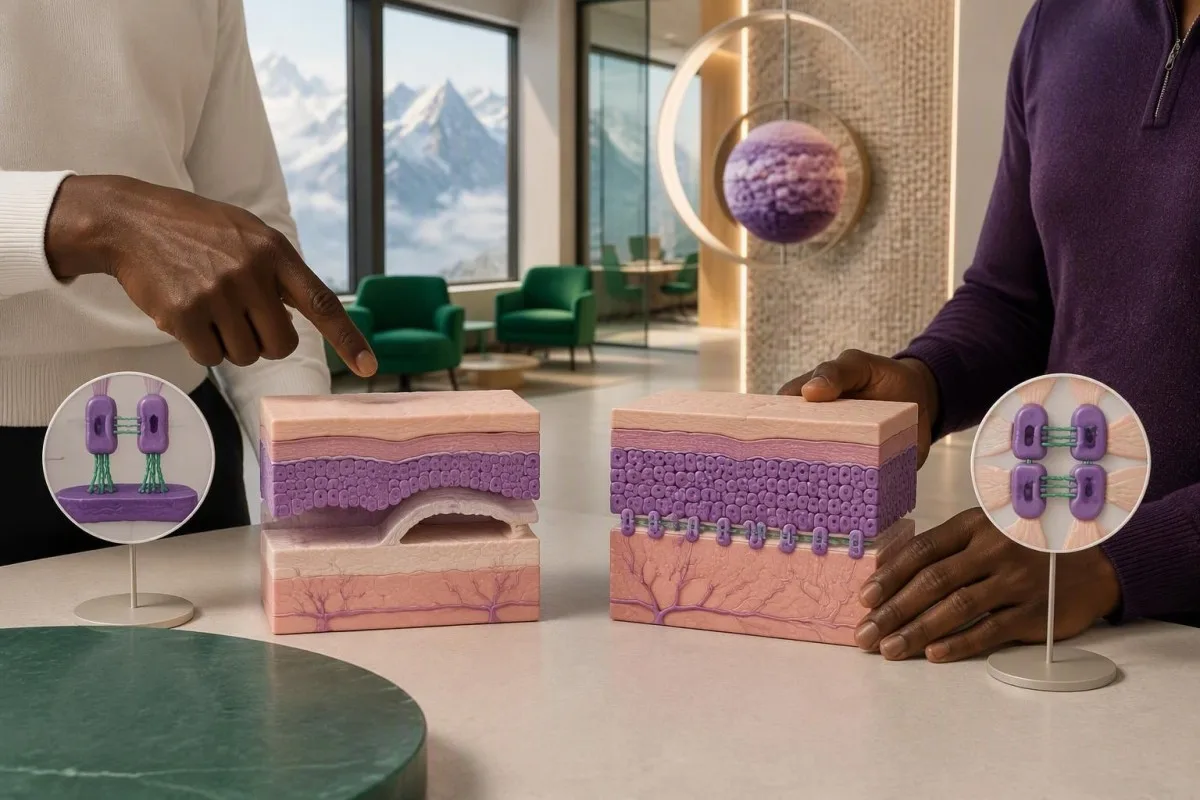
Bullous pemphigoid typically causes tense blisters because separation occurs beneath the epidermis. Pemphigus often produces more fragile blisters or erosions through loss of adhesion within the epidermis; our desmoglein antibody guide explains why BP180 testing cannot substitute for a pemphigus evaluation.
Predominantly mouth, eye, genital, or other mucosal involvement raises concern for mucous membrane pemphigoid, especially when scarring occurs. Eye pain, light sensitivity, or vision changes require urgent assessment because waiting for a repeat antibody concentration can delay treatment of a sight-threatening process.
Pemphigoid gestationis is associated with pregnancy and can produce BP180 antibodies. Pregnancy or recent childbirth therefore changes the interpretation of the same laboratory result; the distinction requires obstetric and dermatological coordination rather than assuming that every BP180-positive blistering disorder is classic older-adult bullous pemphigoid.
Scabies can cause intense itching and may coexist with an unrelated positive antibody result. Household itching, characteristic distribution, and burrows alter the differential; our scabies symptom guide is useful for that comparison, but neither household exposure nor BP180 positivity independently settles the diagnosis.
Дәрілер BP180 нәтижесін түсіндіруге немесе емдеу туралы шешімдерге әсер ете ме?
Medication history can change the likelihood and presentation of bullous pemphigoid, but a positive BP180 result alone is not a reason to stop a medicine. DPP-4 inhibitors used for diabetes and immune checkpoint inhibitors are recognized associations; treatment decisions depend on confirmed disease, severity, and the person's other health risks.

DPP-4 inhibitor-associated pemphigoid can have a less typical inflammatory presentation and may show limited NC16A reactivity. This is not universal, and exposure does not prove causation; bring a complete medicine list, including start dates, to a review using our senior medication effects guide as a preparation aid.
The 2022 EADV guideline recommends potent topical corticosteroids as a mainstay when feasible and discusses oral prednisone at approximately 0.5 mg/kg/day as an alternative in suitable circumstances (Borradori et al., 2022). These are clinician-directed treatment options for disease, not instructions to treat an isolated antibody result or begin steroids without assessment.
Systemic corticosteroids can create additional risks that are unrelated to the BP180 concentration. People with relevant residence or travel exposure may need assessment for Strongyloides before significant immunosuppression; our Strongyloides antibody explanation describes why an apparently unrelated parasite history can become a treatment-safety issue.
Kidney function, glucose, infection risk, and the ability to apply topical treatment may influence the choice of therapy more than whether BP180 is 40 or 80 U/mL. Біздің бүйрек функциясын интерпретациялау нұсқаулығы covers supportive laboratory assessment, but renal markers do not confirm pemphigoid.
BP180 деңгейлері ауру белсенділігін және сауығуды бақылауға көмектесе ала ма?
BP180 antibody levels can support monitoring in confirmed bullous pemphigoid, but they do not replace examination or determine treatment alone. Concentrations often track disease activity at a group level; individual patients can remain antibody-positive while their skin is controlled or experience symptoms without a proportionate rise.
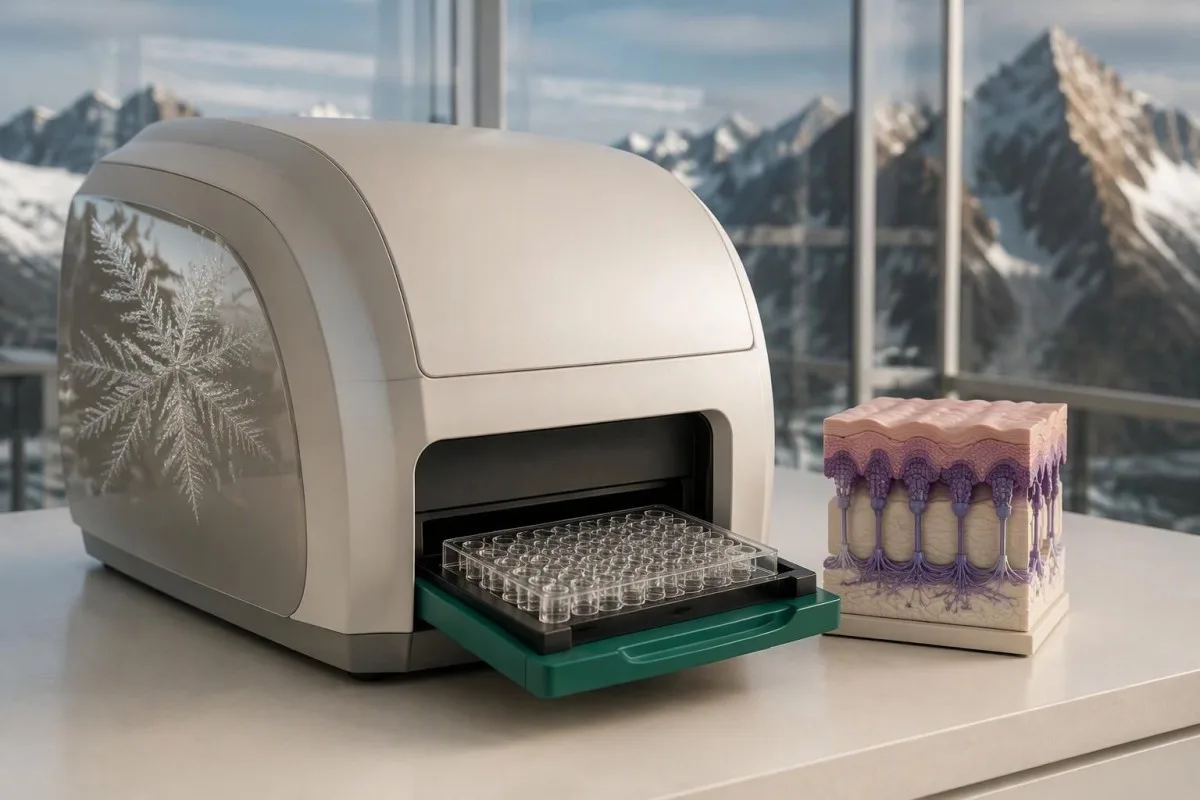
A falling BP180 concentration is most useful when it agrees with fewer new blisters and less itching. A hypothetical decline from 120 to 35 U/mL on the same assay supports an improving pattern, but it does not independently establish remission or justify stopping treatment.
An increase from 12 to 14 U/mL near a cutoff may reflect analytical or biological variation rather than a meaningful change in disease. There is no universal percentage increase that proves relapse across all BP180 assays; the method, timing, symptoms, and previous response need to be considered together.
Kantesti is an AI blood test interpretation platform that can organize serial BP180 results without treating a laboratory trend as a diagnosis. Біздің AI технологиясының түсіндірмесі describes the interpretation workflow; preserving each report's assay name and reference interval matters when comparing two or more measurements.
Changing laboratories can create an apparent rise or fall that is partly methodological. Our дәрі-дәрмек қауіпсіздігі тенденциясы анықтамалығы explains why dates, doses, and laboratory context belong beside the numbers; photograph new skin findings and record new-blister counts when your dermatologist requests them.
Қайта қаралуға не апару керек және қандай дәлелдер қолданылады?
Bring the full BP180 report, any BP230 result, symptom photographs, and your complete medication list to follow-up. These four information groups help a clinician decide whether you need observation, additional serum testing, properly handled skin samples, or urgent assessment rather than another isolated antibody measurement.

A useful report includes the exact assay name, numerical value, units, cutoff, and collection date. If a hypothetical BP180 result reads 16 U/mL, the missing cutoff may reverse whether it is considered positive; also request the actual histology and direct-immunofluorescence reports rather than relying on the phrase 'skin biopsy normal.'
New eye symptoms, swallowing difficulty, extensive rapidly spreading blisters, fever, or inability to maintain fluids need prompt clinical attention. Do not wait for a scheduled second test when those symptoms appear; supportive urinalysis can answer separate medical questions, as explained in our несеп талдауын түсіндіру жөніндегі нұсқаулық, but it cannot establish a pemphigoid diagnosis.
Kantesti helps explain the distinctions between a flagged antibody result, a probable diagnosis, and confirmed disease. Біздің жауапты AI қағидаттарымыз describe the boundaries of educational interpretation; only a clinician with access to your examination and appropriate investigations can decide whether a BP180 антиденелерінің оң болуы result represents active pemphigoid.
The directly relevant evidence here comes from the 2022 EADV guideline and the 2019 JAMA Dermatology diagnostic study. The two Zenodo publications listed below concern kidney-function and urinalysis interpretation and are included as background educational publications, not evidence that BP180 confirms bullous pemphigoid or that our AI has validated diagnostic accuracy for this condition.
Жиі қойылатын сұрақтар
BP180 антиденесіне тест нәтижесінің оң болуы менде міндетті түрде буллезді пемфигоид бар дегенді білдіре ме?
BP180 антиденелеріне оң нәтиже шығуы сізде буллезді пемфигоид бар екенін нақты білдірмейді. Кейбір зертханалар шамамен 9 U/mL, ал басқалары шамамен 20 U/mL шекті мәнін қолданады, сондықтан нақты талдау әдісі мен референстік аралық маңызды. Сәйкес қышыну немесе күлдіреуіктер нәтижені анағұрлым мәнді етеді, ал оқшауланған әлсіз оң нәтиже кездейсоқ немесе жалған оң болуы мүмкін. Диагнозды растау үшін тері биопсиясы, тікелей иммунофлуоресценция және қосымша антидене зерттеулері қажет болуы мүмкін.
Көпіршіктер болмаса, BP180 бойынша төмен оң нәтиже нені білдіреді?
Күлбіреуіктерсіз BP180 нәтижесінің төмен оң болуы кездейсоқ антиденелердің анықталуын, талдауға байланысты жалған оң нәтижені немесе күлбіреуіксіз көрініс беретін пемфигоидты білдіруі мүмкін. Мысалы, 12 U/mL көрсеткіші 9-U/mL шекті мәнінен жоғары болғандықтан оң нәтиже саналады, бірақ симптомдары жоқ адамның ауруға шалдығатынын болжай алмайды. Күлбіреуік болмаса да, тоқтамайтын қышыну немесе себебі белгісіз бөртпе дерматологтың бағалауын қажет етеді. Оқшауланған төмен оң нәтиженің негізінде қайта талдау жүргізудің немесе емдеудің әмбебап мерзімі не ұсынымы жоқ.
BP180 антиденелері теріс болса да, буллезді пемфигоид болуы мүмкін бе?
Буллезді пемфигоид әдеттегі NC16A талдауында BP180 антиденелері теріс болғанына қарамастан пайда болуы мүмкін. Талдау шамамен 180 кДа ақуыздың белгілі бір аймағын зерттейді және негізінен басқа аймақтарға бағытталған антиденелерді анықтамауы мүмкін. BP230-ға тестілеу, тікелей иммунофлуоресценция және жанама иммунофлуоресценция қосымша дәлелдер беруі мүмкін. Тері көріністері пемфигоидты айқын меңзесе, қан талдауының теріс нәтижесі тексеруді тоқтатуға негіз болмауы керек.
BP230 антиденелерінің теріс болуы буллезді пемфигоидты жоққа шығара ма?
BP230-ге қарсы антиденелердің теріс болуы буллезді пемфигоидты жоққа шығармайды. BP230 — шамамен 230 кДа болатын жасушаішілік бекітуші ақуыз, ал расталған ауруы бар кейбір адамдарда оған қарсы анықталатын антиденелер болмайды. Клиникалық және тіндік зерттеу нәтижелері сәйкес келген жағдайда, BP230-ге қарсы антиденелер теріс болса да, BP180 нәтижесінің оң болуы диагнозға сай келуі мүмкін. Екі антидененің концентрациясын қосуға немесе оларды екі тестпен растау ережесі ретінде қарастыруға болмайды.
Пемфигоид кезінде кейде неге теріден екі биопсия алу қажет?
Әдетте терінің екі биопсиясы қажет болады, өйткені кәдімгі гистология мен тікелей иммундық флуоресценция әртүрлі диагностикалық сұрақтарға жауап береді. Көбіне диаметрі 3–4 мм шағын трепан-биопсия алынады, бірақ әдіс пен биопсия орнын дерматолог нақты клиникалық көрініске қарай таңдайды. Бір үлгі тіннің құрылымын зерттесе, екіншісі базальды мембрана бойындағы иммундық депозиттерді анықтайды. Тікелей иммундық флуоресценцияға арналған үлгі үшін тасымалдаудың жеке келісілген әдісі қажет және оны әдетте формалинге салуға болмайды.
BP180 деңгейінің жоғары болуы пемфигоидымның ауыр екенін білдіре ме?
A high BP180 level does not independently determine how severe pemphigoid is or whether it is an emergency. A result of 100 U/mL must be interpreted using that assay's cutoff and alongside the extent of skin involvement, itching, new blisters, and general health. Antibody levels often relate to disease activity, but individual results and symptoms can disagree. Eye pain, vision changes, difficulty swallowing, or rapidly spreading extensive blistering require prompt assessment regardless of the antibody concentration.
0 Анти-BP180 антиденелері теріс нәтиже көрсетпейінше емдеуді тоқтатуға болмай ма?
Дәрігер пемфигоидты емдеудің дозасын азайтуды немесе емдеуді тоқтатуды қарастырмас бұрын BP180 антиденелерінің деңгейі міндетті түрде теріс болуы шарт емес. Деңгейдің шартты түрде 120-дан 35 U/mL-ге төмендеуі жақсаруды көрсетуі мүмкін, бірақ шешім қабылдауға симптомдар, жаңа күлбіреуіктердің пайда болуы, тексеру нәтижелері және аурудың қайталану тарихы негіз болады. Тері жағдайы бақылауда болғанда да антиденелер анықталуы мүмкін, әрі әртүрлі талдауларға ортақ тоқтату шегі жоқ. Емдеуді тек антиденелер деңгейінің өзгеруіне қарап өзгертпеңіз.
Қан анализінің нәтижесін түсіндіріп алыңыз
Зертханалық есепті жүктеңіз, сонда Kantesti AI әр биомаркерді бірнеше секунд ішінде қарапайым тілмен түсіндіреді. Әлем бойынша 2 миллионнан астам адам қолданады.
Сілтемелер
- Klein, T., Mitchell, S., & Weber, H. (2026). BUN/Креатинин қатынасы: Бүйрек қызметінің анализі бойынша нұсқаулық. Kantesti AI медициналық зерттеулері. DOI
- Klein, T., Mitchell, S., & Weber, H. (2026). Зәрдегі уробилиноген сынағы: Толық зәр анализі бойынша нұсқаулық 2026. Kantesti AI медициналық зерттеулері. DOI
- Borradori L et al. (2022). Updated S2 K guidelines for the management of bullous pemphigoid initiated by the European Academy of Dermatology and Venereology (EADV). Journal of the European Academy of Dermatology and Venereology. DOI
- Meijer JM et al. (2019). Assessment of Diagnostic Strategy for Early Recognition of Bullous and Nonbullous Variants of Pemphigoid. JAMA Dermatology. DOI
- 2 млн+Талданған тесттер
- 127+Елдер
- 100+Тілдер
Медициналық топ туралы


E-E-A-T сенім сигналдары
Тәжірибе
Дәрігер басқаратын зертханалық талдауды түсіндіру жұмыс ағындарын клиникалық шолу.
Сараптама
Биомаркерлердің клиникалық контексте қалай әрекет ететініне зертханалық медицина фокусы.
Билік
Доктор Томас Кляйн медициналық тұрғыдан тексерген, доктор Сара Митчелл мен профессор доктор Ханс Вебердің үлесімен.
Сенімділік
Дабыл қаупін азайту үшін айқын бақылау жолдарымен дәлелге негізделген түсіндіру.


Медициналық ескерту
Бұл мақала тек білім беру мақсатында ғана және медициналық кеңес болып табылмайды. Диагноз және ем туралы шешімдер үшін әрдайым білікті медицина қызметкеріне жүгініңіз.
Жарияланды · Редакция тобына хабарласыңыз
Англия мен Уэльсте тіркелген Kantesti Ltd басып шығарған, компания №. 17090423, Лондон, Біріккен Корольдік.
