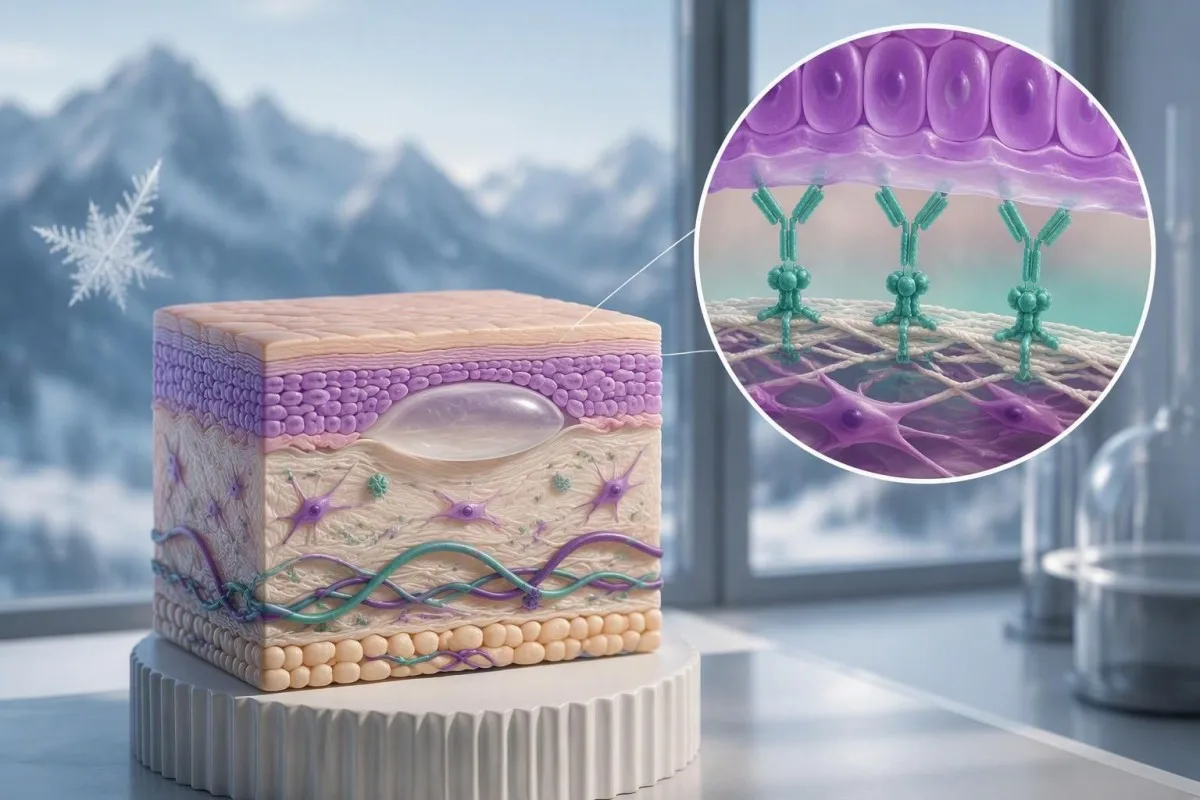
BP180 جو مثبت نتيجو خودڪار مدافعتي چمڙي جي بيماري جي حمايت ڪري ٿو، پر رڳو ان انگ سان تشخيص قائم نٿي ڪري سگهجي. علامتون، استعمال ٿيل ٽيسٽ، ۽ صحيح نموني گڏ ڪيل چمڙي جا نمونا طئي ڪن ٿا ته اڳتي ڇا ٿيندو.

اهم ڳالهيون
- BP180 اينٽي باڊي مثبت هجڻ جو مطلب آهي ته ٽيسٽ پنهنجي BP180 هدف خلاف اينٽي باڊيون ڳولي ورتيون؛ اهو پاڻمرادو بَلَس پيمفيگوئڊ جي تصديق نٿو ڪري.
- ليبارٽري جون حدون مختلف هونديون آهن: ڪجهه BP180 ٽيسٽون لڳ ڀڳ 9 U/mL، جڏهن ته ٻيون لڳ ڀڳ 20 U/mL استعمال ڪن ٿيون. پنهنجي ليبارٽري جي حوالگي واري حد ڏسو.
- گهٽ-مثبت نتيجا خارش، ريش يا ڇالڙن کان سواءِ، اتفاقي طور اينٽي باڊي جي نشاندهي يا ٽيسٽ جو غلط-مثبت نتيجو ٿي سگهن ٿا—ثابت ٿيل چمڙي جي بيماري نه.
- غير ڇالڙيدار پيمفيگوئڊ ڇالڙن کان سواءِ لڳاتار خارش جو سبب ٿي سگهي ٿو؛ ماهر تشخيصي مطالعي ۾ پيمفيگوئڊ جي 343 ڪيسن مان 74 غير ڇالڙيدار هئا.
- BP230 اينٽي باڊيون اضافي ثبوت فراهم ڪن ٿا، پر منفي BP230 اينٽي باڊيز بُلَس پيمفيگوئڊ کي رد نٿيون ڪن.
- سڌي اميونو فلوريسنس چمڙي ۾ اينٽي باڊي جا ذخيرا جاچي ٿو؛ بيسمينٽ ميمبرين سان گڏ لڪيروار IgG ۽/يا C3، پيمفيگوئڊ جي بيماريءَ جي حمايت ڪري ٿو.
- چمڙي جا ٻه نمونا اڪثر گڏ ڪيا ويندا آهن: معمول جي خوردبيني جاچ لاءِ متاثر ٿيل حصي مان هڪ نمونو ۽ سڌي اميونو فلوريسينس لاءِ ڀرسان واري مناسب نموني جو انتخاب.
- هنگامي علامتون انهن ۾ اکين جو سور، نظر ۾ تبديليون، ڳهڻ ۾ ڏکيائي، چمڙي ۾ وسيع تبديلين سان بخار، يا تيزيءَ سان پکڙجندڙ ڦٽا شامل آهن؛ ٻي اينٽي باڊي جي نتيجي جو انتظار نه ڪريو.
ڇا BP180 جو مثبت نتيجو بَلَس پيمفيگوئڊ جي تصديق ڪري ٿو؟
نه—BP180 اينٽي باڊي جو مثبت نتيجو اڪيلو بُلَس پيمفيگوئڊ جي تصديق نٿو ڪري. جڏهن علامتون ۽ چمڙي جون نشانيون ٺهڪي اچن ته اهو تشخيص جي حمايت ڪري ٿو، پر ڦٽن کان سواءِ گهٽ مثبت نتيجو اتفاقي ٿي سگهي ٿو؛ سبب جي پڪ ڪرڻ لاءِ چمڙي جي ماهرن کي اڪثر سڌي اميونو فلوريسينس سان چمڙي جي بايوپسي، ۽ ڪڏهن اضافي اينٽي باڊي جاچ، گهربل هوندي آهي.
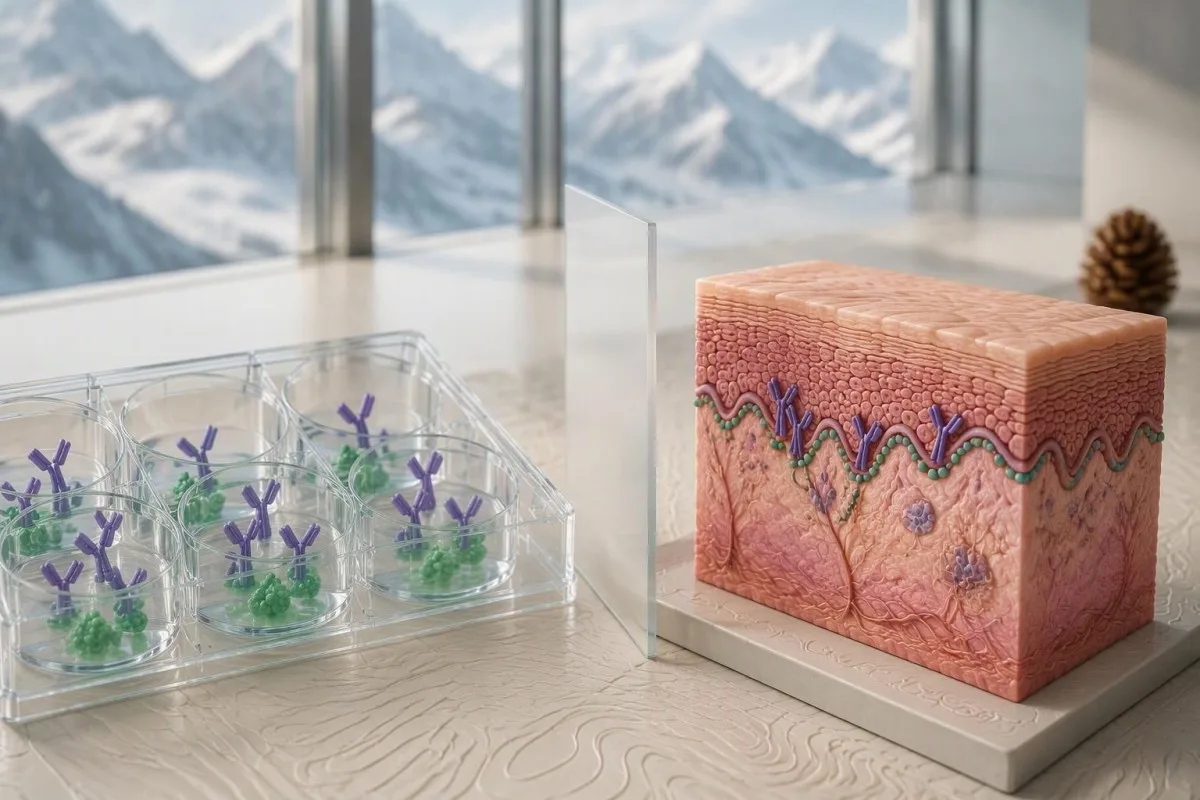
بُلَس پيمفيگوئڊ جي تشخيص لاءِ ڪلينڪل ۽ اميونوپئٿالاجيڪل مطابقت ضروري آهي, ، رڳو هڪ نشان لڳل ليبارٽري قدر نه. 2022ع جي EADV هدايتنامي موجب، تشخيص ڪلينڪل تصوير ۽ مناسب ٽشو توڙي رت ۾ گردش ڪندڙ اينٽي باڊيز جي جاچ وسيلي ڪئي وڃي ٿي (Borradori et al., 2022)؛ عملي سوال اهو آهي ته ڇا سڃاتل اينٽي باڊيز ان شخص جي چمڙيءَ واري حالت جي وضاحت ڪن ٿيون.
مثبت اينٽي باڊي ٽيسٽ ۽ سرگرم آٽو اميون بيماري ٻه الڳ نتيجا آهن. مثال طور، فرضي نتيجو 12 U/mL هڪ ليبارٽريءَ ۾ مثبت ٿي سگهي ٿو، پر ان نتيجي واري بنا علامتن جي شخص جي تشخيصي امڪان، ساڳئي مقدار سان وسيع، خارش وارن، ڇڪيل ڦٽن واري شخص کان مختلف هوندو.
Kantesti هڪ AI رت جي ٽيسٽ جو تجزيو ڪندڙ اوزار آهي، جيڪو ليبارٽري جي ڪٽ آف ۽ توهان جي ڏنل معلومات سان گڏ BP180 جي نتيجن جي وضاحت ڪرڻ ۾ مدد ڪري ٿو. اسان جي وضاحت توهان جي چمڙيءَ جو معائنو يا سڌي اميونو فلوريسينس نٿي ڪري سگهي؛ اسان جو ڪمپني پسمنظر هن تعليمي مدد پٺيان موجود تنظيم جي سڃاڻپ ڪرائي ٿو.
نتيجي کي وڌيڪ مخصوص سوال پڇڻ جو سبب سمجهو، نه ڪي بيماريءَ جي مستقل ليبل طور. اسان جي رهنمائي مثبت اينٽي باڊي جا نتيجا وضاحت ڪري ٿي ته اينٽي باڊي جي سڃاڻپ، بيماريءَ جي سرگرمي، ۽ تشخيص جي تصديق ٽي الڳ تصور ڇو آهن.
BP180 اينٽي باڊي ٽيسٽ اصل ۾ ڇا ماپي ٿي؟
BP180 اينٽي باڊي ٽيسٽ عام طور سيرم ۾ BP180 جي هڪ حصي، جنهن کي ٽائپ XVII ڪوليجن به چيو وڃي ٿو، جي خلاف هدايت ٿيل IgG ماپي ٿو. BP180 هڪ لڳ ڀڳ 180-kDa پروٽين آهي، جيڪا ايپيڊرمس کي هيٺئين ٽشو سان ڳنڍي رکڻ ۾ حصو وٺي ٿي؛ ڪيتريون ئي معمولي جاچون پوري پروٽين بدران ان جي NC16A حصي کي جانچين ٿيون.
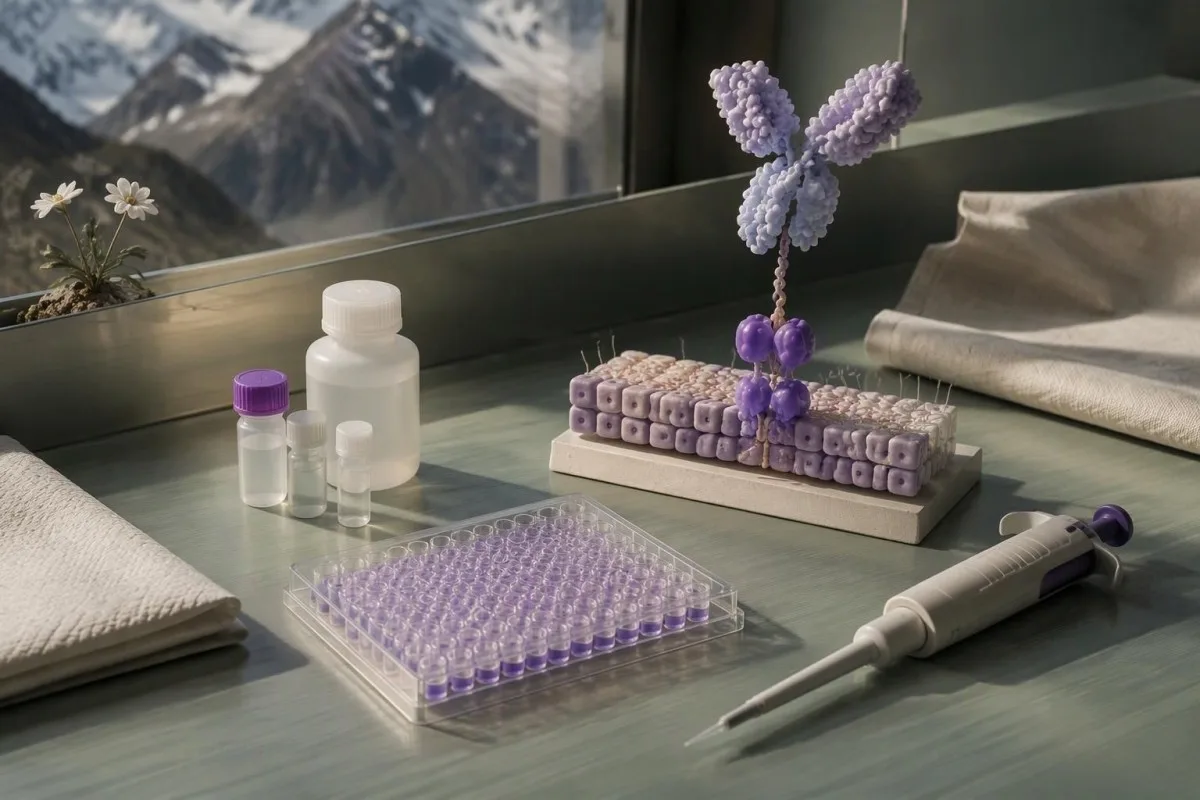
BP180 چمڙيءَ جو هڪ بناوتي پروٽين آهي؛ اهو اهڙو مادو ناهي، جنهن جي رت ۾ مقدار ماپي وڃي. رپورٽ ان پروٽين خلاف اينٽي باڊيز بيان ڪري ٿي، جيڪي عام طور اينزائم سان ڳنڍيل اميونوسوربينٽ ايسي، يا ELISA، وسيلي ماپيون وڃن ٿيون؛ هڪ قدر 30 U/mL تنهن ڪري ان جو مطلب اهو ناهي ته چمڙيءَ جي پروٽين جا 30 يونٽ رت ۾ گردش ڪري رهيا آهن.
جي NC16A ڊومين سيل جھلي جي ويجهو، BP180 جي ٻاهرئين حصي تي هوندو آهي ۽ ڪلاسڪ بُلَس پيمفيگوئڊ ۾ اينٽي باڊيز جو عام هدف آهي. هن حصي جي جاچ سان هڪ عملي ٽيسٽ ممڪن ٿئي ٿي، پر ان سان هڪ نظر کان رهجي ويل پهلو پيدا ٿئي ٿو: خاص طور ٻين حصن ڏانهن نشانو رکندڙ اينٽي باڊيز جي سڃاڻپ نه ٿي سگهي ٿي.
اينٽي باڊي جي عددي ڪنسنٽريشن، اميونوفلورسنس ٽائيٽر جي برابر نه هوندي آهي. نتيجو جيڪڏهن هن صورت ۾ ظاهر ڪيو وڃي ته 1:40 اهو هڪ ڊائليوشن تي ردعمل ظاهر ڪري ٿو، جڏهن ته 40 U/mL ٽيسٽ جي حساب سان مقرر ڪيل ڪنسنٽريشن ظاهر ڪري ٿو؛ اسان جي مقداري ۽ معياري ٽيسٽن بابت وضاحت رپورٽنگ جي انهن فارميٽن ۾ فرق سمجهڻ ۾ مدد ڪري ٿي.
ڏسو ته رپورٽ ۾ BP180 NC16A IgG, ، ڪا ٻي BP180 ٽيسٽ، يا وڌيڪ وسيع پيمفيگوئڊ پينل لکيل آهي. اهي ٽيسٽ پاڻمرادو هڪجهڙا ناهن، ۽ منفي IgG ELISA ٻين اينٽي باڊي طبقن يا بيسمينٽ ميمبرين جي ٻين هدفن بابت هر سوال جو جواب نٿي ڏئي.
BP180 اينٽي باڊي جو ڪهڙو نتيجو گهٽ-مثبت شمار ٿئي ٿو؟
BP180 جو گهٽ-مثبت نتيجو، استعمال ڪيل مخصوص ٽيسٽ جي حد کان ٿورو مٿي قدر هوندو آهي. گهٽ-مثبت قدر جي ڪا عالمگير حد ناهي: ڪجهه ليبارٽريون لڳ ڀڳ 9 U/mL, جي حد استعمال ڪن ٿيون، جڏهن ته ٻيون لڳ ڀڳ 20 U/mL, جي حد استعمال ڪن ٿيون، ۽ انهن جي ڪيلبريشن ۽ رپورٽنگ جا درجا مختلف هوندا آهن.
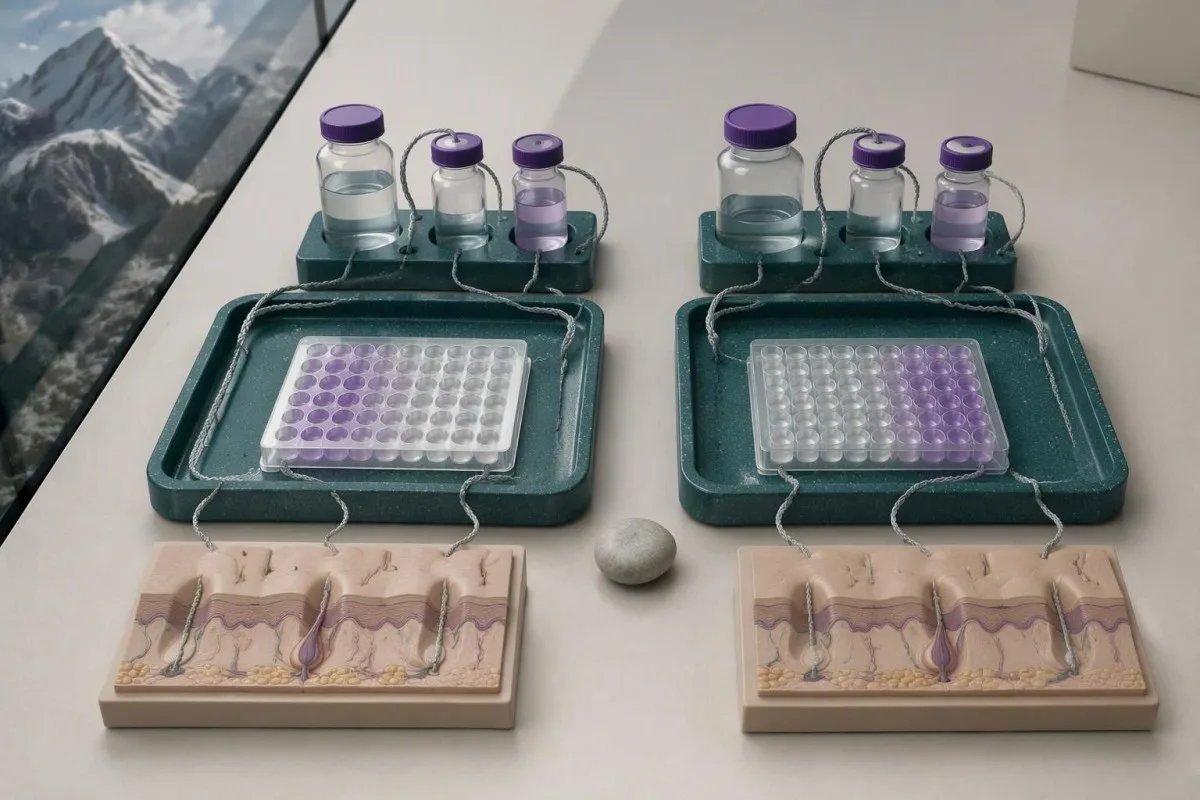
BP180 ٽيسٽ جا يونٽ مختلف ليبارٽرين ۾ عالمگير طور معياري نه آهن. نتيجو 15 U/mL 9-U/mL واري پاليسي هيٺ مثبت ۽ 20-U/mL واري پاليسي هيٺ منفي ٿي سگهي ٿو، پر ان مان اهو ثابت نٿو ٿئي ته ٻي ٽيسٽ بيماري جي سڃاڻپ کان رهجي وئي؛ طريقا ۽ ڪيلبريٽر مختلف ٿي سگهن ٿا.
ڪٽ آف، ٽيسٽ جي جائزي لاءِ استعمال ڪيل آباديءَ ۾ حساسيت ۽ خصوصيت جي وچ ۾ توازن رکي ٿي. حد هيٺ ڪرڻ سان بيماريءَ وارن وڌيڪ ماڻهن جي سڃاڻپ ٿي سگهي ٿي، پر ساڳئي وقت بيماري نه رکندڙ وڌيڪ ماڻهن جي به سڃاڻپ ٿي سگهي ٿي؛ ڪٽ آف ليبارٽريءَ جي مقرر ڪيل فيصلي جي حد آهي، حياتياتي نقطو نه، جتي چمڙي اوچتو ڦاٽڻ شروع ڪري.
Kantesti AI رپورٽ ڪيل BP180 قدر کي ان سان ڏنل حوالائي حد جي ڀرسان رکڻ ۾ مدد ڪري سگهي ٿو, ، پر رڳو 18 U/mL ڏيکاريندڙ ڪٽيل تصوير ۾ اهم معلومات شامل نه هوندي. ٽيسٽ جو نالو، يونٽ، تشريح جا درجا ۽ ليبارٽريءَ جا تبصرا شامل ڪريو؛ هڪ عام رينج کان ٻاهر (out-of-range) جو نشان انهن تفصيلن جو متبادل نٿو ٿي سگهي.
هيٺيان مثال هڪ آفاقي شدت واري پيماني بدران، رپورٽنگ جون ٻه ممڪن پاليسيون بيان ڪن ٿا. اڪيلي BP180 اينٽي باڊي جي مقدار سان ڪا طبي هنگامي حالت طئي نٿي ٿئي; ؛ چمڙي جو وسيع متاثر ٿيڻ، پاڻي جي کوٽ، سڄي جسم جي بيماري، ۽ اکين يا ساهه جي رستي جون علامتون تڪڙ جو تعين ڪن ٿيون.
| سطح | حد | ان جو مطلب |
|---|---|---|
| مثال طور پرک A: حد کان گهٽ | <9 U/mL | هن وضاحتي ليبارٽري پاليسيءَ موجب منفي؛ جيڪڏهن ڪلينڪي شڪ اڃا به گهڻو هجي ته بيماري رد نٿي ٿئي. |
| مثال طور پرک A: حد جي برابر يا ان کان وڌيڪ | ≥9 U/mL | هن پاليسيءَ موجب مثبت؛ حد سان قربت ۽ ڪلينڪي نتيجا تشريح تي اثرانداز ٿين ٿا. |
| مثال طور پرک B: حد کان گهٽ | <20 U/mL | هڪ مختلف وضاحتي پاليسيءَ موجب منفي؛ پرک جي نظامن جي وچ ۾ سڌيءَ ريت تبديلي نه ڪريو. |
| مثال طور پرک B: حد جي برابر يا ان کان وڌيڪ | ≥20 U/mL | هن پاليسيءَ موجب مثبت؛ انگ اڪيلو تشخيص يا شدت جي تصديق نٿو ڪري. |
BP180 جو مثبت نتيجو گمراهه ڪندڙ ڇو ٿي سگهي ٿو؟
مثبت BP180 نتيجو تڏهن گهٽ يقين جوڳو هوندو آهي، جڏهن جاچ کان اڳ ان شخص ۾ پيمفيگوئڊ جو ڪلينڪي امڪان گهٽ هجي. مناسب حد تائين درست پرک مان به غلط مثبت نتيجا نڪري سگهن ٿا، تنهنڪري نتيجي جي معنيٰ بي علامت اسڪريننگ واري آبادي ۽ خاص ڇالن جو جائزو وٺندڙ ماهر ڪلينڪ جي وچ ۾ بدلجي ٿي.
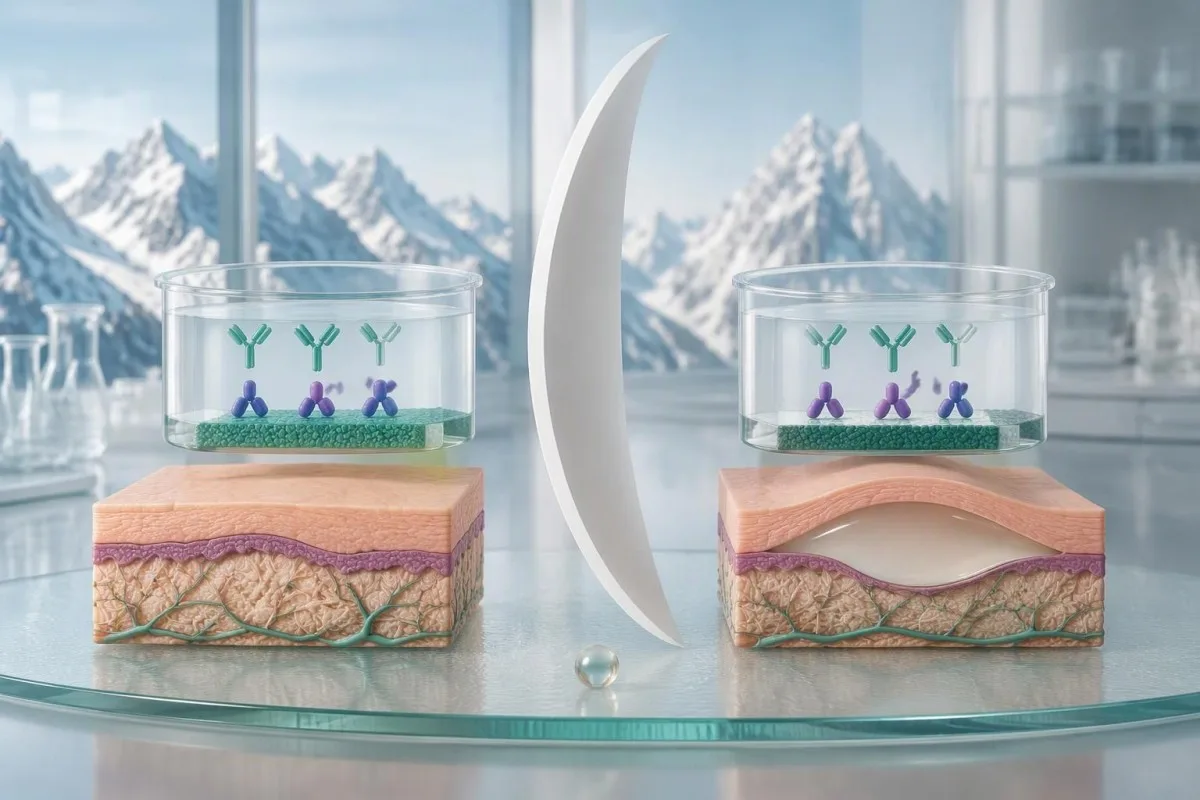
حساسيت ۽ مخصوصيت ان امڪان جي برابر ناهن ته مثبت نتيجي کان پوءِ توهان کي ذاتي طور بيماري آهي. اهو امڪان جاچ هيٺ آيل گروهه ۾ بيماري ڪيتري عام آهي، تنهن تي به دارومدار رکي ٿو؛ هي فرق تڏهن سڀ کان وڌيڪ اهم آهي، جڏهن اينٽي باڊي پينل ڪنهن خاص چمڙيءَ جي نموني جي جاچ ڪرڻ بدران وسيع طور تي ڪرائي وئي هجي.
فرضي طور واضح ڪيل هڪ پرک تي غور ڪريو، جنهن جي حساسيت 90% ۽ مخصوصيت 95% هجي, ، ۽ جيڪا اهڙن 1,000 ماڻهن ۾ استعمال ڪئي وڃي، جن ۾ بيماريءَ جو امڪان 1% هجي. اها لڳ ڀڳ 9 حقيقي مثبت ۽ 50 ڪوڙا مثبت نتيجا سڃاڻيندي, ، جنهن سان مثبت اڳڪٿي ڪندڙ قدر لڳ ڀڳ 15% ٿيندو؛ اهي سمجهاڻيءَ لاءِ فرض ڪيل انگ آهن، توهان جي BP180 پرک جي ڪارڪردگيءَ بابت دعويٰ نه.
Use the same hypothetical assay where disease probability is 20%, and approximately 180 true positives and 40 false positives would occur per 1,000 tests. The positive predictive value becomes about 82%—a large change caused by clinical context, not by a different laboratory method.
These examples explain why a dermatologist may request tissue testing despite a positive result, or take characteristic symptoms seriously despite a negative one. Our discussion of MOG اينٽي باڊي جي تشريح illustrates the same probability principle in another autoimmune condition, although its diagnostic criteria cannot be transferred to pemphigoid.
جيڪڏهن BP180 مثبت هجي، پر توهان کي ڇالڙا نه هجن ته ڇا؟
A low-positive BP180 result without blisters does not establish bullous pemphigoid or reliably predict future blistering. The next distinction is whether you have no skin symptoms at all, or persistent itching and an unexplained rash that could represent a nonbullous pemphigoid presentation.
Incidental BP180 antibody detection can occur without clinically established pemphigoid. Possible explanations include low-level autoreactivity and assay-related false positivity; there is no validated conversion rule that turns an isolated result of 11 U/mL into a percentage risk of developing blisters later.
A hypothetical person with 11 U/mL, no itching, no rash, and no mucosal symptoms usually needs a contextual review rather than automatic immunosuppressive treatment. The clinician should check why the assay was ordered, whether the result was unexpected, and whether a skin examination reveals findings the person had not recognized.
Persistent dryness and itching still deserve assessment because common explanations remain common. Eczema, medication effects, thyroid disease, and other causes may be more likely than pemphigoid; our dry skin testing guide explains why additional blood tests should follow symptoms rather than a blanket panel.
هتي no universal repeat-testing interval for an asymptomatic low-positive BP180 result. A clinician may choose observation, a repeat using the same method, or specialist review depending on the history; new persistent itching, urticarial plaques, or blisters should change that plan rather than waiting for a scheduled repeat.
ڇا بَلَس پيمفيگوئڊ جي شروعات رڳو خارش سان ٿي سگهي ٿي؟
Pemphigoid can present with persistent itching, eczema-like patches, urticarial plaques, or scratch-related changes without visible blisters. In a specialist diagnostic study, 74 of 343 pemphigoid cases—21.6%—were nonbullous, showing that the absence of blisters cannot independently exclude the disorder (Meijer et al., 2019).

Nonbullous pemphigoid is not simply every itchy rash with a positive BP180 result. Diagnosis still needs compatible symptoms and appropriate immunopathological evidence; the 21.6% study figure came from a referred population and should not be interpreted as the probability that any person with itching has pemphigoid.
The symptom pattern often matters more than whether one small blister has appeared. Persistent, widespread itching in an older adult, especially with recurrent raised plaques or poor response to ordinary eczema care, warrants a dermatological assessment; our itchy skin laboratory guide separates skin-directed testing from tests for systemic causes.
Eosinophilia can accompany bullous pemphigoid, but it is neither required nor diagnostic. An absolute eosinophil count above approximately 0.5 × 10^9/L is often flagged in adults, yet allergy, medications, and parasites can produce the same finding; our guide to اعلي ايزينوفيل ڳڻپ explains those alternatives.
A dermatologist does not always need to wait for a blister before collecting a useful sample for direct immunofluorescence. In nonbullous disease, sample selection is tailored to the available rash and laboratory protocol; document the distribution and duration of itching, because a disappearing rash can make later assessment harder.
BP230 اينٽي باڊيون، BP180 ٽيسٽ کي ڪيئن مڪمل ڪن ٿيون؟
BP230 antibodies provide complementary evidence for pemphigoid but cannot confirm or exclude bullous pemphigoid alone. BP230 is an approximately 230-kDa intracellular anchoring protein, whereas BP180 crosses the cell membrane; their different locations and antibody targets help explain why the two results can disagree.
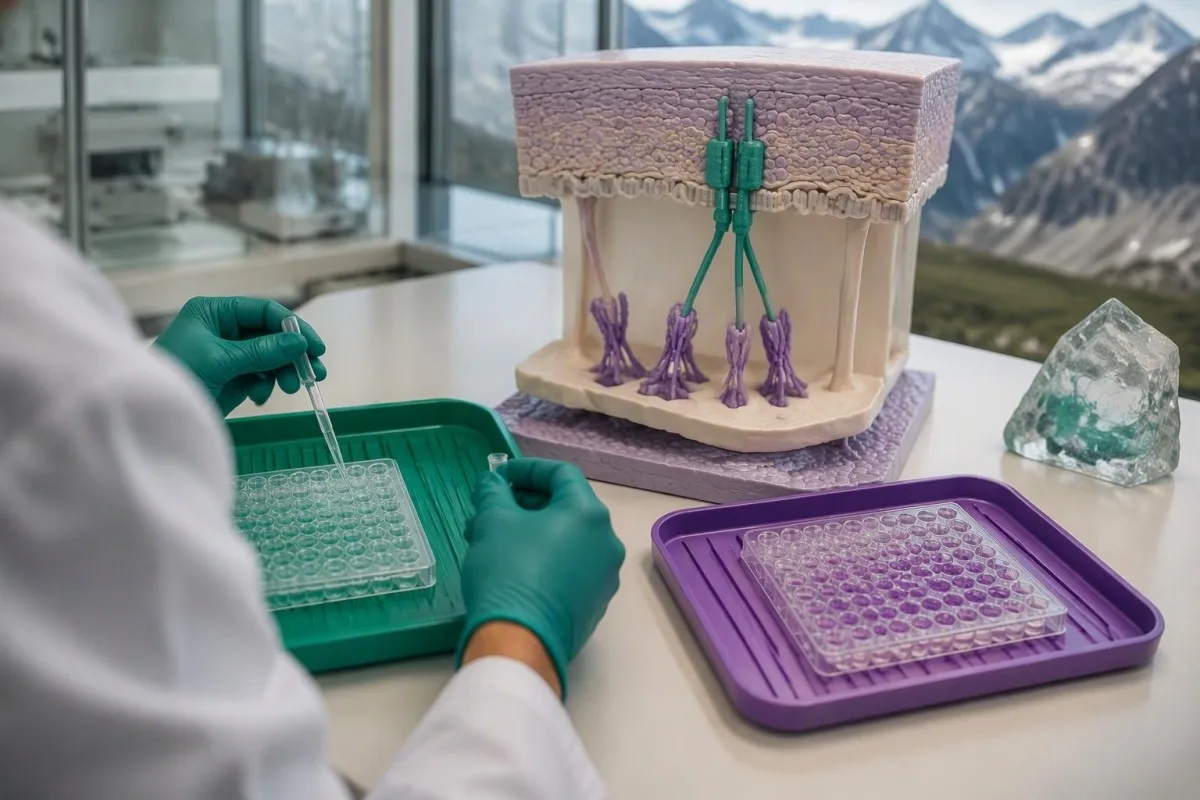
A negative BP230 antibody result does not cancel a positive BP180 result. Some people with confirmed pemphigoid have antibodies detectable against only one tested antigen, and each assay has its own sensitivity; interpreting the pair as a two-test pass-or-fail rule creates avoidable diagnostic errors.
هڪ فرضي BP180 result of 45 U/mL with negative BP230 antibodies still warrants assessment if tense blisters and severe itching are present. Conversely, isolated low-positive BP230 antibodies without compatible findings are not enough to diagnose pemphigoid; a second positive marker strengthens a pattern only when the overall evidence fits.
Kantesti is an AI biomarker interpretation platform that can explain BP180 and BP230 antibodies as complementary findings rather than interchangeable scores. This is similar to the reasoning used for antibody panels in connective disease, but skin-specific tissue findings remain central to pemphigoid assessment.
Do not add BP180 and BP230 concentrations together, even if both are expressed in U/mL. They represent different antigen-specific measurements with different calibration systems; BP180 levels generally have a better-established relationship with disease activity than BP230 levels, but neither replaces examination.
سڌي اميونو فلوريسنس سان چمڙي جي بايوپسي جي ضرورت ڇو پئجي سگهي ٿي؟
Skin biopsy with direct immunofluorescence can show whether antibodies or complement are deposited at the skin's basement membrane. Dermatologists often collect two separate specimens because routine microscopy and direct immunofluorescence answer different questions and require different sample handling.
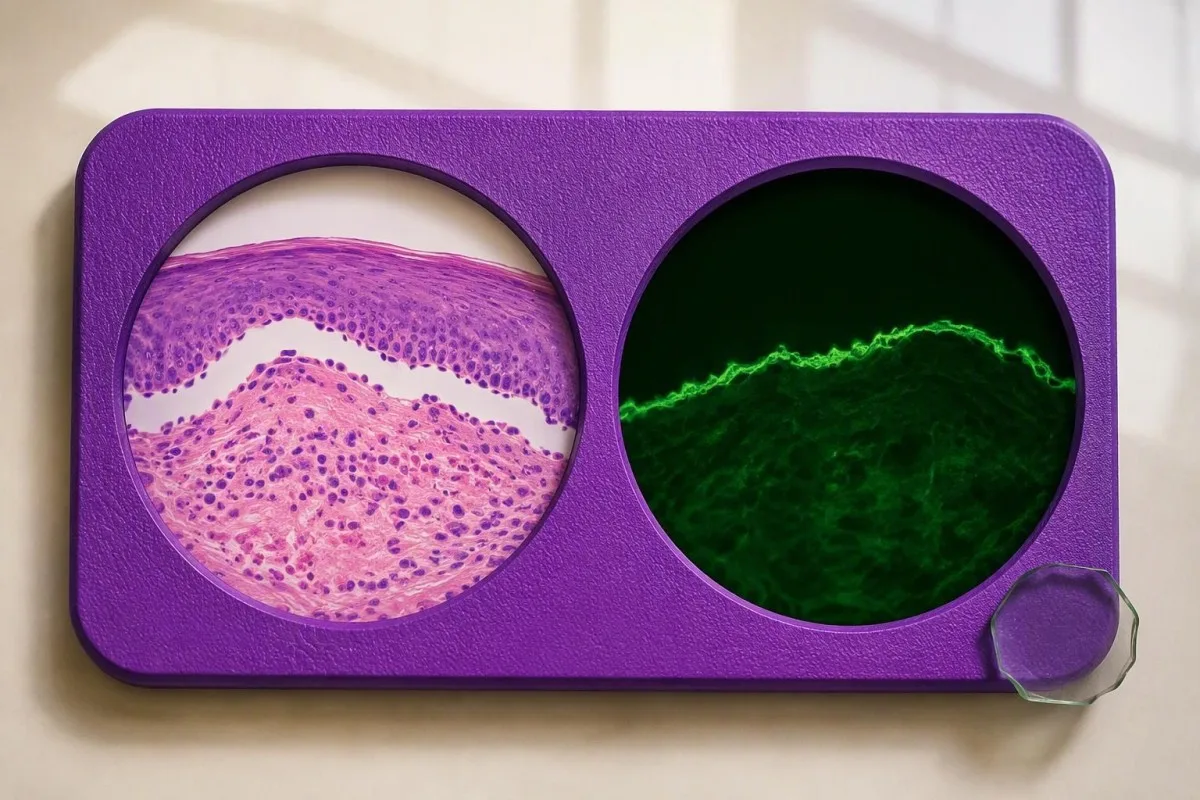
Routine histology examines tissue structure and inflammatory cells. A sample from a fresh blister or suitable affected area may show separation beneath the epidermis and eosinophils, but these features are not unique to bullous pemphigoid; the second sample looks for the immune-deposit pattern that helps classify the disorder.
For classic blistering presentations, the direct-immunofluorescence sample is commonly taken from appropriately selected skin near a fresh blister rather than its eroded center. A small 3–4-mm punch is often used, although technique and location depend on the case; sampling heavily damaged tissue can remove the structures the laboratory needs to examine.
The specimen for direct immunofluorescence must not be routinely placed in formalin. Laboratories generally require a dedicated transport medium or another explicitly agreed handling method, while the routine histology specimen commonly goes into formalin; ask whether the two containers have been prepared for their separate purposes.
In Meijer et al.'s 2019 diagnostic cohort, direct immunofluorescence had a sensitivity of 88.3%, so even this valuable test was not infallible. Kantesti's طبي توثيقي جي ڄاڻ concerns our interpretation methodology—not a claim that AI can reproduce skin immunofluorescence or establish its findings.
مثبت اميونو فلوريسنس ۽ سالٽ-اسپلٽ ٽيسٽن جو ڇا مطلب آهي؟
Linear IgG and/or C3 along the basement membrane on direct immunofluorescence supports a pemphigoid-spectrum disorder, but the pattern is not unique to bullous pemphigoid. Indirect immunofluorescence on salt-split skin can add evidence by showing where circulating antibodies bind relative to an experimentally created tissue separation.
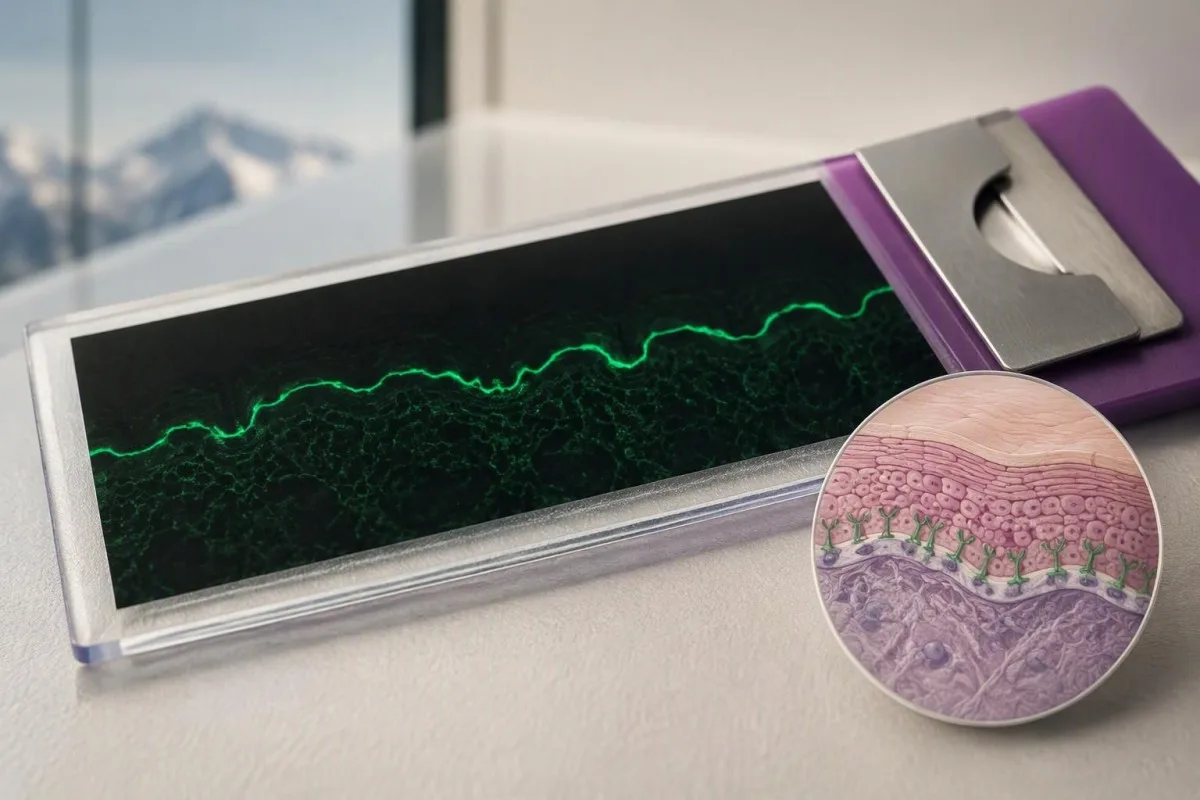
Direct and indirect immunofluorescence use different materials. Direct testing examines deposits already present in the person's skin, while indirect testing applies the person's serum to a laboratory substrate; a positive result in one test and a negative result in the other is therefore possible without a reporting error.
On salt-split skin, bullous pemphigoid antibodies commonly bind the epidermal side, often called the roof. Antibodies binding the dermal side, or floor, raise consideration of other disorders such as epidermolysis bullosa acquisita or anti-p200 pemphigoid, but binding location alone does not fully classify every case.
Meijer et al. reported 99.9% specificity for indirect immunofluorescence on salt-split skin in their 2019 diagnostic cohort. That high figure applies to that study and testing pathway; a negative result still cannot exclude pemphigoid because specificity describes false positives, not how many cases the test misses.
C3 detected in skin is not the same measurement as a serum C3 concentration. A normal circulating complement result does not negate local deposits at the basement membrane; our complement testing explanation helps prevent this common cross-test misunderstanding.
جيڪڏهن BP180، چمڙي جي بايوپسي ۽ علامتون پاڻ ۾ نه ٺهڪن ته ڇا؟
Discordant BP180 and skin-test results require a review of the clinical picture, assay target, sampling site, and specimen handling. A positive ELISA with negative direct immunofluorescence can reflect incidental antibodies or an uninformative skin sample; a negative NC16A ELISA can miss disease directed against other targets.
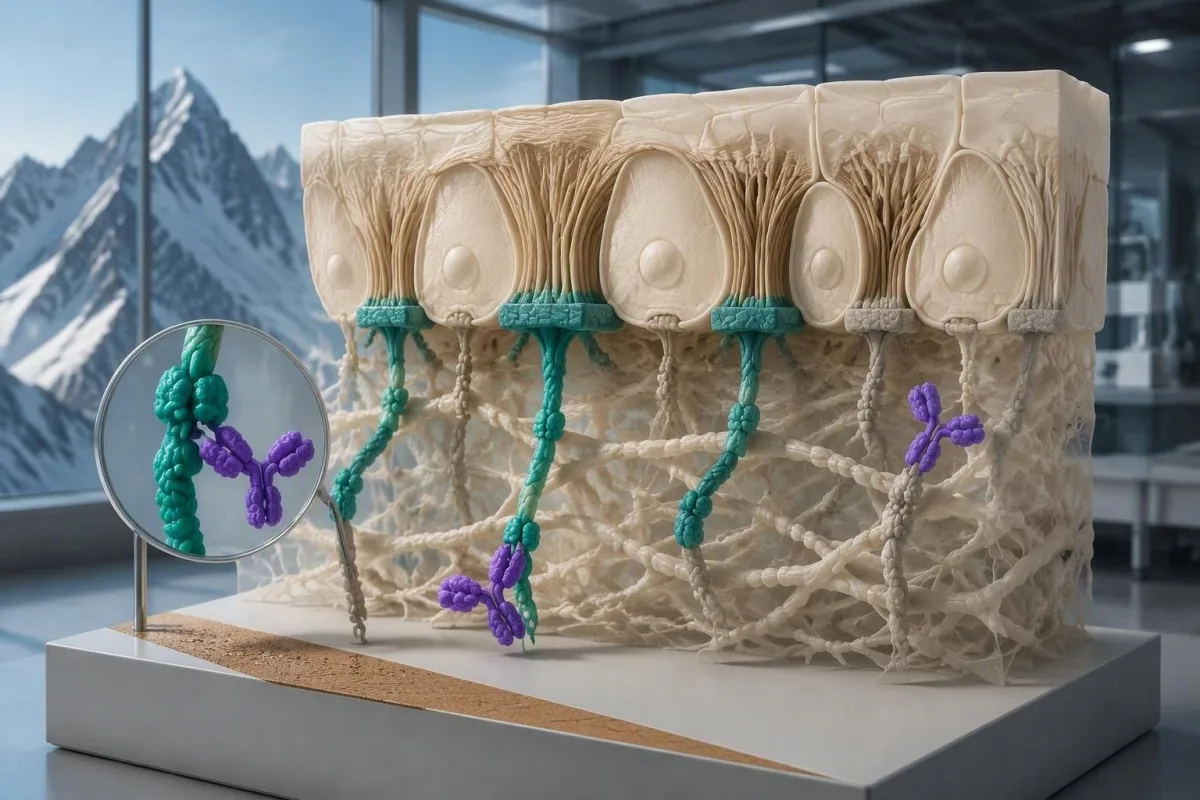
A negative direct-immunofluorescence result is less reassuring if the sample was poorly selected or incorrectly transported. Treatment before sampling may also influence findings, so clinicians need to know which creams or systemic medicines were used and where; never stop prescribed treatment solely to make a test more likely to turn positive.
A hypothetical person with characteristic new blisters, BP180 of 80 U/mL, and a negative direct-immunofluorescence specimen from an old eroded site may need repeat sampling. The same antibody result with no compatible skin findings demands a different investigation; the discrepancy does not have one automatic explanation.
A negative BP180 NC16A result does not exclude every form of pemphigoid. Further testing may include BP230 antibodies, indirect immunofluorescence, or specialized assays for other antigens; our guide to negative myasthenia antibody tests illustrates why a limited antigen panel cannot exclude an entire autoimmune disease category.
Repeat testing should address a specific uncertainty rather than create an endless sequence of panels. Ask whether the next investigation is checking the same antigen by another method, examining an additional antigen, or correcting a tissue-sampling problem; each strategy answers a different diagnostic question.
ٻيون ڪهڙيون حالتون BP180-مثبت پيمفيگوئڊ جهڙيون ٿي سگهن ٿيون؟
BP180 antibodies can occur in other pemphigoid-spectrum conditions, including mucous membrane pemphigoid and pemphigoid gestationis. Eczema, scabies, and drug-related eruptions can resemble early bullous pemphigoid clinically, while pemphigus involves different adhesion proteins and usually a different level of skin separation.
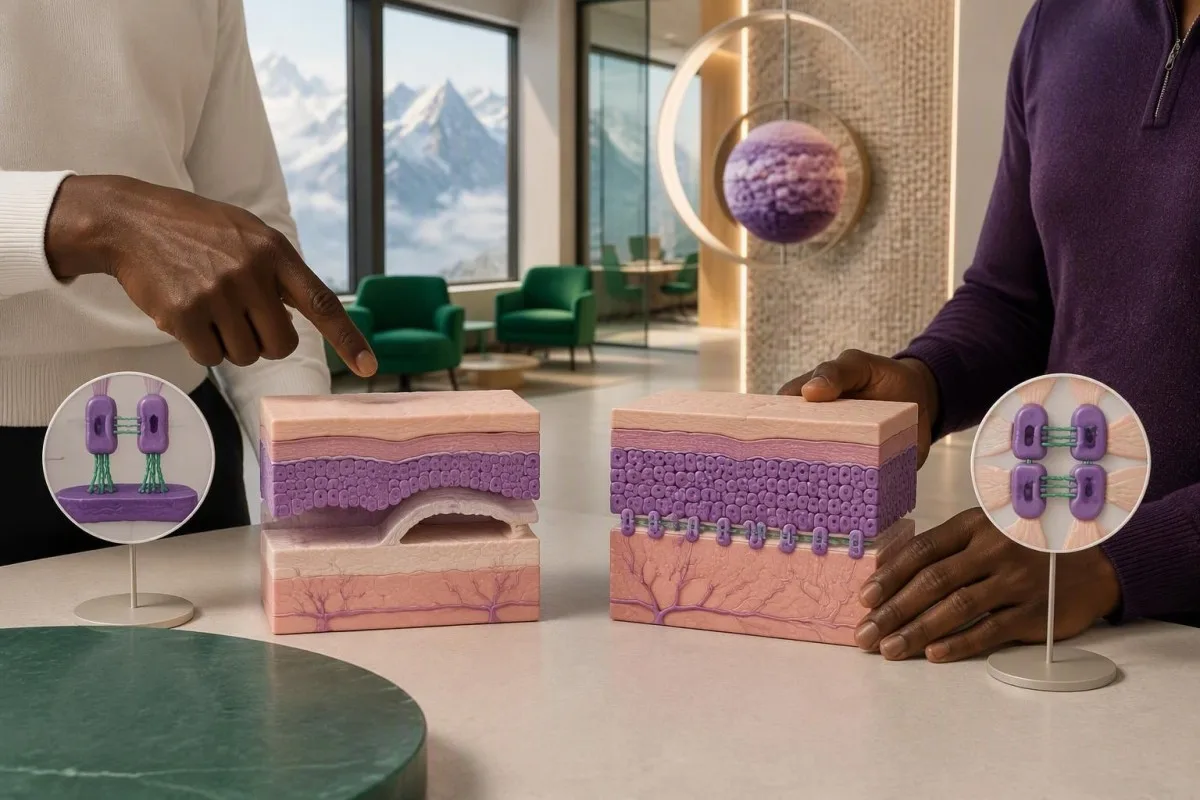
Bullous pemphigoid typically causes tense blisters because separation occurs beneath the epidermis. Pemphigus often produces more fragile blisters or erosions through loss of adhesion within the epidermis; our desmoglein antibody guide explains why BP180 testing cannot substitute for a pemphigus evaluation.
Predominantly mouth, eye, genital, or other mucosal involvement raises concern for mucous membrane pemphigoid, especially when scarring occurs. Eye pain, light sensitivity, or vision changes require urgent assessment because waiting for a repeat antibody concentration can delay treatment of a sight-threatening process.
Pemphigoid gestationis is associated with pregnancy and can produce BP180 antibodies. Pregnancy or recent childbirth therefore changes the interpretation of the same laboratory result; the distinction requires obstetric and dermatological coordination rather than assuming that every BP180-positive blistering disorder is classic older-adult bullous pemphigoid.
Scabies can cause intense itching and may coexist with an unrelated positive antibody result. Household itching, characteristic distribution, and burrows alter the differential; our scabies symptom guide is useful for that comparison, but neither household exposure nor BP180 positivity independently settles the diagnosis.
ڇا دوائون BP180 جي تشريح يا علاج جي فيصلن کي تبديل ڪن ٿيون؟
Medication history can change the likelihood and presentation of bullous pemphigoid, but a positive BP180 result alone is not a reason to stop a medicine. DPP-4 inhibitors used for diabetes and immune checkpoint inhibitors are recognized associations; treatment decisions depend on confirmed disease, severity, and the person's other health risks.

DPP-4 inhibitor-associated pemphigoid can have a less typical inflammatory presentation and may show limited NC16A reactivity. This is not universal, and exposure does not prove causation; bring a complete medicine list, including start dates, to a review using our senior medication effects guide as a preparation aid.
جي 2022 EADV guideline recommends potent topical corticosteroids as a mainstay when feasible and discusses oral prednisone at approximately 0.5 mg/kg/day as an alternative in suitable circumstances (Borradori et al., 2022). These are clinician-directed treatment options for disease, not instructions to treat an isolated antibody result or begin steroids without assessment.
Systemic corticosteroids can create additional risks that are unrelated to the BP180 concentration. People with relevant residence or travel exposure may need assessment for Strongyloides before significant immunosuppression; our Strongyloides antibody explanation describes why an apparently unrelated parasite history can become a treatment-safety issue.
Kidney function, glucose, infection risk, and the ability to apply topical treatment may influence the choice of therapy more than whether BP180 is 40 or 80 U/mLاسان جو گردن جي فعل جي تشريح جي رهنمائي covers supportive laboratory assessment, but renal markers do not confirm pemphigoid.
ڇا BP180 جي سطح سان بيماري جي سرگرمي ۽ صحتيابيءَ جي نگراني ڪري سگهجي ٿي؟
BP180 antibody levels can support monitoring in confirmed bullous pemphigoid, but they do not replace examination or determine treatment alone. Concentrations often track disease activity at a group level; individual patients can remain antibody-positive while their skin is controlled or experience symptoms without a proportionate rise.
A falling BP180 concentration is most useful when it agrees with fewer new blisters and less itching. A hypothetical decline from 120 to 35 U/mL on the same assay supports an improving pattern, but it does not independently establish remission or justify stopping treatment.
An increase from 12 to 14 U/mL near a cutoff may reflect analytical or biological variation rather than a meaningful change in disease. There is no universal percentage increase that proves relapse across all BP180 assays; the method, timing, symptoms, and previous response need to be considered together.
Kantesti is an AI blood test interpretation platform that can organize serial BP180 results without treating a laboratory trend as a diagnosis. اسان جو AI ٽيڪنالاجي وضاحت describes the interpretation workflow; preserving each report's assay name and reference interval matters when comparing two or more measurements.
Changing laboratories can create an apparent rise or fall that is partly methodological. Our دوا-حفاظت جي رجحان گائيڊ explains why dates, doses, and laboratory context belong beside the numbers; photograph new skin findings and record new-blister counts when your dermatologist requests them.
فالو اپ لاءِ توهان کي ڇا کڻي وڃڻ گهرجي، ۽ ڪهڙا ثبوت لاڳو ٿين ٿا؟
Bring the full BP180 report, any BP230 result, symptom photographs, and your complete medication list to follow-up. These four information groups help a clinician decide whether you need observation, additional serum testing, properly handled skin samples, or urgent assessment rather than another isolated antibody measurement.
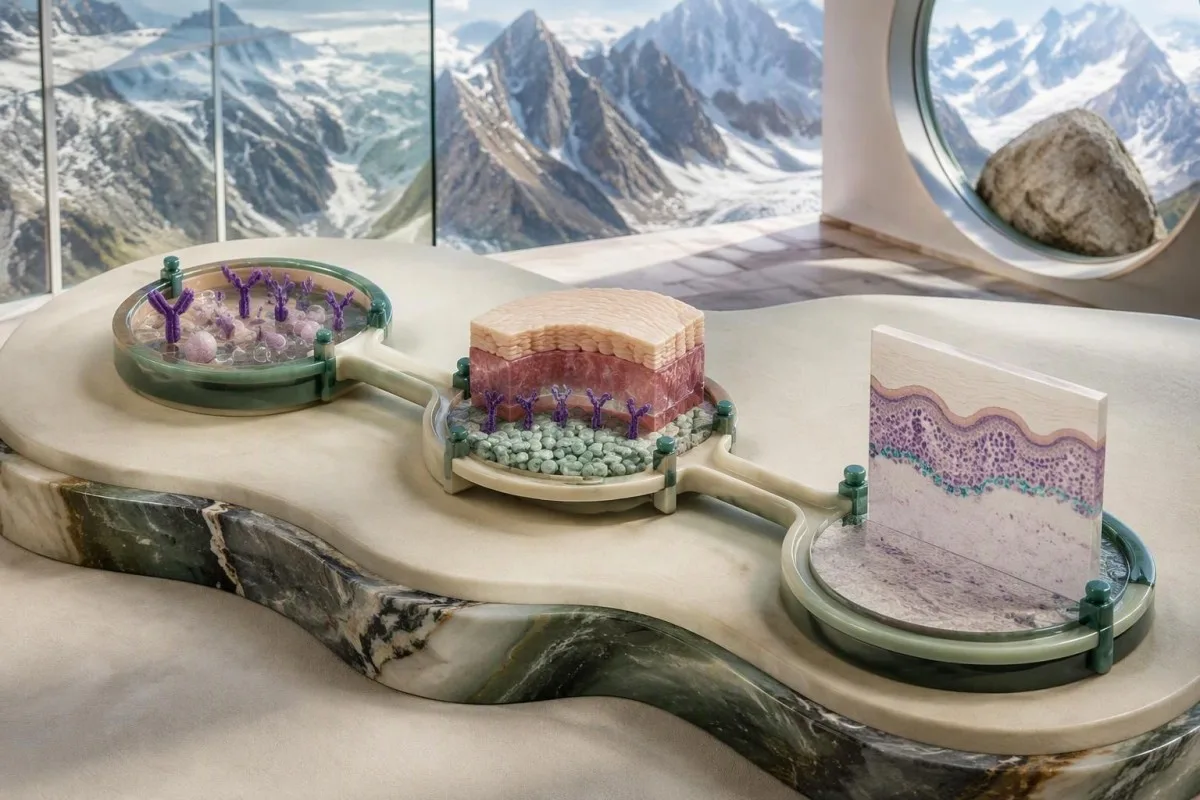
A useful report includes the exact assay name, numerical value, units, cutoff, and collection date. If a hypothetical BP180 result reads 16 U/mL, the missing cutoff may reverse whether it is considered positive; also request the actual histology and direct-immunofluorescence reports rather than relying on the phrase 'skin biopsy normal.'
New eye symptoms, swallowing difficulty, extensive rapidly spreading blisters, fever, or inability to maintain fluids need prompt clinical attention. Do not wait for a scheduled second test when those symptoms appear; supportive urinalysis can answer separate medical questions, as explained in our پيشاب جي جاچ (urinalysis) جي تشريح گائيڊ, but it cannot establish a pemphigoid diagnosis.
Kantesti helps explain the distinctions between a flagged antibody result, a probable diagnosis, and confirmed disease. اسان جو ذميوار AI جا اصول describe the boundaries of educational interpretation; only a clinician with access to your examination and appropriate investigations can decide whether a BP180 اينٽي باڊي مثبت result represents active pemphigoid.
The directly relevant evidence here comes from the 2022 EADV guideline and the 2019 JAMA Dermatology diagnostic study. The two Zenodo publications listed below concern kidney-function and urinalysis interpretation and are included as background educational publications, not evidence that BP180 confirms bullous pemphigoid or that our AI has validated diagnostic accuracy for this condition.
اڪثر پڇيا ويندڙ سوال
ڇا BP180 اينٽي باڊي ٽيسٽ جو مثبت نتيجو اچڻ جو مطلب آهي ته مون کي يقيني طور تي بلَس پيمفيگوئڊ آهي؟
0 هڪ مثبت BP180 اينٽي باڊي ٽيسٽ جو پڪ سان اهو مطلب ناهي ته توهان کي بُلَس پيمفيگوئڊ آهي. ڪجهه ليبارٽريون 9 U/mL جي لڳ ڀڳ حد استعمال ڪن ٿيون ۽ ٻيون 20 U/mL جي لڳ ڀڳ، تنهنڪري صحيح ٽيسٽ ۽ حوالياتي حد اهم آهن. ان سان لاڳاپيل خارش يا ڦٽ نتيجي کي وڌيڪ معنيٰ خيز بڻائين ٿا، جڏهن ته اڪيلو گهٽ مثبت نتيجو اتفاقي يا غلط مثبت ٿي سگهي ٿو. تشخيص جي تصديق لاءِ چمڙي جي بايوپسي، سڌي اميونو فلوروسينس ۽ اضافي اينٽي باڊي ٽيسٽ جي ضرورت ٿي سگهي ٿي.
جيڪڏهن مون کي ڦُٽا ناهن ته BP180 جو گهٽ-مثبت نتيجو ڇا معنيٰ رکي ٿو؟
ڦٽن کان سواءِ BP180 جو گهٽ مثبت نتيجو اتفاقي اينٽي باڊي جي سڃاڻپ، ٽيسٽ جي طريقي سان لاڳاپيل غلط مثبت نتيجي، يا ڦٽن کان سواءِ ظاهر ٿيندڙ پيمفيگوئڊ کي ظاهر ڪري سگهي ٿو. مثال طور، 12 U/mL، 9-U/mL جي حد کان مٿي هجڻ سبب مثبت آهي، پر اهو اڳڪٿي نٿو ڪري سگهي ته بي علامت شخص ۾ بيماري پيدا ٿيندي يا نه. مسلسل خارش يا بنا وضاحت جي چمڙيءَ تي داڳن لاءِ ڦٽن جي غير موجودگيءَ ۾ به چمڙيءَ جي ماهر کان جائزو وٺڻ گهرجي. رڳو هڪ الڳ گهٽ مثبت نتيجي جي بنياد تي ٻيهر ٽيسٽ ڪرائڻ جو ڪو عالمي طور مڃيل وقفو يا علاج جي سفارش موجود ناهي.
ڇا مون کي BP180 اينٽي باڊيز منفي هجڻ باوجود بُلَس پيمفيگوئڊ ٿي سگهي ٿو؟
بُلَس پيمفگائيڊ، معمول جي NC16A ٽيسٽ ۾ BP180 اينٽي باڊيز منفي اچڻ باوجود به ٿي سگهي ٿو. هي ٽيسٽ لڳ ڀڳ 180-kDa پروٽين جي هڪ مخصوص حصي کي جاچي ٿي ۽ شايد انهن اينٽي باڊيز کي نه سڃاڻي، جيڪي گهڻو ڪري ٻين حصن جي خلاف هجن. BP230 جي جاچ، سڌي اميونو فلوروسينس ۽ اڻ سڌي اميونو فلوروسينس وڌيڪ ثبوت مهيا ڪري سگهن ٿيون. جڏهن چمڙي جون علامتون پيمفگائيڊ جو پڪو اشارو ڏين، تڏهن رت جي منفي ٽيسٽ جي بنياد تي جاچ بند نه ڪرڻ گهرجي.
ڇا BP230 اينٽي باڊيز جي منفي نتيجن سان بُلَس پيمفيگوئڊ جو امڪان رد ٿي وڃي ٿو؟
0 منفي BP230 اينٽي باڊيز بُلَس پيمفيگوئڊ جي تشخيص کي خارج نٿيون ڪن. BP230 لڳ ڀڳ 230-kDa جو اندرونِ خلوي لنگرانداز پروٽين آهي، ۽ تصديق ٿيل بيماريءَ وارن ڪجهه ماڻهن ۾ ان جي خلاف سڃاڻپ لائق اينٽي باڊيز موجود نه هونديون آهن. جيڪڏهن ڪلينڪي ۽ ٽشوز جا نتيجا ٺهڪي اچن، ته BP230 اينٽي باڊيز منفي هجڻ باوجود BP180 جو مثبت نتيجو تشخيص سان ٺهڪي اچي سگهي ٿو. ٻنهي اينٽي باڊيز جي ڪنسنٽريشن کي گڏ نه ڪرڻ گهرجي ۽ نه ئي انهن کي ٻن ٽيسٽن واري تصديقي قاعدي طور سمجهڻ گهرجي.
پيمفگوئڊ لاءِ ڪڏهن ڪڏهن چمڙي جون ٻه بايوپسيون ڇو گهربل هونديون آهن؟
اڪثر ڪري چمڙي جون ٻه بايوپسيون گهربل هونديون آهن، ڇاڪاڻتہ معمول جي هسٽالاجي ۽ سڌي مدافعتي فلوريسنس تشخيص بابت مختلف سوالن جا جواب ڏين ٿيون. عام طور تي 3–4-mm جو ننڍڙو پنچ استعمال ڪيو ويندو آهي، جيتوڻيڪ ڊرماتولوجسٽ انفرادي ظهور مطابق طريقي ۽ جاءِ جو انتخاب ڪري ٿو. هڪ نموني ۾ بافتي جي بناوت جو جائزو ورتو ويندو آهي، جڏهنتہ ٻئي ۾ بيسمينٽ ميمبرين سان گڏ مدافعتي ذخيرن جي ڳولا ڪئي ويندي آهي. سڌي مدافعتي فلوريسنس واري نموني لاءِ پنهنجي طئي ٿيل منتقلي جو طريقو گهربل هوندو آهي ۽ ان کي معمول موجب فارملين ۾ نه رکڻ گهرجي.
ڇا BP180 جي اعليٰ سطح جو مطلب آهي ته منهنجو پيمفگائيڊ شديد آهي؟
A high BP180 level does not independently determine how severe pemphigoid is or whether it is an emergency. A result of 100 U/mL must be interpreted using that assay's cutoff and alongside the extent of skin involvement, itching, new blisters, and general health. Antibody levels often relate to disease activity, but individual results and symptoms can disagree. Eye pain, vision changes, difficulty swallowing, or rapidly spreading extensive blistering require prompt assessment regardless of the antibody concentration.
ڇا علاج بند ڪرڻ کان اڳ BP180 اينٽي باڊيز منفي ٿيڻ گهرجن؟
BP180 اينٽي باڊيز جو منفي ٿيڻ هميشه ضروري ناهي، ان کان اڳ جو ڪو طبيب پيمفگائيڊ جو علاج گهٽائڻ يا بند ڪرڻ تي غور ڪري. فرضي طور 120 کان 35 U/mL تائين گهٽتائي بهتري جي حمايت ڪري سگهي ٿي، پر علامتون، نون ڇالن جو ٺهڻ، معائنو ۽ بيماري ٻيهر ظاهر ٿيڻ جي تاريخ فيصلي جي رهنمائي ڪن ٿا. چمڙي جي حالت قابو ۾ هئڻ باوجود اينٽي باڊيز معلوم ٿي سگهن ٿيون، ۽ مختلف ٽيسٽن لاءِ علاج بند ڪرڻ جي ڪا هڪ عالمگير حد مقرر ناهي. صرف اينٽي باڊيز جي رجحان جي بنياد تي تجويز ڪيل علاج ۾ تبديلي نه ڪريو.
پنهنجي رت جي جاچ جو نتيجو ڪيئن پڙهجي
پنهنجي ليبارٽري رپورٽ اپلوڊ ڪريو ۽ Kantesti جو AI سيڪنڊن اندر هر بائيو مارڪر کي سادي ٻوليءَ ۾ سمجهائيندو. سڄي دنيا ۾ 2 ملين کان وڌيڪ ماڻهن طرفان استعمال ٿيل.
حوالا
- Klein, T., Mitchell, S., & Weber, H. (2026). BUN/Creatinine Ratio Explained: گردن جي ڪم جاچ Guide. Kantesti AI طبي تحقيق. ڊي او آءِ
- Klein, T., Mitchell, S., & Weber, H. (2026). Urobilinogen in Urine Test: Complete Urinalysis Guide 2026. Kantesti AI طبي تحقيق. ڊي او آءِ
- Borradori L et al. (2022). Updated S2 K guidelines for the management of bullous pemphigoid initiated by the European Academy of Dermatology and Venereology (EADV). Journal of the European Academy of Dermatology and Venereology. ڊي او آءِ
- Meijer JM et al. (2019). Assessment of Diagnostic Strategy for Early Recognition of Bullous and Nonbullous Variants of Pemphigoid. JAMA Dermatology. ڊي او آءِ
- 20 لک+تجزيو ڪيل ٽيسٽون
- 127+ملڪ
- 100+ٻوليون
طبي ٽيم بابت


E-E-A-T اعتماد جا سگنل
تجربو
ڊاڪٽر جي نگرانيءَ هيٺ ليبارٽري نتيجن جي تشريح واري عمل جو جائزو.
ماهر
ليبارٽري دوائن جو ڌيان ان ڳالهه تي ته بايو مارڪرز ڪلينڪل حوالي سان ڪيئن رويو ڏيکارين ٿا.
اختيار
ڊاڪٽر ٿامس ڪلائن طبي جائزو ورتو، جنهن ۾ ڊاڪٽر سارا مچل ۽ پروفيسر ڊاڪٽر هانس ويبر جون ڀاڱيداريون شامل آهن.
اعتبار
ثبوتن تي ٻڌل تشريح، جنهن سان خبرداري گهٽائڻ لاءِ واضح پيرويءَ جا رستا موجود هجن.
طبي ترديد
هي آرٽيڪل صرف تعليمي مقصدن لاءِ آهي ۽ طبي مشورو نٿو بڻجي. تشخيص ۽ علاج جي فيصلن لاءِ هميشه ڪنهن قابل صحت فراهم ڪندڙ سان صلاح ڪريو.
شايع ٿيل · ايڊيٽوريل ٽيم سان رابطو ڪريو
Kantesti Ltd پاران شايع ٿيل، انگلينڊ ۽ ويلز ۾ رجسٽرڊ، ڪمپني نمبر. 17090423, ، لنڊن، برطانيه.
