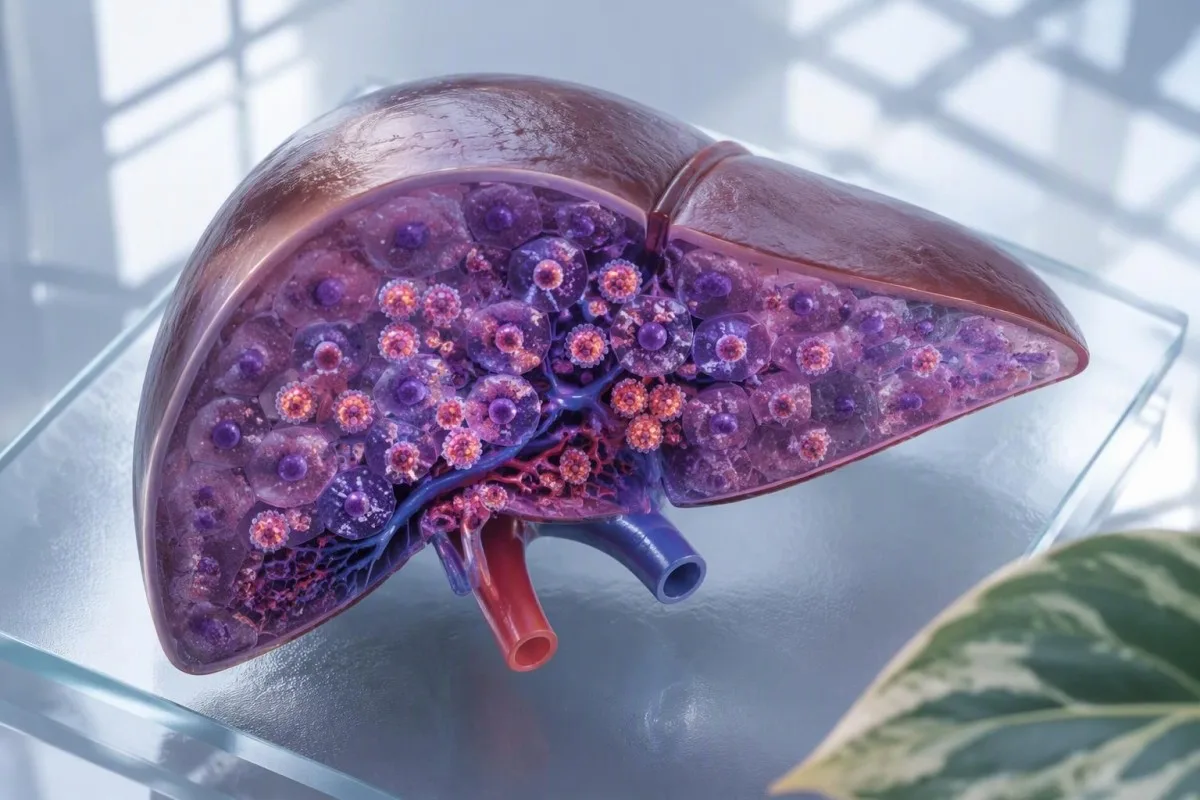
Hepatitis D testing is a two-step process that starts with an antibody screen and ends with HDV RNA confirmation. The crucial point is simple: anyone with hepatitis B surface antigen positivity should discuss HDV testing with their clinician.


- Who needs testing: EASL recommends at least one anti-HDV test for every person with positive hepatitis B surface antigen (HBsAg).
- HDV antibody test: A positive anti-HDV result shows exposure to hepatitis D but does not prove current infection.
- HDV RNA test: Detectable HDV RNA confirms active viral replication and establishes hepatitis D diagnosis in an HBsAg-positive person.
- Negative antibody result: A negative anti-HDV test usually rules out past or current HDV, although RNA testing may still be sensible after a very recent high-risk exposure.
- وخت: HDV RNA can become detectable before antibodies, so an early negative antibody result should be repeated when clinical suspicion remains high.
- No universal viral-load cutoff: Any confirmed detectable HDV RNA matters; viral-load values in IU/mL are mainly used to follow change over time.
- Liver assessment: ALT, AST, bilirubin, platelet count, INR, albumin, fibrosis assessment and ultrasound help determine urgency after a positive RNA result.
- بیړني نښې: Yellowing of the eyes, confusion, new abdominal swelling, black stools, or severe vomiting require urgent medical assessment.
The two-step hepatitis D testing sequence
Hepatitis D diagnosis requires an HDV antibody test followed by an HDV RNA test when the antibody screen is positive. HDV cannot establish infection without hepatitis B surface antigen, so the practical starting point is confirming that HBsAg is present.
د anti-HDV antibody assay detects immune recognition of hepatitis D virus. A reactive result means the immune system has encountered HDV at some point, but it cannot distinguish resolved exposure from active infection. The next order is HDV RNA by a sensitive PCR-based molecular assay; detectable RNA confirms current viraemia.
In clinic, I have seen patients incorrectly reassured by an antibody result marked positive but never followed with RNA. That gap matters because HDV is associated with faster fibrosis progression than hepatitis B alone. A positive antibody is a signal to finish the work-up, not the final diagnosis.
کانټیسټي یو دی د AI د وینې معاینې شنونکی that places a reported anti-HDV result beside HBsAg, ALT, AST, bilirubin and platelets, while clearly flagging that it cannot substitute for confirmatory HDV RNA testing. For the surrounding liver markers, our د ځیګر پینل لارښود explains why a normal-looking single enzyme does not settle the question.
Who should have a hepatitis D blood test?
Every person with confirmed HBsAg positivity should be offered anti-HDV testing at least once, regardless of ALT level or symptoms. This universal approach avoids relying on risk histories that are often incomplete or never recorded.
The 2023 EASL hepatitis delta guideline recommends screening all HBsAg-positive people for anti-HDV, then testing HDV RNA if antibodies are detected (EASL, 2023). This includes people with long-standing hepatitis B, newly identified hepatitis B, normal ALT, pregnancy, and people who believe their infection is inactive.
Testing is especially time-sensitive after injection-drug equipment sharing, sex with a person known to have HBV or HDV, dialysis exposure, migration from a high-prevalence setting, or unexplained hepatitis in someone already HBsAg-positive. Stockdale et al. estimated that HDV affects roughly 12 million people globally, although country-level prevalence varies substantially (Stockdale et al., 2020).
A 37-year-old patient I reviewed had HBsAg positivity for 11 years and ALT values between 28 and 46 U/L; anti-HDV was never requested because he felt well. His later RNA result was detectable. Silent liver disease is why hepatitis B symptoms without jaundice deserve attention rather than reassurance.
What a positive or negative HDV antibody result means
A positive HDV antibody test indicates exposure to hepatitis D, while a negative test usually excludes exposure in an established infection. Neither result measures how much virus is currently present.
Most laboratories report total anti-HDV as reactive or non-reactive rather than a meaningful numerical concentration. Reactive anti-HDV plus detectable HDV RNA means active hepatitis D. Reactive anti-HDV with undetectable RNA can reflect past cleared infection, intermittent viraemia, an assay near its detection limit, or a specimen and assay issue.
A negative anti-HDV test is reassuring when exposure was remote and there is no acute hepatitis. It is less decisive in the first weeks after a plausible exposure, because RNA may precede a measurable antibody response. In that situation, clinicians commonly repeat anti-HDV and add RNA rather than treating one early negative result as final.
Do not confuse anti-HDV with hepatitis B antibodies. Anti-HBs protects against HBV acquisition, whereas anti-HDV is an exposure marker and does not establish immunity. Our explainer on مثبت انټي باډي پایلې covers why antibody names can be misleading on a report.
HDV RNA test: the result that confirms active infection
A detectable HDV RNA result in an HBsAg-positive person confirms active hepatitis D infection. RNA is the test clinicians use to confirm viraemia, establish a baseline and judge virological response during treatment.
HDV RNA is generally reported qualitatively as detected or not detected, and often quantitatively in IU/mL or log10 IU/mL. There is no single international RNA threshold below which active HDV is harmless. A result of 100 IU/mL and a result of 100,000 IU/mL both require specialist interpretation in the context of liver injury and fibrosis.
Assay sensitivity differs. Some specialist laboratories quantify down to roughly 6 to 10 IU/mL, while other assays have a higher lower limit of quantification; the report should state whether RNA was not detected or merely detected below quantification. Repeating testing through the same laboratory makes trends more interpretable.
کانټیسټي یو دی د AI لاب ټېسټ د تفسیر خدمت that can organize longitudinal ALT, bilirubin, platelet and HDV RNA entries for a hepatology appointment, but it does not diagnose infection from an image alone. If one report seems inconsistent with another, use a د وینې-ازموینې بدلون لارښود before assuming the virus has changed.
When to test after a possible exposure
Testing after a possible HDV exposure should start promptly if HBsAg is positive, with repeat antibody and RNA testing when the first tests occur early. There is no reliable one-day window that guarantees exclusion after a recent exposure.
HDV RNA may be detectable before anti-HDV antibodies appear, particularly during acute co-infection or superinfection. If an HBsAg-positive person has a recent high-risk event and acute hepatitis symptoms, clinicians often request anti-HDV and RNA together instead of waiting for the screen.
For a first negative screen obtained within weeks of a high-risk event, repeat testing is usually individualized around symptoms, ALT trajectory and the exposure date. In my experience, a repeat at about 6 تر 12 اونیو پورې is a practical discussion point, but local specialist advice takes priority because assay access and baseline HBV status change the plan.
New fatigue alone is nonspecific; dark urine, jaundice, right-upper abdominal discomfort and marked nausea make urgent assessment more appropriate. If liver enzymes are fluctuating after lifestyle changes, کې د وزن له کمولو وروسته ALT offers useful context, though it should never delay viral testing.
HDV co-infection versus HBV superinfection
HDV co-infection occurs when HBV and HDV are acquired together, whereas superinfection occurs when HDV infects someone with established chronic hepatitis B. Superinfection is more likely to become chronic and can cause a sharper deterioration in liver function.
HDV borrows hepatitis B surface antigen to assemble infectious particles. This biological dependency explains a core rule: a person who is truly HBsAg-negative does not have active hepatitis D, even if a result elsewhere has been confusing. HBV vaccination prevents HDV by preventing HBV infection.
Co-infection can present as acute hepatitis with both HBV markers and HDV RNA changing rapidly. Superinfection may show a sudden ALT rise, deteriorating bilirubin, or liver decompensation in a person previously living with HBV. The distinction affects prognosis, although the immediate laboratory sequence remains anti-HDV followed by RNA confirmation.
Dr. Thomas Klein, MD, has found that the most useful clinical question is often not “How high is the RNA?” but “What was this patient’s HBV and liver baseline six months ago?” Reviewing FIB-4 liver-fibrosis risk can help frame that conversation, but it cannot replace elastography or specialist care.
Which liver tests matter after positive HDV RNA?
Positive HDV RNA warrants a full liver severity assessment: ALT, AST, bilirubin, albumin, INR, platelet count, HBV DNA, kidney function and fibrosis evaluation. These results identify active injury and possible cirrhosis, not simply the presence of virus.
ALT and AST reflect hepatocyte injury but can be normal in meaningful chronic liver disease. ALT above approximately 35 U/L په نارینهوو یا 25 U/L په ښځو is often considered above a healthy reference threshold in viral-hepatitis guidance, yet each laboratory’s range and the patient’s baseline still matter. Bilirubin above the laboratory upper limit with rising INR deserves faster review.
د پلیټلیټ شمېر له دې څخه کم 150 × 10⁹/L can be an early clue to portal hypertension in chronic liver disease, particularly alongside splenomegaly or a rising FIB-4 score. Albumin below ۳۵ g/L and INR above 1.2 may indicate impaired hepatic synthetic function, though nutrition, medicines and anticoagulants can confound both.
Kantesti AI interprets liver-test patterns by comparing multiple measurements rather than declaring hepatitis severity from ALT alone. Readers can review د سیرروسس خبرتیا نښې او د د bilirubin نمونې لارښود (pattern guide) مخکې له خپل ملاقات څخه بیاکتنه وکړي.
Can hepatitis D be present with normal liver enzymes?
Yes, hepatitis D can be present when ALT and AST are within the laboratory reference interval. Normal enzymes lower the likelihood of brisk current injury, but they do not exclude HDV RNA positivity, fibrosis or future flares.
ALT is a moving signal, not a fibrosis meter. Exercise, muscle injury, fatty liver, alcohol, medication effects and viral activity can all alter it; a single ALT of 31 U/L may be unremarkable for one person and a meaningful increase from a prior baseline of 12 U/L for another.
The reason clinicians worry about HDV RNA combined with low platelets or an elevated liver stiffness result is that the combination can suggest fibrosis despite modest enzymes. Conversely, an isolated mild AST rise after a marathon may be muscular rather than hepatic. Context changes the interpretation.
For people who receive results before their clinician calls, why portals release labs early explains the workflow. Do not start supplements marketed as liver cleanses; several can themselves raise ALT or cause liver injury.
How to prepare for an HDV antibody or RNA test
HDV antibody and HDV RNA tests usually require no fasting, special diet or medication washout. The main preparation is making sure the ordering clinician and laboratory know the patient is HBsAg-positive and need an HDV-specific assay.
Continue prescribed hepatitis B treatment unless the prescriber gives different instructions. Stopping antivirals before testing can destabilize HBV control and does not improve HDV RNA accuracy. Bring previous HBV DNA, HBsAg, ALT and imaging results where possible, because they establish the clinical timeline.
For molecular testing, sample handling matters more than the patient’s breakfast. A laboratory may require plasma collected and transported under validated conditions; delays, inadequate volume and assay-specific handling can lead to an indeterminate or non-quantifiable result.
کانټیسټي یو دی د AI پر بنسټ د وینې ازموینې تحلیل وسیله designed to extract results from laboratory PDFs and preserve the units, reference intervals and draw dates that hepatologists need. Our د PDF اپلوډ کیفیت چک لېسټ (checklist) is useful when a scanned report has tiny print or multiple language formats.
What discordant hepatitis D test results can mean
Positive anti-HDV with negative RNA is the most common discordant pattern and does not automatically mean the antibody result was wrong. It usually triggers repeat RNA testing, assay review and a full assessment of clinical context.
Anti-HDV positive and RNA negative may represent resolved infection or virus below the test’s limit of detection. Repeat RNA is particularly reasonable when ALT is elevated, fibrosis is present, the first specimen was poorly handled, or the result came from a non-specialist assay with limited sensitivity.
Anti-HDV negative with detectable RNA is uncommon but possible early in infection or with assay limitations. A specialist laboratory may repeat both assays, confirm HBsAg and review whether the reported result actually refers to a different hepatitis marker. Never assume a clerical label is clinically impossible.
One practical safeguard is to compare specimen date, units and assay name rather than comparing only red or green flags. Qualitative versus quantitative tests explains why “not detected” and “below quantification” are not interchangeable.
Monitoring after a confirmed hepatitis D diagnosis
Confirmed HDV RNA requires hepatology or infectious-disease follow-up, with repeat viral, liver-function and fibrosis assessments at intervals tailored to disease severity and treatment. There is no safe universal schedule for every person.
Monitoring commonly includes HDV RNA, ALT, AST, bilirubin, albumin, INR, platelets and HBV DNA. A repeat interval of 3 تر 6 میاشتو is often used during active disease or treatment, while stable patients may be monitored differently by their hepatology team. RNA trends are more meaningful when measured by the same assay.
People with cirrhosis need surveillance beyond routine blood work. Ultrasound-based hepatocellular carcinoma surveillance is commonly performed every ۶ میاشتې, and new ascites, confusion, gastrointestinal bleeding or jaundice require same-day medical assessment. Blood tests cannot safely replace imaging in this setting.
زموږ د لاین-په-لاین لابراتواري تحلیل لارښود explains what to record after each draw: medication changes, illness, alcohol exposure, fasting status and laboratory location. Those details often explain a one-off change that otherwise looks alarming.
How treatment changes hepatitis D test interpretation
Treatment response is judged by change in HDV RNA together with liver enzymes and clinical status, not by antibody disappearance. Anti-HDV often remains positive long after viraemia has fallen or become undetectable.
A falling HDV RNA level is encouraging, but an undetectable result should be interpreted against the assay’s lower limit and timing. Some patients show fluctuating viraemia, so clinicians usually confirm meaningful changes with repeat measurements rather than making a major decision from one result.
Bulevirtide is available in some jurisdictions for chronic hepatitis D, while access, licensing and treatment pathways vary internationally. Pegylated interferon-based approaches remain relevant in selected settings but require careful monitoring for adverse effects and are not appropriate for everyone.
د Kantesti medical validation approach describes why our outputs identify follow-up patterns rather than recommend prescription changes. Medication decisions for HDV should sit with a specialist who knows the patient’s fibrosis stage, HBV treatment and pregnancy plans.
Pregnancy, partners and prevention after HDV testing
A positive HDV result does not change the need to prevent hepatitis B transmission: household and sexual contacts should have documented HBV vaccination or serologic immunity. Pregnancy requires coordinated obstetric and liver-specialist care rather than delayed testing.
HDV depends on HBV, so hepatitis B vaccination prevents hepatitis D in people who are not already infected with HBV. Contacts can discuss HBsAg, anti-HBs and anti-HBc testing with their clinician; an anti-HBs level of at least 10 mIU/mL after vaccination is generally considered protective in immunocompetent people.
Pregnant people with HBsAg positivity should not be excluded from anti-HDV screening. A positive result warrants specialist planning because liver status, HBV DNA, medication suitability and newborn HBV immunoprophylaxis all need coordinated attention. The evidence around HDV-specific pregnancy management is still thinner than I would like.
For families storing results across several clinicians, our د کورنۍ روغتیا ریکارډ لارښود can help preserve dates and consent boundaries. Dr. Thomas Klein, MD, advises bringing a written medication list and prior pregnancy records to the first joint review.
When hepatitis D results need urgent medical attention
Seek urgent care for jaundice, confusion, severe persistent vomiting, fainting, new abdominal swelling, fever with marked illness, or black stools—whether HDV testing is pending or already positive. These symptoms can signal severe hepatitis or liver decompensation.
Rapidly rising bilirubin, a prolonged INR, low glucose or new confusion can occur in acute liver failure and need emergency evaluation. A bilirubin result above 50 µmol/L (about 2.9 mg/dL) is not automatically an emergency, but the combination with jaundice, INR elevation or worsening symptoms changes the urgency substantially.
Call the clinician promptly after a new detectable HDV RNA result, even if you feel well. Most positive RNA results do not require an ambulance, but they should not wait for an annual check-up. Bring the complete report, including test method and limit of detection, to the appointment.
Kantesti کلینیکي مینځپانګه د زموږ له مشورې سره بیاکتنه کیږي د طبي مشورتي بورډ, but our interpretation never replaces urgent assessment. If symptoms suggest decompensation, seek local emergency care rather than uploading another report.
پوښتل شوې پوښتنې
څوک باید د هیپاټایټس D وینې ازموینه وکړي؟
هر څوک چې د هیپاټایټس B سطحې انټيجن (HBsAg) مثبته پایله لري باید لږترلږه یو ځل د HDV انټي باډي ازموینه وکړي، حتی کله چې ALT نورمال وي او هیڅ نښې شتون نلري. د 2023 EASL لارښود په HBsAg مثبت خلکو کې د نړیوال ضد HDV سکرینینګ وړاندیز کوي، وروسته له هغه چې د HDV RNA ازموینه ترسره شي کله چې انټي باډیز عکس العمل ښیې. ازموینه په ځانګړي توګه د وروستي پارنټرل (parenteral) تماس وروسته، د نا څرګنده هیپاټایټس یا په ثابت شوي هیپاټایټس B کې ناڅاپي خرابیدو وروسته عاجله ده. د هیپاټایټس D وینې ازموینه په هغه چا کې چې تایید شوی HBsAg منفي وي په منظم ډول ګټوره نده.
ایا د HDV انټي باډي مثبت ازموینه پدې معنی ده چې زه هیپاټایټس D لرم؟
A positive HDV antibody test means you have been exposed to hepatitis D virus, but it does not by itself prove active infection. Active hepatitis D is confirmed when HDV RNA is detectable in an HBsAg-positive person. Anti-HDV can remain positive after infection has cleared, and RNA can occasionally fluctuate around a laboratory detection limit. Ask for HDV RNA, usually reported as detected or not detected and sometimes in IU/mL, after a reactive antibody result.
د هیپاټیټس ډي لپاره د وینې ازموینې ته په څومره وخت کې ښکاره کیږي؟
HDV RNA may become detectable before anti-HDV antibodies, so the timing depends on which hepatitis D blood test is used. After a very recent exposure, clinicians may order antibody and RNA together and repeat them around 6 to 12 weeks if the initial tests are negative but suspicion remains high. There is no single guaranteed exclusion day because host immunity, assay sensitivity and whether HBV is newly acquired or chronic all affect timing. Acute symptoms or rising ALT should prompt medical assessment without waiting for a repeat date.
What HDV RNA level is considered high?
There is no universally accepted HDV RNA cutoff in IU/mL that separates harmless from dangerous infection. Any detectable HDV RNA confirms active viral replication when HBsAg is positive, while serial change in the same assay helps clinicians evaluate disease activity and treatment response. A value of 1,000 IU/mL is therefore not interpreted in isolation from ALT, bilirubin, platelets, fibrosis testing and symptoms. Laboratories may have lower quantification limits around 6 to 10 IU/mL, but methods vary.
Can I have hepatitis D with normal ALT?
Yes, hepatitis D can be present with ALT within the laboratory reference interval. ALT measures current hepatocyte injury imperfectly and can fluctuate; it does not reliably exclude HDV RNA positivity or fibrosis. Clinicians assess ALT alongside AST, bilirubin, albumin, INR, platelet count, HBV DNA and liver stiffness or imaging. An ALT below 35 U/L in men or 25 U/L in women may be reassuring in context, but it does not cancel the need for HDV testing when HBsAg is positive.
Can hepatitis B vaccination prevent hepatitis D?
Yes, hepatitis B vaccination prevents hepatitis D in people who are not already infected with HBV because HDV requires hepatitis B surface antigen to form infectious particles. After a completed hepatitis B vaccine series, an anti-HBs concentration of at least 10 mIU/mL is generally considered protective in immunocompetent adults. Vaccination does not treat existing chronic hepatitis B or hepatitis D, so HBsAg-positive people need specialist testing and follow-up instead. Household and sexual contacts of someone with HBV or HDV should discuss vaccination and serology with their clinician.
همدا نن د AI په مرسته د وینې ازموینې تحلیل ترلاسه کړئ
له 2M+ څخه زیات کاروونکي په ټوله نړۍ کې زموږ په Kantesti باور لري چې د لابراتوار ازموینو تحلیل په فوري او دقیق ډول کوي. خپل د وینې ازموینې پایلې اپلوډ کړئ او په ثانیو کې د 15,000+ بایومارکرونو بشپړه تشریح ترلاسه کړئ.
📚 د څېړنې خپرونې چې حواله شوې دي
کلین، ټي، مېچېل، ایس، او وېبر، ایچ. (2026). RDW Blood Test: Complete Guide to RDW-CV, MCV & MCHC. Kantesti LTD. (2026). Zenodo. https://doi.org/10.5281/zenodo.18202598. ResearchGate: https://www.researchgate.net/ Academia.edu: https://www.academia.edu/. Kantesti د AI طبي څېړنه.
کلین، ټي، مېچېل، ایس، او وېبر، ایچ. (2026). BUN/Creatinine Ratio Explained: Kidney Function Test Guide. Kantesti LTD. (2026). Zenodo. https://doi.org/10.5281/zenodo.18207872. ResearchGate: https://www.researchgate.net/ Academia.edu: https://www.academia.edu/. Kantesti د AI طبي څېړنه.
📖 بهرني طبي مراجع
European Association for the Study of the Liver (2023). EASL Clinical Practice Guidelines on hepatitis delta virus. د هیپاتولوژي ژورنال.
Stockdale AJ et al. (2020). The global prevalence of hepatitis D virus infection: Systematic review and meta-analysis. د هیپاتولوژي ژورنال.
⚕️ طبي ردونه
دا مقاله یوازې د زده کړې لپاره ده او طبي مشوره نه جوړوي. د تشخیص او درملنې د پرېکړو لپاره تل د وړ روغتیايي خدمت وړاندې کوونکي سره سلا وکړئ.
د E-E-A-T باور نښې
تجربه
د ډاکټر تر مشرۍ لاندې کلینیکي بیاکتنه د لابراتواري تفسیر د کاري بهیرونو لپاره.
تخصص
د لابراتواري طب تمرکز پر دې چې بایومارکرونه په کلینیکي شرایطو کې څنګه چلند کوي.
واک ورکول
د ډاکټر توماس کلاین له خوا لیکل شوی، د ډاکټر سارا میچل او پروف. ډاکټر هانس ویبر له خوا بیاکتنه.
اعتبار
د شواهدو پر بنسټ تفسیر د روښانه تعقیبي لارو چارو سره، تر څو اندیښنه کمه شي.