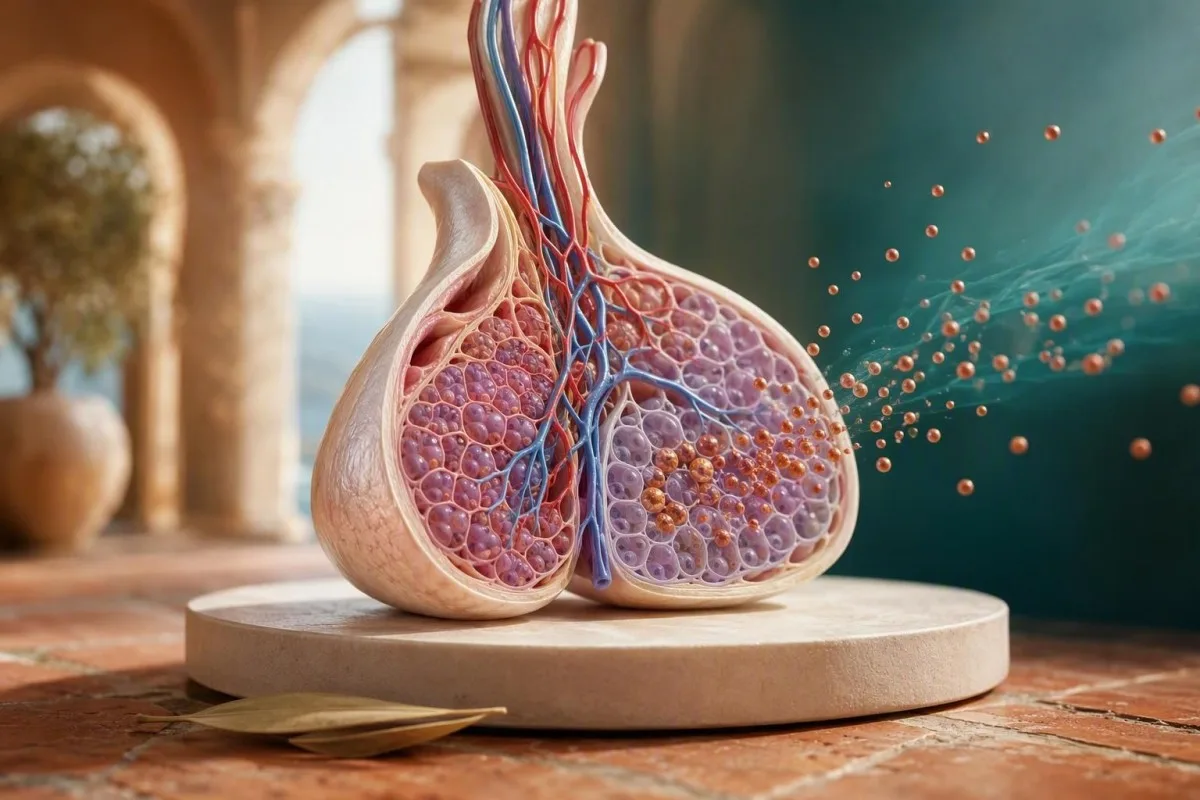
Een grenswaarde prolactineresultaat is vaak tijdelijk, maar de omstandigheden van de herhaalde test en het patroon van symptomen bepalen of het veilig kan worden afgewacht of dat er een endocrinologische beoordeling nodig is.


- Lichte verhoging betekent gewoonlijk een prolactineresultaat net boven de bovengrens van het rapporterende laboratorium, vaak onder de 50 ng/mL (ongeveer 1.060 mIU/L).
- Herhaal eerst wanneer prolactine 20-50 ng/mL is en er geen visuele symptomen, ernstige hoofdpijn of belangrijke veranderingen in de menstruatie of seksuele functie zijn.
- Rust is belangrijk omdat angst voor bloedafname, slechte slaap, lichaamsbeweging, borststimulatie en een acute ziekte prolactine tijdelijk kunnen verhogen.
- Medicatiebeoordeling is essentieel omdat antipsychotica, metoclopramide, domperidon, opioïden, sommige antidepressiva en verapamil prolactine kunnen verhogen.
- Macroprolactinetesten is bijzonder nuttig voor aanhoudende verhoging met weinig of geen typische symptomen; het identificeert biologisch minder actieve prolacinecomplexen.
- Niveaus boven 100 ng/mL verdienen snellere endocriene beoordeling, hoewel medicijnen af en toe waarden in dat bereik kunnen opleveren.
- Spoedbeoordeling is nodig bij nieuwe ernstige hoofdpijn, verminderd zijwaarts gezichtsveld, zwangerschap met visuele symptomen of plotselinge neurologische veranderingen.
- Context verslaat één getal: zwangerschapsstatus, schildklierfunctie, nierfunctie, timing van medicatie en eerdere waarden beïnvloeden de interpretatie.
Wat een grenswaarde prolactineresultaat gewoonlijk betekent
Licht verhoogde prolactine betekenis is meestal een tijdelijk signaal in plaats van bewijs van een hypofyseaandoening: een resultaat onder 50 ng/mL (ongeveer onder 1.060 mIU/L) vereist doorgaans een zorgvuldig voorbereide hertest. Ik ben Dr. Thomas Klein, en bij klinische beoordeling is de combinatie van de exacte waarde, symptomen, medicijnen, zwangerschapskans en monsteromstandigheden veel belangrijker dan één rode laboratoriumvlag.
De meeste laboratoria hanteren een referentiebereik voor niet-zwangere volwassenen van ongeveer 4-23 ng/mL bij vrouwen En 3-15 ng/mL bij mannen, maar methoden verschillen. Een waarde van 27 ng/mL bij een vrouw wiens bovengrens van het laboratorium 23 ng/mL is, is een grensgeval voor prolactine, geen diagnose; eenheden kunnen worden omgerekend als 1 ng/mL = 21,2 mIU/L.
Clinici maken zich meer zorgen wanneer de verhoging aanhoudt, stijgt, of gepaard gaat met afwezige menstruaties, melkproductie, onvruchtbaarheid, laag libido, erectieproblemen, hoofdpijn of veranderd perifeer zicht. Een waarde boven 200 ng/ml blijft is suggestiever voor een prolactine-producerend hypofysetumor dan een waarde van 28 ng/mL, hoewel geen enkele drempel de klinische beoordeling vervangt.
Kantesti is een AI-bloedtestanalysator die een prolactineresultaat plaatst naast schildklier-, nier-, lever-, zwangerschapsgerelateerde en geslachtshormoonaanwijzingen in plaats van een geïsoleerde vlag als diagnose te behandelen. Lezers die onzeker zijn over laboratoriumvlaggen kunnen ook onze gids raadplegen over resultaten buiten het referentiebereik.
Waarom laboratoria het oneens zijn
Prolactine immunoassays zijn niet uitwisselbaar: twee laboratoria kunnen licht verschillende waarden rapporteren van dezelfde persoon op dezelfde dag. Gebruik het referentiebereik dat naast uw eigen resultaat wordt afgedrukt en probeer bij het volgen van een trend hetzelfde laboratorium te gebruiken; dit is ook waarom het vergelijken van resultaten tussen bezoeken meer zorg vereist dan mensen verwachten.
Tijdelijke oorzaken die prolactine kunnen verhogen
Stress, slaapstoornissen, lichaamsbeweging, tepelstimulatie, seksuele activiteit en acute ziekte kunnen een kortstondige prolactinestijging veroorzaken. Een licht verhoogde waarde na een moeilijke reis of een slapeloze nacht kan normaliseren zonder behandeling.
Prolactine wordt in pulsen afgegeven en stijgt tijdens de slaap, met een piek die vaak in de vroege ochtenduren optreedt. Een monster dat kort na het ontwaken, na een nachtdienst of tijdens een pijnlijke procedure wordt genomen, kan daarom minder representatief zijn dan een monster van een uitgeruste mid-ochtend.
Naar mijn ervaring heeft een angstige 31-jarige patiënt met een prolactine van 34 ng/mL na drie uur slaap vaak een normaal herhalingsresultaat om 10 uur 's ochtends na rustig zitten. Een zitrust van 15-30 minuten voor de afname vermindert het effect van acute procedurele stress, en het vermijden van intensieve training gedurende 24 uur is verstandig.
Recent koorts, een epileptische aanval, borstwandletsel of zelfs aanhoudende borststimulatie kan prolactine verhogen. Als uw test volgde op ziekte, vergelijk deze dan met de timingprincipes in onze bloedtest-tijdlijnhandleiding, in plaats van aan te nemen dat het getal uw langetermijnbaseline weerspiegelt.
Hoe een prolactinetest correct te herhalen
Herhaal prolactine op een rustige ochtend, idealiter 2-3 uur na het ontwaken en na 20-30 minuten rustig zitten. Vasten is niet universeel vereist, maar een nuchtere nacht kan een herhalingspaneel gemakkelijker te interpreteren maken wanneer ook glucose of lipiden worden gemeten.
Vermijd voor een hertest zware inspanning, seks, borststimulatie en niet-essentiële borstonderzoeken gedurende 24 uur van tevoren. Stop voorgeschreven medicatie niet op eigen houtje; noteer in plaats daarvan de medicijnaam, dosis, tijd van de laatste dosis en waarom deze is voorgeschreven.
Een praktisch verzoek aan uw arts is: herhaal serum prolactine, zwangerschapstest indien relevant, TSH en vrij T4, en creatinine of eGFR wanneer de oorzaak onduidelijk is. Schildklieronderzoek is belangrijk omdat primaire hypothyreoïdie het thyrotropine-releasing hormone kan verhogen en secundair prolactine kan verhogen; zie onze schildklier hertest schema.
Herhalingstijd is meestal 1-4 weken voor een bescheiden onverwacht resultaat wanneer u zich goed voelt, in plaats van de volgende dag. Een trend kan duidelijk worden vastgelegd met longitudinale labtracking, vooral als u notities bijhoudt over slaap, cyclusdag, ziekte en medicatie.
Medicijnen die gewoonlijk licht verhoogde prolactine veroorzaken
Dopamine-blokkerende medicijnen behoren tot de meest voorkomende oorzaken van aanhoudende milde tot matige prolactineverhoging. De belangrijkste boosdoeners zijn antipsychotica en anti-misselijkheidsmedicijnen zoals metoclopramide en domperidon.
Dopamine onderdrukt normaal gesproken de hypofyse prolactineafgifte, dus medicijnen die dopamine D2-receptoren blokkeren, kunnen de niveaus aanzienlijk verhogen. Risperidon, amisulpride, haloperidol, metoclopramide en domperidon zijn veelvoorkomende voorbeelden; opioïden, verapamil en sommige SSRI's kunnen bescheidener bijdragen.
Medicatie-gerelateerde niveaus variëren sterk: risperidon kan prolactine boven 100 ng/mL, produceren, terwijl een SSRI-geassocieerde stijging slechts 25-40 ng/mL kan zijn. De reden dat we een medicijn niet simpelweg stoppen, is dat terugval van psychose, ernstige misselijkheid, pijn of depressie een veel groter direct risico kunnen vormen.
Kantesti AI is een AI lab test interpretatieservice die vraagt om medicatiecontext wanneer een hormoonresultaat wordt gemarkeerd, maar de interpretatie ervan kan de voorschrijver die weet waarom de medicatie is gestart, niet vervangen. Als er hormoongerelateerde symptomen aanwezig zijn, onze hormoonpanelgids legt uit welke bijkomende resultaten artsen gewoonlijk inspecteren.
Zwangerschap, borstvoeding en normale fysiologische stijgingen
Zwangerschap en borstvoeding kunnen prolactine ver boven de referentiewaarden voor niet-zwangere vrouwen verhogen en worden niet geïnterpreteerd met het gebruikelijke interval van 3-23 ng/mL. Een zwangerschapstest is daarom een vroege en essentiële stap bij onverklaarde verhoging voor iedereen die zwanger zou kunnen zijn.
Tijdens de zwangerschap stijgt prolactine gewoonlijk geleidelijk tot 100-300 ng/mL bereik tegen het einde van de zwangerschap, en borstvoeding handhaaft intermitterende verhogingen. De exacte waarde meet de melkproductie niet betrouwbaar, dus het najagen van een getal bij een vrouw die borstvoeding geeft, is zelden nuttig.
Medicatie die oestrogeen bevat en de normale menstruatiecyclus kunnen een kleine bijdrage leveren, maar verklaren zelden alleen een grote aanhoudende stijging. De timing van de cyclus kan ook gerelateerde hormonen zoals oestradiol en progesteron compliceren; onze uitleg van oestradiolvariabiliteit in de menopauze laat zien waarom één uitslag van een geslachtshormoon zelden alles beantwoordt.
Bij een persoon die probeert zwanger te worden, kan aanhoudende hyperprolactinemie de ovulatie verstoren door de afgifte van gonadotropine-releasing hormoon te onderdrukken. Dit is klinisch relevant, zelfs als het getal slechts 35-60 ng/mL is, vooral wanneer de menstruatie onregelmatig is geworden.
Oorzaken gerelateerd aan schildklier, nieren, lever en borstwand
Primaire hypothyreoïdie, verminderde nierklaring, chronische leverziekte en stimulatie van de borstwand kunnen allemaal prolactine verhogen zonder hypofysetumor. Deze oorzaken worden meestal gevonden via de anamnese en een kleine set gerichte laboratoriumtests voordat hersenbeeldvorming wordt overwogen.
Duidelijke primaire hypothyreoïdie toont vaak hoog TSH met lage vrije T4, en correctie met levothyroxine kan prolactine normaliseren over weken tot maanden. Centrale hypothyreoïdie heeft een ander patroon, dus een normale TSH lost de vraag niet altijd op wanneer vrije T4 laag is; lees onze gids voor lage vrije T4 met normale TSH.
Chronische nierziekte kan prolactine verhogen door verminderde klaring en veranderde dopamineregulatie; een eGFR onder 60 mL/min/1,73 m² maakt deze verklaring plausibeler. Leverziekte is een minder voorkomende geïsoleerde verklaring, maar synthetische disfunctie en veranderingen in geslachtshormonen kunnen bijdragen.
Gordelroos over de borst, borstoperaties, brandwonden en aanhoudende mechanische irritatie zijn allemaal in verband gebracht met verhoogd prolactine, omdat sensorische zenuwinvoer het reflexpad kan stimuleren. Dit is een reden waarom een arts vraagt naar een uitslag of operatie die los lijkt te staan van een hormoonuitslag.
Wanneer macroprolactinetesten de logische volgende stap zijn
Macroprolactinetesten is het meest nuttig wanneer prolactine verhoogd blijft, maar symptomen afwezig zijn of buitenproportioneel zijn ten opzichte van de uitslag. Macroprolactine is meestal prolactine gebonden aan immunoglobuline en heeft minder biologische activiteit omdat het slecht receptoren bereikt.
Veel routinematige tests tellen macroprolactine mee als prolactine, wat resulteert in een ogenschijnlijk hoge uitslag bij iemand met regelmatige menstruaties, geen galactorroe, en geen vruchtbaarheids- of seksuele symptomen. Laboratoria screenen vaak met polyethyleen glycolprecipitatie; een laag herstel van monomeer prolactine ondersteunt macroprolactinemie.
De richtlijn van de Endocrine Society beveelt aan om macroprolactine te controleren bij asymptomatische hyperprolactinemie, omdat dit onnodige beeldvorming en behandeling kan voorkomen (Melmed et al., 2011). Gepubliceerde prevalentie-schattingen variëren sterk per testmethode en verwijzingspopulatie, maar macroprolactine komt voor bij ongeveer 10-25% van de personen die worden geëvalueerd voor verhoogd prolactine.
Macroprolactine is geen reden om symptomen die werkelijk aanwezig zijn te negeren; iemand kan macroprolactine hebben naast een ander endocrien probleem. Voor bredere laboratoriumvalkuilen, ons artikel over kwalitatieve versus kwantitatieve tests een nuttige aanvulling.
Wat clinici controleren bij aanhoudende verhoging
Aanhoudende verhoging van prolactine moet worden bevestigd en beoordeeld met zwangerschapstests wanneer relevant, medicatieoverzicht, TSH/vrije T4, nierfunctie en macroprolactine alvorens hypofyseziekte aan te nemen. Een herhaaldelijk resultaat in dezelfde reeks is informatiever dan een enkel geïsoleerd resultaat.
Een gerichte anamnese vraagt naar menstruatiepatronen, melkproductie, libido, erectiele functie, onvruchtbaarheid, gezichtsverandering, hoofdpijn, epileptische aanvallen, symptomen op de borstkas, en elke voorgeschreven, vrij verkrijgbare en recreatieve substantie. In mijn 15 jaar klinische praktijk is de medicatielijst vaak de ontbrekende aanwijzing – vooral wanneer de laboratoriumaanvraag is gedaan door een clinicus die onbekend is met een psychiatrisch of gastro-intestinaal voorschrift.
Prolactine van 50-100 ng/mL met normale schildklier- en nierfunctie, geen medicatieverklaring en geen macroprolactine rechtvaardigt meestal interventie van een endocrinoloog. De klinische managementreview door Serri en collega's benadrukt het identificeren van fysiologische en farmacologische oorzaken vóór beeldvorming (Serri et al., 2003).
Kantesti's medische validatiestandaarden ondersteunen interpretatie op basis van patronen, maar abnormale resultaten moeten worden bevestigd door een clinicus en het rapporterende laboratorium. Het aanleveren van een beknopte chronologie van resultaten is vaak nuttiger dan het herhalen van een groot, ongericht hormoonpaneel.
Wanneer u zich zorgen moet maken over prolactine en dringende beoordeling moet aanvragen
Nieuwe visuele symptomen, een ernstige of snel verergerende hoofdpijn, neurologische verandering, of opvallende aanhoudende verhoging van prolactine vereisen snelle medische beoordeling. MRI wordt over het algemeen overwogen nadat veelvoorkomende omkeerbare oorzaken zijn uitgesloten of wanneer symptomen wijzen op druk nabij de optische paden.
Een MRI van de hypofyse is niet automatisch nodig voor een enkele waarde van 29 ng/mL na stress. Het is redelijker bij onverklaarbare aanhoudende verhoging, prolactine boven 100 ng/mL, amenorroe of hypogonadisme, of symptomen van een hypofysemassa; waarden boven 200 ng/ml blijft maakt een prolactinoom waarschijnlijker.
Zoek dezelfde dag klinisch advies bij plotselinge hevige hoofdpijn met visuele stoornissen, braken, verwardheid, zwakte of flauwvallen. Deze kenmerken zijn ongebruikelijk bij gewone milde hyperprolactinemie, maar ze zijn belangrijk omdat hypofyse apoplexie en andere neurologische ziekten dringend moeten worden uitgesloten.
Perifeer gezichtsverlies begint vaak subtiel, dus mensen beschrijven dat ze tegen deurposten aanlopen in plaats van duidelijke blindheid. Ons gedetailleerde overzicht van symptomen van hoge prolactine legt uit welke symptoomcombinaties niet hoeven te wachten op een routine hertest.
Menstruatie, vruchtbaarheid en botgezondheid: waarom symptomen het plan veranderen
Licht verhoogd prolactine is belangrijker wanneer het de menstruatie, ovulatie, vruchtbaarheid of oestrogeenblootstelling verstoort. Het hormoon kan de reproductieve signalering die nodig is voor regelmatige ovulatie onderdrukken, zelfs wanneer er geen dramatische melkproductie is.
Oligomenorroe betekent cycli langer dan 35 dagen, terwijl amenorroe geen menstruatiebloeding betekent gedurende 3 maanden bij iemand die voorheen regelmatig was; beide rechtvaardigen klinische beoordeling als prolactine verhoogd is. Een zwangerschapstest komt eerst omdat vroege zwangerschap veel vaker voorkomt dan een hypofyseaandoening.
Lage oestrogeenspiegels gedurende vele maanden kunnen de botdichtheid verminderen, vooral wanneer hyperprolactinemie amenorroe veroorzaakt. De directe taak is niet om blindelings supplementen te starten, maar om de oorzaak te achterhalen en de juiste hormonale functie te herstellen; vrouwen die een behandeling overwegen, kunnen pre-HRT-basistests beoordelen.
Galactorroe is melkachtige afscheiding die niet verband houdt met zwangerschap of borstvoeding, maar het is noch noodzakelijk noch voldoende voor een hoge prolactine. Een normaal prolactineresultaat sluit een lokale borstoorzaak niet uit, en een verhoogd resultaat maakt afscheiding niet automatisch gevaarlijk.
Licht verhoogde prolactine bij mannen: de over het hoofd geziene aanwijzingen
Bij mannen kan een aanhoudend hoge prolactine de libido verlagen, erecties belemmeren, testosteron verminderen en af en toe de vruchtbaarheid beïnvloeden. Een resultaat moet worden geïnterpreteerd met een correct getimed ochtendtestosteronpaneel, niet alleen op basis van prolactine.
Bij mannen met seksuele symptomen meten artsen vaak het totale testosteron tussen 7 en 11 uur 's ochtends., met SHBG en berekend vrij testosteron indien nodig. Prolactine kan gonadotropines onderdrukken, wat leidt tot lage of onverwacht normale LH en FSH naast laag testosteron.
Een 42-jarige man met een prolactine van 31 ng/mL en een grenslaag testosteron kan slaapproblemen, obesitas, medicatie-effecten of hypofyse-disfunctie hebben—er is geen enkele shortcut. Onze uitleg van laag vrij testosteron laat zien waarom SHBG de interpretatie van een totale waarde radicaal kan veranderen.
Kantesti is een AI-biomarkerinterpretatieplatform die prolactine kan vergelijken met testosteron, LH, FSH, TSH en eerdere resultaten, maar het mag nooit worden gebruikt om een hypofyselaesie te diagnosticeren. Aanhoudende symptomen verdienen een bespreking met de huisarts of endocrinoloog, zelfs wanneer de prolactineverhoging bescheiden is.
Assayproblemen: biotine, hook-effect en een misleidend resultaat
Laboratoriuminterferentie is ongebruikelijk, maar moet worden overwogen wanneer het prolactinegetal scherp conflicteert met symptomen of MRI-bevindingen. Biotine interfereert meestal meer met sommige andere endocriene immunoassays dan met prolactine, maar elk supplement hoort thuis in de laboratoriumaanvraaggeschiedenis.
Het high-dose hook-effect kan een vals laag prolactineresultaat veroorzaken wanneer een zeer groot prolactinoma extreem hoge hormoonconcentraties produceert die een two-site assay overweldigen. Als de MRI een grote hypofysemassa laat zien, maar de prolactine slechts mild verhoogd is, kan het laboratorium het monster verdunnen en de test herhalen.
Biotinedoses van 5-10 mg per dag—vaak in haar- en haarproducten—kan interfereren met geselecteerde streptavidine-biotine-assays. Informeer de arts en het laboratorium over supplementen en volg het advies van het lokale laboratorium op om deze stop te zetten; onze supplementen vóór bloedafnames gids legt uit waarom dit geen 'one-size-fits-all'-regel is.
Heterofiele antilichamen zijn een andere zeldzame bron van misleidende immunoassays, vooral wanneer waarden niet overeenkomen met het klinische beeld. Herhalen in een ander laboratorium of het gebruik van een alternatieve testmethode kan onzekerheid wegnemen zonder een patiënt bloot te stellen aan onnodige scans.
Speciale situaties: adolescenten, menopauze en antipsychotische behandeling
Leeftijd, menopauzestatus en de reden voor een dopamine-blokkerend medicijn veranderen de drempel voor actie. Dezelfde prolactinewaarde kan iets anders betekenen bij een 16-jarige met vertraagde puberteit, een borstvoedende ouder en een 62-jarige die antipsychotische behandeling krijgt.
Adolescenten hebben pediatrische of adolescent-endocriene interpretatie nodig omdat de puberteit, menstruatie en groei de klinische context veranderen. Prolactinetesten bij kinderen is zelden een routinematige screeningstest en moet worden gekoppeld aan een specifiek symptoom of een medicatievraag.
Na de menopauze wordt een prolactineverhoging niet verklaard door normale cyclusvariaties, dus aanhoudende waarden verdienen een zorgvuldige medicatie- en endocriene beoordeling. Menopauzale symptomen kunnen overlappen met schildklier- en prolactinesymptomen; onze gids voor FSH na de menopauze helpt bij het onderscheiden van verwachte veranderingen van onverwachte patronen.
Voor antipsychoticum-geassocieerde hyperprolactinemie moet het management worden gedeeld met de voorschrijver van geestelijke gezondheidszorg. Opties kunnen observatie, dosis aanpassing of het wisselen van medicijnen omvatten, maar dopamine-agonisten zoals cabergoline kunnen psychiatrische symptomen verergeren bij vatbare personen en zijn geen gemakkelijke toevoegingen.
Hoe een prolactinetrend te registreren die uw clinicus kan gebruiken
Een nuttige trend van prolactine meet het resultaat, het laboratoriumbereik, de verzameltijd, de slaap-, cyclus- of zwangerschapsstatus, ziekte en medicatie. Drie waarden verzameld onder verschillende omstandigheden kunnen minder nuttig zijn dan twee waarden die consistent zijn verzameld.
Schrijf de exacte eenheden op, want ng/mL en mIU/L zijn niet direct vergelijkbaar zonder conversie, en behoud het laboratoriumreferentie-interval. Noteer of u in de voorgaande 24 uur heeft gesport, gevast, borstvoeding heeft gegeven, seks heeft gehad, medicatie heeft ingenomen of slecht heeft geslapen.
Kantesti AI, een AI-aangedreven tool voor analyse van bloedtesten, kan historische rapporten organiseren en veranderende resultaten in laboratoriumpanelen in ongeveer 60 seconden markeren, maar de originele PDF en het laboratoriumbereik blijven het bronrecord. Onze labresultaat-tracker checklist somt de praktische details op die valse trendalarmen voorkomen.
Als u resultaten deelt met een familielid of clinicus, behoud dan de controle over toestemming en toegang. Mensen die huishoudelijke gegevens beheren, kunnen ons advies over veilig delen van gezinsresultaten gebruiken zonder een hormoonresultaat te veranderen in een gezinsdiagnose.
Een praktisch traject voor 2026 na een licht prolactineresultaat
Vanaf 28 augustus 2026 is een praktische aanpak om een mild onverwacht resultaat te bevestigen onder standaardomstandigheden, omkeerbare oorzaken te controleren, macroprolactine aan te vragen wanneer de verhoging aanhoudt zonder symptomen, en door te verwijzen wanneer de niveaus of symptomen dit rechtvaardigen. Deze aanpak vermijdt zowel onnodige MRI-scans als gemiste endocriene ziekten.
Voor prolactine onder 50 ng/mL, geen alarmsymptomen en een duidelijke tijdelijke trigger, herhaal over 1-4 weken na genormaliseerde slaap en rust. Voor aanhoudende 50-100 ng/mL, controleer medicijnen, zwangerschapsstatus, TSH/vrije T4, eGFR en macroprolactine; voor waarden boven 100 ng/mL of zorgwekkende symptomen, regel tijdig een endocriene beoordeling.
Dr. Thomas Klein's praktische regel is eenvoudig: probeer prolactine niet te verlagen met supplementen voordat u weet waarom het verhoogd is. Onze clinici en beoordelaars werken binnen de normen beschreven door de Medische Adviesraad, en lezers kunnen zien hoe patrooninterpretatie werkt in onze AI-technologiegids.
Voor lezers die gerelateerde laboratoriummethodologie onderzoeken, omvatten Kantesti-publicaties Handleiding voor ijzeronderzoek: TIBC, ijzerverzadiging en bindingscapaciteit En aPTT-normaalbereik: D-dimeer, proteïne C Bloedstollingsgids; dit zijn geen richtlijnen voor prolactine, maar ze beschrijven hetzelfde principe van het interpreteren van een laboratoriumwaarde in de context van de test. De formele publicatielinks worden hieronder bewaard voor transparantie.
Veelgestelde vragen
Wat betekent een borderline prolactinegehalte?
Een grensgeval prolactinespiegel betekent meestal dat het resultaat slechts licht boven de bovenste referentielimiet van uw laboratorium ligt, vaak rond de 25-50 ng/mL. Stress, recente lichaamsbeweging, slechte slaap, borststimulatie, acute ziekte en medicijnen kunnen allemaal dit niveau van verhoging veroorzaken. De meeste mensen met een onverwacht grensgevalresultaat en zonder alarmsymptomen moeten de test herhalen onder rustigere ochtendomstandigheden voordat beeldvorming of behandeling wordt overwogen. Het laboratoriumbereik en de eenheden, meestal ng/mL of mIU/L, moeten worden beoordeeld met de exacte waarde.
Moet ik me zorgen maken als mijn prolactine 30 ng/mL is?
Een prolactinespiegel van 30 ng/mL is bij veel niet-zwangere volwassenen in laboratoriumbereiken licht verhoogd en is meestal geen spoedgeval op zich. Een arts zal rekening houden met zwangerschap, medicijnen, slaap, stress, schildklierfunctie, nierfunctie, symptomen en of het monster na rust is afgenomen. Het herhalen van het resultaat over 1-4 weken is vaak passend als er geen ernstige hoofdpijn, visuele veranderingen of significante menstruatie- of seksuele disfunctie is. Aanhoudende verhoging kan een test op macroprolactine en endocriene beoordeling rechtvaardigen.
Kan angst de prolactinespiegel verhogen op een bloedonderzoek?
Ja, angst rond monstername kan prolactine tijdelijk verhogen omdat prolactine reageert op fysieke en emotionele stress. Stilzitten gedurende 20-30 minuten vóór afname en testen 2-3 uur na het ontwaken, maakt een herhaalde uitslag representatiever. Het vermijden van intensieve lichaamsbeweging, seks en borststimulatie gedurende 24 uur vermindert verdere vermijdbare variatie. Angst alleen mag niet worden aangenomen als verklaring voor een uitslag die verhoogd blijft op correct afgenomen herhaalde monsters.
Wanneer moet macroprolactine worden getest?
Macroprolactine moet worden overwogen wanneer prolactine verhoogd blijft bij herhaald testen, maar typische symptomen afwezig of mild zijn. Macroprolactine bestaat uit prolactine gebonden aan immunoglobuline, en routinematige bepalingen kunnen dit meetellen ondanks de lagere biologische activiteit. Laboratoria gebruiken vaak polyethyleenglycolprecipitatie om het actieve monomere deel te schatten. Testen kan onnodige hypofyse-MRI of behandeling voorkomen, met name bij aanhoudende waarden in het bereik van 25-100 ng/mL.
Welk prolactinegehalte wijst op een hypofysetumor?
Geen enkele prolactinespiegel is voldoende om een hypofysetumor vast te stellen, maar aanhoudende spiegels boven 100 ng/mL verhogen de noodzaak van een endocriene beoordeling nadat medicatie en andere oorzaken zijn gecontroleerd. Spiegels boven 200 ng/mL wijzen vaker op een prolactinesecreterend hypofiseadenoom, hoewel dopamine-blokkerende medicijnen soms duidelijke verhogingen kunnen veroorzaken. Beslissingen over MRI hangen ook af van hoofdpijn, visuele symptomen, menstruatie- of seksuele disfunctie, en de resultaten van schildklier-, zwangerschaps-, nier- en macroprolactinetesten. Een spiegel van 25-40 ng/mL alleen is veel vaker voorbijgaand of secundair dan een grote hypofysetumor.
Kan ik een licht verhoogde prolactine natuurlijk verlagen?
U mag een licht verhoogd prolactinegehalte niet proberen te behandelen met supplementen voordat het resultaat is bevestigd en de oorzaak is vastgesteld. Het verbeteren van de slaap, het vermijden van intensieve lichaamsbeweging vóór een herhaald monster, en het verminderen van vermijdbare stress kunnen helpen om een tijdelijke stijging te voorkomen die de test kan vertekenen, maar ze behandelen geen aanhoudende hyperprolactinemie die verband houdt met medicatie, schildklier, nieren of hypofyse. Stop niet met antipsychotica, medicijnen tegen misselijkheid, opioïden of antidepressiva zonder advies van de voorschrijvende arts. De veiligste volgende stap is een correct voorbereide herhaalde test en een gerichte klinische evaluatie.
Ontvang vandaag nog AI-aangedreven bloedtestanalyse
Sluit je aan bij meer dan 2 miljoen gebruikers wereldwijd die Kantesti vertrouwen voor directe, nauwkeurige analyse van labtests. Upload je bloedwaarden resultaten en ontvang binnen enkele seconden een uitgebreide interpretatie van 15,000+-biomarkers.
📚 Geraadpleegde wetenschappelijke publicaties
Klein, T., Mitchell, S., & Weber, H. (2026). Handleiding voor ijzeronderzoek: TIBC, ijzerverzadiging en bindingscapaciteit. Kantesti AI medisch onderzoek.
Klein, T., Mitchell, S., & Weber, H. (2026). aPTT-normaalbereik: D-dimeer, proteïne C Bloedstollingsgids. Kantesti AI medisch onderzoek.
📖 Externe medische referenties
Serri O et al. (2003). Diagnose en behandeling van hyperprolactinemie. CMAJ.
Gibney J et al. (2005). De impact op de klinische praktijk van routinematige screening op macroprolactine. Journal of Clinical Endocrinology & Metabolism.
⚕️ Medische disclaimer
Dit artikel is uitsluitend bedoeld voor educatieve doeleinden en vormt geen medisch advies. Raadpleeg altijd een gekwalificeerde zorgverlener voor beslissingen over diagnose en behandeling.
E-E-A-T Vertrouwenssignalen
Ervaring
Klinische beoordeling door artsen van lab-interpretatieworkflows.
Expertise
Laboratoriumgeneeskunde met focus op hoe biomarkers zich gedragen in een klinische context.
Gezag
Geschreven door Dr. Thomas Klein, met review door Dr. Sarah Mitchell en Prof. Dr. Hans Weber.
Betrouwbaarheid
Evidence-based interpretatie met duidelijke vervolgstappen om onrust te verminderen.