LFT signifie bilan hépatique, mais une grande partie du panel mesure les lésions des cellules hépatiques ou la perturbation du flux biliaire plutôt que la fonction hépatique elle-même. La distinction modifie la façon dont les cliniciens interprètent un résultat anormal.



- signification LFT signifie bilan hépatique, bien que ALT, AST, ALP et GGT signalent principalement une lésion ou une altération du flux biliaire plutôt qu'une performance hépatique.
- ALT est généralement d'environ 7-55 UI/L chez les adultes ; une valeur supérieure à la limite supérieure du laboratoire doit être interprétée avec les médicaments, l'exercice, la consommation d'alcool et le risque métabolique.
- Albumine est généralement de 35-50 g/L et reflète la production de protéines hépatiques sur plusieurs semaines, mais une perte rénale, une inflammation et un apport insuffisant peuvent également l'abaisser.
- La bilirubine est souvent de 3-21 µmol/L ; une augmentation avec une urine foncée ou des selles pâles nécessite une évaluation clinique rapide.
- INR ou PT mesure la production de facteurs de coagulation et est l'un des indicateurs sanguins les plus utiles d'une diminution de la fonction synthétique hépatique lorsque la carence en vitamine K et les anticoagulants sont exclus.
- PAL plus GGT une augmentation conjointe soutient une origine hépatobiliaire, tandis qu'une élévation isolée de l'ALP peut provenir de l'os.
- AST après un exercice intense peut provenir du muscle squelettique ; le dosage de la créatine kinase peut éviter un bilan hépatique inutile.
- Symptômes urgents incluent une nouvelle jaunisse, une confusion, des vomissements de sang, des selles noires goudronneuses, une douleur intense dans la partie supérieure de l'abdomen ou une somnolence qui s'aggrave rapidement.
Ce que LFT signifie — et pourquoi le nom est trompeur
LFT signifie « liver function tests » (bilan hépatique), un groupe de tests sanguins utilisés pour rechercher des lésions des cellules hépatiques, une altération du drainage biliaire et une capacité réduite de production de protéines. Le nom est imparfait : l'ALT, l'AST, l'ALP et la GGT sont principalement des marqueurs de lésion ou de cholestase, tandis que l'albumine, la bilirubine et le PT/INR fournissent des indices plus directs — bien qu'encore incomplets — sur la fonction hépatique.

Un panel LFT normal ne prouve pas que tous les aspects de la santé du foie sont normaux, et un panel anormal ne signifie pas automatiquement une insuffisance hépatique. Alanine aminotransférase (ALT) augmente lorsque les hépatocytes libèrent de l'enzyme dans la circulation ; elle en dit plus sur les fuites cellulaires que sur la capacité du foie à produire de l'albumine ou des facteurs de coagulation. Notre guide détaillé guide de résultats ALT explique pourquoi cette distinction compte.
En pratique, je dis aux patients de considérer le panel comme trois questions : les cellules hépatiques sont-elles irritées, la bile circule-t-elle librement et le foie synthétise-t-il les protéines normalement ? Le Dr Thomas Klein a vu de nombreuses références pour une ALT de 62 UI/L où les constatations véritablement rassurantes étaient une bilirubine, une albumine et un INR normaux — et non le mot “ fonction ” imprimé au-dessus du panel.
Kantesti est un Analyseur de test sanguin AI qui lit les résultats LFT comme un schéma d'ensemble plutôt que de traiter une enzyme signalée comme un diagnostic. Depuis le 12 septembre 2026, notre flux de travail d'examen clinique conserve également l'intervalle de référence du laboratoire, car une limite supérieure d'ALT de 35 UI/L dans un laboratoire n'est pas interchangeable avec 55 UI/L dans un autre.
Le langage que les cliniciens utilisent de plus en plus
De nombreux services d'hépatologie disent maintenant “ tests sanguins du foie ” ou “ tests de chimie hépatique ” car ces termes ne promettent pas trop. La recommandation de l'American College of Gastroenterology sépare de même les lésions hépatocellulaires, les lésions cholestatiques et les troubles du traitement de la bilirubine lors de l'évaluation des anomalies de la chimie hépatique (Kwo et al., 2017).
Quels tests sont généralement inclus dans un panel LFT ?
Un panel LFT typique comprend l'ALT, l'AST, la phosphatase alcaline (ALP), la bilirubine, l'albumine et la protéine totale; de nombreux laboratoires incluent également la GGT. Le PT/INR est souvent demandé séparément, même s'il est cliniquement central lorsqu'une véritable fonction hépatique est en jeu.

ALT et AST sont des aminotransférases, la PAL et la GGT aident à identifier un schéma biliaire, et la bilirubine reflète le traitement et l'excrétion des produits de dégradation de l'hème. L'albumine et le PT/INR évaluent la synthèse, mais l'albumine change lentement car sa demi-vie est d'environ 20 jours. Voir ce que comprend un bilan hépatique pour les variations courantes en laboratoire.
La protéine totale et la globuline apparaissent parfois sur le même rapport mais ne sont pas des tests hépatiques spécifiques. Un taux élevé de globulines avec une faible albumine peut survenir dans les maladies hépatiques chroniques, les maladies auto-immunes ou l'inflammation persistante ; le ratio est un indice, jamais un diagnostic. Le guide de référence des protéines sériques aide à replacer ces valeurs dans leur contexte.
Une subtilité pratique : les rapports britanniques peuvent indiquer “ LFT ”, tandis que les rapports américains peuvent indiquer “ hepatic function panel ” ou “ liver panel ”. Aucun n'est entièrement standardisé. Avant de comparer les résultats entre pays, faites correspondre l'analyte, l'unité et la plage de référence imprimée à côté.
Quels résultats LFT montrent une lésion hépatique plutôt qu'une fonction ?
L'ALT et l'AST montrent principalement une lésion cellulaire, pas une fonction hépatique. L'ALP et la GGT montrent principalement un possible schéma cholestatique ou biliaire, tandis que l'albumine et le TP/INR reflètent plus directement la capacité de synthèse.

L'ALT est plus enrichie dans le foie que l'AST, mais aucune des deux n'est exclusive au foie. L'AST est présente dans le muscle squelettique, le cœur et les globules rouges, donc un entraînement intensif, une blessure musculaire ou un échantillon hémolysé peuvent l'augmenter. Un rapport AST:ALT supérieur à 2 peut soutenir une lésion hépatique associée à l'alcool dans le bon contexte, mais ce n'est pas diagnostique en soi.
Un coureur de marathon de 52 ans avec une AST de 89 UI/L et une ALT de 36 UI/L après une course est un piège classique. Je demanderais de l'effort et des douleurs musculaires, puis j'envisagerais une CK et un nouvel échantillon après 7 jours sans entraînement intense ; notre article sur schémas d'AST élevée explique ce raisonnement.
L'IA Kantesti interprète les enzymes hépatiques en vérifiant si l'élévation est hépatocellulaire, cholestatique, mixte ou éventuellement extrahépatique. Le rapport R—(ALT divisée par sa limite supérieure) divisée par (ALP divisée par sa limite supérieure)—est supérieur à 5 dans un schéma hépatocellulaire et inférieur à 2 dans un schéma cholestatique ; c'est un outil de tri pour le clinicien, pas un diagnostic à domicile.
Pourquoi le schéma est plus important que le chiffre le plus élevé
Une ALT de 120 UI/L avec une ALP normale indique une direction différente de celle d'une ALP de 280 UI/L avec une ALT normale. La première mène souvent à un examen métabolique, viral, médicamenteux ou musculaire ; la seconde soulève des questions sur les voies biliaires, le renouvellement osseux et les effets médicamenteux.
Les valeurs LFT qui reflètent plus étroitement la véritable fonction hépatique
L'albumine, la bilirubine et le TP/INR sont les indices sanguins de routine les plus utiles pour la véritable fonction hépatique, bien que chacun puisse être anormal pour des raisons non hépatiques. Une combinaison d'augmentation de la bilirubine et de l'INR est beaucoup plus préoccupante qu'une élévation modérée et isolée de l'ALT.
L'albumine est généralement 35-50 g/L chez les adultes non enceintes, mais une faible teneur en albumine peut résulter d'une perte de protéines rénale, d'une inflammation systémique, de malnutrition, de brûlures ou de dilution. Elle chute généralement plus tard dans la maladie hépatique chronique que les élévations de l'ALT, c'est pourquoi une albumine normale n'exclut pas une fibrose précoce. Lisez à propos de l'albumine pendant la grossesse si vous comparez un résultat de grossesse avec une plage adulte standard.
Le TP/INR reflète la production de facteurs de coagulation de courte durée de vie, en particulier le facteur VII, et peut changer sur quelques jours plutôt que sur quelques semaines. Un INR supérieur à 1.5 dans une lésion hépatique aiguë est l’un des critères utilisés dans l’évaluation urgente de l’insuffisance hépatique aiguë, mais la warfarine, la carence en vitamine K et certains antibiotiques peuvent produire le même signal de laboratoire. La INR explication couvre ces exceptions importantes.
La bilirubine n’est pas non plus un test de fonction pur. La bilirubine non conjuguée peut augmenter avec le syndrome de Gilbert, le jeûne ou l’hémolyse malgré une capacité de synthèse hépatique normale ; la bilirubine conjuguée avec une urine foncée oriente davantage vers une altération de l’excrétion biliaire ou du traitement hépatocellulaire. C’est pourquoi je n’interprète jamais une “ bilirubine élevée ” sans son fractionnement.
Une hiérarchie clinique utile
Chez un adulte stable, un INR et une albuminémie normaux avec une légère augmentation de l’ALT indiquent généralement une fonction de synthèse préservée. Une nouvelle jaunisse, une prolongation de l’INR, une hypoglycémie ou une confusion modifient entièrement l’urgence et nécessitent une évaluation médicale le jour même.
Comment lire les résultats ALT et AST ensemble
L’ALT supérieure à l’AST est courante dans les maladies hépatiques grasses métaboliques et de nombreuses lésions virales ou médicamenteuses, tandis que l’AST supérieure à l’ALT a des causes plus larges, notamment l’exposition à l’alcool et les lésions musculaires. L’augmentation absolue et la tendance sont plus fiables qu’un rapport seul.
L’ALT est couramment rapportée en UI/L ou U/L, ce qui est équivalent à des fins pratiques. Une valeur inférieure à 2 fois la limite supérieure de référence est souvent recontrôlée après examen de l’alcool, des suppléments, des médicaments sur ordonnance, d’une maladie intercurrente et d’un exercice récent. La directive ACG recommande de confirmer les chimies hépatiques anormales avant de lancer une investigation approfondie (Kwo et al., 2017).
Les valeurs au-dessus de 1 000 UI/L pour l’ALT ou l’AST ne sont pas “ juste une stéatose hépatique ” tant que le contraire n’est pas prouvé. L’hépatite virale aiguë, les lésions médicamenteuses ou toxiques, l’hépatite ischémique et l’obstruction biliaire aiguë peuvent tous produire des élévations frappantes ; le schéma temporel, les symptômes et l’INR guident l’urgence plus que les seuils internet.
Le conseil pratique du Dr Thomas Klein est de photographier chaque étiquette de supplément avant un rendez-vous de suivi. Les produits “ naturels ”, l’extrait concentré de thé vert, les agents anabolisants et les produits amaigrissants multi-ingrédients sont fréquemment oubliés dans l’anamnèse initiale. Notre guide des suppléments à risque pour le foie explique pourquoi l’arrêt d’un produit suspect doit être dirigé par le clinicien lorsqu’il est prescrit.
Ce que l'ALP et le GGT peuvent vous dire sur le flux biliaire
L’élévation conjointe de l’ALP et de la GGT soutient généralement une origine hépatobiliaire ou cholestatique ; une élévation isolée de l’ALP peut provenir des os, de la grossesse ou de la croissance normale. La GGT aide à localiser l’ALP mais ne mesure pas de manière fiable la consommation d’alcool seule.
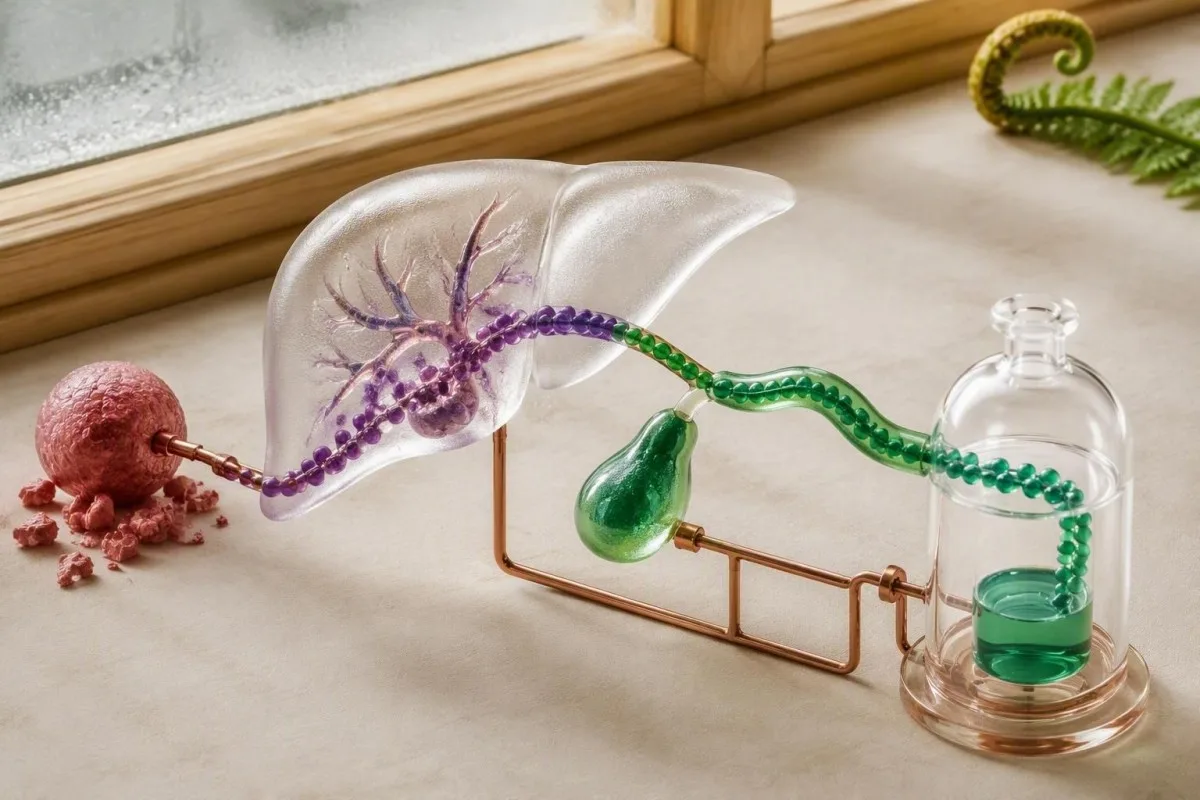
L’ALP est souvent environ 40-129 UI/L chez les adultes, mais chaque laboratoire fixe son propre intervalle. Si l’ALP est élevée et la GGT normale, les cliniciens envisagent couramment des origines osseuses, le statut en vitamine D, une fracture en cours de guérison ou le renouvellement osseux avant de supposer une maladie hépatique. La vue d’ensemble des isoenzymes de l’ALP explique comment les laboratoires distinguent les sources lorsque nécessaire.
La GGT augmente avec la cholestase, l’exposition à l’alcool, les maladies hépatiques métaboliques et les médicaments inducteurs d’enzymes tels que certains antiépileptiques. Une GGT supérieure à 60 UI/L dans de nombreux systèmes de référence masculins adultes mérite un examen contextuel, en particulier parallèlement à une élévation de l’ALP, mais il n’existe pas de “ chiffre d’alcool ” sûr ou diagnostique. Voir notre Guide des valeurs de référence de la GGT pour la variation sexuelle et de laboratoire.
La combinaison de démangeaisons, de selles pâles, d'urine foncée, d'une ALP élevée et d'une bilirubine élevée nécessite une évaluation urgente pour un écoulement biliaire obstrué. L'échographie est souvent le premier examen d'imagerie, mais une échographie normale n'élimine pas toutes les causes affectant les petits canaux ou liées aux médicaments ; notre guide du profil de cholestase va plus loin.
Pourquoi la bilirubine a besoin de fractions et de symptômes
La bilirubine totale doit être divisée en fractions directe et indirecte pour être cliniquement utile. La prédominance indirecte reflète souvent une surproduction ou une conjugaison réduite, tandis que la prédominance directe suggère une excrétion altérée ou un traitement hépatocytaire.
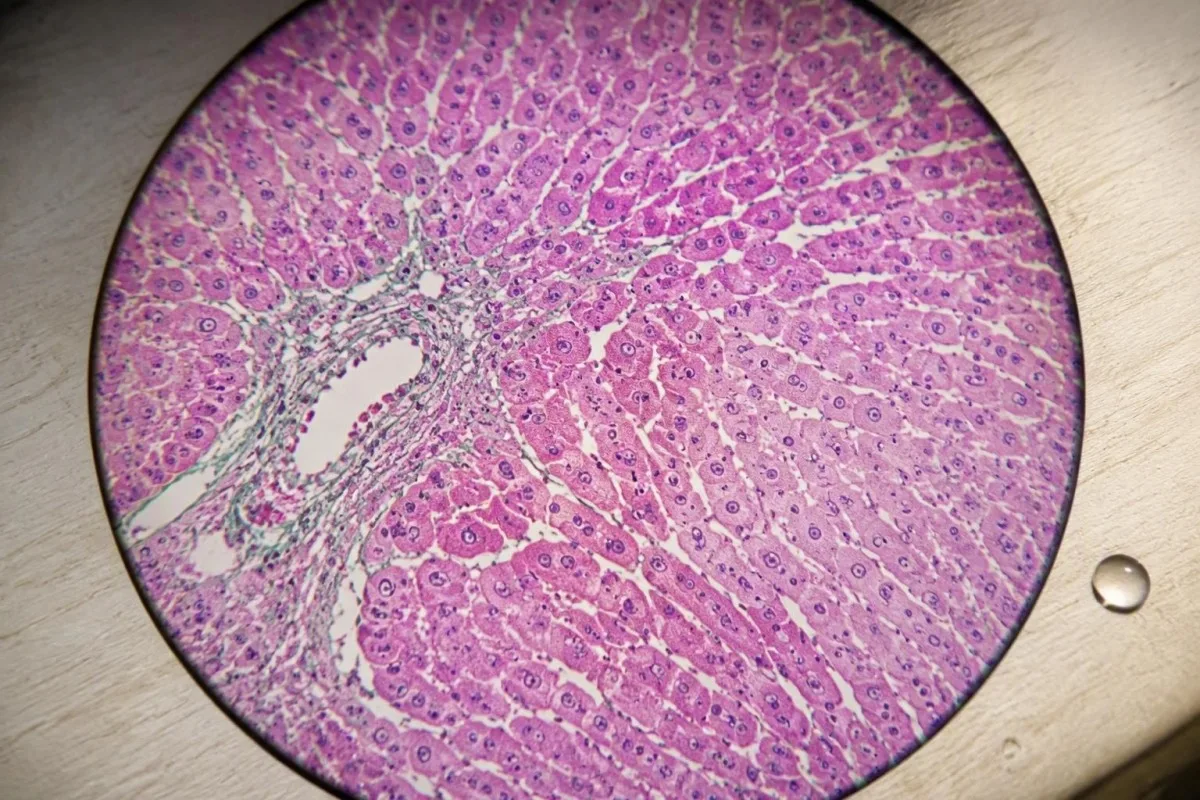
La bilirubine totale typique est d'environ 3-21 µmol/L ou 0,2-1,2 mg/dL. Une élévation isolée légère et intermittente inférieure à environ 50 µmol/L avec ALT, ALP, albumine et formule sanguine normaux est souvent compatible avec le syndrome de Gilbert, surtout après un jeûne ou une maladie, mais les cliniciens vérifient toujours le schéma avant d'appliquer cette appellation.
La bilirubine conjuguée est soluble dans l'eau, elle peut donc foncer l'urine ; la bilirubine non conjuguée ne peut pas entrer dans l'urine. Ce petit élément de physiologie est utile : des yeux jaunes plus une urine couleur thé sont plus préoccupants sur le plan clinique qu'une bilirubine indirecte légèrement élevée trouvée incidemment. Voir les profils de bilirubine directe pour les tests suivants que les médecins choisissent souvent.
N'essayez pas de “ chasser la bilirubine ” avec des produits détox. L'hydratation peut corriger la concentration due à la déshydratation, mais elle ne peut pas résoudre une hépatite, une obstruction ou une hémolyse. La jaunisse persistante nécessite une véritable évaluation, particulièrement en cas de fièvre, de douleur ou de perte de poids involontaire.
Albumine et protéines totales : les indices LFT à évolution lente
L'albumine est un marqueur lent de la synthèse des protéines hépatiques et de la maladie générale, pas un détecteur précoce sensible des lésions hépatiques. Une faible albuminémie devient plus significative lorsqu'elle est associée à une élévation de l'INR, à de l'ascite, à un œdème ou à un schéma hépatique anormal de longue date.
La demi-vie d'environ 20 jours de l'albumine signifie qu'une maladie aiguë de 48 heures l'abaisse rarement considérablement par de seuls mécanismes hépatiques. En revanche, une baisse de l'albumine sur plusieurs mois peut refléter une maladie hépatique chronique, une perte rénale, une inflammation chronique, un apport insuffisant ou une perte de protéines intestinales. Le guide du rapport CRP/albumine montre pourquoi l'inflammation peut modifier ce résultat.
Les protéines totales sont souvent autour de 60-80 g/L, mais un total normal peut masquer une faible albuminémie si les globulines sont augmentées. Dans les maladies hépatiques chroniques, les immunoglobulines peuvent augmenter tandis que l'albumine diminue, laissant les protéines totales trompeusement ordinaires. C'est un schéma qu'il vaut la peine de faire expliquer par un clinicien plutôt que de s'auto-traiter avec de la poudre de protéines.
Kantesti est un Plateforme d’interprétation des biomarqueurs par IA qui compare l'albumine, les protéines totales, les globulines et les marqueurs rénaux ensemble, car un résultat isolé de faible albuminémie a une faible spécificité. L'analyse de tendance est particulièrement utile lorsque la même méthode de laboratoire a été utilisée sur au moins deux ou trois prélèvements.
Quand le PT ou l'INR rend un LFT anormal plus urgent
Une augmentation du PT/INR peut signaler une diminution de la synthèse des facteurs de coagulation hépatiques et rend la lésion hépatique aiguë plus urgente, surtout en cas de jaunisse ou de confusion. L'INR n'est pas une LFT de routine partout, mais il est essentiel lorsque les cliniciens s'inquiètent d'un dysfonctionnement hépatique significatif.

Un INR autour de 0.8-1.2 est courant sans traitement anticoagulant, mais la question pertinente est le changement par rapport à la référence et le contexte clinique. Un INR supérieur à 1,5 avec une lésion hépatique aiguë, une encéphalopathie ou une hypoglycémie justifie une évaluation d'urgence ; n'attendez pas un nouveau test à domicile. Le guide du panel de coagulation explique ce que les tests de coagulation normaux excluent ou n'excluent pas.
Une carence en vitamine K due à une mauvaise absorption, à des antibiotiques à large spectre prolongés ou à une obstruction des voies biliaires peut prolonger le TP/INR sans insuffisance hépatique irréversible. Inversement, une personne prenant de la warfarine a un INR délibérément modifié, donc sa valeur ne peut pas être utilisée comme un marqueur direct de la fonction hépatique. Cette nuance permet d'éviter beaucoup d'alarmes inutiles.
Vomissements de sang, selles noires goudronneuses, nouvelle confusion, ecchymoses faciles avec ictère ou gonflement abdominal en croissance rapide sont des symptômes d'urgence. Les résultats sanguins sont utiles, mais ils ne remplacent jamais un examen clinique urgent dans ce contexte.
Raisons courantes de résultats sanguins LFT légèrement anormaux
Des anomalies légères des tests hépatiques surviennent couramment à partir de la stéatose hépatique associée à un dysfonctionnement métabolique, de l'alcool, de médicaments, de suppléments, d'un exercice physique intense récent ou d'une maladie virale temporaire. Un résultat inférieur à 2 fois la limite supérieure est courant et souvent réversible, mais il mérite toujours un examen structuré.
La stéatose hépatique associée à un dysfonctionnement métabolique est particulièrement probable lorsque l'ALT est modérément élevée parallèlement à une augmentation du tour de taille, des triglycérides, des anomalies de la glycémie ou une hypertension artérielle. La directive EASL-EASD-EASO 2024 recommande la recherche de cas chez les personnes présentant des facteurs de risque cardiométabolique plutôt qu'un dépistage de population indifférencié (EASL-EASD-EASO, 2024).
Une séance de renforcement musculaire intense peut élever temporairement l'AST, l'ALT et la CK pendant plusieurs jours. Je conseille généralement d'éviter tout exercice intense inhabituel pendant 5 à 7 jours avant un test de confirmation lorsque la contribution musculaire est plausible ; le jeûne n'est généralement pas requis pour les tests chimiques hépatiques standards, sauf si d'autres tests demandés l'exigent. Notre guide de timing des tests sanguins peut aider à documenter ces facteurs de confusion.
L'historique de consommation d'alcool doit être factuel plutôt que moralisateur. Une période d'abstinence peut améliorer la GGT et l'ALT, mais la vitesse varie en fonction de la maladie de base, du poids corporel, des médicaments et du risque métabolique en cours. Le calendrier des analyses en laboratoire après l’arrêt de l’alcool donne des attentes réalistes.
Que se passe-t-il après un résultat LFT anormal ?
La première réponse à un résultat léger et inattendu des tests hépatiques est généralement la confirmation, le contexte et des tests ciblés, pas la panique ou une détox générique. Le délai de répétition varie de quelques jours à quelques mois en fonction du niveau enzymatique, des symptômes et de la cause suspectée.
Les cliniciens vérifient d'abord le résultat, examinent les valeurs précédentes, s'interrogent sur l'alcool, les médicaments, les suppléments, les maladies et l'exercice, puis classent le schéma. Le suivi peut inclure des tests d'hépatite B et C, le dosage de la ferritine et de la saturation de la transferrine, une échographie, des marqueurs auto-immuns, un test cœliaque ou une mesure de CK, mais seulement lorsque le schéma et l'histoire médicale le justifient. Symptômes et dépistage de l'hépatite B méritent d'être revus car l'infection chronique peut ne pas présenter d'ictère.
Pour une élévation persistante de l'ALT ou de l'AST, les cliniciens peuvent utiliser le FIB-4, qui combine l'âge, l'AST, l'ALT et la numération plaquettaire pour estimer le risque de fibrose. Il est moins fiable en dessous de 35 ans et peut être faussement rassurant dans certaines situations, mais c'est un outil de triage utile en soins primaires ; calculez-le soigneusement avec notre guide du FIB-4 sur la fibrose hépatique.
Kantesti AI est une service d’interprétation des tests de laboratoire par l’IA qui peut organiser les tendances des tests hépatiques et signaler les combinaisons à discuter avec un clinicien, mais il ne peut pas diagnostiquer l'hépatite, la fibrose ou une obstruction à partir d'un seul PDF. Une interprétation sûre comprend toujours les symptômes, l'historique médicamenteux, l'imagerie et l'examen lorsque cela est indiqué.
Comment le jeûne, l'exercice et la qualité de l'échantillon affectent les LFT
Vous n'avez généralement pas besoin d'être à jeun pour une LFT, mais un exercice intense, une maladie aiguë, une déshydratation et une hémolyse de l'échantillon peuvent fausser certains résultats. Le champ de commentaire du laboratoire et le moment du prélèvement sont souvent aussi utiles qu'un seul indicateur de plage de référence.

Le jeûne peut augmenter la bilirubine non conjuguée chez les personnes sensibles, en particulier celles atteintes du syndrome de Gilbert. La déshydratation peut concentrer l'albumine et les protéines totales, tandis que l'hémolyse peut élever faussement l'AST car les globules rouges contiennent de l'AST. La guide de nouvelle ponction après hémolyse explique quand un nouveau prélèvement propre est plus informatif que la recherche d'un artéfact.
La biotine n'est pas un agent d'interférence majeur pour la plupart des dosages de routine des enzymes hépatiques, mais elle peut affecter certains immunoessais commandés en parallèle. Apportez une liste de poudres, de mélanges à base de plantes et de produits en vente libre, y compris la dose et la date de début ; “ une mesurette par jour ” est souvent plus exploitable que le nom de la marque.
Pour un nouveau prélèvement utile, utilisez le même laboratoire si possible et notez la consommation d'alcool, la maladie, l'intensité de l'entraînement et les changements de médicaments pour la semaine précédente. La variation biologique signifie qu'un changement de 10% n'est pas automatiquement une détérioration significative, surtout près de la limite supérieure de référence.
Signaux d'alerte LFT nécessitant des soins médicaux le jour même
Une jaunisse avec urine foncée, une douleur sévère dans la partie supérieure droite de l'abdomen, de la fièvre, une confusion, des vomissements persistants ou une élévation marquée de l'INR nécessite une évaluation médicale le jour même. L'urgence dépend des symptômes et de la fonction synthétique, pas seulement du fait qu'une ALT soit signalée comme élevée.
Consultez un service d'urgence en cas de nouvelle confusion, de somnolence extrême, de vomissements de sang, de selles noires goudronneuses, d'évanouissement, de douleur abdominale sévère ou d'un jaunissement des yeux qui s'aggrave rapidement. Ceux-ci peuvent refléter des saignements, une septicémie, une insuffisance hépatique aiguë, une maladie pancréatique ou biliaire, et ne peuvent pas être triés en toute sécurité à partir d'un seul résultat enzymatique. Notre guide sur quand la bilirubine nécessite un examen urgent détaille les combinaisons d'avertissement.
ALT ou AST au-dessus de 1 000 UI/L, une bilirubine au-dessus de 100 µmol/L avec des symptômes, ou un INR supérieur à 1.5 chez une personne n'utilisant pas de warfarine devrait inciter à un contact urgent avec le clinicien. Ce sont des points d'escalade pratiques plutôt que des seuils d'autodiagnostic ; une personne peut être assez malade avec des valeurs plus basses, surtout si elles se détériorent rapidement.
La grossesse modifie le calcul du risque. Des démangeaisons des paumes ou des plantes des pieds, des maux de tête, des symptômes visuels, une tension artérielle élevée, une douleur dans la partie supérieure de l'abdomen ou une jaunisse pendant la grossesse nécessitent une évaluation obstétricale urgente, même si un panel précédent était normal.
Utilisation sûre de l'analyse des tendances LFT entre les rendez-vous
Les tendances des LFT sont plus utiles qu'un seul résultat lorsque le même analyte et la même méthode de laboratoire sont comparés sur la durée. Une tendance à la baisse de l'ALT est encourageante, mais elle ne prouve pas que la fibrose s'est améliorée ou que la cause sous-jacente a été traitée.

Kantesti est un Outil d’analyse de prise de sang alimenté par l’IA utilisé pour organiser les rapports de laboratoire à travers le temps, les langues et les formats de laboratoire. Notre IA peut identifier une augmentation de l'ALT de 32 à 78 UI/L parallèlement à une nouvelle augmentation de l'ALP, mais la prochaine étape sûre reste un examen par un clinicien de l'exposition aux médicaments, des symptômes et des résultats de l'examen.
Ne comparez pas directement un résultat en µkat/L avec des UI/L sans le convertir, et ne comparez pas la bilirubine totale en mg/dL avec µmol/L à l'œil. Pour la bilirubine, 1 mg/dL équivaut à environ 17,1 µmol/L; les erreurs d'unités sont étonnamment fréquentes lorsque les gens téléchargent des dossiers de plus d'un pays. Le guide des changements de résultats de laboratoire explique la valeur de changement de référence et la fluctuation biologique ordinaire.
Une note de rendez-vous concise est utile : listez les dates, les valeurs exactes et les plages de référence, les symptômes, le schéma de consommation d'alcool, les nouveaux médicaments, les suppléments, le changement de poids et l'exercice. Cela transforme une conversation anxieuse sur des “ tests hépatiques anormaux ” en une question clinique résoluble.
Questions utiles à poser sur vos résultats sanguins LFT
La question la plus utile est : “ Quel schéma mes résultats montrent-ils : hépatocellulaire, cholestatique, mixte, lié à la bilirubine ou synthèse altérée ? ” Cette question encourage un plan basé sur les causes plutôt qu'une instruction vague de tout répéter.
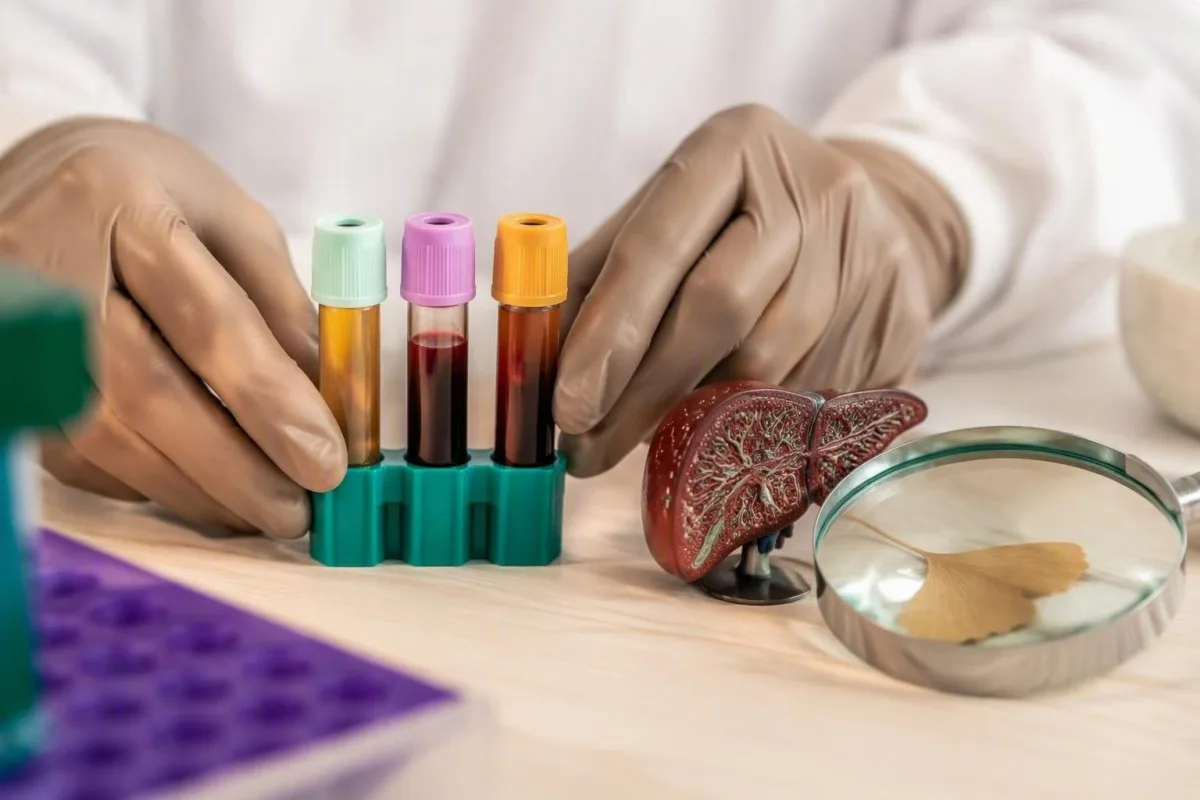
Demandez si votre anomalie a été confirmée, quelle était votre référence antérieure, et si l'exercice, les médicaments, l'alcool ou les suppléments pourraient l'expliquer. Demandez si la bilirubine était directe ou indirecte, si la PAL présentait une GGT élevée à côté, et si l'albumine ou l'INR suggèrent une altération de la synthèse. Ces détails modifient réellement le diagnostic différentiel.
Demandez si le risque de fibrose doit être estimé et si une échographie, un dépistage viral ou des études sur le fer sont appropriés pour votre schéma. Une ferritinémie élevée seule peut refléter une inflammation ou une maladie métabolique, tandis qu'une ferritinémie élevée plus une saturation de la transferrine supérieure à 45% soulève une question différente sur la surcharge en fer ; voir indices de laboratoire pour l'hémochromatose.
Nos médecins et examinateurs cliniques utilisent des méthodes publiées et des limites de sécurité claires ; les lecteurs qui souhaitent comprendre cette gouvernance peuvent consulter la approche de validation médicale. Le meilleur résultat n'est pas une étiquette générée par une application, mais une conversation opportune et bien documentée avec le clinicien responsable de vos soins.
Ce que disent les recherches et les directives actuelles sur l'interprétation des LFT
Les directives actuelles soutiennent l'interprétation basée sur les schémas et la confirmation des anomalies des analyses hépatiques avant des tests approfondis. Aucun test LFT unique n'identifie le stade de fibrose, l'insuffisance hépatique ou une cause spécifique sans contexte clinique.
La directive ACG par Kwo et coll. recommande de confirmer un résultat anormal des analyses hépatiques, puis d'évaluer en fonction du schéma hépatocellulaire par rapport au schéma cholestatique (Kwo et al., 2017). Cela peut sembler banal, mais cela évite une erreur courante : commander des panels étendus après un seul résultat limite qui disparaît lors d'un échantillon de répétition correctement chronométré.
Les directives 2024 EASL-EASD-EASO encadrent la maladie stéatosique hépatique métabolique autour du risque cardiométabolique et de l'évaluation non invasive de la fibrose plutôt que de l'ALT seule (EASL-EASD-EASO, 2024). Une ALT normale n'exclut donc pas de manière fiable la stéatose ou la fibrose, en particulier chez les personnes diabétiques ou obèses.
Le contenu clinique de Kantesti est examiné par rapport à la pratique de laboratoire et à la surveillance médicale ; notre Conseil consultatif médical contribue à maintenir les explications automatisées dans ces limites. Les publications sur les symptômes connexes sont listées ci-dessous pour la transparence, mais elles ne remplacent pas les directives spécifiques au foie ni les soins médicaux individuels.
Questions fréquemment posées
Que signifie LFT dans une prise de sang?
LFT signifie "liver function tests" (bilan hépatique), également appelés tests sanguins du foie ou panel hépatique. La plupart des panels incluent ALT, AST, ALP, bilirubine et albumine, tandis que GGT et PT/INR peuvent être commandés séparément. ALT et AST montrent généralement une lésion des cellules hépatiques plutôt qu'une fonction hépatique, tandis que l'albumine et l'INR sont des mesures plus proches de la synthèse protéique. Les intervalles de référence varient selon le laboratoire ; l'ALT est souvent d'environ 7 à 55 UI/L chez les adultes.
Les enzymes hépatiques élevées sont-elles la même chose qu'une mauvaise fonction hépatique ?
Non, une élévation des enzymes hépatiques ne signifie pas automatiquement une mauvaise fonction hépatique. L'ALT et l'AST peuvent augmenter lorsque les cellules hépatiques ou musculaires libèrent des enzymes, même si l'albumine, la bilirubine et l'INR restent normales. Une véritable insuffisance synthétique est plus préoccupante lorsque la bilirubine augmente, que l'albumine tombe en dessous d'environ 35 g/L, ou que l'INR dépasse la plage du laboratoire. Un clinicien interprète ces résultats en conjonction avec les symptômes et les antécédents médicaux.
Quelle est la plage normale des LFT ?
Il n'existe pas de plage normale universelle unique pour les tests de la fonction hépatique (LFT) car les méthodes et les populations de référence varient d'un laboratoire à l'autre. Les intervalles courants chez l'adulte comprennent ALT 7-55 UI/L, AST 8-48 UI/L, ALP 40-129 UI/L, albumine 35-50 g/L et bilirubine totale 3-21 µmol/L. L'intervalle de référence imprimé à côté de votre propre résultat est le bon à utiliser en premier. Un résultat juste au-dessus de la plage nécessite souvent une confirmation et un contexte plutôt qu'un traitement immédiat.
L'exercice peut-il élever les résultats des tests de la fonction hépatique ?
Oui, un exercice intense peut augmenter temporairement les AST et parfois les ALT car le muscle squelettique contient ces enzymes. Une AST élevée avec une ALT normale ou légèrement augmentée après un marathon, un effort de levage intense ou une blessure musculaire peut refléter une libération musculaire, en particulier si la créatine kinase est également élevée. Éviter un exercice intense inhabituel pendant 5 à 7 jours avant un test de répétition est souvent raisonnable lorsqu'un clinicien suspecte cette explication. L'exercice n'explique généralement pas la jaunisse, une bilirubine élevée ou un INR prolongé.
Une analyse LFT détecte-t-elle la stéatose hépatique ?
Une ALAT peut suggérer une stéatose hépatique mais ne peut ni la diagnostiquer ni l'exclure. De nombreuses personnes atteintes de stéatose hépatique associée à un dysfonctionnement métabolique ont des valeurs d'ALT inférieures à 55 UI/L, et certaines ont des tests hépatiques de routine complètement normaux. Les facteurs de risque tels que le diabète de type 2, la prise de poids centrale, les triglycérides élevés et l'hypertension artérielle orientent l'évaluation plus approfondie. L'échographie et les scores de fibrose non invasifs tels que le FIB-4 sont souvent utilisés parallèlement aux résultats sanguins.
Quand dois-je m'inquiéter de résultats anormaux de la NFS ?
Consulter un médecin le jour même pour des résultats d'explorations fonctionnelles hépatiques anormaux avec ictère, urines foncées, selles pâles, douleur abdominale sévère, fièvre, confusion, vomissements de sang ou selles noires goudronneuses. Les taux d'ALT ou d'AST supérieurs à 1 000 UI/L, de bilirubine supérieurs à 100 µmol/L avec symptômes, ou d'INR supérieurs à 1,5 sans warfarine nécessitent également une évaluation urgente. Des élévations isolées légères inférieures à 2 fois la limite supérieure sont généralement contrôlées après examen des médicaments, de l'alcool, des suppléments, de la maladie et de l'exercice. L'urgence appropriée dépend de l'ensemble du tableau clinique, et non d'un seul chiffre.
Obtenez dès aujourd’hui une analyse de sang par IA
Rejoignez plus de 2 millions d’utilisateurs dans le monde qui font confiance à Kantesti pour une analyse instantanée et précise des analyses de laboratoire. Téléversez vos résultats prise de sang et recevez une interprétation complète des biomarqueurs de 15,000+ en quelques secondes.
📚 Publications de recherche citées
Klein, T., Mitchell, S., & Weber, H. (2026). Diarrhée après le jeûne, présence de points noirs dans les selles et guide gastro-intestinal 2026. Recherche médicale par IA Kantesti.
Klein, T., Mitchell, S., & Weber, H. (2026). Guide de santé pour les femmes : Ovulation, ménopause et symptômes hormonaux. Recherche médicale par IA Kantesti.
📖 Références médicales externes


⚕️ Avertissement médical
Cet article est fourni à des fins éducatives uniquement et ne constitue pas un avis médical. Consultez toujours un professionnel de santé qualifié pour les décisions de diagnostic et de traitement.
Signaux de confiance E-E-A-T
Expérience
Revue clinique guidée par un médecin des flux d’interprétation des analyses.
Compétence
Orientation en médecine de laboratoire sur la façon dont les biomarqueurs se comportent dans un contexte clinique.
autorité
Rédigé par le Dr Thomas Klein, avec relecture par le Dr Sarah Mitchell et le Prof. Dr Hans Weber.
Fiabilité
Interprétation fondée sur des preuves, avec des parcours de suivi clairs pour réduire l’alarme.