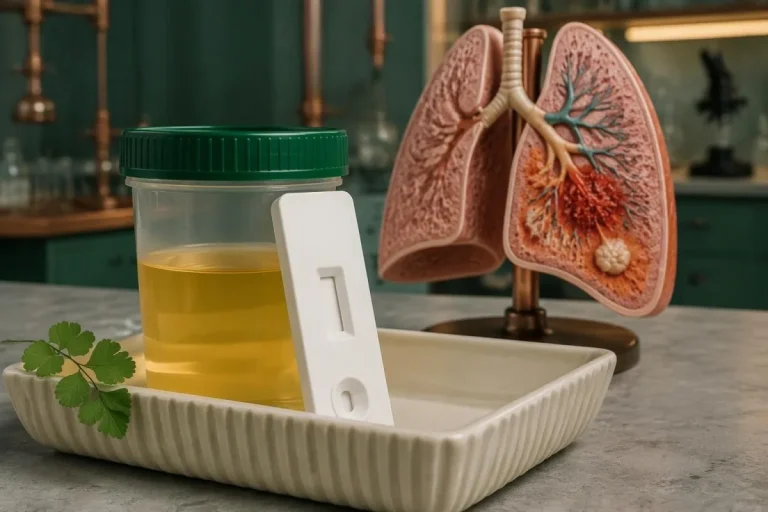
LFT means liver function tests, but much of the panel measures liver-cell injury or bile-flow disruption rather than liver function itself. The distinction changes how clinicians interpret an abnormal result.

本ガイドは トーマス・クライン博士(医学博士) との協力で カンテスティAI医療諮問委員会, これには、Hans Weber教授の寄稿と、医学博士Sarah Mitchell博士による医学的レビューが含まれます。.
トーマス・クライン医学博士
カンテスティAI最高医療責任者
トーマス・クライン博士は、15年以上の経験を持つ、臨床血液専門医(ボード認定)かつ内科医で、検査医学およびAI支援による臨床解析に携わってきました。Kantesti AIの最高医療責任者(Chief Medical Officer)として、同社の独自のニューラルネットワークの医療的正確性に関する臨床的監督を行っています。クライン博士は、バイオマーカーの解釈および検査診断に関して発表しています。.
サラ・ミッチェル医学博士
臨床病理学および内科主任医療顧問
サラ・ミッチェル博士は、認定臨床病理専門医であり、検査医学および診断分析において18年以上の経験を持ちます。臨床化学の専門資格を有し、臨床現場におけるバイオマーカーパネルおよび検査分析について、幅広く発表しています。.
ハンス・ウェーバー教授(博士)
臨床検査医学および臨床生化学の教授
ハンス・ウェーバー教授(Dr.)は、臨床生化学、検査医学、バイオマーカー研究において30年以上の専門知識を持ちます。ドイツ臨床化学会の元会長であり、診断パネル解析、バイオマーカーの標準化、AI支援による検査医学を専門としています。.
- LFT meaning is liver function tests, although ALT, AST, ALP and GGT mainly signal injury or impaired bile flow rather than liver performance.
- ALT is commonly about 7-55 IU/L in adults; a value above the laboratory upper limit should be interpreted with medicines, exercise, alcohol use and metabolic risk.
- アルブミン is usually 35-50 g/L and reflects liver protein production over weeks, but kidney loss, inflammation and poor intake can also lower it.
- ビリルビン is often 3-21 µmol/L; a rise with dark urine or pale stools needs prompt clinical assessment.
- INR or PT measures clotting-factor production and is one of the most useful blood indicators of declining liver synthetic function when vitamin K deficiency and anticoagulants are excluded.
- ALP+GGT rising together supports a hepatobiliary source, while isolated ALP elevation can come from bone.
- AST after hard exercise may originate in skeletal muscle; checking creatine kinase can prevent an unnecessary liver work-up.
- 緊急性のある症状 include new jaundice, confusion, vomiting blood, black tarry stool, severe upper-abdominal pain or rapidly worsening drowsiness.
What LFT Stands For—and Why the Name Misleads
LFT stands for liver function tests, a group of blood tests used to look for liver-cell injury, impaired bile drainage and reduced protein-making capacity. The name is imperfect: ALT, AST, ALP and GGT are mostly injury or cholestasis markers, whereas albumin, bilirubin and PT/INR provide more direct—though still incomplete—clues to liver function.
A normal LFT panel does not prove that every aspect of liver health is normal, and an abnormal panel does not automatically mean liver failure. Alanine aminotransferase (ALT) rises when hepatocytes release enzyme into circulation; it says more about cellular leakage than the liver’s ability to make albumin or clotting factors. Our detailed ALTの結果ガイド で、その区別がなぜ重要かを説明しています。.
In practice, I tell patients to think of the panel as three questions: are liver cells irritated, is bile moving freely, and is the liver synthesising proteins normally? Dr. Thomas Klein has seen many referrals for an ALT of 62 IU/L where the genuinely reassuring findings were normal bilirubin, albumin and INR—not the word “function” printed above the panel.
カンテスティは AI血液検査分析装置 that reads LFT results as a pattern across the full report rather than treating one flagged enzyme as a diagnosis. As of September 12, 2026, our clinical review workflow also preserves the laboratory’s own reference interval, because an ALT upper limit of 35 IU/L at one laboratory is not interchangeable with 55 IU/L at another.
The language clinicians increasingly use
Many hepatology services now say “liver blood tests” or “liver chemistry tests” because those labels do not overpromise. The American College of Gastroenterology guideline similarly separates hepatocellular injury, cholestatic injury and impaired bilirubin handling when evaluating abnormal liver chemistries (Kwo et al., 2017).
Which Tests Are Usually Included in an LFT Panel?
A typical LFT panel includes ALT, AST, alkaline phosphatase (ALP), bilirubin, albumin and total protein; many laboratories also include GGT. PT/INR is often ordered separately, even though it is clinically central when true liver function is in question.
ALTとAST are aminotransferases, ALPとGGT help identify a bile-duct pattern, and bilirubin reflects processing and excretion of haem breakdown products. Albumin and PT/INR assess synthesis, but albumin changes slowly because its half-life is roughly 20 days. See 肝機能パネルに含まれるもの for the common laboratory variations.
Total protein and globulin sometimes appear on the same report but are not specific liver tests. A high globulin result with low albumin can occur in chronic liver disease, autoimmune disease or persistent inflammation; the ratio is a clue, never a diagnosis. The 血清タンパク質 参照ガイド helps place those values in context.
One practical wrinkle: UK reports may say “LFT,” while US reports may say “hepatic function panel” or “liver panel.” None is fully standardised. Before comparing results across countries, match the analyte, unit and the reference range printed beside it.
Which LFT Results Show Liver Injury Rather Than Function?
ALT and AST primarily show cellular injury, not liver function. ALP and GGT mainly show a possible cholestatic or bile-duct pattern, while albumin and PT/INR more directly reflect synthetic capacity.
ALT is more liver-enriched than AST, but neither is liver-exclusive. AST is present in skeletal muscle, heart and red cells, so a heavy workout, muscle injury or a haemolysed sample can raise it. An AST:ALT比が2を超える may support alcohol-associated liver injury in the right setting, but it is not diagnostic on its own.
A 52-year-old marathon runner with AST 89 IU/L and ALT 36 IU/L after a race is a classic trap. I would ask about exertion and muscle soreness, then consider CK and a repeat sample after 7 days without strenuous training; our article on 高い AST のパターン unpacks that reasoning.
Kantesti AI interprets liver enzymes by checking whether the rise is hepatocellular, cholestatic, mixed or possibly extrahepatic. The R比—(ALT divided by its upper limit) divided by (ALP divided by its upper limit)—is above 5 in a hepatocellular pattern and below 2 in a cholestatic pattern; it is a clinician’s sorting tool, not a home diagnosis.
Why the pattern beats the highest number
An ALT of 120 IU/L with normal ALP points in a different direction from ALP 280 IU/L with a normal ALT. The first often leads to a metabolic, viral, medication or muscle-context review; the second raises questions about bile ducts, bone turnover and medication effects.
The LFT Values That More Closely Reflect True Liver Function
Albumin, bilirubin and PT/INR are the most useful routine blood clues to true liver function, although each can be abnormal for non-liver reasons. A combination of rising bilirubin and INR is much more concerning than a modest isolated ALT elevation.
Albumin is typically 35〜50 g/L in non-pregnant adults, but low albumin can result from kidney protein loss, systemic inflammation, malnutrition, burns or dilution. It usually falls later in chronic liver disease than ALT rises, which is why a normal albumin does not exclude early fibrosis. Read about albumin in pregnancy if you are comparing a pregnancy result with a standard adult range.
PT/INR reflects production of short-lived clotting factors, especially factor VII, and can change over days rather than weeks. An INR above 1.5 in acute liver injury is one criterion used in urgent assessment for acute liver failure, but warfarin, vitamin K deficiency and some antibiotics can produce the same laboratory signal. The INR explanation covers those important exceptions.
Bilirubin is not a pure function test either. Unconjugated bilirubin can rise with Gilbert syndrome, fasting or haemolysis despite normal liver synthetic capacity; conjugated bilirubin with dark urine points more toward impaired bile excretion or hepatocellular processing. This is why I never interpret “high bilirubin” without its fractionation.
A useful clinical hierarchy
In a stable adult, normal INR and albumin with a mildly raised ALT usually indicate preserved synthetic function. New jaundice, INR prolongation, low glucose or confusion changes the urgency entirely and needs same-day medical assessment.
How to Read ALT and AST Results Together
ALT higher than AST is common in metabolic fatty liver disease and many viral or medication-related injuries, while AST higher than ALT has broader causes including alcohol exposure and muscle injury. The absolute rise and the trend are more reliable than a ratio alone.
ALT is commonly reported in IU/L or U/L, which are equivalent for practical purposes. A value under 2 times the upper reference limit is often rechecked after reviewing alcohol, supplements, prescription medicines, intercurrent illness and recent exercise. The ACG guideline recommends confirming abnormal liver chemistries before launching a broad work-up (Kwo et al., 2017).
30 µmol/Lを超える 1,000 IU/L for ALT or AST are not “just fatty liver” until proven otherwise. Acute viral hepatitis, medication or toxin injury, ischaemic hepatitis and acute biliary obstruction can all produce striking elevations; the time course, symptoms and INR guide urgency more than internet cutoffs.
Dr. Thomas Klein’s practical advice is to photograph every supplement label before a follow-up appointment. “Natural” products, concentrated green-tea extract, anabolic agents and multi-ingredient fat-loss products are frequently missed in the initial history. Our guide to liver-risk supplements explains why stopping a suspected product should be clinician-led when it is prescribed.
What ALP and GGT Can Tell You About Bile Flow
ALP and GGT elevated together usually support a hepatobiliary or cholestatic source; isolated ALP elevation may come from bone, pregnancy or normal growth. GGT helps localise ALP but does not reliably measure alcohol intake by itself.
ALP is often approximately 40-129 IU/L in adults, yet each laboratory sets its own interval. If ALP is elevated and GGT is normal, clinicians commonly consider bone sources, vitamin D status, healing fracture or bone turnover before assuming liver disease. The ALP isoenzyme overview explains how laboratories distinguish sources when needed.
GGT rises with cholestasis, alcohol exposure, metabolic liver disease and enzyme-inducing medicines such as some antiseizure drugs. A GGT above 60 IU/L in many adult male reference systems merits contextual review, particularly alongside raised ALP, but there is no safe or diagnostic “alcohol number.” See our GGT normal-range guide for sex and laboratory variation.
The combination of itching, pale stools, dark urine, raised ALP and raised bilirubin needs urgent assessment for obstructed bile flow. Ultrasound is often the first imaging test, but a normal ultrasound does not eliminate every small-duct or medication-related cause; our 胆汁うっ滞パターンガイド はさらに踏み込みます。.
Why Bilirubin Needs Fractions and Symptoms
Total bilirubin must be split into direct and indirect fractions to be clinically useful. Indirect predominance often reflects overproduction or reduced conjugation, whereas direct predominance suggests impaired excretion or hepatocyte processing.
Typical total bilirubin is about 3-21 µmol/L or 0.2-1.2 mg/dL. A mild, intermittent isolated rise below roughly 50 µmol/L with normal ALT, ALP, albumin and blood count is often compatible with Gilbert syndrome, especially after fasting or illness, but clinicians still check the pattern before applying that label.
Conjugated bilirubin is water-soluble, so it can darken urine; unconjugated bilirubin cannot enter urine. That small piece of physiology is useful: yellow eyes plus tea-coloured urine is more clinically concerning than a slightly high indirect bilirubin found incidentally. Review 直接ビリルビンパターン for the next tests doctors often choose.
Do not try to “flush bilirubin out” with detox products. Hydration can correct concentration from dehydration, but it cannot resolve hepatitis, obstruction or haemolysis. Persistent jaundice needs a real assessment, particularly with fever, pain or unintentional weight loss.
Albumin and Total Protein: The Slow-Moving LFT Clues
Albumin is a slow-moving marker of liver protein synthesis and whole-body illness, not a sensitive early detector of liver injury. Low albumin becomes more meaningful when paired with INR elevation, ascites, oedema or a long-standing abnormal liver pattern.
Albumin’s roughly 20-day half-life means an acute 48-hour illness rarely lowers it dramatically through liver mechanisms alone. In contrast, a falling albumin over several months may reflect chronic liver disease, kidney loss, chronic inflammation, inadequate intake or intestinal protein loss. The CRP-albumin ratio guide shows why inflammation can alter this result.
Total protein is often around 60-80 g/L, but a normal total can conceal low albumin if globulins are increased. In chronic liver disease, immunoglobulins may rise while albumin falls, leaving total protein deceptively ordinary. That is a pattern worth asking a clinician to explain rather than self-treating with protein powder.
カンテスティは AIバイオマーカー解釈プラットフォーム that compares albumin, total protein, globulin and kidney markers together, because an isolated low albumin result has poor specificity. Trend analysis is particularly useful when the same laboratory method has been used over at least two or three draws.
When PT or INR Makes an Abnormal LFT More Urgent
A rising PT/INR can signal reduced hepatic clotting-factor synthesis and makes acute liver injury more urgent, especially with jaundice or confusion. INR is not a routine LFT everywhere, but it is essential when clinicians are concerned about significant hepatic dysfunction.
An INR around 0.8-1.2 is common without anticoagulant medication, but the relevant question is change from baseline and clinical context. INR above 1.5 with acute liver injury, encephalopathy or hypoglycaemia warrants emergency evaluation; do not wait for a repeat home test. The coagulation-panel guide explains what normal clotting tests do and do not exclude.
Vitamin K deficiency from poor absorption, prolonged broad-spectrum antibiotics or bile obstruction can prolong PT/INR without irreversible liver failure. Conversely, a person taking warfarin has a deliberately altered INR, so their value cannot be used as a straightforward liver-function marker. This nuance prevents a lot of unnecessary alarm.
Vomiting blood, black tarry stool, new confusion, easy bruising with jaundice or rapidly enlarging abdominal swelling are emergency symptoms. Blood results are useful, but they never replace an urgent clinical examination in that setting.
Common Reasons for Mildly Abnormal LFT Blood Results
Mild LFT abnormalities commonly arise from metabolic dysfunction-associated steatotic liver disease, alcohol, medicines, supplements, recent strenuous exercise or a temporary viral illness. A result less than 2 times the upper limit is common and often reversible, but it still deserves a structured review.
Metabolic dysfunction-associated steatotic liver disease is especially likely when ALT is modestly high alongside increased waist circumference, triglycerides, glucose abnormalities or high blood pressure. The 2024 EASL-EASD-EASO guideline recommends case-finding in people with cardiometabolic risk factors rather than indiscriminate population screening (EASL-EASD-EASO, 2024).
A hard strength session can temporarily raise AST, ALT and CK for several days. I usually advise avoiding unfamiliar strenuous exercise for 5〜7日 before a confirmatory test when muscle contribution is plausible; fasting is not generally required for standard liver chemistries unless other ordered tests require it. Our 血液検査タイミングガイド can help document those confounders.
Alcohol history should be factual rather than moralising. A period of abstinence may improve GGT and ALT, but the speed varies with baseline disease, body weight, medications and ongoing metabolic risk. The アルコールを中止した後の検査タイムライン gives realistic expectations.
What Happens After an Abnormal LFT Result?
The first response to a mild unexpected LFT result is usually confirmation, context and targeted testing—not panic or a generic detox. Repeat timing ranges from days to a few months depending on the enzyme level, symptoms and suspected cause.
Clinicians first verify the result, review previous values, ask about alcohol, medicines, supplements, illness and exercise, then classify the pattern. Follow-up may include hepatitis B and C testing, ferritin and transferrin saturation, ultrasound, autoimmune markers, coeliac testing or CK—but only when the pattern and history support them. Hepatitis B symptoms and testing are worth reviewing because chronic infection may have no jaundice.
For persistent ALT or AST elevation, clinicians may use FIB-4, which combines age, AST, ALT and platelet count to estimate fibrosis risk. It is less reliable below age 35 and can be falsely reassuring in some situations, yet it is a helpful triage tool in primary care; calculate it carefully with our FIB-4 liver-fibrosis guide.
Kantesti AIは、 AIラボ検査解釈サービス that can organise LFT trends and flag combinations to discuss with a clinician, but it cannot diagnose hepatitis, fibrosis or obstruction from a PDF alone. A safe interpretation always includes symptoms, medication history, imaging and examination when indicated.
How Fasting, Exercise and Sample Quality Affect LFTs
You usually do not need to fast for an LFT, but heavy exercise, acute illness, dehydration and sample haemolysis can distort selected results. The laboratory comment field and the timing of the draw are often as useful as a single reference-range flag.
Fasting can raise unconjugated bilirubin in susceptible people, particularly those with Gilbert syndrome. Dehydration may concentrate albumin and total protein, while haemolysis can falsely elevate AST because red cells contain AST. The 溶血後の再採血ガイド explains when a clean repeat is more informative than chasing an artefact.
Biotin is not a major interferent for most routine liver enzyme assays, but it can affect some immunoassays ordered in parallel. Bring a list of powders, herbal blends and over-the-counter products, including dose and start date; “one scoop daily” is often more actionable than the brand name.
For a useful repeat, use the same laboratory where possible and record alcohol intake, illness, workout intensity and medicine changes for the prior week. Biological variation means a 10% change is not automatically a meaningful deterioration, especially near the upper reference limit.
LFT Red Flags That Need Same-Day Medical Care
Jaundice with dark urine, severe right-upper-abdominal pain, fever, confusion, persistent vomiting or a markedly elevated INR needs same-day medical assessment. Urgency depends on symptoms and synthetic function, not just whether an ALT is flagged high.
Seek emergency care for new confusion, extreme sleepiness, vomiting blood, black tarry stools, fainting, severe abdominal pain or rapidly worsening yellowing of the eyes. These may reflect bleeding, sepsis, acute liver dysfunction, pancreatic or biliary disease, and they cannot be safely triaged from an enzyme result alone. Our guide on when bilirubin needs urgent review details warning combinations.
ALTまたはASTが 1,000 IU/L, を超える、ビリルビンが 100 µmol/L with symptoms, or an INR above 1.5 in someone not using warfarin should prompt urgent clinician contact. These are practical escalation points rather than self-diagnosis thresholds; a person can be quite unwell with lower values, particularly if they are deteriorating quickly.
Pregnancy changes the risk calculation. Itching of palms or soles, headache, visual symptoms, high blood pressure, upper-abdominal pain or jaundice during pregnancy requires urgent maternity assessment, even if a previous panel was normal.
Using LFT Trend Analysis Safely Between Appointments
LFT trends are more useful than a lone result when the same analyte and laboratory method are compared over time. A downward ALT trend is encouraging, but it does not prove that fibrosis has improved or that the underlying cause has been addressed.
カンテスティは AI搭載の血液検査解析ツール used to organise laboratory reports across time, languages and laboratory formats. Our AI can identify an ALT rise from 32 to 78 IU/L alongside a new ALP increase, but the safe next step remains a clinician review of medication exposure, symptoms and examination findings.
Do not compare a result in µkat/L directly with IU/L without converting it, and do not compare total bilirubin in mg/dL with µmol/L by eye. For bilirubin, 1 mg/dL equals approximately 17.1 µmol/L; unit errors are surprisingly common when people upload records from more than one country. The lab-result change guide explains reference change value and ordinary biological fluctuation.
A concise appointment note helps: list dates, exact values and reference ranges, symptoms, alcohol pattern, new medicines, supplements, weight change and exercise. This turns an anxious conversation about “bad liver tests” into a solvable clinical question.
Useful Questions to Ask About Your LFT Blood Results
The most useful question is “Which pattern do my results show: hepatocellular, cholestatic, mixed, bilirubin-handling or impaired synthesis?” That question encourages a cause-based plan rather than a vague instruction to repeat everything.
Ask whether your abnormality has been confirmed, what your previous baseline was, and whether exercise, medicines, alcohol or supplements could explain it. Ask whether bilirubin was direct or indirect, whether ALP had a raised GGT beside it, and whether albumin or INR suggests impaired synthesis. These details genuinely change the differential diagnosis.
Ask whether fibrosis risk should be estimated and whether ultrasound, viral screening or iron studies are appropriate for your pattern. A high ferritin alone can reflect inflammation or metabolic disease, whereas high ferritin plus transferrin saturation above 45% raises a different question about iron overload; see haemochromatosis lab clues.
Our doctors and clinical reviewers use published methods and clear safety boundaries; readers who want to understand that governance can review the 医学的なバリデーションのアプローチ. The best outcome is not an app-generated label—it is a timely, well-documented conversation with the clinician responsible for your care.
What Current Research and Guidelines Say About LFT Interpretation
Current guidance supports pattern-based interpretation and confirmation of abnormal liver chemistries before extensive testing. No single LFT identifies fibrosis stage, liver failure or a specific cause without clinical context.
The ACG guideline by Kwo and colleagues recommends confirming an abnormal liver chemistry result and then evaluating based on hepatocellular versus cholestatic pattern (Kwo et al., 2017). That sounds mundane, but it prevents a common error: ordering broad panels after one borderline result that disappears on a properly timed repeat sample.
The 2024 EASL-EASD-EASO guidance frames metabolic steatotic liver disease around cardiometabolic risk and non-invasive fibrosis assessment rather than ALT alone (EASL-EASD-EASO, 2024). A normal ALT therefore does not reliably exclude steatosis or fibrosis, particularly in people with diabetes or obesity.
Kantesti’s clinical content is reviewed against laboratory practice and physician oversight; our 医療諮問委員会 helps keep automated explanations within those limits. Related symptom publications are listed below for transparency, but they do not replace liver-specific guidelines or individual medical care.
よくある質問
血液検査のLFTとは何の略ですか?
LFTは肝機能検査の略で、肝臓の血液検査または肝臓パネルとも呼ばれます。ほとんどのパネルにはALT、AST、ALP、ビリルビン、アルブミンが含まれますが、GGTとPT/INRは別途注文される場合があります。ALTとASTは通常、肝機能よりも肝細胞の損傷を示しますが、アルブミンとINRはタンパク質合成のより近い指標です。基準範囲は検査室によって異なります。成人ではALTは通常約7〜55 IU/Lです。.
肝臓酵素の上昇は、肝機能の低下と同じですか?
いいえ、肝臓の酵素値の上昇が必ずしも肝臓の機能低下を意味するわけではありません。肝細胞や筋肉細胞から酵素が放出されると、アルブミン、ビリルビン、INRが正常なままでも、ALTおよびASTは上昇することがあります。真の合成能の低下は、ビリルビンが上昇した場合、アルブミンが約35 g/Lを下回った場合、またはINRが検査室の範囲を超えて上昇した場合に、より懸念されます。臨床医は、これらの結果を症状や病歴と合わせて解釈します。.
正常なLFT(肝機能検査)の範囲はどのくらいですか?
臨床検査研究所ごとに検査方法や参照集団が異なるため、万能な基準範囲はありません。一般的な成人基準値は、ALT 7-55 IU/L、AST 8-48 IU/L、ALP 40-129 IU/L、アルブミン 35-50 g/L、総ビリルビン 3-21 µmol/L などがあります。ご自身の検査結果の横に記載されている基準範囲が、まず使用すべき正しい範囲です。基準値よりわずかに高い結果は、直ちに治療が必要というより、確認と背景情報が必要な場合が多いです。.
運動でLFTの結果は上がりますか?
はい、激しい運動は、骨格筋にこれらの酵素が含まれているため、一時的にAST、場合によってはALTを上昇させることがあります。マラソン、重い物を持ち上げる、または筋肉の損傷の後にASTが高く、ALTが正常またはわずかに上昇している場合は、特にクレアチンキナーゼも高い場合、筋肉からの放出を反映している可能性があります。この説明が疑われる場合、臨床医は、反復検査の5〜7日前に慣れない激しい運動を避けることがしばしば妥当です。運動は通常、黄疸、高ビリルビン血症、またはINRの延長を説明するものではありません。.
Does an LFT test detect fatty liver?
An LFT can suggest fatty liver disease but cannot diagnose or exclude it. Many people with metabolic dysfunction-associated steatotic liver disease have ALT values under 55 IU/L, and some have completely normal routine liver tests. Risk factors such as type 2 diabetes, central weight gain, high triglycerides and high blood pressure guide further assessment. Ultrasound and non-invasive fibrosis scores such as FIB-4 are often used alongside blood results.
When should I worry about abnormal LFT blood results?
Seek same-day medical advice for abnormal LFT results with jaundice, dark urine, pale stools, severe abdominal pain, fever, confusion, vomiting blood or black tarry stool. ALT or AST above 1,000 IU/L, bilirubin above 100 µmol/L with symptoms, or INR above 1.5 without warfarin also needs urgent assessment. Mild isolated elevations below 2 times the upper limit are commonly rechecked after reviewing medicines, alcohol, supplements, illness and exercise. The right urgency depends on the whole clinical picture, not one number.
今日、AIによる血液検査分析を
いますぐ利用しませんか。即時で正確な検査分析を提供するKantestiを信頼する、世界中の200万人以上のユーザーに参加してください。血液検査結果をアップロードすると、15,000+のバイオマーカーについて数秒で包括的な解釈が得られます。.
📚 参考文献
Klein, T., Mitchell, S., & Weber, H. (2026). 断食後の下痢、便の黒い斑点、消化管ガイド2026.。 Kantesti AI Medical Research.
Klein, T., Mitchell, S., & Weber, H. (2026). 女性の健康ガイド:排卵、更年期、ホルモン症状.。 Kantesti AI Medical Research.
📖 外部の医学的参考文献
📖 続きを読む
医療チームによる、さらに多くの専門家監修の医療ガイドを探す: カンテスティ 医療チーム:

低気分症の血液検査:確認すべき7つの医学的原因
Mental Health Triage Lab Interpretation 2026 Update Patient-Friendly Persistent low mood deserves a proper mental-health assessment, alongside targeted...
記事を読む→
エリスロポエチン検査結果:高値、低値、および次のステップ
血液検査室結果の解釈 2026年更新 患者向けEPOの結果は、あなたの...と併せて読んだ場合にのみ有用になります.
記事を読む→
ミエロペルオキシダーゼ検査:血管リスクとその限界
Vascular Health Lab Interpretation 2026 Update Patient-Friendly MPOは、血管損傷に伴う可能性のある免疫細胞の酸化活性を反映しますが、...
記事を読む→
B型肝炎の症状:黄疸がしばしば見られない理由
B型肝炎検査結果の解釈 2026年更新 患者向け 黄疸はB型肝炎の信頼できるスクリーニング検査ではありません...
記事を読む→
尿カリウム検査:低値、高値およびその意味
電解質検査結果の解釈 2026年更新 患者向け 尿中カリウムは、腎臓が適切にカリウムを保持しているか、それとも許容しているかを示します...
記事を読む→
尿カテコールアミン:採取、結果、および次のステップ
Endocrine Testing Lab Interpretation 2026 Update Patient-Friendly 24 時間の尿検査結果は有用ですが、それは...
記事を読む→私たちのすべての健康ガイドと AIによる血液検査分析ツールを at kantesti.net
⚕️ 医療免責事項
この記事は教育目的のみを対象としており、医療助言を構成するものではありません。診断や治療の判断を行う際は、必ず有資格の医療提供者にご相談ください。.
E-E-A-T 信頼性シグナル
経験
医師主導による、検査結果解釈ワークフローの臨床レビュー。.
専門知識
臨床的な文脈においてバイオマーカーがどのように振る舞うかに焦点を当てた検査医学。.
権威
トーマス・クライン博士が執筆し、サラ・ミッチェル博士およびハンス・ヴェーバー教授によるレビュー。.
信頼性
アラームを減らすための明確なフォローアップ経路を備えた、エビデンスに基づく解釈。.