Usaldusväärne B12-vitamiin pärineb loomsetest toitudest või spetsiaalselt rikastatud toodetest; toitev toit ei suuda ületada kõiki imendumisprobleeme. Siin on, kuidas ma aitan patsientidel sobitada toiduvalikuid, sümptomeid, ravimeid ja laboritulemusi.


- Päevane B12-vitamiini vajadus on enamiku täiskasvanute jaoks 2,4 mcg, raseduse ajal 2,6 mcg ja rinnaga toitmise ajal 2,8 mcg.
- Parimad toiduallikad hõlmavad klappe, maksa, kala, liha, piimatooteid, mune ja B12-vitamiiniga rikastatud toite; rikastamata taimsed toidud ei ole usaldusväärsed allikad.
- Veisemaks annab umbes 70 mcg B12-vitamiini 85 g keedetud portsjoni kohta, samas kui 250 ml piima annab umbes 1,3 mcg.
- Imendumislagi tähendab, et sisemine tegur imendub tavaliselt vaid umbes 1,5-2 mcg toidukorrast; umbes 1% suurest suukaudsest annusest võib siiski passiivselt imenduda.
- Seerumi B12 alla 200 pg/mL (148 pmol/L) toetab tavaliselt puudust, samas kui 200-300 pg/mL vajab sageli metüülmaloonhappe või aktiivse B12 konteksti.
- Metformiin ja happesummutavad ravimid võib aja jooksul vähendada B12-vitamiini taset, eriti kui kasutamine kestab mitu aastat.
- Neuroloogilised sümptomid nagu tuimus, kõnnakuhäired, mäleprobleemid või vibratsioonitaju kaotus nõuavad meditsiinilist läbivaatust isegi siis, kui aneemiat ei esine.
- Toidust üksi ei pruugi puudulikkust korrigeerida põhjustatud pernitsioosne aneemia, maoperatsioon, raske malabsorptsioon või märkimisväärsed neuroloogilised sümptomid.
Millised toidud pakuvad kõige usaldusväärsemat B12-vitamiini?
B12-vitamiini rikkad toidud on peaaegu eranditult loomsed toidud ja spetsiaalselt kobalamiiniga rikastatud toidud. Karbid, maks, kala, liha, piim, jogurt, juust, munad, rikastatud hommikusöögihelbed ja rikastatud taimsed joogid on usaldusväärsed valikud, kui etikett kinnitab B12-vitamiini sisaldust.
Keedetud karbid võivad anda ligikaudu 84 mcg 85 g kohta, ja keedetud veisemaks umbes 70 mcg 85 g kohta; mõlemad ületavad täiskasvanu vajadust mitu korda. Ma siiski julgustan mitmekesisust, selle asemel et sageli maksale loota, sest maks on ka erakordselt kõrge eelnevalt moodustunud vitamiini A poolest ja ei ole raseduse ajal igapäevane toit.
Kala on praktiline kesktee: keedetud forell annab umbes 5,4 mcg 85 g kohta, lõhe umbes 2,6 mcg, ja konserveeritud tuunikala umbes 2,5 mcg. Patsient, kes ei soovi karpe, saab tavaliselt oma toiduvajadused katta kahe portsjoni kala ja piimatoodete, munade või rikastatud toitudega nädalas; meie B12 vs folaadi juhendis selgitab, miks foolhape ei saa kobalamiini asendada.
Kantesti on AI vereanalüüsi analüsaator mis paigutab B12-vitamiini tulemuse keskmise kehakoormuse mahu, hemoglobiini, foolhappe, neerufunktsiooni ja ravimite konteksti kõrvale. See on oluline, sest inimene, kes sööb kala kaks korda nädalas, võib siiski defitsiiti jääda, kui probleemiks on pigem sisemine tegur kui tarbimine.
Kui palju B12-vitamiini on igapäevastes toitudes?
Üks portsjon kala, liha või piimatooteid võib anda osa või kogu 2,4 mcg täiskasvanu sihtarvust, kuid kogused erinevad toidu ja portsjoni järgi järsult. Etiketid ja toidukomponentide tabelid on hinnangud, mitte garantii selle kohta, mis vereringesse jõuab.
250 ml tass lehmapiima annab umbes 1,3 mcg, 170 g naturaalset jogurtit umbes 1,0 mcg, üks suur muna umbes 0,5 mcg, ja 85 g keedetud lahjat veiseliha umbes 2,4 mcg. Piimatooted võivad seetõttu mõtestatult toetada tarbimist, kuigi kaks muna hommikusöögiks tavaliselt kogu päeva vajadust ei kata.
Ma näen sageli eksitavat mustrit inimeste puhul, kes peavad end 'enamasti taimetoitlasteks': aeg-ajalt tarbitavad munad ja juust võivad tõsist puudust ära hoida, kuid nende tarbimine jääb kuudeks sihttasemest allapoole. See on üks põhjus, miks väsimust tuleks laiemalt uurida, sealhulgas rauarikaste toiduvalikute puhul ja mitte ainult multivitamiinide abil.
Thomas Klein, MD, soovitab patsientidel 7 päeva jooksul tegelikke portsjoneid registreerida, enne kui otsustada, kas toitumine on piisav. Toidupäevik, mis näitab ainult 0,5-1,0 mcg päevas, on kliiniliselt kasulikum kui ebamäärane väide 'Ma söön tervislikult'.'
Kas B12-vitamiiniga rikastatud toidud on veganite jaoks piisavad?
B12-rikastatud toiduained võivad rahuldada veganite vajadusi, kui neid süüakse järjepidevalt mõõdetud kogustes, kuid rikastamata taimsed toiduained ei suuda seda usaldusväärselt teha. Meretaimestik, seened, fermenteeritud toidud ja toitumispärm ilma lisatud B12 märgistuseta ei ole usaldusväärsed asendajad.
Paljud tugevdatud taimsed joogid sisaldavad 0,4–1,0 mcg 250 ml kohta, samas kui tugevdatud teravilja portsjon võib sisaldada 1,0–6,0 mcg. Lugege igal korral kohalikku etiketti: tooted erinevad riigiti, retsepti ja portsjoni suuruse poolest ning 'sisaldab vitamiine' ei tähenda automaatselt, et see sisaldab B12.
Tsüanokobalamiin on kõige tavalisem tugevdaja, kuna see püsib stabiilsena ladustamise ja keetmise ajal. 2010. aasta O'Leary ja Sammani ülevaade ajakirjas Nutrients kirjeldab, miks mõnedes vetikates leiduvad analoogid võivad keemiliselt sarnaneda B12-ga, kuid ei toeta usaldusväärselt inimese B12 taset (O'Leary & Samman, 2010).
Kantesti on AI vereanalüüsi tulemuste tõlgendamise platvorm kasutatakse, et aidata lugejatel vaadata koos toitumismustrit, B12 ja sellega seotud markereid. Taimetoitu järgivad inimesed peaksid kaaluma planeeritud toitainepuuduse vereanalüüsi , mitte ootama kipitust või kurnatust.
Millised on igapäevased B12-vitamiini vajadused vanuse ja eluetapi järgi?
Enamik täiskasvanuid vajab 2,4 mcg vitamiini B12 päevas, rasedus aga 2,6 mcg ja imetamine 2,8 mcg. Need sihtarvud takistavad puudust inimestel, kellel on tavaline imendumine; need ei ole olemasoleva puuduse raviskoorid.
Ameerika Ühendriikide soovitatav päevane annus on 0,4 mcg sünnist 6 kuuni, 0,9 mcg vanuses 1–3 aastat, 1,2 mcg vanuses 4–8 aastat, 1,8 mcg vanuses 9–13 aastatja 2,4 mcg alates 14. eluaastast. Ühendkuningriigi täiskasvanute soovitatav toitainete tase on madalam, 1,5 mcg päevas, seega võivad rahvusvahelised toitumisrakendused kuvada erinevaid sihtarve ilma, et kumbki oleks viga.
Eakad inimesed vajavad sageli sama toidukogust, kuid neil on suurem oht toiduga seotud B12 malabsorptsiooniks vähenenud maohappe, gastriidi või ravimite tõttu. Tavaline isu ei välista seda; meie juhend B12 taseme kohta lastel näitab samuti, miks vanusest sõltuv kontekst on oluline.
B12 säilitatakse maksas, tavaliselt 2-5 mg, ulatuses, mistõttu võib puuduliku tarbimise ilmnemiseni kuluda 2-5 aastat. See viivitus on kliiniliselt ebamugav: sümptomid võivad ilmneda ammu pärast rangelt dieedi alustamist.
Kuidas B12-vitamiini imendumine toimib pärast selle söömist?
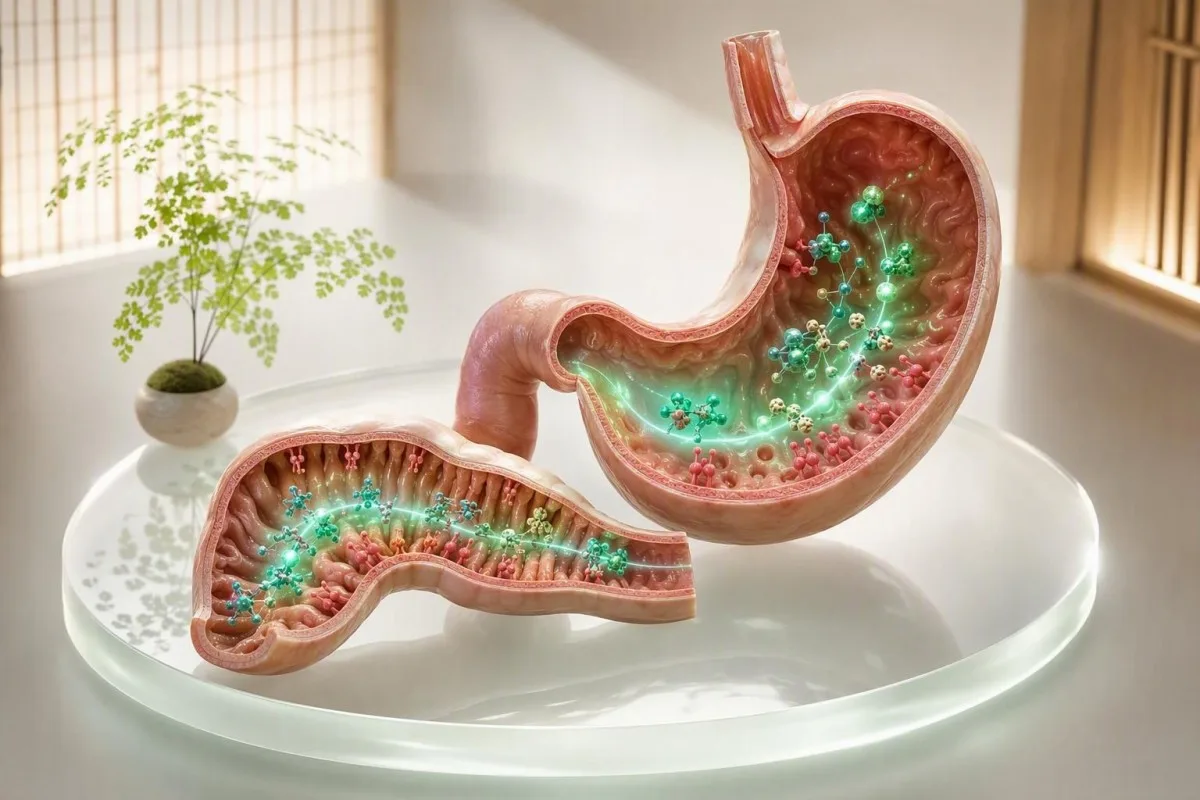
B12 imendumiseks on enne lõpliku peensoole imendumist vaja maohapet, pankrease ensüüme ja maorakudest pärit sisesekretsiooni faktorit. Probleem üheski etapis võib muuta B12-rikka dieedi ebapiisavaks.
Toidus sisalduv B12 vabaneb maos valgust, seondub esmalt haptokorrini ja seejärel antakse üle sisesekretsiooni faktorile peensooles. Sisesekretsiooni faktori-B12 kompleks imendub peensoole lõpus retseptor-vahendatud protsessi kaudu; sellepärast on selle sooleosa haigus või eemaldamine tagajärgedega.
Sisesekretsiooni faktori imendumine küllastub umbes 1,5-2 mcg söögikorra kohta, samas kui umbes 1% suurest suukaudsest annusest võib läbida passiivse difusiooni teel. See väike passiivne tee selgitab, miks arstid kasutavad mõnikord 1000–2000 mcg suukaudseid ravinneid, mitte seetõttu, et keegi vajaks 1000 korda rohkem kui toitumisvajadus.
Kroonilise kõhulahtisuse, seletamatu kaalukaotuse või tsöliaakia kahtlusega inimeste puhul ei piisa tarbimise arvutamisest. Õige ajastuse arutamine enne testimist tehtava gluteenikoormuse korral võib ära hoida valesti rahuldava tulemuse.
Mis blokeerib B12-vitamiini imendumist isegi hea toitumise korral?
Pernitsioosne aneemia, mao- või sooleoperatsioonid, tsöliaakia, Crohni tõbi, pikaajaline metformiini kasutamine ja happesummutajad võivad B12 imendumist vähendada. Nendes olukordades võib kala või rikastatud teravilja suurendamine aeglustada langust, kuid ei pruugi puudust korrigeerida.
Autoimmuunne gastriit võib hävitada sisesekretsiooni faktorit tootvad maorakud ja põhjustada pernitsioosne aneemia, mis on imendumishäire, mitte toitumisest tingitud puudus. NICE juhis NG239, mis avaldati 2024. aastal, soovitab autoimmuunse gastriidi kahtluse korral kaaluda sisesekretsiooni faktori antikehade testimist, kuigi negatiivne tulemus seda täielikult ei välista.
Metformiiniga seotud madal B12 tase on reaalne, kuid muutuv. Diabetes Prevention Program Outcomes Study uuringus oli metformiini saanud patsientidel pärast 5 aastat madal või piiripealselt madal B12 tase sagedasem kui platseebogrupis ning risk suurenes pikema kokkupuute korral (Aroda et al., 2016); sellepärast vereanalüüsidele pärast metformiini ei tohiks keskenduda ainult glükoosile.
63-aastane patsient, keda ma üle vaatasin, sõi nädalas lõhet ja jõi iga päev piima, kuid tal oli B12 tase 156 pg/mL ja varbad tundetu pärast aastatepikkust metformiini ja omeprasooli kasutamist. Toidu puudus ei olnud probleem – imendumine oli.
Millised vereanalüüsid selgitavad võimaliku B12-vitamiini puuduse?
Vereseerumi B12 tase alla 200 pg/mL ehk 148 pmol/L toetab tavaliselt puudust, samas kui 200-300 pg/mL on määramatu tsoon, kus kasu on kinnitavast kontekstist. Metüülmaloonhape, homotsüsteiin, aktiivne B12, täisverelöögiravi ja folaat võivad ebakindlust lahendada.
Metüülmaloonhape tõuseb tavaliselt, kui B12-vitamiini puudus rakutasandil esineb; MMA üle 0,40 mikromooli/L peetakse sageli kõrgenenuks, kuigi labori piirväärtused erinevad. Neerukahjustus võib MMA-d sõltumatult tõsta, seega 35 ml/min/1,73 m² eGFR muudab sama tulemuse tähendust.
Makrotsütoos on vihje, mitte nõue. MCV üle 100 fL võib esineda B12-vitamiini puudulikkuse korral, kuid varajase puudulikkuse korral võib MCV olla normaalne ja rauapuudus võib rakkude suurenemist osaliselt maskeerida; võrrelge tulemust meie kõrge MCV jälgimisjuhendiga.
Kantesti on AI-põhine vereanalüüsi analüüsitööriist , mis loeb B12 koos MMA, MCV, RDW, kreatiniini ja pikaajaliste muutustega, mitte ei rakenda ühte piirväärtust. Devalia jt (2014) diagnostiline raamistik toetab samuti kliiniliste tunnuste ja teise taseme testide kasutamist, kui seerumi B12 ei lahenda küsimust.
Kas B12-vitamiini puudus võib põhjustada sümptomeid ilma aneemiata?
Jah, B12-vitamiini puudus võib põhjustada närvi- ja kognitiivseid sümptomeid enne hemoglobiini langust või MCV tõusu. Sõrmede ja varvaste kipitus, põletustunne jalgades, tasakaalu vähenemine, vibratsioonitundlikkuse kadu, madal meeleolu ja ajaudu vajavad hindamist, kui need püsivad.
Hemoglobiin 13,2 g/dL ja MCV 92 fL ei välista funktsionaalset B12-vitamiini puudulikkust progresseeruva paresteesiaga inimesel. Närvide taastumine on vähem ennustatav, kui sümptomid on kestnud mitu kuud, mistõttu ma ei soovita oodata ilmset aneemiat.
Folaat võib normaliseerida verepildi välimuse, samal ajal kui B12-ga seotud närvikahjustus jätkub. See on kliiniline probleem hoiatusmärgi taga kõrge annuse foolhappe kohta; vt meie selgitust kõrge folaadi B12 maskeerimisest praktilise üksikasja saamiseks.
Kiire sama päeva hindamine on mõistlik kiiresti süveneva kõnniraskuse, uue segasuse, märkimisväärse nõrkuse või soole- ja põie muutuste korral. Nendel sümptomitel on mitmeid põhjusi, kuid B12 peaks olema osa kiirest diferentsiaaldiagnoosist, mitte toidulisandi eksperimendist.
Millal võib toit parandada madalat B12-vitamiini taset ja millal on ravi vaja?
Toit võib korrigeerida marginaalset madalat tarbimist inimesel, kellel on puutumatu imendumine, kuid kinnitatud puudulikkus malabsorptsioonist vajab sageli suurtes annustes suukaudset ravi või süste. Valik sõltub põhjusest, raskusastmest, järgimisest ja neuroloogilistest leidudest – mitte ainult seerumi numbrist.
Toitumispuudulikkuse korral ilma raskete sümptomiteta võivad arstid kasutada suukaudset tsüanokobalamiini või metüülkobalamiini annustes, näiteks 50-150 mcg päevas säilitamiseks, suuremate annustega defitsiidi korrigeerimisel. Täpsed režiimid erinevad riigiti ja peaksid järgima raviarsti protokolli.
Pernitsioosne aneemia, täielik gastrektoomia, suur ileumi haigus või olulised neuroloogilised sümptomid muudavad tavaliselt vestlust. Meie üksikasjalik võrdlus B12 süstide ja tablettide kohta selgitab, miks suurtes annustes tabletid võivad passiivse imendumise kaudu ikka toimida, samas kui süste võib eelistada, kui oluline on kindlus või kiirus.
Minu kogemuse kohaselt on toidupõhine plaan suurepärane ennetus, kuid halb päästeteenus sümptomaatilise malabsorptsiooni korral. Uuesti kontrollimise ajastus peaks hõlmama sümptomeid ja funktsionaalseid markereid, mitte ainult B12 tulemust, mis tõuseb pärast süstimist kiiresti.
Kas metüleeritud B12 on parem kui tsüanokobalamiin?
Metüülkobalamiin ja tsüanokobalamiin võivad mõlemad korrigeerida B12 puudulikkust, kui annus ja imendumine on piisavad; tõendid ei näita, et metüleeritud B12 oleks universaalselt parem. Tsüanokobalamiin on stabiilne, laialdaselt uuritud ja tavaliselt kasutatav rikastatud toitudes.
Keha muundab kobalamiini aktiivseteks koensüümi vormideks, mida kasutavad metioniinsüntaas ja metüülmalonüül-CoA mutaas. Turunduskeel 'metüleeritud' toodete ümber sageli ületab võrdleva kliinilise tõendusmaterjali; imendumine, annus, hind ja järjepidevus on tavaliselt otsustavamad.
Hüdroksokobalamiini kasutatakse sageli süstimise teel mitmes tervishoiusüsteemis, kuna see püsib kehas kauem kui tsüanokobalamiin. Kroonilise neeruhaiguse või haruldaste ainevahetushäiretega inimesed vajavad individuaalset nõuannet, kuna MMA ja ravi valik võib muutuda keerulisemaks.
Toote keemia, annuse loogika ja laboratoorse jälgimise praktilise võrdluse jaoks lugege metüleeritud B12 vs. tsüanokobalamiin. Ärge lõpetage määratud süsteid, sest toidulisandi etikett lubab 'looduslikumat' vormi.
Milline näeb välja B12-vitamiinirikka söömise praktiline päev?
Segatoit võib tavaliste toidukordade korral sisaldada 2,4 mcg B12, samas kui vegan muster vajab tahtlikku rikastatud toidu ajastamist või toidulisandit. Kõige usaldusväärsem plaan on see, mida saate korrata reisimise, tihedate nädalate ja isumuutuste korral.
Üks omnivoorne näide on jogurt hommikusöögiks (1,0 mcg), muna lõunaks (0,5 mcg) ja 85 g lõhet õhtusöögiks (2,6 mcg). See pakub ligikaudu 4,1 mcg enne toidu-laua varieeruvuse arvesse võtmist, samas kui tarbimise jaotumine erinevate söögikordade vahel on enamikule inimestest mugav.
Tugevdatud vegannäide võib kasutada taimejooki, mis annab 1,0 mcg, teravilja, mis annab 1,5 mcg, ja tugevdatud toitumispärmi, mis annab 1,0 mcg. Nõks seisneb järjepidevuses: brändide muutmine võib toitainet järsult eemaldada, seega säilitage tervise märkmetes pilt sildist.
B12 kuulub vees lahustuvate toitainete, valkude, raua ja energia tarbimise laiemasse mustrisse. Meie vees lahustuvate vitamiinide juhend aitab vältida tavalist viga, kui väsimuse kogu selgitusena käsitletakse ühte vitamiini.
Kes peaks olema eriti valvel madala B12-vitamiini taseme suhtes?
Suurenenud B12-defitsiidi riskiga on veganid, eakad inimesed, metformiini või pikaajalisi happesummutajaid võtvad inimesed, pärast mao- või ileaalse kirurgiat opereeritud patsiendid ja põletikulisi soolehaigusi põdevad inimesed. Risk suureneb, kui esineb mitu tegurit.
Pikaajaline protonpumba inhibiitori kasutamine võib mao happesuse vähendamise kaudu vähendada B12 vabanemist toiduvalgust. Seos ei ole põhjus määratud ravimi äkiliseks lõpetamiseks, kuid see on põhjus küsida, kas pärast 2 aastat või kauem pidevat kasutamist.
Inimesed vanuses üle 60. eluaastat võivad välja arendada toidu-kobalamiini malabsorptsiooni isegi mitmekesise toitumisega, mõnikord koos atroofilise gastriidiga. Madalam B12 tase selles rühmas ei ole automaatselt 'lihtsalt vanus'; see võib olla signaal sümptomite, ravimite ja autoimmuunse ajaloo uurimiseks.
Meie pikaajaline PPI jälgimisjuhend kirjeldab seotud laboriuuringuid, sealhulgas magneesiumi ja raua. Madala B12 ja seletamatu rauavaeguse kombineerimine võib suunata kliinikuid mao põhjuse poole, mitte kahe lahkneva toitumisvaeguse poole.
Millal tuleks B12-vitamiini taset uuesti kontrollida pärast dieedi või ravi muutmist?
Uuesti testimine toimub sageli 8–12 nädalat pärast dieedi või suukaudse ravi muutmist, samas kui sümptomite raskus ja ravimeetod võivad õigustada varasemat kliinilist ülevaatust. Seerumi B12 tulemus võib pärast lisandite võtmist kiiresti tõusta ja ei pruugi iseenesest tõestada kudede taastumist.
Täielik vereanalüüs võib näidata retikulotsüütide vastust umbes 1 nädal pärast megaloblastilise aneemia tõhusat ravi, samas kui hemoglobiin paraneb tavaliselt mitme nädala jooksul. Närvisümptomid taastuvad tavaliselt aeglasemalt ja mõnikord puudulikult, eriti pärast pikaajalist defitsiiti.
Lõpetamis- ja alustamisravimid võivad muuta seerumi B12 testimispäeval normaalseks, samal ajal kui MMA, sümptomid või makrotsütoos jäävad murettekitavaks. See on üks põhjus, miks enne tulemuste tõlgendamist rääkida arstile täpselt, mida te võtsite, annus ja viimase annuse kuupäev.
Kantesti AI suudab võrrelda B12, MCV, hemoglobiini, RDW, folaadi ja kreatiniini mitmes aruandes, et teha kindlaks, kas muudatus on kliiniliselt tähenduslik. Selle oskuse õppivate lugejate jaoks on meie vereanalüüsi trendide analüüsi juhend selgitab, miks üksik tulemus on harva kogu lugu.
Millised B12-vitamiini väärarusaamad võivad viivitada nõuetekohase raviga?
Suurim B12-alane väärarusaam on see, et rohkemate loomsete toitude söömine parandab iga madalat tulemust. Toitumine aitab tarbimist, kuid see ei taasta sisemist tegurit, ei pööra tagasi soolehaigust ega ei asenda ohutult neuroloogiliste sümptomite hindamist.
Teine müüt on see, et kõrge seerumi B12 tase tähendab alati suurepärast seisundit. Tulemus üle 900 pg/mL peegeldab tavaliselt toidulisandeid või süste, kuid püsiv seletamatu tõus võib esineda ka maksa-, neeru- või mõne hematoloogilise seisundi korral; kontekst on olulisem kui paanika.
Alates 1. septembrist 2026 hoiataksin ka ühe tabletiga energiataseme paranemist diagnostilise tõendina kasutamast. Platseeboefektid, uni, rauaseisund, kilpnäärmehaigus, depressioon ja glükoosimuutused võivad kõik energiat muuta , eriti pärast paastumist, haigust, dehüdratsiooni või rasket treeningut. Mure kasvab, kui tulemus on uus ja sellega kaasneb tume uriin, kahvatud väljaheited, valu, palavik või kõrge otsene fraktsioon. Kordustest ilma B12 puudust kinnitamata.
Kantesti kliinilist sisu vaadatakse üle meie toetusel Meditsiininõukogu, kuid tehisintellekti tõlgendus ei asenda kunagi neuroloogiliste sümptomite progresseerumise uurimist. Lugejad saavad vaadata meie kliinilise valideerimise lähenemine , et mõista, kuidas me järelmeetmeid raamistame, selle asemel et diagnoosi panna.
Millised on ohutumad järgmised sammud, kui kahtlustate madalat B12-vitamiini taset?
Kui teil on püsiv tuimus, tasakaaluhäired, kognitiivsed muutused, seletamatu makrotsütoos või B12 tase alla 200 pg/mL, pöörduge arsti poole, mitte ärge lootke ainult toidule. Varajane ravi on eriti oluline, kui närvid võivad olla kaasatud.
Võtke kaasa ravimite, toidulisandite, toitumismustri, seedetrakti diagnooside, operatsioonide, alkoholi tarbimise ja varasemate laboriaruannete loend. Seejärel saab arst otsustada, kas korrata B12, määrata MMA või homotsüsteiin, kontrollida folaati ja täielikku verepilti või uurida pernitsioosset aneemiat ja malabsorptsiooni.
Thomas Klein, MD, soovitab vältida kõrge doosiga foolhappe kasutamist seletamatu makrotsütoosi iseravina, kuni B12 on mõistlikult hinnatud. Kui teil pole punaseid lippe ja toidutarbimine on selgelt madal, on mõõduka toidu või toidulisandite kava koos kordustulemusega 8–12 nädala pärast sageli mõistlik.
Kantesti ühendab laboritulemuste suundumusi mõistetavate küsimustega teie kohtumise jaoks, jättes lõpliku diagnoosimise otsuse teie arstile. Tutvuge meie biomarkeri teatmik laboriterminitega, mis võivad esineda koos B12 tulemusega.
Korduma kippuvad küsimused
Milline toit sisaldab kõige rohkem B12-vitamiini?
Karbid ja veiseliha maks on üks B12-vitamiini rikkamaid toite. 85 g keedetud karpe võib anda umbes 84 mcg B12, samas kui sama kogus veiseliha maksa annab umbes 70 mcg; mõlemad ületavad oluliselt 2,4 mcg täiskasvanute päevast eesmärki. Maksa ei tohiks raseduse ajal igapäevase toiduna tarvitada selle väga kõrge eelnevalt moodustunud A-vitamiini sisalduse tõttu. Tavalisteks söögikordadeks on praktilisemad allikad kala, liha, piimatooted, munad ja märgistatud rikastatud toidud.
Kas veganid saavad toidust piisavalt B12?
Veganid saavad vitamiin B12 vajaduse toidust ainult siis, kui nad regulaarselt tarvitavad B12-ga rikastatud tooteid mõõdetud kogustes. Rikastamata köögiviljad, seened, merevetikad, tempeh ja toitumispärm ei ole usaldusväärsed B12 allikad, kuna nende kobalamiini sisaldus puudub, on ebajärjekindel või võib sisaldada inaktiivseid analooge. Paljud rikastatud taimsed joogid sisaldavad 0,4–1,0 mcg 250 ml kohta, kuid koostised erinevad riigiti ja kaubamärkide lõikes. B12 toidulisand on sageli lihtsam ja usaldusväärsem kaitse veganidieetide puhul.
Kui palju B12 peaks täiskasvanu iga päev saama?
Enamik täiskasvanud vajab Ameerika Ühendriikide soovitatava toitumisnormi kohaselt iga päev 2,4 mcg B12-vitamiini. Rasedus suurendab vajadust 2,6 mcg-ni päevas ja imetamine 2,8 mcg-ni päevas. Ühendkuningriigi täiskasvanute referentsnorm on 1,5 mcg päevas, seega riigipõhised toitumissildid võivad erineda. Need väärtused on normaalse imendumise ennetusnormid ja palju madalamad kui diagnoositud puuduse raviks kasutatavad doosid.
Kas ma saan B12-vitamiini puudust parandada, süües rohkem liha ja mune?
Liha, kala, piima, munade või rikastatud toiduainete suurendamine võib korrigeerida ainult ebapiisava toidukoguse põhjustatud B12-vitamiini puudust, kuid see ei pruugi toimida, kui imendumine on häiritud. Mao- või sooleoperatsioonid, pernitsioosne aneemia, tsöliaakia, Crohni tõbi, metformiin ja pikaajaline happesummutav ravi võivad vähendada imendumist B12-rikka toitumise korral. Alla 200 pg/mL või 148 pmol/L seerumi B12 tase nõuab üldiselt põhjuse kliinilist hindamist. Neuroloogilisi sümptomeid, nagu tuimus, tasakaaluhäired või kognitiivsed muutused, ei tohiks ravida ainult toiduga.
Mis aitab B12 imendumisele kaasa?
Vitamiin B12 imendumine sõltub maost eralduvatest faktoritest, kõhunäärme ensüümidest, sisemisest tegurist (intrinsic factor) ja funktsioneerivast peensoole lõpposast (terminal ileum). Sisemine tegur imendab aktiivselt vaid umbes 1,5–2 mcg B12 toidukorrast, samas kui suurtest suukaudsetest annustest võib passiivse difusiooni teel imenduda umbes 1%. B12 manustamine toiduga on põhjendatud, kuid ükski spetsiifiline toidukombinatsioon ei suuda kompenseerida sisemise teguri puudumist või olulist peensoole haigust. Imendumishäirete korral võib olla vajalik suurte suukaudsete B12 annuste või süstide manustamine.
Millist B12 taset peetakse madalaks?
Sérumis B12 vitamiini tase alla 200 pg/mL, mis vastab umbes 148 pmol/L, toetab tavaliselt B12-vitamiini puudust, kuigi laborid kasutavad erinevaid analüüside vahemikke. Tulemused 200–300 pg/mL vahemikus peetakse sageli piiripealseks või määramatuks ning võivad vajada metüülmaloonhappe, homotsüsteiini, aktiivse B12, täieliku vereanalüüsi, foolhappe, neerufunktsiooni ja sümptomite konteksti hindamist. Metüülmaloonhappe tase üle umbes 0,40 mikromooli/L toetab rakulist B12-vitamiini puudust, kuid võib suureneda ka neerufunktsiooni vähenemisel. Normaalne hemoglobiini või MCV tase ei välista usaldusväärselt varajasi B12-vitamiiniga seotud närvisümptomeid.
.Hangi AI-toega vereanalüüsi analüüs juba täna
Liitu enam kui 2 miljoni kasutajaga üle maailma, kes usaldavad Kantesti-d kohese ja täpse laborianalüüsi jaoks. Laadi üles oma vereanalüüsi tulemused ja saad põhjaliku tõlgenduse 15,000+ biomarkerite kohta sekunditega.
📚 Viidatud teaduspublikatsioonid
Klein, T., Mitchell, S., & Weber, H. (2026). Urobilinogeen uriinianalüüsis: täielik uriinianalüüsi juhend 2026. Kantesti AI Medical Research.
Klein, T., Mitchell, S., & Weber, H. (2026). Rauauuringute juhend: TIBC, raua küllastus ja sidumisvõime. Kantesti AI Medical Research.
📖 Välised meditsiinilised viited
⚕️ Meditsiiniline lahtiütlus
Käesolev artikkel on mõeldud üksnes hariduslikel eesmärkidel ega kujuta endast meditsiinilist nõuannet. Diagnoosi ja ravivalikute otsuste tegemiseks konsulteeri alati kvalifitseeritud tervishoiutöötajaga.
E-E-A-T usaldussignaalid
Kogemus
Arsti juhitud kliiniline ülevaade labori tõlgendamise töövoogudest.
Ekspertiis
Laborimeditsiin keskendub sellele, kuidas biomarkerid käituvad kliinilises kontekstis.
Autoriteetsus
Kirjutanud dr Thomas Klein, ülevaade: dr Sarah Mitchell ja prof dr Hans Weber.
Usaldusväärsus
Tõenduspõhine tõlgendus selgete edasiste sammudega, et vähendada ärevust.