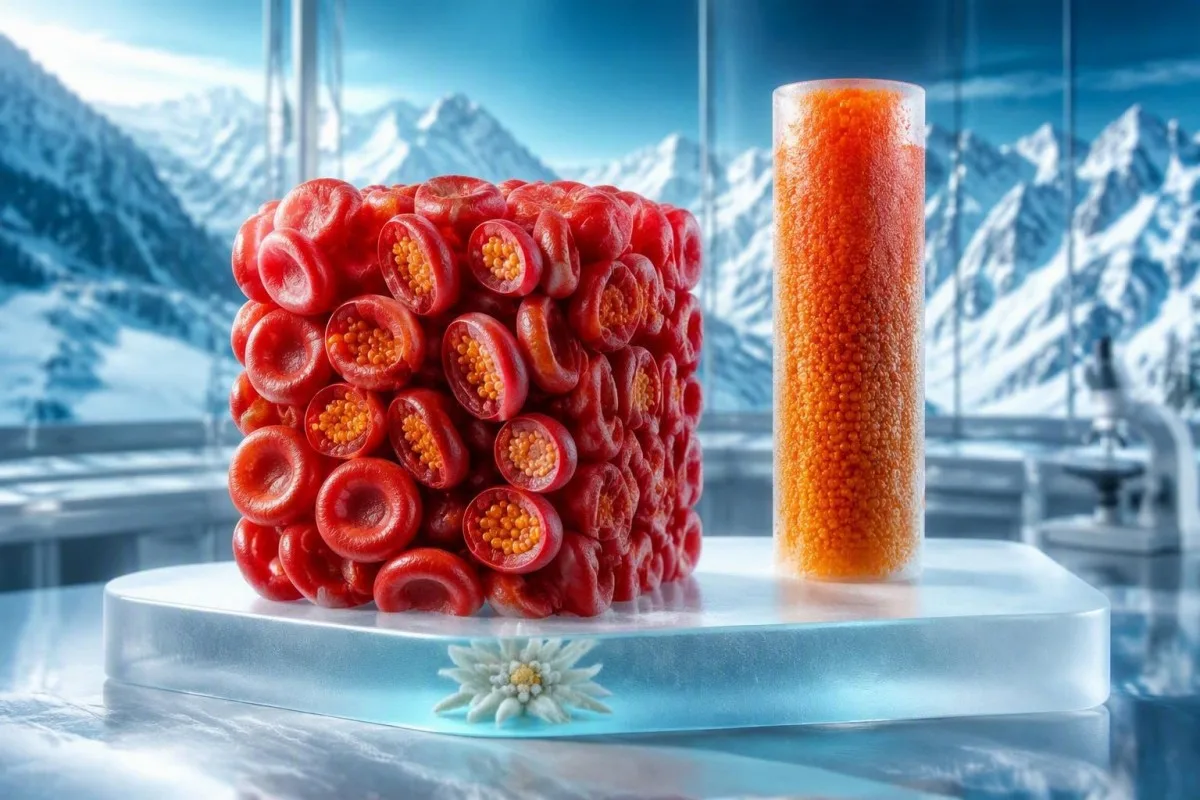
Gematokrit qon hajmining eritrotsitlar egallagan ulushini oʻlchaydi; gemoglobin ularning kislorodni tashuvchi oqsilini oʻlchaydi. Ular odatda birga harakat qiladi, ammo istisnolari klinik jihatdan foydali boʻlishi mumkin.


- Gematokrit butun qon hajmining eritrotsitlar tomonidan tashkil etilgan foizini bildiradi; ayollar uchun odatda kattalar diapazoni taxminan 36-46% va erkaklar uchun 41-53% ni tashkil qiladi.
- Gemoglobin kislorodni tashuvchi oqsil konsentratsiyasini bildiradi, odatda homilador boʻlmagan ayollar uchun taxminan 12.0-15.5 g/dL va erkaklar uchun 13.5-17.5 g/dL.
- Uchlik qoidasi gematokritni taxminan gemoglobinning 3 baravari (g/dL) deb hisoblaydi; kattaroq boʻshliq oʻzgargan hujayra hajmi, lipemiya, sovuq aglutininlari yoki analitik muammoni koʻrsatishi mumkin.
- Gemoglobin normal boʻlgan holda gematokritning past boʻlishi koʻpincha klinik jihatdan muhim kamqonlikdan koʻra makrositoz, suvsizlanish yoki chegaraviy hisoblash farqini aks ettiradi.
- Yuqori gematokritning sabablari suvsizlanish, balandlik taʼsiri, chekish bilan bogʻliq gipoksiya, uyqu apnesi, testosteron terapiyasi va kamroq politsitemiya vera ni oʻz ichiga oladi.
- Kuzatuv chegarasi erkaklarda 16,5 g/dl yoki ayollarda 16,0 g/dl dan doimiy yuqori boʻlgan gemoglobin, ayniqsa gematokritning koʻtarilishi va past eritropoetin bilan kuchayadi.
- Shoshilinch belgilar ko'krak qafasi og'rig'i, hushidan ketish, yangi chalkashlik, dam olish paytida hansirash, qora najas yoki ko'p qon ketishi kabi holatlar CBC raqamidan qat'i nazar, shoshilinch shifokor nazoratini talab qiladi.
Gematokrit va gemoglobin aslida nimani oʻlchaydi
Gematokrit va gemoglobin solishtiruvi hajmlarning oqsilga solishtirilishidir: gematokrit butun qon naychasining qizil hujayralar tomonidan egallagan ulushi, gemoglobin esa qon desilitri uchun kislorod bog'lovchi oqsil grammlari. Ular ko'pincha parallel harakat qiladi, chunki ikkalasi ham qizil hujayra massasiga bog'liq, lekin ular o'zaro almashtirilmaydi.
Ko'pgina laboratoriyalar gematokritni foizda va gemoglobinni g/dL hisobida chiqaradi. 14.0 g/dL gemoglobin va 42% ga yaqin gematokrit kattalarda an'anaviy mos juftlikdir, ammo laboratoriyaning o'z intervallari talqinni boshqaradi. Gematokrit sentrifugatsiyadan keyin o'lchanishi yoki qizil hujayra soni va o'rtacha hujayra hajmidan hisoblanishi mumkin, shu bilan birga zamonaviy analizatorlar hujayra elementlarini lize qilingandan keyin gemoglobinni fotometrik usulda o'lchaydilar.
Amaliy farq kislorod yetkazib berishdir. Gemoglobin kislorodni tashiydi, gematokrit esa yopishqoqlikka ta'sir qiladi va qizil hujayralar qancha joy egallashini bildiradi; shu sababli, odamda normal gemoglobin bo'lishi mumkin, ammo qizil hujayralar hajmi o'zgarganda gematokrit biroz g'ayrioddiy bo'lishi mumkin. Kengroq CBC lug'ati uchun bizning CBC tarkibiy qismlari bo'yicha qo'llanmamiz MCV, MCH va RDW qayerda joylashishini ko'rsatadi.
2026-yil 14-sentabr holatiga ko'ra, men hali ham bemorlarga ushbu qiymatlardan biri diapazon tashqarisida bo'lgani uchun “anemik” deb aytilganini ko'raman. Doktor Tomas Kaynning yondashuvi kamroq dramatikdir: gemoglobin yosh, jins, homiladorlik holati va balandlik uchun pastligini tasdiqlash, keyin gematokritni MCV, RDW, retikulotsitlar, alomatlar va avvalgi CBC bilan birga o'qish.
Nima uchun bir xil CBC ikkalasini ham o'z ichiga oladi
CBC har ikkala testni ham hisobot qiladi, chunki har biri turli turdagi nomuvofiqlikni aniqlaydi. Gemoglobin umuman olganda anemiya belgilarini aniqlash uchun eng to'g'ridan-to'g'ri ko'rsatkichdir, gematokrit esa suyuqlik balansi va qizil hujayra hajmi haqida qo'shimcha ma'lumotlar berishi mumkin.
Nazorat diapazonlari va uchlik qoidasi
Ayollarda kattalar gemoglobini ko'pincha taxminan 12,0-15,5 g/dL, erkaklarda esa 13,5-17,5 g/dL ni tashkil qiladi, gematokrit esa mos ravishda taxminan 36-46% va 41-53% ni tashkil qiladi. Gemoglobinning uch barobariga yaqin gematokrit foydali tekshiruv, diagnostika emas.
“Uchlik qoidasi” shuni anglatadiki, 12 g/dL gemoglobin ko'pincha 36% atrofidagi gematokrit bilan, 15 g/dL gemoglobin esa 45% atrofidagi gematokrit bilan juftlashadi. MCV juda past yoki yuqori bo'lganda, triglitseridlarning sezilarli darajada ko'payganida yoki sovuq namuna qizil hujayralari yig'ilganida u kamroq ishonchli bo'ladi. Men buni laboratoriya savolini berish uchun tezkor belgi sifatida ishlataman, natijani almashtirish sifatida emas.
JSSTning 2024-yildagi qo'llanmasi homilador bo'lmagan ayollarda anemiya deb 12,0 g/dL dan past gemoglobin va erkaklarda 13,0 g/dL dan past gemoglobinni belgilaydi, homiladorlik, chekish va balandlik uchun moslamalar mavjud. Gematokrit chegaralari laboratoriyaga qarab ko'proq farqlanadi, bu esa shifokorlar odatda anemiya qarorlarini universal gematokrit chegarasiga emas, balki gemoglobinga bog'lashining bir sababidir (JSST, 2024).
Kantesti - bu AI qon testi analizatori bu gemoglobin, gematokrit, MCV, MCHC va avvalgi natijalarni bitta CBC naqshi sifatida tekshiradi, qizil bayroqni hukm sifatida qabul qilishdan ko'ra. Ushbu naqsh-birinchi ko'rib chiqish, ayniqsa, turli laboratoriyalar biroz farqli intervallardan foydalanganda foydalidir; qanday qilib ko'ring jinsga xos laboratoriya diapazonlari farq qiladi.
Nima uchun bu ikki qiymat odatda birga koʻtariladi va tushadi
Hemoglobin and hematocrit usually fall together in iron deficiency, blood loss, kidney-related anemia, and bone-marrow suppression because each reflects reduced circulating red-cell mass. They usually rise together when plasma volume contracts or red-cell production increases.
A 1-litre saline infusion can lower both hemoglobin and hematocrit within hours through dilution without destroying a single red cell. Conversely, vomiting, diarrhoea, fever, diuretics, or a hard endurance event with inadequate fluid replacement can concentrate both values temporarily. That is why I ask about fluid intake, recent illness, and timing before labeling a mildly high result as disease.
True anemia develops when red-cell production cannot keep pace with loss or destruction. Iron deficiency often first lowers ferritin and transferrin saturation, then reduces MCV and hemoglobin; hematocrit follows. Camaschella’s New England Journal of Medicine review explains why iron deficiency must be traced to intake, menstrual loss, gastrointestinal loss, absorption, or inflammation rather than simply treated with tablets (Camaschella, 2015).
A high hemoglobin plus high hematocrit deserves a different branch of reasoning. The high RBC count and dehydration guide explains why repeating a CBC after normal hydration can separate hemoconcentration from sustained erythrocytosis in many otherwise well adults.
Nima uchun gematokrit va gemoglobin bir-biridan farq qilishi mumkin
A meaningful hematocrit-hemoglobin mismatch usually points to altered red-cell size, altered plasma composition, or a measurement artifact rather than two unrelated illnesses. The fastest clue is whether MCV, MCHC, RDW, and the sample quality flags support the result.
Because calculated hematocrit equals red-cell count multiplied by MCV, unusually large cells can raise hematocrit relative to hemoglobin. Macrocytosis from vitamin B12 deficiency, folate deficiency, alcohol exposure, liver disease, hypothyroidism, or certain medicines may therefore make the ratio look “off” before hemoglobin becomes frankly low. An MCV above 100 fL warrants context, especially when RDW is also rising.
Very small cells can produce the opposite impression: a relatively low hematocrit with hemoglobin that is less reduced than expected. Iron deficiency and thalassemia trait commonly produce microcytosis, but ferritin, transferrin saturation, family history, and red-cell count distinguish the patterns better than MCV alone. Our low MCV follow-up guide lays out that decision point.
Laboratory artifacts are real. Severe lipemia may falsely increase measured hemoglobin, while cold agglutinins can distort red-cell count, MCV, and calculated hematocrit until the specimen is warmed and rerun. A mismatch that appears suddenly, with no clinical explanation, merits a repeat sample or laboratory review before extensive testing.
Gemoglobin normal boʻlgan holda gematokritning past boʻlishi: keng tarqalgan tushuntirishlar
Gemoglobin normal boʻlgan holda gematokritning past boʻlishi is most often a mild calculation or volume issue, but persistent discordance should prompt review of MCV, MCHC, red-cell count, and hydration. It does not automatically mean hidden bleeding or anemia.
A simple example is hemoglobin 13.2 g/dL with hematocrit 38% in an adult whose laboratory lower limit is 39%. If MCV is 102 fL and RDW is elevated, macrocytosis is more informative than the isolated hematocrit flag. In my clinic, I would review alcohol intake, thyroid function, liver enzymes, B12, folate, and medicines such as hydroxyurea, methotrexate, or antiseizure treatment rather than rush to iron.
Overhydration can lower hematocrit by expanding plasma volume, especially after intravenous fluids, pregnancy, endurance exercise, or compulsive water intake. A fall of 2-3 percentage points after a large fluid load can be physiological dilution; it should recover as fluid balance normalizes. Pregnancy requires pregnancy-specific intervals, because plasma volume expands more than red-cell mass.
Kantesti’s AI qon tahlili natijalari platformasi flags low hematocrit with normal hemoglobin as a pattern to contextualize, not a diagnosis to self-treat. If iron markers are needed, compare ferritin with transferrin saturation using our temir tahlillari bo‘yicha ma’lumotnoma qo‘llanmasi and discuss the result with a clinician.
Qachon ikkala past qiymat ham kamqonlikni koʻrsatadi
Low hemoglobin and low hematocrit together usually indicate anemia or dilution, and the next decisive tests are MCV, reticulocyte count, ferritin, kidney function, and a focused bleeding history. Symptoms and speed of change matter more than a single borderline value.
Hemoglobin below 8 g/dL often causes exertional breathlessness, tachycardia, dizziness, or chest discomfort, although chronic anemia can be tolerated better than an abrupt fall. A value below 7 g/dL is a common restrictive transfusion threshold for stable hospitalized adults, but active bleeding, heart disease, symptoms, and local protocols change that decision. This is hospital medicine, not a threshold for home management.
Reticulocytes show whether marrow response is appropriate. High reticulocytes with falling hemoglobin suggest blood loss or hemolysis; low or inappropriately normal reticulocytes suggest underproduction from iron deficiency, kidney disease, inflammation, B12/folate deficiency, medications, or marrow disorders. The retikulotsitlar soni bo‘yicha qo‘llanmamiz suyak iligi (marrow) burchagini beradi. explains how an immature reticulocyte fraction adds timing information.
Dr. Thomas Klein advises same-day assessment for low CBC values accompanied by fainting, breathlessness at rest, chest pain, black tarry stools, vomiting material that resembles coffee grounds, or heavy ongoing menstrual or gastrointestinal bleeding. Anemia itself is a finding; the underlying cause determines the safe next step.
Gematokritning yuqori koʻrsatkichlari: konsentratsiya, gipoksiya yoki ortiqcha ishlab chiqarish
High hematocrit causes fall into three useful groups: reduced plasma volume, chronic low-oxygen signaling, and autonomous marrow overproduction. A repeat CBC when well hydrated separates many transient results from sustained erythrocytosis.
Dehydration is the commonest reversible explanation for a modest rise, particularly when urea, albumin, and urine specific gravity are also concentrated. Smoking, obstructive sleep apnea, chronic lung disease, cyanotic heart disease, high-altitude residence, and testosterone therapy can raise erythropoietin-driven red-cell production. Even a few nights of severe sleep-apnea hypoxia may complicate interpretation, though it rarely explains a dramatic isolated value alone.
Persistent hemoglobin above 16.5 g/dL in men or 16.0 g/dL in women meets one World Health Organization major criterion used in evaluating polycythemia vera. The diagnosis still requires clinical assessment and usually JAK2 mutation testing, erythropoietin level, and sometimes marrow evaluation; it cannot be made from hematocrit alone. Barbui et al. (2018) emphasize thrombosis prevention and risk-based treatment once a myeloproliferative neoplasm is confirmed.
For a deeper differential, read our high hematocrit causes article va polycythemia testing pathway. A persistent result is worth a routine appointment even when you feel completely well.
Qachon yuqori natija tibbiy yordamni talab qiladi
A high hematocrit needs urgent evaluation when it occurs with new neurologic symptoms, chest pain, shortness of breath, one-sided leg swelling, visual change, or a previous clot. The number alone does not predict danger perfectly, but hematocrit near or above 55% is not a result I would leave unreviewed.
Blood becomes more viscous as hematocrit rises, although the relationship is nonlinear and individual risk differs. In confirmed polycythemia vera, the CYTO-PV trial found fewer cardiovascular deaths and major thromboses when hematocrit was maintained below 45% than when it was allowed in the 45-50% range (Marchioli et al., 2013). That trial does not mean every person with dehydration needs venesection.
Headache, facial flushing, fatigue, and itch after a warm shower are sometimes reported in polycythemia vera, but they are nonspecific. More concerning is a new focal neurologic deficit, sudden severe headache, altered speech, collapse, or acute breathlessness; these require emergency services rather than a repeat test next week. Do not donate blood or start aspirin solely because an app or one CBC is high.
Kantesti AI uses trend analysis to distinguish a one-off concentration effect from a recurrent pattern, but our output is educational and cannot replace urgent assessment. Our tibbiy validatsiya asoslari describes why clinically significant flags are designed for follow-up, not self-diagnosis.
Boʻshliqni tushuntiruvchi CBC koʻrsatkichlari
MCV, MCHC, RDW, and the red-cell count often explain a hematocrit-hemoglobin disagreement better than either headline number. MCV measures average red-cell volume, MCHC estimates hemoglobin concentration inside cells, and RDW measures size variation.
An MCV below 80 fL is microcytosis in most adult laboratories, while an MCV above 100 fL is macrocytosis. Low MCV plus low ferritin strongly supports iron deficiency; low MCV with a relatively high red-cell count and normal iron stores makes thalassemia trait more plausible. Neither pattern should be inferred from hematocrit alone.
MCHC is normally roughly 32-36 g/dL in many laboratories. A genuinely high MCHC is uncommon and can occur with spherocytes, but cold agglutinins, sample issues, and lipemia are more frequent explanations for a surprising value. Our high MCHC interpretation guide explains why a smear or redraw may be more useful than anxiety.
RDW often rises early during iron deficiency and can temporarily increase after iron treatment as new cells differ in size from older cells. That mixed-cell population may make ratios untidy for several weeks, which is why a CBC trend and RDW naqshlari bo‘yicha qo‘llanma can be more informative than a snapshot.
Homiladorlik, balandlik va mashqlar talqinni oʻzgartiradi
Pregnancy, high-altitude exposure, and endurance training can shift hematocrit and hemoglobin without representing the same disease process. The correct reference interval depends on physiology, timing, and whether the change is stable or progressive.
During pregnancy, plasma volume expands by roughly 40-50%, while red-cell mass rises less; hemoglobin and hematocrit commonly fall through dilution. WHO uses hemoglobin below 11.0 g/dL in the first and third trimesters and below 10.5 g/dL in the second trimester to define anemia, though local maternity pathways may vary. Ferritin is especially useful when anemia is suspected.
At altitude, lower oxygen pressure stimulates erythropoietin and raises hemoglobin over days to weeks. WHO specifically recommends altitude adjustment when interpreting anemia prevalence, and individual clinical care should also consider how long someone has lived or trained at elevation. A blood draw 24 hours after a mountain race can be more affected by dehydration than true acclimatization.
Endurance athletes may have “sports anemia,” meaning plasma-volume expansion lowers concentration measures despite normal or increased total red-cell mass. I usually pair CBC results with ferritin, transferrin saturation, diet, menstrual history, and training load; our chidamlilik sportchisi uchun qon tahlili bo‘yicha qo‘llanma covers RED-S warning patterns.
Testosteron, chekish va uyqu apnesi maxsus savollarga loyiq
Testosterone therapy, tobacco exposure, and untreated obstructive sleep apnea can raise hemoglobin and hematocrit through different pathways, so a generic “high red cells” explanation is not enough. Medication timing and oxygen status are often more revealing than another iron panel.
Exogenous testosterone stimulates erythropoiesis, and many prescribing protocols intervene when hematocrit reaches 54% or rises rapidly from baseline. The exact response may include dose adjustment, route change, temporary cessation, or assessment for sleep apnea and other contributors; it should be managed by the prescribing clinician. Injectable formulations can produce larger peak-and-trough effects than some transdermal regimens.
Smoking can elevate carboxyhemoglobin and reduce oxygen delivery, which may stimulate erythropoietin over time. Pulse oximetry can look deceptively normal in carbon monoxide exposure because standard devices cannot reliably distinguish oxyhemoglobin from carboxyhemoglobin. That little detail is easy to miss in a remote review.
Kantesti - bu AI asosidagi qon tahlili analiz vositasi that incorporates declared medicines and prior CBCs when it identifies a high-result pattern. If a new high result follows a medication change, record the dose, route, start date, smoking status, and sleep symptoms before your appointment; our slightly high hemoglobin guide can help organize the questions.
Analitik va analizator muammolari, ular nomuvofiqlikni taqlid qiladi
Poor mixing, delayed processing, cold agglutinins, lipemia, and recent intravenous fluids can create a hematocrit-hemoglobin mismatch that is not biologically real. A laboratory comment, delta check, and repeat properly handled sample are often the safest first response.
CBC samples are collected in EDTA tubes, which must be adequately mixed and processed within the laboratory’s validated stability window. Cellular swelling with prolonged storage can raise MCV and calculated hematocrit, while hemolysis or turbidity can interfere with photometric hemoglobin methods. These are uncommon but matter when the result conflicts with the person in front of you.
A delta check compares a current value with prior results and alerts laboratories to abrupt, implausible movement. A hematocrit falling from 45% to 32% overnight without symptoms, fluid administration, bleeding, or an accompanying hemoglobin shift deserves verification before anyone pursues invasive testing. Our delta-check izohi describes how this safety process works.
Dr. Thomas Klein has seen cold agglutinin cases where warming the sample corrected a bizarre MCV and hematocrit within the same day. The lesson is reassuring but not dismissive: unusual patterns should be confirmed, and genuine anemia or hemolysis still needs a clinician-led evaluation.
Aniq boʻlmagan CBC naqshini amaliy kuzatuv rejasi
A sensible follow-up plan starts by confirming the result, then uses the pattern to choose targeted tests rather than ordering everything. For mild, symptom-free abnormalities, repeat CBC timing is often 2-8 weeks depending on the suspected cause and clinical history.
For low hemoglobin or hematocrit, ask whether MCV is low, normal, or high. Low MCV often leads to ferritin and transferrin saturation; normal MCV may lead to reticulocytes, kidney function, CRP, and bleeding review; high MCV may lead to B12, folate, TSH, liver tests, medication review, and sometimes a blood film. A clinician should tailor this list to age and symptoms.
For high values, repeat the CBC when normally hydrated and not immediately after intense exercise, vomiting, diarrhoea, or a long flight. If elevation persists, clinicians commonly assess oxygen saturation, smoking/carbon monoxide exposure, sleep-apnea risk, testosterone or diuretic use, erythropoietin, and JAK2 testing where indicated. The erythropoietin result guide explains why a low level shifts concern toward autonomous marrow production.
Kantesti AI interprets hematocrit and hemoglobin through trends, indices, and linked results in about 60 seconds after a report upload. Our AI texnologiyasi bo‘yicha qo‘llanma explains the workflow, while your own clinician remains the right person to examine you and decide on testing.
Natijalarni koʻrib chiqayotgan shifokorga olib borish kerak boʻlgan narsalar
The most useful appointment preparation is a timeline: prior CBCs, recent illnesses, hydration, altitude, exercise, menstrual or gastrointestinal loss, medicines, supplements, and family history. Those details often explain more than one extra decimal point on hematocrit.
Bring at least two prior CBCs when possible, including the laboratory reference ranges. A stable hematocrit of 48% over five years in a high-altitude resident is a different problem from a new rise from 42% to 52% in six months. The qon tahlili o‘zgarishlari bo‘yicha qo‘llanma explains why normal biological variation can still move a result modestly.
Write down supplements, especially iron, B12, folate, testosterone-related products, diuretics, and high-dose zinc. Excess zinc can cause copper deficiency and anemia over time, while iron taken shortly before testing may alter serum iron without correcting underlying stores. Our zinc and copper anemia guide covers that less obvious connection.
Kantesti ning tibbiy mazmuni bizning Tibbiy maslahat kengashi, but no online interpretation can assess pallor, heart rate, oxygenation, spleen size, or active bleeding. If symptoms are substantial or the CBC changes quickly, seek in-person care rather than waiting for a perfect data set.
Eng koʻp kuzatuvni talab qiladigan CBC naqshlari
Follow-up is most warranted for persistent low hemoglobin, a fast CBC change, high hemoglobin with high hematocrit, abnormal MCV or RDW, additional low cell lines, or symptoms that fit anemia, clotting, or bleeding. A single slight hematocrit deviation with normal hemoglobin and indices is often rechecked rather than treated.
A hemoglobin below 12.0 g/dL in a non-pregnant adult woman or below 13.0 g/dL in an adult man meets WHO anemia criteria and merits cause-focused evaluation when confirmed. The concern increases when MCV is below 80 fL or above 100 fL, RDW rises, platelets or white cells are also abnormal, or the result has changed materially from baseline. This is where a CBC becomes a pattern, not a list of flags.
Persistent hemoglobin above 16.0 g/dL in women or 16.5 g/dL in men, particularly with hematocrit above 48% or 49% respectively, warrants assessment for secondary erythrocytosis and occasionally polycythemia vera. Clinicians disagree on exactly when to initiate molecular testing in low-risk people, so context matters more than one cutoff. Symptoms, duration, smoking, oxygenation, and medication exposure refine the decision.
The bottom line from Dr. Thomas Klein: hematocrit versus hemoglobin is rarely a contest over which value is “right.” Hemoglobin usually defines anemia more directly; hematocrit and the indices explain why it happened. For safe trend review and source-aware interpretation, see Kantesti’s clinical standards.
Tez-tez so'raladigan savollar
Gemoglobin normal bo'lganda gematokrit past bo'lishi mumkinmi?
Ha. Gematokrit past bo'lib, gemoglobin normal bo'lsa, MCV o'zgarganda, plazma hajmi kengayganda yoki farq laboratoriya chegarasiga yaqin bo'lsa yuzaga kelishi mumkin. Masalan, gemoglobin 13,2 g/dl va gematokrit 38% bo'lsa, bu klinik jihatdan ahamiyatsiz bo'lishi mumkin, ammo MCV 100 fL dan yuqori yoki 80 fL dan past bo'lsa, keyingi kuzatuvlar o'zgaradi. Davom etayotgan nomutanosiblikni eritrotsitlar soni, MCV, MCHC, RDW, hidratsiya tarixi va oldingi CBClar bilan ko'rib chiqish kerak. Bu o'z-o'zidan qon ketish yoki temir tanqisligini isbotlamaydi.
Anemiyani aniqlash uchun gematokritmi yoki gemoglobinmi ko'proq aniq?
Anemiyani aniqlash uchun gemoglobin odatda afzal ko'riladi, chunki u kislorodni tashuvchi oqsil konsentratsiyasini to'g'ridan-to'g'ri o'lchaydi. WHO 2024 chegaralari homilador bo'lmagan ayollarda 12,0 g/dL dan past, erkaklarda esa 13,0 g/dL dan past bo'lgan anemiyani aniqlaydi, homiladorlik uchun alohida sozlamalar mavjud. Gemotokrit hali ham qimmatlidir, chunki u qizil qon hujayralari hajmini aks ettiradi va suyultirish yoki hujayra hajmining ta'sirini ochib berishi mumkin. Shifokorlar bularning ikkalasini ham MCV va retikulotsitlar bilan birgalikda talqin qilishadi.
Yuqori gematokrit va gemoglobin birga nimaga sabab bo'ladi?
Gematokrit va gemoglobinning yuqori darajasi ko'pincha suvsizlanish, chekish, uyqu apnesi, surunkali kislorodga kam ta'sir qilish, balandlik, yoki testosteron terapiyasidan kelib chiqadi. Erkaklarda gemoglobinning 16,5 g/dL yoki ayollarda 16,0 g/dL dan yuqori doimiy bo'lishi eritrotsitozni tekshirishni talab qilishi mumkin, shu jumladan kislorod holati, eritropoietin va ba'zan JAK2 testi. Politsitemiya vera kam uchraydi, lekin qonning quyuqlashishi natijasida qon quyqasi hosil bo'lish xavfi ortadi. Agar simptomlar bo'lmasa, normal suvlanganlikda takroriy CBC (o'tkaziladigan CBC) ko'pincha birinchi qadamdir.
gematokrit gemoglobinning uch barobar kattami?
Gemoglobin odatda g/dL birlikda ifodalanganda gematokritdan taxminan uch baravar katta bo'ladi, shuning uchun 14 g/dL gemoglobin odatda 42% atrofidagi gematokritga to'g'ri keladi. Bu normallik testidan ko'ra taxminiy qoida. Mikrotsitoz, makrotsitoz, sovuq aglutininlari, lipemiya va analizator usullari bu munosabatni kamroq aniq qilishi mumkin. Doimiy farq MCV, MCHC, RDW va namuna sifatini ko'rib chiqishni talab qilishi kerak.
Qanday gematokrit darajasida zudlik bilan tibbiy yordamga murojaat qilishim kerak?
Gematokritning 55% yoki undan yuqori bo'lishi, ayniqsa agar u doimiy bo'lsa yoki erkaklarda gemoglobin 16,5 g/dL, ayollarda esa 16,0 g/dL dan yuqori bo'lsa, darhol tibbiy ko'rikdan o'tkazilishi kerak. Gematokritning aniq qiymatidan qat'i nazar, ko'krak qafasidagi og'riq, to'satdan hansirash, hushidan ketish, bir tomonlama zaiflik, yangi nutq qiyinchiligi, kuchli bosh og'rig'i yoki ko'rish qobiliyatining yo'qolishi uchun darhol shoshilinch tibbiy yordamga murojaat qiling. Pastroq qiymat tez ko'tarilgan bo'lsa yoki qon quyqasi paydo bo'lgandan keyin yuzaga kelsa, shoshilinch bo'lishi mumkin. Yuqori natijani shifokor maslahatisiz aspirin yoki qon berish orqali o'zingiz davolamang.
Suvsizlanish gematokritni ko'tarishi mumkinmi, lekin gemoglobinni ko'tarmasmi?
Suvsizlanish odatda gematokrit va gemoglobinni oshiradi, chunki kamroq plazma qon aylanishidagi qizil qon hujayrasi tarkibini konsentratsiyalashadi. Gemokrit qizil qon hujayralari soni va MCV ga, gemoglobin esa boshqa usul bilan o'lchanishi sababli kichik nomutanosibliklar yuzaga kelishi mumkin. Qusish, diareya, diuretiklar, isitma va kuchli jismoniy mashqlar qisqa muddatli konsentratsiya ta'sirini yaratishi mumkin. Oddiy suyuqlik qabul qilingandan va tiklanishdan so'ng CBC ni takrorlash ko'pincha bitta testga qaraganda ko'proq ma'lumot beradi.
Bugun AI asosidagi qon tahlilini tahlil qilishni oling
Kantesti’ga tezkor va aniq laboratoriya tahlili uchun ishonadigan butun dunyo bo‘ylab 2 milliondan ortiq foydalanuvchiga qo‘shiling. Qon tahlili natijalaringizni yuklang va soniyalar ichida 15,000+ biomarkerlarining to‘liq talqinini oling.
📚 Havola qilingan ilmiy tadqiqot nashrlari
Klein, T., Mitchell, S., & Weber, H. (2026). Urobilinogen in Urine Test: Complete Urinalysis Guide 2026. Zenodo. https://doi.org/10.5281/zenodo.18226379. ResearchGate: https://www.researchgate.net/ Academia.edu: https://www.academia.edu/. Kantesti AI tibbiy tadqiqoti.
Klein, T., Mitchell, S., & Weber, H. (2026). Iron Studies Guide: TIBC, Iron Saturation & Binding Capacity. Zenodo. https://doi.org/10.5281/zenodo.18248745. ResearchGate: https://www.researchgate.net/ Academia.edu: https://www.academia.edu/. Kantesti AI tibbiy tadqiqoti.
📖 Tashqi tibbiy manbalar
Jahon sog‘liqni saqlash tashkiloti (2024). Shaxslar va populyatsiyalarda anemiyani aniqlash uchun gemoglobin kesish nuqtalari bo‘yicha yo‘riqnoma. Jahon sog‘liqni saqlash tashkiloti.
⚕️ Tibbiy ogohlantirish
Ushbu maqola faqat ta’lim maqsadlari uchun mo‘ljallangan va tibbiy maslahatni anglatmaydi. Tashxis va davolash bo‘yicha qarorlar uchun har doim malakali sog‘liqni saqlash mutaxassisiga murojaat qiling.
E-E-A-T ishonch signallari
Tajriba
Shifokor boshchiligidagi laboratoriya talqin qilish ish jarayonlarini klinik ko‘rib chiqish.
Tajriba
Laboratoriya tibbiyoti biomarkerlarning klinik kontekstda qanday o‘zini tutishini yoritadi.
Vakolatlilik
Dr. Tomas Klein tomonidan yozilgan, Dr. Sarah Mitchell va Prof. Dr. Hans Weber tomonidan ko‘rib chiqilgan.
Ishonchlilik
Xavotirni kamaytirish uchun aniq keyingi qadamlar yo‘nalishlari bilan dalillarga asoslangan talqin.