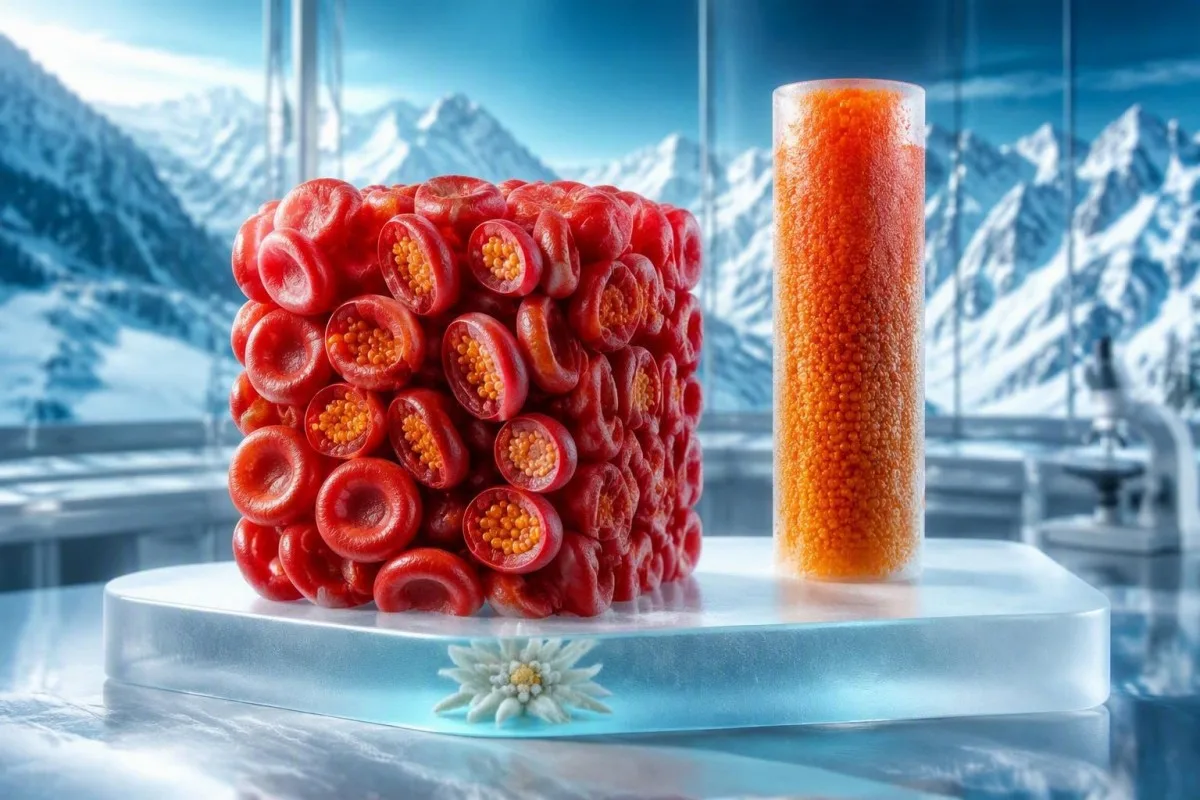
Hematocrit measures the share of blood volume occupied by red cells; hemoglobin measures their oxygen-carrying protein. They usually track together, but the exceptions can be clinically useful.


- Hematokryt is the percentage of whole-blood volume made up by red cells; typical adult ranges are about 36-46% for women and 41-53% for men.
- Hymoglobina is the oxygen-carrying protein concentration, commonly about 12.0-15.5 g/dL for non-pregnant women and 13.5-17.5 g/dL for men.
- The rule of three estimates hematocrit as roughly three times hemoglobin in g/dL; a larger gap can signal altered cell size, lipemia, cold agglutinins, or an analytical issue.
- Low hematocrit with normal hemoglobin often reflects macrocytosis, hydration, or a borderline calculation difference rather than clinically significant anemia.
- Przyczyny wysokiego hematokrytu include dehydration, altitude exposure, smoking-related hypoxia, sleep apnea, testosterone therapy, and less commonly polycythemia vera.
- Follow-up threshold is stronger when hemoglobin is persistently above 16.5 g/dL in men or 16.0 g/dL in women, especially with a raised hematocrit and low erythropoietin.
- Pilne objawy such as chest pain, fainting, new confusion, breathlessness at rest, black stools, or heavy ongoing bleeding need prompt in-person care regardless of a CBC number.
What hematocrit and hemoglobin actually measure
Hematocrit vs hemoglobin is a comparison of volume versus protein: hematocrit is the fraction of a tube of whole blood occupied by red cells, while hemoglobin is the grams of oxygen-binding protein per decilitre of blood. They commonly move in parallel because both depend on red-cell mass, but they are not interchangeable.
Most laboratories report hematocrit as a percentage and hemoglobin in g/dL. A hemoglobin of 14.0 g/dL and hematocrit near 42% is a conventional matched pair in an adult, although the laboratory’s own interval governs interpretation. Hematocrit may be measured after centrifugation or calculated from the red-cell count and mean cell volume, whereas modern analyzers measure hemoglobin photometrically after lysing cellular elements.
The practical distinction is oxygen delivery. Hemoglobin carries oxygen, while hematocrit influences viscosity and tells us how much space red cells take up; a person can therefore have a normal hemoglobin yet a slightly unusual hematocrit when red-cell size changes. For the broader CBC vocabulary, our guide to CBC components shows where MCV, MCH, and RDW fit.
As of September 14, 2026, I still see patients told they are “anemic” because one of these values is a fraction outside range. Dr. Thomas Klein’s approach is less dramatic: confirm whether hemoglobin is low for age, sex, pregnancy status, and altitude, then read hematocrit alongside MCV, RDW, reticulocytes, symptoms, and the previous CBC.
Why the same CBC contains both
A CBC reports both tests because each catches a different kind of mismatch. Hemoglobin is generally the more direct index for defining anemia, while hematocrit can add clues about fluid balance and red-cell volume.
Reference ranges and the useful rule of three
Adult hemoglobin is often approximately 12.0-15.5 g/dL in women and 13.5-17.5 g/dL in men, while hematocrit is commonly about 36-46% and 41-53%, respectively. A hematocrit near three times the hemoglobin value is a useful plausibility check, not a diagnosis.
The “rule of three” means hemoglobin 12 g/dL often pairs with hematocrit around 36%, and hemoglobin 15 g/dL with hematocrit around 45%. It becomes less reliable when MCV is very low or high, when triglycerides are markedly elevated, or when red cells agglutinate in a cold sample. I use it as a quick flag for asking the laboratory question, not as a substitute for the reported result.
WHO’s 2024 guideline defines anemia in non-pregnant women as hemoglobin below 12.0 g/dL and in men below 13.0 g/dL, with adjustments for pregnancy, smoking, and altitude. Hematocrit thresholds vary more by laboratory, which is one reason clinicians usually anchor anemia decisions to hemoglobin rather than a universal hematocrit cutoff (WHO, 2024).
Kantesti je Analizatōr podszukowań krwi sztucznyj inteligyncyje that checks hemoglobin, hematocrit, MCV, MCHC, and prior results as one CBC pattern rather than treating a red flag as a verdict. That pattern-first review is particularly helpful when different labs use slightly different intervals; see how sex-specific lab ranges differ.
Why the two values usually rise and fall together
Hemoglobin and hematocrit usually fall together in iron deficiency, blood loss, kidney-related anemia, and bone-marrow suppression because each reflects reduced circulating red-cell mass. They usually rise together when plasma volume contracts or red-cell production increases.
A 1-litre saline infusion can lower both hemoglobin and hematocrit within hours through dilution without destroying a single red cell. Conversely, vomiting, diarrhoea, fever, diuretics, or a hard endurance event with inadequate fluid replacement can concentrate both values temporarily. That is why I ask about fluid intake, recent illness, and timing before labeling a mildly high result as disease.
True anemia develops when red-cell production cannot keep pace with loss or destruction. Iron deficiency often first lowers ferritin and transferrin saturation, then reduces MCV and hemoglobin; hematocrit follows. Camaschella’s New England Journal of Medicine review explains why iron deficiency must be traced to intake, menstrual loss, gastrointestinal loss, absorption, or inflammation rather than simply treated with tablets (Camaschella, 2015).
A high hemoglobin plus high hematocrit deserves a different branch of reasoning. The high RBC count and dehydration guide explains why repeating a CBC after normal hydration can separate hemoconcentration from sustained erythrocytosis in many otherwise well adults.
Why hematocrit and hemoglobin can disagree
A meaningful hematocrit-hemoglobin mismatch usually points to altered red-cell size, altered plasma composition, or a measurement artifact rather than two unrelated illnesses. The fastest clue is whether MCV, MCHC, RDW, and the sample quality flags support the result.
Because calculated hematocrit equals red-cell count multiplied by MCV, unusually large cells can raise hematocrit relative to hemoglobin. Macrocytosis from vitamin B12 deficiency, folate deficiency, alcohol exposure, liver disease, hypothyroidism, or certain medicines may therefore make the ratio look “off” before hemoglobin becomes frankly low. An MCV above 100 fL warrants context, especially when RDW is also rising.
Very small cells can produce the opposite impression: a relatively low hematocrit with hemoglobin that is less reduced than expected. Iron deficiency and thalassemia trait commonly produce microcytosis, but ferritin, transferrin saturation, family history, and red-cell count distinguish the patterns better than MCV alone. Our low MCV follow-up guide lays out that decision point.
Laboratory artifacts are real. Severe lipemia may falsely increase measured hemoglobin, while cold agglutinins can distort red-cell count, MCV, and calculated hematocrit until the specimen is warmed and rerun. A mismatch that appears suddenly, with no clinical explanation, merits a repeat sample or laboratory review before extensive testing.
Low hematocrit with normal hemoglobin: common explanations
Low hematocrit with normal hemoglobin is most often a mild calculation or volume issue, but persistent discordance should prompt review of MCV, MCHC, red-cell count, and hydration. It does not automatically mean hidden bleeding or anemia.
A simple example is hemoglobin 13.2 g/dL with hematocrit 38% in an adult whose laboratory lower limit is 39%. If MCV is 102 fL and RDW is elevated, macrocytosis is more informative than the isolated hematocrit flag. In my clinic, I would review alcohol intake, thyroid function, liver enzymes, B12, folate, and medicines such as hydroxyurea, methotrexate, or antiseizure treatment rather than rush to iron.
Overhydration can lower hematocrit by expanding plasma volume, especially after intravenous fluids, pregnancy, endurance exercise, or compulsive water intake. A fall of 2-3 percentage points after a large fluid load can be physiological dilution; it should recover as fluid balance normalizes. Pregnancy requires pregnancy-specific intervals, because plasma volume expands more than red-cell mass.
Kantesti’s platforma do interpretacji wyników badań krwi AI flags low hematocrit with normal hemoglobin as a pattern to contextualize, not a diagnosis to self-treat. If iron markers are needed, compare ferritin with transferrin saturation using our przewodnik referencyjny badań żelaza and discuss the result with a clinician.
When both low values point to anemia
Low hemoglobin and low hematocrit together usually indicate anemia or dilution, and the next decisive tests are MCV, reticulocyte count, ferritin, kidney function, and a focused bleeding history. Symptoms and speed of change matter more than a single borderline value.
Hemoglobin below 8 g/dL often causes exertional breathlessness, tachycardia, dizziness, or chest discomfort, although chronic anemia can be tolerated better than an abrupt fall. A value below 7 g/dL is a common restrictive transfusion threshold for stable hospitalized adults, but active bleeding, heart disease, symptoms, and local protocols change that decision. This is hospital medicine, not a threshold for home management.
Reticulocytes show whether marrow response is appropriate. High reticulocytes with falling hemoglobin suggest blood loss or hemolysis; low or inappropriately normal reticulocytes suggest underproduction from iron deficiency, kidney disease, inflammation, B12/folate deficiency, medications, or marrow disorders. The przewodnik do liczby retikulocytōw explains how an immature reticulocyte fraction adds timing information.
Dr. Thomas Klein advises same-day assessment for low CBC values accompanied by fainting, breathlessness at rest, chest pain, black tarry stools, vomiting material that resembles coffee grounds, or heavy ongoing menstrual or gastrointestinal bleeding. Anemia itself is a finding; the underlying cause determines the safe next step.
High hematocrit causes: concentration, hypoxia, or overproduction
High hematocrit causes fall into three useful groups: reduced plasma volume, chronic low-oxygen signaling, and autonomous marrow overproduction. A repeat CBC when well hydrated separates many transient results from sustained erythrocytosis.
Dehydration is the commonest reversible explanation for a modest rise, particularly when urea, albumin, and urine specific gravity are also concentrated. Smoking, obstructive sleep apnea, chronic lung disease, cyanotic heart disease, high-altitude residence, and testosterone therapy can raise erythropoietin-driven red-cell production. Even a few nights of severe sleep-apnea hypoxia may complicate interpretation, though it rarely explains a dramatic isolated value alone.
Persistent hemoglobin above 16.5 g/dL in men or 16.0 g/dL in women meets one World Health Organization major criterion used in evaluating polycythemia vera. The diagnosis still requires clinical assessment and usually JAK2 mutation testing, erythropoietin level, and sometimes marrow evaluation; it cannot be made from hematocrit alone. Barbui et al. (2018) emphasize thrombosis prevention and risk-based treatment once a myeloproliferative neoplasm is confirmed.
For a deeper differential, read our high hematocrit causes article i polycythemia testing pathway. A persistent result is worth a routine appointment even when you feel completely well.
When an elevated result needs prompt medical attention
A high hematocrit needs urgent evaluation when it occurs with new neurologic symptoms, chest pain, shortness of breath, one-sided leg swelling, visual change, or a previous clot. The number alone does not predict danger perfectly, but hematocrit near or above 55% is not a result I would leave unreviewed.
Blood becomes more viscous as hematocrit rises, although the relationship is nonlinear and individual risk differs. In confirmed polycythemia vera, the CYTO-PV trial found fewer cardiovascular deaths and major thromboses when hematocrit was maintained below 45% than when it was allowed in the 45-50% range (Marchioli et al., 2013). That trial does not mean every person with dehydration needs venesection.
Headache, facial flushing, fatigue, and itch after a warm shower are sometimes reported in polycythemia vera, but they are nonspecific. More concerning is a new focal neurologic deficit, sudden severe headache, altered speech, collapse, or acute breathlessness; these require emergency services rather than a repeat test next week. Do not donate blood or start aspirin solely because an app or one CBC is high.
Kantesti AI uses trend analysis to distinguish a one-off concentration effect from a recurrent pattern, but our output is educational and cannot replace urgent assessment. Our medyczny ramowy system walidacyji describes why clinically significant flags are designed for follow-up, not self-diagnosis.
The CBC indices that explain the gap
MCV, MCHC, RDW, and the red-cell count often explain a hematocrit-hemoglobin disagreement better than either headline number. MCV measures average red-cell volume, MCHC estimates hemoglobin concentration inside cells, and RDW measures size variation.
An MCV below 80 fL is microcytosis in most adult laboratories, while an MCV above 100 fL is macrocytosis. Low MCV plus low ferritin strongly supports iron deficiency; low MCV with a relatively high red-cell count and normal iron stores makes thalassemia trait more plausible. Neither pattern should be inferred from hematocrit alone.
MCHC is normally roughly 32-36 g/dL in many laboratories. A genuinely high MCHC is uncommon and can occur with spherocytes, but cold agglutinins, sample issues, and lipemia are more frequent explanations for a surprising value. Our high MCHC interpretation guide explains why a smear or redraw may be more useful than anxiety.
RDW often rises early during iron deficiency and can temporarily increase after iron treatment as new cells differ in size from older cells. That mixed-cell population may make ratios untidy for several weeks, which is why a CBC trend and przewodnik po wzorcu RDW can be more informative than a snapshot.
Pregnancy, altitude, and training change interpretation
Pregnancy, high-altitude exposure, and endurance training can shift hematocrit and hemoglobin without representing the same disease process. The correct reference interval depends on physiology, timing, and whether the change is stable or progressive.
During pregnancy, plasma volume expands by roughly 40-50%, while red-cell mass rises less; hemoglobin and hematocrit commonly fall through dilution. WHO uses hemoglobin below 11.0 g/dL in the first and third trimesters and below 10.5 g/dL in the second trimester to define anemia, though local maternity pathways may vary. Ferritin is especially useful when anemia is suspected.
At altitude, lower oxygen pressure stimulates erythropoietin and raises hemoglobin over days to weeks. WHO specifically recommends altitude adjustment when interpreting anemia prevalence, and individual clinical care should also consider how long someone has lived or trained at elevation. A blood draw 24 hours after a mountain race can be more affected by dehydration than true acclimatization.
Endurance athletes may have “sports anemia,” meaning plasma-volume expansion lowers concentration measures despite normal or increased total red-cell mass. I usually pair CBC results with ferritin, transferrin saturation, diet, menstrual history, and training load; our dla sportowca wytrzymałościowego dotyczący badań krwi covers RED-S warning patterns.
Testosterone, smoking, and sleep apnea deserve specific questions
Testosterone therapy, tobacco exposure, and untreated obstructive sleep apnea can raise hemoglobin and hematocrit through different pathways, so a generic “high red cells” explanation is not enough. Medication timing and oxygen status are often more revealing than another iron panel.
Exogenous testosterone stimulates erythropoiesis, and many prescribing protocols intervene when hematocrit reaches 54% or rises rapidly from baseline. The exact response may include dose adjustment, route change, temporary cessation, or assessment for sleep apnea and other contributors; it should be managed by the prescribing clinician. Injectable formulations can produce larger peak-and-trough effects than some transdermal regimens.
Smoking can elevate carboxyhemoglobin and reduce oxygen delivery, which may stimulate erythropoietin over time. Pulse oximetry can look deceptively normal in carbon monoxide exposure because standard devices cannot reliably distinguish oxyhemoglobin from carboxyhemoglobin. That little detail is easy to miss in a remote review.
Kantesti je Narzędzie do analizy badań krwi oparte na AI that incorporates declared medicines and prior CBCs when it identifies a high-result pattern. If a new high result follows a medication change, record the dose, route, start date, smoking status, and sleep symptoms before your appointment; our slightly high hemoglobin guide can help organize the questions.
Pre-analytical and analyzer issues that mimic disagreement
Poor mixing, delayed processing, cold agglutinins, lipemia, and recent intravenous fluids can create a hematocrit-hemoglobin mismatch that is not biologically real. A laboratory comment, delta check, and repeat properly handled sample are often the safest first response.
CBC samples are collected in EDTA tubes, which must be adequately mixed and processed within the laboratory’s validated stability window. Cellular swelling with prolonged storage can raise MCV and calculated hematocrit, while hemolysis or turbidity can interfere with photometric hemoglobin methods. These are uncommon but matter when the result conflicts with the person in front of you.
A delta check compares a current value with prior results and alerts laboratories to abrupt, implausible movement. A hematocrit falling from 45% to 32% overnight without symptoms, fluid administration, bleeding, or an accompanying hemoglobin shift deserves verification before anyone pursues invasive testing. Our wyjaśnienie delta-check describes how this safety process works.
Dr. Thomas Klein has seen cold agglutinin cases where warming the sample corrected a bizarre MCV and hematocrit within the same day. The lesson is reassuring but not dismissive: unusual patterns should be confirmed, and genuine anemia or hemolysis still needs a clinician-led evaluation.
A practical follow-up plan for an unusual CBC pattern
A sensible follow-up plan starts by confirming the result, then uses the pattern to choose targeted tests rather than ordering everything. For mild, symptom-free abnormalities, repeat CBC timing is often 2-8 weeks depending on the suspected cause and clinical history.
For low hemoglobin or hematocrit, ask whether MCV is low, normal, or high. Low MCV often leads to ferritin and transferrin saturation; normal MCV may lead to reticulocytes, kidney function, CRP, and bleeding review; high MCV may lead to B12, folate, TSH, liver tests, medication review, and sometimes a blood film. A clinician should tailor this list to age and symptoms.
For high values, repeat the CBC when normally hydrated and not immediately after intense exercise, vomiting, diarrhoea, or a long flight. If elevation persists, clinicians commonly assess oxygen saturation, smoking/carbon monoxide exposure, sleep-apnea risk, testosterone or diuretic use, erythropoietin, and JAK2 testing where indicated. The erythropoietin result guide explains why a low level shifts concern toward autonomous marrow production.
Kantesti AI interprets hematocrit and hemoglobin through trends, indices, and linked results in about 60 seconds after a report upload. Our przewodnik po technologii AI explains the workflow, while your own clinician remains the right person to examine you and decide on testing.
What to bring to a clinician reviewing these results
The most useful appointment preparation is a timeline: prior CBCs, recent illnesses, hydration, altitude, exercise, menstrual or gastrointestinal loss, medicines, supplements, and family history. Those details often explain more than one extra decimal point on hematocrit.
Bring at least two prior CBCs when possible, including the laboratory reference ranges. A stable hematocrit of 48% over five years in a high-altitude resident is a different problem from a new rise from 42% to 52% in six months. The przewodnik po zmianach w badaniach krwi explains why normal biological variation can still move a result modestly.
Write down supplements, especially iron, B12, folate, testosterone-related products, diuretics, and high-dose zinc. Excess zinc can cause copper deficiency and anemia over time, while iron taken shortly before testing may alter serum iron without correcting underlying stores. Our zinc and copper anemia guide covers that less obvious connection.
Zawartość medyczna Kantesti jest przeglądana z uwzględnieniem wkładu naszego Rada Doradczo Medyczno, but no online interpretation can assess pallor, heart rate, oxygenation, spleen size, or active bleeding. If symptoms are substantial or the CBC changes quickly, seek in-person care rather than waiting for a perfect data set.
The CBC patterns most likely to warrant follow-up
Follow-up is most warranted for persistent low hemoglobin, a fast CBC change, high hemoglobin with high hematocrit, abnormal MCV or RDW, additional low cell lines, or symptoms that fit anemia, clotting, or bleeding. A single slight hematocrit deviation with normal hemoglobin and indices is often rechecked rather than treated.
A hemoglobin below 12.0 g/dL in a non-pregnant adult woman or below 13.0 g/dL in an adult man meets WHO anemia criteria and merits cause-focused evaluation when confirmed. The concern increases when MCV is below 80 fL or above 100 fL, RDW rises, platelets or white cells are also abnormal, or the result has changed materially from baseline. This is where a CBC becomes a pattern, not a list of flags.
Persistent hemoglobin above 16.0 g/dL in women or 16.5 g/dL in men, particularly with hematocrit above 48% or 49% respectively, warrants assessment for secondary erythrocytosis and occasionally polycythemia vera. Clinicians disagree on exactly when to initiate molecular testing in low-risk people, so context matters more than one cutoff. Symptoms, duration, smoking, oxygenation, and medication exposure refine the decision.
The bottom line from Dr. Thomas Klein: hematocrit versus hemoglobin is rarely a contest over which value is “right.” Hemoglobin usually defines anemia more directly; hematocrit and the indices explain why it happened. For safe trend review and source-aware interpretation, see Kantesti’s clinical standards.
Czynsto zadawane pytania
Czy hematokryt może być niski, gdy hemoglobina je normalno?
A tak. Nisko hematokryt ze srobnům hemoglobinům mož być jako MCV je změnynuto, plazmowo wolumen je rozšyřeny, abo rozdźyl je blisko laboratoire cut-off. Na přiklad hemoglobin 13,2 g/dL z hematokrytym 38% mož być klinicky mally, ale MCV nad 100 fL abo pod 80 fL změni dalši postup. Přeživajico nesgodność nětřeba przeglonduć z krwinek čerwonych ličba, MCV, MCHC, RDW, hydratacija historija, a předchozi CBCs. To samo na sebje nedokažy krwotok abo zelazo deficit.
Co je festowniyjosze dlō anemie, hematokryt abo hemoglobin?
Hemoglobina je spravidla preferowany poměr ku definowanju anemije, bo bezpośrednio pomjery stężenie białka nośnikowego tlenu. WHO 2024 cutoffs definiyruja anemije na pôd 12.0 g/dL u niź pregnantnych bab a pôd 13.0 g/dL u chopów, z osobnyma dostosowaniami dla ciąży. Hematokryt je yszcze cenný, bo ôdzwierciadlo objętość krwinek czercwonych a może ôdkryć efekty rozcieńczeniowo abo wielkoście krwinek. Kliniycy interpretujōm oba razem z MCV a retikulocyty.
Co je przyczynom wysokiego hematokrytu i hemoglobiny razem?
Wysoki hematokryt i hemoglobina razem nojczyńści tworza sie z dehydratacyje, palyni, bezdechů we śnie, chornicznego ekspozycyje na mało tlenu, wysokościůw, abo terapije testosterynowej. Utrzimujoąca sie hemoglobina powyziyj 16.5 g/dL u chopůw abo 16.0 g/dL u babyń może wymagać oceny erytrocytozy, ze ôkresym stanu tlenu, erytropoetiny, a czasym testu JAK2. Policycytymijo vera je mńiij czōsto, ale klinicznie ważno, bo ryzyko skrzepů rośnie, kej hematokryt zostaje wysoki. Powtōrzony CBC kej je normale hydratowany je często piyrszym krokiym, kej ni ma symptōmōw.
Is hematocrit three times hemoglobin?
Hematocrit is often approximately three times hemoglobin when hemoglobin is expressed in g/dL, so hemoglobin 14 g/dL commonly pairs with hematocrit near 42%. This is an estimation rule rather than a normality test. Microcytosis, macrocytosis, cold agglutinins, lipemia, and analyzer methods can make the relationship less exact. A persistent gap should prompt a review of MCV, MCHC, RDW, and sample quality.
At what hematocrit level should I seek urgent care?
A hematocrit around 55% or higher should receive prompt medical review, especially when it is persistent or paired with hemoglobin above 16.5 g/dL in men or 16.0 g/dL in women. Seek emergency care immediately for chest pain, sudden breathlessness, fainting, one-sided weakness, new speech difficulty, severe headache, or visual loss regardless of the exact hematocrit. A lower value can still be urgent if it has risen rapidly or follows a clotting event. Do not self-treat a high result with aspirin or blood donation without medical advice.
Can dehydration raise hematocrit but not hemoglobin?
Dehydration usually raises both hematocrit and hemoglobin because less plasma concentrates the circulating red-cell components. Small mismatches can occur because hematocrit depends partly on red-cell count and MCV, while hemoglobin is measured by a different method. Vomiting, diarrhoea, diuretics, fever, and intense exercise can create short-lived concentration effects. Repeating the CBC after normal fluid intake and recovery is often more informative than acting on a single test.
Zdobōdź analizō krwi z AI dzisiaj
Dołącz do wiyncyj niż 2 milionōw użytkownikōw na całym świecie, co ufajōm Kantesti za natychmiastowō i dokładnō analizō badań labolatoryjnych. Wgraj swoje wyniki badańo krwi i dostōń kompleksowō interpretacyjo biomarkerōw 15,000+ w sekundach.
📚 Publikacyje badawcze z referencjami
Klein, T., Mitchell, S., & Weber, H. (2026). Urobilinogen in Urine Test: Complete Urinalysis Guide 2026. Zenodo. https://doi.org/10.5281/zenodo.18226379. ResearchGate: https://www.researchgate.net/ Academia.edu: https://www.academia.edu/. Kantesti AI Medycynne Badań.
Klein, T., Mitchell, S., & Weber, H. (2026). Iron Studies Guide: TIBC, Iron Saturation & Binding Capacity. Zenodo. https://doi.org/10.5281/zenodo.18248745. ResearchGate: https://www.researchgate.net/ Academia.edu: https://www.academia.edu/. Kantesti AI Medycynne Badań.
📖 Zewnętrzne medyczne referencyje
Światowa Organizacyja Zdrowio (2024). Wytyczne dot. progōw odcięcia dla hemoglobiny, coby zdefiniować anemię u jednostek i w populacyjach. Światowa Organizacyja Zdrowio.
⚕️ Uchylynie ôd ôdpowiedzialności medycznyj
Ten artykuł je wyłōncznie do celōw edukacyjnych i nie stanowi porady medyczno. Zawsze skonsultuj się z wykwalifikowanym pracownikiem ochrony zdrowio w sprawie decyzji o diagnozie i leczeniu.
Sygnały zaufanio E-E-A-T
Doświadczynie
Kliniczny przeglōnd prowadzōny przez lekarza w ramach procydur interpretacyje wynikōw laboratorijnych.
Ekspertyza
Skupiyńce na medycynie laboratorijnej: jak biomarkery zachowujōm sie w klinicznym kontekście.
Autorytetność
Napisane przez dr. Thomasa Kleina z przeglōndym przez dr. Sarah Mitchell i prof. dr. Hansa Webera.
Godność
Interpretacyja na bazie dowodōw z jasnymi ścieżkami dalszego postępowania, coby zredukujōć alarm.