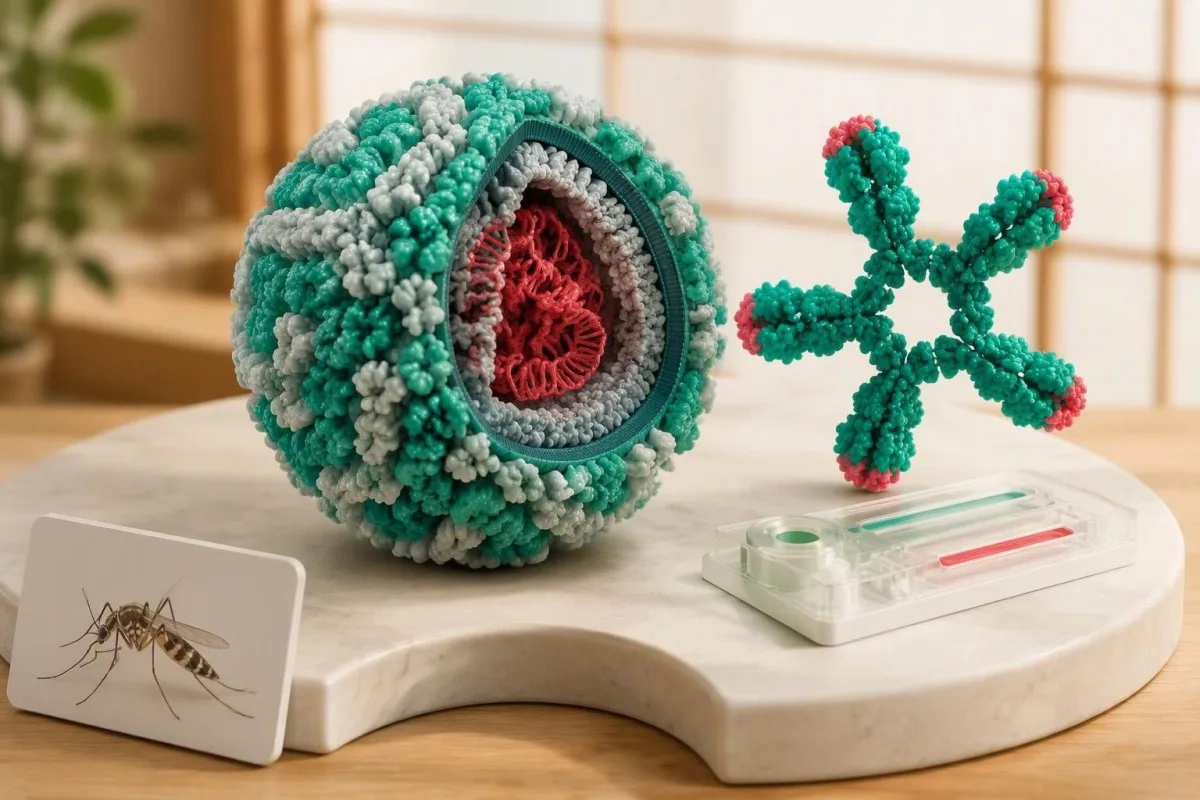
ผลตรวจ Zika IgM เป็นบวกไม่ได้ยืนยันการติดเชื้อ: ปฏิกิริยาข้ามที่เกี่ยวข้องกับไข้เดงกีหรือแอนติบอดีที่คงอยู่อาจเป็นสาเหตุได้ ผล PCR ขึ้นอยู่กับช่วงเวลาที่เก็บตัวอย่าง; ในระหว่างตั้งครรภ์ควรประเมินทางคลินิกตามประวัติการสัมผัสเชื้อ และตรวจยืนยันที่ห้องปฏิบัติการอ้างอิงเมื่อมีข้อบ่งชี้.

ประเด็นสำคัญ
- Zika IgM มักเริ่มตรวจพบได้ในช่วงสัปดาห์แรกของการป่วย และอาจคงอยู่หลายเดือนหรือนานกว่านั้น; ผลบวกไม่สามารถระบุเวลาที่ติดเชื้อได้อย่างน่าเชื่อถือ.
- การเกิดปฏิกิริยาข้าม ร่วมกับไข้เดงกีและฟลาวิไวรัสชนิดอื่นอาจทำให้ผลตรวจแอนติบอดีต่อซิกาตอบสนอง ทั้งที่ยังไม่ได้ยืนยันการติดเชื้อซิกา.
- ช่วงเวลาที่เหมาะสมสำหรับ PCR วัดระยะเวลาโดยหลักนับจากเริ่มมีอาการ ไม่ใช่เพียงจากวันที่ถูกยุงกัด; โดยทั่วไปจะให้ความสำคัญกับการตรวจซีรัมภายใน 7 วันแรกในผู้ป่วยที่มีอาการและไม่ได้ตั้งครรภ์.
- การตรวจการตั้งครรภ์ อาจรวมถึงการตรวจระดับโมเลกุลได้นานถึง 12 สัปดาห์หลังเริ่มมีอาการในแนวทางการสัมผัสเชื้อบางกรณีที่คัดเลือกไว้ แต่ไม่ได้รับประกันว่าจะตรวจพบได้ตลอดช่วงเวลาดังกล่าว.
- PCR เป็นลบ หมายถึงไม่พบ RNA ในสิ่งส่งตรวจนั้น; ไม่ได้ตัดการติดเชื้อที่อยู่นอกช่วงเวลาที่ชุดตรวจสามารถตรวจพบได้อย่างมีประสิทธิภาพ.
- การยืนยันด้วย PRNT อาจช่วยชี้แจงผลแอนติบอดี แต่การสัมผัสฟลาวิไวรัสในอดีตอาจทำให้ผลตรวจการทำให้เป็นกลางทั้งต่อซิกาและไข้เดงกีเป็นบวก.
- ความน่าจะเป็นของผลบวกปลอม เพิ่มขึ้นเมื่อโอกาสติดเชื้อก่อนตรวจต่ำ; ความจำเพาะของชุดตรวจเพียงอย่างเดียวไม่ได้บอกความน่าจะเป็นที่ผลตรวจของคุณถูกต้อง.
- การติดตามระหว่างตั้งครรภ์ ควรจัดให้มีโดยเร็วเมื่อผลตรวจตอบสนองและมีประวัติสัมผัสเชื้อที่เกี่ยวข้อง; ผลแอนติบอดีของมารดาเพียงอย่างเดียวไม่สามารถยืนยันการติดเชื้อในทารกในครรภ์ได้.
ผลตรวจซิกาที่เป็นบวกยืนยันอะไรได้จริงหรือ?
ผลตรวจ Zika IgM เป็นบวกบ่งชี้ว่ามีปฏิกิริยาของแอนติบอดี ไม่ใช่การยืนยันการติดเชื้อ Zika โดยอัตโนมัติ. ผล PCR ที่ผ่านการตรวจสอบความถูกต้องและเป็นบวกให้หลักฐานโดยตรงมากกว่า เพราะตรวจพบ RNA ของไวรัส อย่างไรก็ตาม การตรวจ 2 ประเภทนี้ไม่มีประเภทใดเพียงอย่างเดียวที่ยืนยันการติดเชื้อในทารกในครรภ์หรือทำนายผลที่จะตามมาได้.
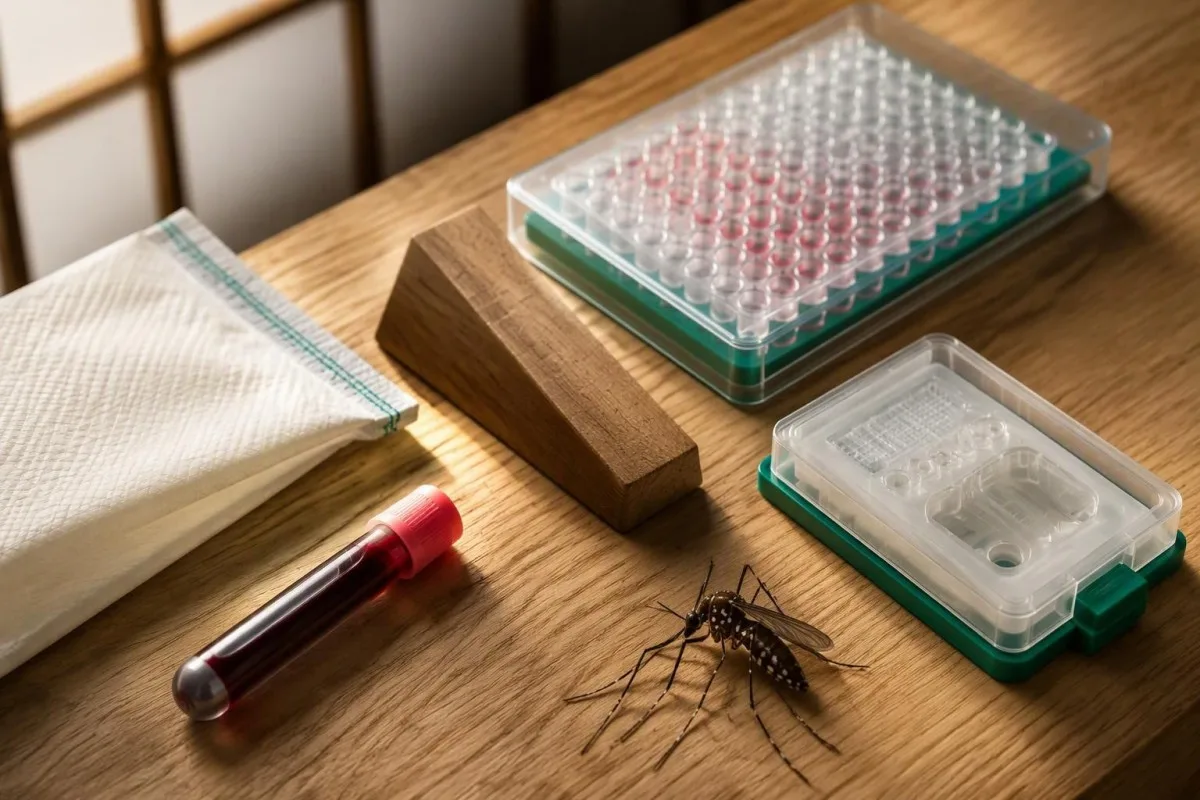
คำว่าผลบวกอธิบายเกณฑ์การตัดสินของการตรวจ ไม่ใช่การวินิจฉัยที่ครบถ้วน สำหรับบุคคล 1 คนที่เพิ่งเดินทาง มีอาการที่สอดคล้องกัน และไม่เคยสัมผัสเชื้อเดงกีมาก่อน ผลตรวจแอนติบอดีที่มีปฏิกิริยาย่อมมีความหมายต่างจากผลเดียวกันในผู้ที่ไม่มีประวัติสัมผัสเชื้อที่เป็นไปได้และเคยติดเชื้อฟลาวิไวรัสหลายครั้ง.
ผลตรวจระดับโมเลกุลที่ตรวจพบเชื้อควรได้รับการติดตามทางคลินิก ซึ่งรวมถึงการตรวจยืนยันเมื่อแนวทางของห้องปฏิบัติการหรือหน่วยงานสาธารณสุขกำหนด การปนเปื้อน การสลับสิ่งส่งตรวจ และการเพิ่มปริมาณสารพันธุกรรมที่อยู่ในระดับก้ำกึ่งพบได้น้อยแต่เป็นไปได้ ผลลบจากสิ่งส่งตรวจอีก 1 ชิ้นไม่ได้ลบล้างผลบวกที่ถูกต้องจากสิ่งส่งตรวจก่อนหน้าโดยอัตโนมัติ.
Kantesti เป็นเครื่องวิเคราะห์ผลตรวจเลือดด้วย AI ที่ช่วยอธิบายความแตกต่างระหว่างการมีปฏิกิริยาของแอนติบอดีตามรายงานกับการตรวจพบเชื้อระดับโมเลกุล แทนที่จะถือว่าสัญญาณผลบวก 1 รายการเป็นการวินิจฉัย ข้อมูล หน้าเกี่ยวกับองค์กรของเรา อธิบายบทบาทของเรา ส่วนการยืนยันยังคงเป็นความรับผิดชอบทางคลินิกและห้องปฏิบัติการ.
เริ่มจากระบุรายละเอียด 3 อย่าง ได้แก่ ชื่อการตรวจที่แน่นอน ชนิดของสิ่งส่งตรวจ และวันที่เก็บตัวอย่าง คู่มือของเราเกี่ยวกับ ผลตรวจแอนติบอดีเป็นบวก อธิบายว่าเหตุใดการตรวจคัดกรอง หลักฐานการสัมผัสเชื้อในอดีต และหลักฐานยืนยันการติดเชื้อในปัจจุบันจึงเป็นหมวดหมู่ที่แยกจากกัน.
ผล Zika IgM เป็นบวกหมายความว่าอย่างไร: การติดเชื้อเมื่อไม่นานมานี้หรือแอนติบอดีจากการติดเชื้อในอดีต?
ความหมายของผล Zika IgM เป็นบวกขึ้นอยู่กับช่วงเวลา การสัมผัสเชื้อ และความจำเพาะของการตรวจ. โดยทั่วไป IgM เริ่มตรวจพบได้ในช่วงสัปดาห์แรกของการป่วย แต่การคงอยู่เป็นเวลาหลายเดือนหรือนานกว่านั้นทำให้ผลบวกเพียงครั้งเดียวไม่สามารถพิสูจน์ได้ว่าการติดเชื้อเกิดขึ้นระหว่างการตั้งครรภ์ครั้งใดครั้งหนึ่งหรือภายใน 2 สัปดาห์ที่ผ่านมา.
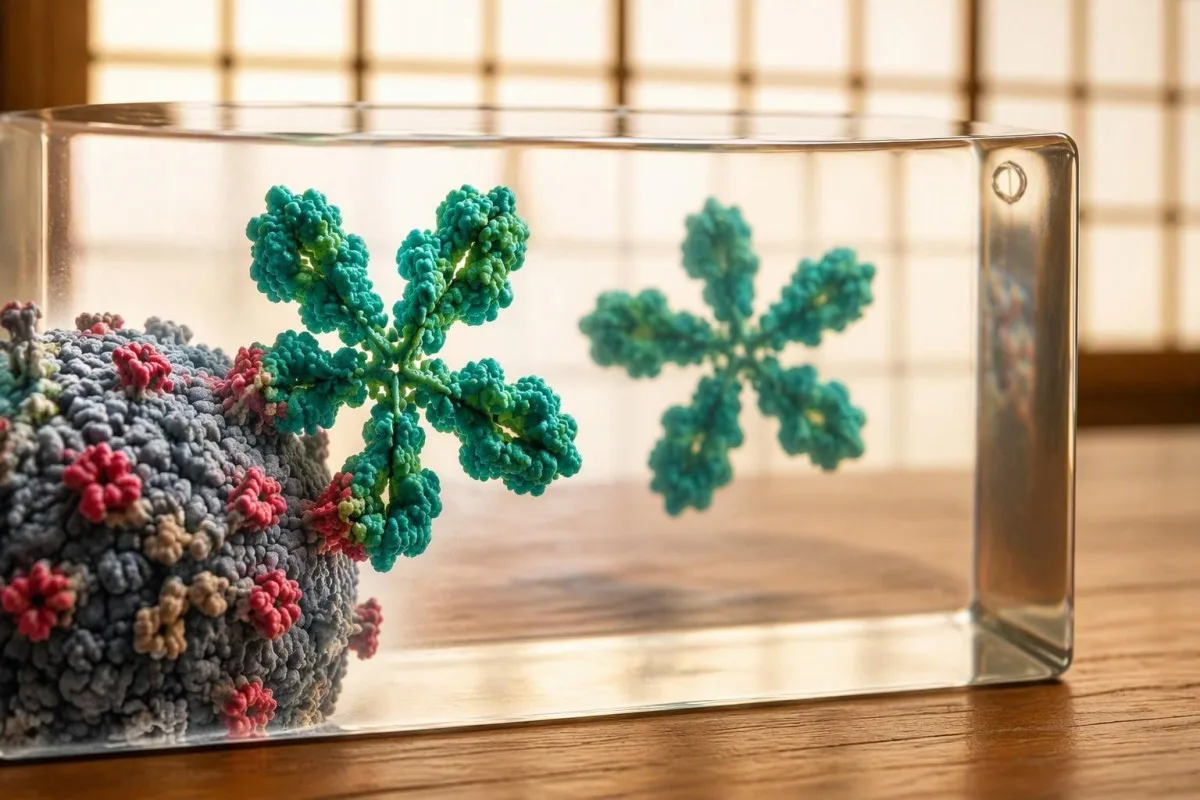
มักอธิบายว่า IgM เป็นแอนติบอดีระยะแรก แต่การปรากฏขึ้นเร็วไม่ได้หมายความว่าจะหายไปอย่างรวดเร็ว แนวทางการวินิจฉัยจาก Sharp et al. (2019) เน้นย้ำว่าอาจตรวจพบ Zika IgM ได้นาน ดังนั้นผลตรวจที่ได้ 6 เดือนหลังเดินทางจึงอาจเชื่อมโยงกับอาการผื่นหรือไข้ระลอกใหม่ได้ยาก.
Zika-specific IgM และ IgM รวมในซีรัมเป็นการวัด 2 อย่างที่แตกต่างกัน โดยอาจรายงาน IgM รวมเป็น mg/dL หรือ g/L ขณะที่การตรวจ Zika อาจรายงานเป็นดัชนี อัตราส่วน หรือผลแปลความเชิงคุณภาพ ระดับ IgM รวมที่สูงขึ้นไม่สามารถใช้วินิจฉัย Zika ได้ ดังที่ ผลลัพธ์อิมมูโนโกลบูลินเป็นตัวนำทาง อธิบายไว้.
ดัชนีแอนติบอดีไม่ใช่ความเข้มข้นของไวรัส ในทางสมมติ ดัชนี 3.0 เทียบกับ 1.5 จากการตรวจชนิดเดียวกันอาจแสดงปฏิกิริยาทางวิเคราะห์ที่แรงกว่า แต่ค่าใดค่าหนึ่งก็ไม่สามารถแปลงเป็นจำนวน RNA copies/mL เปอร์เซ็นต์ความเสี่ยงต่อผลกระทบต่อทารกในครรภ์ หรือจำนวนวันนับจากการสัมผัสเชื้อได้.
ผล Zika IgG เป็นการเพิ่มข้อมูลอีกชั้นหนึ่ง ไม่ใช่คำตอบที่ใช้ได้กับทุกกรณี แม้ IgM และ IgG จะมีปฏิกิริยาทั้งคู่จากการเก็บตัวอย่าง 1 ครั้ง การเกิดปฏิกิริยาข้ามและการสัมผัสเชื้อฟลาวิไวรัสในอดีตก็อาจทำให้ระบุช่วงเวลาได้ไม่น่าเชื่อถือ ให้ยึดตามคำอธิบายผลการตรวจของห้องปฏิบัติการ แทนการสันนิษฐานว่าค่าแอนติบอดีที่สูงกว่าหมายถึงอาการป่วยที่รุนแรงกว่า.
เหตุใดไข้เดงกีและฟลาวิไวรัสชนิดอื่นจึงทำให้เกิดปฏิกิริยาข้าม
การตรวจแอนติบอดีต่อ Zika อาจเกิดปฏิกิริยากับแอนติบอดีที่สร้างขึ้นเพื่อต่อต้านเดงกีและฟลาวิไวรัสชนิดอื่น เนื่องจากไวรัสเหล่านี้มีลักษณะของแอนติเจนร่วมกัน. เดงกีเป็นกรณีการเกิดปฏิกิริยาร่วมที่เกี่ยวข้องทางคลินิกมากที่สุดในพื้นที่ท่องเที่ยวหลายแห่ง การสัมผัสฟลาวิไวรัสมากกว่า 1 ชนิดในอดีตก็อาจทำให้การตรวจยืนยันแอนติบอดีแยกแยะได้ไม่ชัดเจน.

การตรวจแอนติบอดีตรวจจับการจับกับแอนติเจนของไวรัสบางชนิดที่เลือกไว้ ไม่ได้ระบุเอกลักษณ์ทั้งหมดของไวรัส หากแอนติบอดีจดจำลักษณะพื้นผิวที่ใช้ร่วมกัน การตอบสนองทางภูมิคุ้มกันที่แท้จริงต่อเดงกี 1 ครั้งอาจทำให้เกิดปฏิกิริยาในการตรวจ Zika ได้ นั่นคือการเกิดปฏิกิริยาข้ามทางชีววิทยา ไม่ใช่หลักฐานว่าห้องปฏิบัติการจัดการสิ่งส่งตรวจผิดพลาด.
การฉีดวัคซีนไข้เหลืองหรือไข้สมองอักเสบเจแปนอาจทำให้การตรวจซีรั่มวิทยาสำหรับฟลาวิไวรัสบางชนิดซับซ้อนขึ้น โดยขึ้นอยู่กับแอนติเจนและวิธีตรวจ แจ้งชื่อวัคซีนและวันที่ฉีดแก่แพทย์ รวมถึงวัคซีนที่ฉีดเมื่อ 5 หรือ 10 ปีก่อน แทนการสันนิษฐานว่ามีเพียงวัคซีนที่ฉีดเมื่อไม่นานมานี้เท่านั้นที่สำคัญ ห้องปฏิบัติการอ้างอิงจะพิจารณาว่าประวัติใดมีผลต่อการแปลผล.
ไวรัสเวสต์ไนล์อยู่ในวงศ์ไวรัสเดียวกันในระดับกว้างกว่า ส่วนชิคุนกุนยาไม่ใช่ คำอธิบายของเราเกี่ยวกับ การยืนยันแอนติบอดีต่อไวรัสเวสต์ไนล์ กล่าวถึงความกำกวมที่เกี่ยวข้อง แต่การแพร่ระบาดร่วมกันของโรคที่มียุงเป็นพาหะ 2 โรคไม่ได้ยืนยันว่าการตรวจแอนติบอดีของทั้งสองโรคจะเกิดปฏิกิริยาข้ามกันเสมอไป.
การสัมผัสฟลาวิไวรัสซ้ำหลายครั้งอาจทำให้การตอบสนองของแอนติบอดีชนิดยับยั้งฤทธิ์กว้างขึ้นผ่านความจำทางภูมิคุ้มกัน Sharp et al. (2019) อธิบายเหตุผลที่การจำแนกผู้ที่เคยติดเชื้อเดงกี 2 ครั้งอาจยังทำได้ยาก แม้หลังการทดสอบการทำให้ไวรัสเป็นกลางแล้ว การแปลผลขั้นสุดท้ายที่เหมาะสมอาจเป็นการติดเชื้อฟลาวิไวรัสที่ยังไม่ทราบชนิดแน่ชัด ไม่ใช่การยืนยัน Zika.
ผลตรวจซิกาเป็นบวกลวงมีโอกาสมากน้อยเพียงใด?
The probability that a positive Zika antibody result is false depends on both assay performance and the chance of infection before testing. There is no defensible universal percentage for every laboratory, traveler or pregnancy; even a test with 95% specificity can produce mostly false positives in a low-prevalence group.
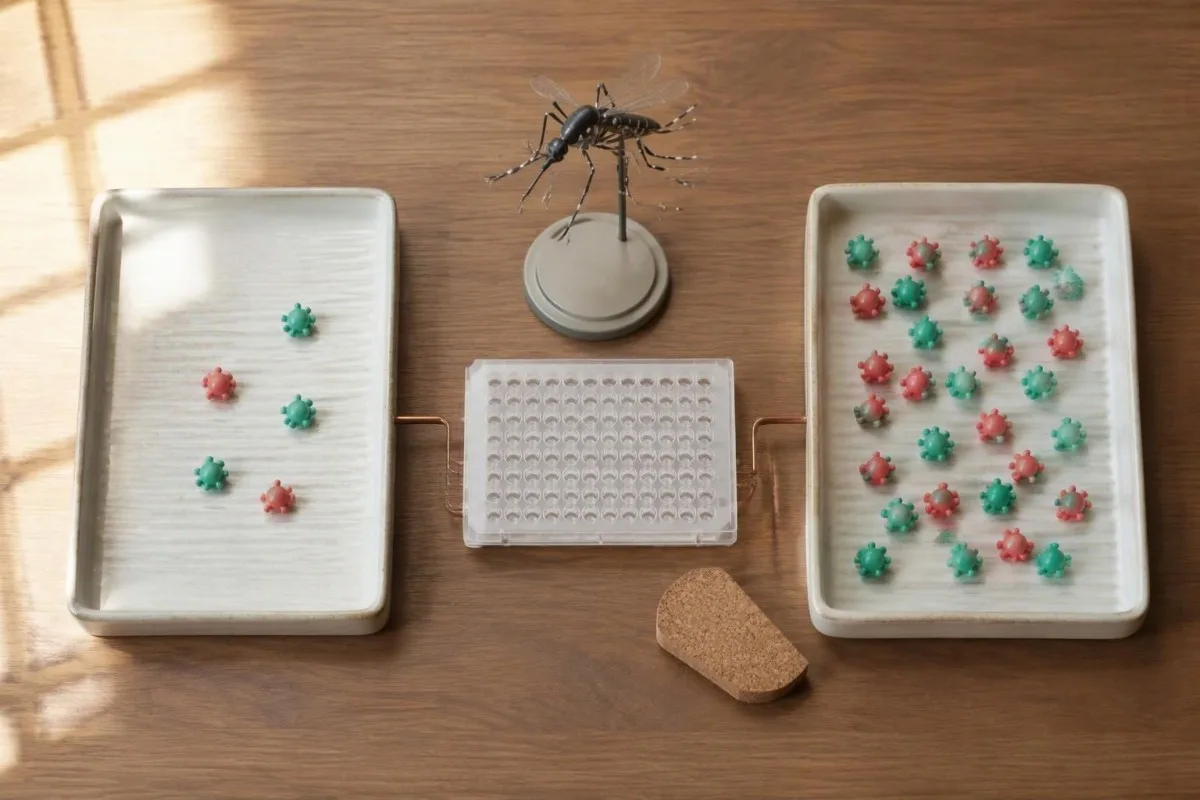
Consider a clearly hypothetical assay with 90% sensitivity and 95% specificity used in 10,000 people, of whom 1% truly have the target condition. It would yield approximately 90 true positives and 495 false positives, so only 90 of 585 positive results, or 15.4%, would represent the target condition.
Now keep those hypothetical assay characteristics but increase the underlying prevalence to 10%. Approximately 900 true positives and 450 false positives would result, giving a positive predictive value of 66.7%; the test has not improved, but the tested population has changed.
Improving specificity also matters: at 1% prevalence, a hypothetical assay with 90% sensitivity and 99% specificity would produce 90 true positives and 99 false positives. Its positive predictive value would still be only 47.6%; none of these figures is a measured performance estimate for a particular Zika assay.
Persistent antibodies from a genuine old Zika infection are not necessarily an analytically false result, although interpreting them as a new infection would be wrong. Our discussion of reactive hepatitis A IgM illustrates a similar distinction: 1 positive antibody finding can be accurate analytically yet misleading clinically.
ความแม่นยำของการตรวจ Zika PCR ขึ้นอยู่กับช่วงเวลาที่ตรวจพบ
Zika PCR test accuracy is highest when an appropriate specimen is collected while viral RNA remains detectable. For symptomatic nonpregnant patients, serum molecular testing is commonly prioritized within the first 7 days of illness; a later negative test may reflect falling RNA rather than absence of earlier infection.
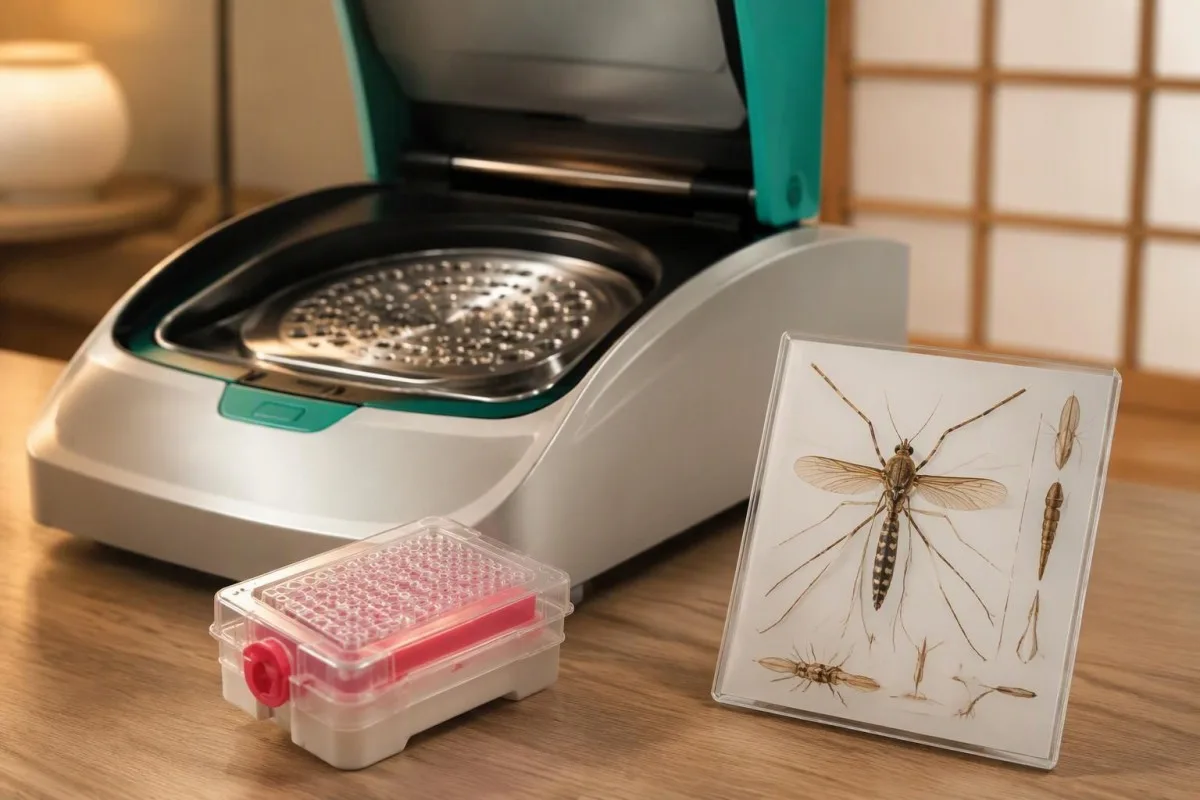
Analytical sensitivity describes how little RNA an assay can detect under validated conditions; clinical sensitivity describes how often it identifies infected people in practice. A very low detection limit cannot rescue a specimen collected 3 weeks after RNA has cleared, and there is no single clinical sensitivity percentage that applies across all collection times.
Count the molecular-testing window from symptom onset when symptoms are present, not automatically from the mosquito bite or flight home. Zika symptoms generally begin 3–14 days after exposure, so a specimen taken 7 days after a bite might fall before, during or after the most useful serum-testing period.
Some pregnancy pathways allow molecular testing up to 12 weeks after symptom onset because RNA detection can be prolonged. This is an eligibility window for selected testing strategies, not a promise of 12 weeks of reliable detection; exposure geography, symptoms, specimen choice and public-health advice determine the actual testing plan.
Urine can complement serum testing when the assay is validated for urine, but it is not a guaranteed longer-lasting specimen. The broader principle also appears in our PCR window-period guide: a negative molecular result from 1 body site cannot be interpreted without its collection timing.
วันที่ใดบ้างที่สำคัญเมื่อผล PCR และ IgM ไม่ตรงกัน?
Discordant Zika results should be interpreted using at least 2 clocks: the exposure timeline and the symptom timeline. Add the specimen collection date to both; PCR-negative, IgM-positive findings can reflect late collection, persistent antibodies or cross-reactivity, while early PCR-positive, IgM-negative findings can precede antibody development.

In the prospective cohort reported by Paz-Bailey et al. in the New England Journal of Medicine (2018), estimated median times to loss of detectable RNA were 14 days in serum and 8 days in urine. These estimates came from a selected cohort with confirmed infection; they are not universal cutoffs for excluding infection in an individual patient.
For a hypothetical traveler tested on illness day 3, detected RNA with negative IgM can fit an early immune response. Testing both Zika and dengue through the appropriate pathway matters because the illnesses overlap; our discussion of PCR and antibody disagreement explains why discordance does not automatically indicate laboratory error.
Imagine instead that the first specimen was collected on illness day 21 and shows negative PCR with reactive IgM. That pattern cannot distinguish recent Zika from another flavivirus response or persistent antibodies without additional context; when indicated, a clinician may arrange a later specimen, often around 10–14 days after the first, using laboratory-specific instructions.
At Kantesti, we encourage recording collection dates separately from report-release dates because a 5-day reporting delay does not extend the biological detection window. Our คู่มือไทม์ไลน์การตรวจเลือด explains this distinction; ongoing exposure may also prevent assignment of a single meaningful last-exposure date.
วิธีอ่านผลตรวจซิกาที่พบเชื้อ ก้ำกึ่ง และใช้ไม่ได้
Detected, not detected, equivocal and invalid are different laboratory conclusions. A detected PCR identifies RNA in the tested specimen; not detected means the signal was absent or below the assay threshold, while an invalid result means the test did not produce a usable answer and may require a second specimen.
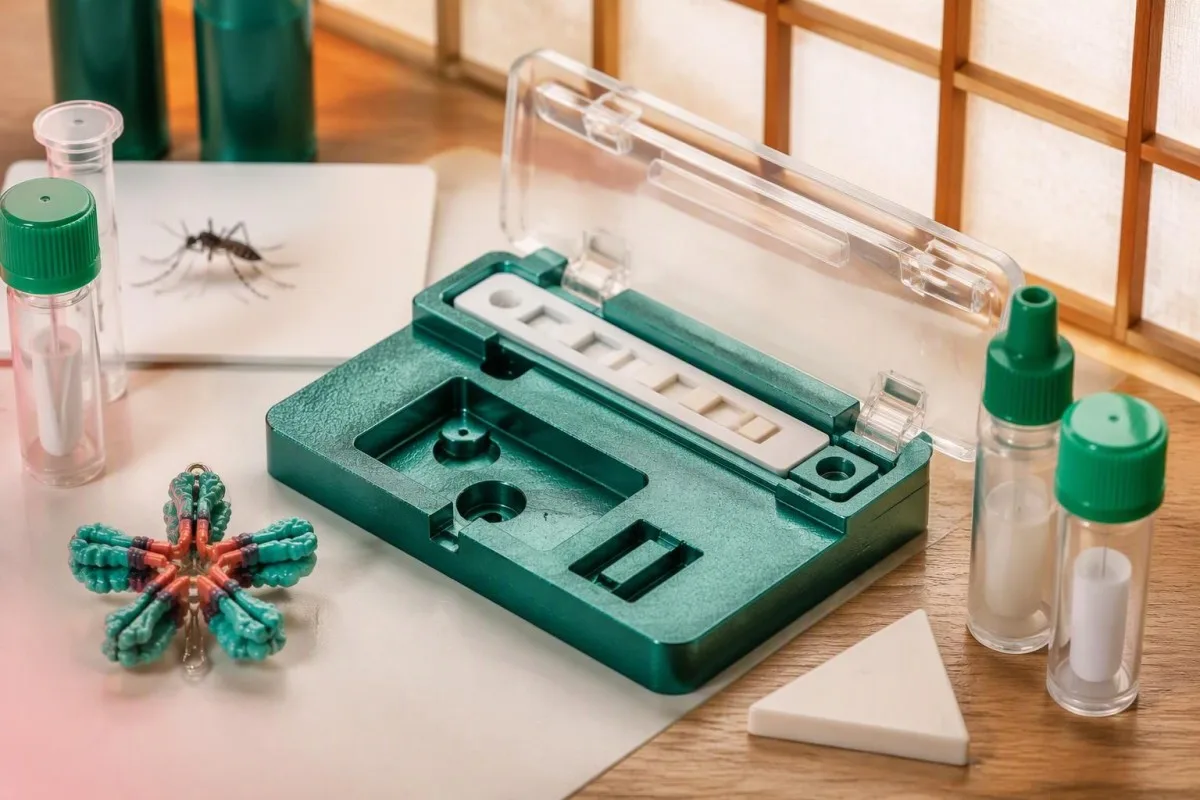
An equivocal antibody result falls into the assay's uncertainty zone, which varies by laboratory and test design. A hypothetical index of 1.0 cannot be called positive or negative without that assay's reference intervals; our guide to ผลเชิงคุณภาพเทียบกับผลเชิงปริมาณ explains why a number and its interpretation must stay together.
PCR cycle threshold, when reported, describes amplification behavior rather than a standardized severity score. A hypothetical Ct of 35 on 1 instrument cannot be directly compared with Ct 35 on another assay, and it cannot reliably predict fetal effects, contagiousness or the precise day on which infection began.
An inhibited or invalid PCR is not a negative PCR. Problems involving extraction, specimen handling or amplification controls can require reprocessing or recollection; if the original specimen was collected on illness day 5, a replacement collected on day 12 must be interpreted at its own later biological time point.
Keep the complete report, including 4 often-overlooked fields: specimen source, assay name, collection date and interpretive comments. A cropped photograph showing only a red positive flag can hide a presumptive designation or a pending confirmatory test, making both clinical review and any automated explanation less reliable.
PRNT หรือการตรวจระดับโมเลกุลซ้ำมีประโยชน์เมื่อใด?
Confirmatory testing helps when a reactive Zika screen needs virus-specific clarification or an unexpected molecular result needs verification. Plaque reduction neutralization testing, or PRNT, measures functional neutralizing antibodies; however, responses against 2 or more flaviviruses can prevent PRNT from identifying which virus caused the original immune response.

Some reference laboratories use PRNT90, meaning the dilution that reduces plaque formation by 90%. In established CDC interpretive schemes, a Zika neutralizing titer of at least 1:10 with negative dengue neutralization can support Zika-specific classification; the complete algorithm, antibody screening result and laboratory instructions still matter.
If both Zika and dengue neutralizing titers are at least 1:10, the result may remain consistent with an unspecified flavivirus infection. A 4-fold difference between titers is not universally decisive after previous flavivirus exposures, so patients should not calculate their own confirmation rule from two numbers.
Repeating an unexpected positive NAAT may involve a new extraction from the original specimen, a second target or another specimen, depending on the assay and public-health protocol. This is not the same as simply rerunning 1 antibody screen; our antibody confirmation guide discusses why independent confirmation is more informative than repeated screening.
Kantesti is an AI lab test interpretation service that explains laboratory wording without converting 1 presumptive result into a confirmed diagnosis. Our ข้อมูลการตรวจสอบความถูกต้องและการกำกับดูแล describes evaluation boundaries; no interpretation tool can make PRNT reliably date infection when the underlying antibody biology cannot do so.
เมื่อใดที่การตั้งครรภ์ควรได้รับการประเมินจากผู้เชี่ยวชาญ
Pregnancy warrants prompt clinician assessment when possible Zika exposure accompanies compatible symptoms, reactive testing or concerning prenatal findings. Stable patients do not usually need emergency care solely because of 1 positive IgM result, but maternal-fetal medicine, infectious-disease or public-health input may be needed to choose testing and follow-up.

The key question is whether infection could have occurred during pregnancy, not simply whether an antibody is present today. The CDC pregnancy guidance by Oduyebo et al. (2017) explains how persistent IgM and falling transmission rates complicate screening; a reactive result at 10 weeks of pregnancy may still reflect exposure before conception.
Symptoms are not required for fetal risk assessment because maternal Zika infection can be asymptomatic. Conversely, 1 episode of fever or rash is not specific to Zika; a specialist weighs travel destination, mosquito exposure, sexual exposure, dates and alternative diagnoses rather than using symptoms alone to label the pregnancy.
Bring at least 4 dates to the appointment: the pregnancy dating estimate, travel or exposure dates, symptom onset and specimen collection. Our discussion of ผลตรวจท็อกโซพลาสมาในระหว่างตั้งครรภ์ explains a shared counseling principle: maternal antibodies do not automatically prove a new infection during pregnancy.
Routine Zika IgM screening is not appropriate for every asymptomatic pregnancy, especially where pretest probability is low and antibody persistence would create ambiguity. Similar timing difficulties arise with รูปแบบแอนติบอดี CMV ที่คุ้นเคย, but the diagnostic algorithms are different; do not transfer 1 virus's avidity or confirmation rules to another.
อัลตราซาวนด์และการตรวจทารกในครรภ์ช่วยยืนยันอะไรได้บ้าง?
Prenatal ultrasound assesses fetal development; it does not confirm or exclude maternal Zika infection. For pregnancies with confirmed or possible infection, specialist-led serial ultrasound may be considered every 3–4 weeks, while amniotic-fluid testing is individualized because a negative result cannot reliably exclude fetal infection.

A normal scan shortly after exposure does not end the assessment because some findings develop later. The 3–4-week surveillance interval discussed in CDC pregnancy guidance is intended to reassess growth and neuroanatomy over time; it is not a guarantee that every affected pregnancy will produce a visible finding at the next appointment.
Amniocentesis should not be ordered automatically for an isolated reactive IgM result. The decision depends on gestational age, imaging findings, other diagnostic indications and counseling about procedural uncertainty; there is no single post-exposure day on which a negative amniotic-fluid PCR reliably provides a 100% exclusion of fetal infection.
Concerning prenatal findings can justify specialist evaluation even when maternal PCR is negative. A specimen collected 8 weeks after symptoms may no longer detect maternal RNA, and abnormalities have alternative causes; counseling should separate what the scan shows from what the maternal laboratory result can establish.
Fever during pregnancy still needs assessment for other treatable illnesses, including conditions covered in our pregnancy fever testing guide. If maternal evidence or prenatal findings warrant newborn follow-up, a pediatric team plans examination and appropriate hearing, eye or laboratory assessment; 1 maternal IgM result alone does not diagnose the infant.
เหตุใดการตรวจไข้เดงกีจึงควรพิจารณาร่วมกับการแปลผลซิกา
Dengue testing often belongs in the Zika workup because dengue overlaps geographically, resembles Zika clinically and can complicate Zika serology. During the first 7 days of dengue illness, NAAT or NS1 antigen testing is commonly useful; later testing relies more heavily on antibody interpretation and the clinical picture.

A positive dengue NAAT or NS1 result offers evidence that differs from a cross-reactive antibody screen. Our explanation of dengue NS1 timing covers the early window; a negative NS1 result after illness day 7 cannot be treated as equivalent to a negative result obtained on day 2.
Zika and dengue are not mutually exclusive diagnoses, although a dual-reactive antibody pattern commonly reflects serologic overlap rather than 2 proven infections. Sharp et al. (2019) recommend diagnostic reasoning that considers both viruses; molecular evidence, exposure timing and reference-laboratory interpretation are more informative than counting positive antibody flags.
Chikungunya can produce prominent joint symptoms after the same type of mosquito exposure, but it is an alphavirus rather than a flavivirus. Our guide to chikungunya IgM persistence explains why a reactive result also needs timing context; 3 overlapping illnesses require virus-specific tests, not interchangeable antibody assumptions.
Malaria and other travel-related illnesses remain possible when the itinerary supports them. A returned traveler with 38°C fever should not wait for a Zika confirmation result before obtaining clinical assessment; the danger of anchoring on 1 reactive test is missing a different condition with an urgent or specific treatment.
อาการใดที่ต้องได้รับการดูแลเร่งด่วนระหว่างที่ผลตรวจยังไม่ชัดเจน?
New progressive weakness, breathing difficulty, confusion, fainting or severe dehydration require urgent assessment regardless of the Zika result. Severe abdominal pain, persistent vomiting or unusual bleeding can suggest dengue complications; 1 negative Zika PCR does not make these symptoms safe to monitor without medical advice.
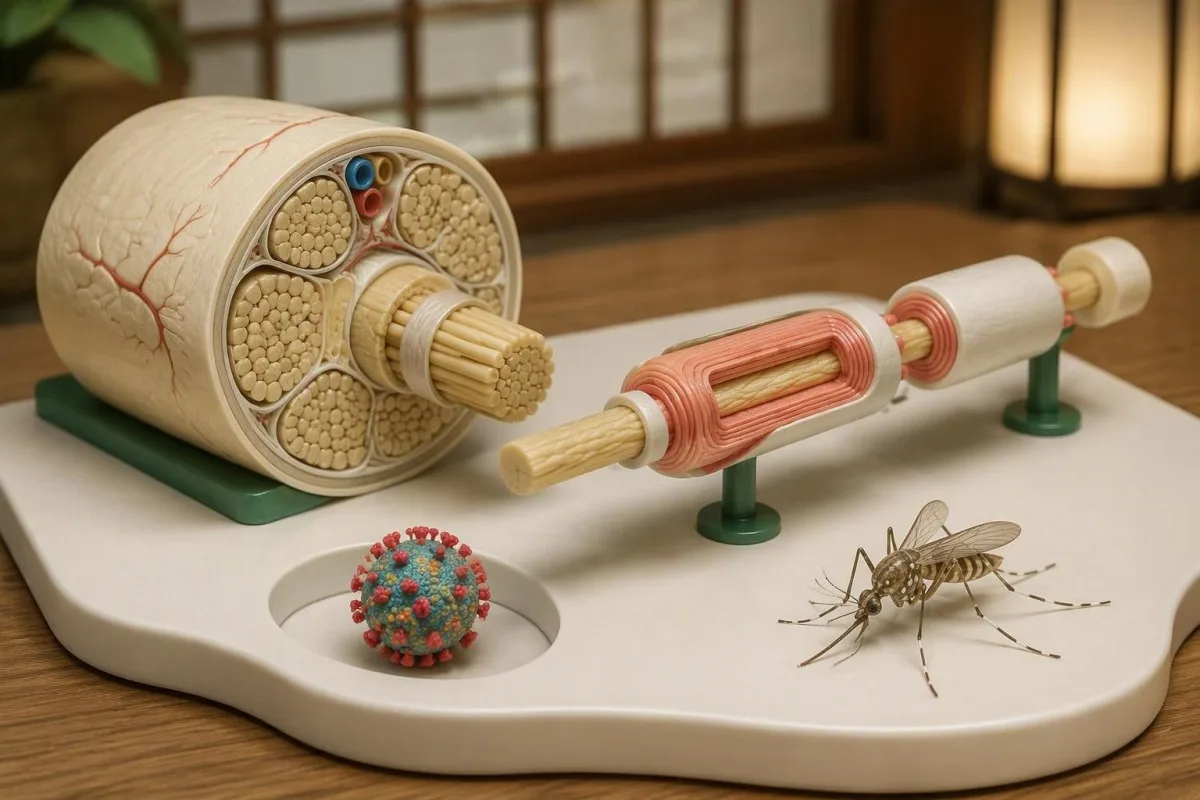
Zika is associated with Guillain-Barré syndrome, but a positive IgM result cannot diagnose that neurological condition. Weakness that progresses over 1–2 days, difficulty walking or problems swallowing needs urgent care; our คู่มือเตือนอาการอ่อนแรงที่เพิ่มขึ้นเรื่อย ๆ explains why symptoms outweigh reassurance from an uncertain laboratory finding.
Avoid aspirin and nonsteroidal anti-inflammatory medicines such as ibuprofen until dengue has been excluded or a clinician advises otherwise. Paracetamol, also called acetaminophen, is commonly used for fever within appropriate dosing limits; 1 negative Zika test does not exclude dengue, and significant liver disease or pregnancy may require individualized medication advice.
For people planning pregnancy after possible Zika exposure, CDC prevention advice generally uses at least 3 months for males and 2 months for females, measured from return, symptom onset or diagnosis as applicable. These prevention intervals address possible sexual transmission; neither a negative serum PCR nor a reactive IgM result serves as a reliable fertility-clearance test.
During pregnancy, use condoms consistently or avoid sex for the rest of the pregnancy when a partner has relevant possible exposure, according to public-health advice. Travelers should also prevent mosquito bites for 3 weeks after returning from a risk area; prevention decisions should not depend solely on whether 1 laboratory specimen detected RNA.
วิธีใช้การแปลผลโดย AI โดยไม่เข้าใจผิดว่าเป็นการยืนยัน
AI can help explain a Zika laboratory report, but it cannot verify infection, arrange confirmatory testing or determine fetal risk. The useful workflow preserves at least 3 essentials: the original laboratory wording, the collection date and the exposure history, followed by clinician review when the result could change care.

Kantesti is an AI-powered blood test analysis tool that turns laboratory reports into patient-readable explanations, not a replacement for reference-laboratory testing. Our คู่มือเทคโนโลยี AI explains the interpretation workflow; a report saying presumptive positive should remain presumptive in every explanation, even when the flag appears strongly abnormal.
If you choose to upload a report, our free test explanation workflow can help you understand its wording; remove unnecessary identifiers while retaining the assay name, specimen and collection date. An explanation produced in about 60 seconds is not the turnaround time of PCR, PRNT or specialist assessment, which depends on the actual laboratory and care pathway.
Kantesti AI should not be used to infer 1 missing clinical fact from another: negative PCR does not prove absence of earlier infection, high IgM does not prove recent infection and maternal reactivity does not prove fetal effects. Any explanation that converts those findings into certainty needs correction against the complete report and clinical context.
Before acting, check 4 questions: Was the test indicated, was the specimen timely, is confirmation pending and does pregnancy change follow-up? AI is most useful for preparing those questions and organizing results; avoid using its output alone to cancel specialist follow-up, change pregnancy plans or declare sexual-transmission risk resolved.
สิ่งพิมพ์งานวิจัยและข้อจำกัดของหลักฐาน
Clinical Zika interpretation should rely on directly relevant diagnostic guidance and infection studies, not unrelated biomarker publications. The 3 external references below address Zika testing, RNA persistence and pregnancy management; the 2 accompanying Zenodo publications are educational resources about other laboratory measurements, not evidence validating Zika diagnosis.
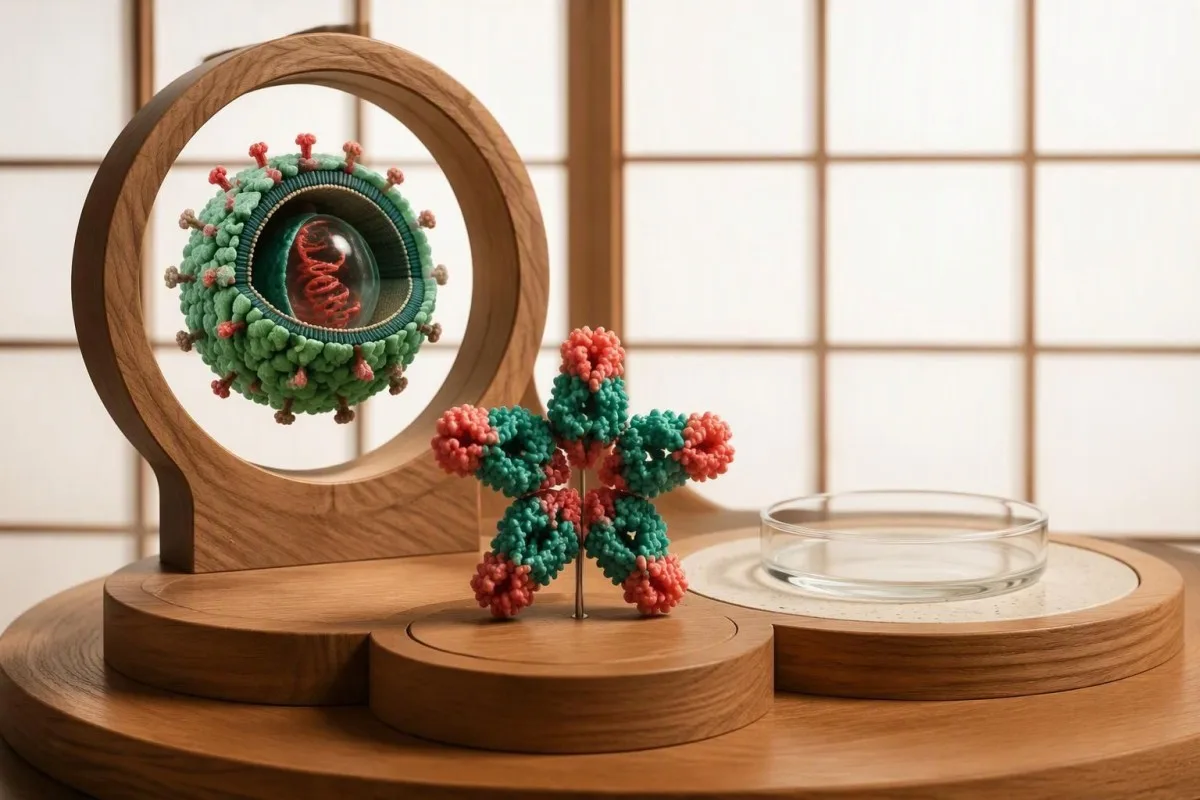
Sharp et al. (2019) provide the central framework for distinguishing molecular evidence from ambiguous flavivirus serology, while Paz-Bailey et al. (2018) quantify RNA persistence in a confirmed-infection cohort. Neither source supplies 1 universal accuracy figure for every modern assay, and their population and testing methods must remain attached to any numerical claim.
Kantesti's educational publications include an RDW and cell-index guide, archived on Zenodo under DOI 10.5281/zenodo.18202598. RDW can help explain a concurrent complete blood count, but it does not diagnose Zika, establish the date of infection or predict whether a fetus is affected.
สิ่งพิมพ์ประกอบ kidney-function ratio guide is archived under DOI 10.5281/zenodo.18207872. Kidney measurements may matter in someone with dehydration or another travel-related illness, but there is no validated BUN/creatinine ratio threshold that confirms Zika; these 2 publications should not be presented as Zika diagnostic research.
Pregnancy recommendations and test availability vary with transmission patterns, jurisdiction and laboratory access, so a 2017 or 2019 algorithm should not be applied mechanically to every exposure. Our มาตรฐานเนื้อหาทางการแพทย์ support separating established facts from uncertainty; use the relevant public-health or reference-laboratory pathway for the actual decision.
คำถามที่พบบ่อย
ผลตรวจ Zika IgM เป็นบวกหมายความว่าฉันติดเชื้อซิกาแน่นอนหรือไม่?
ผลตรวจ Zika IgM ที่เป็นบวกไม่ได้ยืนยันการติดเชื้อไวรัสซิกาอย่างแน่นอน โดยทั่วไป IgM จะเริ่มสร้างขึ้นในช่วงสัปดาห์แรกของการเจ็บป่วย แต่แอนติบอดีอาจคงอยู่ได้นานหลายเดือนหรือนานกว่านั้น และอาจเกิดปฏิกิริยาข้ามกับไวรัสเดงกีหรือฟลาวิไวรัสชนิดอื่น ผลบวกเพียงครั้งเดียวไม่สามารถระบุช่วงเวลาที่ติดเชื้อได้อย่างน่าเชื่อถือ หรือยืนยันได้ว่าการติดเชื้อเกิดขึ้นระหว่างตั้งครรภ์ ประวัติการสัมผัสเชื้อ ช่วงเวลาที่เก็บตัวอย่าง และแนวทางการตรวจระดับโมเลกุลหรือการตรวจยืนยันที่เหมาะสม จะเป็นตัวกำหนดขั้นตอนถัดไป.
ไข้เดงกีทำให้ผลตรวจซิกาเป็นบวกลวงได้หรือไม่?
แอนติบอดีต่อไข้เลือดออกเดงกีอาจทำให้ผลตรวจแอนติบอดีต่อซิกาเป็นบวกแบบเกิดปฏิกิริยาได้ เนื่องจากไวรัสทั้งสองมีลักษณะทางแอนติเจนร่วมกัน ปัญหานี้ส่งผลต่อการตรวจทางซีรั่มวิทยาเป็นหลัก ไม่ได้หมายความว่าการตรวจ Zika PCR ที่ผ่านการตรวจสอบความถูกต้องอย่างเหมาะสมจะตรวจพบ RNA ของเดงกีเป็นประจำ การสัมผัสฟลาวิไวรัสมากกว่า 1 ชนิดมาก่อนยังอาจทำให้การทดสอบการทำให้เป็นกลางแปลผลได้กำกวม แพทย์อาจจำเป็นต้องตรวจหาเดงกีและขอให้ห้องปฏิบัติการอ้างอิงแปลผล แทนที่จะถือว่าผลตรวจแอนติบอดีที่ให้ผลบวกต่อทั้งสองชนิดเป็นหลักฐานยืนยันการติดเชื้อสองชนิด.
การตรวจ PCR หาไวรัสซิกาหลังสัมผัสเชื้อมีความแม่นยำเพียงใด?
ความแม่นยำของการตรวจ PCR หาไวรัสซิกาขึ้นอยู่กับวิธีตรวจ สิ่งส่งตรวจ และระยะเวลาตั้งแต่เริ่มมีอาการ จึงไม่มีค่าร้อยละเดียวที่ใช้ได้กับทุกกรณีที่สัมผัสเชื้อ โดยทั่วไปจะให้ความสำคัญกับการตรวจสารพันธุกรรมในซีรัมภายใน 7 วันแรกของการเจ็บป่วยในผู้ป่วยที่มีอาการและไม่ได้ตั้งครรภ์ แนวทางการดูแลหญิงตั้งครรภ์บางกรณีอนุญาตให้ตรวจได้ภายใน 12 สัปดาห์หลังเริ่มมีอาการ แต่ไม่รับประกันว่าจะตรวจพบได้ตลอดช่วงเวลาดังกล่าว ผลลบหมายความว่าไม่พบ RNA ในสิ่งส่งตรวจนั้น และไม่ได้ตัดความเป็นไปได้ของการติดเชื้อก่อนหน้านี้โดยอัตโนมัติ.
ผลตรวจ Zika IgM เป็นบวก แต่ PCR เป็นลบ หมายความว่าอย่างไร?
0 Zika IgM เป็นบวกแต่ PCR เป็นลบ อาจสะท้อนถึงการติดเชื้อเมื่อไม่นานมานี้ที่เก็บตัวอย่างหลังจาก RNA ลดลงแล้ว แอนติบอดีที่ยังคงอยู่จากการติดเชื้อในอดีต หรือปฏิกิริยาข้ามกับฟลาวิไวรัสชนิดอื่น ตัวอย่างเช่น รูปแบบผลตรวจนี้ในวันที่ 21 ของการเจ็บป่วยมีการตีความต่างจากรูปแบบเดียวกันในวันที่ 3 ผลตรวจแต่ละรายการเพียงอย่างเดียวไม่สามารถระบุได้ว่าเกิดการติดเชื้อขึ้นเมื่อใด ทั้งนี้ แพทย์อาจขอเก็บตัวอย่างซ้ำ ตรวจหาไข้เดงกี หรือยืนยันผลที่ห้องปฏิบัติการอ้างอิง โดยขึ้นอยู่กับการสัมผัสเชื้อและสถานะการตั้งครรภ์.
ควรพบแพทย์ผู้เชี่ยวชาญหรือไม่ หากผลตรวจซิกาเป็นบวกในระหว่างตั้งครรภ์?
ผลตรวจซิกาเป็นบวกระหว่างตั้งครรภ์ควรติดต่อแพทย์ผู้ดูแลการตั้งครรภ์โดยเร็ว โดยเฉพาะเมื่อมีประวัติเดินทาง สัมผัสเชื้อทางเพศสัมพันธ์ หรือมีอาการที่สอดคล้องกับโรค อาจต้องปรึกษาผู้เชี่ยวชาญหรือหน่วยงานสาธารณสุขเพื่อประเมินช่วงเวลาและเลือกการตรวจยืนยัน การตั้งครรภ์บางรายที่ยืนยันหรือน่าสงสัยว่าติดเชื้ออาจได้รับการตรวจอัลตราซาวนด์เป็นระยะทุก 3–4 สัปดาห์ แต่ผลตรวจ IgM ของมารดาเพียงครั้งเดียวไม่ได้ยืนยันว่าทารกในครรภ์ติดเชื้อ หากมีอาการอ่อนแรงที่เกิดขึ้นใหม่และรุนแรงขึ้น หายใจลำบาก หรือป่วยรุนแรง ต้องเข้ารับการประเมินโดยด่วนแทนการรอการนัดปรึกษาตามกำหนด.
PRNT ยืนยันได้ไหมว่าฉันติดเชื้อซิกาเมื่อใด?
PRNT สามารถช่วยประเมินแอนติบอดีที่ทำให้ไวรัสจำเพาะเป็นกลางได้ แต่ไม่สามารถระบุวันที่ติดเชื้อซิกาได้อย่างน่าเชื่อถือ แนวทางบางประการของห้องปฏิบัติการอ้างอิงใช้ไตเตอร์การทำให้เป็นกลางอย่างน้อย 1:10 เป็นส่วนหนึ่งของการแปลผล โดยรูปแบบผลตรวจซิกาและเดงกีโดยรวมจะเป็นตัวกำหนดการจำแนก หากไวรัสทั้งสองชนิดให้ผลการทำให้เป็นกลางเป็นบวก การสัมผัสฟลาวิไวรัสก่อนหน้านี้อาจทำให้ไม่สามารถแยกแยะได้อย่างชัดเจน แม้การยืนยันแอนติบอดีจำเพาะต่อซิกาก็อาจไม่สามารถพิสูจน์ได้ว่าการติดเชื้อเกิดขึ้นระหว่างการตั้งครรภ์ครั้งปัจจุบัน.
ผลตรวจไวรัสซิกาเป็นลบ บอกได้หรือไม่ว่าปลอดภัยที่จะพยายามตั้งครรภ์?
ผล PCR ซีรัมสำหรับไวรัสซิกาที่เป็นลบไม่ใช่การตรวจยืนยันการปลอดเชื้อที่ผ่านการรับรองสำหรับความเสี่ยงในการแพร่เชื้อทางเพศสัมพันธ์หรือการวางแผนตั้งครรภ์ โดยทั่วไป คำแนะนำด้านการป้องกันของ CDC แนะนำให้เว้นระยะอย่างน้อย 3 เดือนหลังการสัมผัสเชื้อที่อาจเกิดขึ้นสำหรับเพศชาย และ 2 เดือนสำหรับเพศหญิง โดยนับจากวันที่กลับมา วันที่เริ่มมีอาการ หรือวันที่ได้รับการวินิจฉัยตามกรณี การตรวจซีรัมไม่สามารถระบุได้อย่างน่าเชื่อถือว่าสารพันธุกรรมของไวรัสยังคงอยู่ในส่วนอื่นของร่างกายหรือไม่ ผู้ที่ยังมีความเสี่ยงต่อการสัมผัสเชื้อ คู่ครองกำลังตั้งครรภ์ หรือไม่แน่ใจเกี่ยวกับวันที่ ควรขอคำแนะนำเฉพาะบุคคลจากหน่วยงานสาธารณสุขหรือแพทย์.
อ่านผลตรวจเลือดอย่างไร
อัปโหลดรายงานผลตรวจของคุณ แล้ว AI ของ Kantesti จะอธิบายตัวบ่งชี้ทางชีวภาพแต่ละรายการด้วยภาษาที่เข้าใจง่ายภายในไม่กี่วินาที มีผู้ใช้ทั่วโลกมากกว่า 2 ล้านคน.
เอกสารอ้างอิง
- ไคลน์, ที., มิตเชลล์, เอส., & เวเบอร์, เอช. (2026). การตรวจเลือด RDW: คู่มือฉบับสมบูรณ์เกี่ยวกับ RDW-CV, MCV และ MCHC. Kantesti AI การวิจัยทางการแพทย์. โดอิ
- ไคลน์, ที., มิตเชลล์, เอส., & เวเบอร์, เอช. (2026). อธิบายอัตราส่วน BUN/Creatinine: คู่มือการทดสอบการทำงานของไต. Kantesti AI การวิจัยทางการแพทย์. โดอิ
- Sharp TM et al. (2019). Dengue and Zika Virus Diagnostic Testing for Patients with a Clinically Compatible Illness and Risk for Infection with Both Viruses. MMWR Recommendations and Reports. โดอิ
- Paz-Bailey G et al. (2018). Persistence of Zika Virus in Body Fluids — Final Report. New England Journal of Medicine. โดอิ
- Oduyebo T et al. (2017). Update: Interim Guidance for Health Care Providers Caring for Pregnant Women with Possible Zika Virus Exposure — United States (Including U.S. Territories), July 2017. MMWR Morbidity and Mortality Weekly Report. โดอิ
- 2 ล้าน+การตรวจที่วิเคราะห์
- 127+ประเทศ
- 100+ภาษา
เกี่ยวกับทีมแพทย์


สัญญาณความน่าเชื่อถือ E-E-A-T
ประสบการณ์
การทบทวนเชิงคลินิกโดยแพทย์ที่นำโดยกระบวนการตีความผลตรวจในห้องแล็บ.
ความเชี่ยวชาญ
โฟกัสด้านเวชศาสตร์ห้องปฏิบัติการเกี่ยวกับพฤติกรรมของไบโอมาร์กเกอร์ในบริบททางคลินิก.
อำนาจ
ทบทวนทางการแพทย์โดย นพ. Thomas Klein พร้อมผลงานจาก นพ. Sarah Mitchell และศาสตราจารย์ ดร. Hans Weber.
ความน่าเชื่อถือ
การตีความที่อิงหลักฐาน พร้อมเส้นทางการติดตามที่ชัดเจนเพื่อลดความตื่นตระหนก.




ข้อจำกัดความรับผิดชอบทางการแพทย์
บทความนี้จัดทำเพื่อวัตถุประสงค์ด้านการศึกษาเท่านั้น และไม่ถือเป็นคำแนะนำทางการแพทย์ โปรดปรึกษาผู้ให้บริการด้านสุขภาพที่มีคุณสมบัติเหมาะสมเสมอสำหรับการตัดสินใจด้านการวินิจฉัยและการรักษา.
เผยแพร่แล้ว · ติดต่อทีมบรรณาธิการ
เผยแพร่โดย Kantesti Ltd จดทะเบียนในอังกฤษและเวลส์ เลขทะเบียนบริษัท. 17090423, ลอนดอน สหราชอาณาจักร.
