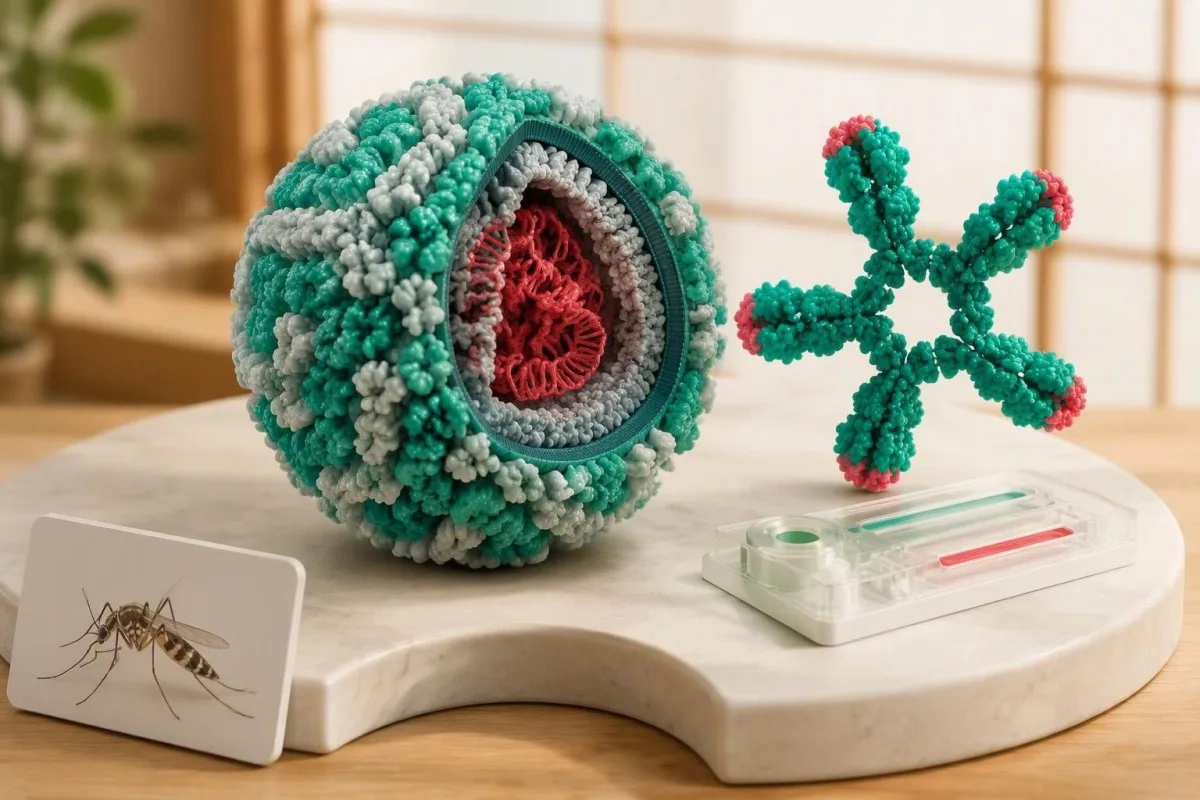
Zika IgM natijasining musbat chiqishi infeksiyani tasdiqlamaydi: bunga dengue bilan bog‘liq o‘zaro reaktivlik yoki saqlanib qolgan antitanalar sabab bo‘lishi mumkin. PCR natijasi namuna olish vaqtiga bog‘liq; homiladorlikda esa ta’sirlanish holatiga asoslangan klinik baholash va zarur bo‘lganda referens laboratoriyada tasdiqlash talab etiladi.

Asosiy xulosalar
- Zika IgM odatda kasallikning birinchi haftasida rivojlanadi va bir necha oy yoki undan ko‘proq vaqt saqlanib qolishi mumkin; musbat natija infeksiya qachon yuqqanini ishonchli aniqlamaydi.
- O‘zaro reaktivlik dengue va boshqa flaviviruslar bilan o‘zaro reaktivlik Zika infeksiyasi tasdiqlanmagan bo‘lsa ham, Zika antitanalari natijasining reaktiv chiqishiga olib kelishi mumkin.
- PCR uchun eng qulay vaqt asosan alomatlar boshlangan vaqtdan hisoblanadi, chivin chaqqan vaqtdangina emas; alomatlari bor, homilador bo‘lmagan bemorlarda dastlabki 7 kun ichida qon zardobini tekshirish odatda ustuvor hisoblanadi.
- homilador bo‘lgan bo‘lsangiz yoki qon quyilgan bo‘lsa. ayrim ta’sirlanish holatlarida alomatlar boshlanganidan keyin 12 haftagacha molekulyar test o‘tkazishni o‘z ichiga olishi mumkin, biroq bu davr mobaynida infeksiya albatta aniqlanishini kafolatlamaydi.
- Salbiy PCR ushbu namunada RNK aniqlanmaganini anglatadi; bu testning foydali aniqlash oynasidan tashqaridagi infeksiyani istisno qilmaydi.
- PRNT bilan tasdiqlash antitana natijalariga aniqlik kiritishi mumkin, ammo flaviviruslar bilan avvalgi ta’sirlanish Zika va dengue uchun neytrallash testlarining ikkalasi ham musbat chiqishiga olib kelishi mumkin.
- Soxta-musbat ehtimoli testdan oldin infeksiya ehtimoli past bo‘lsa, bu ehtimol ortadi; testning o‘ziga xosligi natijangizning to‘g‘ri chiqish ehtimolini o‘zi aniqlamaydi.
- Homiladorlik bo‘yicha kuzatuv tegishli ta’sirlanish holati bilan birga reaktiv natija kuzatilsa, tezda tashkil etilishi kerak; onadagi antitana natijasining o‘zi homilada infeksiya borligini aniqlay olmaydi.
Zika testining musbat natijalari aslida nimani tasdiqlaydi?
Zika IgM musbat natijasi antitana reaktivligini ko‘rsatadi, Zika infeksiyasi tasdiqlanganini avtomatik ravishda anglatmaydi. Tasdiqlangan musbat PCR to‘g‘ridan-to‘g‘riroq dalil beradi, chunki u virus RNKsini aniqlaydi; bu 2 turdagi testning hech biri o‘z-o‘zidan homila infeksiyasini tasdiqlamaydi yoki uning oqibatlarini bashorat qilmaydi.
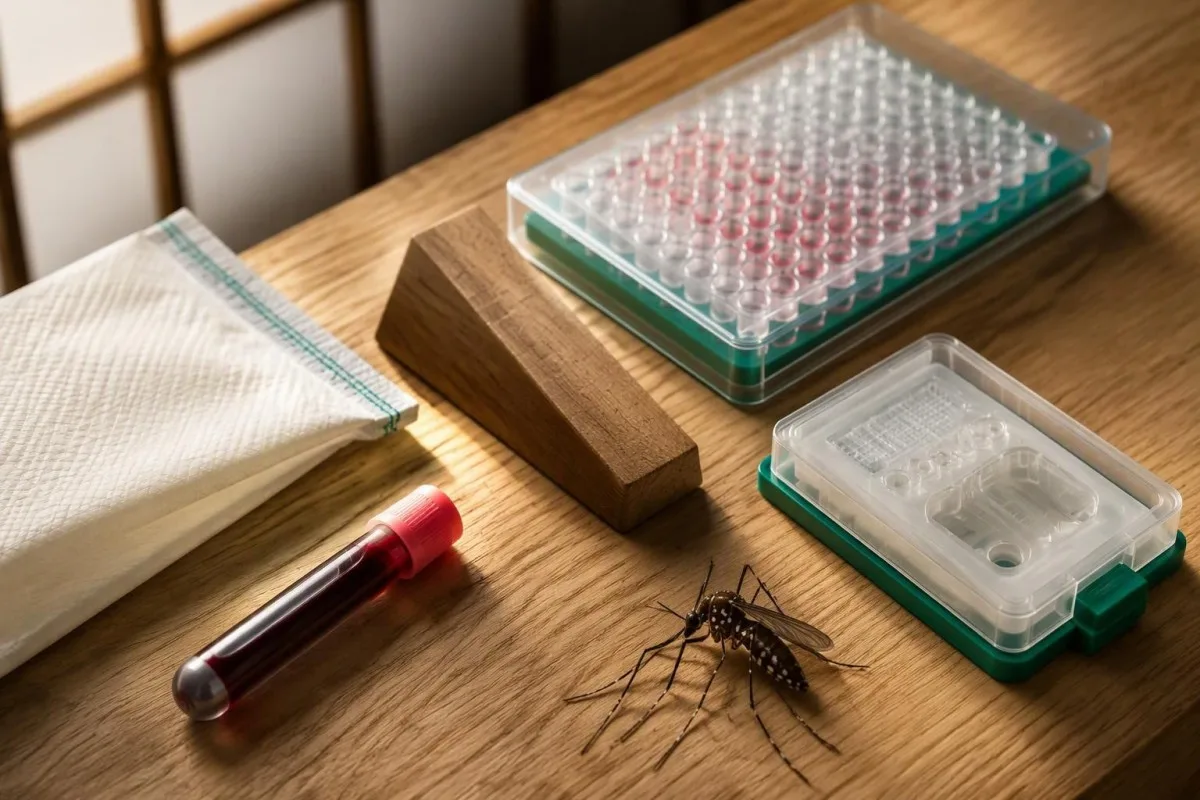
«Musbat» so‘zi tahlilning qaror chegarasini ifodalaydi, to‘liq tashxisni emas. Yaqinda sayohat qilgan, unga mos alomatlari bor va ilgari dang bilan kontaktda bo‘lmagan 1 kishi uchun reaktiv antitana natijasi, ehtimoliy kontakt bo‘lmagan va flaviviruslar bilan bir necha bor kontaktda bo‘lgan kishidagi ayni natijadan boshqacha ma’noga ega.
Aniqlangan molekulyar natija klinik kuzatuvni, jumladan laboratoriya yoki sog‘liqni saqlash tizimidagi tartib talab qilsa, tekshirib tasdiqlashni talab qiladi. Kontaminatsiya, namunalarni almashtirib yuborish va chegaraviy amplifikatsiya kam uchraydi, ammo mumkin; 1 boshqa namunadagi manfiy natija birinchi namunadagi haqiqiy musbat natijani avtomatik ravishda bekor qilmaydi.
Kantesti — sun’iy intellektga asoslangan qon tahlili analizatori bo‘lib, bildirilgan antitana reaktivligi bilan molekulyar aniqlash o‘rtasidagi farqni tushuntirishga yordam beradi, 1 ta musbat belgini tashxis deb qabul qilmaydi. Ma’lumot tashkilotimiz haqida bizning vazifamizni tavsiflaydi; tasdiqlash klinik va laboratoriya mutaxassislarining mas’uliyati bo‘lib qoladi.
3 ta tafsilotni aniqlashdan boshlang: tahlilning aniq nomi, namuna turi va olingan sana. Skrining, avvalgi kontakt dalili va joriy infeksiya isboti nima uchun alohida toifalar ekanini ijobiy antitana natijalari qo‘llanmamiz tushuntiradi.
Zika IgM musbat natijasi nimani anglatadi: yaqinda yuqtirilgan infeksiyami yoki avvaldan mavjud antitanalarmi?
Zika IgM musbat natijasining ma’nosi vaqtga, kontaktga va tahlil spetsifikligiga bog‘liq. IgM odatda kasallikning birinchi haftasida aniqlana boshlaydi, biroq uning oylar yoki undan uzoq saqlanib qolishi bitta musbat natija infeksiya muayyan homiladorlik davrida yoki so‘nggi 2 hafta ichida yuz berganini isbotlashiga to‘sqinlik qiladi.
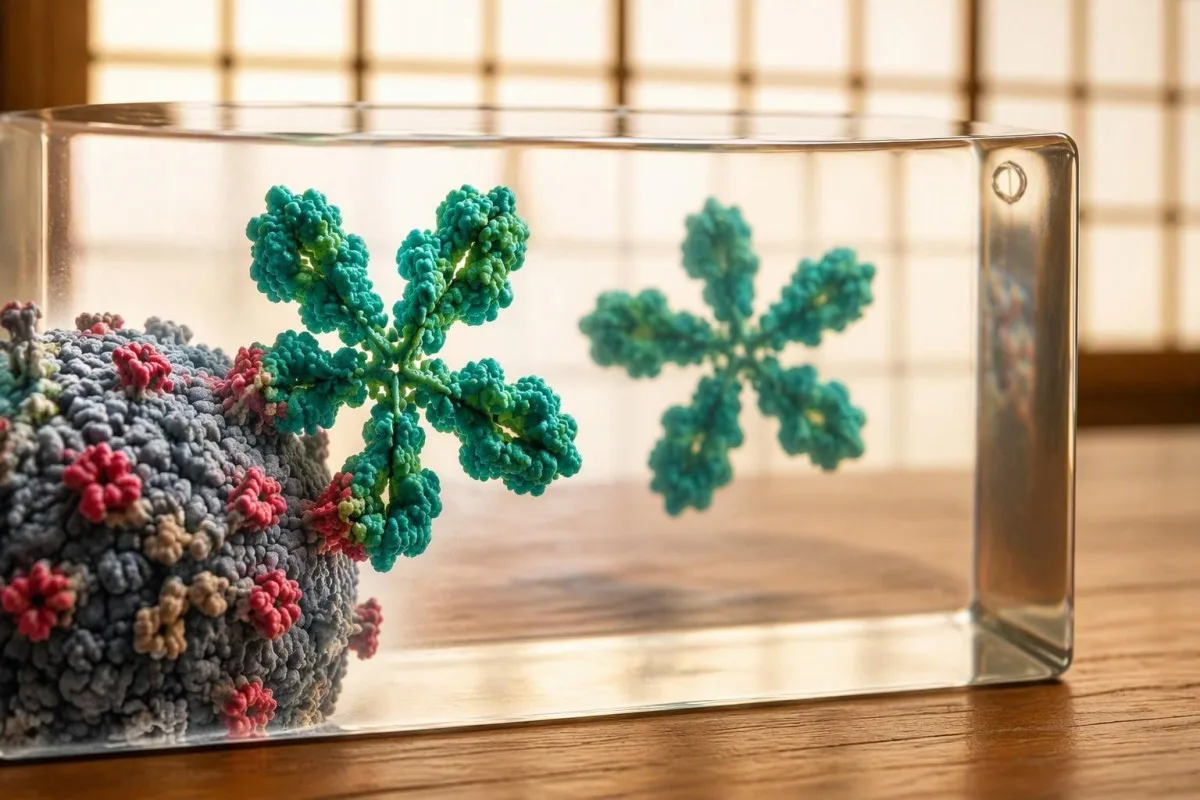
IgM ko‘pincha erta paydo bo‘ladigan antitana deb ta’riflanadi, ammo erta paydo bo‘lishi tez yo‘qolishini anglatmaydi. Sharp va boshq. (2019) diagnostik qo‘llanmasida Zika IgM uzoq vaqt aniqlanishi ta’kidlanadi; shu sababli sayohatdan 6 oy o‘tib olingan natijani yangi toshma yoki isitma xuruji bilan bog‘lash qiyin bo‘lishi mumkin.
Zikaga xos IgM va zardobdagi umumiy IgM — 2 xil o‘lchov. Umumiy IgM mg/dL yoki g/L da, Zika tahlili esa indeks, nisbat yoki sifat jihatidan berilgan talqin ko‘rinishida bildirilishi mumkin; umumiy IgM konsentratsiyasining yuqoriligi Zikani tashxislay olmaydi, buni bizning immunoglobulin natijalari yo'l-yo'riq beradi tushuntiradi.
Antitana indeksi virus konsentratsiyasi emas. Faraz qilaylik, bir xil tahlilda 3.0 indeks 1.5 indeksdan yuqori bo‘lsa, bu tahliliy reaktivlik kuchliroq ekanini anglatishi mumkin, ammo bu qiymatlarning hech birini RNA copies/mL ga, homilaga ta’sir qilish xavfi foiziga yoki kontaktdan beri o‘tgan kunlar soniga aylantirib bo‘lmaydi.
Zika IgG natijasi universal javob emas, balki yana bir qatlam ma’lumot qo‘shadi. IgM va IgG bitta namuna olingan sanada ikkalasi ham reaktiv bo‘lsa ham, o‘zaro reaksiyaga kirishish va ilgari flaviviruslar bilan kontaktda bo‘lish infeksiya vaqtini ishonchli aniqlashga to‘sqinlik qilishi mumkin; antitana soni kattaroq bo‘lsa, kasallik og‘irroq, deb taxmin qilish o‘rniga laboratoriyaning talqin izohidan foydalaning.
Nima uchun dengue va boshqa flaviviruslar o‘zaro reaktivlikka sabab bo‘lishi mumkin
Zika antitana testlari dang va boshqa flaviviruslarga qarshi hosil bo‘lgan antitanalar bilan reaksiyaga kirishishi mumkin, chunki bu viruslarning antigen xususiyatlari o‘xshash. Ko‘plab sayohat hududlarida klinik jihatdan eng muhim o‘xshashlik dang bilan kuzatiladi; bir nechta flavivirus bilan avval kontaktda bo‘lish tasdiqlovchi antitana testlarining farqlash qobiliyatini ham kamaytirishi mumkin.

Antitana tahlillari virusning butun o‘ziga xosligini emas, balki tanlangan virus antigenlariga bog‘lanishini aniqlaydi. Antitana umumiy sirt xususiyatini tanib olsa, dangga qarshi haqiqiy immun javob Zika tahlilida reaktivlikni yuzaga keltirishi mumkin; bu biologik o‘zaro reaktivlik bo‘lib, laboratoriya namunani noto‘g‘ri ishlatganining isboti emas.
Oldin sariq isitma yoki yapon ensefalitiga qarshi emlangan bo‘lish antigen va tahlilga qarab ayrim flavivirus serologik tekshiruvlarini murakkablashtirishi mumkin. Faqat yaqinda qilingan vaksinalar muhim deb o‘ylamasdan, 5 yoki 10 yil avvalgi emlashlarni ham qo‘shib, vaksina nomlari va sanalarini shifokorga ayting; qaysi emlash tarixi talqinga ta’sir qilishini ma’lumotnoma laboratoriyasi hal qiladi.
G‘arbiy Nil virusi shu kengroq viruslar oilasiga mansub, chikungunya esa mansub emas. Bizning G‘arbiy Nil antitanasini tasdiqlash haqidagi tushuntirishimiz o‘xshash noaniqliklarni yoritadi, biroq chivinlar orqali yuqadigan 2 kasallikning bir hududda tarqalishi ularning antitana tahlillari albatta o‘zaro reaksiyaga kirishishini anglatmaydi.
Flaviviruslar bilan takroriy kontaktlar immun xotira orqali neytrallovchi antitanalar javobini kengaytirishi mumkin. Sharp va boshq. (2019) ilgari dang bilan 2 marta kasallangan kishini neytrallash testidan keyin ham nima uchun tasniflash qiyin bo‘lishi mumkinligini bayon qiladi; yakuniy tegishli talqin «turi noaniq flavivirus infeksiyasi» bo‘lishi mumkin, Zika tasdiqlangan infeksiyasi emas.
Zika testining noto‘g‘ri musbat chiqish ehtimoli qanchalik yuqori?
The probability that a positive Zika antibody result is false depends on both assay performance and the chance of infection before testing. There is no defensible universal percentage for every laboratory, traveler or pregnancy; even a test with 95% specificity can produce mostly false positives in a low-prevalence group.

Consider a clearly hypothetical assay with 90% sensitivity and 95% specificity used in 10,000 people, of whom 1% truly have the target condition. It would yield approximately 90 true positives and 495 false positives, so only 90 of 585 positive results, or 15.4%, would represent the target condition.
Now keep those hypothetical assay characteristics but increase the underlying prevalence to 10%. Approximately 900 true positives and 450 false positives would result, giving a positive predictive value of 66.7%; the test has not improved, but the tested population has changed.
Improving specificity also matters: at 1% prevalence, a hypothetical assay with 90% sensitivity and 99% specificity would produce 90 true positives and 99 false positives. Its positive predictive value would still be only 47.6%; none of these figures is a measured performance estimate for a particular Zika assay.
Persistent antibodies from a genuine old Zika infection are not necessarily an analytically false result, although interpreting them as a new infection would be wrong. Our discussion of reactive hepatitis A IgM illustrates a similar distinction: 1 positive antibody finding can be accurate analytically yet misleading clinically.
Zika PCR testining aniqligi aniqlash oynasiga bog‘liq
Zika PCR test accuracy is highest when an appropriate specimen is collected while viral RNA remains detectable. For symptomatic nonpregnant patients, serum molecular testing is commonly prioritized within the first 7 days of illness; a later negative test may reflect falling RNA rather than absence of earlier infection.
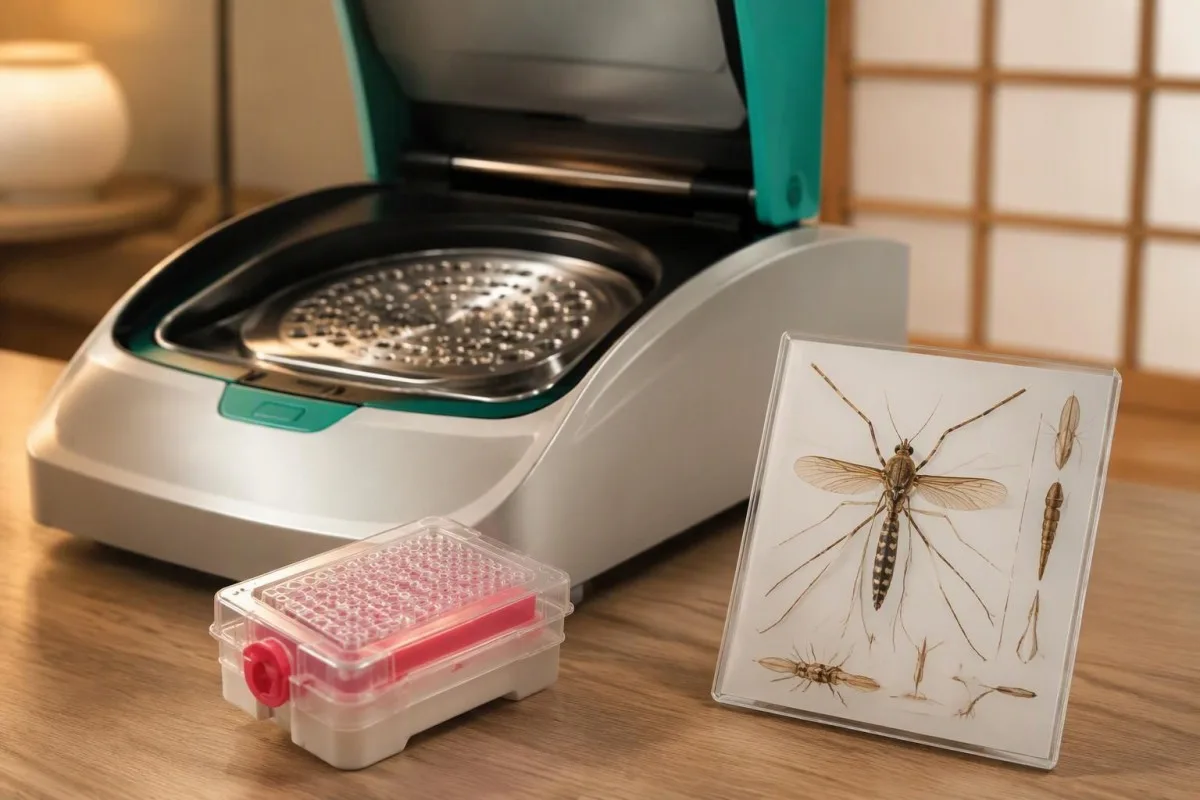
Analytical sensitivity describes how little RNA an assay can detect under validated conditions; clinical sensitivity describes how often it identifies infected people in practice. A very low detection limit cannot rescue a specimen collected 3 weeks after RNA has cleared, and there is no single clinical sensitivity percentage that applies across all collection times.
Count the molecular-testing window from symptom onset when symptoms are present, not automatically from the mosquito bite or flight home. Zika symptoms generally begin 3–14 days after exposure, so a specimen taken 7 days after a bite might fall before, during or after the most useful serum-testing period.
Some pregnancy pathways allow molecular testing up to 12 weeks after symptom onset because RNA detection can be prolonged. This is an eligibility window for selected testing strategies, not a promise of 12 weeks of reliable detection; exposure geography, symptoms, specimen choice and public-health advice determine the actual testing plan.
Urine can complement serum testing when the assay is validated for urine, but it is not a guaranteed longer-lasting specimen. The broader principle also appears in our PCR window-period guide: a negative molecular result from 1 body site cannot be interpreted without its collection timing.
PCR va IgM natijalari mos kelmasa, qaysi sanalar muhim?
Discordant Zika results should be interpreted using at least 2 clocks: the exposure timeline and the symptom timeline. Add the specimen collection date to both; PCR-negative, IgM-positive findings can reflect late collection, persistent antibodies or cross-reactivity, while early PCR-positive, IgM-negative findings can precede antibody development.

In the prospective cohort reported by Paz-Bailey et al. in the New England Journal of Medicine (2018), estimated median times to loss of detectable RNA were 14 days in serum and 8 days in urine. These estimates came from a selected cohort with confirmed infection; they are not universal cutoffs for excluding infection in an individual patient.
For a hypothetical traveler tested on illness day 3, detected RNA with negative IgM can fit an early immune response. Testing both Zika and dengue through the appropriate pathway matters because the illnesses overlap; our discussion of PCR and antibody disagreement explains why discordance does not automatically indicate laboratory error.
Imagine instead that the first specimen was collected on illness day 21 and shows negative PCR with reactive IgM. That pattern cannot distinguish recent Zika from another flavivirus response or persistent antibodies without additional context; when indicated, a clinician may arrange a later specimen, often around 10–14 days after the first, using laboratory-specific instructions.
At Kantesti, we encourage recording collection dates separately from report-release dates because a 5-day reporting delay does not extend the biological detection window. Our qon tahlillari bo‘yicha vaqt jadvali bo‘yicha qo‘llanma explains this distinction; ongoing exposure may also prevent assignment of a single meaningful last-exposure date.
Zika bo‘yicha aniqlangan, noaniq va yaroqsiz natijalarni qanday talqin qilish kerak
Detected, not detected, equivocal and invalid are different laboratory conclusions. A detected PCR identifies RNA in the tested specimen; not detected means the signal was absent or below the assay threshold, while an invalid result means the test did not produce a usable answer and may require a second specimen.
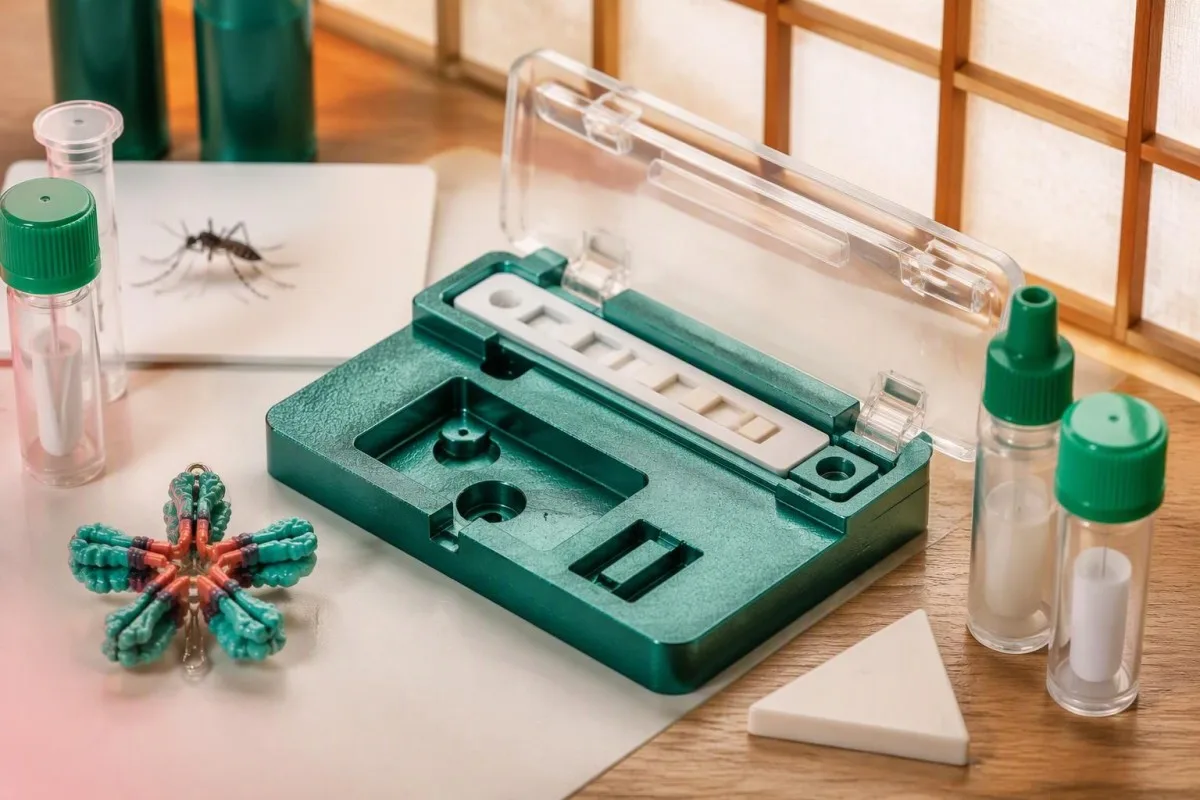
An equivocal antibody result falls into the assay's uncertainty zone, which varies by laboratory and test design. A hypothetical index of 1.0 cannot be called positive or negative without that assay's reference intervals; our guide to sifatli va miqdoriy natijalar explains why a number and its interpretation must stay together.
PCR cycle threshold, when reported, describes amplification behavior rather than a standardized severity score. A hypothetical Ct of 35 on 1 instrument cannot be directly compared with Ct 35 on another assay, and it cannot reliably predict fetal effects, contagiousness or the precise day on which infection began.
An inhibited or invalid PCR is not a negative PCR. Problems involving extraction, specimen handling or amplification controls can require reprocessing or recollection; if the original specimen was collected on illness day 5, a replacement collected on day 12 must be interpreted at its own later biological time point.
Keep the complete report, including 4 often-overlooked fields: specimen source, assay name, collection date and interpretive comments. A cropped photograph showing only a red positive flag can hide a presumptive designation or a pending confirmatory test, making both clinical review and any automated explanation less reliable.
PRNT yoki molekulyar testni takrorlash qachon yordam beradi?
Confirmatory testing helps when a reactive Zika screen needs virus-specific clarification or an unexpected molecular result needs verification. Plaque reduction neutralization testing, or PRNT, measures functional neutralizing antibodies; however, responses against 2 or more flaviviruses can prevent PRNT from identifying which virus caused the original immune response.

Some reference laboratories use PRNT90, meaning the dilution that reduces plaque formation by 90%. In established CDC interpretive schemes, a Zika neutralizing titer of at least 1:10 with negative dengue neutralization can support Zika-specific classification; the complete algorithm, antibody screening result and laboratory instructions still matter.
If both Zika and dengue neutralizing titers are at least 1:10, the result may remain consistent with an unspecified flavivirus infection. A 4-fold difference between titers is not universally decisive after previous flavivirus exposures, so patients should not calculate their own confirmation rule from two numbers.
Repeating an unexpected positive NAAT may involve a new extraction from the original specimen, a second target or another specimen, depending on the assay and public-health protocol. This is not the same as simply rerunning 1 antibody screen; our antibody confirmation guide discusses why independent confirmation is more informative than repeated screening.
Kantesti is an AI lab test interpretation service that explains laboratory wording without converting 1 presumptive result into a confirmed diagnosis. Our validatsiya va nazorat ma’lumotlari describes evaluation boundaries; no interpretation tool can make PRNT reliably date infection when the underlying antibody biology cannot do so.
Homiladorlikda mutaxassis ko‘rigi qachon zarur bo‘ladi
Pregnancy warrants prompt clinician assessment when possible Zika exposure accompanies compatible symptoms, reactive testing or concerning prenatal findings. Stable patients do not usually need emergency care solely because of 1 positive IgM result, but maternal-fetal medicine, infectious-disease or public-health input may be needed to choose testing and follow-up.

The key question is whether infection could have occurred during pregnancy, not simply whether an antibody is present today. The CDC pregnancy guidance by Oduyebo et al. (2017) explains how persistent IgM and falling transmission rates complicate screening; a reactive result at 10 weeks of pregnancy may still reflect exposure before conception.
Symptoms are not required for fetal risk assessment because maternal Zika infection can be asymptomatic. Conversely, 1 episode of fever or rash is not specific to Zika; a specialist weighs travel destination, mosquito exposure, sexual exposure, dates and alternative diagnoses rather than using symptoms alone to label the pregnancy.
Bring at least 4 dates to the appointment: the pregnancy dating estimate, travel or exposure dates, symptom onset and specimen collection. Our discussion of homiladorlikdagi toksoplazma natijalari explains a shared counseling principle: maternal antibodies do not automatically prove a new infection during pregnancy.
Routine Zika IgM screening is not appropriate for every asymptomatic pregnancy, especially where pretest probability is low and antibody persistence would create ambiguity. Similar timing difficulties arise with CMV antikor naqshlari, but the diagnostic algorithms are different; do not transfer 1 virus's avidity or confirmation rules to another.
UTT va homilani tekshirish nimalarni aniqlashi mumkin?
Prenatal ultrasound assesses fetal development; it does not confirm or exclude maternal Zika infection. For pregnancies with confirmed or possible infection, specialist-led serial ultrasound may be considered every 3–4 weeks, while amniotic-fluid testing is individualized because a negative result cannot reliably exclude fetal infection.

A normal scan shortly after exposure does not end the assessment because some findings develop later. The 3–4-week surveillance interval discussed in CDC pregnancy guidance is intended to reassess growth and neuroanatomy over time; it is not a guarantee that every affected pregnancy will produce a visible finding at the next appointment.
Amniocentesis should not be ordered automatically for an isolated reactive IgM result. The decision depends on gestational age, imaging findings, other diagnostic indications and counseling about procedural uncertainty; there is no single post-exposure day on which a negative amniotic-fluid PCR reliably provides a 100% exclusion of fetal infection.
Concerning prenatal findings can justify specialist evaluation even when maternal PCR is negative. A specimen collected 8 weeks after symptoms may no longer detect maternal RNA, and abnormalities have alternative causes; counseling should separate what the scan shows from what the maternal laboratory result can establish.
Fever during pregnancy still needs assessment for other treatable illnesses, including conditions covered in our pregnancy fever testing guide. If maternal evidence or prenatal findings warrant newborn follow-up, a pediatric team plans examination and appropriate hearing, eye or laboratory assessment; 1 maternal IgM result alone does not diagnose the infant.
Nima uchun Zika natijalarini talqin qilishda dengue testini ham o‘tkazish kerak
Dengue testing often belongs in the Zika workup because dengue overlaps geographically, resembles Zika clinically and can complicate Zika serology. During the first 7 days of dengue illness, NAAT or NS1 antigen testing is commonly useful; later testing relies more heavily on antibody interpretation and the clinical picture.

A positive dengue NAAT or NS1 result offers evidence that differs from a cross-reactive antibody screen. Our explanation of dengue NS1 timing covers the early window; a negative NS1 result after illness day 7 cannot be treated as equivalent to a negative result obtained on day 2.
Zika and dengue are not mutually exclusive diagnoses, although a dual-reactive antibody pattern commonly reflects serologic overlap rather than 2 proven infections. Sharp et al. (2019) recommend diagnostic reasoning that considers both viruses; molecular evidence, exposure timing and reference-laboratory interpretation are more informative than counting positive antibody flags.
Chikungunya can produce prominent joint symptoms after the same type of mosquito exposure, but it is an alphavirus rather than a flavivirus. Our guide to chikungunya IgM persistence explains why a reactive result also needs timing context; 3 overlapping illnesses require virus-specific tests, not interchangeable antibody assumptions.
Malaria and other travel-related illnesses remain possible when the itinerary supports them. A returned traveler with 38°C fever should not wait for a Zika confirmation result before obtaining clinical assessment; the danger of anchoring on 1 reactive test is missing a different condition with an urgent or specific treatment.
Natijalar noaniq bo‘lib turganda qaysi alomatlar shoshilinch tibbiy yordamni talab qiladi?
New progressive weakness, breathing difficulty, confusion, fainting or severe dehydration require urgent assessment regardless of the Zika result. Severe abdominal pain, persistent vomiting or unusual bleeding can suggest dengue complications; 1 negative Zika PCR does not make these symptoms safe to monitor without medical advice.
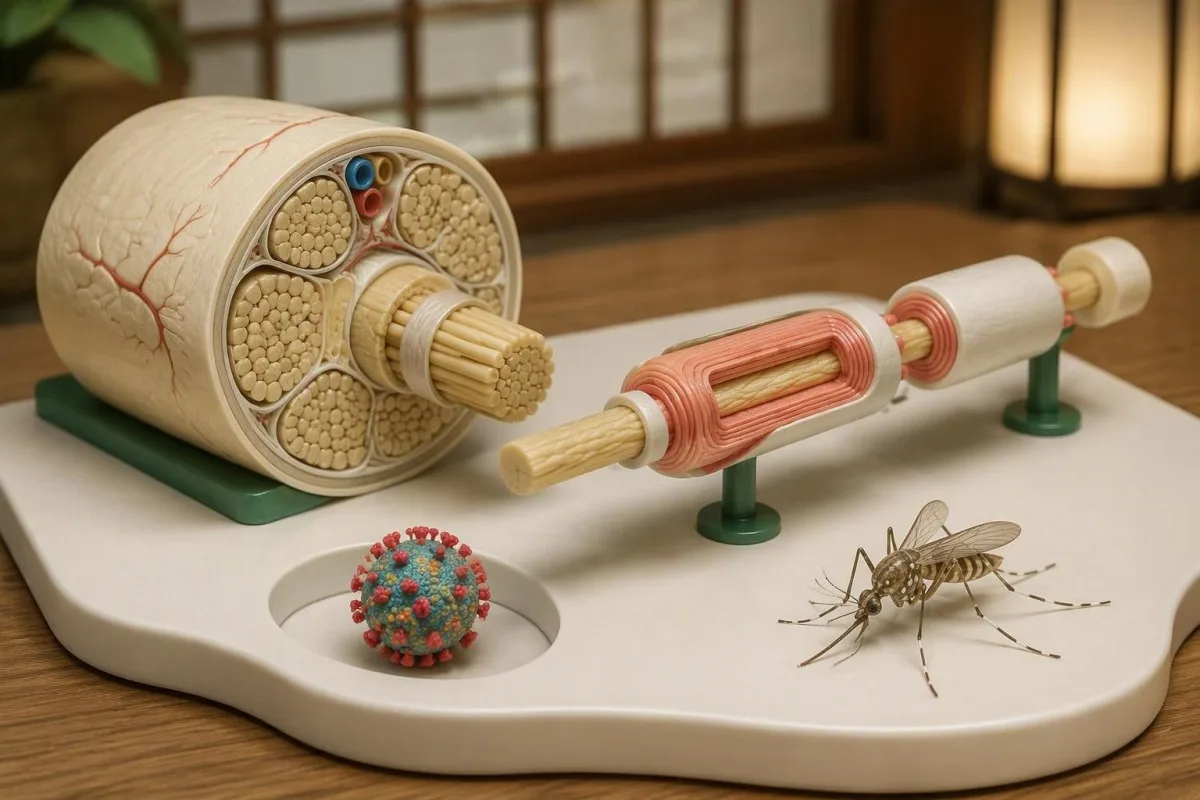
Zika is associated with Guillain-Barré syndrome, but a positive IgM result cannot diagnose that neurological condition. Weakness that progresses over 1–2 days, difficulty walking or problems swallowing needs urgent care; our kuchayib boruvchi holsizlik bo‘yicha ogohlantirish qo‘llanmamizda muhokama qilingan holatlar sabab bo‘lishi mumkin explains why symptoms outweigh reassurance from an uncertain laboratory finding.
Avoid aspirin and nonsteroidal anti-inflammatory medicines such as ibuprofen until dengue has been excluded or a clinician advises otherwise. Paracetamol, also called acetaminophen, is commonly used for fever within appropriate dosing limits; 1 negative Zika test does not exclude dengue, and significant liver disease or pregnancy may require individualized medication advice.
For people planning pregnancy after possible Zika exposure, CDC prevention advice generally uses at least 3 months for males and 2 months for females, measured from return, symptom onset or diagnosis as applicable. These prevention intervals address possible sexual transmission; neither a negative serum PCR nor a reactive IgM result serves as a reliable fertility-clearance test.
During pregnancy, use condoms consistently or avoid sex for the rest of the pregnancy when a partner has relevant possible exposure, according to public-health advice. Travelers should also prevent mosquito bites for 3 weeks after returning from a risk area; prevention decisions should not depend solely on whether 1 laboratory specimen detected RNA.
AI talqinidan tasdiq deb adashtirmasdan qanday foydalanish mumkin
AI can help explain a Zika laboratory report, but it cannot verify infection, arrange confirmatory testing or determine fetal risk. The useful workflow preserves at least 3 essentials: the original laboratory wording, the collection date and the exposure history, followed by clinician review when the result could change care.

Kantesti is an AI-powered blood test analysis tool that turns laboratory reports into patient-readable explanations, not a replacement for reference-laboratory testing. Our AI texnologiyasi bo‘yicha qo‘llanma explains the interpretation workflow; a report saying presumptive positive should remain presumptive in every explanation, even when the flag appears strongly abnormal.
If you choose to upload a report, our free test explanation workflow can help you understand its wording; remove unnecessary identifiers while retaining the assay name, specimen and collection date. An explanation produced in about 60 seconds is not the turnaround time of PCR, PRNT or specialist assessment, which depends on the actual laboratory and care pathway.
Kantesti AI should not be used to infer 1 missing clinical fact from another: negative PCR does not prove absence of earlier infection, high IgM does not prove recent infection and maternal reactivity does not prove fetal effects. Any explanation that converts those findings into certainty needs correction against the complete report and clinical context.
Before acting, check 4 questions: Was the test indicated, was the specimen timely, is confirmation pending and does pregnancy change follow-up? AI is most useful for preparing those questions and organizing results; avoid using its output alone to cancel specialist follow-up, change pregnancy plans or declare sexual-transmission risk resolved.
Tadqiqot nashrlari va dalillarning cheklovlari
Clinical Zika interpretation should rely on directly relevant diagnostic guidance and infection studies, not unrelated biomarker publications. The 3 external references below address Zika testing, RNA persistence and pregnancy management; the 2 accompanying Zenodo publications are educational resources about other laboratory measurements, not evidence validating Zika diagnosis.

Sharp et al. (2019) provide the central framework for distinguishing molecular evidence from ambiguous flavivirus serology, while Paz-Bailey et al. (2018) quantify RNA persistence in a confirmed-infection cohort. Neither source supplies 1 universal accuracy figure for every modern assay, and their population and testing methods must remain attached to any numerical claim.
Kantesti's educational publications include an RDW and cell-index guide, archived on Zenodo under DOI 10.5281/zenodo.18202598. RDW can help explain a concurrent complete blood count, but it does not diagnose Zika, establish the date of infection or predict whether a fetus is affected.
Ilova qilingan kidney-function ratio guide is archived under DOI 10.5281/zenodo.18207872. Kidney measurements may matter in someone with dehydration or another travel-related illness, but there is no validated BUN/creatinine ratio threshold that confirms Zika; these 2 publications should not be presented as Zika diagnostic research.
Pregnancy recommendations and test availability vary with transmission patterns, jurisdiction and laboratory access, so a 2017 or 2019 algorithm should not be applied mechanically to every exposure. Our tibbiy kontent standartlari support separating established facts from uncertainty; use the relevant public-health or reference-laboratory pathway for the actual decision.
Tez-tez beriladigan savollar
Zika IgM testining musbat natijasi menda albatta Zika borligini anglatadimi?
Zika IgM testining musbat natijasi Zika infeksiyasi borligini aniq tasdiqlamaydi. IgM odatda kasallikning birinchi haftasida paydo bo‘ladi, biroq antitanalar bir necha oy yoki undan ko‘proq vaqt saqlanib qolishi va dang yoki boshqa flaviviruslar bilan o‘zaro reaksiyaga kirishishi mumkin. Bitta musbat natija infeksiya qachon yuqqanini ishonchli aniqlay olmaydi yoki uning homiladorlik davrida sodir bo‘lganini tasdiqlay olmaydi. Keyingi qadam ta’sirlanish tarixi, namuna olingan vaqt hamda tegishli molekulyar yoki tasdiqlovchi tekshiruv usuliga bog‘liq.
Dengue kasalligi Zika testi noto‘g‘ri ijobiy natija berishiga sabab bo‘lishi mumkinmi?
Denga antitanalari viruslar antigenik xususiyatlarga ega bo‘lgani sababli Zika antitanalari bo‘yicha reaktiv natijaga olib kelishi mumkin. Bu muammo, odatda, serologik tekshiruvlarga taalluqli bo‘lib, to‘g‘ri validatsiyadan o‘tgan Zika PCR testi muntazam ravishda denga RNKsini aniqlaydi degani emas. Ilgari bir nechta flavivirus bilan zararlanganlik neytrallash testini ham noaniq qilishi mumkin. Shifokor ikki infeksiya borligining isboti deb ikki xil antitana natijasiga qarash o‘rniga, denga testi va etalon laboratoriya talqiniga muhtoj bo‘lishi mumkin.
Zika bilan ta’sirlangandan keyin PCR testi qanchalik aniq?
Zika PCR aniqligi tahlil usuli, namuna va simptomlar boshlanganidan buyon o‘tgan vaqtga bog‘liq, shuning uchun har qanday zararlanish holatiga mos keladigan yagona foiz yo‘q. Simptomlari bo‘lgan homilador bo‘lmagan bemorlarda kasallikning dastlabki 7 kunida odatda zardobda molekulyar tekshiruv o‘tkazishga ustuvor ahamiyat beriladi. Ayrim homiladorlik bo‘yicha tekshiruv protokollari simptomlar boshlanganidan keyin 12 haftagacha tekshiruv o‘tkazishga ruxsat beradi, ammo bu davr mobaynida virusni aniqlash kafolatlanmaydi. Manfiy natija shu namunada RNK aniqlanmaganini anglatadi va avvalroq yuqtirilgan bo‘lish ehtimolini avtomatik ravishda istisno qilmaydi.
Zika IgM musbat, ammo PCR manfiy bo‘lishi nimani anglatadi?
PCR manfiy bo‘lib, Zika IgM musbat chiqishi RNK miqdori kamayganidan keyin olingan namunadagi yaqindagi infeksiya, saqlanib qolgan eski antitanalar yoki boshqa flavivirus bilan o‘zaro reaksiyani aks ettirishi mumkin. Masalan, kasallikning 21-kunida kuzatilgan bu holat 3-kundagi xuddi shu holatdan boshqacha talqin qilinadi. Har ikkala natijaning o‘zi infeksiya qachon yuz berganini aniqlamaydi. Ta’sirlanish va homiladorlik holatiga qarab, shifokor namunani takroran olishni, denge testini yoki referens laboratoriyada tasdiqlashni so‘rashi mumkin.
Homiladorlik paytida Zika testi ijobiy chiqsa, mutaxassisga murojaat qilishim kerakmi?
Homiladorlik davrida Zika bo‘yicha reaktiv natija aniqlansa, ayniqsa safar, jinsiy aloqa orqali yuqish ehtimoli yoki mos keluvchi kasallik belgilari bo‘lsa, homiladorlikni kuzatayotgan shifokorga zudlik bilan murojaat qilish kerak. Vaqtni baholash va tasdiqlovchi tekshiruvlarni tanlash uchun mutaxassis yoki sog‘liqni saqlash organlarining maslahati zarur bo‘lishi mumkin. Infeksiya tasdiqlangan yoki ehtimoliy bo‘lgan ayrim homiladorliklarda har 3–4 haftada ketma-ket ultratovush tekshiruvlari o‘tkazilishi mumkin, biroq onada IgMning bir marta aniqlanishi homilaning infeksiyalanganini tasdiqlamaydi. Yangi boshlangan, kuchayib borayotgan holsizlik, nafas olish qiyinlashuvi yoki og‘ir kasallik belgilari rejalashtirilgan maslahatni kutmasdan shoshilinch baholashni talab qiladi.
PRNT Zikani qachon yuqtirib olganimni tasdiqlay oladimi?
PRNT virusga xos neytrallovchi antitanalarni baholashga yordam beradi, ammo Zika virusi bilan zararlanish sanasini ishonchli aniqlay olmaydi. Ayrim etalon laboratoriya sxemalarida talqin qilishning bir qismi sifatida kamida 1:10 neytrallovchi titr qo‘llanadi, tasnif esa Zika va dengue viruslariga qarshi natijalarning to‘liq ko‘rinishiga qarab belgilanadi. Ikkala virusga qarshi neytrallanish natijalari musbat bo‘lsa, avvalgi flaviviruslar bilan zararlanishlar ularni aniq farqlashga xalaqit berishi mumkin. Hatto Zikaga xos antitanalarning tasdiqlanishi ham infeksiya joriy homiladorlik davrida yuz berganini isbotlamasligi mumkin.
Zika testi manfiy natija bersa, homilador bo‘lishga harakat qilish xavfsizmi?
Zika virusi uchun zardob PCR testining manfiy natijasi jinsiy yo‘l bilan yuqish xavfi yoki homiladorlikni rejalashtirish nuqtayi nazaridan xavf bartaraf etilganini tasdiqlovchi validatsiyalangan test emas. CDC profilaktika tavsiyalariga ko‘ra, erkaklar uchun ehtimoliy ta’sirlanishdan keyin kamida 3 oy, ayollar uchun esa 2 oy kutish lozim; muddat tegishli joydan qaytish, alomatlar boshlanishi yoki tashxis qo‘yilgan sanadan hisoblanadi. Zardob tahlili virus materialining tananing boshqa bo‘limlarida saqlanib qolgan-qolmaganini ishonchli aniqlamaydi. Ta’sirlanish davom etayotgan, jufti homilador bo‘lgan yoki sanalar noaniq bo‘lgan shaxslar sog‘liqni saqlash organlari yoki klinitsistdan o‘z holatiga mos maslahat olishlari kerak.
Qon tahlili natijalarini qanday o‘qish kerak
Laboratoriya hisobotingizni yuklang va Kantesti sun’iy intellekti har bir biomarkerni soniyalar ichida sodda tilda tushuntiradi. Dunyo bo‘ylab 2 milliondan ortiq kishi foydalanadi.
Adabiyotlar
- Klein, T., Mitchell, S., & Weber, H. (2026). RDW qon tahlili: RDW-CV, MCV va MCHC bo‘yicha to‘liq qo‘llanma. Kantesti AI tibbiy tadqiqotlari. DOI
- Klein, T., Mitchell, S., & Weber, H. (2026). BUN/Creatinin nisbatini tushuntirish: Qonning funksiyasi testi qo‘llanmasi. Kantesti AI tibbiy tadqiqotlari. DOI
- Sharp TM et al. (2019). Dengue and Zika Virus Diagnostic Testing for Patients with a Clinically Compatible Illness and Risk for Infection with Both Viruses. MMWR Recommendations and Reports. DOI
- Paz-Bailey G et al. (2018). Persistence of Zika Virus in Body Fluids — Final Report. New England Journal of Medicine. DOI
- Oduyebo T et al. (2017). Update: Interim Guidance for Health Care Providers Caring for Pregnant Women with Possible Zika Virus Exposure — United States (Including U.S. Territories), July 2017. MMWR Morbidity and Mortality Weekly Report. DOI
- 2M+Tahlil qilingan testlar
- 127+Mamlakatlar
- 100+Tillar
Tibbiy guruh haqida


E-E-A-T ishonch signallari
Tajriba
Shifokor boshchiligidagi laboratoriya talqin qilish ish jarayonlarini klinik ko‘rib chiqish.
Tajriba
Laboratoriya tibbiyoti biomarkerlarning klinik kontekstda qanday o‘zini tutishini yoritadi.
Vakolatlilik
Doktor Thomas Klein tomonidan tibbiy jihatdan ko‘rib chiqilgan, doktor Sarah Mitchell va professor doktor Hans Weber hissalari bilan.
Ishonchlilik
Xavotirni kamaytirish uchun aniq keyingi qadamlar yo‘nalishlari bilan dalillarga asoslangan talqin.




Tibbiy ogohlantirish
Ushbu maqola faqat ta’lim maqsadlari uchun mo‘ljallangan va tibbiy maslahatni anglatmaydi. Tashxis va davolash bo‘yicha qarorlar uchun har doim malakali sog‘liqni saqlash mutaxassisiga murojaat qiling.
Nashr etilgan · Tahririyat jamoasi bilan bog‘laning
Angliya va Uelsda ro‘yxatdan o‘tgan Kantesti Ltd tomonidan nashr etilgan, kompaniya raqami. 17090423, London, Birlashgan Qirollik.
