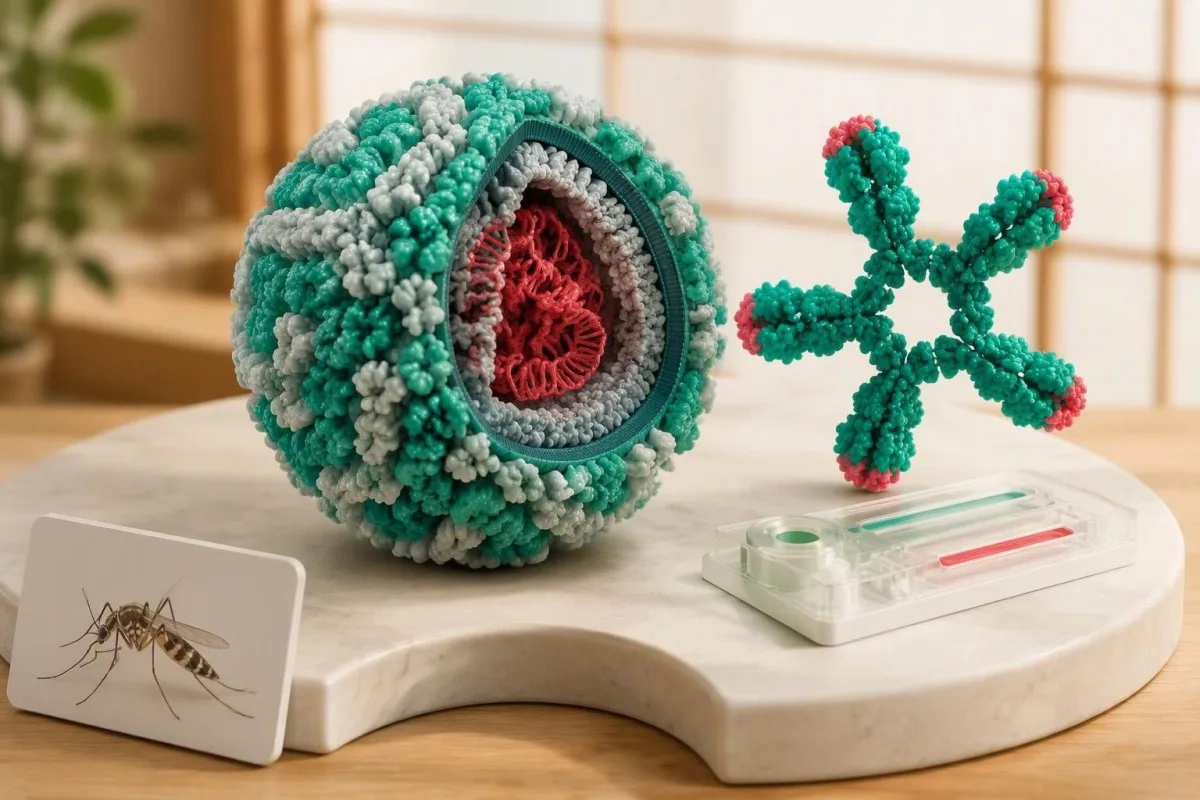
ジカIgM陽性という結果だけでは感染は確定しません。デング熱との交差反応や抗体の持続で説明できる場合があります。PCRの結果は検体採取時期に左右されます。妊娠中は曝露歴に基づく臨床評価を行い、必要に応じて基準検査施設で確認します。.

要点
- ジカIgM は通常、発症後1週間以内に生じ、数か月以上持続することがあります。陽性結果から感染時期を確実に特定することはできません。.
- 交差反応性 デング熱やその他のフラビウイルスとの交差反応により、ジカ感染が確認されていなくても、ジカ抗体検査が反応性となることがあります。.
- PCR検査のタイミング は主に症状の発現からの期間を基準に評価され、蚊に刺された日だけが基準となるわけではありません。症状のある妊娠していない患者では、通常、最初の7日以内の血清検査が優先されます。.
- 妊娠検査 曝露経路によっては、症状発現後12週間まで分子検査が行われる場合がありますが、その期間を通じて検出が保証されるわけではありません。.
- 陰性PCR は、その検体からRNAが検出されなかったことを意味します。検査の有効な検出期間外の感染を否定するものではありません。.
- PRNTによる確認 は抗体検査の結果の判定に役立つことがありますが、過去のフラビウイルスへの曝露により、ジカとデング熱の両方の中和試験が陽性となることがあります。.
- 偽陽性の確率 検査前の感染可能性が低いほど、陽性結果が偽陽性である可能性は高まります。検査法の特異度だけでは、結果が正しい確率は分かりません。.
- 妊娠中のフォローアップ 関連する曝露歴があり検査結果が反応性の場合は、速やかに手配する必要があります。母体の抗体検査結果だけでは、胎児感染を確定できません。.
ジカ検査の陽性結果で、実際に何が確認できるのでしょうか?
ジカIgM陽性は抗体反応性の証拠であり、ジカ感染を自動的に確定するものではありません。. 妥当性が確認されたPCR陽性は、ウイルスRNAを検出するため、より直接的な証拠となります。これら2種類の検査はいずれも、それ単独では胎児感染を確定したり、その影響を予測したりするものではありません。.
陽性という言葉は、アッセイの判定閾値を示すものであり、完全な診断を意味するものではありません。最近渡航し、症状が一致し、過去のデング曝露がない人の場合、抗体反応性の結果が持つ意味は、曝露の可能性がなく、フラビウイルス感染歴が複数ある人で同じ結果が出た場合とは異なります。.
分子検査で検出された結果には、必要に応じて検査機関または公衆衛生上の手順に従った確認を含む、臨床的なフォローアップが必要です。汚染、検体の取り違え、境界域の増幅はまれですが起こり得ます。他の1検体で陰性だったからといって、最初の検体の妥当な陽性結果が自動的に覆るわけではありません。.
Kantestiは、報告された抗体反応性と分子検出の違いを説明し、陽性フラグ1つを診断として扱わないよう支援するAI血液検査アナライザーです。情報 当組織について は当社の役割を説明するものであり、確定は引き続き臨床および検査室の責任です。.
まず、正確なアッセイ名、検体の種類、採取日の3つを確認してください。当社のガイド 抗体陽性所見に関するガイド では、スクリーニング、過去の曝露を示す証拠、現在の感染の証明が別々のカテゴリーである理由を説明しています。.
ジカIgM陽性の意味:最近の感染か、過去の抗体か?
ジカIgM陽性の意味は、検査時期、曝露、アッセイの特異性によって異なります。. IgMは通常、発症後の最初の1週間に検出可能になりますが、数か月以上持続することがあるため、陽性結果が1つあるだけでは、特定の妊娠期間中、または過去2週間以内に感染したことを証明できません。.
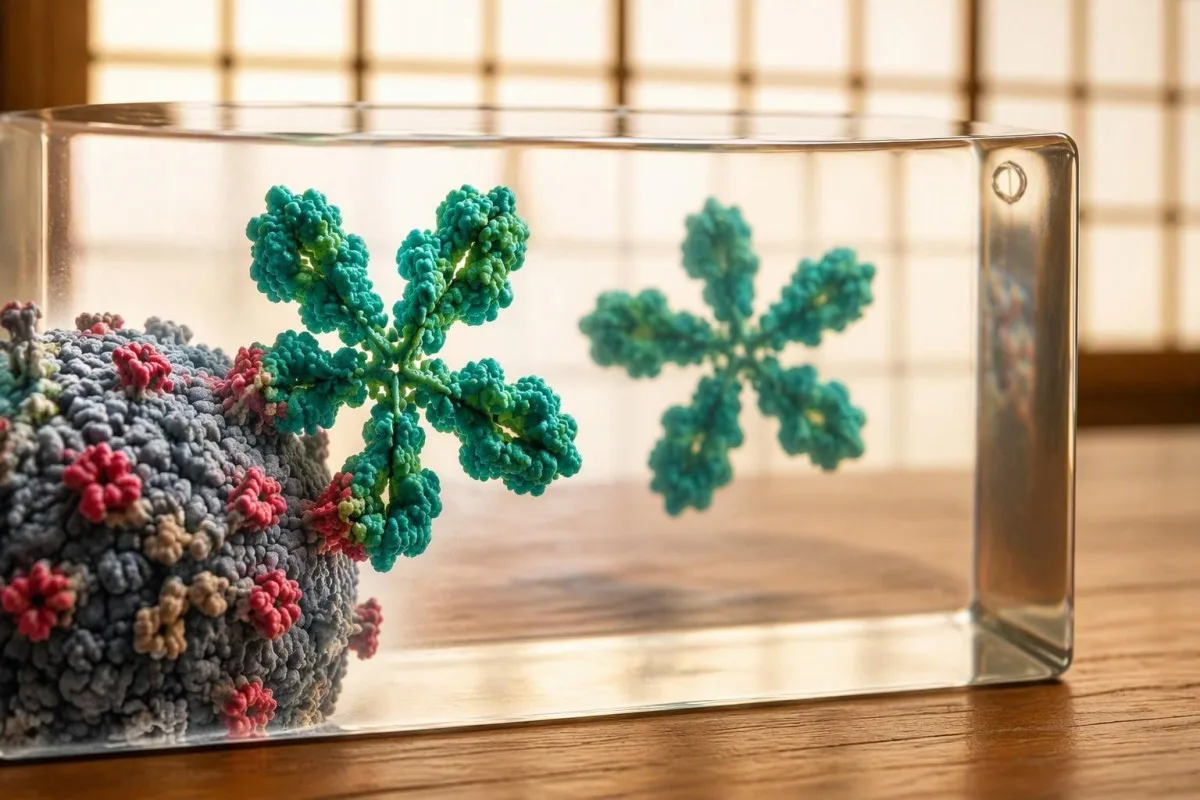
IgMは初期に出現する抗体と説明されることがよくありますが、早く現れるからといって速やかに消失するわけではありません。Sharp et al.(2019)の診断ガイダンスは、ジカIgMが長期間検出されることを強調しています。そのため、渡航から6か月後に得られた結果を、新たな発疹や発熱のエピソードと結び付けるのは難しい場合があります。.
ジカ特異的IgMと血清総IgMは、異なる2つの測定項目です。総IgMはmg/dLまたはg/Lで報告されることがありますが、ジカアッセイではインデックス、比率、または定性的な判定が報告されることがあります。当社の Immunoglobulinの結果がガイドします が説明しています。.
抗体インデックスはウイルス濃度ではありません。仮に同じアッセイでインデックスが3.0、対して1.5だった場合、分析上の反応性がより強いことを示す可能性はありますが、どちらの値もRNA copies/mL、胎児への影響のリスク率、曝露からの日数に換算することはできません。.
ジカIgGの結果は、普遍的な答えではなく、さらなる要素を加えるものです。1回の採血でIgMとIgGの両方が反応性を示した場合でも、交差反応や過去のフラビウイルス曝露によって感染時期を正確に特定できないことがあります。抗体数値が大きいほど病状が重いと決めつけず、検査機関の判定コメントを参照してください。.
デング熱やその他のフラビウイルスが交差反応を引き起こす理由
ジカ抗体検査は、デング熱やその他のフラビウイルスに対して生じた抗体にも反応することがあります。これらのウイルスは抗原的な特徴を共有しているためです。. 多くの渡航先では、臨床上最も重要な交差反応はデング熱です。複数のフラビウイルスに曝露したことがあると、確認用の抗体検査でも識別能が低下することがあります。.
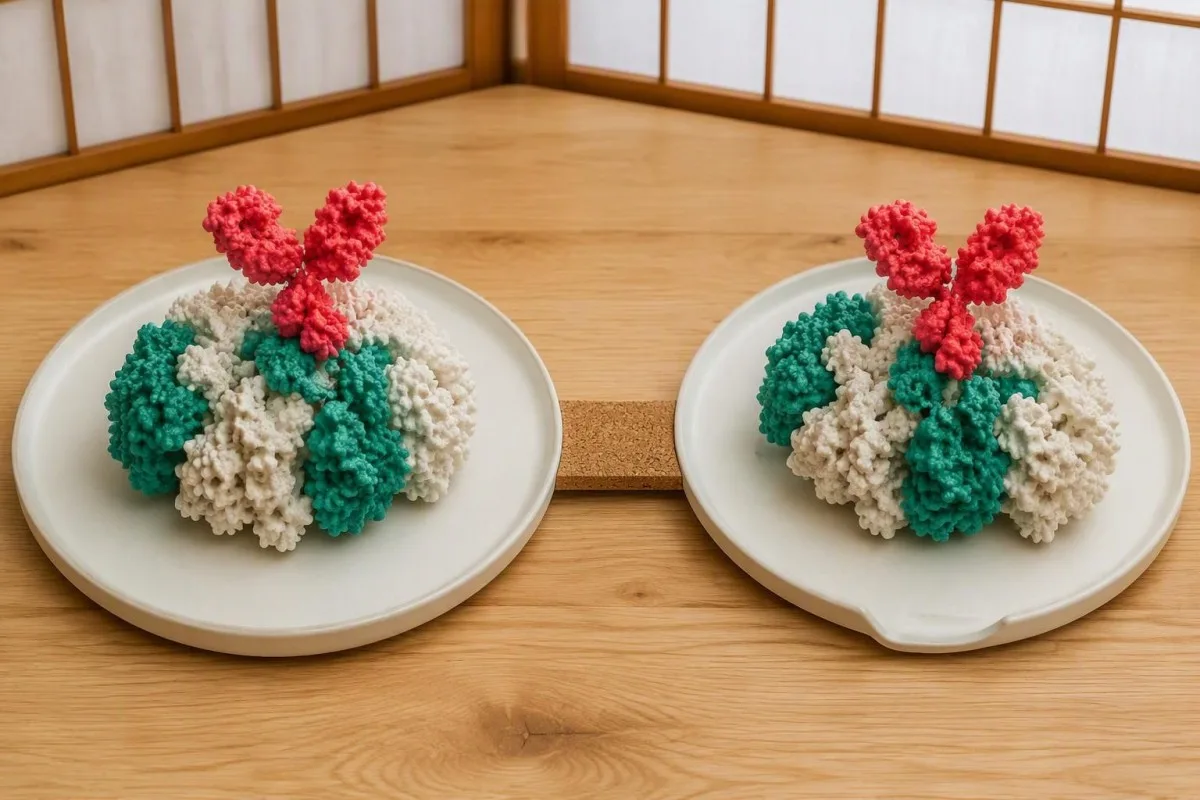
抗体アッセイが検出するのは、選択されたウイルス抗原への結合であり、ウイルス全体の正体ではありません。抗体が共通の表面構造を認識する場合、デング熱に対する真の免疫応答1つによって、ジカアッセイで反応性が生じることがあります。これは生物学的な交差反応であり、検査機関が検体を不適切に取り扱った証拠ではありません。.
黄熱または日本脳炎の過去のワクチン接種は、抗原やアッセイによっては、フラビウイルスの血清学的検査を複雑にする場合があります。最近のワクチン接種だけが重要だと決めつけず、5年または10年前の接種を含め、ワクチン名と接種日を臨床医に伝えてください。どの接種歴が解釈に影響するかは、基準検査機関が判断します。.
ウエストナイルウイルスは同じ大きなウイルス科に属しますが、チクングニアウイルスは属しません。当社の解説 ウエストナイル抗体の確認検査 では関連する曖昧さを扱っていますが、2種類の蚊媒介性疾患が同時に流行しているからといって、それらの抗体アッセイが必ず交差反応するとは限りません。.
フラビウイルスへの曝露を繰り返すと、免疫記憶によって中和抗体応答の幅が広がることがあります。Sharp et al.(2019)は、デング熱に2回感染したことのある人が、中和試験の後も分類が難しい場合がある理由を説明しています。最終的な適切な判定は、ジカ確定ではなく、型不明のフラビウイルス感染となることがあります。.
ジカ検査が偽陽性となる可能性はどのくらいですか?
The probability that a positive Zika antibody result is false depends on both assay performance and the chance of infection before testing. There is no defensible universal percentage for every laboratory, traveler or pregnancy; even a test with 95% specificity can produce mostly false positives in a low-prevalence group.

Consider a clearly hypothetical assay with 90% sensitivity and 95% specificity used in 10,000 people, of whom 1% truly have the target condition. It would yield approximately 90 true positives and 495 false positives, so only 90 of 585 positive results, or 15.4%, would represent the target condition.
Now keep those hypothetical assay characteristics but increase the underlying prevalence to 10%. Approximately 900 true positives and 450 false positives would result, giving a positive predictive value of 66.7%; the test has not improved, but the tested population has changed.
Improving specificity also matters: at 1% prevalence, a hypothetical assay with 90% sensitivity and 99% specificity would produce 90 true positives and 99 false positives. Its positive predictive value would still be only 47.6%; none of these figures is a measured performance estimate for a particular Zika assay.
Persistent antibodies from a genuine old Zika infection are not necessarily an analytically false result, although interpreting them as a new infection would be wrong. Our discussion of reactive hepatitis A IgM illustrates a similar distinction: 1 positive antibody finding can be accurate analytically yet misleading clinically.
ジカPCR検査の精度は検出可能期間に左右される
Zika PCR test accuracy is highest when an appropriate specimen is collected while viral RNA remains detectable. For symptomatic nonpregnant patients, serum molecular testing is commonly prioritized within the first 7 days of illness; a later negative test may reflect falling RNA rather than absence of earlier infection.
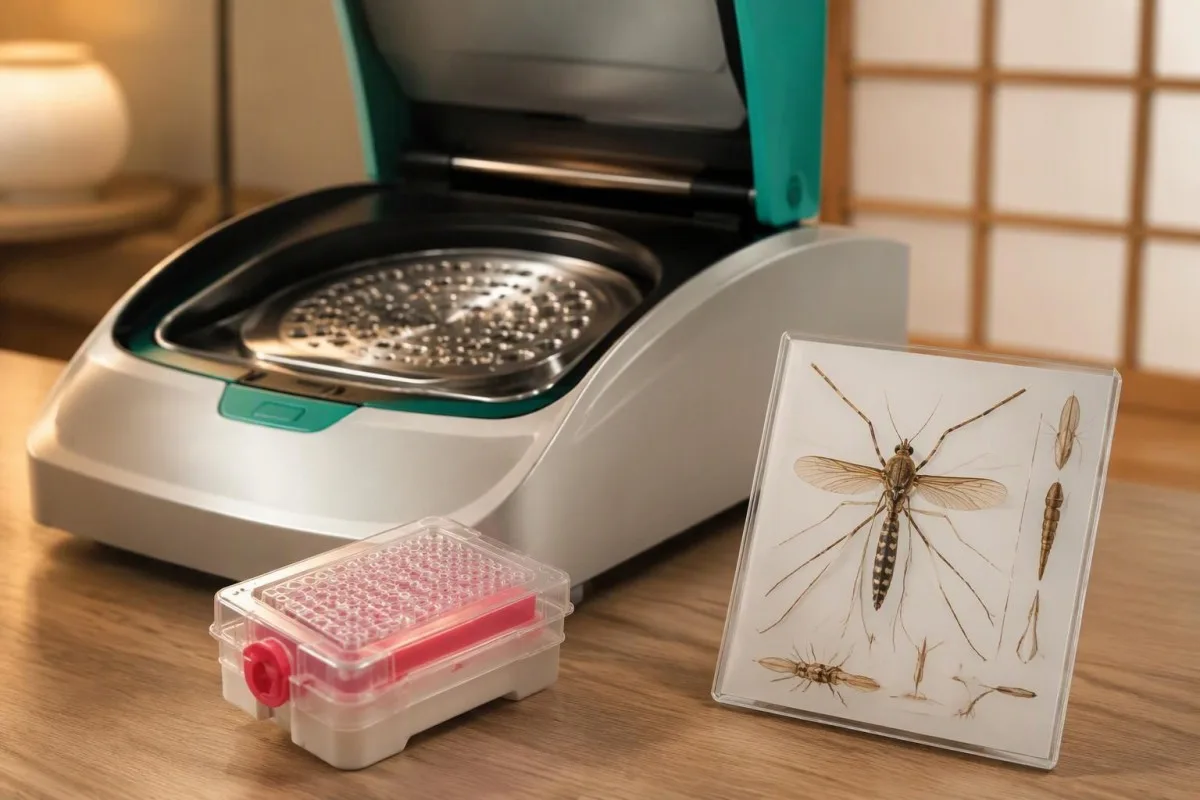
Analytical sensitivity describes how little RNA an assay can detect under validated conditions; clinical sensitivity describes how often it identifies infected people in practice. A very low detection limit cannot rescue a specimen collected 3 weeks after RNA has cleared, and there is no single clinical sensitivity percentage that applies across all collection times.
Count the molecular-testing window from symptom onset when symptoms are present, not automatically from the mosquito bite or flight home. Zika symptoms generally begin 3–14 days after exposure, so a specimen taken 7 days after a bite might fall before, during or after the most useful serum-testing period.
Some pregnancy pathways allow molecular testing up to 12 weeks after symptom onset because RNA detection can be prolonged. This is an eligibility window for selected testing strategies, not a promise of 12 weeks of reliable detection; exposure geography, symptoms, specimen choice and public-health advice determine the actual testing plan.
Urine can complement serum testing when the assay is validated for urine, but it is not a guaranteed longer-lasting specimen. The broader principle also appears in our PCR window-period guide: a negative molecular result from 1 body site cannot be interpreted without its collection timing.
PCRとIgMの結果が一致しない場合、どの日付が重要ですか?
Discordant Zika results should be interpreted using at least 2 clocks: the exposure timeline and the symptom timeline. Add the specimen collection date to both; PCR-negative, IgM-positive findings can reflect late collection, persistent antibodies or cross-reactivity, while early PCR-positive, IgM-negative findings can precede antibody development.

In the prospective cohort reported by Paz-Bailey et al. in the New England Journal of Medicine (2018), estimated median times to loss of detectable RNA were 14 days in serum and 8 days in urine. These estimates came from a selected cohort with confirmed infection; they are not universal cutoffs for excluding infection in an individual patient.
For a hypothetical traveler tested on illness day 3, detected RNA with negative IgM can fit an early immune response. Testing both Zika and dengue through the appropriate pathway matters because the illnesses overlap; our discussion of PCR and antibody disagreement explains why discordance does not automatically indicate laboratory error.
Imagine instead that the first specimen was collected on illness day 21 and shows negative PCR with reactive IgM. That pattern cannot distinguish recent Zika from another flavivirus response or persistent antibodies without additional context; when indicated, a clinician may arrange a later specimen, often around 10–14 days after the first, using laboratory-specific instructions.
At Kantesti, we encourage recording collection dates separately from report-release dates because a 5-day reporting delay does not extend the biological detection window. Our 採血タイムラインのガイド explains this distinction; ongoing exposure may also prevent assignment of a single meaningful last-exposure date.
ジカ検査の検出、判定保留、無効の結果の読み方
Detected, not detected, equivocal and invalid are different laboratory conclusions. A detected PCR identifies RNA in the tested specimen; not detected means the signal was absent or below the assay threshold, while an invalid result means the test did not produce a usable answer and may require a second specimen.
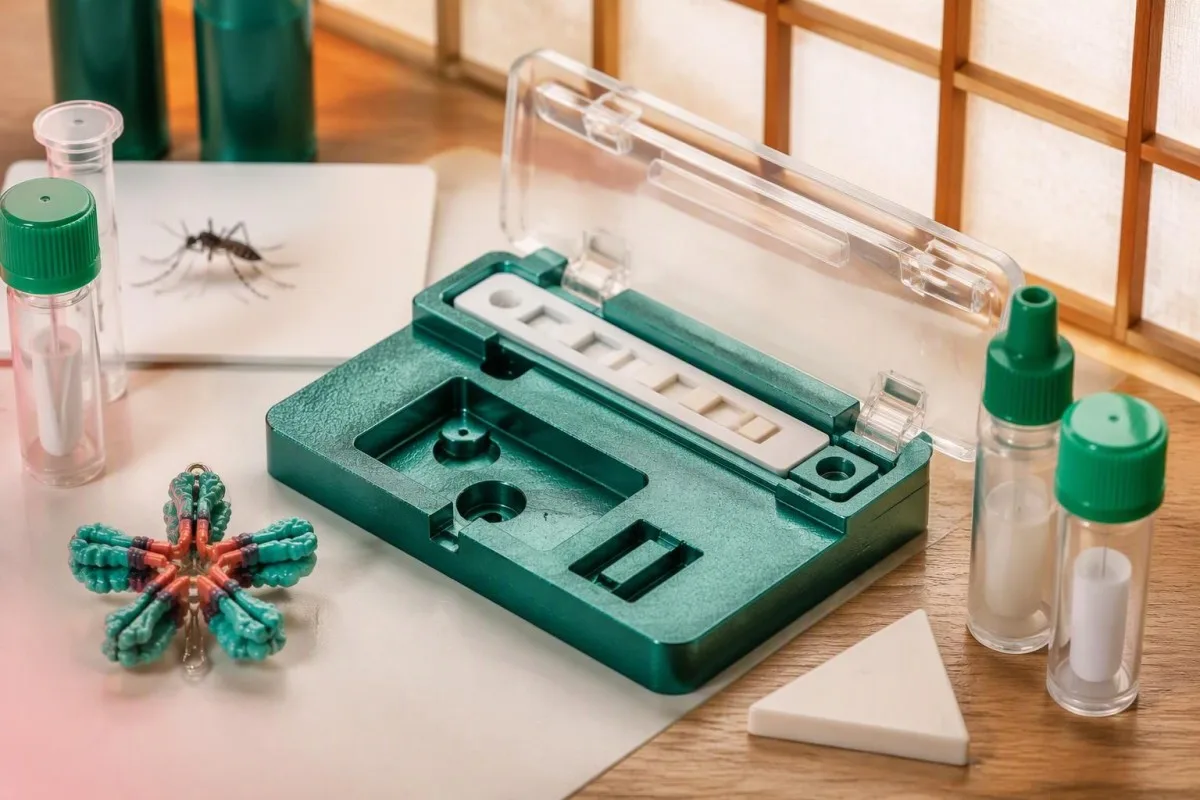
An equivocal antibody result falls into the assay's uncertainty zone, which varies by laboratory and test design. A hypothetical index of 1.0 cannot be called positive or negative without that assay's reference intervals; our guide to 定性検査結果と定量検査結果 explains why a number and its interpretation must stay together.
PCR cycle threshold, when reported, describes amplification behavior rather than a standardized severity score. A hypothetical Ct of 35 on 1 instrument cannot be directly compared with Ct 35 on another assay, and it cannot reliably predict fetal effects, contagiousness or the precise day on which infection began.
An inhibited or invalid PCR is not a negative PCR. Problems involving extraction, specimen handling or amplification controls can require reprocessing or recollection; if the original specimen was collected on illness day 5, a replacement collected on day 12 must be interpreted at its own later biological time point.
Keep the complete report, including 4 often-overlooked fields: specimen source, assay name, collection date and interpretive comments. A cropped photograph showing only a red positive flag can hide a presumptive designation or a pending confirmatory test, making both clinical review and any automated explanation less reliable.
PRNTや分子検査の再検査が役立つのはどのような場合ですか?
Confirmatory testing helps when a reactive Zika screen needs virus-specific clarification or an unexpected molecular result needs verification. Plaque reduction neutralization testing, or PRNT, measures functional neutralizing antibodies; however, responses against 2 or more flaviviruses can prevent PRNT from identifying which virus caused the original immune response.

Some reference laboratories use PRNT90, meaning the dilution that reduces plaque formation by 90%. In established CDC interpretive schemes, a Zika neutralizing titer of at least 1:10 with negative dengue neutralization can support Zika-specific classification; the complete algorithm, antibody screening result and laboratory instructions still matter.
If both Zika and dengue neutralizing titers are at least 1:10, the result may remain consistent with an unspecified flavivirus infection. A 4-fold difference between titers is not universally decisive after previous flavivirus exposures, so patients should not calculate their own confirmation rule from two numbers.
Repeating an unexpected positive NAAT may involve a new extraction from the original specimen, a second target or another specimen, depending on the assay and public-health protocol. This is not the same as simply rerunning 1 antibody screen; our antibody confirmation guide discusses why independent confirmation is more informative than repeated screening.
Kantesti is an AI lab test interpretation service that explains laboratory wording without converting 1 presumptive result into a confirmed diagnosis. Our バリデーションおよび監督に関する情報 describes evaluation boundaries; no interpretation tool can make PRNT reliably date infection when the underlying antibody biology cannot do so.
妊娠中に専門医の評価が必要となる場合
Pregnancy warrants prompt clinician assessment when possible Zika exposure accompanies compatible symptoms, reactive testing or concerning prenatal findings. Stable patients do not usually need emergency care solely because of 1 positive IgM result, but maternal-fetal medicine, infectious-disease or public-health input may be needed to choose testing and follow-up.

The key question is whether infection could have occurred during pregnancy, not simply whether an antibody is present today. The CDC pregnancy guidance by Oduyebo et al. (2017) explains how persistent IgM and falling transmission rates complicate screening; a reactive result at 10 weeks of pregnancy may still reflect exposure before conception.
Symptoms are not required for fetal risk assessment because maternal Zika infection can be asymptomatic. Conversely, 1 episode of fever or rash is not specific to Zika; a specialist weighs travel destination, mosquito exposure, sexual exposure, dates and alternative diagnoses rather than using symptoms alone to label the pregnancy.
Bring at least 4 dates to the appointment: the pregnancy dating estimate, travel or exposure dates, symptom onset and specimen collection. Our discussion of 妊娠中のトキソプラズマ検査結果 explains a shared counseling principle: maternal antibodies do not automatically prove a new infection during pregnancy.
Routine Zika IgM screening is not appropriate for every asymptomatic pregnancy, especially where pretest probability is low and antibody persistence would create ambiguity. Similar timing difficulties arise with CMV抗体パターン, but the diagnostic algorithms are different; do not transfer 1 virus's avidity or confirmation rules to another.
超音波検査や胎児検査で確認できること
Prenatal ultrasound assesses fetal development; it does not confirm or exclude maternal Zika infection. For pregnancies with confirmed or possible infection, specialist-led serial ultrasound may be considered every 3–4 weeks, while amniotic-fluid testing is individualized because a negative result cannot reliably exclude fetal infection.

A normal scan shortly after exposure does not end the assessment because some findings develop later. The 3–4-week surveillance interval discussed in CDC pregnancy guidance is intended to reassess growth and neuroanatomy over time; it is not a guarantee that every affected pregnancy will produce a visible finding at the next appointment.
Amniocentesis should not be ordered automatically for an isolated reactive IgM result. The decision depends on gestational age, imaging findings, other diagnostic indications and counseling about procedural uncertainty; there is no single post-exposure day on which a negative amniotic-fluid PCR reliably provides a 100% exclusion of fetal infection.
Concerning prenatal findings can justify specialist evaluation even when maternal PCR is negative. A specimen collected 8 weeks after symptoms may no longer detect maternal RNA, and abnormalities have alternative causes; counseling should separate what the scan shows from what the maternal laboratory result can establish.
Fever during pregnancy still needs assessment for other treatable illnesses, including conditions covered in our pregnancy fever testing guide. If maternal evidence or prenatal findings warrant newborn follow-up, a pediatric team plans examination and appropriate hearing, eye or laboratory assessment; 1 maternal IgM result alone does not diagnose the infant.
ジカの判定にデング熱検査も必要な理由
Dengue testing often belongs in the Zika workup because dengue overlaps geographically, resembles Zika clinically and can complicate Zika serology. During the first 7 days of dengue illness, NAAT or NS1 antigen testing is commonly useful; later testing relies more heavily on antibody interpretation and the clinical picture.
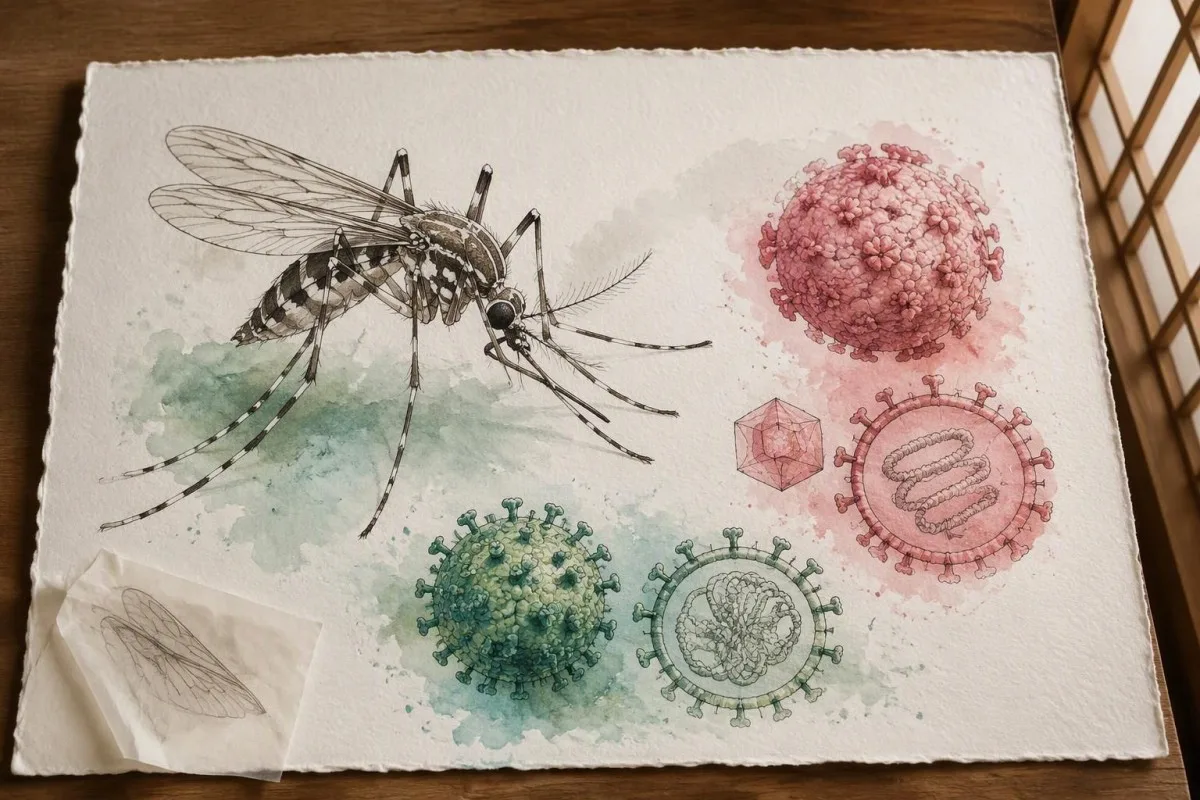
A positive dengue NAAT or NS1 result offers evidence that differs from a cross-reactive antibody screen. Our explanation of dengue NS1 timing covers the early window; a negative NS1 result after illness day 7 cannot be treated as equivalent to a negative result obtained on day 2.
Zika and dengue are not mutually exclusive diagnoses, although a dual-reactive antibody pattern commonly reflects serologic overlap rather than 2 proven infections. Sharp et al. (2019) recommend diagnostic reasoning that considers both viruses; molecular evidence, exposure timing and reference-laboratory interpretation are more informative than counting positive antibody flags.
Chikungunya can produce prominent joint symptoms after the same type of mosquito exposure, but it is an alphavirus rather than a flavivirus. Our guide to chikungunya IgM persistence explains why a reactive result also needs timing context; 3 overlapping illnesses require virus-specific tests, not interchangeable antibody assumptions.
Malaria and other travel-related illnesses remain possible when the itinerary supports them. A returned traveler with 38°C fever should not wait for a Zika confirmation result before obtaining clinical assessment; the danger of anchoring on 1 reactive test is missing a different condition with an urgent or specific treatment.
結果が確定していない間、どのような症状があれば緊急受診が必要ですか?
New progressive weakness, breathing difficulty, confusion, fainting or severe dehydration require urgent assessment regardless of the Zika result. Severe abdominal pain, persistent vomiting or unusual bleeding can suggest dengue complications; 1 negative Zika PCR does not make these symptoms safe to monitor without medical advice.
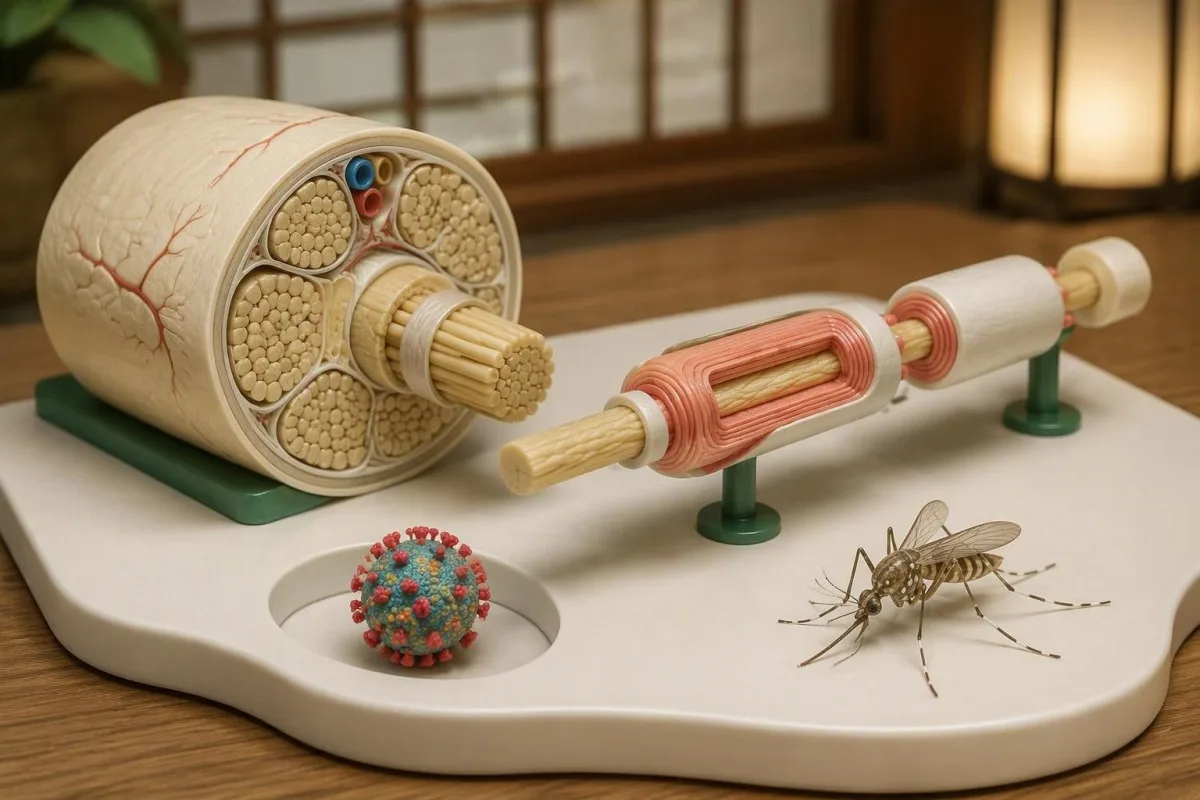
Zika is associated with Guillain-Barré syndrome, but a positive IgM result cannot diagnose that neurological condition. Weakness that progresses over 1–2 days, difficulty walking or problems swallowing needs urgent care; our 進行性筋力低下の警告ガイド explains why symptoms outweigh reassurance from an uncertain laboratory finding.
Avoid aspirin and nonsteroidal anti-inflammatory medicines such as ibuprofen until dengue has been excluded or a clinician advises otherwise. Paracetamol, also called acetaminophen, is commonly used for fever within appropriate dosing limits; 1 negative Zika test does not exclude dengue, and significant liver disease or pregnancy may require individualized medication advice.
For people planning pregnancy after possible Zika exposure, CDC prevention advice generally uses at least 3 months for males and 2 months for females, measured from return, symptom onset or diagnosis as applicable. These prevention intervals address possible sexual transmission; neither a negative serum PCR nor a reactive IgM result serves as a reliable fertility-clearance test.
During pregnancy, use condoms consistently or avoid sex for the rest of the pregnancy when a partner has relevant possible exposure, according to public-health advice. Travelers should also prevent mosquito bites for 3 weeks after returning from a risk area; prevention decisions should not depend solely on whether 1 laboratory specimen detected RNA.
確定診断と取り違えずにAIによる判定を利用する方法
AI can help explain a Zika laboratory report, but it cannot verify infection, arrange confirmatory testing or determine fetal risk. The useful workflow preserves at least 3 essentials: the original laboratory wording, the collection date and the exposure history, followed by clinician review when the result could change care.

Kantesti is an AI-powered blood test analysis tool that turns laboratory reports into patient-readable explanations, not a replacement for reference-laboratory testing. Our AIテクノロジーガイド explains the interpretation workflow; a report saying presumptive positive should remain presumptive in every explanation, even when the flag appears strongly abnormal.
If you choose to upload a report, our free test explanation workflow can help you understand its wording; remove unnecessary identifiers while retaining the assay name, specimen and collection date. An explanation produced in about 60 seconds is not the turnaround time of PCR, PRNT or specialist assessment, which depends on the actual laboratory and care pathway.
Kantesti AI should not be used to infer 1 missing clinical fact from another: negative PCR does not prove absence of earlier infection, high IgM does not prove recent infection and maternal reactivity does not prove fetal effects. Any explanation that converts those findings into certainty needs correction against the complete report and clinical context.
Before acting, check 4 questions: Was the test indicated, was the specimen timely, is confirmation pending and does pregnancy change follow-up? AI is most useful for preparing those questions and organizing results; avoid using its output alone to cancel specialist follow-up, change pregnancy plans or declare sexual-transmission risk resolved.
研究論文とエビデンスの限界
Clinical Zika interpretation should rely on directly relevant diagnostic guidance and infection studies, not unrelated biomarker publications. The 3 external references below address Zika testing, RNA persistence and pregnancy management; the 2 accompanying Zenodo publications are educational resources about other laboratory measurements, not evidence validating Zika diagnosis.
Sharp et al. (2019) provide the central framework for distinguishing molecular evidence from ambiguous flavivirus serology, while Paz-Bailey et al. (2018) quantify RNA persistence in a confirmed-infection cohort. Neither source supplies 1 universal accuracy figure for every modern assay, and their population and testing methods must remain attached to any numerical claim.
Kantesti's educational publications include an RDW and cell-index guide, archived on Zenodo under DOI 10.5281/zenodo.18202598. RDW can help explain a concurrent complete blood count, but it does not diagnose Zika, establish the date of infection or predict whether a fetus is affected.
併記されている kidney-function ratio guide is archived under DOI 10.5281/zenodo.18207872. Kidney measurements may matter in someone with dehydration or another travel-related illness, but there is no validated BUN/creatinine ratio threshold that confirms Zika; these 2 publications should not be presented as Zika diagnostic research.
Pregnancy recommendations and test availability vary with transmission patterns, jurisdiction and laboratory access, so a 2017 or 2019 algorithm should not be applied mechanically to every exposure. Our 医療コンテンツ基準 support separating established facts from uncertainty; use the relevant public-health or reference-laboratory pathway for the actual decision.
よくある質問
ジカウイルスIgM検査が陽性なら、確実にジカウイルスに感染しているということですか?
ジカIgM検査が陽性でも、ジカウイルス感染が確実に確定するわけではありません。IgMは通常、発症後最初の1週間に産生されますが、抗体は数か月以上持続することがあり、デングウイルスやその他のフラビウイルスと交差反応する場合があります。単回の陽性結果では、感染時期を確実に特定したり、妊娠中に感染したことを確定したりすることはできません。次の対応は、曝露歴、検体採取の時期、適切な分子検査または確認検査の手順によって決まります。.
デング熱によってジカウイルス検査が偽陽性になることはありますか?
デング熱抗体は、ウイルス間で抗原性の特徴が共通しているため、ジカウイルス抗体検査で反応性の結果を引き起こすことがあります。この問題は主に血清学的検査に影響するものであり、適切に検証されたジカウイルスPCRで通常デングウイルスRNAが検出されることを意味するわけではありません。複数のフラビウイルスへの過去の曝露によって、中和試験の結果も曖昧になることがあります。臨床医は、二重反応性の抗体結果を2つの感染症の証拠として扱うのではなく、デング熱検査や基準検査機関による判定を必要とする場合があります。.
曝露後のジカウイルスPCR検査の精度はどの程度ですか?
ジカウイルスPCRの精度は、検査法、検体、症状発現からの経過時間によって異なるため、すべての曝露に当てはまる単一の割合はありません。症状のある非妊娠患者では、発症後7日以内の血清分子検査が一般に優先されます。一部の妊娠関連の検査経路では、症状発現から12週間後まで検査が認められていますが、その期間全体を通じて検出が保証されるわけではありません。陰性結果は、その検体からRNAが検出されなかったことを意味し、それ以前の感染を自動的に除外するものではありません。.
ジカウイルスIgM陽性、PCR陰性とはどういう意味ですか?
Zika IgM陽性でPCR陰性の場合、RNAが減少した後に採取された最近の感染、長期間残存する抗体、または別のフラビウイルスとの交差反応を反映している可能性があります。たとえば、発症21日目にこのパターンが認められた場合と、3日目に同じパターンが認められた場合とでは解釈が異なります。いずれの結果だけでも、感染がいつ起きたかは確定できません。曝露状況や妊娠の有無に応じて、医師は再検査、デング熱検査、または基準検査機関での確認を依頼する場合があります。.
妊娠中にジカウイルス検査で陽性だった場合、専門医を受診すべきですか?
妊娠中にジカウイルスの反応性結果が得られた場合は、特に関連する渡航歴、性的曝露、またはジカウイルス感染症に合致する症状があるとき、妊娠を管理している臨床医に速やかに連絡する必要があります。時期を評価し、確認検査を選択するために、専門医または公衆衛生機関の助言が必要となる場合があります。感染が確認された、または感染の可能性がある一部の妊娠では、3~4週間ごとの連続超音波検査が行われることがありますが、母体のIgM検査結果が1件得られただけでは胎児感染は確定しません。新たに進行する筋力低下、呼吸困難、または重篤な疾患がある場合は、予約済みの診察を待たずに緊急評価を受ける必要があります。.
0 PRNTでジカウイルスに感染した時期を確認できますか?
0 PRNTはウイルス特異的中和抗体の評価に役立つことがありますが、ジカウイルス感染の時期を確実に特定することはできません。一部の参照検査機関の判定基準では、解釈の一環として少なくとも1:10の中和抗体価が用いられ、ジカウイルスとデングウイルスの全体的なパターンに基づいて分類されます。両方のウイルスで中和試験が陽性となった場合、過去のフラビウイルス曝露により明確に区別できないことがあります。ジカウイルス特異的抗体が確認されても、感染が今回の妊娠中に起きたことを証明できるとは限りません。.
ジカウイルス検査が陰性なら、妊娠を試みても安全だと分かりますか?
0 A negative Zika serum PCR is not a validated clearance test for sexual-transmission risk or pregnancy planning. CDC prevention advice generally uses at least 3 months after possible exposure for males and 2 months for females, measured from the relevant return, symptom-onset or diagnosis date. Serum testing does not reliably determine whether viral material persists in another body compartment. People with ongoing exposure, a pregnant partner or uncertainty about dates should obtain individualized public-health or clinician advice.
血液検査結果の見方を確認しましょう
検査報告書をアップロードすると、KantestiのAIが数秒で各バイオマーカーを平易な言葉で説明します。世界中で200万人以上が利用しています。.
参考文献
- Klein, T., Mitchell, S., & Weber, H. (2026). RDW血液検査:RDW-CV、MCV、MCHCの完全ガイド。. Kantesti AI医学研究。. 掲載日
- Klein, T., Mitchell, S., & Weber, H. (2026). BUN/クレアチニン比の説明:腎機能検査ガイド。. Kantesti AI医学研究。. 掲載日
- Sharp TM et al. (2019). Dengue and Zika Virus Diagnostic Testing for Patients with a Clinically Compatible Illness and Risk for Infection with Both Viruses. MMWR Recommendations and Reports. 掲載日
- Paz-Bailey G et al. (2018). Persistence of Zika Virus in Body Fluids — Final Report. New England Journal of Medicine. 掲載日
- Oduyebo T et al. (2017). Update: Interim Guidance for Health Care Providers Caring for Pregnant Women with Possible Zika Virus Exposure — United States (Including U.S. Territories), July 2017. MMWR Morbidity and Mortality Weekly Report. 掲載日
- 200万以上分析対象の検査
- 127+国
- 100+言語
医療チームについて


E-E-A-T 信頼性シグナル
経験
医師主導による、検査結果解釈ワークフローの臨床レビュー。.
専門知識
臨床的な文脈においてバイオマーカーがどのように振る舞うかに焦点を当てた検査医学。.
権威
Thomas Klein医師による医学的レビュー。Sarah Mitchell医師およびHans Weber教授の協力。.
信頼性
アラームを減らすための明確なフォローアップ経路を備えた、エビデンスに基づく解釈。.




医療免責事項
この記事は教育目的のみを対象としており、医療助言を構成するものではありません。診断や治療の判断を行う際は、必ず有資格の医療提供者にご相談ください。.
公開 · 編集チームにお問い合わせください
Kantesti Ltdが発行。イングランドおよびウェールズで登録、会社番号. 17090423, 、英国ロンドン。.
