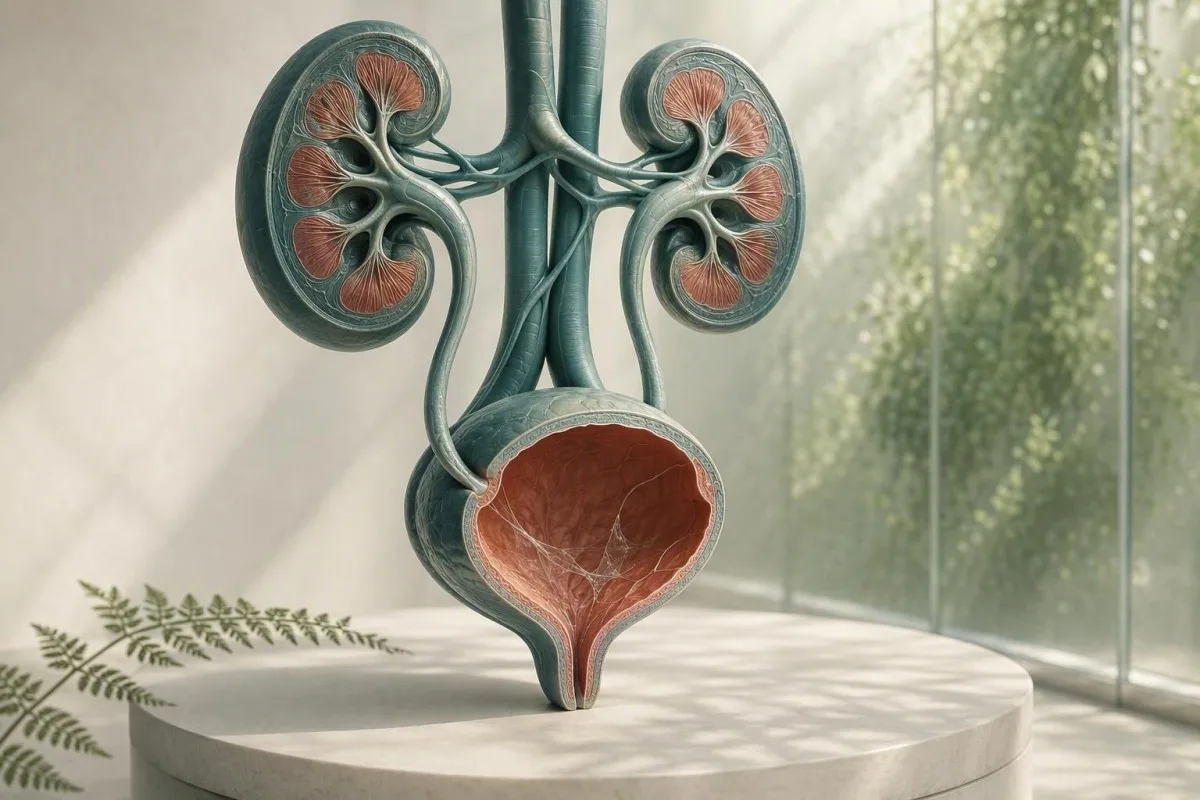
Mukusi në një raport mikroskopik të urinës zakonisht është një problem grumbullimi, jo një diagnozë. Të gjeturat e tjera të analizës së urinës, simptomat dhe cilësia e mostrës përcaktojnë nëse nevojitet ndjekje.


- Fije mukusi vetëm janë zakonisht të padëmshme, veçanërisht në një mostër të vetme të pastër të kapur pa simptoma urinare.
- Pragu i piurisë prej më shumë se 5 qelizave të bardha për fushë me fuqi të lartë mbështet inflamacionin e traktit urinar, por nuk provon një UTI bakteriale.
- Nxitësi i kulturës është mukusi plus djegia, urgjenca, ethe, dhimbje në zonën e veshkave, nitritet, ose qelizat e bardha të rëndësishme—jo mukusi vetëm.
- Qeliza squamous mbi rreth 10 për fushë me fuqi të lartë shpesh tregojnë kontaminim të lëkurës gjenitale dhe e bëjnë rezultatin e urinës më pak të besueshëm.
- Gjak i dukshëm dhimbja e krahut me ngërçe kërkon vlerësim të shpejtë për gur, edhe nëse raportohet mukozë.
- Shtatzënia ndryshon pragun për ndjekjen sepse bakteriuria asimptomatike zakonisht ekranohet me kultivimin e urinës, jo vetëm me mikroskop.
- Urinë e turbullt mund të pasqyrojë kristale, urinë të koncentruar, sekrecione vaginale, spermë ose qeliza; nuk mund të diagnostikojë infeksion nga pamja.
- Përsëritja e mostrës është e arsyeshme kur mukosi është i vetmi gjetje e pazakontë dhe mbledhja nuk ishte një pastrim i kujdesshëm i mesit.
Çfarë nënkuptojnë zakonisht fijet e mukusit në analizën e urinës
Fije mukusi në urinë janë zakonisht fije të sekrecionit mbrojtës normal ose kontaminimit gjenital, dhe një rezultat i izoluar rrallë sinjalizon sëmundje të veshkave. Gjetja bëhet kuptimplote kur shfaqet me simptoma urinare, qeliza të bardha, baktere, gjak ose proteina.
Laboratorët identifikojnë mukusin si fije të holla, të tejdukshme të parë nën mikroskop; shumë raporte thjesht e gradojnë atë si të rrallë, pak, mesatare ose shumë, në vend që të caktojnë një interval numerik referimi. Ura natyrshëm përmban një sasi të vogël materiali të pasur me glikoproteinë nga trakti urinar, dhe sekrecionet vaginale ose uretrale mund të shtojnë më shumë gjatë mbledhjes.
Fjalëformimi i raportit është më pak alarmues nga sa tingëllon. Që nga 26 gushti 2026, nuk ka një numër të vlefshëm të fijeve të mukusit që diagnostikon një UTI, gur, kancer ose dështim renal; është një vëzhgim mikroskopik kontekstual. Për një hartë më të gjerë të artikujve të tjerë në një raport të shiritit dhe mikroskopit, shihni tonë udhëzues i plotë për analizën e urinës.
Në përvojën time klinike, një i rritur pa simptoma me mukozë të shënuar si “mesatare”, 0-2 qeliza të bardha për fushë me zmadhim të lartë, nitrite negative dhe pa gjak, zakonisht i shërbehet më së miri me qetësim ose një mostër e përsëritur e mbledhur siç duhet. Dr. Thomas Klein shpesh sheh ankth të panevojshëm për antibiotikë pasi një sinjalizim laboratorik gabimisht merret si etiketë sëmundjeje.
Kantesti është një platformë e interpretimeve të analizave të gjakut me AI që mund të vendosë shenjuesit e gjakut të lidhur me veshkat, siç janë kreatinina dhe eGFR, krahas një gjetjeje të analizës së urinës – por nuk mund të diagnostikojë një UTI vetëm nga mukusi. Një rezultat i mikroskopisë së urinës ka nevojë për historinë klinike që erdhi me të.
Pse një laborator e sinjalizon atë
Sistemi i informacionit laboratorik sinjalizon mukusin sepse është vizualisht i pranishëm, jo sepse laboratori ka krijuar një prag të rrezikshëm. Një sinjalizim, prandaj, do të thotë “vëzhguar” në vend të “shenjues sëmundjeje jonormale”, shumë si një gjetje e izoluar e gjurmës mund të kërkojë trajtim.
Nga vjen mukusi në një mostër urine
Mukusi në urinë mund të vijë nga uretra, veshja e fshikëzës, qafa e mitrës ose vagina, sperma, ose lëkura e jashtme gjenitale gjatë mbledhjes. Burimi i tij shpesh nxirret nga pjesa tjetër e modelit mikroskopik sesa nga vetë fijet.
Fshikëza dhe uretra kanë një shtresë sipërfaqësore mbrojtëse që përmban mukina, duke përfshirë materialin e shoqëruar me uroplakinë, që redukton fërkimin dhe ngjitjen mikrobike. Sasi të vogla mund të bien në urinë pas dehidrimit, aktivitetit seksual të kohëve të fundit, acarimit të lehtë, ose thjesht sepse një mostër e koncentruar e mëngjesit të parë i bën fijet më të lehta për t'u parë.
Për personat që menstruojnë ose kanë rrjedhje vaginale, leukocitet dhe mukusi mund të hyjnë në kupë pa ardhur nga fshikëza. Më shumë se 10 qeliza epiteliale skuamoze për fushë me zmadhim të lartë e bën kontaminimin më të mundshëm, megjithëse laboratorët përdorin pragje raportimi të ndryshëm. Udhëzuesi ynë për qelizat epiteliale në urinë shpjegon pse kjo ndryshon besimin në një rezultat.
Sperma gjithashtu mund të krijojë material me fije ose turbullim për disa orë pas ejakulimit. Kjo nuk e bën urinën të pasigurt, por mund të errësojë mikroskopinë; nëse po merret në konsideratë kultura, unë zakonisht këshilloj mbledhjen e një mostre të re të paktën 24 orë më vonë kur është e mundur.
Pse seksi dhe anatomia ndikojnë në raport
Një kupë urine nuk e izolon fshikëzën nga indet aty pranë. Kjo është arsyeja pse “mukoze e pranishme” raportohet më shpesh në mostra me sekrecione të jashtme, ndërsa një mostër e marrë me kateter përdoret ndonjëherë kur mjekët kanë nevojë për një përgjigje më të pastër.
Kur fijet e mukusit tregojnë drejt një infeksioni të traktit urinar
Fije mukusi mbështesin një UTI të mundshëm vetëm kur shoqërohen me simptoma dhe gjetje inflamatore objektive, veçanërisht pyuria, pozitiviteti i nitritit ose një kulturë bindëse. Mukoza në vetvete nuk është test për UTI.
Një UTI simptomatike e traktit të poshtëm shpesh shkakton djegie, urgjencë, frekuencë, dhimbje suprapubike dhe ndonjëherë erë të re urinar. Në një mostër të mbledhur siç duhet, më shumë se 5 qeliza të bardha të gjakut për fushë me zmadhim të lartë shpesh quhet pyuria; ajo mbështet inflamacionin e traktit urinar, por mund të ndodhë edhe me gurë, infeksione të transmetuara seksualisht dhe kontaminim.
Nitriti është shumë specifik kur është pozitiv, por humbet infeksionet e shkaktuara nga organizmat që nuk reduktojnë nitratin, dhe një rezultat negativ i nitritit nuk përjashton një UTI. Esteraza leukocitare zbulon aktivitetin e enzimës së qelizave të bardha dhe mund të jetë false-pozitive kur sekrecionet vaginale kontaminojnë mostrën; shpjegimi ynë për rezultatet e esterazës së leukociteve i mbulon këto kurthe.
Udhëzuesi i IDSA këshillon kundër shfaqjes ose trajtimit të bacteriurisë asimptomatike te të rriturit e shëndetshëm jo-shtatzënë, sepse antibiotikët shtojnë dëm pa dobi (Nicolle et al., 2019). Ky parim është veçanërisht i rëndësishëm për mukusin: pa djegie, pa ethe dhe pa procedurë urologjike të planifikuar zakonisht do të thotë pa antibiotik thjesht sepse një fushë mikroskopike duket e çrregullt.
Kur kultura është testi më i mirë
Kultura e urinës është më e dobishme sesa ripërsëritja e testit me shirit kur simptomat vazhdojnë, simptomat përsëriten brenda 4 javësh, është e pranishme shtatzënia, dyshohet për pielonefrit, ose antibiotikët e mëparshëm mund të kenë ndryshuar rezultatin. Rritja e përzier bakteriale zakonisht tregon kontaminim të mbledhjes sesa një patogjen i vetëm urinar; shih interpretimi i kulturës së urinës.
Mukusi, kristalet, gurët dhe irritimi mekanik
Mukoza me dhimbje të forta krahërore si valë ose gjak në urinë mund të ndodhë me gurë në veshka, por mukoza as nuk e konfirmon as nuk e përjashton gurët. Gjaku, kristalet, modeli i dhimbjes, imazhet dhe funksioni i veshkave kanë më shumë rëndësi.
Një gur mund të gërvishtë ose të bllokojë shtresën e traktit urinar, duke prodhuar qeliza të kuqe, qeliza të bardha dhe mukus shtesë. Simptoma klasike është dhimbja e papritur kolike që rrezaton drejt ijës, shpesh me të vjella; urina e kuqe ose me ngjyrë çaji tregon urgjencë. Lexoni më shumë rreth shenjave paralajmëruese për gjak në urinë në vend që të supozoni se çdo mostër rozë është një infeksion i thjeshtë.
Kristalet e oksalatit të kalciumit mund të shfaqen te njerëzit e shëndetshëm, veçanërisht në urinë të përqendruar acidike, kështu që një lloj kristali nuk provon një gur aktiv. Te një person me dhimbje, gurë të përsëritur ose hematuri të vazhdueshme, mjekët mund të përdorin ultratinguj ose CT pa kontrast me dozë të ulët në vend që të mbështeten vetëm në sediment. Burimi ynë mbi kristalet e oksalatit të kalciumit detajon kufijtë e raporteve të kristaleve.
Një përjashtim i rëndësishëm është bllokimi me infeksion: ethe prej 38.0°C ose më të larta, dhimbje krahërore, të vjella dhe paaftësia për të urinuar kërkojnë vlerësim urgjent. Shqetësimi nuk është mukoza; është një sistem urinar i bllokuar dhe i infektuar, i cili mund të përkeqësohet shpejt.
Irritim pa gur
Përdorimi i kohëve të fundit i kateterit, procedurat e fshikëzës, çiklizmi i fuqishëm dhe rrezatimi pelvik mund të irritojnë traktin e poshtëm dhe të rrisin mukusin ose qelizat e bardha. Një mjek duhet t'i interpretojë këto rezultate në lidhje me kohën, sepse një mostër e mbledhur brenda 48 orëve pas instrumentimit nuk është ekuivalente me një mostër rutinë skriningu.
Kuptimi i urinës së turbullt: çfarë mund dhe çfarë nuk mund t'ju tregojë pamja
Urina e turbullt mund të shkaktohet nga kripëra të përqendruara, kristale, mukoze, qeliza, shkarkime gjenitale ose baktere, kështu që pamja e vetme nuk mund të diagnostikojë infeksionin. Urina që është e turbullt por pa dhimbje dhe me kohëzgjatje të shkurtër zakonisht nuk është urgjente.
Il-kristalli tal-fosfat jistgħu jagħmlu l-awrina alkalina tidher imċajpra wara li tiksaħ, filwaqt li l-kristalli tal-urati jistgħu jagħmlu l-awrina kkonċentrata aċiduża imċajpra. Kampjun li jitħalla f'temperatura tal-kamra għal aktar minn sagħtejn jista' jsir dejjem aktar turbid hekk kif iċ-ċelloli jiddegradaw u l-batterji jimmultiplikaw, u huwa għalhekk li l-ipproċessar frisk jew ir-refriġerazzjoni huma importanti.
It-taħsir flimkien mad-disurja, l-urġenza, u l-pyuria jistħoqqilhom ittestjar; it-taħsir wara l-eżerċizzju jew teħid ta“ fluwidu inadegwat spiss jitjieb bl-idratazzjoni ordinarja. Immira għal awrina li hija safra ċara aktar milli timponi teħid eċċessiv ta” ilma—l-awrina ċara ħafna ma tfissirx li l-kliewi qed "jaħslu" l-infezzjoni. Ir-reviżjoni dettaljata tagħna ta' shkaqet e urinës së turbullt tissepara ħjiel viżwali minn testijiet affidabbli.
Kantesti është një Analizues i testeve të gjakut AI iddisinjat biex jinterpreta markaturi tad-demm f'kuntest kliniku; krejatinina għolja jew eGFR imnaqqas flimkien ma' anomaliji fl-awrina jistgħu jiġġustifikaw reviżjoni medika, filwaqt li awrina imċajpra waħedha ma tistabbilixxix filtrazzjoni tal-kliewi indebolita. Pannell metaboliku bażiku jista' jżid kuntest utli meta s-sintomi jissuġġerixxu deidratazzjoni jew ostruzzjoni.
Ir-riħa mhix kultura
L-awrina b'riħa qawwija spiss tirrifletti l-konċentrazzjoni, il-metaboliti tal-ispraġ, il-vitamini B, jew kontenitur li baqa' għal żmien twil wisq. Riħa ħażina ġdida bi deni jew sintomi urinarji hija raġuni biex tfittex evalwazzjoni, iżda r-riħa mhix sostitut għall-mikroskopija u l-kultura.
Sekrecionet gjenitale dhe infeksionet e transmetueshme seksualisht
L-iskarigu mill-uretra jew mill-vaġina jista' jidher bħala mukus fl-awrina, u skarigu ġdid b'ħruq fl-awrina jeħtieġ ittestjar tas-saħħa sesswali kif ukoll evalwazzjoni tal-awrina. Il-kultura ta' rutina tal-awrina tista' titlef il-klamidja u l-gonorrea.
Il-klamidja u l-gonorrea jistgħu jikkawżaw disurja u pyuria sterili—ċelloli bojod mingħajr tkabbir batteriku ta' rutina—b'mod partikolari wara espożizzjoni sesswali ġdida. L-ittestjar ta' amplifikazzjoni tal-aċidu nuklejiku, spiss bl-użu tal-awrina tal-ewwel qabda aktar milli kampjun ta' nofs il-fluss, huwa t-test xieraq għax il-kultura standard timmira organiżmi differenti.
F'nies bil-vaġina, il-vaġinosi batterika, il-kandidjażi, u l-infjammazzjoni ċervikali jistgħu jżidu skarigu f'kikkra ta“ nofs il-fluss; swab vaġinali jew eżami jistgħu jkunu aktar informattivi milli tirrepeti l-mikroskopija tal-awrina. F'nies bil-pene, skarigu uretrali viżibbli m'għandux jiġi injorat bħala ”ħjut tal-mukus." Id-distinzjoni prattika hija skarigu nnutat barra l-awrinazzjoni kontra strand irrappurtat biss mil-laboratorju.
Il-linji gwida tal-CDC dwar it-trattament tal-infezzjonijiet trasmessibbli sesswalment tal-2021 jirrakkomandaw l-ittestjar ibbażat fuq NAAT f'siti anatomikament relevanti skont l-istorja ta' espożizzjoni, mhux sintomi biss (Workowski et al., 2021). Jekk ikun hemm uġigħ fil-pelvi, uġigħ fit-testikoli, deni, tqala, jew possibbiltà ta' attakk, fittex parir kliniku fl-istess jum aktar milli tittrattak lilek innifsek b'antibijotiċi li fadal.
Għaliex l-antibijotiċi jistgħu jikkomplikaw is-sitwazzjoni
Li tieħu anke 1 jew 2 dożi ta' antibijotiċi qabel kultura tista' trażżan it-tkabbir normali tal-batterji filwaqt li s-sintomi urinarji u ċ-ċelloli bojod jippersistu. Għid lill-kliniku eżattament liema mediċina, doża, u ħin tal-aħħar doża użajt; dik id-dettall tbiddel kif tiġi interpretata kultura negattiva.
Si të grumbulloni një mostër urine që përgjigjet pyetjes
Kampjun ta' nofs il-fluss miġbur b'mod nadif inaqqas il-mukus, iċ-ċelloli skwamużi, u t-tkabbir batteriku mħallat aħjar milli tiġbor l-ewwel jew l-aħħar parti tal-fluss. It-teknika hija sempliċi, iżda l-ewwel 2 sekondi jagħmlu differenza sproporzjonata.
Aħsel idejk, issepara l-ġilda ġenitali jew irrombla lura l-prepuzju jekk komdu, naddaf skont l-istruzzjonijiet tal-kit, ibda tgħaddi l-awrina fit-tojlit, imbagħad iġbor il-porzjon tan-nofs mingħajr ma l-kikkra tmiss il-ġilda. Kampjun ta' 20–30 mL huwa normalment biżżejjed; il-mili ta' kontenitur kbir sa fuq ma jtejjebx it-test.
Kunsinna l-kikkra immedjatament, idealment fi żmien siegħa; jekk id-dewmien ikun inevitabbli, irrefrigerah skont l-istruzzjonijiet tal-laboratorju u rriħornah fi żmien 24 siegħa. Ir-refriġerazzjoni tnaqqas it-tkabbir batteriku iżda ma tirrestawrax kampjun li diġà kien ikkontaminat. Dan huwa partikolarment importanti meta t-talba tinkludi kultura aktar milli dipstick biss.
Kantesti është një Mjet për analizën e testeve të gjakut me AI użat f'pajjiżi 127+, u l-flussi tax-xogħol tagħna riveduti mill-kliniku jittrattaw il-kwalità tal-kampjun bħala parti mill-interpretazzjoni aktar milli nota ta' qiegħ. L-istess prinċipju japplika għal kwalunkwe valur tal-laboratorju: kampjun teknikament fqir jista' joħloq riżultat medikament persważiv iżda qarrieqi. Ara tagħna lista ta' kontroll tal-preċiżjoni tal-laboratorju għal mistoqsijiet li għandek tistaqsi qabel ma taġixxi fuq bandiera iżolata.
Tiggravitax waqt dawn is-sitwazzjonijiet jekk tista' tistenna
Evita l-ittestjar ta' rutina waqt fluss mestrwali qawwi, immedjatament wara kopulazzjoni, jew wara li tuża kremi vaġinali sakemm il-kliniku ma jitlobx speċifikament. Meta l-ittestjar ma jistax jistenna, għid lil-laboratorju jew lill-kliniku, għax dak il-kuntest jista' jispjega mukus, ċelloli ħomor, jew ċelloli esterni.
Si lexojnë mjekët mukusin së bashku me pjesën tjetër të analizës së urinës
Modeli më i dobishëm i urinës kombinon simptomat me qeliza të bardha, qeliza të kuqe, nitrite, leukocit esterazë, proteinë, glukozë, peshë specifike dhe qeliza epiteliale. Mukoza është një veçori mbështetëse e vogël në atë model.
Një mostër e pastër me mukoza, 0–2 qeliza të bardha për fushë me fuqi të lartë, nitrite negative dhe pa gjak zakonisht nuk kërkon trajtim. Mukoza me më shumë se 5 qeliza të bardha për fushë me fuqi të lartë dhe leukocit esterazë pozitive rrit probabilitetin e inflamacionit; shtimi i nitriteve ose një kulturë me një organizëm rrit besimin se bakteret janë përgjegjëse.
Proteinës i nevojitet shtegu i saj. Proteina gjurmë pas etheve, ushtrimeve ose urinës së përqendruar mund të jetë e përkohshme, por proteina e vazhdueshme duhet të kuantifikohet me një raport albuminë-kreatininë, sesa t'i atribuohet mukozës. Udhëzuesi ynë për proteinën në urinë shpjegon pse proteina me shirit testues dhe rreziku për veshkat nuk janë të ndërsjellta.
Një gravitet specifik prej 1.003 në 1.030 është e zakonshme te të rriturit, megjithëse intervalet e referencës ndryshojnë sipas laboratorit. Pesha specifike e lartë mund të përqendrojë mukozën dhe të krijojë një sediment më dramatik, ndërsa pesha specifike e ulët mund të lëshojë qelizat dhe ta bëjë mikroskopinë mashtruese të zbehtë; udhëzuesi ynë udhëzuesin tonë për densitetin specifik tregon se si hidratimi ndikon në interpretim.
Vlera e gjetjeve negative
Gjak, proteinë, nitrite dhe leukocit esterazë negative zvogëlojnë në mënyrë domethënëse shqetësimin te një person pa simptoma, edhe nëse mukoza raportohet si mesatare. Asnjë test negativ individual nuk është perfekt, por ky grup është më qetësues sesa shqetësues është gradimi i mukozës.
Kur të përsëritet testi dhe kur të kërkohet kultura
Përsëritni një mostër urine kur mukoza është e izoluar, qelizat skuamoze sugjerojnë kontaminim ose mbledhja është bërë me nxitim; kërkoni kulturë kur simptomat janë të vazhdueshme, të përsëritura, të rënda ose me rrezik të lartë. Një test i përsëritur nuk është “bërja e asgjësë”—shpesh është hapi tjetër më diagnostikues.
Për një të rritur jo-shtatzënë pa simptoma dhe me mukozë si e vetmja shenjë, një urinë e pastër e përsëritur brenda 1–2 javëve është e arsyeshme nëse nevojitet qetësim; shumë klinicienë nuk do ta përsërisnin fare. Mos trajtoni një shenjë laboratorike me antibiotikë ndërsa prisni, përveç nëse një mjek identifikon një tregues klinik.
Kultura para antibiotikëve është veçanërisht e dobishme për ethe, dhimbje në mes, shtatzëni, imunosupresion, transplant veshke, përdorim të kateterit urinar, simptoma urinare te meshkujt ose simptoma që kthehen brenda 4 javëve. Udhëzuesi nga Gupta et al. (2011) mbështet kulturën në pneumoni të dyshuar dhe situata ku rezistenca ose një diagnozë alternative është më e mundshme.
Numërimet e kulturave duhet të lexohen me cilësinë e mbledhjes. Një organizëm i vetëm në 10^5 njësi formuese të kolonisë për mL tradicionalisht ka mbështetur bakterinurinë në urinë të pastër të mesit të rrjedhës, por pacientët simptomatikë mund të kenë numër më të ulët me rëndësi klinike; “flora e përzier” zakonisht kërkon një mostër të re në vend të një antibiotiku të gjerë. Krahaso qëllimet e analizën e urinës dhe kulturën para se të kërkoni ndonjërin prej tyre.
Shtatzënia kërkon një prag tjetër
Shtatzënia është një përjashtim sepse bakterinuria asimptomatike mund të rrisë rrezikun e pielonefritit dhe rezultateve të këqija të shtatzënisë. Kujdesi antenatal përdor zakonisht një kulturë skrining në fillim të shtatzënisë; mukusi në mikroskopi nuk mund ta zëvendësojë atë kulturë.
Kur testet e gjakut shtojnë kontekst të dobishëm për veshkat dhe infeksionin
Testet e gjakut janë të dobishme kur mukoza në urinë shfaqet me ethe, dhimbje në ijë, infeksione të përsëritura, ënjtje, ulje të daljes së urinës, ose proteina ose gjak të vazhdueshëm. Kreatinina dhe eGFR vlerësojnë filtrimin, ndërsa një CBC dhe proteina C-reaktive mund të ndihmojnë në gjykimin e sëmundjes sistemike.
Një eGFR nën 60 mL/min/1.73 m² për të paktën 3 muaj plotëson një kriter për sëmundjen kronike të veshkave, por një rezultat i vetëm më i ulët gjatë dehidrimit ose sëmundjes akute nuk është i mjaftueshëm për të bërë atë diagnozë. Kreatinina ndikohet nga masa muskulore, dieta dhe disa ilaçe, kështu që tendencat dhe albumina urinare janë shpesh më informative se një numër.
Një numër i rritur i qelizave të bardha të gjakut ose CRP mund të mbështesë një proces inflamator, por nuk mund të identifikojë traktin urinar si burim. Tek një person me ethe dhe dhimbje në ijë, mjekët mund të kontrollojnë kreatininën para se të zgjedhin imazhin ose ilaçet, veçanërisht nëse të vjellat ose bllokimi mund të dëmtojnë funksionin e veshkave. Rishikoni stadet e sëmundjes kronike të veshkave për kategoritë e eGFR dhe albuminës që përdorin mjekët.
Kantesti është një shërbimin e interpretimit të analizave të AI që nxjerr në pah modelet në kreatininë, eGFR, elektrolite, CBC dhe markuesit inflamatorë, në vend që të trajtojë një shenjë të vetme mukoze si diagnozë e veshkave. Metodologjia jonë i nënshtrohet mbikëqyrjes së validimit klinik, por simptomat urgjente ende kërkojnë kujdes mjekësor të drejtpërdrejtë, jo interpretim bazuar në aplikacion.
Një dallim praktik i dehidrimit
Dehidrimi mund të rrisë peshën specifike të urinës dhe të rrisë përkohësisht kreatininën, veçanërisht pas diarresë, ekspozimit ndaj nxehtësisë ose ushtrimeve intensive. Dalja e ulët e urinës, marramendja ose një rënie e eGFR pas rehidratimit kërkojnë rishikim nga mjeku në vend të testimeve të përsëritura në shtëpi.
Shenja paralajmëruese urgjente që nuk duhet të presin për një test të përsëritur
Kërkoni vlerësim urgjent brenda së njëjtës ditë për mukus në urinë me ethe 38.0°C ose më të lartë, dhimbje në ijë, të vjella, gjak të dukshëm, pamundësi për të urinuar, konfuzion, ose simptoma urinare të lidhura me shtatzëninë. Këto kombinime kanë rëndësi sepse ato mund të sinjalizojnë infeksion të traktit të sipërm, bllokim, ose një gjendje akute tjetër.
Ethet plus dhimbja në njërën anë të shpinës ose ijës janë më shqetësuese për pielonefritin sesa cistiti i thjeshtë, veçanërisht me dridhje ose të vjella. Trajtimi i vonuar mund të çojë në dehidrim, sepsë ose stres të veshkave; një mostër urine me pamje normale në shtëpi nuk e përjashton atë në mënyrë të sigurt.
Gjaku i dukshëm duhet të vlerësohet edhe kur një UTI duket e mundshme, veçanërisht pas moshës 35 vjeç, te duhanpirësit, ose nëse gjakderdhja vazhdon pasi simptomat e infeksionit qetësohen. Udhëzuesi AUA për mikrourohematurinë rekomandon vlerësim të bazuar në rrezik pasi të jenë adresuar shpjegimet beninje (Barocas et al., 2020); gjaku i vazhdueshëm nuk shpjegohet nga mukoza.
Fëmijët, të rriturit mbi 65 vjeç, njerëzit me diabet, njerëzit që marrin ilaçe imunosupresive dhe ata me një veshkë të vetme meritojnë një prag më të ulët për vlerësim. Rregulli i Dr. Thomas Klein në praktikë është i thjeshtë: nëse simptomat përkeqësohen gjatë 6-12 orëve, mos prisni për një filxhan të dytë për të ofruar qetësi.
Telefononi menjëherë shërbimet emergjente për sëmundje të rënda
Telefononi shërbimet emergjente për konfuzion të ri, të fikët, dobësi të rëndë, buzë blu ose gri, vështirësi të rëndë në frymëmarrje, ose pamundësi për të mbajtur lëngjet me simptoma urinare. Këto janë shenja rreziku sistemik, jo simptoma rutinë të UTI.
Mukusi në urinë gjatë shtatzënisë, fëmijërisë dhe më vonë në jetë
Shtatzësia, fëmijët dhe të moshuarit kërkojnë interpretim më të kujdesshëm sepse kontaminimi është i zakonshëm, por pasojat e infeksionit të munguar mund të jenë më të mëdha. Simptomat dhe cilësia e kultivimit mbeten më të vlefshme se sa niveli i mukusit në çdo grup moshore.
Gjatë shtatzënisë, shpeshtimi i urinimit mund të jetë normal, gjë që bën që simptomat të jenë më pak specifike; ethet, dizuria ose dhimbja e shpinës duhet të nxisin vlerësim të shpejtë obstetrik ose klinik. Kultura e shqyrtimit zakonisht merret herët në kujdesin prenatal, dhe kultura e përsëritur mund të përdoret pas trajtimit në varësi të planit të mjekut.
Te fëmijët, urina e mbledhur me çantë është e prirur për kontaminim dhe zakonisht nuk duhet të përdoret vetëm për të diagnostikuar UTI me kulturë. Mund të kërkohet një mostër e kateterizuar ose e mbledhur me kujdes me metodën "clean-catch" kur një fëmijë i vogël ka ethe pa një burim të qartë; mukusi në një mostër nga çanta është veçanërisht jo-specifik.
Në jetën e mëvonshme, bakteriuria dhe piruria bëhen më të zakonshme pa shkaktuar simptoma. Deliri i ri, vetëm, duhet të nxisë një vlerësim të gjerë mjekësor për dehidrimin, medikamentet, dhimbjen, kapsllëkun dhe burimet e infeksionit, në vend të trajtimit automatik të UTI; vlen e njëjta përmbajtje e rekomanduar nga Nicolle et al. (2019).
Ndryshimet menstruale dhe ato të lidhura me hormonet
Gjaku menstrual dhe sekreti i qafës së mitrës mund të ndryshojnë analizën e urinës për disa ditë, dhe thatësia vaginale pas menopauzës mund të shkaktojë acarim lokal që ngjan me djegien urinare. Nëse rezultatet dhe simptomat nuk përputhen, një mjek mund të vlerësojë shkaqe gjenitale në vend që të përshkruajë trajtim të përsëritur për UTI.
Gabime të zakonshme pas shikimit të mukusit në një raport laboratorik
Mos filloni antibiotikë të mbetur, mos bëni pastrime të brendshme, ose mos u përpiqni të “shplani” mukusin me marrje uji të tepërt pas një analize të vetme të pamjes jo normale të urinës. Këto veprime mund të turbullojnë një kulturë, të prishin florën normale, ose të vonojnë diagnozën e duhur.
Antibiotikët e marrë pa kulturë mund ta bëjnë një test pasues rrejshëm negativ dhe mund të shkaktojnë diarre, skuqje, simptoma myku, ose rezistencë. Nëse simptomat janë të buta por të vazhdueshme, merrni mostrën më parë kurdo që është e mundur, pastaj ndiqni planin e trajtimit të mjekut bazuar në të gjithë pamjen.
Produktet e boronicës mund të zvogëlojnë modestisht rrezikun e UTI të përsëritur pa komplikime për disa njerëz, por ato nuk trajtojnë ethe, dhimbje në ije, ose një infeksion të konfirmuar të traktit të sipërm. Shmangni vitaminën C në dozë të lartë si vetë-trajtim: ajo mund të ndryshojë disa reagime me shkopinj testues dhe mund të rrisë ngarkesën e oksalatit te njerëzit e prirur ndaj gurëve të oksalatit të kalciumit.
Mos i inspektoni vazhdimisht legenit të tualetit për fije. Fibra e letrës së tualetit, mbetjet e pastrimit, sekrecionet gjenitale dhe turbulenca e ujit mund të imitojnë mukusin; një mostër laboratorike e mbledhur në një enë sterile është vendi i duhur për ta vlerësuar atë. Për ndryshime ngjyrash të lidhura, shiriti ynë për ngjyrën e urinës ofron një kontekst vizual më të besueshëm.
Lista e medikamenteve ka rëndësi
Fenazopiridina mund të bëjë urinën portokalli dhe të ndërhyjë në interpretimin vizual, ndërsa diuretikët mund të përqendrojnë ose hollin urinën në varësi të kohës. Sillni një listë të medikamenteve me recetë, produkteve pa recetë dhe suplementeve në takim, duke përfshirë dozat në mg.
Një plan praktik ndjekës për fijet e mukusit në urinë
Shumica e njerëzve me fije mukusi në urinë dhe pa simptoma nuk kanë nevojë për trajtim; një analizë e përsëritur e kujdesshme e urinës është e arsyeshme nëse mostra ishte e dyshimtë. Simptomat ose anomalitë shoqëruese përcaktojnë nëse janë të përshtatshme kultura, testimi për STI, imazhet, ose analizat e gjakut.
Hapi 1: kontrolloni për djegie, urgjencë, ethe, dhimbje në ije, gjak të dukshëm, rrjedhje, shtatzëni, procedura urinare të kohëve të fundit dhe ekspozim të ri seksual. Hapi 2: lexoni raportin për qeliza të bardha, nitrite, leukocit esterazë, qeliza të kuqe, proteina, baktere, dhe qeliza skuamoze—jo vetëm mukus.
Hapi 3: nëse ndiheni mirë dhe mukusi është i izoluar, mblidheni një mostër të mesit të rrjedhës, të pastër ("clean-catch") brenda 1-2 javëve vetëm nëse mjeku juaj rekomandon konfirmim. Hapi 4: nëse ka simptoma, pyesni nëse duhet të mblidhet kultura e urinës para trajtimit dhe nëse testimi për STI është i rëndësishëm; episodet e përsëritura meritojnë një rishikim më të kujdesshëm sesa një i tretë antibiotik empirik.
ALT mund të organizojë rezultate të rëndësishme të gjakut dhe pyetje për një takim mjekësor, ndërsa shiriti ynë Bordi Këshillimor Mjekësor mbështet standardet e sigurisë të udhëhequra nga mjeku. Fundi i duhur nuk është një raport mikroskopik perfekt “i pastër”—është një shpjegim që përputhet me simptomat tuaja, cilësinë e mostrës dhe faktorët e rrezikut.
Pyetje për të sjellë në takim tuaj
Pyetni nëse kampioni kishte qeliza skuamoze, nëse kultura rriti një organizëm apo florë të përzier, dhe nëse gjaku ose proteina vazhduan pas rezolvimit të simptomave. Këto 3 pyetje shpesh japin përgjigje më të dobishme sesa pyetja se sa mukus u pa.
Konteksti i kërkimit dhe kufijtë e raportimit të mukusit
Gradimi i mukusit nuk është standardizuar në laboratorë, prandaj mjekët duhet të shmangin përdorimin e “pak”, “mesatar” ose “shumë” si kategori të ashpërsisë së sëmundjes. Teknika e mikroskopisë, mosha e mostrës dhe softueri i raportimit mund të ndryshojnë fjalorin.
Disa laboratorë inspektojnë manualisht sedimentin pas centrifugimit të rreth 10-15 ml urinë, ndërsa të tjerë përdorin analizën automatike të grimcave me rishikim manual të sinjaleve të zgjedhura. Kjo variacion do të thotë që një rezultat “mukus mesatar” nga një laborator mund të mos riprodhohet saktësisht në një laborator tjetër, edhe kur shëndeti i personit nuk ka ndryshuar.
Një mentalitet i dobishëm laboratorik është të pyesësh nëse një rezultat është real analitikisht, kuptimplotë klinikisht dhe i riprodhueshëm. Ky qasje është i njohur edhe nga testimi i gjakut: për biomarkerët e gjakut shpjegon pse intervalet referuese dhe kushtet para-analitike përcaktojnë nëse një shenjë e shënuar meriton veprim.
Kantesti AI përdor kontekstin laboratorik të strukturuar për të shpjeguar modelet e rezultateve në panelet kryesore, por mikroskopia e urinës ende kërkon gjykim klinik specifik nga burimi. Për lexuesit e interesuar për mënyrën se si ne vlerësojmë performancën teknike dhe kufijtë klinike, Udhëzues teknologjik i AI-së përshkruan mbrojtjet pas qasjes sonë interpretuese.
Çfarë duhet të bëjë të qartë një raport i mirë
Një raport i dobishëm identifikon llojin e mostrës, datën e mbledhjes, elementët mikroskopikë dhe çdo organizëm kulture dhe rezultatet e ndjeshmërisë kur kryhet kultura. Nëse raporti thotë vetëm “fije mukusi të pranishme”, ai është i paplotë për diagnozë, por shpesh plotësisht adekuat për një gjetje rastësore me rrezik të ulët.
Pyetje të Shpeshta
A janë normale fillzat e mukusit në urinë?
Fijeza e mukozës në urinë shpesh janë normale ose për shkak të kontaminimit nga sekrecionet gjenitale, veçanërisht kur një person nuk ka simptoma urinare. Një gjetje e izoluar me 0–2 qeliza të bardha për fushë me zmadhim të lartë, nitrite negative, dhe pa gjak ose proteina zakonisht është me rrezik të ulët. Laboratorët nuk përdorin një numër të validuar të fijeve të mukozës për të diagnostikuar UTI ose sëmundje të veshkave. Një mostër e përsëritur e mesme e pastër është e arsyeshme nëse mbledhja origjinale ishte me nxitim ose dukshëm e kontaminuar.
A gjarpër si mukusi në urinë do të thotë që kam infeksion urinar?
Fije të mukozës në urinë, vetë për vete, nuk nënkuptojnë infeksion urinar. Infeksioni urinar bëhet më i mundshëm kur djegia, nevoja urgjente për urinim, shpeshtimi i urinimit, ethe ose dhimbje suprapubike shoqërohen me më shumë se 5 qeliza të bardha për fushë me fuqi të lartë, esterazë leukocitare pozitive, nitrite ose kulturë pozitive. Nitriti negativ nuk e përjashton plotësisht infeksionin urinar sepse jo të gjitha bakteret prodhojnë nitrite. Kultura zakonisht është më informuese se sa gradimi i mukozës kur simptomat vazhdojnë ose përsëriten.
A mundet dehidratimi të shkaktojë mukozë në urinë?
Dehidrimi mund ta bëjë mukusin më të dukshëm sepse urina e përqendruar ka më pak ujë rreth sekrecioneve dhe sedimenteve normale. Një peshë specifike e lartë e urinës, zakonisht drejt 1.025–1.030, mund ta shoqërojë këtë efekt, megjithëse nuk e provon dehidrimin vetë. Rihidratimi normal dhe përsëritja e një kampioni të mbledhur siç duhet mund ta sqarojnë gjetjen. Konsumimi ekstrem i ujit është i panevojshëm dhe mund të krijojë rreziqe të veta të elektroliteve.
Çfarë nënkuptojnë mukusi dhe qelizat e bardha të gjakut në urinë?
Mukusi dhe qelizat e bardha të gjakut në urinë sugjerojnë inflamacion të traktit urinar ose gjenital, por nuk e provojnë infeksionin bakterial. Më shumë se 5 qeliza të bardha për fushë me fuqi të lartë mund të ndodhin me infeksion të traktit urinar (UTI), gurë, infeksione seksualisht të transmetueshme, kontaminim vaginal ose instrumentim të fundit urinar. Simptomat, nitriti, qelizat epiteliale dhe rezultatet e kultures përcaktojnë hapin tjetër. Ethe 38.0°C ose më të larta me dhimbje në krah (flank pain) kërkojnë vlerësim urgjent.
A mundet sekreti vaginal të shkaktojë mukus në analizën e urinës?
Shkarkimi vaginal mund të hyjë në një mostër urini të mesit të rrjedhës dhe shpesh shkakton paraqitjen e mukusit, qelizave epiteliale skuamoze dhe ndonjëherë qelizave të bardha në mikroskopi. Mbi 10 qeliza skuamoze për fushë me fuqi të lartë shpesh e bën kontaminimin më të mundshëm, megjithëse laboratorët ndryshojnë në raportimin e tyre. Një mostër e kujdesshme e pastër e mbledhur jashtë rrjedhjes së rëndë menstruale mund ta zvogëlojë këtë problem. Nëse ka shkarkim, kruajtje, erë ose dhimbje pelvike, një vlerësim vaginal ose shtupë mund të jetë më e dobishme sesa kulturat e përsëritura të urinës.
Kur duhet të shqetësohem për fije mukoze dhe gjak në urinë?
Fije me me shfaqje gjaku në urinë duhet të vlerësohen menjëherë, veçanërisht kur gjaku vazhdon, ka dhimbje në zonën e veshkave, mpiksje, ethe ose vështirësi në urinirje. Gurët, infeksioni i traktit urinar, dëmtimi, sëmundjet e veshkave, ose më rrallë një rritje e traktit urinar mund të shkaktojnë gjak; Mukoza nuk identifikon shkakun e pranishëm. AUA rekomandon vlerësim bazuar në rrezik për hemoglobinurinë mikroskopike persistente pasi të jenë adresuar shkaqet e përkohshme. Vlerësimi urgjent është i përshtatshëm për ethe, të vjella, dhimbje të forta, ose përmbajtje urinare.
Merrni sot analizë të analizave të gjakut me AI
Bashkohuni me mbi 2 milionë përdorues në mbarë botën që i besojnë Kantesti për analizë të menjëhershme dhe të saktë të analizave laboratorike. Ngarkoni rezultatet e analizave të gjakut dhe merrni interpretim gjithëpërfshirës të biomarkerëve të 15,000+ brenda sekondash.
📚 Publikime kërkimore të cituara
Klein, T., Mitchell, S., & Weber, H. (2026). Diapazoni Normal i aPTT: D-Dimer, Udhëzues për Koagulimin e Gjakut të Proteinës C. Kantesti Kërkim Mjekësor me AI.
Klein, T., Mitchell, S., & Weber, H. (2026). Udhëzues për proteinat e serumit: Testi i gjakut për globulinat, albuminën dhe raportin A/G. Kantesti Kërkim Mjekësor me AI.
📖 Referenca të jashtme mjekësore
⚕️ Mohim përgjegjësie mjekësore
Ky artikull është vetëm për qëllime edukative dhe nuk përbën këshilla mjekësore. Gjithmonë konsultohuni me një ofrues të kualifikuar të kujdesit shëndetësor për vendimet e diagnozës dhe trajtimit.
Sinjalet e Besimit E-E-A-T
Përvoja
Rishikim klinik i udhëhequr nga mjeku i flukseve të punës për interpretimin e analizave.
Ekspertizë
Fokus i mjekësisë laboratorike mbi mënyrën se si sillen biomarkerët në kontekstin klinik.
Autoritariteti
Shkruar nga Dr. Thomas Klein me rishikim nga Dr. Sarah Mitchell dhe Prof. Dr. Hans Weber.
Besueshmëria
Interpretim i bazuar në prova, me rrugë të qarta për ndjekje për të reduktuar alarmin.