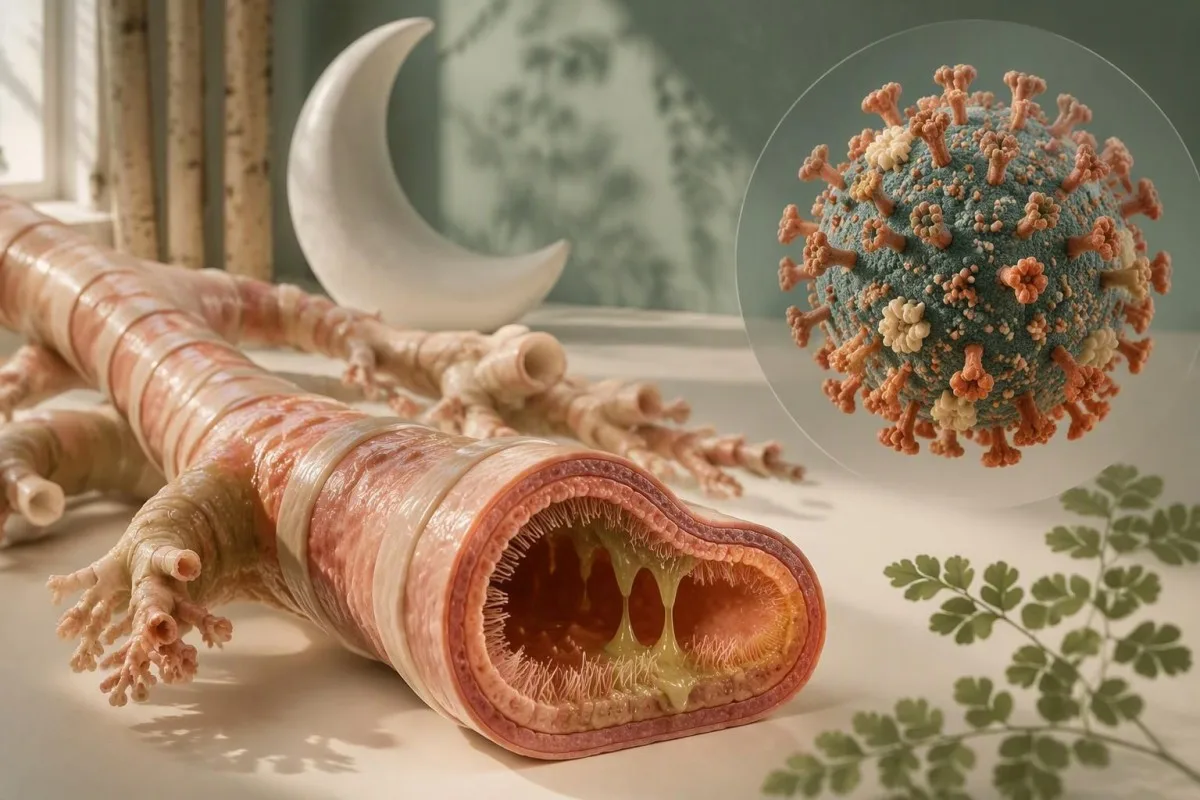
Adult RSV usually causes congestion, sore throat and cough, but new breathlessness or worsening wheeze needs assessment. Nasal testing can identify RSV; a normal blood count cannot rule it out.


- Early RSV symptoms often include a runny nose, sore throat, tiredness and cough, usually beginning 4–6 days after exposure.
- Recovery time is commonly 1–2 weeks for uncomplicated illness; a gradually improving cough can persist for several weeks.
- Emergency breathing signs include severe breathlessness, inability to speak comfortably, blue or grey lips, confusion, collapse or significant chest pain.
- Oxygen readings of 92% or lower generally require emergency assessment when newly low; persistent 93–94% warrants urgent clinical advice unless your clinician has set a different baseline plan.
- Adult antigen testing can miss RSV. Nasal PCR or another molecular test is generally more sensitive, especially when a negative rapid result would change care.
- Routine bloodwork cannot confirm RSV: white blood cells, CRP and procalcitonin do not identify the virus.
- Higher-risk adults include older people, transplant recipients and adults with significant immune suppression, chronic lung disease or heart failure.
- Home care means fluids, rest and appropriate symptom relief—not automatic antibiotics, steroids or an unproven supplement regimen.
What are the early RSV symptoms in adults?
RSV symptoms in adults usually begin like a cold: a runny or blocked nose, sore throat, fatigue and cough, sometimes with fever. Seek urgent help for new breathlessness, worsening wheeze or chest pain; severe breathing difficulty is an emergency. A nasal PCR can confirm RSV, whereas routine bloodwork cannot. Most uncomplicated cases improve within 1–2 weeks.
Symptoms usually appear 4–6 days after exposure, although the interval can vary. Nasal irritation may arrive before the cough becomes troublesome, and fever is not obligatory; an older adult can have clinically significant respiratory illness without a temperature reaching 38°C.
A cough that changes over 24–48 hours deserves more attention than the original symptom label. A scratchy throat followed by mild coughing is different from coughing accompanied by breathlessness while dressing, walking across a room or speaking—those changes suggest the illness is affecting function.
Consider an illustrative 52-year-old who catches a respiratory virus from a grandchild and initially feels only congested. If wheeze develops on day 4, the useful question is not simply whether this is RSV, but whether an asthma flare or lower respiratory complication now needs treatment.
Kantesti is an AI blood test analyzer that helps explain laboratory findings, but a CBC cannot establish whether these symptoms are RSV. I’m Thomas Klein, MD, Chief Medical Officer; our organizational background explains our role, while this article separates 2 different questions: identifying the virus and assessing its consequences.
When do RSV symptoms start, and can they worsen later?
Early signs of RSV generally develop several days after exposure, and upper-airway symptoms can precede chest symptoms. There is no dependable adult rule that RSV always peaks on day 3 or day 5; the direction of change matters more than the calendar.
The typical incubation interval is 4–6 days, not a precise countdown. Several household exposures may occur close together, so identifying the person or day responsible is often impossible; exposure history increases suspicion but cannot replace a respiratory test when confirmation matters.
Feeling worse on day 4 or 5 does not automatically mean bacterial pneumonia. RSV can provoke airway swelling and mucus production as part of the viral illness, but deterioration still warrants assessment when accompanied by new breathlessness, reduced oxygen levels or inability to drink.
A second deterioration after 1–2 days of clear improvement is a different pattern. Recurrent fever, new chest pain or declining exercise tolerance raises concern for a complication or another diagnosis, although none of those findings alone proves a secondary bacterial infection.
For practical monitoring, record symptom onset, temperature and one familiar activity once or twice daily—not every few minutes. Our guide to illness-related lab changes explains why results drawn on day 2 and day 8 may look different without identifying the responsible virus.
Can symptoms distinguish RSV from a cold, flu or COVID?
Symptoms alone cannot reliably distinguish RSV from other respiratory viruses. Influenza often starts abruptly with fever and aches, while RSV often resembles a cold, but these patterns overlap; 1 symptom or 1 exposure history is not a dependable diagnostic shortcut.
Wheeze can occur with RSV, influenza, COVID-19 or an asthma exacerbation; it is not an RSV fingerprint. Likewise, a temperature of 38°C or higher establishes fever, not its cause, and green or yellow mucus does not by itself establish a need for antibiotics.
A negative test for 1 virus does not identify another virus by elimination. A negative COVID test still leaves influenza, RSV and other causes possible, and the reliability of any result depends on the assay, sample collection and timing.
Multiplex molecular testing can examine RSV, influenza and SARS-CoV-2 from 1 respiratory specimen, depending on the panel. This is especially useful when identifying influenza or COVID could trigger time-sensitive treatment, or when a hospital needs to make isolation and placement decisions.
Even a CBC showing reactive lymphocyte changes does not distinguish these viruses. Think of 2 separate layers of evidence: respiratory testing identifies an organism, while clinical examination and selected blood tests assess severity, complications or alternative explanations.
What do wheeze and shortness of breath mean with RSV?
New wheeze or shortness of breath can mean RSV has affected the lower airways, or that a respiratory illness has triggered asthma, COPD or another condition. Breathlessness that appears at rest or limits ordinary activities needs assessment rather than another 24 hours of watchful waiting.
Wheeze is a musical sound usually associated with narrowed airways; it does not measure oxygen levels. An adult can wheeze with an oxygen saturation of 97%, while another person with pneumonia can have reduced oxygen without obvious wheeze.
An adult resting respiratory rate is commonly around 12–20 breaths per minute. A sustained rate approaching 30, especially with increased effort or difficulty speaking, is concerning; count for a full minute after resting rather than immediately after climbing stairs.
My clinical approach is to compare breathing with the person’s baseline over the preceding 24 hours. For an illustrative 68-year-old with COPD, needing a reliever inhaler more often than their action plan allows is more informative than whether their cough sounds wet or dry.
Sudden breathlessness, coughing up blood or a painful swollen leg should not be attributed automatically to RSV, even with a positive nasal test. Our breathlessness testing guide explains several alternative causes; a positive viral test does not exclude a second problem.
Which RSV symptoms need urgent or emergency assessment?
Severe breathing difficulty, confusion, collapse, blue or grey lips, or significant chest pain require emergency help. New but less severe breathlessness, worsening wheeze, dehydration or deterioration in a high-risk adult warrants same-day assessment; do not wait for a nasal test or bloodwork result.
Call your local emergency number if breathing prevents comfortable speech, if the person becomes unusually drowsy, or if chest pressure is persistent. A newly low oxygen saturation of 92% or less adds concern, but severe symptoms justify emergency help even when a home device displays a higher number.
Persistent readings of 93–94%, new breathlessness with minimal activity, or wheeze not settling with a prescribed reliever deserve urgent advice. These are pragmatic respiratory triage triggers, not RSV-specific diagnostic thresholds; altitude, chronic lung disease and an individualized oxygen plan can change interpretation.
Inability to keep fluids down, marked dizziness or substantially reduced urination can indicate dehydration. If an adult has passed little or no urine for roughly 8–12 hours, particularly while unable to drink, seek prompt advice rather than trying to correct everything with large volumes at home.
Chest pain with sweating, faintness or pain spreading to the arm or jaw needs emergency assessment, not reassurance based on a respiratory diagnosis. Our urgent chest-pain results guide explains why an ECG and appropriately timed testing may matter; a single normal early result may not settle the question.
How should adults interpret home oxygen readings?
Home pulse oximetry can help identify low oxygen, but it cannot diagnose RSV or replace assessment of breathing effort. Many healthy adults at sea level read 95–100%; a newly persistent lower reading needs interpretation alongside symptoms, usual baseline and device limitations.
Rest for about 5 minutes, warm the hand and keep the finger still while the reading stabilizes. Remove nail polish or artificial nails if they interfere; a fluctuating number during movement is less useful than a steady reading obtained with a good signal.
Some pulse oximeters can overestimate oxygen saturation in people with darker skin pigmentation, particularly around clinically significant low readings. A displayed 95% should not override obvious breathing difficulty, and cold hands or poor circulation can introduce additional measurement error.
A persistent fall from a usual 98% to 94% is clinically meaningful even though the person has not crossed 92%. Repeat the measurement carefully, then seek urgent advice if the decline persists or symptoms are worsening; do not spend an hour chasing a reassuring number.
People whose clinicians have prescribed oxygen targets such as 88–92% need their own escalation plan rather than the general thresholds above. In hospital, arterial blood gas testing may assess oxygen, carbon dioxide and acidity—information a fingertip oximeter cannot provide.
How long do RSV symptoms last in adults?
Most uncomplicated RSV symptoms improve within 1–2 weeks, although cough and reduced stamina can continue for several weeks. A lingering cough is more reassuring when it steadily eases; worsening breathing, recurrent fever or declining function should not be dismissed as a normal recovery phase.
A postviral cough may persist for 3–4 weeks, and sometimes longer, because airway sensitivity outlasts the initial illness. That observation does not guarantee RSV was the cause, nor does it make a new wheeze or a worsening cough harmless.
An adult who walks farther on day 10 than on day 6 is usually moving in the right direction, even if nighttime coughing remains annoying. By contrast, someone newly breathless walking to the bathroom needs assessment regardless of how many days the illness has lasted.
Arrange a review if symptoms are not clearly improving after 1–2 weeks, if a cough persists beyond about 3 weeks, or sooner when red flags develop. The clinician may consider asthma, medication-related cough, pneumonia, heart failure or another explanation rather than automatically repeating a viral test.
CRP can remain elevated during recovery and does not provide a clearance certificate for work or exercise. Our discussion of symptoms and raised CRP explains why 1 inflammatory marker cannot determine whether a respiratory illness is resolving safely.
Why can RSV be more serious in older adults?
Older adults have a higher risk of RSV-related pneumonia, respiratory failure and worsening chronic heart or lung disease. Age is not the whole story: frailty, limited respiratory reserve and several coexisting conditions can make a mild-looking illness consequential over 24–48 hours.
Falsey and colleagues followed adults across 4 winters, finding annual RSV infection in approximately 3–7% of healthy older adults and 4–10% of high-risk adults (Falsey et al., 2005). These historical rates are not a forecast for every season, but they show RSV is not merely a childhood illness.
An illustrative 79-year-old with RSV may report little fever yet become less alert, eat poorly or struggle with usual transfers. New confusion is an urgent warning sign; absence of a high temperature should never be used to declare an older person’s illness mild.
Medication effects can complicate assessment: sedating cough preparations may increase falls, while decongestants can worsen some cardiovascular conditions. Our senior medication review guide covers another part of the picture, but medication changes should be checked with a clinician or pharmacist.
Breathlessness accompanied by ankle swelling, rapid weight gain or needing additional pillows can suggest heart failure alongside a respiratory illness. An increase of roughly 2 kg over 2–3 days merits contact with the treating team when consistent with their action plan; NT-proBNP interpretation is contextual, not an RSV test.
What changes when an adult is immunocompromised?
Immunocompromised adults should contact their treating team early when RSV-like symptoms develop, because illness can progress and viral shedding can last longer. Transplant recipients, people receiving chemotherapy and those with substantial immune suppression should not wait 1–2 weeks to see whether a cold settles.
Risk depends on the type and intensity of immune suppression, not simply the word immunocompromised. A stem-cell transplant recipient early after treatment and an adult on a low-dose immune-modifying medicine may need very different plans; tell the team your treatment dates and symptom onset within 24 hours when possible.
During chemotherapy, a temperature of 38°C or higher can require immediate oncology advice under the patient’s neutropenic fever plan. A positive RSV result does not exclude a simultaneous bacterial infection, and a patient who feels acutely unwell should not delay because their temperature is lower.
Do not stop transplant medication or adjust doses on your own during respiratory illness. Poor intake, diarrhea and interacting medicines can alter drug exposure; our tacrolimus timing guide explains why a trough result collected even 2 hours off schedule can be harder to interpret.
Specialists sometimes consider treatments such as ribavirin for selected severely immunocompromised patients; this is not routine outpatient RSV care. Repeated infections may also justify targeted immune investigations, but an immune panel and a respiratory PCR answer 2 different questions.
When are nasal antigen or PCR tests useful for RSV?
Nasal RSV testing is useful when the result could change treatment decisions, infection precautions or assessment of a high-risk adult. PCR and other nucleic acid amplification tests are generally more sensitive than antigen tests; a negative rapid antigen result does not reliably exclude adult RSV.
CDC diagnostic guidance describes molecular tests as highly sensitive and antigen assays as generally less sensitive (CDC, n.d.). A clinician can use 1 appropriately collected respiratory sample for RSV testing, but whether it is an anterior nasal or nasopharyngeal specimen depends on the assay’s validated instructions.
Chartrand and colleagues reported pooled adult antigen-test sensitivity of about 29% in a 2015 meta-analysis (Chartrand et al., 2015). That estimate reflects the tests and studies included—not every contemporary kit—but it explains why a reassuring negative antigen result can miss adult disease.
Test during the symptomatic illness when confirmation is useful; there is no universal day 3 rule for adults. Sample quality, declining viral quantity and the chosen assay affect yield, and severe lower respiratory illness with a negative upper-airway result may warrant additional investigation directed by the treating team.
Kantesti’s clinical methodology information describes laboratory interpretation standards, not a blood-based RSV diagnostic assay. Our guide to qualitative and quantitative results explains why a detected PCR result identifies viral material but its cycle threshold is not a standardized measure of contagiousness or severity.
Why routine bloodwork cannot confirm or exclude RSV
A CBC, CRP, ESR or metabolic panel cannot confirm RSV, because these tests measure the body’s response or organ function rather than identify the virus. A white blood cell count within the laboratory range does not exclude RSV, pneumonia or clinically important respiratory deterioration.
An adult WBC reference interval is often approximately 4.0–11.0 × 10⁹/L, although laboratories differ. RSV can occur within, below or above that interval; corticosteroids, immune suppression and other illnesses can also change the count, so there is no dependable RSV-specific CBC pattern.
Many laboratories use a standard CRP upper reference limit near 5 mg/L, but neither that cutoff nor a much higher result identifies RSV. Our WBC and CRP comparison explains why mismatched results require clinical context instead of a simple viral-versus-bacterial label.
A procalcitonin result below 0.25 ng/mL does not reliably exclude bacterial pneumonia in every patient. Clinicians may use selected thresholds within defined antibiotic protocols, but procalcitonin trends and limitations matter; the result cannot safely overrule clear clinical evidence of a serious bacterial complication.
Kantesti is an AI blood test interpretation platform that explains values such as WBC and creatinine in the context of symptoms and trends. It cannot turn a WBC of 7.2 × 10⁹/L into an RSV diagnosis; respiratory testing addresses the organism, while bloodwork may help assess dehydration, organ stress or another cause of illness.
What helps mild RSV symptoms at home?
Mild adult RSV is usually treated with rest, fluids and appropriate symptom relief, not routine antibiotics. Adults whose breathing is comfortable and who can drink adequately can often recover at home, but a worsening trajectory over 24–48 hours should trigger reassessment.
Paracetamol, also called acetaminophen, can relieve fever or aches. For many adults, 500–1,000 mg every 6 hours as needed, with a conservative self-care ceiling of 3,000 mg in 24 hours, is reasonable; lower limits may be needed with liver disease, low body weight or other medicines containing the same ingredient.
Small, frequent drinks may be easier than large glasses, and saline nasal spray can ease congestion. 1–2 teaspoons of honey in a warm drink may soothe an adult cough, but evidence is stronger in children than adults; avoid claiming that honey, vitamins or herbal products shorten adult RSV.
Antibiotics do not treat RSV, and steroids are not routine treatment for uncomplicated RSV itself. A clinician may prescribe steroids or bronchodilators for an accompanying asthma or COPD exacerbation; needing a reliever more often than the prescribed plan over 1 day warrants advice rather than unsupervised dose escalation.
Dehydration can temporarily raise creatinine, while NSAIDs can increase kidney risk in susceptible adults. Our dehydration and eGFR guide and BUN–creatinine reference explain those changes. Kantesti AI can help explain 2 dated laboratory panels, but should never delay assessment of low urine output or worsening breathing.
How can adults reduce RSV spread and protect high-risk relatives?
Adults with RSV should reduce close contact with vulnerable people while ill, using hand hygiene, cleaner indoor air and a well-fitting mask when contact is unavoidable. RSV is commonly contagious for 3–8 days, although immune suppression can extend shedding substantially.
Transmission can begin 1–2 days before symptoms, so perfect avoidance is not always possible. Do not share cups or utensils, wash hands after handling used tissues, and avoid close face-to-face visits with older relatives or transplant recipients while you are actively unwell.
A cough lasting 3 weeks does not automatically mean continuous contagiousness, but persistent shedding can occur in immunocompromised adults for 4 weeks or longer. PCR detects viral genetic material rather than directly measuring transmission risk, so a repeat positive result needs context instead of an automatic fixed isolation period.
RSV vaccination is preventive, not treatment for the episode already under way. As of October 12, 2026, readers should check their current national eligibility rules because age thresholds, risk categories and funding differ; an earlier dose does not make new respiratory symptoms safe to ignore.
After symptoms are improving and fever has been absent for at least 24 hours without fever-reducing medicine, follow local respiratory-virus advice about returning to activities and additional precautions. Our nutrition and immune-support guide distinguishes adequate nourishment from unsupported promises that a food or supplement prevents RSV.
Follow-up bloodwork and research: what the evidence supports
Follow-up bloodwork is useful when it answers a specific recovery question, such as persistent fatigue, dehydration or medication safety; it is not a routine RSV clearance test. The 2 Kantesti publications listed below concern blood-test interpretation and must not be presented as evidence that AI can diagnose RSV.
An otherwise healthy adult improving after 10–14 days usually does not need a repeat CBC solely because RSV was suspected. Persistent fatigue may justify targeted investigation based on history and examination, but ordering a large panel without a question can produce incidental abnormalities rather than useful answers.
Kantesti is an AI biomarker interpretation platform that helps organize laboratory findings across dated reports. Our technology and interpretation guide explains the workflow; an RDW of 15.2%, for example, needs its laboratory range and CBC context, not an assumption that RSV caused it.
Thomas Klein, MD: my central recommendation is to keep 2 decisions separate—whether a respiratory test is useful, and whether the person needs urgent clinical care. Kantesti’s medical advisory governance describes oversight structures; an article, an AI interpretation and a normal panel cannot substitute for examination when breathing is deteriorating.
The supporting bloodwork resources are Kantesti Ltd. (2026), AI Blood Test Analyzer: 2.5M Tests Analyzed | Global Health Report 2026, and Kantesti Ltd. (2026), RDW Blood Test: Complete Guide to RDW-CV, MCV & MCHC, both hosted on Zenodo. Our RDW interpretation reference addresses red-cell measurements; the 2 DOI records below are supplementary interpretation resources, not RSV diagnostic validation, and the academic-network links are discovery searches rather than verified publication pages.
Frequently Asked Questions
What are the first RSV symptoms in adults?
The first RSV symptoms in adults commonly include a runny or blocked nose, sore throat, tiredness and cough. Symptoms usually begin 4–6 days after exposure, although timing varies and fever may be absent. RSV cannot reliably be distinguished from a cold, influenza or COVID by symptoms alone. New breathlessness or worsening wheeze warrants assessment rather than assuming the illness is an ordinary cold.
How long do RSV symptoms last in adults?
Most uncomplicated RSV symptoms improve within 1–2 weeks, although cough can persist for several weeks. A gradually improving cough may reflect lingering airway sensitivity rather than ongoing severe illness. Seek a review if symptoms are not clearly improving after 1–2 weeks, a cough persists beyond about 3 weeks, or symptoms worsen at any point. New breathing difficulty, recurrent fever or declining function needs earlier assessment.
When should an adult with RSV symptoms get emergency help?
An adult with severe breathlessness, difficulty speaking comfortably, blue or grey lips, confusion, collapse or significant chest pain needs emergency help. A newly persistent oxygen saturation of 92% or lower generally also requires emergency assessment, unless a clinician has established a different individualized plan. Persistent readings of 93–94% or less severe new breathlessness warrant urgent clinical advice. Do not wait for a viral test or rely on a normal oxygen reading when symptoms are severe.
Can a blood test diagnose RSV in adults?
Routine blood tests cannot diagnose RSV in adults because a CBC, CRP or metabolic panel does not identify the virus. A WBC count within a typical adult interval of approximately 4.0–11.0 × 10⁹/L cannot exclude RSV or pneumonia. Bloodwork may help investigate dehydration, organ dysfunction or other causes of symptoms. RSV confirmation generally uses a respiratory specimen tested by PCR, another molecular assay or an appropriately validated antigen test.
Is a negative rapid RSV antigen test reliable in adults?
A negative rapid RSV antigen test does not reliably exclude RSV in adults because antigen assays are generally less sensitive than molecular tests. A 2015 meta-analysis reported pooled adult antigen-test sensitivity of about 29%, although performance varies and that figure does not describe every modern kit. If confirmation would change care or precautions, a clinician may recommend nasal PCR or another nucleic acid amplification test. Results should be interpreted alongside sample quality, symptom timing and the person's risk factors.
Are older or immunocompromised adults at higher risk from RSV?
Older and immunocompromised adults are at higher risk of serious RSV illness, especially when chronic lung disease, heart failure or limited functional reserve is present. High-risk adults should seek early clinical advice when symptoms worsen over 24–48 hours rather than waiting for a typical cold to resolve. During chemotherapy, a temperature of 38°C or higher may require immediate oncology advice under the patient's fever plan. A positive RSV test does not exclude another infection or remove the need to assess breathing and hydration.
Get AI-Powered Blood Test Analysis Today
Join over 2 million users worldwide who trust Kantesti for instant, accurate lab test analysis. Upload your blood test results and receive comprehensive interpretation of 15,000+ biomarkers in seconds.
📚 Referenced Research Publications
Klein, T., Mitchell, S., & Weber, H. (2026). AI Blood Test Analyzer: 2.5M Tests Analyzed | Global Health Report 2026. Kantesti AI Medical Research.
Klein, T., Mitchell, S., & Weber, H. (2026). RDW Blood Test: Complete Guide to RDW-CV, MCV & MCHC. Kantesti AI Medical Research.
📖 External Medical References
Centers for Disease Control and Prevention (n.d.). Diagnostic Testing for RSV. CDC clinical guidance.
⚕️ Medical Disclaimer
This article is for educational purposes only and does not constitute medical advice. Always consult a qualified healthcare provider for diagnosis and treatment decisions.
E-E-A-T Trust Signals
Experience
Physician-led clinical review of lab interpretation workflows.
Expertise
Laboratory medicine focus on how biomarkers behave in clinical context.
Authoritativeness
Written by Dr. Thomas Klein with review by Dr. Sarah Mitchell and Prof. Dr. Hans Weber.
Trustworthiness
Evidence-based interpretation with clear follow-up pathways to reduce alarm.