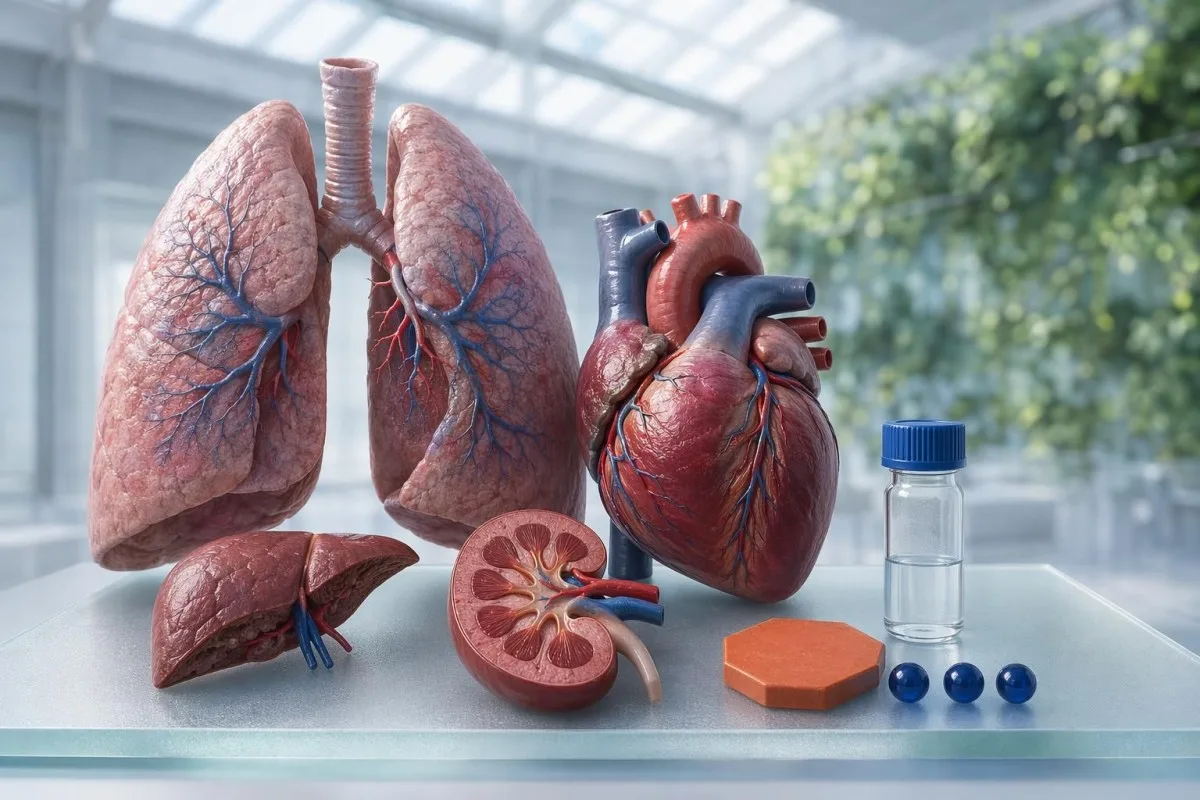
A practical, non-alarmist guide to the blood markers that matter most for current and former smokers. Blood tests can reveal risk patterns early, but they do not replace lung cancer screening when low-dose CT is indicated.


- Preventive blood test panels for smokers should usually include CBC, lipid panel, ApoB when available, hs-CRP, CMP, eGFR, urine ACR, fasting glucose and HbA1c.
- Low-dose CT is still the recommended lung cancer screening test for eligible smokers; blood tests cannot reliably detect early lung cancer.
- Carboxyhemoglobin is usually below 2% in non-smokers and often 3–10% in current smokers, but it requires co-oximetry rather than a routine CBC.
- hs-CRP below 1 mg/L suggests lower inflammatory cardiovascular risk, 1–3 mg/L average risk, and above 3 mg/L higher risk when measured away from infection.
- ApoB at or above 130 mg/dL and Lp(a) at or above 50 mg/dL or 125 nmol/L are risk-enhancing heart markers in major cholesterol guidelines.
- HbA1c below 5.7% is normal, 5.7–6.4% suggests prediabetes, and 6.5% or higher supports diabetes diagnosis when confirmed.
- Urine albumin-creatinine ratio below 30 mg/g is normal; 30–300 mg/g can reveal early kidney or vascular injury before creatinine rises.
- GGT above roughly 60 IU/L in many adult men, especially with high ALT or ALP, deserves a liver and medication review rather than a simple “smoking effect” label.
- Trends beat snapshots: a mild abnormality repeated in 8–12 weeks after quitting, infection recovery, or medication changes is often more useful than one flagged result.
What a preventive blood test can show in smokers
A preventive blood test for smokers should usually cover CBC, lipids, ApoB or Lp(a) when available, hs-CRP, CMP, eGFR, urine ACR, fasting glucose and HbA1c. These labs can flag heart, inflammation, oxygen-carrying, liver, kidney and diabetes risk, but they cannot screen lungs for early cancer. If you meet age and pack-year criteria, low-dose CT is still the screening test that saves lives.
I’m Thomas Klein, MD, and when I review smoker panels with our clinicians, the first pattern I look for is not a single scary red flag. It is clustering: high non-HDL cholesterol with hs-CRP above 3 mg/L, borderline HbA1c near 5.9%, and a rising hematocrit. That combination changes the conversation from “your labs are fine” to “your risk is measurable and modifiable.”
Our preventive blood test interpretation starts with context: age, sex, pack-years, quit date, blood pressure, medications, exercise, recent infection and family history. For a broader checklist beyond smoking, I often point patients to our early-risk lab guide, because smokers are not a separate species; they are people with overlapping cardiovascular, metabolic and inflammatory risks.
Kantesti’s medical content is reviewed with physicians from our Medical Advisory Board, but your own clinician still matters. A 48-year-old who smokes 5 cigarettes daily and runs 40 km a week needs a different interpretation than a 68-year-old with 45 pack-years, high blood pressure and ankle swelling.
CBC markers: oxygen carrying, viscosity and hidden strain
A CBC in smokers mainly checks hemoglobin, hematocrit, red cell count, white cell count, platelets and RDW. High hematocrit can suggest chronic oxygen stress, dehydration, testosterone use or sleep apnea; low hemoglobin can hide iron deficiency, kidney disease or gastrointestinal blood loss.
Typical adult hemoglobin reference ranges are about 13.5–17.5 g/dL for men and 12.0–15.5 g/dL for women, although local labs vary. Hematocrit above 52% in men or 48% in women is not something I blame on cigarettes without checking oxygen saturation, sleep quality, altitude, medications and hydration.
The reason we worry about high hematocrit plus high platelets is blood viscosity. One mild elevation alone is often boring; two or three viscosity markers moving together can push clot risk higher, especially when blood pressure or LDL-C is also up. Our guide to hemoglobin and red cell mismatch explains why the CBC pieces sometimes disagree.
RDW above about 14.5% can be an early clue to iron, B12 or folate imbalance, even before hemoglobin falls. In our analysis of user-uploaded reports, I see this after people cut calories hard while trying to quit smoking—less appetite, more coffee, fewer protein meals, and suddenly the CBC tells a nutrition story.
White blood cell count usually sits around 4.0–11.0 ×10⁹/L in adults, and current smoking can keep it mildly elevated. A WBC of 11.8 ×10⁹/L with no fever may be repeatable in 4–8 weeks; a WBC of 18 ×10⁹/L with immature granulocytes is a different animal and needs clinical review.
What blood tests show inflammation in current smokers
hs-CRP, standard CRP, ESR, WBC count, neutrophil-to-lymphocyte ratio and sometimes fibrinogen are the main blood tests that show inflammation. For cardiovascular prevention, hs-CRP is more useful than standard CRP when the result is between 0.2 and 10 mg/L.
hs-CRP below 1 mg/L suggests lower inflammatory cardiovascular risk, 1–3 mg/L suggests average risk, and above 3 mg/L suggests higher risk when measured away from infection. I do not interpret hs-CRP after a chest infection, dental abscess, hard race or vaccine day; those can push results up for 1–3 weeks.
Patients often ask what blood tests show inflammation because they feel fine but their CRP is high. The sharper answer is that inflammation blood tests show immune activation, not the cause, and smoking is only one possible driver among obesity, periodontal disease, autoimmune conditions, infections and poor sleep.
ESR rises with age, anemia, kidney disease and high immunoglobulins, so it is less specific than CRP. A 62-year-old former smoker with ESR 38 mm/hr and normal CRP may not have active inflammation at all; I look at hemoglobin, albumin, kidney function and symptoms before ordering a long autoimmune workup.
Fibrinogen is not routinely ordered in wellness panels, but it links inflammation and clotting. Values above roughly 400 mg/dL can appear with smoking, obesity and infection, though clinicians disagree on how often to use it for prevention because treatment decisions still hinge more on global cardiovascular risk.
What blood tests show heart problems before symptoms
For prevention, the blood tests that best show heart risk are LDL-C, non-HDL-C, triglycerides, ApoB, Lp(a), hs-CRP and HbA1c. Troponin and BNP are heart-damage or heart-strain tests, not routine screening tests for every smoker.
LDL-C below 100 mg/dL is often called acceptable in low-risk adults, but smokers are not automatically low risk. Non-HDL-C below 130 mg/dL is a practical target because it includes LDL, VLDL and remnant particles, which matter when triglycerides run above 150 mg/dL.
The 2018 AHA/ACC cholesterol guideline lists ApoB at or above 130 mg/dL and Lp(a) at or above 50 mg/dL or 125 nmol/L as risk-enhancing factors (Grundy et al., 2019). If you are searching what blood tests show heart problems, our heart marker guide separates long-term risk markers from emergency markers.
I like ApoB in smokers with normal LDL-C but high triglycerides, fatty liver, prediabetes or a strong family history. ApoB counts atherogenic particle number; LDL-C estimates cholesterol mass, and those can point in different directions after weight gain, low-carb dieting or alcohol reduction.
Kantesti AI links lipid markers with age, sex, diabetes risk and inflammation on Kantesti rather than reading each value in isolation. A 39-year-old with LDL-C 128 mg/dL, ApoB 118 mg/dL and Lp(a) 160 nmol/L deserves a different prevention talk than someone with the same LDL-C and low ApoB.
Troponin and BNP: useful, but not wellness trophies
Troponin detects heart muscle injury, and BNP or NT-proBNP detects heart wall stress. These tests are useful when symptoms or known disease exist; they are not the best first-line wellness blood test for a well smoker with no chest pain or breathlessness.
High-sensitivity troponin is interpreted by assay-specific cutoffs, usually around the 99th percentile of a healthy reference population. A rising pattern over 1–3 hours matters more than one small value, which is why troponin belongs in urgent care when chest pressure, sweating, jaw pain or sudden breathlessness appears.
BNP below 100 pg/mL often makes heart failure less likely in acute breathlessness, while NT-proBNP below 125 pg/mL is commonly used as a low-risk outpatient threshold in adults under 75. For deeper timing and trend detail, see our troponin test guide.
A smoker with ankle swelling, reduced exercise tolerance and NT-proBNP 900 pg/mL needs an ECG, exam and often echocardiography. A smoker with no symptoms and BNP 42 pg/mL does not get a clean bill of health for coronary arteries; lipids, blood pressure, diabetes markers and family history still carry the prevention work.
The evidence here is honestly mixed for using very low-level high-sensitivity troponin in population screening. Some cardiologists like it for risk stratification; many primary care doctors avoid it because false alarms can lead to scans, anxiety and bills without clear benefit.
Diabetes and insulin resistance labs smokers should not skip
Fasting glucose, HbA1c and sometimes fasting insulin or HOMA-IR are the main blood tests for diabetes risk in smokers. Smoking increases insulin resistance in many people, and quitting can temporarily change appetite, weight and glucose patterns.
HbA1c below 5.7% is normal, 5.7–6.4% suggests prediabetes, and 6.5% or higher supports diabetes diagnosis when confirmed. The American Diabetes Association Standards of Care in Diabetes—2026 uses these same diagnostic thresholds for adults (American Diabetes Association Professional Practice Committee, 2026).
Fasting glucose below 100 mg/dL is normal, 100–125 mg/dL suggests impaired fasting glucose, and 126 mg/dL or higher supports diabetes diagnosis when repeated. Our diabetes blood test guide explains why HbA1c and fasting sugar sometimes disagree.
Fasting insulin is not standardized enough to be a universal screening test, but I find it useful in selected patients. A fasting insulin of 18 µIU/mL with glucose 96 mg/dL can reveal compensation years before HbA1c crosses 5.7%, especially in a smoker with abdominal weight gain and triglycerides above 150 mg/dL.
A1c can mislead when red cell lifespan changes. Iron deficiency, recent blood loss, kidney disease and some hemoglobin variants can make the number look too high or too low; that is why I read A1c beside CBC indices, creatinine and sometimes fructosamine.
Kidney markers that reveal vascular damage early
Creatinine, eGFR, cystatin C and urine albumin-creatinine ratio are the key kidney markers for smokers. Urine ACR often changes before creatinine, which makes it valuable for detecting early vascular or kidney stress.
An eGFR above 90 mL/min/1.73 m² is usually normal if urine albumin is normal, while eGFR below 60 for at least 3 months meets a common chronic kidney disease threshold. The catch: creatinine depends on muscle mass, so a muscular 52-year-old can look worse than they are, and a frail 78-year-old can look falsely reassuring.
Urine ACR below 30 mg/g is normal, 30–300 mg/g is moderately increased albuminuria, and above 300 mg/g is severely increased albuminuria. I order it more often in smokers with high blood pressure, diabetes, high triglycerides or family kidney disease; our urine ACR kidney guide walks through the pattern.
Cystatin C can refine eGFR when creatinine is confusing because of low muscle, bodybuilding, creatine use or major diet changes. In practice, I use it when the treatment decision depends on the result—blood pressure medication, metformin safety, contrast imaging or nephrology referral.
A smoker with eGFR 72 and ACR 8 mg/g is a very different case from someone with eGFR 92 and ACR 95 mg/g. The second patient may have earlier vascular leakage despite a “normal” creatinine, and that is exactly the sort of nuance single-number lab portals miss.
Liver tests: smoking is rarely the only explanation
ALT, AST, ALP, GGT, bilirubin, albumin and platelets are the liver-related markers most useful in smokers. Smoking can travel with alcohol use, fatty liver, metabolic syndrome and medication exposure, so abnormal liver enzymes deserve pattern reading.
ALT is often considered more liver-specific than AST, though normal ranges vary; many labs flag ALT above about 35 IU/L in women and 45 IU/L in men. A mildly high ALT with triglycerides 240 mg/dL and HbA1c 6.1% points toward fatty liver biology more than cigarette smoke alone.
GGT above roughly 60 IU/L in adult men often warrants hepatobiliary review, especially when ALP is also elevated. Our liver function test guide explains why GGT can rise with alcohol, bile duct irritation, fatty liver, anticonvulsants and some antibiotics.
AST can rise from muscle, not just liver. I once saw a 52-year-old former smoker with AST 89 IU/L, ALT 31 IU/L and CK above 1,200 IU/L after a long hill race; before anyone panicked about cirrhosis, we repeated the panel after 7 days of rest and the AST fell sharply.
Albumin below about 3.5 g/dL is not a typical early smoking signal. When low albumin appears with high bilirubin, prolonged INR, low platelets or swelling, I stop thinking “wellness panel” and start thinking proper medical assessment.
Platelets, clotting and D-dimer without overtesting
Platelet count, PT/INR, aPTT, fibrinogen and D-dimer can assess clotting, but D-dimer is not a screening test for well smokers. It is most useful when symptoms raise concern for clot, and it becomes less specific with age, infection and inflammation.
A normal platelet count is usually 150–450 ×10⁹/L. Platelets above 450 ×10⁹/L can follow smoking-related inflammation, iron deficiency, infection or recovery from bleeding, but persistent unexplained elevation deserves repeat testing and sometimes hematology review.
D-dimer below 500 ng/mL FEU is commonly considered negative in many assays, but age-adjusted cutoffs are often used after age 50. The problem is false positives: a high D-dimer after pneumonia, surgery, COVID, cancer or even major inflammation does not diagnose a clot by itself.
For patients on blood thinners or with bleeding symptoms, PT/INR and aPTT are far more relevant than a vague “clot risk” panel. Our coagulation test guide separates screening, monitoring and emergency use cases.
Here is the practical line I use in clinic: chest pain, one-sided leg swelling, sudden breathlessness or coughing blood is not a home lab problem. That is urgent care territory, even if last month’s wellness panel looked immaculate.
Why blood tests do not replace low-dose CT screening
No routine blood test reliably replaces low-dose CT lung cancer screening in eligible smokers. Blood tests can detect anemia, inflammation, liver stress or metabolic risk, but early lung cancer often produces normal CBC, CRP, liver enzymes and tumor markers.
The USPSTF recommends annual low-dose CT for adults aged 50–80 years with at least 20 pack-years who currently smoke or quit within the past 15 years (Krist et al., 2021). Local criteria differ—UK targeted lung health checks, for example, use risk models—but the principle is the same: imaging finds small lung changes that blood panels usually cannot.
Tumor markers such as CEA are not reliable screening tools for lung cancer in well smokers. A normal CEA does not rule out cancer, and a high CEA can reflect smoking, inflammation, liver disease or other conditions; our full-body blood test limits article goes deeper on this common misconception.
I have seen patients delay CT because a “cancer blood test” looked normal. Please don’t do that. If you meet screening criteria, the right question is not blood test versus CT; it is blood test for general risk plus CT for lung screening.
Blood tests still matter around CT screening. Kidney function may be needed before contrast imaging in some pathways, CBC can explain breathlessness from anemia, and inflammatory markers can help sort infection from other causes when symptoms appear.
How often current and former smokers should repeat labs
Most current smokers with no major abnormalities should repeat a prevention panel every 12 months, while abnormal results often need repeat testing in 6–12 weeks. Former smokers may extend intervals once risk factors stabilize, but age and pack-years still matter.
A mild ALT of 58 IU/L after a weekend of alcohol and heavy exercise should not trigger lifelong anxiety. I usually repeat liver enzymes after 2–8 weeks with no hard training for 48–72 hours, steady hydration and a clear medication list.
Lipids can improve within 6–12 weeks after diet change or starting a statin, while HbA1c reflects roughly 8–12 weeks of glucose exposure. That is why our blood test progress tracking focuses on timelines, not just red and green lab flags.
After quitting smoking, WBC and hs-CRP may fall over months, but weight gain can push triglycerides and glucose the wrong way. This is one of those areas where context matters more than the number; a quit date, waist change and medication list can explain what looks confusing.
Former smokers who remain eligible for low-dose CT should keep screening even if annual labs look better. Risk falls after quitting, but it does not reset to never-smoker baseline overnight.
Test preparation that actually changes smoker labs
Fasting, exercise, hydration, infection timing and recent smoking can all change preventive blood test results. For lipids, glucose, CBC concentration and liver enzymes, a little preparation prevents a surprising number of false alarms.
An 8–12 hour fast is helpful for fasting glucose, insulin and triglycerides, though many cholesterol tests are acceptable non-fasting. If triglycerides come back above 400 mg/dL, calculated LDL-C becomes unreliable and a repeat fasting or direct LDL test may be needed.
Avoid unusually hard exercise for 24–48 hours before a prevention panel if you want clean AST, ALT, CK, creatinine and WBC interpretation. Our fasting versus non-fasting guide lists which tests truly shift and which barely move.
Do not test hs-CRP during a cold, dental flare, fever or the week after a significant infection unless your clinician is investigating that illness. For prevention, a CRP drawn when you are well is much more interpretable.
I do not tell smokers to smoke extra or stop abruptly the morning of a test just to “see the real number.” Record timing honestly. If carboxyhemoglobin is being measured, the time since last cigarette matters a great deal.
What to change between tests without chasing perfect labs
The most useful changes between smoker prevention panels are smoking cessation support, blood pressure control, lipid lowering, glucose management, sleep assessment, exercise and diet quality. You do not need perfect labs; you need risk moving in the right direction.
LDL-C and ApoB usually respond best to medication when risk is high, but food still helps. Soluble fiber from oats, beans or psyllium can lower LDL-C by roughly 5–10% in many trials, and replacing butter-heavy patterns with unsaturated fats often lowers non-HDL-C within 6–12 weeks.
If triglycerides are 220 mg/dL and HbA1c is 6.0%, I focus less on exotic supplements and more on alcohol, sugary drinks, sleep apnea, walking after meals and waist measurement. Our guide to cholesterol-lowering foods keeps the advice grounded in labs rather than marketing.
For hs-CRP above 3 mg/L, periodontal care and sleep can be as important as diet. I have seen CRP fall from 5.8 to 1.9 mg/L after dental treatment and smoking cessation support, while weight barely changed.
When retesting, give biology enough time. Some results shift in days, but most prevention markers need 8–12 weeks; our retest timeline guide helps patients avoid checking too soon and getting frustrated.
How Kantesti AI interprets smoker prevention panels
Kantesti AI interprets smoker prevention panels by combining biomarker ranges, trend direction, risk clustering and clinical context. Our platform can read uploaded blood test PDFs or photos in about 60 seconds, but it is designed to support—not replace—medical care.
Kantesti’s neural network maps more than 15,000 biomarkers across CBC, chemistry, lipids, hormones, vitamins, inflammation and organ-function panels. The practical advantage is pattern recognition: high hematocrit plus high bicarbonate plus snoring history suggests a different follow-up than high hematocrit alone.
Our medical validation standards describe how we test interpretation quality, safety messaging and escalation logic. The Kantesti AI benchmark also explains how edge cases are assessed across specialties, including situations where overdiagnosis is the trap.
The app supports 75+ languages across iOS, Android, web upload, Chrome Extension and B2B API use. That matters for smokers because lab units vary globally—Lp(a) may appear in mg/dL or nmol/L, glucose in mg/dL or mmol/L, and eGFR equations are not always printed the same way.
On our AI blood test platform, the safest answer is sometimes: “this is not enough information.” Thomas Klein, MD, would rather see our AI recommend a repeat test or clinician review than overstate certainty from one borderline result.
Kantesti research publications and clinical validation notes
Kantesti’s research section documents how our AI-assisted lab interpretation work is engineered, tested and deployed. These publications do not claim that blood tests diagnose lung cancer; they support safer interpretation of laboratory patterns and triage signals.
Klein, T., & Kantesti Clinical AI Research Group. (2026). Multilingual AI Assisted Clinical Decision Support for Early Hantavirus Triage: Design, Engineering Validation, and Real-World Deployment Across 50,000 Interpreted Blood Test Reports. Figshare. The DOI is 10.6084/m9.figshare.32230290. The publication can also be searched on ResearchGate and Academia.edu.
Klein, T., & Kantesti Clinical AI Research Group. (2025). RDW Blood Test: Complete Guide to RDW-CV, MCV & MCHC. Zenodo. The DOI is 10.5281/zenodo.18202598. The publication can also be searched on ResearchGate and Academia.edu.
As of May 15, 2026, Kantesti LTD is a UK company building CE-marked, HIPAA, GDPR and ISO 27001 aligned health AI workflows. If you want a practical read of your own panel, you can upload a report to the free AI blood test analysis page and bring the interpretation to your clinician.
Frequently Asked Questions
What preventive blood test should smokers ask for?
A preventive blood test for smokers should usually include CBC with differential, lipid panel, ApoB when available, Lp(a) at least once, hs-CRP, comprehensive metabolic panel, eGFR, urine albumin-creatinine ratio, fasting glucose and HbA1c. Many adults also benefit from TSH, vitamin B12, ferritin or vitamin D if symptoms, diet or medications suggest risk. The panel should be matched to age, pack-years, blood pressure, family history and quit status rather than ordered as a generic wellness package.
Can blood tests detect lung cancer in smokers?
Routine blood tests cannot reliably detect early lung cancer in smokers. CBC, CRP, liver enzymes and tumor markers such as CEA may be normal even when an early lung cancer is present. Eligible adults—often age 50–80 with at least 20 pack-years who currently smoke or quit within 15 years—should discuss annual low-dose CT screening with a clinician.
What blood tests show inflammation from smoking?
hs-CRP, standard CRP, ESR, WBC count, neutrophil-to-lymphocyte ratio and sometimes fibrinogen can show inflammation in smokers. hs-CRP below 1 mg/L suggests lower inflammatory cardiovascular risk, 1–3 mg/L average risk, and above 3 mg/L higher risk when measured away from infection. These tests do not prove smoking is the cause; dental disease, obesity, infection, autoimmune disease and poor sleep can produce similar patterns.
What blood tests show heart problems in smokers?
For prevention, LDL-C, non-HDL-C, triglycerides, ApoB, Lp(a), hs-CRP and HbA1c are the most useful blood tests for heart risk in smokers. ApoB at or above 130 mg/dL and Lp(a) at or above 50 mg/dL or 125 nmol/L are recognized risk-enhancing markers. Troponin and BNP are different: they help assess heart injury or strain when symptoms or known disease are present, not routine wellness screening.
How often should former smokers repeat blood tests?
Former smokers with stable results often repeat prevention blood tests every 12 months, although the interval depends on age, blood pressure, diabetes risk, kidney markers and medications. Abnormal lipids, liver enzymes, hs-CRP or glucose markers are commonly rechecked after 6–12 weeks when a change has been made. Former smokers who still meet low-dose CT criteria should continue imaging screening even when blood tests improve.
Does quitting smoking change blood test results?
Quitting smoking can lower WBC count, hs-CRP and carboxyhemoglobin over time, but the timeline varies from days to months. Carboxyhemoglobin may fall substantially within 24–48 hours, while inflammatory and lipid changes usually take longer. Some people gain weight after quitting, which can temporarily raise triglycerides, fasting glucose or HbA1c unless diet, sleep and activity are addressed.
Should smokers fast before a preventive blood test?
Smokers should fast for 8–12 hours when fasting glucose, fasting insulin or triglycerides are being checked, but many standard cholesterol panels are acceptable non-fasting. Water is fine and usually helpful. Avoid unusually hard exercise for 24–48 hours before testing because CK, AST, ALT, creatinine and WBC can shift after heavy training.
Why might my hematocrit be high if I smoke?
Carbon monoxide from smoking can prompt your body to make more red blood cells, increasing hematocrit. Dehydration can also concentrate the blood, while persistently high results may warrant evaluation for sleep apnea, lung disease, or less common blood disorders.
Do nicotine-replacement patches or gum change my preventive blood-test results?
Nicotine replacement does not usually cause meaningful changes in a routine CBC, cholesterol panel, HbA1c, or kidney and liver tests, and it does not raise carboxyhemoglobin. Keep using it as prescribed for quitting, but tell the testing clinician about all nicotine products and medicines.
Can vaping or nicotine pouches affect preventive blood test results in former smokers?
Nicotine products can still raise heart rate and blood pressure, even without smoke exposure, so tell your clinician exactly what you use. They usually do not cause the same carbon monoxide-related changes as cigarettes, but they can still matter for cardiovascular risk planning.
Get AI-Powered Blood Test Analysis Today
Join over 2 million users worldwide who trust Kantesti for instant, accurate lab test analysis. Upload your blood test results and receive comprehensive interpretation of 15,000+ biomarkers in seconds.
📚 Referenced Research Publications
Klein, T., Mitchell, S., & Weber, H. (2026). Multilingual AI Assisted Clinical Decision Support for Early Hantavirus Triage: Design, Engineering Validation, and Real-World Deployment Across 50,000 Interpreted Blood Test Reports. Kantesti AI Medical Research.
Klein, T., Mitchell, S., & Weber, H. (2026). RDW Blood Test: Complete Guide to RDW-CV, MCV & MCHC. Kantesti AI Medical Research.
📖 External Medical References
American Diabetes Association Professional Practice Committee (2026). Standards of Care in Diabetes—2026. Diabetes Care.
⚕️ Medical Disclaimer
This article is for educational purposes only and does not constitute medical advice. Always consult a qualified healthcare provider for diagnosis and treatment decisions.
E-E-A-T Trust Signals
Experience
Physician-led clinical review of lab interpretation workflows.
Expertise
Laboratory medicine focus on how biomarkers behave in clinical context.
Authoritativeness
Written by Dr. Thomas Klein with review by Dr. Sarah Mitchell and Prof. Dr. Hans Weber.
Trustworthiness
Evidence-based interpretation with clear follow-up pathways to reduce alarm.