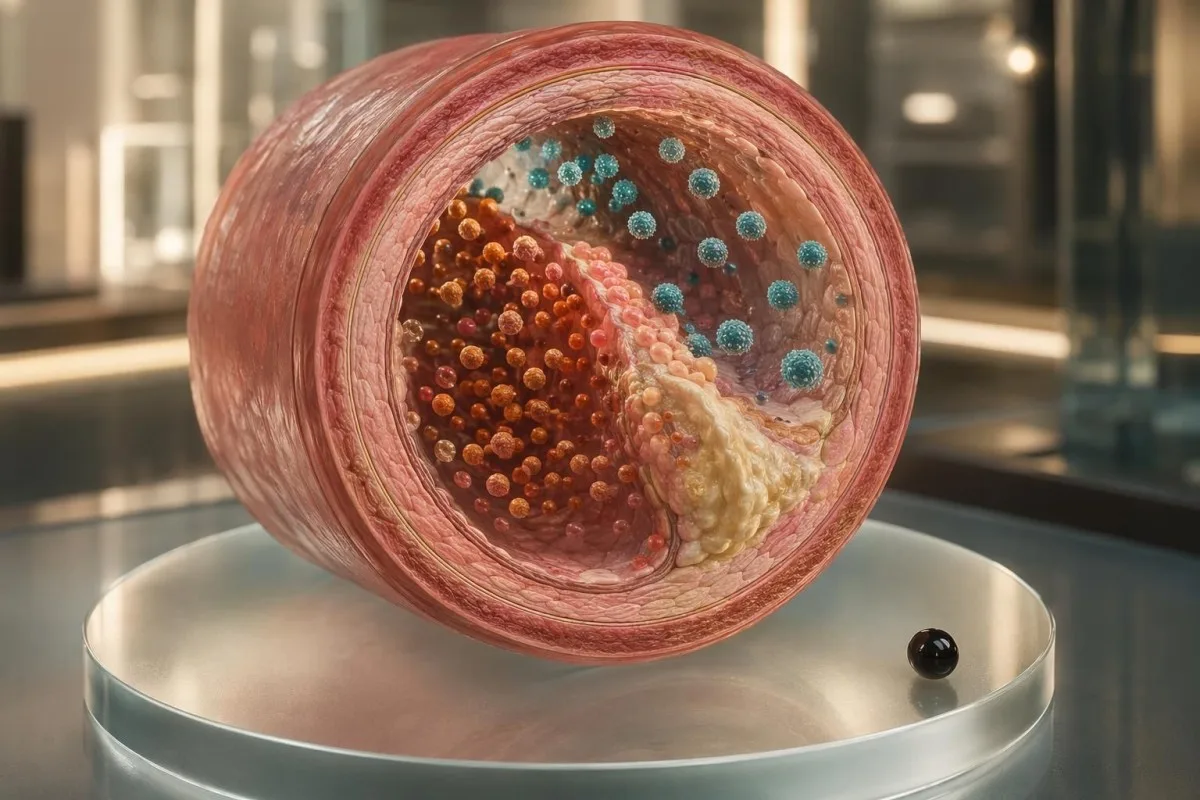
HDL is still useful, but it is not a magic shield. The safer reading is sex-specific HDL plus LDL, triglycerides, non-HDL cholesterol, ApoB when available, and your actual cardiovascular risk.


- Normal range for HDL is usually 40–59 mg/dL in men and 50–59 mg/dL in women; 60 mg/dL or higher has traditionally been called favorable.
- Low HDL in men means below 40 mg/dL, which counts as a cardiovascular risk factor in most adult lipid panels.
- Low HDL in women means below 50 mg/dL, partly because estrogen tends to raise HDL before menopause.
- Very high HDL above about 80–90 mg/dL is not always protective, especially when alcohol use, genetics, chronic inflammation or liver disease is involved.
- LDL matters more than HDL for treatment decisions; LDL-C below 100 mg/dL is a common general target, with much lower targets for high-risk patients.
- Triglycerides change the story because triglycerides of 150 mg/dL or higher often mean insulin resistance, remnant cholesterol and higher ApoB particle burden.
- Non-HDL cholesterol is calculated as total cholesterol minus HDL and should usually be below 130 mg/dL for lower-risk adults.
- HDL quality is not measured on a routine lipid panel; a high HDL number can still represent dysfunctional HDL particles.
- Retesting is sensible if HDL changes by more than 10–15 mg/dL without an obvious reason, especially after illness, weight change or medication changes.
What is the normal range for HDL in men and women?
The normal range for HDL is roughly 40–59 mg/dL for adult men and 50–59 mg/dL for adult women; HDL of 60 mg/dL or higher is traditionally considered favorable, but not automatically protective. Low HDL is below 40 mg/dL in men and below 50 mg/dL in women. That is the answer patients usually need first.
HDL cholesterol range reporting varies by lab, but the clinical cutoffs are fairly stable: men below 40 mg/dL and women below 50 mg/dL are considered low. In mmol/L, those cutoffs are about 1.0 mmol/L for men and 1.3 mmol/L for women. For readers comparing international reports, our biomarkers guide explains how unit systems can make the same result look strangely different.
Kantesti is an AI blood test analyzer that reads HDL alongside the rest of the lipid panel rather than treating one number as a verdict. I’m Thomas Klein, MD, and in clinic I rarely reassure someone solely because HDL is 72 mg/dL if their LDL is 178 mg/dL and triglycerides are 260 mg/dL. That combination still carries risk.
Most lipid panels report HDL in mg/dL, and the conversion to mmol/L is mg/dL multiplied by 0.02586. An HDL of 60 mg/dL is about 1.55 mmol/L, while 90 mg/dL is about 2.33 mmol/L. Keep the units with the result; a surprising number of patient portal scares come from comparing mg/dL and mmol/L as if they were the same.
Why are HDL levels in men and women judged differently?
HDL levels in men are judged with a lower cutoff because adult men usually have lower HDL than premenopausal women. HDL levels in women use a higher low-risk threshold because estrogen, body fat distribution and pregnancy-related lipid physiology can raise HDL before menopause.
The sex gap is not a moral scorecard; it is biology plus population risk modeling. In many adult cohorts, women before menopause run HDL about 8–12 mg/dL higher than age-matched men, although the gap narrows after menopause. Our guide to sex-specific lab values covers why reference intervals often split after puberty.
I see this often in couples who test together: a 47-year-old man with HDL 42 mg/dL feels he has failed, while his 45-year-old partner with HDL 52 mg/dL is told she is borderline low. Both results may be only mildly concerning if LDL, triglycerides, blood pressure and glucose are excellent. Context beats shame.
Menopause is the practical turning point for many women. LDL-C commonly rises by 10–20 mg/dL across the menopause transition, triglycerides may climb, and HDL can become less informative about particle function. That is why a woman with HDL 68 mg/dL after menopause still needs LDL-C, non-HDL cholesterol and diabetes risk checked rather than assuming her HDL protects everything.
Why can very high HDL cholesterol be misleading?
Very high HDL cholesterol can be misleading because HDL quantity is not the same as HDL function. Persistent HDL above about 80–90 mg/dL may still coexist with higher heart risk when HDL particles are dysfunctional, genetically altered, alcohol-related or affected by chronic disease.
The evidence here is honestly mixed, but the old idea that higher HDL is always better has not held up. Madsen et al. reported a U-shaped association in the European Heart Journal in 2017, with higher all-cause mortality at extreme HDL levels, particularly above 97 mg/dL in men and 135 mg/dL in women (Madsen et al., 2017). Those are not everyday values, but they changed how many lipid clinicians talk about “good cholesterol.”
A very high HDL can come from CETP variants, heavy alcohol use, certain liver conditions, intense endurance training, or medications. Some of these are harmless; some are not. If HDL is 104 mg/dL and AST, GGT or triglycerides are also abnormal, I look for a pattern rather than celebrating the HDL in isolation.
HDL quality is better reflected by ApoA1 and cholesterol efflux capacity, but cholesterol efflux testing is rarely available in routine care. An ApoA1 result can sometimes clarify whether a high HDL number matches a healthier particle profile. Even then, LDL particle burden and lifetime exposure remain central.
How should HDL be read with LDL, non-HDL and ApoB?
HDL should be read as a modifier, while LDL-C, non-HDL cholesterol and ApoB usually drive cardiovascular treatment decisions. A high HDL does not neutralize LDL-C of 160 mg/dL or ApoB above 130 mg/dL, because those numbers represent atherogenic particle burden.
According to the 2018 AHA/ACC cholesterol guideline, LDL-C of 190 mg/dL or higher usually warrants high-intensity statin treatment regardless of HDL because lifetime atherosclerotic exposure is high (Grundy et al., 2019). For many lower-risk adults, LDL-C below 100 mg/dL is a common benchmark, while people with established cardiovascular disease often need LDL-C below 70 mg/dL or lower depending on the guideline used.
Non-HDL cholesterol is total cholesterol minus HDL, and it captures LDL plus triglyceride-rich remnants. A practical adult target is usually non-HDL below 130 mg/dL for lower-risk people, with lower targets for diabetes, prior heart attack or high-risk imaging. If you want the deeper version, see our non-HDL guide.
Kantesti AI interprets HDL results by checking whether the lipid panel tells a consistent story: LDL-C, non-HDL, triglycerides, ApoB when available, glucose, HbA1c and inflammation markers. I get more concerned by HDL 38 mg/dL with triglycerides 240 mg/dL than by HDL 38 mg/dL with triglycerides 62 mg/dL, LDL 78 mg/dL and excellent blood pressure. Same HDL. Different patient.
What do triglycerides add to HDL interpretation?
Triglycerides add metabolic context to HDL because high triglycerides and low HDL often travel together in insulin resistance. Triglycerides of 150 mg/dL or higher are abnormal in most adult panels, and 200 mg/dL or higher makes remnant cholesterol and ApoB more clinically important.
The triglycerides-to-HDL ratio is not a formal treatment target in major guidelines, but it is a useful pattern marker. In mg/dL units, a ratio above 3 often points toward insulin resistance, especially when waist circumference, fasting insulin or HbA1c agree. Our TG-to-HDL guide explains why the ratio can look different in mmol/L.
Metabolic syndrome uses five cutoffs: waist circumference, triglycerides at least 150 mg/dL, low HDL, blood pressure at least 130/85 mmHg, and fasting glucose at least 100 mg/dL. Three of five criteria meet the definition. Patients often miss that HDL is only one piece of the metabolic syndrome criteria.
Here is the clinical reason we care: high triglycerides mean more triglyceride-rich lipoproteins, and many of those remnants can enter the artery wall. Low HDL in that setting is often a marker of particle exchange, not the direct villain. Fixing sleep apnea, reducing refined carbohydrates, losing 5–10% body weight and treating diabetes can move triglycerides faster than HDL.
How do age, menopause and life stage change HDL?
Age and life stage change HDL because sex hormones, body composition and insulin sensitivity shift over time. Women often lose part of their HDL advantage after menopause, while men may show low HDL earlier when abdominal weight, smoking or insulin resistance appear.
A 32-year-old woman with HDL 63 mg/dL and LDL 92 mg/dL is not the same risk story as a 62-year-old woman with HDL 63 mg/dL, LDL 154 mg/dL and rising HbA1c. The HDL number is identical; the arterial exposure is not. Our article on menopause lipid shifts goes into the transition years in more detail.
Pregnancy and postpartum periods can also distort lipid interpretation. Total cholesterol, LDL and triglycerides rise during pregnancy, and triglycerides can become several-fold higher late in gestation; routine cardiovascular risk scoring is not designed for that window. I usually prefer repeating a standard lipid panel at least 6–12 weeks postpartum unless there is a known familial lipid disorder.
In older adults, HDL can be pulled by frailty, chronic inflammation, alcohol intake, thyroid disease and medication changes. A sudden HDL rise from 58 to 91 mg/dL at age 74 deserves a second look if albumin, liver enzymes or weight have changed. A stable lifelong HDL of 82 mg/dL in an active, non-smoking person is a different matter.
What commonly causes low HDL cholesterol?
Low HDL cholesterol is commonly caused by smoking, insulin resistance, abdominal weight gain, high triglycerides, inactivity, genetic traits, poorly controlled diabetes and some medications. In adults, HDL below 40 mg/dL in men or below 50 mg/dL in women should trigger a pattern check, not panic.
The most common low-HDL pattern I see is not rare genetics; it is triglycerides 180–350 mg/dL, waist gain, fasting glucose near 100–125 mg/dL and HDL in the 30s or low 40s. That cluster often improves when insulin resistance improves. Our low HDL article covers the usual causes and what actually changes outcomes.
Smoking can lower HDL by several mg/dL, and quitting often raises HDL modestly within months. But the real win from quitting is not a prettier HDL number; it is reduced clotting, lower vascular injury and lower heart attack risk. I tell patients not to judge smoking cessation success by HDL alone.
Medications can matter. Anabolic steroids can markedly lower HDL, sometimes into the 20s mg/dL, while some beta blockers, progestins and antiretroviral regimens may shift HDL or triglycerides. If HDL falls by 15 mg/dL after a medication change, bring the timeline to your clinician rather than assuming diet suddenly failed.
Should you try to raise HDL directly?
You usually should not try to raise HDL directly with the goal of improving the number alone. Lifestyle changes that raise HDL slightly can help, but medications that raise HDL have not reliably reduced heart attacks when LDL and ApoB are not addressed.
Niacin can raise HDL by 15–35%, but outcome trials did not show the expected cardiovascular benefit when added to statin therapy in many patients. That is why most clinicians no longer chase HDL pharmacologically. We focus on LDL-C, ApoB, blood pressure, smoking, diabetes control and activity volume.
Exercise usually raises HDL modestly, often by 2–6 mg/dL, but it can lower triglycerides and improve insulin sensitivity more noticeably. A Mediterranean-style pattern, rich in unsaturated fats, legumes, nuts and fish, may improve the overall lipid profile even when HDL barely moves. Our cholesterol-lowering foods guide is practical for retesting.
Kantesti AI is an AI biomarker interpretation platform that treats HDL as a trend marker, not a trophy. If HDL rises from 44 to 51 mg/dL while triglycerides fall from 220 to 118 mg/dL and ALT improves, that is a meaningful metabolic change. If HDL rises because alcohol intake increased, I am far less impressed.
Do fasting and lab variation affect HDL results?
Fasting has little effect on HDL compared with triglycerides, but lab variation, illness, recent weight loss and alcohol can still shift HDL. A repeat test is reasonable if HDL changes by more than about 10–15 mg/dL without an obvious explanation.
HDL usually moves less after meals than triglycerides do, which is why many guidelines allow non-fasting lipid panels for routine risk assessment. Triglycerides may rise 20–50 mg/dL after eating, but HDL often changes only a few mg/dL. Our fasting guide explains which markers are most meal-sensitive.
Acute illness can temporarily lower HDL and raise triglycerides because inflammation changes lipoprotein metabolism. After COVID, influenza, surgery or a severe flare of inflammatory disease, I often wait 4–12 weeks before using lipids for long-term risk decisions. A number drawn during illness is still real, but it may not represent baseline.
Trend interpretation is where patients avoid unnecessary worry. If HDL was 47, 45 and 48 mg/dL over three years, that is stable even if one lab flags it. If it was 72, then 41 mg/dL after starting a new drug or changing training, that is a true delta worth reviewing; our lab variability guide helps separate noise from signal.
Which medicines and conditions can change HDL?
Medicines and medical conditions can change HDL by altering liver metabolism, insulin sensitivity, hormone signaling or inflammation. Statins may raise HDL slightly, while anabolic steroids, uncontrolled diabetes, high triglycerides, chronic kidney disease and some hormone therapies can lower or distort HDL.
Statins mainly lower LDL-C, often by 30–50% depending on dose and drug, while HDL changes are usually small. That small HDL rise is not the reason statins reduce events; LDL particle reduction is. Before starting therapy, many clinicians check baseline ALT, diabetes risk and sometimes CK, which we outline in statin lab preparation.
Thyroid disease can muddy lipid interpretation. Hypothyroidism often raises LDL-C and can alter HDL metabolism, while hyperthyroidism may lower total cholesterol. If LDL jumps unexpectedly with fatigue, cold intolerance or constipation, a TSH and free T4 check may be more useful than blaming breakfast; see our TSH range guide.
Kidney disease, liver disease and chronic inflammatory disorders can change HDL composition even when the HDL-C number looks fine. This is one reason I hesitate when a patient says, “My HDL is high, so my arteries are safe.” HDL-C is cholesterol mass inside HDL particles; it is not a direct test of reverse cholesterol transport.
When does family history matter more than HDL?
Family history can matter more than HDL when early heart disease, very high LDL-C, high Lp(a), or repeated premature strokes run in relatives. A normal or high HDL does not erase inherited atherogenic particle risk.
If a first-degree relative had a heart attack before age 55 in a man or 65 in a woman, I treat the lipid panel with more suspicion. HDL 66 mg/dL is reassuring only if LDL-C, ApoB, non-HDL cholesterol and Lp(a) are also sensible. Our article on high Lp(a) explains why inherited risk can hide behind ordinary cholesterol numbers.
Lp(a) is mostly genetically determined and usually needs to be checked only once in adulthood unless a major treatment or assay issue is involved. A value above 50 mg/dL, or above 125 nmol/L depending on units, is commonly considered elevated. HDL does not cancel that risk.
Families often share diet, sleep, activity and genes, so repeated patterns are useful. If three siblings have low HDL, high triglycerides and normal fasting glucose, I still look for insulin resistance because A1c can lag behind. Keeping a family marker record is surprisingly helpful during a short doctor visit.
How does AI interpretation handle HDL in context?
AI interpretation should handle HDL by combining sex-specific cutoffs, trend direction, unit conversion, LDL-C, triglycerides, non-HDL cholesterol, ApoB, glucose markers and clinical risk factors. The safest interpretation is pattern-based, not “HDL good, LDL bad” shorthand.
Kantesti is an AI lab test interpretation service designed to read lipid panels in the same contextual way a careful clinician would: sex, age, units, prior results, medication timeline and related biomarkers. Our neural network can flag when HDL looks favorable but non-HDL or ApoB still suggests atherogenic particle excess.
The methodology matters. Our technology guide describes how structured biomarker rules, trend logic and medical review are combined instead of relying on a single reference interval. HDL is a good example because a “green” result can still be clinically misleading.
Privacy matters too, because lipid trends become more useful over years. Kantesti AI supports PDF and photo uploads, multilingual explanations, family risk tracking and trend analysis with GDPR-aligned data handling. For clinical standards and oversight, our validation page explains how we test interpretation consistency.
When should an HDL result be discussed with a clinician?
An HDL result should be discussed with a clinician when it is low, unexpectedly very high, rapidly changing, or paired with high LDL-C, high triglycerides, diabetes, high blood pressure, smoking or strong family history. HDL alone rarely creates an emergency, but the surrounding pattern can.
Call for routine review if HDL is below 40 mg/dL in a man or below 50 mg/dL in a woman and triglycerides are 150 mg/dL or higher. Ask sooner if LDL-C is 190 mg/dL or higher, triglycerides are 500 mg/dL or higher, or a close relative had premature heart disease. Those cutoffs change management more than HDL by itself.
Chest pressure, shortness of breath, one-sided weakness, fainting or sudden severe symptoms are not “HDL questions”; they are urgent care questions. For a broader view of cardiac markers, our guide to heart problem blood tests explains where troponin, BNP, lipids and inflammation markers fit.
A prepared visit is more productive than a worried visit. Bring the lipid panel, prior results if you have them, medication and supplement list, family history, blood pressure readings and whether the test was fasting. If you need help deciding what to ask, our doctor checklist can turn scattered lab results into focused questions.
What actions match each HDL pattern?
The action that matches an HDL pattern depends on the full lipid panel and risk profile. Low HDL with high triglycerides points toward metabolic work; high HDL with high LDL points toward LDL lowering; very high HDL points toward confirming the pattern and checking causes.
For low HDL plus triglycerides 150–499 mg/dL, I usually look at waist change, HbA1c, fasting glucose, alcohol, sleep apnea symptoms and refined carbohydrate intake. Losing 5–10% body weight can lower triglycerides substantially even if HDL rises only a little. The patient often feels disappointed by a 4 mg/dL HDL rise, while I am pleased by a 90 mg/dL triglyceride fall.
For high HDL plus LDL-C above 130–160 mg/dL, the HDL should not delay risk discussion. ESC/EAS guidelines emphasize LDL-C goals based on total cardiovascular risk, with targets as low as below 55 mg/dL for very-high-risk patients (Mach et al., 2020). In plain English: the artery sees ApoB-containing particles, not your optimism about HDL.
For HDL above 90–100 mg/dL, I confirm the result, review alcohol intake, liver enzymes, thyroid markers, medication history and family patterns. If everything else is excellent and the number is lifelong, I often simply document it. If it is new, rising or paired with abnormal liver or triglyceride results, I do not wave it away.
What evidence supports this HDL interpretation approach?
Current HDL interpretation is supported by guideline-based LDL risk management, cohort data showing limits of very high HDL, and validation work on contextual lab interpretation. As of July 6, 2026, no major guideline recommends treating patients simply to raise HDL-C.
The 2018 AHA/ACC guideline and 2019 ESC/EAS guideline both place LDL-C and overall cardiovascular risk at the center of lipid management, while HDL remains part of risk estimation rather than a primary drug target (Grundy et al., 2019; Mach et al., 2020). This is why Thomas Klein, MD, reviews HDL as a context marker in Kantesti AI outputs, not as a standalone pass-fail result.
Kantesti’s medical content and interpretation rules are reviewed against clinical standards rather than written as generic wellness copy. Our medical advisory board helps keep patient-facing explanations aligned with evidence while still readable for people who do not speak lipidology.
For platform transparency, Kantesti Ltd. (2026) published Clinical Validation Framework v2.0 on Zenodo with DOI 10.5281/zenodo.17993721, with discovery links for ResearchGate and Academia.edu. Kantesti Ltd. (2026) also published AI Blood Test Analyzer: 2.5M Tests Analyzed, Global Health Report 2026 on Zenodo with DOI 10.5281/zenodo.18175532. These publications sit below the clinical guideline layer; they describe validation process and scale, not a replacement for a clinician.
Frequently Asked Questions
What is the normal range for HDL cholesterol?
The normal range for HDL cholesterol is usually 40–59 mg/dL for adult men and 50–59 mg/dL for adult women. HDL below 40 mg/dL in men or below 50 mg/dL in women is considered low and counts as a cardiovascular risk factor. HDL of 60 mg/dL or higher is traditionally called favorable, but it should still be interpreted with LDL, triglycerides, blood pressure, diabetes status and smoking history.
Is HDL of 70 mg/dL good?
HDL of 70 mg/dL is generally a favorable value in both men and women, provided the rest of the lipid panel is also healthy. It does not cancel out high LDL-C, high ApoB, high triglycerides or a strong family history of early heart disease. A person with HDL 70 mg/dL and LDL 180 mg/dL may still need aggressive LDL risk assessment.
Can HDL cholesterol be too high?
Yes, HDL cholesterol can be too high in the sense that very high HDL is not always protective. Persistent HDL above about 80–90 mg/dL deserves context, and extreme values above 97 mg/dL in men or 135 mg/dL in women were associated with higher mortality in a large Danish cohort. Causes can include genetics, alcohol use, liver conditions, medications or altered HDL particle function.
What HDL level is low for men?
An HDL level below 40 mg/dL is considered low for adult men. Low HDL in men often appears with triglycerides of 150 mg/dL or higher, abdominal weight gain, smoking, insulin resistance or genetic tendency. The clinical priority is usually to improve the whole risk pattern rather than trying to raise HDL alone.
What HDL level is low for women?
An HDL level below 50 mg/dL is considered low for adult women. Premenopausal women often have higher HDL than men because of sex hormone effects, but that advantage may shrink after menopause. A woman with HDL 48 mg/dL should review LDL-C, triglycerides, non-HDL cholesterol, blood pressure, glucose markers and family history.
Which matters more, HDL or LDL?
LDL usually matters more than HDL for treatment decisions because LDL-C and ApoB-containing particles directly drive atherosclerotic plaque formation. LDL-C of 190 mg/dL or higher is a major treatment threshold in guidelines regardless of HDL level. HDL still helps risk estimation, but high HDL should not be used to ignore high LDL, high non-HDL cholesterol or high ApoB.
Should I fast before checking HDL cholesterol?
Fasting is usually not required to interpret HDL cholesterol because HDL changes little after meals. Triglycerides are more meal-sensitive and may rise by 20–50 mg/dL or more after eating, which can affect calculated LDL and triglyceride interpretation. If triglycerides are high, especially above 400 mg/dL, a clinician may request a repeat fasting lipid panel.
Can alcohol be used to raise HDL cholesterol?
No. Although alcohol may raise HDL in some people, it can also increase triglycerides, blood pressure, and the risks of liver disease, cancer, dependence, and injury. Do not start drinking to improve HDL; discuss alcohol use with a clinician if it may be affecting your lipid results.
Get AI-Powered Blood Test Analysis Today
Join over 2 million users worldwide who trust Kantesti for instant, accurate lab test analysis. Upload your blood test results and receive comprehensive interpretation of 15,000+ biomarkers in seconds.
📚 Referenced Research Publications
Klein, T., Mitchell, S., & Weber, H. (2026). Clinical Validation Framework v2.0. Kantesti AI Medical Research.
Klein, T., Mitchell, S., & Weber, H. (2026). AI Blood Test Analyzer: 2.5M Tests Analyzed | Global Health Report 2026. Kantesti AI Medical Research.
📖 External Medical References
⚕️ Medical Disclaimer
This article is for educational purposes only and does not constitute medical advice. Always consult a qualified healthcare provider for diagnosis and treatment decisions.
E-E-A-T Trust Signals
Experience
Physician-led clinical review of lab interpretation workflows.
Expertise
Laboratory medicine focus on how biomarkers behave in clinical context.
Authoritativeness
Written by Dr. Thomas Klein with review by Dr. Sarah Mitchell and Prof. Dr. Hans Weber.
Trustworthiness
Evidence-based interpretation with clear follow-up pathways to reduce alarm.